



Abstract
International Branch Campuses (IBCs) grow rapidly, and China is the largest host country of IBCs. This article examines the student characteristics at an IBC in China. The student characteristics arise from the literature regarding college choice and the choice of IBC. A documentary study examines the academic performance, represented by gaokao scores, of the students from an IBC with independent legal person status in China. Further, using the data of 798 survey respondents, the student characteristics are analyzed with a descriptive analysis, and the results are compared to the data in existent documents and reports. The results show that the development of IBCs in China favors urban and socioeconomically advantaged students. Family income becomes a stronger and direct factor on the choice of IBC. Chinese middle- and upper-class utilize their capitals to obtain study opportunities at IBCs. This article fills the gap in the student characteristics and identifies the inequalities at an IBC. The implications are discussed.
Keywords
Introduction
International Branch Campus (IBC), which refers to “an entity that is owned, at least in part, by a foreign higher education provider, operated in the name of the foreign education provider, provides an entire academic program, substantially on-site, leading to a degree awarded by the foreign education provider” (Cross-Border Education Research Team, 2020), is becoming the strategy of internationalization of some higher education institutions (HEIs). China is the largest host country in the world. There are two types of IBCs in China: IBC with independent legal person status and IBC without independent legal person status. An IBC with independent legal person status operates as an independent HEI, while an IBC without independent legal person status operates as an academic unit in its Chinese partner HEI. As of June 2, 2020, there were 131 IBCs offering bachelor and postgraduate programs, of which nine IBCs with independent legal person status offer bachelor programs (Ministry of Education, 2020). A large number of students are studying at IBCs in China. As of June 2, 2020, there were about 207,332 students in 131 IBCs (Ministry of Education, 2020), which accounts for about 1.0% of 20,371,919 bachelor and postgraduate students in HEIs (Ministry of Education, 2019).
Although the rapid development of IBCs and the large number of students at IBCs in China, the student characteristics of IBCs remain ignored in academic literature. This study aims to provide a whole picture of the student characteristics at an IBC in China to fill the gap.
College choice
The choice of IBC is like the process of college choice as it is also a process to choose a domestic institution for domestic students, and the college choice theory provides a foundation to examine the choice of IBC. There is a substantial body of theoretical and empirical studies on college choice. A three-stage combined model proposed by Hossler and Gallagher (1987), which was the most inclusive college choice model at its time, shows the correlations between college choice and economic and sociological characteristics. However, it overlooks critical factors, such as habitus and cultural capital. Perna (2006) proposed another combined model that integrates aspects of economic and sociological approaches. This model assumes that college choice is ultimately based on a comparison of benefits and costs, and the assessment of benefits and costs is shaped by not only the demand for higher education and supply of resources to pay the costs but also individual’s habitus, school and community contexts, higher education context, as well as social, economic, and policy contexts. The demand for higher education is represented by the academic performance and achievement of the students, and the supply of resources includes family income and financial aid. Habitus, which shapes the assessment of expected benefits and costs, is represented by students’ demographic characteristics and social and cultural capitals. School and community contexts include the availability of resources, types of resources, and structural supports and barriers.
Early research has shown the impacts of academic ability and achievement on college choice. In China, both academic ability and socioeconomic status (SES) have impacts on college attendance, and the impacts become larger in high quality HEIs, and academic ability has stronger effects on college attendance than SES (Liu, 2014).
Females have been historically underrepresented in HEIs, while there are now more females than males enrolled. The higher education expansion in China has favored female students, and the gender gap has decreased over time and even reversed itself (Guo, 2021). This may be due to that females perform better in junior and upper secondary schools, and gaokao (China’s National College Entrance Examination), higher education certificate is more important for females than males in the labor market, and females could receive more resources for the Chinese “one-child” policy (Wu et al., 2020). For example, using the ordinary least square model and quantile regression model to examine the data of gaokao in China, Zhang and Tsang (2015) found that the gender difference is not significant in mathematics on average, but significant at the top of the distribution, where females perform worse, and is significant in Chinese and English that females perform better, and females perform significantly better than males at the bottom of the distribution of mathematics, Chinese, and English.
College choice varies with racial and ethnic group. According to the Educational Statistics 2019 in China, minority students account for 9.45% of bachelor’s students in HEIs in China, and account for 9.52%, 9.99%, 10.47%, and 10.47% of total students in upper secondary schools from 2015 to 2018, respectively (Ministry of Education, 2015, 2016, 2017, 2018, 2019). Therefore, minority students are a little underrepresented in HEIs. However, non-Han students from rural areas are significantly underrepresented compared to their Han peers from rural areas (Wang et al., 2011). Despite an increase in the college predisposition, students from minority racial and ethnic groups are less likely to enroll in four-year institutions, which may be caused by the advanced mathematics course, parental involvement, as well as values, norms, and characteristics of high schools (Perna, 2000). Furthermore, there are significant differences in preparation behavior, college application behavior, and attendance of the first-choice college between racial and ethnic groups (Hurtado et al., 1997). Moreover, the effects of factors on college choice vary with racial and ethnic groups (Kim et al., 2009). For example, minority students in China have more higher education opportunities in normal public HEIs, while fewer opportunities in state key public HEIs and private HEIs. It reveals that economic and social capitals have strong effects on college choice, while cultural capital indicated by father’s educational level does not have significant influence (Chen & Xie, 2009). In addition, prior studies have shown that there is continuous rural–urban inequality of college participation in China (Wu, 2013). The higher education expansion in China favors urban students (Guo, 2021).
Socioeconomic status, a composite of family income, parental education, and parental occupation, is probably the most widely studied contextual variable in educational research. It is the social standing or class of an individual or a group. It has a cumulative effect on college choice that begins in pre-schooling and continues throughout the formal years of schooling. In China, although higher education expansion provides more educational opportunities, it mainly favors students from socioeconomically advantaged families (Guo, 2021; Wu et al., 2020). However, Liu (2013) argued that SES is not as important as socio-demographic factors in influencing college choice as cultural selectivity is a predictor of students’ gaokao performance and their chances of getting into elite HEIs. Prior studies have shown that parental education is positively associated with college choice. First, parental education has a significant direct effect on parental educational expectations for their children (Lippman et al., 2008). One explanation is that higher level educated parents are more knowledgeable about financial aid programs and qualification criteria. Second, parental education has a significant indirect effect on predisposition and academic achievement (Hossler & Stage, 1992). Previous studies have found the effects of parental occupation on college choice. There is evidence showing that father’s occupation has a positive impact on college attendance in the history of China from 1978 to 2008 (Wu, 2013). Students with parents in privileged occupations are more likely to enter better HEIs (Chen, 2012). For example, using data from the 1990s of China, Zhang and Liu (2005) found that father’s occupation influenced their children’s educational opportunities and quality; and peasants’ children declined in better HEIs. Family income, which interacts with cost, financial aid, and perception of affordability, and future expected family income, has a direct impact on college choice. In China, educational inequality is related to the family income difference, which exists in different social classes, urban and rural areas, and different regions, and the trend is becoming larger (Liu et al., 2006). For instance, through a comparison of college participation data before and after the higher education expansion in China, Yao et al. (2010) suggested that the higher education expansion had disadvantaged poor people in impoverished regions. However, Chen (2015) argued that students from socioeconomically advantaged families had fewer high-quality higher education opportunities when factors, such as urban–rural residence, parental educational levels, and parental occupations, were identical. This suggests that family income is not the main reason for the advantage.
Choice of International Branch Campus in China
Although the choice of IBC is like the process of college choice, it should note that the choice of IBC is not identical to college choice because of IBC’s different institutional characteristics, which is a foreign presence in the host country. The studies on the choice of IBC can be found in the context of Malaysia (Ahmad & Buchanan, 2015; Pyvis & Chapman, 2007; Sim et al., 2020) and the Middle East (Wilkins & Huisman, 2013, 2015). A few studies on the choice of IBC have been found in China.
Through a pure qualitative study at an IBC in South China, Tsang (2013) found that China’s middle class utilized their social, cultural, and political capitals to nurture their children to study at an IBC, and then used the qualifications as a stepping stone for studying abroad even they failed to secure a place in one of the first-tier HEIs to maintain the existing middle class’s privileges and statuses. Through focus group discussion in two IBCs with independent legal person status, Mok and Han (2016) reinforced the finding that the major motivation of students to choose IBCs is to continue their studies abroad. Lee (2016) also identified through interviews at an IBC with independent legal person status that the gaokao score, which is not high enough to be admitted by elite HEIs in China, is the strongest factor for the choice of IBC. Through auto-ethnography and interviews at an IBC without independent legal person status, Li (2020) explores the choice criteria used by Chinese students enrolled at an IBC. He found that the gaokao score is considered as one of the most influential personal factors, and personal development, such as gaining international/intercultural experience, improving English language ability and future career prospect, is another personal factor that motivates the choice of IBC. Yu (2020) has conducted a qualitative study to examine students’ choice of the University of Nottingham Ningbo China, which is an IBC of the University of Nottingham. She also found the impact of gaokao score on the choice of IBC. Only a few students put this IBC as their first choices. These students with an ambitious goal to get into “Project 985” universities were disappointed at not achieving their goals. They chose this IBC because they perceived this IBC was competitive compared to “Project 211” universities, although it was not as good as “Project 985” universities. They chose this IBC over other HEIs at the same level, such as “Project 211” universities, could be attributed to two factors. First, it is their curiosity about foreignness including a) disapproval of certain Chinese social rules that pushed them away from China, b) the appeal of foreignness, particularly Western culture, that pulled them toward a foreign education, and c) a desire for novelty and uniqueness in general that encouraged them to try new options. During this process, their parents may play an important role in pushing them toward the unfamiliar outer world. Second, they chose this IBC based on a careful calculation of benefits and costs in terms of Bourdieusian forms of capital. They aim to maximize the acquisition of cosmopolitan cultural capital for future mobility in the global arena, to avoid losing capital already in their possession that would help them excel in the domestic field in China, and to delay foreign adventures that were mainly related to their parents’ dispositions.
The choice of IBC is influenced by a series of institutional characteristics. The institutional factors of IBCs include lower cost compared to its home campus, location, study abroad opportunities, reputation and ranking, program and faculty quality, qualification recognition by the government and employers, and English environment (Lee, 2016; Li, 2020; Mok & Han, 2016). The choice of IBC is also influenced by national characteristics of the host country, which include inadequate higher education capacity, lack of international recognition, and perceived lower quality and development of English language proficiency (Lee, 2016).
These studies on the choice of IBC have explored the factors at the individual level. However, these qualitative studies did not reveal the student characteristics. Therefore, a quantitative study is necessary to examine the student characteristics at IBCs.
Method
This research is conducted at an IBC with over 15 year’s history in China, which is the oldest IBC with independent legal person status in China. This IBC has its own institutional characteristics in terms of teaching and learning, faculty, students, cost, and reputation. First, the academic is dominated by its foreign partner to ensure that the academic qualification meets its degree requirements. Second, the instruction medium is English except for the Chinese curricular courses and physical education courses. Third, the faculty are seconded from its foreign partners or world widely recruited by the IBC. They must meet the qualification of its foreign partner. Almost all the faculty obtained their doctoral degrees out of China because English-speaking is a basic requirement. Thus, most faculty are foreigners. Fourth, the main body of the students is still Chinese, although the IBC starts to recruit international students. Fifth, this IBC takes gaokao results as the most important indicator for undergraduate admissions. Sixth, the estimated annual costs range from 140,000 RMB to 170,000 RMB, which is about ten times those of Chinese public HEIs. Seventh, this IBC has a good reputation. According to the Academic Ranking of World Universities 2021, this IBC ranks top 100 in China and its home university ranks top 150 world widely. Therefore, the reputation of this IBC, represented by ranking, is similar to the 115 “Project 211” HEIs in China.
Documentary study is used to examine the gaokao scores of the participants because they perhaps cannot remember their gaokao scores clearly. A survey is used to investigate other student characteristics. Total population sampling is adopted in this research to avoid sampling bias. A pilot survey is conducted before the formal survey. Finally, an online questionnaire with only closed questions is administered to 6274 Chinese undergraduates from programs having Year 1 to Year 4 students in the chosen IBC in May 2019. The ages of the participants are not included as Chinese students usually enroll at HEIs at their traditional ages, which ranged from 19 to 23 years when the data were collected. The questionnaire is in Chinese because both the researchers and participants are native Chinese speakers. A descriptive analysis is conducted with SPSS. This research is approved by the research ethnic committee of this IBC.
Results
A documentary analysis is used to examine the gaokao scores of the students. The Annual Quality Report 2018–2019 of this IBC shows that this IBC is selective: students admitted to this IBC are among top 5.8% of the gaokao participants in the Academic Year 2019/2020. However, their gaokao scores are not high enough to be admitted by “Project 985” universities.
Demographic characteristic of participants.
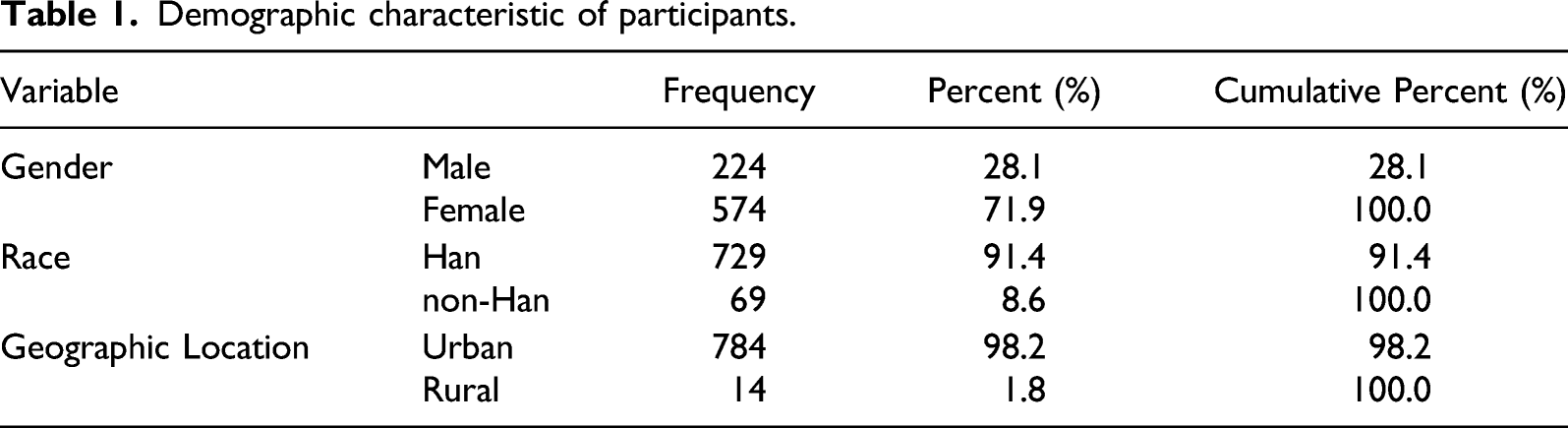
The findings in Table 1 clearly show that female and male participants account for 71.9% and 28.1% of the total 798 participants, respectively. The document study identifies that the female to male ratio is 6:1 at this IBC. It is obvious that most participants are Han-Chinese, which accounts for 91.4% of total participants, while non-Han Chinese accounts for 8.6% of total participants. The ratio of Han-Chinese to non-Han Chinese is over 10:1. Most of the participants are from urban areas, which are up to 98.2%, while only 1.8% of the participants are from rural areas.
Parental educational levels of participants.
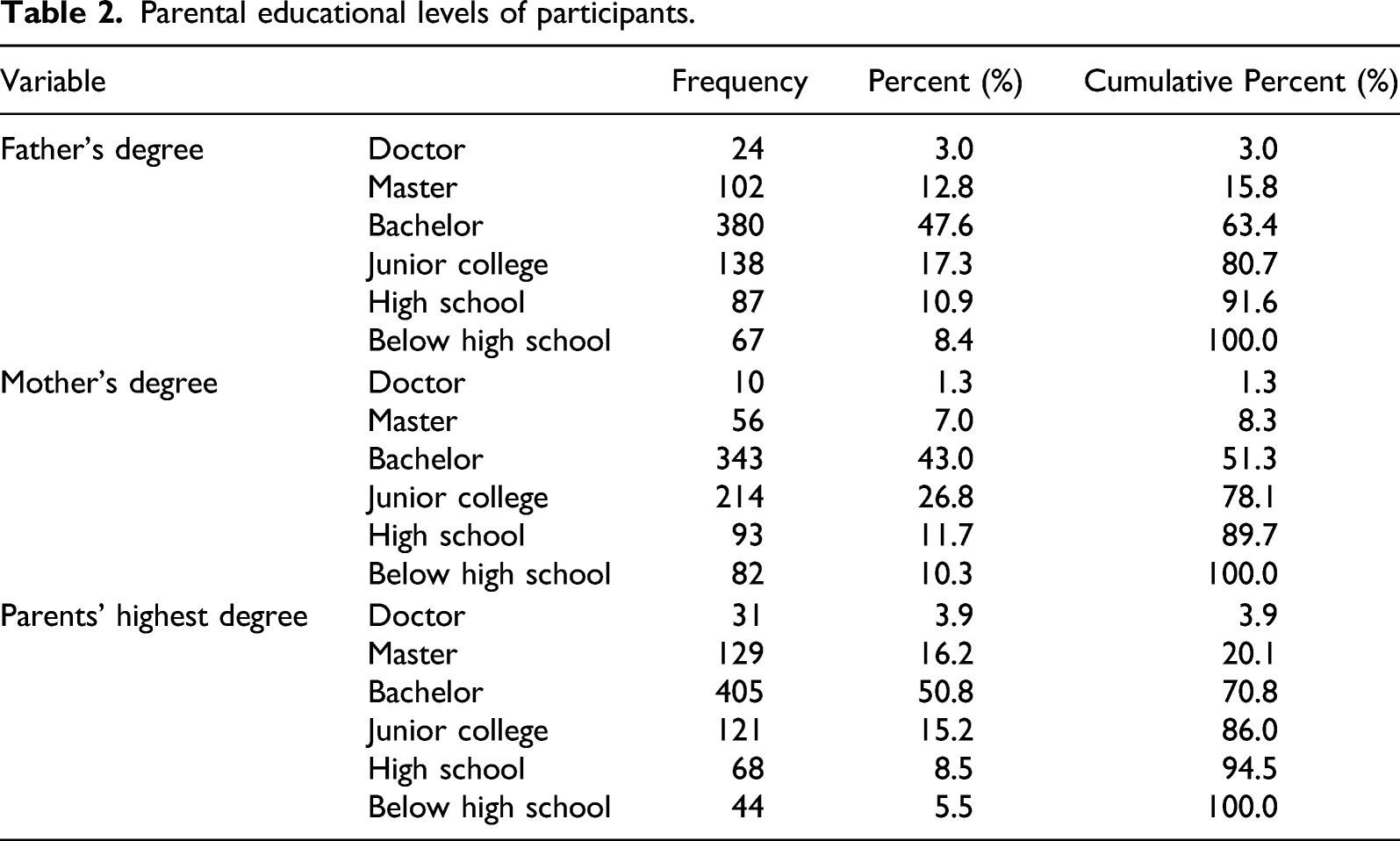
Table 2 demonstrates that up to 80.7% of fathers and 78.1% of mothers received a college education, respectively. When the highest educational level of father and mother in one family is considered, up to 86.0% of the participants are from families where at least one parent received a college education, only 14.0% of the participants are first-generation college students.
Parental occupations of participants.
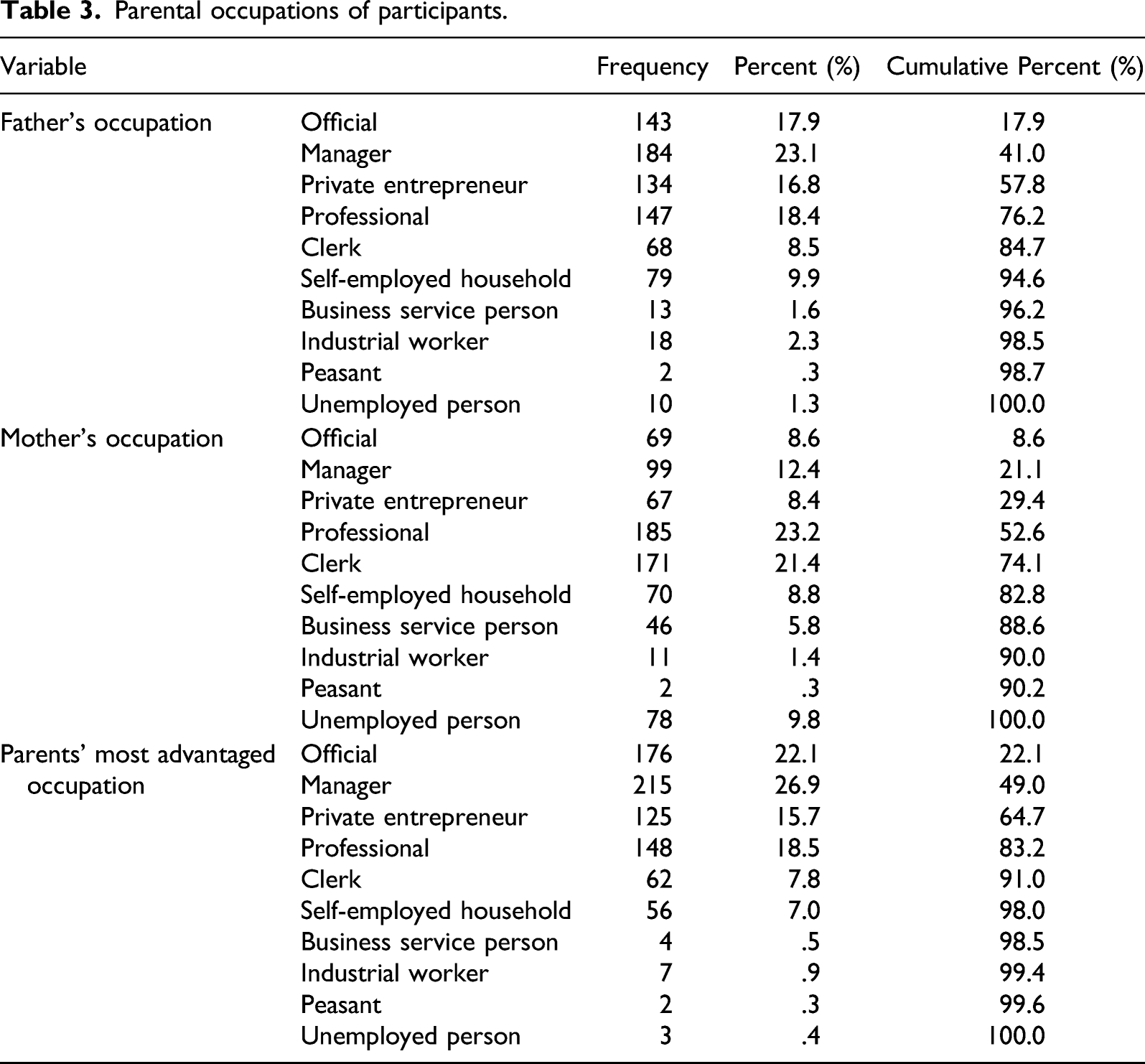
Table 3 shows that the parents of the participants have advantaged occupations. The top six occupations of fathers and mothers are officials, managers, private entrepreneurs, professionals, clerks, and self-employed households, which account for 17.9%, 23.1%, 16.8%, 18.4%, 8.5%, and 9.9%, respectively, and 94.6% in total of father’s occupations. The above six mother’s occupations account for 8.6%, 12.4%, 8.4%, 23.2%, 21.4%, and 8.8%, respectively, and 82.8% in total of mother’s occupations. When both father’s occupation and mother’s most advantaged occupation in one family are considered, up to 98.0% of the participants are from families where at least one parent’s occupation is official, manager, private entrepreneur, professional, clerk, or self-employed household.
Financial ability of participants.
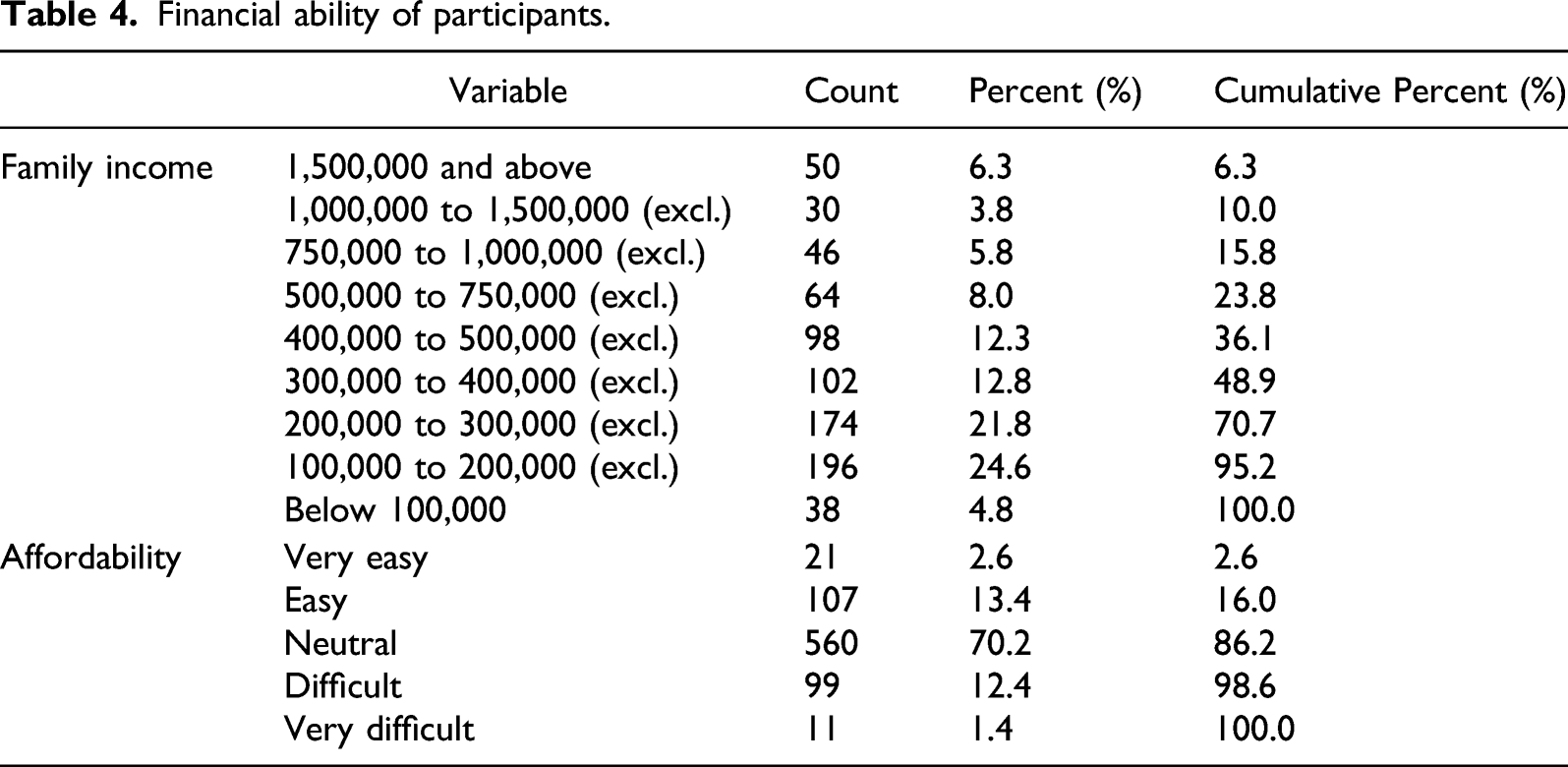
Table 4 indicates that the family incomes of the participants are high. Over 95.2% of the participants are from families with annual family income not less than 100,000 RMB, of which 71.4% of the participants are from families with annual family income between 100,000 RMB and 500,000 RMB, which are middle-income families in China (Li et al., 2020), and of which 23.8% of the participants are from families with annual family income over 500,000 RMB, which are high-income families in China (Li et al., 2020). Therefore, up to 95.2% of the participants are from middle- and high-income families, and only 4.8% of the participants are from low-income families. The participants from families with annual family income from 100,000 RMB to 199,999 MB and 200,000R MB to 299,999 RMB are the main body of the participants, accounting for 24.6% and 21.8%, respectively, 46.4% in total. In line with the findings of family income, Table 4 shows that up to 86.2% of the participants think the costs of this IBC are affordable. Although China has a financial aid system to support students with financial difficulties, the value of the tuition loan is very small compared to the costs of this IBC. The maximum value of the tuition loan is 8,000 RMB per year, which is very small compared to the 90,000 RMB tuition fee of this IBC. This IBC also offers scholarships to students with a good gaokao score or weighted average grade. However, the values of these scholarships are also very small, only a few students can receive scholarships that can cover the costs of this IBC.
Discussion
These results have described the student characteristics at the chosen IBC. The documentary study demonstrates that the students at this IBC have good gaokao scores, but not good enough to be admitted by “Project 985” universities. The descriptive study shows that up to 71.9% of female students participated in this survey, and the document shows that the female to male ratio is about 6:4 at this IBC. This provides evidence at an IBC in China that the gender gap has decreased over time and even reversed itself. Given the instruction medium at this IBC is English and English subject is an entry requirement, a high proportion of females at this IBC may be explained by previous findings that females perform better in English than males (Zhang & Tsang, 2015). Furthermore, the difference in race is not obvious at this IBC. Minority students at this IBC, which account for 8.6%, are a little lower than that in all Chinese regular HEIs in 2019, which accounts for 9.58%. This demonstrates a slight, but not obvious, underrepresentation of minority students at this IBC. Moreover, there is a large geographic location gap at this IBC, up to 98.2% of the participants are from urban areas. Compared to over 60.0% of students in Chinese HEIs from rural areas, the students from rural areas are significantly underrepresented at this IBC. This may be attributed to the high costs of this IBC and students from urban areas usually have advantages of family backgrounds.
The results have shown that the participants have high socioeconomic statuses. First, their parents have high educational levels that almost all their parents received college education. It is an important event in the life of a student to choose a specific HEI in China. Parents play important roles in the decision-making process in Confucius China. As IBC, particularly IBC with independent legal person status, is a new type of HEIs in China, it requires students themselves and their parents are much more knowledgeable to make decisions. Therefore, only these students with high-level educated parents are much knowledgeable to support their children to choose IBC. Second, their parents occupy privileged occupations that most parents work as officials, managers, professionals, private entrepreneurs, clerks, and self-employed households. These six occupations belong to upper, middle–upper, and middle–middle classes in China, which occupy political, economic, and/or cultural capitals (Lu, 2012). Thus, these parents can provide financial support and information to their children. Prior studies have shown that parental occupation has a direct and indirect effect on college choice, and the effects of fathers and mothers are different. The results confirm that students with parents in the privileged occupation are more likely to enter better colleges and the children of peasants decline in better HEIs in China. Third, the students are from families with high family incomes. Most students are from middle-income families, and about one-quarter of the participants are from high-income families. This is consistent with their perceptions of affordability of this IBC. It needs more supply of resources to pay the costs as the high costs of this IBC. Therefore, family income, the most important element of the supply of resources, becomes more important to study at an IBC. The main body, up to 46.4%, of the participants is from families with family income between 100,000 RMB and 299,999 RMB. Their disposable incomes are almost equal to the estimated annual costs of this IBC, which range from 140,000 RMB to 170,000 RMB, and they still think the costs of this IBC are affordable. Therefore, their families must have additional resources to cover the costs. The saving tradition in China may be a possible explanation. The high costs of this IBC may contribute to the existent educational inequality caused by family income. Traditionally, family income influences the college admissions through its impact on the gaokao score for the different quality of education received by students with different family incomes. However, family income directly influences admissions of this IBC for its high costs and the insufficient tuition loan. All in all, the inequality in access to this IBC is greater than the other Chinese public and private HEIs.
A high proportion of the participants with advantaged SES studying at this IBC reveals that the development of IBCs in China favors urban and socioeconomically advantaged students. IBC is becoming a public good for middle- and upper-class families in China. Their children enjoy higher quality education through their capitals even though their children do not have good enough gaokao scores.
Conclusions
This research has identified the inequalities at an IBC. Rural and socioeconomically disadvantaged students are underrepresented at this IBC. On the one hand, the rapid development of IBCs provides more educational opportunities for students. On the other hand, IBCs may cause new educational inequality. Family income has a stronger and direct impact on the choice of IBC. This suggests that IBC is an “elite” for students with advantaged family backgrounds. Chinese middle- and upper-class utilize their capitals to ensure that their children enjoy higher quality education at IBCs. The current tuition loan policy to reduce inequality in higher education is not helpful for the students who want to or are currently studying at IBCs because the value of the loan is very small compared to the high costs of IBCs. Therefore, the inequalities at IBCs should be paid attention to when efforts are taken to tackle the challenges in traditional HEIs.
Although this study has described the student characteristics at an IBC with independent legal person status, this study is not without limitations due to its features. This study has identified the gaps in geographic location and SES, but it cannot give explanations because this is a descriptive study. Although the findings are compared with the statistics data of the country, they are not compared with the data of a specific HEI in the same region. It is unknown whether some phenomena exist only at IBCs or at all the HEIs in a certain region. It is recommended to conduct a comparative study to quantitatively understand the difference of student characteristics between IBCs and Chinese public HEIs.
The case study has revealed the student characteristics at an IBC, which is a typical representative of IBCs with independent legal person status in China. These findings are also references for IBCs without independent legal person status in China. The findings are useful for policymakers to develop policy to implement IBCs and helpful for IBCs to reach their target markets, particularly during the pandemic of the COVID-19. Researchers may also benefit from the findings that fill the gap in student characteristics at IBCs.
Footnotes
Declaration of conflicting interests
The author(s) declared no potential conflicts of interest with respect to the research, authorship, and/or publication of this article.
Funding
The authors disclosed receipt of the following financial support for the research, authorship, and publication of this article: This work was supported by Zhejiang Association of Higher Education (grant numbers KT2020021, KT2021133).
