



Abstract
This study is to explore the sources of anxiety experienced by college counselors in higher institutions in China and seek to understand the impact of anxiety, as well as the coping strategies and resources that college counselors use to manage their anxiety. Fourteen interviewees were recruited from universities of various tiers from different regions of China. Content analysis and thematic analysis approaches were used based on the text mining software-KH Coder 3 and the descriptive coding in Nvivo 12 to analyze the transcribed and translated texts. The findings revealed high levels of anxiety among Chinese college counselors and identified four main sources causing anxiety among counselors, including work-related issues, self-imposed pressure, societal pressures, and school culture. Anxiety has various impacts on college counselors, including personal impacts such as emotional burnout, lack of focus, and emotional fatigue; professional impacts affecting the quality and effectiveness of their work; and interpersonal impacts like communication breakdown and personal emotional transmission. College counselors employ a range of anxiety coping strategies to effectively manage their own well-being such as social strategies, meta-cognitive strategies and cognitive strategies. The findings illuminate the well-being of college counselors and may provide insights into strategies employed to manage their anxiety.
Introduction
Anxiety, a common feeling, has long been present among people and is no exception in the teaching-learning context (Desouky & Allam, 2017; Li et al., 2023), which can influence classroom practices and behaviors (Pishghadam et al., 2014). Anxiety, according to Rosenhan and Seligman (1989), is an emotion characterized by an unpleasant state of inner turmoil and includes emotions of dread about upcoming events. Anxious behaviors including pacing, somatic symptoms, and rumination are often present alongside it (Seligman et al., 2001). Teachers experiencing heightened levels of anxiety are increasing in recent years, reflecting a concerning trend in the field of education (Agyapong et al., 2022). Agyapong et al. (2022) conducted a systematic review which gives a comprehensive summary of existing literature on the issues of stress, burnout, anxiety, and depression as experienced by teachers. When only clinically significant (moderate to severe) psychological problems among teachers were included in 67 publications using distinct datasets, the anxiety prevalence varied from 38% to 41.2%. The study by Ma et al. (2014) in China found that 12.12% of university teachers experience varying degrees of anxiety. Among them, 24.46% exhibit mild anxiety, 10.07% show moderate anxiety, and 21.58% experience severe anxiety. This recent study conducted by Guo et al. (2023) found that more than 40% of Shanghai university teachers are experiencing varying degrees of anxiety, and compared to both young college students and elderly individuals in our country, their anxiety levels are significantly higher.
School counselors (also named student affairs counselors, students advisors or students affairs professionals) are a subset of teaching staff who play active roles in schools, providing significant support services to students in areas such as education, career, social, emotional, and personal development (Coleman & Yeh, 2011; Nelson, 2015). A school counselor is expected to provide individual and group counseling to students and their families who are experiencing difficulties in a variety of areas, including personal, academic, emotional, and psychological health issues (Wu, 2019). In addition, they impart their specific knowledge on parents and other teachers regarding effective intervention tactics that address the academic, social, or psychological requirements of the students. They are crucial in ensuring that all of the school’s units coordinate their social and academic activities (Aydin & Odaci, 2020). However, the function of school counselors is still being debated in the relevant literature. Despite advice from professional bodies, school administrators, instructors, students, and school counselors all have different opinions about what the roles of counselors in schools should be (Reiner et al., 2009).
The college counselors as specialized faculty in China are a special group of education-related staff in higher institutions. However, in the Chinese college context, the occupation of counselor has been given a broader and more complex connotation (Jiang et al., 2019). In 2015, more than 0.13 million full-time and 50,000 part-time counselors worked in Chinese higher institutions (Cai & Zheng, 2016), who mainly take responsibility of ideological and political education in their universities (Liu et al., 2023). They are educators and leaders of students who are not just politically and ideologically oriented, but also educate and conduct research on students’ moral education (Li & Fang, 2017). Their work schedules are particularly intricate since they have to finish the assignments given by other departments in addition to their own faculties (Gong, 2011). Meanwhile, all matters concerning student interests and needs are distributed via college counselors from several functional departments, such as teaching affairs, accommodation, medical care, admissions, and employment. In other words, college counselors must help implement and become acquainted with all information relevant to student issues from various departments, and assume the additional obligations of offering ethical, political, and career assistance, dealing with all types of student problems (He, 2016). The diversity of identity leads to the contradiction between career orientation and personal development of college counselors in work (Wu, 2019). The constant evolution of this contradiction reduces the sense of achievement and value of college counselors in work and leads to identity anxiety, which weakens the enthusiasm and initiative of college counselors in work (Wu, 2019).
In the context of school counselors, anxiety may cause psychological anguish in the face of adverse job conditions, reducing job satisfaction (Shen, 2020). The decline of mental health level and job burnout of college counselors not only affect counselling quality of college counselors, but also influence the development of students’ mental health and personality and the stable and professional construction of the whole team of college counselors in colleges and universities are influenced by their professional development (Wang, 2014). College counselors, as a specific group of teachers, cannot underestimate the influence of their mental health status on the development of college students’ mental quality (Huang, 2014). The widespread anxiety phenomenon among college counselors has already affected their life and work (Huang, 2014) and posed a more and more serious threat to their health condition. Scholars and practitioners have been concerned with the attrition within student affairs for some time (Mullen et al., 2018). The high turnover rate of Chinese college counselors has become a social issue that is increasingly being concerned about (Chen & Muktar, 2022). How to correctly understand and eliminate college counselors’ psychological anxiety should be paid attention to.
Although empirical studies on college counselors’ mental health are abundant, most focus on the prevalence of anxiety using quantitative methods with inconsistent scales. In addition, it is hard to reach in-depth and rich data about people’s inner feelings (Creswell & Creswell, 2017). There is a dearth of research on other facets, such as the sources of anxiety, its impacts, and coping strategies among college counselors. The critical psychological issues, particularly anxiety, faced by student affairs professionals as they work to support the success of students, are under-investigated (McClellan & Kiyama, 2023). The complexity of human beings’ psychological status (Plutchik, 2001) warrants research from various perspectives, which involve multi-facet of data collection: observation, interviews as well as discourse analysis. Thus, this research adopts a qualitative approach through interviews to investigate the sources and impacts of anxiety on Chinese college counselors and examines the coping strategies and resources they use to manage their anxiety, the research questions are as follows: 1. What are the specific sources that contribute to anxiety among college counselors? 2. What are the impacts of anxiety on the quality and effectiveness of counseling services provided to students? 3. What strategies are used by the college counselors to manage their anxiety?
It is of great practical significance for college education and the growth of students to study the problems and causes of the negative mentality of college counselors, gain insight into the mentality of college counselors, and then put forward targeted improvement measures (Tang et al., 2022; Zang & Di, 2010). By examining these issues, this study aims to provide insights into how higher education institutions can better support their counseling staff in promoting their mental health and well-being (Cui et al., 2022), and in turn, improve the quality of counseling services provided to students.
Literature review
In recent times, college counselors have gained popularity in China as subjects for multidisciplinary studies, including philosophy, education, management, and psychology. This group is experiencing management concerns that need to be addressed. Through previous investigation, exploration and analysis, it is found that there are many problems in the mentality of college counselors, such as anxiety, confusion, helplessness and other bad emotions (Huang, 2014; Tang et al., 2022; Wang, 2014; Wu, 2019; Wu et al., 2011; Zhou et al., 2015). Wu et al. (2011) investigated the mental health status of different types of college counselors in Anhui province by using Symptom Checklist-SCL-90. The overall level of college counselors’ mental health status was low, and the positive rate of psychological symptoms screening was 41.71%. Besides interpersonal relationship, factors such as depression and anxiety were significantly higher than the norm. Zhou et al. (2015) used SCL-90 to investigate 56 college counselors in Zhejiang Province. The results showed that the mental health status of college counselors in Zhejiang province was good on the whole, but the scores of depression and anxiety factors were higher than the national norm.
According to published studies, teachers have a very high incidence of anxiety (67.5%) (Desouky & Allam, 2017), which has prompted requests for interventions and research to address this important issue (Kamal, 2021). There are more studies on students’ anxiety (e.g., Lun et al., 2018; Zhang et al., 2021) than on teachers’ anxiety (e.g., Hu et al., 2021; Su, 2022). In the context of Chinese colleges, numerous recent studies have highlighted the role of college counselors in relieving students’ anxiety (e.g., Duan, 2020; Wang, 2020). However, there is a notable lack of research on the well-being of Chinese college counselors’ psychological problems, especially anxiety.
Wu (2019) explored the issue of identity anxiety faced by university counselors and strategies to address it. The study’s background involves the counselors’ confusion regarding career development, societal expectations, and their multifaceted roles. These factors lead to high turnover rates among counselors and impact the implementation of ideological and political education for students. The study aims to analyze the causes of counselors’ identity anxiety from individual, group, and societal levels and propose corresponding mitigation strategies. The research found that identity anxiety stems from career development uncertainty, high societal expectations, and role conflicts. The conclusions emphasize that to alleviate counselors’ identity anxiety, universities should establish comprehensive training support systems, complete rights protection systems, and actively update the relationship between counselors and students to facilitate counselors’ work.
A recent study (Tang et al., 2022) focuses on the impact of mental health education training on the stress levels of university counselors. The training program, which involved 30 counselors, included expert-led sessions on conversation techniques, stress and emotion management, crisis intervention, and the recognition and handling tactics of common psychological issues in students. The counselors’ stress levels were measured using the Depression Anxiety Stress Scales (DASS-21) before and after the training. Initial measurements showed that 4 counselors (14.81%) experienced mild to severe depression, 4 counselors (14.81%) experienced mild to severe anxiety, and 6 counselors (22.22%) experienced mild to severe stress, indicating the serious situation of college counselors’ well-being. Tang’s study suggests that higher institutions should leverage their strengths by regularly inviting in-house psychological experts and clinical physicians to train counselors. This approach, supported by theoretical and technical guidance, establishes a collaborative educational system that enhances counselors’ psychological mentoring skills and improves their overall mental health.
Despite the valuable insights provided by Wu (2019) and Tang et al. (2022), there are notable gaps in the research that warrant further investigation. Wu’s study lacks specific data analysis methods, such as the use of detailed questionnaires and interviews, to thoroughly identify and quantify the causes of identity anxiety among counselors. This absence of granular data limits the ability to generalize the findings and develop targeted interventions. Similarly, while Tang et al. (2022) demonstrates the effectiveness of mental health training in reducing stress levels, their study is limited by its relatively small sample size and the short-term nature of the follow-up. Furthermore, there is a lack of richness of data, which constrains the depth of analysis and understanding of the nuances involved in counselors’ mental health and identity anxiety.
In light of the relevant literature, although there is growing attention regarding the sources of anxiety for college counselors, there is still a scarcity of research investigating the sources of anxiety, as well as coping strategies employed by Chinese college counselors when they experience anxiety. Taking this gap into account, this study uses a qualitative research method to identify the possible sources of anxiety in the experiences of Chinese college student counselors, examine the impact of anxiety on them, and reveal the ways they try to cope with these challenging situations. This understanding is expected to contribute to Chinese college student counselors by alerting them to the probable problematic cases they may encounter and equipping them with effective coping strategies to deal with anxiety-provoking situations. This study is also expected to raise the awareness of faculty training for Chinese college student counselors, inform them about the realities of professional challenges, and equip them with coping strategies, effectively helping them “survive” professional development.
Methodology
A phenomenological study methodology was used in this investigation. The phenomenological study describes the common meaning for several individuals of their lived experiences of a concept or a phenomenon, describing what all participants have in common as they experience a phenomenon (e.g., grief is universally experienced) (Creswell & Poth, 2016). Semi-structured interview was utilized in this study to collect in-depth qualitative data (Creswell & Clark, 2017).
Setting
The research was conducted in Chinese universities in 2023. China has a large and diverse higher education system with a wide range of universities, including research-focused institutions and vocational schools, where counseling services are provided from college counselors. Since the demographic characteristics of the student and faculty population could also impact the setting of the research study, this research will focus on universities of different tiers from different regions of China.
Sampling and informants
Informants’ demographic information.
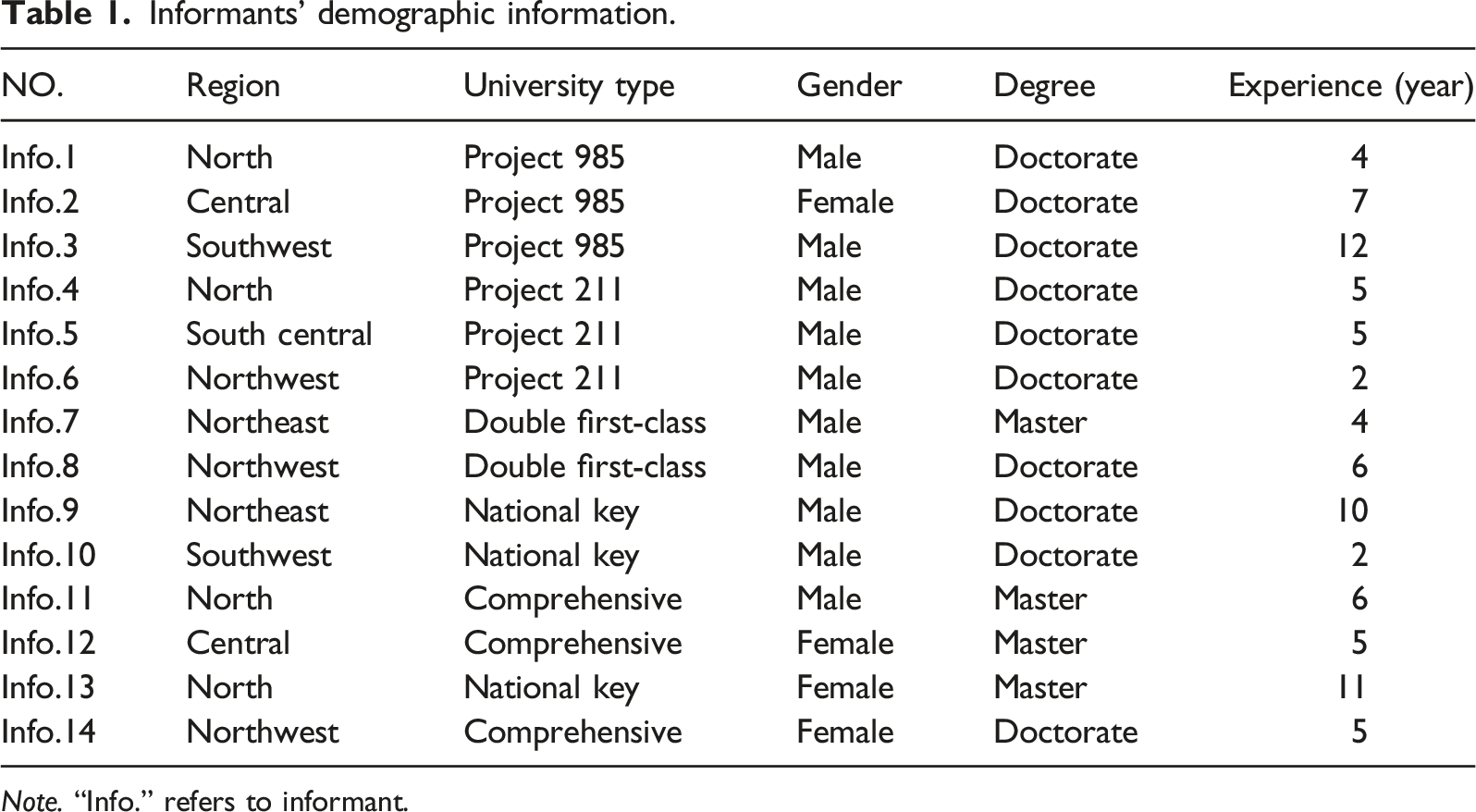
Note. “Info.” refers to informant.
Data resources
Interview questions.
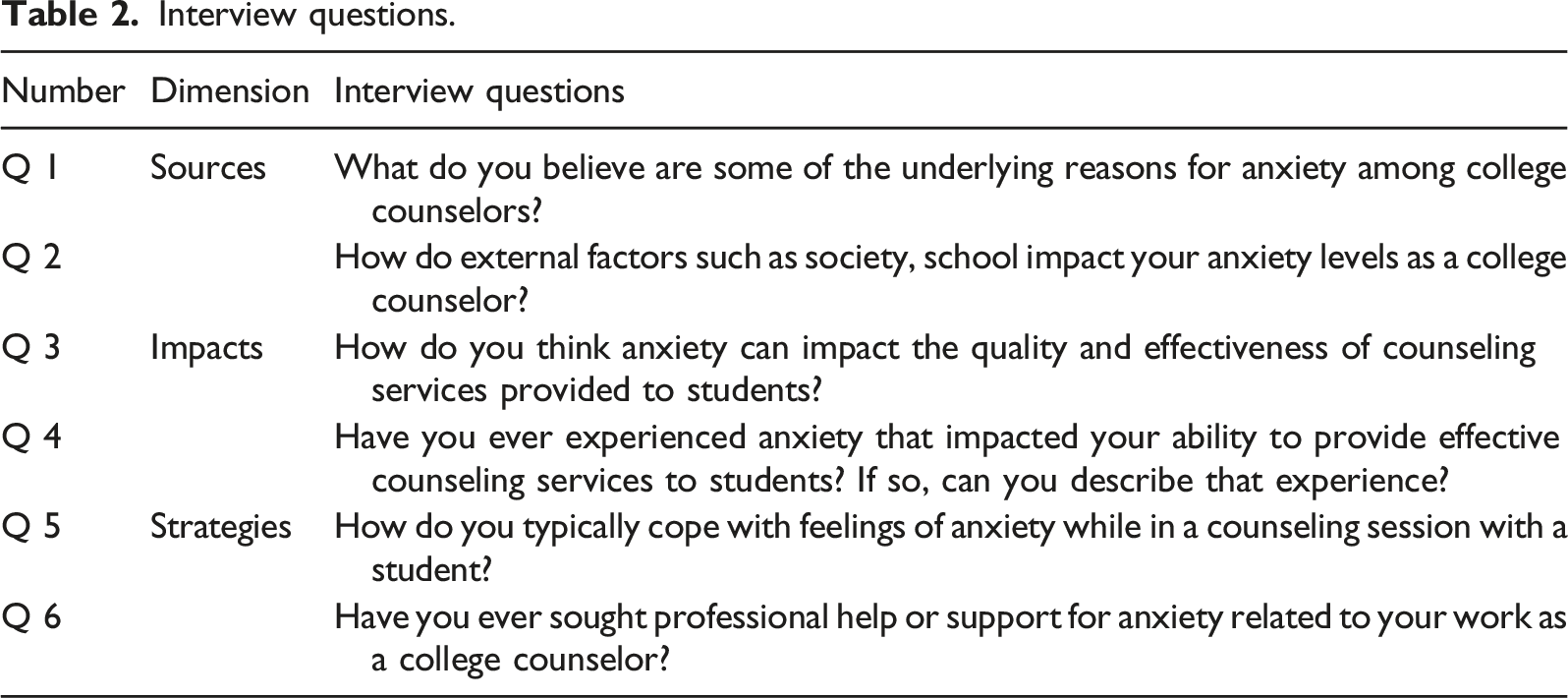
Data collection
The data was collected using online platforms (Tencent), incorporating a built-in Screen Recorder to capture the entire session. Following the identification of the participants, the major topic of the research and the interview questions were delivered to them to familiarize them with the subject. The interviews were conducted in a single session and lasted an average of 40 minutes. Answers from informants were transcribed into text (Chinese) by using a voice transcriber (Xunfei Language Notes, 3.0). Then machine translation plus human post-editing was used to translate these Chinese texts into English, and the open and axial coding was done immediately for each of the text files of each interview.
Data analysis
The data (texts) was imported into KH Coder 3 and Nvivo 12 for clustering, visualizing, content and thematic analysis. The coding of the qualitative data from interviews was made in three steps of open, axial and selective coding. All of the texts were organized by creating nodes for different themes or topics that emerge from the data, which are essentially tags or labels we assign to different parts of data.
Ethical consideration of research
Ethical considerations are an essential part of any research project, regardless of the discipline or methodology used (Gajjar, 2013). This research addressed the ethical issues by using the following strategies such as informed consent, confidentiality and privacy, respect for autonomy and institutional approval.
Findings and discussion
The researchers imported the open-ended responses to the six interview questions into KH Coder and Nvivo 12, where they were visualized and coded by the researchers to identify and analyze themes within the data. Two researchers individually analyzed the data. They reached a level of agreement at 91.7% (with a Kappa value of 0.65 and p-value less than 0.002). In cases where discrepancies arose, the researchers collaborated to resolve them.
Sources that contribute to anxiety among college counselors
The fourteen informants universally reported experiencing anxiety in their jobs. Some of the phrases used by the informants include “sometimes makes me anxious” (4 times), “extremely anxious” (2 times), “very anxious” (4 times), and “often feel anxious” (4 times). This data demonstrates the prevalence and of anxiety among the counselors surveyed.
To find the sources leading to anxiety among college counselors, a co-occurrence network of high-frequency words was constructed in KH Coder to identify potential keywords and themes, as was illustrated in Figure 1 as an example (Anxiety Sources). Notable themes that emerged from the analysis include workload, societal factors, responsibility, school culture, student safety etc. Thirteen main codes were found in the informants’ responses, and they were classified into 5 themes as displayed in Appendix 1. Co-occurrence network of high frequency words on anxiety sources.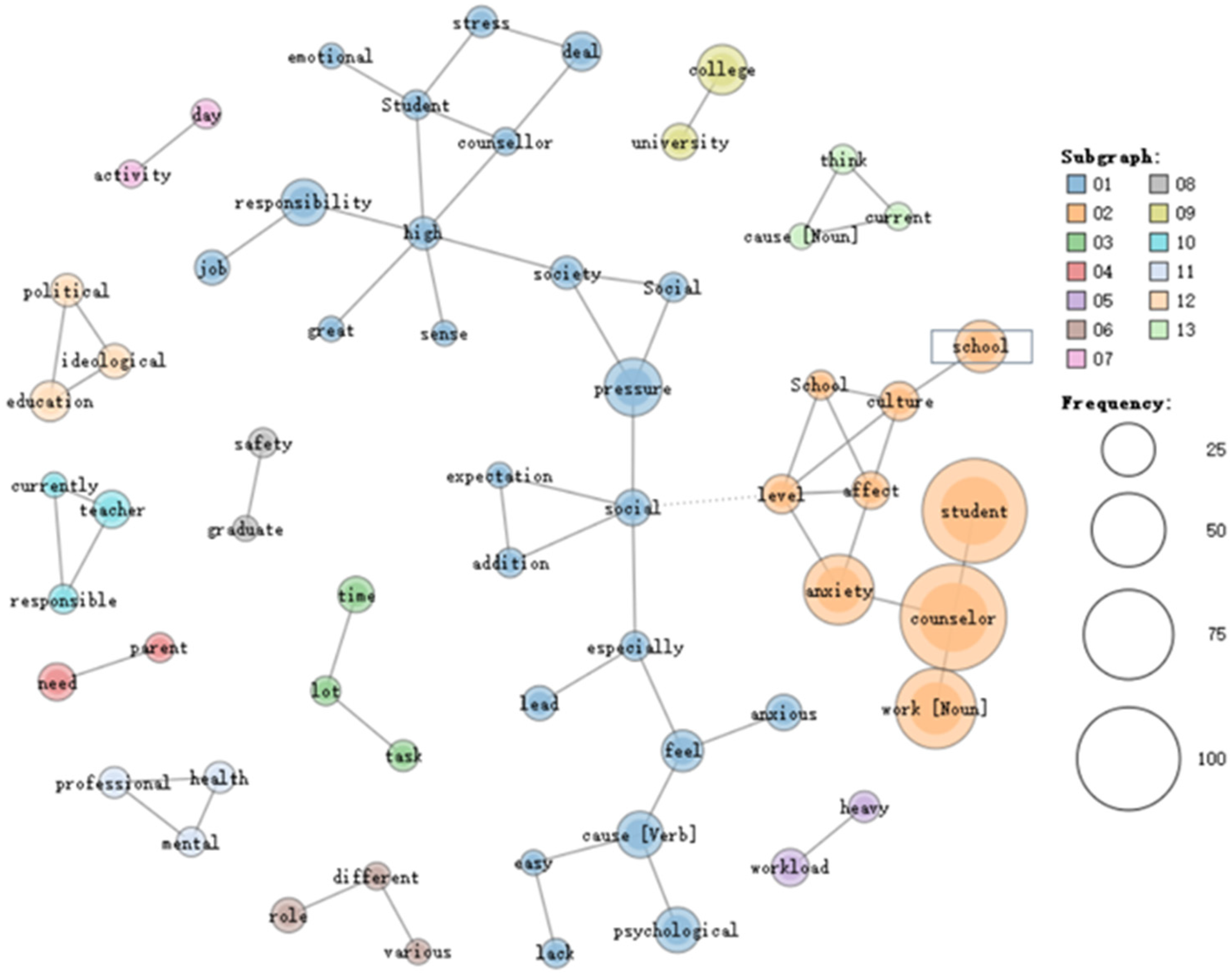
Codes and themes concerning factors leading to anxiety among college counselors are primarily categorized into four sources, including work-related issues, self-imposed pressure, societal pressures, and school culture.
Work-related anxiety
Work-related anxiety in counseling is a complex issue influenced by several factors, as revealed by informant responses. One prominent factor is the heavy workload faced by college counselors, who navigate numerous responsibilities such as counseling sessions, assessments, paperwork, and administrative duties, contributing to an overwhelming sense of anxiety (Informants 1, 2, 3, 4, 5, 6, 14). Additionally, time-consumption adds to counselors’ stress, as they strive to allocate sufficient time for each student amidst competing responsibilities, fostering anxiety regarding deadlines and obligations (Informant 13). Furthermore, college counselors play multiple roles within a school setting, serving as academic advisors, advocates, psychologists, educators, and crisis responders, presenting a challenge in balancing these responsibilities and contributing to work-related anxiety (Informant 2, 6, 10). Moreover, the empathetic nature of college counselors, while essential, becomes a double-edged sword, leading to emotional exhaustion and anxiety as they constantly absorb and manage students’ emotions, particularly during challenging situations (Informant 8). The counseling profession, characterized by uncertainty, introduces another layer of anxiety. College counselors often navigate unpredictable circumstances, such as sudden crises, challenging student issues, or complex family dynamics, which demand critical decision-making, generating anxiety and a sense of pressure to provide effective guidance (Informant 7). Lastly, the need to handle emergencies or urgent situations, such as student safety concerns or mental health crises, places additional stress on college counselors, heightening anxiety levels as they must respond quickly and effectively in high-stress situations (Informant 4, 12).
The findings were echoed by some previous studies. As argued by Wu (2019) that the demanding nature of counseling work, such as heavy caseloads, high expectations, and limited resources, can contribute to college counselors’ anxiety. The counselors take on various roles in their lives and work (McClellan & Stringer, 2023), placing themselves in a multi-role society with role conflicts: they are both parents and children, teachers and officials, givers and receivers (Reiner et al., 2009). College counselors are also in the midst of these role conflicts (Li, 2016; Wu, 2019). The diverse and sometimes conflicting roles they are expected to fulfill can lead to role strain and increased stress, which further contribute to anxiety and result in greater dissatisfaction with their job (Tull, 2014). Over time, this can result in counselors feeling fatigued and having a negative outlook on their work, ultimately diminishing their professional commitment (Li, 2016). This multifaceted nature of the counselor’s role underscores the need for a comprehensive understanding of the challenges and pressures they encounter in educational settings (Wu, 2019).
The complexity of the counselors’ role partly arises from the poor self-care abilities among college students (Wang, 2021). Li (2016) and Zhong (2020) argued that many college students today are accustomed to a self-centered lifestyle, having been raised as “single children” under their parents’ protection and care. Consequently, they often struggle to manage their personal and academic lives independently (Chen et al., 2024; Zhong, 2020). Chen (2021) further noted that many college students face academic setbacks, interpersonal issues, and work pressures for the first time during their college years, which can be challenging for them to handle. These complex issues are expected to be resolved with the help of college counselors, which can create anxiety among the counselors themselves and pose significant challenges to their work.
This research expands existing knowledge by uncovering factors contributing to anxiety among college counselors: emotional empathy, uncertainty about job content, and the pressure of dealing with emergencies. Emotional empathy, where counselors share and absorb emotional experiences from students during sessions, can lead to emotional fatigue and heightened anxiety. Uncertainty regarding job responsibilities further compounds this anxiety, as counselors grapple with the unpredictability of their roles. Moreover, the necessity to handle emergencies adds to the social pressure felt by counselors, intensifying their anxiety levels. These insights provide a deeper understanding of the multifaceted nature of anxiety among college counselors, expanding the scope beyond previously identified challenges.
Self-imposed anxiety
College counselors often subject themselves to unwarranted stress, driven by their aspiration to support student success. This self-imposed anxiety can be traced back to two primary factors. Firstly, in terms of career development, counselors in colleges and universities, holding dual roles as both teachers and administrators, encounter unique challenges. Unlike professional teachers, they grapple with increased workload, responsibility, risk, and personal expectations. The pursuit of career development and advancement intensifies anxiety as counselors aim to excel and meet professional standards (Informant 6). Additionally, the emergence of the internet and social media exposes college counselors to heightened scrutiny. Their words and actions can be publicly scrutinized at any moment, adding pressure to maintain a positive public image aligning with professional expectations. The fear of negative judgment or criticism contributes significantly to the self-imposed anxiety experienced by college counselors (Informant 8).
The finding related to self-imposed anxiety among college counselors has been discussed in several research papers. Counselors experience anxiety related to their career development due to uncertainties surrounding their roles and future prospects. As Xie (2018) argues that to date, universities have not formulated effective solutions for the professional growth of college counselors. Currently, college counselors in universities are generally very young, mostly recent graduates of undergraduate institutions (Wu, 2019). There are few, if any, postgraduate degree holders responsible for counseling work, and there is a significant turnover in these positions (Zheng, 2021). The main reason for this phenomenon is that college counselors do not hold high positions in the administrative hierarchy of universities. Their roles are often viewed as transitional and do not represent a lifelong career path (Zhu, 2016). Additionally, some college counselors, due to their age and limited work experience, do not receive the recognition and appreciation they deserve in their daily work (Xie, 2018). Over time, this can lead to increased frustration and disappointment, severely affecting their motivation at work.
Previous studies have revealed that social media exerts significant pressure on counselors, posing potential negative influences that can impact their psychological well-being. Recent research has recognized a positive association between media exposure and anxiety before and during the current pandemic (Gao et al., 2020). Social media platforms facilitate the spread of misinformation and rumors more readily than traditional channels, where material is usually verified and controlled (Alhazmi et al., 2022). The paper extends the argument that maintaining an image on social media causes anxiety and poses a significant challenge to the psychological well-being of college counselors in China.
Societal anxiety
The societal pressures and expectations wield a considerable influence on the mental well-being of college counselors. The ever-changing dynamics of society, cultural shifts, and prevalent social issues create an environment where counselors experience anxiety while addressing the diverse needs of student populations within a rapidly evolving context. Several key reasons contribute to this impact. Firstly, college counselors grapple with high expectations from society, requiring them to engage in a variety of labor activities related to mental health education, student administration, and student affairs. These additional responsibilities not only contribute to their workload but also elevate anxiety levels (Informant 1). Secondly, counselors may experience psychological frustration when society fails to fully understand or recognize the significance of their job and achievements. This lack of comprehension can lead to feelings of isolation and unworthiness, compounding their worries about meeting societal expectations (Informant 2). Thirdly, the societal pressure on college counselors extends to the performance of their students in dealing with challenges. As counselors strive to meet these expectations, the emphasis on student outcomes and successes can further contribute to heightened levels of anxiety (Informant 3, Informant 4). In navigating these external factors, college counselors find themselves confronted with complex challenges that can impact their mental well-being.
Overall, the anxiety level of college counselors can be significantly influenced by social pressure. The high expectations placed upon them, combined with the frustration of not being fully understood or recognized, can contribute to their anxiety. As Wu (2019) (P. 5) argued that from ancient times to the present, society has held certain expectations for teachers, viewing them as “enlighteners” who impart knowledge, as “engineers of human souls” shaping character, and as selfless contributors who give their all and dedicate themselves to their students, with the hopes and aspirations of students placed upon them. Once their students enter university, parents entrust their safety, education, and future employment to higher education institutions, which in turn delegate responsibilities to various department college counselors (Shen, 2020). When students encounter academic, psychological, or even employment issues, parents often attribute them to inadequate teaching by teachers. College counselors serve as the bridge for communication between society and students, between universities and students, and among students themselves (Li et al., 2018). Society values college counselors for their professional expertise as teachers, universities emphasize college counselors’ dedication as administrators, and students hope college counselors possess versatile skills. These multifaceted expectations place considerable pressure on college counselors. Under the weight of these immense societal expectations, college counselors bear many hopes and pressures, often leading to feelings of anxiety regarding their role. To address societal pressures on college counselors, institutions should reduce workloads by clarifying roles, provide institutional support, offer professional development opportunities, and promote self-care practices.
Anxiety caused by school culture
College counselors’ anxiety can be significantly influenced by the school culture, encompassing various aspects that shape their work environment. Firstly, the impact of school culture on counselors’ work is crucial, involving values, behavioral norms, and organizational structure. An unhealthy or unsupportive school culture can detrimentally affect the effectiveness of college counselors, contributing to anxiety (Informant 1). Moreover, the school culture may create an atmosphere where college counselors feel discomfort or find it challenging to interact with teachers, students, and parents. This discomfort hinders effective collaboration and adds to their anxiety (Informant 4). Additionally, high expectations from the school can create additional pressure and anxiety for college counselors as they strive to meet these demanding requirements (Informant 5). In some college settings, teaching and research take precedence, relegating counselor work to a secondary role. This perception can lead to feelings of undervaluation, contributing to anxiety among college counselors (Informant 6). Furthermore, challenges in role definition and responsibilities may arise from ambiguities in the division of tasks and the tradition of unlimited responsibility and lifelong commitment to student management. These challenges, rooted in the school culture, impact counselors’ well-being and may lead to feelings of job burnout (Informant 14). In essence, the school culture plays a pivotal role in shaping the environment that can either support or hinder college counselors’ mental well-being.
School culture is considered an important characteristic that influences teachers’ behavior and attitudes (Zhu et al., 2011). At the core of school culture lies the school’s values, which can be diverse. Once a particular set of values becomes the mainstream within a school’s culture, it is reflected in the school’s educational philosophy and practices. However, adapting to school culture is not always smooth (Peng, 2009). If these issues are not handled properly, they can lead to professional anxiety and a sense of helplessness among counselors, resulting in decreased motivation and the possibility of making incorrect evaluations and choices (Peng, 2009). School culture, as a driving force within the system, has a particularly significant impact on the development of college counselors (Xie, 2018). Therefore, it is meaningful to explore the issue of how newly appointed counselors adapt to a specific school culture. To improve counselors’ well-being, schools should cultivate a supportive and inclusive culture that values their contributions, clarifies roles and responsibilities, and promotes effective collaboration and reasonable expectations.
Aligning with previous studies, this research reveals a new finding regarding the status of student affairs professionals. In some college settings, teaching and research take precedence, relegating counselor work to a secondary role. This perception can lead to feelings of undervaluation, contributing to anxiety among college counselors. School managers should recognize and address the undervaluation of student affairs professionals by ensuring their work is valued equally alongside teaching and research.
In summary, the data analysis indicated that anxiety among students college counselors does exist extensively, which was previously concluded in the empirical research by (Zhou et al., 2015). These findings echoed with the research conducted by (Pishghadam et al., 2014), which investigates various factors related to teachers’ mental well-being and job satisfaction. It explores the impact of factors such as heavy workload, time-consumption, multiple roles, emotional empathy, uncertainty, and dealing with emergencies. It is obvious that as a social group with heavy ideological burden and high mental pressure, the phenomenon of anxiety is relatively common among college counselors in Chinese high institutes caused by various factors (Huang, 2014).
Impacts of anxiety on the quality and effectiveness of counseling services provided to students
Based on our codes on impact of anxiety on college counselor, we found that anxiety can have various impacts on college counselors as coded in Appendix 2, including emotional burnout, lack of focus, emotional fatigue, quality and effectiveness of their work, communication breakdown, and personal emotional transmission
Personal impact
The personal impact of anxiety on college counselors, as outlined by informants, encompasses several dimensions. Firstly, anxiety can lead to emotional burnout, manifesting in symptoms such as split personality, physiological exhaustion, and a diminished sense of achievement. This emotional burnout may result in counselors being less inclined to invest excessive time in handling student affairs and perceiving limitations in their work (Informant 2). Secondly, anxiety can disrupt college counselors’ attention and mental focus, making it challenging for them to effectively address issues or provide helpful guidance. This lack of focus may impede their ability to pay attention to the needs of students and offer efficient assistance, hampering their capacity to listen intently and empathize (Informant 2, Informant 13, Informant 14). Lastly, long-term anxiety can induce emotional fatigue among college counselors, impacting their ability to deliver top-notch counseling services and ultimately limiting the effectiveness of their treatments (Informant 2). These personal repercussions underscore the significance of addressing and mitigating anxiety among college counselors to ensure their well-being and the quality of their support for students.
Professional impact
According to the informants, quality and efficacy are two aspects of the professional influence of anxiety on college counselors. The effectiveness and caliber of counseling services provided by college counselors might be adversely affected by anxiety. This could make students feel unappreciated or misunderstood, which would ultimately affect the effectiveness of counseling as a whole (Informant 1, Informant 2). The presence of anxiety can result in counseling services being of lower quality and less effective (Informant 5). It can also make it more difficult to follow up and give students the care they need, which lowers the standard of the student service overall (Informant 7). Consequently, anxiety can sometimes get in the way of a counselor coming up with the best solutions to deal with a student’s problems, which lowers the standard and efficacy of the counseling process (Informant 11).
Interpersonal impact
Anxiety negatively impacts college counselors’ interpersonal communication. It can cause difficulty in staying calm and collected during counseling sessions, leading to communication breakdowns with students (Informant 3). Additionally, counselors’ anxiety may be transmitted to students, making them feel uneasy and tense, which in turn affects their emotional and psychological state (Informant 2).
These findings concerning the impact of anxiety on college counselors align with the observations conducted by Huang (2014), who contends that widespread anxiety phenomenon among college counselors has already affected their lives and work. These impacts are consistent with Wu (2019) who explored the causes of identity anxiety among college counselors and proposed strategies to alleviate it. Wu (2019) also found that anxiety can lead to emotional burnout, lack of focus, and emotional fatigue among college counselors. This study also recognizes the potential for communication breakdown and personal emotional transmission as consequences of anxiety in the counseling setting. These findings are consistent with another recent study (Hu & Qiu, 2023) which found that excessive teacher anxiety can easily have negative effects on teachers’ daily work, reducing their work efficiency and quality. It can also hinder teachers’ normal lives and may significantly impact their physical and mental health. Furthermore, it can potentially affect students during teacher-student interactions (Hu & Qiu, 2023). By identifying these impacts, the paper could provide insights into the challenges college counselors face and offer ways to relieve their anxiety, ultimately improving their well-being and effectiveness in supporting students.
Strategies the college counselors used to manage their anxiety
College counselors employ a range of anxiety coping strategies to effectively manage their own well-being as suggested in Appendix 3. They are mainly classified in to three categories: social strategies, meta-cognitive strategies and cognitive strategies.
Social strategies
A “social strategy” typically refers to an approach or method that leverages interpersonal relationships, communications, and social networks to achieve a specific goal or outcome (Candi et al., 2018). In the context of managing anxiety or stress, a social strategy might involve seeking support from peers, sharing experiences, or engaging in group activities to mitigate negative feelings (Chen et al., 2022).
Social strategies for addressing anxiety among college counselors include two key approaches. Peer communication, as recommended by Informant 1, involves interacting with co-workers and colleagues to build strong relationships, ultimately boosting confidence, professional skills, and knowledge, which, in turn, enhances the quality of counseling services for students. Additionally, taking training courses, as suggested by Informant 1, can help reduce anxiety, especially through mental health classes. Informant 3 emphasized learning and practicing coping skills from friends or courses, such as emotional regulation, time management, and decision-making, to effectively manage work-related stress and challenges. To promote psychological self-understanding, self-evaluation, and self-cultivation, all of which contribute to anxiety management in a professional setting, Informant 6 stressed the importance of ongoing learning about psychological topics and involvement in professional communities. These social techniques highlighted the value of interpersonal connections, information accumulation, and skill development in overcoming anxiety and succeeding in counseling or professional settings.
Meta-cognitive strategies
Metacognitive therapy originated as a revolutionary way to the treatment of mental disorders (Wells, 1995). The therapy is founded on the metacognitive model of psychological disturbance, which is a cognitive theory extension (Wells & Matthews, 1996). Metacognition is defined as cognition about cognition (Wells, 2011). The transdiagnostic metacognitive paradigm posits that the persistence of all psychopathology is linked to a persistent thinking style known as the Cognitive Attentional Syndrome (Normann et al., 2014; Wells, 2011). It comprises of recurring thoughts like worry, rumination, and threat-oriented attention, as well as negative coping and self-regulation acts like avoidance and thought suppression (Li et al., 2024; Normann et al., 2014).
Metacognitive strategies presented in Appendix 3 demonstrate a keen awareness of thought processes and self-regulation techniques employed to manage anxiety. Informant 4 emphasized the necessity of an effective intervention by highlighting the significance of detecting the negative effects of recurrent anxious thoughts and triggers. Because of this awareness, proactive steps can be taken to lessen the harmful impact of these ideas. Informant 6 talks about attention regulation, a strategy that entails shifting attention away from anxious ideas and toward more positive or relaxing mental processes. College counselors also employ mindfulness meditation and relaxation techniques to remain grounded and reduce anxious thoughts (e.g., Informant 1, 2.). According to Informant 6 and 8, self-reflection entails routine evaluations of one’s psychological well-being. This self-awareness enables people to recognize coping mechanisms and alter them as appropriate, supporting adaptive responses to worry. These metacognitive techniques highlight the value of self-awareness, attention control, and ongoing self-evaluation in successfully reducing anxiety and preserving psychological well-being.
Cognitive strategies
Weinstein and Mayer (1983) differentiate between cognitive and metacognitive techniques in the process of learning from text. Cognitive strategies, such as rehearsal or elaboration actions, describe the cognitive processes used by the learners during the encoding process. The term “metacognitive strategies” describes how well students are aware of their own cognitive processes and how they might exert control over them, for as by observation and modification. Plans or techniques to solve a problem, recognize a stimulus, or reach a physical or mental state are examples of cognitive strategies (Amirkhiabani & Hendry, 1994).
College counselors use cognitive coping strategies to reduce anxiety, which include a variety of techniques aimed at promoting emotional well-being and maintaining composure. These tactics include changing cognitive patterns in order to reduce anxiety and promote calm (Informant 3). Furthermore, a shift in emphasis toward physical and emotional self-care, including food, exercise, rest, and recreation, benefits in the maintenance of a healthy body and mind (Informant 3). Visualization techniques, such as picturing good outcomes or scenarios, can help reduce anxiety in some situations (Informant 5). Furthermore, college counselors use problem-solving ways to identify sources of worry and build plans to resolve them, frequently breaking complex difficulties down into manageable steps (Informant 12). These cognitive strategies underscore the importance of self-care, positive visualization, and effective problem-solving in navigating anxiety and enhancing the quality of counseling services provided to students.
Previous studies have delved into teachers’ anxiety coping strategies. For example, according to (Farshad, 2022), among the recognized functional coping strategies among language teachers, talking with friends, parents, etc., and self-monitoring to control feelings appear to be the two important protective cognitive-behavioral mechanisms for dealing with teacher anxiety. Another similar study by Novitasari and Murtafi’ah (2022) investigated teaching anxiety among Indonesian EFL pre-service teachers. This research revealed four strategies participants used to cope with anxiety: personal strategies (cognitive, behavioral, emotional), professional strategies (self-management, qualities), social strategies (discussions with others), and institutional strategies (support from supervising teachers, feedback from lecturer supervisors).
Aligned with findings from previous studies, this research contributes to the field by extending the investigation to student affairs professionals—specifically counselors’ strategies for coping with anxiety, classified into three categories: social, metacognitive, and cognitive. This classification aims to shed light on effective approaches for managing their well-being. By identifying these distinct coping mechanisms, valuable insights are provided into how counselors navigate the psychological challenges inherent in their roles. This deeper understanding can inform the development of targeted interventions and support systems, ultimately bolstering counselors’ ability to effectively support student success and contribute positively to student affairs management.
Conclusion
This study investigated the particular sources of anxiety among college counselors as well as the expressions of anxiety in college counselor’ professional and personal lives. It also explored the effects of anxiety on the quality and effectiveness of student counseling services, and delve into the diverse coping strategies employed by college counselors to effectively manage and alleviate the impact of anxiety.
This study reported the prevalence of anxiety among the surveyed counselors. According to the findings, college counselors in China suffer from anxiety due to a variety of variables, which are categorized into four primary themes: work-related issues, self-imposed pressure, societal pressures, and school culture. The findings reveal that heavy workloads, role conflicts, emotional empathy, uncertainty in job responsibilities, and emergency handling significantly contribute to work-related anxiety. Self-imposed pressures arise from career development aspirations and the scrutiny of social media. Societal pressures involve high expectations and lack of recognition, while school culture impacts counselors through values, norms, and organizational structure. To improve counselors’ well-being, it is essential for schools to cultivate a supportive and inclusive culture, clarify roles and responsibilities, and promote effective collaboration and reasonable expectations. These insights provide a comprehensive understanding of the challenges faced by college counselors and underscore the need for targeted interventions to mitigate anxiety and enhance their mental well-being.
Furthermore, anxiety was discovered to have a considerable impact on the quality and effectiveness of student counseling services. It can lead to emotional burnout, lack of focus, and emotional fatigue among college counselors, affecting their personal well-being. Professionally, anxiety can diminish the quality and effectiveness of counseling services, leading to potential misunderstandings and reduced outcomes for students. Interpersonally, anxiety can contribute to communication breakdown and emotional transmission, hindering effective communication and the establishment of a supportive counseling relationship.
Chinese college counselors employ a diverse range of anxiety coping strategies categorized into social, metacognitive, and cognitive approaches. Social strategies emphasize the significance of building relationships, acquiring knowledge, and skill development to excel in counseling environments. Meta-cognitive strategies highlight self-awareness, mindfulness, attention regulation, and continuous self-assessment as key elements in effectively managing anxiety and maintaining psychological well-being. Lastly, cognitive strategies encompass techniques like cognitive coping, focus-shift, visualization, and problem-solving, all aimed at fostering emotional well-being and composure. These multifaceted strategies not only benefit college counselors personally but also contribute to the quality of care and support offered to students. They showcase the college counselors’ commitment to their profession and the well-being of those they serve.
It is evident from the research that anxiety is a prevalent issue among college counselors, and its impact extends beyond their personal lives to their professional roles and interactions with students. The findings of this research are consistent with previous studies on the mental well-being of educators, such as EFL teachers and pre-service teachers, who also face similar challenges and experiences of anxiety. It is possible to strengthen counseling procedures and support networks by recognizing and comprehending the similarities of these experiences. It is critical to prioritize college counselors’ mental health and to foster a work climate that values their contributions and supports their job. College counselors can provide more effective support to students and contribute to a helpful and nurturing learning environment by addressing the specific causes of anxiety, understanding its symptoms, and minimizing its effects.
While the study provides valuable information about the origins, effects, and coping techniques of anxiety experienced by college counselors in Chinese higher education institutions, the study’s limitations must be considered. For starters, the study only included fourteen interviewees, which may restrict the findings’ generalizability. A larger sample size would provide a more comprehensive understanding of the experiences of college counselors across different contexts. Secondly, although thematic analysis and coding in Nvivo 12 were used for data analysis, the profile-based variance was not integrated and compared, which could limit the depth of understanding regarding how different demographic factors influence the experiences and coping strategies of college counselors. These factors could impact the reliability and validity of the analysis and subsequent findings. Thirdly, the interviews were conducted via online tools, which may have influenced the dynamics and depth of the interviews. Non-verbal cues and contextual factors that could be observed in face-to-face interviews may have been missed, potentially limiting the richness of the data collected.
Considering these limitations, further research should employ a mixed research method with larger and more diverse samples, utilizing a variety of research approaches, and addressing potential biases to enhance the understanding of anxiety. Additionally, exploring the richness of data based on demographic variables and examining the effectiveness of various coping strategies in relieving anxiety experienced by college counselors is needed.
Despite its limitations, the study could shed some light on the improvement of college students’ counselors’ welfare by providing a comprehensive explanation of the reasons of anxiety among college counselors. This insight allows for the identification of issue areas for assistance and action aimed at minimizing counselor anxiety. Institutions can improve the quality and efficacy of counseling services provided to students by addressing counselor anxiety. Finally, the study identifies a variety of coping strategies used by college counselors to effectively manage their anxiety, which can be used to inform the development of targeted training programs, resources, and support systems that equip college counselors with the necessary skills and strategies to cope with anxiety more effectively.
Footnotes
Declaration of conflicting interests
The author(s) declared no potential conflicts of interest with respect to the research, authorship, and/or publication of this article.
Funding
The author(s) disclosed receipt of the following financial support for the research, authorship, and/or publication of this article: This work was supported by the Research on Emotional Labor of College Foreign Language Teachers (23WYJ0408).
Ethical statement

Appendix
Themes and codes for specific sources leading to anxiety.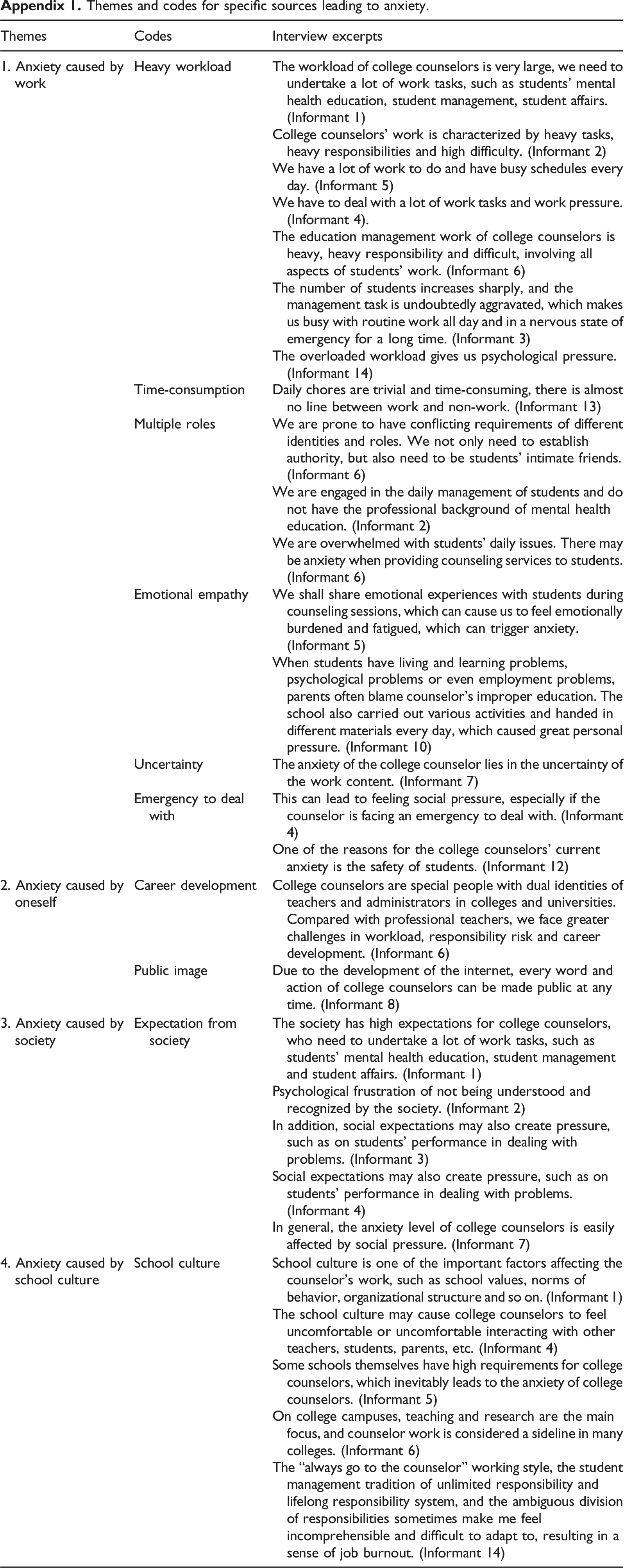
Themes
Codes
Interview excerpts
1. Anxiety caused by work
Heavy workload
The workload of college counselors is very large, we need to undertake a lot of work tasks, such as students’ mental health education, student management, student affairs. (Informant 1)
College counselors’ work is characterized by heavy tasks, heavy responsibilities and high difficulty. (Informant 2)
We have a lot of work to do and have busy schedules every day. (Informant 5)
We have to deal with a lot of work tasks and work pressure. (Informant 4).
The education management work of college counselors is heavy, heavy responsibility and difficult, involving all aspects of students’ work. (Informant 6)
The number of students increases sharply, and the management task is undoubtedly aggravated, which makes us busy with routine work all day and in a nervous state of emergency for a long time. (Informant 3)
The overloaded workload gives us psychological pressure. (Informant 14)
Time-consumption
Daily chores are trivial and time-consuming, there is almost no line between work and non-work. (Informant 13)
Multiple roles
We are prone to have conflicting requirements of different identities and roles. We not only need to establish authority, but also need to be students’ intimate friends. (Informant 6)
We are engaged in the daily management of students and do not have the professional background of mental health education. (Informant 2)
We are overwhelmed with students’ daily issues. There may be anxiety when providing counseling services to students. (Informant 6)
Emotional empathy
We shall share emotional experiences with students during counseling sessions, which can cause us to feel emotionally burdened and fatigued, which can trigger anxiety. (Informant 5)
When students have living and learning problems, psychological problems or even employment problems, parents often blame counselor’s improper education. The school also carried out various activities and handed in different materials every day, which caused great personal pressure. (Informant 10)
Uncertainty
The anxiety of the college counselor lies in the uncertainty of the work content. (Informant 7)
Emergency to deal with
This can lead to feeling social pressure, especially if the counselor is facing an emergency to deal with. (Informant 4)
One of the reasons for the college counselors’ current anxiety is the safety of students. (Informant 12)
2. Anxiety caused by oneself
Career development
College counselors are special people with dual identities of teachers and administrators in colleges and universities. Compared with professional teachers, we face greater challenges in workload, responsibility risk and career development. (Informant 6)
Public image
Due to the development of the internet, every word and action of college counselors can be made public at any time. (Informant 8)
3. Anxiety caused by society
Expectation from society
The society has high expectations for college counselors, who need to undertake a lot of work tasks, such as students’ mental health education, student management and student affairs. (Informant 1)
Psychological frustration of not being understood and recognized by the society. (Informant 2)
In addition, social expectations may also create pressure, such as on students’ performance in dealing with problems. (Informant 3)
Social expectations may also create pressure, such as on students’ performance in dealing with problems. (Informant 4)
In general, the anxiety level of college counselors is easily affected by social pressure. (Informant 7)
4. Anxiety caused by school culture
School culture
School culture is one of the important factors affecting the counselor’s work, such as school values, norms of behavior, organizational structure and so on. (Informant 1)
The school culture may cause college counselors to feel uncomfortable or uncomfortable interacting with other teachers, students, parents, etc. (Informant 4)
Some schools themselves have high requirements for college counselors, which inevitably leads to the anxiety of college counselors. (Informant 5)
On college campuses, teaching and research are the main focus, and counselor work is considered a sideline in many colleges. (Informant 6)
The “always go to the counselor” working style, the student management tradition of unlimited responsibility and lifelong responsibility system, and the ambiguous division of responsibilities sometimes make me feel incomprehensible and difficult to adapt to, resulting in a sense of job burnout. (Informant 14)
Impacts of anxiety on counselors.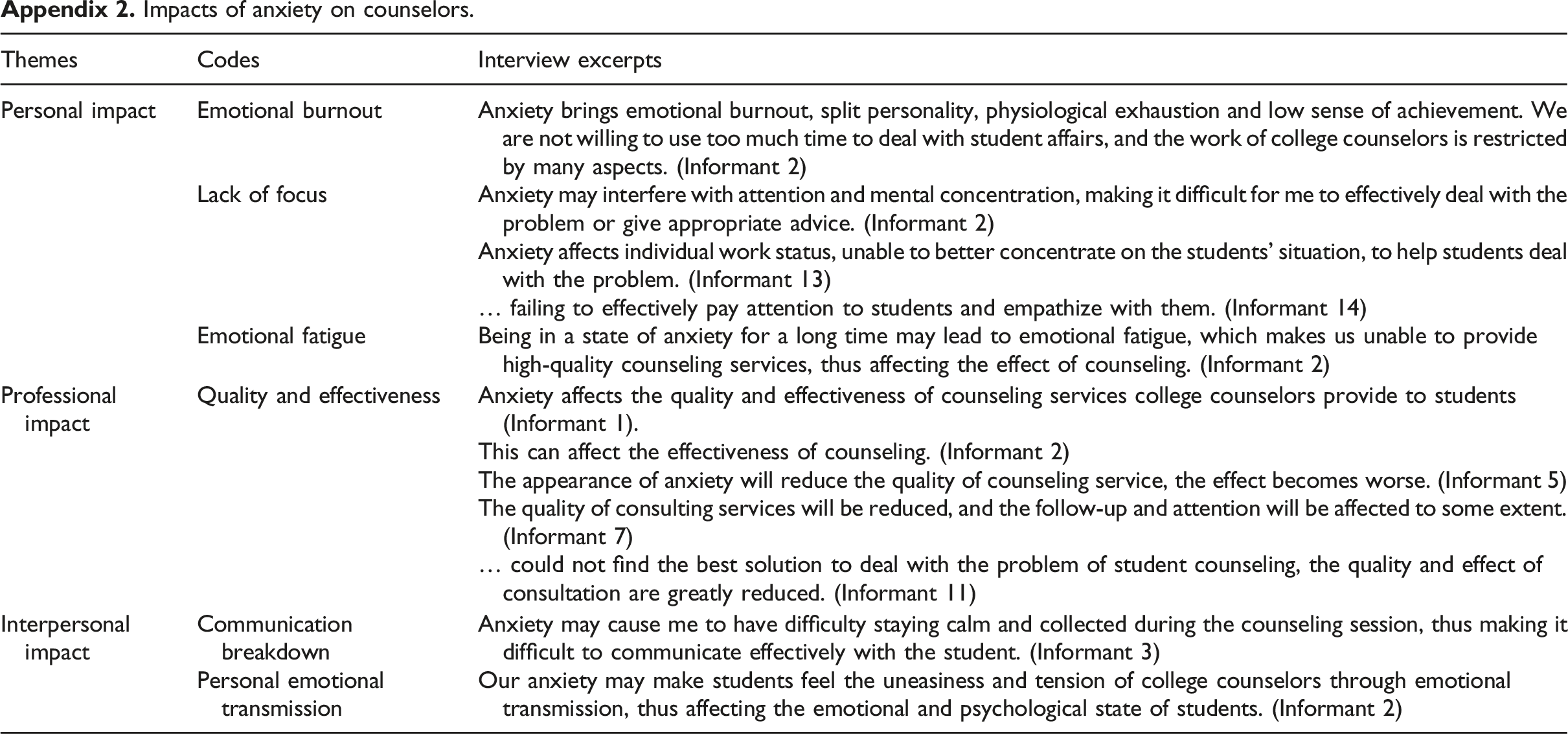
Themes
Codes
Interview excerpts
Personal impact
Emotional burnout
Anxiety brings emotional burnout, split personality, physiological exhaustion and low sense of achievement. We are not willing to use too much time to deal with student affairs, and the work of college counselors is restricted by many aspects. (Informant 2)
Lack of focus
Anxiety may interfere with attention and mental concentration, making it difficult for me to effectively deal with the problem or give appropriate advice. (Informant 2)
Anxiety affects individual work status, unable to better concentrate on the students’ situation, to help students deal with the problem. (Informant 13)
… failing to effectively pay attention to students and empathize with them. (Informant 14)
Emotional fatigue
Being in a state of anxiety for a long time may lead to emotional fatigue, which makes us unable to provide high-quality counseling services, thus affecting the effect of counseling. (Informant 2)
Professional impact
Quality and effectiveness
Anxiety affects the quality and effectiveness of counseling services college counselors provide to students (Informant 1).
This can affect the effectiveness of counseling. (Informant 2)
The appearance of anxiety will reduce the quality of counseling service, the effect becomes worse. (Informant 5)
The quality of consulting services will be reduced, and the follow-up and attention will be affected to some extent. (Informant 7)
… could not find the best solution to deal with the problem of student counseling, the quality and effect of consultation are greatly reduced. (Informant 11)
Interpersonal impact
Communication breakdown
Anxiety may cause me to have difficulty staying calm and collected during the counseling session, thus making it difficult to communicate effectively with the student. (Informant 3)
Personal emotional transmission
Our anxiety may make students feel the uneasiness and tension of college counselors through emotional transmission, thus affecting the emotional and psychological state of students. (Informant 2)
Strategies the college counselors used to manage their anxiety.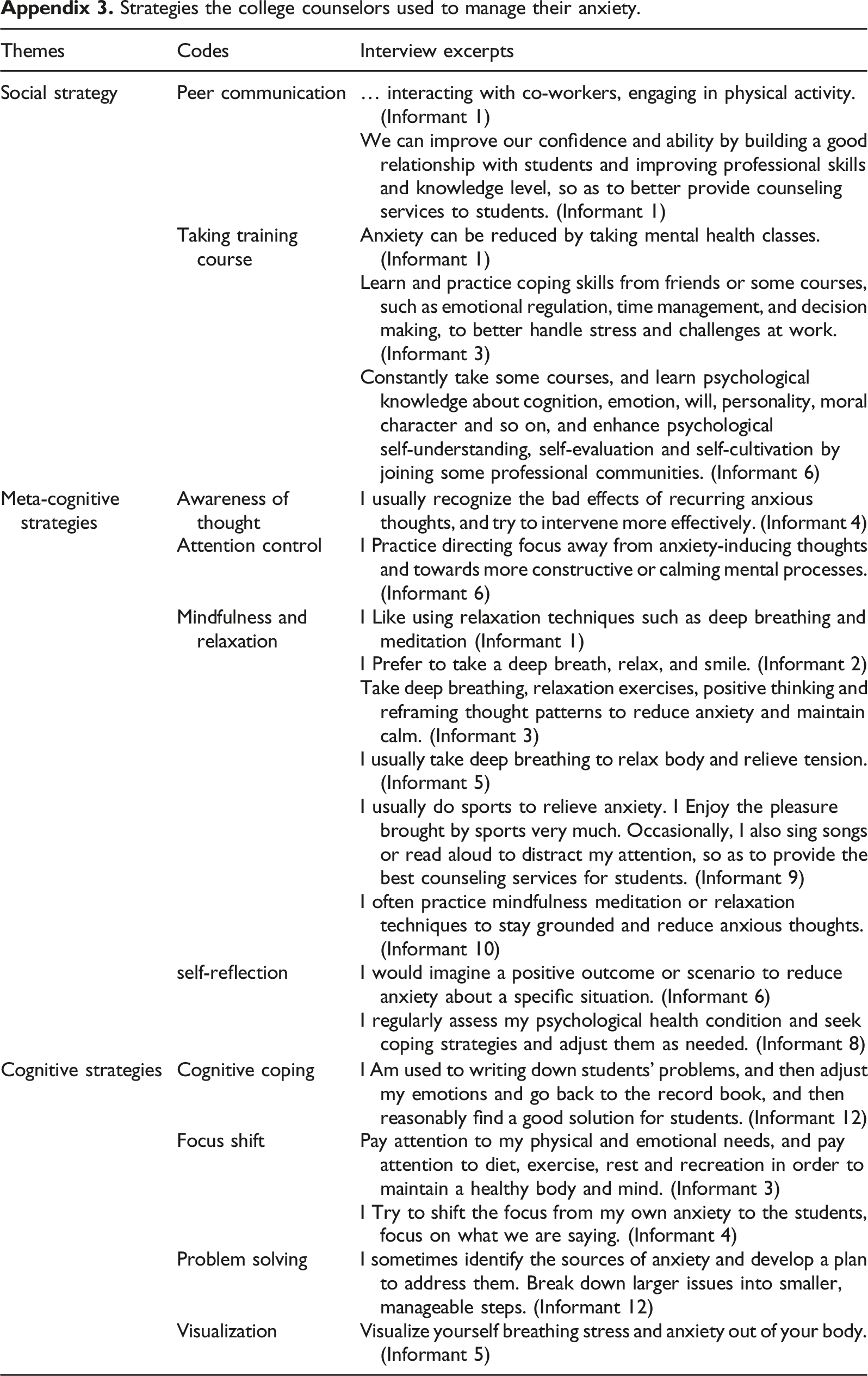
Themes
Codes
Interview excerpts
Social strategy
Peer communication
… interacting with co-workers, engaging in physical activity. (Informant 1)
We can improve our confidence and ability by building a good relationship with students and improving professional skills and knowledge level, so as to better provide counseling services to students. (Informant 1)
Taking training course
Anxiety can be reduced by taking mental health classes. (Informant 1)
Learn and practice coping skills from friends or some courses, such as emotional regulation, time management, and decision making, to better handle stress and challenges at work. (Informant 3)
Constantly take some courses, and learn psychological knowledge about cognition, emotion, will, personality, moral character and so on, and enhance psychological self-understanding, self-evaluation and self-cultivation by joining some professional communities. (Informant 6)
Meta-cognitive strategies
Awareness of thought
I usually recognize the bad effects of recurring anxious thoughts, and try to intervene more effectively. (Informant 4)
Attention control
I Practice directing focus away from anxiety-inducing thoughts and towards more constructive or calming mental processes. (Informant 6)
Mindfulness and relaxation
I Like using relaxation techniques such as deep breathing and meditation (Informant 1)
I Prefer to take a deep breath, relax, and smile. (Informant 2)
Take deep breathing, relaxation exercises, positive thinking and reframing thought patterns to reduce anxiety and maintain calm. (Informant 3)
I usually take deep breathing to relax body and relieve tension. (Informant 5)
I usually do sports to relieve anxiety. I Enjoy the pleasure brought by sports very much. Occasionally, I also sing songs or read aloud to distract my attention, so as to provide the best counseling services for students. (Informant 9)
I often practice mindfulness meditation or relaxation techniques to stay grounded and reduce anxious thoughts. (Informant 10)
self-reflection
I would imagine a positive outcome or scenario to reduce anxiety about a specific situation. (Informant 6)
I regularly assess my psychological health condition and seek coping strategies and adjust them as needed. (Informant 8)
Cognitive strategies
Cognitive coping
I Am used to writing down students’ problems, and then adjust my emotions and go back to the record book, and then reasonably find a good solution for students. (Informant 12)
Focus shift
Pay attention to my physical and emotional needs, and pay attention to diet, exercise, rest and recreation in order to maintain a healthy body and mind. (Informant 3)
I Try to shift the focus from my own anxiety to the students, focus on what we are saying. (Informant 4)
Problem solving
I sometimes identify the sources of anxiety and develop a plan to address them. Break down larger issues into smaller, manageable steps. (Informant 12)
Visualization
Visualize yourself breathing stress and anxiety out of your body. (Informant 5)