



Abstract
To obtain a reverse in the recent increasing brain-drain, the Chinese government has instituted policies for attracting students studying abroad to return to China. This article offers insights into the incentives created by the state and how returnees respond to the policies in the process of their implementation. The study analyzes empirical studies and literature reviews on Chinese returning students and policies regarding them published during the years 2012–2022. Four major research topics are dealt with: the methods initiated by China to coerce and encourage students to return to China, the reaction of overseas students to these initiatives, other invisible effects of policy on overseas students, and influential factors that encourage their return.
Introduction
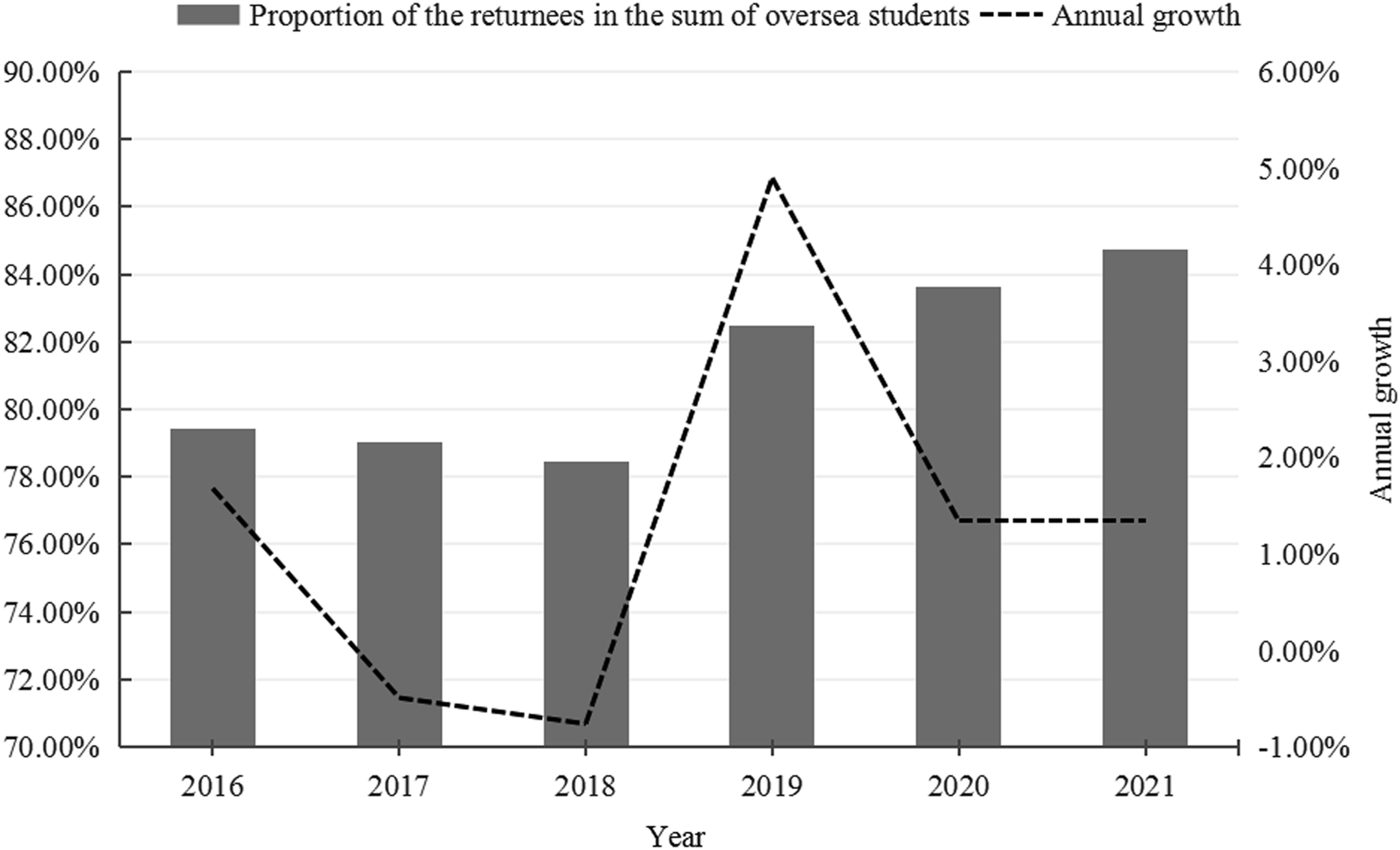
In the last two decades, China has become one of the main sources of international students. According to the Ministry of Education (2021), the number of students returning to China in 2021 reached a total of 1,048,979 or in other words, the number of returnees reached 84.74% (see Figure 1 and Figure 2) meanwhile a 15.26% remained in the destination. Although, the number of returnees increased quickly because of COVID-19; from 2019 onwards, a sharp increase in the number of returning students has been noted, one of the Chinese Government’s worries is still been the number of the return students to China. Number of Chinese oversea students and students returning home and annual growth, 2016-2021 (Source from Ministry of Education of China, 2021). Proportion of the returnees in the sum of oversea students and annual growth 2016-2021 (Source from Ministry of Education of China, 2021).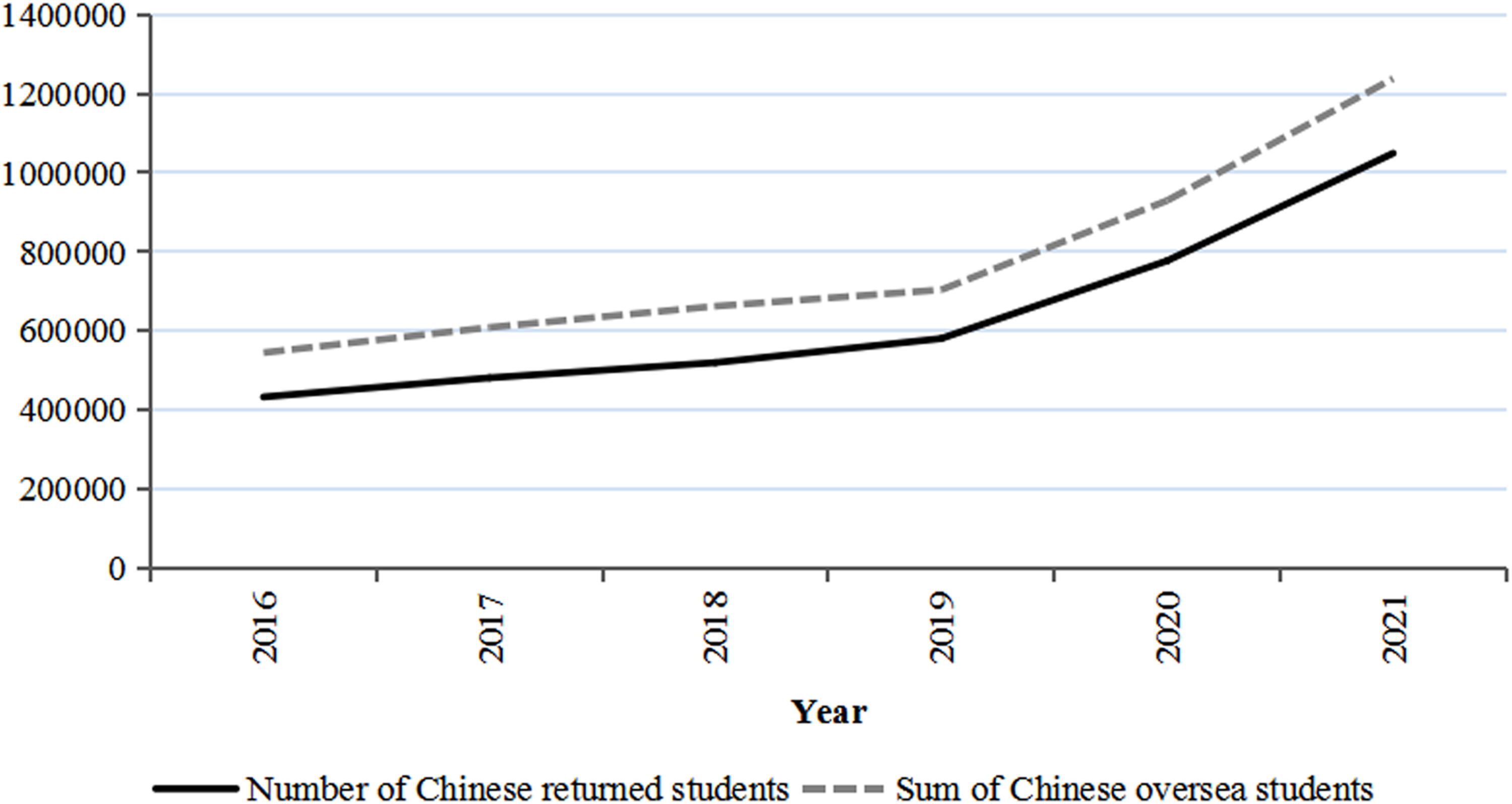
As a response to the worries about the return students flow to China, the Government has instituted policies for attracting graduates abroad to return to the country. From the founding of the People’s Republic of China in 1949 to the end of Mao ‘s period, China witnessed two types of policies facilitating the return of Chinese students studying abroad to China. One policy was “freedom of coming and going”for study abroad before 1949. The other policy requires“return to China on time and obedience to government assignments” for those sent abroad by the state at public expense. But, after the introduction of reform and openness in 1978, the number of students that chose to carry on their studies abroad grew. From that moment, the policies aimed at promoting the return of students studying abroad changed its perspective as well, according to the new social and economic context. As a response to the new context, the Government developed a new political approach for returnees, such as “freedom of coming and going, contribute to China”(Miao, & Cheng, (2010)).
But independent of the focus given to each policy in any time, Miao, & Cheng, (2010) state that the idea behind issuing policies for students studying abroad is to deal with China’s brain drain. Initially, the idea of studying abroad originated from the need to cultivate scarce talents and high-level talents in relatively backward regions of China. In the present-day it has transformed into the possibility of receiving different modes of education. In spite of the different political target, the common denominator between both policies is not to lose this human capital abroad. Since the 1990s, a potential brain drain scenario. Principal categories of searched articles with keywords above. Source: CKNI and WOS, 2012-2022.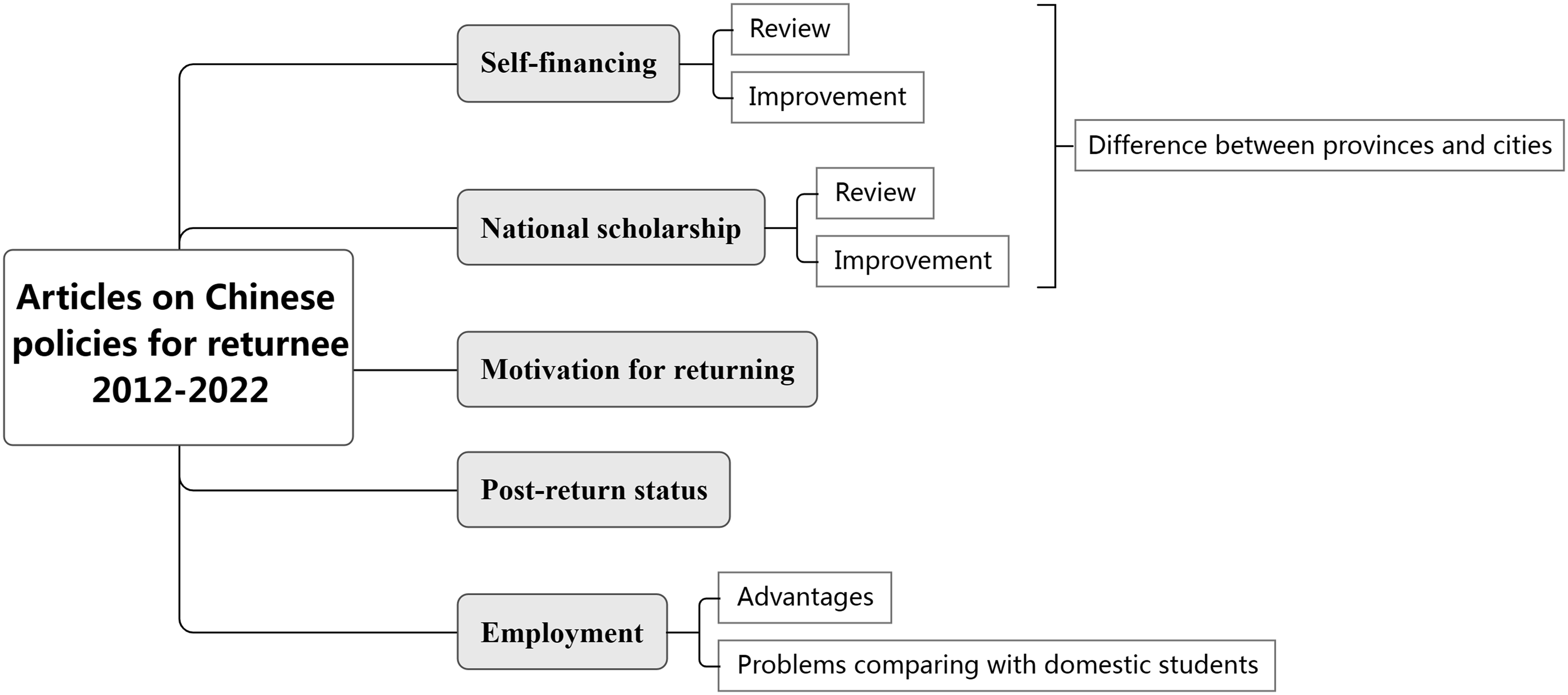
As a response to the worries about the return students flow to China, the Government has instituted policies for attracting graduates abroad to return to the country. From the founding of the People’s Republic of China in 1949 to the end of Mao ‘s period, China witnessed two types of policies facilitating the return of Chinese students studying abroad to China. One policy was “freedom of coming and going”for study abroad before 1949. The other policy requires“return to China on time and obedience to government assignments” for those sent abroad by the state at public expense. But, after the introduction of reform and openness in 1978, the number of students that chose to carry on their studies abroad grew. From that moment, the policies aimed at promoting the return of students studying abroad changed its perspective as well, according to the new social and economic context. As a response to the new context, the Government developed a new political approach for returnees, such as “freedom of coming and going, contribute to China”(Miao, & Cheng (2010)).
But independent of the focus given to each policy in any time, Miao, & Cheng (2010) state that the idea behind issuing policies for students studying abroad is to deal with China’s brain drain. Initially, the idea of studying abroad originated from the need to cultivate scarce talents and high-level talents in relatively backward regions of China. In the present-day it has transformed into the possibility of receiving different modes of education. In spite of the different political target, the common denominator between both policies is not to lose this human capital abroad. Since the 1990s, a potential brain drain scenario has been a matter of concern for the Chinese government (Le Bail, & Shen (2008)), because this process is perceived by the Government in the way that, if Chinese students studying abroad’overflowed’ into a host country, or a third country, it could damage economic development and social stability in the country of origin. That’s why a growing number of programs have been implemented to promote the return of highly qualified individuals. Stepan (2015) writes that realizing the growing importance of internationalizing its economy in a highly globalized world, the Chinese government has rolled out different strategic plans aiming to become an“Industrial Superpower”by 2049, called for an industrial upgrade through the strategy of “Made in China 2025”, and urged for the digitalization of the Chinese economy.
Additionally, the policy for sending Chinese students to study abroad can be seen as an important step for China to further deepen its reform and opening up, as well. As then Prime Minister Zhu Rongj said, “Henceforth China will change the emphasis in its opening-up policy from attracting foreign capital to attracting human talent and technology”(Miao (2010)). In order to be able to further enhance possibilities for participation in the international learning experience for Chinese students, the government has adopted a more liberal approach to permitting and encouraging students to study abroad (Mok, & Han (2019)). And these students will also obtain more high-quality educational resources by studying abroad and enhance their competitiveness in employment.
But despite the increase of policies to promote the return the students to China, there is a lack of information about the impact of these policies (current), because it has not already been an evaluation of the public action. In this sense, the contribution of this paper is to get preliminary information to answer two large questions, namely, what impact does the policy have on the decision process of students studying abroad to return to China, and what impact does it have on their status after their return to China. So, the main aim of this paper is to establish a systematic overview of existing knowledge and related statistical data on the topic to get answers to both questions.
Theoretical approach
A theoretical model to assess the efficiency of this policy is the one proposed by Ernest George Ravenstein (1889). At the end of the 19th century, he pointed out that migratory movements are not completely disorderly, but rather follow certain rules that he defined in the “Pull and Push” model, which attempted to explain the motivations existing in population movement.“Attraction” was seen as being generated by an element that captures interest in the place or country of destination. Push and pull factors were likely to develop under conditions or in environments that generate universal influence, or provide specific opportunities for specific groups.
With the evolution of this model and the appearance of criticism, researchers have come to focus more on the factors from a dynamic perspective, understanding them as possible situations in which the elements of push and pull vary between different groups of people, and multiple factors can be viewed within the push-pull theory framework. The traditional pull and push model has been effectively used for investigating the motivations of Chinese students who study abroad in prior research (Bodycott (2009); Li, & Bray (2007)). And this theoretical approach will be considered in this paper.
In this way, to get a structured analysis of whether all policies are effective for all returnees, factors in China that exerted a negative influence on a return decision were classified as push. And factors with positive effects were considered as pull factors.
Methodology
To get an initial response for these questions we focus on the status of the issue through a systematic bibliography review. So, the specific aim of this paper is to carry out a literature review of published articles has been undertaken to establish the breadth and depth of existing knowledge and related statistical data to get answers to both questions.
Many articles have been written about returning students and policies related to their return, but they are fragmented in terms of research focus and research methods. Due to this, a systematic literature review was carried out in two phases: search and review, followed by categorizing and analysis. Only articles in two languages — Chinese and English — which were published between 1 January 2012 and 31 May 2022, have been reviewed. These articles focus specifically on Chinese students who have received academic training abroad and are either returning students (whether permanent or not) or potential returning students. The Chinese-language articles have been selected from journals available in the China Knowledge Resource Integrated Database (CKNI), including Science Citation Index (SCI), Engineering Information (EI), core journals, and the Chinese Social Sciences Citation Index (CSSCI). Two keywords were used to identify related articles: liuxue huiguo zhengce, or Policies for students studying abroad to return to their home country, and Zhongguo haigui, or Chinese returnees. Search and review revealed thirteen articles that were considered relevant and suitable for further analysis.
When using the keywords “Chinese returnee” and “Chinese policies for returnee” for English articles in the WOS search, a total of three hundred and sixteen possibly relevant articles were identified. After excluding articles that were determined to be irrelevant, based on a review of titles, abstracts, and conclusion, a total of nine English articles remained. Together with thirteen Chinese articles that were deemed to be relevant, these results were further categorized and analyzed.
In the end, the distribution of the categories is shown in Figure 3, which includes results from both the Chinese and English articles. The categories were further unpacked into several sub-categories. Proportionally speaking, how to improve the contents of policies received the most attention from researchers in China. Employment and factors motivating the decision to return to China were more investigated abroad, whereas concern regarding how much the policies actually affected students studying abroad was less frequent in China.
According to the financing type and different aspects of return, the categories were defined as: (i) Self-financing: studies on students who finish their study abroad without any help from the Chinese government, but with family support, personal capital, or scholarships from other countries or their universities. (ii) National scholarship: studies on students who get scholarships from the Chinese government. The way of managing students with national scholarships is very different and policies for returnees are dissimilar in comparison with those in their own financing. (iii) Motivation for returning: studies on the decision process and how the policies affect the motivation of returnees, such as economic, professional, and social. (iv) Post return status: studies on the adaptation process of returnees in China and the obstacles they occur, such as professional environment, political, social, and cultural, etc. (v) Employment: as a main part of the policies that encourage returnees, it has been divided as an independent category because there are many studies that focus on the comparison between returnees and domestic graduates, obstacles and problems in the access and adaptation of returnees in the labor market.
Status of the issue
In the following section, we present the results of the systematic literature review, considering the categories applied in the research and selection of papers, such as self-financing, National Scholarship, motivation for returning, post-return status, and Employment. Besides, the result is structured taking into account if the different factors observed are considered push or pull factors.
National scholarship/self-financing
First, results related to the search categories National Scholarship and Self-financing are displayed.
Pull factors
An interesting dimension to understanding the impact of the policies on the decision process of the student is the source of their funding, if this is public or private, because it conditions their motivations to return. Concerning students financed by state scholarships, the ‘Regulations on the Administration of Postgraduate Students Studying Abroad with State Scholarships were originally published in 2007. This document specifies the conditions for return and the different degrees of compensation that the recipient must pay in case of breach of contract. Postgraduate students were required to graduate within an established period, and had to serve in China for at least two consecutive years after their return to the country. Failure to return on time, or complete their period of service, would constitute a breach of contract, resulting in the state taking measures of economic nature for compensation, legal prosecution, and/or reputation sanctions (Feng 2012; (Feng & Chen, 2012). According to a qualitative study carried out by Feng on the opinions of four hundred and seventy-two Chinese Ph.D. students studying abroad with state scholarship in 2012, 90% of them recognized the importance of sanctions for non-compliance when making their return decision. Based on this, it can be argued that this administerial regulation has been a decisive pull factor in the return of undergraduate, graduate and doctoral students who had received state scholarships.
Considering, now, the students that have got their financing through their families, according to statistics about Chinese international students in 2019 released by the Ministry of Education, about 90% of the students were self-funded. Furthermore, the parents of self-financing students are wealthy members of the upper and middle classes (Li, & Bray (2007); Xiang, & Shen (2009)).
This suggests that financial incentives, such as scholarships, are far more important for lower- and middle-class students than for upper-class students. It is reasonable to speculate that a majority of self-financing students consider policies for returning students as a minor factor in their decision-making process. This result can be related to the research findings of Mok, & Han (2019), which indicate that returnees overwhelmingly have privileged family backgrounds, and more family support than domestic graduates in China (Zhai, & Barbara, (2021)).
Push factors
In the same literature reviewed it can be observed that the returnees from upper and middle-class families require more additional services in employment support than financial benefit, and those of the lower class need both to be able to transform their knowledge and experience gained from international education into economic, social, and cultural resources in China (Mok, & Han (2019)). According to this survey based on semi-structured online interviews, several future returnees in IT and medical professions stated that they would have a “relatively low salary as new graduates” in China, which could constitute a push factor in the home country. Overall, there were more differences between the professions and majors of the participants, which make that the salaries will be changeable as a pull factor in the home country in their decision-making (Ruan (2020)).
Meterial circunstances: post return status/employment
The survey data released in the Report on Employment & Entrepreneurship of Chinese Returnees 2019, published by the Center for Centre for China & Globalization, (CCG), reveals that ‘Convenient to reunite with family and friends’ is the main reason given by respondents for their return to China, amounting to about 60% of the total. Nevertheless, only 13% of Chinese students studying abroad consider ‘National policies for returnees’ as a factor motivating their decision, and ‘policies’ ranked only eighth out of a total of eleven factors. Another survey indicates that 87% of Chinese students in the USA returned to China for ‘personal reasons’, including family, employment opportunities, culture, etc. (Reiter Nemeth (2019)). In addition to this factor, students studying abroad who consider whether to return to China, are predominantly influenced by feelings of patriotism, economic development, emotional appeal, personal development, national policies, and cultural identity (Wang (2016)).
Regarding the incentives for students, we can divide them into two general groups as of the literature reviewed. These relate to work conditions (including project possibilities, financial support, awards, and evaluation), and living benefits (covering the Hukou-national residency permit system, subsidy, medical and social services, etc.). All these financial encouragements and examples of preferential treatment serve as pull factors for students contemplating returning to China.
Pull Factors: work conditions and living conditions
The implementation of policies for returnees is to secure a “reverse brain-drain”, which involves the return of talented graduates to China. The Chinese government plays an active role in facilitating the flow of human talent by deregulating the controls imposed on movement, thereby lowering the transaction costs of reverse migration (Zweig, & Wang (2013)). The state has introduced incentives for returnees, in the form of various higher salaries, better housing and long-term residence cards for former Chinese citizens who have adopted foreign citizenship. Many policies target the scientific or research environment in China and the difficulties returnees face due to the highly regulated nature of Chinese society. In order to attract entrepreneurs, provinces and cities build high-tech zones, replete with tax breaks, discounted floor space and assistance for entering the local market and, in some cases, investment in start-ups made by the zone’s management company.
Firstly, it is worth considering who can actually be the beneficiaries of such policies, and what qualifications returnees need to have to fulfill requirements. The 2007 plan of the MOE called for the return of citizens who could make breakthroughs in key technologies and serve as scientific leaders who could advance newly emerging fields. The ‘Thousand Talents Plan’ of 2008, sought scientists for permanent recruitment into Chinese academia, as well as offering short-term appointments. The qualifications needed can be broken down into four categories: (1) experts and scholars with titles on a par with professors in prestigious foreign universities and scientific research institutes; (2) senior technical and management professionals working in well-known international companies; (3) entrepreneurs owning proprietary intellectual property rights, or who had mastered ‘core technologies’, with overseas experience as entrepreneurs and familiarity with international practices; and (4) other urgently needed high-level innovative and entrepreneurial talents.
Most provinces and cities have formulated and imple-mented plans and programs for attracting overseas talent, and what constitutes’talent’is defined by each province and city in according with their specific development needs; for example, talent can refer to all international graduates, or to scientists and other skilled professionals. Students who have graduated overseas constitute one group and can be beneficiaries when their skills match the requirements that have been set. As an example, sixteen of China’s twenty-four provinces have stipulated an international master’s degree or a Ph.D. as the lowest requirement.
Regarding provincial preference for career skills, if we include as’talent’all holders of advanced academic degrees, and returnees with competence in company administration and entrepreneurship, entrepreneurship has been the category that has marginally been the most popular choice, although the difference from the other two categories is minimal (Shen, & Zhu (2010)). Basically, all provinces and cities display a demand for these three main types of career skills, academic, administration, and Entrepreneurial.
Other studies show that those working in companies or running their own firms were far more likely to return permanently, as were more than half of the Chinese students who studied abroad and were willing to be entrepreneurs because they possessed knowledge of valuable technological developments, or had sufficient family resources (Zweig, & Wang (2013); Mok, & Han (2019)). Given this shared interest in returnees, local governments in Beijing, Shanghai, Shenzhen, and Zhejiang have implemented a series of policies, offering generous subsidies and venture capital to returning students, in the hope of attracting them to return and make contributions to the local economy. Up to 2015, there were one hundred and twelve Overseas Talents Introduction Bases and two hundred and sixty Overseas Students Pioneer Parks, containing over seventeen thousand enterprises in China.
Viewed from this perspective, there were more policy beneficiaries because of skills in entrepreneurship, and it can be claimed that these policies for supporting returnees exerted a considerable pull factor promoting this option. Returning entrepreneurs benefitted from different preferential policies, such as tax breaks, reduced costs for floor space, assistance in administration and marketing, and, in some cases, investments in the start-up by the specific zone’s management company. Moreover, returning entrepreneurs’ faces were certainly affected by multiple factors such as capital, market opportunities, and technological innovations for long-term development in China (Guo et al., 2013).
When we focus on the range of specialties needed by provinces and cities, these include new energy, new materials, energy conservation and environmental protection, biomedicine, marine development, electronics, the Internet of things, and other emerging industries and high-tech industries. Returning students who had specialized in the Social Sciences and Humanities were less sought after, and received less financial assistance than those with the above-mentioned knowledge skills. Furthermore, there is a range of levels for master-level programs and differences between universities in terms of their ranking and reputation, and length of study in distinct countries. As a result, among the returning students, the question of whether they can become the beneficiaries of the policies, or what kind of benefits they could receive as a result of these policies, is closely related to their knowledge, skills, and academic qualifications, and whether they fulfill the requirements of provinces and cities. In other words, these kinds of policies works as a pull factor, but depending on the student´s training.
Another pull factor attracting returnees is related with the living conditions, for instance, with the Hukou (national residency permit system). An individual’s Hukou has a significant effect on a Chinese citizen’s spatial mobility, the availability of high-quality medical and educational services, and better pension, etc. Students returning from overseas can obtain more chances than domestic graduates to obtain a Hukou in major cities, such as Beijing or Shanghai (Likedin, 2018).
The distribution of cities where returnees work and live is shown in the report (Centre for China & Globalization (2019)). About 21% of respondents live in Beijing, and 11% in Shanghai which is ranked as the second choice (Centre for China & Globalization (2019)). Other cities like Chengdu, Shenzhen, Guangzhou, and Hangzhou also are destination choices for residency. Consequently, apart from straightforward economic and cultural factors, the possibility to obtain an attractive Hukou is a main concern for students returning from overseas. The Hukou residency permit system is an important pathway by which upward social mobility can be achieved, as a result of changes in Hukou status (Xiang, 2016a). In support of this assertion, a political class analysis found that Hukou has a significant effect on the spatial mobility and social mobility of Chinese citizens (Guo (2018)).
Push factors
In line with the dramatic expansion of higher education and the devaluing of domestic degrees in China, young people are increasingly choosing international universities in an effort to secure better employment and achieve greater human capital. A few studies have analyzed the improvement of policies for returning students and found that ‘improving the employment service for returnees’, instead of ‘improving the compensation and benefits for talents’, became the most important demand from students who were interviewed (Centre for China & Globalization, 2019). A few studies reveal that “a lack of understanding of the domestic employment situation and business need” is perhaps the most crucial disadvantage for returnees in their development, once they have returned to China (Centre for China & Globalization (2019); Yi (2011); Wang (2016)). Indeed, “not being familiar with the development of the domestic market environment and development needs” was identified by 22% of returnees in the report of CCG, 2019, and the problem that “the time for returning to China is different from that of the domestic market” is similar to this concern.
Regarding returnees seeking entrepreneurship possibili-ties, financing difficulties are the most essential impeding factor that is encountered in entrepreneurship (Centre for China & Globalization (2019); Lai (2012)). Returnee entrepreneurs think that the help provided by platforms such as parks and incubators has decreased. They express a need for more professional services, for instance, financing, legal affairs, business management, technical cooperation, and patent protection.
Another push effect observed is related to unfair disadvantages in labor conditions. Some studies reveal that local graduates “are not happy with returnees”, not only because they return from overseas to compete with them for jobs, but also because of the differential treatment offered to these returnees; local students feel that they are being unequally treated, even though they also are graduates from high-level university (Faggian, & Sheppard (2007); Kratz (2011); Zhai, & Barbara (2021)). In the Report on Chinese Overseas Students 2015 by New Oriental (2015), a major issue confronting returning students for their better social re-integration in China is the conflict between foreign and domestically trained students because of the significant salary gap and professional development opportunities existing between the returnees and the domestic graduates.
One argument suggests that apart from higher salaries, and financial and project support, high-talent returnees are likely to enjoy an environment that allows better research innovation (Zweig, & Wang (2013)). According to research findings, the demand for a better research environment is more important for returnees who have been overseas for many years, than those who have just graduated. Unquestionably, better scientific research equipment and a better research environment are equally crucial for the development of science. However, returnees who have been overseas only for a short time appear to be more able to adapt quickly, on their return, to local social and cultural environments.
Discussion and conclusions
Once analyzing how the policies motivate students to return to China, it can be inferred that since the result of returning to China is a major decision for most Chinese students, the purpose of the return policy at this stage has been successful, with the support of other various factors. In particular, in relation to the question: How do policies affect the student’s decision to return? The most important finding of this study is that the practical effect of policies for attracting students studying abroad to become returnees varies significantly depending on the profiles of students, including their majors, specialties social class, the requirements for classifying the level of talent in the programs provided by each city, or how the policies have been implemented.
For instance, almost all studies reviewed argue that returnees in the natural sciences acquire more chances and benefits than those in the social sciences or humanities, because of industrial structural reforms and trends in international economic development. According to the data published by the Ministry of Education of China in 2021, due to COVID-19, returnees have grown more rapidly than in previous years. Given the situation that the total number of overseas talent introduction plans in the provinces and cities remains unchanged, some returnees may not obtain the benefits that those with the same educational level gained prior to the pandemic. But, in the east, there are more chances to receive benefits from policies for returnees, but the effect of these policies in the center and west of China has decreased.
The pulling and pushing effect of policies depend on the implementation of policies, and their accordance with the needs of returnees, governmental incentives, and the employment market (Xue et al., 2017). In almost all the policies that have been established for the benefit of returning students, there are differences between fields of endeavor, educational levels, and types of employment. The implementation of policies serves as a decisive factor, confirming the pull and attraction for students studying abroad. According to the Report on Returnees in 2021, incomplete implementation and improvement of policies are the issues receiving the most complaint among returning students. Lesser problems are the authentication of academic degrees, identifying returnees and their level of talent, and lack of publications. Wang (2016) indicates that no matter whether it is a matter of the developed regions in the east of China, or the under-developed regions in the central and western regions, policies concerning talented students tend to be similar.
There is a lack of sufficient attention to the construction of systems and mechanisms that will affect the long-term development of talented students, a lack of humane care, and a lack of attention to the environment for scientific research that can ensure that talented students can be retained. Without improvement, talented students studying overseas who comply with the conditions set out in these policies will not wish to return to China, and those who wish to return may not be able to fulfill the requirements.
The research findings given above demonstrate that the policies for students returning to China do not only play a role with regard to economic incentives and preferential measures. Some policies lack flexibility and do not conform with reality in their content, and other problems can emerge in the implementation process, resulting in the appearance of pulling, but also partly pushing, leaving the question of which factors actually do promote pulling.
It can be argued that a flexible mechanism for the international flow of Chinese overseas talents would be productive. Outstanding Chinese students studying abroad maintain a high level of research and international exchanges. Flexibility would better mirror Saxenian “brain circulation” to China, rather than reflect a powerful“reverse brain-drain” (Zweig, & Wang (2013)). A better environment in general for human talent needs to be created to meet international standards (Zong and Lu (2017)). Ancillary services need to be included with existing policies. A 2002 survey found that, when calculating whether to return, mainland expatriates preferred a “systematic reform of China’s environment on human talent”, rather than special privileges (Zweig, & Wang (2013)). Similarly, several surveys have found that an important force confronting people planning to return to China was “the complicated role of human relations in Chinese society” (Feng (2012); Lai (2012)).
In the future, to maintain China’s competitiveness with regard to international talent, it is necessary to further improve the pull factor and diminish the push factor. Systematic reform of China’s environment for human talent would function better than special privileges for those who are highly talented (Zweig, & Wang (2013)). Providing in advance information regarding local employment and industry information should be a core for future policy adjustments. For returnee entrepreneurs, the help provided by platforms such as parks and incubators can be increased with more professional services, for instance, financing, legal affairs, business management, technical cooperation, and patent protection (Ni & Yang, 2014). For example, in terms of employment, there should exist open recruitment channels and recruitment activities for returnees, as well as encouragement for companies to go overseas to carry out publicity and recruitment activities, relaxing the time limit for them to submit resumes, etc. When evaluating returnee employment, simply confirming employment status is not sufficient; the needs and expectations of returnees should also be considered. Several surveys have concluded that returnees are better in terms of language skills, global awareness, overseas connections, and professional skills (Gu, & Schweisfurth (2015); Welch, & Hao (2013)).
At the personal level, physical and psychological support for the reintegration process for returnees needs to be developed. There is a lack of policies and services that assist in understanding the reintegration process for returnees, which will help provide information about existing policies and programs to facilitate their re-entry into Chinese society (Wang (2016); Hu (2020); Xia and Li (2020)). Furthermore, there is a general need to upgrade to an authoritative platform for centralizing and updating policy information for each province and city, containing employment information, and various supporting services. To enhance the appeal to returning Chinese students, positive and constructive relations should be developed with social media companies, bloggers, current and past Chinese students, teachers, and professors in schools and colleges in China (Hu (2020)). The extensive internet usage among Chinese students is related to their formative upbringing during the period when many digital technologies such as the Internet, e-mail, mobile phones, iPhones, and social media have become available in China (Jia, & Winseck (2018)).
Before the end, we should discuss the limitations in this article, in order to avoid them in subsequent investigations and to focus the study on the question that has not been completely explained in this article. Although the corpus has been collected from the main academic databases, the literature review does not ensure a full representation of studies on policies that encourage the return of Chinese students abroad. The discussion on the practice of Chinese policies has not been sufficient because of the limit of material, differences in the types of policy and in cities. More methodologies can be used, such as qualitative method, to obtain more information and finding.
Copyright statement
Please be aware that the use of this LATEX 2e class file is governed by the following conditions.
Copyright
Copyright © 2016 Sage Publications Ltd, 1 Oliver’s Yard, 55 City Road, London, EC1Y 1SP, UK. All rights reserved.
Rules of use
This class file is made available for use by authors who wish to prepare an article for publication in a Sage Publications journal. The user may not exploit any part of the class file commercially.
This class file is provided on an as is basis, without warranties of any kind, either express or implied, including but not limited to warranties of title, or implied warranties of merchantablility or fitness for a particular purpose. There will be no duty on the author[s] of the software or Sage Publications Ltd to correct any errors or defects in the software. Any statutory rights you may have remain unaffected by your acceptance of these rules of use.
Footnotes
Declaration of conflicting interests
The author(s) declared no potential conflicts of interest with respect to the research, authorship, and/or publication of this article.
Funding
The author(s) received no financial support for the research, authorship, and/or publication of this article.