



Abstract
The research was initially driven by an empirical requirement adopting foreign early childhood curricula for a K12 program from kindergarten to high school. After reviewing existing global or international curricula adopted and adapted in different research contexts, a handful of researches have been conducted in China’s context. However, the growth of internationalized K12 schools is rapid and the demand for glocalized school-based curriculum (SBC) is urgent in China. Therefore, a conceptual framework for developing a glocalized SBC was developed based on general curriculum development models, school-based curriculum development models, and the consideration of the contexts. The framework is expected can not only provide the current research with technical support in terms of integrating global curricula and local curricula for one specific kindergarten but it can also be applied by other researchers whose researches are related to curriculum development, specifically in the early childhood field and involving global and local context and curricula adaptation.
Keywords
Introduction
Developing a glocalized school-based early childhood curriculum was initially driven by an empirical requirement, which is a task given by the school board to adopt foreign early childhood curricula for the K12 school. Naturally and reasonably, a research question on how an internationalized kindergarten in China develops a glocalized school-based early childhood curriculum was generated. After preliminary reviewing a number of existing global or international curricula adopted and adapted in different research contexts, I found that a handful of researches have been conducted in China’s context and many of them were contributed by Li (2005, 2006, 2017, 2018, 2019). School-based curriculum development (SBCD) is used in these researches to conceptualize the process of developing a curriculum weighing on the autonomy of the school’s stakeholders and the nature of the school. However, it does not mean the macro levels such as the local, national, and global planes should not be considered. In fact, China launched a “three-level curriculum management system” to promote SBCD for the purpose of decentralizing the decision-making power of the nation to three levels, which are the school, local, and national planes (Li, 2005; Ministry of Education of China [MOEC], 2001). In addition, there are various international curricula adopted and adapted by Chinese kindergartens to varying extent, such as the Montessori method, the Reggio Emilia approach, the High Scope curriculum, the Multiple Intelligences curriculum, the Early Years Foundation Stages, and so forth (Senent et al., 2021; Yang & Li, 2019a, 2019b). Thus, for schools transplanting curricula beyond their motherlands, taking the global or international context into consideration is essential as well.
The research context & setting
The research context introduction
The early childhood curriculum in China is developing and interacting with its time and context. Developing an early childhood curriculum that is appropriate for China’s national context has been explored for over 100 years in China. In the first curriculum reform period, the overseas educational philosophy, mainly from America, experienced great welcome at the educational theoretical level but faced difficulty in implementation in China. In the second round, the first reform was overturned since the impact of the war to resist U.S. aggression and aid Korea, and replaced by the Soviet’s educational pattern. The third one, which is continuing, was under the influence of the era of China’s reform and open-up in order to catch up with the globalization overall (Zhu, 2011, 2015). From historical perspective, the major reforms of China’s early childhood curriculum were impacted by changes of political, cultural, and economic policies in China and the interrelationships between China and the other countries. In other words, the national educational curriculum is influenced by international educational philosophies and theories, and it seems that the educational theories and philosophies of China are developed under a seek of global and domestic consensus. Further, the “three-level school-based curriculum management” (MOEC, 2001) was issued and aims to decentralize the power of the national level to local and school one. Outwardly, the system is developed comprehensively with all-level consideration. However, in practice, the development of school-based curriculum (SBC) for China’s kindergartens is controversial.
Wu (1999) summarizes the real challenges of SBCD to China’s educational system: (1) the highly centralized Chinese system and decentralization needs of SBCD are constitutionally opposite to each other; (2) schools and their teaching staff lack of professional consciousness and abilities for SBCD; (3) the shortage of curriculum experts would be an unsolvable problem in a short time; (4) poor school resources and weak teacher qualifications would inevitably put a ceiling on the SBCD in China.
Theoretically, the first challenge as to the highly centralized curriculum development system should be unraveled by China’s three-level SBC management since the original purpose of it is to decentralize the power from national to local and school. However, in practice, a lot of feedback from school stakeholders who are under the development of SBC are athwart, the policy is considered as an extra burden and a mission impossible. It is too hard to manage the implementation of the national curriculum, local (or province) curriculum, and a SBC for a school merely based on vague statements (Xu & Wong, 2011). It is described as a “riding a blind horse” situation for kindergarten teachers to develop an SBC by themselves without clear guidance and experts support (Li & Yang, 2018). Identical challenges of SBCD can be found in the researches of Zhou (2004) and Li (2006), both of them indicate similar major challenges for SBCD in Hong Kong and Shanghai’s kindergartens: (1) lack of curriculum experts and their guidance, (2) short of resources for curriculum development, (3) underqualified teachers, (4) overlook on SBCD by the school management. The challenges are loud and clear and closely relate to school teachers, recourses, and management.
The research setting introduction
The whole school is a K-12 program from kindergarten to high school in China. The international kindergarten and the bilingual kindergarten were merged as one for students from mainland China and the rest of the world based on marketing and admission considerations. The tuition fee of this school is 138,000 RMB per school year; the student-teacher ratio is no more than 5 to 1; a second language immersive environment is provided by international teachers throughout the day; all teachers have bachelor and above educational backgrounds, and many Chinese teachers have intercultural learning and working experience. For an internationalized kindergarten, like the research setting, developing a SBC is not only a given task but also a major part that differentiates itself from many other SBCDs in public schools in China. As to public kindergartens, SBCD is not a have-to-have situation, and even if they choose to, it does not always involve foreign curriculum adaptation. While, for the research setting, since the nature of the school is an internationalized kindergarten involving global accepted curricula adoption, the SBCD for this type of school has to experience the process which I would call the glocalized SBCD. There are two major aspects involved in the glocalization process (1) from the global context to the local context and vice versa (2) from the global curricula to the local curricula and vice versa (further exploration as to glocalization can be found in the glocalization section later).
As the founding kindergarten principal of the internationalized school, noticeably, one of the reasons I select this kindergarten is from the practical perspective of being one of the gatekeepers in the school. More substantively, the school provides better soil for the glocalized SBC, as a grafted plant, to grow. Preschool education is not part of the 9 years of compulsory education which is from primary to middle school for 6–12 years old students in mainland China. For the 9 years of compulsory education, no matter what kind of school nowadays, the school has to follow and complete the Chinese National Curriculum as the priority to others, and the imported curricula and textbooks are forbidden (MOEC, 2001; The Communist Party of China Central Committee and The State Council, 2019). For preschool education, there are recommendations such as provincial textbooks for children and teachers. However, unlike the 9 years of compulsory education, the recommendations for kindergarten can be considered as important resources instead of the fixed curriculum that has to follow. With more flexibility, developing a glocalized SBC is more practicable in the preschool setting. Moreover, the higher educational background, the inter-cultural experience, and the bilingual language capability of the teachers are valuable for SBCD, particularly involving foreign curricula adaptation, since it weighs on the contribution and autonomy of the school’s stakeholders. Lastly, the Reggio Emilia approach is the major selected international early childhood educational system for the kindergarten to adapt. As the Reggio Emilia approach believes that the construction of knowledge emerges on a reciprocal and ongoing relationship among children, teachers, parents, and the public (Edwards et al., 2011), practising a Reggio-inspired approach is more feasible with a low student-teacher ratio.
Taking both the research context and setting into consideration, I believe that glocalized SBCD is more viable in a school that possesses the following attributes. (1) High autonomy of the school (such as financial, management, and curricular aspects) (2) High-quality teachers (such as higher educational background and intercultural study and work experience) (3) Low student-teacher ratio
Review of academic literature
In this section, some important but confusing terms are distinguished and clarified for the paper first. Then, the existing well-known or widely applied models/frameworks about curriculum development are reviewed since they can provide technical support for SBCD (Brady & Kennedy, 2013; Oliva & Gordon, 2013; Ornstein & Hunkins, 2016). Lastly, theoretical models on SBCD are reviewed, together with reviewing empirical papers about SBCD in early childhood education (ECE) in China.
Some basic concepts and clarification
As the terms used for school education before primary (elementary) differ in different countries, in this paper, kindergarten, early years, early childhood, and preschool are used as synonyms. The clarification is to avoid unnecessary misunderstanding.
Kindergarten curriculum
Definitions of the curriculum, its purpose, and its origin are controversial and have been debated for ages (Eisner, 2002; Goffin & Wilson, 2001; Hyson, 1996; Marshall et al., 2000). Definitions of the curriculum can be conceived in narrow or broad ways due to what the values are upon. Curriculum can be considered as subjects that contain crucial or helpful knowledge for practical life; it can also be recognized as planned teaching and learning experience (Marsh, 2009). Similarly, for curriculum in ECE, or kindergarten curriculum (a commonly used and accepted term in mainland China), it can be understood as teaching subjects, educational activities, a learning experience, and the teaching plan (Li et al., 2009, pp. 24–25).
For this paper, the curriculum includes a curriculum
School (Kindergarten)-based curriculum
School-based curriculum, which is associated with greater teacher autonomy and professionalization (Li, 2006), tends to be more appropriate for students’ diverse needs in various contexts and can fulfill the cultural expectations of local communities (Gopinathan & Deng, 2006; Li, 2006; Lo, 1999; Yang, 2016; Yang & Li, 2019). For SBC in ECE, the kindergarten-based curriculum (KBC) is a widely used term in mainland China and it can be considered as a SBC for kindergarten. Its specificity is reflected by the nature of the students and the learning setting (Teaching and Research Office of Shanghai Municipal Education Commission, 2004). For this paper, developing a glocalized SBC can be considered as a growing experience that values the stakeholders’ autonomy of the school and the local context on curriculum development and also emphasizes the glocalization process on curricula and contexts.
Curriculum development related models: Models of curriculum development
As existing well-known or widely applied models/frameworks on curriculum development can provide technical support for SBCD (Brady & Kennedy, 2013; Oliva & Gordon, 2013; Ornstein & Hunkins, 2016), typical procedural models have been reviewed and the most representative one is illustrated in further detail.
Among many classical models of curriculum development, Tyler’s model is considered as the most world well-known, influential, and earliest one (Marsh, 2009). As Marsh (2009, p. 26) states, among all the procedural curriculum models, Tyler’s model is still being adopted widely in many countries. Later on, proponents of procedural curriculum models, such as Taba’s inductive model (1962) and Wiggins and McTighe’s model (1998), are all developed with procedural logic and extended their own specificity.
Figure 1 is Tyler’s principles for curriculum design. It illustrates four proposed big questions (the major principles) for curriculum designers to reflect on including questions about objectives, learning experience selection, learning experience organization, and evaluation. Tyler’s conceptual framework for curriculum design is demonstrated straightforwardly with logicality and rationality. Though one major criticism is that the linear operational procedure is oversimplified and ignores the unexpected perspectives and influences, such as unintended learnings which invariably occur, Orpwood (1985) argues that Tyler never tends to merely regard his model as a step-by-step procedure, but it is understood and interpreted by many of his followers to a specific and means-end process. In order to find a general “pattern” of curriculum developments, apart from Tyler’s model/framework, several classical procedural models of curriculum development have been reviewed and summarized in Table 1. Ralph Tyler’s principles for curriculum design. Classical procedural models of curriculum development.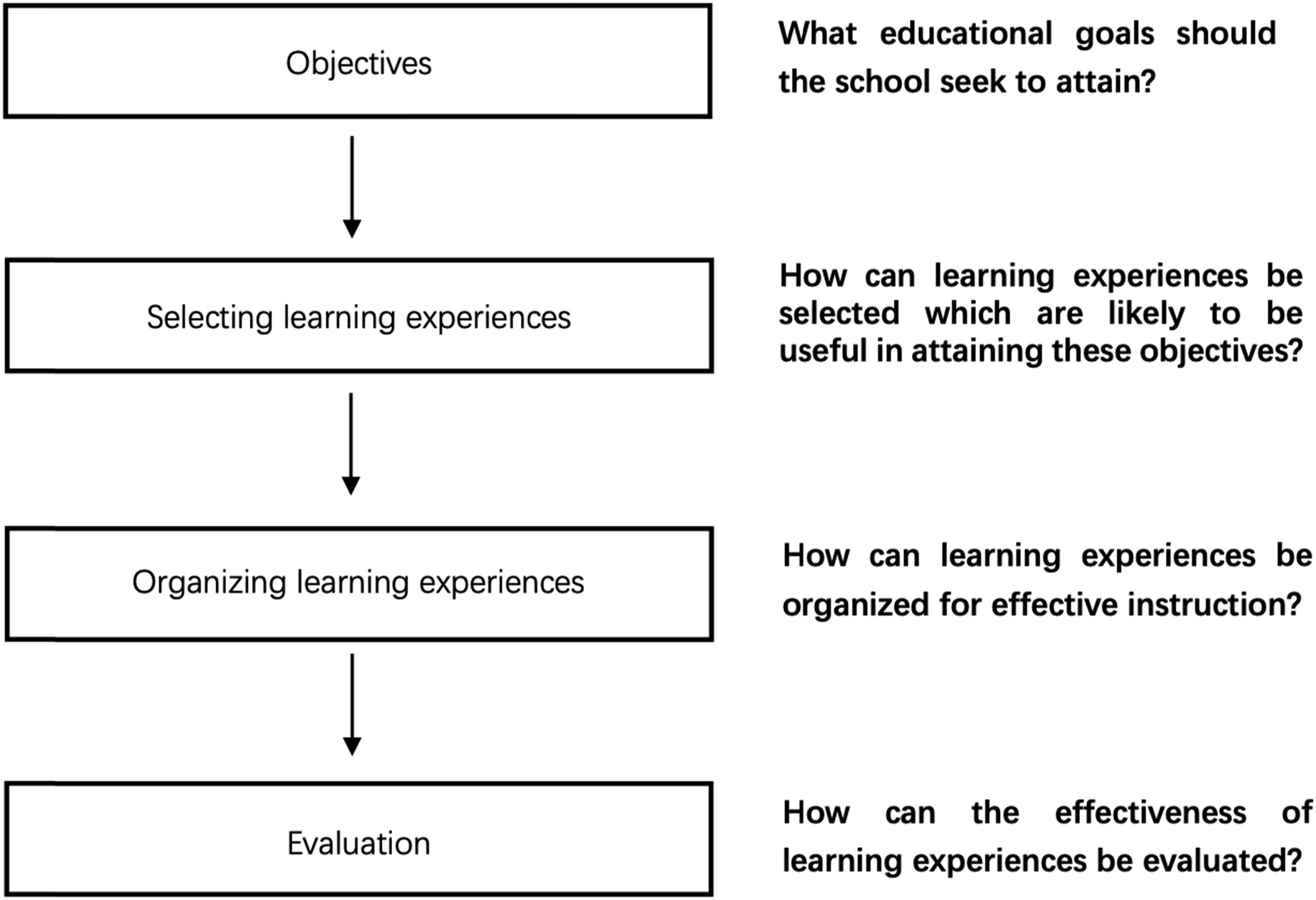
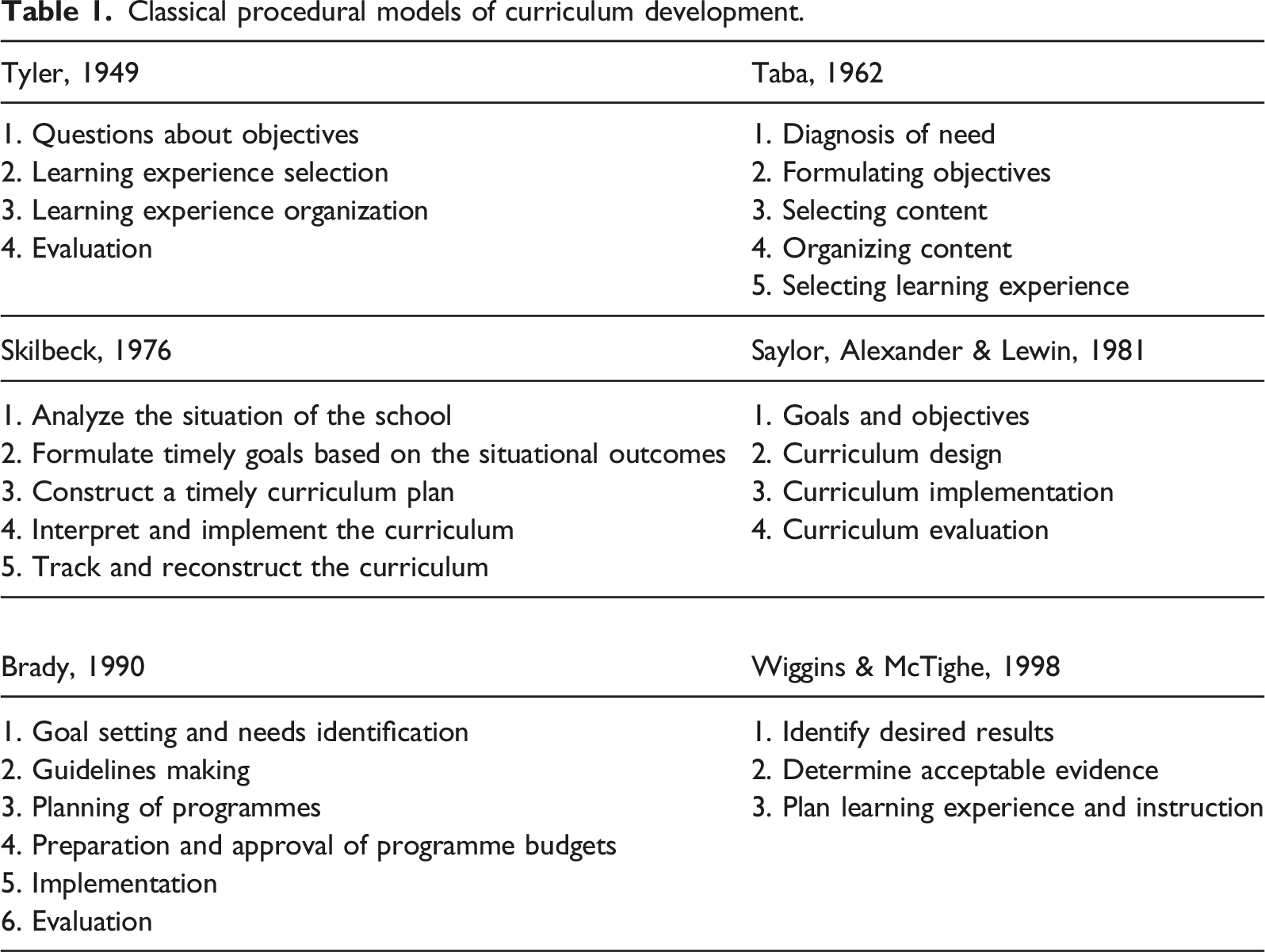
As can be seen that the reviewed models vary in the operational sequence and number, however, in general, goals/objectives, contents, organization, and evaluation of curriculum are mainly focused on in the process of curriculum development. Furthermore, the main stages of the process include planning/designing, implementation, and evaluation of a curriculum. What needs to be acknowledged is that the real situation of curriculum development hardly follows the simplified step-by-step procedure and tends to be interactional and iterative, however, reviewing classical procedural models can help to conceptualize the major stages that involved in curriculum development which are considered as the technical support for SBCD as well.
Curriculum development-related models: Models of SBCD (in ECE)
School-Based Curriculum Development was proposed by two scholars, Furumark and McMullen, in an international seminar on SBCD held in Ireland in 1973. Since then, SBCD has drawn considerable attention all around the world (Li, 2005). In the late 1980s, the concept of SBCD began to attract the attention of some scholars in Taiwan and Hong Kong. Then, since the mid-1990s, a few curriculum researchers in mainland China have shown interest in SBCD. In 2001, the MOEC issued the national, local, and school management model of SBC, making SBC quickly become one of the focuses of China’s education (Li, 2005, p. 14).
An SBCD model of Taiwan
After analyzing the research findings of Brady (1990) and Marsh et al. (1990), Bai (2003, p. 115), a scholar from Taiwan, claims that these models of SBCD mainly focus on the development of the content such as selecting and adapting existing materials, while, the structure of SBC is rarely involved and the existence of potential curricula is ignored. Therefore, Bai constructed the SBCD model of a trinity containing a formal curriculum, informal curriculum, and potential curriculum based on the curriculum structure. Each curriculum structure includes three dimensions: time commitment, type of activity, and participants (see Figure 2). Bai’s trinity model of School-Based Curriculum Development.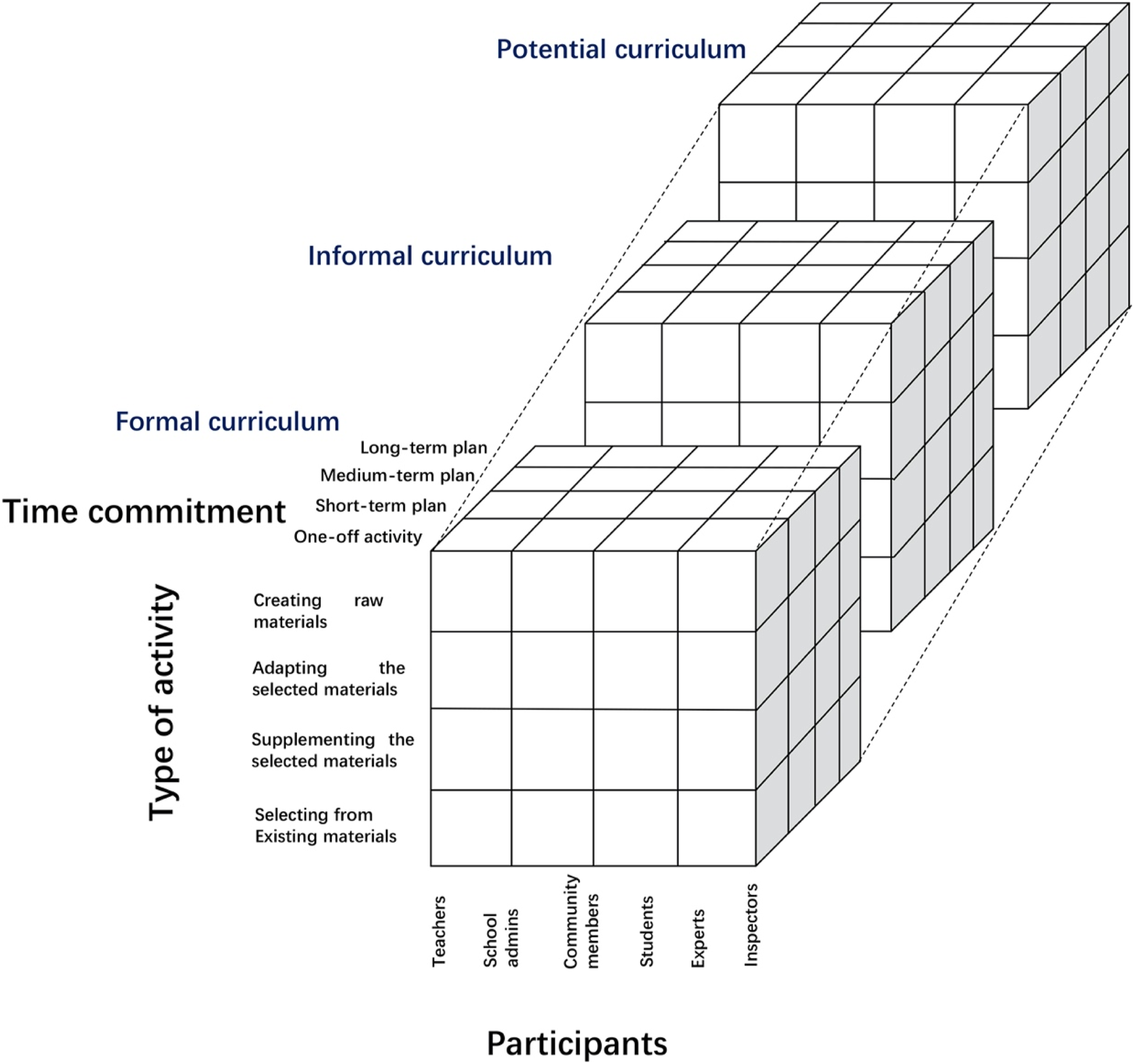
An SBCD model for kindergartens in Hongkong
As be introduced in the beginning, after reviewing a number of existing global or international curricula adopted and adapted in different research contexts, I found a handful of researches have been conducted in China’s context and many of them were contributed by Li (2005, 2006, 2017, 2018, 2019). In 2005, Li developed a four-stage general procedure in terms of the design of SBC for kindergartens in Hongkong based on four mainstream procedural theories/models of SBCD (Skilbeck, 1976; Thomas, 1978; Organization for Economic Cooperation and Development, 1979; Saylor et al., 1981). (1) Clear the goals and principles of the school; (2) Design and select curriculum development plan; (3) develop a SBC; (4) Evaluate, reflect, and promote the SBCD.
Li follows the logic of reviewed mainstream curriculum development and specifies each stage further. The school is placed in the center throughout the procedure of the SBCD for Kindergartens in Hongkong. However, the inevitable and influential outer contexts were not included and discussed in specific.
School-based curriculum development models for kindergartens in mainland China
Li et al. (2009) followed Marsh et al. (1990) and Bai’s (2003) models of SBCD and developed a trinity model of kindergarten-based curriculum development model for kindergartens in mainland China.
Li et al.’s trinity model (see Figure 3) is developed mainly based on Bai’s model, the “dimension of activity type” is changed to the “dimension of curriculum development”, and the terms used in the “dimension of participants” of Bai’s are adjusted to kindergarten-related terms. The rest remains the same. Li et al.’s Trinity model of KBCD.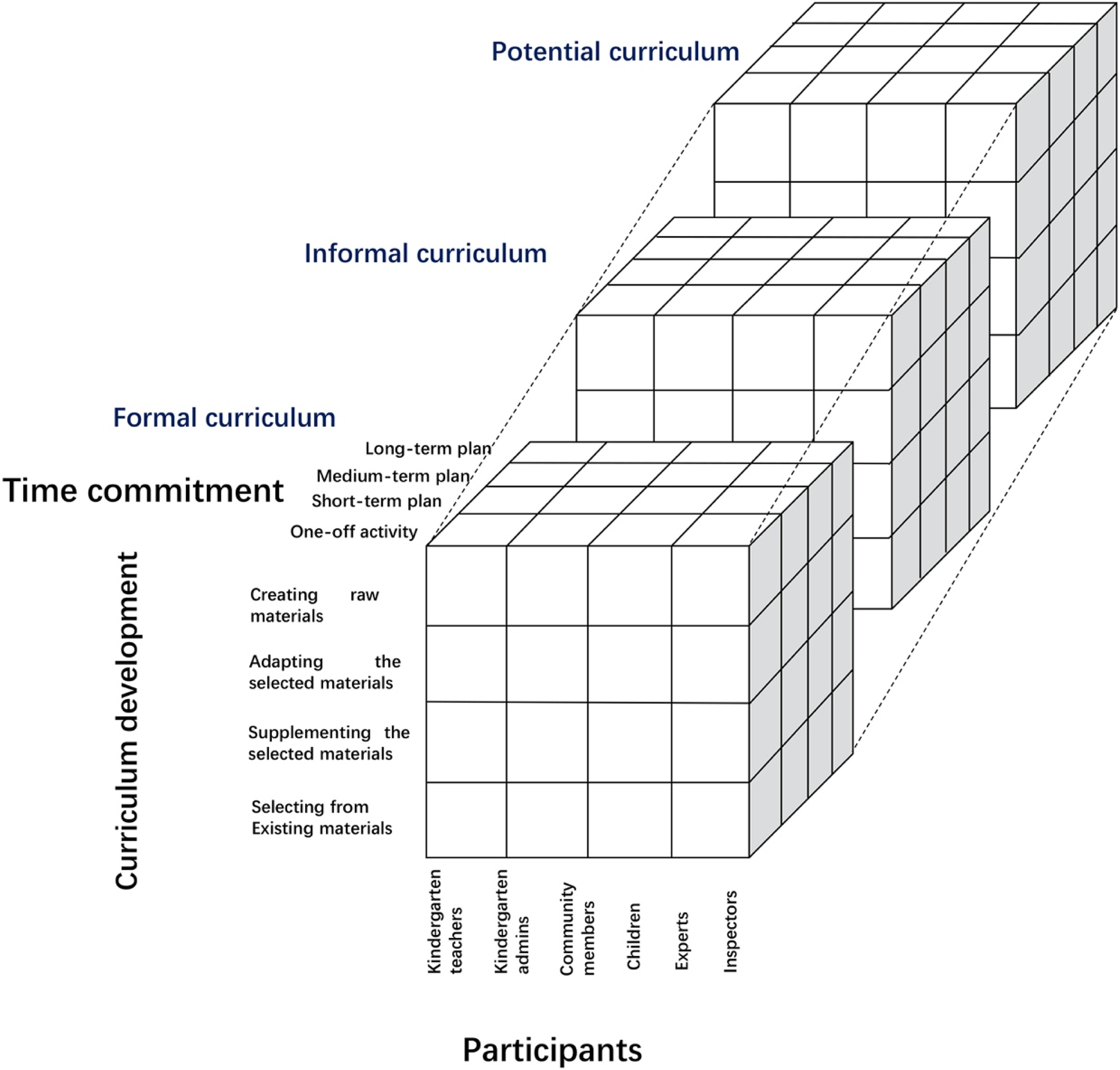
Bai’s and Li et al.’s models both stressed the structure of curriculum which is classified into a formal curriculum, informal curriculum, and potential curriculum. However, the explanation for each is not clear and the necessity of dividing a curriculum into three is not addressed (Li et al., 2009, p. 37). Therefore, in this paper, the curriculum will not be structured into three, however, the kindergarten-related terms that were adjusted in Li et al.’s models will be considered.
Shanghai’s model of KBC (2004) and Skilbeck’s procedural model of SBC (1976).
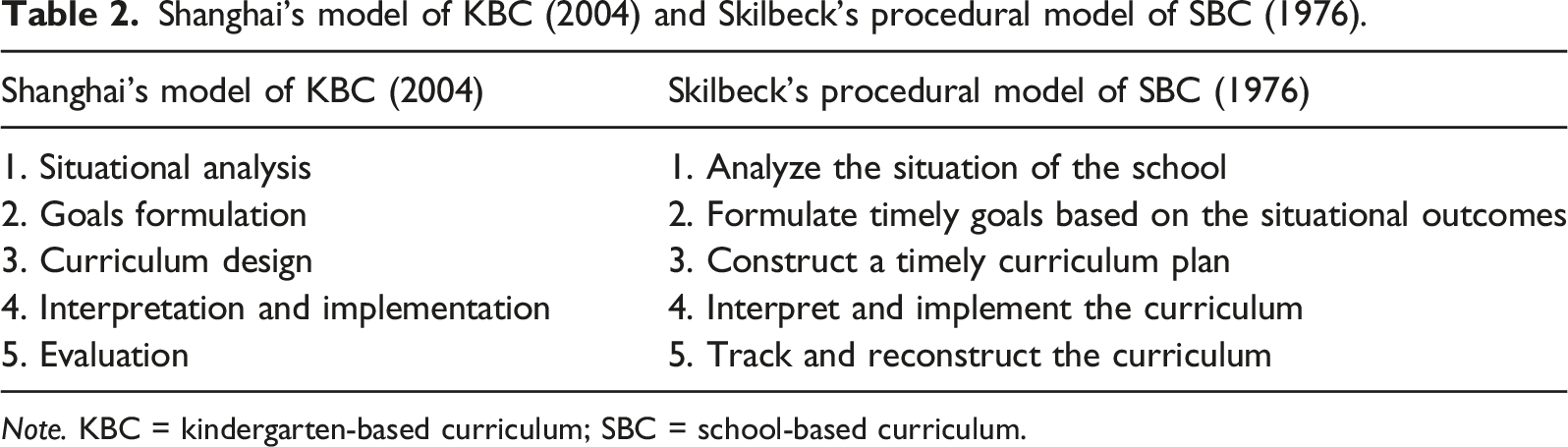
Note. KBC = kindergarten-based curriculum; SBC = school-based curriculum.
More recently, Yang and Li (2018) synthesized and developed a research framework for kindergarten curriculum development in China with the technical assistance of general curriculum development models and revealed that the process of SBCD in the studied China’s kindergarten involves four major stages which are imitation, absorption, integration, and evaluation. In addition, Yang and Li (2019) conducted another empirical study in two kindergartens in China, this study generated a four-stage process/model of SBCD as well which are (1) original practice questioning, (2) new model understanding, (3) new model implementing, and (4) new model adjusting.
The formation of a conceptual framework for developing a glocalized SBC: Preliminary result
After synthesizing the reviewed curriculum development related models and frameworks, including theoretical and empirical, and considering the research question and setting, a preliminary procedural model of SBCD is developed as follows. • • • • • • • • •
(In practice, you can start with any step considering how each step fits in with the other steps).
The SBCD model developed above aims to simplify the complexity of the real situation. The reviewed curriculum development models provide the technical support and fundamental base for the major procedural stages including
The glocalization: What is glocalization
Globalization can be defined as the intensification of worldwide social relations, which links distant localities in such as way those local happenings are shaped by events happening far away and vice versa. However, common prescriptions and transnational forces are not uniformly implemented or unquestionably received. These global processes interact with national and local actors and contexts involving modification and, in some cases, transformation. It is not merely a give-and-take process. There is a process of exchange by which international trends are reshaped to local ends (Arnove, 2013). This process can be understood as glocalization. More specifically, for this paper, to integrate globally accepted ECE principles with local values and beliefs, to create third spaces of curriculum hybridity that are contextually and culturally appropriate, conceptually consistent, and pedagogically viable on the ground can be considered as curricular glocalization (Gupta, 2015, 2018; Yang et al., 2021).
The glocalization: Why glocalization
Since SBCD was introduced in the 1970s, it has drawn considerable attention all around the world from Western countries to Asian ones (Li, 2005; Yang & Li, 2016, 2019). As argued by Li (2010), long-held Western assumptions about processes, efficacy, and effectiveness of learning cannot be readily applied to the study of learners from non-Western cultures since these assumptions were developed by Western researchers to study Western people based on Western cultural norms and values. Many latest papers (Bautista et al., 2021; Chen et al., 2017; Hairon et al., 2018; Yang & Li, 2018, 2019, 2020; Yang et al., 2021) also reveal the significance of integrating and balancing “the imported curricula” and “the domestic curricula” for SBCD under the consideration of the global and local contexts. For example, Bautista et al. (2021, p. 161) propose alternative “glocal” notions aims to find the balance between progressive versus traditional that is needed in Singapore and Hong Kong. Furthermore, Yang et al. (2021) claim that contextual and cultural appropriateness must be fully considered, otherwise imported notions will not work. Therefore, for schools involving curricula importing, developing globalized curricula based on principles that are culturally appropriate and socially situated can be considered a sensible way to overcome the challenge of inconsistencies between imported and domestic curricula which are influenced by and reflect different cultural norms and values. In addition, glocalization is also significant for the research context consideration. It is a mutual influence between global and local contexts such as historical, cultural, and political factors. School-Based Curriculum Development happens in the global and local contexts and also as a crucial part of the local context. The top-down influence from global to school and the bottom-up development of SBC are interactional.
The formation of a conceptual framework for developing a glocalized SBC: Eventual result
Accordingly, the context analysis is added to the procedural model of SBCD. • • • • • • • • • •
(In practice, you can start with any step considering how each step fits in with the other steps).
With further deliberation, Contexts and curricula analysis.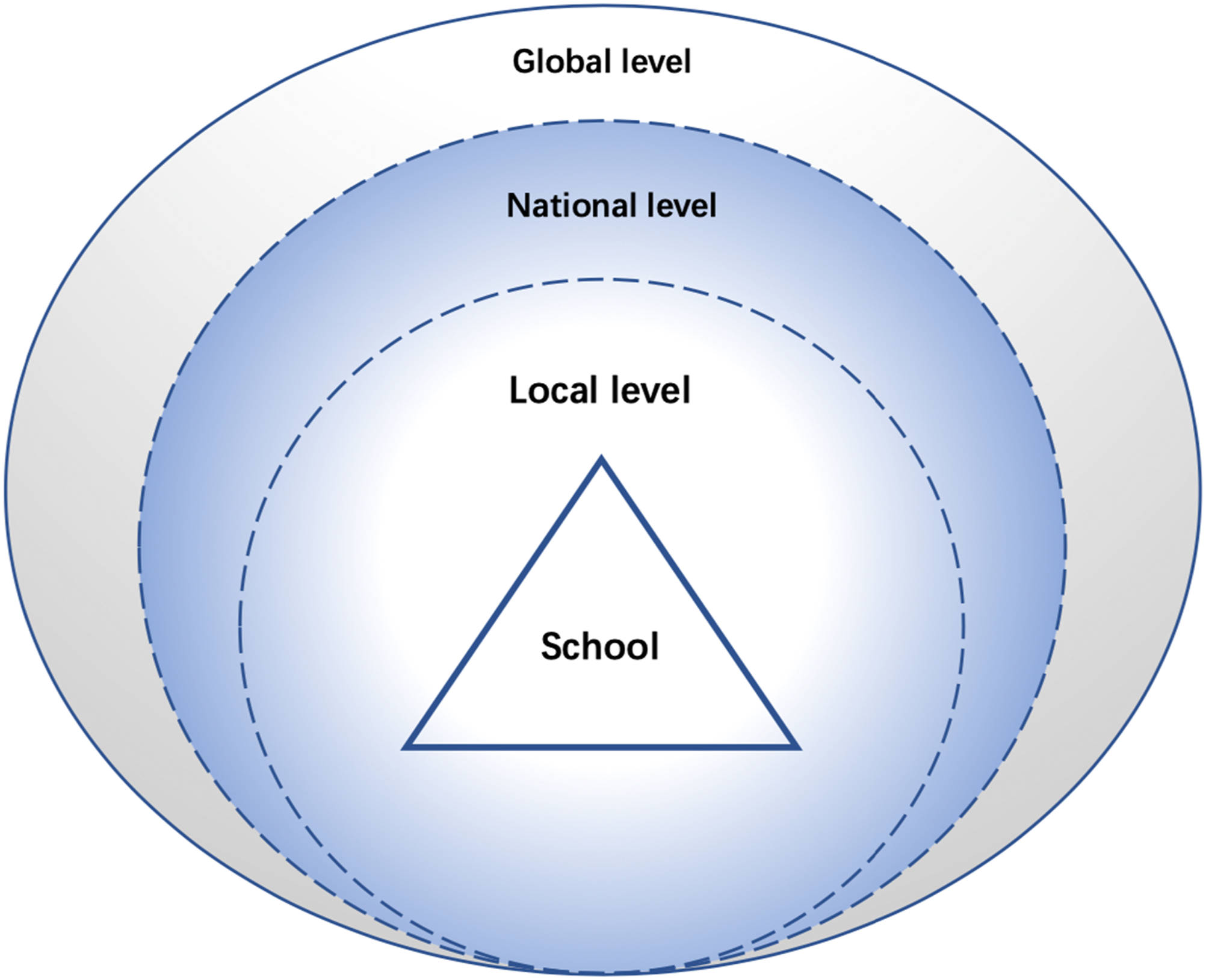
In addition, Action of curriculum development.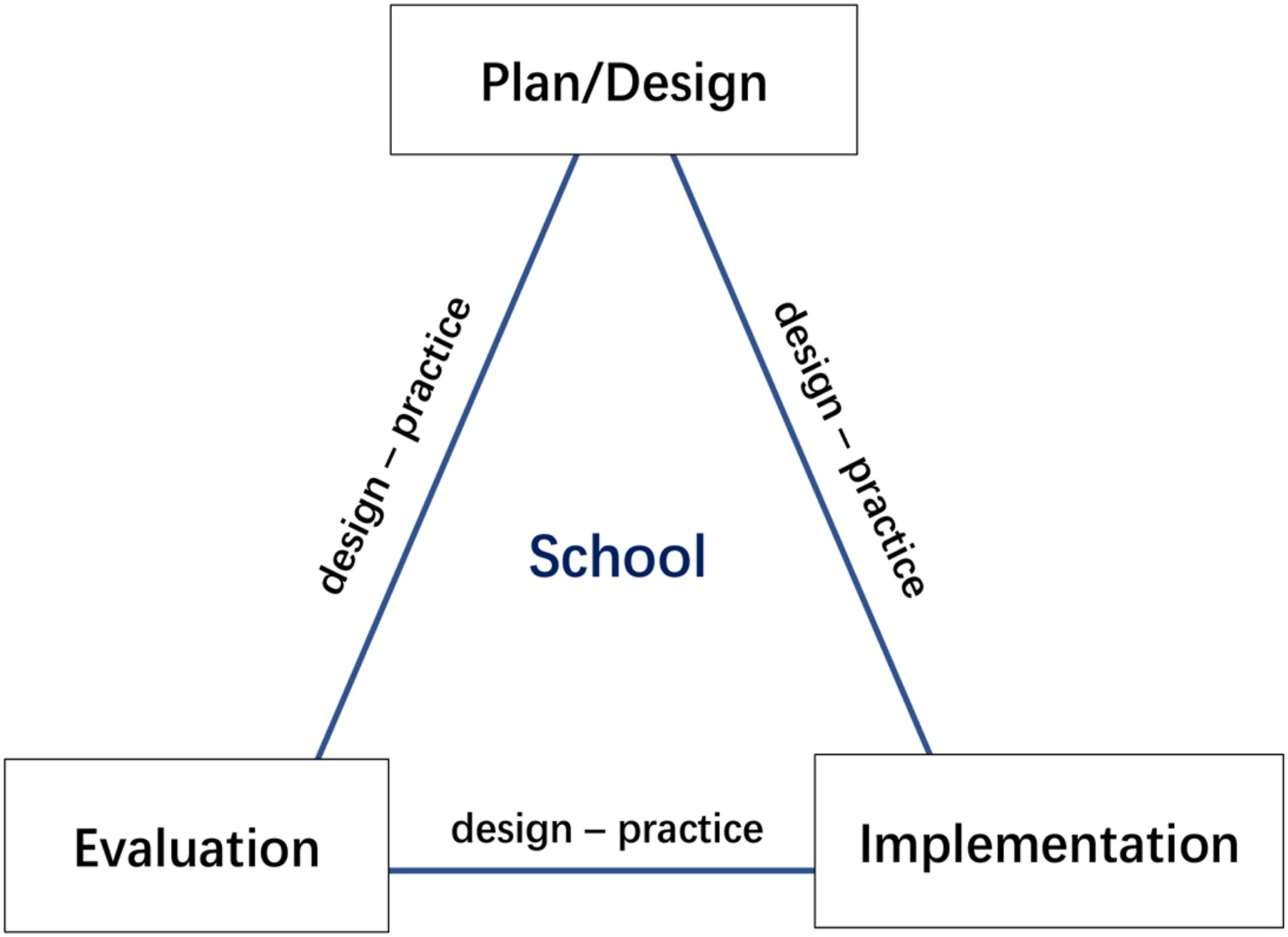
The action of curriculum development includes
Moreover, as inspired by the models of Brady (1990), Marsh et al. (1990), Bai (2003), and Li et al. (2009), a three-dimensional model including A three-dimensional model of curriculum development for schools.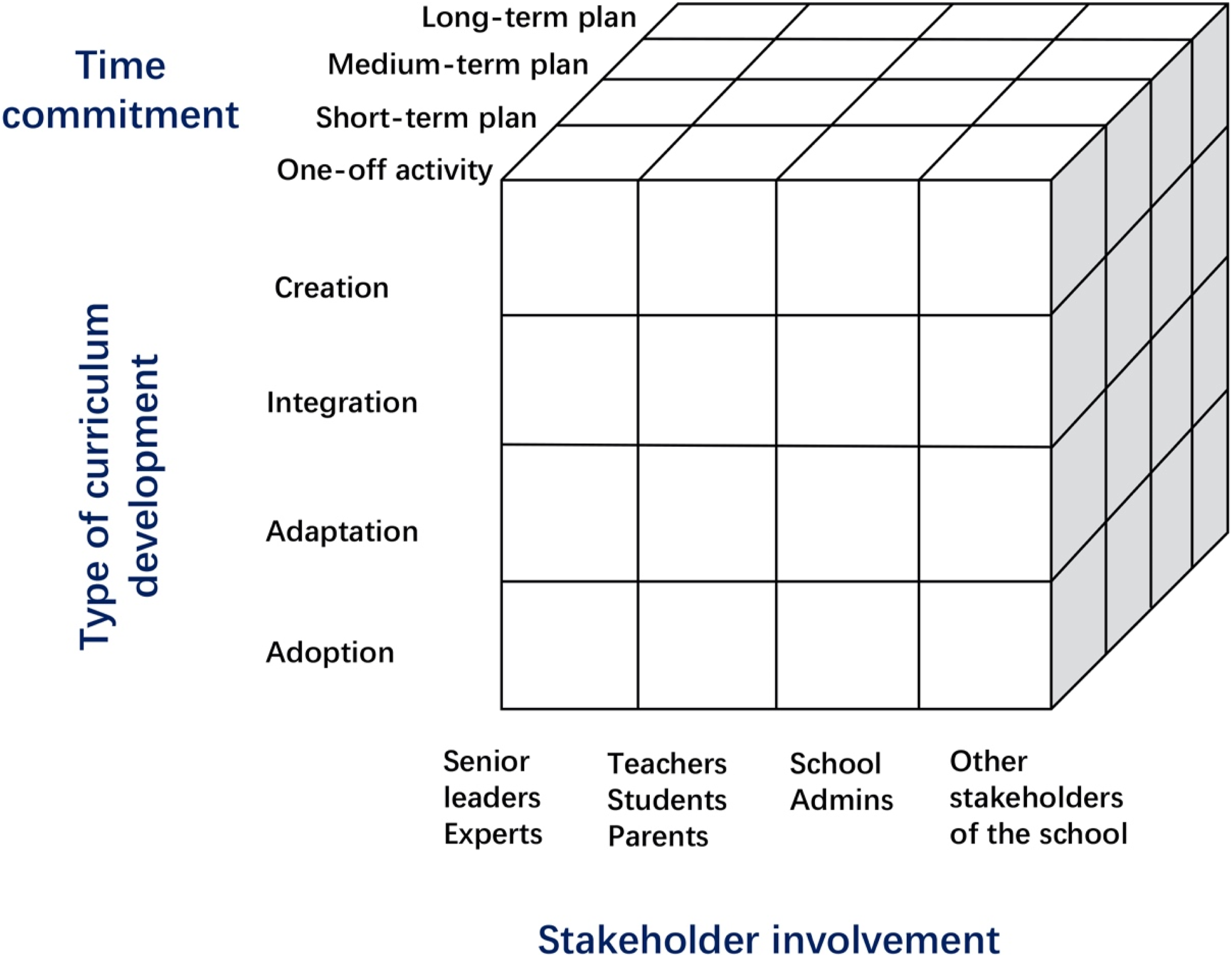
Taking an example from the three-dimensional model of curriculum development for schools, one possible way of SBCD could be selecting a supplementary online English reading library, such as the Renaissance myON system (adoption from existing materials), by curricular coordinator (senior leaders, experts), for children between 5-6 years old (teachers, students, and parents) for one semester (medium-term plan) to progress students’ literacy development and encourage independent reading.
Ultimately, a conceptual framework for developing a glocalized SBC is developed in Figure 7 synthesizing the curriculum development related models and considering the glocalization. A conceptual framework for developing a glocalized SBC.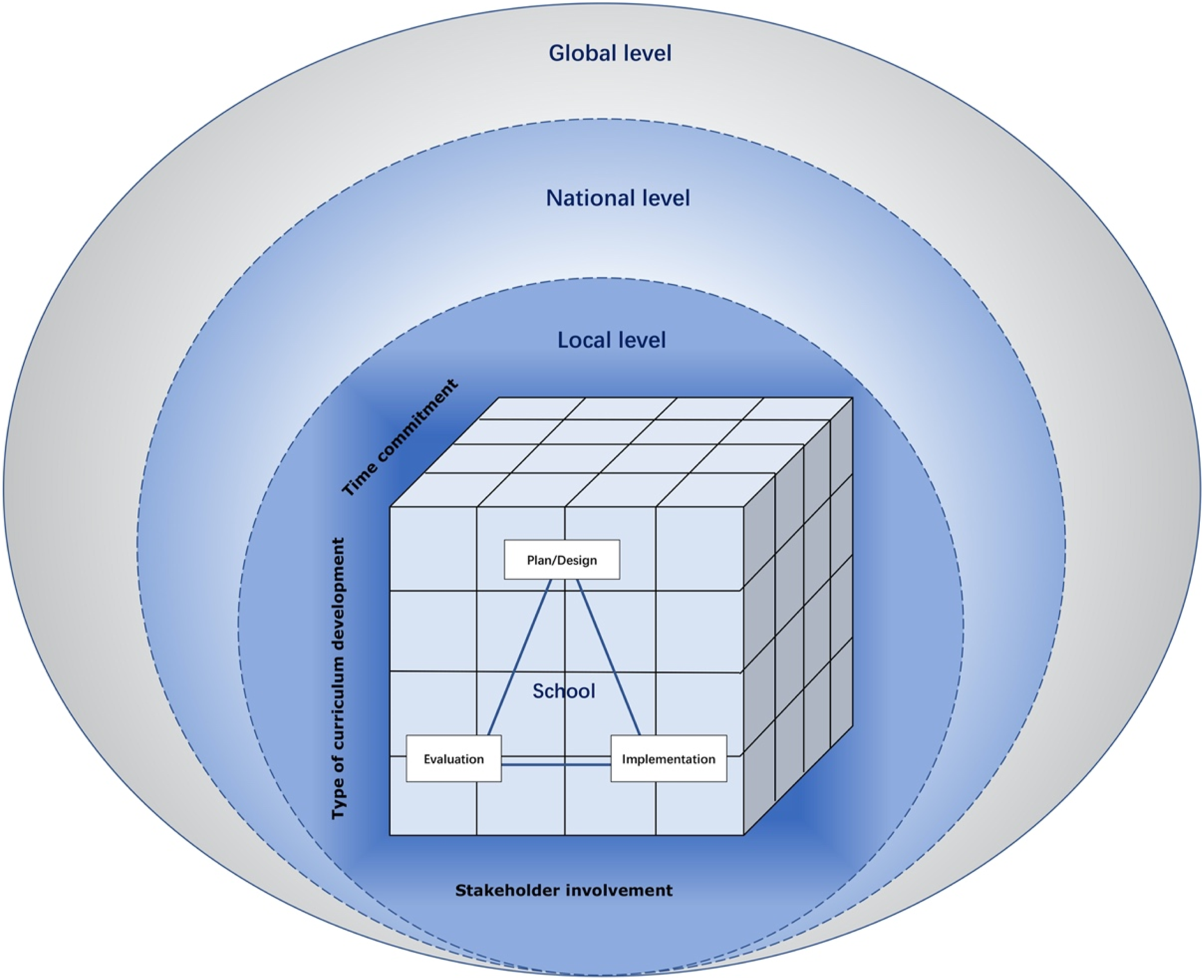
A well-established SBC is expected to be developed based on experimenting ways of SBCD with the action of curriculum development and the consideration of the contexts. What should also continuously be borne in mind is that the glocalized SBCD is considered as a growing process, therefore,
Conclusion
In view of the relatively short history of the development of internationalized K12 schools in China, lacking mature examples of developing glocalized SBC, more specifically in ECE, is understandable. However, the growth of internationalized K12 programs is rapid and the demand for glocalized school-based curricula is urgent. By September 2021, the total number of schools with international characteristics in mainland China reached 1,358, and the amount is almost doubled compared to the number in 2012 (Xu, 2021). Given the lack of glocalized school-based curricula, especially in ECE, the current research extended the initial empirical request to a broader and more general view aiming to develop a conceptual framework of glocalized SBC. After critically synthesizing and innovating on the basis of general curriculum development models, SBCD models, and the consideration of glocalization, the developed framework cannot only provide the current research with technical support in terms of integrating global curricula and local curricula for one specific kindergarten but it can also be applied by other researchers whose researches are related to curriculum development, specifically in the early childhood field and involving global and local context and curricula adaptation.
Footnotes
Declaration of conflicting interests
The author(s) declared no potential conflicts of interest with respect to the research, authorship, and/or publication of this article.
Funding
The author(s) received no financial support for the research, authorship, and/or publication of this article.