



Abstract

J. Craig Venter joins JALA's Editorial Board
Robin A. Felder, Editor, with J. Craig Venter, Member of JALA's Editorial Board

We are pleased to have Dr. Venter join the distinguished group of scientists who comprise the Editorial Board of JALA. His presence on the Board underlines this journal's commitment to achieving the highest standards for members of the Association for Laboratory Automation.
EuroLabAutomation announces new Scientific Co-Chair
The Association for Laboratory Automation (ALA), is pleased to announce the appointment of
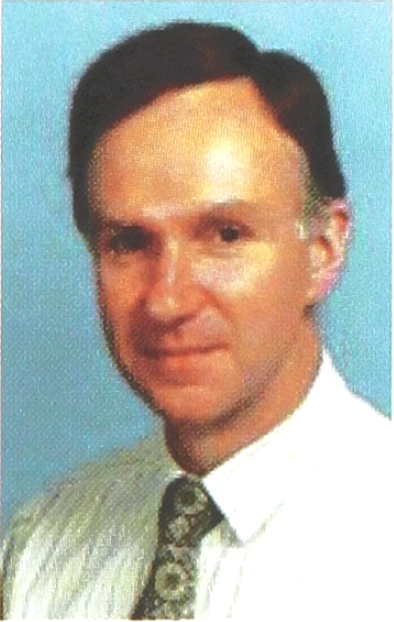
Dr. Wheeler is Director of the Medical Devices Agency (MDA) of the Department of Health Evaluation Unit, St. Thomas Hospital, London. This unit has for the last ten years carried out evaluations on automated equipment and immunoassays. Over fifty MDA reports have been published. He is also a member of the Department of Trade and Industry (DTI) Medical and Forensic Laboratory Interest Group. This group provides input into the Validity of Analytical Measurement program of the DTI. The Department of Chemical Pathology took delivery of the Beckman Coulter IDS pre-analytical system just over a year ago, the first system in the United Kingdom.
After a first degree in Zoology and a Ph.D. investigating renal function during sleep, Dr. Wheeler moved into the field of immunoassay and endocrinology. A research post in 1972, developing hormone immunoassays at the King Edward VI Hospital in Windsor, was followed by an appointment to St. Thomas Hospital, London (now the Guy's and St. Thomas' NHS Trust) where he continues to work.
Dr. Wheeler is now consultant biochemist in the Department of Chemical Pathology and heads up the endocrine service. He is also the Director of the Supra Regional Assay Service and an honorary senior lecturer in the United Medical and Dental Schools. He is also the Director of the Department of Health's Medical Devices Agency Evaluation Unit, which carries out independent evaluations of hormone diagnostic kits and associated equipment. His research interests are in reproductive and adrenal endocrinology, particularly androgen action in women.
ALA Director Tony Beugelsdijk is joining the Committee as Co-Chair for the Pharmaceutical side. ALA Chairman Robin Felder remains general Chairman of the Conference.
ALA Achievement Award for scientific achievement and continuing contributions to the field of laboratory automation: Dennis France and Steve Hamilton
After a one-year sabbatical as Director of Exploratory Research at Alteon Inc., he returned to Sandoz in 1994 and focused his efforts on expanding the HTS capabilities of the Oncology department where he is currently responsible for coordinating the assay development and biomolecular screening activities.
Dennis is also chairman of The Laboratory Robotics Interest Group.
Steve was honored with the 1986 Pioneer in Laboratory Robotics Award and the 1992 Scitec/TNO award. He is a member of the editorial boards of Laboratory Robotics and Automation and the Journal of the Association of Laboratory Automation.
Together with his colleagues he has annually taught short courses on laboratory automation since 1993 and currently directs the short course program for LabAutomation.
Becton Dickinson Award at LABAUTOMATION99
Each year at the LabAutomation conference, Becton Dickinson sponsors an award which is given for “Significant Contributions to Medical Systems Engineering.” This prestigious award has in the past been presented to such noted scientists as:
Dr. Hoffmann made significant contributions to the use of simulation modeling in the design of clinical laboratory automation systems.

The 1999 Becton Dickinson Award was presented at LabAutomation99, in San Diego, by Mr. Steve Savitz (left), Director of Business, Becton Dickinson Medication and Specimen Management. The three individuals selected for the award have worked closely together to develop some of the early concepts in laboratory automation as an integrated process:
Paul Mountain received this award for his vision and leadership and seminal publications that established some of the important foundations in the field of clinical laboratory automation. Stephen Middleton and Paul Mountain shared the podium on numerous occasions to present models of laboratory organization, novel hardware, and advanced software architectures that would bring unprecedented levels of efficiency to large commercial laboratories. Similarly, Carrie Ebenhardt has focused her talent on complex laboratory problems and has shared her visionary insight and unique problem solving skills with numerous audiences through presentations and publications.
They developed many of the themes associated with using a computer system to manage the entire laboratory automation process by showing us that process control architectures had been in use in manufacturing for many years. They have also demonstrated how sizing of automation was essential for the financial success of any automation project. Most importantly, they were involved in the automation of several laboratories when the risks were high due to a lack of previous sites from which to learn about the pitfalls. They helped steer MDS Inc., toward a unique model of automation partnership instead of exclusively equipment purchase to assure the financial success of the project for both the vendor and the customer.
The LabAutomation Achievement Award for strategic research for the advancement of laboratory automation
His research program spans the disciplines of organic chemistry, biochemistry, and materials science. Specifically, his research focuses on (I) the study of molecular recognition and catalysis in biological systems and development of new synthetic methods for the generation of novel materials with novel electronic, magnetic and optical properties.
His group has demonstrated that antibodies (proteins of the immune system) can selectively catalyze chemical reactions. Antibodies have been developed that catalyze stereospecific ester hydrolysis, concerted Claisen rearrangements and Diels Alder reactions, elimination and isomerization reactions and redox reactions.
A second area of effort involves the development of a general biosynthetic method which makes it possible to site-specifically incorporate unnatural amino acids with novel steric and electronic properties into proteins.
Dr. Schultz has also recently initiated a number of projects in the materials science area. Both projects involve a combination of concepts and tools of both chemistry and physics. These include catalytic AFM microscopy and the construction of structurally defined nanomolecules consisting of quantum dots/DNA hybrids.
Data Innovations Award: Greg Vail
The Roche award is given annually for the most innovative use of automation in a clinical laboratory. The scientific committee wanted to highlight the significant contribution made by software engineers to the success of laboratory automation. Software is the most useful, but also the difficult part of an automation project.
This year's award winner has made significant contributions to interfacing the many disparate analytical and LIS systems that exist on the market. Without his and his company's efforts, many clinical laboratory automation systems would not be operating.
Gregory R. Vail was born and raised in Marlboro, MA, and graduated from Worcester Polytechnic Institute, Worcester, MA, 1987, with a Bachelor of Science with Distinction in Computer Science. He joined IDX Corporation's Lab division in 1987, and received The DII Gorilla Programming Award, 1993.
Data Innovations, Inc. was founded in 1989 by Greg Vail and Dave Potter. At that time, the company was mainly focused on contract programming and consulting. As more and more work was done in the laboratory instrument interfacing area, a product called Instrument Manager was born. Since that time, over 1,000 Instrument Managers have been installed worldwide. Currently, Data Innovations focuses entirely on supporting, installing, and enhancing the Instrument Manager. Over the years, Instrument Manager has been expanded to handle point-of-care and automation devices. With the port of Instrument Manager to Windows NT, applications such as review, edit, and release and specimen tracking have been added.
ALA Achievement Award for technology transfer to a commercial product
Dr. Weller leads the Combinatorial Drug Discovery Automation group at Bristol-Myers Squibb. He has designed, developed and perfected a custom parallel synthesis reactor for high-throughput automated synthesis at Bristol-Myers Squibb. The reactor is called the BMS Minireactor. Bohdan Automation has just signed an agreement to license the Minireactor from Bristol-Myers Squibb.
The Minireactor is in wide use by many chemists at Bristol-Myers Squibb's Pharmaceutical Research Institute. It has been retrofitted with attachments for heating and cooling and solid-phase extraction. Several automated instruments have been modified or designed to work with the BMS Minireactor. One example is the IRORI Automated RF Tag Sorter, also known as the IRORI AutoSort 10K. This automated device can be purchased with an option to automatically sort IRORI RF tagged microreactors directly in to BMS Minireactors. The BMS Minireactor has been a great success at the BMS Pharmaceutical Research Institute.