



Abstract


Dr. Tony Beugelsdijk received his B.S. from Wichita State University in 1971, and his Ph.D. in Analytical Chemistry from the University of Illinois in 1975. He worked as a senior analytical chemist with Shell Development Company for eight years where he was responsible for method development and automation activities. In 1984 he joined Los Alamos National Laboratory where he currently leads the Lab's robotics program. He has managed the development of more than twenty robotic systems including the only four systems in the nation qualified to handle plutonium samples. Dr. Beugelsdijk has also led the development of automated systems to support the Human Genome Program and has been a champion of robotics technologies in molecular biology and biotechnology. He is the originator of the “Standard Laboratory” Module, or SLM, concept for laboratory automation. Dr. Beugelsdijk has been recognized for his contributions to the field of laboratory automation as a recipient of the 1986 Pioneer in Laboratory Robotics Award and the 1994 Hewlett-Packard Award for Advances in Automated Sample Preparation. He currently serves as the North American Editor of the Journal of Laboratory Automation and as editor of the Laboratory Automation book series published by John Wiley. In 1992, he completed a Masters in Business Administration from the University of New Mexico.
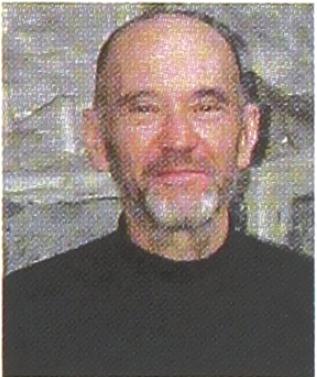
A Professor of Chemistry at Virginia Polytechnical Institute and State, Dr. Ray Dessy has pursued research in pharmacology, organic synthesis, physical-organic chemistry, organo-metallic chemistry, inorganic chemistry, electrochemistry, lab automation, micro-biosensors, and information technology. His group has produced over 100 doctoral students and over 200 papers. The group has also trained over 5,000 postgraduate scientists in the area of lab automation, through short courses sponsored by professional societies in a dozen countries, His students are currently interested in surface plasma resonance biosensors for HTS. In 1996, Dr. Dessy was given the first ACS Award for “Computers in Chemistry.” His teaching and research have resulted in many honorary degrees. In the past 7 years, he has lectured in England, The Netherlands, Germany, Switzerland, France, Australia, and New Zealand in the areas of robotics, automation, microsensors, and lab management. Ray Dessy wrote the A/C Interface articles in the ACS publication “Analytical Chemistry” in the 1980s, He now writes the A/C WebWorks column for this journal.
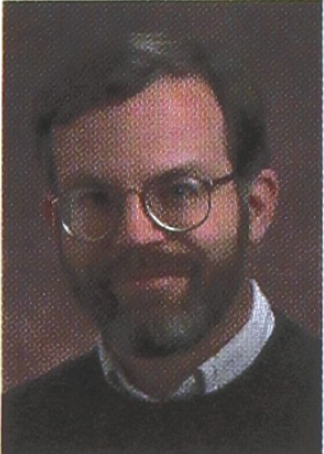
Dr. Steve Hamilton received his Ph.D. in Analytical Chemistry from Furdue University in 1983. He served as the Team Leader of Fermentation Automation Development at Eli Lilly from 1983–1992. From 1992–1994, Dr. Hamilton was the R&D Manager, Scitec Inc. Steve is currently Director of Automation and Information Services, Amgen, Inc. Steve was honored with the Pioneer In Laboratory Robotics Award in 1986 and is a member of the Editorial Board of Laboratory Robotics.
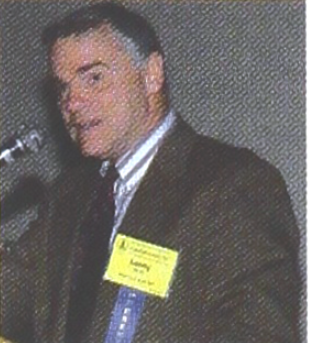
Dr. Leroy Hood, holds a M.D. from Johns Hopkins Medical School and a Ph.D. in biochemistry from the California Institute of Technology. He is the William Gates III Professor of Biomedical Sciences, Director of a National Science Foundation Science and Technology Center, and Chairman of the Department of Molecular Biotechnology at the University of Washington School of Medicine. Dr. Hood is a member of the National Academy of Science and the American Association of Arts and Sciences. Throughout his career, he has received numerous awards, including: the Louis Pasteur Award for Medical Innovation (1987), the Cetus Award for Biotechnology (1989), the Commonwealth Award of Distinguished Service for work in developing instruments used to study modem biology and medicine (1989), the American College of Physicians Award (1990), the Ciba-Geigy/Drew Award in Biomedical Research from Drew University (1993), and the Lynen Medal of the Miami Biotechnology Symposium (1994). Dr. Hood holds honorary Doctor of Science Degrees from six universities, as well as a Doctor of Humane letters honorary degree and the University Distinguished Alumnus Award from Johns Hopkins. His laboratory played a major role in developing automated microchemical instrumentation for the sequence analysis of proteins and DNA and the synthesis of peptides and gene fragments. More recently, he has applied his laboratory's expertise in large-scale mapping and sequencing to the analysis of the human and mouse T-cell receptor loci—an important effort of the Human Genome Project. In accord with his life-long commitment to bringing science to society, he has spoken widely on the scientific ethics and brought hands-on, inquiry-based science to K-12 classrooms.
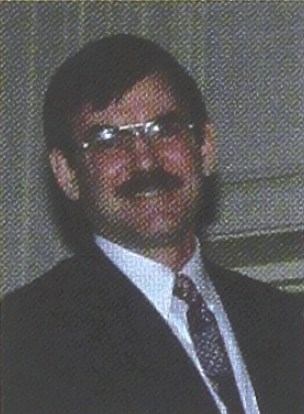
Dr. Richard A. Houghten earned his Ph.D. in Organic Chemistry from the University of California, Berkley, in 1975, followed by postdoctoral training with C.H. Li at the University of California, San Francisco. Following an appointment as Assistant Professor of Medicine at Mount Sinai Medical Center, New York, Dr. Houghten joined The Scripps Research Institute in La Jolla, California in 1981, where he remains an Adjunct Member. He founded Multiple Peptide Systems in 1986 to commercialize the patented “T-bag” synthesis method. In 1988 he founded Torrey Pines Institute for Molecular Studies, a not-for-profit biomedical research institute focused on new techniques for accelerated drug discovery, and in 1990 he founded Trega Biosciences, Inc., (formerly Houghten Pharmaceuticals, Inc.), which is now a publicly-traded biotechnology company. Dr. Houghten founded the Journal of Peptide Research in 1988, and is a co-founding editor of Molecular Diversity. He is an inventor on over 30 issued patents and has authored over 300 scientific papers. Recent awards include the San Diego Distinguished Scientist by the American Chemical Society, the Advanced Chemtech Combinatorial Library Science Award, Alumni of the Year by the College of Natural Sciences from California State University in Fresno, Association for Laboratory Automation Hewlett Packard Award for Outstanding Research in Integrated Analytical Systems, and the TNO Pharma Award for Contributions to the Field of Combinatorial Chemistry.
Dr. Alfred J. Kolb received his doctorate from the University of California in Molecular and Cell Biology in the laboratory of Dr. Wendell Stanley, Jr., where he studied the initiation of protein synthesis using mammalian and viral mRNA. He continued his work on protein synthesis during his post doctoral fellowship at the Roche Institute of Molecular Biology, Nutley, NJ in the laboratory of Dr. Herbert Weissbach. Dr. Kolb is the Business Development Manager, Drug Discovery with Packard Instrument Company. He has published and lectured world-wide on assay technologies and instruments in high throughput screening. His current professional interest is in the development of unique fluorescent and luminescent methods and associated instrumentation for assay miniaturization. He is a founding director of the Society of Biomolecular Screening, a member of the editorial board of the Society journal, and he is an invited lecturer at the University of Connecticut, Storrs, School of Pharmacy.
Dr. Anne R. Kopf-Sill received her Ph.D. in Chemical Engineering from Stanford University in 1987 studying fundamental fluid mechanics and a B.S. from the University of Virginia in 1981. She currently manages the microfluidics and toolbox development groups for Caliper Technology Corporation. Prior to that she designed fluid handling cartridges and instruments for biosensor and diagnostic products at Molecular Devices and Abaxis. She has several patents for microfluidic and diagnostic devices.
Dr. Gary W. Kramer received his Ph.D. from Purdue University in organic chemistry working with Professor H. C. Brown on the synthesis and reactions of allylic organoboranes. After serving as the head post-doc in the Brown organization, he joined Purdue's Chemistry Instrumentation Facility, where he designed analytical instruments and instrument interfaces and consulted on measurement problems. From 1984 until 1990, he was co-director of a project to automate the way organic synthesis development is carried out in the laboratory. In 1990, he joined the National Institute of Standards and Technology and was a Project Manager of the Consortium on Automated Analytical Laboratory Systems (CAALS-a U.S. industry/Government joint venture to foster the development of laboratory automation for analytical chemistry) from 1991 until 1996. In 1995, he was named Group Leader for the Chemical Sensing and Automation Technology Group in NIST's Analytical Chemistry Division.
Dr. Lindsey received his bachelor of science degree in 1978 from Indiana University, and his doctoral degree from the Rockefeller University in 1983. A member of Phi Beta Kappa honor society, Lindsey was recognized as an outstanding teacher during his tenure at Carnegie Mellon. He is noted for his research into automated chemistry workstations equipped with provisions for performing large numbers of experiments in parallel for use in fundamental investigations of chemical reactions. He also has research interests in the design, synthesis and characterization of molecular devices and chemical systems that exhibit photochemical properties. His particular focus is the chemistry and photochemistry of porphyrins and related molecules (such as chlorophyll, heme, and vitamin B12), which are natures most important cofactor. He developed the Lindsey method, a widely used biomimetic synthesis of porphyrin molecules.
Dr. Elmar Maier studied chemistry at the University of Konstanz, Germany. He is the scientific co-founder and Vice-President of the genomics-led drug discovery company Genome Pharmaceuticals Corporation (GPC) in Martinsried near Munich. Before founding GPC, in August 1997, Dr. Maier was Head of Automation and Technology Development in the Department of Prof. Dr. Hans Lehrach at the Max-Planck-Institute for Molecular Genetics in Berlin. There he and his interdisciplinary team had been developing a high-throughput gene expression profiling platform. From 1994–1997 they worked on the platform, using fast robotics and high-density arraying technologies. Dr. Maier had already established the basic framework of the automated genomics technologies at the Imperial Cancer Research Fund in London between 1991 and 1994. There he had applied the technologies necessary to complete the mapping of the fission yeast genome. He has authored several patent applications and over 40 papers and abstracts.
Roy Manns is a Founder Trustee of the Poly what Foundation, as well as a Founder and Chief Technical Officer of Polyfiltronics, Inc. Polyfiltronics, now a Whatman Group company, was founded in 1986 after several years of consulting and contract research and development for biomedical companies in the United States and Europe. Roy Manns also founded the first Independent Plastics and Engineering Center, in 1972. This has since merged with Yarsley Polymer Center. Before his 1978 move to the United States, he held senior Research and Development positions with Fulmer Research Institute, Kenwood Thorn, and Smith Industries. From 1978 to 1981, he served as the Director of Research and Engineering with Costar and as the Head of Corporate Plastics Engineering at Baxter Travenol. Roy Manns has been named a Fellow of the Institute of Materials and the Royal Society of Arts. He has published several papers in plastics design, processing, and automation. He holds five key patents on microplates, and has been cited on several other patents and papers. Roy Manns is also known for designing one of the first “Ghost Factories,” a totally automated plastics molding facility.
Dr. Mark Russo received his Ph.D. in Chemical Engineering in 1989 from Rutgers University. He has spent eight years working in Laboratory Automation and Laboratory Robotics for the Pharmaceutical and Biotechnology industries. His accomplishments include the development of several laboratory computer applications for instrument control and data management in addition to custom laboratory robot systems for a number of automation applications including high-throughput screening. He has published a many laboratory automation-related topics, and is currently finishing a book on the use of Visual Basic in Laboratory Automation. Dr. Russo is currently with Bristol-Myers Squibb Pharmaceutical Research Institute in the Combinatorial Drug Discovery Group where he leads the Laboratory Automation Informatics effort.

For the past 20 years, Dr. Stanchfield has held executive positions with several laboratory research products companies. In 1985, he founded and managed Betagen Corporation, a biotechnology instrumentation company. Following the sale of the company in 1991 to AMOCO, Dr. Stanchfield took a position with Robbins Scientific, where he oversees worldwide marketing and product development activities, While at Robbins, he led the development of the Hydra line of microdispensers and the FlexChem line of combinatorial chemistry products. He is a recognized expert in laboratory automation used in high throughput screening, chemical synthesis and genomics. Dr. Stanchfield earned a doctoral degree in biochemistry from Dartmouth College and worked as a scientist at the National Cancer Institute prior to his career in product development and marketing.