



Abstract
Introduction
Coronavirus disease 2019 (COVID-19) had spread to over 200 countries and regions across the world since early 2020. Travel bans had been implemented in Hong Kong to control the spread of virus. Despite the burden to the healthcare system brought by COVID-19, there was also an increase in number of hiking-related injuries requiring inpatient care. The aim of this study is to report the incidence of hiking-related injuries admitted to the orthopaedic wards during the COVID-19 pandemic and comparison with statistics from the past years.
Methods
Data was retrieved from the admission books of the orthopaedic wards and Electronic Patient Records. The number of admissions, patients’ demographics and details of hospitalisation were compared between February to May 2020 (COVID-19 study period) and 2019. Secondary analysis was performed on admissions for tibia and/or fibula fractures with or without operation during the study period and compared with the past five years.
Results
48 patients were admitted due to hiking-related conditions during the COVID-19 study period, which was 2.4 times more than 2019. 23 patients suffered from tibia and/or fibula fractures and was higher than the past five years (average 5.8, p = 0.0001). Among patients operated for tibia and/or fibula fractures, the percentage of hiking-related injuries was 41.9% in 2020 and 6.9% in the past five years (p = 0.0002).
Conclusions
An increase in incidence of hiking-related orthopaedic injuries was observed during the COVID-19 pandemic. Healthcare workers, public health experts and government officials should work together to raise awareness on safety in hiking for effective prevention of injury.
Introduction
Coronavirus disease 2019 (COVID-19) had spread to over 200 countries and regions across the world. It was defined as a pandemic by the World Health Organization on 11th March 2020. 1 Hong Kong was inevitably affected by the pandemic. Social distancing measures, such as travel quarantine, restriction on leisure activities and gathering bans, had been implemented to control the spread of virus. 2 These policies had changed people's attitude and habits in leisure activities significantly. It was observed that hiking and outdoor activities had become increasingly popular amid the COVID-19 outbreak in Hong Kong. Hiking promotes physical fitness and allows people to enjoy nature, however it also bears an inherent risk of injuries or even death.
An increase in number of hiking-related injuries requiring inpatient orthopaedic care was observed in our unit during the COVID-19 outbreak in Hong Kong. On the contrary, local statistics showed significant reduction in orthopaedic operations, hospital admissions and clinic attendance in this period. Elective and emergency hospitalizations were decreased by 73.5% and 21.2% in the public orthopaedic service in Hong Kong. 3 In this study, we report the incidence of hiking-related injuries admitted to the orthopaedic wards during the COVID-19 pandemic and comparison with statistics from the past years.
Materials and methods
Our study was conducted in the Department of Orthopaedics and Traumatology of Pamela Youde Nethersole Eastern Hospital in Hong Kong. All admissions to the orthopaedic wards were recorded in the admission books of the respective wards. The COVID-19 study period was determined as between 2nd February and 2nd May 2020 inclusive (i.e. 13 weeks). Comparison was made with the period between 2nd February and 3rd May 2019 inclusive. Electronic Patient Records (ePR) of the admissions were retrospectively reviewed and those with hiking-related conditions documented on admission notes or A&E forms were included. Patients’ demographics, including age, sex and district of residence, were retrieved from the ePR. Their diagnoses, procedures and length of stay were recorded. The number of admissions, patients’ age, district of residence, diagnosis, need for operation and length of stay were compared.
Secondary analysis was performed on admissions for tibia and/or fibula fractures during the study period. Such data were retrieved from the Clinical Data Analysis and Reporting System (CDARS). Periods of the same duration from 2nd February inclusive in the past five years were taken for comparison. Patients’ ePR were reviewed and those with documentation of injury during hiking were recorded. Statistical analysis was performed with Student's two-tailed t-test on the total number of admissions and operations, number of admissions and operations for hiking-related conditions, patients’ age, district of residence and length of stay.
Results
From 2nd February to 2nd May 2020, 48 patients were admitted to the Orthopaedic wards due to hiking-related conditions. Among them 70.8% were female. The average age was 53.1 years. More than half of them (30 patients) had their residential address outside the Hong Kong East Cluster. 13 patients (27%) were transferred to our hospital by helicopter. 44 patients suffered from fractures and/or dislocations: 28 (58.3% of all patients) in the lower limbs, 10 (25%) in the upper limbs, 4 (8.3%) in the spine and 2 (4.2%) in the pelvis (Figure 1(a)). One of them suffered from open dislocation of subtalar joint. Other conditions included back sprain, lacerations and puncture wounds. 26 patients (54.2%) underwent surgery while the rest of them were treated conservatively. The average length of stay was 7.0 days.
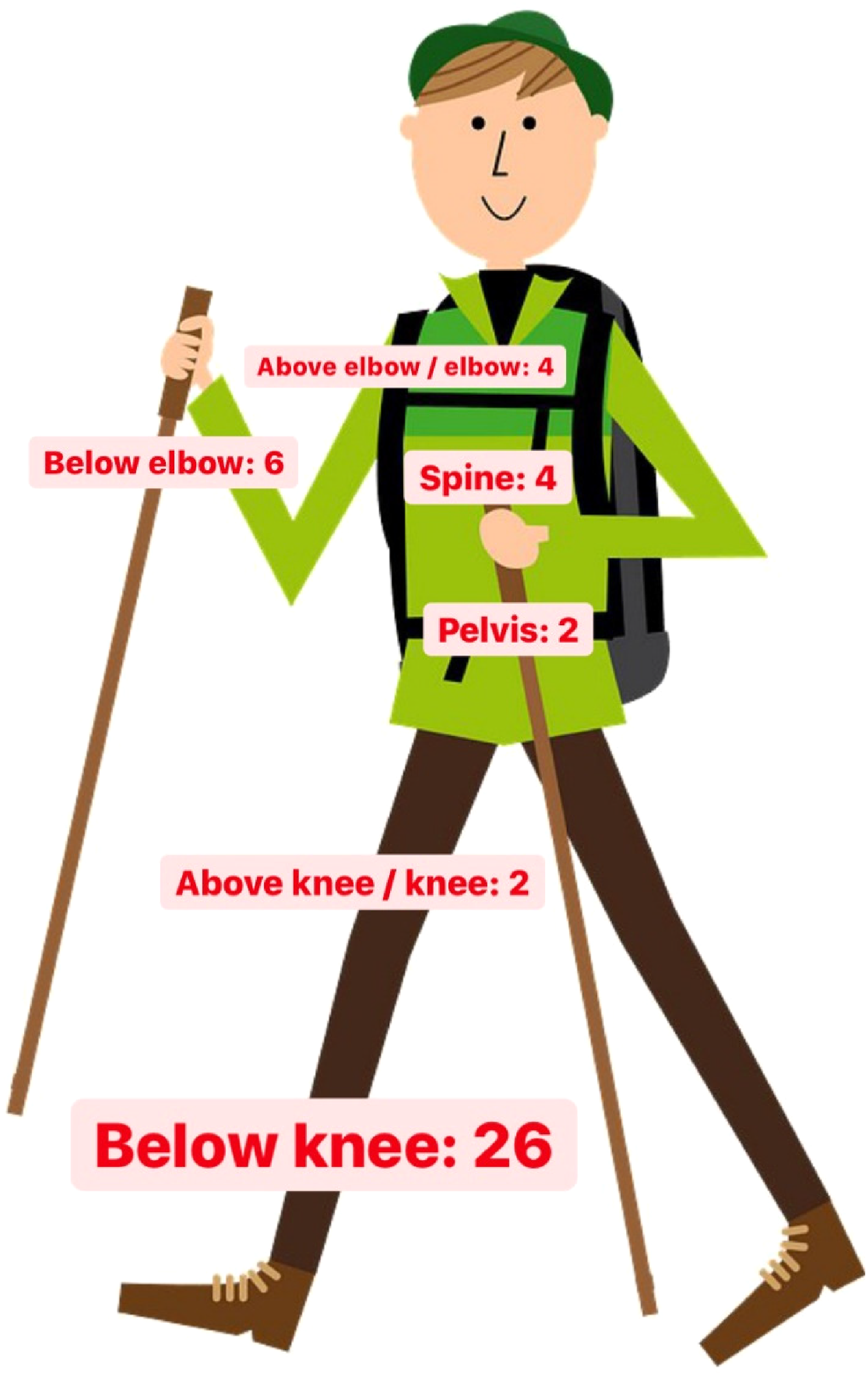
(a) Sites of fracture/dislocation in patients injured during hiking in 2020 (image from: https://creazilla-store.fra1.digitaloceanspaces.com/cliparts/7200/hiker-clipart-md.png). (b) Hiking-related admissions to orthopaedic wards. (c) Treatment received by patients with hiking-related conditions. (d) Residential address of patients admitted to orthopaedic wards due to hiking-related conditions.
Comparison was made with the same period in 2019, with 14 patients admitted due to hiking-related conditions, 5 required operative management and 2 transferred in by helicopter. The number of admissions increased by 2.4 times (Figure 1(b)), and the number of operations increased by 4.2 times (Figure 1(c)). A larger portion of patients suffered from fractures and/or dislocations in 2020 (91.7% vs. 71.4%) and required operative management (54.2% vs. 35.7%). The percentage of the patients having their residential address outside the Hong Kong East Cluster was higher in 2020 (62.5% vs. 35.7%) (Figure 1(d)). The average age (53.1 vs. 53.6 years) and length of stay (7.0 vs. 7.4 days) were similar between the two years.
There were 72 patients admitted from 2nd February to 2nd May 2020 for tibia and/or fibula fractures, which was 14.2% less than the past five years (average 84, p = 0.004). 23 patients were injured during hiking and was significantly higher than the past five years in terms of number (average 5.8, p = 0.0001) and percentage (31.9% vs. average 6.8%, p < 0.0001) (Figure 2(a)). The average age of these patients were 2.5 years older in 2020 (52.8 vs. average 50.3, p = 0.03). Eight patients were transferred in by helicopter. A total of 43 patients underwent surgery for tibia and/or fibula fractures in the study period, which was 43.7% higher than the past five years (average 29, p = 0.006). Among them 41.9% (18 patients) were injured during hiking (vs. average 6.9%, p = 0.0002) (Figure 2(b)). 16 of them (37.2%) lived outside the Hong Kong East Cluster, while on average 6.2% in the past five years (p = 0.0002) (Figure 2(c)). The average length of stay was 9.5 days, which was not significantly different from the past five years.
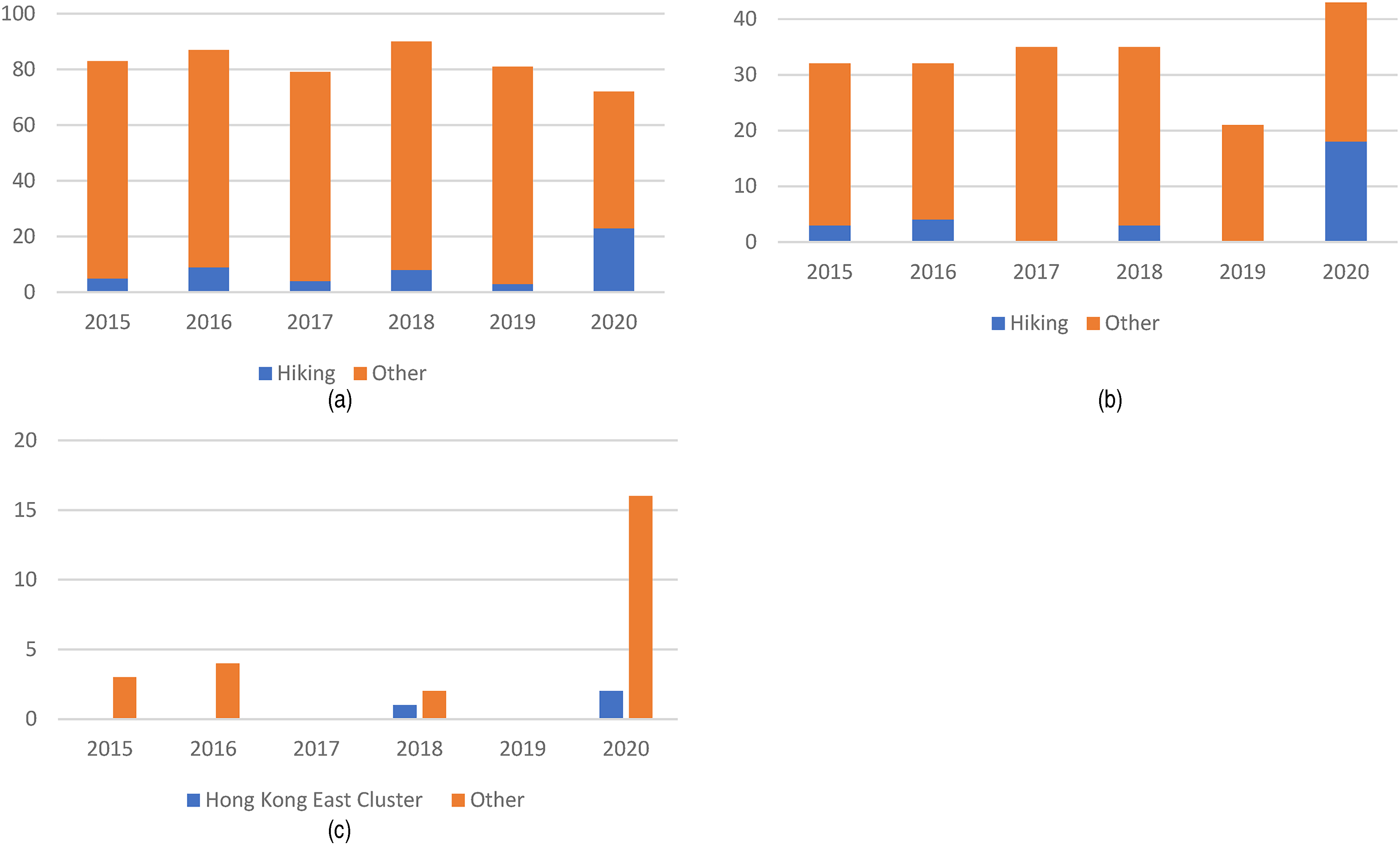
(a) Admissions for tibia and fibula fractures. (b) Operations for tibia and fibula fractures. (c) Residential address of patients receiving operation for hiking-related tibia and/or fibula fractures.
Discussion
Since the outbreak of COVID-19 pandemic in early 2020, many countries had imposed entry bans or quarantine measures on foreign travellers. In Hong Kong, citizens returning by plane were issued quarantine orders upon arrival at the airport. 4 Most of the other immigration control points had been closed down. 5 These measures had discouraged people from outbound travel. The pandemic had caused significant stress to many people due to fear of infection and restriction of social activities. Local statistics revealed that doing exercise was the most frequently adopted stress coping mechanism in 20.7% of the population, 6 and hiking was one of the most popular sports activities in adults and the elderly. 7 According to the Injury Survey 2008 by the Department of Health, 3.0% of the injury episodes took place in the countryside. 8 With limited vehicle access to the hiking trails, injured hikers seeking ambulance transport might require help from the Government Flying Service. According to the Controlling Officer's Report, 430 and 419 people were rescued by helicopter in 2019 and 2018 respectively. 9 As one of the only two hospitals with helipads, we had to be ready to receive patients from various hiking trails and offer medical treatment promptly. During the COVID-19 period, increase in the number of admissions, rescues by helicopter, and operations for orthopaedic conditions in hikers were recorded. Female predominance was also newly observed in 2020. Possible explanations include: (1) more female taking hiking as a new hobby during the COVID-19 pandemic, (2) overestimation of fitness for long-distance walking, and (3) underestimation of potential danger on hiking trails.
In order to facilitate social support, orthopaedic patients were allowed to be transferred back to the hospital in their residential area for operative management as per request, yet this was stopped during the COVID-19 pandemic to minimize inter-hospital transferal of patients. As a result, the number and percentage of patients living outside our cluster and receiving operations for tibia and/or fibula fractures for both hiking-related and other injuries in our unit had increased this year. However, despite the limitation of operation theatre sessions and resources during the COVID-19 period, the length of stay of the injured hikers did not increase.
For the limitation of this study, it did not include those patients with hiking-related orthopaedic injuries that did not require hospitalization or died at Accident and Emergency Department. Therefore, this study has not compared the epidemiology for the very minor orthopaedic injury or, on the other extreme, death related to hiking with the past Also, as this was a single-centre study, without taking into account admissions to other hospitals via ambulance, our data may have overestimated the severity and significance of the issue on Hong Kong as a whole.
In conclusion, hiking has gained popularity among Hong Kong citizens especially during the global pandemic with restriction in outbound travel, yet this activity has its own risks, including trauma, dehydration, heatstroke, animal bites, etc. There was a significant increase in incidence of hiking-related injury during the COVID-19 pandemic in Hong Kong. Healthcare workers, public health experts and government officials should work together to raise awareness on safety in hiking for effective prevention of injury.
Footnotes
Declaration of conflicting interests
The author(s) declared no potential conflicts of interest with respect to the research, authorship, and/or publication of this article.
Funding
The author(s) received no financial support for the research, authorship and/or publication of this article.

