



Abstract
The purpose of this study was to investigate the role that a surgeon’s online presence plays in patients’ decisions to be treated by that surgeon. Postoperative patients from our arthroplasty clinic were enrolled in a retrospective cross-sectional questionnaire. Results from 101 patients demonstrated that the most searched information was education and training (68.8%), online ratings (53.1%), online reviews (50%), associated hospital and/or university (46.9%), insurance coverage (37.5%), location (21.9%), and awards (9.4%). The results of our questionnaire suggest that orthopedic surgeons could more effectively shape their online presences by highlighting these characteristics that patients are more likely to research.
Introduction
Social media refers to any website or application that enables users to create and share content, information, or ideas through virtual communication and networking. Though these networks were unheard of at the turn of the century, 85% of adults in the United States nowadays are using the internet on a daily basis. Social media has rapidly become an integral part of many Americans’ lives. 1 The most popular social media platforms include Facebook, which is used by 68% of Americans, followed by Instagram (35%), Pinterest (29%), Snapchat (27%), LinkedIn (25%) and Twitter (24%). 1
Social media allows physicians to communicate with their patients and enhance patient experiences in ways that were not previously possible. The enormous impact of these changes on the healthcare system has shifted the ways patients select their physicians. A recent study showed that top factors patients emphasize when selecting a surgeon for total joint arthroplasty were physician manner, outcomes, hospital affiliation, reputation, and customer service. 2 Each of these variables are readily accessible to patients through social media. Consequently, many physicians have begun carefully crafting their social media profiles to better attract patients by emphasizing the most attractive qualities of their practices. 3
Others have directed social media campaigns, such as the “#ILookLikeASurgeon” and “#WomenWhoCurie” movements, to spur dialogue and engage the community to address issues relating to under-represented groups in medicine. 4 However, the medical field’s incorporation of social media has sprung forth new questions regarding confidentiality and the ownership of health data which our society must now consider. 5
The purpose of this study was to investigate the role that a surgeon’s online presence plays in patients’ decision to be treated by that surgeon. This information may be useful to any orthopedic surgeon who engages in social media or has an online presence of any magnitude, in order to effectively manage their presence on the web and build their practice.
Materials and methods
Study population
Enrollment was carried out during the month of August in 2019. Participation in this retrospective cross-sectional questionnaire was voluntary. Patients were enrolled from the arthroplasty clinic at our academic medical center. Verbal consent was obtained from each subject following a detailed explanation of the objectives and protocol of the study, which was conducted in accordance with the ethical principles stated in the “Declaration of Helsinki” and approved by the institutional ethics committee (IRB). A total of 101 patients consented to participate in this study. Each patient was within the first 90 postoperative days following a total hip arthroplasty (THA), total knee arthroplasty (TKA), or unicompartmental knee arthroplasty (UKA) performed by the senior author, a fellowship-trained adult reconstruction surgeon.
Questionnaire
Participant sociodemographic characteristics (age, gender, and educational status) were recorded, in addition to variables related to each patient’s access to the internet, preferred tool to access the internet, skills using the internet, and extent of social media use. Although a “5 star” scale is also common on some physician review websites, we elected to record ratings as continuous variables on a 1 to 10 scale, with 10 being the highest rating. All other variables were recorded as categorical variables. These distinctions regarding the way data would be recorded and interpreted were explained to patients on enrollment.
Participants specified the social media platform(s) they used, including Facebook, Instagram, Twitter, Pinterest, LinkedIn, and Blogs. Each participant identified whether he or she had ever searched past, current, or potential physicians via the internet or social media. If the participant answered affirmatively, the specific websites and social media platforms they employed were recorded. Possible selections included each of the social media platforms listed previously in addition to the websites Yelp, Google, WebMD, Healthgrades.com, and Vitals.com. The participants who had searched for physicians via the internet or social media identified the factors that they researched, including online ratings, online reviews, background education and training, location, insurance coverage, web page design, profile pictures, awards, languages spoken, associated hospitals and/or university facilities, and nationality. These participants rated how well their experiences with physicians they had researched online or through social media aligned with their expectations prior to their first clinic visit.
Each participant identified if they had ever written a review of a physician on a website or social media network. Participants who answered affirmatively recorded whether it was for a good medical experience, bad medical experience, or other. Additionally, each participant identified whether they would recommend his or her acquaintances, friends, or family to use the internet or social media networks to select a physician. Participants who answered affirmatively selected those websites and/or social media networks that they would recommend.
There was no targeted patient recruitment by surgeons. Additionally, there was no outside company working on the physician’s social media accounts or online presence (Figure 1(a) and (b)).
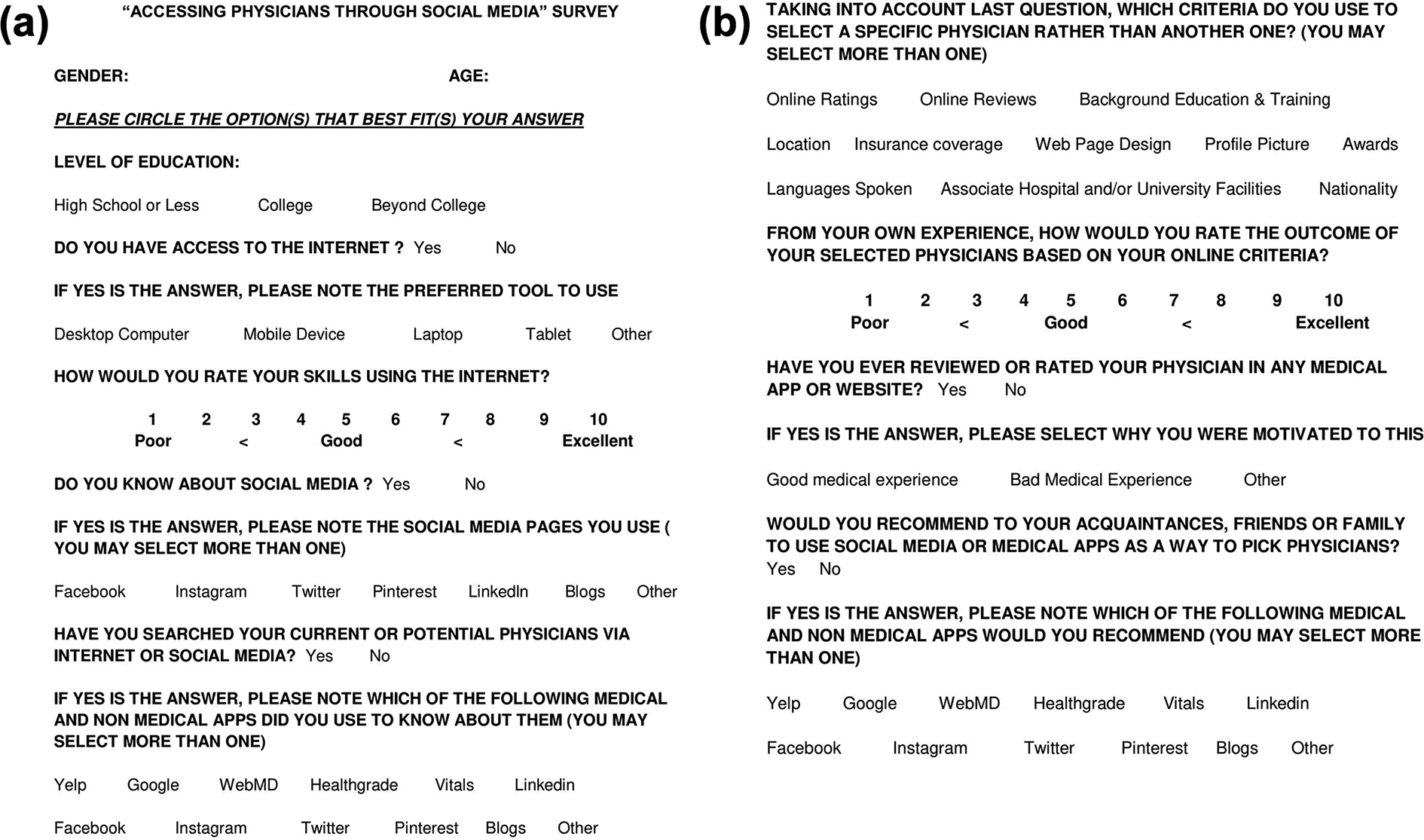
(a and b) Questionnaire used for research study.
Statistical analysis
Statistical analysis was made using JMP Pro 15 by SAS. The data coding was done by a single person and provided by the investigators. Descriptive statistics were reported for continuous variables and percentages for categorical variables.
Results
Sociodemographic and clinical characteristics
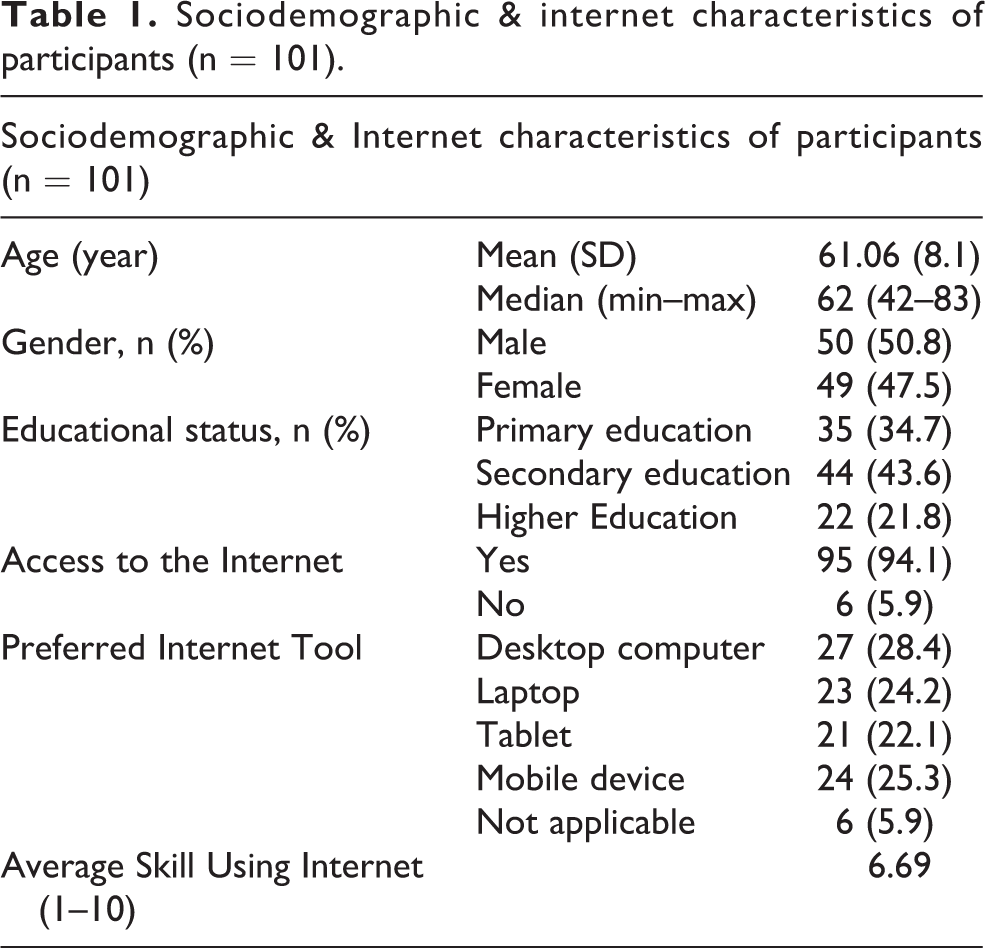
The study population comprised of 101 patients with mean age of 62.8 years (range, 42–83 years). A total of 51 males and 50 females completed our questionnaire. The educational achievements of each of the participants can be seen in Table 1. In total, 94% of our participants had access to the internet, with an average self-reported skill in using the internet reported as a 6.87 on a 1 to 10 scale. Our participants’ most preferred tool for accessing the internet was a desktop computer (28%), followed by mobile device (25%), laptop (24%), and tablet (22%). Overall, 89% of the participants surveyed reported at least some level of social media use, with the most accessed networks being Facebook (77.2%), followed by Instagram (27.72%) and Twitter (13.86%) (Figure 2).
Sociodemographic & internet characteristics of participants (n = 101).
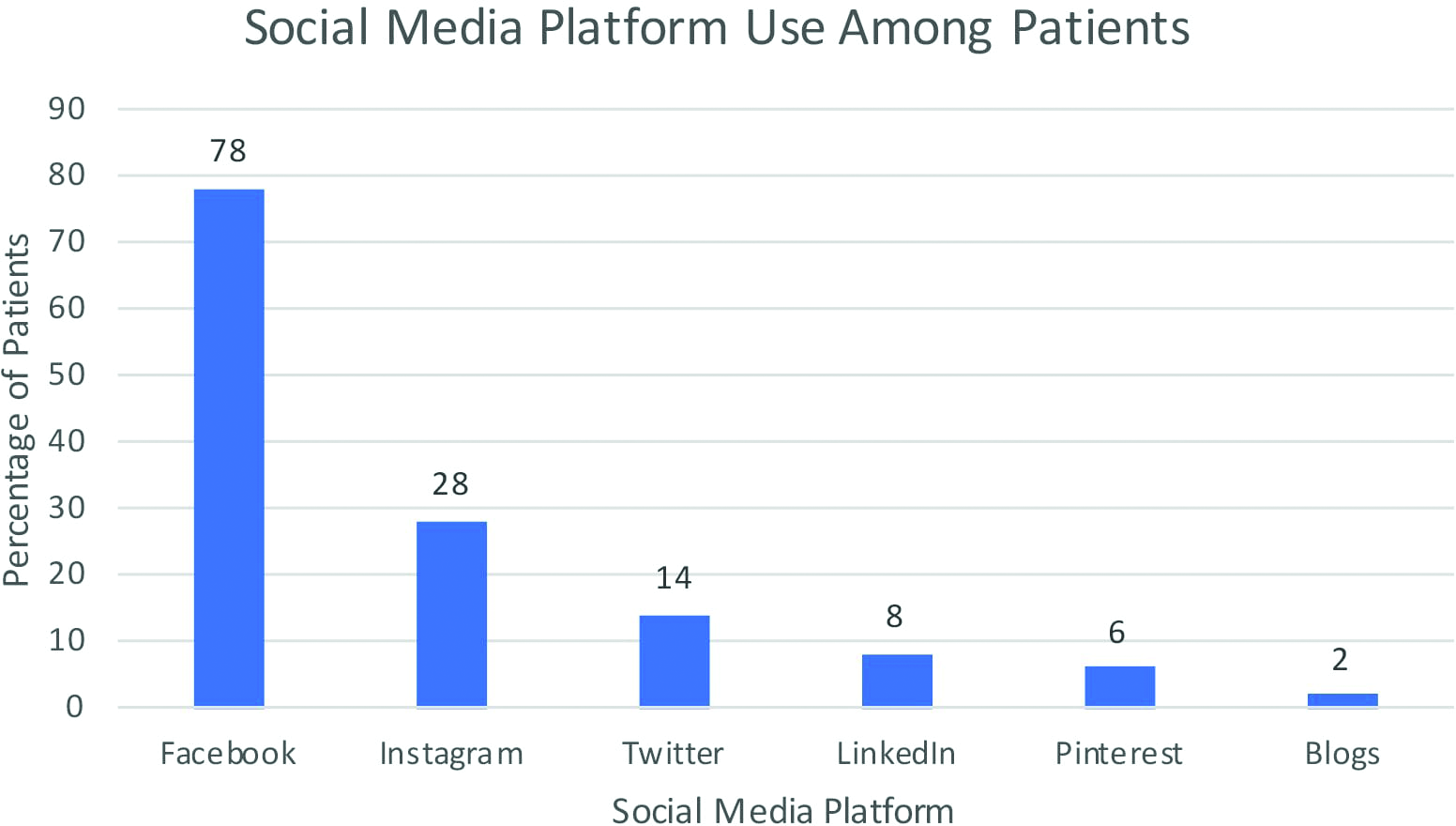
Social media platform use by our patients.
Web usage for selecting a physician
In our cohort, 63.4% of patients used the internet or social media to search for a past, current, or potential surgeon. The preferred search engine was Google, which was used by 94% of such patients, followed by WebMD (39%), Facebook (16%), and Healthgrades (11%) (Figure 3). Of these patients, 94% would recommend that their friends and family use the internet and/or social media when selecting a physician. The most common recommendation these patients would give would be to use Google (74%), followed by WebMD (35%), Facebook (17%), Instagram (8.9%), and Twitter (6.9%).
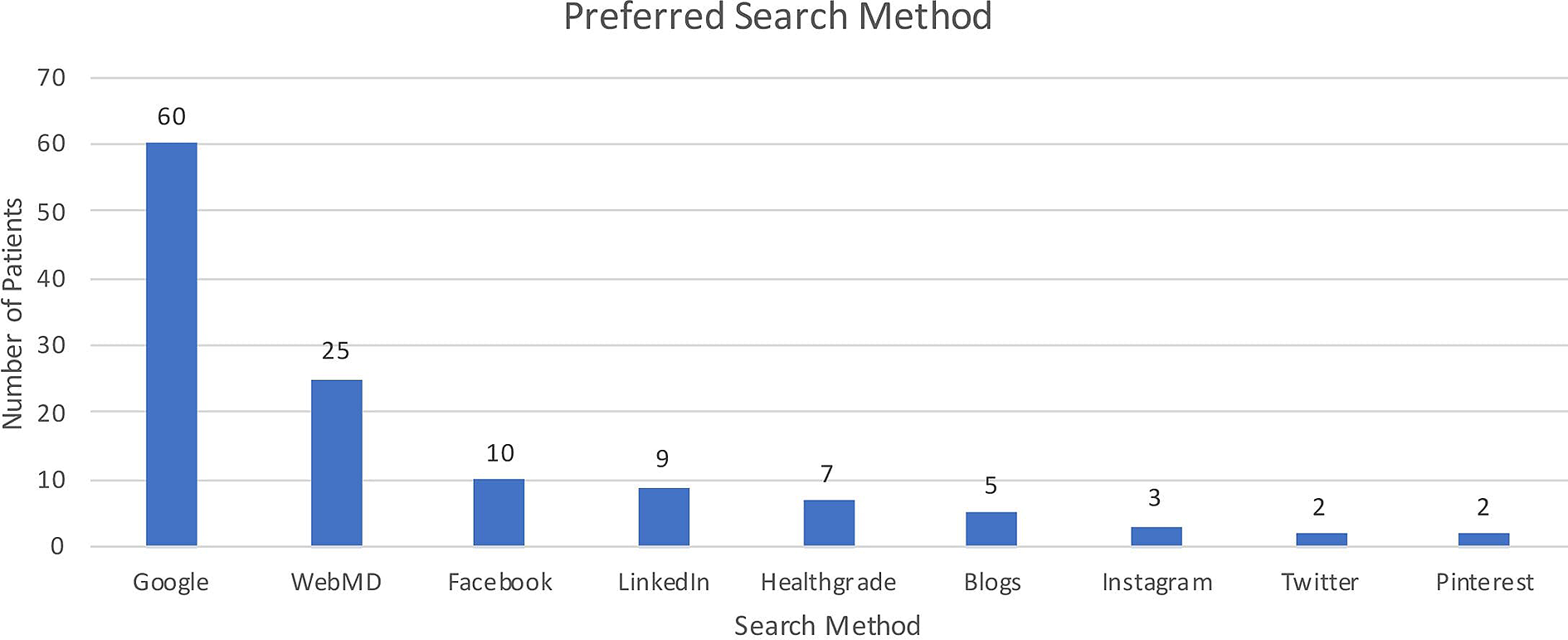
Platforms used by a cohort of our patients to search for physicians.
Factors considered when selecting a physician using the internet and social media
The most widely searched variable by those patients who reported using the internet or social media to search for a surgeon was background education and training, which was sought by 68.8% of participants, followed by online ratings (53.1%), online reviews (50%), associated hospital and/or university (46.9%), insurance coverage (37.5%), location (21.9%), and awards (9.4%) (Figure 4). Those patients who had researched and subsequently received treatment from a physician assigned an average rating of 9.2 (1–10 scale) to the strength how well the physician matched their expectations derived from the results of their online research.
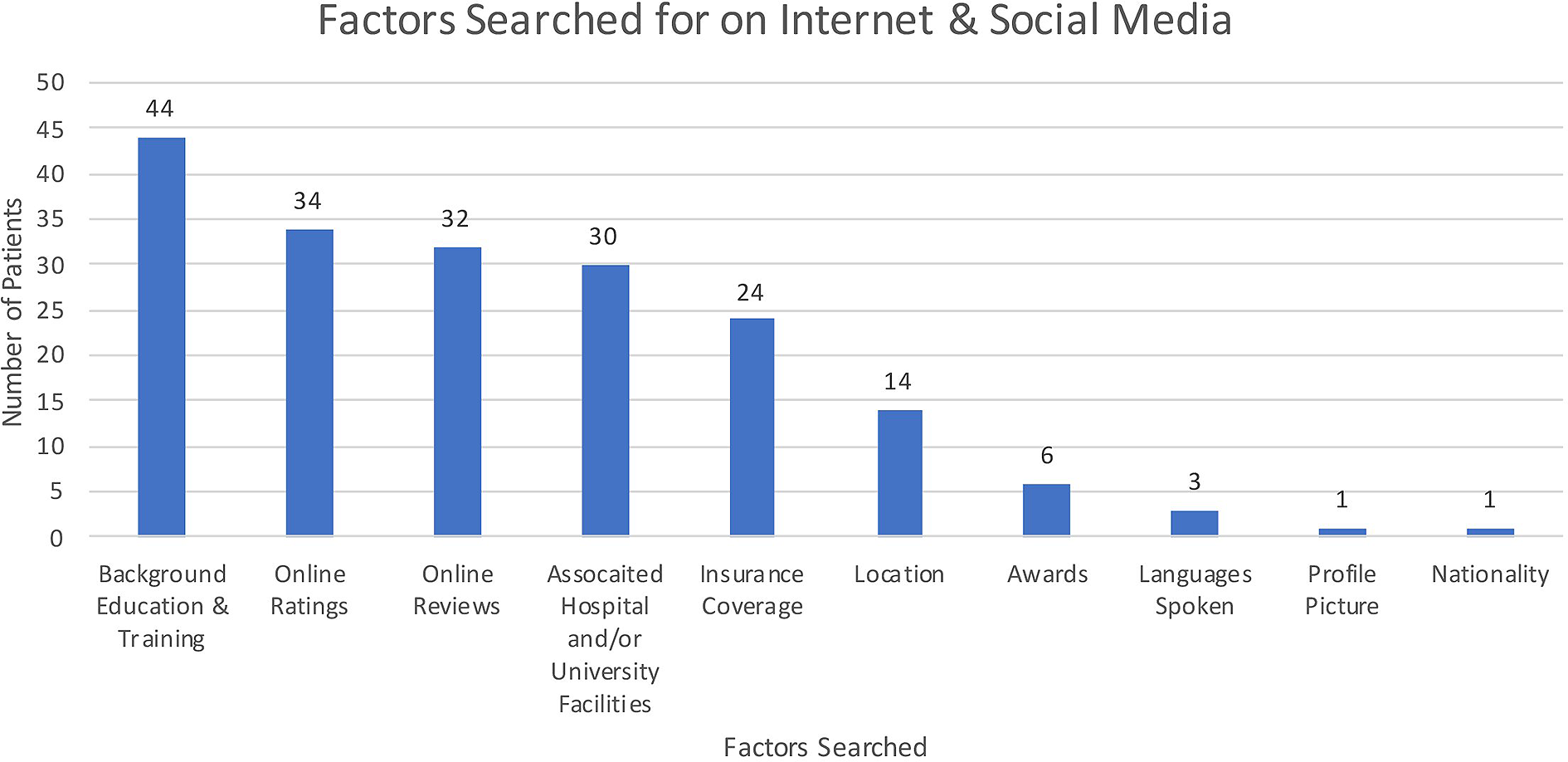
Physician variables research online by a cohort of our patients.
Discussion
Social media, now nearly ubiquitous in our society, is becoming an increasingly important tool employed by patients to select physicians. We examined the roles that the internet and social media played in surgeon selection by patients who underwent an elective joint replacement at our academic institution. Our cohort consisted of patients with a wide age range and with varying self-reported comfort using the internet, yet most (63.4%) reported using social media and/or the internet when selecting a physician.
Surgeon background and education were the top variables as to why patients selected a specific surgeon. These were followed by surgeon ratings and surgeon internet reviews. Previous studies have suggested that surgeons who are earlier in their careers tend to receive more frequent online reviews but lower overall ratings. 6,7 Orthopedic surgeons can exert a level of control over the reviews that patients will read and modulate the ways patients might interpret their ratings by citing their most positive reviews online. 8 Similarly, social media and the internet provide excellent platforms for surgeon to spread awareness of awards they win, a factor which was researched by a smaller, yet still significant, portion of the patients in our cohort.
The remaining variables of high importance are surgeon’s associated hospital and/or university, insurance coverage, and location. For these variables, patients have a wide range of preferences that physicians are less able to influence. 9 –11 Patients derive their preferences for surgeon education and training not only from each program’s academic strength and reputation but also from their own educational pedigrees and biases. 12 Patient derive their preferences for hospital affiliation and insurance coverage not only from the reputation of each hospital and their past experiences in it, but also according to the insurance policies that they hold and the amount of coverage that will be provided for care in each hospital system. 10,13 Finally, patients also take into consideration the proximity of the hospital to their residence or workplace 11 ; however, it is possible that patients in our cohort overestimated the importance they placed on this factor, as a direct relationship has been described between social media engagement and the distance that a patient is willing to travel to see the surgeon who best fits his researched preferences. 8 Due to the individualized nature of insurance coverage and hospital proximity, orthopedic surgeons may better attract patients by openly and honestly highlighting these variables on their website and/or social media page. 2
The results of our questionnaire suggest that orthopedic surgeons, especially those whose practices revolve around elective procedures, will benefit from carefully shaping their online presences to highlight the most attractive characteristics of their practices. These findings are in line with the results from similar studies analyzing the benefits of a positive online presence for other surgical subspecialists who perform mostly elective procedures. Gould et al. demonstrated a significant return on investment for a plastic surgery practice’s social media spending. 14 Houman et al. demonstrated that urologists with a social media presence have a higher surgical volume and receive better patient ratings. 15
However, one limitation of our results is the older age of patients undergoing total joint replacements (with a mean age over 61 years in our cohort) when compared to those undergoing other elective orthopedic procedures, such as arthroscopies. Because younger patients typically are more technology savvy, 16 our results may not be generalizable to the younger patient populations undergoing other elective orthopedic procedures, for whom a surgeon’s positive online presence may have an even greater effect. A second limitation of this study is that all patients studied live in South Florida and underwent total hip arthroplasty at the same academic center. Consequently, our study population may represent a single homogenous group of patients, which limits the generalizability of our conclusions to other regions or states that have different patterns of internet and social media use. A third limitation comes from the timing of survey administration being post-operative rather than pre-operative. If administered pre-operatively, the survey may have provided more valuable data on the process of patients’ decision making. However, post-operative administration of the survey allowed us to evaluate the patients entire clinical course and compare pre-operative opinions based on surgeon’s online presence to post-operative opinions on their surgical care. Lastly, patients were not differentiated based on Health Maintenance Organization (HMO) or Preferred Provider Organization (PPO)/Medicare status. HMO insurance plans typically cover specific providers and hospitals that have contracted lower rates of care for patients within the predetermined network. Conversely, PPO plans typically allow for more flexibility in patient selection of their provider. Therefore, some patients in our study may have been limited in their ability to choose their surgeon depending on their insurance coverage. Follow up studies should be performed with broader patient populations, consideration of insurance type as well as pre-operative administration of the survey.
Conclusion
Most patients who were treated for elective orthopedic joint replacement surgery at our academic institution used the internet and/or social media to search for physicians. Surgeons may benefit from tailoring their practices to highlight a positive online image.
Footnotes
Declaration of conflicting interests
The author(s) declared no potential conflicts of interest with respect to the research, authorship, and/or publication of this article.
Funding
The author(s) received no financial support for the research, authorship, and/or publication of this article.
