



Abstract

Yan L, Du J, Yang J, He B, Hao D, Zheng B, Yang X, Hui H, Liu T, Wang X, Guo H, Chen J, Wang S, Ma S, Dong S. C1-ring osteosynthesis versus C1-2 fixation fusion in the treatment of unstable atlas fractures: a multicenter, prospective, randomized controlled study with 5-year follow-up. J Neurosurg Spine. 2022 Feb 11:1-9. doi: 10.3171/2021.12.SPINE211063. Epub ahead of print. PMID: 35148517.
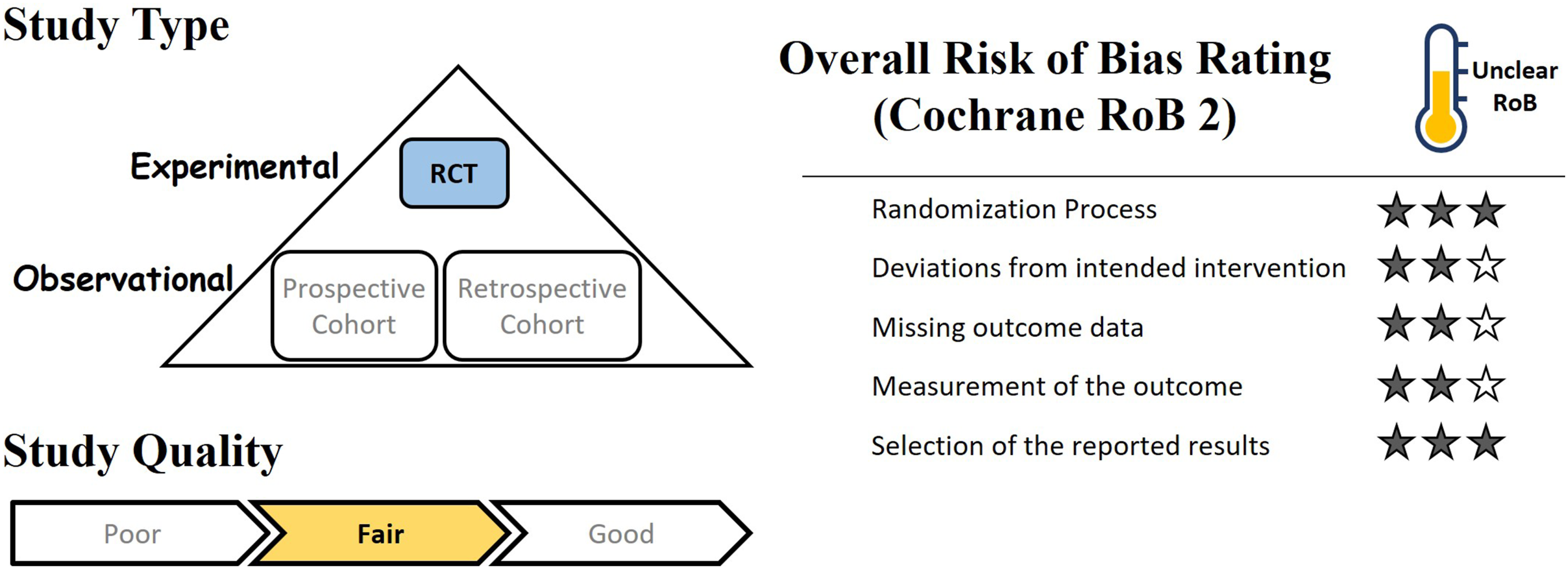
Visual Abstract
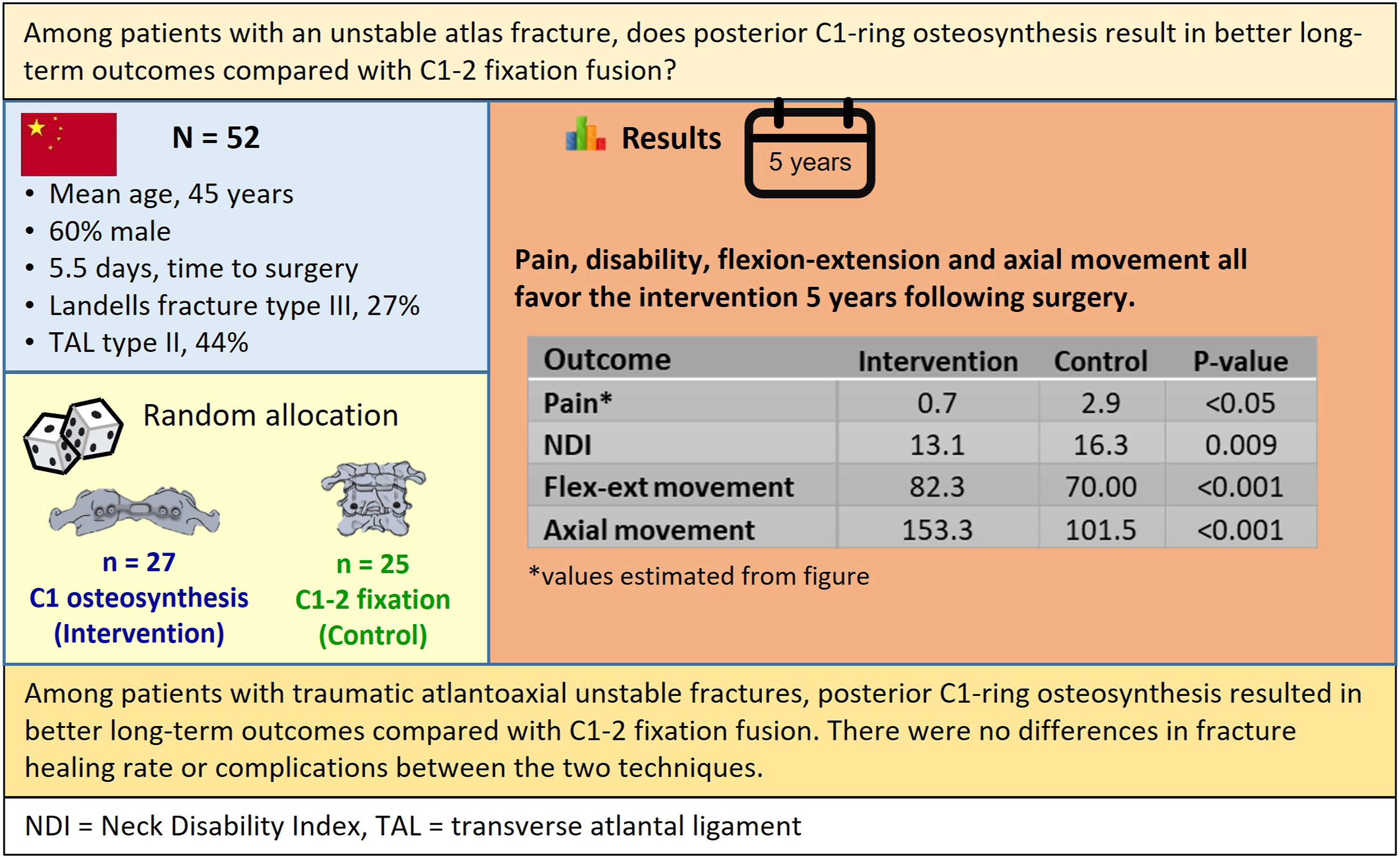
Why Is This Study an Important Topic?
Adult atlas fractures account for 2% of cervical injuries and 1% of all spinal injuries. C1-2 or C0-2 fusion, once the main surgical treatment of unstable atlas fractures, sacrifices the rotational movement of the atlantoaxial joint and the flexion and extension of the atlantooccipital joint. To maintain the mobility of adjacent joints, some surgeons recommend posterior, single-segment reduction and internal fixation for unstable C1 fractures. These recommendations are based primarily on case series without a control arm. This randomized control trial provides long-term comparisons between C1-ring osteosynthesis and C1-2 fixation fusion in the treatment of unstable atlas fractures.
What Are the Primary Clinical Questions?
Among patients with an unstable atlas fracture, does posterior C1-ring osteosynthesis result in better long-term outcomes compared with C1-2 fixation fusion?
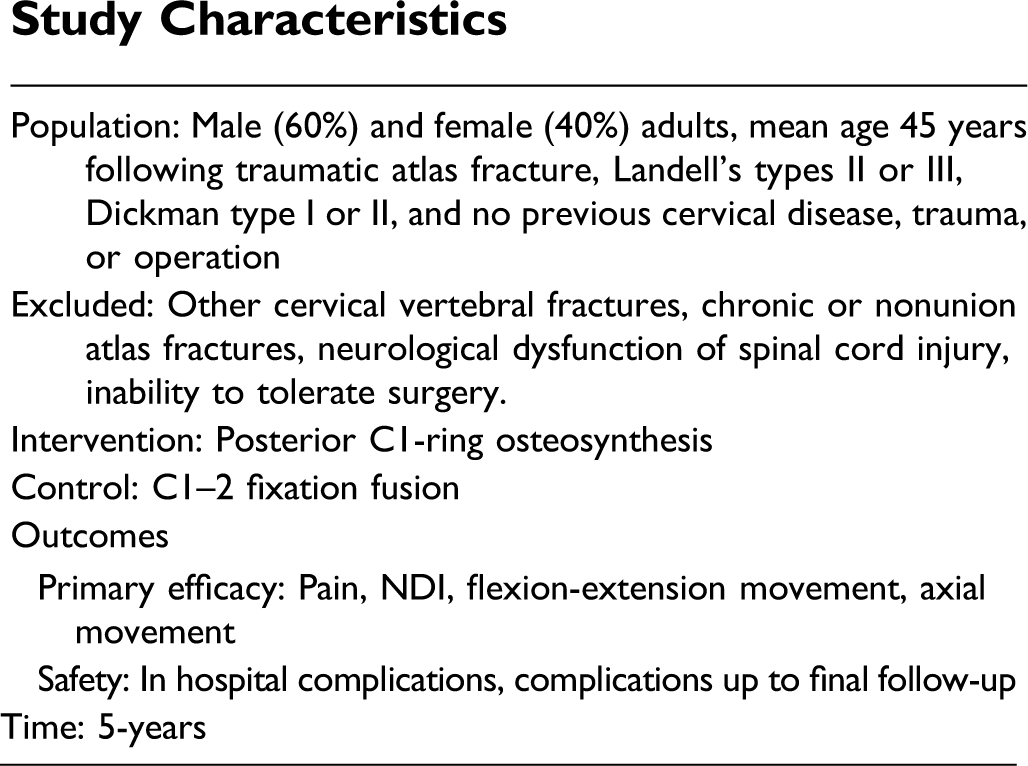
Study Characteristics
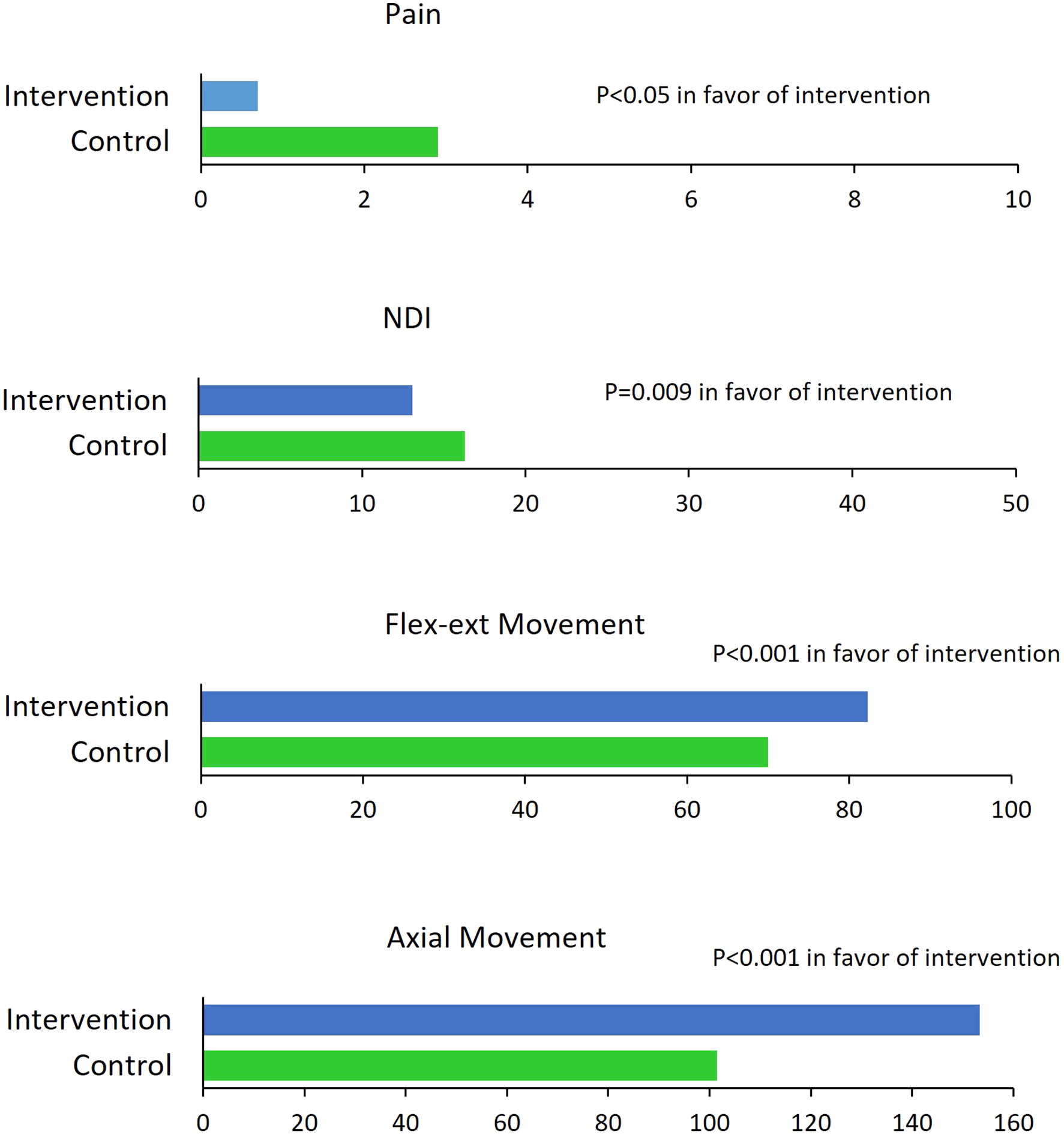
Results
Result 1. Pain, disability, flexion-extension and axial movement all favor the intervention 5 years following surgery
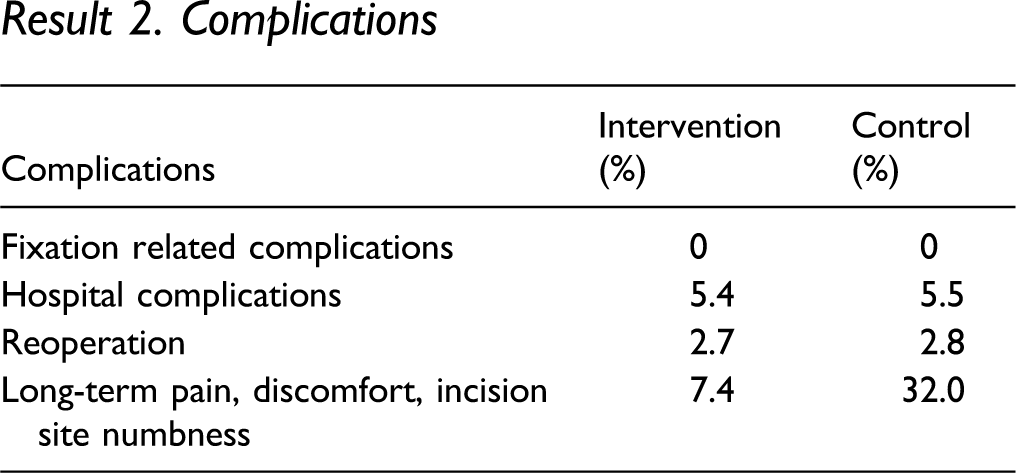
Result 2. Complications
How Will This Affect the Care of My Patients?
Among patients with traumatic atlantoaxial unstable fractures, posterior C1-ring osteosynthesis results in better long-term outcomes compared with C1-2 fixation fusion. In the current study, there was no difference in fracture healing rate or complications between the 2 techniques. Posterior C1-ring osteosynthesis is a reliable choice for the treatment of unstable C1 fractures.