




Abstract
Objective
Resource allocation to research activities is challenging and there is limited evidence to justify decisions. Members of AO Spine were surveyed to understand the research practices and needs of spine surgeons worldwide.
Methods
An 84-item survey was distributed to the AO Spine community in September of 2020. Respondent demographics and insights regarding research registries, training and education, mentorship, grants and financial support, and future directions were collected. Responses were anonymous and compared among regions.
Results
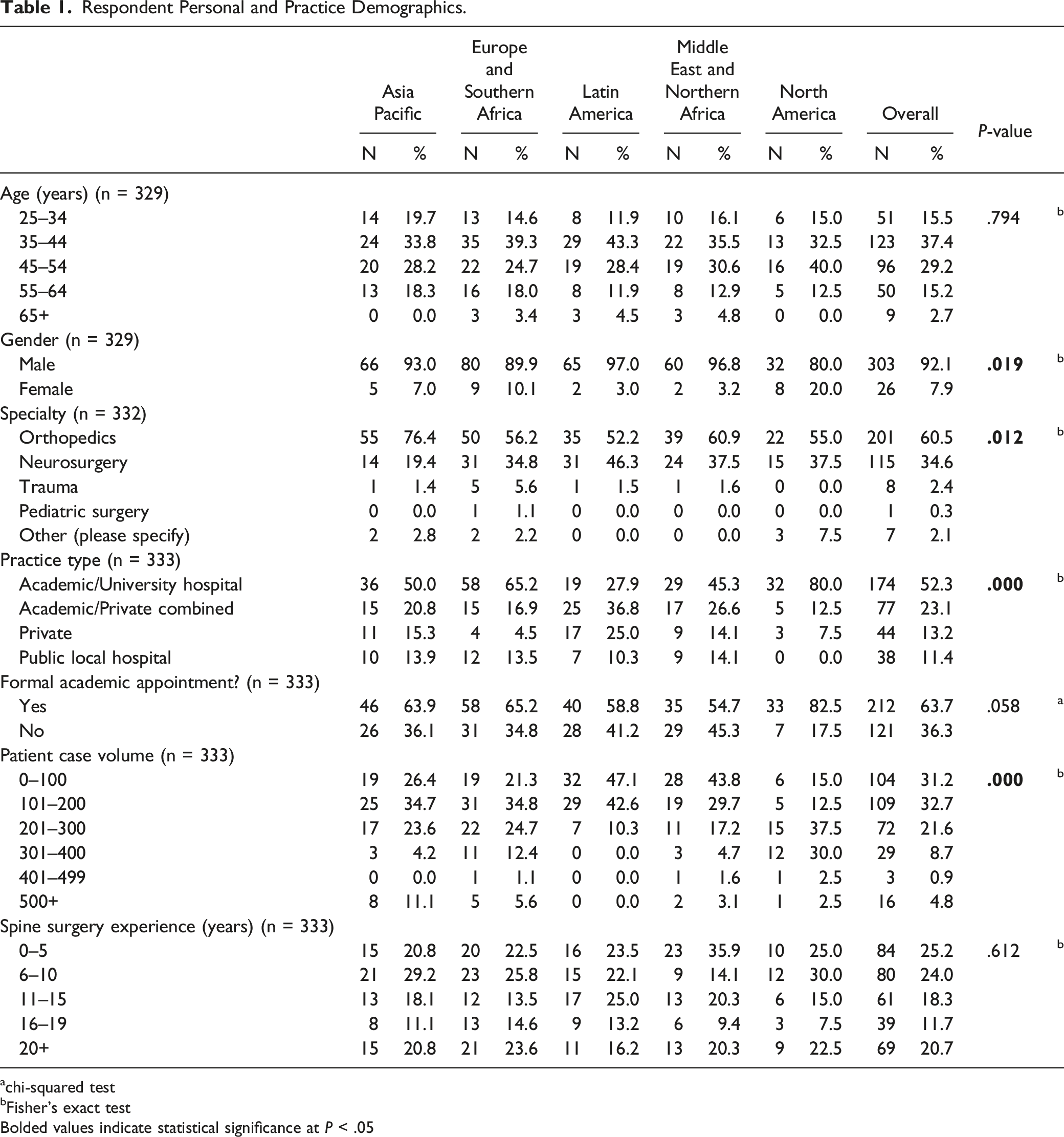
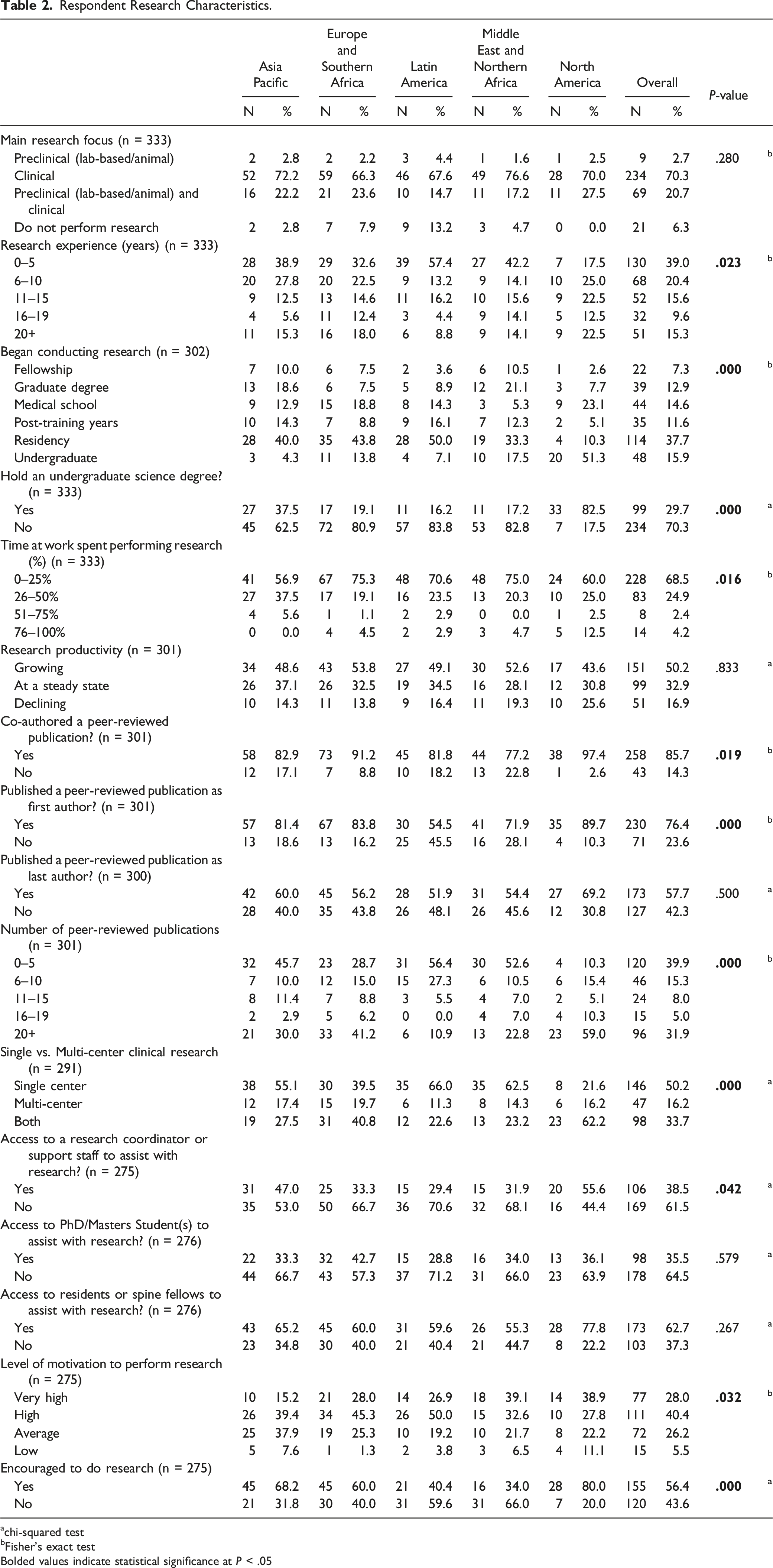
A total of 333 spine surgeons representing all geographic regions responded; 52.3% were affiliated with an academic/university hospital, 91.0% conducted clinical research, and 60.9% had 5+ years of research experience. There was heterogeneity among research practices and needs across regions. North American respondents had more research experience (P = .023), began conducting research early on (P < .001), had an undergraduate science degree (P < .001), and were more likely to have access to a research coordinator or support staff (P = .042) compared to other regions. While all regions expressed having the same challenges in conducting research, Latin America, and Middle East/Northern Africa respondents were less encouraged to do research (P < .001). Despite regional differences, there was global support for research registries and research training and education.
Conclusion
To advance spine care worldwide, spine societies should establish guidelines, conduct studies on pain management, and support predictive analytic modeling. Tailoring local/regional programs according to regional needs is advised. These results can assist spine societies in developing long-term research strategies and provide justified rationale to governments and funding agencies.
Introduction
Professional and academic health societies often have research as a core pillar of their mission, and thus are willing to invest in research activities. Nevertheless, resources for research activities are often scarce and can be costly; therefore, it is important that they be distributed efficiently. There are several competing areas where research resources could be allocated, from research training and educational activities to awarding research grants, making it challenging to know which areas to support and that will bring the most impact to the community. This challenge becomes even more difficult when serving members of an international community, where regional diversity may exist. Appropriation of research funds and targeted theme issues that are salient to a medical community may provide knowledge of regional and global research direction that may also feed into government (e.g., National Institutes of Health, European Horizon, etc.) and foundation support that can ultimately impact health policy. As such, it is imperative that an understanding of the research needs, areas of interest, and their global variation are well understood to maximize timely innovation and clinical impact in any medical field.
Spinal disorders and conditions are some of the most common in the medical field that has direct implications upon the entire human lifespan in any population. Various spine societies exist worldwide that are instrumental in the evolution of the field, and research-driven funded projects need to respond to the growing trends of the community in order to achieve adequate return on investment. 1 There is a lack of evidence available to guide spine society program directors and board members in research resource allocation. To date, no research needs assessment of the global community of spine surgeons has ever been conducted by any society. AO Spine, a clinical division of the AO Foundation, is an international community of spine surgeons and researchers focused on improving spine care worldwide.2-7 In this study, we utilized the AO Spine network of spine surgeons and researchers to obtain their opinions and insights to help identify research priorities. To this end, we conducted a cross-sectional survey with the purpose of understanding the research practices and needs of spine surgeons and to identify regional variations and similarities.
Materials and Methods
Survey Design and Distribution
A needs assessment survey was developed by a group of 15 international spine surgeons and researchers representing all geographic regions and who were members of the AO Spine International Research Commission. Question selection was performed following various rounds to gain group consensus. The survey was created with SurveyMonkey Inc (San Mateo, CA) and consisted of 6 sections: respondent demographics and characteristics, research registries and data collection systems, research training and education, research mentorship, research grants and financial support, and future research directions (Supplementary Appendix SI). Questions were presented as single and multiple selection, ranking, Likert scale, and as open-ended. Branching logic was also applied to select questions, as necessary. The 84-item survey was distributed to members of the AO Spine community, the world’s largest society of international spine surgeons (www.aospine.org), between September 3rd and the 24th of 2020. Individuals opting to receive email from AO Spine were targeted, which included approximately 4700 members. The responses obtained were anonymous.
Statistical Analyses
Standard descriptive statistics were used that consisted of the following: means and standard deviations or medians and ranges for continuous variables and absolute numbers and frequency distributions for categorical variables. Statistical differences were assessed for categorical variables with chi-squared and Fisher’s exact tests where applicable and the Kruskal–Wallis test was used for ranking questions. Data analysis was conducted using Python 3.8 and the pandas, numPy, and SciPy modules. Fisher’s exact analyses were performed with R version 4.0.2, where applicable. Significance was defined as P < .05.
Results
Respondent Demographics and Characteristics
Respondent Personal and Practice Demographics.
achi-squared test
bFisher’s exact test
Bolded values indicate statistical significance at P < .05
Respondent Research Characteristics.
achi-squared test
bFisher’s exact test
Bolded values indicate statistical significance at P < .05
The research area of focus corresponded with practice focus, whereby spine degeneration (82.8%, 250/302), spine trauma (64.2%, 194/302), and spine deformities (48%, 145/302) were the most popular. Research was predominantly done locally (68%, 198/291) and nationally (41.2%, 120/291), and to a lesser extent at regional (32.6%, 95/291) and international (29.2%, 85/291) levels. Respondents performed research to advance the field, to benefit patients, and for personal gratification. Publishing in peer-reviewed journals was considered the most important research activity (1.56 ± .78; on a scale of −2 [least important] to +2 [most important]).
Challenges were innate in research, where 88.3% (294/299) of respondents indicated they had challenges in conducting research. The 3 main challenges for performing research at the place of work included a lack of funds (71.9%, 189/263), of infrastructure (i.e.,, clinical research support staff, ethics committee, etc) (63.5%, 167/263), and time to perform research (58.9%, 155/263). In addition, Asia Pacific responders also reported a lack of knowledge about statistical analysis (55.6%, 35/63) and Latin American responders reported a lack of incentive to perform research (66.7%, 34/51). The level of motivation to perform research was high or very high for 68.4% (188/275) of respondents and differed across regions (P = .032; Table 2). Only 56.4% (155/275) of respondents were supported and encouraged by their work environment to pursue their research efforts, where most North American responders were supported (80.0%, 28/35) while other regions to a lesser extent (P < .001; Table 2).
Research Registries and Data Collection Systems
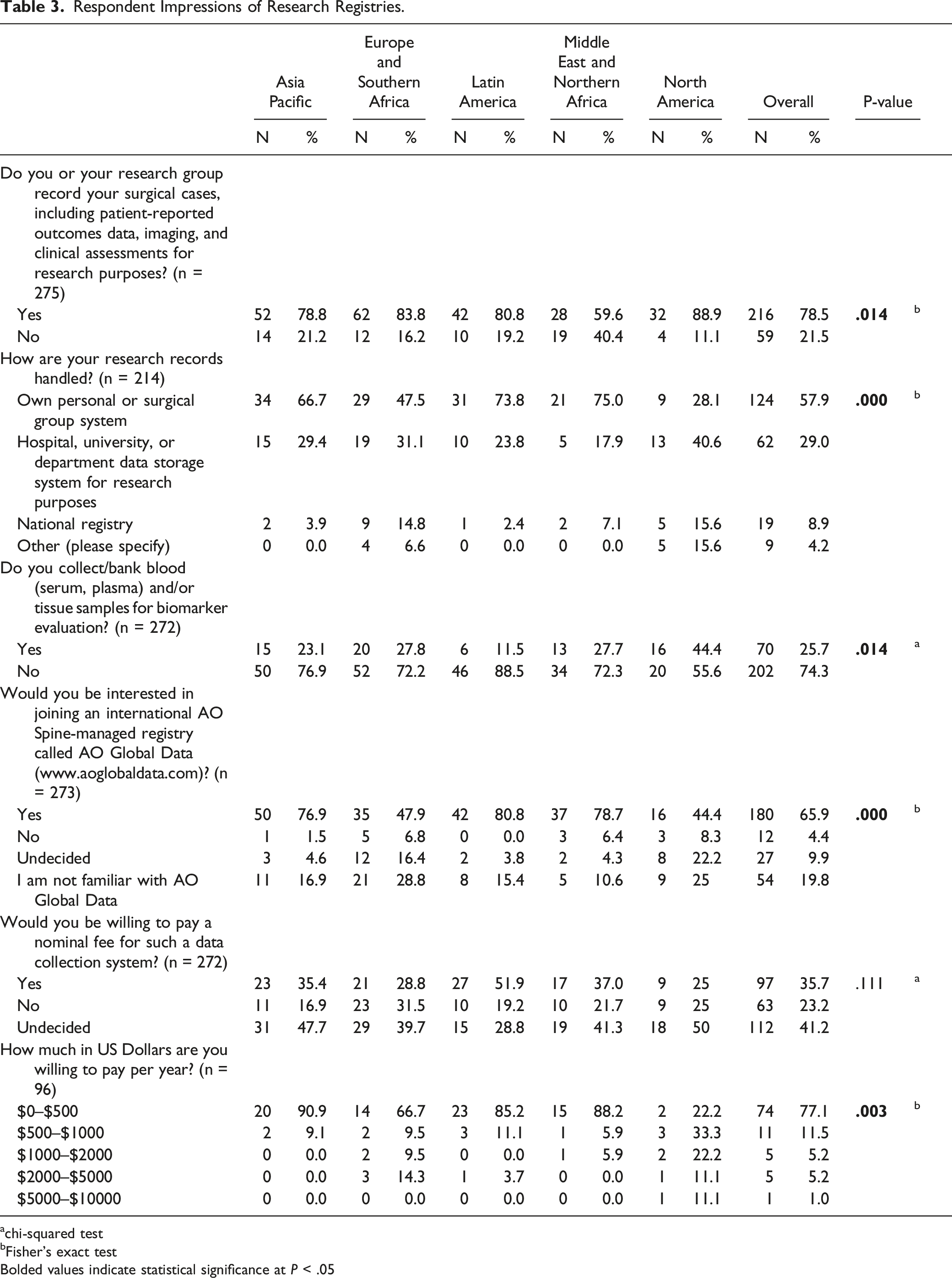
Respondent Impressions of Research Registries.
achi-squared test
bFisher’s exact test
Bolded values indicate statistical significance at P < .05
Research Training and Education
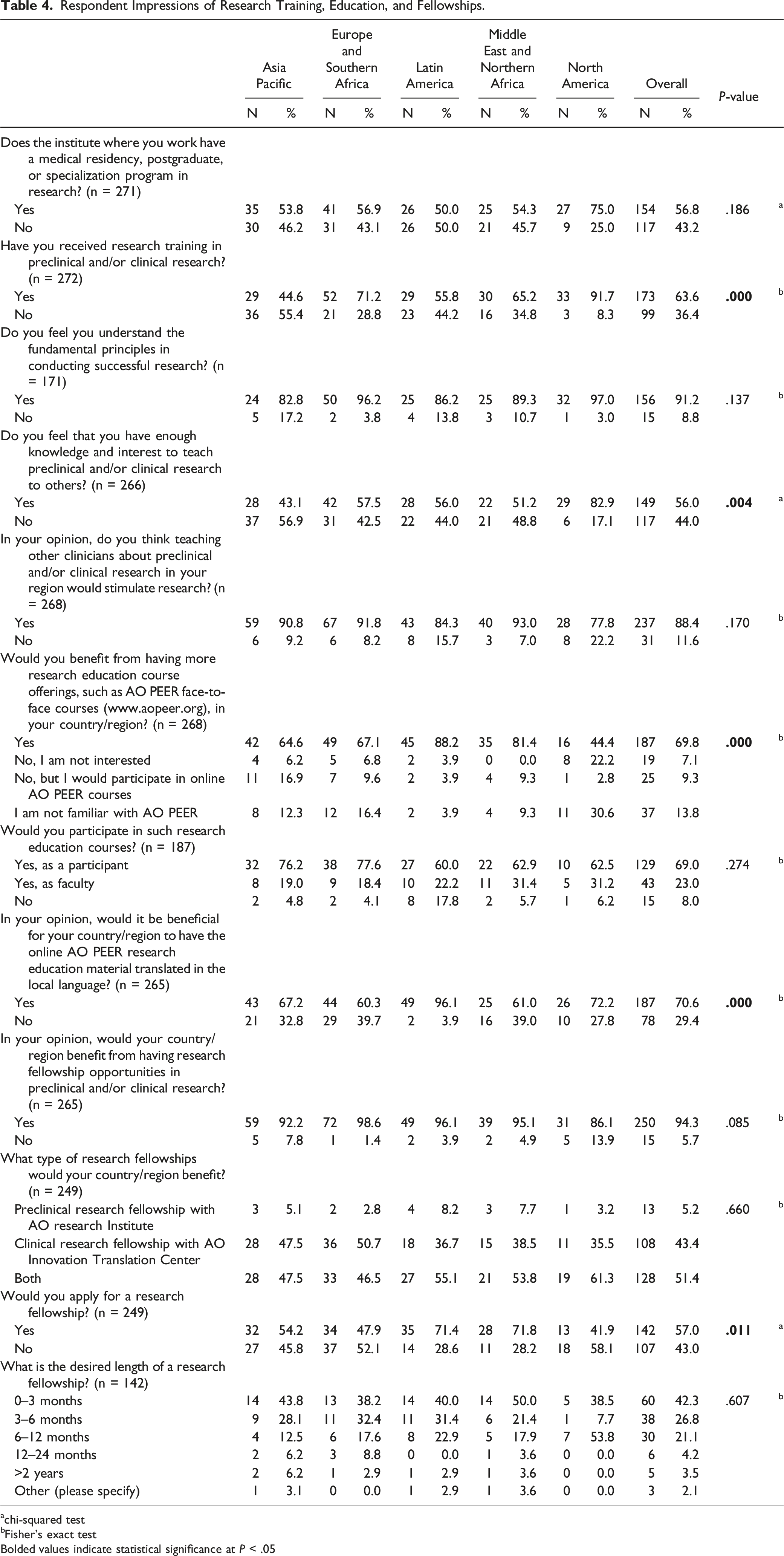
Respondent Impressions of Research Training, Education, and Fellowships.
achi-squared test
bFisher’s exact test
Bolded values indicate statistical significance at P < .05
The 3 most popular research topics that respondents learned and studied were clinical study design and methodology (82.5%, 141/171), literature search and reviews (69.0%, 118/171), and research protocol development and writing (63.2%, 108/171). The 3 most popular research topics that respondents would like to continue to learn and study were clinical study design and clinical methodology (80.3%, 102/127), research protocol development and writing (67.7%, 86/127), and systematic reviews and meta-analyses (67.7%, 86/127).
Overall, 69.8% (187/268) of respondents felt it would be beneficial to have more research education course offerings where 69.0% (129/187) would participate as a participant, 70.6% (187/265) were in favor of having online research education material translated in the local language, and 94.3% (250/265) were in favor of having research fellowship opportunities. Research fellowships in both preclinical and clinical research settings were of interest to most (51.4%) (128/249). If available, most respondents would apply for a research fellowship (57.0%, 142/249) and 42.3% (60/142) desired a research fellowship length of 0–3 months. Regional differences occurred as to whether it would be beneficial to have more research education course offerings (P < .001), whether it would be beneficial to have online research education material translated in the local language (P < .001), and whether respondents would apply for a research fellowship (P = .011; Table 4). For the respondents in Latin America and the Middle East/Northern Africa, a higher percentage felt they would benefit from having more research education course offerings and would apply for a research fellowship compared to the other regions. Almost all Latin American respondents felt they would benefit from having online research education material translated in the local language (96.1%, 49/51).
Research Mentorship
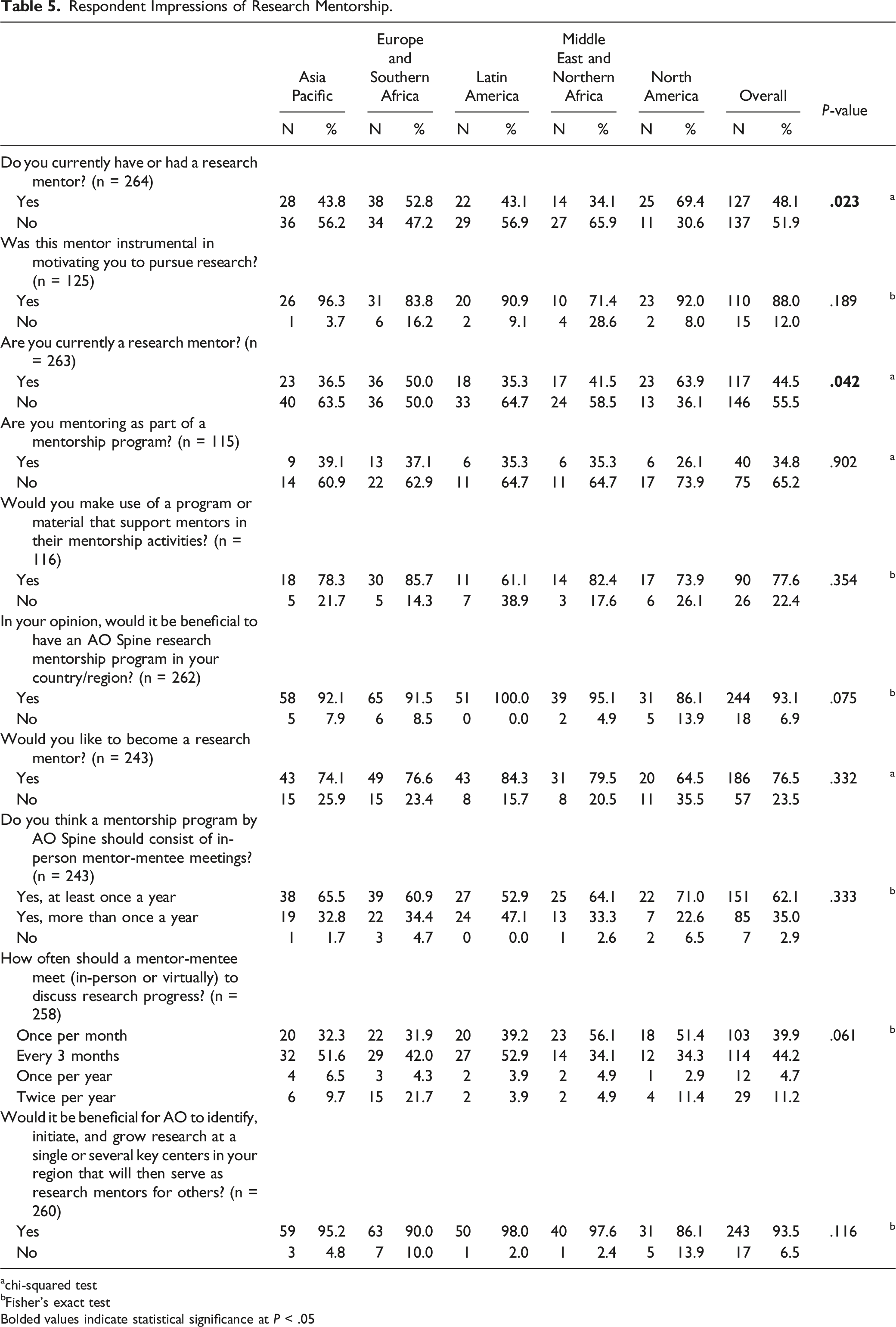
Respondent Impressions of Research Mentorship.
achi-squared test
bFisher’s exact test
Bolded values indicate statistical significance at P < .05
Research Grants and Financial Support
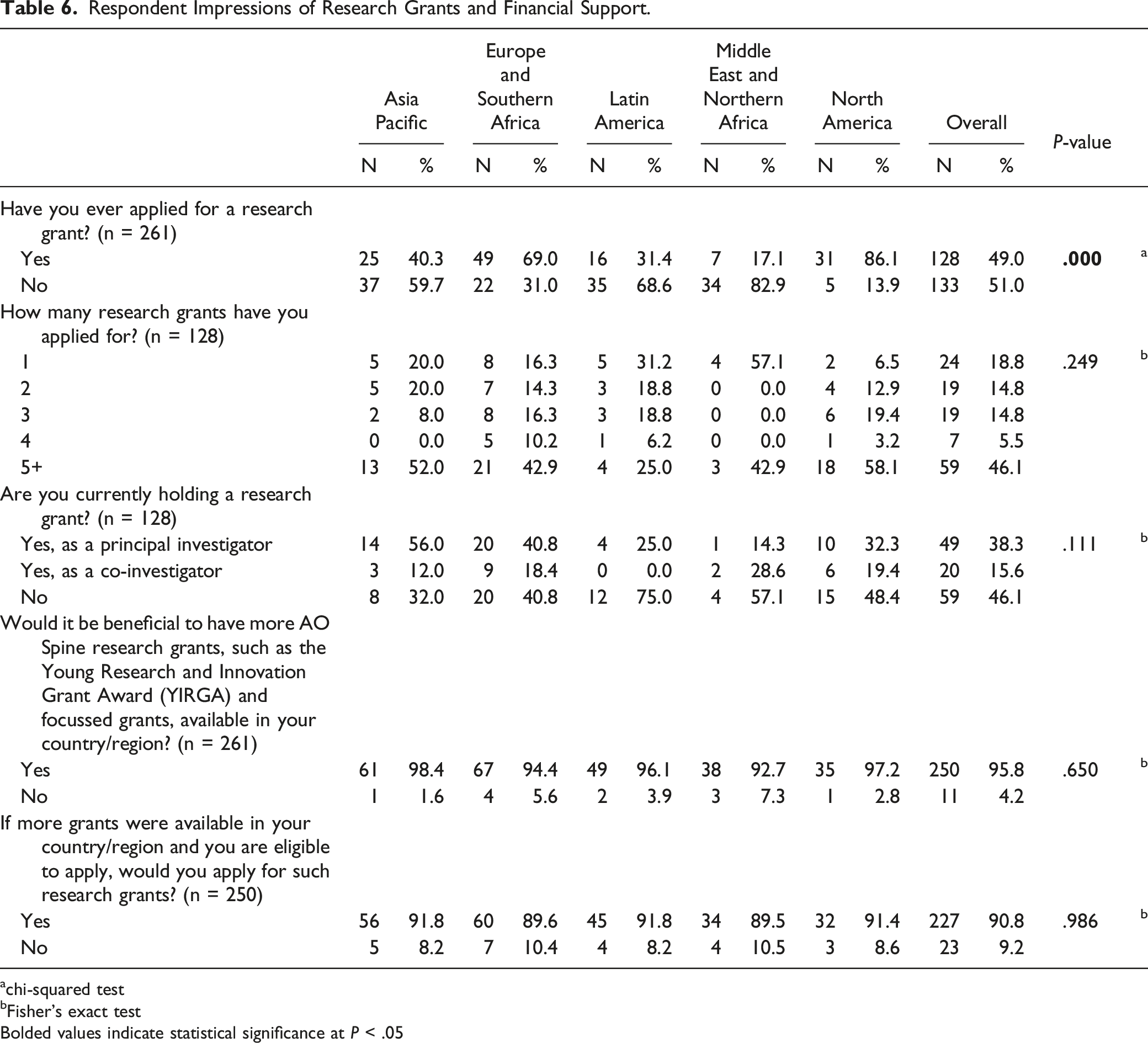
Respondent Impressions of Research Grants and Financial Support.
achi-squared test
bFisher’s exact test
Bolded values indicate statistical significance at P < .05
Future Research Directions
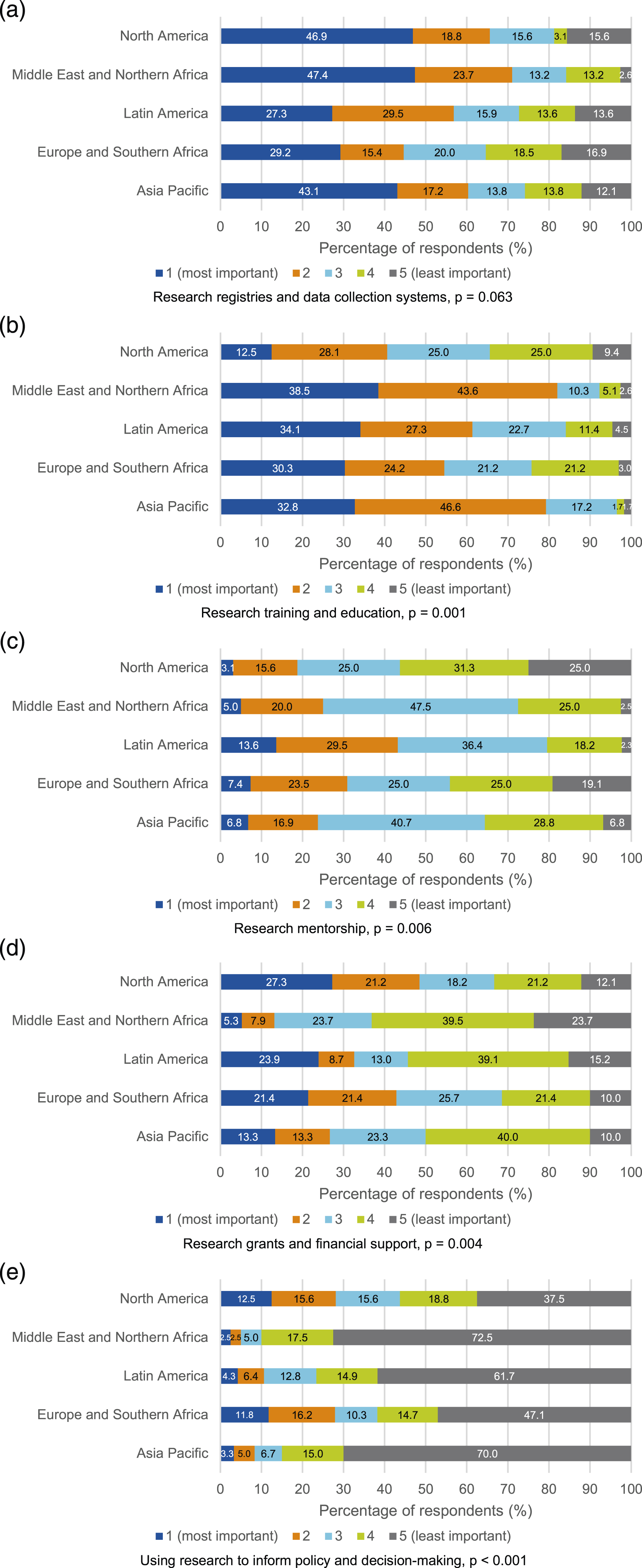
Respondents were asked about which research activities would be most beneficial for AO Spine to pursue to enhance and improve research locally/regionally and globally. The most important research activities were research registry and data collections systems as well as research training and education, where more than 50% of respondents ranked these as being 1 (most important) or 2 (Figure 1). There were significant differences across regions when comparing certain research activities that they felt would be most beneficial to pursue locally/regionally (Figure 2; P < .001–P = .006). Respondent ranking of research activities they felt would be most beneficial for AO Spine to pursue to enhance and improve research globally. Respondent ranking of research activities they felt would be most beneficial for AO Spine to pursue to enhance and improve research locally/regionally, where A. represents research registries and data collection systems, B. represents research training and education, C. represents research mentorship, D. represents research grants and financial support, and E. represents using research to inform policy and decision-making.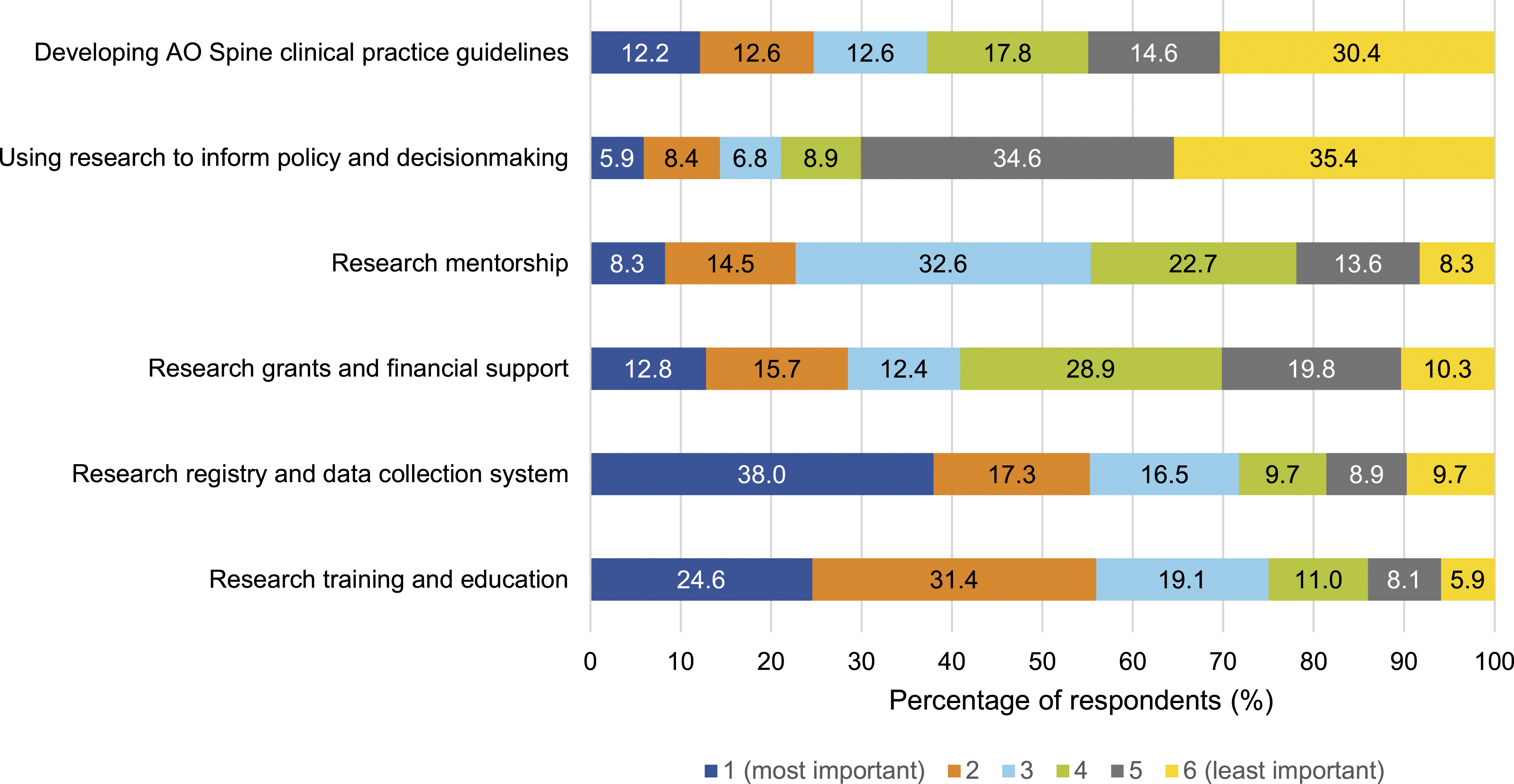
Respondents were also asked to select 3 areas they believed would be most impactful for advancing spine care worldwide and the top selections included guidelines (63.2%, 160/253), pain (44.3%, 112/253), and predictive analytic modeling (33.9%, 101/253; Figure 3). Respondent prioritization of areas for a global research initiative.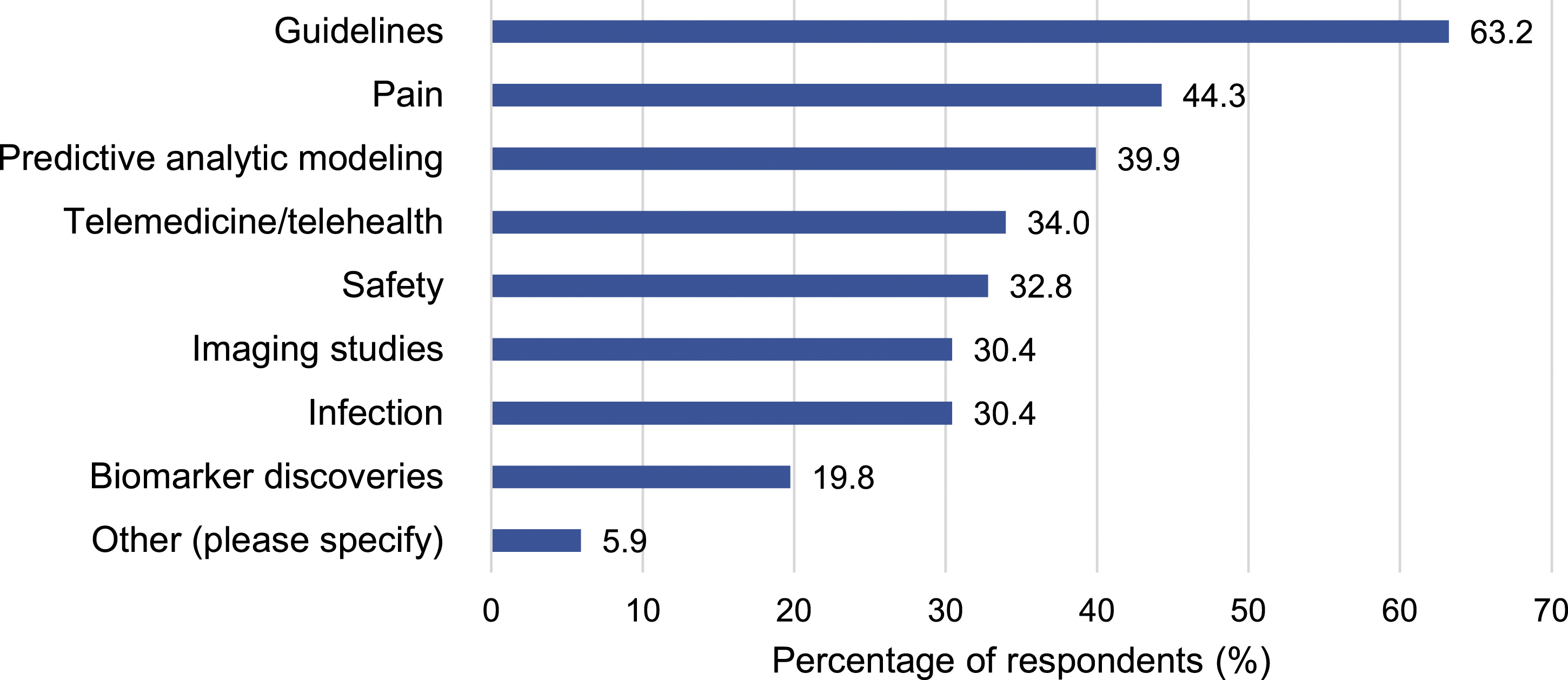
Discussion
To our knowledge, this is the first study to report on the research practices and needs of spine surgeons worldwide and to assess regional differences. The results revealed that there is heterogeneity in spine surgeon research practices worldwide and distinct areas for future research were identified. There is a need for global research registries and data collection systems, and research training and education among spine surgeons. The top 3 areas to conduct a global research initiative for advancing spine care worldwide included establishing clinical practice guidelines, conducting studies centered around pain management, and supporting predictive analytic modeling.
Our survey provides insights into the differences in research practices of spine surgeons across regions. In contrast to the other regions, we found that most North American respondents began conducting research early in their career and received undergraduate science degrees. Many had more than 5 years of research experience and experience writing peer-reviewed publications as first author, including having co-authored more than 20+ publications. Most had personnel to assist with research and were encouraged to conduct research. These results show that the research culture and environment in North America appears to promote research and cultivates spine surgeon-researchers. This is consistent with the clinical training programs in the United States and the importance given to the physician-scientist. 8
Despite the progressive research culture in North America, interestingly, all regions indicated that they share the same challenges for performing research: lack of funds, research infrastructure, and time. This is consistent with the fact that most spend between 0 and 25% of their working time on research and do not have access to trained research support personnel. Not having access to trained research coordinators/support staff is one of the key challenges in performing research for not only spine researchers, but all researchers. It is especially a major challenge for those in low- and medium-income countries. Building local capacity in these countries would improve their ability to conduct clinical research. Ntekim et al. 9 proposed a model for capacity building where higher income countries should partner with low- and medium-income countries by providing them funds, mentorship, and training. Interestingly, Latin America and Middle East/Northern Africa were less likely encouraged to engage in research. This is in accordance with the little investment Latin America makes in biomedical research. 10
Even though several spine surgeons are recording their surgical cases for research purposes and large, international population-based databases do exist (e.g., Eurospine’s Spine Tango, Swedish Spine Registry),11,12 overall, there is still a strong will to establish more global spine research registries and data collect systems. This was unanimously supported across all regions. This need appears to be the highest in the Middle East/Northern Africa. To address this demand, AO Spine is developing an international musculoskeletal registry referred to as AO Global Data (www.aoglobaldata.com) which will be available to all AO Spine members and will provide a platform for clinicians to capture spine patients and their patient-reported outcomes. AO Spine has also launched spine-specific pathology focused international research registries on degenerative disc disease, metastatic spine disease, and primary spine tumors. These are targeted research registries, aiming to answer specific research questions. They are in the early stages and restricted to 15–20 centers due to limited resources. However, if they prove to be fruitful, the goal is to expand them and perhaps even onboard and support under-developed countries that are eager and willing to participate. While costly and faced with legal and ethical issues, there is also a need for establishing international repositories for biospecimens, as there are very few who currently engage in this activity. Such data repositories could provide unique and meaningful data for predictive analytic modeling methods and could contribute to personalized medicine approaches.
The results indicated that there is a demand for more research training and education. This is especially the case for the Middle East/Northern Africa and Asia Pacific, followed by Latin America and Europe/Southern Africa. It was felt that one way to stimulate more research in these regions would be by teaching spine surgeons about research. There was especially strong support in Latin America and the Middle East/Northern Africa to have more in-person research education course offerings. Online research education material should be made available in the local language. Another strongly supported research training and educational activity by all regions included providing research fellowship opportunities in either preclinical or clinical research.
Most felt that a research mentorship program would be beneficial but when ranked against other research activities, it was less favored. Nevertheless, this is a research area that could be further developed because less than 50% of respondents currently have/had a research mentor or are a research mentor. In addition, those that were mentored indicated that their mentor was instrumental in motivating them to pursue research. Of the 5 regions, Latin America had this research activity ranked the highest.
There was strong support from all regions to receive more research grants. However, when ranked against other research activities, it was primarily North America and Europe/Southern Africa that favored this activity. These regions were also more likely to apply for research funding, and this comes as no surprise, as there are more opportunities to obtain research funding, especially in North America because of the National Institutes of Health (NIH) in the United States, one of the leading granting agencies in the world. 13 In addition, there are more individual specialized spine societies (e.g., Cervical Spine Research Society, Scoliosis Research Society), funding agencies, and philanthropic foundations in the United States. Providing research grants and financial support is a popular and common research activity performed by several societies but may not be appropriate for building research in regions that are less established in conducting research. Nevertheless, awarding seed funding for new research initiatives and innovation to young investigators is encouraged. Farrokhyar et al. 14 evaluated the effect of awarding seed funding on the research productivity of junior investigators and found that awardees were more likely to publish and had greater success in securing future funding.
This study is not without limitations. The survey received a 7% response rate, and although low, this is consistent with past surveys that have been conducted and published using the AO Spine community.15,16 In addition, we believe the data are representative as not all AO Spine members are researchers
Conclusion
Our study is the first, to our knowledge, to assess the research needs and practices of spine surgeons worldwide. Due to the heterogeneity in spine surgeon research practices worldwide, it is advised to tailor local/regional programs according to the needs specific to the region. Further research performed at the regional levels is recommended. Global research initiatives should include establishing research registries and data collection systems as well as research training and education. Therefore, we should promote big data, artificial intelligence and algorithm testing in large datasets and cohorts. To address such platforms, research training and education will be imperative foundational pillars among spine surgeons in years to come. To advance spine care worldwide, spine societies should focus on establishing clinical practice guidelines, conducting studies centered around pain management, and supporting predictive analytic modeling. We hope these findings may be useful to the broader spine community and other relevant professional and academic health societies. Moving forward, a multidisciplinary approach to spine research is needed if the field is to advance.
Supplemental Material
sj-pdf-1-gsj-10.1177_21925682211058158 – Supplemental Material for Research Practices and Needs Among Spine Surgeons Worldwide
Supplemental Material, sj-pdf-1-gsj-10.1177_21925682211058158 for Research Practices and Needs Among Spine Surgeons Worldwide by Niccole Germscheid, Jason P. Y. Cheung, Marko H. Neva, F. Cumhur Öner, Brian K. Kwon, Marcelo Valacco, Waleed Awwad, Daniel M. Sciubba, Stephen J. Lewis, Laurence D. Rhines, Sangwook T. Yoon, Mauro Alini, Sibylle Grad, Charles Fisher and Dino Samartzis in Global Spine Journal
Supplemental Material
sj-pdf-2-gsj-10.1177_21925682211058158 – Supplemental Material for Research Practices and Needs Among Spine Surgeons Worldwide
Supplemental Material, sj-pdf-2-gsj-10.1177_21925682211058158 for Research Practices and Needs Among Spine Surgeons Worldwide by Niccole Germscheid, Jason P. Y. Cheung, Marko H. Neva, F. Cumhur Öner, Brian K. Kwon, Marcelo Valacco, Waleed Awwad, Daniel M. Sciubba, Stephen J. Lewis, Laurence D. Rhines, Sangwook T. Yoon, Mauro Alini, Sibylle Grad, Charles Fisher and Dino Samartzis in Global Spine Journal
Footnotes
Acknowledgments
We would like to thank the AO Spine Community Development staff as well as the regional managers and staff for helping to distribute and bring awareness to the survey.
Declaration of Conflicting Interests
The authors declared no potential conflicts of interest with respect to the research, authorship, and/or publication of this article.
Funding
The authors received no financial support for the research, authorship, and/or publication of this article.

Supplementary Material
Supplementary material for this article is available online.
References
Supplementary Material
Please find the following supplemental material available below.
For Open Access articles published under a Creative Commons License, all supplemental material carries the same license as the article it is associated with.
For non-Open Access articles published, all supplemental material carries a non-exclusive license, and permission requests for re-use of supplemental material or any part of supplemental material shall be sent directly to the copyright owner as specified in the copyright notice associated with the article.
