



Abstract
Introduction
Presenting a poster at a professional meeting is an amazing opportunity to share research, clinical advances, and advocacy efforts. Poster sessions tend to be the largest platform at most conferences which makes poster presentations a more accessible means for disseminating knowledge, particularly for learners and trainees. For example, the 2024 Society of Pediatric Psychology Annual Conference (SPPAC) featured 442 posters across three themed sessions, while fewer than 75 slots were available for podium presentations. As a result, authors are challenged with the task of effectively communicating central findings via a concise, visual format that generally occurs in short period of time with a narrow audience of conference attendees.
The Importance of Dissemination
In contrast to posters, published articles are available to a broader audience; publications are archived indefinitely in searchable databases, whereas the information presented in a poster is available for only a short time. 1 Publications are also more likely to undergo a thorough peer review, which helps to ensure the quality and rigor of published scientific communication, thereby increasing the likelihood that published articles influence future directions of research, practice, and policy (Jefferson et al., 2002). Relatedly, publications demonstrate an investigator’s expertise and professional reputation, and thus, may reflect important metrics for academic productivity, improving competitiveness for grant funding, and career advancement.
Despite their differences, posters and publications have many commonalities. Saver (2022) illustrates these commonalities using the analogy of a skeleton—a poster has the bones and needs muscles, tendons, and ligaments to support it as a publication. At the very least, posters and publications typically share such elements as title, abstract, introduction, methods, results, and conclusions. Consequently, a natural progression may be to expand upon a poster presentation in a manuscript submitted for publication consideration.
Publishing can be a daunting process—the simplistic idea of fleshing out the skeleton of a poster, in reality, takes considerable time and effort. Scientific writing requires a nuanced set of skills, and many novice authors would benefit from the guidance of mentors. Furthermore, many authors experience “impostor phenomenon” in the face of the competitiveness, criticism, and rejection often associated with academic publishing. Learners, trainees, early-career professionals, and individuals traditionally underrepresented in science may be at a particular disadvantage as they may not have the support, resources, or experience to undertake the process of preparing a publishable manuscript. This article aims to outline the considerations, processes, and actionable steps involved in turning a poster into a publication. Readers are encouraged to consider this guidance in the context of their personal and professional values and goals.
Assessing Readiness for Publication
So, the conference is over and the poster is back in the tube—what next? In considering whether to invest the time and effort to convert a poster presentation into a manuscript submission, it is critical to honestly evaluate whether the work is suitable and ready for publication. Some important questions to think about include the following: (1) Does the study address a gap in the literature? (2) Does the study move the field forward? (3) Is the study design sufficiently rigorous to answer the research question? If the answer to any of these questions is “no,” then it is unlikely that the study will demonstrate the quality needed to be published in a peer-reviewed journal. It is important to note that null findings do not necessarily mean that a study is not suitable for publication; however, it becomes especially important to highlight explicitly how such findings are an important contribution to the field.
If it is established that these minimum criteria for publication are met, there are additional key considerations regarding whether a study work is ready for publication: (1) Is data collection complete? Posters sometimes reflect interim analyses or works in progress. It is best practice to proceed with manuscript development only after data collection is complete. (2) Is study methodology sound? For example, were the selected measures validated for the sample population? Or in the case of quality improvement (QI) work, are process measures aligned with the clinical outcome of interest? If not, it may be premature to proceed with manuscript development without first examining the psychometric or process properties of the primary measures (which could represent a manuscript in and of itself). (3) Does the analytic strategy adequately address study hypotheses? For instance, descriptive and correlational analyses are not sufficient if research question(s) and hypotheses require predictive models. (4) Do findings have appreciable implications? It is important that authors highlight actionable recommendations for future research, clinical practice, and/or policy that stem from their work.
Once authors have determined that their work is both suitable and ready for publication, it is time to think carefully about whether adequate time and effort can be devoted to prepare a well-written manuscript. Some important questions to consider here include the following: (1) Is academic productivity expected in one’s role? (2) Does publishing align with one’s professional goals? (3) Does one have time in their current role not only to develop the manuscript but also to see it through the peer review process—which may take 6–12 months or more? If the answers to these questions are “yes,” then establishing actionable steps and goals will be helpful in keeping the publication project on track.
Actionable Steps
The process of transforming a poster presentation to a published manuscript involves a series of actionable steps and decisions; careful planning, reflection, and support are essential for navigating this process effectively. These actionable steps are often enacted once the decision has been made to begin the writing process. For many aspiring authors, particularly learners, trainees, early-career professionals, and individuals traditionally underrepresented in science, navigating the manuscript writing process can be a formidable challenge. Frequent obstacles include time management (e.g., finding enough time to write and submit manuscripts; meeting deadlines), competing priorities (e.g., balancing multiple role demands such as clinical work, teaching, and time for self-care), research communication skills (e.g., effectively articulating and explaining significance of work), frustration with the process (e.g., experiencing setbacks, many of which may be outside the author’s control), and motivation (Duracinsky et al., 2017; Oshiro et al., 2020).
Seeking guidance and support from senior mentors is often a critical first step in addressing these abovementioned barriers to academic writing (Shen et al., 2022). Mentors may be particularly helpful in the early stages of converting poster presentations into manuscripts by encouraging a structured approach (e.g., creating timelines and deadlines), fostering positive feelings about writing, providing consistent feedback, and assisting with writing, editing, and the submission process (Redmond, 2002). It is important to note that mentorship is a competency—even the best-intentioned mentors may not possess the knowledge, attitudes, and skills to be most effective in their role (Stelter et al., 2021; Stoeger et al., 2021). Individuals who are in the position to guide and support learners through the publication process are encouraged to be honest, introspective, and open to critical feedback regarding their mentorship style (Hill et al., 2022). Moreover, mentors should anticipate that learners and early career authors may need support throughout the process of converting a poster to a publication. Specific trainings exist to better equip mentors with requisite mentorship competencies (Fleming et al., 2013; Pfund et al., 2014).
In addition to mentors, building a network of peers can also provide crucial support and accountability. One promising approach has been the formation of peer writing groups. Research suggests that peer writing groups provide a safe and trusting environment where authors can develop and hone their writing skills (Manzano-Nunez et al., 2020; Mattsson et al., 2020; Thorpe Jr. et al., 2020). Additionally, scheduled writing sessions and constructive feedback from peers may foster a sense of community and accountability and, in turn, enhance confidence in the writing process.
Another challenge many aspiring authors experience is self-doubt regarding abilities and accomplishment. Imposter phenomenon tends to be especially salient among learners, early-career professionals, and individuals from traditionally underrepresented backgrounds (Bravata et al., 2020; Cisco, 2020; Cutri et al., 2021). When it comes to engaging with the writing process, these individuals may question their expertise, feel unprepared and/or unsupported, or wonder whether their work meets the standards of peer-reviewed publication. Some authors may also struggle with perfectionism, which can ultimately delay writing progress.
Tackling imposter phenomenon involves challenging maladaptive thoughts, feelings, and behaviors related to writing and focusing on evidence contrary to negative perceptions. For example, aspiring authors are encouraged to reflect on accomplishments such as positive feedback received from their poster presentation. Mentorship and peer support may also help build confidence in writing abilities and meet writing challenges, as well as normalize challenges around criticism and rejection that are part of the publication process (Cutri et al., 2021; Palepu et al., 1998).
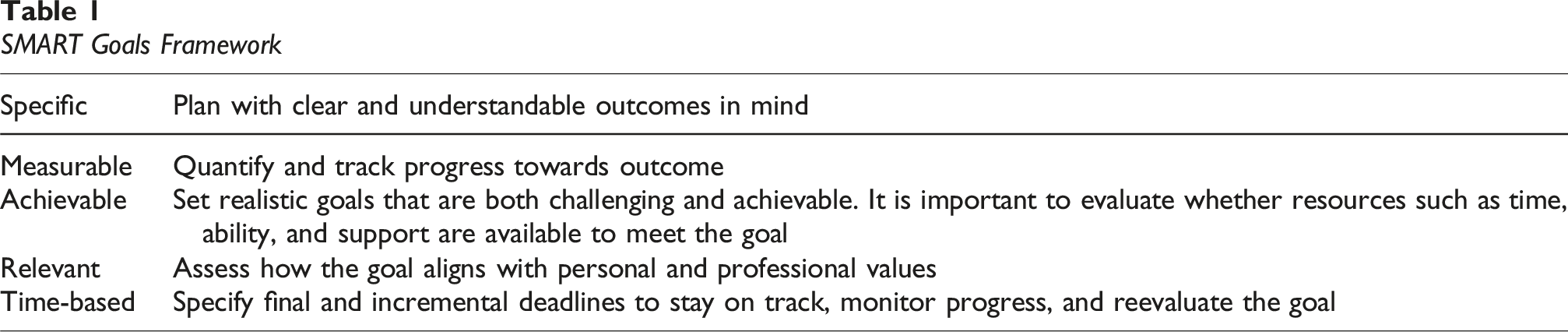
Setting Goals
SMART Goals Framework.
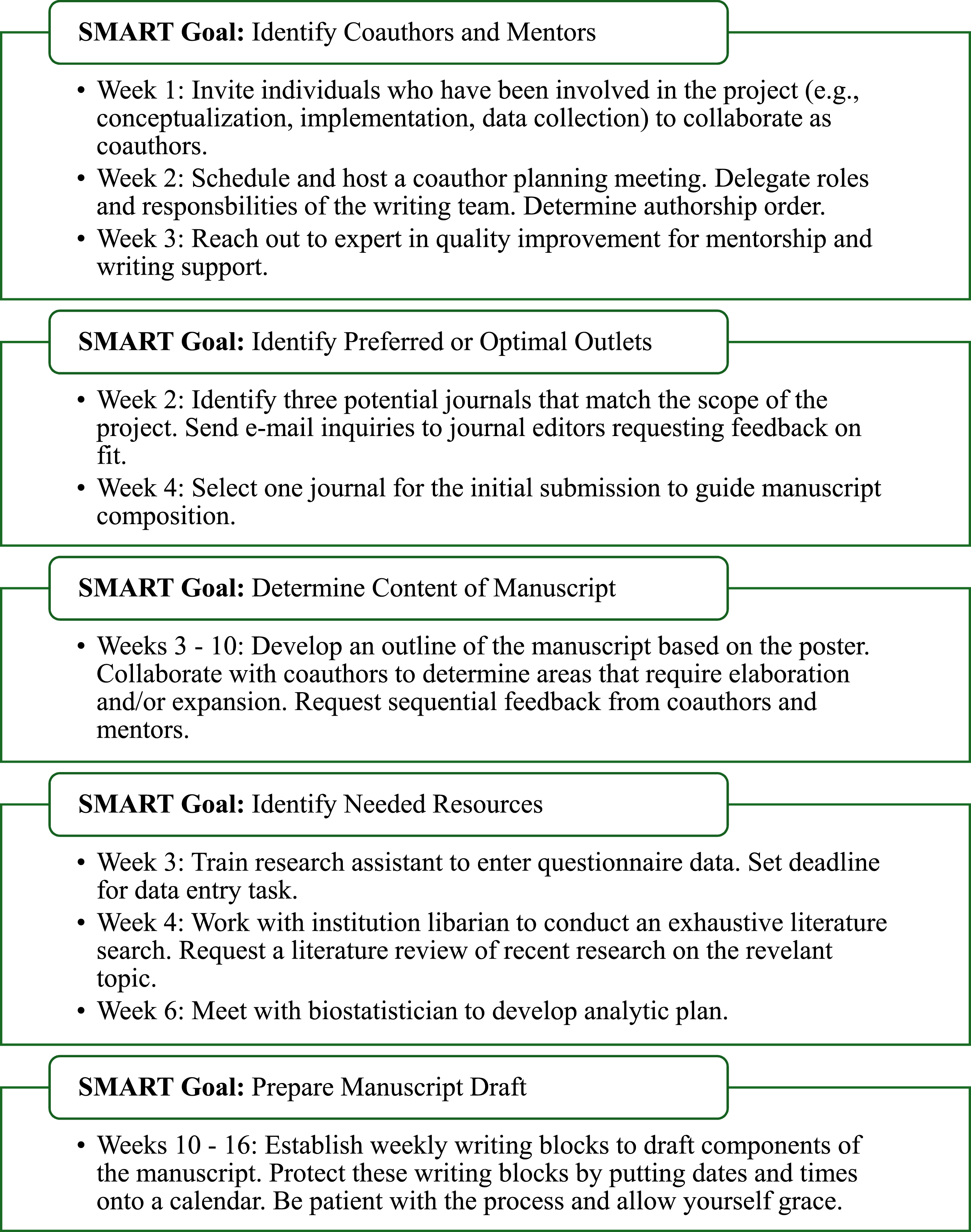
Sample application of SMART Goals Framework.
Case Example
SG is an early-career pediatric psychologist who presented a poster, Implementing Broad Psychological Screening for Pediatric Cancer Survivors (Figure 2), at SPPAC 2023. In the weeks following the conference, she reflected on the positive comments her work received during her poster session. One comment in particular resonated: “You should publish your findings!” SG’s poster shared findings from a quality improvement (QI) project conducted during her postdoctoral fellowship. Between the time she conducted the study and presented the findings, she had moved across the country to start her first job. Although her new position was primarily clinical, SG’s colleagues and supervisors assured her that publications are viewed favorably by their institution and therefore relevant for her career trajectory. Poster presentation.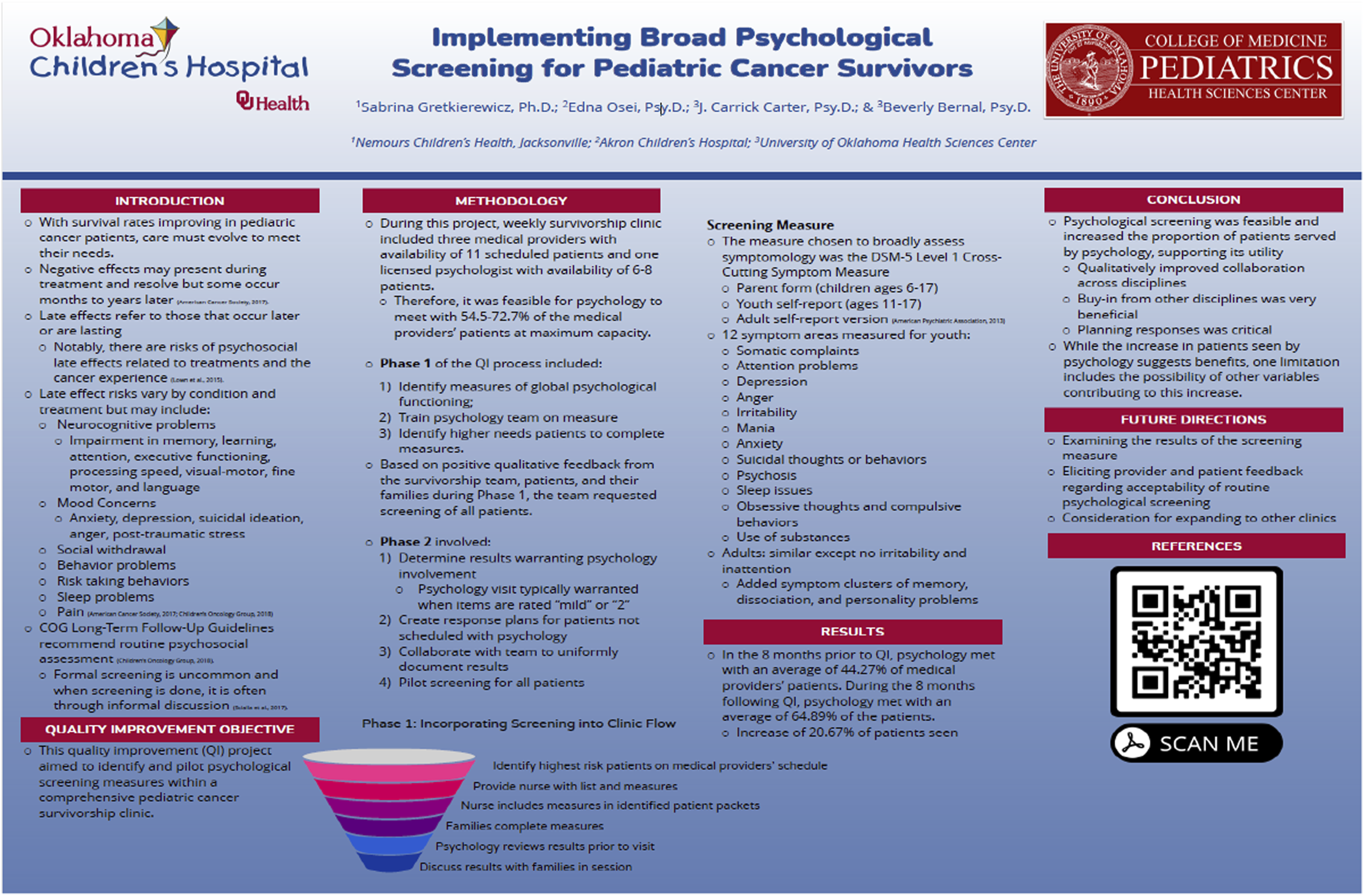
Initially, SG set a goal of getting the SPPAC poster published. She soon realized, however, that her goal would benefit from some anchoring. Using elements of the SMART Goals Framework, SG started the process of delineating smaller tasks that would help her reach this broader goal (see Figure 1). SG began with a specific goal of identifying the writing team. She contacted poster coauthors by email to assess interest and availability for manuscript composition. In this email, she reiterated the primary findings of the study as well as implications for clinical practice. The email also included a respond-by date to encourage timely responses.
During their first meeting, coauthors discussed the scope of the manuscript. SG presented an outline of the poster and led a discussion on which areas needed to be expanded upon. The SPPAC poster focused on the feasibility of questionnaire implementation in a clinical setting and did not include the results of those questionnaires; coauthors determined that examining the results of the screening measures would add rigor to the manuscript, which led SG to request a research assistant to help with data entry. Based on this need for additional data alongside an honest assessment of readiness for publication, the coauthor group decided to prioritize completion of a different manuscript that had also been presented previously as a poster. This decision was also influenced by consideration of a collaborator’s career goals (i.e., requirements for promotion) as well as the opportunity for SG to receive mentorship by publishing another quality improvement project first. However, the collaborators maintained plans to publish the SPPAC poster (Figure 2).
Important Considerations for Selecting a Journal.
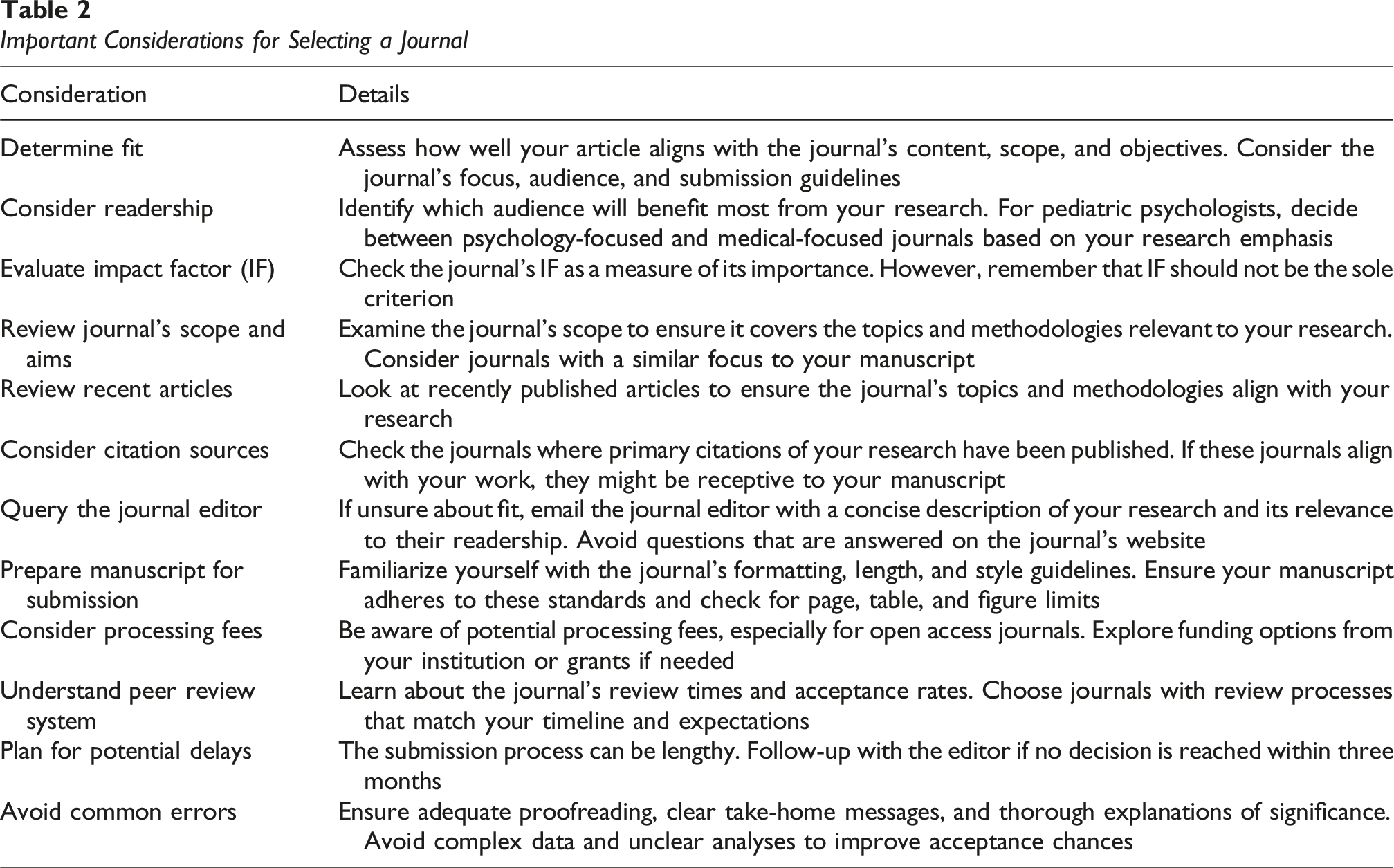
In addition to access to research assistant support prior to beginning manuscript composition, other resources may be helpful during this process. For example, SG had positive experiences when requesting her institution’s librarian support with literature reviews in the past. Therefore, she planned to utilize that resource to supplement her own literature searches and facilitate retrieving and annotating articles that fit her search criteria. While not deemed necessary for this project, another resource that may be relevant includes involving a biostatistician.
Conclusion
Turning a conference poster into a published manuscript can be a daunting yet worthwhile endeavor. In the case of SG, it is important to note that a 16-week timeframe is arbitrary, and we must acknowledge that interest, bandwidth, and support tend to wax and wane. Moreover, we do not aim to oversimplify the process. Nevertheless, we hope that the guidance provided here is helpful for researchers, clinicians, and advocates at all career stages who seek to contribute to the literature. Clinical Practice in Pediatric Psychology is especially committed to supporting and highlighting the publication efforts of learners and trainees. To further demonstrate this commitment, the Editorial Board is pleased to announce a new Special Section that will feature pediatric psychology focused manuscripts authored by undergraduate, post-baccalaureate, or graduate students as well as pre-doctoral interns and post-doctoral fellows. This Special Section will build upon this current special issue as a premier outlet for Highlighting Students and Trainees in Pediatric Psychology. Please consider submitting your work!
Footnotes
Declaration of Conflicting Interests
The author(s) declared no potential conflicts of interest with respect to the research, authorship, and/or publication of this article.
Funding
The author(s) received no financial support for the research, authorship, and/or publication of this article.
