



Abstract
Emerging adults experience intense instability and uncertainty in their lives. The relevance of existential loneliness to emerging adults has received little attention in loneliness research. This study investigated the psychometric properties of two recently developed existential loneliness scales, the Existential Loneliness scale (ELS) and the Brief Scale of Existential Loneliness (BSEL), among 370 emerging adults aged from 18 to 29 years. The results demonstrated that the BSEL had sound psychometric properties in this age group, while the psychometric properties of ELS were acceptable. As predicted, existential loneliness measured by each scale positively correlated with general loneliness, depressive symptoms and anxiety, and negatively correlated with satisfaction of life and presence of meaning in life. These results underscore the importance of examining how existential loneliness impacts the psychological well-being of emerging adults.
Introduction
Psychological problems, such as depression and anxiety, are an increasing health risk in emerging adults (Christiansen et al., 2021; Galanaki et al., 2023; Matud et al., 2020; Potterton et al., 2020). Emerging adulthood is a relatively newly defined developmental phase, extending from the end of adolescence to the establishment of professional and intimate roles in young adulthood (Arnett, 2000, 2023; Arnett et al., 2014). During this transition period, emerging adults are self-focused and engage in exploring identity roles. Arnett et al. (2014) argued that emerging adults face more major transitions and decisions than people in any other age group. This period, therefore, is characterized by instability and stress, which places emerging adults at increased risk of experiencing psychological problems. One of the key risk factors for psychological problems among emerging adults is loneliness (Christiansen et al., 2021; Mayorga et al., 2022; Pretorius & Padmanabhanunni, 2021). A recent meta-analysis found a consistent increase in loneliness among emerging adults from 1976 to 2019 (Buecker et al., 2021). Understanding loneliness in emerging adulthood is important to improve the mental health of people in this life stage.
Existential Loneliness
Loneliness is defined as an unpleasant feeling related to perceived insufficient or inadequate social interactions or relationships (Kirwan et al., 2024). Loneliness has been conceptualized as multidimensional, with different types of loneliness including social, emotional, and existential loneliness. Social loneliness is the feeling of lacking a wide group of contacts or integration into a social network, whilst emotional loneliness is defined as a lack of close emotional attachments (Maes et al., 2022). Both are usually a result of a lack of meaningful relationships. Therefore, a key strategy to address loneliness is often to improve social relationships. However, individuals who have strong social networks can still feel existential loneliness (Ettema et al., 2010; McKenna-Plumley et al., 2023b).
Ettema et al. (2010) reviewed the literature on existential loneliness and argued it had three dimensions: the condition of being separate from everyone else, which is also referred to as existential isolation; the experience of lonely emptiness and nothingness; and the process of confronting the lonely nature of one’s existence to achieve inner growth. However, they concluded the concept was ‘profoundly unclear’ (p. 141). Bolmsjö et al. (2019) further clarified this by arguing that existential loneliness was characterized by a feeling of being fundamentally separate from other people and the universe, an acute sense of mortality, and an inability to authentically communicate with other people. This feeling of existential loneliness is often accompanied by sadness, grief, hopelessness, and a lack of meaningful purpose in life (Bolmsjö et al., 2019; Chung et al., 2020; Mayers et al., 2002). As existential loneliness is a more profound and deeper feeling of loneliness, it can be seen as longer-lasting and more difficult to resolve than other types of loneliness (McKenna-Plumley et al., 2023b). However, existential loneliness has received relatively little scholarly attention. Further, studies on existential loneliness have mostly focused on older adults (Carr & Fang, 2023; Larsson et al., 2023; Olofsson et al., 2021) or people with serious illnesses (Ettema et al., 2010; Mayers et al., 2005; Mayers & Svartberg, 2001; Razban et al., 2022), and most of these studies were qualitative.
Emerging Adulthood and Existential Loneliness
Recent qualitative studies found that existential loneliness can be experienced as early as adolescence (Garnow et al., 2022; Hemberg et al., 2022; McKenna-Plumley et al., 2023a). For instance, Hemberg et al.’s (2022) qualitative study found that late adolescents and young adults (aged 17–30 years) experience existential loneliness as well as social and emotional loneliness. Garnow et al. (2022) interviewed Swedish people aged 15–21 years and found that their feelings of existential loneliness were related to their feelings of being in between childhood and adulthood and being socially isolated. Galanaki et al.’s (2023) quantitative study found that emerging adults with higher levels of existential loneliness were more likely to withdraw socially, become socially isolated, and avoid social interactions. These findings highlight the importance of understanding emerging adults’ experience of existential loneliness, which may adversely affect their psychological well-being. However, quantitative research on existential loneliness is scarce. One suggested reason for this is the lack of a suitable instrument to measure this construct.
Existential Loneliness Scales
Until recently, there were two existential loneliness scales: the Belcher Extended Loneliness Scale (Belcher, 1973) and the Existential Loneliness Questionnaire (ELQ; Mayers et al., 2002). Belcher’s scale measured eight different types of loneliness, including existential loneliness. As Hadeei (2023) and McKenna-Plumley et al. (2024) have pointed out, a number of authors have crticised this scale for its length (65 items) and conceptual complexity (Scalise et al., 1984; Solano, 1980). Following this, Mayers et al. (2002) developed the ELQ with 22 items to measure existential loneliness in HIV-infected women. Whilst the ELQ was designed to measure only existential loneliness, Gökdemir-Bulut and Bozo's (2018) principal component analysis found the scale measured three factors: loneliness in social ties, loneliness in close relationships, and finding meaning in life. This factor structure suggests that the ELQ may measure different types of loneliness. Hadeei (2023) also argued that the ELQ focuses heavily on the interpersonal aspect of existential loneliness and is less focused on other aspects of existential loneliness, including ultimate and complete aloneness, and fundamental separateness from other people and everything in the world. Therefore, Hadeei (2023) developed the Existential Loneliness Scale (ELS) to provide a more comprehensive measure of the construct.
Hadeei (2023) argued that existential loneliness should be measured by items that relate to adverse subjective reactions to key existential concerns, such as feelings of fundamental separation from everything, emptiness, meaninglessness, and eternal aloneness. In addition, there should be items related to the source of existential loneliness, for instance, the fear or thought of death. Finally, there should be measures of factors related to existential loneliness, such as hopelessness, uncertainty, or meaninglessness. In Hadeei’s study, 433 Iranian youths and adults completed 30 items developed during the initial item selection phase. Following a Principal Component Analysis (PCA), 19 items were retained. Further results indicated the new scale had high internal consistency, acceptable test-retest reliability, satisfactory validity, and good construct validity. Using this scale, Hadeei (2023) found that people who had higher existential loneliness scores had higher existential anxiety and higher levels of depressive symptoms, experienced more general loneliness, and had lower life satisfaction and meaning in life. However, to date, the ELS has not been validated with other populations.
McKenna-Plumley et al. (2024) argued that the ELS was too long and contained items that did not measure the core construct of existential loneliness. They also highlighted the use of PCA to determine the factorial structure of the ELS, which has been argued to be an inappropriate technique for this purpose (Fabrigar et al., 1999). Hence, they developed the Brief Scale of Existential Loneliness (BSEL). Based on a literature review and a qualitative study by McKenna-Plumley et al. (2023a), they defined the central concept of existential loneliness as a feeling of complete aloneness and isolation from others, the world, and oneself which is generally accompanied by an adverse feeling (i.e., sadness, meaninglessness, emptiness, lack of feeling of being understood, or belonging). Fifty-five items were developed based on this definition of existential loneliness. After the initial scale developmental phases, 30 items were retained. These 30 items were tested with 714 participants aged from 17 to 84 years old in the UK and Ireland. Following an exploratory factor analysis (EFA) and confirmatory factor analysis (CFA), the final scale was reduced to 6 items, which loaded on a single factor. The BSEL was found to have high internal consistency and validity. Scores on the BSEL were also positively correlated with general loneliness, existential isolation, and poor mental health, and negatively correlated with meaning in life. However, like the ELS, this scale is yet to be validated in different populations or special age groups.
The Aim of the Current Study
The emergence of two new measures of existential loneliness (i.e., ELS and BSEL) has the potential to further research of this construct among emerging adults. However, to date, these scales have only been validated in studies conducted by their developers. Further research is required to determine the psychometric properties of both measures in different samples. Additionally, little is known about the experience of existential loneliness during emerging adulthood. The current study, therefore, aimed to validate the ELS and BSEL in a sample of emerging adults. First, the original factorial structure of the ELS and the BSEL was evaluated using CFA, with a sample of emerging adults. Second, the validity of both scales was assessed by examining the relationship between the ELS and BSEL and general loneliness, depressive symptoms, anxiety, satisfaction with life, and meaning in life. We expected strong positive correlations between the ELS and BSEL, which would support the construct validity of both scales. We also expected the ELS and BSEL would be positively correlated with general loneliness, depressive symptoms, and anxiety, demonstrating the convergent validity of each measure. To test the discriminant validity of each scale, the relationships between existential loneliness and satisfaction with life and meaning in life were investigated. We expected emerging adults who reported higher levels of existential loneliness to have lower satisfaction with life and lower levels of meaning in life.
Methods
Participants
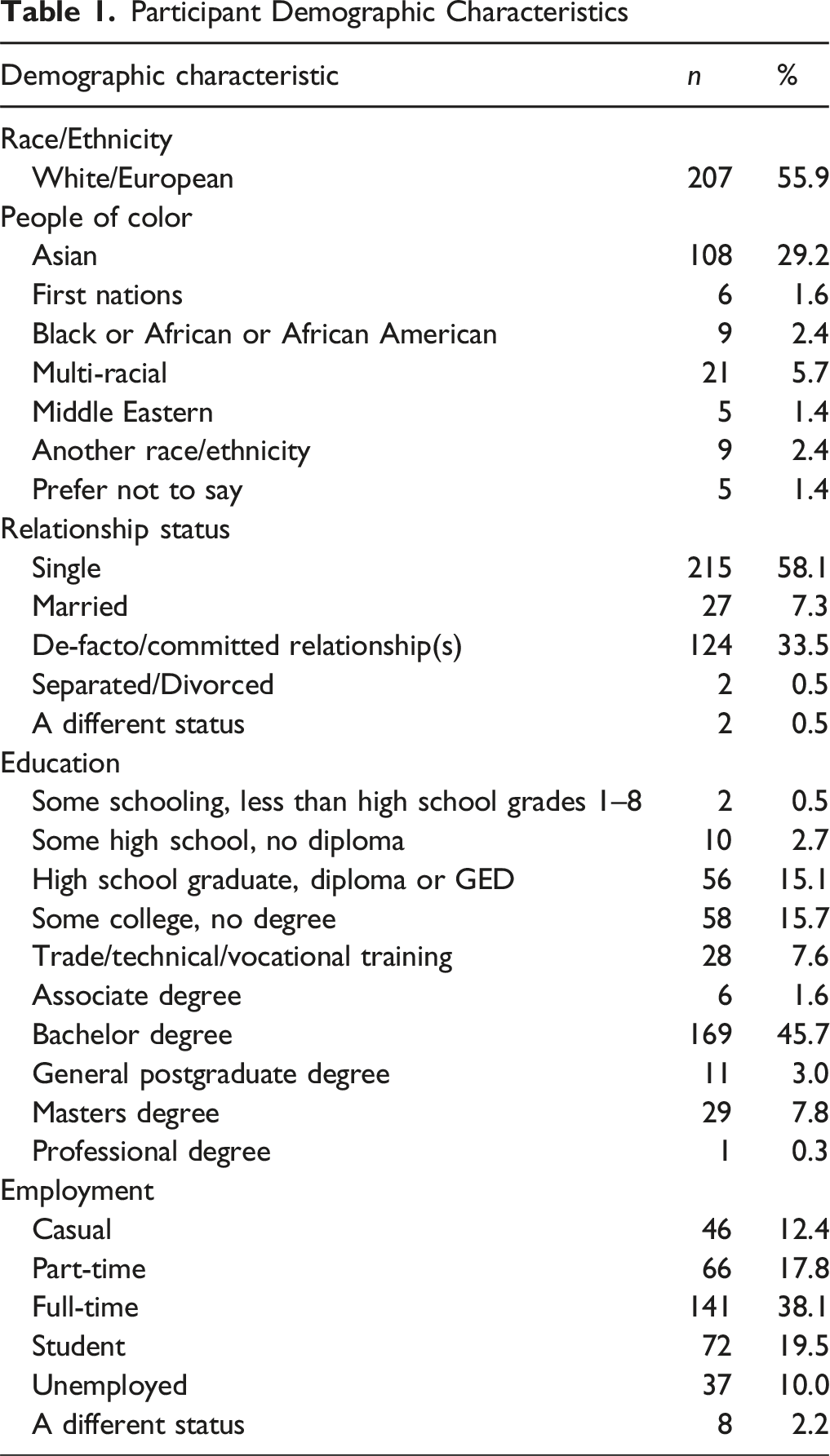
Participant Demographic Characteristics
Measures
The Existential Loneliness Scale (ELS; Hadeei, 2023) and the 6-item Brief Scale of Existential Loneliness (BSEL; McKenna-Plumley et al., 2024) were used to measure existential loneliness. The ELS consists of 19 items and participants indicated the relevance of each item using a 5-point scale (1 = Never true, 5 = Always true). A higher score indicates higher levels of existential loneliness. The scale has one factor and was found to have high internal consistency (α = .95; ω = .95) and moderate test-retest reliability (one month, r = .74). The BSEL has 6 items with one factor. Responses are measured on a 5-point Likert scale (1 = Strongly disagree, 5 = Strongly agree), and a higher mean score indicates a higher level of existential loneliness. The BSEL was reported to have a high internal consistency (α = .94) and validity.
The 6-item De Jong Gierveld Loneliness Scale (DJGLS; De Jong-Gierveld & van Tilburg, 2006) measures general loneliness. It contains 3 social loneliness items and 3 emotional loneliness items. The social loneliness items were positively worded and therefore, the scores of those items were reversed. Therefore, higher total scores indicated higher levels of general loneliness. De Jong-Gierveld and van Tilburg (2006) found acceptable internal consistencies with three data sets from the Netherlands adult population (α = .70 to .76). Hadeei (2023) reported a higher internal consistency of α = .84.
The Patient Health Questionnaire−9 (PHQ-9; Kroenke et al., 2001) assessed depressive symptoms. Higher total scores indicated higher levels of depression. It has been found to have sound psychometric properties in a large clinical sample in the United States (N = 6,000; α = .86 to .89; 48 hours test-retest reliability r = .84; Kroenke et al., 2001).
The 7-item Generalized Anxiety Disorder (GAD-7; Spitzer et al., 2006) is a screening tool for anxiety disorders. Higher total scores indicated higher levels of anxiety. The GAD-7 was found to have excellent internal reliability (α = .92), good 1-week test-retest reliability, and good convergent validity with the data collected from patients of several clinical settings in the United States (Spitzer et al., 2006).
The Meaning in Life Questionnaire (MLQ: Steger et al., 2006) consists of 10 items measured on a 7-point scale from 1 (Absolutely untrue) to 7 (Absolutely True). It has two subscales: the Presence of Meaning subscale and the Search for Meaning subscale, which consist of 5 items each. Consistent with previous research (Hadeei, 2023; McKenna-Plumley et al., 2024), only the presence subscale was used in this study. The total score of the subscale indicated how meaningful the individuals find their lives, with higher scores representing higher levels of meaningfulness. The subscale was shown to have good internal consistency (αs = .82–.86) with samples of students in a large university and a community college in Minneapolis (Steger et al., 2006).
The Satisfaction with Life Scale (SWLS; Diener et al., 1985) consists of 5 items to measure global life satisfaction using a 7-point scale from 1 (Strongly disagree) to 7 (Strongly agree). The total scores range from 5 to 35, with higher total scores indicating greater satisfaction with life. Diener et al. (1985) reported good internal consistency (α = 0.87) with a sample of 176 psychology undergraduate students in Illinois and 2-months test-retest reliability (r = .82).
Procedure
This study was approved by Charles Sturt University’s Human Research Ethics Committee (H24298). Only participants who met the eligibility criteria (i.e., emerging adults in Australia aged between 18–29 years old) had access to the information sheet for this study on the Prolific Academic portal. Participants who consented to take part were directed to the demographic questions page, which was followed by the scales listed above. The scales were presented in a fixed order and no question item was compulsory except for one demographic question (i.e., age). We collected data until we reached at least 370 observations, at which point the survey was closed. No missing data were recorded. Participants were paid approximately £4.50 (A$7-9) once they completed the survey.
Data Analyses
The Means, Standard Deviations, and Internal Consistency of Each Scale
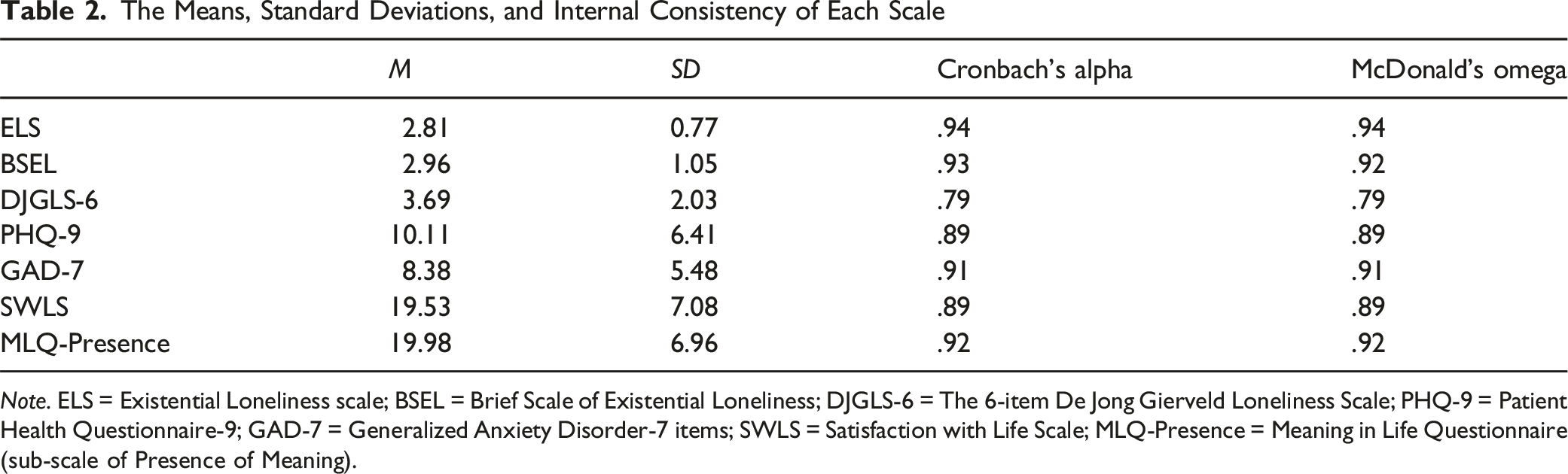
Note. ELS = Existential Loneliness scale; BSEL = Brief Scale of Existential Loneliness; DJGLS-6 = The 6-item De Jong Gierveld Loneliness Scale; PHQ-9 = Patient Health Questionnaire-9; GAD-7 = Generalized Anxiety Disorder-7 items; SWLS = Satisfaction with Life Scale; MLQ-Presence = Meaning in Life Questionnaire (sub-scale of Presence of Meaning).
Confirmatory factor analysis (CFA) with Robust Unweighted Least Squares (RULS) with mean and variance adjustment was conducted using R version 4.5.1 (R Core Team, 2025) in RStudio version 2025.05.1 + 513 utilising the lavaan package version 0.6.19 (Rosseel, 2012). Using a reference indicator method, latent variables were scaled by fixing the loading of the first indicator of the factor at 1. Graphics were created using SPSS Amos 29. Model fit indices assessed were the Chi-square test, comparative fit index (CFI), Tucker-Lewis index (TLI), root mean square error of approximation (RMSEA), and standardized root mean square residual (SRMR). The current study used the adjusted index cutoff values suggested by Hair et al. (2019). For a sample size greater than 250 and 19 items, the following recommended cutoff values for a good fit were used: CFI > .94, TLI > .94, RMSEA ≤ .07, and SRMR ≤ .08. Where the item number was less than 12, the recommended cut off values for a good fit are: CFI
Results
Descriptive Statistics
The descriptive statistics of each scale as well as Cronbach’s alpha and McDonald’s omega are presented in Table 2. The Cronbach’s alpha coefficients and McDonald’s omegas of ELS and BSEL indicate both scales had high internal consistency. Similarly, excellent or good internal consistency was found for all other scales used in this study.
Confirmatory Factor Analysis of ELS
CFA was conducted to test the one-factor model of the ELS. Hadeei (2023) included the covariance between the error terms of Item 13 and Item 14 to improve the model fit because they shared a theoretically similar construct (i.e., feeling of emptiness) after inspecting modification indices. This study included the same covariance to test the model (see Figure 1). For this model, the Chi-square statistic was χ2 (151) = 440.71, p < .001; and the chi-square statistic by the degrees of freedom was χ2/df = 2.92 which demonstrates acceptable fit (2 < χ
2
/df ≤ 3). With these specific model characteristics and sample size, a significant p-value is expected for a good fit. The one-factor model of ELS demonstrated a good fit on other indices: CFI = .989, TLI = .988, RMSEA = .066 (90% CI [.059, .074]), SRMR = .056. High internal consistency and reliability were confirmed with excellent Cronbach’s alpha (α = .94) and McDonald’s omega (ω = .94). Figure 1 shows the path diagram of the one-factor model of ELS. Results of confirmatory analysis on ELS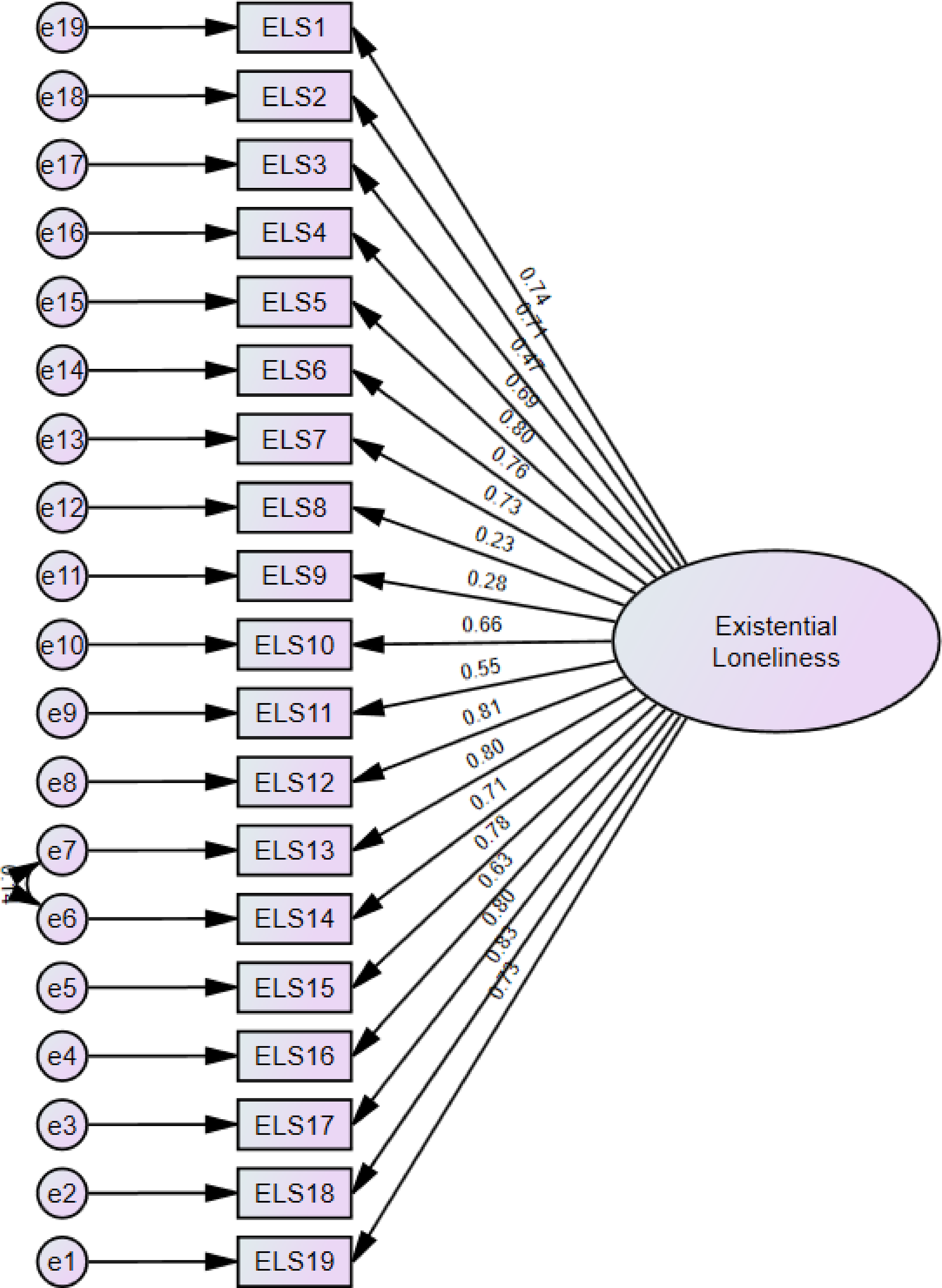
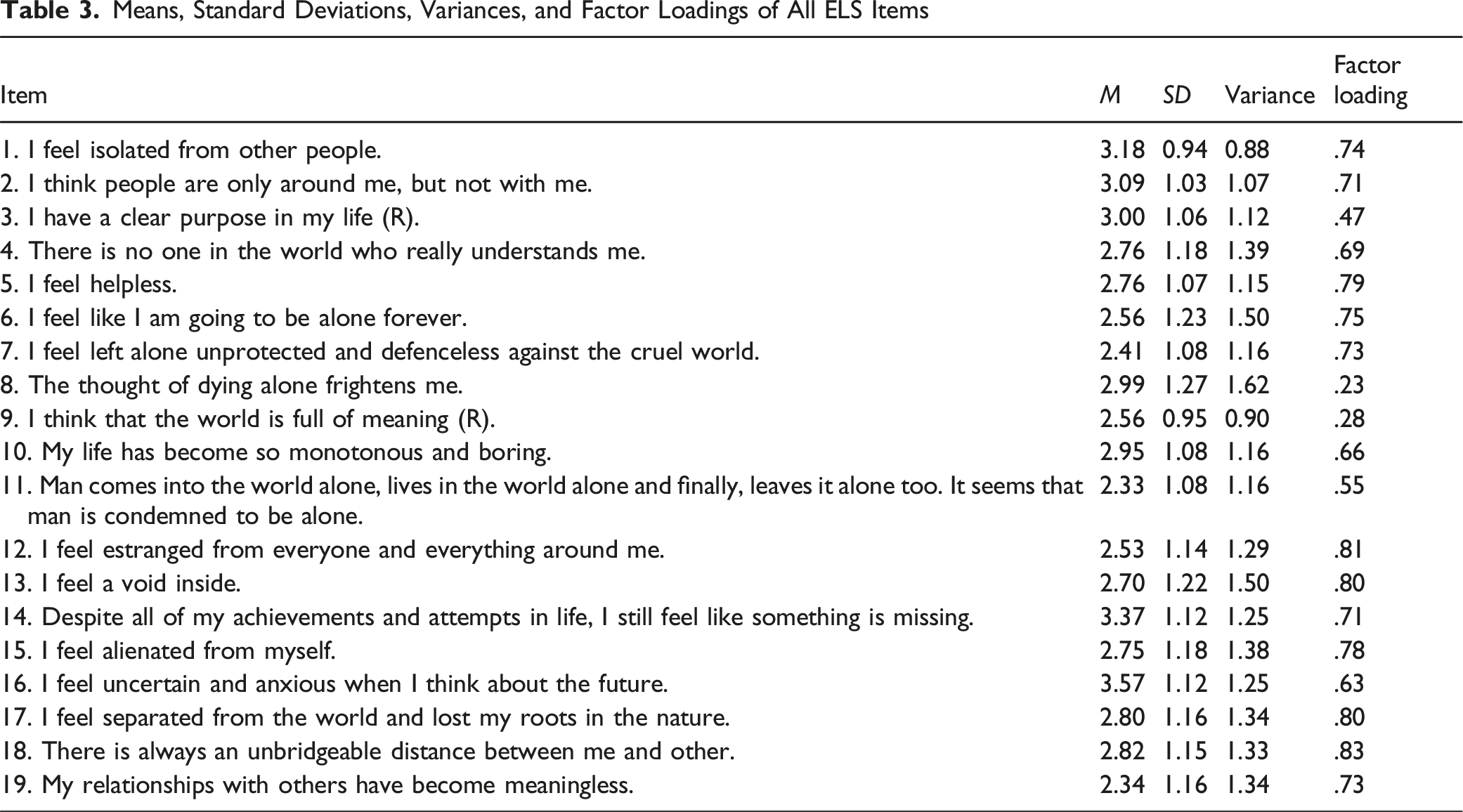
Means, Standard Deviations, Variances, and Factor Loadings of All ELS Items
Confirmatory Factor Analysis of BSEL
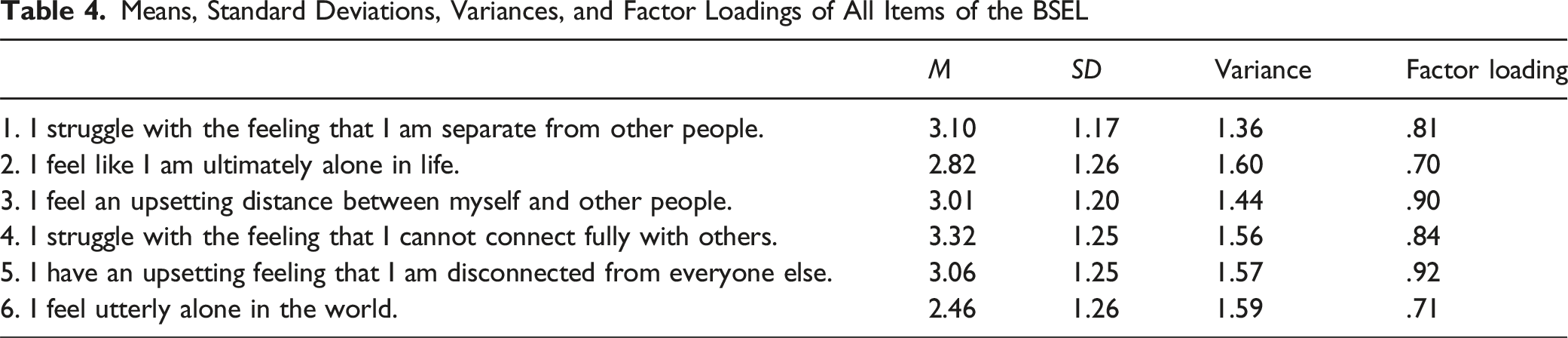
A CFA was conducted to test the one-factor model of the BSEL. The high modification index of the error term of Item 2 and Item 6 was consistent with McKenna-Plumley et al. (2024). Consequently, the same covariance was added between the two error terms. Figure 2 shows the path diagram of the model. The Chi-square statistic was χ2 (8) = 21.27, p = .006, and the chi-square statistic by the degrees of freedom was χ2/df = 2.66. Even though a significant Chi-square indicates poor model fit for this specific model, as the Chi-square test is affected by sample size, this study focused more on the other indices. The one-factor model of BSEL demonstrated a good fit on all other indices: CFI = .999, TLI = .999, RMSEA = .039 (90% CI [.019, .059]), SRMR = .019. We found excellent Cronbach’s alpha (α = .93) and McDonald’s omega (ω = .92) for the BSEL, which indicate a high level of internal consistency and reliability. The mean, standard deviation, variance, and factor loading of each BSEL item are shown in Table 4. Results of confirmatory factor analysis on BSEL Means, Standard Deviations, Variances, and Factor Loadings of All Items of the BSEL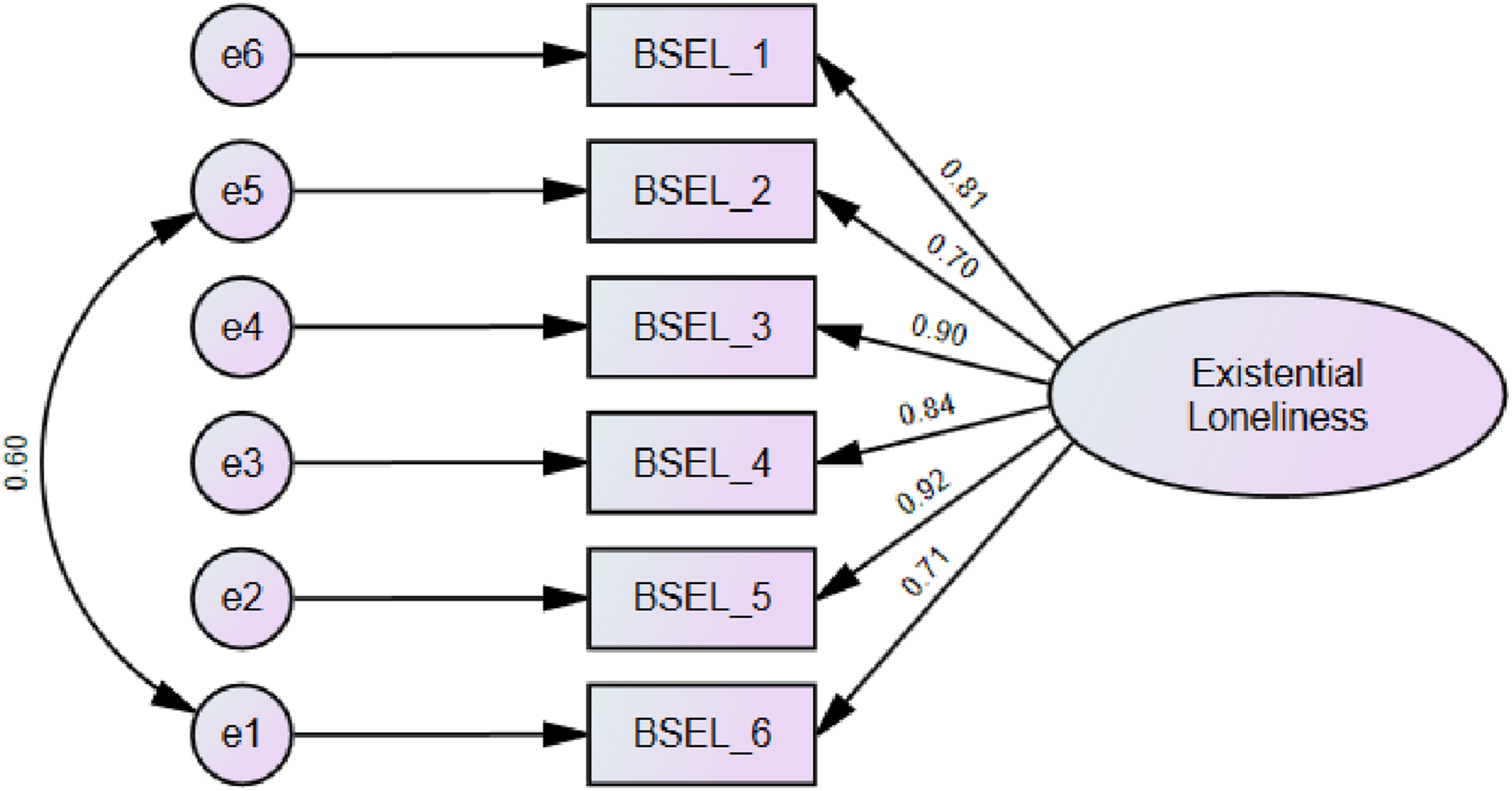
Validity of the ELS and BSEL
Pearson Correlations Between Two Existential Loneliness Scales, General Loneliness Scale, Depression, Anxiety, Satisfaction With Life and Two Types of Meaning of Life Scales
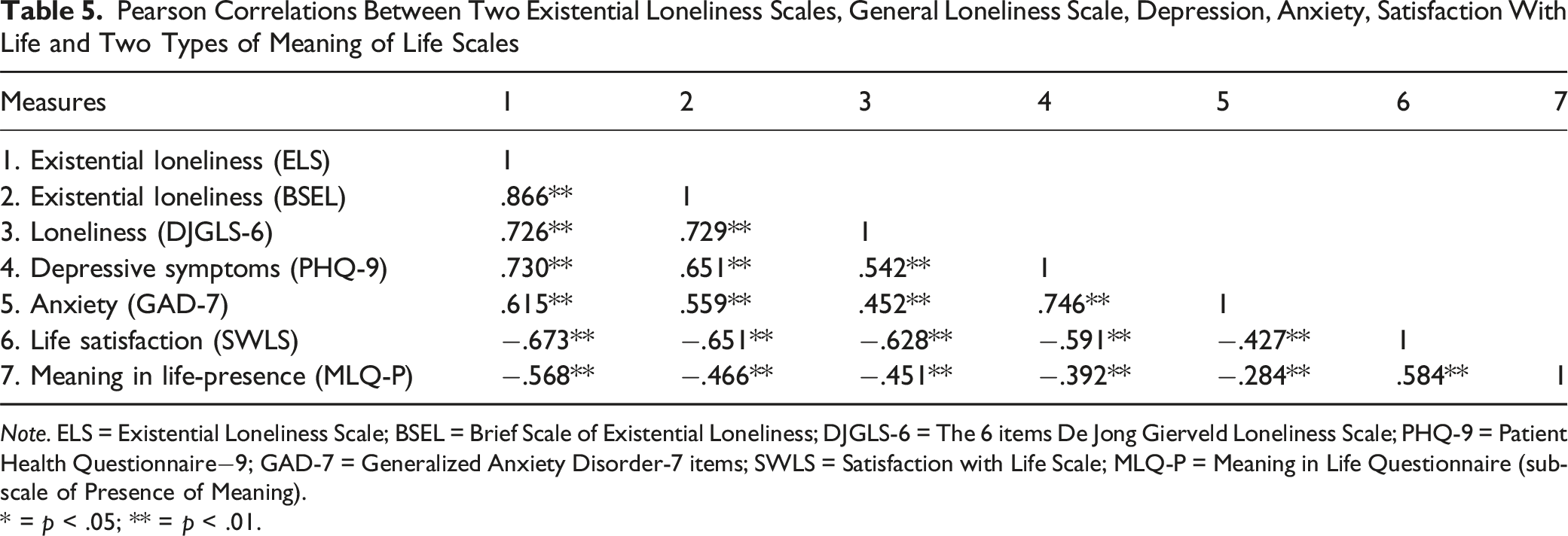
Note. ELS = Existential Loneliness Scale; BSEL = Brief Scale of Existential Loneliness; DJGLS-6 = The 6 items De Jong Gierveld Loneliness Scale; PHQ-9 = Patient Health Questionnaire−9; GAD-7 = Generalized Anxiety Disorder-7 items; SWLS = Satisfaction with Life Scale; MLQ-P = Meaning in Life Questionnaire (sub-scale of Presence of Meaning).
* = p < .05; ** = p < .01.
Discussion
The aims of this study were: to confirm the original factor structures of two recently developed scales measuring existential loneliness, Hadeei’s (2023) Existential Loneliness Scale (ELS) and McKenna-Plumley et al.’s (2024) Brief Scale of Existential Loneliness (BSEL), among emerging adults, and to investigate the psychometric properties of both scales. We expected existential loneliness measured by both scales to positively correlate with each other, and existential loneliness to positively correlate with general loneliness, depressive symptoms, and anxiety. It was also predicted that existential loneliness would negatively correlate with the participants’ level of satisfaction with their lives, and the presence of meaning in life. The results of the current study were consistent with these predictions. Consistent with McKenna-Plumley et al. (2024), our results demonstrate the sound psychometric properties of BSEL in the current sample of emerging adults. Even though the strong psychometric properties of the ELS found by Hadeei (2023) were mostly supported, the study found some items with low factor loadings. Despite the problems with the factor loadings, the results of our CFA nevertheless demonstrated a good fit between the ELS and the sample. High internal consistency was found for both scales examined.
Both scales also demonstrated sound validity. The strong positive correlation found between ELS and BSEL supports the construct validity of these scales. As expected, both had moderate correlations with general loneliness, indicating that both measure a related but not identical construct to general loneliness. Consistent with previous studies (Hadeei, 2023; McKenna-Plumley et al., 2024), individuals who experience existential loneliness also indicated higher levels of general loneliness. It also supports the findings by McKenna-Plumley et al. (2023b) that people who have never experienced other types of loneliness could still experience existential loneliness.
Both scales were also related to the other psychological constructs in the predicted directions. Emerging adults who experienced higher levels of existential loneliness were found to report higher levels of depression and anxiety, consistent with the previous findings for general youth and adult populations (Hadeei, 2023; McKenna-Plumley et al., 2024) as well as previous related findings in young adult populations on existential isolation and depression (Helm et al., 2019, 2020). Both scales’ strong negative correlations with the satisfaction with life scale indicated that individuals who feel satisfied with their lives tend not to feel existential loneliness. In addition, individuals with high existential loneliness were found to report less meaning in their lives. These findings support the sound psychometric properties of each scale and the predicted relationships between existential loneliness with the related psychological constructs, supporting the findings of Hadeei (2023) and McKenna-Plumley et al. (2024).
Unlike Hadeei’s (2023) study, this study found some ELS items had poor factor loadings, which may be because the items were less relevant for emerging adults. Arnett et al. (2014) argues that individuals are more unstable, self-focused, and optimistic during emerging adulthood than at any other time of their lives. They are also exploring who they are and what their lives mean. In this current sample, two items, Items 8 and 9, had poor factor loadings (< .3) and Item 3 had less than .5 factor loading. The poor loading of Item 8 “The thought of dying alone frightens me” is likely due to emerging adults being optimistic and the concept being less relevant to them in comparison to older adults. Similarly, Item 3 “I have a clear purpose in my life” and Item 9 “I think that the world is full of meaning” might not be relevant for emerging adults, who typically are self-focused and engaged in searching for who they are and what their lives will be like. The poorly loaded ELS items relate to death and factors outside the self, which are inconsistent with these characteristics of emerging adulthood. Performing the CFA without the 3 items improved the fit indices, indicating these items are inappropriate for this age group. The next lowest loading item (.55) is Item 11 “Man comes into the world alone, lives in the world alone and finally, leaves it alone too. It seems that man is condemned to be alone”, which is a convoluted concept that does not focus on the subjective experience of existential loneliness. The characteristics of low loading items found in this study supports McKenna-Plumley et al.’s (2024) argument that some ELS items are overly complex or alternatively measure correlates of existential loneliness. By contrast, the BSEL did not share these problems.
The current findings may be explained by key differences in how existential loneliness is operationalised in each scale. The ELS measures existential loneliness not only by using items focused on the subjective experience of existential loneliness, but also items that focus on what may cause these feelings. On the other hand, the BSEL focuses only on the subjective feeling of the primary notion of existential loneliness. The specific source of existential loneliness (e.g., fear of death) or related notions (e.g., uncertain about a purpose in life) are often regarded as important concerns contributing to existential loneliness. Whilst the subjective feeling of existential loneliness is relevant across different populations, the relevance of those specific existential concerns may vary more across different stages of life (e.g., older adults, seriously ill people). Hence, the simpler nature of BSEL is more appropriate for assessing existential loneliness among emerging adults than the longer and more complex ELS.
Overall, the findings of this study indicate that the BSEL is a psychometrically sound measure of existential loneliness among emerging adults and further, that existential loneliness is related to, yet distinct from general loneliness. Whilst we found the ELS had good psychometric properties, the low loadings of some items indicate that further investigation is required for the relevance of these aspects of existential loneliness in the emerging adult population. The BSEL is a useful tool to measure existential loneliness with emerging adults, a population that has not previously been a focus in studies on existential loneliness. The strong correlations found between existential loneliness and depressive symptoms and anxiety in this study indicate the importance of investigating the effects of this long-lasting and deeper loneliness on emerging adults’ psychological well-being.
Limitations
The data used in this study were collected from an online participation platform. Therefore, the sample in this study may not be a representation of emerging adults, and the paid participation via Prolific may have led to certain biased responses. Also, the findings of this study are based on the data collected from emerging adults in Australia. Arnett (2000, 2023) argued that how an individual experiences emerging adulthood is cultural, national, time, and socio-economic specific. Therefore, further research may consider investigating the validity of the shorter scale of ELS, as well as BSEL, for this age group in other countries. As the current study found three items in ELS that did not have good factor loadings, researchers or clinicians need to be cautious when interpreting the score with those items if they are using ELS with emerging adults. Further studies may consider validating the 16 items in ELS for a younger population. Finally, given the current study is based on correlational procedures, caution needs to be exercised in inferring causal relationships.
Conclusion
In conclusion, this study confirmed that the BSEL had sound psychometric properties in a sample of emerging adults. The findings of this study suggest that the BSEL is a useful tool to assess emerging adults’ feelings of existential loneliness. BSEL may be used as a screening tool for emerging adults’ existential loneliness. The ELS may be of more interest to researchers examining different dimensions of existential loneliness. It may also be useful to critically investigate these dimensions, specifically fear of death and the meaning of life across the lifespan. Future research should also validate these scales with different age groups from different countries as well as investigate what role existential loneliness plays in emerging adults’ psychological well-being.
Supplemental Material
Supplemental Material - Validation of Two Existential Loneliness Scales in Emerging Adults
Supplemental Material for Validation of Two Existential Loneliness Scales in Emerging Adults by Izumi Hiramatsu, Suzanne McLaren, Andrew McGrath in Emerging Adulthood
Footnotes
Acknowledgements
The authors would like to thank Dr Genevieve d’Ament for providing technical support.

Funding
The authors received no financial support for the research, authorship, and/or publication of this article.
Declaration of Conflicting Interests
The authors declared no potential conflicts of interest with respect to the research, authorship, and/or publication of this article.
Data Availability Statement
The data that support the findings of this study are available on Open Science Framework (OSF|rawELdata.sav).
Transparency and Openness Statement
The raw data used in this study are available on Open Science Framework (OSF|rawELdata.sav).
Declaration of Generative AI and AI-Assisted Technologies in the Writing Process
We confirm that no generative AI tools were used in preparing this manuscript.
Supplemental Material
Supplemental Material for this article is available online.
Author Biographies
References
Supplementary Material
Please find the following supplemental material available below.
For Open Access articles published under a Creative Commons License, all supplemental material carries the same license as the article it is associated with.
For non-Open Access articles published, all supplemental material carries a non-exclusive license, and permission requests for re-use of supplemental material or any part of supplemental material shall be sent directly to the copyright owner as specified in the copyright notice associated with the article.
