



Abstract
The proportion of Irish emerging adults (18–25) living at home has risen sharply due to economic pressures and housing crises, yet the mental health impacts of this shift remain understudied. This qualitative study, therefore, explores the lived experiences of Irish emerging adults living at home, assessing the impact of these living arrangements on their well-being and symptoms of depression. A purposive sample of nine Irish adults aged between 18 and 24 completed individual semi-structured interviews. Transcripts were analyzed using reflexive thematic analysis. Findings indicate participants believed parental co-residence stunted their development, with economic pressures rendering it a necessity rather than a choice. In addition, they believed that co-residence exacerbated their emotional distress, particularly when living at home was not a voluntary choice. Ultimately, this study reframes co-residence as a structural issue, urging policymakers to address affordable housing, rent controls, public transport, and mental health supports to foster autonomy and well-being.
Introduction
In 2019, 45% of Irish emerging adults aged 25–29 lived with their parents (Eurostat, 2023). Yet, by 2022, 89% of Irish emerging adults aged 20–24 and 68% of those aged 25–29 lived with their parents (Eurostat, 2023). Similar increases have been observed in the UK, US, and Australia (Dunlop, 2024). However, Ireland’s shift is likely intensified by its ongoing housing crisis. Following the 2007 economic downturn, Ireland has shifted from widespread homeownership to growing dependence on an expensive and unstable private rental market (Byrne, 2020). Many emerging adults remain at home for both financial and emotional support (Hartung & Sweeney, 1991; Mitchell, 2004). Nevertheless, co-residence may have negative consequences, including infantilization and restricted autonomy, as parents often treat emerging adults as children (Lewis et al., 2016; Sassler et al., 2008). Traditionally, leaving the parental home marked a key milestone in the transition to adulthood within the life course framework (Elder, 1985). Arnett’s theory of emerging adulthood, a developmental phase marked by identity exploration, instability, self-focus, and optimism, helps conceptualize this shift for individuals aged 18–29 (Arnett, 1997, 2000, 2001, 2015). Given that leaving the parental home is considered a developmental milestone, extended co-residence may impact psychological well-being.
Indeed, research shows lower well-being among those who remain at home compared to their independent peers (Buhl & Lanz, 2007). Individuals with lower levels of psychological well-being may be more vulnerable to experiencing depressive symptoms (Tehranchi et al., 2018). Seligman’s PERMA model suggests that cultivating positive psychological functioning can help buffer against depressive experiences during emerging adulthood (Seligman, 2012). Psychological well-being refers to a multifaceted construct encompassing both the experience of negative affect, positive affect and life satisfaction (hedonic well-being) (Andrews & McKennell, 1980; Kashdan et al., 2008), as well as optimal psychological functioning, personal growth, and meaning in life (eudaimonic well-being) (Ryan & Deci, 2001). The PERMA model conceptualizes well-being as a composite of distinct but measurable components: positive emotions, engagement, relationships, meaning, and accomplishment (Seligman, 2012). Furthermore, emerging adulthood is already a high-risk period for depression, which coincides with prolonged periods of co-residence (Arnett, 2018). Depression is a psychological disorder characterized by symptoms including sadness, a diminished ability to experience pleasure, and feelings of worthlessness (American Psychiatric Association, 2013). The concern is compounded by the inherent instability and increased stress associated with the transition to adulthood, both of which can adversely impact mental health (Baggio et al., 2017; Cusack & Merchant, 2013).
Research Focus
Despite media coverage of rising co-residence, academic research has largely centered around housing systems rather than the lived experiences of affected emerging adults (Byrne, 2020, 2022; Norris, 2016a, 2016b; Waldron, 2021). While delayed independence has been linked to depressive symptoms (Copp et al., 2017), few studies contextualize these dynamics within Ireland’s unique socio-economic landscape. This qualitative study addresses this gap by bringing forward the perspectives of these Irish emerging adults in relation to how parental co-residence shapes well-being and depression within Ireland’s socio-economic context.
Aims and Research Question
This study seeks to qualitatively explore the lived experiences of Irish emerging adults (aged 18–25) who live at home. Grounded in Arnett’s theory of emerging adulthood and situated within Ireland’s socio-economic context, the study aims to investigate how emerging adults living in the parental home perceive their psychological well-being and experiences of low mood. It examines the influence of socio-economic constraints, such as housing unaffordability, on these experiences and seeks to identify protective elements (e.g., financial or emotional support) as well as risk factors (e.g., reduced autonomy) associated with co-residence. The overarching goal is to contribute evidence that can inform interventions and policies supporting emerging adults facing delayed independence. With these aims in mind, therefore, the research question being explored is: How do Irish emerging adults (aged 18–25) who live at home perceive and experience the impact of their living arrangements on their psychological well-being and symptoms of depression?
Contribution to Research
Ireland’s housing crisis has prolonged co-residence for many emerging adults, yet research on its mental health impacts remains limited. This study explores how living at home influences well-being and depression, revealing it as both a protective factor and a potential stressor. Framed within Arnett’s theory of emerging adulthood and Ireland’s socio-economic pressures, the study illuminates emerging adults’ lived experiences amid shifting cultural and economic realities. By exploring both the benefits and challenges of parental co-residence, it aims to inform context-sensitive interventions. The terms co-residence, parental co-residence, living with parents and living at home are used interchangeably.
Rising Rates of Parental Co-Residence
Living at home into one’s twenties has become a notable population trend in many Western countries (Kins et al., 2014; Nave-Herz, 1997). Financial considerations are a primary motivator (Aassve et al., 2002). The cost-benefit of parental co-residence may be more favourable than leaving (Kins et al., 2014). There are also a myriad of reasons for returns to the parental home, often termed ‘boomerang moves’ (Arundel & Lennartz, 2017). ‘Turning points’ which create disruptions such as leaving education or unemployment can prompt these returns (Seiffge-Krenke, 2010; Stone et al., 2013). Returning home after completing education is increasingly common, largely due to unpredictability in the labor market (Stone et al., 2013). While there is heterogeneity across Europe, higher unemployment at graduation is linked to an increased likelihood of living at home and reduced chances of renting or owning a home (Martínez Mazza, 2020). Moreover, broader structural factors such as economic conditions, housing systems, and welfare regimes significantly shape emerging adults’ living arrangements (Arundel & Lennartz, 2017; Arundel & Ronald, 2016). Housing affordability has been identified as a major factor contributing to the increase in parental co-residence (Acolin et al., 2024). Research by Srinivas (2019) highlights that rental costs have outpaced emerging adults’ incomes, making independent living less affordable.
In some cases, co-residence may now reflect greater personal choice compared to the past, when remaining in the family home until marriage was socially expected in many cultures (Nave-Herz, 1997). In Ireland’s historically Catholic society, home leaving was typically linked to marriage, with low rates of co-habitation (Iacovou, 2002). However, Ireland has since shifted from high homeownership (Norris, 2016a) to reliance on a financialized private rental market, leading to unaffordable housing, insecurity, rising homelessness (Lima et al., 2023), and more emerging adults living with parents (Disch & Slaymaker, 2023). Between 2010 and 2023, rents have increased by over 100% (Eurostat, 2024). While marriage is no longer a prerequisite for leaving the parental home, cultural norms in countries such as Italy continue to encourage parental co-residence until marriage (Lanz & Tagliabue, 2007). Having outlined the drivers of co-residence, the next section examines its impact on development transitions.
The Transition to Adulthood and Emerging Adulthood
Research pertaining to prolonged parental co-residence is often based on theories like the transition to adulthood and emerging adulthood. The transition to adulthood can be characterized as a “demographically dense life period when transition events accumulate and practically overlap” (Buchmann & Kriesi, 2011, p. 482). It is considered a status passage in the life-course, marked by multiple role and status changes (Elder, 1985; Elder et al., 2003). In many Western societies, traditional markers of adulthood are increasingly delayed (Gauthier, 2007), while the overall pathways to adulthood have become more prolonged and complex (Billari & Liefbroer, 2010). Additionally, transitions may be becoming de-standardized, with fewer emerging adults following predictable sequences, more dispersed timing of transitions, and greater variability in duration (Brückner & Mayer, 2005).
Notably, Côté and Bynner (2008) contend that such changes are better explained through the shifting economic conditions which contribute to increasingly precarious trajectories, through the decline of social markers traditionally associated with adulthood, and the individualization process. They criticize the transition to adulthood framework for emphasizing free choice, arguing that structural forces fundamentally shape identities and roles in response to modern conditions, rather than merely constraining goals (Bynner, 2005; Côté & Bynner, 2008). Similarly, financial insecurity has led emerging adults to develop complex, non-linear pathways to adulthood (Blatterer, 2007). Housing pathways, due to structural and economic transformations, and how they relate to conceptions of dependence and independence in the transition to adulthood, also remain absent from the theory of emerging adulthood (Arundel & Ronald, 2016). Further, when housing costs exceed incomes, co-residence becomes a ‘forced choice’, a reality absent from the theory (Srinivas, 2019). This structural coercion is particularly acute for low-income emerging adults, for whom ‘emerging adulthood’ may signify stagnation rather than exploration (Prattley et al., 2022). In the Irish context, homeownership has traditionally represented the full attainment of adult independence (Arundel & Ronald, 2016; Norris, 2016b). Kins and Beyers (2010) note that independent living may accelerate progress toward adult roles, while extended parental co-residence can hinder this development. These theoretical insights provide a basis for understanding the mental health consequences of parental co-residence for Irish emerging adults.
Well-Being and Depression
The transition to residential independence is closely tied to psychological well-being and the quality of parent-child relationships, making delayed home-leaving a critical area of study (Aquilino, 2006; Ryan & Deci, 2000). Kins et al. (2009) found that involuntary co-residence among Belgian emerging adults was associated with lower subjective well-being. Indeed, according to self-determination theory (Ryan & Deci, 2000), when emerging adults perceive their residential choices as self-directed (e.g., staying home to save money), they report higher subjective well-being compared to those who feel pressured by external factors like financial necessity (Buhl & Lanz, 2007). Interestingly, structural interventions such as improved public transport may strengthen well-being outcomes (Jones et al., 2013). Public transport not only enhances mobility but also functions as a form of social capital, rendering it a valuable policy tool linked to subjective well-being (Shliselberg & Givoni, 2018). This connection holds important theoretical significance. Based on the phase model of psychotherapy, enhanced well-being is a necessary condition for the reduction of depressive symptoms (Howard et al., 1993). Empirical studies support this sequence, finding that individuals with higher levels of well-being are less likely to meet the criteria for depressive disorders (Chaplin, 2006; Syu et al., 2013).
Critically, emerging adults who return to the parental home experience higher levels of depressive symptoms than those who either never left or live independently, even after controlling for other variables. This indicates that boomerang transitions may be a particularly vulnerable period for psychological well-being. However, among emerging adults living at home, both intrinsic and utilitarian motivations (i.e., enjoy living with parents and employment problems) partially mediated the relationship between co-residence and depressive symptoms (Copp et al., 2017).
Similarly, Gustafsson (2021) found that emerging adults living independently had better mental health outcomes than those living at home. However, this study did not account for boomerang movers, and pre-existing mental health issues may influence such returns in the first place (Thomeer & Reczek, 2020). Nevertheless, a body of longitudinal research suggests that leaving the parental home can act as a catalyst for more individuated and, at times, more egalitarian parent–child relationships, with many young people reporting reduced conflict and greater closeness after moving out (Whiteman et al., 2011; Aquilino, 1997; O’Connor et al., 1996). More recent work on the transition to university further indicates that home-leaving is associated with changes in stress and well-being, although findings are not uniformly positive and there is variability across cultural contexts (Isik Akin et al., 2024). That said, co-residence can provide emotional security (Lanz & Tagliabue, 2007), with parental support buffering against stress, particularly in cases of financial strain or poor housing conditions (McKee et al., 2020; Sage et al., 2013). However, the loss of residential independence can take an emotional toll, with many emerging adults feeling left behind relative to their peers (Culatta & Clay-Warner, 2021). Ultimately, well-being hinges on relational dynamics and autonomy, not merely on physical living arrangements (Lefkowitz, 2005).
For some, the period of emerging adulthood fosters resilience and well-being, while for others, it exacerbates or triggers psychopathology, highlighting the role of person-context interactions (Sameroff, 2000). The prevalence of depression is high during the transition to adulthood and emerging adulthood, yet the provision of treatment for this disease or resources for its prevention are low (Arnett, 2018; Kia-Keating et al., 2018). Given that emerging adulthood is a period of heightened emotional vulnerability, it is important to understand how structural and contextual factors—such as living arrangements—shape well-being during this developmental stage. While the reasons for parental co-residence vary, housing unaffordability and the widening gap between income and living costs appear to be the most influential factors. In Ireland, the housing crisis has led to a growing number of emerging adults living at home. Although considerable quantitative research explores the reasons behind this trend, less attention has been given to the lived experiences of these emerging adults. Given the ongoing housing challenges, this pattern is likely to persist. This thesis aims to explore how parental co-residence affects the psychological well-being and symptoms of depression of Irish emerging adults, within the context of Ireland’s housing crisis. To do so, we now turn to the methodology of this study.
Methodology
Theoretical Background
The research employed a qualitative approach, enabling an in-depth exploration of participants’ individual perspectives, attitudes, and behavior (Willig, 2008). This approach aligns with the research’s focus on understanding individuals’ lived experiences and personal beliefs regarding mental health and residential circumstances. Reflexive thematic analysis was utilized to analyze the data due to it being a theoretically flexible method of developing and analyzing patterns across a dataset that explicitly incorporates the researcher’s position as an active participant throughout (Braun & Clarke, 2006, 2013, 2019). A predominantly inductive semantic approach to creating codes and themes was deployed without aiming to fit data into a pre-existing coding frame as is typical in codebook thematic analysis, or to the researcher’s preconceptions (Braun & Clarke, 2006).
Reflexivity
The first author’s position as a 25-year-old Irish emerging adult provided both insight and potential bias. To address this, reflexive journaling was used throughout data collection and analysis to document assumptions, emotional responses, and interpretive decisions. Bracketing techniques were applied to distinguish personal experiences from participants’ accounts, and supervisory discussions supported critical reflection on coding and theme development. This reflexive engagement enhanced analytic transparency and interpretive rigor. As the aim of the study was to explore the impact of parental co-residence on well-being and symptoms of depression among Irish emerging adults, an experiential orientation to data interpretation was employed. Reflexive thematic analysis acknowledges researcher subjectivity as a resource but requires ongoing critical reflexivity to avoid inadvertently imposing the researcher’s assumptions onto participants’ accounts. Throughout every stage of the research process, from initial question to final write-up, subjective decisions were consciously made. The researcher’s standpoint is made explicit in explaining decision-making, including how codes and themes were constructed and refined. Such methodological transparency and reflexivity represent a fundamental characteristic of good quality qualitative research (Yardley, 2000). Semi-structured interviews were conducted online via Microsoft Teams, and explored participants’ experiences of living at home, well-being impacts and the cultural and social context. Semi-structured interviews allow the researcher to generate in-depth data about individual experiences (Potter & Hepburn, 2005). This approach aligns with the aims of the study, which examines the impact of parental co-residence on the well-being and symptoms of depression of Irish emerging adults. The semi-structured interview included questions pertinent to the study, while enabling participants to express views on personally significant topics and allowing the interviewer to present follow-up questions on areas of interest, consequently providing detailed information (Ahlin, 2019).
Participants
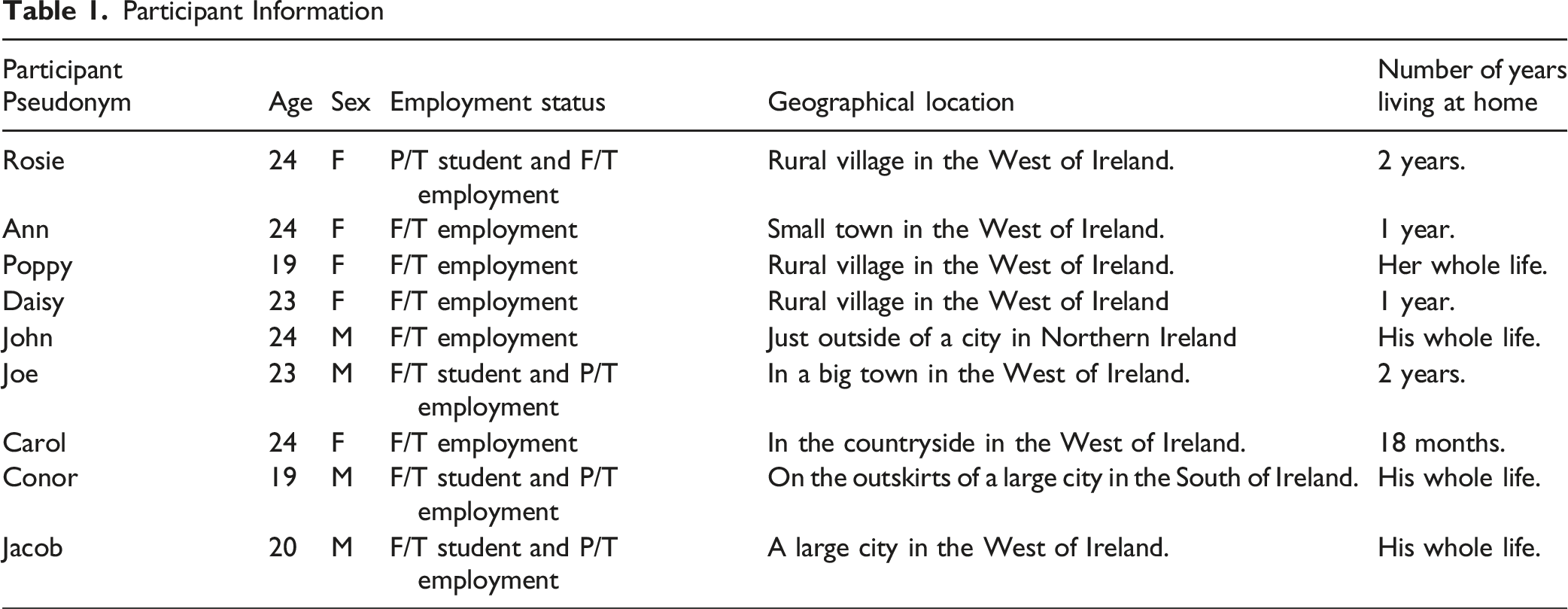
Participant Information
Materials
Email to potential participants and informational posters were developed to briefly outline the study aims and what participation would entail. After preliminary expressions of interest, comprehensive study details were provided via a Participant Information Sheet, accompanied by a consent form designed to obtain explicit informed consent for participation, recording, and subsequent data utilization in the study report. A semi-structured qualitative interview guide composed of open-ended questions was created. Each interview commenced with an introduction to the study, reconfirmation of consent, and an opportunity for participant queries. Prior to data collection, a pilot interview was conducted to evaluate question clarity and the overall participant experience. Feedback indicated good comprehension, prompting an enhancement to the introduction section. The pilot participant reported no difficulties with the guide. A post-study debrief form was formulated expressing gratitude and sign-posting participants to support resources if the interview had highlighted any issues for them or if they had any concerns regarding the research itself.
Research Procedure
Prior to commencement, the study obtained ethical approval from the University of Wolverhampton Ethics Committee. Once potential participants indicated their interest in taking part, they received the Participant Information Sheet and Consent Form by email. Once the signed Consent Form was received, the researcher contacted the participant to schedule a convenient interview time. Before the interview began, participants were invited to ask questions and confirm their informed consent to participate, as well as their preference for audio-visual or audio-only recording. All but two participants consented to audio-visual recording, the remaining two individuals chose audio-only. It was reiterated to participants that they could ask to pause or stop the recording at any point. Participants were verbally notified, in addition to the on-screen alert, each time the audio-visual recording commenced or concluded during the interview.
Interviews lasted between 45 and 60 minutes. General open-ended questions aided in the establishment of rapport which facilitates open communication (DiCicco-Bloom & Crabtree, 2006).
The interview schedule (see Appendix A) combined broad, open-ended questions with more focused prompts designed to explore how emerging adults themselves understood the relationship between their emotional experiences and their current living arrangements. For example, participants were invited to describe their overall experience of living at home, followed by more specific questions such as whether they had experienced feelings of sadness, low mood, or emotional strain in connection with their living situation. These questions were deliberately framed to encourage participants to reflect on whether, and in what ways, their living arrangements shaped their emotional well-being, rather than assuming a causal link. This structure enabled participants to raise issues that were meaningful to them while ensuring that responses remained relevant to the study aim (Willig, 2008).
Questions relating to low mood or emotional strain were included to explore participants’ own interpretations of whether their emotional experiences were connected to living at home. These items were not intended as diagnostic measures, nor to imply that all emotional difficulties were attributable to co-residence, but rather to allow participants to discuss their experiences in their own terms. The interviews being conducted via Microsoft Teams enabled recording, yielding a completer and more accurate picture than the researcher taking notes and allowed a conversation more akin to a natural situation. Transcripts were automatically generated via Microsoft Teams and cross-checked with the recordings to ensure their accuracy. Once verified, the transcripts were downloaded and deleted from the host platform. While interviews were conducted with both the interviewer and participants situated in their own homes, no locations were identifiable due to obscured backgrounds. Although internet-mediated research allows participants to remain in the comfort of their own environments, it also excludes individuals who lack access to suitable technology (Gray et al., 2020). All participants received the Debrief form via email.
Data Analysis
Coding Strategy
After confirming the accuracy of the transcripts, reflexive thematic analysis was carried out using the six-phase framework developed by Braun and Clarke (2006, 2019). Familiarization involved repeatedly reading the full dataset to gain a deep understanding of the content and identify data relevant to the research question. Analytic memos and reflexive journaling supported transparency throughout. Manual coding was conducted using pen and highlighter, with initial codes collated into preliminary candidate themes. During coding, only statements in which participants explicitly connected their experiences to living at home were included in theme development. Potential themes were then reviewed in two stages. Level one assessed internal coherence of codes within each theme, and Level two evaluated how well the themes captured the full dataset, to ensure they accurately reflected the participants’ accounts and to determine whether additional data supported them. Themes and subthemes were revised and named to reflect their analytical focus. The final phase involved producing a coherent narrative that addressed the research question. This process is not linear, but iterative, with greater familiarity with the data prompting ongoing refinement of codes and themes (Campbell et al., 2021), as illustrated below (Figure 1). Coding strategy: Adapted from Braun and Clarke (2006)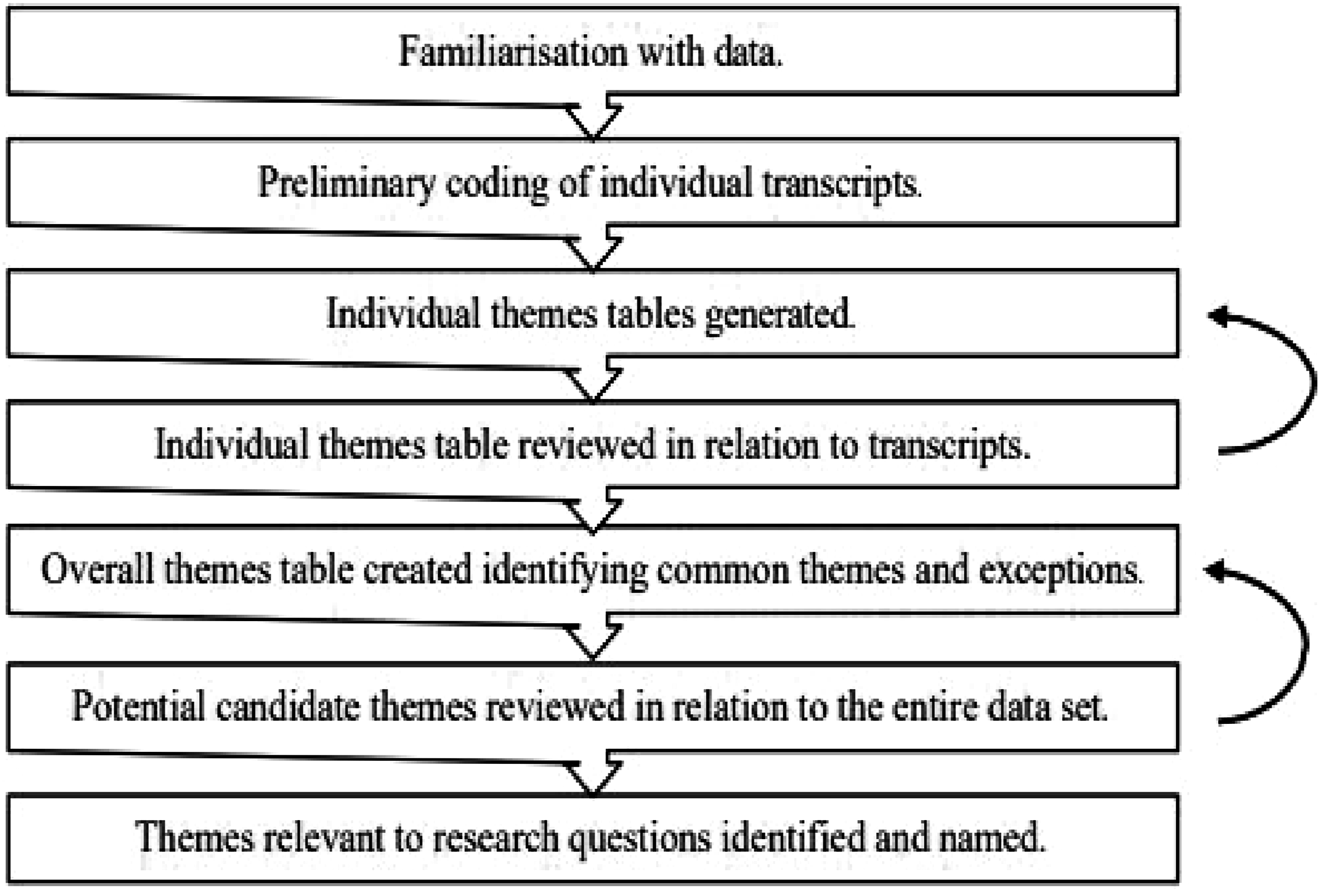
In line with contemporary qualitative research guidance, this study did not conceptualize saturation as the absence of new codes but instead adopted an information power approach, where sample adequacy derives from study aim specificity, quality of dialogue, and analytic depth. The recurrence of core ideas across interviews and the richness of participants’ accounts provided sufficient information power to support coherent theme development, even within a modest sample.
Coding Reliability
Coding reliability was strengthened through iterative review of codes, theme refinement, and supervisory consultation. While reflexive thematic analysis does not require intercoder reliability, analytic decisions were discussed collaboratively to ensure coherence, transparency, and theoretical consistency. A clear audit trail documenting coding decisions, theme evolution, and reflexive notes was maintained.
Findings
Although the interview began with broad, open-ended questions, participants consistently and spontaneously linked their experiences—such as feelings of hindered independence, financial constraints, or emotional strain—to their living situation. These connections arose organically in the data, and the themes presented in Figure 2 reflect participants’ own interpretations of how parental co-residence shaped their well-being and developmental trajectories. The collation and review of the overall themes table yielded the generation of three interconnected superordinate themes that encapsulate important aspects of the research question. The final thematic framework (Figure 2) reflects the iterative process of reflexivity mentioned earlier (Campbell et al., 2021). A total of nine participants took part in this study, including five females and four males, aged between 19 and 24. Most were living at home due to Ireland’s housing crisis and unaffordable living costs. All participants identified as Irish and were either working full-time or combining full-time employment with part-time study. This demographic context informs the interpretations that follow. Finalized thematic map indicating three themes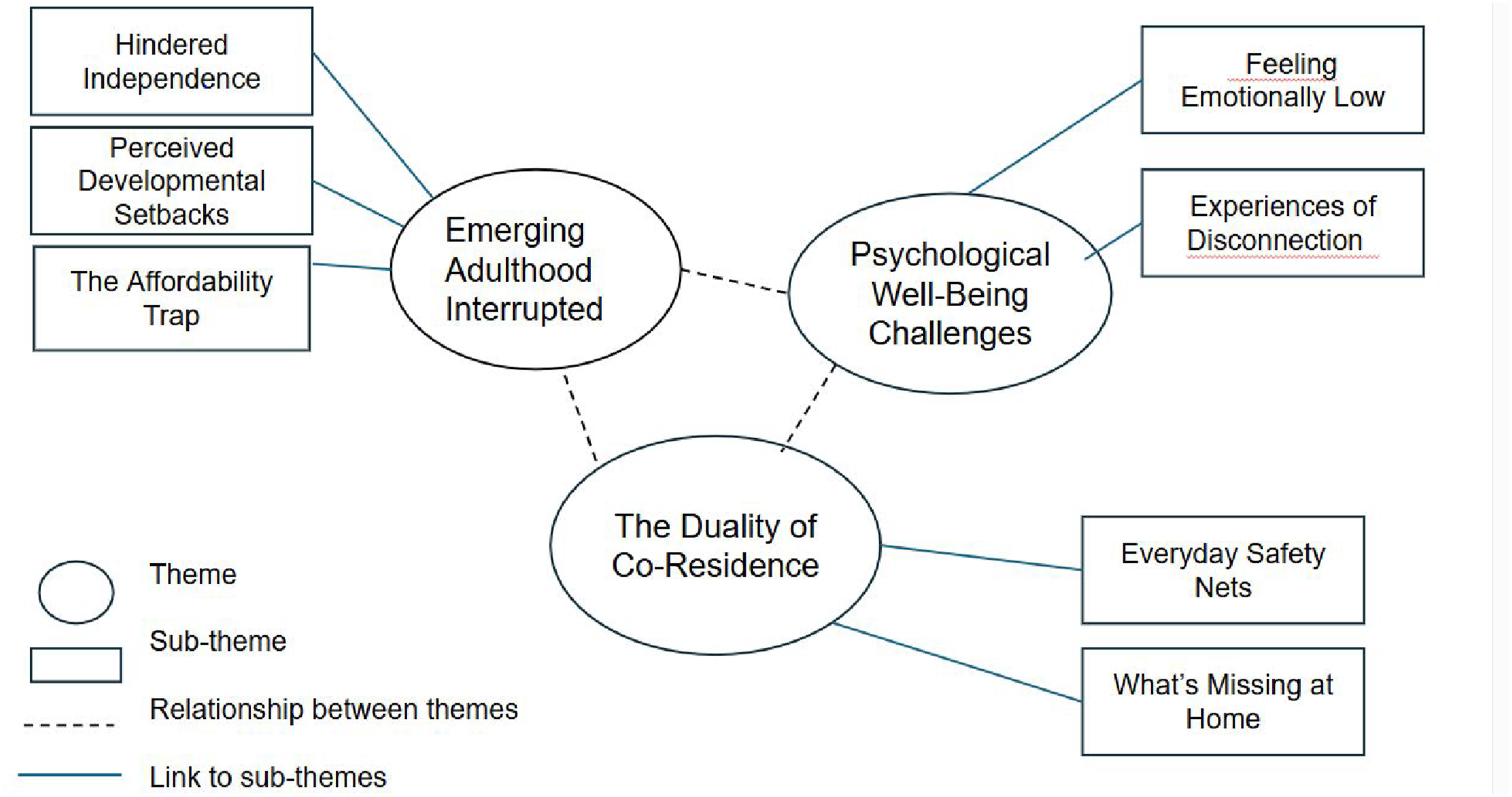
This study did not assess depression as a clinical diagnosis. All references to depression reflect participants’ own descriptions of emotional strain, low mood, or psychological difficulty. Accordingly, findings focus on subjective emotional experience rather than diagnostic categories, and interpretations remain grounded in participants’ self-reported narratives.
The first superordinate theme, Emerging Adulthood Interrupted, reveals how parental co-residence restricts autonomy, triggers perceived developmental setbacks, and enforces economic entrapment, collectively disrupting normative adult transitions. Superordinate Theme 2, Psychological Well-Being Challenges, captures how co-residence negatively affects mood and interpersonal connection, thereby influencing psychological well-being. Finally, superordinate Theme 3, The Duality of Co-Residence, investigates how co-residence provides essential support while highlighting the systemic resources participants found lacking in optimal well-being.
Theme 1: Emerging Adulthood Interrupted
Hindered Independence
Co-residence restricted participants’ day-to-day autonomy, limiting their engagement in practical adult tasks and decision-making. John reflects on how his independence has been limited by household dynamics: “It has probably hindered my independence. … Especially because my mum likes to do things the way she does them. So, you know it’s sort of like I probably wouldn’t have much of a say in the running of things….. Yeah, I wouldn’t cook much, my mum does the cooking and stuff. So definitely in terms of those sorts of things, it would affect it.’’ (John, Lines 65–69.)
Jacob linked independent living with personal autonomy, a sense of self-governance eroded by parental co-residence: “I'd say it's greatly diminished my sense of independence just from the fact that the small things of like you're just like, not paying your bills or anything. It does give you that sense that you have less responsibility to take for yourself.” (Jacob, Lines 133–135.)
In addition to weakened independence, co-residence led to perceived developmental setbacks and infantilization.
Perceived Developmental Setbacks
Participants felt that parental co-residence either hindered their personal growth, slowed their development or made them feel like they were reverting to an earlier life stage. For example, Ann and Carol describe feeling infantilized in their home environments: “You feel like you're still getting babied.” (Ann, Line 113) “I think when you go back home… you kind of fall back into the like asking like Mammy, can you help me?” (Carol, Lines 219–221)
Daisy’s reflection further illustrates this pattern of reversion, as she identifies a misalignment between tangible successes and her internal sense of psychological development: “I kinda do feel like I'm back to my old like young teenager self… even though I am obviously progressing with my degree and I'm doing jobs with sign language and stuff like that now… I do feel like I'm kind of back to my younger self because I'm living here.” (Daisy, Lines 104–107)
Subsequently, Carol frames the arrangement as limiting risk-taking and self-exploration vital to adult development: “I think it does stifle your growth a little bit… you don't feel the urge to go try something new… you don't develop your sense of self as much.” (Carol, Lines 235–24)
The Affordability Trap
Structural economic barriers have shifted parental co-residence from a transitional phase to a constraining necessity, disrupting normative pathways to adulthood. Although Ann initially presents it as a ‘choice,’ she later concedes that economic conditions have determined her living arrangement: “So I still live at home, obviously. Kind of by choice, but also with the way things are and how expensive rent is and everything. It's not really by choice either.” (Ann, Lines 23–24)
Joe explicitly positions the current cost-of-living conditions as historically unprecedented, implying that previous generations had an easier path to adulthood due to more favorable economic circumstances: “They didn’t have the same financial restraints we have currently, the cost of living in Ireland is so high at the minute, I don't think it's ever been as bad.” (Joe, Lines 282–283)
Poppy describes how high rental costs and the rise of short-term holiday rentals (e.g., AirBnB-style accommodation) have dramatically reduced available housing stock, thereby hindering the pathway to adulthood. “...everywhere is so expensive to rent, ...... that's if you can find some place to rent because everything now is like Airbnbs … someone who's 19/20/21 is not going to be able to afford to buy a house either.” (Poppy, Lines 384–386)
This sense of economic entrapment not only delays adult transitions but also sets the stage for emotional strain, as participants begin to experience the psychological toll of parental co-residence.
Theme 2: Psychological Well-Being Challenges
Feeling Emotionally Low
Emotional experiences were coded as part of this theme only when participants themselves linked their feelings to living at home; general expressions of low mood unrelated to co-residence were not included in the analysis. Participants described experiencing periods of low mood; however, what emerged from the interviews was not that emotional dips are unique to emerging adulthood, but rather how parental co-residence shaped or intensified these experiences for some individuals. Feelings of monotony, restricted autonomy, perceived lack of progress, or comparison with peers who had already moved out contributed to a sense of being “stuck.” Joe, for example, explicitly connected his low mood to the repetitive nature of living at home and to feeling excluded from peer activities that were more accessible to those living independently. His account illustrates how emotional strain was understood by participants themselves as being intertwined with the constraints of co-residence, rather than representing a general developmental feature of this life stage. “I do feel sometimes just down, I suppose would be the best way of describing it. When I see people having fun and I feel like I'm stuck at home, sitting on the couch doing the same thing, it feels like Groundhog Day.’’ (Joe, Lines 175–177)
He also identifies a link between his living situation and broader emotional well-being: “I feel alone. And it can be kind of depressing.’’ (Joe, Line 96-97) “I do feel that the negatives outweigh the positives of living at home at my age….. Because, I would be much happier living away from home.’’ (Joe, Lines 85–87)
These emotional lows were also compounded by a sense of social disconnection, as participants grappled with the absence of peer companionship and everyday interaction.
Experiences of Disconnection
Participants described a sense of social disconnection in the family home, where the absence of regular peer interaction left them feeling isolated and emotionally unfulfilled. Daisy acknowledges that while she values solitude, the social void created by parental co-residence was jarring: “I think the social side of it did kind of whack me a bit, even though I love being on my own and I love doing my own thing.’’ (Daisy, Lines 261–262)
Joe articulates the well-being challenge of social disconnection, as he contrasts his current isolation with past mental health benefits of peer cohabitation: “...the lack of social interaction with people my own age is something I do very, very much miss. As I keep going back to, when I did live in Galway, having my friends living in the house with me. You may not get as much sleep because we would be up chatting, but it was a lot better for my mental health I feel.’’ (Joe, Lines 82–85)
Theme 3: The Duality of Co-Residence
Everyday Safety Nets
Participants highlighted the practical, financial and emotional support derived from parental co-residence. For instance, Poppy found comfort in her mother’s immediate emotional availability: “...Mum's just down the hall. I'll just be like, oh, this is how I'm feeling. And she's like, right. How can I help?” (Poppy, Lines 352-353)
What’s Missing at Home
Beyond the advantages of co-residence, participants identified systemic gaps in Ireland’s support structures, emphasizing the need for better mental health services, social opportunities, affordable infrastructure, and functional public transport. Participants viewed this support as essential to well-being while at home.
Carol reveals how robust systems in the Netherlands actively reduce stress, starkly contrasting with Ireland’s inadequate systems: “…..but for rent over there, if you're under a certain age and your rent is under a certain amount, you get a Hortislag, so a rental subsidy…. €250 for a one bed apartment….’’ (Carol, Lines 525–530)
Poppy framed public transport as a well-being catalyst, enabling independence and peer engagement: “I just feel like public transport… I wish it was better… so that I could… have that little bit more of independence… go see my friends… go to the cinema.” (Poppy, Lines 400–448)
Having described how co-residence hinders independence, contributes to perceived developmental setbacks, and evokes emotional lows and social disconnection, co-residence impacts not only the well-being but also the depressive symptoms experienced by Irish emerging adults. These findings directly address the research question by revealing how participants perceive co-residence as both supportive and a source of emotional and developmental strain. With these themes in mind, the following chapter will critically discuss the findings in relation to existing literature, acknowledge the limitations of this study, and explore its wider relevance within the context of Ireland’s housing crisis.
Discussion
This study provides novel insights into the research question of how Irish emerging adults (aged 18–25) perceive and experience the impact of parental co-residence on their psychological well-being and symptoms of depression. Although parental co-residence provides support, the findings reveal that Irish emerging adults perceive it as a constrained living arrangement that contributes towards hindered independence, developmental delays, emotional strain, and social disconnection. These findings highlight co-residence’s complex impact on the psychological well-being and symptoms of depression of Irish emerging adults.
The first superordinate theme, Emerging Adulthood Interrupted, illustrates how parental co-residence can constrain opportunities for independence and delay key developmental transitions. Participants described feeling reduced autonomy and slower personal growth, often noting that living at home made them feel “babied” or held back in reaching adult autonomy. This pattern is consistent with research showing that co-residence may restrict the development of independence and delay adult role attainment (Kins & Beyers, 2010; Lewis et al., 2016; Sassler et al., 2008). However, rather than contradicting Arnett’s theory, these findings suggest that structural and economic conditions—such as unaffordable housing and limited rental availability—can interrupt or postpone the developmental processes typically associated with emerging adulthood. Economic constraints were central to participants’ experiences, with many describing co-residence as an economic necessity driven by rising rents, insecure employment, and limited housing supply, consistent with Srinivas’s (2019) framing of co-residence as a “forced choice.” Participants attributed their living arrangements to broader structural conditions rather than personal shortcomings, echoing prior findings that housing affordability significantly shapes living arrangements (Acolin et al., 2024).
More broadly, the findings reinforce scholarship highlighting how structural forces—such as housing markets, labour conditions, and welfare regimes—shape the timing and character of emerging adulthood (Arundel & Lennartz, 2017; Arundel & Ronald, 2016). Economic precarity not only led participants into parental co-residence but also prolonged their stay. This aligns with Bynner (2005) and Côté and Bynner’s (2008) argument that structural conditions shape emerging adults’ life trajectories. In this context, the findings illustrate a form of constrained or interrupted emerging adulthood, rather than a theoretical challenge to Arnett’s model. These findings do not refute Arnett’s theory; instead, they highlight how structural barriers shape the timing and expression of emerging adulthood. Participants’ accounts illustrate that emerging adulthood is still occurring, but under conditions that restrict autonomy and delay typical transitions, reflecting a socio-economically constrained pathway into adulthood. One participant, for example, contrasted his own delayed departure with his parents’ earlier independence. This suggests that, although increasingly widespread, parental co-residence is not as culturally accepted in Ireland as it is in Italy (Lanz & Tagliabue, 2007). This reflects both the de-standardization of life courses (Brückner & Mayer, 2005) and the specific impacts of Ireland’s unstable rental market (Byrne, 2020). The persistent psychological pressure to achieve independence despite structural barriers highlights a critical mismatch between normative expectations and contemporary economic realities (Arundel & Ronald, 2016).
Across participants’ accounts, emerging adulthood was often described as ongoing but delayed, characterized by feelings of slow progress rather than an absence of development. Building on the concept of Emerging Adulthood Interrupted, financial instability emerged as a key factor shaping participants’ developmental trajectories. Drawing on Prattley et al. (2022), economic precarity may alter how emerging adulthood is experienced, transforming periods typically characterized by exploration into phases marked by constraint or perceived stagnation. Participants did not describe an absence of development; rather, they articulated a sense that personal growth and self-discovery were delayed or constrained by the necessity of remaining in the parental home. One participant, for example, described co-residence as limiting opportunities for independence and slowing her sense of progress toward adulthood. In this way, experiences of stagnation were framed not as personal failure, but as a structural consequence of financial instability. The second theme, Psychological Well-Being Challenges, underscores the emotional impact of co-residence, with participants reporting loneliness and low mood linked to living at home. These findings are consistent with research showing that emerging adults who remain in the parental home report lower well-being compared to their independent peers (Buhl & Lanz, 2007). Several participants viewed independent living as a potential improvement to their well-being, reflecting Gustafsson’s (2021) findings that emerging adults living independently report better mental health than those living at home.
Notably, participants who had previously lived independently described sharper declines in well-being following a return to the parental home, a pattern consistent with research on “boomerang” moves, which has linked returns to the parental home with increased depressive symptoms (Copp et al., 2017). In contrast, participants who had never lived independently tended to frame co-residence as a more familiar, albeit still constraining, arrangement. Importantly, across both groups, it was not parental co-residence per se that appeared most detrimental, but the perceived loss of autonomy associated with externally imposed living arrangements. This interpretation aligns with self-determination theory, which emphasises autonomy as a fundamental psychological need (Ryan & Deci, 2000), and with empirical work showing lower well-being among emerging adults who perceive their living arrangements as involuntary (Buhl & Lanz, 2007; Kins et al., 2009). Together, these findings suggest that diminished autonomy—particularly following a period of independent living—may be more consequential for well-being than parental co-residence alone.
Across participants’ accounts, poorer emotional experiences were most closely associated with a perceived loss of autonomy, particularly when living arrangements were experienced as externally imposed. While participants described feelings of low mood or emotional strain, the study does not diagnose depression; rather, it highlights how constrained autonomy may shape subjective well-being during emerging adulthood, independent of parental co-residence per se.
Beyond autonomy, social comparison further compounded these emotional costs. Several participants expressed sadness about comparison with peers, which is consistent with Culatta and Clay-Warner’s (2021) assertion that returning home can carry emotional costs, such as a sense of falling behind. These emotions are likely amplified in the Irish context, where homeownership continues to symbolize adult independence (Arundel & Ronald, 2016; Norris, 2016b). The emotional strain documented aligns with findings from Dooley (2019) and Horgan et al. (2018), which document rising mental health concerns among Irish emerging adults. Given the high prevalence of depression in this age group (Arnett, 2018), forced living arrangements must be understood as both a reflection and a driver of psychological vulnerability.
The final theme, The Duality of Co-Residence, captures participants’ recognition of co-residence as both a safety net and a site of systemic failure. This duality reinforces prior research suggesting that parental support can buffer against external stressors like financial strain or poor housing conditions (McKee et al., 2020; Sage et al., 2013) but also functions as a symptom of wider systemic issues. One participant’s comparison between Irish and Dutch welfare systems highlights how national policy frameworks can either mitigate or exacerbate the psychological toll of co-residence. Further, participants’ calls for improved public transport to support independence and peer engagement underscore the role of structural interventions in shaping well-being during co-residence. This supports Jones et al.’s (2013) claim that enhanced transport strengthens well-being and aligns with Shliselberg and Givoni’s (2018) view of transport as a form of social capital linked to subjective well-being. According to the phase model of psychotherapy, improved well-being is a necessary precursor to reducing depressive symptoms (Howard et al., 1993), a relationship supported by findings that higher well-being correlates with lower depression risk (Chaplin, 2006; Syu et al., 2013). Despite this, the current study reveals that inadequate transport infrastructure undermines well-being, potentially increasing vulnerability to depression. Exploratory comparisons across demographic characteristics revealed no substantial differences by gender, rural versus urban residence, or employment status. While some participants framed co-residence challenges in gendered terms or linked emotional strain to work or study transitions, these patterns were not sufficiently consistent to form distinct subthemes. Given the small and diverse sample, these observations should be interpreted cautiously.
Strengths and Limitations
This study sought to generate credible and nuanced qualitative insights through methodological transparency, careful interpretation, and reflexive engagement with participants’ accounts. Attention was paid to divergence within the data, sensitivity to participants’ meanings, and iterative engagement during analysis. Credibility was further supported through pilot interview feedback and reflexive thematic analysis procedures, consistent with qualitative quality criteria outlined by Yardley (2000). Nevertheless, several limitations should be acknowledged. First, the small sample size (n = 9) limits the breadth of experiences captured and constrains the transferability of findings. While the depth of the interviews allowed for rich, detailed accounts, the study does not claim representativeness. The findings should therefore be understood as illustrative rather than generalisable, offering insight into how parental co-residence is experienced by a specific group of Irish emerging adults rather than the population as a whole. Second, although participants were recruited from different regions across Ireland, the sample reflected a mixed urban–rural composition, with several participants residing in rural villages. While this diversity offered some variation in context, the study was not designed to systematically compare rural and urban norms of co-residence, such as those associated with family farming or multigenerational living. Future research could explicitly examine how rural economic structures and cultural expectations shape the meaning and impact of co-residence differently from urban housing markets. Third, while interviews were conducted online for accessibility and participant convenience, this mode of data collection may have influenced rapport or the depth of non-verbal communication. However, online interviews are increasingly recognised as a valid qualitative method and were appropriate for exploring sensitive topics such as well-being and emotional experiences. Finally, although participants provided background information on their education and employment status during interviews, the study did not systematically analyse occupation, future plans, or intended length of stay as analytic variables. These factors may meaningfully shape how co-residence is experienced—particularly whether it is perceived as temporary or indefinite—and should be examined more explicitly in future research.
Importantly, this study does not claim that parental co-residence inherently undermines well-being. Rather, it highlights how perceived loss of autonomy, involuntary living arrangements, and structural housing constraints shape emotional experiences during emerging adulthood. By situating these findings within Ireland’s housing and economic context, the study contributes to sociological and public health discussions on how delayed transitions to independence intersect with well-being. Future research should employ larger and more diverse samples, explicitly compare independent and co-residing emerging adults, and examine how occupational trajectories and future housing expectations moderate the psychological impact of living at home.
Theoretical Implications
The accounts shared by participants illustrate a form of “Emerging Adulthood Interrupted,” wherein individuals recognise normative developmental expectations—such as independence, identity exploration, and mobility—but experience delays or constraints in fulfilling them. These findings complement existing literature on boomerang patterns and delayed home-leaving rather than contradicting foundational developmental theory.
Conclusion
This study explored the lived experiences of Irish emerging adults (aged 18–25) living in the parental home, illuminating how co-residence shapes subjective well-being and emotional experiences during this developmental period. Three interrelated themes were identified—Emerging Adulthood Interrupted, Psychological Well-being Challenges, and The Duality of Co-residence—together capturing the ambivalent nature of living at home. While parental co-residence provided financial security and emotional support, it was also associated with feelings of constrained autonomy, social disconnection, and perceived stagnation. Crucially, the findings suggest that it is not parental co-residence per se that undermines well-being, but rather the extent to which living arrangements are experienced as involuntary and autonomy-limiting.
Importantly, these findings do not challenge Arnett’s conception of emerging adulthood. Participants continued to express aspirations consistent with emerging adulthood—such as identity exploration, self-focus, and the desire for independence—even while remaining in the parental home. What differed was not the presence of emerging adulthood itself, but the conditions under which it unfolded. In this sense, the study highlights a form of constrained or interrupted emerging adulthood, wherein normative developmental pressures persist despite structural barriers that delay or reroute traditional pathways to independence. Ireland’s housing crisis emerged as a central contextual force shaping these experiences, limiting agency and narrowing perceived options.
Beyond theoretical contributions, the study foregrounds lived experience to challenge deficit-oriented narratives that frame prolonged co-residence as individual failure. Participants’ accounts instead reveal how emotional strain is embedded within broader structural inequalities. By centring participants’ voices, this qualitative study demonstrates how macro-level economic conditions translate into micro-level emotional and relational experiences. While the study offers valuable insights, limitations should be acknowledged, including the small sample size and the lack of systematic analysis of occupational trajectories, future plans, and intended duration of co-residence. Future research would benefit from larger and more diverse samples, comparative designs including independently living emerging adults, and longitudinal approaches to examine how autonomy, housing trajectories, and well-being evolve over time. Nevertheless, the implications for policy are clear. Addressing the emotional toll of delayed independence requires structural interventions alongside individual-level support. Policies aimed at improving housing affordability, expanding secure rental options, enhancing public transport, and supporting autonomy-building initiatives are essential to ensure that emerging adults are not merely enduring this life stage, but are able to meaningfully engage with and thrive within it.
Footnotes

Funding
The authors received no financial support for the research, authorship, and/or publication of this article.
Declaration of conflicting interests
The authors declared no potential conflicts of interest with respect to the research, authorship, and/or publication of this article.
Transparency and Openness Statement
This study involves qualitative research. The raw data, analysis code, and materials used in this study are not openly available but are available upon request to the corresponding author. The raw data in this manuscript are not openly available due to the privacy of the respondents. No aspects of the study were pre-registered.