



Abstract
Experiencing mindful parenting has been positively associated with youth’s dispositional mindfulness and self-compassion, which in turn, relates to better emotional adjustment. However, mindful parenting could also relate to interpersonal mindfulness, which is another form of mindfulness that has had a unique relation with social adjustment. In this study, 458 emerging adults (age of 17–21 years) completed a survey to report their current experience of mindful parenting, dispositional mindfulness, self-compassion, interpersonal mindfulness, emotional (general well-being, social anxiety) and social adjustment (friendship quality, prosocial behavior, conflict negotiation). Regression models testing direct and indirect associations showed that mindful parenting was directly but also indirectly associated with emerging adults’ emotional adjustment via dispositional mindfulness and self-compassion (not interpersonal mindfulness), and indirectly associated with social adjustment via interpersonal mindfulness (not dispositional mindfulness or self-compassion). Findings have implications for theory and practice within the areas of mindfulness, parenting, and emerging adults’ emotion regulation and personal adjustment.
Introduction
Mindful parenting has been described as “a framework whereby parents intentionally bring moment-to-moment awareness to the parent–child relationship” (Duncan et al., 2009, p. 255). Kabat Zinn and Kabat Zinn were the first to identify mindful parenting in their earlier work in 1997 viewing it as an extension of mindfulness from an intrapersonal to an interpersonal context. They described it as a set of parenting approaches that allow parents to face the challenges of parenting with “new awareness and intentionality” balanced with compassion and non-judgment in the parent-child relationship (Kabat-Zinn & Kabat-Zinn, 2014). In a model drawn from Eastern and Western teachings on mindfulness and compassion, mindful parenting was originally characterized by five dimensions that could be applied to parent-child relationships: listening with full attention, non-judgmental acceptance of self and child, emotional awareness of self and child, self-regulation in the parenting relationship, and compassion for self and child (Duncan et al., 2009). Past research shows mindful parenting to have a positive association with positive parenting practices, such as warmth and affection (Han et al., 2021; Parent et al., 2016) and a negative association with negative parenting practices, such as hostility and ineffective discipline (Parent et al., 2016), although Han et al. (2021) found no association among these variables using a Chinese sample. Despite such overlap, the conceptualization of mindful parenting differs from other, more commonly measured aspects of parenting in terms of the focus on specific mindful behaviors of parents that involve listening to children with full attention and showing them compassion and acceptance for their natural state of being.
Mindful parenting has been found to be a significant correlate of children, adolescents, and emerging adults’ emotional and social adjustment. In particular, in numerous studies, parents who scored higher in mindful parenting had offspring with fewer emotional and social problems (e.g., Emerson et al., 2019; Meppelink et al., 2016; Moreira & Canavarro, 2020; Moreira et al., 2018; Park et al., 2020; Potharst et al., 2018). These findings were consistent across a number of non-clinical and clinical samples (e.g., ASD) using mostly cross-sectional, but sometimes longitudinal designs (see Ahemaitijiang et al., 2021 for a review). For example, Lippold et al. (2015) conducted a longitudinal study with mother-youth dyads (N = 432; 46% males) finding that mindful parenting (based on youth-report) was associated with improved affective quality in the mother-youth relationship 8 weeks later and better mother-youth communication (e.g., youth disclosure) at 1-year follow-up. Other support for the association of mindful parenting with youth’s adjustment comes from a series of randomized controlled trials of mindful parenting programs, which have been found to improve both mindful parenting and youth’s mental health (Coatsworth et al., 2010; 2015; 2018). Despite these promising findings, further research is still needed to examine the mechanisms by which mindful parenting might be associated with various child adjustment outcomes at various stages in their development (Ahemaitijiang et al., 2021).
Such findings from studies of mindful parenting are consistent with many theories and models that identify positive dimensions of parenting as beneficial for children’s development (Collins et al., 2000; Maccoby, 1992; Steinberg, 1990). For example, the tripartite parent and family influence model (Morris et al., 2007; 2017) draws from decades of research to summarize how parenting practices are foundational for children’s emotional and social adjustment, placing the focus on parents as models of positive behavior and the primary agents that socialize children’s emotional understanding and skills at emotion regulation (for reviews see Bridgett et al., 2015; Darling & Steinberg, 1993; Dix, 1991; Morris et al., 2017; Skinner & Zimmer-Gembeck, 2016). It is children’s skills at regulation that are expected to provide wide-reaching positive benefits for their adjustment, with emotion dysregulation identified as a transdiagnostic risk factor for mental health and social-behavioral problems across the lifespan (Aldao & Nolen-Hoeksema, 2010; Keenan, 2000; Klemanski et al., 2017). Thus, although not specifically designed to address mindful parenting, the model of parenting, emotion regulation, and emotional and social adjustment of children proposed by Morris et al. (2007) raises the possibility that emotional regulation skills would also be a crucial mechanism linking mindful parenting to adjustment among children, adolescents, and emerging adults.
In this study, we propose a Mindful Parenting Influence Model (see Figure 1) that aligns with Morris et al. (2007)’s model. Yet, rather than conceptualizing emotion regulation as a single global mediator as proposed by Morris et al. (2007), the Mindful Parenting Influence Model includes three mediators. Two of the mediators are dispositional mindfulness and self-compassion, given that they have been identified as outcomes related to mindful parenting (e.g., Moreira et al., 2018) and each has a strong positive correlation with emotion regulation (Diedrich et al., 2014; Hambour et al., 2018; Inwood & Ferrari, 2018; Kerin et al., 2020). Therefore, we expected they would play mediational roles in the Mindful Parenting Influence Model (see Figure 1) similar to the role of emotion regulation as proposed by Morris et al. (2007). As the third mediator, we incorporated interpersonal mindfulness into the Mindful Parenting Influence Model. Interpersonal mindfulness refers to emotion regulation when interacting with others, aligning with views of mindfulness that differentiate interpersonal from intrapersonal forms (Chen et al., 2017; Kabat-Zinn & Kabat-Zinn, 2014; Townshend, 2016). This has been defined as “paying attention in the present moment while with another person, including being aware of internal experiences [bodily sensations, thoughts, reactions, mood, etc.] and external experiences [verbal and nonverbal communication, apparent mood, etc.]… and choosing to respond in a nonjudgmental way” (Pratscher et al., 2019, p. 14). Overall, dispositional mindfulness, self-compassion, and interpersonal mindfulness were included as three mediators expected to link emerging adults’ reports of their current experience of mindful parenting with their adjustment. The mindful parenting influence model.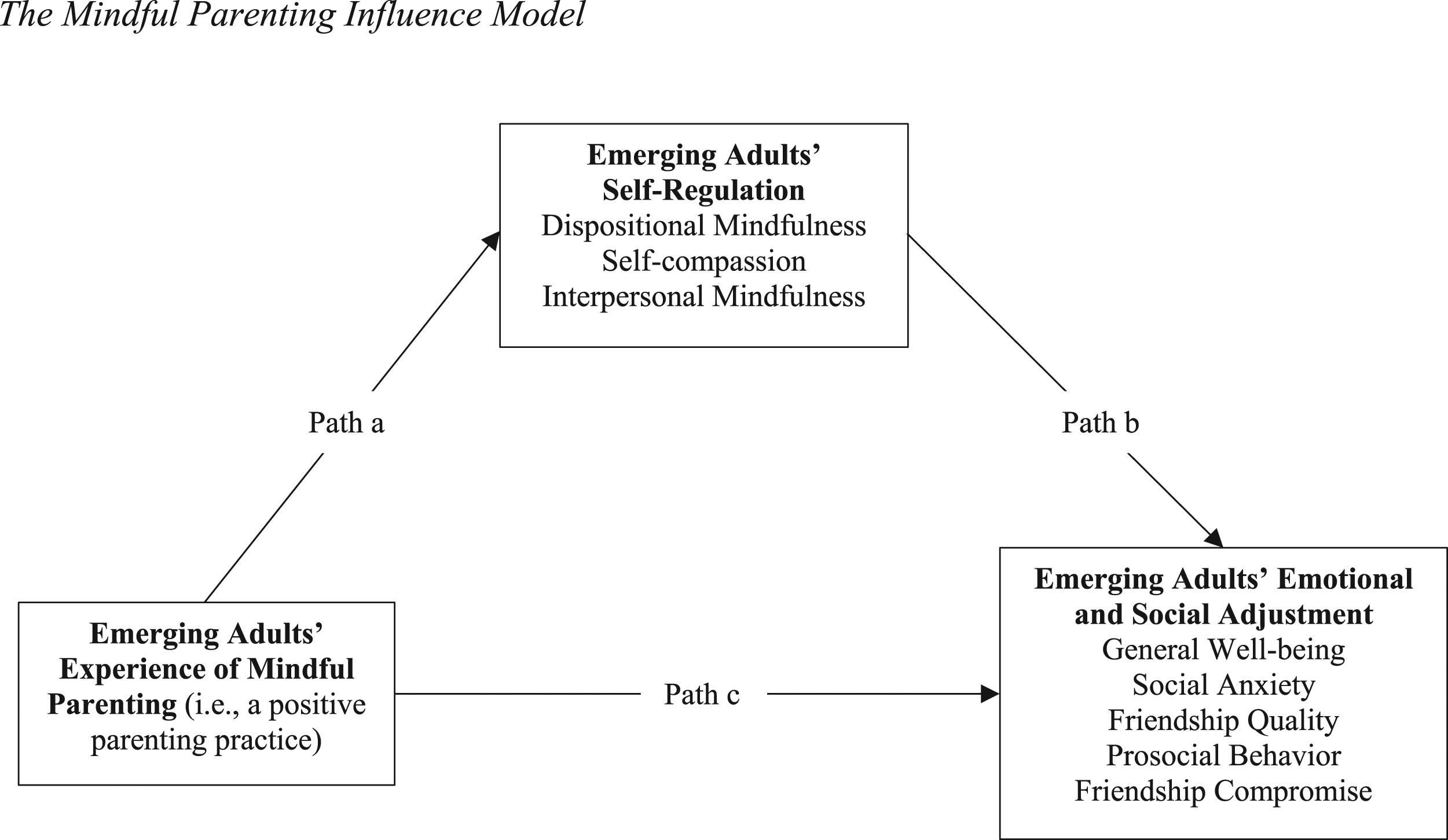
Regarding emerging adults’ adjustment, emotional was differentiated from social adjustment outcomes to identify specific indirect associations via the intrapersonal mediators or via the interpersonal mediator. This was the case given past evidence showing dispositional (or intrapersonal) mindfulness and interpersonal mindfulness to play distinct roles in emerging adults’ emotional and social outcomes (Pratscher et al., 2018, 2019). We also measured multiple aspects of emotional and social adjustment, given that emerging adults (aged 17–21 years) face many challenges that could interfere with positive development, propel more negative emotions or behaviors, or both. For example, emerging adults face many new stressors and demands in work, education, and social relationships outside the home that can challenge their emotion regulation and coping systems and result in declines in emotional adjustment and interfere with social success (Skinner & Zimmer-Gembeck, 2016). In particular, emerging adults appear to be vulnerable to experiencing reduced psychological well-being and an increase in social anxiety (Costello et al., 2011; Larose et al., 2018). Such a decline in emotional adjustment is often accompanied by a transition in friendships and other social relationships and a need for continued support from parents (Hicks & Heastie, 2008; Holt et al., 2018; Larose et al., 2018; Zimmer-Gembeck, 2002). For example, in one study of Belgian youth aged 11–18 years and using three large independent samples, social anxiety was found to play a crucial role as a potential driver for feelings of loneliness and symptoms of depression, suggesting a vicious cycle between these factors (Danneel et al., 2019). Similarly, emerging adults face social adjustment difficulties as they spend more time outside their home or transition to university or work, due to changes in friendships, the formation of new relationships, and/or the breakdown of other relationships (Larose et al., 2018). The Mindful Parenting Influence Model is designed to consider both emotional (general well-being and social anxiety) and social (friendship quality, prosocial behavior, and conflict negotiation skills) adjustment among emerging adults.
Emerging Adults’ Dispositional Mindfulness, Self-Compassion, and Adjustment
Dispositional mindfulness and self-compassion are interrelated (Bluth & Blanton, 2014; Gouveia et al., 2016) and each has been associated with better general well-being and fewer symptoms of psychopathology among adolescents (Calvete et al., 2020; Lathren et al., 2019) and emerging adults (Bodenlos et al., 2015; Neely et al., 2009). The concept of mindfulness lies at the heart of Buddhist meditation, and involves cultivation of attention, “wakefulness”, and compassion (Kabat-Zinn & Kabat-Zinn, 2014). Dispositional mindfulness has been defined as self-regulation of sustained attention to thoughts, feelings, and sensations in the present moment in a way characterized by curiosity, openness, and acceptance (Bishop et al., 2004). This concept is an outgrowth of the focus on mindfulness skills more generally and has been the focus of a great deal of research describing dispositional mindfulness as a trait that can support stress management, emotion regulation, coping, and a range of markers of health and well-being (Roeser & Pinela, 2014; Zimmer-Gembeck, 2019; Zimmer-Gembeck et al., 2021).
Self-compassion, a skill that is cultivated by and related to, dispositional mindfulness, has been defined as being kind and understanding toward oneself during times of hardships and/or failures while holding a balanced view of the situation and viewing such challenges as common human experiences (Neff, 2003a; 2003b). Just as has been found for dispositional mindfulness, researchers have reported that self-compassion has many health benefits for adolescents and emerging adults. For example, Bluth and Blanton (2014) found that self-compassion (along with mindful awareness) was associated with greater positive affect and well-being and lower negative affect and perceived stress in adolescents. Neely et al. (2009) found similar relationships in their study of undergraduate university students, reporting that self-compassion accounted for a significant amount of additional variance in general well-being, after accounting for other factors such as goals, stress, and need and availability of support. Thus, there is a great deal of support linking dispositional mindfulness and self-compassion with better emotional adjustment, but fewer previous studies have examined their associations with social adjustment. Yet, other research has identified interpersonal mindfulness, which is also an indicator of self and emotion regulation skill, as relevant to social adjustment.
Emerging Adults’ Interpersonal Mindfulness and Social Adjustment
Interpersonal mindfulness specifically captures mindfulness and self-regulation when interacting with others. Interpersonal mindfulness is defined to include four key dimensions of being present while engaging with another person, being aware of one’s own internal experiences (i.e., facial/body expressions, mood, feelings) and external experiences relevant to the other person (gestures, mood, tone of voice, intensions), having non-judgmental acceptance, and being non-reactive while conversing with that person (Pratscher et al., 2019). In the first study of interpersonal mindfulness, Pratscher et al. (2018) developed the Interpersonal Mindfulness Scale (IMS). In their multivariate analysis, interpersonal mindfulness, but not dispositional mindfulness, was associated with emerging adults’ reports of better friendship quality. In contrast, dispositional mindfulness, but not interpersonal mindfulness, was related to fewer symptoms of anxiety and depression. Pratscher et al. (2019), using a more comprehensive measure of interpersonal mindfulness, replicated these findings. The authors suggested that those who are highly mindful in interpersonal interactions are more likely to enjoy better quality friendships, whereas dispositional mindfulness was associated with positive emotional adjustment and similar markers of mental well-being instead of social adjustment. The IMS measure has undergone even further development in collaboration with the original scale developer (Chalmers et al., 2021; Medvedev et al., 2020). Taken together, past research has uncovered a unique role of interpersonal mindfulness, separate from dispositional mindfulness and self-compassion, for emerging adults’ social adjustment, whereby measures of interpersonal mindfulness and dispositional (i.e., intrapersonal trait) mindfulness each contribute uniquely only to emerging adults’ social versus emotional adjustment, respectively (Pratscher et al., 2019).
Direct and Indirect Effects of Mindful Parenting on Emerging Adults’ Adjustment
As shown in Figure 1, emerging adults’ dispositional mindfulness, self-compassion, and interpersonal mindfulness were expected to mediate one or more of the associations between mindful parenting and emerging adults’ emotional or social adjustment. We could locate only a handful of previous studies that have directly investigated mindful parenting as a correlate of offspring’s adjustment via their own mindfulness and self-compassion. In one study of 563 parent-youth dyads (95.6% mothers, 61.5% females, aged 12–20 years), mindful parenting was indirectly positively associated with youth’s emotional adjustment through offspring’s own level of self-compassion (Moreira et al., 2018). Dispositional mindfulness did not act as a mediator in the association of mindful parenting with youth’s emotional adjustment.
We (Mera et al., 2023) also tested a model extending on Moreira et al. (2018). In this study using measures similar to those included here, we found that emerging adults' dispositional mindfulness partially mediated the positive association between the mindful parenting subscale of listening with full attention and emerging adults’ general positive well-being and partially mediated the negative association with social anxiety. In addition, self-compassion mediated the associations of multiple mindful parenting subscales with either emerging adults’ positive well-being or social anxiety. Overall, it appears that, as positive correlates of mindful parenting, emerging adults’ own dispositional mindfulness and self-compassion would be mechanisms partly accounting for why mindful parenting is associated with better emotional adjustment among emerging adults. Regarding interpersonal mindfulness, no previous study has tested whether it mediates the association of mindful parenting with emerging adults’ adjustment. Nevertheless, based on research that finds associations of interpersonal mindfulness with emerging adults’ better social adjustment (e.g., Pratscher et al., 2019), we expected to find indirect effects supporting mediation by interpersonal mindfulness (similar to the findings for dispositional mindfulness and self-compassion), especially in analyses of mindful parenting and emerging adults’ social adjustment.
The Current Study
In summary, we tested direct and indirect associations outlined in the Mindful Parenting Influence Model of emerging adults’ emotional and social adjustment (see Figure 1). This model draws upon past studies of mindful parenting and offspring’s adjustment. These included the study by Moreira et al. (2018), studies of the unique role of interpersonal mindfulness (relative to dispositional mindfulness) in explaining emerging adults’ social adjustment (e.g., Pratscher et al., 2019), and decades of research showing the critical role that children’s and youth’s development of emotion regulation skills has in explaining why positive parent-child relationships result in children and youth with better adjustment across a range of indicators (Kiel & Kalomiris, 2015; Morris et al., 2007; 2017; Zimmer-Gembeck et al., 2016). Emerging adults’ emotion regulation skills were measured in three ways: dispositional mindfulness, self-compassion, and interpersonal mindfulness, expecting they would be positive correlates of mindful parenting that, in turn, we expected would account for variation in measures of emerging adults’ emotional and social adjustment. Emerging adults reported their current experience of mindful parenting to capture their observations and perceptions of their parent’s mindful practices (e.g., listening and compassion skills). Older teens and young adults have had many opportunities to observe a range of parents’ behaviors during their interactions with them, such as those included on the measure of mindful parenting (e.g., Coatsworth et al., 2015) or other parenting measures found in past research (e.g., Skinner et al., 2005). We expected emerging adults’ perceptions of being parented to be relevant to their own patterns of behavior and their emotional and social adjustment. However, it is noted that research has found low-to-moderate correspondence between parents’ and children’s reports of family functioning (De Los Reyes & Ohannessian, 2016). The following hypotheses were tested in this study: • H1: Emerging adults’ experience of mindful parenting will have positive associations with their dispositional mindfulness, self-compassion, and interpersonal mindfulness. Also, mindful parenting will have positive associations with emerging adults’ general well-being and social adjustment (better friendship quality, prosocial behavior, and conflict negotiation skills) and a negative association with their social anxiety. • H2: There will be significant indirect effects of emerging adults’ experience of mindful parenting on measures of their emotional adjustment (general well-being and social anxiety) via their dispositional mindfulness and self-compassion, but not via their interpersonal mindfulness. • H3: There will be significant indirect effects of emerging adults’ experience of mindful parenting on measures of their social adjustment (friendship quality, prosocial behavior, and conflict negotiation skills) via their interpersonal mindfulness, but not via their dispositional mindfulness or self-compassion.
Method
Participants
The participants were 470 undergraduate students (350 females, 118 males, two non-binary/other who were combined with males for analyses involving gender) aged 17–21 years (M = 18.83, SD = 1.25). Participants reported their racial/ethnic background by ticking all that applied, with 71% reporting White, 13% Asian, 12% Australian First People/Torres Strait Islander or Pacific Islander, and 14% reporting “other” (e.g., African, Indian, Middle Eastern). For student status, 93% were full-time and 7% part-time students. In addition, 58% worked part-time, 2% worked full-time, and 40% did not hold paid employment. Sixty-five percent were psychology students who participated for partial course credit (0.5%).
Of the 470 students, 71% lived at home with one or both parents, 27% reported that they did not live with a parent but have regular contact with a parent, and the remaining 2% (n = 12) did not live or have contact with their parents and were excluded from analyses, leaving a final sample size of 458. Among the 458 with contact, 75% reported daily contact with a parent, 24% reported almost weekly but not daily contact, and the remaining 1% reported less frequent contact. Of those 458 students, 83% completed parenting measures about their mother and 17% reported about their father.
Overall, 552 emerging adults met inclusion criteria and accessed the survey. However, 65 were not included in this study because they completed either none (n = 23) or only one or two pages (n = 42) of the survey. In addition, two items were included as attention checks and five students were excluded because they answered both items incorrectly. Finally, 15 students completed the survey in 8.5 minutes (i.e., half the median time of 17 minutes) or less and were excluded. Three of those students were previously excluded due to answering both item checks incorrectly.
Measures
All measures were selected because they had good face validity for use with emerging adults between the ages of 17–21 years. In addition, all measures had evidence of good reliability and validity, had been developed for adolescents or emerging adults, and had been used in previous research with participants of a similar age to the present study. Examples of such measures include the Network of Relationships Inventory-Behavioral Systems Version (NRI-BSV) used by Handley et al. (2019) with emerging adults (mean age = 20.17 years) and the Social Anxiety Scale for Adolescents (SAS-A) used by Hemm et al. (2018) with emerging adults aged 16–24 years.
Mindful Parenting
Participants reported their experience of mindful parenting by completing the 17-item Interpersonal Mindfulness in Parenting Measure for Youth (IMPM-Y: Mera et al., 2023). The IMPM-Y included items drawn from the expanded version of the Interpersonal Mindfulness in Parenting (IMP) scale, which had been designed for parent report (de Bruin et al., 2014; Duncan, 2007; Duncan et al., 2009). Thus, items on the IMPM-Y were revised to be amenable to youth reports about their parents. The IMPM-Y has items (e.g., “It is hard for my parent to tell how I am feeling”) that tap offspring’s reports of their parents’ emotional non-reactivity (7 items), emotional awareness of the child (3 items), listening with full attention (4 items), and compassion for the child (3 items). Participants nominated a parent they felt closest to and completed the items using responses ranging from 1 = never or almost never true to 5 = always or almost always true. After reversing some items, items were averaged so that a higher score indicated a higher level of mindful parenting, Cronbach’s α = .94.
Dispositional Mindfulness
The 15-item Short Form of Five Facet Mindfulness Questionnaire (SF-FFMQ; Abujaradeh et al., 2019) measured dispositional mindfulness. The SF-FFMQ items (e.g., “In difficult situations, I can pause without immediately reacting”) measure acting with awareness (4 items), describing (3 items), non-judgment (4 items), and non-reactivity (4 items). Participants responded to the statements using responses from 1 = never or almost never true to 5 = always or almost always true. After reversing some items, all 15 items were averaged so that a higher score indicated a higher level of dispositional mindfulness, Cronbach’s α = .84.
Self-Compassion
Self-compassion was measured with 13 items (e.g., “I try to be understanding and patient towards those aspects of my personality I don’t like”) from the Self-Compassion Scale (SCS; Neff, 2003a) that measure self-kindness (5 items), common humanity (4 items), and mindfulness (4 items). Response options for each item ranged from 1 = never or almost never true to 5 = always or almost always true. Items were averaged so that a higher score indicated a higher level of self-compassion, Cronbach’s α = .93.
Interpersonal Mindfulness
The Interpersonal Mindfulness Scale (IMS; Pratscher et al., 2019) measured mindfulness while interacting with other people. The IMS includes 27 items (e.g., “I pick up on the intentions behind what another person is trying to say”) that measure presence (7 items), awareness of self and others (10 items), non-judgmental acceptance (4 items), and non-reactivity (6 items). Participants responded to the items using responses from 1 = never or almost never true to 5 = always or almost always true. After reversing some items, items on each subscale were averaged so that a higher score indicated a higher level of interpersonal mindfulness, Cronbach’s α = .88.
Emotional Adjustment: General Well-being and Social Anxiety
Participants completed two measures of emotional adjustment. First, the 10-item KIDSCREEEN-10 (Ravens-Sieberer et al., 2010) was used to assess general well-being. Items assess physical activity/energy, mood/emotions, structure/leisure time, parent/friend relationship qualities, and cognitive capacity/performance satisfaction. Participants were asked to respond to statements (e.g., “Have you felt lonely?”) using 5-point Likert scales. The response categories for item 1 (i.e., “Have you felt fit and well?”) and item 9 (i.e., “Have you got on well at university?”) were 1 = not at all, 2 = slightly, 3 = moderately, 4 = very and 5 = extremely, and for all others, 1 = never, 2 = seldom, 3 = quite often, 4 = very often and 5 = always. The word “university” was used under item 9 instead of “school”. After reversing two items, items were averaged so that a higher score indicated a higher level of well-being, Cronbach’s α = .80.
Second, the Social Anxiety Scale for Adolescents (SAS-A; La Greca & Lopez, 1998) was used to assess symptoms of social anxiety. The SAS-A consisted of 18 items (e.g., “I feel shy even with peers I know very well”) that measure fear of negative evaluation (8 items), social avoidance and distress to new situations or unfamiliar peers (6 items), and social avoidance and distress in general (4 items). Participants responded to each item on a scale from 1 = not at all to 5 = all the time. Items were averaged so that a higher score indicated a higher level of social anxiety, Cronbach’s α = .95.
Social Adjustment: Friendship Quality, Prosocial Behavior, and Friendship Conflict Negotiation (Compromise)
The participants completed three measures of social adjustment. First, 15 items from the Network of Relationships Inventory-Behavioral Systems Version (NRI-BSV; Furman & Buhrmester, 2009) (e.g., “How much do you seek out your friend when you’re upset?”) were used to measure positive friendship quality (attachment and companionship) with one nominated best or closest friend. Participants responded to each item on a scale from 1 = little or none to 5 = the most. For all items, the word “your friend” was used instead of the original measure wording of “this person”. All items were averaged so that a higher score indicated more positive friendship quality, Cronbach’s α = .93.
Second, prosocial behavior was measured with the 4-item Prosocial Behavioral Intentions Scale (PBIS; Baumsteiger & Siegel, 2019) (e.g., “Comfort someone I know after they experience a hardship”). Response options ranged from 1 = definitely would not do this to 7 = definitely would do this. Items were averaged so that a higher score indicated a higher level of prosocial behavior, Cronbach’s α = .77.
Third, the 6-item compromise subscale from the Conflict Tactics Scale (Feldman & Gowen, 1998) measured compromising skills when disagreeing on important matters with a close friend (e.g., “Try to reason”). This measure was originally designed for youth aged 14–19 years to measure conflict management in romantic relationships, so the instructions and one item were modified to refer to the participant’s nominated best or close friend instead of a romantic partner. Participants responded to each item on a scale from 1 = never or almost never to 5 = almost always or always. Items on this scale were averaged so that a higher score indicated a higher level of friendship compromise, Cronbach’s α = .88.
Procedure
Ethical approval was obtained from Griffith University Ethics Committee (Ethics Approval Number: 2020/129). The study was advertised to the psychology student subject pool and via broadcast email advertising to all students in the university. All advertisements included a link to an online survey. Upon accessing the survey, participants were presented with the study information sheet and were informed that by proceeding they agreed to provide their consent to take part in the study. Following this, participants were presented with the study criteria (i.e., students aged 21 years or younger). Students who were not part of the psychology student subject pool (35% of participants) were offered entry into a draw to win 1 of 2 $50 vouchers.
Overview of the Data Analysis
All hypotheses were predetermined prior to collecting data, so analyses were confirmatory. Data analyses were conducted using R version 4.0.2 (R Core Team, 2020) and R Studio version 1.3.959. Mediation analyses were performed using the Psych package v1.9.12 (Revelle, 2019). SPSS version 26 was used to conduct initial data preparation and missing value analysis. Missing value analysis showed missing data to be missing completely at random (MCAR) based on Little’s MCAR test (i.e., χ2 (37) = 27.564, p = .870), and as a result the incomplete cases were not included in the analyses. For the included 458 participants, there were no missing data. Prior to conducting analyses, all study variables were assessed for normality. The distribution of scores for friendship compromise had significant negative skew (i.e., skew statistic = −12.92) and its correlations with other measures differed when comparing results with the transformed versus untransformed version of this measure; thus, the transformed measure of friendship compromise (i.e., using a Log transformation) was maintained for the main analyses.
Hypothesis testing was completed using Pearson’s correlations and regression analyses. The mediation feature in R’s Psych package was used to test the indirect effects of mindful parenting on emerging adults’ emotional and social adjustment via three possible mediators of dispositional mindfulness, self-compassion, and interpersonal mindfulness. Unless otherwise indicated, the three mediators were simultaneously investigated, with bootstrapping (10,000 samples) used to generate indirect effects and 95% confidence intervals for the indirect effects of each mediator (and the total indirect effect across all mediators). Mindful parenting was the independent variable in all models, and age, gender, and race/ethnicity were included as covariates (see below for associations of demographics with all other variables). Five separate models were estimated with one model for each of the dependent variables: general well-being, social anxiety, friendship quality, prosocial behavior, and friendship compromise.
Results
Descriptive and Correlational Analyses
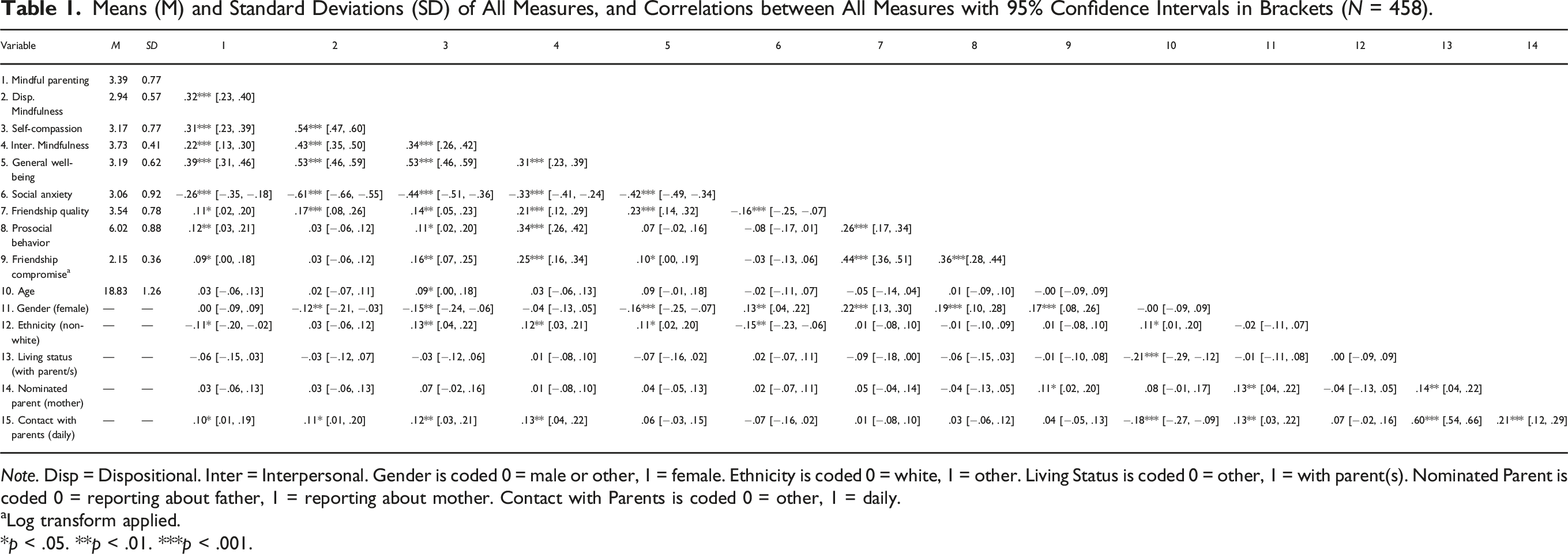
Means (M) and Standard Deviations (SD) of All Measures, and Correlations between All Measures with 95% Confidence Intervals in Brackets (N = 458).
Note. Disp = Dispositional. Inter = Interpersonal. Gender is coded 0 = male or other, 1 = female. Ethnicity is coded 0 = white, 1 = other. Living Status is coded 0 = other, 1 = with parent(s). Nominated Parent is coded 0 = reporting about father, 1 = reporting about mother. Contact with Parents is coded 0 = other, 1 = daily.
aLog transform applied.
*p < .05. **p < .01. ***p < .001.
Correlations of all variables with demographic information (i.e., age, gender, ethnicity, living status, nominated parent, contact with parents) are also shown in Table 1. Age had non-significant associations with most study variables, apart from a weak positive association with self-compassion. Being a female (as opposed to male/other) was associated with lower levels of dispositional mindfulness, self-compassion, and general well-being and a higher level of social anxiety. In contrast, being a female was associated with more positive friendship quality, prosocial behaviors, and friendship compromise. A non-White race/ethnicity (relative to White) was associated with reporting more interpersonal mindfulness, self-compassion, and general well-being, and less mindful parenting and social anxiety. Living with parents (relative to living elsewhere) had non-significant associations with all study variables. Reporting about mother (vs. father) had non-significant associations with all study variables, apart from a weak positive association with friendship compromise. Finally, having daily contacts with one or both parents/caregivers (relative to less frequent contact) had significant positive associations with mindful parenting, dispositional mindfulness, self-compassion, and interpersonal mindfulness.
Dispositional Mindfulness, Self-compassion, and Interpersonal Mindfulness as Mediators
General Well-being and Social Anxiety
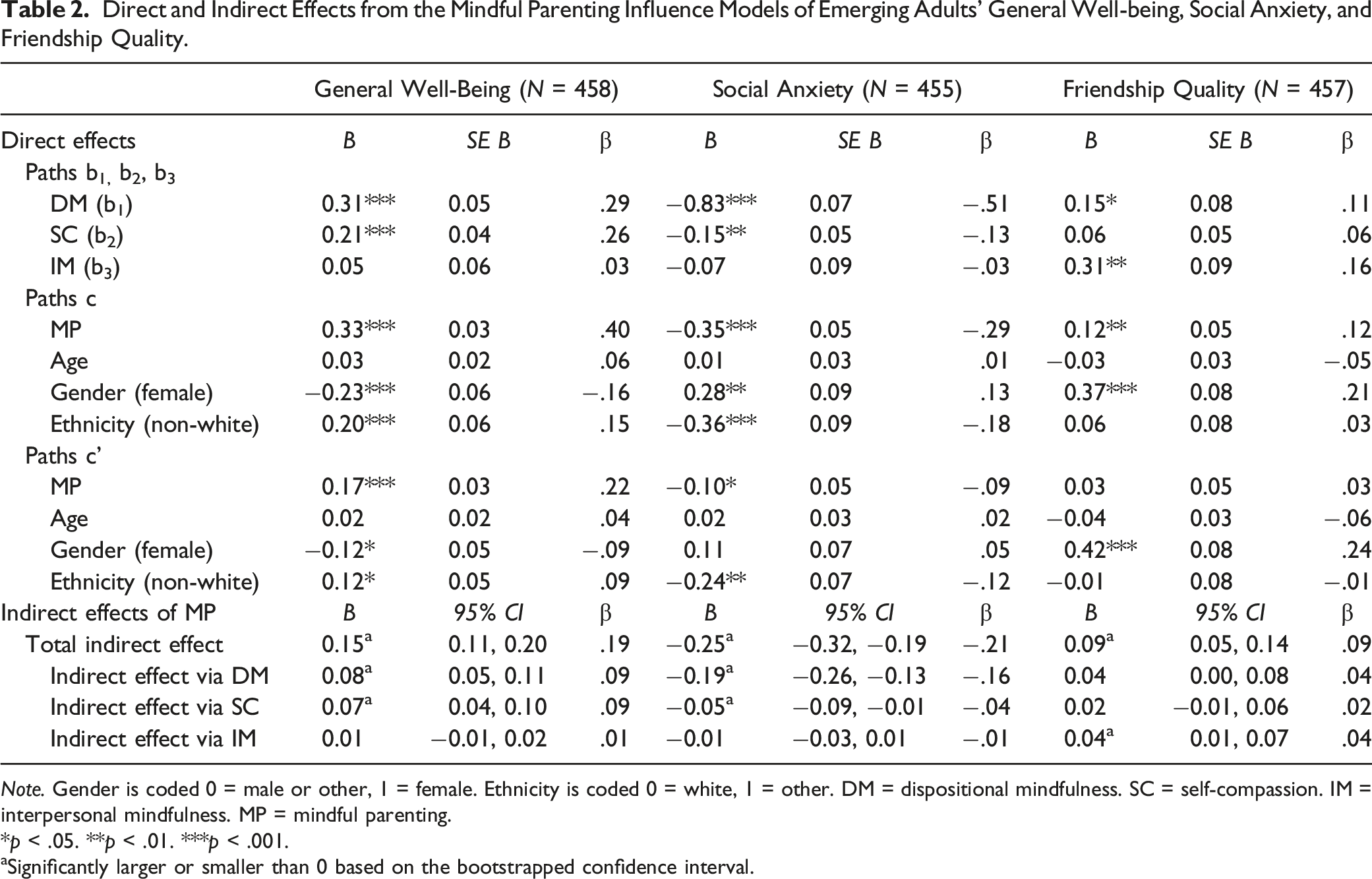
Direct and Indirect Effects from the Mindful Parenting Influence Models of Emerging Adults’ General Well-being, Social Anxiety, and Friendship Quality.
Note. Gender is coded 0 = male or other, 1 = female. Ethnicity is coded 0 = white, 1 = other. DM = dispositional mindfulness. SC = self-compassion. IM = interpersonal mindfulness. MP = mindful parenting.
*p < .05. **p < .01. ***p < .001.
aSignificantly larger or smaller than 0 based on the bootstrapped confidence interval.
Friendship Quality
Table 2 summarizes the direct and indirect effects in the Mindful Parenting Influence Model of friendship quality. One influential outlier was detected and removed, leaving a sample size of 457. The model was significant, F(7, 449) = 8.92, p < .001, and explained 12% the variance. Dispositional and interpersonal mindfulness each had unique significant associations with friendship quality, but the association between self-compassion and friendship quality was not significant. Further, after controlling for the three mediators, mindful parenting was not significantly associated with friendship quality. Females reported better friendship quality than males. The indirect effect from mindful parenting to friendship quality via interpersonal mindfulness was significant, but the indirect effects via dispositional mindfulness and self-compassion were not significant (see Table 2). Thus, H3 was supported for friendship quality.
Prosocial Behavior and Friendship Compromise
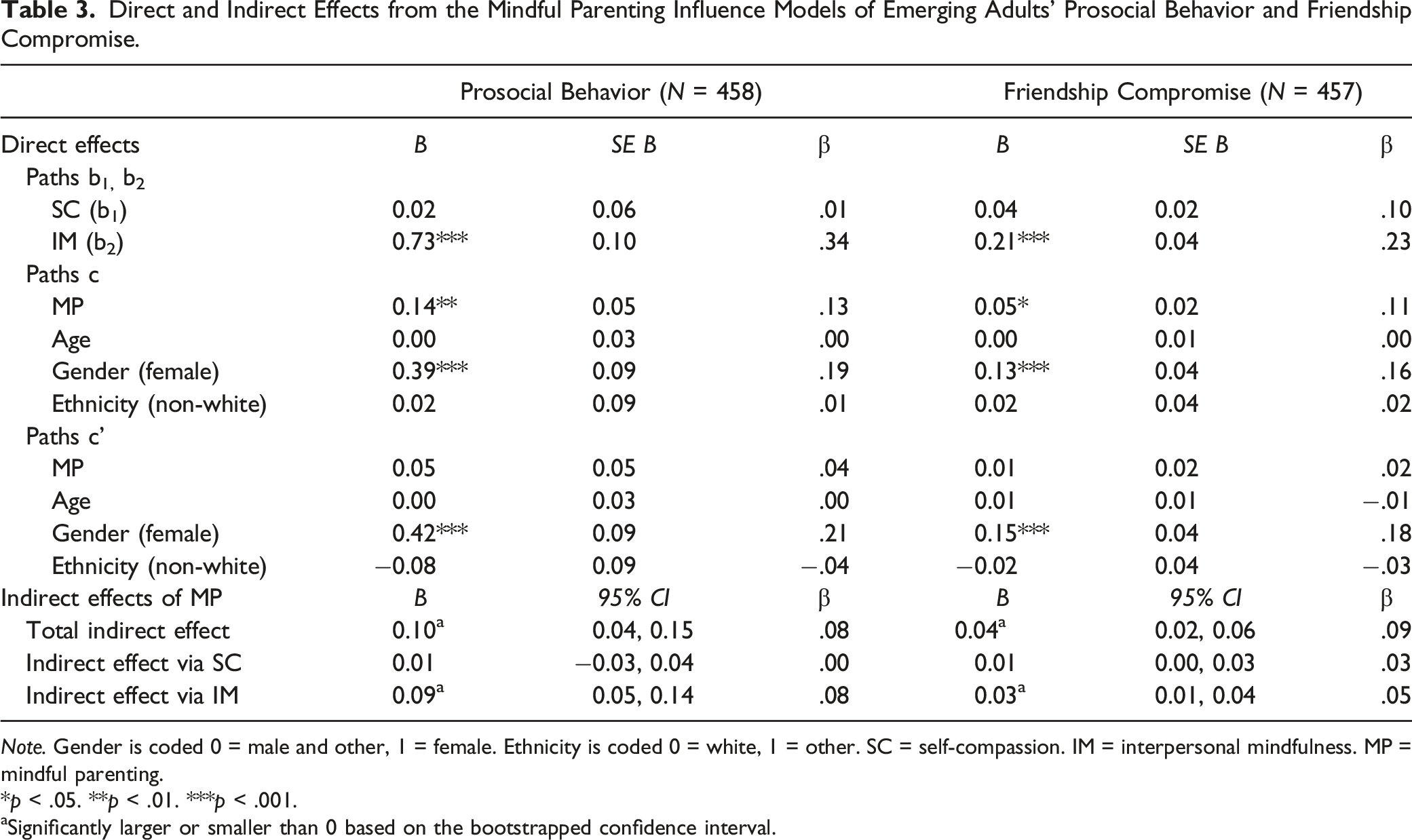
Direct and Indirect Effects from the Mindful Parenting Influence Models of Emerging Adults’ Prosocial Behavior and Friendship Compromise.
Note. Gender is coded 0 = male and other, 1 = female. Ethnicity is coded 0 = white, 1 = other. SC = self-compassion. IM = interpersonal mindfulness. MP = mindful parenting.
*p < .05. **p < .01. ***p < .001.
aSignificantly larger or smaller than 0 based on the bootstrapped confidence interval.
Discussion
The aim of the present study was to test direct and indirect associations outlined in the Mindful Parenting Influence Model of emerging adults’ emotional and social adjustment. Emotional adjustment included better general well-being and lower social anxiety, whereas social adjustment included better friendship quality, prosocial behavior, and friendship compromise. The findings support emerging adults’ current experience of mindful parenting (i.e., relevant to being parented by their own parents or primary caregivers) as a positive correlate of their own dispositional mindfulness, self-compassion, and interpersonal mindfulness. Moreover, mindful parenting had some direct, but mostly indirect associations (via dispositional mindfulness, self-compassion, and interpersonal mindfulness) with emerging adults’ emotional and social adjustment. Most notably when taken together, our multivariate models support the differentiation of an intrapersonal mindful parenting influence pathway from an interpersonal mindful parenting influence pathway to explain adjustment among emerging adults. In other words, in our models, mindful parenting was uniquely indirectly associated with better emotional adjustment (but not social adjustment) via emerging adults’ dispositional mindfulness and self-compassion, whereas mindful parenting was indirectly associated with emerging adults’ better social adjustment (but not emotional adjustment) via emerging adults’ interpersonal mindfulness.
The current research was inspired by the tripartite family influence model of Morris et al. (2007). In their model, children and youth’s emotion regulation develops from more positive parenting practices representative of parents’ emotional responding, modeling, and socialization, with offspring’s development of emotion regulation then providing a bridge to their further emotional and social adjustment over time. Findings from the current study were consistent with the premises of this model, whereby mindful parenting had correlations with emerging adults’ better emotional and social adjustment. Moreover, in multivariate analyses of each measured emotional and social adjustment outcome, mindful parenting was associated both directly and indirectly with both measures of emerging adults’ emotional adjustment (better general well-being and less social anxiety), and only indirectly with emerging adults’ social adjustment (friendship quality, prosocial behavior, and friendship compromise). Overall, as such, there was support for the three proposed mediators of emerging adults’ dispositional mindfulness, self-compassion, and interpersonal mindfulness as mechanisms helping to explain associations between emerging adults’ experience of mindful parenting and their emotional and social adjustment. Furthermore, although the specific associations differed for emotional and social adjustment, the findings were quite similar for the two measures of emotional adjustment and for the three measures of social adjustment.
We found that dispositional mindfulness and interpersonal mindfulness were moderately correlated with each other, but differed in their associations with emerging adults’ emotional as compared to social adjustment measures. These findings extend past research by Pratscher et al. (2018) and Pratscher et al. (2019) who also found significant correlations between measures of dispositional and interpersonal mindfulness and differential effects of dispositional compared to interpersonal mindfulness. In their studies, just as was found here, dispositional mindfulness was uniquely associated with emotional adjustment (depression and anxiety) and, in their multivariate models, interpersonal mindfulness was uniquely associated with relationship quality (friendship quality in Pratscher et al. (2018) and romantic relationship satisfaction and friendship quality in Pratscher et al. (2019)). We extended on this past research to consider 1) how mindful parenting relates to both dispositional and interpersonal mindfulness, 2) the unique additional benefit of self-compassion for emotional adjustment but not social adjustment, and 3) two additional social adjustment outcomes of prosocial behavior and friendship conflict negotiation (specifically, compromise). Overall, evidence is mounting with the current study that dispositional and interpersonal mindfulness covary but have unique associations with emerging adults’ emotional versus social adjustment, respectively.
Consistent with the conceptualization and operationalization of mindful parenting, which integrates intrapersonal and interpersonal skills in parents (Duncan, 2007; Duncan et al., 2009; Kabat-Zinn & Kabat-Zinn, 2014; Moreira et al., 2018), mindful parenting correlated positively with emerging adults’ dispositional (i.e., intrapersonal) and interpersonal mindfulness in the current study. Past research has described how parents with higher levels of listening with full attention to their children (i.e., a dimension of mindful parenting reported by parents), such as by paying attention and not rushing through activities when engaging with their children, relates to a higher level of dispositional mindfulness in youth/emerging adults (aged 12–20 years); mindfulness, in turn, is linked with their more positive emotional adjustment (Moreira et al., 2018; see Ahemaitijiang et al., 2021 for a review). Findings from the current study also show that emerging adults are higher in self-compassion when they report more mindful parenting. This is consistent with previous research that found self-compassion to mediate the association of mindful parenting with youth/emerging adults’ general well-being (Moreira et al., 2018). The authors argued that these associations occur through parent socialization of their children (see research on emotion socialization and coping socialization; e.g., Denham et al., 2000; Dunbar et al., 2017; Eisenberg et al., 2017; Johnson et al., 2017) and through modeling of mindful behaviors, given that interactions with children can model and socialize mindfulness and self-compassion simultaneously. For instance, mindfulness in response to difficult situations will involve observing the moment and choosing to engage in a nonreactive way, which often means noticing feelings in the self and others and encouraging positive self-talk and kindness. Thus, parents who are more present in the moment and less reactive will be more likely to model and coach patience and positive thinking when something goes wrong or they do not meet a goal. Parents who respond to difficulties, setbacks, or disappointments with mindfulness may also be using more self-compassionate words and deeds rather than self-criticism or self-pity, modeling and coaching their children to develop similar mindful and self-compassionate responses in their own lives.
A further finding from the current study is that emerging adults’ perception of their parents’ higher level of mindful parenting is likely to promote higher levels of their own interpersonal mindfulness, perhaps through modeling of social behaviors between parents and their children, which emerging adults could use as a reference when interacting with other people inside and outside their home. However, given the slight differences in findings across studies that have tested models of mindful parenting and youth’s emotional adjustment, future research could attempt to replicate and extend the current study findings using samples from different backgrounds and age groups.
We controlled for age, gender, and race/ethnicity when testing associations in the multivariate models. Age did not correlate with emerging adults’ emotional or social adjustment measures. Young women reported lower well-being, but better friendship quality, prosocial behavior, and friendship compromise compared to young men. Furthermore, emerging adults’ race/ethnicity was a correlate of their emotional adjustment. Those from non-White backgrounds reported better general well-being and lower social anxiety. It is important to note that all the associations described under the current study’s findings were examined after controlling for these demographic differences. In addition, we repeated the five regression models including contact with parents as a fourth covariate, given some weak correlations with our study variables. Adjusting for contacts with parents did not substantially change the results reported here.
Limitations and Future Research Directions
There are five limitations of the present study methodology that could be addressed in future research. First, the sample was diverse in sociocultural background, but the participants were all residing in Australia and aged 17–21 years, with 74% young women. Most notably, mindfulness might be conceptualized (i.e., defined or understood) differently in a Western versus Eastern culture, with the latter placing more emphasis on body sensations (e.g., breathing) to create a calm mental state (Carmody, 2014). Evidence of some differences in research findings has also been noted between these two cultures in relation to mindful parenting (Ahemaitijiang et al., 2021). As such, some of the results obtained here might not be generalizable to other racial/ethnic or sociocultural groups. Second, although parents still play significant roles in the lives of older adolescents and emerging adults (Lindell et al., 2017; Parra et al., 2019), with many still living with their parents, attempting to explain social-emotional well-being in emerging adults is not simple, as their adjustment will be influenced by more than just the parenting that they have experienced. For example, negative life events, educational stress, and parental psychopathology are just some of the important influences that were not considered here.
Third, all constructs were measured by self-report from emerging adults, which could be improved upon in future research by drawing on multiple reporters. For example, parent report of mindful parenting would be an important extension, given some evidence showing low-to-moderate correspondence between parent and child’s reports of family functioning (De Los Reyes & Ohannessian, 2016). However, findings of studies that collected parent reports of their own mindful parenting (e.g., Moreira et al., 2018) reported similar associations to those reported here (e.g., self-compassion mediated the link between parent-report of mindful parenting and youth/emerging adults’ general wellbeing). Regarding our use of self-report to measure emerging adults’ experience of mindful parenting in particular, the items focused on the present time, but emerging adults also have had a long history of parenting experiences, which could mean reports were based on some accumulation of parenting experiences over time. Fourth, a further limitation to mention is the use of a cross-sectional design, which could limit the interpretation of the present findings. As far as we know, no previous study has tested a similar model to the one tested here using a longitudinal design. Our findings suggest that longitudinal research is now needed to identify how changes in emerging adults’ reports of their experience of mindful parenting could explain changes in their self-regulation and emotional or social adjustment over time.
Lastly, a final limitation in this study is that most participants reported about their mothers as opposed to their fathers (i.e., 83% vs. 17%) and we found mostly no differences when reports about mothers were compared to reports about fathers, apart from slightly better compromise skills in emerging adults who reported about their mothers compared to their fathers. It should be noted that the significance of this finding might be limited by the small proportion of participants who reported about their fathers compared to their mothers; nevertheless, it was still worth noting this here. Past research shows gender differences in some dimensions of mindful parenting and how they may be related to parent-child relationship quality and behavioral outcomes in youth (Coatsworth et al., 2015), with mothers reporting higher levels of mindful parenting compared to fathers (Medeiros et al., 2016). This is consistent with other research on parenting practices comparing mothers to fathers and finding that practices can differ and might have different consequences for youths’ social outcomes (Flynn et al., 2018). Consequently, future research could benefit from investigating whether the associations of mindful parenting with emerging adults’ mindfulness and adjustment differ when the focus is on mindful behaviors of mothers compared to fathers. Such research will require data collection from emerging adults about their mothers and fathers separately.
Conclusion
The current research is one of first to investigate how emerging adults’ current experience of mindful parenting might be linked with their emotional and social adjustment either directly or indirectly via three interlinked skills of dispositional mindfulness, self-compassion, and interpersonal mindfulness. Each of these three skills played an important role by linking mindful parenting to measures of emerging adults’ emotional and social adjustment via unique indirect pathways. Overall, although firmer evidence is needed from longitudinal research, the findings suggest that positive mindful parenting practices are foundational for emerging adults’ development of dispositional mindfulness and self-compassion, with these better explaining emerging adults’ emotional adjustment, while at the same time, these same positive mindful parenting practices also support emerging adults’ interpersonal mindfulness, with this better explaining their social adjustment. The findings of the present study will make important contributions to theory and models, along with practice, by informing the design of mental health interventions and prevention programs within the areas of parenting, emerging adults’ emotion regulation, and their overall personal adjustment.
Supplemental Material
Supplemental Material - Emerging Adults’ Experience of Mindful Parenting: Distinct Associations With Their Dispositional and Interpersonal Mindfulness, Self-Compassion, and Adjustment
Supplemental Material for Emerging Adults’ Experience of Mindful Parenting: Distinct Associations With Their Dispositional and Interpersonal Mindfulness, Self-Compassion, and Adjustment by Samira Mera, Melanie J. Zimmer-Gembeck, and Elizabeth Conlon in Emerging Adulthood
Footnotes
Declaration of Conflicting Interests
The author(s) declared no potential conflicts of interest with respect to the research, authorship, and/or publication of this article.
Funding
The author(s) disclosed receipt of the following financial support for the research, authorship, and/or publication of this article: This study is supported by Australian Government Research Training Program Stipend Scholarship (Candidate No. 000000029579).
Transparency and Openness Statement
The raw data, analysis code, and materials used in this study are not openly available but are available upon request to the corresponding author. No aspects of the study were pre-registered.

Supplemental Material
Supplemental material for this article is available online.
Author Biographies
References
Supplementary Material
Please find the following supplemental material available below.
For Open Access articles published under a Creative Commons License, all supplemental material carries the same license as the article it is associated with.
For non-Open Access articles published, all supplemental material carries a non-exclusive license, and permission requests for re-use of supplemental material or any part of supplemental material shall be sent directly to the copyright owner as specified in the copyright notice associated with the article.
