



Abstract
This study explores relational skills among young adults within a gender-based analytical framework. Gender norms remain deeply embedded in the socialization process, despite being widely debated in the current social context. Five focus groups were conducted with 30 participants aged 18 to 25 (20 cisgender women, 10 cisgender men). Thematic analysis identified three themes: (1) Relational blueprints and the gap between knowing and doing show exposure led participants to value dialogue, authenticity, and emotional openness as ideals of healthy relationships and raised awareness of gendered conditioning. However, awareness often did not undo ingrained habits, leaving tension between ideals and practice. (2) Gendered relational skills: between struggle and relational strength reveal that women reported fatigue from expectations to adapt and maintain harmony, while men described pressure to initiate and show confidence. At the same time, emotional life and vulnerability were increasingly valued as qualities to normalize, including for men. (3) Contexts that support or hinder skills highlight ambivalence in families and schools, which reproduce traditional norms yet promote egalitarian messages, close relationships were seen as safer spaces to practice skills less encouraged by gender norms, such as assertiveness and emotional openness. Overall, findings call for research on promoting more flexible relational models and stronger emotional regulation skills among young adults.
Social relationships have a major influence on the well-being, health, and development of individuals throughout their lives. Indeed, healthy social relationships reduce the risk of disease (Umberson & Montez, 2010), increase life expectancy (Holt-Lunstad et al., 2010), and act as a protective factor against mental health difficulties such as depression (Barger et al., 2014). From a developmental perspective, relationships play a decisive role in influencing the growth and maturation of people. During childhood, the quality of the relationship with parents will influence socio-emotional, cognitive, and neurobiological development (Frosch et al., 2021). During the transition to adulthood, parental influence diminishes, and romantic relationships and friendships take on greater importance (Arnett, 2007) and contribute to the psycho-social development of individuals and to the construction of their identity (Tanner et al., 2008). This developmental shift is part of the broader process of socialization, which refers to the way individuals internalize norms, values, and behaviors through interactions with significant others (Parsons & Bales, 1955). Socialization unfolds throughout life, but emerging adulthood (the period following adolescence and into one’s twenties) represents a particularly important stage. At this time, young adults acquire greater autonomy and encounter new opportunities for exploration, especially in the relational domain (Arnett, 2014). These experiences not only shape self-understanding and clarify life projects but also influence the acquisition of essential relationship skills that are foundational for adult life (Nelson, 2021).
The skills involved in relationships can be conceptualized under three categories: social, cognitive, and emotional skills (WHO, 2003). Social skills refer to the ability to communicate and collaborate with others, to show empathy, and to negotiate; cognitive skills relate to decision-making and critical thinking; and emotional skills involve self-esteem and self-awareness, taking responsibility, and emotional regulation. These skills have been shown to improve well-being (Segrin et al., 2007), self-esteem (Crocker & Luhtanen, 2003), and educational success (Caemmerer & Keith, 2015). When these skills are lacking, individuals can show greater psychosocial vulnerability, through the presence of stress (Segrin, 2019), depression (Hames et al., 2013), anxiety (Obradović & Hipwell, 2010), or even violent behavior (Fortin et al., 2021).
It is worth noting that many studies and psycho-educational programs have targeted the development of skills during childhood and adolescence, but fewer have focused on the emerging adult population. However the transition into adulthood brings many challenges, such as leaving family home, choosing a career, and entering more serious relationships (Boisvert et al., 2023; Menard & Vergnat, 2020). Also, significant brain remodeling is still underway and may influence some areas of competence, such as decision-making or emotional regulation (Bennett & Baird, 2005). Young adults are at the heart of a profound identity-building process, which may provide an ultimate opportunity to guide individuals toward satisfying relationships (Tanner et al., 2008).
Previous Research on Perception of Relational Skills During Emerging Adulthood
Previous researchers have highlighted several core skills that are required in relationship development and can vary according to relational contexts (family, couple, friendships, groups). In emerging adulthood, young adults spend much of their time with friends and partners (Smetana et al., 2015; Tanner et al., 2008), suggesting that these relational contexts are crucial. Parental figures still often provide emotional and financial support, helping their children to gradually achieve autonomy, but they are often no longer the main sources of influence in the development of psycho-social skills (Arnett, 2007).
Within the context of romantic relationships, Finkel et al. (2017) highlighted the importance of skills such as positive perception of the relationship, constructive conflict management, ability to meet a partner’s needs, and maintain the relationship through difficulties. In a review about psycho-educational programs targeting adolescent couple relationships, Barlow et al. (2018) identified 23 skills and the most recurrent of these were communication, recognizing patterns in relationships, understanding personal values, and conflict resolution.
Several researchers have also examined the context of friendships and the skills more specific to this field involve being a stimulating companion, initiating relationships, assertively refusing requests, and communicating personal information (Buhrmester et al., 1988; Coroiu et al., 2015; Mendelson & Aboud, 1999). In a group context, being appreciated by peers and developing a sense of belonging involves identifying your interests and values to build affiliation (Hopmeyer et al., 2017).
From the qualitative studies reviewed here, two main contributions can be identified. First, they provide insights into the skills that individuals themselves consider important and useful for their relationships. Barlow et al. (2018) asked adolescents to rank a list of couple-related skills drawn from the literature, with respect and open communication systematically emerging as most important. Boys emphasized showing care, while girls highlighted the ability to recognize signs of an abusive relationship. Similarly, Patel et al. (2016), in a study with adolescents suffering from eating disorders, found that group integration, behavioral regulation, adaptive communication, and managing criticism were central to their social functioning. Second, qualitative studies also provide valuable insights into the issues surrounding the development of relational competencies, such as the role of context and social norms. Setty and Dobson (2023), in interviews with emerging adults about their couple relationships during the Covid-19 lockdown, highlighted the importance for young adults of recognizing unhealthy dynamics in their relationships to avoid becoming trapped in them. At the same time, romantic relationships also served as a learning ground, allowing them to develop key skills such as communication, emotional sharing, and openness about insecurities.
In sum, past research has shown that a wide range of skills are involved in building and maintaining relationships, shaped by different contexts (family, couples, friendships, groups) as well as by social norms. Core competencies include the ability to communicate effectively, manage conflicts constructively, show care and respect, and build trust and belonging across different relational settings. However, existing studies present certain limitations: they often focus on a specific psychological disorder (Patel et al., 2016) or on only one type of relationship (such as romantic couples (Barlow et al., 2018; Setty & Dobson, 2023). In addition, we still know little about the broader issues surrounding these competencies, particularly how gender-related perspectives shape their development and expression.
The Influence of Gender in Relationship Skills Development
Within the development of relationship skills, gender exerts a major influence because it is deeply embedded in the structure of culture and society. Through processes of gendered socialization (Parsons & Bales, 1955; Risman, 2018), individuals internalize gender stereotypes that prescribe different expectations for men and women: women are typically framed as caring, nurturing, and emotionally expressive, while men are expected to be independent, agentic, dominant, or less emotionally vulnerable (Risman, 2018). These stereotypes shape orientations toward social roles from early education, limiting self-representations and reinforcing gender inequalities (Papyrina et al., 2021; Risman, 2018). This dynamic is well explained by Social Role Theory (Eagly, 1987), which defines social roles as shared cultural expectations about appropriate behaviors for individuals according to their socially identified gender. These roles function as social pressures, rewarding conformity and sanctioning deviation, while also being internalized as gender identities that orient how people understand themselves and act in everyday interactions. In this way, gender roles operate simultaneously at the collective and individual levels, sustaining inequalities by shaping both external norms and internal dispositions.
Risman (2018) argues that reducing gender inequalities requires intervening in socialization processes by loosening the normative expectations that confine individuals to rigid masculine or feminine behaviors. Viewing gender as a structure means recognizing that individuals are not simply products of socialization but also exercise agency, allowing them to transform and resist stereotypes over time. This perspective aligns with Edwards’ (2022) longitudinal study, which traced men’s identity development from their late adolescence into adulthood. The participants described how their masculinities, initially shaped by hegemonic expectations of performance, virility, and dominance, gradually shifted through relational experiences, reflexivity, and a conscious distancing from imposed “masks”. These trajectories suggest that emancipation from gender norms can begin during the transition to adulthood but also remains an ongoing process that unfolds across the life course.
In recent years, the binary organization of society and the gender inequalities have been frequently disseminated and debated in the media (Guérandel et al., 2022). Following social movements (such as #MeToo), and the popularization of gender inequality issues supported by militant activism on social networks, there has been an increase in interest in gender issues (Lee & Murdie, 2021). This phenomenon is part of a digitalization of activism (Jouët, 2022) and a more global and political trend to support inclusivity for disadvantaged groups (Bouquet, 2015). This raises the question of how such media coverage may influence younger generations, particularly in shaping their behaviors and understandings of gender dynamics in relationships, and notably within more conservative cultural and structural contexts. In Switzerland, the context of this study, gender relations are shaped by a hybrid welfare state that combines liberal and conservative features, with family policies often described as limited and insufficiently supportive of egalitarian arrangements (Bornatici & Zinn, 2025). Gender norms are more traditional than in many European contexts and can be characterized as “egalitarian essentialism”: a discourse that endorses gender equality in principle while maintaining beliefs in natural differences between men and women, especially regarding motherhood (Bornatici & Zinn, 2025). Among younger Swiss generations, some authors have noted that people born after 1990 tend to show less egalitarian attitudes than older cohorts, suggesting a stagnation or even a reversal in support for gender equality (Bornatici et al., 2020). Within this social context, Switzerland provides a relevant case to explore possible tensions between media-driven movements and traditional gender norms, and to examine how young generations evolve amid these influences.
The Present Study
Relationship skills play an important role in the quality of relationships across the life course. While many studies have focused on specific skills, such as empathy, relationship skills have been examined more broadly primarily in the context of developing educational programs. However, these programs are aimed at children and adolescents (Moy & Hazen, 2018) or people with specific mental health or developmental difficulties (e.g., autism, eating disorders, ADHD) (van Loon et al., 2023). When programs are aimed at young adults, they focus mainly on skills in couple relationships (Simpson et al., 2018), perhaps downplaying the importance of other contexts, such as friendships. Moreover, young adults’ expectations regarding relationship skills have not been systematically examined, raising questions about the relevance of the skills typically prioritized in research and educational programs. These programs often define “healthy” versus “unhealthy” relationships (Simpson et al., 2018), yet such definitions rest on normative paradigms that may vary across social contexts and according to individuals’ expectations. Finally, the gender dimension is often absent from qualitative studies and existing programs. Consequently, to better understand the relational needs and difficulties of this population, we interviewed young adults (N = 30) using a focus group method to highlight skills they consider significant in relationships, relational contexts that are important to them, and their perception of gender influence on relationship skills. We sought to understand how, in a context of popularization of gender issues, good relationships and relationship skills are perceived, understood, and potentially reshaped by this population.
Method
Study Design and Participants
The Demographic Characteristics of the Participants
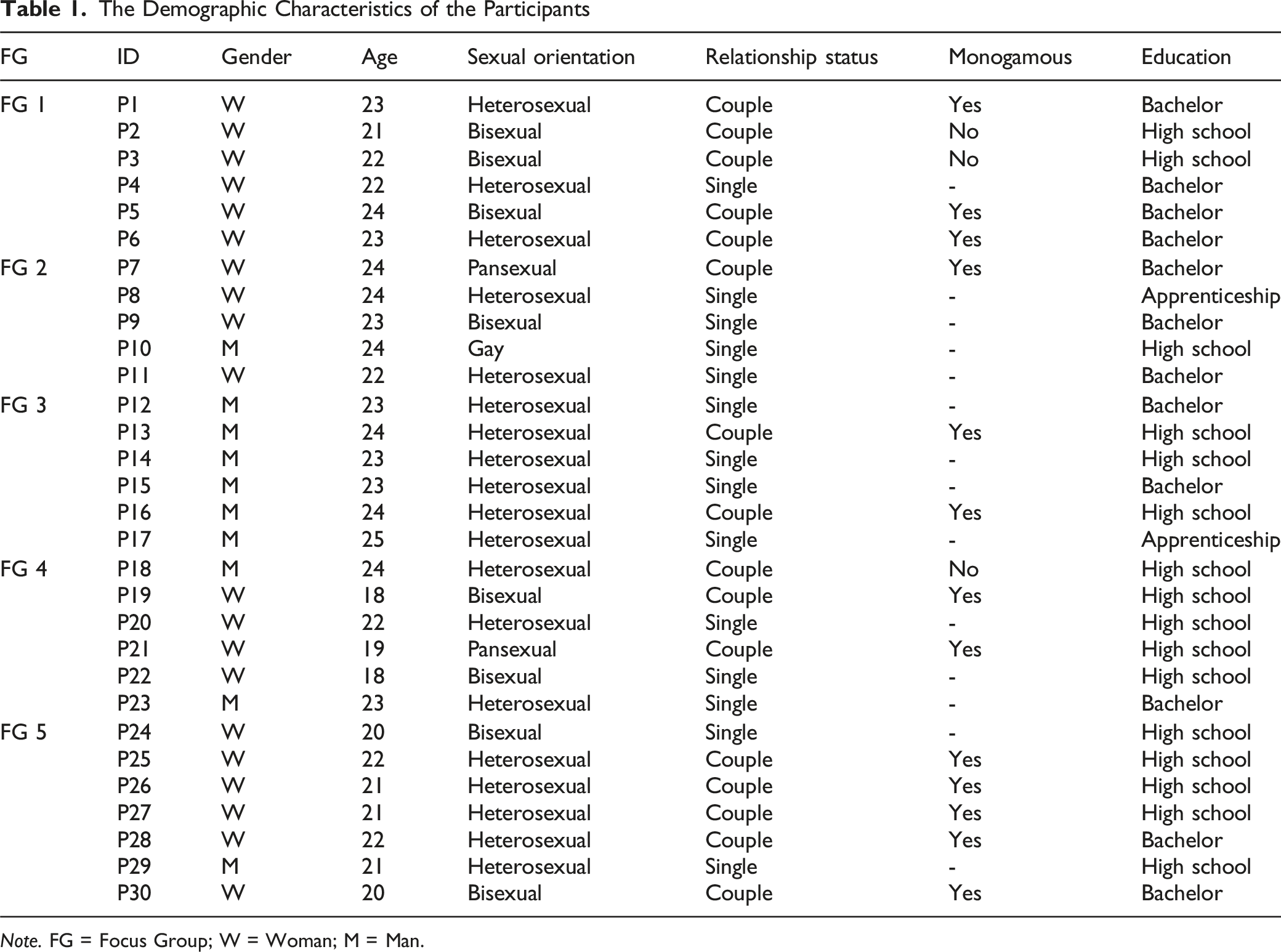
Note. FG = Focus Group; W = Woman; M = Man.
Procedure
Qualitative approach provides a deep and rich understanding of lived experiences and this study was part of a wider collection of data aimed at providing a better understanding of healthy relationships among young adults. We chose to use focus groups because they allow for dynamic discussions that stimulate interaction between participants (Chauhan & Sehgal, 2022). Unlike interviews, the data collected in a group emerges from a social context and therefore reflects collective positions rather than isolated opinions. This gives us access to cultural models, norms, and common sense (Haegel, 2005).
This study was approved by the Ethics Committee of the University of Lausanne in June 2023. Participants, aged 18–25 and fluent in French, first completed a socio-demographic questionnaire on Qualtrics (2023) after which they were invited to join one of five different groups. To promote diversity and richness in group dynamics, various configurations were used: two groups were made up of either only women or only men (single-gender groups) and the other three groups were mixed, with a majority being women. The focus groups were conducted in a research laboratory at the university and were videotaped for later transcription.
Two master’s students in psychology facilitated the discussions using a pre-prepared framework of guiding questions designed to explore how participants define and experience good relationships, and more broadly, to better understand relational competencies through dimensions such as the influence of gender, attitudes toward consent, and the development of relational skills, including through emerging technologies. The questions were collaboratively developed and refined by the research team during working sessions to ensure conceptual clarity and coherence across these dimensions. In this article, we focus specifically on the gender dimension and therefore analyzed only the questions related to this aspect: (1) When the term “good relationship” is mentioned, what comes to mind? What does a good relationship look like to you? (2) How do you think being a man or a woman influenced your social, personal, and professional relationships? (3) Can you give an example of a situation where men/women have particularly good relationships? (4) As a man/woman, what behaviors or attitudes would you like to have good relationships. These questions were designed to encourage participants to reflect on how gender norms and expectations shape their relational experiences, and how these dynamics may foster or hinder the development of relational competencies. The complete interview guide, including all questions from the framework, is available at the following link: https://osf.io/yv74q. The sessions lasted about an hour and a half, and all participants received a 30 CHF supermarket gift voucher. Following the sessions, recordings were securely uploaded to an encrypted server. They were then meticulously transcribed first by the artificial intelligence software psifx (Rochette et al., 2025) and then corrected by the two master students, anonymized to ensure participant confidentiality, and subsequently deleted.
Data Analysis
The focus group transcripts were analyzed by the first author using MAXQDA software, following reflexive thematic analysis method (Braun & Clarke, 2021). An inductive approach to coding was utilized, meaning codes were identified from the data without any prior theoretical framework. The following process draws on the phases proposed by (Nowell et al., 2017) to support trustworthiness. First, during familiarization with the data, transcripts were read carefully, and salient passages were annotated. Initial codes were then generated, which were at first mainly descriptive, and were subsequently refined through more in-depth analysis. The coding framework aimed to capture the broader patterns emerging from the data, with particular attention given to statements that raised tensions, dilemmas, or introduced unexpected perspectives offering new insights. The search for themes involved reorganizing the initial codes and reflecting on their hierarchy, followed by a more interpretative reading to capture their deeper meaning. Several intermediate versions of the coding framework were saved to document the evolution of the analysis. This iterative process progressively refined the thematic structure, with some subthemes being merged or elevated to standalone themes (for example, the theme of fatigue among women from constantly having to adapt, which was initially coded under adaptive skills). When classification was difficult, statements were provisionally coded, reassessed at the end, and either integrated into an appropriate theme or excluded. Finally, a full review of the transcripts and coding was carried out to refine the labels, reposition certain statements, and ensure the internal coherence of each theme. The final coding was then cross-checked against the research questions to ensure that the data retained contributed to the production of relevant analytical answers.
Both researchers identify as White European women with academic backgrounds in psychology and a shared interest in gender relations and couple dynamics. This interest is grounded in their broader commitment to understanding how gendered power structures shape relational experiences. They approached the research with a broadly interpretivist and feminist orientation, recognizing that their social identities, values, and prior academic engagement with relationship and gender research shaped both the research design and analytical process. Their shared positionality may have sensitized them to certain dynamics in participants’ narratives, particularly around emotional labor, communication, and gendered expectations in intimate relationships. Throughout the analysis, the researchers engaged in ongoing reflexive dialogue to question their assumptions, consider alternative interpretations, and remain attuned to how their own perspectives influenced theme development.
This study was not preregistered. All transcripts were coded in their original language in French. All quotes in the manuscript were translated using ChatGPT (OpenAI, 2025) and verified by two reviewers who speak both English and French fluently. The quotes in the original language and their respective translations can be found on the OSF project page: https://osf.io/yv74q.
Results
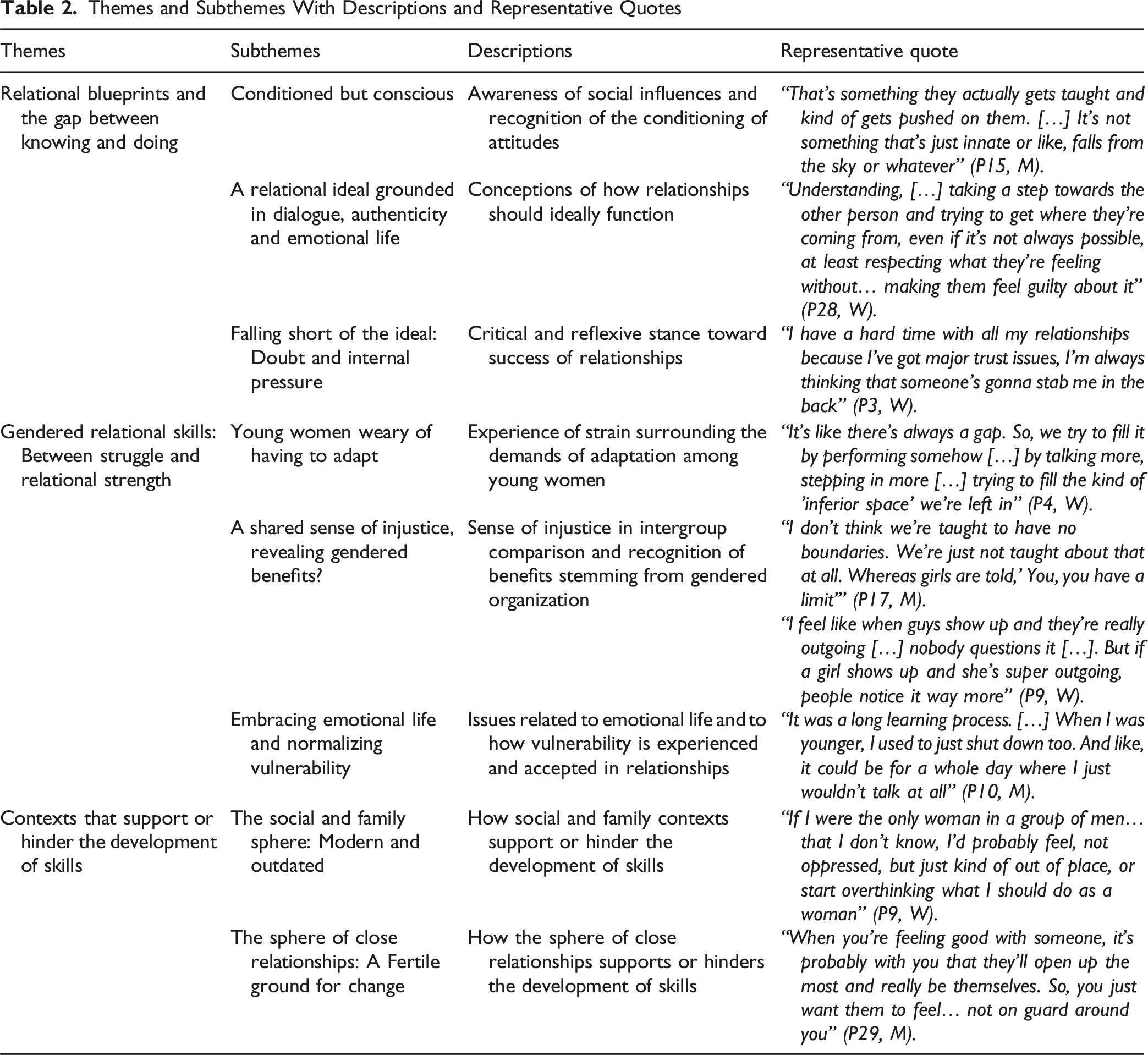
Themes and Subthemes With Descriptions and Representative Quotes
Relational Blueprints and the Gap Between Knowing and Doing
Participants’ views on relationships were shaped by both inherited social norms and newer psychosocial knowledge. Across the focus groups, they used terms like “communication,” “authenticity,” and “socialization” to describe what makes a “good” relationship, reflecting not only the academic background of some but also a wider cultural shift shaped by therapeutic and egalitarian discourse. Within this frame, they showed awareness of how gendered socialization had shaped their behaviors and expectations, often questioning its effects, while also expressing an aspirational model of relationships centered on openness, emotional sharing, and mutual respect. Yet many described a persistent tension between these ideals and daily interactions, as ingrained habits, mistrust, or structural barriers often made them hard to realize.
This theme highlights the dissonance between ideals and practices through three intertwined dynamics. Participants showed growing reflexivity about how (1) gendered norms had shaped their behaviors, while recognizing that awareness alone did not always bring change. At the same time, they described (2) an aspirational vision of relationships built on dialogue, authenticity, and emotional openness, ideals shaped by psychosocial discourse but also meaningful at a personal level. However, when these aspirations confronted everyday interactions, participants often reported (3) doubt and internal pressure, sensing a gap between what they wished for and what actually took place. Together, these tensions show how psychosocial knowledge reshapes young adults’ expectations of intimacy but also reveals the difficulty of turning them into lived realities.
Conditioned But Conscious
Participants showed a clear awareness of how socialization shapes gender roles. Many used terms like “stereotypes” or “being socialized” to explain their own experiences, reflecting a direct appropriation of this vocabulary. This was especially visible among those studying psychology, who often referred to these concepts explicitly. Similar ideas were also expressed by participants outside this field: even without using technical terms, they referred to the broader influence of the environment and social expectations in shaping attitudes and behaviors. One participant captured the ambiguity of these pressures: “these things that society expects from us, whether we like them or not, we see them everywhere around us, we’ve been taught from a very young age. Sometimes it feels like we should follow them, sometimes we think it’s not that important, that we don’t follow them, or that we want to be different” (P18, M). Others explicitly acknowledged their own conformity to these expectations: “consciously or unconsciously, I conform to what is expected of me to avoid discomfort in interactions” (P4, W). These reflections highlight how young adults recognize the weight of social norms, even when they cannot easily escape them. Together, these accounts suggest that psychosocial knowledge encourages self-reflection, but it does not erase the pressures of gendered expectations. This tension reappears in the way participants talk about their ideals for relationships.
A Relational Ideal Grounded in Dialogue, Authenticity and Emotional Life
When describing what makes a “good relationship,” many emphasized open communication, authenticity, and emotional sharing, values that mirror psychosocial teachings. Communication, for instance, was seen as a tool for preventing misunderstandings and avoiding relational toxicity: “people don’t listen to each other enough… there are often misunderstandings that lead more toward toxic relationships, either in friendship or in more intimate contexts” (P23, M). Intimacy was described as “being able to be yourself, to express your needs and insecurities, and to feel that the other person is receptive” (P19, W). For some, relationships were seen almost like a set of skills to be practiced, while for others, they were based more on intuition and spontaneous connection. Taken together, these views show how young adults mix learned models of healthy relationships with more personal, emotional understandings. However, holding onto such high ideals also brought doubt and uncertainty, which shaped how they navigated intimacy.
Falling Short of the Ideal: Doubt and Internal Pressure
Despite valuing honesty and openness, participants often spoke about caution and mistrust. They worried about overlooking problems or being misled. One woman explained that “the trap is to think that a good relationship is one that goes well […]. What leads to a bad relationship is chasing the ideal that everything has to be fine. So even if it means denying what’s going wrong, we try to keep up with appearances. Whereas a good relationship is also […] pointing out what’s not working” (P4, W). Others described fears of betrayal or manipulation, showing how relationships can be spaces of both hope and vulnerability. For some, exposure to relational knowledge could reinforce these doubts, prompting more critical reflection on questions of trust and the uncertainties that shape intimacy. These accounts suggest that relational competence is not only about communication or authenticity, but also about navigating trust and doubt, especially when greater awareness makes these tensions more apparent.
Gendered Relational Skills: Between Struggle and Relational Strength
This theme explores how relational skills are deeply entangled with gender norms, producing both constraints and resources in young adults’ lives. Embedded in socialization and reinforced through everyday interactions, these norms condition not only which relational competences are expected from women and men, but also how individuals feel able to express them. As noted previously, awareness of these normative influences did not automatically translate into different practices. The gap between recognizing norms and acting otherwise often created ambivalence, emotional strain, and inner tensions. For young women, this took the form of (1) fatigue from constant adaptation and efforts to free themselves, often paired with a (2) sense of injustice when comparing their more restrictive lives to men’s. Men also reported injustice, especially in dating, as masculinity norms constrained their behavior, though both genders noted that such norms could also carry benefits. Finally, (3) investment in emotional life and the normalization of vulnerability emerged as ways to rethink relationships beyond gender norms: while vulnerability was especially meaningful for men, emotional regulation was valued by both, helping to make relationships calmer and more fulfilling.
Young Women Weary of Having to Adapt
Women often spoke of the heavy emotional and mental load linked to keeping relationships smooth and harmonious. They felt assigned to roles of care and adaptation, which many experienced as tiring and even demeaning. One woman noted that “a lot of things are projected onto us […] a bit docile. […] We end up shaping ourselves around what is expected of us […] we’re assigned a lot of emotional traits, or qualities like tenderness and gentleness […] all these things that feel a bit soft, […] malleable” (P4, W). Others described this effort as a form of self-erasure: “it’s really about prioritizing the other person, putting them on a pedestal, and telling yourself, ‘Well, I don’t exist, and that’s it.’ And I really regret that” (P21, W). This acceptance can also be linked to the value placed on sacrifice, which can paradoxically bring a sense of self-worth by showing that one is a caring and moral person. At the same time, some women spoke about the fear of losing relationships if they resisted these expectations, describing anxiety about being isolated or left without support. These fears sometimes led them to go along with existing relational patterns rather than risk losing the relationship altogether.
These accounts suggest that what is often described as women’s “relational competence” is not only a personal skill but also a response to repeated social pressures. The very interactions that demand empathy and adaptability also reinforce the expectation that women should carry responsibility for relational harmony. At the heart of this dynamic lies a contradiction: women are encouraged to develop strong skills of listening, care, and support for others, but because these skills are socially imposed, they cannot be fully directed toward themselves. If they were, it would mean setting limits, asserting needs, or refusing constant availability, precisely the behaviors that conflict with the roles assigned to them. Relational competence therefore operates in a double register: it equips women with valuable resources for sustaining others, while at the same time constraining their ability to use those resources for their own well-being.
A Shared Sense of Injustice, Revealing Gendered Benefits?
Participants also spoke of injustice, often through direct comparisons between women’s and men’s lives. These pressures felt even heavier when seen through the lens of inequality: realizing that not everyone is treated the same way added an extra layer of frustration and suffering. In this context, women notably highlighted the accumulation of expectations that weighed on them and followed them across different social arenas. As one explained: “For boys, it’s like ‘it’s fine.’ For us, you have to be good at everything, […] in romantic relationships, […] take care of the kids […] a full-time job, […] friends, […] having all these roles at the same time and doing each of them perfectly” (P3, W). Another woman highlighted the unequal weight of this constant self-monitoring and mental load: “I ask myself three thousand questions. After doing something, I still think about it for three days and feel guilty. Whereas a second later, they don’t care” (P11, W). This illustrates how the tendency to overanalyze, to constantly monitor oneself, and to feel responsible creates a heavy burden for women. The resulting sense of injustice also revealed an underlying feeling of powerlessness. Participants felt disadvantaged, aware of the imbalance yet unable to change it. This sense of ‘defeat’ could deepen their distress, as accepting unequal dynamics in relationships often appeared to be the only possible option, making the experience of injustice inseparable from resignation.
Men were often described as less affected by this dynamic, moving on more quickly without analyzing their behavior or dwelling on mistakes. However, they also described pressures, particularly in dating, where the first move was always expected from them: “carrying the burden that everything has to come from you. […] The first move has to come from you. I don’t know many guys who get hit on by girls in clubs” (P16, M). The expectation to take the first step was described not only as initiating contact and gaining access to potential partners, but also as a way of reassuring oneself that one could show confidence. For some men, this pressure was particularly difficult, especially when they felt they did not live up to masculine ideals, particularly in terms of charisma or self-control. Success in dating was not only about forming a connection, but also about confirming the ability to take initiative, to show leadership, and to live up to the social expectations tied to masculinity.
While often felt as a burden, participants’ sense of injustice also showed how gendered roles can offer subtle advantages to the other group. Men, for example, were seen as having greater access to women’s emotional support and a strong sense of belonging in male peer groups, whose solidarity was reinforced by women’s exclusion. In dating, women were less exposed to rejection, since men were expected to initiate contact. Such examples illustrate how unequal roles can both constrain and protect, granting one group comfort at the other’s expense. Overall, participants suggested that men benefited more, which may help explain why traditional norms persist: even when seen as unfair, their advantages can discourage change.
Embracing Emotional Life and Normalizing Vulnerability
A third pattern that emerged across the focus groups was the growing importance placed on emotional life and the role of vulnerability in relationships. Participants described how gendered expectations often left them feeling emotionally exposed, particularly when facing unequal demands or pressure to conform. Vulnerability was seen not only as a personal response but also as shaped by social norms. For men, showing it was discouraged as a sign of weakness, while for women it was more accepted but tied to expectations of care and self-sacrifice.
Despite these constraints, participants described vulnerability as more than a sign of fragility. It was seen as a relational strength, especially when expressed in safe and supportive contexts. Women highlighted how close female friendships offered space to share openly, supported by mutual listening and care. Men also acknowledged the value of emotional openness but emphasized the obstacles they faced, particularly in male peer groups. One man reflected, “with male friends, it’s very hard to approach the emotional side. I might have one or two friends with whom I can talk about it” (P23, M). Another linked this hesitation to the fear of rejection, noting, “what is more frightening than being rejected? We need to have this sense of belonging” (P16, M). These reflections suggest that while many young adults aspire to greater emotional honesty, social norms around masculinity continue to limit when and how vulnerability can be expressed. Still, participants described emotional openness as a way to build deeper connections and challenge restrictive gender roles in their relationships.
Recognizing emotional needs required a degree of vulnerability but also highlighted the need for emotional regulation as a foundation for healthy relationships and personal well-being. Regulation allows emotions to be expressed without them becoming overwhelming, or on the contrary, completely disconnected from one’s feelings, while vulnerability creates the openness needed for trust and intimacy. Some women described emotional regulation strategies that were not always effective, such as rumination or withdrawal: “I spend my time […] over-analyzing. I’ll notice the slightest little change, I’ll take it personally right away, […] if only I could sometimes just let go a bit more and analyze less” (P21, W). Some men described regulating emotions through physical release in activities coded as masculine, such as driving and contact sports. Others spoke of needing isolation: “it’s important for me to leave some time, because often in the heat of the moment we’ll say things we don’t mean. […] Often I’ll completely isolate myself, […] I’ll ‘purge’ myself quote unquote, but sometimes it takes too long” (P23, M). These contrasts show how gender norms shape both the expression of emotions and the strategies individuals feel they can use to manage them. However, seeking social support from close relationships was present in the accounts of both men and women, highlighting the importance of relationships in their emotional lives.
Taking part in the focus groups also involved vulnerability, as participants were asked to share personal experiences. Group dynamics showed how context shaped what could be said: single-gender groups encouraged more open exchanges (groups 1 and 3), while mixed groups often led to restraint, with men speaking less and the atmosphere more defensive (groups 2 and 5). Yet when some men in mixed groups expressed empathy and vulnerability, the atmosphere shifted toward richer sharing (group 4). Interestingly, while some men said it was easier to share vulnerability with female friends, they opened up most in male-only groups, as illustrated by one participant: “Boys have forgotten that you need to accept yourself, you need to love yourself before going toward others” (P12, M). This suggests that young men are seeking to reconnect with vulnerability but need contexts where it is legitimized. When the group “authorizes” this sharing, through safety, listening, and explicit themes, men encourage one another to take the risk of showing their more vulnerable sides.
Contexts That Support or Hinder the Development of Skills
Relational skills are shaped across multiple levels of influence, from family and school to broader cultural discourses. While new social trends can emerge, the ways they take hold are often uneven and unpredictable, as such trends encounter both adaptation and resistance. This constant reworking of norms over time creates a shifting context in which individuals must navigate continuity and change. The first subtheme highlights (1) the social and family sphere, which can appear both modern and outdated because it holds together contradictory tendencies. On the one hand, it still passes on norms from the past, through stereotypes and the separation of roles between boys and girls in school, social or family life. On the other hand, these same contexts are also shaped by wider social changes and more egalitarian models, which encourage greater flexibility in gender roles. This ambivalence may come from the gap between everyday practices, still influenced by tradition, and social discourses that promote equality, leaving individuals to deal with mixed and sometimes conflicting expectations. While the social and family sphere often carries the weight of traditional expectations, (2) close relationships were described as spaces where change felt more possible. In friendships and romantic partnerships, participants spoke of opportunities to practice openness and emotional sharing in ways that pushed back against limiting gender stereotypes. These relationships could provide a sense of safety to express needs, test new ways of relating, and build forms of intimacy that were not bound by rigid roles. For some women, they created opportunities to practice assertiveness by setting boundaries or speaking their needs more openly. For some men, they offered safer experiences of vulnerability, where emotional sharing was met with care rather than judgment. In this way, close relationships emerged as key contexts where relational skills could be redefined and transformed.
The Social and Family Sphere: Modern and Outdated
The social environment plays a crucial role in shaping how gender divisions are experienced and reproduced throughout the life course. From early childhood, participants remembered clear gender divisions at school: “I mostly had female friends, and it was as if girls’ and boys’ groups stayed separate. It was only at university that I started spending time with men” (P6, W). Some women described this separation as a form of exclusion by boys, while men did not share the same sense of loss, suggesting that exclusion weighed unequally. These divisions extended into education and professional life, with some fields, especially sciences, remaining less accessible to women. Similar dynamics appeared in peer groups, where gendered norms prevailed: women often adopted a more discreet role, while male groups, built on the implicit exclusion of women, were linked to excitement and self-transcendence. These observations show how exclusionary mechanisms persist: keeping spaces male-only reduces tensions in mixed settings, strengthens a sense of “us” by drawing boundaries with the outside, and adds value to shared practices (risk-taking, intense experiences) precisely because they occur in male-only contexts. In this way, male cohesion is reinforced not despite women’s exclusion, but through it.
Families also played a role in passing on gender expectations, sometimes in subtle ways. One participant recalled his grandparents discouraging him from choosing a pink toy; another said she often heard at home that “a girl is still more complicated” (P28, W). At the same time, families could also provide positive models. For example, one man valued the way his father handled his separation by maintaining good communication and a good relationship with his mother. Sibling relationships could also be important spaces for emotional learning, offering steady support in difficult times.
These experiences show that the social and family sphere could reinforce gender expectations through everyday interactions, while also offering, examples that pointed in other directions. This mix of traditional and more modern influences highlights how these contexts can be both constraining and supportive. Being exposed to such contrasting models may lead people to question gender roles, navigate conflicting expectations, and redefine how they relate to others, but it may also create confusion, especially for those still shaping their identity.
The Sphere of Close Relationships: A Fertile Ground for Change
Close relationships, whether romantic or platonic, were described as spaces where participants could try out new ways of relating to others. Their intimate and often chosen nature makes them particularly important contexts for self-development and the growth of relational skills, as they provide both security and freedom to explore. It is this combination of emotional closeness and trust that allows individuals to express needs, test boundaries, and practice new forms of interaction. For some men, being in a relationship encouraged greater openness: “All these emotions, all these feelings, you keep them to yourself. And then with my current girlfriend, that’s beginning to change. […] She tries to make me understand that it’s okay to open up and talk” (P16, M). Women also described relationships as opportunities to assert boundaries: “with my boyfriend, from the beginning, […] I managed to say, this is who I am, and this is my limit” (P19, W). These examples show how intimacy can challenge traditional gender roles by making room for deeper connection and self-affirmation. At the same time, they also suggest that close relationships may sometimes take on a quasi-therapeutic role, involving more sustained emotional work but at the risk of overshadowing lightness and relaxation, which are also essential parts of friendship and romantic life.
Unlike broader social or family contexts, which tend to reproduce conformity to traditional expectations, close relationships may be more open to authenticity and individualization. People often surround themselves with those who share their values, and this shared commitment, particularly to respect, mutual consideration, and consent, creates the conditions to build relational dynamics that reflect those values. In this sense, intimate relationships can become especially supportive contexts for developing skills that are less encouraged by gender norms, such as assertiveness, vulnerability, or emotional openness.
Discussion
This study explored how young adults perceive “good relationships” and the skills involved, highlighting tensions between ideals and practices, the weight of gendered expectations, and the role of social contexts. The findings show that their views are shaped by exposure to psychosocial knowledge, which raised awareness of how gendered socialization influences behavior and informed ideals of healthy relationships, such as dialogue, authenticity, and openness. However, this awareness did not erase ingrained patterns: habits from socialization often persisted, creating tension between ideals and practice. Participants stressed the persistence of gendered expectations: women described fatigue and unfairness from constant adaptation, while men questioned pressures in dating and emotional expression. At the same time, emotional life and vulnerability were increasingly valued, even among men seeking to bring them into relationships. Finally, context mattered: families and schools often reinforced traditional norms while also promoting egalitarian messages, whereas friendships and intimate ties offered safer spaces to test new ways of relating.
The first theme identified suggested that the way participants conceive of a “good relationship” emphasizes dialogue, authenticity, and managing emotions. Prevention programs disseminated in schools, which are themselves built on psychosocial knowledge, provide a useful illustration of how these values are socially promoted as markers of “healthy” relationships (Courtois, 2023). The fact that participants’ representations closely overlap with the values promoted by prevention programs suggests that these ideas are more broadly diffused in society, probably through the growing development of access to mental health care and through media discourse. In this context, several participants expressed uncertainty about the success of their relationships: information, by making risks more visible, can also generate anticipatory anxiety (Grupe & Nitschke, 2013), particularly among individuals predisposed to anxiety, who then fear that their relationships might take a negative turn.
This focus on healthy relationships also brought to light another dimension: the challenges around relationships themselves are strongly linked to gendered socialization. Although participants were highly aware of how gender shaped their socialization, this awareness did not necessarily enable them to move beyond it in practice. In our study, young adults often described the weight of gendered expectations while simultaneously aspiring to more egalitarian models of relating. This gap between awareness and change echoes Steyn’s 2024) cross-national findings, which show that emancipation from gender norms does not automatically produce greater well-being. One possible explanation is that challenging entrenched norms can involve identity costs and tensions, particularly when cultural and institutional supports are limited. For young adults, this means that knowing the rules are unequal does not always make it easier to escape them and may even heighten dissatisfaction when aspirations for equality clash with lived realities.
In a second theme, our results show that some women felt weary and dissatisfied with the social role of caring for and adapting to others, which they perceived as assigned to them. They spoke of pressure to meet other’s needs, which could be problematic when it required sacrificing their own needs and agency. Risman (2018) points out changes in societal norms primarily affect women, who are now more encouraged to develop skills traditionally reserved for men. However, our results indicate that the pressure to conform to traditional roles remains significant. To explain this paradox, Ridgeway (2011) showed that non-material culture, such as gender norms, tend to change more slowly than organizational advancements that promote equality, such as increased participation of women in the labor market. This phenomenon of cultural lag hinders the integration of new models into prevailing mentalities.
In parallel, some authors suggest that women’s relational skills, though often perceived as “natural,” are not objectively different from those of men. Derntl et al. (2010) showed that, despite the perception of higher female empathy, no significant behavioral differences were observed between men and women in the expression of empathy. However, Neff and Karney (2005) note that women stand out through greater responsiveness, their ability to adjust and provide support when the other person needs it. This matches what our female participants described when explaining how they felt pushed to adapt to others. Such real-time adjustment may make women’s listening appear more attractive than men’s. Indeed, research shows that men often confide more in women than male peers when facing intimate difficulties (Gough et al., 2021), a pattern also seen in our results. This suggests that the fatigue reported by women is less about listening itself than about a social norm that demands constant adjustment to others’ emotional needs. It is not surprising that many women experience a sense of injustice in the face of the constant efforts of adaptation demanded by their social and relational position. This imbalance was already described in Hochschild’s work on emotional labor (1983), which highlighted the invisible regulation of emotions and behaviors in order to preserve harmony. More recently, the concept of relational load has shown how this strain manifests in close relationships. Afifi et al. (2021) demonstrated that this load disproportionately weighs on women, who report greater emotional and cognitive fatigue than their male partners, thereby underscoring the persistence of gender inequalities in the management of emotional bonds.
For men, injustice takes another form: they feel pressure to take the lead and show confidence, as if their worth depended on being in charge and standing out. This pressure runs through social life, and is most clear in dating, where taking the first step is still seen as their duty. These findings echo Hentschel et al. (2019), who show that men are still tied to agency, while women take in the idea that they have less right to act. In the literature, masculinity is linked to demands to dominate, be self-reliant, and hide emotions (Mahalik et al., 2003). In a longitudinal qualitative study, Edwards (2022) noted that many men spoke of “wearing a mask,” a front that helps them face social pressure but cuts them off from freer, more genuine self-expression, and can lead to toxic competition among men or degrading attitudes toward women. More open expression may grow through close ties that build self-esteem, healing from past trauma, personal reflection on integrity, and increased professional responsibilities. Overall, while the forms differ, these pressures keep gender gaps in place, even if many young men in our study reject them.
The young men and women we interviewed referred to their emotional life, highlighting difficulties, particularly the fear of being overwhelmed by their emotions. Indeed, their brain is still undergoing remodeling, and emotional regulation may not yet be fully stabilized (Bennett & Baird, 2005). Moreover, some authors have shown that emotional life can be experienced differently depending on gender. Women, often confronted with strong expectations to adapt to their environment and with heightened socio-emotional responsibilities, may be more frequently exposed to situations that require regulating both their emotions and those of others (Dean et al., 2022). For men, the difficulty lies more in the way their relationship to emotions is shaped by gender norms: they are often encouraged to control and restrict expression (Jiang, 2022), which can hinder the development of effective regulation strategies and limit their ability to remain in touch with feelings (Gratz & Roemer, 2003). These mechanisms help explain some of the differences observed in the use of emotion regulation strategies. Women tend to rely more on rumination while also more frequently mobilizing social support, whereas men are less prone to rumination and tend to seek support through shared activities rather than direct conversations about their emotions (Nolen-Hoeksema, 2012). However, our interviews show that some young men also report experiences of rumination and express the need to share their emotions with trusted friends, which qualifies the distinctions highlighted in the literature.
The last theme suggests that social contexts play an important role in how gender norms are spread and reinforced, though their influence is not uniform. Some environments perpetuate traditional norms, while others create supportive spaces for the development of non-conventional skills. Schools are a central site for gender socialization. During adolescence, girls are more strongly oriented toward conformity and academic success, which heightens stress and anxiety, while boys are often encouraged to resist school norms, fostering risk-taking ‘anti-school’ roles (Bonell et al., 2019). Addressing teachers’ expectations and peer interactions during adolescence may help counteract dynamics that reproduce gender norms.
Group contexts are generally considered a site of strong socialization, where gender norms are disseminated (Grusec & Davidov, 2010). Group functioning can be demanding, as it requires some conformity to maintain shared behavior (Pina e Cunha et al., 2022). During focus groups, some men mentioned that peer groups played a key role in their social network, organized around shared exciting experiences that cement cohesion. They found a protective sense of belonging and validation. Di Donato and Strough (2013) showed that male groups are uniquely closed to women, discouraging gender mixing, especially during schooling. Female participants expressed their confusion at this exclusion. This tendency to form “insider” groups could favor men’s interests and promote their access to power through mutual, exclusive support (Cullen & Perez-Truglia, 2023).
By contrast, more intimate contexts, such as friendships or romantic relationships, while they may also reproduce gendered expectations, were perceived by participants as spaces offering greater potential for emancipation for gender role scripts. The sense of safety and support they experienced in some close relationships allowed participants to try out new behaviors and develop skills. In line with our findings, Edwards (2022) also found that men with supportive partners were able to express greater emotional vulnerability. Furthermore, as shown in Setty and Dobson’s (2023) study of emerging adults, romantic relationships can also serve as a learning ground: either because individuals develop new skills while navigating challenges together, or because the experience of relational dynamics that do not suit them helps them to grow and refine their expectations and competencies for future relationships. In our study, some participants identified as bisexual or gay, yet there was no explicit reference to this specificity. This silence may suggest that relational skills were perceived as universal, but it may also reflect the normative framing of relational discourses, which can create pressure not to articulate non-heterosexual experiences in group settings. However, Tarantino and Jamison’s (2023) results show that same-gender and bisexual relationships can be particularly conducive to moving beyond gendered scripts. In their study, participants described developing resilience by rejecting heteronormative expectations and by building authentic partnerships that reflected their own needs and values, rather than predefined relational roles.
These results suggest that while some social contexts reproduce conventional gendered expectations, others, particularly close friendships and romantic relationships, can provide opportunities to question and move beyond them. The diversity of these experiences underlines the importance of examining how different spheres of socialization interact to shape young adults’ relational trajectories and possibilities for change.
Theoretical and Practical Implications
Our results show that young adults do not merely internalize gender norms passively; they also develop a reflective awareness of these influences, which they use to make sense of their own relational experiences, echoing perspectives on socialization (Parsons & Bales, 1955). This reflexivity illustrates a transfer of knowledge from the psychosocial sciences to the wider population: the effects of gender socialization, long examined primarily in research, are now explicitly acknowledged by those who live them daily. It is also linked to exposure to broader environments that provide new and sometimes competing influences. Nevertheless, this awareness does not automatically translate into changes in relational practices, where gendered expectations continue to shape behavior. At the same time, these expectations coexist with norms rooted in ideals of equality, producing a form of normative ambivalence in which traditional models remain influential even as they are contested. In this context, social roles and individuals appear shaped by multiple, sometimes contradictory, tendencies: on the one hand, traditional models that still guide expectations and practices; on the other, egalitarian norms that encourage them to be challenged. This ambivalence nuances the view advanced by social role theory (Eagly, 1987) of a largely mechanical reproduction of gendered expectations: our findings suggest such reproduction is now shaped by critical agency and varies across contexts and aspirations. Our results may also help to expand to developmental contextualism theory (Bühler & Nikitin, 2020) by suggesting that the current socio-historical context, marked by greater awareness of gender inequalities, may shape value formation in emerging adulthood in ways that foster long-term change, as these values tend to remain stable into adulthood.
Regarding practical implications, this population appears to be a relevant target for psychoeducational interventions, as they express both dissatisfaction with their relational experiences and a desire to improve them. Such interventions should be adapted to gender-differentiated injunctions but understood as broad trends rather than rigid prescriptions: for women, by strengthening self-esteem and assertiveness; for men, by encouraging emotional expression. They could also foster empathy and mutual understanding of gendered socialization, encouraging mutual understanding of the pressures each group has to deal with. A promising avenue is emotional regulation: replacing maladaptive strategies with constructive ones could improve relationships and support young adults’ mental health.
Strengths, Limitations, and Future Directions
The aim of this study was to explore representations of relational skills among young adults aged between 18 and 25, with a focus on gender-related specificities. The qualitative approach and focus group method enable the collection of diverse perspectives and rich, nuanced data through group interactions. These dynamic discussions often yield deeper insights than individual interviews. While most studies have focused on a specific relational context to examine relational skills, this study highlights relational points of interest across different domains (couples, friendships, family, school, and work), providing insight into how gender influences young adults’ capacity to manage and experience relationships.
There are, however, some limitations to be noted. First, the notion of relational skills has been used throughout this work. However, there are other concepts for approaching the issue of relationship skills, as life skills, social skills, or soft skills, depending on theoretical frameworks or context invoked. Even if this conceptual vagueness shows the complexity of the subject, it would be useful to develop comparison and synthesis projects to improve the conceptual quality of this subject. Most participants were university students, with only one in active employment, which limits socio-economic diversity.
The sample also consisted only of cisgender people; creating groups composed of sexual and gender minority participants could help reduce normative pressures and foster open sharing of experiences. Future research should include participants with more varied statuses and gender identities. Moreover, a dimensional evaluation of gender could have been proposed, as Tobin et al. (2010) suggest, considering five dimensions: gender knowledge, satisfaction, conformity pressure, perceived similarity to same-gender peers, and the centrality of gender to identity. Finally, while this study shows the importance of relational skills, it does not explain how they are learned and transmitted, for example through emotional regulation, which may be a key pathway for young adults to acquire and integrate these competencies. Future research should therefore explore not only the most effective ways of acquiring and transmitting these skills, but also how to promote more flexible relational models that foster healthier and more adaptive interpersonal relationships.
Conclusion
The aim of this study was to interview young adults to better understand their perceptions of good relationships and relational skills. The gender dimension was integrated as a prism of analysis to identify the existence of specificities in the experience of relationships. Although there is a social trend in Western societies in favor of gender equality, this study showed that traditional narratives remain deeply embedded in the acquisition of social roles and the use of relationship skills. At the same time, younger generations display a growing awareness of these gendered influences. While some relational skills may require gender-differentiated support, emotional regulation emerges as a key point of convergence.
Supplemental Material
Supplemental Material - Investigating Relational Skills in Emerging Young Adults From a Gender Perspective: A Qualitative Study
Supplemental Material for Investigating Relational Skills in Emerging Young Adults From a Gender Perspective: A Qualitative Study by Maëlle Grandjean, Laura M. Vowels in Tropical Emerging Adulthood
Footnotes
Funding
The authors disclosed receipt of the following financial support for the research, authorship, and/or publication of this article. This study was funded by University of Lausanne, Switzerland. The funders had no involvement in the collection, analysis, or interpretation of the data and were not involved in the writing or submission of this article.
Declaration of Conflicting Interests
The authors declared no potential conflicts of interest with respect to the research, authorship, and/or publication of this article.
Transparency and Openness Statement
We are committed to transparency and openness in our research practices. In accordance with the journal’s requirements and the Transparency and Openness Promotion (TOP) Guidelines, please find below the Transparency and Openness Statement for our manuscript Investigating Relational Skills in Emerging Young Adults from a Gender Perspective: A Qualitative Study:
1. Are the raw data openly available?
The raw data from the interviews (full transcripts) are not publicly available, as they contain sensitive information. However, they can be obtained upon request from the authors.
2. Is the analysis code or syntax for quantitative analyses openly available?
This study is qualitative in nature; therefore, no quantitative analysis code or syntax is applicable.
3. Are the interview guides and coding manuals openly available?
Yes. The coding table, and illustrative excerpts for each code are available in the article. The interview guide and the translation of the quotes are openly available via the OSF platform. The link is also provided in the manuscript:  .
.
4. Are the study materials openly available?
Yes. All materials used in the study (interview guide, coding tables with supporting quotations) are available in the article or on OSF.
5. Was the study preregistered?
No. This study was not preregistered, as it follows an exploratory qualitative approach.
Supplemental Material
Supplemental material for this article is available online.
Author Biographies
References
Supplementary Material
Please find the following supplemental material available below.
For Open Access articles published under a Creative Commons License, all supplemental material carries the same license as the article it is associated with.
For non-Open Access articles published, all supplemental material carries a non-exclusive license, and permission requests for re-use of supplemental material or any part of supplemental material shall be sent directly to the copyright owner as specified in the copyright notice associated with the article.
