



Abstract
Recent findings from person-centered interest research call for an expansion of knowledge about interest development, particularly with regard to multiplicity of interest. The current study used a smartphone application to track the multiple interests of 309 Dutch emerging adults over a three-year period, which included a transition between educational institutions or into the labor market. Results from a growth mixture model (GMM) show four different trajectories of multiple interest development: Continued Exploration (n = 31), where youth continually explored different interests, Continued Diversity (n = 102) and Continued Selectivity (n = 106), where youth continually pursued a diverse or select set of interests, and Gradual Specialization (n = 70) where youth reported a decreasing number of interests over time. These findings suggest that interest development should be described not only as the deepening or decline of one interest, but also as the exploration, continuation and specialization of multiple interests.
Introduction
In the past decades, a solid body of research has demonstrated the value of interest for attention and learning, both within and outside of formal education (e.g., Hidi, 1995; Schiefele et al., 1992). This has sparked ample research on how interests develop during adolescence and young adulthood, and how they can be triggered and supported. The best-known model of interest development (the Four Phase Model; Hidi & Renninger, 2006) describes interest development in terms of deepening: as an interest develops it becomes more valued, more self-intentional and more knowledge is gained. This model and related models that focus on individual interests are very useful for understanding how one interest can deepen or decline over time.
However, recent interest research from a person-centered perspective has called for expanding our knowledge of interest development, particularly with regard to multiplicity of interest (Akkerman & Bakker, 2019; Hofer, 2010). All young people pursue multiple idiosyncratic interests in parallel: both new and long-standing interests, in and out of school, and in all contexts of everyday life. However, not much is known about the development of multiple interests at the same time. On the one hand, we might expect the number of interests a young person pursues to increase over time: as they encounter new contexts and people, they are likely to develop interest in new objects (Bergin, 2016). This could be particularly true during periods of transition, such as when moving from secondary school to tertiary education, or from tertiary education to a work context. On the other hand, we know that adolescents’ time, focus and energy are limited, and thus not every (new) interest can continue to be pursued and deepened over time (Akkerman & Bakker, 2019). Hence, we may observe that the deepening of one interest is accompanied by the decline of other interests, i.e., specialization takes place. Again, this can happen especially for young people during institutional transitions, as they are still figuring out their identities in relation to the people around them (Hofer, 2010).
In order to investigate these possible trajectories of multiple interest development, there is a need for longitudinal research on the number of interests that young people pursue in parallel, how diverse or similar these interests are (i.e., domain variety), and how novel or long-lasting these interests are (i.e., historicity). In the present study, a longitudinal design was employed to shed light on these previously unknown but possible heterogeneous trajectories of students’ interest, using a large sample of students in different educational pathways. By gaining new insights into multiple interest development, we can better understand the complexities of interest development, which can in turn can help inform programs designed to support youth.
Deepening and Decline of Interest
Interest is defined as a preferred engagement with a certain object, e.g., a topic, activity, event or idea, which takes the form of a specific relationship between an individual and an object (Krapp, 2002; Schiefele, 2009). It is often described as combining cognition and affect (mostly in the form of enjoyment; Hidi & Renninger, 2006) and is strongly associated with intrinsic motivation (Hidi & Harackiewicz, 2000). The most widely known and applied model in interest research is the Four Phase Model of Interest Development (Hidi & Renninger, 2006). This model distinguishes (based on earlier work by Mitchell, 1993; Krapp, 2002) between “situational” and “individual” interest. Triggered situational interest is described as the first phase of interest, where a temporary state of interest is sparked by environmental features. Interest in this phase may or may not develop into the next, which is termed maintained situational interest and involves focused attention and persistence over longer (or repeated) periods of time. If the interest develops even further it is described as an emerging, and later well-developed, individual interest. These phases are characterized by more stored knowledge and value, and more self-generated engagement (though not exclusively). This overall process describes how (situational and individual) interests develop and deepen over time (Hidi & Renninger, 2006).
However, research has also acknowledged that not every interest develops and deepens: many studies have suggested that interest in (school) subjects declines during adolescence. For example, several studies report a decline in mathematics interest throughout early and late adolescence (Fredricks & Eccles, 2002; Köller et al., 2001; Lazarides et al., 2019), though some find that the decline plateaus in late adolescence (Frenzel et al., 2010). Similarly, research across different countries has found that adolescents become less interested in science and technology throughout middle school and high school (George, 2006; Liou et al., 2021; Osborne et al., 2003; Potvin & Hasni, 2014). Not only are academic interests found to decline during adolescence, but also interests in several leisure fields. For example, adolescents are reported to become less interested in reading books (Nagel & Verboord, 2012), playing sports (Fredricks & Eccles, 2002) and engaging in creative activities (Graham, 2003) over time.
Taken together, the studies on deepening and declining interests are informative for understanding processes of (single) interest development. However, recent findings in person-centered research raise the question of how this accumulates for a young person, who typically pursues multiple such interests in parallel (Akkerman & Bakker, 2019; Hofer, 2010). While the literature on declining interest can give the impression that youth become less interested in the world around them over time, other scholars have stated that youth also become more committed to certain interests over time, as they gradually discover their identities (Krapp, 2002). Hence, studying the number of interests that youth pursue in parallel over time can shed more light on these possible trajectories. Of particular interest is the domain variety of these interests, meaning how diverse or similar these interests are, and the interest historicity, i.e., how novel or long-lasting these interests are. If an adolescent has many interests, they may develop differently if they are all very new compared to if the adolescent has been involved in them for a long time, that is, if they have a long and rich history. As there is limited research available that investigates these notions, the current study aims to explore the development of multiple interests from a person-centered perspective.
Studying the Multiplicity of Interests: The Necessity of a Person-Centered Perspective
Person-centered interest research draws attention to multiplicity, idiosyncrasy and contextuality of interest, and their consequences for measuring and studying interest development. First, with regard to multiplicity, various findings in person-centered interest research suggest that youth pursue multiple interests in parallel, even from what can be considered widely different domains (Akkerman & Bakker, 2019; Azevedo, 2018; Draijer et al., 2020; Hofer, 2010; Slot et al., 2021). Recent studies have demonstrated that the uptake and sustainment of one interest may relate to other interests. For example, whether a novel object generates interest or not can be more fully understood when recognizing its connections with long-standing interests of the young person (Azevedo, 2018; Draijer et al., 2024). Additionally, research has found that multiple interests are weighed in when youth make study- or career choices, which prompt the contrasting and negotiation of interests someone wishes to pursue (Holmegaard, 2015; Vulperhorst et al., 2020). In these situations, not only vocational interests matter, but also “leisure” interests are involved, for example when a young person still wants to have time for judo and for volunteering as a firefighter next to a new demanding study program (Akkerman & Bakker, 2019). Hence, it is informative to take into account all life-wide interests when assessing interest development.
Second, research that pays attention to individual differences has shown that interests are highly idiosyncratic (i.e., Akkerman & Bakker, 2019; Ufer et al., 2017), and that instruments that measure general objects of interest may be problematic. For instance, Ufer and colleagues (2017) asked students how interested they were in mathematics in general, but also how interested they were in several smaller aspects of mathematics, for example, interest in “proof and formal representations”, or interest in applying mathematics. They found that not every interest in a smaller aspect of mathematics was correlated with the general measure, and not all aspects were correlated with each other. Hence, Ufer and colleagues (2017) concluded that the specific phrasing of an object of interest in questionnaires strongly influences the results. In addition, several small-scale qualitative studies show that individuals who engage in similar interest-related activities find different aspects of that activity interesting (e.g., Azevedo, 2011). Together, these studies call for more detailed definitions of objects of interest, ideally by taking a self-defined approach to measuring interest: asking youth to define and delineate their interests for themselves (e.g., as done already by Beek, Bronkhorst, Stark, & Akkerman, 2024; Draijer et al., 2020; Slot et al., 2019). Studying interest development with self-defined interests may bring new insights into the decline of interest as reported by studies using predefined objects of interest.
Third, person-centered research has demonstrated how interests are interwoven with the multiple contexts of youth’s daily lives (Akkerman & Bakker, 2019; Bergin, 2016; Slot et al., 2019). These contexts can contribute to interest development through the opportunities and resources they afford, or the barriers they impose (Beek, Bronkhorst, & Akkerman, 2024; Bergin, 2016; Hofer, 2010). For example, Barron (2006) demonstrated how interest in computers is dependent on access to the technology, active support of others and learning opportunities within or outside the school. The contribution of contexts to interest development becomes especially clear in times of transition: as contexts change or fall away, interests may change along or fall away too (Vulperhorst et al., 2022). Additionally, periods of transition can heighten reflexivity and prompt individuals to choose between their existing interests (Akkerman & Bakker, 2019). Adolescents and young adults go through several substantial institutional transitions, such as going from high school to tertiary education (vocational or higher education), and from tertiary education to the workforce. These transitions are dynamic in the sense that they entail something else for each young person (e.g., may include moving or not), may not occur at the exact same time for every person, and not every transition may be durable. Taking transitions into account may thus be necessary if we want to fully understand life-wide interest development.
Present Study
In the present study, we explore the development of multiple interests for adolescents and young adults, including all educational tracks. The research question we aimed to answer is: In what way(s) do the multiple interests of young people develop during periods of dynamic transitions in terms of the number, domain variety and historicity? Following from recent person-centered findings, we do so by (a) asking young people about their multiple life-wide interests (i.e., not limited to academic or vocational interests); (b) incorporating idiosyncrasy of interests through letting youth define their object of interest for themselves; (c) choosing an analytical approach that allows for individual differences (i.e., growth mixture modeling); (d) studying the young people and their interests embedded in multiple contexts in daily life (including distinct academic tracks), and (e) including the transitional periods that young people go through.
Given the novelty of our approach, our research question is explorative in nature and we cannot formulate directed hypotheses. Nevertheless, we expect different developmental trajectories based on the different daily-life contexts that young people participate in, and the different ways youth can experience these. For example, we may anticipate a growing number of interests and domain variety as adolescents and young adults go through institutional transitions and are introduced to novel contexts (Vulperhorst et al., 2022), or we may anticipate a decreasing number of interests as suggested by the abovementioned literature on (subject) interest decline.
In what follows, we describe the experience sampling method we use to study young people with their multiple idiosyncratic interests in multiple contexts. In the analysis, we elaborate on the growth mixture modeling (GMM) we employ to explore different potential trajectories of multiple interest development and the covariates gender and educational track to assess differences between young people in different contexts. The value of this analytic approach in interest research is demonstrated by Archambault and colleagues (2010). In the results section, trajectories are illustrated by displaying the multiple interests of young people over time in different trajectories.
Methods
The current study explores the longitudinal development of multiple interests by using experience sampling methodology (ESM) data collected with a smartphone application, which is fit for capturing daily life experiences (Bolger et al., 2003). Young people used this application to log all their interests for ten waves (each lasting 1 week), spread out across three years. Participants were expected to transition from either secondary education to tertiary education, or from tertiary education to working life in the middle of this period.
The data collection for this study was done in the context of a larger study (Akkerman, 2017–2022), which also included multiple questionnaires, interviews and observations for a selection of the participants. Other articles written on this collected data address qualitatively distinct research questions, instrument selection and/or analyses (e.g., Beek, Bronkhorst, & Akkerman, 2024; Draijer et al., 2022), and the current variables are not previously used.
Participants
Participants for this study were recruited through secondary and tertiary education institutions. The final sample consisted of 309 adolescents and young adults with an average age of 18.5 years (SD = 3.3), of whom 70% were women. About half of the participants (n = 158) were enrolled in secondary education and half in tertiary education (n = 151) at the start of the research.
Characteristics of the Final Sample for This Study.
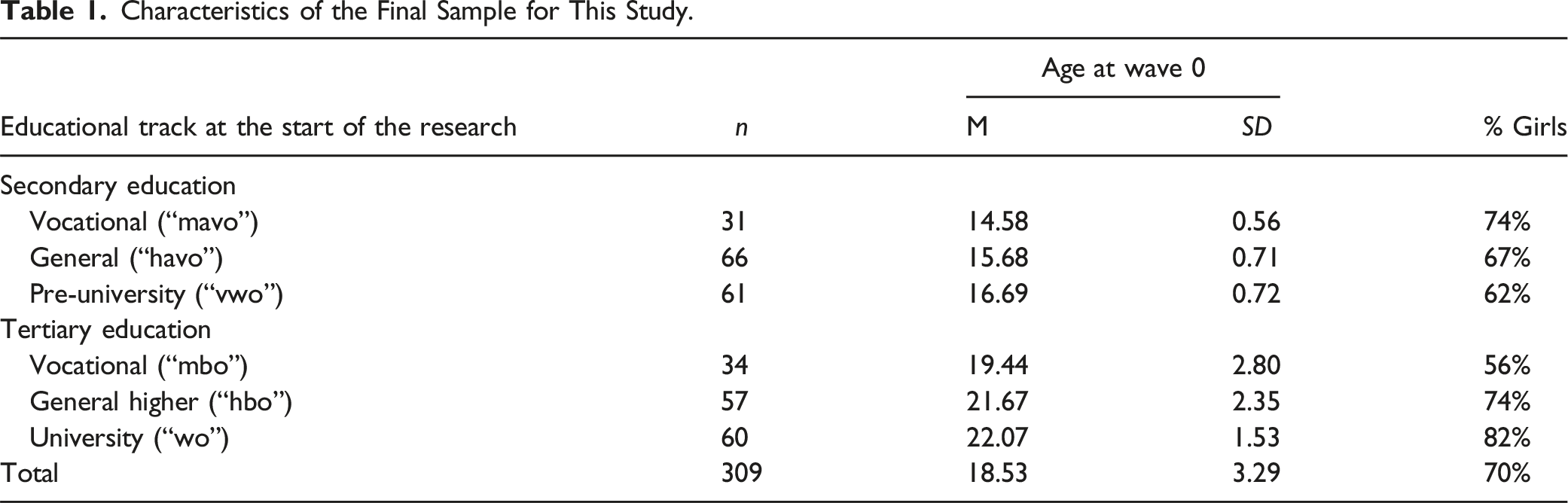
For the tertiary educational institutions, one institution per track was selected to participate in this study, i.e., one vocational education institution, one university of applied sciences and one university (“mbo”, “hbo” and “wo” in Dutch). We aimed for a broad sample in terms of study domain, inviting students from programs across (at least) the following domains: Healthcare, Economics, Communication, Beta/Engineering and Social Work. All students were expecting to finish their studies in approximately 1½ years when they started participating in this research. Here again, many students initially agreed to participate but dropped out during the first wave, especially within the vocational education institution. Hence, more vocational study programs (within the same institution) were approached and more students started participating from the second wave. In total, 222 students in tertiary education finished at least one wave of data collection, and 151 of these (68%) completed the last wave of data collection, of whom 30 started from the second wave. Attrition was higher in the tertiary vocational track (42%) compared to the general (28%) and university track (29%). Only the data of the students who completed the last wave are included; Table 1 displays their distribution across the different educational tracks.
All participants signed an informed consent form and for adolescents younger than 16 years old, their caretakers gave active consent as well. The participants received compensation of €200 total for participating for the full three years (€10 per wave and €100 bonus after completing the last wave). Ethical approval for this study was given by the departmental Ethics Committee.
Measures
Smartphone Application inTin
In this study, an ESM (Experience Sampling Method) smartphone application called inTin was used to capture (changes in) daily-life interests of the participating young people (Akkerman & Bakker, 2019; Draijer et al., 2020). Students used this application to log their existing and novel (incidental) interests that they experienced during the day. At the start of a period of data collection, participants were asked to add “any topic or activity that you (would) like to spend time on, i.e. that you like to think about, talk about or do” to their list of interests. Participants were free to give any label to their objects of interest instead of choosing from pre-existing categories, doing justice to the idiosyncratic nature of interest (Akkerman & Bakker, 2019). If the list contained fewer than five interests, the participants were asked by a researcher to verify whether they had indeed added all their current objects of interest. After completing their list, participants received a notification from the application every two waking hours for one week. When they clicked on a notification, they received this instruction: “Check off any existing interests that you have been engaged in over the past 2 hours. Also add other interesting topics and activities you thought about, talked about or did in the past 2 hours, if there were any.” After the initial notification, participants had 1 hour to respond, with additional notifications at 15 and 30 minutes if they had not yet responded. Fifty percent of responses were given within 10 minutes after the first notification. If the young people had engaged in any interest on their list, they were asked several questions about this event, but this is not included in the current study.
Number of Interests
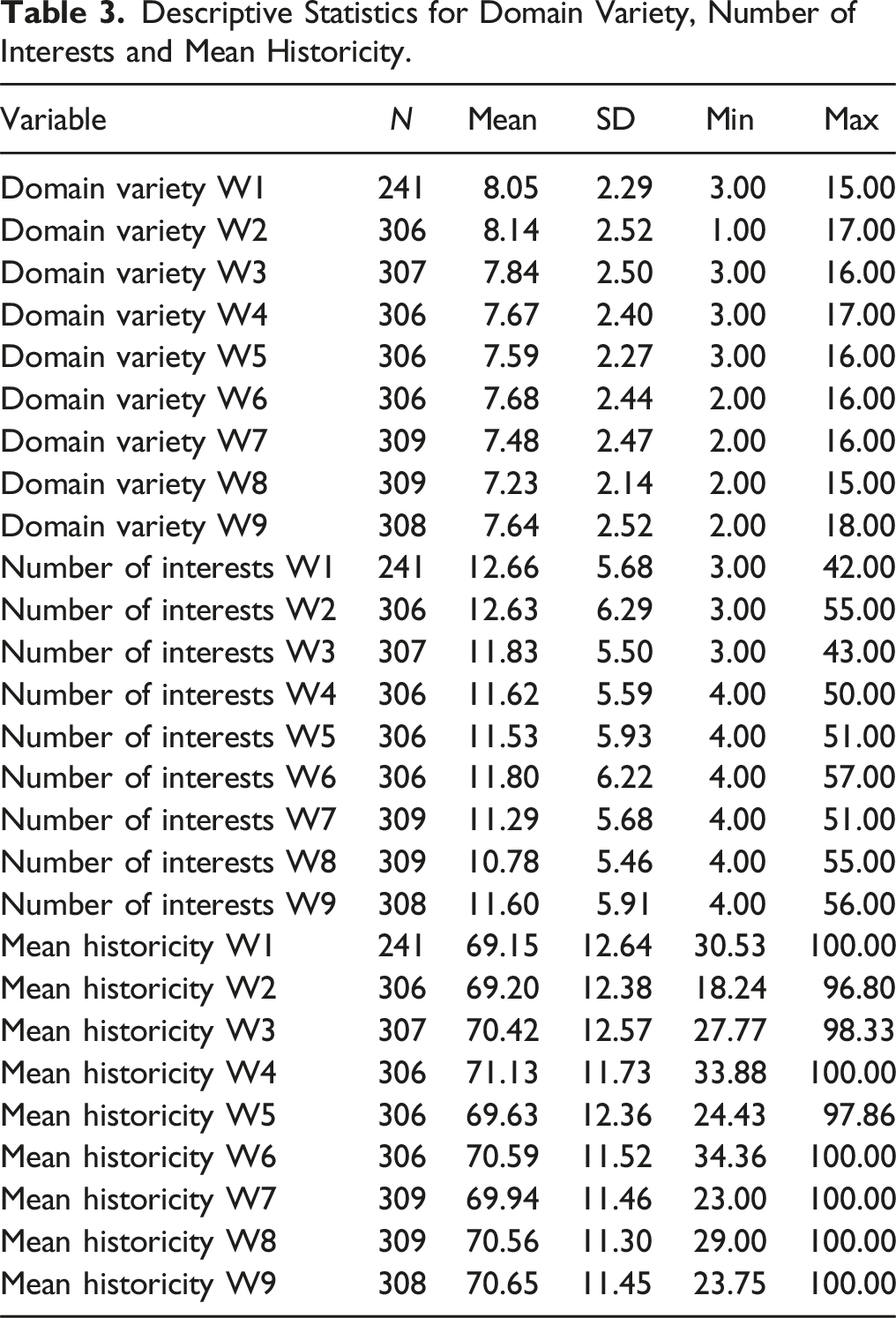
To get to a measure for the number of interests, we took the number of interests on the list of each respondent at the end of each wave (i.e., both the interests that were added in the beginning of the wave and those added in response to the notifications), which ranged from 3 to 57 per wave. The list of interests in the app was completely reset after each wave of data collection, thus prompting participants to think about what currently interested them every wave anew. In total, the 309 young persons reported 36336 interests across the three years.
Domain Variety
Domains That the Objects of Interest of This Study Were Coded Into.
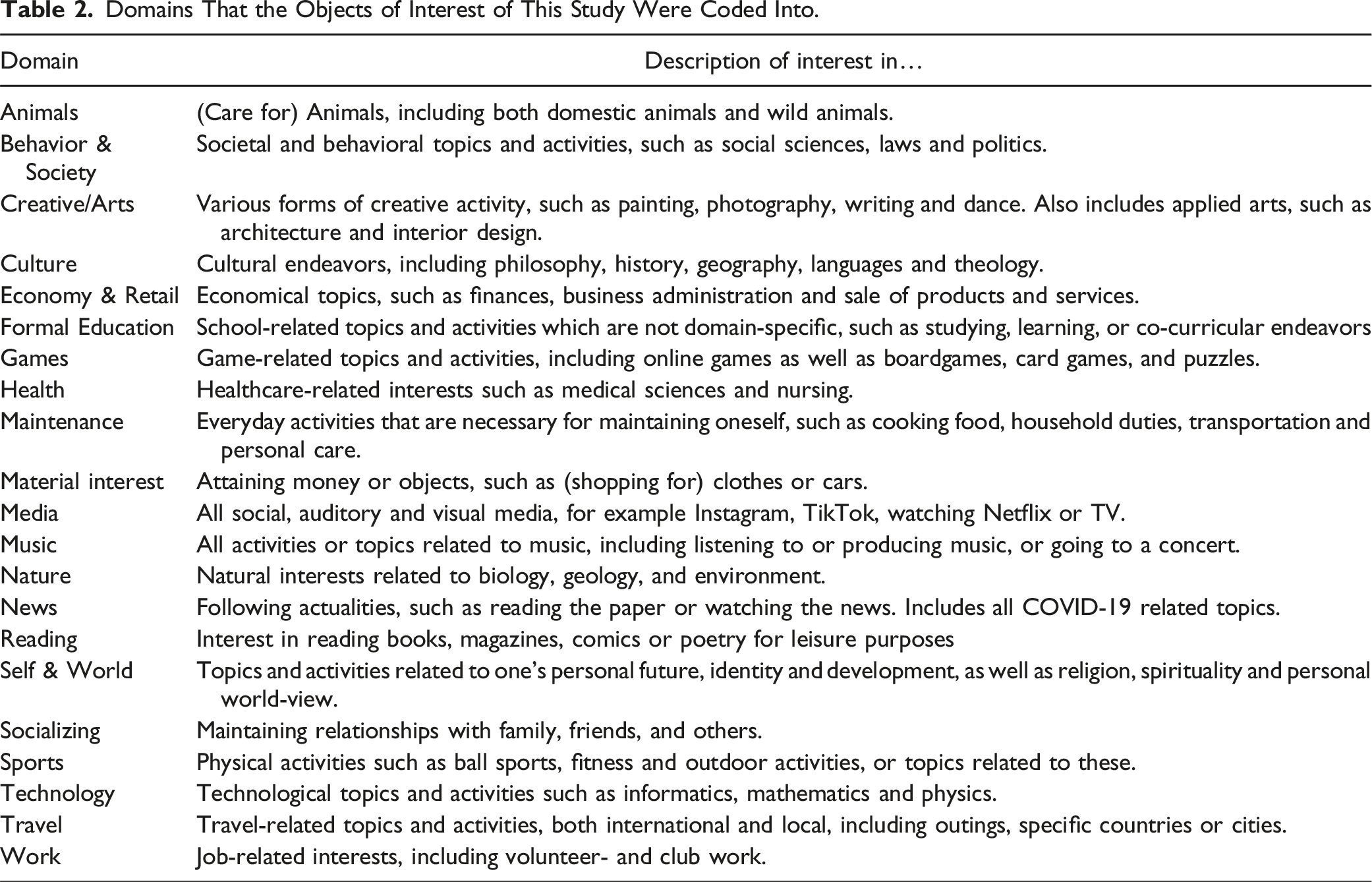
The coding for 347 unique interests names (3%) was done by the first researcher and an independent researcher. Following McHugh (2012), Cohen’s kappa for single category agreement can be considered moderate to strong (κ = .77, p < .001). Cohen’s kappa for simultaneous multiple category assignment can be considered moderate (κ = .66, p < .001). Any disagreement between the coders was discussed in the research team and resolved.
Mean Historicity
To take into account whether added interests were long-lasting or novel, we included a measure of historicity. When adding an object of interest to the application, participants filled out several scales about the characteristics of this interest (also see Draijer et al., 2020; Akkerman et al., 2020). Among others, participants answered for every interest they added to the application: [this interest] “is new to me – I have had it for a long time” on a scale from 1 to 100 (starting point of the bullet was 50). Since we could not enter the separate historicity scores per interest into the model, we computed and used the mean of the historicity scores of all interests in one wave.
Procedure
The participants filled out the ESM-application for ten waves consisting of seven days each. The waves took place in March/April 2018 (wave 0), June 2018, September 2018, February 2019, May/June 2019, September/October 2019, January 2020, May/June 2020, September/October 2020 and lastly in January 2021 (wave 9). The last three waves took place during the COVID-19 pandemic, with wave 7 and 9 spent in (partial) lockdown. Before wave 0, participants took part in a 1½ hour instruction during which they discussed what interests are (any topic or activity that you prefer to spend time on), and practiced filling out the application. During each wave, the participating young persons had frequent contact with a trained researcher through WhatsApp, where they could ask questions and received feedback on the way they filled out the application. Participants were required to answer a notification at least five times a day (saying they did not engage with any novel interesting objects also counted as an answer). If they did not manage to answer five notifications, they were asked to fill out the application for one extra full day in order to qualify for the financial compensation and to be able to continue participating in the study.
Data Preparation and Analysis
Data Cleaning
Due to several technical limitations of the smartphone application, data needed to be cleaned before analysis. First, occasionally a technical bug occurred where the list of interests of one person was not reset at the start of a new wave. When this occurred, we disregarded the entire wave for this person, since we could not be sure which interests they would have added if the list had been reset as usual. This resulted in 20 missing waves for 18 persons. Since 63 young people only started to participate in the second wave (see above) and thus had a missing value for the first wave, this brought the total missing values to 83 (3%). As we used full information maximum likelihood (FIML) estimation in MPlus, this did not result in any problems, and MPlus estimated the model parameters with the available data. Second, it occurred several times that a participant would restart the week, due to technical issues or because they could not manage to fill out the application satisfactorily in the first week. If this happened, we deleted all interests that they added in the first week, and only kept those of the second, complete, week.
While inspecting the raw data before analysis, we noted a steep decline in the number of interests and the domain variety from wave 0 to wave 1 that did not continue after wave 1, and that we could not logically explain from (changes in) the daily life circumstances of the young people. However, the youth had received a training on how to use the app preceding this first wave, and we could not rule out that the training resulted in a higher effort in recall of interests than in the other waves. When we isolated the 63 participants that started later (i.e. in wave 1), we saw for them the same decline from their first wave to their second wave (wave 1 to wave 2 in the complete dataset). Thus, we executed the analyses for both the complete data and the data without each participant’s first wave. Repeatedly, slopes that were statistically significant on the complete dataset were not significant anymore if we excluded the first wave of every participant. Since we did not want to overestimate any growth or decline, we decided to report all results without the first wave henceforth. The results of our analyses with the complete dataset can be found in the supplemental materials.
Growth Mixture Model with Three Parallel Processes
In order to investigate the research question, we performed a growth mixture model (GMM) in MPlus 8.8 (Muthén & Muthén, 2022) which allowed us to estimate three parallel processes (i.e., number, domain variation and historicity of interest) simultaneously. A growth mixture model describes longitudinal development in terms of a latent intercept and (a) slope(s) for the constructs under study (i.e., in our case three latent intercepts and slopes were specified for number, domain variation and historicity of interest), and allows the identification of multiple and qualitatively distinct developmental trajectories of multiple interests, with different intercepts and growth patterns. In a parallel processes-model, these trajectories are based on the joint development of multiple variables. Our sample size (n = 309) combined with the nine measurement moments and small percentage of missing data was deemed sufficient to identify distinct classes when class separation is high (Kim, 2012).
As a first step, latent growth models were fit for the number, domain variation and historicity of interest separately to assess how the growth on these three variables was best described, comparing linear, quadratic or piecewise slopes (using the institutional transition between wave 4 and 5 as a cut-off point). For each variable, the most adequate shape of the slope was determined using the model fit indices RMSEA (where values close to .06 signify good fit), CFI and TLI (where values above .95 indicate good fit) and SRMR (values close to .08; Hu & Bentler, 1999). Second, when the optimal model was found for each variable, we combined these into one growth mixture model with three parallel processes. We ran the model with 1–8 classes to test how many distinct developmental trajectories were supported by the data. To determine the optimal model, we looked at a combination of fit indices, parsimony and (theoretical) interpretability (Jung & Wickrama, 2008). For fit indices we studied the AIC, BIC and adjusted BIC, where lower values signify a better fit (Nylund et al., 2007). A common issue with these indices is that values can keep decreasing across the models, in which case it is common to look at the elbow plot to determine the optimal model (Morin et al., 2011; Petras & Masyn, 2010). To evaluate the final solution, we checked that entropy, the certainty with which developmental trajectories can be assigned to classes, is above 0.8 for the chosen model (Petras & Masyn, 2010), and that the model did not contain very small classes (though no exact cut-off is given in literature). To avoid model convergence to local maxima, we increased the number of random starts to 1000 starts with 100 iterations for the models with a smaller number of classes, and increased up to 4000 starts with 400 iterations for the more complex models.
Ideally, growth mixture models should be specified to let the intercept and slope means and variances, and covariances, as well as the time-specific residuals be freely estimated (e.g., Diallo et al., 2016). However, this resulted in improper solutions and missing convergence, which is common in growth mixture analysis and can be a sign that the model is overparametrized (Olivier et al., 2022). As a consequence, we introduced several constraints. First, we let the time-specific residuals be freely estimated in the specific classes but set them to be invariant across time (Browne & Du Toit, 1991; see also Olivier et al., 2022). Moreover, the quadratic slopes showed little variance concerning all three variables, and estimating variance in the quadratic but also the linear slopes resulted in improper solutions. Following the example of Gaspard et al. (2020), the variances for the linear and quadratic slopes were fixed to zero. The variances of the intercept factors were estimated freely in each class. We relied on the Mplus default in which the covariances of the latent growth factors are invariant across classes because this can improve class enumeration accuracy (Diallo et al., 2017).
Predictors of Class Membership and Characterization of the Classes
As a final step, we investigated whether class membership was associated with educational track and gender, since participants represent two cohorts and distinct educational levels (see Table 1) and a skewed distribution of girls and boys. Although it is the recommended procedure to add covariates in Mplus through a 3-step procedure (in this case using dummy variables for each of the tracks), interpretation is complicated with multiple groups since there is both a reference class and reference track; in our case, comparing six tracks. Therefore, we opted to do a MANOVA instead, using the variables with class probabilities that are exported from Mplus as dependent variables (i.e., the probability to be assigned to class X on a scale from 0 to 1). In this way, similar to the 3-step procedure, we take uncertainty into account while improving interpretability of the results. The results of the full 3-step procedure in Mplus are included in the supplemental materials.
Transparency and Openness
We have provided necessary details regarding determination of sample size, data exclusions, measures in the study and related articles, and follow JARS where applicable (Kazak, 2018). Raw data for this study is not available due to privacy regulations; analysis code for this study is available in the supplemental materials. Data were analyzed using MPlus, version 8.8 (Muthén & Muthén, 2022). This explorative study’s design and its analysis were not pre-registered.
Results
Descriptive Statistics
Descriptive Statistics for Domain Variety, Number of Interests and Mean Historicity.
Growth Slopes
Results of Three Separate Latent Growth Curve Models in MPlus.
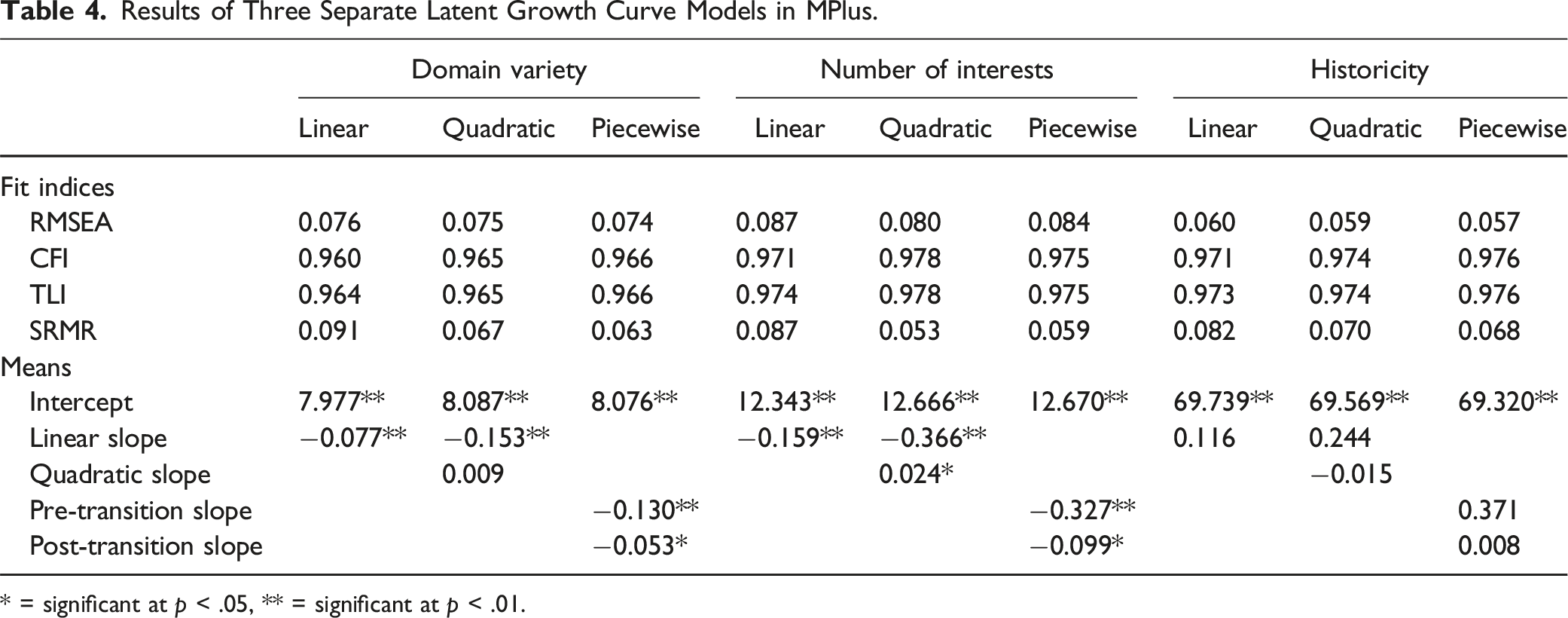
* = significant at p < .05, ** = significant at p < .01.
Growth Mixture Model With Three Parallel Processes
Fit Indices for 1- Through 8-Class Growth Mixture Models.
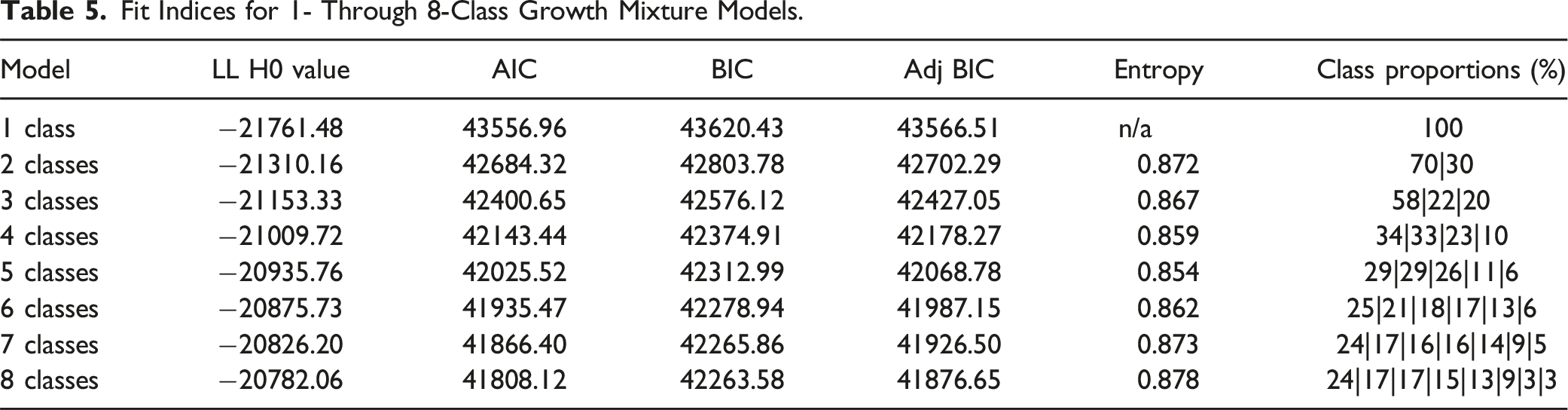
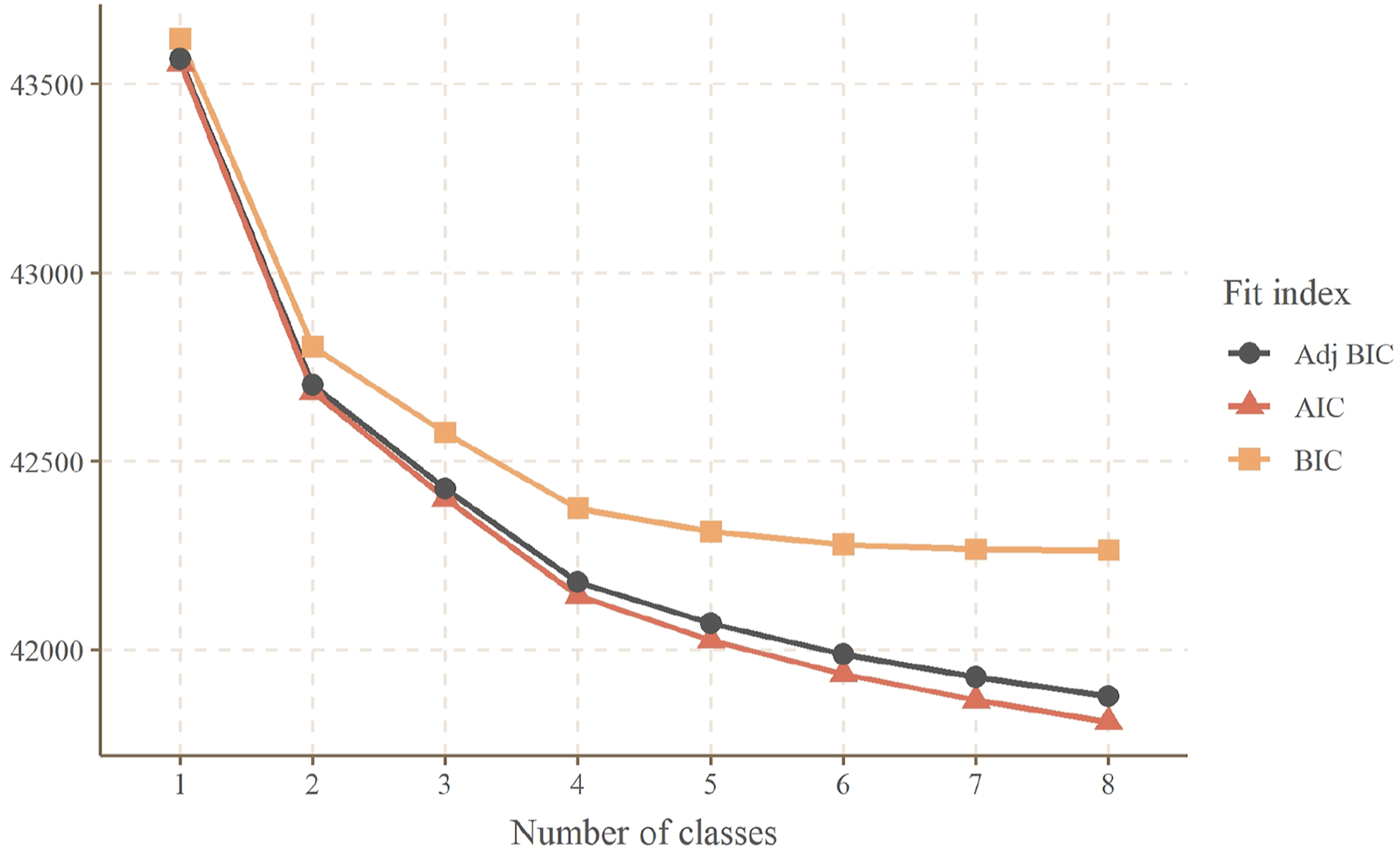
Elbow plot of the AIC, BIC and adjusted BIC for the GMM models.
Four Trajectories of Multiple Interest Development
Means for the Classes in the Four-Class Model.
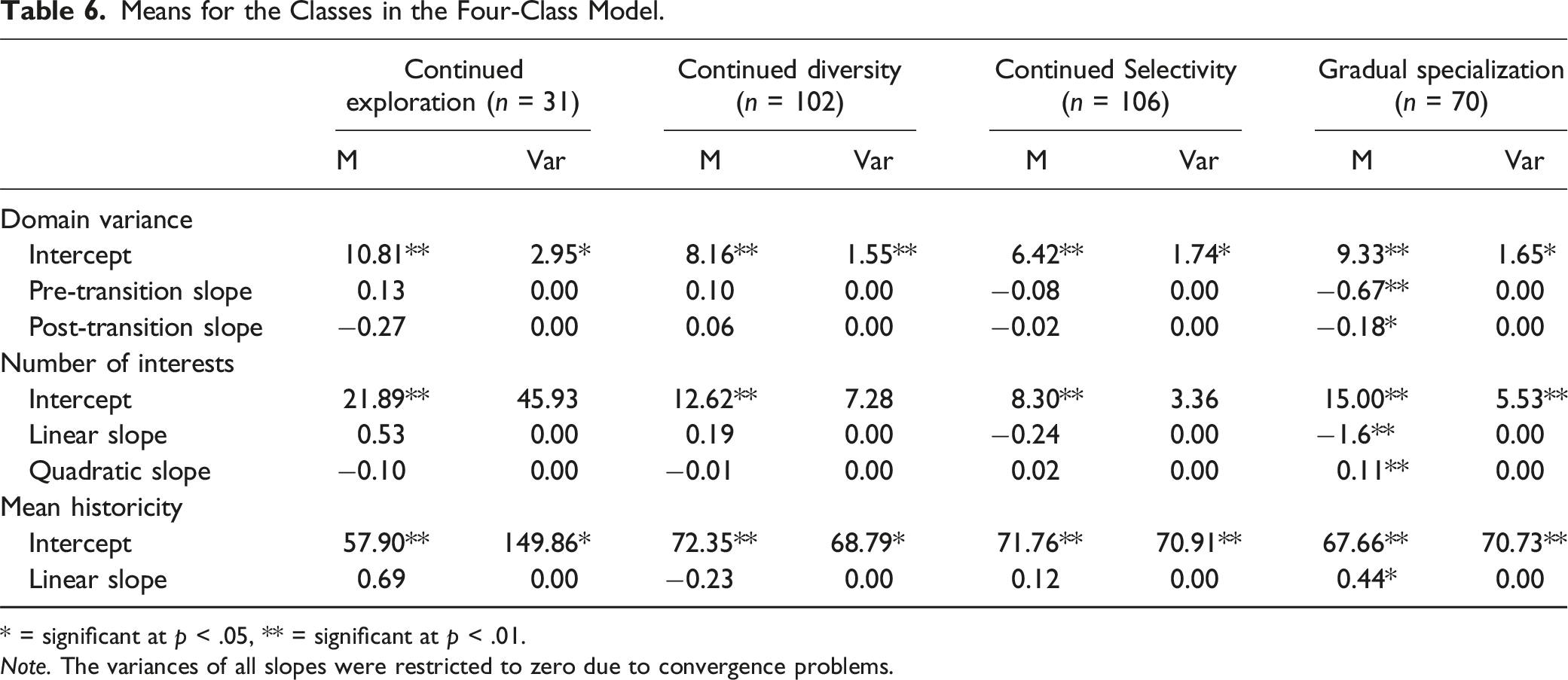
* = significant at p < .05, ** = significant at p < .01.
Note. The variances of all slopes were restricted to zero due to convergence problems.
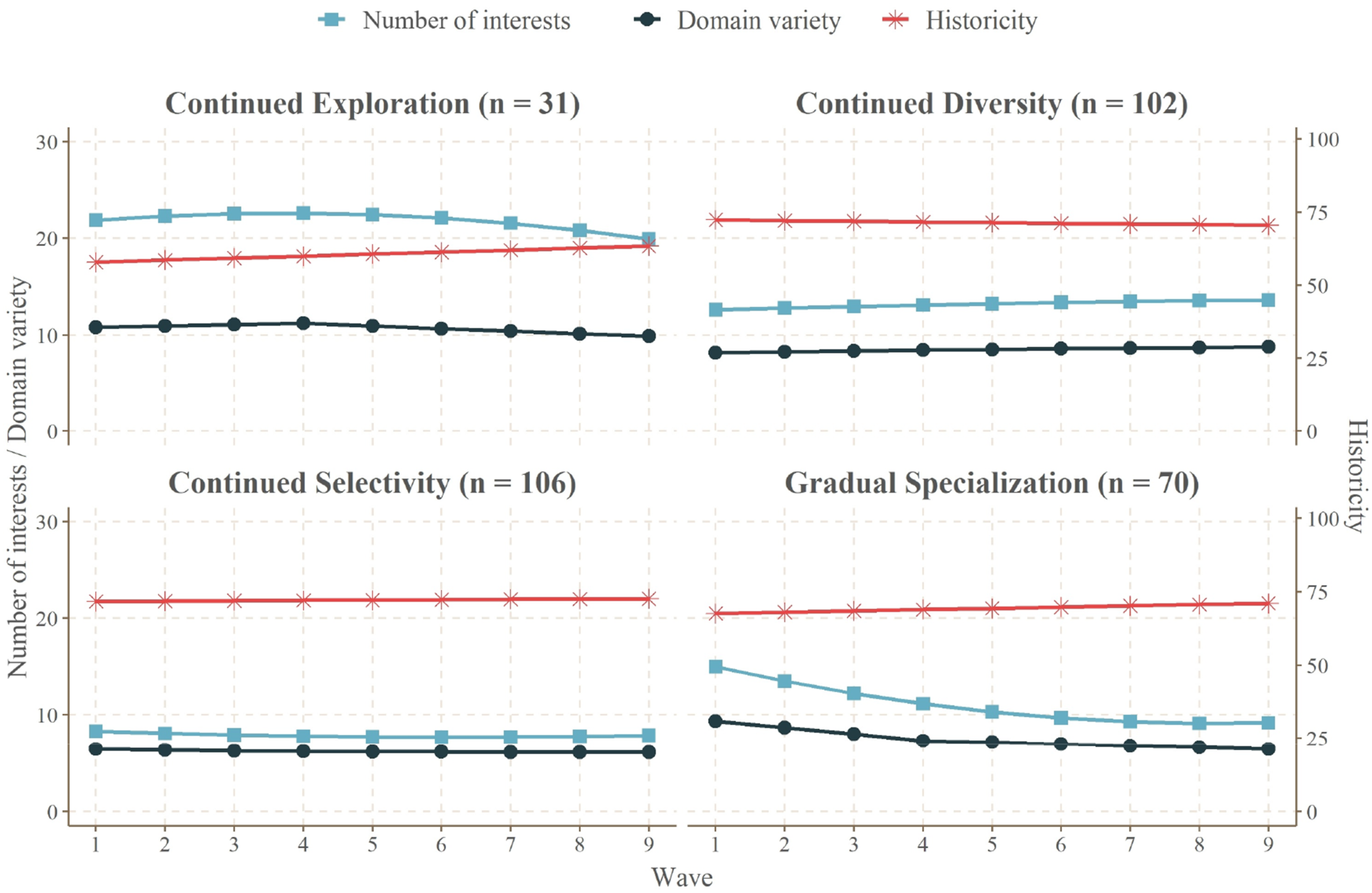
Estimated Growth Trajectories of the Classes in the Four-Class Model. Note. There are two y-axes. The left y-axis refers to the latent intercepts and slopes of the number of interests and the domain variety, the right y-as refers to the latent intercept/slope factors for the historicity score (red/star-shaped line).
Developmental Trajectory 1: Continued Exploration
The “Continued Exploration” class was the smallest class in the data, describing the developmental trajectories of 31 young people’s multiple interests (10%). Regarding the number of interests, young people assigned to this class reported many interests per wave (on average 22; see Table 6). Nonetheless, an inspection of domain variety showed that these interests on average fall within 11 qualitatively different domains, implying that while young people assigned to this class reported many distinct interests, they typically reported multiple interests within each domain. Figure 3 shows the domains that are reported by these young people at least once during the study. For each domain, at least 60% of the young people assigned to the Continued Exploration class have reported an interest. The Continued Exploration class displays a lower mean historicity (intercept of 58 on a scale from 1–100) compared to the Continued Diversity and Continued Selectivity classes, which means that the young people assigned to this class reported a higher proportion of novel interests. This implies that these young people continued to explore different topics and activities of interest. There is no significant increase or decrease in any of the three variables over time, indicating that the young people assigned to this class continued to report many, relatively novel, interests over time. Percentage of participants that report a certain domain for each of the classes, aggregated over waves 1 through.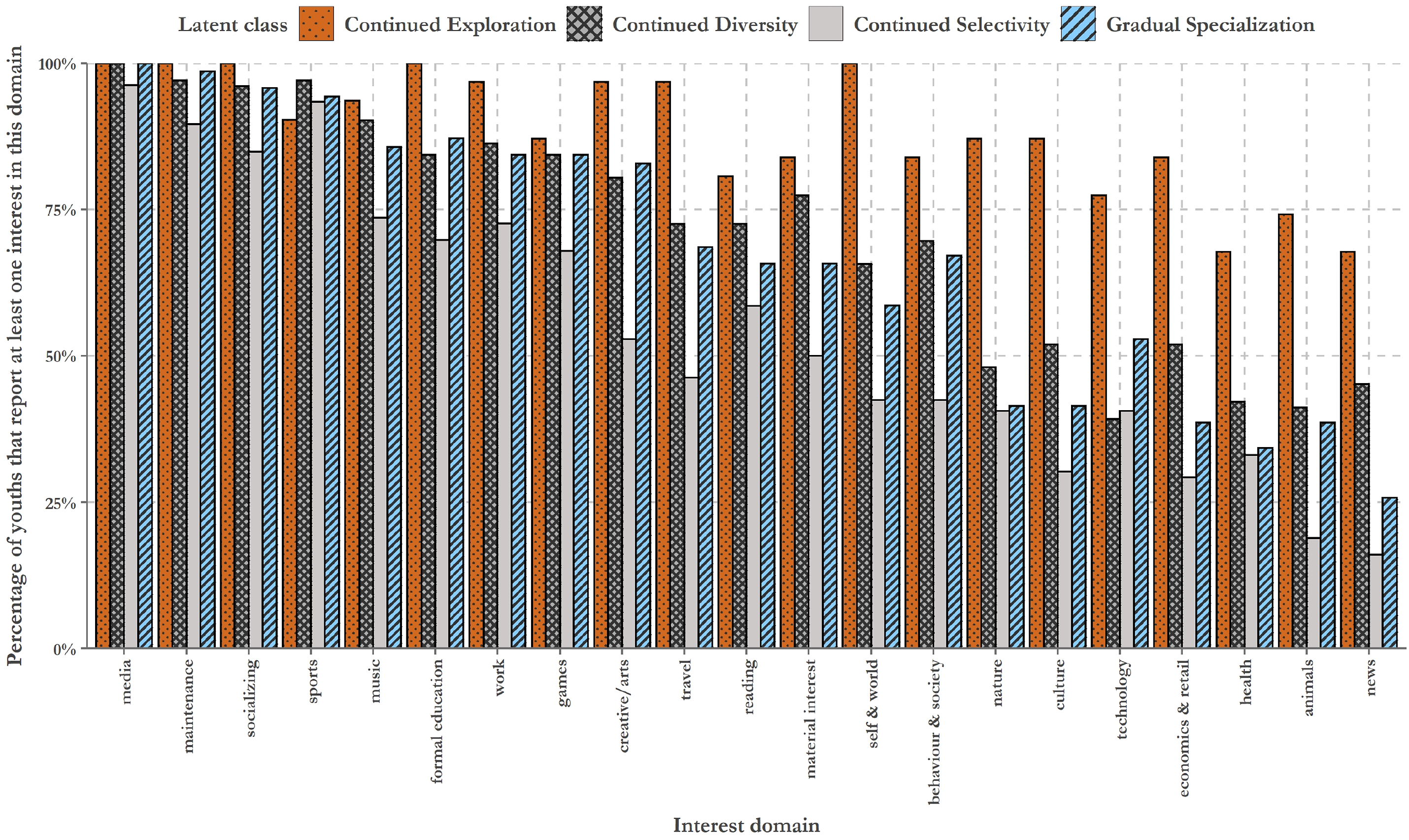
One of the participants whose multiple interest developmental trajectory was characterized as Continued Exploration was Rory, a pre-university student who is 17 years old at the start of the study. Rory chose to pursue a gap year, which took place during wave 5 through 7, and then started a university program in Engineering Physics. Rory’s interests were multifold (a total of 220 interests across the nine waves) and spanned many different domains. Rory reported interests in almost all domains, missing only one (i.e., the reading domain). Some of Rory’s interest domains were reported continuously throughout the three years: he always reported an interest within the economics, maintenance and sports domains. Some examples of his reported interests in the economics domain included bankruptcies of companies; hourly wage different ages; bitcoin. Other interest domains only occurred occasionally, for example interest in gaming, nature or music occurred only during one or two waves. The same diversity was shown for his interests: some were once-only and did not recur within this study (e.g., henna vs. tattoos; debt rehabilitation; phone specifications), whereas others were reported repeatedly (e.g., analyzing soccer, watches, several interests related to life as a university student).
Developmental Trajectory 2: Continued Diversity
A large group of young people’s multiple interest developmental trajectories (n = 102, 33%) was characterized as “Continued Diversity”. Regarding the number of interests, young people assigned to the Continued Diversity class reported on average 13 interests in 8 different domains, indicating that occasionally multiple interests were reported within one domain. The Continued Diversity class was also characterized by a consistently high historicity, which was around 70 across the waves, indicating that young people classified in this class acquired fewer novel interests than those in the Continued Exploration class. There was no significant increase or decrease in the number of interests, domain variety, and historicity, which meant that these multiple interests remained fairly stable (i.e., continually diverse) over time.
Figure 3 shows that some domains were reported at least once by every young person assigned to the Continued Diversity class (e.g., interests in media, maintenance, socializing, and sports), whereas other domains were less common (e.g. interests in technology, health, and animals). One of the young adults with a Continued Diversity developmental trajectory was Jenna. Jenna was a 23-year old general tertiary education student who studied to become a sign language interpreter. Her interests were continually diverse during the study, with some domains containing multiple interests. Most interests were reported repeatedly, for example yoga, reading, and cooking and baking, though some occured only sporadically (e.g., photography and watching soccer championships).
Developmental Trajectory 3: Continued Selectivity
The largest class in the data was the “Continued Selectivity” class, with 106 young people (34%) showing this developmental trajectory. Students from each of the six tracks were assigned to this class, but proportionally more students were from vocational secondary and vocational tertiary education (see below). Young people assigned to the Continued Selectivity class reported fewer interests than young people assigned to the other classes. Hence, these adolescents seemed to be selective in the interests they pursued. These young people usually reported on average 8.30 interests in 6.42 domains, which meant that they typically reported one interest per domain. Moreover, the Continued Selectivity class was characterized by consistently high historicity, which was around 70 (on a scale of 1–100), suggesting there were relatively few novel interests.
In Figure 3, we see that there were some domains that the vast majority of young people assigned to the Continued Selectivity class reported at least once, such as interests in media, socializing, sports, and maintenance, which was comparable to the Continued Diversity class. Other domains were less common in the Continued Selectivity class, with the rarest domain being news (fewer than 20% of young people assigned to this class reported an interest in news). The distribution was thus skewed, but no domain was entirely absent. One of the youth with a Continued Selectivity multiple interest development trajectory was Billie, a student in vocational secondary education who was aged 15 at the start of the study (which was at the second wave for her). Billie’s interests seemed continuous with only minor changes in wording: interests in school, gaming, listening to music, playing soccer, and (a variation on) meeting with friends occurred almost every week. Only the media domain disappeared and reappeared at times. After secondary school, Billie chose to enroll in a sports college preparing to become a sports instructor, which also allowed her to continue playing soccer at a high level.
Developmental Trajectory 4: Gradual Specialization
Young people with a “Gradual Specialization” developmental trajectory (n = 71, 23%) initially reported on average 15 interests in 9 domains at wave 1. However, the number of interests and their domain variety both decreased over time, though the decrease leveled off. As the mean historicity increased significantly, this suggests that these young people reported a smaller proportion of novel interests over time, and largely reported interests they had had for a longer period of time. The domain variety and number of interests that the young people reported by wave 9 was slightly higher than the young people assigned to the Continued Selectivity class.
Looking at the domains that the young people in this trajectory reported, there was a decrease from wave 1 to wave 9 for all domains except news. The sharpest decrease was visible for the domains of formal education, travel and culture. It should be noted that some changes fit well with our understanding of the COVID-19 pandemic, which was in effect during wave 9 and could relate to the sharp decrease of interest in travel (and increase in news). In addition, the decrease of interests in formal education can be understood in relation to the institutional transition, as some respondents finished with their education and transitioned to the work force. A graph of all domain changes from wave 1 to wave 9 for young people with a Gradual Specialization trajectory is provided in the supplemental materials.
One of the young adults whose multiple interest development was characterized as Gradual Specialization was River, a 25-year old woman. River studied speech therapy (general tertiary education), and started to work as a speech therapist in a school and a speech therapy practice (combining two jobs) in wave 5. Several domains that River reported interests in during wave 1 were not reflected in her interests anymore in later waves, such as interests in maintenance, materials, media and socializing domains. In addition, we see a pattern of specialization within the creative/arts domain, with a shift from multiple interests (dancing, sewing clothes, museums) to a particular interest in dancing only.
Factors Influencing Latent Class Membership
To elaborate on the relationship between latent class membership and educational track and gender, we conducted a MANOVA. Results showed no significant differences in class assignment probability based on gender, F (2, 294) = 2.037, p = .089; Wilk’s Λ = 0.973. There were significant differences in class assignment probabilities between the six educational tracks (F (20, 976) = 2.119, p = .003; Wilk’s Λ = 0.868) indicating that students from the pre-university track had a higher probability of being assigned to the “Continued Exploration” class compared to the general secondary and general tertiary students. Moreover, students from vocational secondary education had a higher chance of being assigned to the “Continued Selectivity” class compared to students from pre-university education. A full table with pairwise comparisons is included in the supplemental materials.
Discussion
In the current study, we aimed to answer the question: In what way(s) do the multiple interests of young people develop during periods of dynamic transitions in terms of the number, domain variety, and historicity? To this end, we conducted a longitudinal study of a diverse group of 309 adolescents and young adults over a three-year period. Our innovative research design accounted for interest multiplicity, idiosyncrasy, and contextuality, employing an experience sampling method with a smartphone application. Results from growth mixture modeling (GMM) indicated the presence of four trajectories of multiple interest development: Continued Exploration, Continued Diversity, Continued Selectivity, and Gradual Specialization. We found several differences between educational tracks, yet no gender differences were identified for the four trajectories of multiple interest development.
The 31 young people whose multiple interest development was characterized by “Continued Exploration” reported many interests in many domains, with a relatively low historicity. The number of interests, domain variety, and historicity did not increase or decrease over time, which means that these young people did not pursue more or fewer interests over time. However, the low historicity indicated that the young people easily took up and lost interest in novel objects (referred to in the literature as situational interests; Hidi & Renninger, 2006). The interest dynamics of this group are reminiscent of Azevedo’s (2018) discussion on situational interests, wherein he demonstrated how the uptake of a novel interest can be understood by looking at the connections of this object with long-standing interests. Since young people that showed Continued Exploration trajectories pursued wide-spread interests, it may also be easy for them to see connections between new objects and their long-standing interests. This is especially relevant in educational contexts, as it may be quite easy to involve these students in new subject areas.
It was notable that young people whose multiple interest development was characterized by Continued Exploration were mostly enrolled in (pre)university education, which could have several possible explanations. For example, the (pre)university tracks in offer more diverse subjects and (extra)curricular opportunities compared to the other tracks, hence exposing the students to more novel objects that they could become interested in. In addition, enrollment in the educational tracks in the Netherlands is strongly related to socioeconomic status, with the parents of (pre)university education students usually having the highest income (OCW in Cijfers, nd). This could also translate to more opportunities at home to explore different topics and activities of potential interest and to pursue multiple interests structurally, for example having the funds to join both a sports club and take music lessons.
Compared to the Continued Exploration trajectory, the “Continued Diversity” (n = 102) trajectory of multiple interest development contained a smaller number of interests, reported in several different domains, with higher levels of historicity (i.e., more long-standing interests). The “Continued Selectivity” (n = 106) interest trajectory seems comparable in that regard, with young people pursuing fewer interests and domains but also remaining continuous over time. A large portion of the vocational students in our data (both in secondary and tertiary education) showed a Continued Selectivity trajectory during the study, consistent with the specific focus of vocational education, which often trains for one profession.
In both Continued Diversity and Continued Selectivity trajectories of multiple interest development, the number of interests and domain variety do not grow or decline over time. Although it is tempting to interpret this as stability of the multiple interests, stability would likely entail an increase in historicity, since the long-standing interests become “older”. The lack of increase in historicity indicates that either young people do not differentiate much between high and higher levels of historicity, or that new interests are acquired continuously. This can be illustrated by the interests of Jenna and River, with Jenna reporting some novel interests each wave, and River’s interests being mostly continuous (though with some interruptions). Therefore, the Continued Diversity and Continued Selectivity trajectories seem largely continuous, but potentially more dynamic than the flat lines suggest. Future research could look more into these dynamics, tracing the continuity of each interest and looking at the different patterns that arise.
The interest development trajectories characterized as “Gradual Specialization” showed a decreasing number of interests and domain variety with increasing historicity, indicating that the young people were becoming more selective in the interests they pursued. While this partially complies with literature on declining interest during adolescence (e.g., Fredricks & Eccles, 2002; Frenzel et al., 2010), not all interests declined and disappeared. As the decrease in the number of interests leveled off during the study, the young people had a personal set of interests that they continued to pursue, and their last waves looked similar to the Continued Diversity and Continued Selectivity trajectories of multiple interest development. Hence, this developmental trajectory of specialization may correspond with processes of identity building, where young people discover more and more what they are interested in and which activities or topics they want to pursue actively (Krapp, 2002; Renninger, 2009). However, an alternative explanation for the decreasing number of interests relates to changes in the daily lives of the young people, which may constrict the opportunities they have to pursue their interests (Hofer, 2010). For example, students in tertiary education may have limited spare time when finishing the last year of their degree and even less time as they start their first job, hence some of their interest pursuits may (subconsciously or deliberately) be put on the back burner and wane. However, this may depend on the personal situation (including socio-economic background) and experiences of each young person. We would suggest future research ask students that show Gradual Specialization trajectories to retrospectively reflect on their development and perceived reasons for the decreasing number of interests, so that we can better understand what underlies this decrease.
Since all young people in this study experienced an educational transition during the research, we anticipated that the new contexts they would be introduced to could trigger new interests for them (Bergin, 2016), potentially resulting in a growing number of interests with greater domain variety. However, no such developments were identified in the current study. Prior research on vocational choices has indicated that students who commence a broad study program tend to develop a greater number of (and a more diverse range of) academically relevant interests, whereas other students either maintain the same number of interests or experience a slight decline (Vulperhorst et al., 2022).As few of our respondents started such a broad study program, we may not have identified a corresponding increase in the number of interests and domains pursued by our respondents. Alternatively, since young people have limited time available, it is not feasible to pursue every topic or activity of potential interest (Akkerman & Bakker, 2019). Therefore, the uptake of a novel interest may necessitate dropping another interest, hence preventing the growth of the number of interests.
Another influence on the developmental trajectories of multiple interests may be the COVID-19 pandemic, which started half a year after most young people made their educational transition and took place during the last three waves. The COVID-19 measures limited the number of contexts that the young people could actively participate in, hence likely also limiting their exposure to new topics and activities. Although one might thus expect to see a slight decrease in the number of interests during the last three waves, the results did not indicate any such decline. However, it is possible that the pandemic hampered any interest increase that would have happened during a “normal” transition, which future research could investigate. Any interest decline during the pandemic could also have been counterbalanced by young people still encountering new objects of interest through online contacts or media. In addition, young people may have reacted to the measures in a flexible way, (temporarily) changing their interest pursuits to comply to the current measures, or focusing on those of their interests that were based at or around the house (Morse et al., 2021).
Overarchingly, we see parallels between the four trajectories of multiple interest development and the concepts of commitment and exploration from identity research (Luyckx et al., 2006; Marcia, 1966). The Continued Exploration trajectory may correspond to exploration in breadth, where the young person discovers and investigates various identities or interests. Exploration in depth, described as gathering information about all current commitments (i.e., identities or interests), might be reflected in the Gradual Specialization trajectory, where the person may explore their current interests and compare them to each other. In identity research these two types of exploration are seen as subsequent and cyclical steps towards identity commitment (Luyckx et al., 2006), and this latter phase might be reflected in the Continued Diversity and Continued Selectivity trajectories. These parallels encourage us to look at interest development from a cyclical viewpoint as well, and consider the possibility that, for example, periods of Continued Selectivity are preceded by periods of Gradual Specialization.
Limitations
The current study is limited by a sample that was skewed in terms of educational track and gender due to attrition. This means we cannot claim that the ratio across the four developmental trajectories is representative of the total population, though we do maintain that the sample is diverse enough to capture a large variety of trajectories. In addition, since this study was not experimental, we cannot make any inferences about causality.
Moreover, the results of this study must be interpreted in light of several methodological choices. First, we allowed young people in this study to delineate and define their own interests instead of choosing from predefined categories. Since interests are idiosyncratic and personal (Akkerman & Bakker, 2019), there were differences in the way interests were reported. As seen in the examples, some young people reported a general interest in watching Netflix, whereas others reported the name of the specific series or TV show they were watching at that moment. This more differentiated way of reporting could partially explain the different developmental trajectories that were found, e.g., young people with “Continued Exploration” trajectories may report more differentiated interests. This underlines the importance of always studying the combination of the number of interests and the domain variety, since the domain variety shows differences between the four developmental trajectories that surpass the level of differentiation. Moreover, we also pose that the way that young people differentiate is meaningful to them, e.g., a general interest in watching Netflix may represent an interest in the (relaxing effect of the) activity, whereas interest in a specific TV show represents interest in the specific content of the show (Slot et al., 2020). Future research could investigate these differences in interest differentiations, and their relation to the way the young person pursues and values the interest.
Second, we chose to aggregate the number of interests and domain variety, not studying exactly which interests stay and go over time, because we also assessed the longevity of a specific interest by asking about historicity. Thus, our approach does not inform about the development of specific interests. However, the historicity patterns in the distinct classes strengthen the idea that the Continued Diversity and Continued Selectivity interest developments contain largely continuous interests, and the Continued Exploration interest trajectories contain more novel objects.
Theoretical and Educational Implications
Whereas current interest theories describe interest development through processes of deepening or declining of one interest, our research has allowed us to extend this by also describing processes of exploration, continuation and specialization across multiple interests. Hence, interest research benefits from studying interest in its multiplicity and idiosyncrasy. Since previous research has also shown that interests can develop in intertwinement (Draijer et al., 2022), we propose extending models of interest development by conceptualizing an interest as being nested in a broader set of interests.
Findings from interest development research often indicate a decline in interest (e.g., Fredricks & Eccles, 2002), which can cause concern about ‘disinterested adolescents’ (e.g., Hidi & Harackiewicz, 2000). However, the results of the current study indicate a more positive image of interest development. Two-thirds of the young people in this study showed continuous development of their multiple interests (i.e., Continued Diversity or Continued Selectivity), with a large part of their interests remaining continuous even throughout transitions. Although small changes in their interests occurred, any declining interest was usually compensated by the (re)surfacing of another interest. Only about a quarter of the youth showed a declining number of interests, though they still remained interested in various topics or activities.
The findings of this study can provide reassurance to parents and educators that a decline in interest in a particular topic does not necessarily indicate a negative development. It is possible that students are deliberately choosing to direct their attention and efforts towards other interests that are relevant for their future selves. The interests of young people in our study demonstrated notable diversity, both in terms of the specific content they engaged with, the number of interests they pursued, and the developmental patterns. This variation invites us to reconsider the norm for what a “good” number of interests is. Therefore, declining interest should not be immediately intervened upon, but rather regarded as a reason to engage in dialogue with the adolescent.
Looking at the specific domains that were reported, we noted that some domains seemed more universal. For example, almost every young person reported an interest in media, maintenance, socializing and sports at one point during the study. The other domains seemed more particular to individuals and/or seasons. If educators are looking to introduce youth to novel topics in order to trigger a new interest, they may choose to focus on the less common domains, and/or make novel topics more accessible by explicating connections with popular domains. Youth whose multiple interest development was characterized by Continued Exploration seemed broadly interested, and it may be easier for educators to involve them in novel educational topics. However, these young people may experience more challenges in time management and study-related choices, and may thus need more parental and educational support in those processes.
This study proposes an extension of interest development theory in terms of processes of exploration, continuation and specialization across all multiple interests of the young person. By emphasizing the complexity of multiple interest development, the results of our study urge interest researchers and educators alike to step away from “one size fits all” solutions. Instead, we invite researchers to embrace the complexity of interest development and adjust measurements and conceptualizations of interest to include multiplicity and idiosyncrasy.
Supplemental Material
Supplemental Material - Multiplicity Matters: The Development of Multiple Interests During Dynamic Institutional Transitions
Supplemental Material for Multiplicity Matters: The Development of Multiple Interests During Dynamic Institutional Transitions by Jael Draijer, Larike Bronkhorst, Barbara Flunger, and Sanne Akkerman in Emerging Adulthood.
Footnotes
Acknowledgments
We express our gratitude to the young individuals who took part in this study for their willingness to share their experiences. We would like to acknowledge Thea van Lankveld, Joris Beek, Niklas Ziegler, and Alex Janse for their valuable contributions in designing and conducting data collection with inTin. We thank Bob Timmer for assisting with interrater reliability
Declaration of Conflicting Interests
The author(s) declared no potential conflicts of interest with respect to the research, authorship, and/or publication of this article.
Funding
The author(s) disclosed receipt of the following financial support for the research, authorship, and/or publication of this article: This study is funded by the European Research Council (ERC) under the European Union’s Horizon 2020 research and innovation program under grant agreement No 716183.
Transparency and Openness Statement
The analysis code used in this manuscript is available in the  . The raw data contained in this manuscript are not openly available due to privacy restrictions, but anonymized data can be obtained from the corresponding author following the completion of a privacy and fair use agreement. No aspects of the study were pre-registered.
Supplemental Material
Supplemental material for this article is available online.
Author Biographies
References
Supplementary Material
Please find the following supplemental material available below.
For Open Access articles published under a Creative Commons License, all supplemental material carries the same license as the article it is associated with.
For non-Open Access articles published, all supplemental material carries a non-exclusive license, and permission requests for re-use of supplemental material or any part of supplemental material shall be sent directly to the copyright owner as specified in the copyright notice associated with the article.
