




Abstract
While interest theories have long focused on describing the development of a single interest, research increasingly recognizes the multiplicity of interests. Adolescents are likely to relate their multiple interest pursuits to each other, and the development of these interest pursuits may become intertwined. The current study explored this intertwined development of interest pursuits in daily life through repeated interviews with thirty Dutch adolescents (aged 14–25 years). Each adolescent was interviewed three times over 3 years. They were asked about the (changes in) interest pursuits that they previously reported through an Experience Sampling Method smartphone application, which they had filled in multiple times a day for a whole week, for a total of 9 weeks throughout the 3 years. Inductive analysis of the interviews revealed three processes of intertwined development: interest genesis, where one interest developed out of another, hybrid interest engagement, where interests co-occur or their engagement is mediated by similar skills or knowledge, and combined sensemaking, where two interests have a similar meaning or gain meaning in relation to each other. Interest theory typically speaks of interest development as a process of deepening of a single interest, and the current study illustrates how interest development can in addition reflect the broadening and connecting of multiple interests.
Intertwined Development of Interest Pursuits
It is well established that interest is essential for adolescent development. Interest is a key component in a wide range of processes, such as identity construction (Krapp, 2002); social development (Bergin, 2016); subjective well-being (Schulz et al., 2018); and learning, both in and out of school (Dewey, 1913; S. Hidi & Harackiewicz, 2000; Ito et al., 2018). Therefore, it is important that parents, educators and researchers alike actively seek to understand the development of interest in order to support adolescents adequately.
Previous research has shown how interest can over time develop from a momentary engagement (referred to as “situational interest”) to a long-lasting object-person relation (referred to as “individual interest”; S. Hidi & Renninger, 2006). These descriptions of single interest development have provided educators with valuable tools to better understand and guide interest development in adolescence, especially when it concerns (designing) specific interest-related contexts (e.g., interest in mathematics class). Interest research has since also demonstrated that adolescents pursue multiple interests in parallel (Akkerman & Bakker, 2019; Azevedo, 2013, 2018; Hofer, 2010; Krapp, 2002; Renninger, 1992; Renninger & Hidi, 2022). As it is unlikely that the multiple interests of a person develop separately from each other, there is a need to advance interest theory by examining the development of multiple interests. Since an adolescent lives in a continuous stream of experience (Dewey, 1938; Roth & Jornet, 2014) and does not perceive each moment as isolated, adolescents are likely to relate interest pursuits to each other. This can also happen unintentionally or prompted by (others in) certain situations, and the interest pursuits may (temporarily) become intertwined and develop in parallel.
Not much is known about this intertwined interest development, although case-studies have provided some initial conjectures. For instance, Azevedo (2011) investigated amateur model rocketeers and observes links with other objects of interest. Amateur model rocketeer Bill, for example, was also a film fanatic and often specifically selected movies about rockets, particularly those that connected to his fascination with the history of aviation and rocketry. His friend George had a computer engineering background and consequently experimented with incorporating electric machinery in his rockets. Similar examples can be found in work of Ito, Martin, Pfister, Rafalow, Salen and Wortman (e.g., Amy who made crochet designs associated with her interest in Harry Potter; 2018), and Hollett and Hein (where skateboarding and photography are combined; 2019). Next to such intertwined interest pursuits, E. M. Slot et al. (2020) reported on the alternating of interests based on their investigation of how school is reflected in adolescents’ interest experiences. They found that adolescents sometimes deliberately alternated school-related interests with leisure interests (e.g., gaming or watching a TV series) in order to relax and rejuvenate after a long day. Together, these articles show some initial examples of processes of intertwined development, and invite a more systematic investigation of the intertwined development of interest pursuits over time. As such, the present study aims to build on and extend current understanding of interest development stemming from developmental psychology research. Mainly informed by cultural historical and sociocultural research, the present study takes a life-wide perspective (Erstad et al., 2009), meaning that all parallel and idiosyncratic interests of a person are taken into account when describing development (Akkerman & Bakker, 2019). By explicating the ways in which adolescents interrelate their interest pursuits in daily life, we hope to aid educators in recognizing and amplifying existing connections between objects of (potential) interest for adolescents within classroom settings and beyond.
Single Interest Development
Interest is defined as a preferred engagement with a certain object, which displays as a specific relationship between an individual and an object as developed in context (cf. Akkerman & Bakker, 2019). In this definition, “interest” is seen as a psychological state of experience by the individual, and “object” refers to any topic, activity, idea or event that the individual connects the interest to. We use the term “interest pursuit” to describe the idiosyncratic way in which an individual engages with the object of interest over time (e.g., the involved activities, locations, materials; see Beek, Bronkhorst, & Akkerman, 2024). Recent literature (e.g., S. E. Hidi & Renninger, 2019) adds to this definition by emphasizing the physiological processes associated with interest and information-seeking. Our open definition of interest fits the person-centered approach in the current study, that prioritizes how youth themselves make sense of their interests (Akkerman & Bakker, 2019).
Current theories primarily describe interest development as a deepening of a single interest pursuit. For example, the widespread four-phase model of interest development (S. Hidi & Renninger, 2006; Renninger & Hidi, 2015) describes the development of a single interest pursuit in terms of four phases. Each subsequent phase is characterized by an increase in affect, knowledge and value, and is more internally driven instead of dependent on external support. Through repeated engagement, supported by others and provided with opportunities, interests can be maintained and deepen over time. While interest scholars often focus on singular interests in designing their research, it is generally acknowledged that individuals pursue multiple interests which may develop in interaction (Renninger & Hidi, 2022). Hence, research on multiple interests is necessary to describe the relation of an interest to other objects of interest within the broader daily life context of the person, and integrate this in the four-phase model of interest development. The current study aims to contribute to this understanding of interest relations, since we know from previous research that these can be consequential for further interest developments, for example when multiple interests play a role in (career) choice processes (Hofer, 2010; Holmegaard, 2015; Vulperhorst et al., 2020).
The focus on interest development as the deepening of a single interest echoes educational research that has long been focused on (vertical) learning processes in terms of becoming an expert within a particular domain. Cultural historical and sociocultural theories and research have increasingly drawn attention to the necessity of a life-wide approach to be able to also understand learning and development in a horizontal manner (e.g., Erstad et al., 2009; Valsiner & Van der Veer, 2000). The life-wide approach acknowledges that people may always be challenged to divide, align or combine their attention, efforts and engagements across multiple domains, practices and settings that make up their lives (cf. Akkerman & Bakker, 2011, for an overview of research and theoretical foundations). In the current article we adopt a similar life-wide approach to interest development, extending the well-described processes of deepening one single interest by explicating the developmental connections between multiple interests that persons often have in parallel.
Dynamics of Multiplicity
Several earlier studies acknowledge and give examples on multiple interest development. Firstly, several early studies already pointed out that adolescents typically pursue multiple interests (Fink, 1991; Krapp & Fink, 1992; Renninger, 1992; Renninger & Hidi, 2022). For example, Renninger (1992) discusses children having up to six interests in parallel; these interests become increasingly diversified over time. Fink (1991) studies the structure of children’s interests and shows how one interest can be incorporated into another interest, for example when a child, who loves animals and loves to read books, starts to read books about animals.
Akkerman and Bakker (2019) explored this further by approaching multiplicity of interest from a life-wide and person-centered perspective that emphasizes how adolescents may be challenged to pursue parallel idiosyncratic interests across multiple social contexts. In a multiple case study of four adolescents over 2 years, Akkerman and Bakker demonstrated that these adolescents pursued a large variety of interests at the same time, concerning different domains and types of pursuits. Building on the aforementioned work of Fink and Krapp, the authors described interest changes using the adolescents’ reported interests over time, and observe how sometimes one interest would split up into multiple more specific versions, or multiple interests seemed to be combined into a new interest.
Similar dynamics have been noted within goal theory. Ford (1992) posited that humans often strive toward behavior that serves multiple goals at once. Hence, multiple goals need to be prioritized or coordinated (Boekaerts et al., 2006). Hofer (2010) connected this to interest development, and noted that interest-related goals might converge if they can be reached simultaneously. Although these studies bring a valuable first insight into the possibly intertwined nature of interest development, Hofer (2010) provided no empirical evidence and Akkerman and Bakker (2019) mostly focused on development of reported objects of interest, yet suggested how we can achieve a more advanced understanding by studying more subtle ways of intertwined development throughout everyday activities.
Some proof of concept for such everyday connections and intertwined development was found by Azevedo (2018), who aimed to understand the nature and functioning of novel (“situational”) interests in the context of what he calls an individual’s larger “fabric of activities” (also see Azevedo, 2011, 2013). Using observational (video) data he showed that the triggering and uptake of a novel interest was closely connected to other activities in the adolescents’ lives. For example, a student showed great interest in a computer lab task concerning scientific image processing, which connected to his artistic background. Azevedo’s study raises the question whether these interests remain connected when they are sustained over a longer period of time, and whether individuals themselves experience the observed connections as meaningful. In addition, Azevedo’s observation focused on activities only, while adolescents may also connect interests in terms of content or meaning (as in the abovementioned example of school and gaming; E. M. Slot et al., 2020). Hence, these small-scale studies call for a broader and more systematic investigation of the intertwined development of interest pursuits, in which it is particularly relevant to consider adolescents’ own perspectives on how their various interests develop in and across contexts. As evident from research on how people learn and develop across school and other contexts more generally (Akkerman & Bakker, 2011; Bronkhorst & Akkerman, 2016), people’s own reflections on what they do are critical to understand better where they experience continuities and discontinuities in development.
Current Study
In the current study, we described interest development from a comprehensive person-objects-contexts perspective, as proposed in earlier work by the last author (i.e., P-O-Cs perspective; Akkerman & Bakker, 2019) in alignment with a life-wide and person-centered approach. As described above, a life-wide perspective acknowledges that people continuously pursue and shape multiple idiosyncratic interests across multiple social contexts throughout their everyday lives. We took a person-centered approach by looking “at within and from within persons” (Akkerman & Bakker, 2019, p. 3), that is, by focusing on the way adolescents made sense of their interests and experiences themselves (Valsiner, 1992).
We explored the development of interest pursuits in daily life by answering the following research question: How did adolescents’ multiple interests develop in relation to each other? The answer to this question can further our understanding of adolescents and their multifaceted development in relation to the world around them. Moreover, this can add to the understanding of differing interest practices or developments. For instance, in the aforementioned example (Azevedo, 2011) of amateur rocketeers Bill and George, looking at their multiple interest pursuits proved necessary to understand the differences in their rocketeer practices (i.e., George incorporated machinery in designs of his own, while Bill focused on existing models of historic rockets). Additionally, understanding the intertwined development of adolescents’ interests can aid approaches that aim to connect education to adolescents’ daily life experiences (e.g., Ito et al., 2013) by demonstrating how these connections already take shape and develop in daily life.
Methods
Design and Procedure
This study was part of a larger ERC-funded research project (Akkerman, 2017–2023), in which a large number of adolescents 1 reported on their interest pursuits over the course of 3 years via qualitative ESM (Experience Sampling Method; Hektner et al., 2007) using a smartphone application “inTin” (Akkerman & Bakker, 2019), and via additional questionnaires. All articles written about this data collection (e.g., Beek, Bronkhorst, & Akkerman, 2024; Draijer et al., 2022) addressed qualitatively distinct research questions and analyses. In the current study, we explored the intertwined development of interest pursuits. To do so, we used interviews informed by the qualitative ESM with a purposely selected subsample of 30 adolescents.
The timeline of the current study is outlined in Figure 1. The participating adolescents were interviewed three times, with 1 year in between each interview. The ESM data collection took place in “waves,” each of which consisted of a full week of using the mobile application to report on interests. The nine waves were spread equally across 3 years, which meant that each interview was based on information from the three ESM waves that preceded it. Data was collected between March 2018 and December 2020; the last two ESM waves and the last interview took place during the COVID-19 pandemic. The study was centered on the data from the second interview.

Overview of study procedure.
Prior to the first ESM wave, participants were instructed in the use of the application and were informed that the overall goal of the study was to understand interest development in adolescence. Adolescents volunteered to participate and received financial compensation for taking part in the study. All participants signed an informed consent form and for participants who were younger than 16, a parent or caregiver signed an additional permission form. Ethical approval for this study was given by the departmental Ethics Committee.
Participants
The participating adolescents were enrolled in diverse secondary and tertiary educational tracks in the Netherlands, including (pre-) vocational education, general (professional) and (pre)university education (in Dutch: mavo, havo, vwo, mbo, hbo, wo). This diverse sample was chosen to capture a large variety of interest pursuits across different educational settings and life-wide situations (i.e., maximum variety sampling; Creswell, 2002). The participants started with the ESM waves in the penultimate year of their study program, hence for most of them the first interview took place in the final year of their respective educational program.
Fifty-one adolescents were initially selected to be interviewed from the larger sample, using a stratified sampling strategy based on track, study domain, and estimations of study dropout. Of these 51 adolescents, 42 completed the ESM-waves and the interviews until the end of the study. The distribution of these 42 students across the six tracks was unequal, ranging from five to nine per track. Since the goal of the current study was to better understand interest development in a wide variety of situations, we chose to start the analysis with five adolescents per track in order to maintain equal representation and variety of interest (experiences). While analyzing the last of these thirty participants we encountered no new categories; hence we decided to maintain a balanced subsample of thirty adolescents spread equally across the tracks (also see the Analysis section below).
The thirty participants were aged 14 to 25 years (M = 18.23, SD = 3.10) at the start of the study, with 63% female. The majority of participants (75%) had two parents born in the Netherlands; five participants had one parent who was born in another country. Four additional participants reported that another culture than the Dutch culture had also shaped them. All secondary school students went to the same school in a medium-sized city in the Netherlands, students in tertiary education went to three different track-specific institutions in larger cities (i.e., separate institutions for mbo, hbo, wo).
Materials
The materials employed in this study concern an ESM application and three repeated interviews. In the current study, the ESM data were used as input for the interviews (i.e., the adolescents were asked personalized questions in the interviews, which were based on their answers in the ESM application). In order to answer the research question, only the interviews are analyzed. The ESM data were subsequently used in text to illustrate the outcomes from the qualitative interview analysis.
ESM Application in Tin
An ESM application was used to capture (changes in) daily-life interests of the participating adolescents. Adolescents used this application to log their longstanding and novel interests that they experienced within a week. Preceding data collection the participants received training and during data collection they received feedback regularly. At the beginning of each wave, adolescents were asked to enter all their current objects of interest (defined as any topic or activity that you prefer to spend time on) into the application. During the week, the application sent a notification to the participants every two waking hours, prompting them to report on interests they had experienced in the past 2 hr (if any). Participants could at that point add any new (incidental) objects of interest they encountered into the application. Following from our person-centered perspective (P-O-Cs perspective; Akkerman & Bakker, 2019) participants were free to give any name to these objects instead of choosing from pre-existing categories, doing justice to the idiosyncratic nature of interest. Typically, adolescents reported 12 objects of interests in 1 week (range 3–57).The participants were asked two open questions about the interests as they encountered them: “What did you do?” and “What did you think was or was not interesting about that?” In addition, several multiple-choice questions were answered to characterize the activity, but these questions were not used in the current study.
Three Interviews
Each participant was interviewed three times with 1 year in between each interview. The first interview took place after three waves of inTin. We decided not to ask participants about interest relations directly, as this might encourage them to create connections between interests during the interview (Tanggaard, 2009), rather than report on connections that are consequential in their lives. Therefore, instead we asked indirect, open-ended questions, focusing on the development of one interest pursuit at a time. This allowed respondents to elaborate on things that they see as important and meaningful to their life (Qu & Dumay, 2011). The interview scheme contained semi-structured questions that were personalized based on the interests that the participants reported in the ESM application during the three waves preceding the interview. All interests were printed on a large circle which was used during the interview (e.g., see Figure 5 below). At the start of each interview we asked adolescents to verify or change reported interests in the circle as to reflect their current experiences. As interest names could vary between each week (e.g., “playing soccer” in 1 week; “soccer” in another), adolescents could indicate when these reflected the same interest.
In the first interview, participants were asked about the history, forms of pursuit and the meaning for several of their objects of interests, aiming at a variety of different interests (e.g., asking them to talk about an interest they had pursued for a long time and an interest that was rather new). Example questions include: “What exactly is it that you do, when you engage in this interest?”; and “Is this interest important to you? Why?” These questions were aimed at one interest at a time, but participants often mentioned other interests that they considered to be related. In addition, participants were asked to think about next year, and to formulate expectations about which of their objects of interest they would still be interested in and why, which probed them to consider any hypothetical trade-offs between interests. In the second and third interview, the adolescents were asked about any changes in their objects of interests that had occurred since the preceding interview. They were asked about a) any new interest pursuits, b) any interest pursuits that had become more important, c) interest pursuits that had become less important, d) interest pursuits that had disappeared, e) objects of interest which they had engaged with in a different way than last year. Each experienced change was discussed (or one per category if more than one change happened) in more detail using semi-structured questions, asking about the experienced origin of the change, and about the current form(s) of engaging and what the interest means to them. Example questions include: “How did this new interest come about?” and “Did others play a role in this?” In answering these questions, participants regularly related changes to (changes in) their other interest pursuits.
The interviews were conducted by four interviewers, and each interviewer piloted the interview scheme with a student that was not part of the sample. After these pilots, only small adjustments were made to the wording of the questions and to the time planned for each section of the interview.
Analysis
All interviews were transcribed. We analyzed the interviews by 1) selecting interest relations in the second interview; 2) collecting all excerpts in which the adolescent mentions either of the interests; 3) summarizing the excerpts for each interview per interest and for the relation; 4) summarizing the overall processes that take place for the interest relation across the study, both in a text summary and in a visual representation; and 5) inductively coding these summaries by identifying common processes amongst the interest relations. Below, we elaborate on each step. An example of the coding process is included in Figure 2.
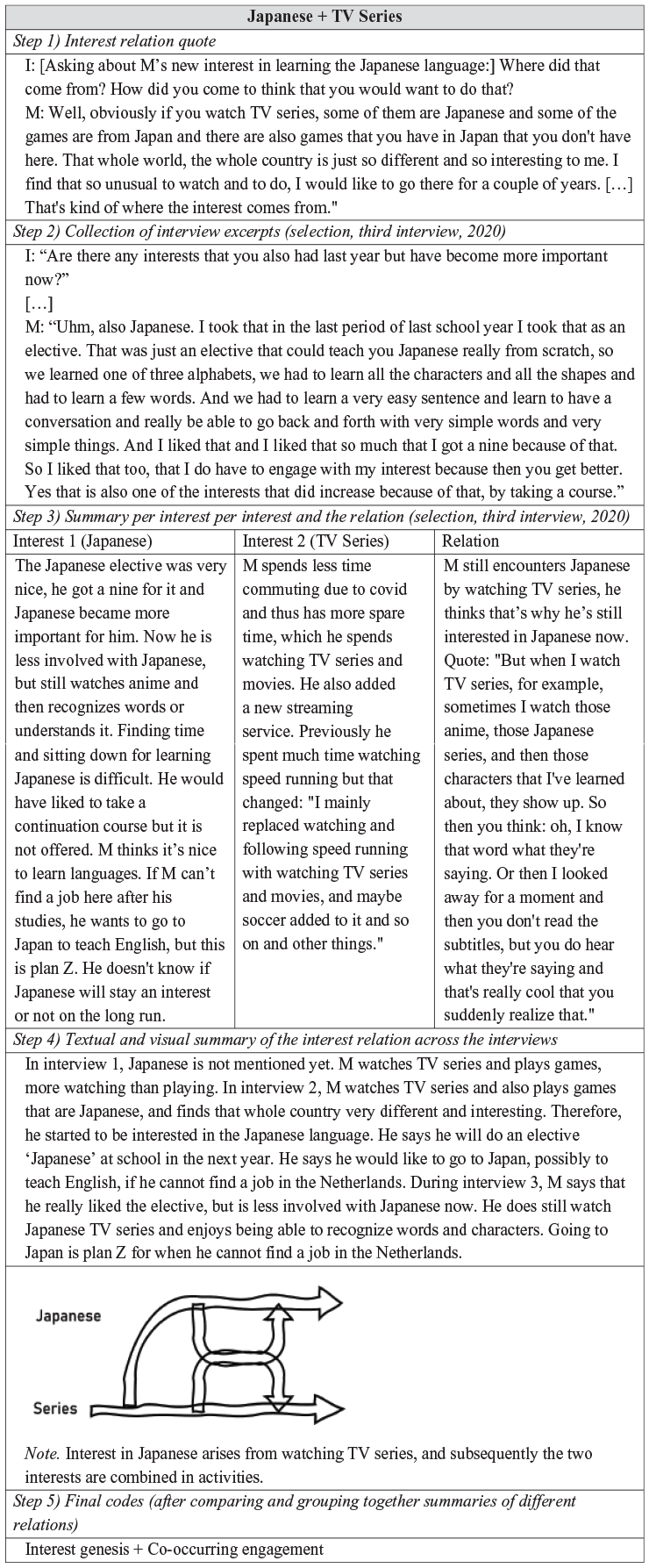
Example of the inductive coding process for one interest relation.
The second interview was the starting point for the analysis. In this interview we first selected interest relations where the adolescent, when talking about one interest pursuit, relates it to another one of their interest pursuits. For example, when asked about their interest in “hiking,” a participant describes how they also listen to music while hiking, which is one of the other objects identified as interest. Henceforth we call these combinations an interest relation (consisting of two or more interests), and for each relation that was identified in this way, passages about the related interests were selected in all three interviews. When reading these passages, in accordance with our aim, we selected for further analysis only those associations where the relation between the interests is object-based and the interests were involved in each other’s development. This means we did not include relations where the described connection was generic (e.g., when reading a book is mentioned in relation to soccer because they both take up leisure time), nor relations without indication of intertwined development (e.g., when the connection seemed constructed during the interview).
For each interest relation, we made short descriptions of all involved interests and their relation at each interview timepoint, based on the marked segments in all three interviews. These descriptions were further synthesized in one summary per relation that reflected the core of the intertwined development, as well as a sketch which symbolized the relation of these interests over time (see Figure 2). We then contrasted and grouped together all interest relations that showed comparable processes until exhaustive and meaningful categories were reached. For example, all cases wherein new interest arose from existing ones were combined into one category. Half of the sample was used for initial explorative analysis, and after the categories were determined we examined whether these were supported by data of the remaining fifteen adolescents. Consequently, one sub-category (comparable meaning) was added.
Quality Assurance
In explorative research with many iterations and interpretations that cannot rely on standardized procedures for data collection and analysis, establishing quality can be challenging. Hence, we asked an external researcher to perform an audit procedure (Akkerman et al., 2008) to affirm the quality of our study. The audit procedure assesses the visibility (i.e., are data collection and analysis decisions explicated and communicated clearly?), comprehensibility (i.e., are the decisions substantiated?), and acceptability (i.e., are the decisions acceptable within the standards, values, and norms in the research field?) of the data collection and analysis. The auditor was granted access to the data and a detailed account of the steps that were taken (including analytic directions that were explored but not continued) by the researchers to arrive at the final coding scheme, as well as the final coding of the data. He judged the analysis procedure to be transparent, well-structured and of high quality. The auditor did give several suggestions to improve the description of the analytic steps, resulting in refinements of description of the analyses.
This explorative study was not preregistered. The data for this study are not publicly available because the interview transcripts would disclose the identity of the participants. However, the Appendix, which includes an overview of all interest relations per person, was included to increase transparency.
Results
The results of this study demonstrate notable inter- and intraindividual varieties in development of associated interests. Although all adolescents reported at least one interest relation, some adolescents experienced many connections between their parallel interests, and others seemed to experience or talk about their interests in more isolated ways and mentioned only few notable relations between their various interest pursuits. The number of interest relations that we identified ranged from 2 to 8 per adolescent. Similar variety in the number of relations existed between the interest pursuits of one person: An adolescent may describe one interest as being related to many of their other objects of interest, while they also describe some interests as more isolated. We observed no notable differences between the six educational tracks.
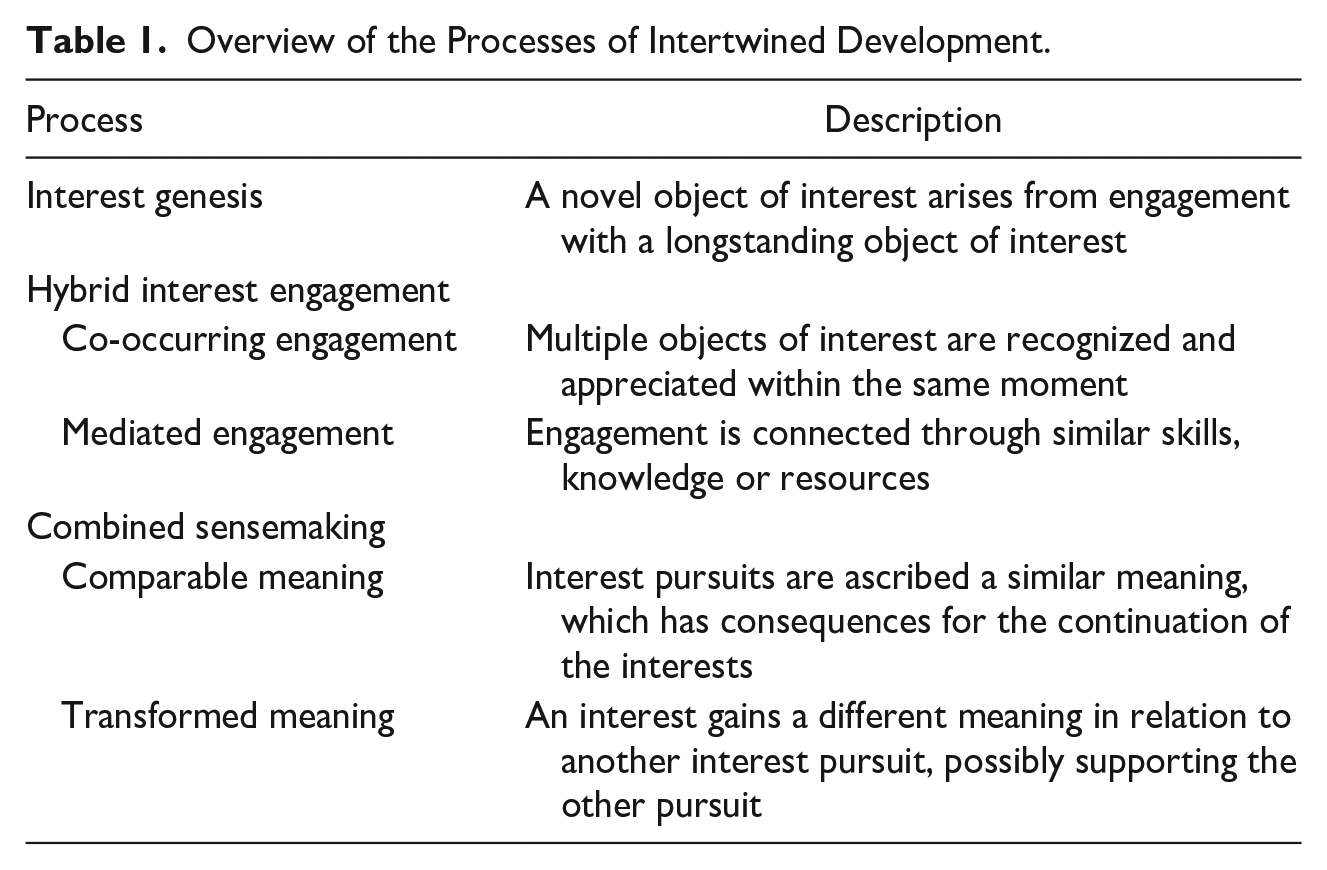
Inductive analysis of the interviews resulted in three observed processes of intertwined development, of which two are split into two variations (see Table 1 for an overview). Below we describe these processes including examples from the interviews, illustrated by ESM data. Not all adolescents reported every process; some adolescents only reported one of the processes for multiple interest relations. In the Appendix all interest relations are displayed per person.
Overview of the Processes of Intertwined Development.
Interest Genesis
Firstly, adolescents described how novel objects of interests arose from engagement with their longstanding objects of interests, which we refer to as interest genesis (in which genesis means birth or beginning). For example, Brandon has been interested in “playing videogames” with friends for a long time. In the interview, when asked how his interest in “programing” started, he mentioned: “My brother bought an Xbox when I was six, or eight, the very first one and then we started gaming together. So that’s how the interest in those devices started actually. It was quite a logical step for me, it’s just fun.” In this case it seems that the content of playing videogames and programing were close enough together that simply playing games sparked Brandon’s interest in programing. Brandon pursued a degree and career in IT, which demonstrates that this interest, that initially arose from a leisure interest, became a long-lasting theme in his educational and professional life.
Further examples illustrate the mediating role that other people can play in this process. This is evident for Shane, who was interested in “badminton” for a long time. He trained multiple times a week and was very competitive. In the first interview he mentioned that he definitely wanted to continue playing badminton, but prior to the second interview two of his teammates quit the sport. His remaining teammate then said he was going to play tennis instead, and Shane told us: “So then I said: ‘great, I’ll do that too’.” Despite his initial plans to continue playing badminton, he switched to tennis rather impulsively. During the third interview he was still becoming increasingly more skilled at and enthusiastic about his new interest in “tennis.” Other people within a certain interest-related practice can thus suggest ideas that become identified as new objects of interest, which can subsequently last for a long time.
A similar role can be played by algorithm-driven platforms. Vincent reported an interest in “YouTube,” a platform which he used to watch all kinds of videos, such as funny videos, animations or videos relating to games. He described how the YouTube algorithm recommended an animated video on “Dungeons and Dragons” (DnD, a role-playing boardgame), to which he thought: “hey, that’s quite interesting.” He started to watch more videos and eventually wanted to try out playing it himself. By the time of the third interview, Vincent called DnD his most important interest; he played it with different groups of friends and created content for the game by writing and making art. As in this case, platforms such as YouTube, Pinterest or Instagram (which were regularly reported as objects of interest) often behaved as content-flexible objects. This means that they were not tied to certain content but could easily switch between different topics. Their underlying algorithms could then push new (semi-related) content to the adolescent, which was potentially picked up as a new interest.
When a new object developed out of engagement with another object of interest, sometimes adolescents continued to relate the novel interest to the “parent” interest. For example, Vincent kept watching videos about DnD on YouTube (alongside other videos) after he started playing it, hence their engagements remained intertwined. In contrast, Brandon did not continue to actively associate gaming and programing in the interviews, though both still took up a large portion of his life. In Shane’s example of badminton and tennis, the new object of interest replaced the object that it arose from, taking a similar purpose and place in his life.
For Brandon the exact moment of genesis was not captured in the ESM application, since it happened before the research took place. For Vincent we see that DnD appeared as an interest halfway through the study (Figure 3). In the next section we display some ESM events in which Vincent mentions both DnD and YouTube in combination.

Interests of Vincent in YouTube and DnD as reported throughout the three year study.
Hybrid Interest Engagement
A second process of intertwined development regarded hybrid interest engagement, in which a new (hybrid) form of engagement emerged from mixing two interests. The most predominant way in which we observed this to happen was co-occurring engagement, wherein an adolescent recognized and appreciated multiple objects of interest that co-occurred within the same moment. For example, Olivia was interested in “music,” and enjoyed listening to all kinds ranging from classical music to heavy metal. She described how she sometimes recognized and appreciated music when watching movies, which for her was another interest: “If I hear something in a movie, . . . if I hear something somewhere that really grabs my attention, then I immediately turn on Shazam 2 and then I link it right to Spotify and I have it right there and then, yeah, I can study it a little bit, listen to it a little bit more often.” She also described how, when watching certain movies, she could really feel the music and it made her feel strong emotions. In Olivia’s case, these objects of interest co-occurred because they were combined in societal structures (i.e., films generally contain music), which she then recognized within one situation. In some cases the objects of interest even seemed to be nested, meaning they could not be separated but co-occurred by default (e.g., “science” and “medicine,” “judo” and “giving judo training”).
This is contrasted with cases where co-occurring engagement was not imposed by (societal) structures but emerged from daily life or from personal initiatives. For example, Leonor was interested in “sustainability,” and was very aware of the influence of her lifestyle on the environment. Consequently, she had decided not to eat meat, and played an active role in making the waste system of her high school more sustainable. Another of her enduring interests was “sailing,” something she even pursued on a professional level for a while. During the summer holidays after completing secondary school, Leonor went on an organized sailing trip to Sweden with other young people, during which they studied plastic micro-particles in the water. This trip hence combined both interests (and an interest in “Sweden,” which she called her ideal world). Leonor described how this trip helped her to realize she wanted to pursue a degree in sustainability, appreciating how great it is to spend time with likeminded people and how rare it is to be passionate about this subject at her age.
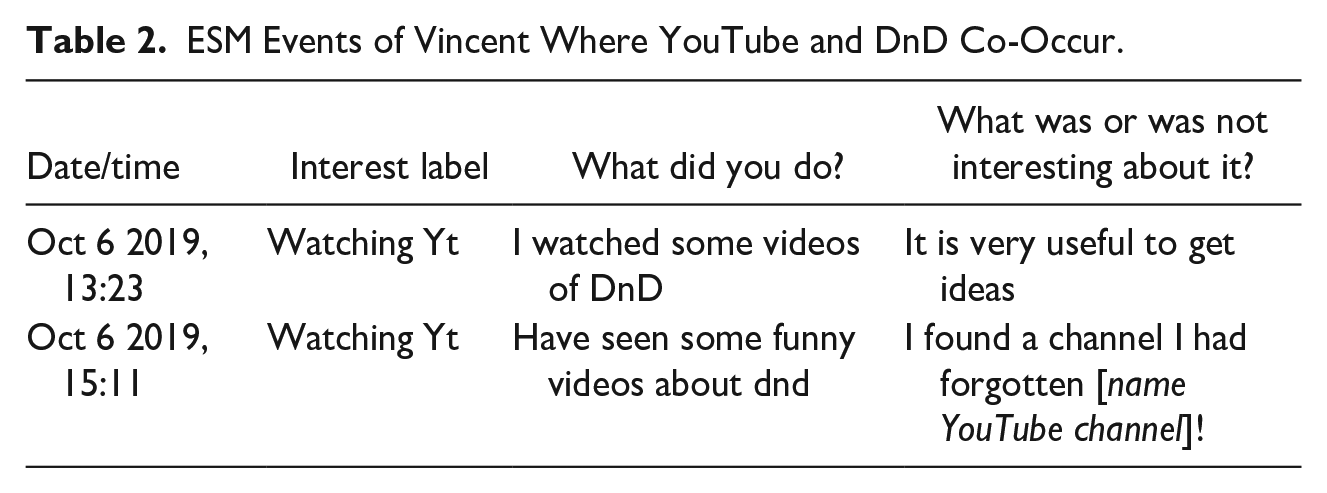
Content-flexible platforms (YouTube, Netflix, Pinterest) and content-flexible activities (reading, talking) often co-occurred with other interests, since these platforms and activities are in need of content (i.e., one cannot read, watch videos, or talk about nothing). These platforms could easily be tailored to other interests, for example watching videos about history; talking about trains. In Vincent’ example above, YouTube and DnD kept co-occurring after he became interested in this game. We often observed how co-occurrence with content-flexible interests could inform or enrich the other interest, for example when watching YouTube gave Vincent more ideas for his DnD materials (see ESM-events in Table 2). This form of co-occurrence can have long-term consequences for the development of the other interest as the person develops more skills and expertise through the platform or activity, potentially giving it a stronger and more stable position in one’s life.
ESM Events of Vincent Where YouTube and DnD Co-Occur.
In some cases, co-occurring engagement just seems to arise without the adolescent deliberately seeking it out. In other cases it seems more purposeful, for example when someone deliberately listens to music in order to make a boring walk more enjoyable. In those instances, co-occurrence has a clear advantage over engaging in a singular interest. On the long term, co-occurring engagement could also affect interest continuation, for example when Shane was asked to make a website for his badminton club (relating to his interest in “programing”). When he decided to quit badminton the website was not finished yet, and by virtue of this activity badminton stayed in his life a little longer.
Notably, we also found instances where participants described hybrid interest engagement without the interests co-occurring in a situation. These engagements were connected through skills, knowledge or resources by which engagement of both interests developed in a similar way. We term this mediated engagement, in which “mediated” represents the indirect relation and the way in which the experience is colored by another interest. This can be illustrated by Jodi, who was interested in the “news,” which she read daily and discussed with her parents. She felt it was important to know what is going on in the world and it made her realize how good her own life is. After completing secondary school she started studying “Medicine” and there learned to read scientific articles critically. She observed that this has changed the way she reads the daily news as well, looking at news articles more critically (especially when this concerns scientific findings). In this way, the adolescent described how the development of these interests is intertwined by skills that are used in both practices, or transported from one practice to another. Jodi’s reflection on her interest in news was not visible in the ESM data, since her reports mostly looked like this: “I read the news”; “I find it interesting to see what is happening in the world.”
Whereas the above processes describe overlap or similarities in interest engagements, we also observed instances of intended engagement separation, which concerned interests whose engagements previously co-occurred but are then intentionally separated by the adolescent. It should be noted that we only observed engagement separation for one adolescent in our data, a girl called Haley. Haley purposely started to separate her interests in “partying” and “social media.” As she became increasingly critical of social media and its influence in her life, she started to realize that “social media is all a bit fake anyway, to give a nice picture perfect. Talking is more real. . . . I think that’s becoming more important, contact with people rather than online contact with people. The contact ‘in real life’, so to say.” She described how she cut down on her social media in general and tries not to take out her phone at parties (in contrast to her peers), but just talks to people, sings and dances. This process of separation continued over the next year and although the COVID-19 pandemic lead to fewer parties anyway, she continued to be conscious of her use of social media in the presence of others. However, the number of ESM events that Haley reported with social media does not decrease over time. In a similar way to social media and partying, Haley started to separate her interest in “music” from “social media” by unfollowing artists and musicians, stating that she thought their posts were fake and she would rather follow only those she knew in real life. One incidental ESM event reflected this same sentiment when Haley said she watched “This is Paris,” a documentary about Paris Hilton: “I was curious to see what her life was like in real life. Just because you always see these happy posts on social media. This just made it even more interesting for me to want to watch it.”
Combined Sensemaking
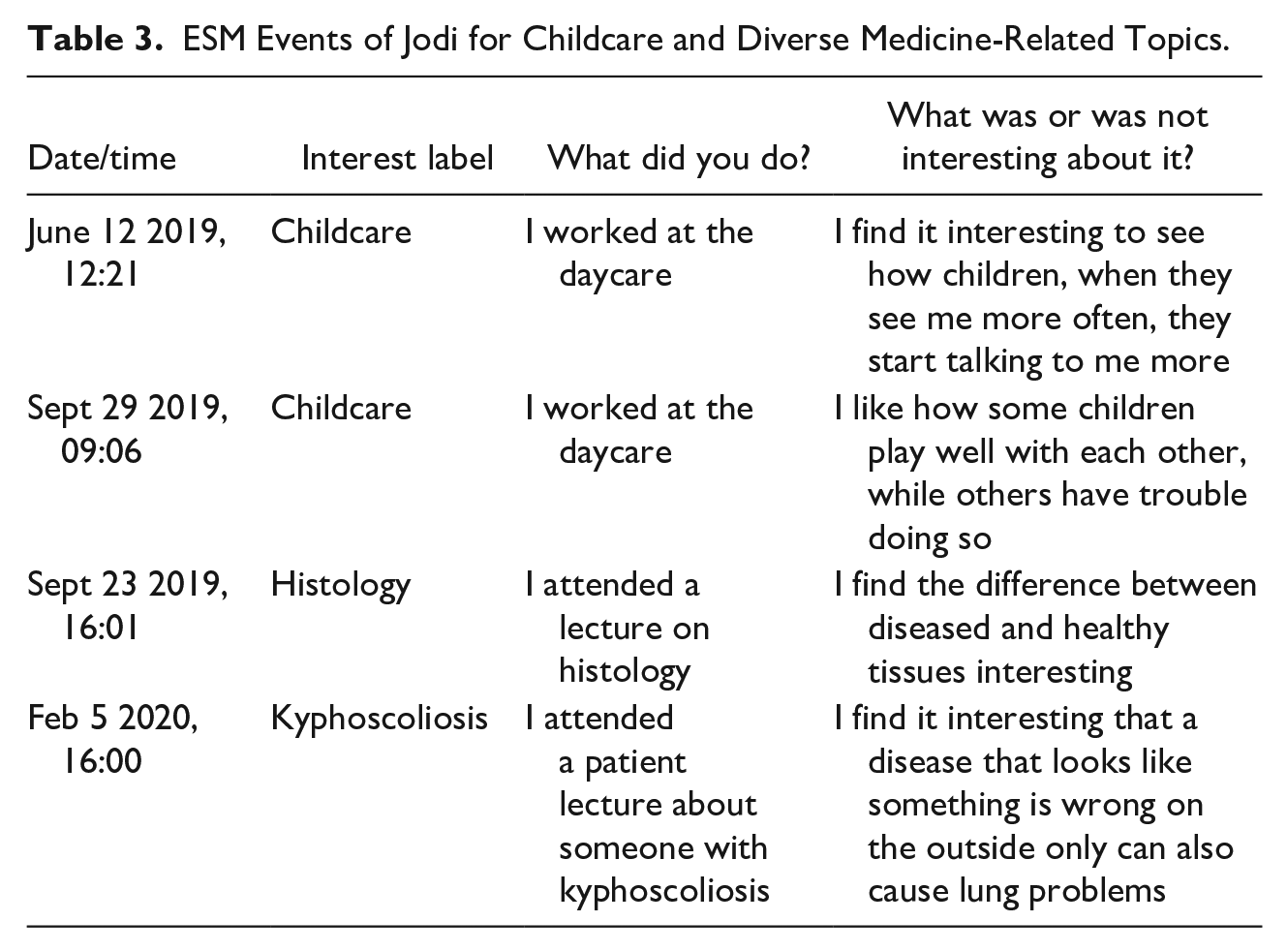
A third process of intertwined development concerned the way that adolescents make sense of their interests (i.e., give meaning or ascribe purpose to their experiences). The process of combined sensemaking describes how adolescents relate the meaning of one interest to that of another. A first exhibit of this concerned interests pursuits whose meaning is similar to each other, that is, comparable meaning. Jodi talked about this in the context of her interest in “childcare,” her side job, which decreased when she started studying Medicine: “I have always liked taking care of people. I can’t explain it, but I used to get that satisfaction from childcare. But now I’m pursuing a study where actually caring for people is central, so that’s where I kind of get that satisfaction now.” Although she still liked working at the daycare center, it became less important to her and she talked about looking for another job closer to her university. In this way, the comparable meaning of both interests has consequences for the continuation of her interest in childcare: it seems less necessary than before. Jodi’s reflections were not visible in the ESM data, which mostly focused on the day-to-day happenings and specific topics (see Table 3).
ESM Events of Jodi for Childcare and Diverse Medicine-Related Topics.
It should be remarked that comparable meanings were often observed for multiple sport-related interests, which often had a similar meaning in an adolescent’s life (e.g., maintaining a healthy lifestyle) and thus were seen as interchangeable.
Whereas the above describes a stable relation between interests, we also observed many instances where an interest gained a new or different meaning in relation to another interest pursuit over time, which we call transformed meaning. For example, Ray became increasingly interested in what he calls “personal development”: learning new things in general and setting goals for his future. In light of this interest and his desire to do useful things with his time, he reconsidered the value of other interests, such as “Netflix” and “gaming”: “If you look at what gaming brings me, then it is not as much as three hours invested in watching YouTube videos on how I can achieve my goal or . . . whether I want to become smarter in a way or whatever. So that’s why certain traits have been toned down or left out altogether, like gaming and Netflix.” In other words, Ray looked at his interests in “gaming” and “Netflix” through the lens of his interest in “personal development,” and increasingly regarded playing games and watching series on Netflix as a waste of time compared to activities that allowed him to develop as a person. Hence, Ray compared and contrasted his interests, which lead to one of them decreasing in value and possibly disappearing altogether.
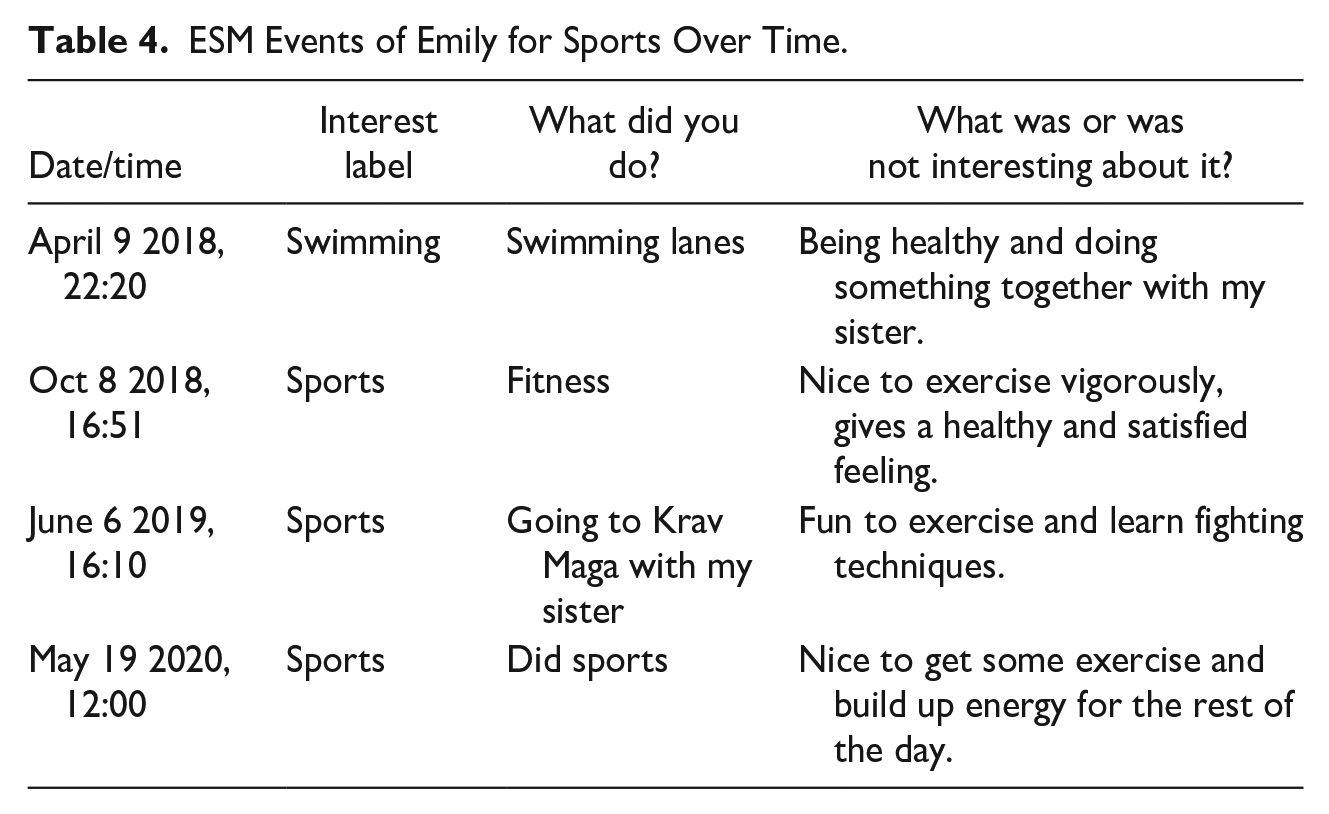
While in Ray’s case interests were seen as incompatible and a trade-off takes place, there were also many instances of interests aligning. This is exemplified by Emily, who had been interested in “spirituality” for a time, which for her consisted mostly of mindfulness practices and reading books about spiritual topics. This interest gradually gained importance in her life and grew to include also self-care practices and the body positivity movement. Emily noted how this corresponds to changes in her interest in “sports,” which consisted mostly of fitness exercises: “I think that’s why it has become less important, because this has become bigger. That spirituality, that just accepting who you are, the way you are, and that sports should be something fun and not like: you have to do it because you have to lose weight. Because I didn’t have to lose weight, so don’t be ridiculous.” As spirituality started to grow bigger in Emily’s perception, the meaning she ascribed to sports thus transforms from “a means to lose weight” to “an activity that is fun to do.” A year later, COVID-19 measures had moved Emily toward using sports at home as a way of structuring her suddenly empty days, but the sentiment that sports should be fun remained evident. Emily’s example shows how the meaning someone ascribes to one interest can transform in light of another interest, where the interests grow toward each other and align. Although Emily did not report many ESM events for sports before this transformation, later events seem to reflect her changed attitude toward sports (see Table 4). The first two events in Table 4 took place before the first interview and seem to reflect an attitude toward sports as something that is mostly healthy, whereas the latter two events frame sports as more fun and a way to get more energy. There is no explicit link between “spirituality” or “self-care” and “sports” visible in the ESM data.
ESM Events of Emily for Sports Over Time.
In some cases, one interest even grew to explicitly serve or enhance another interest. For Leah this happened to her interest in “what certain food does to your body and health” when she took up “cycling” as a sport. Inspired by her boyfriend, who already cycled on a mountain bike regularly, Leah bought a racing bike and started to make both short and long trips. Her interest in food and health, which had always been quite general and included reading articles and trying new diets, changed when she started cycling: “Now I find myself linking it more to cycling and such. So what you should eat before and during and after your ride. How it can also make a difference what you eat the days before. That also has a real impact if you make a long trip.” Here, Leah ascribed a different meaning to food and health in her life, which is to enhance performance related to her new interest in cycling. Leah’s ESM-reported interests are displayed in Figure 4 and show that the general interest in food and health persists next to the specialized variation. In cases where one interest grows to serve or enhance another interest, the longstanding interest may either transform completely or remain valuable in and of itself. In Leah’s case this was clearly visible in the labels she uses to report the interests, though this was not always the case.
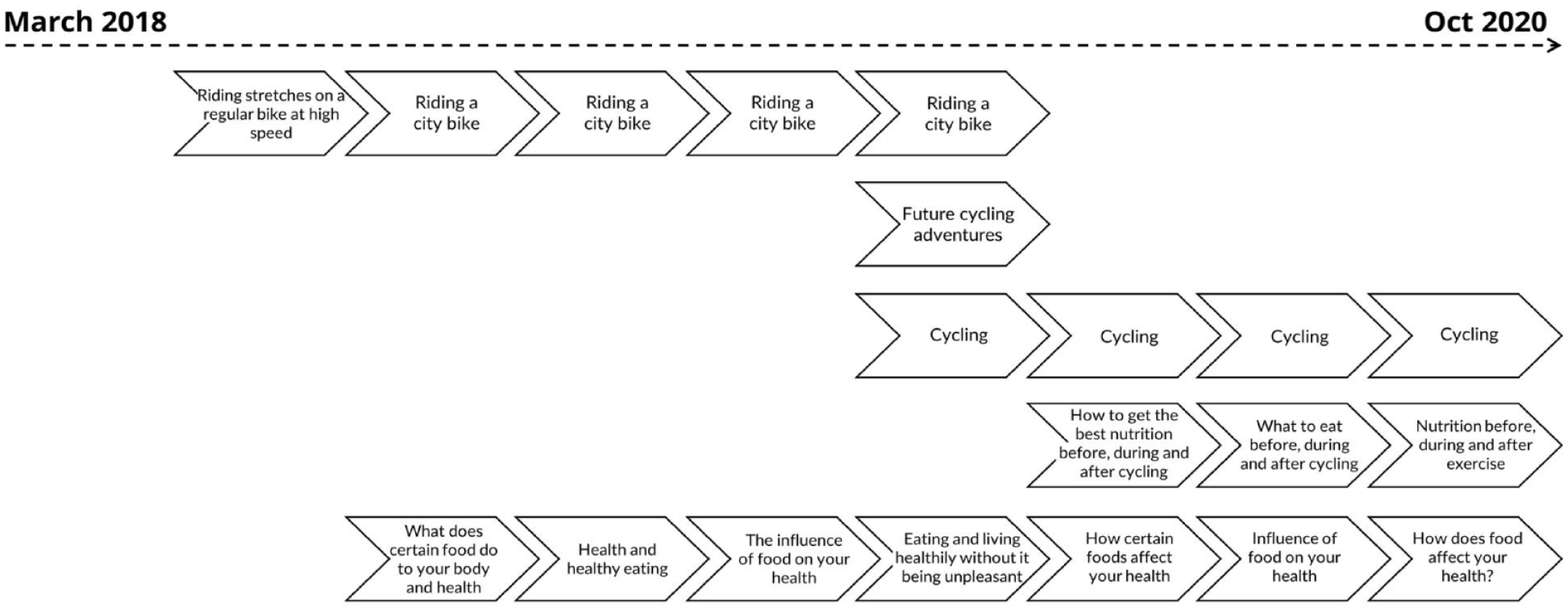
Leah’s ESM-reported interests that concern food or cycling.
Transformations in the meaning of objects of interest were often reflected in changes in the interest pursuits. For example, in the abovementioned case of Ray, indeed gaming and Netflix were engaged in less and less throughout the next year, although he also mentioned just having less spare time in general. Emily mentioned she started to take trial lessons for new types of sports which she thought would be fun to do than fitness (which can also be seen in Table 4). Leah kept experimenting with what food to eat in relation to cycling, and told us during the third interview she had found a good balance that worked for her.
The Case of Allan
To illustrate how multiple processes of intertwined development could manifest for one person, we describe Allan’s interest profile (i.e., the composition of all his interests at one moment in time). At the start of the interviews, Allan was a 15-year-old boy enrolled in the last year of pre-vocational secondary education (“mavo” in Dutch). When introducing himself during the first interview, Allan identified his main interests as “playing the guitar,” “gaming” and “teaching judo.” He was also very interested in trains, and during the second interview talked about a new activity he picked up, namely “working on (steam)trains.” This consisted of volunteer work he did in the preservation of historic steam wagons. Allan really wanted to become a train operator, but his application was rejected. Instead, he started a degree in Technical Engineering with the aim to become a train mechanic. Allan’s interests at the second interview (which he entered into the application during the 3 ESM-weeks in the year prior) are displayed in Figure 5.
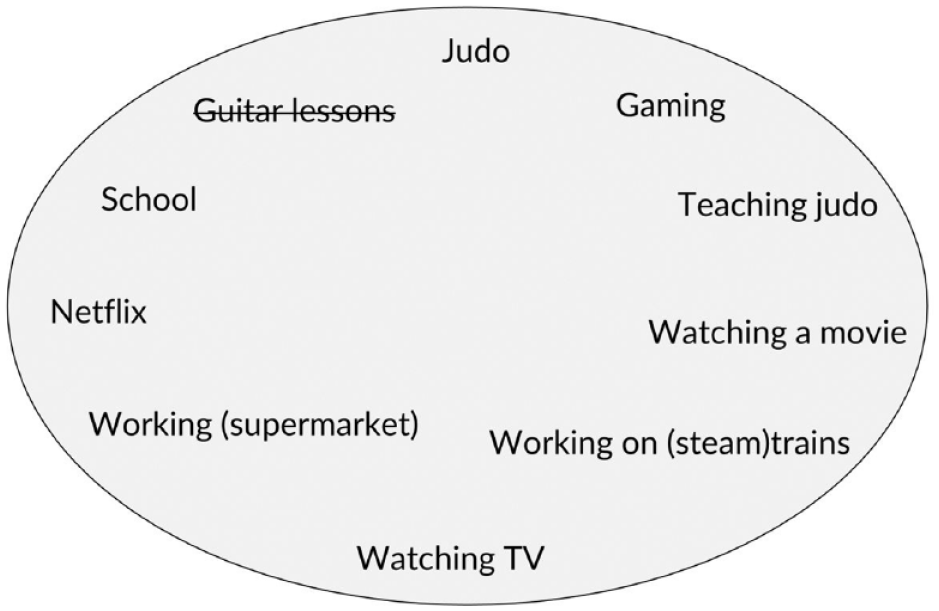
Overview of Allan’s interests during the three ESM weeks preceding the second interview.
Several of Allan’s interests showed processes of intertwined development. First, Allan played a game called Train Simulator, combining his interests in gaming and in trains. Allan introduced this when he talked about all the games he plays: “Then you also play Train Simulator occasionally, because I’m absolutely crazy about trains and I want to be a train operator myself in the future. (. . .) So yeah, then you automatically play it a little bit.” He also described how this game has taught him what all the components of a steam wagon are for, which allowed him to identify the components in real steam trains. Hence, the intertwined development of gaming and trains can be described by a process of co-occurring engagement (i.e., trains and gaming are both being engaged in and recognized within one situation), and mediated engagement (i.e., engagement is connected through a similar knowledge base). Although Allan said he started to play videogames less often over time as he became busier with school and (volunteer) work, it remained important for him as a way to relax. In the ESM-data “gaming” indeed occurred less often in the last waves.
Allan also related his interest in trains to his interest called “school,” which he used to report on everything he found interesting at his study program in Technical Engineering. When Allan was rejected for the train operator study program, he started to look for other ways in which he could work with trains in his professional life, which is why he eventually chose this program. Even though the study program was not exclusively about trains, train engineering was regularly addressed. Allan also saw connections to his volunteer work with steam trains, and used his network there to get a train-related internship in his second year. Here again we recognize co-occurring engagement and mediated engagement (as the steam train network helps him progress in school), in addition to the transformed meaning that school gets as a means to achieve his goal to work with trains. Whereas Allan told us in the first interview that he had a hard time concentrating at secondary school and did not spend enough time on studying, in the third interview he said that school (i.e., the Technical Engineering program) was, to his own surprise, one of his biggest interests. He noted that he was now motivated to do his best and really make something of his life.
Next to trains and gaming, a big part of Allan’s life was practicing “judo,” which he started when he was 7 years old, and “teaching judo,” which he started to do 1 year before the first interview. He described that he became interested in teaching judo after watching his own teacher and thinking “I want to be able to do that too.” Therefore Allan asked if he could help out. He describes how practicing judo and teaching judo remained intertwined:
“I am now also working on my next belt. Very slowly learning the techniques for it and then you can pass that on to the children you teach . . . I do take judo more seriously. Before it I was just joking around. Then teaching comes along and you have to teach other people, especially small children up to 12 years old, what you know. Then you have to do your best and be serious in front of the class.”
Hence, teaching judo arises from practicing judo (interest genesis), was connected through similar skills and techniques (mediated engagement), and Allan started to take practicing judo more seriously through its relation to teaching (transformed meaning). During the third interview, Allan has taken judo more seriously and started to train more often to get the next belt. Teaching judo also remained important, and he got increasingly more responsibilities and wanted to become better at it. He noticed that he also got better at presenting at school because of teaching judo (one more instance of mediated engagement).
Allan’s case was chosen to demonstrate how two interests can be intertwined in multiple ways, combining processes of interest genesis, hybrid interest engagement and combined sensemaking in one relation. These combinations did not occur as much for other adolescents in the study, hence Allan’s case was used to show the possibilities for combinations of intertwinement. Allan’s example also illustrates how the development of one object of interest can be intertwined with multiple other objects of interests, as was the case for his interest in “trains” being connected to both “gaming” and “school” (and “school” in turn being connected to “teaching judo” in a later interview). These webs were observed for more adolescents in this study, with the development of one interest pursuit often being intertwined with multiple other objects of interests. Although these interests concerned varying topics or activities, this interconnectedness with multiple other areas of one’s life may indicate a central position of such an interest (just as trains took a central position in Allan’s life).
Discussion
The aim of the present study was to explore intertwined development of interest pursuits. By studying what connections adolescents themselves made between their interests, we have demonstrated how intertwined development can be described in terms of processes of interest genesis, hybrid interest engagement and combined sensemaking. Interest theory typically speaks of interest development as a process of deepening of a single interest through four phases (e.g., S. Hidi & Renninger, 2006; Renninger & Hidi, 2015), and the results of the current study complement this by illustrating how interest development can also reflect broadening and connecting of multiple interests.
Our finding that novel objects of interest can develop out of longstanding objects (interest genesis) aligns with the findings of Azevedo (2018), who describes how novel interests are often connected to adolescents’ pre-existing activities. The current study added to those findings by showing that not only can similar activities spark or support a new interest, but also similar content or materials (such as for Brandon’s interests in “gaming” and “programing”), or other persons in certain interest-based practices. In addition, our findings illustrated how further development of these interests can either remain entangled or separate over time, or how one interest can replace another in daily life.
In addition to interest genesis, the current study showed how intertwined development of interest pursuits can also entail hybrid interest engagement in the form of co-occurring and mediated engagement. Although no previous study has explicitly described these developments, we do retrospectively recognize them in aforementioned case studies (Azevedo, 2011; Hollett & Hein, 2019; Ito et al., 2018), for example interest in rocketry co-occurring with other interests such as watching movies or electric machinery in the work of Azevedo (2011). Our findings showed how co-occurring engagement can be beneficial for all involved interests, as it is time-efficient to engage with multiple interests at the same time. Co-occurring engagement may also be more enjoyable or give input and inspiration to either or both interests (e.g., for Olivia her interest in “films” brings her new music to listen to, and her interest in “music” makes the experience of watching a film more intense). In cases where mediated engagement takes place, expertise concerning one interest can also grow by virtue of another interest pursuit, even if the content appears unrelated (as in Vincent’ example for “School” and “DnD”).
A specific variation that we described in the study concerns engagement separation, where the adolescent is deliberately separating two interests whose engagements were previously intertwined. Although we only noticed this for one adolescent in the study, we see parallels with “intended discontinuity” as discussed by Bronkhorst and Akkerman (2016) in the context of in- and out-of-school learning. They noted that students may deliberately keep school and out-of-school apart when they do not deem them compatible, for example in terms of norms or goals. While this concerns contexts and not interests, the same underlying mechanism of deliberate separation based on incompatibility seems at play. This gives strong indications that engagement separation can occur for more students than just for Haley; we recommend that future research purposely seeks out these cases to study when they occur and what consequences this has over time.
Last, we found intertwined development that involved a process of combined sensemaking in the form of comparable meaning and transformed meaning. These findings correspond to findings of E. M. Slot et al. (2020), where the meaning of “gaming” or “watching series” was defined in the light of school-related interests. Combined sensemaking demonstrated how development of interest pursuits could be intertwined even if it is not visible within moments of engagement (i.e., there is no co-occurrence). Nonetheless, despite the invisibility of these combinations, they may be strongly related to the continuation of each interest. When the meaning of two interests is intertwined, this can manifest in a relation of interdependency, especially when one interest serves to support another. Hence, the long-term continuation of these interests may also be tied together. In addition, combined sensemaking calls attention to the importance of the interest profile as a unit of analysis, since a single novel interest (as in Leah’s case “cycling”) can change the meaning of many other interests.
For the process of combined sensemaking we see a strong connection with multiple goal theory (Boekaerts et al., 2006; Ford, 1992): When the meaning of two interests align or conflict, so might the associated goals. However, previous research has demonstrated that not every interest pursuit is goal-oriented (E. M. Slot et al., 2020). In addition, the current study showed that not every interest relation is a deliberate process initiated by the adolescent. Hence, the current study goes beyond deliberate goal-regulation and shows more diverse ways in which interests can develop in relation to each other.
The processes of interest genesis, hybrid interest engagement and combined sensemaking may occur in combination for certain interest-relations, as the case of Allan demonstrates. In addition, the development of one object of interest can be intertwined with multiple other objects of interest within a person’s interest profile (i.e., forming a web). This further supports the value of looking at entire interest-profiles as opposed to isolated interests. These findings also align with Azevedo’s (2011, 2013, 2018) descriptions of someone’s full set of activities in life as a “fabric,” in which every thread (i.e., a single, specific activity) is (indirectly) connected. The current study demonstrated that adolescents themselves also experience this, though to a limited extent as they do not connect every interest-related engagement to every other engagement.
Our findings suggest that content-flexible interests (i.e., platforms such as YouTube and activities like talking and reading), are especially suitable for giving inspiration to longstanding interests and for suggesting new potential objects of interest. Objectifying platforms and activities as the object of interest, which frequently occurs in our data (and also, e.g., in Beek, Bronkhorst, & Akkerman, 2024; E. Slot et al., 2019), can be seen as at odds with common conceptions of interest as a content-specific concept. Instead, we observed that content-flexible platforms or activities often encompassed multiple contents relating to multiple other interests, for example going to Pinterest to watch content about both “baking” and “drawing.” Therefore we hypothesize that after repeated engagement, the content-specific platform or activity may become a stand-alone space that someone goes to, simply to encounter “something interesting” (E. M. Slot et al., 2020). Consequently, it may be recognized as an object of interest in itself, as it is engaged in without purposely searching for specific content.
Not only content-flexible interests, but also longstanding participation in certain practices can provide space for intertwined development of interest pursuits. We observed how other people who participate in the interest practice can display their interests (Beek, Bronkhorst, Stark, & Akkerman, 2024) and/or may actively recommend new objects based on one’s longstanding interests. In addition, expertise that is gained in one practice can provide new opportunities for other interests, as seen in the mediated engagements. Notably, coincidence also seems to play a role on several occasions, leading at times to longstanding changes (as in the example of Shane who impulsively switched from badminton to tennis). Hence, interest relations and their development are part of a bigger whole (Barron, 2006; DiGiacomo et al., 2018; Hedges, 2019), which became especially visible during COVID-19 pandemic, as noted in several examples above. In this period, opportunities to engage with certain interests were limited. The extra spare time was often seized by other (existing or novel) interests, which could potentially result in long-lasting changes in interest pursuits.
Limitations and Future Research
The current study was situated in the Netherlands, and the results of this study should thus be understood in the Dutch context. More specifically, in this context most adolescents have the means and are generally expected to pursue (multiple) interest(s), both in their studies and/or work, as well as in their leisure time. In addition, adolescents are expected to construct a coherent identity narrative, also in relation to their study and career choices. Hence, (multiple) interest development may take a different shape in societies where young people face other conditions and expectations.
Furthermore, several methodological choices should be considered when interpreting the results of this study. First, a critique of this study might be the indirect interview approach. Even though we were interested in developmental relations between interests, the interview questions were not aimed at this directly but rather asked about one interest at a time. Asking adolescents directly to identify relations between their interests may have led to more elaborate reflections and a larger quantity of relations. This may seem desirable, but may also bring forth relations created during and due to the interview (Tanggaard, 2009). Hence we believe our indirect approach was suitable to capture those relations that the adolescents deemed most significant and meaningful in their life (Qu & Dumay, 2011). Future research might take the next step and ask adolescents specifically about the three processes, for example by asking “Which of your interests do you combine in one activity?” This would allow further comparison of the interests that are and those that are not thus combined, for example systematically comparing their domains and continuation over time.
Second, our approach to investigating interest pursuits through the ESM application and corresponding interviews carries the risk of objectifying interests: externalizing them and treating them as static objects rather than dynamic processes that exist only in relation to the person being interested. This might invoke a more limited view of (intertwined) interest pursuits and the “fabric” of interests (Azevedo, 2018) than an open approach would. Conscious of this, the application and interview allowed the adolescent to delineate and (re)name their own interests dynamically. Nonetheless, future research may apply an even more fluid approach, for example by talking with adolescents about everything that engages them, without labeling and thus objectifying their interests.
Practical and Theoretical Implications
The findings of the current study can be translated to several suggestions for parents and (educational) professionals working with adolescents and policy. First, those who aim to understand adolescents’ interest development are recommended to embrace its complexity. Since our results have demonstrated several processes of intertwined interest development, isolating a single interest when trying to understand development is not sufficient. A person-centered approach may also help educators to understand why some of their students easily develop an interest in new content while others are not affected, by acknowledging and appreciating the idiosyncratic connections with the adolescents’ other interest pursuits.
Those who aim to support adolescents’ interest development, either directly or through policy, are recommended to look beyond development of single interests. Even when concerned with how to deepen single interests (e.g., by stressing relevance or facilitating mastery), (educational) professionals and policy makers should be aware of connections between multiple interests that adolescents themselves already may see naturally (c.f. E. M. Slot et al., 2020). Our results illustrate how processes of interest genesis, hybrid engagement and combined sensemaking can occur for objects of interest that can be considered close in terms of domain (e.g., food/health and cycling), but also for objects that are societally further apart (e.g., sailing and sustainability). Accordingly, even when connections seem unlikely given societal distance, in daily life different objects of interests can be connected. This goes not only go for leisure interests, but also for school related interests. Explicating and/or encouraging these connections can be the basis for new interests, hybrid engagement or new ways of sensemaking, and thus strengthen the position of an interest in an adolescent’s life and identity.
Guiding adolescents’ (interest) development can be done through reflective conversations such as the interviews in this study, but also through discussing momentary data (e.g., keeping diaries). The combination of both methods might especially be fruitful in encouraging adolescents’ reflections while remaining grounded in daily life events. Asking adolescents themselves about their experiences and sensemaking is key in this process, as the meaning of an interest is not always observable in activity.
With regard to interest research and theory, the results of this study indicate that development of interest can not only be described and understood in terms of deepening of a single interest (as described in the four-phase model; S. Hidi & Renninger, 2006), but also in terms of connections between interests. While current interest research often focuses on a person becoming more interested and spending more time on one object of interest, the current study demonstrates that this only provides a limited understanding of interest development and the place that interest takes in daily life. When an interest is more connected to other interest pursuits (e.g., co-occurring with them in certain situations and gaining meaning in relation to them) this may reflect a different, perhaps more central and stable, position of the interest pursuit in someone’s life than an object that is deemed highly interesting but also isolated from other interests.
While the current study does not allow us to make claims about the relation between single interest development (as described by the four phase model; S. Hidi & Renninger, 2006) and multiple interest development, we hypothesize that they are connected. There are some indications in the data that lead us to formulate tentative expectations. Firstly, we expect that those novel interests that arose from engagement in a longstanding interest practice (interest genesis), are likely to start as an incidental (i.e., situational) interest and over time develop into a well-developed (i.e., individual) interest, as described in the four phase model. Secondly, with regard to the process of combined sensemaking identified in our study, we expect that this may occur predominantly for well-developed interests, given that these interests are more deeply embedded in an individual’s life and may thus be more involved in processes of identity development and sensemaking. Future research could investigate these tentative expectations and describe the relations between processes of interest deepening and broadening.
Conclusions
Adolescents described their multiple interests as related, revealing three processes of intertwined development: 1) interest genesis, where one interest developed out of another, 2) hybrid interest engagement, where interests co-occur or their engagement is mediated by similar skills or knowledge, and 3) combined sensemaking, where two interests have a similar meaning or gain meaning in relation to each other. While interest theory typically speaks of interest development as a process of deepening of a single interest, the results of the current study illustrate how interest development can also reflect the broadening and connecting of multiple interests. To further advance our understanding of interest development, considering both deepening and broadening of interest is necessary.
Footnotes
Appendix
In this Appendix we have included an overview of each interest relation of every participant in the study, in order to increase transparency and give the reader more insight into the total interests of the participants.
Acknowledgements
We express our gratitude to the young individuals who took part in this study for their willingness to share their experiences. We would like to acknowledge Thea van Lankveld, Joris Beek, Niklas Ziegler, and Alex Janse for their valuable contributions in designing and conducting data collection with inTin. Additionally, we would like to thank Bob Timmer for conducting the audit and Eleanor Rowan for reviewing.
Declaration of Conflicting Interests
The author(s) declared no potential conflicts of interest with respect to the research, authorship, and/or publication of this article.
Funding
The author(s) disclosed receipt of the following financial support for the research, authorship, and/or publication of this article: This project has received funding from the European Research Council (ERC) under the European Union’s Horizon 2020 research and innovation program under grant agreement No 716183.
