



Abstract
Young adulthood presents many developmental tasks. For autistic individuals and those with many autistic traits, this transition to adulthood can be challenging. Typically, family and professional support become less available. Nevertheless, most scientific research on these individuals has focused on childhood and adolescence. A scoping review was conducted to summarize peer-reviewed research on these young adults and the problems they encounter; 510 studies focused on autism and 92 on autistic traits. This review reveals that understudied subpopulations include young adults with intellectual disabilities, women and gender minorities, and non-Western populations. Furthermore, although not all individuals face difficulties, young adults with many autism characteristics (with or without autism diagnosis) experience diverse challenges. Most studies highlighted social difficulties, emotional problems, and cognitive differences. Recommendations include conducting more qualitative research and studies that address multiple topics simultaneously, paying attention to infrequently studied areas (e.g., sleep problems, gender, and sexuality).
Introduction
Emerging or young adulthood, sometimes defined as the life stage from 18 to 29 years of age (Arnett et al., 2014; Reifman & Niehuis, 2022), is a critical period for skill development and the acquisition of internal and external resources (Arnett, 2000). The decisions made and skills acquired during this stage profoundly influence later well-being and living conditions. However, many young adults today face significant challenges, including economic struggles that prevent them from attaining the living standard of their parents (Wyn et al., 2020), as well as an increased prevalence of psychiatric disorders (Kessler et al., 2007).
Although ecological systems theory (Hayes et al., 2017) was not the foundation of our study, it offers a valuable framework for understanding the diverse influences on young adult development and well-being. This theory highlights how individuals develop through interactions across interconnected systems, including the microsystem (direct relationships, such as with peers), the mesosystem (interactions between microsystems, like collaboration between parents and professionals), the exosystem (indirect environments, such as parental work-related stress), and the macrosystem (broader societal influences, like cultural norms and values). Importantly, these systems affect each other and the individual over time, emphasizing the multifaceted nature of development. For young adults, this means that development is shaped not only by personal factors but also by external systems and societal influences. Young adulthood thus presents both challenges - arising from individual, interpersonal, systemic, and societal factors - and opportunities for targeted interventions to foster independence, professional skills, and the establishment of supportive social networks.
However, knowledge about the specific struggles faced by certain subpopulations of young adults, and the best ways to support them, remains relatively scarce. For instance, autism can present unique challenges in developing the skills necessary for attaining independence and reaching other key developmental milestones associated with young adulthood. Decades ago, autism was considered rare, with an estimated prevalence of approximately 1–1.5 in 5000 children (Kawamura et al., 2008; Treffert, 1970). More recent estimates suggest that 85–138 in 5000 children are autistic 1 (Maenner et al., 2020; Sharma et al., 2018). Between 1998 and 2018, the prevalence of autism diagnoses rose exponentially (Russell et al., 2022), likely due to increased awareness of autism characteristics, more often applied autism diagnoses, and the inclusion of individuals with less pronounced autism characteristics (Lundström et al., 2015). As a result, the population of autistic young adults is growing (Gerhardt & Lainer, 2011). Despite this increase, research and support efforts continue to focus disproportionately on children and adolescents, often neglecting the unique needs of autistic young adults (Parchomiuk, 2021).
Autism, or Autism Spectrum Disability 2 (ASD; American Psychiatric Association [APA], 2022), is characterized by difficulties with social communication and interaction, along with restricted and repetitive behavior patterns, interests, and activities. Notably, ASD is also associated with specific strengths. Researchers have pointed out that typical autism characteristics that are part of the diagnostic criteria for ASD (APA, 2022), such as intense focus on specific interests and adherence to routines, can serve as strengths that help youths transition to adulthood (Warren et al., 2021). Similarly, traits often linked to executive dysfunction, such as inertia in task initiation and completion, can result in highly productive bursts of activity and contribute to well-being (Rapaport et al., 2024). Recently, researchers and employers have increasingly recognized the potential benefits of autism characteristics, especially in work settings (Rampton et al., 2023). This reflects a broader shift, driven by the neurodiversity movement, toward viewing autism characteristics as differences rather than deficits. By adopting this perspective, we can better appreciate the contributions of autistic individuals. The neurodiversity paradigm also emphasizes the importance of prioritizing well-being and quality of life. However, improving well-being also requires studying the specific challenges autistic individuals may face and identifying intervention targets. Addressing gaps in research and support will ultimately help autistic individuals navigate this pivotal life stage more effectively.
As the social model of disability (Oliver, 2018) highlights, autism can be viewed as a social disadvantage that may hinder well-being and goal attainment (Kapp, 2020). While certain autism traits may lessen in adulthood (Howlin et al., 2013), many adults with ASD diagnoses continue to face substantial stressors, such as social, work-related, and mental health challenges (Howlin & Magiati, 2017). In young adulthood, autistic individuals often must navigate environments, like workplaces, that are not designed to accommodate their needs. These challenges are compounded by a higher prevalence of co-occurring psychiatric conditions in autistic populations compared to their typically developing peers, including mood and anxiety disorders (White et al., 2020).
Furthermore, the support autistic individuals receive typically diminishes during the transition to adulthood, and services for autistic adults are dramatically more limited than those available for children (Lambe et al., 2019; Németh et al., 2024). There is a lack of research concerning professional support for autistic adults and the available services are often experienced as insufficient (Shattuck et al., 2012). This suggests that autistic young adults may be underserved in both professional care and research and require greater support while navigating this crucial life stage.
Since the early 2000s, alongside rising autism rates, scientific research has expanded not only on autistic individuals (who meet the diagnostic criteria for ASD) but also on individuals who exhibit autistic traits (AT) without a formal diagnosis (Carmona-Serrano et al., 2020; Mottron & Bzdok, 2020). ASD, as defined by the DSM-5 (APA, 2022), requires characteristics strong enough to impair functioning, whereas AT reflects subthreshold manifestations of these traits. The distinction between ASD and AT is nuanced, as both share substantial similarities and exist along a continuum. Changes in diagnostic criteria further illustrate this overlap. For instance, under the DSM-IV, a diagnosis of “Pervasive Developmental Disorder – Not Otherwise Specified” (PDD-NOS) was given when only one of the two main ASD criteria - problems with social interaction/communication or stereotyped behavior, interests, and activities – was met. In contrast, the DSM-5 (APA, 2022) requires both criteria, shifting the population considered to have subthreshold autism characteristics. Although the boundary between ASD and AT is somewhat arbitrary, findings in one group are not automatically generalizable to the other. This is partly because AT in other (clinical) populations might reflect socialization features rather than being inherently “autistic” (Mottron & Bzdok, 2020), underscoring the complexity of human behavior and the need for a nuanced approach when interpreting psychological traits.
Despite these differences, research on ASD and AT may be mutually informative. Investigating AT, sometimes referred to as “subthreshold manifestations of ASD,” “autistic-like features,” or the “broader autism phenotype”, is particularly relevant because these traits exist along a continuum in the general population. ASD and AT appear to share genetic and biological underpinnings, leading some researchers to argue that the distinction between them lies in the strength of the same characteristics (Bralten et al., 2018). Individuals with an ASD diagnosis tend to score high on AT measures, but AT is also associated with challenges in non-diagnosed populations (Constantino & Todd, 2003; Hoekstra et al., 2008; Ruzich et al., 2015; Tick et al., 2016). A study on a non-autistic sample of young adults, for example, revealed that higher AT levels were associated with more depressive symptoms (Pelton & Cassidy, 2017).
Conversely, some autistic individuals with less noticeable ASD characteristics experience higher rates of depression compared to those with more pronounced traits, indicating a negative relationship between ASD characteristics and depression (Takara & Kondo, 2014). This counterintuitive finding may stem from factors such as over-adaptation, lower self-esteem, and heightened interpersonal hypersensitivity in autistic individuals with average to high intellectual levels (Takara & Kondo, 2014). A phenomenon known as “masking” or “camouflaging” (Cook et al., 2021; Hull et al., 2017) may also contribute to this pattern. Masking occurs when individuals with psychological differences suppress or modify their natural behaviors (i.e., those more aligned with their preferences, capabilities, and feelings) to conform to social norms, often in response to negative interpersonal experiences or stigmatization (Pearson & Rose, 2021). Autistic individuals with less visible traits are more likely to engage in masking, which can lead to greater psychological distress despite their characteristics being less observable to others (Gould & Ashton-Smith, 2011; Livingston et al., 2019).
Ultimately, while individuals with AT and autistic individuals may encounter similar challenges (e.g., Hermans et al., 2009), the severity and nature of these challenges can differ. Findings from AT in non-autistic populations may not apply to autistic populations (and vice versa), emphasizing the need for research in both groups (Hodge et al., 2014) to better understand their unique experiences and develop tailored interventions (Sasson & Bottema-Beutel, 2022).
Studying correlates of AT in the general population or specific clinical (non-autistic) groups may be especially relevant for minority and understudied populations. Belonging to multiple minority groups can exacerbate mental health problems. For instance, autistic individuals who are transgender report significantly higher internalized symptoms compared to autistic-only or transgender-only individuals (Strang et al., 2023). Subclinical autism characteristics may already be associated with severe mental health issues in these populations. Additionally, underrepresented groups may experience missed or delayed diagnoses, either because they are perceived as having only subthreshold autism characteristics or because their autism characteristics go unrecognized. Research that predominantly or only focuses on certain populations can distort the scientific understanding of a phenomenon, rendering interventions ineffective for understudied subgroups (see Darmstadt et al., 2019). Such biases in research are problematic, as the knowledge generated by research directly informs healthcare and clinical practice.
In general, particularly women are underrepresented in many research fields, including schizophrenia and ADHD (e.g., Hinshaw et al., 2022; Longenecker et al., 2010), and throughout the medical research field, sometimes with severe consequences (Heise et al., 2019). Autism research is no exception. Researchers have suggested that girls and women are underdiagnosed as a byproduct of biases in how ASD is perceived and measured (see Hiller et al., 2014; Kreiser & White, 2014). Furthermore, women may be more adept at camouflaging autism characteristics or are more willing to do so, which can lead to delayed or missed diagnoses (Lehnhardt et al., 2016).
The geographical origins of autism research also influence its findings. Societal and clinical perspectives on autism vary widely, making generalization to less-studied countries problematic. After all, culture shapes what is considered typical behavior (Zachor et al., 2011). Cultural differences can exacerbate certain challenges for autistic individuals, such as stigma (more common in China than in the U.S.; Yu et al., 2020). Moreover, the interpretation of autism characteristics differs geographically; for example, avoidant behavior is reported less frequently in South Korea than in the U.S., potentially because it is more socially accepted in South Korea (Zachor et al., 2011). If studies on autism are predominantly from Western countries, the knowledge of autistic young adults is a perspective on autism and associated issues encountered in those countries. The dominance of research from Western, Educated, Industrialized, Rich, and Democratic (WEIRD) societies skews our understanding of psychological phenomena, including autism, because WEIRD societies cannot be seen as representative of humanity as a whole (because these societies are outliers on many psychological characteristics; Henrich et al., 2010). Even within WEIRD societies, ethnic minorities are underdiagnosed and undertreated, exacerbating disparities in care (Wiggins et al., 2020).
Focusing on whether intellectual levels 3 have been included proportionally in ASD research is also important. Some issues are more pronounced in autistic individuals who are not intellectually disabled, such as masking (Gould & Ashton-Smith, 2011). Masking is associated with fatigue, decreased well-being, and anxiety (Cook et al., 2021). However, other difficulties are more common in individuals with intellectual disability (ID), such as less improvement in daily living skills over time (Smith et al., 2012). Additionally, genetic syndromes and illnesses are more prevalent in this group (Folstein, 2006), and autistic people with ID face a higher risk of epilepsy and other health complications. Premature mortality in this population is often linked to physical health issues (Hirvikoski et al., 2016). In contrast, among autistic individuals with higher intellectual levels, premature mortality is more often suicide-related, with the greatest risk observed in those with exceptional cognitive ability (IQ >120; Casten et al., 2013). This underscores the importance of ensuring that research includes both autistic individuals with and without ID to fully understand their distinct needs and challenges.
The Present Review
While young adulthood presents challenges for everyone, autistic individuals and those with many AT may face unique difficulties. We, therefore, examine the scientific literature on these challenges in both groups, acknowledging that the population believed to have many AT (rather than being autistic) has shifted over time due to evolving diagnostic criteria.
This study aims to identify the level of research interest in problems associated with ASD and AT in young adults, focusing on which issues are addressed and how frequently, as well as in which populations these issues are studied. We examine challenges related to daily, physical, psychological, social, cognitive, emotional, and other types of functioning, including traits that, although not inherently problematic, may lead to functional difficulties (e.g., information processing differences affecting post-secondary education). In line with research priorities expressed by autistic adults (Benevides et al., 2020; Cage et al., 2024), this study focuses on challenges that affect well-being and quality of life, excluding studies on etiology, genetics, and neurobiology.
Beyond cataloging the range of investigated challenges, we also examine the extent to which studies address multiple difficulties simultaneously (e.g., social problems alongside psychiatric disorders). The notion that characteristics of a condition such as ASD are highly interrelated and often bidirectionally associated with co-occurring factors, interacting in complex ways, is increasingly accepted (Lunansky et al., 2022). Despite this complexity, prior research suggests that ASD research tends to focus on isolated issues (Matson & Goldin, 2013). It remains unclear whether this narrow focus persists in studies on young adults or extends to research on AT.
To address these gaps, a scoping review will be used to summarize relevant research results, because of its suitability for mapping the characteristics of a broad research field (Arksey & O’Malley, 2005). With the knowledge gained, content-related and population-related gaps in the scientific literature on problems associated with ASD and AT in young adults can be identified. While ASD-related research biases have been previously noted, it remains uncertain whether these biases are present in studies on young adults or AT. To better support the well-being of autistic young adults and those with many autistic traits, research must be equitable regarding the issues it focuses on and the subpopulations it includes. By identifying gaps, we aim to guide future research toward more balanced and inclusive investigations.
Method
To examine the number of studies conducted on different types of problems related to ASD and AT and the distribution of subpopulations recruited in these studies, we conducted a scoping review. The nature of this type of knowledge synthesis is exploratory. Scoping reviews typically cover a broad theme and include studies with multiple methodologies (Arksey & O’Malley, 2005), providing an overview of scientific literature typically without considering the quality of the research or the potential risk of bias (Munn et al., 2018; Tricco et al., 2018). To guide the execution of the current review, we used the Preferred Reporting Items for Systematic Reviews and Meta-analyses Extension for Scoping Reviews as a guideline (PRISMA-ScR; Tricco et al., 2018). Below, the review steps are described according to the structure provided by the five-step approach to reporting scoping reviews proposed by Arksey and O’Malley (2005).
Research Questions
The following research questions will be answered exploratively: (1) What is the volume of ASD and AT research in young adults? (2) What is the distribution of geographical regions and intellectual levels?
4
(3) What types of issues have been studied in autistic young adults and young adults with AT and how often have these issues been studied? (4) What proportion of studies are focused on one versus multiple types of problems encountered by autistic young adults and young adults with AT?
Identifying Relevant Studies
Young adults on the autism spectrum and those with AT might encounter a broad range of issues, which is why we included a set of databases that would reflect the breadth of this theme. We performed the search for peer-reviewed articles in Web of Science Core Collection (1900–2022), MEDLINE (1946–2022), ERIC (1966–2022), PsycINFO (1887–2022), and CINAHL (1937–2022). A university librarian assisted in devising the search procedure. The search terms were focused on the topics of young adulthood and ASD/AT, ensuring that many potentially relevant articles would be retrieved; we did not want to prematurely limit the results to studies explicitly about “problems”, “differences”, or specific problem areas, as that might exclude relevant studies. Words related to young adulthood and autism were combined using the term “AND”. The following search terms were used across all databases: (1) “pervasive development* disorder*” or PDD or PDDs or PDD-NOS or autis* 5 or ASD or ASDs or Asperger*, and (2) “young adult*” or “emerging adult*” or “early adult*” or “developing adult*” or “twenty-something” or “young men” or “young women”. The first search was conducted in the last week of December 2022, and a second search was conducted on October 17th, 2024, resulting in a total of 15,118 articles.
Study Selection and Eligibility Criteria
Eligibility Criteria for the Scoping Review Search.
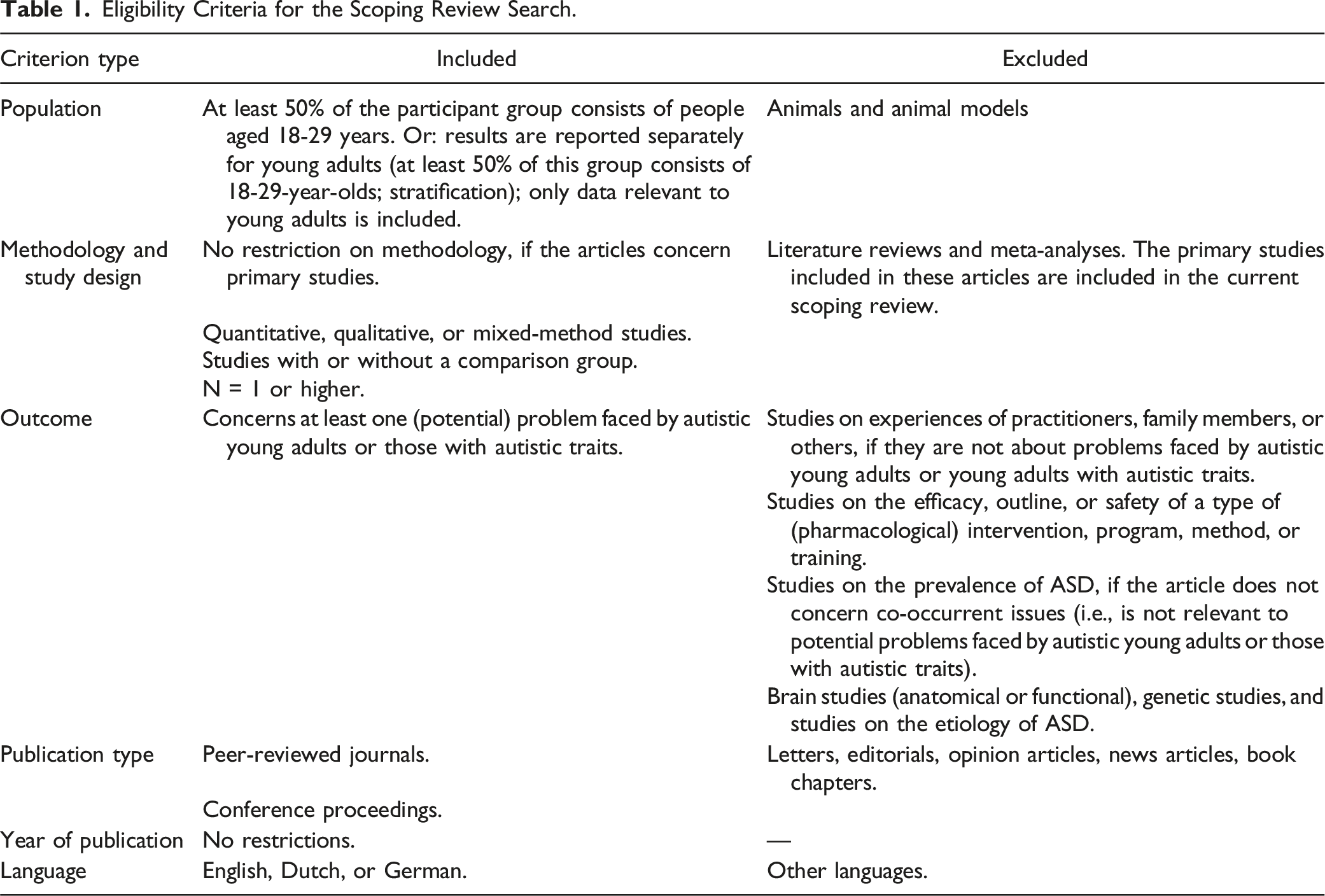
We used EndNote to remove duplicates by matching on DOI, authors, and titles of the search results. Next, the articles were ordered alphabetically by titles and subsequently authors to manually remove the remaining duplicates. Before screening the remaining articles, 50 random articles were independently assessed by all four reviewers to eliminate misunderstandings or inconsistencies in applying the eligibility criteria. All 50 articles were discussed in a meeting and misunderstandings or screening inconsistencies were clarified and solved.
Using Rayyan (Ouzzani et al., 2016), 7991 articles were screened after the first search (December 2022) and 1448 after the second search (October 2024). During the level 1 screening phase, three reviewers (including the first author) screened each title and abstract after the first search; two of the three reviewers screened each article. After the second search, the first and second authors screened all newly found articles independently. If it was unclear whether a study met the eligibility criteria, it was included in the level 2 (full-text) screening. New articles were identified manually through backward snowballing (see Figure 1 for the PRISMA flowchart). Articles from selected reviews were included as new studies and screened independently by two reviewers. Inconclusive screening decisions were discussed until an agreement was reached. In total, 601 articles were included in the present review. PRISMA flowchart of the search and study selection process.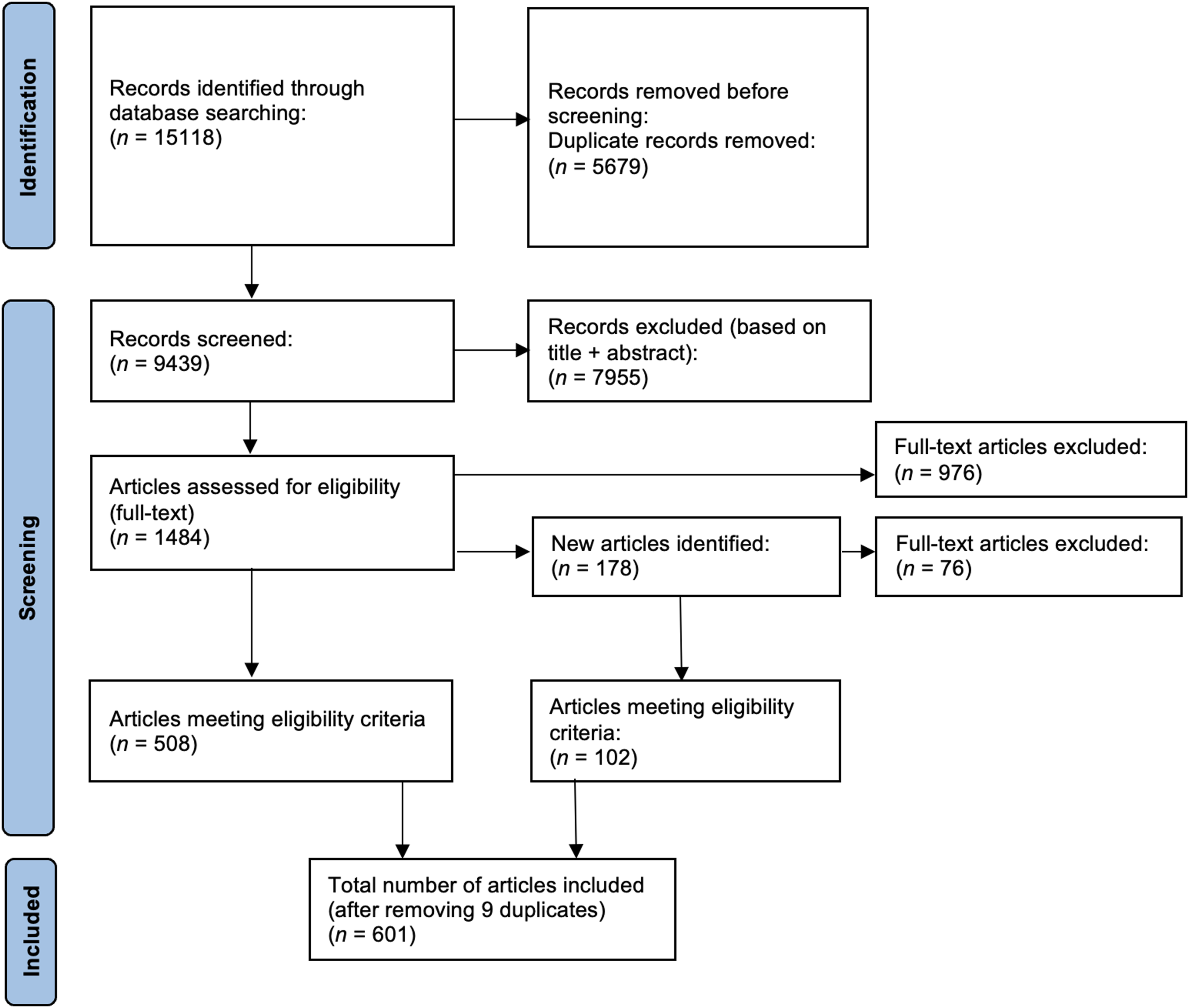
Charting the Data
An Excel framework was created for extracting the data from the selected articles. We automatically extracted the title, year, and authors of the research articles. By hand, the first author extracted from the full texts: Country in which the study was conducted, study design (qualitative, quantitative, mixed methods), type of participant (i.e., young adults themselves or others reporting on the young adults), intellectual level of the young adults (the presence or absence of intellectual disability), whether the study concerned ASD or AT (which included the general population and specific clinical, but non-autistic, populations), size of the (predominantly) young adults autistic participant group or the (predominantly) young adults group in which AT were measured, number of women, men, gender minorities, and if applicable: Other participants (i.e., comparison groups) and sizes of these groups. Additionally, the first author coded the topics included in the studies; all uncertainties were discussed with the second author.
Collating, Summarizing, and Reporting the Results
To answer research question 1, we used SPSS version 28 to compute the descriptive statistics of the studies focusing on ASD versus AT. To answer research question 2, descriptive analyses of the Country, Geographical region, and Intellectual level variables were performed for the ASD and AT studies separately. To be able to answer research questions 3 and 4, we first needed to determine which topics to use to apply to the studies.
Although a scoping review does not synthesize research results like a systematic review, some thematic framework is necessary to provide a narrative overview and summary of the results (see Arksey & O’Malley, 2005). For this goal, the first author created an initial set of topics based on the categorization of general areas in psychology, using introductory psychology book chapters as a guideline. This led to a division into topics considered relevant to the scientific field of psychology (Feldman, 2021; Gray & Björklund, 2018; Holt et al., 2020; Keenan et al., 2016). Based on screening phase 1 (i.e., title and abstract screening), the first author suggested improvements to the initial set of topics to ensure a closer fit with the found studies and discussed the fit between the initial set of topics and the retrieved literature with the other reviewers. An autistic adult’s opinion on the topic categories was included (see paragraph: community involvement statement). The initially created topic set was slightly adjusted, adding for instance “healthcare and professional support” as a separate topic, because this proved to be an important topic in multiple studies, and “sensory processing”, because it was often highlighted as a factor that might make functioning in education, work, or other settings challenging at times. To investigate whether studies only focus on certain types of co-occurring disorders, a distinction was made between internalizing, externalizing, and “other” (symptoms of) disorders. As co-occurring disorders are well-documented and extremely common in autistic individuals, we argued that investigating these categories separately was important.
The topics ultimately used to categorize the studies were (factors related to): physical health, lifestyle, emotion and motivation, internalizing symptoms/disorders, externalizing symptoms/disorders, other psychiatric disorders, social functioning/skills, morality and criminality, sleep and consciousness (including daytime somnolence and circadian rhythm), cognition, language and communication, school and study, work, gender and sexuality, healthcare and professional support, sensory processing, and motor development. Supplementary material 1 illustrates what we considered to be examples of variables that belong to each topic, before charting the data.
After creating the data extraction form, all 601 articles that were ultimately included in the present review were coded. After this process, the descriptive statistics of all topics were computed separately for ASD and AT studies to answer research question 3. Subsequently, the number of topics studied in each study (e.g., study a covered four topics, study b covered one topic, etc.) was calculated, after which the descriptive statistics of this variable were computed (again for ASD and AT research separately), to answer research question 4.
Community Involvement Statement
One autistic researcher (who chose not to disclose their identity) was consulted on the appropriateness of the study design and the selection of topic categories for categorizing the studies. The importance of studying additional categories not initially chosen (e.g., healthcare and professional support) was confirmed. The pervasive influence of sensory processing differences across multiple areas of functioning (e.g., work and study), as well as the interrelatedness of several topics, was highlighted by this researcher.
Results
In total, 602 studies from 601 6 articles were included in the current review. First, we describe the conducted ASD and AT research, followed by an overview of study characteristics and the participant groups recruited in these studies. Finally, we map the topics related to ASD or AT and investigate how many were studied simultaneously.
General Overview
All studies combined recruited 954,745 7 participants: 882,731 autistic individuals (min = 1, max = 166,952, Med = 32.00) and 72,014 participants (min = 33, max = 11,664, Med = 244.00) in studies on AT. These numbers are not necessarily unique individuals. For example, fifteen studies included participants of the National Longitudinal Transition Study-2; their participant groups overlapped.
Of the 602 studies, 510 included autistic young adults (84.7%). These were published between 1985 and 2024, with an overwhelming majority published in the past decade (2014–2024; Figure 2). Ninety-two studies were AT-related (15.3%). As Figure 2 shows, studying AT in the general population or in specific clinical non-autistic populations of young adults is a recent phenomenon. No AT studies were published before 2009. Most studies were published between 2013 and 2024, with an increasing number of studies focusing on AT. Publishing Years of the Studies Included in this Review.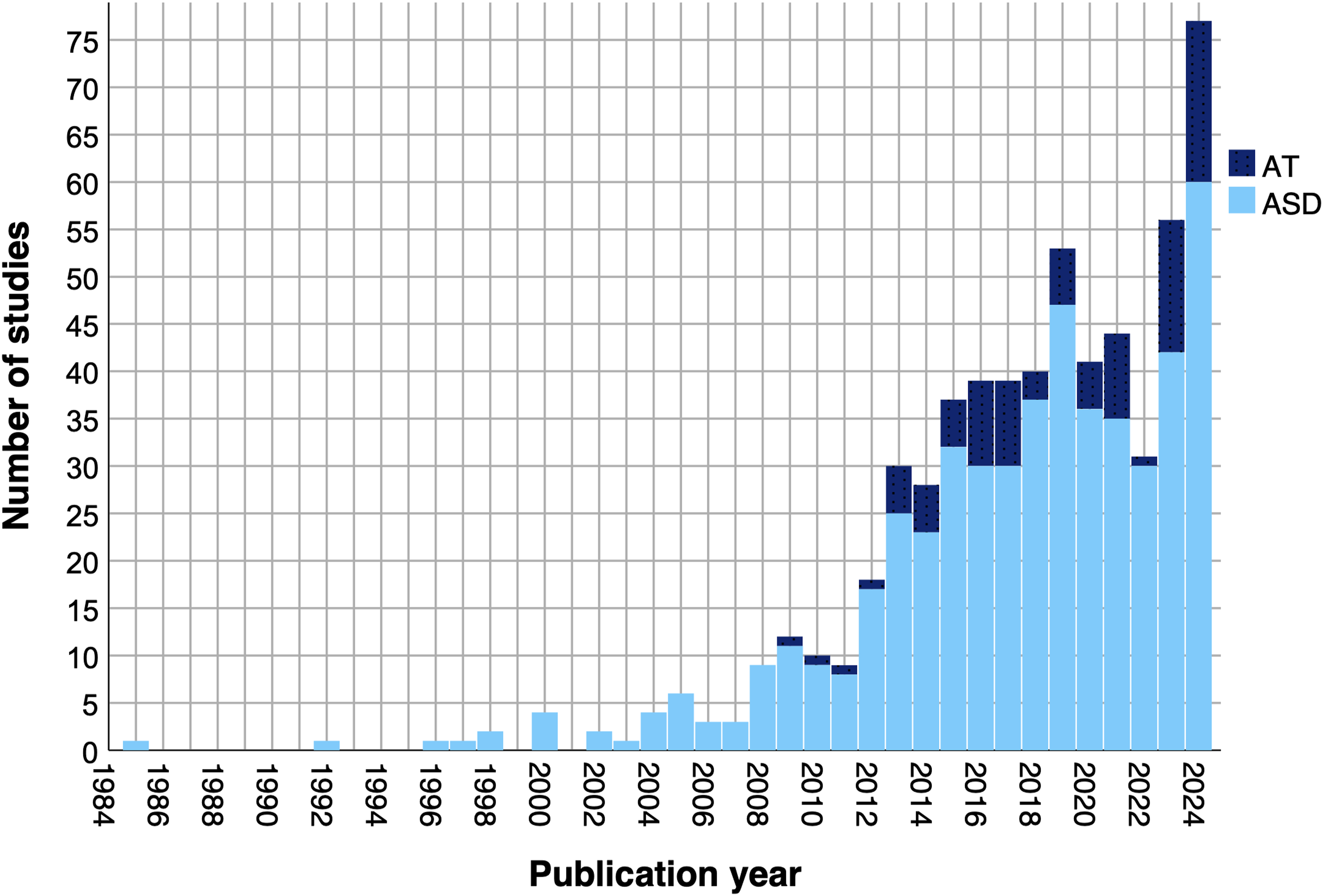
Study Descriptives
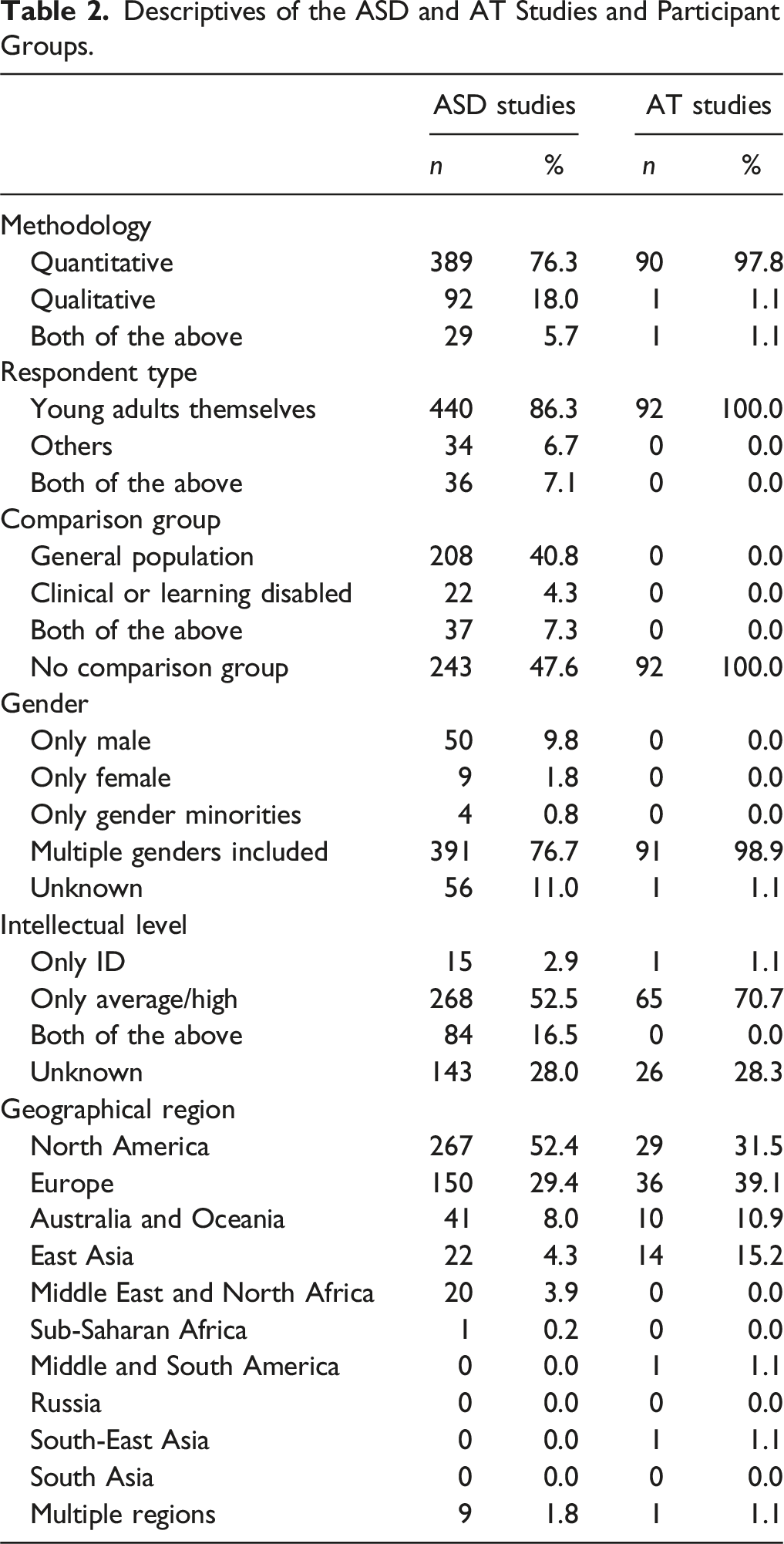
Descriptives of the ASD and AT Studies and Participant Groups.
Study Characteristics
Most ASD and AT studies used a quantitative research design (Table 2). Quantitative data were collected using questionnaires, logbooks, existing data sets (e.g., National Longitudinal Transition Study-2), or through the measurement of physiological data, blood samples, or performance on specific tasks. In qualitative studies, interviews were commonly used, as well as discussions (i.e., conversations), focus groups, or the analysis of chat logs or textual answers to open-ended questions.
Most ASD studies included young adults themselves as participants (instead of, for instance, parental reports). In the AT studies, all respondents were young adults. Approximately half of the ASD studies included a non-autistic comparison group. None of the AT studies used comparison groups consisting of other populations of young adults (i.e., specific non-autistic groups; note that a study on autistic traits was categorized as an ASD study if it also explicitly focused on individuals with ASD diagnoses).
The majority of ASD and AT studies were conducted in North America and Europe. Most studies that included autistic participants were conducted in the United States (45.5% of ASD studies), followed by the United Kingdom (9.2%). Most AT studies were also conducted in the United Kingdom (22.8%) and the United States (22.8%). Other well-represented countries were Canada (6.7% ASD; 8.7% AT) and Australia (7.5% ASD; 10.9% AT). None of the ASD or AT studies, however, were conducted in Russia or South Asia, and only one study originated from each of the regions of South-East Asia, South America, and Sub-Saharan Africa.
Participant Demographics
Most studies included participants of multiple genders, while a minority of the ASD and AT studies included focused exclusively on males, females, or gender minorities. Of the 510 ASD studies, 367 provided information about IQ or allowed for inferences about cognitive level (e.g., “college” or “university students”). Most of the ASD studies included only young adults with average to high cognitive levels. Similarly, almost all AT participant groups had average to high intellectual levels, with only one study including a low-IQ participant group. In 26 AT studies, the intellectual level of participants was not reported.
Content of Studies
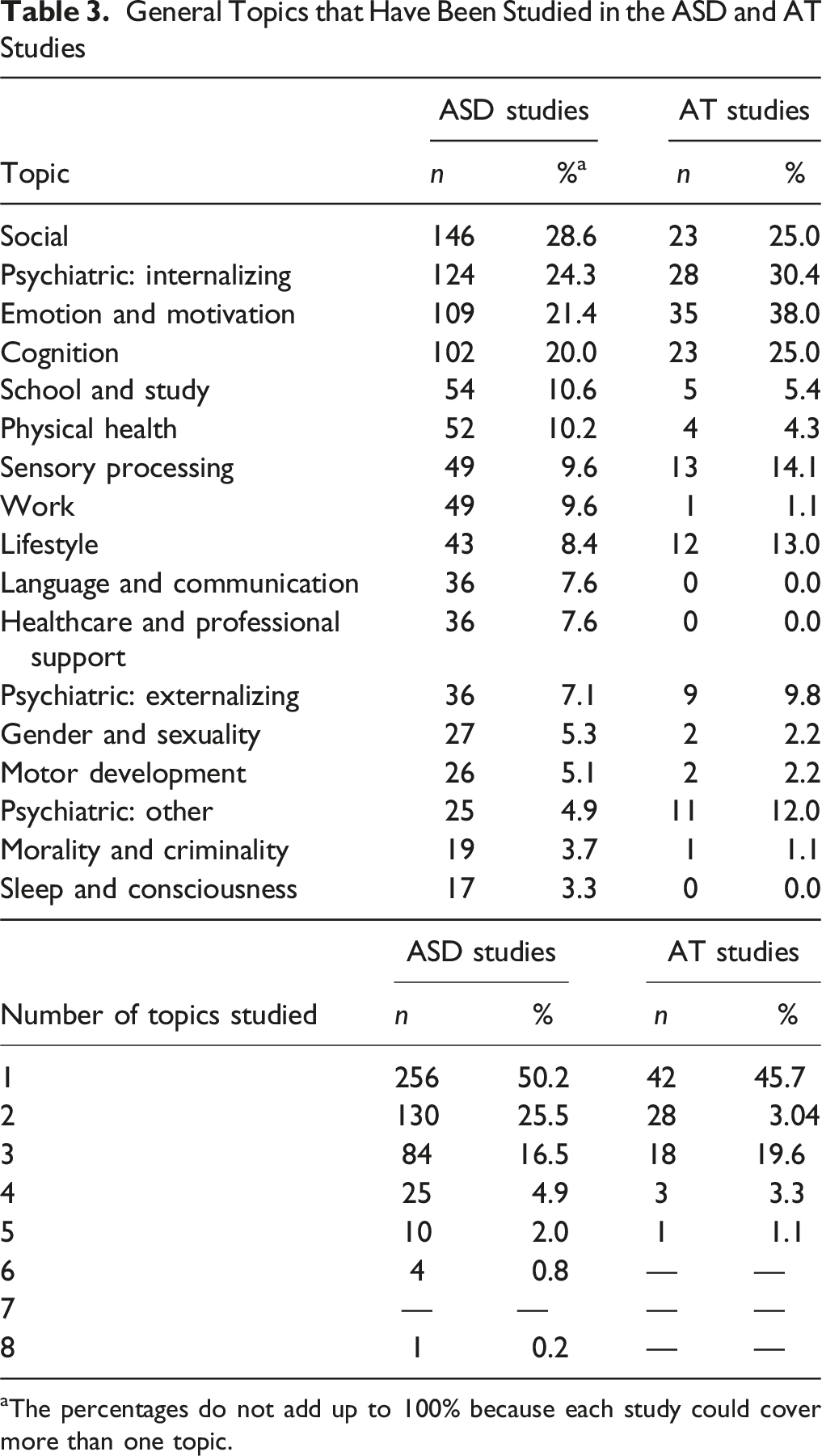
General Topics that Have Been Studied in the ASD and AT Studies
aThe percentages do not add up to 100% because each study could cover more than one topic.
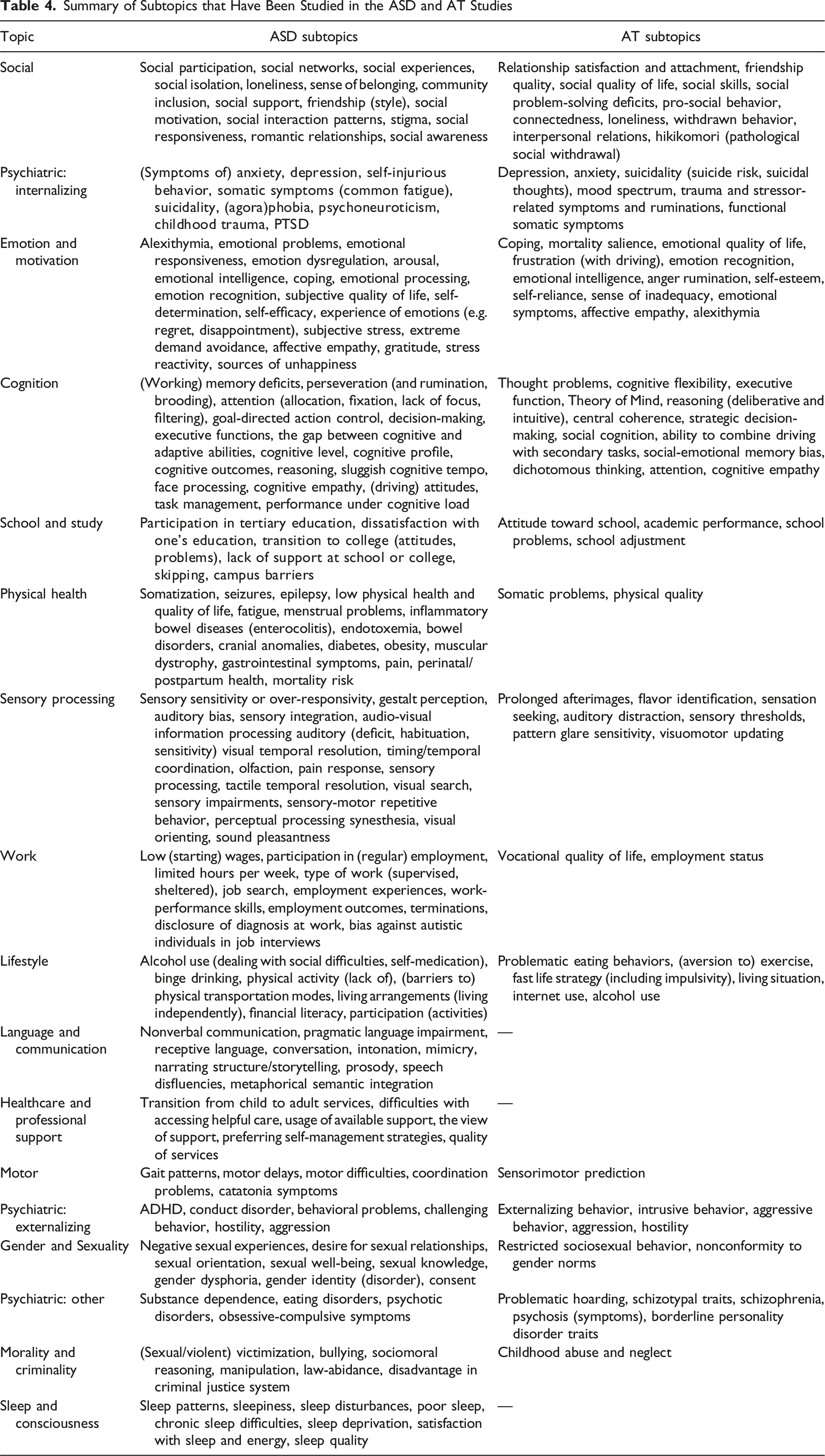
Summary of Subtopics that Have Been Studied in the ASD and AT Studies
ASD
The 510 ASD studies spanned all topics. Table 3 shows the most and least frequently studied topics associated with ASD. Topics commonly studied (in at least 20% of the ASD studies) were social differences and problems, emotional development and motivation, internalizing symptoms and internalizing disorders, and cognition. The three least studied areas, each examined in fewer than 25 studies (<5.0% of ASD studies), were psychiatric disorders other than internalizing and externalizing disorders, morality and criminality, and sleep and consciousness.
AT
The same four topics examined in at least 20% of the ASD studies were also examined in more than 20% of the AT studies on young adults: social differences and problems, emotional development and motivation, internalizing symptoms and internalizing disorders, and cognition. Two topics were studied in only one AT study: work, and morality and criminality. No studies (0.0%) focused on problems related to sleep and consciousness, healthcare and professional support, or language and communication.
Number of Studied Topics
Approximately half of the ASD and AT studies (Table 3) related ASD or AT to just one of the prespecified topics. For example, ASD or AT were associated with either physical health, sensory processing, work, or any of the other topics. A quarter of the studies examined two topics. For instance, these studies investigated both work and sensory problems in autistic young adults or young adults with AT. A minority of studies spanned three or more topics simultaneously.
Discussion
In this scoping review, we systematically inventoried peer-reviewed articles on the difficulties encountered by autistic young adults and those with AT. The fact that 602 studies emerged from our search reveals that there is no inherent shortage of research focused on the challenges faced by these populations; however, specific topics and subpopulations are understudied. We begin by discussing the descriptive aspects of the studies and participant groups. Then, we delve into the study content and discuss the number of simultaneously addressed topics.
Characteristics of the Studies and Included Participants
Our findings indicate that ASD research in young adults continues to expand. Although the concept of AT has only recently become a focus of study, interest in AT among non-autistic populations appears to have grown concurrently with ASD research. This apparent increase in AT research in young adults aligns with earlier observations of a broader rise in AT studies (Mottron & Bzdok, 2020). Following a noticeable decline in AT research in 2022, the years 2023 and 2024 have demonstrated a renewed interest in AT in scientific studies.
The distribution of published studies across geographical regions was similar for ASD and AT research. Most of the research was conducted in high-income, Western regions (North America and Europe) and the findings cannot be generalized beyond those places. It is possible that more relevant studies in non-WEIRD countries were conducted but excluded due to being published in languages other than English, Dutch, or German. The first screening phase, however, revealed that the language criterion only led to the exclusion of 39 potentially relevant articles (mostly French: 10). 8
Only 9.8% of the 602 studies (16 AT and 43 ASD) were conducted in non-Western countries (i.e., not European, Northern American, or Australasian). Due to the previously discussed cultural differences and lack of ASD awareness, which might amplify certain types of problems, more research is needed to understand the issues faced by autistic young adults and those with AT in non-Western countries (e.g., increased stigma). In addition, one study included in the current review illustrates that autistic racial and ethnic minorities also receive less mental health support in Western countries, even when controlling for mental health needs (Benevides et al., 2024).
Another underserved population is young adults with ID. Given the documented decrease in adaptive functioning as autistic individuals age (Chatham et al., 2018) and the limited predictive value of intellectual level on adaptive functioning (Alvares et al., 2020), it is evident that young adults on the autism spectrum and possibly also those with AT require more support as they transition into adulthood, regardless of intellectual level. This review, however, indicates a limited understanding of the issues that autistic young adults with ID face. In a quarter of the ASD studies, the intellectual level of the participants could not be deduced. Of the ASD studies with known participant intellectual levels, almost a fifth included autistic young adults with ID. Remarkably, only one of the AT studies included young adults with ID, whereas this population might face unique challenges related to having many (yet not enough to warrant an ASD diagnosis) autism characteristics.
Longitudinal studies suggest that (health) outcomes for autistic young adults with co-occurring intellectual disability are worse than those for individuals with higher intellectual ability (Rydzewska et al., 2023), highlighting the need for more research focused on this population. Problems within the ID population are difficult to assess (e.g., internalizing problems; McCauley et al., 2020), partly because this population cannot be easily interviewed. We contend that the frequent emphasis on physical (e.g., Rydzewska et al., 2019, 2023) or psychiatric disorders accompanying ASD (e.g., Blacher & Mcintyre, 2006) reflects the challenges in measuring factors beyond general functioning. Hart (2022) underscores these difficulties and suggests inclusive interviews with photos as a promising approach for autistic young adults with ID (see also Cheak-Zamora et al., 2018).
Since we thoroughly examined the issue of females and gender minorities in Podesta and Bosman (2025), we limit ourselves to the most general finding, namely, that most studies focused on ASD included predominantly males, whereas the AT literature was based on a slightly higher proportion of females than males. This bias towards males in the ASD group may underestimate and undervalue issues relevant to autistic women. Additionally, this difference in gender distribution can reduce the comparability of ASD and AT study results.
Genders other than male or female were severely underreported. Most studies, particularly those conducted before 2020, did not mention whether the possibility of gender minorities was considered. However, autistic individuals are more likely to identify as belonging to a gender other than male or female (e.g., nonbinary, transgender; Gurbuz et al., 2019; Williams & Gotham, 2022) and autistic gender minorities are at risk of severe mental health issues (George & Stokes, 2018; Mournet et al., 2024). Researchers should therefore provide participants with an option other than “male” and “female”. More research is needed to understand how to support these young adults with intersectional marginalized identities.
Topics of the Studies
A few noteworthy patterns emerged from the articles included in this scoping review. The most studied topic, examined in more than a quarter of all studies, was social challenges related to ASD or AT. The ASD studies reported various social difficulties, such as decreased social participation after high school (Taylor et al., 2017) and increased social isolation (Liptak et al., 2011). As with all commonly studied topics (see Table 4), the AT studies focused on similar issues. For example, one AT study highlighted lower social connectedness and increased loneliness in young adults with AT (Stice & Lavner, 2019). The strong focus on social difficulties is unsurprising, as social and communicative challenges are part of the diagnostic criteria for ASD. Promoting social competence and relationships might manifest in an increased capacity to work or study (Appelqvist-Schmidlechner et al., 2020). These skills permeate into multiple domains, which could help promote the well-being of young adults, rendering them valuable targets for intervention studies. Nevertheless, we argue that their value for understanding issues that accompany autism is limited because the ASD diagnosis already implies social difficulties (APA, 2022).
Furthermore, many studies have been published on emotional development and internalizing difficulties. The relationship between autism and emotional problems was already noted by Kanner (1943). Assuming an association between internalizing problems and ASD or AT is therefore not new and internalizing issues often co-occur with social problems. As Russo-Ponsaran et al. (2019) pointed out, social and emotional difficulties are context-specific and highly interrelated, making it difficult to separate them. Various internalizing and emotional issues are commonly linked to ASD and AT and have been frequently studied in young adults. However, certain issues, such as self-injurious behavior, remain understudied. Despite its high prevalence in adolescence in general (28%; Brunner et al., 2014) and in ASD (42%; Steenfeldt-Kristensen et al., 2020) self-injury has received little attention in autistic young adults, even though researchers have noted its significance (Laverty et al., 2020). It is currently unknown whether young adults with AT are at increased risk for self-injurious behavior.
Finally, cognitive differences have been a frequent focus in ASD and AT research, presumably due to the influence of prominent autism theories postulated during the “cognitive revolution” in psychology. These theories, including executive dysfunction, central coherence deficit, and Theory of Mind, suggested cognitive deficits as potential causes of autism characteristics. Although these theories have shortcomings (see Rajendran & Mitchell, 2007) and not all autistic individuals have these difficulties, they have nonetheless inspired many studies. Our review indicates that cognitive differences remain a common focus in ASD and AT research in young adults.
A notable topic that has not been studied frequently in young adults but can impact daily functioning is sensory processing. This review highlights a lack of (particularly quantitative) studies addressing sensory hypersensitivity, hyposensitivity, or special sensory interests, even though they are highly common and part of the DSM-5 criteria for ASD. Autistic young adults and those with AT frequently experience difficulties in education, work, healthcare, and social settings partly due to how stimulus-rich these environments are (Anderson et al., 2021; Madriaga, 2010; Mazurek et al., 2023; Pfeiffer et al., 2018). They may also feel overwhelmed by rapid life changes, potentially leading to chronic hyperarousal (as evidenced by large pupil size baseline; Top et al., 2019). The default stress many experience is often overlooked in experimental designs.
It is unfeasible to elaborate on all infrequently studied topics, but we highlight that school and study, work, healthcare and professional support, and lifestyle factors (which included diverse subtopics such as substance use, exercise, diet, living circumstances, and transportation methods) have been studied in the autistic population and the young adult population with AT less frequently than their importance warrants. Young adulthood typically involves transitioning from family life to independence, higher education, or work (Arnett et al., 2014). Many autistic young adults also express a desire for independence (Sosnowy et al., 2018), yet the current review includes a multitude of studies that shed light on the struggles commonly encountered in attaining social or educational support (e.g., Cai & Richdale, 2016), lack of community inclusion and living skills (Gray et al., 2014), low wages, underemployment, and unemployment (Anderson et al., 2021; Roux et al., 2013), and the tendency to live with a parent or guardian rather than independently (Anderson et al., 2014). These topics have rarely been studied in AT research. Perhaps highly noticeable autism characteristics lead to ASD diagnoses more often than subclinical AT (which might not impair daily functioning), which is why researchers relate these topics less frequently to AT in the general population. However, given the earlier-discussed challenges faced by individuals with many AT, more scientific attention is needed to determine whether the support needs of young adults with AT are adequately met.
Another highly impactful yet rarely studied topic is sleep difficulties, despite its high prevalence among autistic young adults (Lampinen et al., 2022). Furthermore, while language and motor development problems have been extensively studied in children, only a small portion of the 602 studies on young adults included in this review addressed these topics. Notably, out of all 92 AT studies, none concerned sleep or language difficulties, and only two focused on motor functioning (Buckingham et al., 2016; Zappullo et al., 2023). More research is needed to explore the relationship between these factors and AT in young adults without an ASD diagnosis.
Our review reveals that various challenges related to autism have been explored, reflecting the influence of multiple environmental systems on an individual’s development. These findings can be partially understood through the framework of ecological systems theory (Hayes et al., 2017). Specifically, the results reinforce the notion that development arises from dynamic interactions between individual factors and environmental influences, with many studies emphasizing their impact on young adults. While our coding approach does not allow for perfect alignment between the topics we analyzed and ecological systems theory, it supports the conclusion that a significant number of studies focus on individual characteristics or aspects of the immediate environment (i.e., microsystem). Although this trend is partly shaped by our study selection, which prioritizes research on the direct challenges faced by young adults rather than those affecting their families, it highlights a broader pattern. Researchers focusing on ASD or AT tend to emphasize individual characteristics and direct interactions with the environment, often overlooking broader societal influences (i.e., macrosystem factors). These social norms and values, however, shape perceptions of autism and influence whether autistic young adults and young adults with many AT experience difficulties.
The Interrelatedness of Topics Included in the ASD and at Studies
As mentioned previously, problems do not occur in isolation. For instance, as Syu and Lin (2018) suggested, sensory processing characteristics affect emotional well-being. Likewise, sleep problems have been associated with emotion-regulation difficulties, negative affect (Palmer & Alfano, 2017), and depression in autistic young adults (Lampinen et al., 2022). Physical health issues, such as fatigue and lower physical quality of life, may be influenced by poor sleep, lack of exercise (Nichols et al., 2019), and chronic stress. Recent studies with autistic young people included in this review also confirm that this population experiences a strong interconnectedness between various challenges, which do not exist as discrete topics but rather as an interwoven set of difficulties that impact one another (Beato et al., 2024; Schembri-Mutch et al., 2024).
Interestingly, despite this interrelatedness, 75.7% of the ASD and AT studies focused on only one or two topics. The 16 studies addressing five or more topics were qualitative (e.g., exploring the experiences of autistic university students; Anderson et al., 2021) or reported percentages of multiple co-occurring issues (medical and psychiatric; e.g., Fombonne et al., 2020) or functioning outcomes. These studies shed light on the multitude of simultaneously occurring problems that accompany ASD or AT. However, while developmental theory often emphasizes the interplay between factors in shaping an individual’s development, most studies in this review examined isolated factors without elaborating on their complex associations. There is a pressing need for comprehensive research on a broad spectrum of interconnected issues to understand the complex clinical profiles of many autistic young adults.
Future Research Directions
Our review reveals that problems associated with ASD are also often studied in those with AT. A few studies included autistic participants, participants with autistic traits, as well as participants without autistic traits, and highlighted differences associated with autism (e.g., skills related to social communication; Loukusa et al., 2023). These differences appear to occur on a continuum: individuals with notable autistic traits scored between those with few or no autistic traits and autistic individuals. Still, comparing ASD and AT research findings without concurrently studying both autistic and high-AT young adults is problematic due to differences in the populations typically examined in these research areas. The AT studies in this scoping review predominantly included female college or university students, whereas the ASD studies were more diverse in terms of intellectual level and primarily focused on young men.
By adopting the approach of focusing on ASD and on AT research, we identified potential issues with generalizing results across these populations. We, therefore, recommend recruiting both autistic individuals and individuals with numerous autistic traits (AT) but without an ASD diagnosis, ensuring representation of all genders and intellectual levels to facilitate direct comparisons. Including both individuals with and without an ASD diagnosis (but with many AT) is particularly important given the potential underdiagnosis and undertreatment of specific subpopulations (e.g., ethnic minorities and women; Happé & Frith, 2020). Some individuals with many autistic traits but no formal ASD diagnosis may be overlooked due to factors such as camouflaging (especially in women) or under-referral by clinicians. Studying both diagnosed individuals and those with significant AT in tandem could provide valuable insights into their shared and unique characteristics, as well as their distinct support needs.
Beyond the urgent need for more research on underexplored topics and populations, we propose two avenues for future research. First, network analysis may illuminate the most central issues within a web of interrelated characteristics and challenges (see Borsboom & Cramer, 2013). Understanding how functional difficulties and autism characteristics interact through (young) adulthood could enhance ongoing (clinical) support. Instead of taking a reductionist approach (i.e., assuming ASD causes diverse co-occurring issues), researchers should shift focus to causally interrelated characteristics that shape an individual’s clinical profile (Borsboom et al., 2018). Network analysis was rarely used in the studies included in this review; only a few studies employed this method to identify central characteristics and bridge pathways between autistic traits and co-occurring suicidality and ADHD characteristics (Smith et al., 2023; Suen et al., 2024). We argue that this analysis would be valuable for studying the associations between multiple problem areas faced by some autistic young adults. Network analysis has been used successfully to study relationships between diverse psychological and physical health factors in non-autistic populations (Isvoranu et al., 2021), making it a promising method for future research.
Second, most studies employed a quantitative research design, but quantitative and qualitative research complement one another and both are important for understanding autism (Bölte, 2014; Grech, 2019). Qualitative studies in which autistic young adults and young adults with AT themselves elaborate on how certain issues worsen other areas of functioning would enhance our understanding of the interconnectedness of their problems and aid in gaining richer insights into their subjective experiences. Understanding the variability in characteristics and associated problems, that vary greatly between and within autistic individuals (e.g., Bangerter et al., 2020; Vinçon-Leite et al., 2024), could lead to more effective, individualized care.
Limitations
This scoping review is not without limitations. Although we aimed to include studies on “young adulthood” (18–29 years), participants were relatively young. Of the AT studies, 62.0% included only and an additional 10.9% included partly college or university student samples. Of the ASD studies, 43 referred to “college” or “university” in their title. College and university students are commonly aged 18–25 years. Young adults in the age range of 26–29 years were less represented. Consequently, many studies focused on issues considered typical for the first years of emerging adulthood (in Western society; Arnett & Eisenberg, 2007), as also indicated by the many studies explicitly focused on the “transition” age (46 titles included this term to refer to the transition to adulthood or work/university). The included studies hardly explored themes relevant to older young adults, such as starting a family, pregnancy, and parenting. Only two studies concerned the perinatal and postpartum health and experiences of autistic individuals (Rogers et al., 2017; Shea et al., 2024).
Another limitation is the inclusion of 15 NLTS2-based studies; these studies were based on (subsets of) the same autistic individuals, limiting the number of unique participants and study topics available to researchers. Because the focus of the current review lies on how many studies focused on certain topics, and not on the numbers of unique individuals, we did not view this as problematic. Moreover, since 510 articles focused on autistic young adults, we believe the impact of including 15 studies on similar data was limited.
Furthermore, we could not discuss all topics in detail and had to focus on the general topics that had been studied. Additionally, the quality of the included studies has not been critically appraised; a scoping review typically provides an overview of studies regardless of quality (Tricco et al., 2018). This aligns with the intended focus of our scoping review, but systematic reviews that focus on high-quality scientific literature on specific problems of autistic young adults or those with AT will be needed to draw definitive, detailed conclusions about the (prevalence and features of) challenges faced by these populations. Our review is also inherently constrained by the limitations of the included articles. Notably, some articles did not report participants’ intellectual level (or provide the information needed to extract whether participants were intellectually disabled indirectly) or gender identities, necessitating their exclusion from our descriptive analyses of these participant group characteristics.
Finally, decisions made during the development of the data extraction form (specifically regarding the categorization of topics) determined the calculated number of topics covered by the studies. For instance, types of co-occurring disorders were coded separately rather than aggregated into a broader category (such as “(symptoms of) psychiatric disorders”). As a result, studies examining multiple disorders, such as anxiety and psychosis, were coded as addressing two distinct topics: “internalizing” and “other” psychiatric disorders. While this approach provided nuanced insights into specific psychiatric symptoms most frequently studied, it also had implications for topic diversity. For example, a study focusing on all three types of co-occurring disorders was coded as covering three topics, even though its scope might be less diverse than that of a study addressing work, sensory processing, and physical health issues simultaneously.
Practical Implications
Our review focused on the challenges encountered during young adulthood, though not all autistic young adults or those with autistic traits experience difficulties during this life stage. Group differences identified between autistic and non-autistic young adults do not represent universal experiences; for instance, some autistic individuals outperform non-autistic individuals on specific social-communicative tasks (Loukusa et al., 2023). In addition, autism characteristics are associated not only with difficulties but also with unique strengths, a topic receiving growing research attention. For example, neurodiverse group settings that include both autistic and non-autistic individuals have been found to stimulate innovation in collaborative work environments (Axbey et al., 2023).
The implications of this study should be understood within a social disability framework, which highlights society’s responsibility to support the participation and well-being of individuals with disabilities. As the current review indicates, a concerted effort is required to better align healthcare, post-secondary educational, and occupational environments with the needs of autistic young adults. This population frequently encounters participation barriers that, for some, may be mitigated through targeted interventions and environmental adjustments. Engagement in post-secondary education or employment not only provides intrinsic benefits but also supports broader developmental outcomes, such as fostering social networks, cultivating independence, and acquiring qualifications essential for self-sufficiency and fulfilling careers (O’Connor et al., 2024).
However, autistic young adults with subtler autism characteristics may hesitate to disclose their diagnosis due to stigma or doubts about the benefits of disclosure, particularly in the workplace (Nimante et al., 2023). This reluctance limits their access to autism-specific support. Thus, alongside improving available services and accommodations for autistic (young) adults, greater effort is needed to reduce stigma and address the fear of stigma. In addition to these efforts, fostering individual strengths may be crucial for enhancing the well-being of struggling neurodivergent young adults.
By addressing barriers, reducing stigma, and cultivating strengths, more autistic young adults and those with pronounced autistic traits could achieve their goals of independence, meaningful work, and supportive social relationships. A neurodiversity perspective is particularly useful in this regard, not only because it highlights strengths associated with autism, but also because adopting this perspective is linked to lower stigma and more positive views of autism (Kapp et al., 2013). Viewing autism as a form of neurodiversity does not diminish recognition of its challenges; the current study emphasizes the reality of challenges encountered during young adulthood, leading to the conclusion that more support is needed for this population.
We argue that individualized support is essential, as autistic individuals vary greatly in their abilities and personal characteristics, meaning that a one-size-fits-all approach will be ineffective. For instance, although living independently may not be achievable for everyone, and having roommates could help mitigate loneliness, some individuals may prefer living alone due to the anxiety caused by shared living arrangements (Roux et al., 2024). Similarly, better social awareness could improve developmental outcomes that require social skills, yet it is also associated with lower confidence in one’s abilities in relationships (Schichter et al., 2024). Therefore, rather than prioritizing social awareness training for these individuals, interventions aimed at improving self-esteem or self-efficacy may be more beneficial.
Conclusions
Some young adults on the autism spectrum experience multiple challenges simultaneously; these problems are interconnected. Our review highlights that while some studies examine multiple topics at once, different types of issues are rarely analyzed in conjunction with one another. Notably understudied yet impactful areas include gender and sexuality, sleep, morality and criminality, psychiatric disorders other than internalizing or externalizing disorders, language, and motor differences. Particularly striking is the heavy emphasis on social differences and perceived shortcomings, which are central diagnostic criteria for ASD (APA, 2022).
We believe that greater support is needed during young adulthood. Autistic young adults often struggle to find and access appropriate support (Lai & Weiss, 2017; Turcotte et al., 2015), and the transition to adult care is abrupt (Shanahan et al., 2021). Clinicians and researchers should expand their focus beyond social difficulties to include non-social challenges that impact long-term well-being, education, and employment opportunities, such as sleep, motor, and language difficulties. These issues should also be examined in relation to AT in the general population and in specific clinical (non-autistic) groups. As previously discussed, focusing on subclinical autism characteristics may be particularly important for the still underdiagnosed, understudied, and undertreated populations, including ethnic minorities in Western countries (Wiggins et al., 2020) and young adults in non-Western countries.
In conclusion, this is the first scoping review to systematically map scientific attention given to various challenges related to ASD and AT in young adults. Our findings highlight significant gaps in the scientific literature, some of which have been recognized previously but not specifically within the context of young adults or with consideration of differences between ASD and AT studies. Since research biases can distort the understanding of autism and its associated challenges, it is essential for future research to actively address these biases. A promising direction for future research is the exploration of the experiences of understudied populations, including autistic young women, gender minorities, young adults in non-Western countries, and autistic young adults with ID or those with autistic traits and ID. Additional research on rarely studied issues, particularly qualitative studies and those examining the interplay between multiple challenges, is crucial for better understanding the difficulties faced by these young adults.
Supplemental Material
Supplemental Material - Neglected Issues Encountered by Autistic Young Adults and Those With Autistic Traits: A Scoping Review
Supplemental Material for Neglected Issues Encountered by Autistic Young Adults and Those With Autistic Traits: A Scoping Review by Lysandra M. Podesta, and Anna M. T. Bosman in Emerging Adulthood
Supplemental Material
Supplemental Material - Neglected Issues Encountered by Autistic Young Adults and Those With Autistic Traits: A Scoping Review
Supplemental Material for Neglected Issues Encountered by Autistic Young Adults and Those With Autistic Traits: A Scoping Review by Lysandra M. Podesta, and Anna M. T. Bosman in Emerging Adulthood
Footnotes
Acknowledgements
We thank our former master students for their help in the screening, and the Radboud University librarian who helped devise the literature search strategy.
Declaration of Conflicting Interests
The author(s) declared no potential conflicts of interest with respect to the research, authorship, and/or publication of this article.
Funding
The author(s) received no financial support for the research, authorship, and/or publication of this article.
CRediT Authorship Contribution Statement
Lysandra M. Podesta: Conceptualization, Methodology, Investigation [Literature Search], Supervision, Visualization, Writing – original draft preparation. Anna M.T. Bosman: Conceptualization, Visualization, Writing – review and editing.
Transparency and Openness Statement
The raw data and materials used in this manuscript, including the results of the charting process, are openly available ( ). The SPSS syntax used for the descriptive summary of the results and the creation of the graphs and tables is not openly available. This study is exploratory and none of the study’s aspects have been pre-registered.
Supplemental Material
Supplemental material for this article is available online.
Notes
Author Biographies
References
Supplementary Material
Please find the following supplemental material available below.
For Open Access articles published under a Creative Commons License, all supplemental material carries the same license as the article it is associated with.
For non-Open Access articles published, all supplemental material carries a non-exclusive license, and permission requests for re-use of supplemental material or any part of supplemental material shall be sent directly to the copyright owner as specified in the copyright notice associated with the article.
