



Abstract
College students with Attention-Deficit/Hyperactivity Disorder (ADHD) often have poor self-control, low frustration tolerance (FT), and associated irritability. These features are associated with engagement in risky behaviors (ERBs). The Self-Control Strength Model (SCSM) was used to examine relationships between ADHD symptoms, FT, irritability, and self-control resource depletion and associations with ERBs in 247 college students randomized into depletion/non-depletion groups. Participants completed state and trait measures and two experimental tasks: the Stroop Color-Word Task to deplete resources, and the Paced Auditory Serial Addition Task (Computerized) to induce frustration and measure frustration tolerance. Linear and logistic regressions were used to analyze associations, and demonstrated that ADHD symptoms and FT were positively associated with several ERBs. However, due to failure of the Stroop to adequately deplete self-control resources, the SCSM cannot be fully analyzed. Ultimately, these results provide additional support for positive associations between ADHD symptoms, state irritability, and ERB in college students.
Keywords
Introduction
Attention-deficit/hyperactivity disorder (ADHD) is a neurodevelopmental disorder characterized by a pervasive pattern of inattention, hyperactivity, and/or impulsivity that interferes with functioning. ADHD symptoms are associated with significant impairment in several domains (e.g., academic, social, mental health) (Anastopoulos et al., 2018). Though ADHD was previously thought to dissipate in adolescence (Faraone et al., 2006), ADHD is increasingly prevalent in college students (8.7%–9.7%) (American College Health Association, 2018).
College students with ADHD engage in a wide variety of risky behaviors that are rooted in poor self-control (Shoham et al., 2019). These risky behaviors include increased use of marijuana and illicit substances and increased risk for experiencing both alcohol-related problems and alcohol-use disorders (Rooney et al., 2015) compared to college students without ADHD. Additionally, compared to college students without ADHD, college students with ADHD are more likely to engage in risky sexual behaviors (e.g., unprotected sex) (Van Eck et al., 2015) and non-suicidal self-injurious behaviors (NSSI) (Meza et al., 2016).
Given these concerning outcomes, better understanding self-control in college students with ADHD is a clinically important topic. Currently, most of the research on college students with ADHD has considered self-control to be a dispositional trait and relied on non-experimental designs (Merkt & Gawrilow, 2016; Parker et al., 2013). Situational factors and temporary external conditions (e.g., fatigue after day of classes) can also impact the ability to exhibit self-control and merit consideration.
The Self-Control Strength Model
The Self-Control Strength Model has been used to explain how temporary situational factors reduce self-control abilities. This model considers the ability to exert self-control to be a limited resource which can be exhausted (Baumeister et al., 2007; Hagger et al., 2010). Self-control resource depletion occurs when the likelihood of inhibiting negative affect (e.g., frustration) decreases secondary to antecedent exertion, temporarily diminishing an individual’s finite amount of self-control (Hagger et al., 2010). Thus, engaging in an effortful task (e.g., attending classes) may result in poorer self-control on a subsequent task (e.g., a verbal conflict with a roommate).
Depletion can be induced experimentally in individuals with and without ADHD (Wymbs, 2018). A typical methodological approach to studying the Self-Control Strength Model is to have a research participant engage in two separate tasks, both of which require self-control. The first self-control task (e.g., Stroop color word task) is completed. Performance on the subsequent second self-control task (e.g., persevering on a mirror tracing task) is reduced due to a limited resource being depleted (Baumeister & Vohs, 2016). For ethical reasons, experimentally induced states of depletion are typically mild in nature. The low experimental replicability of the self-control resource depletion effect (Emmerling et al., 2017) has been attributed, in part, to this reliance on mildly depleting tasks (Baumeister & Vohs, 2016). Common effects of self-control resource depletion are intensified negative emotion, decreased inhibition, and weaker top-down control. This issue is not sufficiently tested using experimental designs. The only college student ADHD study to test this model found that students with ADHD were more likely to experience self-control resource depletion than those without ADHD and increased emotional dysregulation when depleted (Wymbs, 2018).
Attention-Deficit/Hyperactivity Disorder and Emotion Regulation
Although not part of the diagnostic criteria, a near ubiquitous associated feature of ADHD is deficient emotional regulation (Hirsch et al., 2018). Emotional regulation refers to monitoring, evaluating, and modifying one’s emotions to accomplish goals (Thompson, 1994). A deficiency in emotional regulation in ADHD presents as emotional impulsivity and mood lability (Surman et al., 2013). Deficient emotional regulation in those with ADHD contributes significantly to impairment in several domains including increased engagement in risky behaviors (Van Eck et al., 2017).
Distress Tolerance
Distress tolerance, or the ability to tolerate negative or aversive emotional states, is a common coping strategy which subserves emotional regulation (Conway et al., 2020). Poor distress tolerance exacerbates the symptoms of ADHD, especially impulsivity (Leyro et al., 2010). One domain of impulsivity which is linked to deficient emotional regulation is negative urgency (Pedersen et al., 2019), or the tendency to act impulsively when experiencing negative affect (e.g., frustration) (Egan et al., 2017). Poor frustration tolerance is especially common in ADHD (Seymour et al., 2019). Thus, tolerating frustration is difficult for individuals with ADHD and requires effortful acts of emotional regulation (Heatherton & Wagner, 2011), which can negatively impact the capacity to emotionally self-regulate in other domains (Hagger et al., 2010).
Frustration Tolerance and Irritability
The commonly poor frustration tolerance reported in individuals with ADHD (Surman et al., 2013) is associated with irritability (Skirrow et al., 2014). Poor frustration tolerance and associated higher irritability is often associated with functional impairments beyond those imparted by ADHD symptoms (Cleminshaw et al., 2020). For example, when frustrated and irritated, individuals with ADHD have greater likelihood of quitting a frustrating task, greater focus on negative aspects of a task, and less constructive patterns of emotional coping (Seymour et al., 2016).
Despite occurring with great regularity, very few adult experimental studies have simultaneously considered ADHD, frustration tolerance, and irritability. One study which is in line with experimentally investigating ADHD, frustration tolerance, and irritability found that college students with ADHD were more likely to communicate negatively with romantic relationship partners during potentially frustrating conversations (i.e., about “hot topics”) when their self-control resources had been depleted (Wymbs, 2018). This study, however, did not consider engagement in risky behaviors.
Hypotheses
Using the Self-Control Strength Model as a theoretical framework, the overall objective of present study is to fill the existing voids in the literature by experimentally investigating associations between self-control resource depletion, frustration tolerance, and irritability. Additionally, the present study considered associations between experimental depletion status, frustration tolerance, irritability, and engagement in risky behaviors for which college students with ADHD are at elevated risk. We hypothesize the following
Individuals with higher reported ADHD symptoms will exhibit lower frustration tolerance and report higher irritability. These associations will be more pronounced in the experimental (depletion) condition compared to the control (non-depletion) condition.
In the total sample, higher abilities to tolerate frustration, regardless of depletion status, will be associated with (a) lower self-reported state irritability, (b) lower self-reported hazardous alcohol consumption, (c) lower self-reported hazardous cannabis use, (d) lower self-reported engagement in risky sexual behaviors, (e) lower self-reported non-suicidal self-injurious behaviors, and (f) lower self-reported state desire to engage in potentially high-risk behaviors (i.e., alcohol consumption, cannabis consumption, condomless sex). In the present study, condomless sex is used as a proxy for unprotected sex.
ADHD symptoms will moderate the above associations such that higher reported symptoms will strengthen the expected associations.
Method
Participants
Participants included undergraduate students ranging in age from 18 to 25 years (Mage = 19.87, SD = 1.32) recruited from psychology courses at a private university in the Northeast. A priori power analyses were conducted using G*Power 3.1; these calculations were based on a two-tailed test, a projected medium effect size, power of .80 and α = .05. These analyses suggested that an adequately powered study sample size is 98 (H2, H3) - 179 (H1) participants, and participants were over-sampled to account for possible participant exclusion following data collection. Of the 410 participants who initially consented to the study, 350 (85.4%) completed the entire study protocol. Of these 350 participants, 34 (9.7%) used a device with a touch screen (e.g., cellular phone), 26 (7.4%) failed at least one of three attention checks (e.g., “The purpose of this question is to check that you are paying attention. Please select ‘no’.”), and four (1.1%) used a stimulant medication on the day of protocol completion. All 64 of these participants were excluded from the analyzed sample. An additional 39 participants were excluded from the analyzed sample due to outlier performance on a survey measure (described below).
The final analyzed sample (n = 247) was 74.2% female and 59.1% White/Caucasian, 24.3% Asian or Asian American, 6.1% Black or African American, and 0.8% Native American or Alaskan Native. Twenty-three participants (9.3%) reported previous diagnosis of ADHD.
Procedures
All study procedures were approved by the university’s Institutional Review Board (IRB). All eligible participants who consented to participate transitioned automatically between SONA, Qualtrics, and Inquisit Web® to complete the study measures and the experimental tasks. Participants were required to use either a desktop or a laptop computer and to complete all measures and tasks in one session. Participants received either received one SONA credit or course-specific extra credit.
Following informed consent, yet before completing the cognitive tasks, baseline self-report measures were administered. Baseline self-report measures queried ADHD symptoms, trait emotional regulation, trait negative urgency and lack of perseverance, trait frustration tolerance, alcohol/cannabis use, sexual risk-taking behaviors, engagement in NSSI, state negative affect, and state irritability. Participants were then randomly assigned on Inquisit Web® to complete a depleting or a non-depleting task. Following completion of these two Inquisit Web® cognitive tasks, participants were redirected back to Qualtrics to complete the post-depletion self-report measures. Study measures were administered in the same order for all participants.
Experimental Measures
Self-Control Resource Depletion Induction
Web-Stroop Color and Word Task (Stroop)
All participants completed a web-based (Inquisit Web®) version of the Stroop task (Stroop Color Word test with Keyboard Responding). The Stroop task is a common method of studying selective attention and response inhibition. Participants are instructed to identify the color a word is printed in while simultaneously overriding the prepotent response to read the name of the word (e.g., when presented with the word RED printed in blue, participants press the key to indicate ‘blue’ rather than ‘red’).
In the depletion condition, participants completed a complex Stroop task in which most trials were incongruent (256 trials, 75% incongruent (i.e., the word and color did not match; four different colors). In the lower complexity control condition, all trials (256) were congruent (i.e., the word and color matched). This trial number and presentation method has been used in past self-control resource depletion induction research (Dang et al., 2017). Several participants were excluded from the analyzed sample due to having a high proportion of incorrect responses on the Stroop task (n = 4) or a Stroop response time <250 ms or >3000 ms (n = 3), which indicates a failure to adequately engage with the depletion task.
Stroop Manipulation Check
To assess the depleting quality of the Stroop task, participants completed a three-item manipulation check meant to gauge perceived effort, difficulty, and fatigue on a 7-point Likert scale (Dang et al., 2017). Each domain of the manipulation check was individually analyzed for differences between the depletion and non-depletion conditions. Successful depletion was operationalized as between group differences on all three items. Immediately following the Stroop task and brief manipulation check, participants completed a frustration induction and tolerance cognitive task.
Frustration Induction and Tolerance
Paced Auditory Serial Addition Task (PASAT-C)
Frustration was induced and tolerance was assessed with the Paced Auditory Serial Addition Task-Computerized Version (PASAT-C; Lejuez et al., 2003). The PASAT is a visual and auditory serial addition task. Administration in the present study involved visually presenting participants with random series of digits from 1–9; participants were instructed to continuously sum the two most recently presented digits. The present study used cursor response, and the digits were presented at the center of a circle formed by response options (the numbers 1–18). The computerized version of the PASAT (PASAT-C; Lejuez et al., 2003) was designed to measure frustration tolerance, and consists of three difficulty levels ranging from low (Level 1) - high (Level 3) and lasting 3, 5, and 10 minutes, respectively. This task has been shown to induce frustration among clinical and nonclinical samples (Lejuez et al., 2003) and to adequately measure frustration tolerance (Winward et al., 2014).
During administration of the PASAT-C, participants were provided corrective feedback in the form of an aversive error sound. They were instructed during Level 3 that they had the option to terminate the procedure (Quit button on the screen). Consistent with the precedent in the field (Lejuez et al., 2003), frustration tolerance using the PASAT-C was indexed as time in milliseconds until task termination of level 3.
Self-Report Measures
Bivariate Correlations.
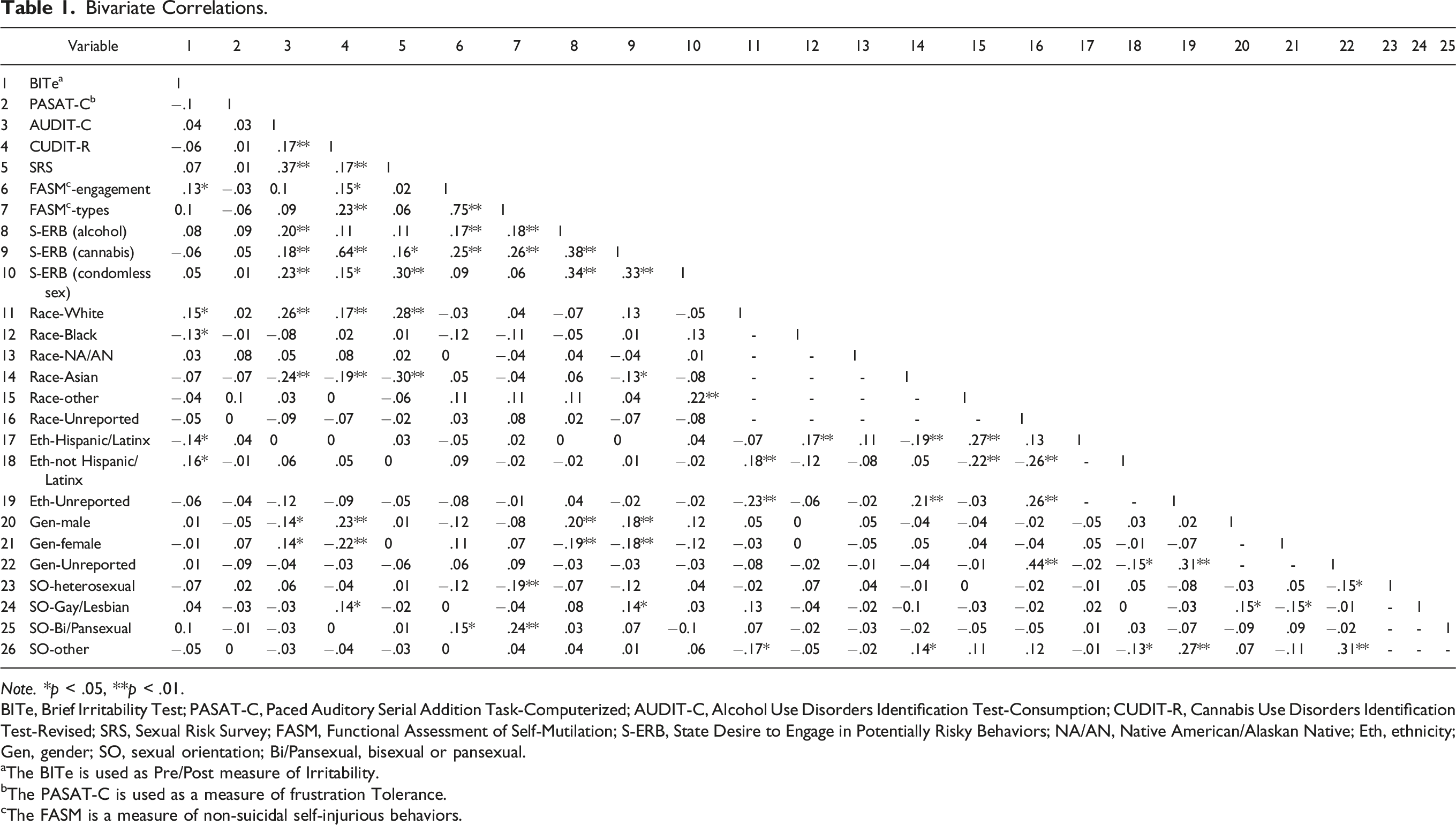
Note. *p < .05, **p < .01.
BITe, Brief Irritability Test; PASAT-C, Paced Auditory Serial Addition Task-Computerized; AUDIT-C, Alcohol Use Disorders Identification Test-Consumption; CUDIT-R, Cannabis Use Disorders Identification Test-Revised; SRS, Sexual Risk Survey; FASM, Functional Assessment of Self-Mutilation; S-ERB, State Desire to Engage in Potentially Risky Behaviors; NA/AN, Native American/Alaskan Native; Eth, ethnicity; Gen, gender; SO, sexual orientation; Bi/Pansexual, bisexual or pansexual.
aThe BITe is used as Pre/Post measure of Irritability.
bThe PASAT-C is used as a measure of frustration Tolerance.
cThe FASM is a measure of non-suicidal self-injurious behaviors.
Adult Attention-Deficit/Hyperactivity Disorder Self-Report Scale (ASRS-v1.1)
The ASRS is an 18-item instrument derived from DSM-IV criteria for ADHD, consisting of inattention and hyperactivity/impulsivity subscales (Kessler et al., 2005). Ratings are based on the frequency of symptoms and measured on a 5-point Likert scale (0 (never) – 4 (very often)). All participants, regardless of reported diagnosis, completed the ASRS about their current ADHD symptoms. In the present study, hyperactivity-impulsivity and inattention subscale scores were combined, and the total ADHD symptom score was used for hypothesis testing. ASRS total scores can range from 0–72, with a score 24 on either subscale (thus, a total score of 48) indicating likely ADHD (Kessler et al., 2005). Internal consistency for the ASRS in the present study is good (α = .88).
Frustration Discomfort Scale (FDS)
The FDS is a 28-item trait measure of beliefs that people may have when they are frustrated (Harrington, 2005). Items are rated on a 5-point Likert scale ranging from 1 (absent) to 5 (very strong), with higher scores indicating greater discomfort with frustration/frustrating situations. Items load onto four factors; however, to reduce participant burden, the present study used only Factor 1, discomfort intolerance. This decision was made due to the high face validity of these items to the construct of frustration tolerance. The FDS was used to describe the sample. Internal consistency was excellent for the FDS (α = .90) in the present study.
Positive and negative affect schedule (PANAS)
The PANAS is a 20-item self-report scale that assesses state positive and negative emotions (Watson et al., 1988). Because our study aim was to induce negative affect, participants only indicated their state negative affect on the 10 negative affect items. Previous studies have used the PANAS before and after mood inductions to assess affective state change (Dowd et al., 2010). Accordingly, the PANAS was administered immediately before and after the depletion (or non-depletion) and frustration tolerance tasks to provide concurrent validity for the depletion and frustration tolerance manipulations.
Participants indicated on a scale of zero (not at all) to 10 (extremely) the extent to which they were currently feeling the emotion indicated. Because our mood induction aimed to induce frustration, a slightly modified version of the original PANAS scale was used. “Frustrated,” the main emotion variable of interest, replaced “afraid,” “embarrassed” replaced “ashamed,” and “mad” replaced “guilty.” A modification of the PANAS similar to this has been done in several other published studies (Loya et al., 2019). Internal consistency was excellent for both the pre-PANAS (α = .91) and the post-PANAS (α = .91) in the present study. Thirty-two participants reported decreased negative affect following the Stroop and PASAT-C tasks and were excluded from the analyzed sample.
Brief Irritability Test (BITe)
The BITe (Holtzman et al., 2015) is a 5-item measure of state irritability. Items are rated on a 6-point Likert scale ranging from 1 (never) to 6 (always) and averaged together to create a mean irritability score. BITe questions are framed broadly (“have been”) yet in the present study were modified to ask about current (“am,” “are”) feelings of irritability. Participants completed this measure of irritability twice: prior to and following the depletion and frustration tolerance tasks. The post/pre-BITe difference score is used in hypothesis testing (described below). Internal consistency was excellent for both the pre-BITe (α = .91) and the post-BITe (α = .92) in the present study.
Difficulties in Emotion Regulation Scale (DERS)
The DERS is a 36-item measure used to assess trait emotional dysregulation (Gratz & Roemer, 2004). Participants are asked to respond on a 5-point Likert scale where 1 is almost never (0%–10%) and 5 is almost always (91%–100%). In the present study, to reduce participant burden, participants completed only items on three DERS subscales: Difficulties Engaging in Goal-Directed Behavior, Impulse Control Difficulties, and Limited Access to Emotion Regulation Strategies. In the present study, total DERS internal consistency was excellent (α = .94) and all of the DERS subscales had good to excellent internal consistency (α = .87–.90). The DERS was not used in hypothesis testing and only served to describe the sample.
Urgency, Premeditation, Perseverance, and Sensation Seeking Impulsivity Scale (UPPS)
The UPPS (Whiteside & Lynam, 2001) is a 45-item self-report measure using a 4-point Likert scale where 1 is strongly agree and 4 is strongly disagree. This instrument is used to measure four distinct pathways to trait impulsivity: (lack of) Premeditation, (negative) Urgency, Sensation Seeking, and (lack of) Perseverance. In the present study, to reduce participant burden, participants completed only the UPPS Negative Urgency and Lack of Perseverance subscales prior to the depletion and frustration tolerance tasks. Internal consistency was excellent for Negative Urgency (α = .92) and good for Lack of Perseverance (α = .86) in the present study. The UPPS was not used in hypothesis testing and only served to describe the sample.
Risky Behaviors
Alcohol Use Disorders Identification Test-Consumption (AUDIT-C)
The AUDIT-C is a truncated version of the AUDIT measuring only consumption. Participants are asked to respond on a scale from zero (never) to 4 (4 or more times a week) regarding the frequency of consumption and/or the experience of symptoms related to problematic drinking. The maximum possible score is 12. Based on areas under the receiver operating characteristic curves (.94 and .91 in men and women, respectively), AUDIT-C scores of 7 (men)/5 (women) were used as cut-points for hazardous/non-hazardous use (Campbell & Maisto, 2018). This dichotomized variable—hazardous/non-hazardous—was used in hypothesis testing (see below). Internal consistency is acceptable for the AUDIT-C (α = .79) in the present study.
Cannabis Use Disorders Identification Test-Revised (CUDIT-R)
The CUDIT-R was adapted from the original CUDIT and designed to be an improved brief measure of cannabis misuse; the resulting CUDIT-R measure is 8-items. Participants are asked to respond on a scale from zero (never) to 4 (4 or more times a week) regarding the frequency of use and/or the experience of symptoms related to problematic cannabis use. The maximum possible score is 32, and a score of 8 is considered hazardous use for both men and women (Adamson et al., 2010). Internal consistency is good for the CUDIT-R (α = .80) in the present study. The CUDIT-R total score was used to create a dichotomous variable—hazardous/non-hazardous—based on the above cut-off point. This dichotomized variable was used in hypothesis testing (see below).
Sexual Risk Survey (SRS)
The SRS is a 23-item questionnaire developed to measure engagement in risky sexual behaviors during the previous six months among college students (Turchik & Garske, 2009). This instrument has five factors including Sexual Risk Taking with Uncommitted Partners, Risky Sex Acts, Impulsive Sexual Behaviors, Intent to Engage in Risky Sexual Behaviors, and Risky Anal Sex Acts. For each item, frequency responses are coded using a 0-4 scale, with a total possible score of zero–92. Similar to past findings (Turchik et al., 2015), internal consistency for the Risky Anal Sex Acts subscale was questionable (α = .66). Thus, in the present study, the SRS total score, excluding the Risky Anal Sex Acts subscale, is used in hypothesis testing. The first four SRS subscales had acceptable to excellent internal consistency (α = .75–.90), and the total score used had excellent internal consistency (α = .92).
Functional Assessment of Self-Mutilation (FASM)
The FASM is a two-part assessment of the methods, frequency, and functions of self-reported non-suicidal self-injury (NSSI). The present study used only part one of the FASM to ask about occurrence and the number of different methods of NSSI behaviors. Part one consists of a checklist of 11 NSSI behaviors plus the inclusion of a fill-in ‘other’ category. Participants are asked to respond about whether they have purposefully engaged in each behavior within the past year and the frequency of occurrence. The total number of endorsed methods of NSSI behaviors was summed and used in hypothesis testing, and frequency was dichotomized into ‘endorsed NSSI engagement’ and ‘no endorsed NSSI engagement’ (see below).
State Desire to Engage in Potentially High-Risk Behaviors
Three questions were asked to assess state desire to engage in potentially high-risk behaviors (S-ERB). Questions asked about state desire to consume alcohol, to use cannabis, and to engage in condomless sex “My urge to [drink/use marijuana/cannabis/engage in condomless sex] right now is…”. The three questions all used an 11-point Likert scale ranging from zero (absent) to 10 (very strong).
Pre-Analytic Data Management
Depletion Manipulation Check
A one-way MANOVA was performed to compare the effect of depletion status on Stroop effort, difficulty, and fatigue. Results revealed that there was no statistically significant difference between the depletion and non-depletion conditions in perceived Stroop effort (F(1,245) = .629, p = .428) or fatigue (F(1,245) = 3.34, p = .069). There was a statistically significant difference in perceived difficulty of the Stroop task between the depletion and non-depletion conditions (F(1,245) = 30.87, p < .001, η 2 = .112). Thus, participant self-report on these manipulation check items suggests that the Stroop Color Word Test only partially achieved the desired depletion outcomes.
Covariate Determination
Bivariate correlations between study measures were computed and significant (r > .30) sociodemographic associations with outcome variables were used as covariates in hypothesis testing analyses. The following demographic variables were used as covariates: race (i.e., White/Caucasian, Asian/Asian American, Black/African American, Native American or Alaskan Native), ethnicity (i.e., Hispanic or Latinx, not Hispanic or Latinx), gender (i.e., male, female, neither male nor female) and sexual orientation (i.e., heterosexual, gay/lesbian, bisexual/pansexual, not listed (write-in optional)). Dummy variables were created for race, ethnicity, gender, and sexual orientation for use in analyses. Please Table 1 for complete study correlation bivariate associations.
Randomization
Prior to considering hypotheses, descriptive statistics (i.e., demographic variables, ADHD diagnostic status, self-report and experimental measure mean responses) were conducted for both experimental conditions. Then, chi-square analyses and ANOVAs were used to determine if randomization was successful (i.e., no significant group differences on any sociodemographic variable). Gender was the only significant demographic difference between the depletion (n = 127) and non-depletion (n = 120) groups. Additionally, no significant group differences were found in outcome variables.
Construct Validity Analyses
Attention-Deficit/Hyperactivity Disorder Group Characteristics.
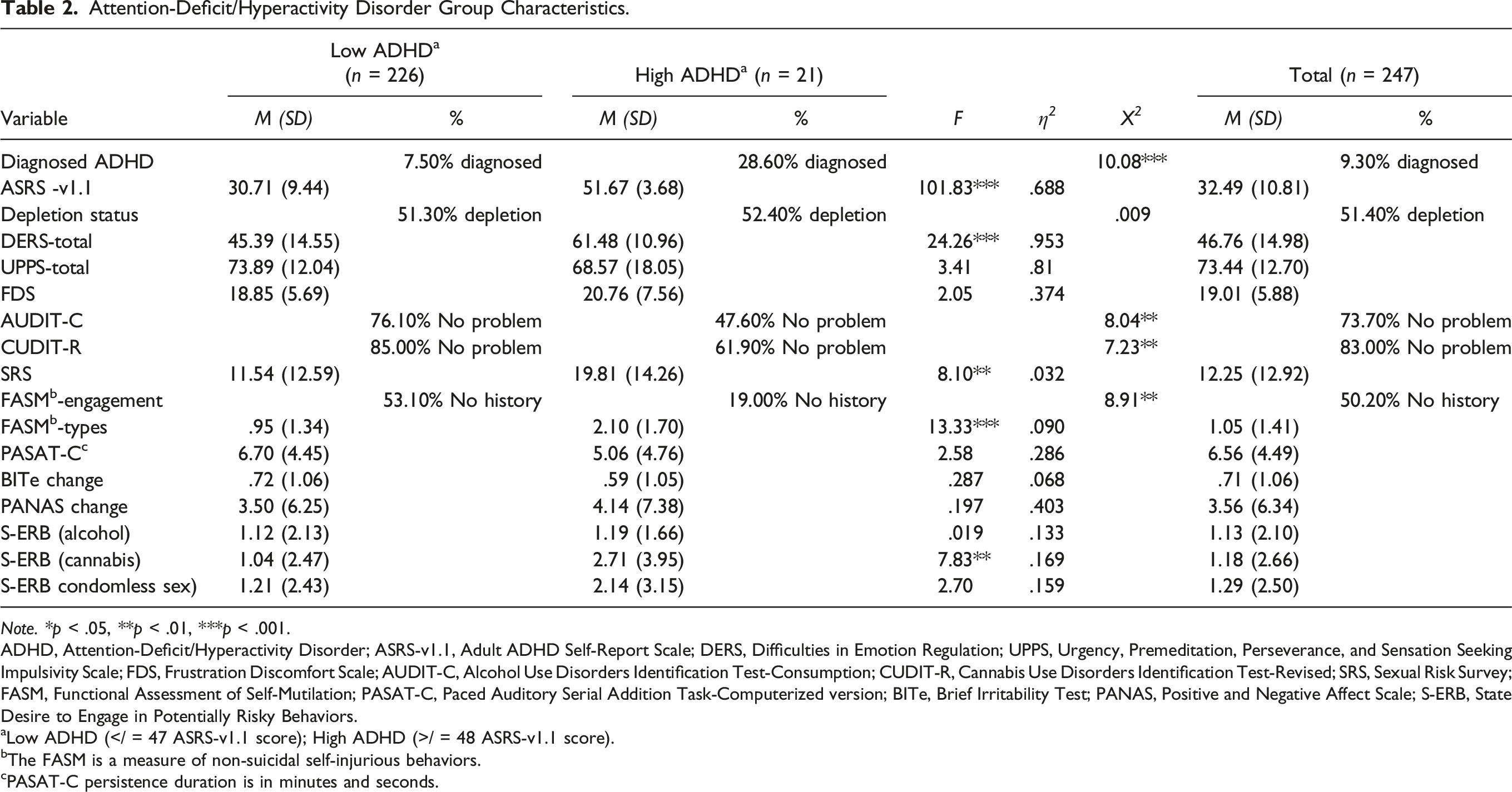
Note. *p < .05, **p < .01, ***p < .001.
ADHD, Attention-Deficit/Hyperactivity Disorder; ASRS-v1.1, Adult ADHD Self-Report Scale; DERS, Difficulties in Emotion Regulation; UPPS, Urgency, Premeditation, Perseverance, and Sensation Seeking Impulsivity Scale; FDS, Frustration Discomfort Scale; AUDIT-C, Alcohol Use Disorders Identification Test-Consumption; CUDIT-R, Cannabis Use Disorders Identification Test-Revised; SRS, Sexual Risk Survey; FASM, Functional Assessment of Self-Mutilation; PASAT-C, Paced Auditory Serial Addition Task-Computerized version; BITe, Brief Irritability Test; PANAS, Positive and Negative Affect Scale; S-ERB, State Desire to Engage in Potentially Risky Behaviors.
aLow ADHD (</ = 47 ASRS-v1.1 score); High ADHD (>/ = 48 ASRS-v1.1 score).
bThe FASM is a measure of non-suicidal self-injurious behaviors.
cPASAT-C persistence duration is in minutes and seconds.
Analytic Strategy
A total of seven hierarchical linear and logistic regressions was run to test Hypotheses 1–3.
ADHD was treated as a continuous variable and depletion status was treated categorically (depletion/no depletion). Multiple hierarchical linear regressions were used to compare the main effects of ADHD symptoms and depletion status as well as their interaction effects on frustration tolerance (PASAT-C Level 3 persistence duration) and state irritability (BITe change scores). As has been done in other studies, time to termination of Level 3 served as the primary dependent variable to index frustration tolerance (Lejuez et al., 2003).
Multiple hierarchical linear and logistic regressions were used to examine associations between frustration tolerance, state irritability and engagement in risky behaviors in the total sample, and to test the moderation hypothesis that stronger associations were present in participants with higher reported ADHD symptoms. Only blocks (1 and 2) containing covariates and frustration tolerance, respectively, were used for H2 testing. The following demographic variables were used as covariates in the respective analyses: race (H2 and 3b and f), ethnicity (H2 and 3a and e), gender (H2 and 3f), and sexual orientation (H2 and 3e). Dummy variables were created for race, ethnicity, gender, and sexual orientation for use in analyses. Only blocks (3 and 4) containing total ADHD symptoms and the interaction between total ADHD symptoms and frustration tolerance were used for H3 testing.
Results
Hypothesis Testing
Results of Linear Regressions.
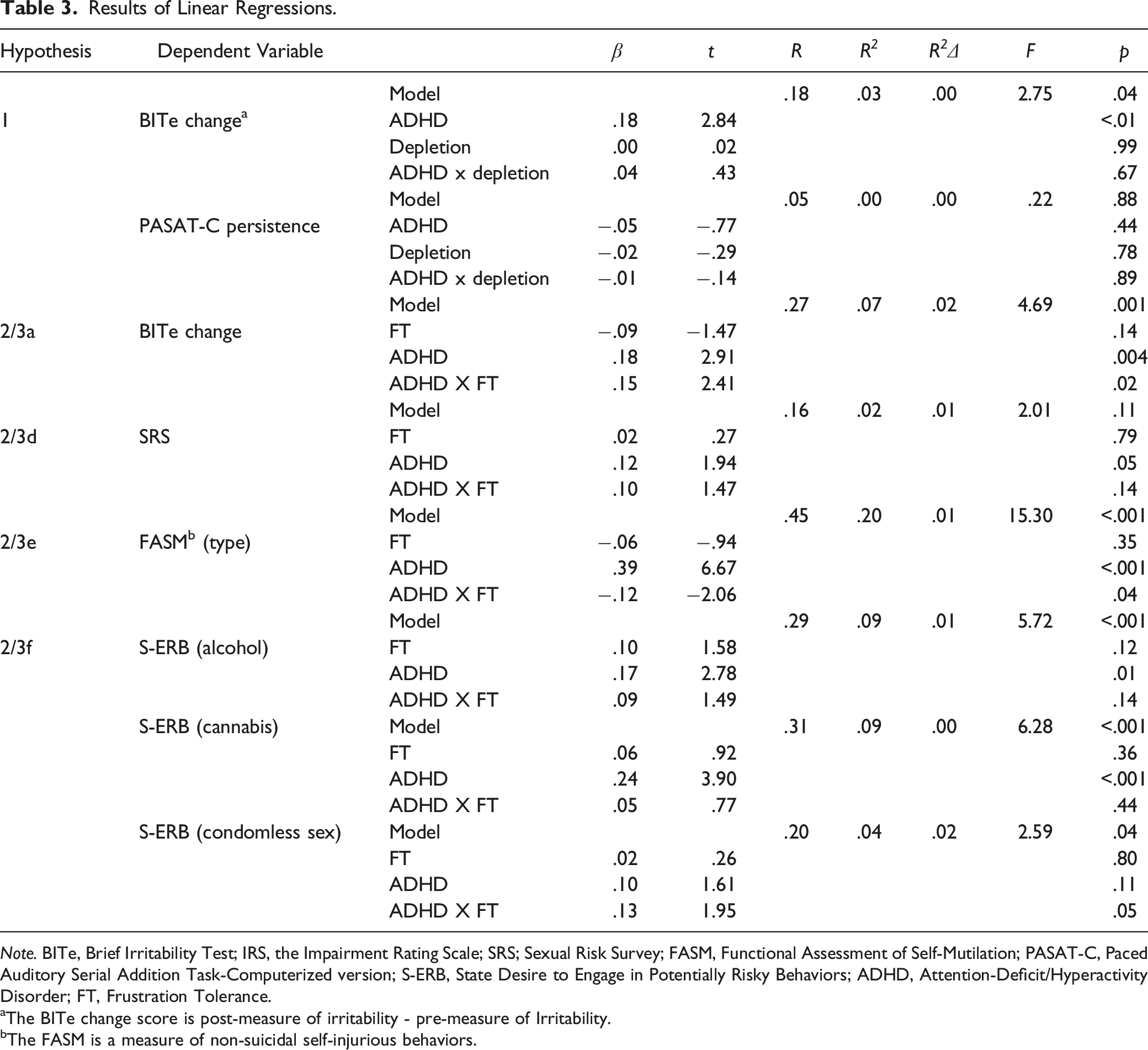
Note. BITe, Brief Irritability Test; IRS, the Impairment Rating Scale; SRS; Sexual Risk Survey; FASM, Functional Assessment of Self-Mutilation; PASAT-C, Paced Auditory Serial Addition Task-Computerized version; S-ERB, State Desire to Engage in Potentially Risky Behaviors; ADHD, Attention-Deficit/Hyperactivity Disorder; FT, Frustration Tolerance.
aThe BITe change score is post-measure of irritability - pre-measure of Irritability.
bThe FASM is a measure of non-suicidal self-injurious behaviors.
Results of Logistic Regressions.
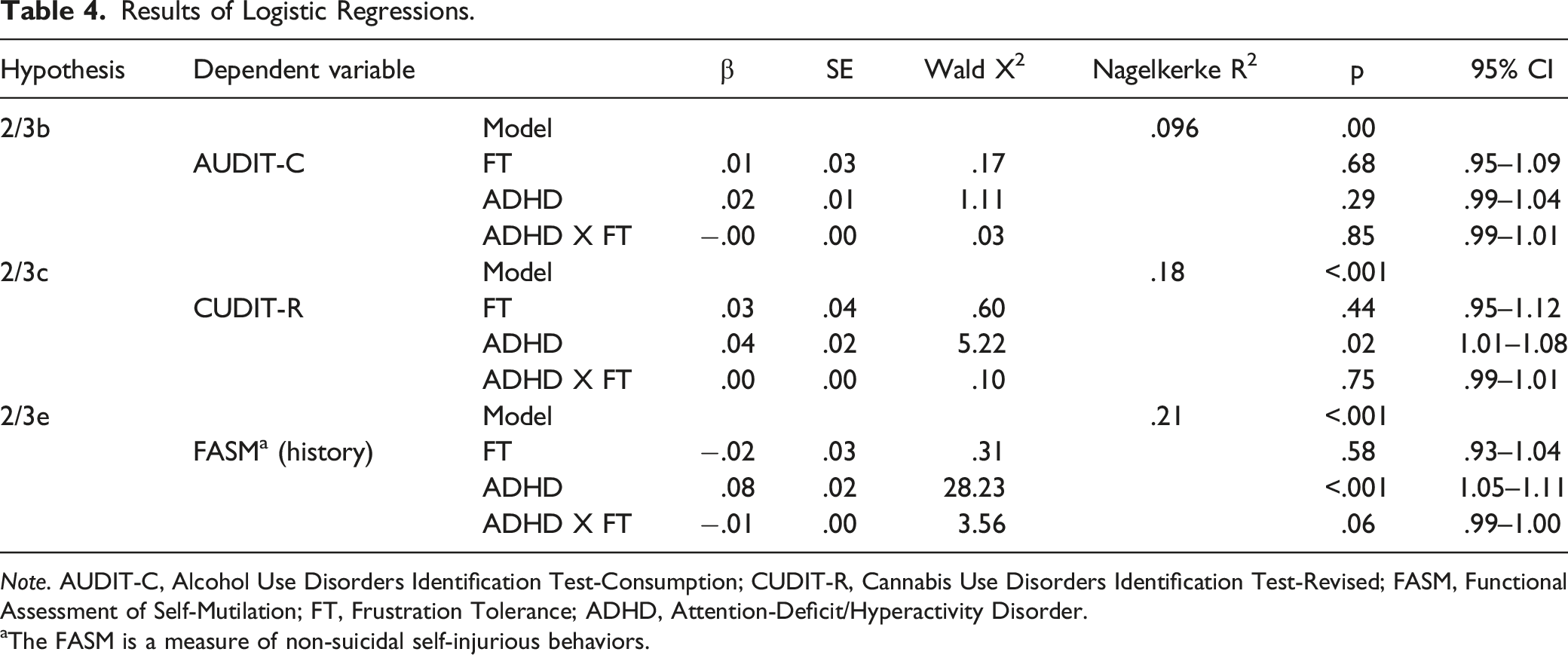
Note. AUDIT-C, Alcohol Use Disorders Identification Test-Consumption; CUDIT-R, Cannabis Use Disorders Identification Test-Revised; FASM, Functional Assessment of Self-Mutilation; FT, Frustration Tolerance; ADHD, Attention-Deficit/Hyperactivity Disorder.
aThe FASM is a measure of non-suicidal self-injurious behaviors.
Summary of Findings.
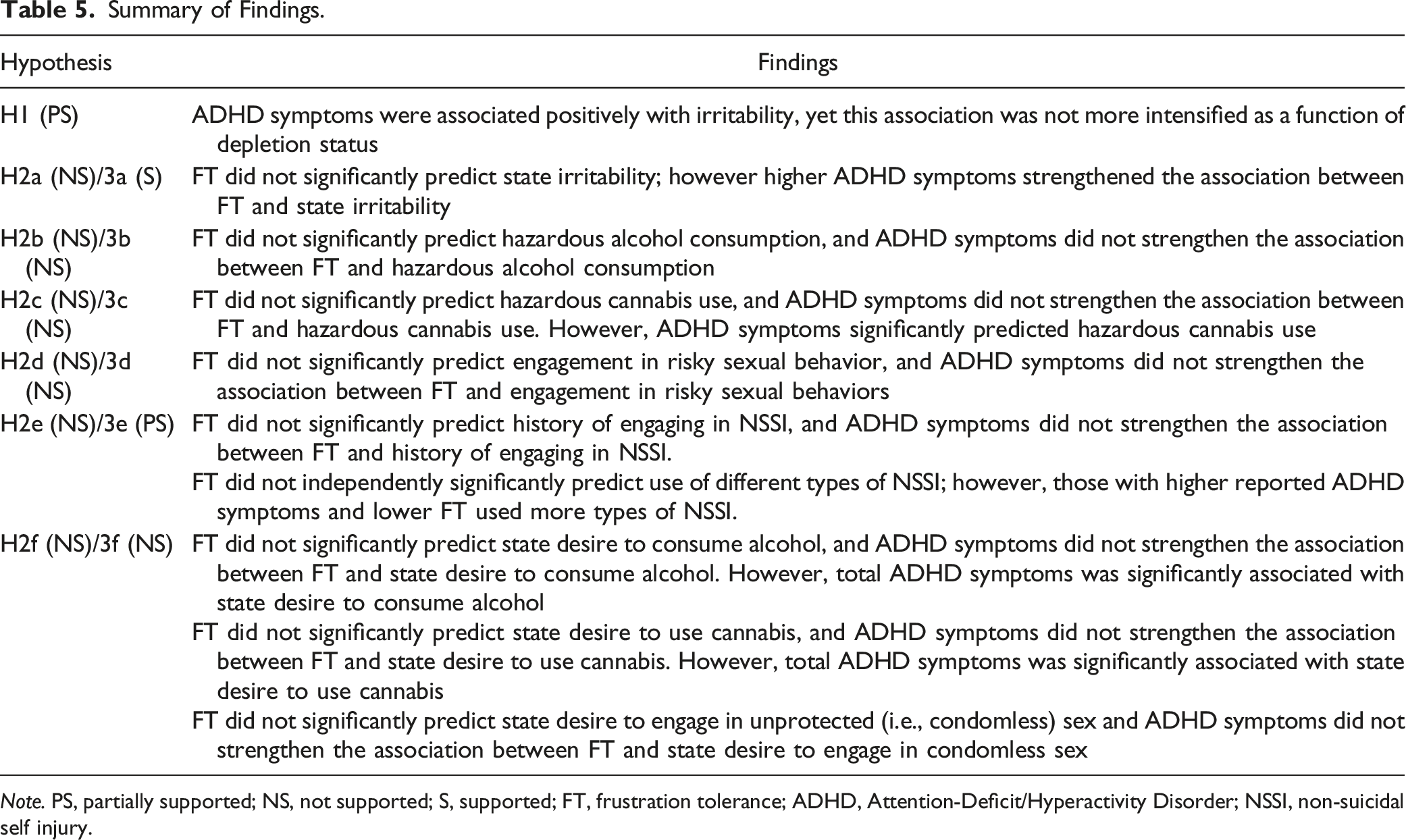
Note. PS, partially supported; NS, not supported; S, supported; FT, frustration tolerance; ADHD, Attention-Deficit/Hyperactivity Disorder; NSSI, non-suicidal self injury.
ADHD symptoms will be associated with state irritability and observed frustration tolerance, and self-control resource depletion will intensify this difference. Total ADHD symptoms (t = 2.84, β = .18, p < .01), but not depletion status (t = .02, β = .00, p = .99) was significantly associated with state irritability. The interaction between total ADHD symptoms and depletion status was not significantly associated with state irritability (R = .18, R
2 change
= .00, F (1,243) = 2.75, p = .67). Neither total ADHD symptoms nor depletion status was significantly associated with frustration tolerance (R = .05, F (2,243) = .32, p = .72). The interaction between total ADHD symptoms and depletion status was not significantly associated with frustration tolerance (R = .05, R
2 change
= .00, F (1, 242) = .22, p = .89). Hypothesis 1 was partially supported. ADHD symptoms were associated positively with irritability, yet this association was not more intensified as a function of depletion status.
Higher abilities to tolerate frustration, regardless of depletion status, will be associated with lower self-reported state irritability (H2a). ADHD symptoms will moderate this association (H3a). Frustration tolerance did not significantly predict state irritability (R = .13, F (1,243) = 2.06, p = .14). The interaction between frustration tolerance and total ADHD symptoms was significantly associated with state irritability (t = 2.41, β = .15, p = .02). Thus, hypothesis 2a was not supported, while hypothesis 3a was supported. Higher ADHD symptoms strengthened the association between frustration tolerance and state irritability.
Higher abilities to tolerate frustration, regardless of depletion status, will be associated with lower levels of self-reported hazardous alcohol consumption (H2b). ADHD symptoms will moderate this association (H3b). Frustration tolerance did not significantly predict hazardous alcohol consumption (Wald X
2
(1) = .17, p = .68). The interaction between frustration tolerance and total ADHD symptoms was not significantly associated with hazardous/non-hazardous alcohol consumption (Wald X
2
(1) = .03, p = .85). Thus, neither hypothesis 2b nor hypothesis 3b was supported.
Higher abilities to tolerate frustration, regardless of depletion status, will be associated with lower levels of self-reported hazardous cannabis use (H2c). ADHD symptoms will moderate this association (H3c). Frustration tolerance did not significantly predict hazardous cannabis use (Wald X
2
(1) = .60, p = .44). The interaction between frustration tolerance and total ADHD symptoms was not significantly associated with hazardous cannabis use (Wald X
2
(1) = .10, p = .75). Thus, neither hypothesis 2c nor hypothesis 3c was supported.
Higher abilities to tolerate frustration, regardless of depletion status, will be associated with lower levels of self-reported engagement in risky sexual behavior (H2d). ADHD symptoms will moderate this association (H3d). Frustration tolerance did not significantly predict engagement in risky sexual behavior (R = .02, R
2
= −.004, F (1,242) = .08, p = .79). The interaction between frustration tolerance and total ADHD symptoms was not significantly associated with engagement in risky sexual behavior (t = 1.47, β = .10, p = .14). Thus, neither hypothesis 2d nor hypothesis 3d was supported.
Higher abilities to tolerate frustration, regardless of depletion status, will be associated with lower levels of self-reported engagement in NSSI (H2e). ADHD symptoms will moderate this association (H3e). Frustration tolerance did not significantly predict history of engaging in NSSI (Wald X
2
(1) = .31, p = .58). The interaction between frustration tolerance and total ADHD symptoms was not significantly associated with history of engaging in NSSI (Wald X
2
(1) = 3.56, p = .06). Frustration tolerance did not significantly predict use of different types of NSSI (R = .20, R
2
= .04, R
2 change
= .00, F (1,242) = 4.98, p = .35). The interaction between frustration tolerance and total ADHD symptoms was significantly associated with use of different types of NSSI (t = −2.06, β = −.12, p = .04). Those with lower frustration tolerance used more types of NSSI, and higher reported ADHD symptoms strengthened this relationship. Thus, hypothesis 2e was not supported, while hypothesis 3e was partially supported.
Higher abilities to tolerate frustration, regardless of depletion status, will be associated with lower self-reported state desires to engage in potentially risky behaviors (H2f). ADHD symptoms will moderate associations (H3f). Frustration tolerance did not significantly predict state desire to consume alcohol (R = .22, R
2
= .05, R
2 change
= .01, F (1,243) = 6.25, p = .12). The interaction between frustration tolerance and total ADHD symptoms was not significantly associated with state desire to consume alcohol (t = 1.49, β = .09, p = .14); however, total ADHD symptoms was significantly associated with state desire to consume alcohol (t = 2.78, β = .17, p = .01). Frustration tolerance did not significantly predict state desire to use cannabis (R = .19, R
2
= .04, R
2 change
= .00, F (1,243) = 4.44, p = .36). The interaction between frustration tolerance and total ADHD symptoms was not significantly associated with state desire to use cannabis (t = .77, β = .05, p = .44); however, total ADHD symptoms was significantly associated with state desire to use cannabis (t = 3.90, β = .24, p < .001). Frustration tolerance did not significantly predict state desire to engage in condomless sex (R = .13, R
2 change
= .01, R
2 change
= .00, F (1,243) = 1.94, p = .80). The interaction between frustration tolerance and total ADHD symptoms was not significantly associated with state desire to engage in condomless sex (t = 1.95, β = .13, p = .05). Neither hypothesis 2f nor hypothesis 3f was supported.
Discussion
The present study used the Self-Control Strength Model as a theoretical framework for experimentally investigating associations between self-control resource depletion, frustration tolerance, and irritability in a college student population. Further, this study investigated the potential moderating role of ADHD symptoms on associations between frustration tolerance and irritability as well as engagement in several risky behaviors related negatively with self-control (Shoham et al., 2019). The primary significant findings from this study are (1) ADHD symptoms are associated with increased state irritability during a frustration tolerance task, (2) the relationship between frustration tolerance and state irritability is moderated by ADHD symptoms such that those with higher ADHD symptoms have stronger relationships between frustration tolerance and state irritability, (3) the relationship between frustration tolerance and the number of types of NSSI endorsed is moderated by ADHD symptoms such that those with higher ADHD symptoms have stronger relationships between frustration tolerance and the number of types of NSSI endorsed, and (4) ADHD independently significantly predicts state desire to engage in alcohol and cannabis use following a frustration tolerance cognitive task.
The positive relationship between ADHD symptoms and state irritability is unsurprising; others have found that individuals with ADHD are more easily irritated than others (Eyre et al., 2019) and irritability is generally considered to be a prominent clinical target in ADHD treatment (Faraone et al., 2019). Our experimental results confirm these past non-experimental findings and support the external validity of our findings. A more novel finding is that irritability can be experimentally induced in college students with elevated ADHD symptoms. The topic of task persistence has been considered far less in the college student ADHD population and no experimental studies could be located which examined these associations. The present results indicate that even though they failed to persist on the PASAT-C as long as their peers, college students with higher ADHD symptoms still reported increased irritability following the PASAT-C. Though college students with ADHD generally have higher cognitive resources than their same age-peers with ADHD who do not attend college (Weyandt et al., 2017), (a) they may still fail to persist and (b) their limited persistence may carry an emotional cost: irritability (Borges et al., 2017).
An additional important finding is that individuals with lower frustration tolerance report engagement in more types of NSSI, and this relationship is strengthened by ADHD symptoms. The inability to tolerate frustration (Peterson et al., 2019) and ADHD (Balázs et al., 2018; Meza et al., 2016) have both been previously reported to be associated independently with engagement in NSSI. Additionally, ADHD symptoms (e.g., impulsivity) (Balázs et al., 2018) increase risk of more varied forms of NSSI (Meza et al., 2016). NSSI may function as an experientially avoidant behavior, aimed at decreasing experiences of emotional distress (Hepp et al., 2020). While completely unexplored in ADHD, there are reasons to hypothesize that NSSI may be a function of deficient emotional regulation and impulsivity (Moukhtarian et al., 2018). The present experimental results extend the findings of these studies and indicate that ADHD symptoms moderates the relationship between low frustration tolerance and more varied NSSI methods.
Although the above findings lend partial support to several hypotheses, it is important to note that multiple other hypotheses were not supported. There are at least two possible explanations for the null findings. First, it is possible that the frustration tolerance task (PASAT-C) did not produce significant frustration in the college students. The PASAT-C can reliably induce negative emotions (Lavender et al., 2017). However, use of persistence on the PASAT-C to measure frustration tolerance has resulted in inconsistent between-group findings (clinical v. control) (Winward et al., 2014), suggesting that a cognitive task alone may not provide ecologically valid frustration.
Second, the Stroop task failed to adequately deplete the participants. Thus, the Self-Control Strength Model (Baumeister et al., 2007) could not be tested. Despite some empirical support for the construct of self-control resource depletion (Dang et al., 2017; Wymbs, 2018), there remains significant controversy about this theory. The most consistent argument against self-control resource depletion is the low replicability of this effect (Emmerling et al., 2017), possibly due to a failure to experimentally manipulate depletion to a significant degree.
Clinical Implications
Overall, there were several findings with translational value that were consistent with previous research. The findings consistent with previous research suggests that ADHD symptoms are significantly associated with multiple functional outcomes in college students. Of particular clinical importance is the positive association between ADHD symptoms and NSSI. High ADHD symptoms may contribute to increased risk of NSSI, and as the present study found, engagement in a greater variety of types of NSSI. It is of particular importance that clinicians target frustration tolerance and irritability management and teach emotional regulation skills when working with college students with ADHD.
Emotional dysregulation – and specifically episodic irritability – might be an important treatment target for college students with ADHD. Clinically, the combination of CBT and DBT has been demonstrated to improve emotional regulation and reduce irritability in adults with ADHD (Nasri et al., 2020). Mindfulness interventions may also assist in helping reduce episodic irritability in adults with ADHD (Mitchell et al., 2017).
Limitations
There are several limitations to the present study that support the need for further investigation of this topic. First, the depletion task chosen did not serve its intended purpose. The lack of a depleting effect of the Stroop task hampers the ability to truly investigate the effect of self-control resource depletion on both irritability and frustration tolerance. The present study used 256 Stroop trials. Past studies using the Stroop with as many as 888 trials as a depleting task have had mixed results (Mangin et al., 2021). This indicates that even with significant modifications, the Stroop task may fail to be sufficiently depleting for college students.
An additional limitation of the present study was the use of experimental tasks via remote, unmonitored administration. This study design (necessitated during COVID-19) greatly limited experimental control over several factors (i.e., location of participant, environmental distractions, volume of computer during the PASAT-C frustration tolerance task, device screen size), any of which may have impacted outcomes. The remote execution of study protocol did not allow for participants’ device settings to be monitored throughout the study, potentially resulting in device settings not being adjusted for study protocol to be successfully implemented (e.g., volume not turned up to 75%, etc.). Further, all self-report measures were presented in a fixed order. While item and measurement order do not consistently compromise the validity of responses, it has been suggested that it is important to design studies in a way that allows for routine assessment of measurement reactivity (Arslan et al., 2021).
The present sample was mostly white females. Replication in a larger, more diverse sample is necessary to increase generalizability. Additionally, it may be the case that the assessed functional outcomes are associated with other, unmeasured variables (e.g., depression, anxiety, sleep) (Gordon et al., 2017). Students were recruited without the restricting limitation of an ADHD diagnosis, allowing consideration of a broader range of ADHD symptoms. This permitted us to capture a sample of college students who may experience irritability and negative functional outcomes similar to those with diagnosed ADHD. Nonetheless, these results may not be generalizable to the population of college students with ADHD.
Finally, a large number of analyses were conducted increasing the likelihood of a spurious finding. The present study is an exploratory study; we measured a number of risky behaviors that might be worthy of more targeted investigation in follow-up studies. Given the exploratory nature of our hypotheses, we are more concerned about type II errors rather than type I errors (Bender & Lange, 2001). Future confirmatory research should adjust for multiple testing.
Directions for Future Research
The present study highlights the need for reconsidering the use of the Stroop Color-Word task for investigating self-control resource depletion in college students. The present study was unable to test the Self-Control Strength Model due to the inability of the Stroop to achieve its anticipated outcomes. Specifically, the use of separate or multiple depletion tasks may be necessary in studies investigating the Self-Control Strength Model (Dang, 2018). Alternatively, the low replicability of the self-control resource depletion effect (Emmerling et al., 2017) raises questions about future studies successfully obtaining this effect experimentally. Significant controversy, specifically in the field of social psychology, about self-control being a depletable resource suggests that there may be better ways to explain the phenomena attributed to the depletion of self-control resources (Dang & Hagger, 2019). Decrements in several variables examined in the present study (e.g., emotion regulation abilities) may lead to similar expected outcomes (e.g., quitting a frustrating task) and should be further studied.
Relatedly, based on the finding that there was no difference in objective frustration tolerance (PASAT-C persistence duration) based on either depletion status or ADHD symptoms, it is possible that frustration in college students cannot be induced reliably using an experimental measure. Future research should consider the sole use of in vivo, relational frustration-induction tasks which have been used successfully in past research (Wymbs, 2018), using these tasks in conjunction with a computer-based cognitive experimental measure, or considering alternative options beyond the PASAT-C for use with college students.
Conclusions
The results of the present study indicate a need for further consideration of the utility of the Self-Control Strength Model and the use of the Stroop Color-Word task as a depleting task. There were several significant findings: (1) total ADHD symptoms was positively associated with state irritability during a frustration tolerance task, (2) those with higher ADHD symptoms had stronger relationships between frustration tolerance and state irritability, (3) those with higher reported ADHD symptoms had a stronger relationship between frustration tolerance used types of NSSI, and (4) ADHD independently significantly predicts state desire to engage in alcohol and cannabis use following a frustration tolerance cognitive task.
Supplemental Material
Supplemental Material - Self-Control Depletion, Frustration Tolerance, Irritability, and Engagement in Risky Behaviors in College Students With and Without Attention-Deficit/Hyperactivity Disorder Risk
Supplemental Material for Self-Control Depletion, Frustration Tolerance, Irritability, and Engagement in Risky Behaviors in College Students With and Without Attention-Deficit/Hyperactivity Disorder Risk by Catherine Montgomery, and Kevin M. Antshel in Emerging Adulthood
Footnotes
Declaration of Conflicting Interests
The author(s) declared no potential conflicts of interest with respect to the research, authorship, and/or publication of this article.
Funding
The author(s) received no financial support for the research, authorship, and/or publication of this article.
Open Practices
The analysis code and materials used in this manuscript are not openly available. The raw data contained in this manuscript are not openly available due to privacy restrictions set forth by the institutional review board but can be obtained from the corresponding author following the completion of a privacy and fair use agreement. No aspects of the study were pre-registered. The raw data, analysis code, and materials used in this study are not openly available but are available upon request to the corresponding author. The data collection and analysis were not pre-registered; thus, no deviations are indicated in the manuscript.

Supplemental Material
Supplemental material for this article is available online.
Author Biographies
References
Supplementary Material
Please find the following supplemental material available below.
For Open Access articles published under a Creative Commons License, all supplemental material carries the same license as the article it is associated with.
For non-Open Access articles published, all supplemental material carries a non-exclusive license, and permission requests for re-use of supplemental material or any part of supplemental material shall be sent directly to the copyright owner as specified in the copyright notice associated with the article.
