



Abstract
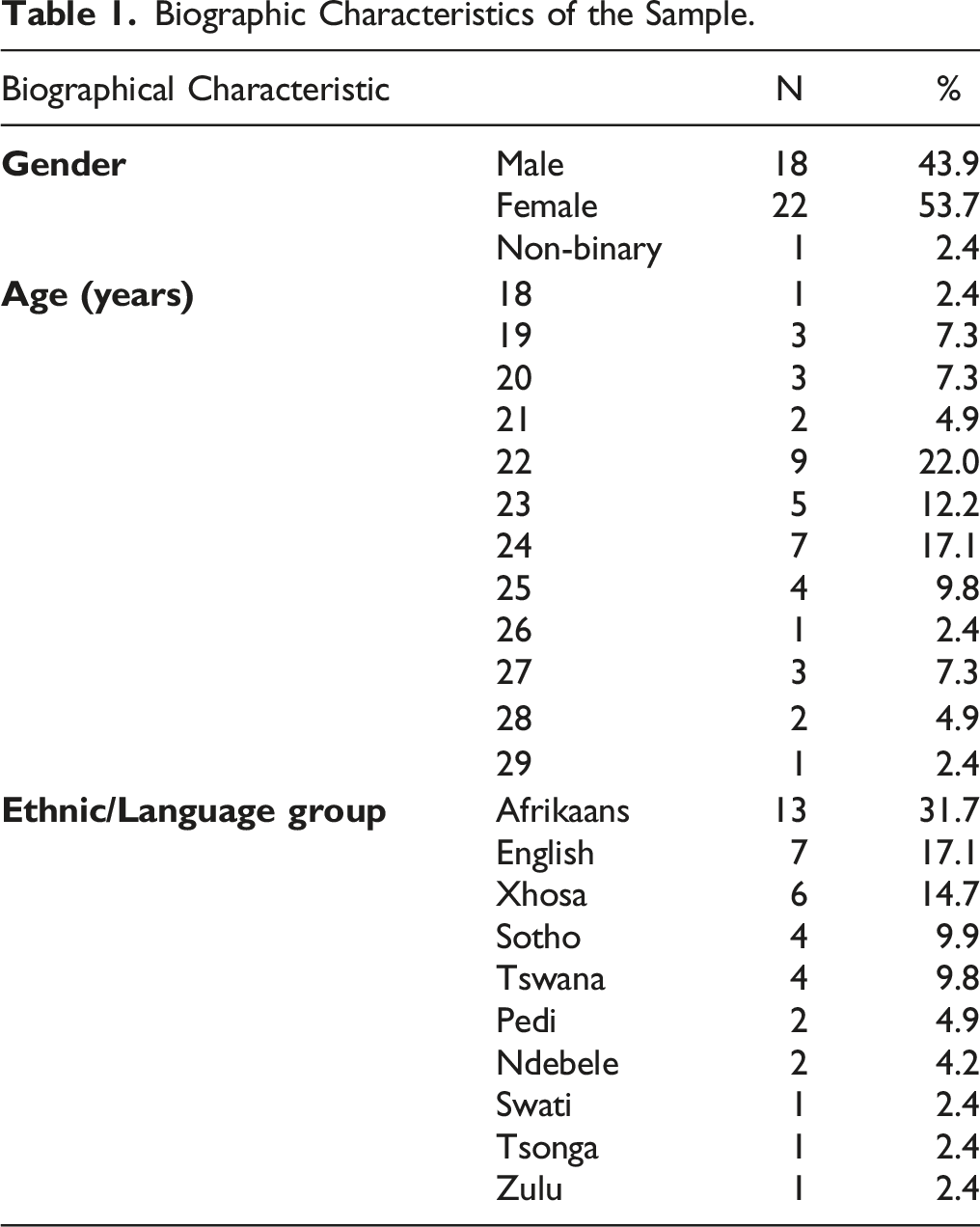
Social media engagements are integral to the lives and experiences of emerging adults. The aim of this study was to explore social media as a space where South African emerging adults shape and refine their sense of self. An explorative and descriptive qualitative approach was employed and individual interviews were conducted with 41 participants ((MAge = 23.17; SD = 2.65; Females = 53.7%). Data were analysed using thematic analysis. Participants confirmed the centrality of social media in their lives and emphasised both the value (being connected, informed, and entertained) and the dangers (invasion of time/privacy and exposure to negativity/inauthenticity) of social media engagements. Social media facilitate the development towards an evolving story of the self as emerging adults navigate through the intricacies of life. A prominent finding in this study related to the intentionality of the social media engagements of emerging adults as they actively attempt (as Actors, Agents, and Authors) to find positivity and possibility in a world of contradiction and instability.
Keywords
Over the last few decades, the social media environment has become a prominent landscape for socialisation and an important developmental context for young people in particular (Breen et al., 2017; Coyne et al., 2013; 2016; Manago, 2015; Ohannessian et al., 2017; Ross et al., 2021; Vannucci et al., 2019, 2020). The development of a stable sense of identity is a key task during emerging adulthood (ages 18 to 29, Arnett, 2000, 2016; Schwartz et al., 2016). Social media platforms provide a range of diverse spaces where individuals can identify with stories that resonate (or not) with their self-story. The aim of this research study was to explore social media as a space where South African emerging adults shape and refine their sense of self. In this paper, the results of the abovementioned exploration are presented in relation to empirical models (e. g., the Super-Peer Theory of Strasburger, 2012; the Facebook Influence Model of Moreno and Whitehill, 2014; the Media Practice Model of Steele and Brown, 1995; and the co-construction model of Subrahmanyam et al., 2006), explaining the intersection of social media and identity development while considering the developmental themes of the emerging adulthood life stage.
Emerging Adulthood and the Evolving Story of the Self
Emerging adulthood, the time of feeling betwixt and between, creates an extended moratorium for young people’s psychological and social search for the self (Arnett, 2000; 2016). The transitional nature of this life stage and the freedom to explore and experiment with multiple roles allows the opportunity for deepened identity explorations. Since emerging adulthood is a time of instability, transition, and disruption, individuals are challenged to move beyond a consistent, stable, and secure sense of self towards considering more nuances of the self (Schwartz et al., 2016). The various changes in their roles and relationships also prompt emerging adults to reflect more deeply on their position in the world. The variety of social contexts in which emerging adults interact and the increased complexity of these contexts expose them to diverse viewpoints and worldviews (Arnett, 2016; Breen et al., 2017; Landberg et al., 2019). This, in turn, creates the need to integrate additional and sometimes even conflicting information in various identity domains. This integration of multiple ‘selves’ requires higher order abstraction. Considering their cognitive development, emerging adults are more able than their younger peers to understand and manage this increased differentiation of self and others
This construction of a differentiated and sophisticated sense of self can be explained through the narrative theory of McAdams (2013b, 2016). Building on Erikson’s original theory of identity development, McAdams (2013a) contends that emerging adulthood is the time when the central psychological challenge is to internalise a self-defining life story. This story of self evolves and expands over the human lifespan; it is “the story about who I am, how I came to be and where I may be going next” (McAdams, 2016, p. 439). This life story is thus both retrospective and prospective in nature (McAdams, 2013b). It comes to fruition through a tripartite framework with the roles of Actors, Agents, and Authors (McAdams, 2013b; 2016; McAdams & McLean, 2013). The Actor is present-orientated, construed through performance, traits, and social roles and takes action in the social world. The Agent is both present- and future-orientated and is focused on personal goals, values, hopes, and envisioned projects and on developing and furthering one’s purpose in life. The Author is autobiographical and brings past, present, and future together into a coherent sense of self, synthesising experience and meaning into an overarching life story (McAdams, 2013b; McLean et al., 2007).
Since the development of an identity is a key psychosocial task during emerging adulthood (Arnett, 2000; 2016; McAdams, 2013a; Schwartz et al., 2016), the emergence of a coherent life story and stable sense of self has been associated with flourishing, positive orientations, meaning, and purpose (Bronk & Baumsteiger, 2017; Nelson & Padilla-Walker, 2013; Padilla-Walker et al., 2008).
The Interplay Between Social Media and Identity
Digital social technologies are changing the ways in which individuals negotiate their identities (Hagedorn, 2016; Noveck et al., 2021). Social network sites are highly interactive, complex, and diverse spaces where contextual information flows, in real time, between individuals and their audiences. The multiplicity of social technologies often blurs boundaries between the digital and the physical and allows the flow of information between various individuals and audiences across temporal and spatial contexts (Hagedorn, 2016; Manago, 2015).
Social media thus provides a contemporary social space for the free expression of an identity or idealised self to a broad audience (Bates et al., 2020; Moreno & Whitehill, 2014; Subrahmanyam et al., 2006). Social media provides a platform not only to distinguish the self from others but also to see oneself in others (McLean & Breen, 2016). In this sense, it facilitates the social-relational nature of a narrative identity that is shaped by others (Pasupathi et al., 2019). While shaping their narrative identity, the boundless nature of social media provides emerging adults with a developmental window of opportunity for growth and deepened development, but also leaves them vulnerable to risk and maladaptive behaviours (Coyne et al., 2013; 2016). For example, social media can complement real-world relationships by providing additional mechanisms for meeting people, keeping in touch, and experiencing perceived social support, but can also detract from real-life relationships and result in poorer relationship quality, communication problems, and increased jealousy (Coyne et al., 2013).Involvement in social media platforms can be associated with pathological media use, anxiety, depressive symptoms, alcohol consumption, drug use, and diminished academic performance (Coyne et al., 2013; George et al., 2021; Vannucci et al., 2019; Walsh et al., 2013). In contrast to this, researchers have also found evidence of how social comparisons on social network sites can be a form of inspiration and elicit positive motivational outcomes conducive to well-being (Meier et al., 2020; Noon & Meier, 2019).
The functioning of Actors, Agents, and Authors (McAdams, 2013b, 2016; McAdams & McLean, 2013) in the social media sphere, can be explicated through various empirical models. In addition to general psychological theories such as social learning (Bandura, 1971), gratification (Korhan & Ersoy, 2016), and relational developmental system theories (Bronfenbrenner & Morris, 2006; Lerner et al., 2015), the Super-Peer Theory (Strasburger, 2012), Facebook Influence Model (Moreno & Whitehill, 2014), Media Practice Model (Steele & Brown, 1995), and co-construction model (Subrahmanyam et al., 2006) can explain the dynamic interplay between social media use and personal/identity development (see Ohannessian et al., 2017; Valkenburg & Peter, 2013; Vannucci et al., 2020).
As Actors, young people perform certain roles in their social world. The social media context is a ‘super peer’ (Strasburger, 2012) in young people’s social worlds. Social media exposure to increased interactions and wider networks, intensify and augment the normative influence of peer processes and mechanisms (i. e., the Facebook Influence Model, Moreno & Whitehill, 2014). Social media platforms create social reinforcement and pressure to conform to the social norms of high-status individuals through, for example, peer comments and ‘likes’, followers, and retweets (Korhan & Ersoy, 2016; Noveck et al., 2021; Vannucci et al., 2020). Due to their need to be valued and to form a positive social identity, young people are particularly susceptible to this social pressure (Moreno & Whitehill, 2014; Strasburger, 2012; Vannucci et al., 2020).
Young people are also Agents on social media platforms in the sense that they develop their personal goals, values, and purpose in life on social networking sites. The Media Practice Model (Steele & Brown, 1995; Valkenburg & Peter, 2013) unpacks this agency through three moments. First, selection is the choice of giving attention to social media content based on personal motivations and needs. Second, interaction relates to the cognitive (i.e., processing and trying to make sense of information), affective (i.e., arousal or shutting off), and behavioural (e.g., surfing, sharing photographs and videos, chatting and playing games) engagement with media. In this process, content is interpretated to understand the self and the world and evaluated to integrate already formed beliefs and new/contradictory messages into an identity. Third, application is the translation of media messages into active, intentional, and goal-orientated use (for purposes such as enhancing one’s mood, making a statement regarding one’s identity, imitating a role model, or fantasising about possible selves or situations). Furthermore, application involves a more internal and often unconscious process of integrating media messages and beliefs with existing attitudes, feelings, and knowledge into a broadened sense of self.
As autobiographical Authors of their lives, emerging adults also synthesise online and offline experiences into an overarching life story. The co-construction model (Subrahmanyam et al., 2006) explains that, for adolescents and young people, online and offline contexts are interconnected and is intricately related to developmental propensities such as exploring identity and finding both autonomy and belonging in relationships, risk-taking and demonstrating sensation-seeking behaviour (Manago, 2015; Subrahmanyam et al., 2006). Manago (2015) uses the term ‘customised sociality’ to explain this process of managing interpersonal relatedness and personal autonomy. Social media thus allows young people a space in which they can actively and intentionally choose interactions and behaviours that reflect their developmental priorities and enables them to express these freely in online communities. Emerging adults often tailor their narrations of self for diverse audiences (Pasupathi et al., 2019). Emerging adults are thus purposeful in their use of social media to practise and negotiate their identities. In developing their self-story, emerging adults’ presentations may include real, ideal, and false aspects of the self (Michikyan et al., 2015). Through a complex constellation of everyday activities, interactions, and experiences, they position themselves and spread their identity narratives through specific identity performances. Through all of this, emerging adults develop a greater understanding of their identities and how they present these to the world—they construct a sense of belonging and becoming (Hagedorn, 2016).
Identity development and Social Media in South African Emerging Adults
Human development entails the dynamic relationships between developing individuals and their multilevel ecology (Arnett, 2015; Barbot et al., 2020). It is thus important to consider how the interplay of individual processes, time, and context will result in varied pathways of emerging adulthood across cultures (Arnett, 2016; Landberg et al., 2019; Nelson, 2021).
South African emerging adults are transitioning into adulthood in a society that is in transition itself. They have to find a sense of self in a multicultural context that is vastly different from the society in which their parents have grown up, with power shifts and changing intergroup relations (Adams et al., 2018; Ferguson & Adams, 2015). While celebrating the post-Apartheid freedom of the Rainbow Nation, they also have to contend with the challenges of economic inequalities and cultural contestations (Oyedemi, 2021). The narrative journeys of South African emerging adults are thus shaped in a society filled with social complexity, multicultural diversity, continuous transition, sociopolitical concerns, resource constraints, and an unstable economic climate (Alberts & Durrheim, 2018; Du Plessis et al., 2020; Naudé, 2022; Van Lill & Bakker, 2020). South African emerging adults’ identity development is also interwoven with strong ties to African personhood, interconnectedness, spirituality, and family roles and responsibilities (Du Plessis et al., 2020; Naudé & Piotrowski, 2022; Sodi et al., 2021).
South African emerging adults, like many of their peers across the world, are increasingly exposed to social media (Bosch, 2020; Dunn & Falkof, 2021; Hendricks & Kanjiri, 2021). Social media permeates the everyday lives of South Africans, shapes key aspects of contemporary sociality, and serves as a space for self-reflection and self-creation (Bosch, 2020). Researchers have expressed both optimism and concerns about the impact of social media on South Africa’s youth, with research findings ranging from the value of information, access, and recreation to the dangers of social comparison (Dunn & Falkof, 2021; Hendricks & Kanjiri, 2021). Ferguson and Adams (2015) refer to the Americanisation in the rainbow nation to describe how social media (amongst other trends of globalisation) serves as a form of remote acculturation. Through this remote acculturation, individuals have the opportunity to actively pursue their own development and imagine future possibilities without the constraints of geographical proximity. Hendricks and Kanjiri (2021) warn that, especially in rural areas where there are large discrepancies between the expectations created on social media and reality, the use of social media can hamper the psychosocial well-being of the youth. In addition to this, Dunn and Falkof (2021) explain that, while social media can be a source of social and cultural capital where identities and idealised selves are constructed, these freedoms of expressions are constrained by normative ideas, existing power structures, and the unequal context in which many South Africans live.
The current research study is situated in the South African context. It is explorative and descriptive in nature and responds to the need for contextual, inclusive, and novel studies that can contribute to a more nuanced understanding of both the universal and culturally specific experiences of emerging adulthood (Adams, 2021; Ratele, 2019; Thalmayer et al., 2021).
Research Methods
This research study forms part of a larger research project relating to emerging adults in South Africa. To gain a deeper understanding of the experiences and developmental dimensions of the social media engagement of emerging adults, a qualitative approach was deemed appropriate in the current study. The design was explorative and descriptive in nature (Denzin & Lincoln, 2018). Postgraduate psychology students were trained to assist with recruiting and interviewing participants. Research assistants were in the emerging adulthood stage themselves and represented various ethno-linguistic groupings.
Participants and Sampling
Biographic Characteristics of the Sample.
Data Collection
The participants were individually interviewed by the trained research assistants. The use of peer interviewers with whom participants could identify, ensured trust and openness. An interview schedule with semi-structured questions was applied in a flexible manner to allow for focused but comfortable conversation. The interview started with introductory questions (e.g., In which forms of social media do you engage? Why do you engage in social media?). This was followed by the main questions: Think about three ‘stories’ you encountered on social media that made an impression on you; How did these ‘stories’ impact your view of yourself /who you are? Follow up questions (e.g., Why do you think this story makes an impression on you? Why is this story important to you personally? What did it make you think of? What does it say about you?) were used to prompt further discussion and deeper reflection. Since participants were allowed to answer interview questions to the extent that they felt fit, interviews were of varied length. Most interviews lasted between 20 and 30 minutes (with the longest being 43 minutes, and the shortest only 3 minutes). Interviews were audio recorded and transcribed verbatim.
Data Analysis
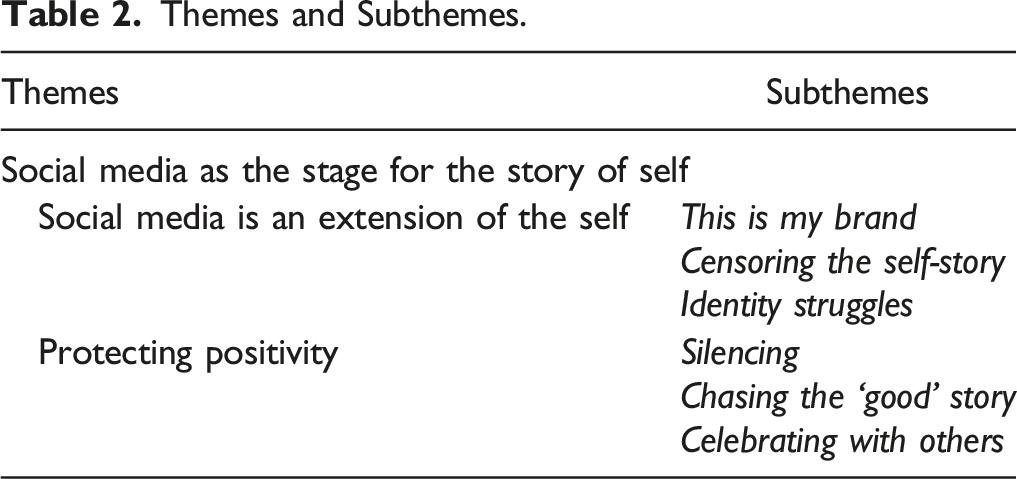
Thematic analysis, with guidelines from both narrative thematic analysis (Riessman, 2007) and reflexive thematic analysis (Braun & Clarke, 2022) were used to code and analyse the transcribed narratives. The researcher (single coder) worked systematically through each participant’s narrative with the aim to construct meaning within each personal story and also to form a coherent conceptualisation across the stories. Through both immersion and critical engagement with the data, coding entailed iterative cycles of descriptive and analytic coding, including inductive and deductive processes, towards the development of patterns and themes of meaning. Using visual mapping, clusters of meaning, anchored around a shared idea, were developed /refined /organised into themes, adding subthemes where needed to provide analytic emphasis to multi-layered themes. Analytic memo writing was used to document reflections on the coding processes and concepts. This served as a form of researcher reflexivity where assumptions, expectations, choices, and actions could be considered by reflecting on personal (e. g. as a white adult female scholar interested, but not actively involved, in social media), functional (e. g. how methodological choices, such as the use of peer interviewers shaped the data), and disciplinary (e. g. an agentic view of emerging adults as autobiographers of their life stories as interpretative lens) positioning. Standards of rigour as suggested by Denzin and Lincoln (2018) and Levitt et al., 2018) were also employed. For example, methodological integrity was ensured through using trained research assistants, conducting thorough semi-structured interviews, capturing adequate and triangulated data from a diverse group of 41 participants, engaging extensively with the data, demonstrating findings with authentic evidence (i. e. including participant quotations to substantiate arguments), and grounding findings in theoretical and contextual frameworks.
Results
Themes and Subthemes.
Social Media as the Stage for the Story of Self
From the participants’ comments, it was clear that the role of social media was prominent and omnipresent in their lives: “Technology becomes a part of us, you know; otherwise, you live in Ancient Greece…” (P1) and “[I]t’s just something that is part of your daily life … You wake up with your alarm going off, you grab your phone, and you basically go on to the platforms just to check what’s up, what’s new …” (P2). Most of the participants were active on a variety of social media platforms. Facebook was mostly used for following happenings in the lives of others, Instagram for posting selfies, YouTube for music and motivational talks, Pinterest for new ideas and trends, and News24 for political and sport news.
Participants appreciated the value of social media: “[P]eople might think that social media is just a bad tooth, but it is one of the greatest inventions that ever came in the world …” (P3). They valued social media because it is instant: “[I]t’s no longer needed to wait for 7 pm for a news update … stories break easily …” (P12); it is limitless: “[Y]ou can reach thousands of people in a short time …” (P38); it is flexible: “[I]f you want to talk to someone now and they’re not anywhere near you, the message goes through and you can see if the person has read your message or not” (P15); it is inexpensive: “[I]f you only have your cell phone … you can get access to so many things …” (P36); and it is accessible: “… quickly look up a person and know basically ten facts about that person and you even haven’t met …” (P37). The three most prominent reasons for participants’ social media engagement were (a) Staying connected; (b) Being informed; and (c) Entertainment. Participants were also aware of the dangers and negative consequences of social media engagement. The most prominent concerns raised were (a) the consumption of time, (b) invasion of privacy, (c) exposure to negativity, and (d) inauthenticity.
Social Media is an Extension of the Self
Participants explained how their social media engagements and platforms are intricately tied to who they are.
This is My Brand
For most participants, social media provided a space to express to others who they are: “It allows me to show the world who am I … whatever I post, it’s a reflection of me” (P18); “[Y]our social media is your brand, and it paints a lot about you …” (P1); and “I also use it obviously to build my profile as an individual, not only as someone who wants to be known or someone who wants to make a mark in mental health and psychology but just to be someone who has substance …” (P16).
More than just an opportunity for self-expression, social media also provided an opportunity for self-reflection: “So it is kind of a flag or reflection on who you’re going to be … you are watching yourself” (P1); and “I also like it when Facebook reminds you this was a year ago … you’re like what? Is that a year ago? … it’s a nice way… to keep your memories close” (P6).
In addition, social media portrays the self not only through one’s personal posts but also through the people who one follows and the people who post on one’s timeline/wall (e.g., a comment from an important person): [C]heck who it is you’re following on social media and who is your following … maybe start deleting some people and start following the right people because social media [is] a very huge platform that I think also give[s] the world a bit of who you are …. (P1)
Furthermore, participants’ media engagements were considered an extension of themselves in the sense that they were interested in stories that related to their views of themselves. Those in the field of psychology analysed social media content to understand people’s motivations, intellectual bullies, and self-esteem issues. Participants studying law followed stories about the finding of justice, court cases of celebrities, the accused, and the victims of crime. Those interested in leadership focused on politics. For participants who strongly identified as a member of a minority group, minority struggles mattered.
Participants explained how they used social media information to build an identity that is embedded in contemporary life. The importance of being informed was emphasised: “… keep me updated, so that I don’t fall behind.” (P29); and [I]t is the age of information. You need to know, you need to know, you need to know. It’s not any more about who you know; it is about what you know nowadays. … knowledge is obviously power, and it will get you far …. (P37) and You are not living in an incubator; you need to know what is going on around you …. Turn on the news and listen, read about it on social media, have it on your phone … it’s that simple…. (P3)
Social media provides a space for sharing very specific/localised information about daily living such as water shortages in the immediate community and academic notes in a university study group. Moreover, social media enables accessing career opportunities through job posts, comparing prices when buying a car, and having information about a child’s school schedule: “[I]f it wasn’t for that WhatsApp group that reminded you … I would have been left out of so many events [laughs]; my child would have been scolded the whole time at school …” (P37).
Beyond this, social media kept participants informed about global issues such as socio-political debates and natural disasters happening in South Africa and around the world: “So it’s always great to know … this is where the world is currently at and that you are not very naïve to things happening in the world …” (P36); and [I]t is very important to keep up with the different trends that are happening in the world.… we need to know if there is a recession in our country. You need to know the unemployment rate …; you need to know how our healthcare is doing; you need to know how our politics is doing. All of these external things do affect you as a person somehow. (P3)
Censoring the self-story
A few participants were comfortable in sharing personal information injudiciously: I am a hard-core extrovert. That is who I am. I am not afraid of meeting and mingling with people. Therefore, everything that I post … reflect[s] who I truly am. Like I wake up in the morning, take a selfie or take a video while singing. … This is who I am in real life … I can express myself because I am not really afraid of … showing myself …. (P3)
Most participants, however, give careful thought into how they portray themselves: “I definitely portray … a portion of who I am … but not my complete self … it is a matter of choosing what you reveal” (P2); and “[T]here is a lot of things that I do not post of myself on social media because I think they are way personal, and it is my personal journey that does not need to go on to that platform” (P1).
Participants explained that this censoring is not about deceiving others or presenting a false self but rather a mature attempt at portraying a true reflection of themselves: “[I]t is maturity to understand and it is wisdom to know what and when and how you should do things because you need to consider your circle …” (P1); and “[B]e consistent in whatever that I post and making sure that it is a true reflection of the person that I really am and not trying to put up a false impression of someone that I’m not.” (P16).
Participants are conscious of their followers and their followers’ perceptions and are aware of the impressions that they create on those who follow them: “[O]ne tweet can make everybody misunderstand you …” (P1); “I thought about all the people that I am following and all the people that I have on my timeline … I don’t want to post nonsense on my timeline” (P1); and [Y]ou don’t have control over how other people view you on social media. So even though I don’t really care what other people think of me, I also don’t want, in the same sense, to portray something that might be … harmful… to me.” (P39)
Concerns about privacy and unwanted associations were often mentioned: “Instagram—you have to take pictures … almost every hour or every day wherever you are … that is invading my space …” (P20). Participants also mentioned scams and the hacking of media and bank accounts, including how people desperate for work may be vulnerable to fake job opportunities or how romantic relationships are built on fake identities: “[T]hen I realised that what you post … can also like attract crime” (P18). Many were particularly careful about their future image and the long-term nature of how they are presented to the world: “I always think about my digital footprint … Just think that whatever you say now might just come back and bite you in 20 years’ time” (P3). Participants were especially concerned about the perceptions of future employers: “[E]ven if you apply for a job … they … go and look at your Facebook, so it portrays an image of yourself to the world” (P38)
Participants articulated the importance of feedback, validation, and affirmation: “I’d say that some people that I know really lose themselves in the hype of just having followers and having a lot of friends … yeah, just to feel like they’re better or that they have more followers” (P16). However, participants were adamant that their identity is more than just about finding validation and ‘chasing likes’: I would post a picture and I would so like go there to go and check how many likes—and oh my goodness, it doesn’t have enough likes … But then I grew over that … I’m more interested in my post reaching a lot of people …. (P1).
Participants warned against the inauthenticity often portrayed in social media messages (using filters in selfies, smiling in all photographs): “[I]t looks like everybody on Instagram is trying to flash something” (P1); and “I hope you are as happy as your social media post …” (P2). They realised the dangers of comparing oneself with a perfect life that is more about pretence than reality.
Identity Struggles
Through the participants’ explanations, it became evident how they are still in the process of discovering who they are: “I’m very like self-centred, self-absorbed, like everything that interest[s] me has to do with my personal life or past in a certain way …” (P9); and “It shows me that I’m limited in my thoughts of the … future” (P15).
The participants were still trying to find their place in the world: “I feel like I’m at odds with everything in my life at the moment …” (P4). Many were grappling with philosophical questions about the meaning of life: “I just found it really interesting how one event or one person can affect … like thousands of people” (P39); and “[H]umans are so fragile that anything can happen at any time … it made me think about death … and how connected we are” (P14).
Moreover, the participants were trying to form a coherent worldview: “Whenever like a new story comes … it makes you think out of the box … analyse the story … try to find out where you stand … where you fit within that story, that situation” (P14). However, many admitted that they were still struggling to determine where they belonged: “I’m like a flip flopper … I’m stuck … I’m like ‘swish swish’ [the sound of a back-and-forth movement, indicating alternating direction, i. e. ‘neither here nor there’] … I just feel like I am in the middle of everything nowadays and is it bad to be in the middle?” (P4).
Protecting Positivity
Since the content of many media stories presents a reflection of the society in which the participants live, the participants were inevitably exposed to the negative events and the injustices of the world. Many mentioned terrorist attacks, farm murders, crime, corrupt politics, and violence against women. Some of these stories were general in nature such as the trial of a well-known serial killer, but many stories were personal such as a friend diagnosed with a terminal illness or a close acquaintance committing suicide. To counter this, participants were actively and deliberately looking for inspiration and motivational stories.
Silencing
Participants were wary of the unintended effects of unnecessary and prolonged exposure to negative messages such as nasty personal comments and negative news from around the world: “[I]t sort of makes you vulnerable … it’s just unnecessary drama.” (P8); “I’m subconsciously taking in negativity … I don’t want to pollute my mind.” (P1); and “[Y]ou see all of these pictures … in your subconscious … it brews there” (P11). They mentioned the risks of fake news and one-sided stories: “[I]ncorrect information is always shared … the moment I get it, even if the story was not true, I have already read it. … Picture[s] have been painted about someone …” (P3). This danger is exacerbated by the fact that news spreads fast: “[I]t happens in a moment … a lot of people knew about it … it just spread like … wildfire …” (P14); and “[I]t’s instant obviously because what I do here and now will reflect possibly around the world …” (P37).
Many participants mentioned the time-consuming nature of social media and that time spent on social media was often time wasted: “[Y]ou get exposed; you see things … but it is not something that challenges your thoughts to the next level …” (P2); “[S]ometimes you get lost in … a trance” (P16); and “On Facebook, there isn’t information that I get; it’s just a bunch of people talking a lot of nonsense …” (P18). Many referred to the dangers of missing out on face-to-face communication and ‘real life’: “[I]nstead of engaging with other people physically, you are busy on your phone the whole time …” (P20); and “Experience is a lot more than you can ever post on Facebook … I don’t want my life to be that empty … You like them or you love them or you leave a comment, but it’s not the same. I want my life to be more … interactive with people …” (P11).
Participants frequently reported active efforts to set boundaries and silence the stories of others. These efforts included muting videos, deleting friends, deactivating accounts, and skipping advertisements: “I am going to block, unfollow, or mute because I cannot be watching that at the cost of my peace” (P1); “… have to take a step back … I am not going to let it affect me … I have to look for the positive in this.” (P37); and “[Y]ou should also just return to yourself … just take a break … breathe and focus on your own thing” (P2).
Chasing the ‘good’ Story
Participants often referred to themselves as optimistic: “I’m a very optimistic person … after every storm, there will always be sunshine” (P25); and “… been called the inspirational generation because you would definitely find something aspirational on your feet every single day” (P2).
They made active attempts to look for stories of inspiration, courage, motivation, love, and hope: “I am always looking for things that are building and things that are encouraging and things that are going to give me like a paraffin to keep moving and to keep going” (P1).
The participants frequently referred to a quotation from an inspiring person such as Nelson Mandela or to spiritual encouragement from a religious figure such as Angus Buchan or Joyce Meyer that came at a time when they specifically needed to be reminded of the value of life and living life to the fullest: “[W]atch videos that speak to … your soul or the inner you. You know, it actually awakens that person inside of you. So, I think those videos helped me to get connected with who I am really inside …” (P1); and “[T]hat one quote that you just read … brought me back to my basic of who I am …” (P33).
In addition, various inspirational stories of ordinary people making a difference in their daily lives were mentioned. These included a blog from a school friend who is succeeding in healthy living (exercise and self-care), a person who is struggling through and surviving a relationship breakup, a teacher who is willing to do much more than is required, a community that is standing together to raise funds, and parents from disadvantaged backgrounds who are working hard to fulfil their children’s dreams. Many of the inspiring stories were about a person being successful against all odds: “[J]ust that motivation of, wow, this person is really winning at life … it can be encouraging” (P2); and “[S]he bought her own apartment. Guys, this girl is from where I’m from!” (P18).
The entertainment value of social media included following celebrities such as the Royal Family, the Kardashians, and political leaders and presidents: “[I]t’s [referring to Kate Middleton] different from ordinary life … there’s still a world where there is an actual princess, an actual prince with little babies … the girl inside me [laughing] is happy because of that …” (P13). Social media was also used for listening to music, watching sport, and obtaining information about trends (fashion) and specific hobbies (e.g., cooking, interior decorating, fishing, and hunting). In addition, the sharing of memes and jokes were often mentioned. Many participants mentioned that online engagement often functions as an escape or temporary diversion: “I talk to people; I never get bored.” (P18); “… get away from the world hustle and bustle, … cut off all the difficulties … or … problems in the world and the rush and just be relaxed” (P38); and [I]t’s an escape like, for example, between classes when we have a break, I go on Facebook. I'm just like taking a break quickly … and when I get home and I'm tired, I quickly go on Facebook, just for a few seconds, just to recharge …. (P13)
Celebrating With Others
Finding belonging and connectedness on social media were often mentioned. Most participants agreed that “it’s nice to follow someone and see what goes on in their life” (P7). Participants felt connected to old/current friends and family members through sharing their daily life experiences even if they were physically far removed: “You actually get to be part of your friend’s daily experience, like life experiences” (P1); “Many of my friends are overseas now, so then I get to just get to stay in touch with them” (P13); and “Work takes you there and there and there, and then Facebook keeps you, your friends around” (P41). Participants also used social media to meet new people: “So the platforms that I have mentioned, all of them, they give me that freedom to do that meeting new people…” (P3) and to find out more about new acquaintances: “[W]hen I meet somebody new … I google them. I go on to social media and I want to see the kind of content that you post … because it says a lot about your thinking …” (P1).
This has the dual purpose of knowing what is happening in others’ lives: “[T]o see what the people are up to that I am close to in my life, and what’s news in their lives” (P39) and sharing their own lives with others: “[L]ike, eh dude, I’m getting there now. So, whatever I’m doing like with sports and stuff … I still post it so they can see what’s happening …” (P18). This was often for comparison purposes: “And it’s also a way for me to compare my life to other people—like showing them” (P13).
Participants found hope in celebrating with others: “I always believed in the good of people, and when it is a time to celebrate with them, you celebrate with them” (P2); and [T]hey did stay in either my mind or in my heart and … they’re all sort of in a way tied to the person that I’m trying to become or just the person that I am right now … they particularly made an impact on me … motivate me to become a better person. They inspire me and help me to just live and appreciate life more. It’s just one of the things I really believe in life being about just being happy and being appreciative and being someone that needs to live with a purpose and not just live for the sake of living” (P16).
Discussion
In this research study, the exploration of social media provided an efficient vantage point from which an understanding of the lives and experiences of a group of South African emerging adults was gained.
Emerging Adults as Social Media Actors
Just as their peers across the world, South African emerging adults use social media as a central stage for their personal and social development. It became clear how social media engagements permeates the everyday lives of this group of participants, echoing the findings of many previous research studies in this field (Bosch, 2020; Coyne et al., 2013; 2016; Dunn & Falkof, 2021; Hagedorn, 2016; Ohannessian et al., 2017; Ross et al., 2021; Vannucci et al., 2019). Participants agreed with the description of social media as a ‘super peer’ (Strasburger, 2012) and appreciated the fluid, flexible, and emergent nature of online groups and platforms (as mentioned by Noveck et al., 2021), which enabled a comfortable interconnectedness between their online and offline selves (Subrahmanyam et al., 2006). Social media was seen as a contemporary space for self-reflection and self-creation (Bosch, 2020). It opened opportunities for this group of South African emerging adults to be informed about society (South Africa and beyond), to connect with a broad sphere of people, and to actively pursue their own development without the constraints of geographical proximity (as also explained by Ferguson & Adams, 2015). The participants in the current study agreed with the arguments of Ohannessian et al. (2017) and Vannucci et al. (2019) regarding the importance of recognising contextual distinctions among social media platforms and mentioned specific reasons for engaging in different applications and their varied associations with psychological functioning. Participants valued Facebook for staying connected, Twitter and News24 for keeping informed, and YouTube and Instagram for entertainment. Participants also referred to the negativity associated with extensive exposure to negative messages in particular and the dangers of social comparison, especially considering the inauthenticity of messages portrayed on social media, as also mentioned in the Facebook Influence Model of Moreno and Whitehill (2014). In South Africa, these dangers of social comparison are exacerbated by the economic inequalities, sociopolitical concerns, and social complexity of the society (Dunn & Falkof, 2021; Hendricks & Kanjiri, 2021; Oyedemi, 2021; Van Lill & Bakker, 2020). This also confirms the research of Vannucci et al. (2019) who explain how Twitter’s emphasis on sharing news, opinions, and updates can increase anxiety and how engaging excessively with Facebook may provide opportunities for experiencing negative emotions, avoiding real-world problems, and encountering difficulty in facing developmental tasks.
Emerging Adults as Social Media Agents
Participants emphasised their intentional engagement with social media. Probably due to their relatively more sophisticated cognitive maturity than their younger peers (King & Kitchener, 2016), participants in this study seemed to be informed about the dangers of social media and to a large extent, seemed to manage the negative consequences. Participants mentioned the dangers of passive engagement (e.g., how messages can brew in the unconscious) and emphasised their very specific, active, and deliberate attempts to counteract negative outcomes through, for example, silencing and censoring. As explained in the co-construction model of Subrahmanyam et al. (2006), the Media Practice Model of Steele and Brown (1995), and the Differential Susceptibility to Media Effects Model of Valkenburg and Peter (2013), participants portrayed deliberate selection of material that aligns with their personal motivations and instrumental needs, specific interaction (evaluation and interpretation) with content that results in meaning and integration into an identity, and goal-orientated application of media messages with the specific purpose of enhancing mood and extending knowledge towards a broadened sense of self. This confirms that emerging adults are not only passive receivers of media outputs but active agents who select media according to their social and psychological needs (Coyne et al., 2013; 2016). However, Dunn and Falkof (2021) warn that, while social media users might perceive social media as a space for free expression, these freedoms of expressions are constrained by normative ideas and existing power structures, especially in the unequal context in which many South Africans live.
Participants frequently expressed developmental priorities related to the themes of exploring identity, gaining autonomy, finding a sense of belonging, and considering possibilities for the future, which aligned with the priorities of their specific developmental stage. Related to two of the pillars of emerging adulthood proposed by Arnett (2000, 2016), a prominent theme in this study was participants’ search for possibility and positivity in an unstable world. While being confronted with contradiction, negativity, and instability on social media, participants portrayed their active attempts to be the “inspiration generation” through prioritising stories of hope and celebrating stories of courage. McAdams et al. (2006) and McAdams and McLean (2013) found that this positive emotional tone in narrations with features of redemptive meanings in suffering and adversity can be associated with personal agency and growth. This finding also concurs with the work of Meier et al. (2020) and Noon and Meier (2019) that social comparisons on social network sites can be a form of inspiration and elicit positive motivational outcomes conducive to well-being.
Emerging Adults as Social Media Authors
Emerging adults are in the process of authoring their personal narratives towards a construction that portrays coherence, meaning, and purpose (McAdams, 2013a). The participants in this study clearly portrayed how they were actively working towards this coherent story while still grappling with various contradictory messages about themselves and their worldviews. Participants frequently expressed feelings of in-betweenness, using words such as “swish swish”, “at odds”, “stuck”, and “flip flopper”. They were self-focused in the sense that they identified with media that relates to the self and their interests. The social-relational nature of narrative identity development (Pasupathi et al., 2019) was confirmed in how participants tailored their narrations of self and adjusted their social media portrayals. In their research with LGBTQ+ youth, Bates et al. (2020) found that social media served as a ‘safe space’ where individuals find security in community (to connect with others whose identities align with their sense of self), while also expressing narratives of individuality and autonomy. This task of balancing interpersonal relatedness and personal autonomy can be especially intricate in the South African context where emerging adults’ identity development is interwoven with interconnectedness, spirituality, and family roles and responsibilities (Du Plessis et al., 2020; Naudé & Piotrowski, 2022; Sodi et al., 2021).
Participants explained their identities as “social media brands” shaped by their followers through validation, a process that Manago (2015) explains as customised sociality. In addition, participants were purposeful in their use of social media to practise and negotiate their developing self-story. Michikyan et al. (2015) explain how social networking can assist emerging adults in consolidating various aspects of who they are into a coherent sense of self, a journey that often includes both real-self and false-self explorations and presentations online. The participants of this study emphasised that their purposeful sharing of the self on social media was not aimed at portraying an inauthentic or false self but rather managing the true reflection of the self. In their research, Dunn and Falkof (2021) also revealed South African participants’ aspirations for authenticity in their online performances of self, but also the contradictory impulses (to both “feel” and “appear” real) it entails.
Emerging adults are working towards a more sophisticated sense of self (Schwartz et al., 2016). Social media provides participants with opportunities for both self-expression and self-reflection. As proposed by McAdams (2013b), their stories were both retrospective and prospective in nature. As participants were authoring their stories of the self on social media, they considered their past, reflected on the present, and imagined their future (participants referred to social media as “a flag”, “reflection”, “you are watching yourself”, and “to keep your memories close”). Although this was not yet a completely coherent story, as explained by McAdams and McLean (2013), participants described their efforts to find unity and purpose. It was clear that this was still an evolving life story with features of continuity, change, and contradiction (McAdams et al., 2006). This is evidence of the complexity of finding a stable sense of self during a transitioning life stage in a changing world.
Limitations of this Study and Recommendations for Future Research
This research study presents the views of a relatively small sample of emerging adults in South Africa. Their views were captured through only one strategy of data collection (individual interviews), which may have provided only one perspective on the multifaceted story of developing a sense of self through social media engagements.
This research study aimed to extend knowledge on the use of social media by emerging adults in a South African context. Many scholars have mentioned the importance of recognising cultural variations in the use of social media (Coyne et al., 2013). For example, Mazur and Li (2016) found cultural differences between the online profiles of Chinese and American emerging adults in the sense that American emerging adults were more prone to post optimistic blog entries and positive ratings of their personality, appearance, and mood. Further exploration into the prominence of a ‘positive tone’ in the social media portrayals across cultures could provide insight into cultural nuances regarding the social media use of emerging adults across the world. In addition to the move beyond Western contexts (e.g., African and South African societies), future research could also focus on the intricacies of social media use in specific subcultures within a society. For example, in the current study, participants who identified strongly with Christian religious perspectives often expressed specific views on how their media use was informed by their religious convictions. This echoes research by Nelson et al. (2010) who found differences in the patterns of media use (particularly in terms of pornography use) between highly religious and non-religious emerging adult college students.
In the current study, emerging adults made active attempts to engage with specific social media platforms while prioritising certain types of social media engagement activities to manage their identity development and wellbeing. Leighton et al. (2020), Ohannessian et al. (2017), and Vannucci et al. (2019) suggest that a complex relationship exists between social media use and wellbeing and that factors such as active social media use (creating content) versus passive social media use (consuming content created by others) should be considered and explored further.
Conclusion
The aim of this research study was to explore social media as a space where South African emerging adults shape and refine their sense of self. The findings of this study align with the tenets of narrative theory, empirical models explaining the intersection of social media and identity development, and the developmental themes of the emerging adulthood life stage. The centrality of social media in the lives of emerging adults was witnessed and both the value (being connected, informed, and entertained) and the dangers (invasion of time/privacy and exposure to negativity/inauthenticity) of social media engagements were emphasised. Social media facilitates development towards an evolving story of the self as emerging adults navigate through the intricacies of life. A prominent finding in this study relates to the intentionality of the social media engagements of emerging adults as they actively attempt as Actors, Agents, and Authors to find positivity and possibility in a world of contradiction and instability.
Footnotes
Author Contributions
Naude, L Criteria 1 (and/or) Criteria 2 (and/or) Criteria 3 Criteria 4 substantially contributed to conceptualization and/or design contributed to data collection, analysis, and/or interpretation of data drafted the manuscript critically revised the manuscript for important intellectual content gave final approval Agree to be accountable for all aspects of the work in ensuring that questions relating to the accuracy or integrity of any part of the work are appropriately investigated and resolved.
Declaration of Conflicting Interests
The author(s) declared no potential conflicts of interest with respect to the research, authorship, and/or publication of this article.
Funding
The author(s) received no financial support for the research, authorship, and/or publication of this article.
Open Practices
The raw data, analysis code, and materials used in this study are not openly available but are available from the corresponding author upon request.
