




Abstract
Two studies utilizing a repeated cross-sectional survey were conducted over a three-year period to measure the source credibility and media bias ratings of six sports media brands (i.e., NBC Sports, ESPN, FOX Sports, CBS Sports, Bleacher Report, Yahoo Sports). Study 1 found sports media brands’ source credibility has been rated more positively since 2021 and ratings of media bias have decreased since 2021. Guided by social identity theory, Study 2 analyzed how respondents’ social identity labels (i.e., political identification and sports fandom) affected their media bias and source credibility evaluations, noting the importance of sports fandom. Notably, sports fans report lower levels of media bias when their fandom level is high.
In 2018, Fox News host Laura Ingraham said the following about NBA basketball player LeBron James: “Keep the political comments to yourselves…Shut up and dribble” (Sullivan, 2018). In many ways, this quote was indicative of a seemingly burgeoning divide among sports media consumers–some wanted sports media to explore the key intersection of sport, culture, and politics while others preferred a clear demarcation between sport and politics (Malik, 2021). Two years later, in 2020, a global pandemic, a wildly divisive Presidential election in the United States, and worldwide protests for racial justice upended the world and limited in-person events.
The subsequent time period (2021–2023) was filled with large-scale events that explicitly intersected sport and politics, incidentally exposing viewers to political content in sports programming (Broussard et al., 2021). In addition to continued effects from the COVID-19 pandemic, this time period also included ongoing athlete protests for racial justice, athlete statements of vaccine hesitancy, the postponed 2020 Tokyo Summer Olympics, the O’Bannon v NCAA U.S. Supreme Court decision that ushered in the Name, Image, and Likeness era in collegiate athletics
Explored through social identity theory (Tajfel & Turner, 2004), previous research suggests that one’s various social identity labels influence media evaluations (Kim & Billings, 2017; Zhang & Lin, 2022). Specific to sports media coverage, Kim and Billings (2017) found that one’s sports fandom and nationalistic identities can affect the levels of bias that sport media consumers perceive. Clavio and Vooris (2018) identified that one’s political identification influenced ESPN viewers’ perceptions of bias at the network. Yet, previous research in this area has largely focused on ESPN, excluding other leading sports media brands.
This study seeks to add to the body of literature in two noteworthy ways. First, Study 1 is the first to collect repeated cross-sectional data over a three-year period that measures sport media consumers’ credibility and bias ratings of six leading sport media brands (ESPN, NBC Sports, CBS Sports, FOX Sports, Bleacher Report, and Yahoo Sports). Study 2 examines whether respondents’ own social identity labels (i.e., sports fandom and political identification) influence their evaluations of media bias and source credibility to unpack some key determinants of observed sport media credibility evaluations. Therefore, an online survey that utilized a repeated cross-sectional design was conducted, in which the same variables were asked to different, independent samples of participants annually over a period of three years. Results produced notable findings that contribute to social identity literature, source credibility literature, and media bias literature while also providing key insights for sports media practitioners.
Literature Review
Social Identity Theory, Political Identification, and Sports Fandom
Social identity theory (Tajfel, 1982) is a theoretical underpinning that allows for the examination of group membership. Tajfel and Turner (2004)’s work identifies the stages in which individuals identify with various social labels, as they ascribe to an in-group. Individuals may identify with a variety of social labels that correspond to their careers, familial roles, hobbies, or social beliefs, and this group membership will influence their attitudes and behaviors in various ways. Tajfel and Turner (2004) note the formation of a group identity is dependent on the existence of a comparative out-group that allows for group differentiation, as the individual will favor their in-group and engage in out-group derogation. For example, to be a sports fan of the Ohio State University football team nearly requires the existence of the University of Michigan football team to involve the necessary “us” versus “them” dichotomies that cement group membership. Ultimately, the individual interconnects the group’s fate with that of their own (Ashforth & Mael, 1989).
Political Identification
A notable social identity label involves one’s sense of political identification and political party membership (Campbell et al., 1960). According to social identity theory, group membership influences the attitudes and behaviors of its members while simultaneously influencing the perceptions of those who reside both inside and outside the group (Tajfel & Turner, 1986). For instance, those belonging to either the U.S. Democrat or Republican parties are not only divided by the party membership that corresponds with their preferred in-group, but their group identification also influences how they unpack and evaluate various political positions (Conover, 1984). Essentially, one’s political identification determines “how an individual structures the political world, and in turn, those cognitive structures shape the evaluation of political phenomena” (Conover, 1984, p. 781). Thus, one potentially evaluates political issues through the lens of the group’s interests even more than their own self-interest. Furthermore, one’s political identification also influences their media preferences (Kim & Kim, 2024). As such, scholars have demonstrated that understanding the social identity labels to which people ascribe can unfurl key insights pertaining to media consumption. For instance, Dvir-Gvirsman (2019) highlighted that one’s political social identification can influence their media preferences and prompt a preference of like-minded media content that shares the perceptions of their preferred in-group.
Sports Fandom
In addition to political identification, when placed in the context of sport, one’s sense of fandom is a prominent social identity label that influences fans’ attitudes, media consumption choices, and purchasing behaviors (Wann, 2006). Within sport, in-group favoritism of one’s preferred team and out-group derogation of a rival team clearly demarcates one’s sense of group identity and belonging. Sports fandom is “the extent to which an individual identifies with the role of sport fan” (Wann et al., 2021, p. 501). Importantly, sports spectators’ behaviors—particularly relevant to this study, their media consumption behaviors—differ in part based on their levels of fan identification, where highly identified fans consume more sports media (Wann, 2006).
Ample research has attempted to explore the relationship between political identification and fandom within a sports context (Brown et al., 2020; Devlin & Billings, 2016; Hollebeek et al., 2019; Huddy et al., 2017). Kim and Billings (2017) noted that one’s national identity and a game result corresponding with participants’ national team fandom influenced viewers’ perceptions of hostile media bias, suggesting that such sports-related social identity labels can affect one’s media perceptions. Thus, sports media brands might be advantaged to consider their viewers’ strength of fandom through their media coverage. Including sport fandom in the present study is crucial, as it might influence the extent to which sports fans view headlines as biased.
Media Source Credibility
In previous literature, media source credibility has been defined in differing ways. Some authors have spoken of the idea of media credibility, which represents perceptions of the believability of a news outlet as being distinct from media organizations or individual sources (Bucy, 2003). Other authors have narrowed in on the source credibility term. Simons (2002) defined source credibility as “a perceiver’s assessment of believability or of whether a given speaker is likely to provide messages that will be reliable guides to belief and behavior” (Simons, 2002, p. 20).
The credibility of news outlets has progressed to a more prominent linkage with media trust, a set of terms which authors such as Strömbäck et al. (2020) consider to be used interchangeably. News outlets’ credibility relies upon audience perceptions (Fogg & Tseng, 1999), which have been increasingly shifting to more interest in individual reporters rather than entire news outlets. Establishing credibility is important for news organizations since their perceived credibility impacts how audiences process the information they present (Charbonneau & Garland, 2005; Hovland & Weiss, 1951). Going off the aforementioned audience perception component of credibility, authors have shown that outlets with greater levels of perceived source credibility have been more likely to inspire attitude changes among consumers than outlets with lower markings in that metric (Tormala et al., 2006).
The proliferation of Internet technology spurred an increased interest in media source credibility research devoted to analyzing specialized cases pertaining to online platforms. Particularly, these studies garnered insights on perceived credibility from those with lower levels of overall media trust. Fletcher and Park (2017) found that individuals with lower media trust opted for online news media sources. These online media sources were dependent on the credibility of the entity as a whole when consumers digest their news online (Winter & Krämer, 2014). In fact, a consumer’s perception of a news brand influences more of a consumer’s credibility perception of an online source than the actual content of the media segment, itself (Metzger et al., 2010). A key differentiating factor between traditional and online media consumption is the interconnectedness of the experiences of various people engaging with the media, which naturally affects media source credibility, as media organizations must navigate an ever-increasingly complicated media landscape. For instance, news is frequently obtained and shared via social media platforms and is now often accompanied with user commentary, which Gearhart and Kang (2014) asserted can be effective for news delivery. However, Waddell (2018, 2020) found that negative comments on news articles decreased news credibility by decreasing one’s perception of bandwagon support. This suggests that where news is placed is potentially also as important to credibility evaluations as what is being said.
There are a couple of domains where media source credibility aligns with the topic of this study--the first being politics. Despite the intuitive proposition that political orientation and/or partisanship would have an impact on credibility either positively or negatively, studies in the area have shown that partisan identities have not affected believability. However, the political slant of a news source significantly sways perception (Kim, 2015; Murphy & Auter, 2012).
Specifically pertaining to the present study, sport provides another interesting application for the media source credibility discussion. Chung et al. (2010) determined the highest perceived credibility among websites belongs to sources who were mainstream online but originally started traditionally offline, with USA Today and ESPN being listed as primary examples. There has been an abundance of research regarding the different factors that impact credibility in sport-specific circumstances. In sport, perceived source credibility influence consumer attitudes and behaviors (Asada & Ko, 2016; Kwak et al., 2010). This result has been observed within athlete endorsements, as research determined athletes’ advertisements of certain brands could alter how consumers viewed the endorsing athlete (Kunkel et al., 2019). This result is likely prompted by fan identification, as more highly identified sport fans have been found to rate media sources more credible for sport-related content than lowly identified sport fans (Sadri, 2014).
Media Bias
While a key journalistic ideal is objectivity, research suggests that nearly half of United States media consumers feel the media is very biased (Knight Foundation, 2020). Media Bias is defined as “as any form of preferential and unbalanced treatment, or favoritism, toward a political or social issue (e.g., pro-choice or pro-life) or political party (Democratic or Republican)’’ (Lee, 2005, p. 45). While research has, at times, produced conflicting findings, Karduni et al. (2023) found media bias does, at times, contribute to lower evaluations of credibility for the news media. Media consumption does not fully cause these perceptions; rather, individual characteristics of media users, such as the groups with which they identify, influence their evaluations of media credibility and their perception that the media may be biased against their political party or stance (Lin et al., 2016). Often, group membership affects how media consumers interpret the stories the news media covers, with certain group members being more likely to feel that the media prefers or shows favoritism toward those in the opposing group (Lee, 2005). Essentially, the more identified an individual is with their group, the greater the likelihood that they will also feel the media is biased against that group (Hartmann & Tanis, 2013; Vallone et al., 1985). Thus, media bias is essentially a group-based occurrence that relies on such intergroup comparisons (Hartmann & Tanis, 2013).
For instance, previous research has illustrated that those who ascribe to a particular political party maintain heightened perceptions of media bias. In the United States, members of both parties have argued that the news media produces biased political coverage that favors the other side (Lee, 2005). Given that the same content cannot simultaneously be biased in favor of both political parties, these feelings and perceptions of media bias likely result from their individual characteristics and group membership (Goldman & Mutz, 2011). This is further complicated when one considers how news is shared among members of a political identity group on social media. For instance, Lee et al. (2021) asserted that one’s political party identification influences the degree to which news readers will rate an article as biased, finding that participants who read an article shared by a member of an opposing political party rated the article as more biased than if it were shared by a member of their own political party.
Specifically within the context of sport, an ongoing audience debate about the extent to which political coverage should intersect with sports news waged and often centered ESPN’s coverage. Clavio and Vooris (2018) analyzed sport media consumers’ perceptions of ESPN, finding consumers’ political identification contributes to perceptions of media bias. The researchers found conservative viewers felt ESPN’s coverage was more hostile to their own political beliefs and reported lower levels of media trust.
As a response to such audience criticisms, Former ESPN President Jimmy Pitaro instituted a “No Politics” policy upon his hiring which intended to minimize overtly political content by media personalities on the network and offer a perception of political neutrality. However, scholars have also criticized this policy as “a way to sterilize attempts by players, coaches, and media figures to make sports a site for deliberating over social issues” (Burroughs et al., 2023, p. 363). Furthermore, this policy approach can also provoke a tension with sports reporters, themselves. Broussard (2020) interviewed sports reporters about their attitudes toward the intersection of sport and politics, finding many of them enjoy reporting on social/political issues, with several of their interviewees noting a desire to be “more than a sports reporter” (p. 1641). Yet, other sports media personalities such as ESPN’s Stephen A. Smith are generally more understanding of the “stick to sports” approach. Smith stated, “[Pitaro] wanted us to veer away from politics and he was absolutely right because it was hurting the network and things of that nature. I completely supported him then. I completely support him now” (Austin, 2024, para. 3). While the “stick to sports” policy was heavily debated, Peterson and Muñoz (2022) found that media consumers’ politicized attitudes about the network did not actually lead them to lessen their consumption of ESPN’s sports coverage.
Overall, Clavio and Vooris (2018) is a notable study that examines the intersection between sports fandom, political identification, media bias, and media trust. However, both Clavio and Vooris (2018) and Peterson and Muñoz (2022) examined a single sports media brand, ESPN. As such, the present study seeks to expand upon their work and examine additional sports media brands.
Study 1 Research Question
Given the literature outlined above, the present study seeks to understand how sports media consumers evaluate leading sports media brands in terms of credibility and media bias. As such, the following research question is proffered:
Study 1 Method
In order to identify shifts in participants’ perceptions of source credibility and media bias of sports media brands over a three-year period, an online survey was conducted using Qualtrics, an online survey research tool. The study utilized a repeated cross-sectional design, in which the same variables were asked to different, independent samples of participants over time. Thus, there are likely few overlaps in the samples utilized in the different data collection periods (Pan, 2022). This survey design is sometimes referred to as “pseudo-longitudinal” given its ability to examine shifts in the data over-time (Yee & Niemeier, 1996). The surveys were administered over a three-year period in November 2021, December 2022, and December 2023.
Participants
Participants were recruited through Prolific panels. Participants were paid $1.40 for completing the survey, or the equivalent of $10.50 an hour. In order to be eligible for participation, participants were required to meet several selection criteria within the Prolific platform. First, participants had to self-identify to Prolific that they enjoy watching sports, they are from the United States, they had completed at least 15 other submissions prior to their participation in this study, and they maintained an approval rate of at least 95%.
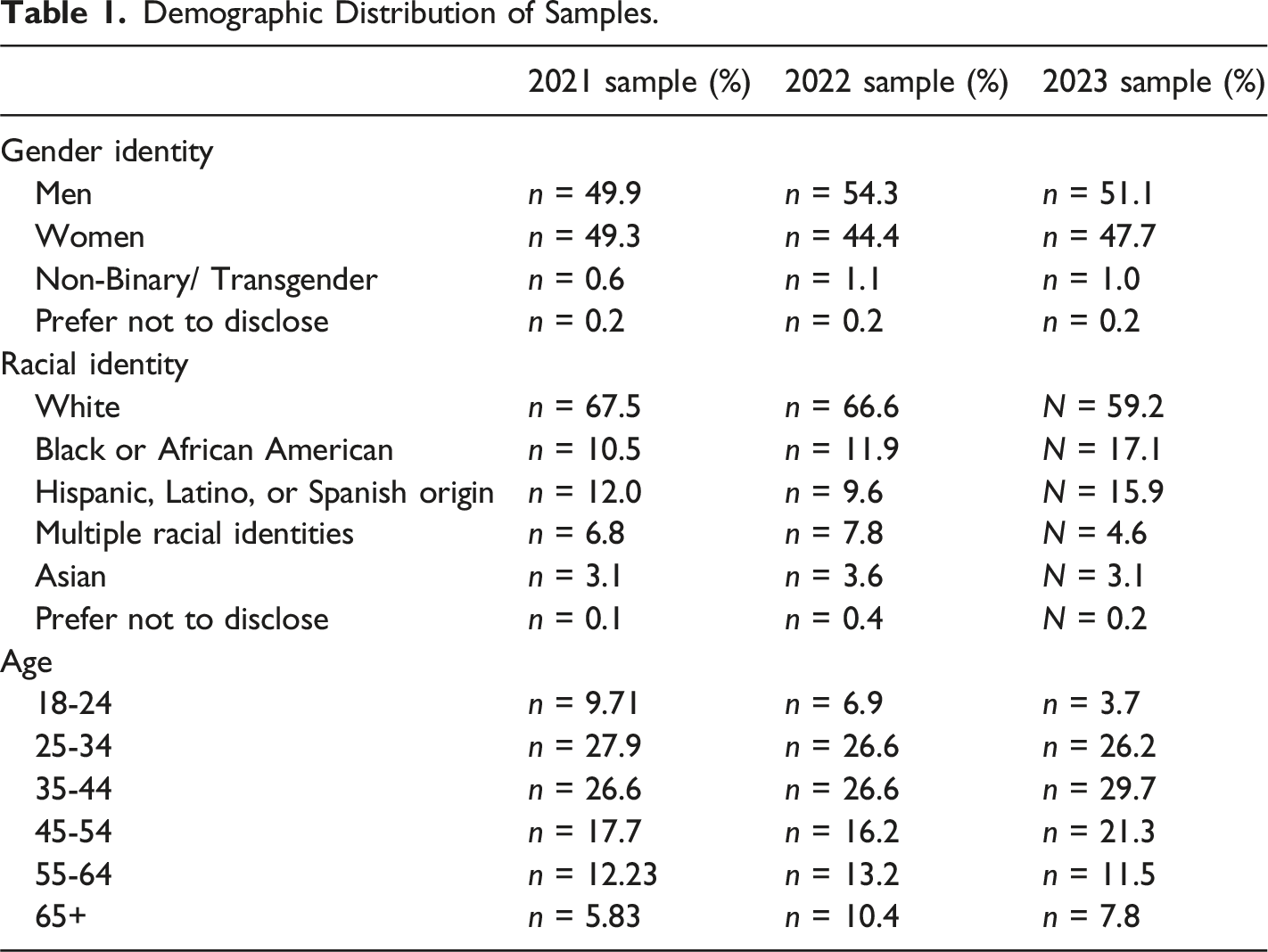
Demographic Distribution of Samples.
Variables
The questionnaire asked participants to rate the credibility of six sports media brands: NBC Sports, ESPN, FOX Sports, CBS Sports, Bleacher Report, and Yahoo! Sports. NBC Sports, CBS Sports, and FOX Sports were included in the questionnaire to measure perceptions of sports broadcast networks. To analyze “traditional” media, Study 1 included the top ranked sports media brand ESPN, which is highly rated both in traditional and digital media (ESPN, 2023). Next, three major sports broadcast channels (NBC Sports, CBS Sports, and FOX Sports) were included. These three networks were selected, because unlike ABC, their viewership ratings are more dependent on their sports content, as noted by The Hollywood Reporter (Porter, 2022). Furthermore, the NBC and FOX brands also have large, affiliated political news networks, which makes analyzing viewer perceptions of these brands particularly interesting to this study. Bleacher Report and Yahoo! Sports were included to analyze perceptions of online-based sports media content, and were rated as top online-based brands that specialized in sports content by ComScore in 2021. These websites have also consistently been ranked as top sports websites in terms of audience and web traffic (Aelieve, 2024). This survey included only two online-based sports brands were selected to prevent survey fatigue.
Source credibility, was defined as “a perceiver’s assessment of believability or of whether a given speaker is likely to provide messages that will be reliable guides to belief and behavior” (Simons, 2002, p. 20). In order for participants to rate the credibility of each sports media brand, users were asked to rate each brand in terms of its “credibility,” “accuracy,” and “trustworthiness” on a scale of 1 = Strongly Disagree to 7 = Strongly agree. These scale items have been among the most widely utilized items to measure credibility (Hanimann et al., 2023). Scale reliabilities of all measures were all well within the acceptable range (α ≥ 0.87).
Media Bias is defined as “as any form of preferential and unbalanced treatment, or favoritism, toward a political or social issue (e.g., pro-choice or pro-life) or political party (Democratic or Republican)’’ (Lee, 2005, p. 45). Media bias was measured using a single-item (1 = Strongly Disagree; 7 = Strongly Agree), which asked participants the following: “To what extent do you agree that each of the following sports media companies are BIASED in their reporting.” A single-item measure was utilized for media bias, as media bias literature confirms that measuring media bias inherently requires comparison among different media brands (Kim & Patnode, 2021; Raymond & Taylor, 2021).
Questionnaire and Procedure
Prolific prompted its panel participants to visit a unique web address that directed them to the online questionnaire hosted by Qualtrics. After reading the IRB approved informed consent statement, participants were directed to the questionnaire. In order to prevent ordering effects, question blocks were presented randomly utilizing the randomizer feature in Qualtrics. Participants rated each of the featured six sports media brands in terms of their credibility, accuracy, and trustworthiness. Then, participants rated each of the six media brands in terms of their perceived media bias. Lastly, participants shared their demographic information related to their age, gender identity, race/ethnicity, education level, and information related to their sports media consumption and political party identification. The questionnaire also included some items that were unrelated to the present study and included attention checks, which had to be completed correctly for the respondent to be included in the final dataset.
Study 1 Results
RQ1 queried the extent to which participants found each sport media brand credible and biased and the extent to which those evaluations were influenced by time. First, to allow for the analysis, the researchers restructured the data into a long format, in which each participants’ evaluation of each brand were coded in separate rows. As such, a multivariate analysis of variance (MANOVA) was utilized to analyze how media brand and time influenced audiences’ source credibility and media bias evaluations.
The MANOVA indicated a statistically significant main effect for media brand on the combined dependent variables (Pillai’s Trace = 0.048, F (10,17,076) = 41.95, p < .001). The main effect of time was also significant (Pillai’s Trace = .01, F (4, 17,076) = 22.08, p < .001). However, there was no significant interaction effect of media brand x time period (Pillai’s Trace = .001, F (20, 17,076) = 0.36, p = .996).
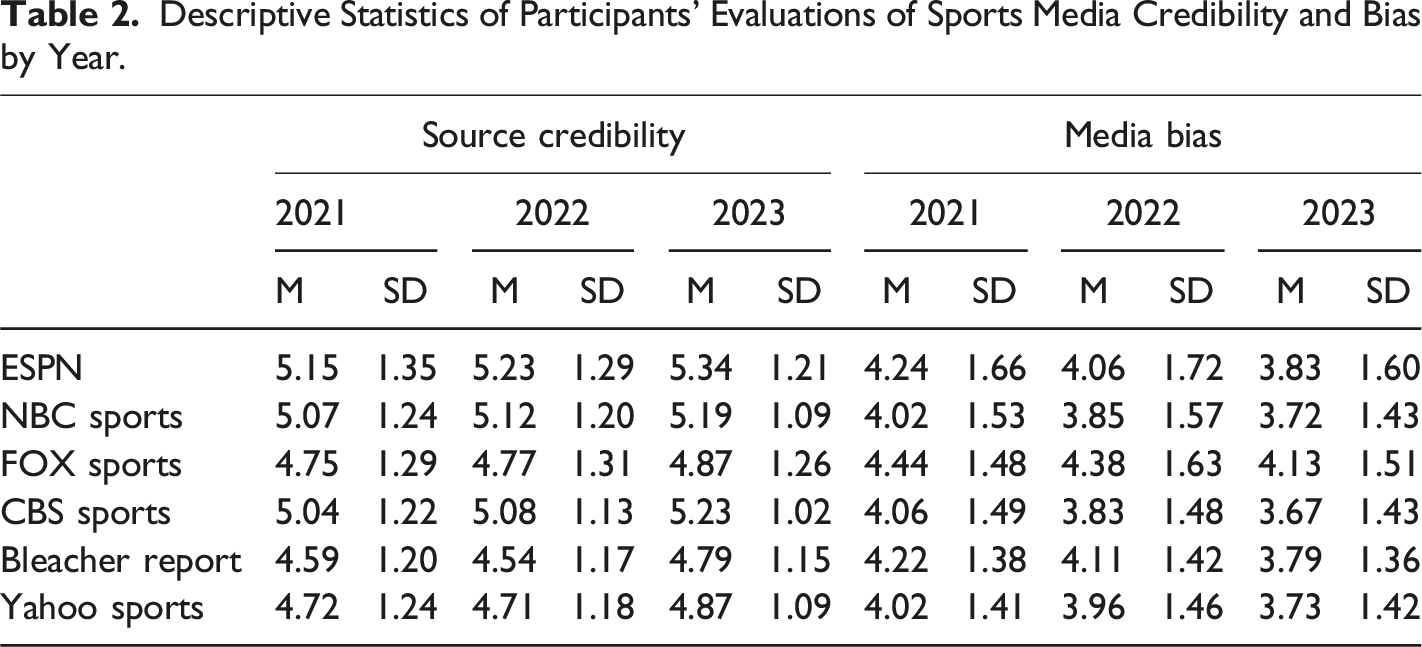
To further explore the data, univariate ANOVAs were utilized to examine effects on each dependent variable. For source credibility, analyses revealed significant differences in audiences’ evaluations of different media brands’ (F (5,8538) = 58.43, p < .001). Post hoc Bonferroni tests indicated that ESPN (M = 5.24, SD = 1.29) and CBS Sports (M = 5.12, SD = 1.13) were rated as being significantly more credible than FOX Sports (M = 4.79, SD = 1.17). Analyses also revealed significant differences in time period (F (2, 8538) = 15.48, p < .001), with audiences’ credibility scores increasing over time. Overall, credibility was significantly higher in 2023 (M = 5.05, SD = 1.16) than in 2021 (M = 4.89, SD = 1.27), thus answering RQ1a.
Next, analyses also showed significant differences in audiences’ evaluations of different media brands’ levels of perceived bias (F (5, 8538) = 19.45, p < .001). Post hoc Bonferroni comparisons showed FOX Sports (M = 4.32, SD = 1.54) was rated by participants as being significantly more biased than CBS Sports (M = 3.86, SD = 1.48), NBC Sports (M = 3.87, SD = 1.51), and Yahoo Sports (M = 3.90, SD = 1.43). The main effect of time was also significant (F (2, 8538) = 42.38, p < .001). A Bonferroni post hoc analysis showed bias scores decreased over time, with 2021 scores (M = 4.17, SD = 1.50) being significantly higher than 2023 scores (M = 3.81, SD = 1.47), thus answering RQ1b.
Descriptive Statistics of Participants’ Evaluations of Sports Media Credibility and Bias by Year.
Study 1 Discussion
Study 1 identified notable shifts in participants’ views of sports media organizations’ credibility and bias over a three-year period. Overall, participants evaluated sports media organizations more positively in 2023 as compared to 2021, evaluating them as being more credible and less biased. When examining these results in context, it is important to note that in 2021, the United States was still embroiled in the COVID-19 pandemic, was rolling out vaccinations nationwide, participated in the Olympics, and saw state legislatures begin passing bans on the sports participation of transgender athletes. These events were just a few of the major newsworthy events that were covered in the sports media, and thus, potentially influenced participants’ perceptions of the media’s credibility as they were incidentally exposed to political content in sports media coverage (Broussard et al., 2021). Latkin et al. (2020) also identified that people’s trust in the media sharply decreased during the COVID-19 pandemic. While measures of overall news media trust reaching historic lows in 2023 (Fischer, 2023), current findings suggest a different, rebounding trend for sports media credibility.
While there were several, key events that intersected sport and politics that occurred during this timeframe, previous research suggests the social identity labels with which media consumers identify potentially also influence their evaluations of media source credibility. For example, Latkin et al. (2020) noted that the most consistent predictor of decreased trust in the media was one’s political identification. Furthermore, Clavio and Vooris (2018) found that participants’ political leanings influenced their perceptions of bias at ESPN, and Peterson and Muñoz (2022) asserted that social identity labels such as one’s sports fandom likely prevents larger attitudinal and behavioral shifts toward sports media networks such as ESPN. Westley and Severin (1964) found that the relationship between political identification and source credibility was, perhaps, dependent on the medium after reporting inconsistent results across television and radio. Yet, previous research has not simultaneously examined the potential interactions between political identification and sports fandom to determine how these prominent social identity labels may influence evaluations of credibility. This investigation is particularly important given research that suggests highly identified sports fans will evaluate media sources as more credible for sport-related content than sport fans with low identification (Sadri, 2014). Thus, sports fandom, perhaps, can contribute to stronger evaluations of credibility of sports media brands.
Study 2 Research Questions/Hypotheses
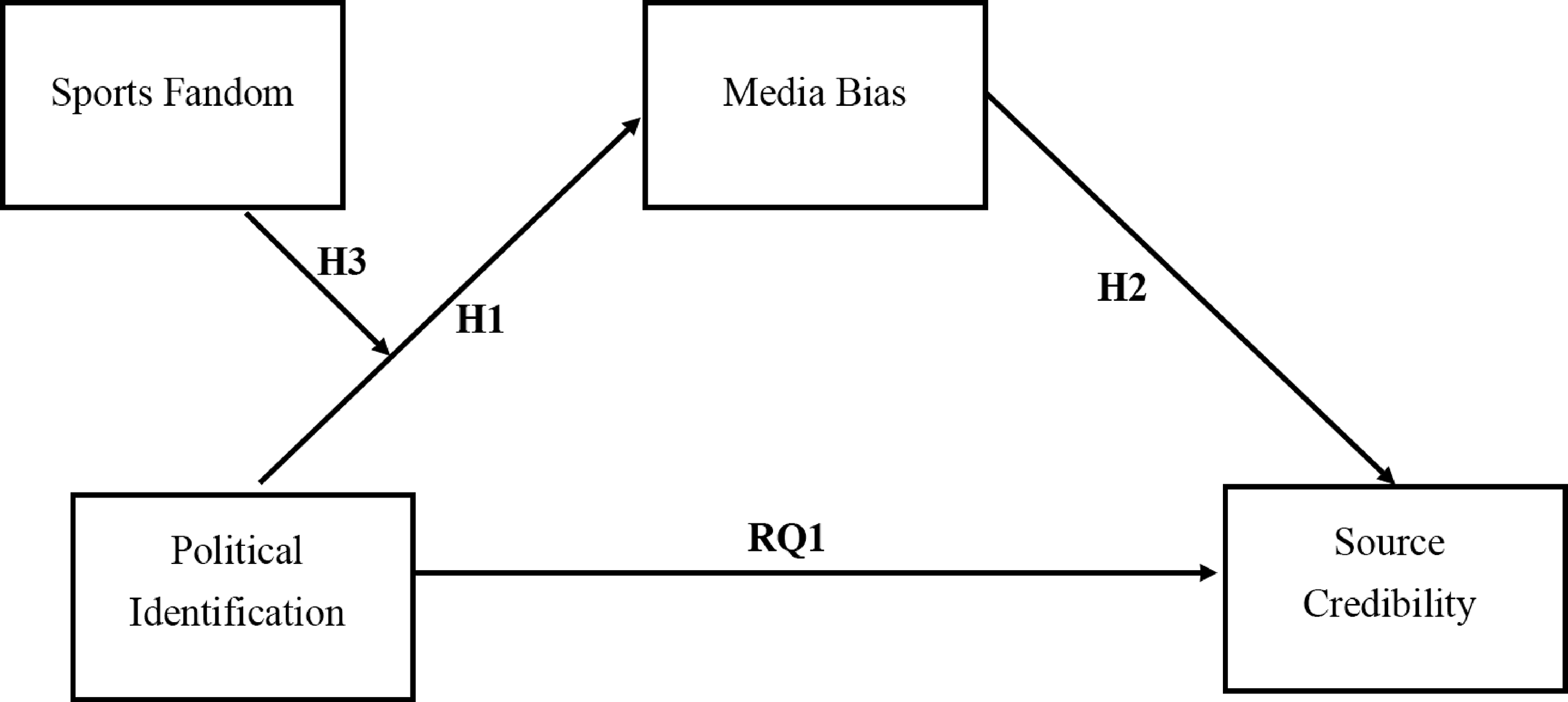
After identifying key shifts in participant perceptions of sport media credibility and bias, researchers decided to further examine whether certain social identity labels may explain how sport media consumers evaluate sports media brands’ credibility–namely, political identification and sports fandom. Thus, for Study 2, additional variables were added to the online survey that was administered in December 2023 to better understand how participants’ evaluations of media credibility and bias may be influenced by their political identification and sports fandom. A conceptual model is included in Figure 1, which visually represents the following research questions and hypotheses that will be tested: Conceptual model.
Study 2 Method
Similar to Study 1, an online questionnaire (hosted by Qualtrics) was administered in December 2023 as a part of a repeated cross-sectional survey design. As noted in Study 1, participants were recruited through Prolific panels. All selection criteria were utilized as reported in Study 1, and the demographic information for the December 2023 data collection is included in Table 1. The questionnaire and procedure of this study mirrored Study 1. However, this data collection included additional variables to examine the aforementioned research questions and hypotheses.
Variables
Source credibility (α = .969), was defined as “a perceiver’s assessment of believability or of whether a given speaker is likely to provide messages that will be reliable guides to belief and behavior” (Simons, 2002, p. 20). In order for participants to rate the credibility of each sports media brand, users were asked to rate each brand in terms of its “credibility,” “accuracy,” and “trustworthiness” on a scale of 1 = Strongly Disagree to 7 = Strongly agree. These scale items have been among the most widely utilized items to measure credibility, according to Hanimann, Heimann, Hellmueller, & Trilling (2023).
Political Identification (α = .912) is defined as the extent to which participants feel a strong sense of connection to their political party. Political identification was measured using a four-item scale from Huddy and Khatib (2007), where 1 = Strongly Disagree and 7 = Strongly Agree. Sample items from the scale include, “Being a member of my political party is important to me” and “when talking about other members of my political party, I often use “we” instead of “they.”
Sports Fandom (α = .909) is defined as “the extent to which an individual identifies with the role of sport fan” (Wann et al., 2021, p. 501). Sports Fandom was measured using the Sports Fandom Questionnaire (SFQ), a five-item scale where 1 = Strongly disagree and 7 = Strongly Agree. Sample items from the SFQ include “I consider myself a sports fan” and “My friends see me as a sports fan”.
Media Bias (α = .810) was measured using a single-item, which requested participants to rate each sports media brand on a scale of 1 (Strongly disagree) to 7 (Strongly agree) in terms of their feeling that the sports media brand is biased.
Study 2 Results
All data were analyzed using SPSS version 28. To test our H1 – H3 and research question, we use the PROCESS macro model 7 to conduct a series of moderated mediation analyses (Hayes, 2018). Participants’ political identification was identified as an independent variable (X); credibility perception was a dependent variable (Y); perceived media bias was the mediator (M) and fandom was set as the moderator (W). Our model was customized in PROCESS v 4.2 with 5000 bootstrap samples and 95% confidence intervals. A Johnson-Neyman technique was selected to test the conditional effect of the focal predictor (i.e., political identification) at the values of the moderator - fandom level (Johnson & Neyman, 1936).
Hypothesis 1 posited that sports fans who score high in political identification are more likely to report higher perceptions of sport media bias. Our results indicated that political identification was positively associated with media bias, but the relationship was not statistically significant (B = .210, SE = .118, p = .076). Hence, H1 was not supported. Hypothesis 2 proposed that a higher perceived media bias would lead to sports fans’ lower perceived credibility. Results confirmed a significant statistically negative relationship between perceived media bias and perceived credibility towards sports media. Specifically, when fans perceive higher degrees of sport media bias, they tended to have a lower credibility perception of the sports media (B = −.344, SE = .032, p < .01). Hence, H2 was fully supported.
Hypothesis 3 examined whether there is an interaction effect between sports fans’ political identification and fandom on their perceptions of media bias, which subsequently influences perceptions of credibility. From the data, we observed a significant interaction effect between political identification and fandom on perceived media bias (B = −.049, SE = .022, p = .023). We then use the Johnson-Neyman technique to examine the conditional effects. Results showed that when fandom is outside the interval [-2.17, 5.5], the slope of political identification is significant, p < .05. These results implied that when sports fans reported being more political, they tended to report lower levels of media bias when their fandom level was high, especially, when the fandom level was higher than 5.5 (See Figure 2). What is more, a moderated indirect relationship was significant. That is, perceived media bias mediated the effect of political identification on credibility perception (point estimate = .04, BootLLCI = .005, BootULCI = .076) and again this effect was only presented when participants reported a relatively high fandom level (e.g., Fandom >6.6), implying people who highly consider themselves as sports fan would rate these sports media more credible via weaker media bias. Therefore, H3 was supported. Range of a significant interaction effect between political identification and fandom on perceived media biases.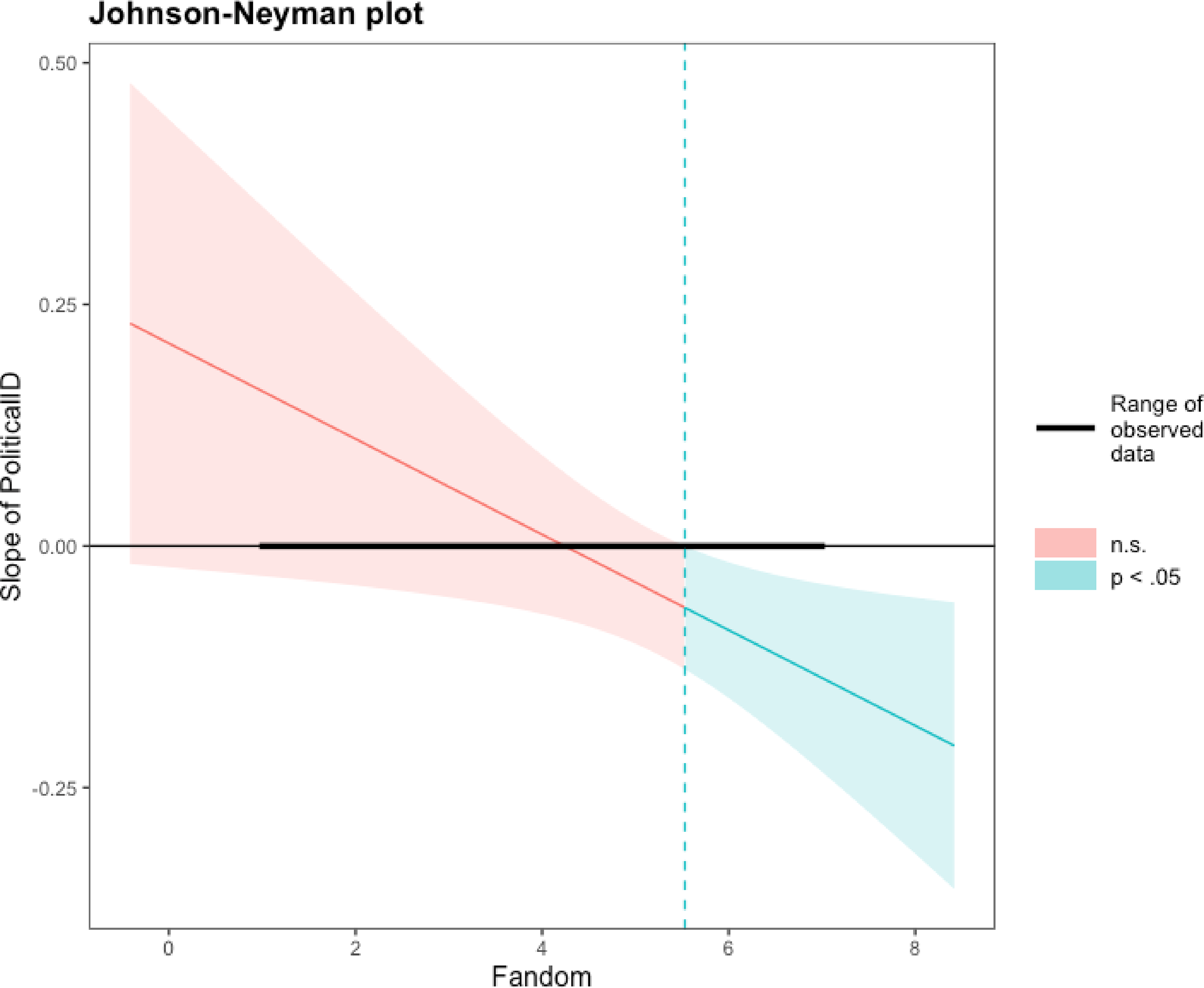
To answer RQ 1, we ran PROCESS macro model 7 again and the results indicated a significant direct effect of political identification on credibility perceptions (B = .155, SE = .022, p < .01, LLCI = .112, ULCI = .198), which suggested a stronger sports fan’s political identification leads to them perceiving a stronger credibility perception of sports media.
General Discussion
These two studies examine the relationship between sports fandom, political identification, media bias, and source credibility within the diverse choice environment of contemporary sports media. These studies are the first to provide repeated cross-sectional data that examines the influence of political and sports identification across six different sports media brands, with most prior research pertaining to this intersection focusing solely on ESPN (Clavio & Vooris, 2018; Peterson & Muñoz, 2022). Several key findings resulted that add to the body of literature that intersects social identity, media bias, and source credibility.
Theoretical Contributions
Perhaps the most notable finding of the present research studies involves better understanding how one’s social identity labels influence their evaluations of credibility of sports media brands. Sports fandom levels tended to have a moderated effect on fan’s sports media credibility perceptions. Specifically, when one’s level of sports fandom is high, their political identification has less effect on their media bias perception, and they also tend to evaluate these media brands as more credible. This finding is particularly noteworthy when unpacked through the lens of social identity literature, as it sheds light on how sports fans navigate and layer their various social identity labels when evaluating media sources. Perhaps, then, it is unsurprising that when evaluating sports media, one’s sports fandom label is seemingly prioritized. This finding also seems supported by the current literature. For example, one study found that sports fans rated online source credibility (ESPN vs. sports blog vs. Facebook) as significantly different when their fan identification was low but similar and higher credible of all three sources when their fan identification was high (Sadri, 2014).
Next, this study offers repeated cross-sectional data that has tracked shifts in sports media consumers’ evaluations of sports media brands’ credibility and bias over time. Notably, this study analyzed a time in sports media coverage that featured numerous events that likely led to a high possibility of incidental exposure to political content (Broussard et al., 2021), including ongoing effects of the COVID-19 pandemic and its sports media disruptions, athlete racial justice protests, and multiple international Megasporting events such as the Olympics and World Cup. Results confirm the findings from Clavio and Vooris (2018), which determined that participants’ political leanings influenced their perceptions of bias at ESPN. Yet, the current study also extends Clavio and Vooris’ (2018) findings by including five other leading sports media outlets, and also examines the interaction between sport fandom and political identification. Despite the large number of events intersecting sport and politics that occurred during this study’s timeframe, findings from study 1 confirmed that respondents’ evaluations of these sport media brands’ credibility are fairly consistent from year to year. While there were some statistical differences in some brands over-time, there were no large swings in measures of credibility, perhaps supporting Peterson and Munoz’s (2022) assertion that large attitudinal and behavioral changes are unlikely given the importance of one’s more persistent social identity groups (i.e., sports fandom). This finding also suggests that a sports media brand’s credibility is not highly volatile, even in times of large, divisive news stories (i.e., pandemic, international sporting competitions, elections, protests, etc.) that can spur exposure to incidental political content through the sports media. Future research should continue to track these important variables over time to determine how other large, political events, such as another presidential election year, may impact evaluations of sports media brands, as well.
Data also highlighted how users evaluate certain types of sports media brands. In a time where cord-cutting is increasing and more consumers are utilizing streaming services, it is noteworthy that online-only brands (i.e., Bleacher Report and Yahoo! Sports) were evaluated as being less credible than their counterparts that also have a traditional media presence (i.e., NBC Sports, ESPN, CBS Sports, and FOX Sports). Furthermore, findings suggest that evaluations of these brands may be influenced by their counterparts from other divisions. For instance, FOX Sports was rated by respondents as being the most biased sports brand, a finding that was driven primarily by those who self-identified as belonging to the Democratic Party, suggesting that the FOX brand is viewed through the lens of its partner brand FOX News. Future research should continue to investigate this connection, as it is beyond the scope of the current manuscript.
Practical Contributions
While the present studies offered several, noteworthy theoretical implications, findings also provide key insights for sport media practitioners. First, given the observed relationships between political identification and sport fandom, sports media brands should be committed now more than ever before to attracting and maintaining connections and viewer loyalty from highly identified sports fans. While previous research suggests highly identified fans consume larger amounts of sports media (Wann, 2006), these fans also seemingly rate media more positively in terms of credibility. Furthermore, the inverse relationship between perceived bias and perceived source credibility highlights the risk of sports media viewers perceiving a brand as being overtly biased in their sport coverage. Now, sports media brands who wish to score well in terms of credibility must be committed to appearing objective and transparent while covering stories that would appeal to a large variety of individuals across the political spectrum.
Next, cross-sectional data suggests that all six sports media brands were evaluated more positively in 2023 than they were in 2021. This data suggests that sport media consumers, overall, have more positive evaluations of sports media brands as compared to a few years ago. Interestingly, the sports media credibility trends revealed in this study run counter to trends of the overall news media, as Fischer (2023) reports that overall media trust has fallen to a historic low in recent years. Perhaps when these two trends are compared, the importance of sport fandom is emphasized even further, as it does contribute to increased perceptions of credibility.
Overall, such data can help sports media practitioners better understand how certain business decisions may influence their viewers’ evaluations of their brand’s credibility. For instance, some sport media brands, such as ESPN or Bleacher Report embraced automated news production in the last five years (Kerschbaumer, 2019; WSC Sports, 2021). A recent study found that people tend to trust more automated content than human-written sports articles (Wölker & Powell, 2021) and rated sports news stories as more objective and less biased than other journalistic domains, such as financial news (Wu, 2020). Perhaps this could be one tactic that is contributing to the increase in evaluations of credibility.
Limitations and Future Directions for Research
While this study produced several robust insights, no study is without limitations. First, a single-item measure was used for media bias. Wanous et al. (1997) assert when a concept is unambiguous or narrow in scope, the use of single-item measures is considered appropriate. Future research should continue to examine the influence of media bias on users’ perceptions of credibility. Also, while the researchers utilized a stratified sampling technique to generate a more representative sample of sport media consumers, it should be noted that panel participants from Prolific are not perfectly representative due to the online nature of the data collection.
Ample opportunities for future research persist in the intersection of social identity, media bias, and source credibility. For instance, given that early findings in this area of research determined that the medium influenced results (Westley & Severin, 1964), future research should examine these relationships across a variety of platforms. Given that media is more fragmented today than ever before (Dens & Poels, 2023), understanding how differences in platform influence perceptions of media bias and credibility is crucial. Furthermore, given the increasingly complex news media landscape, research should also examine how audience perceptions of sports news delivered through social media platforms that align (or do not align) with one’s social identity groups influence consumers’ bias/credibility evaluations. Future research should also expand to analyzing both attitudinal factors and behavioral decisions such as media engagement and political participation. Lastly, Devlin and Brown-Devlin (2017) demonstrated personality domains are significant predictors of the time spent consuming sports media. This suggests certain individual personality traits could be predictor variables affecting sports media bias.
Conclusion
Overall, the present study added to the body of literature in two notable areas. First, Study 1 collected repeated cross-sectional data over a three-year period that measured sport media consumers’ credibility and bias ratings of six sports media brands. Study 1 found that sports media brands have been rated more positively in terms of both credibility and bias when comparing 2023 to 2021. Next, Study 2 examined how respondents’ social identity labels influenced their evaluations of bias and credibility. Findings suggest that one’s sports fandom plays a key role in sports fans’ evaluations of sport media credibility, as highly identified fans generally rated sport media brands as having lower levels of media bias and higher levels of credibility. These findings add key insights to social identity literature and media credibility literature in the context of sport.
Footnotes
Declaration of Conflicting Interests
The author(s) declared no potential conflicts of interest with respect to the research, authorship, and/or publication of this article.
Funding
The author(s) disclosed receipt of the following financial support for the research, authorship, and/or publication of this article: This work was supported by the UT Center for Sports Communication & Media.
