




Abstract
Analgesic medication (i.e., painkillers) provides a legal method for athletes to compete through pain. Masking injury presents the risk of injury exacerbation as well as potential organ damage, long-term musculoskeletal conditions, and dependence. The framing of elite athletes using medication to compete through injury could influence the attitudes and behaviors of other sportspersons including junior and recreational participants. This research explored the framing of tennis player Rafael Nadal’s anesthetic injections at the 2022 French Open via content analysis of 103 news articles. The results revealed global news lacked critical coverage, normalized competing through injury under moral frames, and valorized such behavior as heroic and courageous. Further, news coverage can be classified into four types: individual experience, medical, physical status, and policy. Identification of frames related to competing through injury can inform messaging to promote safer practices concerning painkiller use.
The notion of pushing through the pain is deeply entrenched in athletes who normalize the expectation that some form of suffering is required to achieve greatness (Malcom, 2006; Roderick, 2006; Theberge, 2008; Tynan & McEvilly, 2017). This is reinforced by sports media outlets that construct elite sport as a cultural site of hegemonic masculinity heroizing overt displays of toughness (Gammon, 2014; Messner, 1990; Trujillo, 1991). In response to pain from physical fatigue and injury, it is common for athletes to turn to medical treatments and painkillers (i.e., analgesic medication) to mask discomfort (Harle et al., 2018). By masking pain, athletes can compete in important contests, protect their employment, and in some circumstances enhance performance (Holgado et al., 2018; Overbye, 2021; Read et al., 2022).
From a legal perspective, only certain narcotic, glucocorticoids, and cannabinoid substances are prohibited by the World Anti-Doping Agency (WADA) meaning analgesic medications such as anesthetic injections, non-steroidal anti-inflammatory drugs (NSAIDs) (e.g., Ibuprofen or Advil) and paracetamol (e.g., acetaminophen or Tylenol) are legal and can be obtained from sports medicine practitioners or purchased without prescription. The legal status of these treatments does not mean they are safe, as masking pain with pharmacological agents increases the risk of exacerbating injuries and chronic musculoskeletal health conditions (e.g., Fernandes et al., 2020). Specific substances also carry risks, for example, using over-the-counter analgesics during exercise can cause gastrointestinal, renal, and cardiovascular issues (Küster et al., 2013), anesthetic injections can lead to musculoskeletal complications (Gultekin et al., 2021), and opioid-based medication consumption can lead to dependence (King et al., 2014). Painkiller use in sport then retains a complex position as simultaneously normalized, beneficial, legal, and hazardous (Read et al., 2022).
It is well recognized that the deliberate ‘framing’ (Entman, 1993) of issues in news media coverage promoting a particular interpretation can influence public opinion (Chong & Druckman, 2007). Accordingly, attitudes towards health-related behaviors are significantly influenced by health communication framing in media coverage (Guenther et al., 2021). Given the ready availability of analgesic medication to elite, recreational, and junior athletes and the potential harms associated with (mis)use, it is surprising that media portrayals of masking injury using medication have not been studied. The use of analgesics to compete through injury furthers discussions of hegemonic masculinity and heroism in sport to consider the policy discussions concerning health decisions. The framing of elite athletes’ using analgesics to compete through pain has the potential to influence the behavior of other sportspersons, including junior athletes and therefore warrants attention (Bell & Applequist, 2022; Parry et al., 2022; Sanderson et al., 2016). By studying media framing of competing through injury, insight can be gathered into the acceptance of such practices that might inform communications targeted at recreational and elite athletes that promote informed, safer behaviors (Bullock & Shulman, 2021).
Given the lack of previous research, the aim of this research is to identify the common frames employed by the media when presenting an athlete competing through injury using painkilling medication, and what message this signals to readers. The present study utilizes the example of tennis player Rafael Nadal’s anesthetic injections to manage pain from Müller-Weiss syndrome and compete in the 2022 French Open at Roland Garros. Content analysis is employed to explore how his treatment was framed and what interpretation was communicated to athletic audiences.
Context
At 18 years old, Rafael Nadal was diagnosed with Müller-Weiss syndrome, a chronic degenerative foot condition where the navicular bone does not receive adequate blood supply causing necrosis and pain. Nadal has managed Müller-Weiss syndrome with multiple methods throughout his career including orthopedic insoles and NSAIDs. On June 5, 2022, having won the French Open, one of four grand slams in Tennis, Nadal declared in a post-match interview that he had anesthetic injections throughout the tournament to manage foot pain stating, “I played without feeling the foot, because I took injections in the nerve. The foot was numb so I didn’t feel anything”. Nadal’s decision did not contravene any anti-doping rules but demonstrated the willingness of athletes to use medication to compete through injury-based pain. Coverage of Nadal’s pain continued as he undertook radiofrequency injections after the tournament to manage his pain before the next grand slam tournament, Wimbledon, typically held two to three weeks following the French Open. Nadal’s case is particularly worthy of study given his profile as one of the most decorated professional tennis players of all time, the high-level of news coverage of his behavior and subsequent treatment over an extended period between the French Open and Wimbledon in comparison to other athletes, and the notable commentary (positive and negative) his behavior elicited from other athletes and sports stakeholders providing competing content that journalists could promote or disregard. Nadal’s determination to play at Wimbledon one month later added a temporal element to discussions as his treatment and inclination to use medication to compete through injury continued in the sports news cycle.
Athlete Attitudes to Painkillers
The use of pharmacological painkilling therapies including drugs and injections by recreational and elite athletes is common (Harle et al., 2018). Treatments vary by sport and intended outcome, for example, endurance athletes may use NSAID and acetaminophen to mask discomfort from trainings, competitions, and recovery (Didier et al., 2017; Seifarth et al., 2019). It is worth noting that the performance enhancing effects of analgesics are mixed depending on the substance, type of sport, and dosage (Holgado et al., 2018). In impact sports, similar pharmacological agents may be used to mask existing injury or pain (King et al., 2014; Mayer & Thiel, 2018; Overbye, 2021; Read et al., 2022; Roderick, 2006). Equally, anesthetic injections are a common treatment to numb painful areas to enable athletes to return to play whilst injured (Gultekin et al., 2021).
The current article focuses on an athlete’s decision to use painkillers to compete through injury, rather than performance enhancement. The decision to use painkillers to compete through injury, also termed ‘sport-specific sickness presenteeism’ (Mayer & Thiel, 2018, p. 50), is influenced by multiple socio-cultural pressures. First, many athletes suffer from economic vulnerability as an inability to compete may impact income or contract renewal opportunities (Read et al., 2022). Second, competing through injury is subject to powerful cultural associations. Athletes willing to ‘sacrifice’ themselves for the team or ignore injury are applauded and viewed as committed, even to the point of heroism (Gammon, 2014) whilst those who are regularly injured are labelled as liabilities (Roderick, 2006). Such sacrifices are reinforced by hegemonic masculine ideals upheld by certain sporting cultures that position physical sacrifice and competing through injury as desirable qualities in both men’s and women’s sport (Messner, 1990; Sanderson et al., 2017). Third, painkiller use to compete through injury is a normalized practice in elite sport environments (Overbye, 2021) and athletes have become accustomed to short-term pharmacological solutions to injury, training, and performance (Orchard & Dhillon, 2020). Fourth, elite sport is characterized by a culture of risk where an athlete’s view of health is understood in relation to the ability to compete (Theberge, 2008).
Discussions concerning the ethics of analgesics provide further frames for audience interpretation focusing on two central arguments: (1) is it safe, and (2) is it performance enhancing? The first argument captures whether it is ethical to put an athletes’ health at risk by masking pain. This reflects differences in paternalism versus individual agency, and if the athlete is informed of the potential risks and capable of giving informed consent in such a position (Orchard & Dhillon, 2020). The second argument addresses whether using a painkilling substance without medical need is performance enhancing (Holgado et al., 2018). It can be argued that an injured athlete using a painkilling substance is returning to pre-injury levels and is therefore not enhancing. Equally, use of analgesics to mask injury may be viewed as enhancing physical capabilities beyond what is naturally possible at that point in time without medication. Enhancement arguments are complicated by the reality that some athletes take painkillers for psychological reassurance or to mask exercise-induced fatigue without medical need (Tscholl et al., 2017). Accordingly, media framing of painkiller use in sport has the potential to normalize competing through injury similar to other health-related behaviors in sport (Cassilo, 2022).
Evidently, painkiller use is common across sport in different forms and there are competing perceptions that athletes must navigate to interpret ‘reality’. In making the decision to use painkillers to compete through injury, an athlete must contend with the socio-cultural pressures present in sport as well as ethical arguments. How painkiller use by prominent athletes is presented by the media provides a cognitive schema through which other sport persons can inform their own use.
To investigate the amount of coverage (i.e., focus) devoted to Nadal’s injury and the main topic of coverage, the following research questions were developed:
Theoretical Framework
Emerging from Goffman’s (1974) work on how individuals understand their realities, frames facilitate the schematic processing of information. Within a communications framework, the presentation of an event to audience including which aspects of a story are included or excluded from the narrative (Entman, 1993) can activate a particular schema, influencing audience perception. Framing has been applied to various contexts, but the term requires differentiating from associated media effects (Cacciatore et al., 2016). Therefore, from a sociological perspective, frames capture what text and visual content is presented to an audience. A frame then converts a topic into a way for audience to understand and respond to an issue through information structuring. Entman (1993) suggested that the outcome of editorial decisions about which aspects of story to highlight serves “to promote a particular problem definition, causal interpretation, moral evaluation, and/or treatment recommendation for the item described” (p. 52). Representing different conceptual approaches to framing, Druckman (2001) distinguished equivalence frames (i.e., presenting the same information as a gain or a loss) and emphasis frames (i.e., selecting and presenting salient information about an issue). Evidence suggests that equivalence frames can alter decision-making (Steiger & Kühberger, 2018). Similarly, emphasis frames in news reporting can lead audiences about how to perceive issues (Stefanik-Sidener, 2013; Valkenburg et al., 1999).
Recent theoretical research in framing, focused on the role of journalism within a framing context (D’Angelo, 2019). D’Angelo and Shaw (2018), identified four frame types - journalist, audience, issue, and news/textual. Regarding the journalist frame, the sources included in news stories influence the frames presented (Baden & Tenenboim-Weinblatt, 2017) as part of the frame building process (Brüggemann, 2014). To explore framing within the frame building process and the role of source information to normalize painkiller use or offer counter, ethical narratives, the following research questions were developed:
What sources are used when reporting on Nadal’s behavior?
Is there a significant difference in the type of source utilized?
Health communication refers to messaging designed to influence behaviors that are considered desirable from a public health perspective (e.g., smoking cessation). The cause of public health issues can be framed against whether individuals or society are responsible for dealing with an issue and what is the ‘appropriate’ solution (McGinty et al., 2016). This relates to attribution of responsibility, which can be episodic or thematic, as defined by Iyengar (1994) in examination of news frames. Thematic framing presents an issue in broad terms and as a public problem that attributes responsibility to collective, social action. Conversely, episodic frames present an issue as a single event, emphasizing individual elements and leads to attribution of responsibility to the individual. Often, the critical issue that runs through the framing of public health initiatives is whether individuals should have autonomy over their body, or to what extent policymakers should intervene. Evidence supports that coverage of health issues in news media has the power to shape public opinion which directs policymakers (Rowbotham et al., 2019). Through rhetorically constructing policies as acceptable, or not, journalists maintain control over public health issues.
Framing has become a dominant concept in health communication studies and research has explored how health issues are represented in the press and how gain-loss frames influence behavioral interventions (see Guenther et al., 2021). Sociologically, for example, previous studies have explored how news coverage attributes responsibility for obesity and the implications this has for public support for policy solutions (Lawrence, 2004). It can be concluded that the portrayal of health issues in news and interventions can significantly influence attitudes and behaviors. Thus, RQ3, RQ4, and RQ5 were developed to investigate the frames utilized in coverage from episodic and thematic perspectives:
What frames are used when reporting on Nadal’s behavior?
Framing Health Behaviors in Sport
When discussing the framing health-related behaviors in sport, it is important to recognize the media’s role in upholding and promoting traditional views of heroism and hegemonic masculinity. American and European sports media is imbued with cultural messaging that socializes athletes to accept the risk of pain and injury from competition (Messner et al., 2000; Nixon, 1993). This constitutes a significant part of hegemonic masculinity, a form of masculinity that valorizes physical dominance, occupational excellence, patriarchal values, hardworking individualism, and heterosexuality (Trujillo, 1991). Sport organizations commercialize hegemonic narratives around athletes (Gee, 2009) and deviance from norms can disadvantage athletes, for example, preventing seeking mental health support (Lavelle, 2021) or disclosing head injuries (Sanderson et al., 2017). Additionally, sports media often constructs heroes using hegemonic values (Anderson & Kian, 2012; Bell & Coche, 2020; Butterworth, 2007; Trujillo, 1991). Consequently, this promotes sporting cultures that normalize playing through pain, ensuring painkiller use becomes a tool to protect masculinity.
There is a small body of sociological research that broaches health communication emphasis framing in a sporting context focusing on issues such as mental health, concussion, and injury (e.g., Cassilo, 2022; Cassilo & Sanderson, 2018; Cranmer & Sanderson, 2018; Karimipour & Hull, 2017; Lavelle, 2021; McGannon et al., 2021; Parry et al., 2022; Sanderson et al., 2016; White et al., 2022). The critical takeaway is that news coverage of health conditions related to sporting practices can be minimized or dismissed as sensationalized/biased (Karimipour & Hull, 2017; Parry et al., 2022; White et al., 2022), prioritizing health is contradictory to traditional expectations of hegemonic masculinity in sport (Cassilo, 2022; Cranmer & Sanderson, 2018; Lavelle, 2021), and that high-profile athletes can function as agents of change to destigmatize behaviors related to concussion (Cassilo, 2022; Cassilo & Sanderson, 2018; McGannon et al., 2021).
Given the potential harms associated with analgesic use to compete through injury, it can be conceptualized as a health issue. Relevant to the present research, a small selection of studies has previously examined discourses in media portrayals of painkiller use in the American National Football League focusing specifically on athlete addiction to opioid based drugs (King et al., 2014) and the portrayal of the league’s culpability (Ventresca & King, 2022). The aforementioned studies demonstrate that the representation of painkiller use in sport is subject to competing discourses about responsibility, neglects the role of race in medical prescribing habits, and the need to understand that analgesics are not ‘stable’ but context dependent. Although these discourses do not neglect the harm done by addiction, like other public health issues the contested framing of responsibility limit the potential for public support and policy interventions.
The framing of opioid use in American football demonstrates the value in studying media portrayals. Therefore, analysis of news coverage about painkiller use to compete through injury can contribute to our understanding of how opinions are shaped about athlete health-related behaviors (Parry et al., 2022; White et al., 2022), and in particular painkiller use. Thus, RQ6 was developed to examine how the topics utilized in news coverage were framed and could potentially shape audience perceptions:
How are the topics and frames employed in content?
Methods
Data
News articles formed the data source to examine how Nadal’s treatment was framed by the media. Consistent with previous sport communications research articles, data were collected from LexisNexis (Cassilo, 2022; Sanderson et al., 2016), which provided access to a global repository of articles from print and digital media. Two searches were conducted, limited to global, English language articles using the terms ‘Nadal Garros injection’ and ‘Nadal Garros painkiller’ returning 692 results and 116 results respectively (the second search did not return any new articles). Data were collected from the opening of the French Open until the end of the next tournament, Wimbledon (May 22 – July 12, 2022). This time parameter was chosen to ensure any content related to Nadal’s treatment following the French Open was included and how his treatment impacted his availability to compete. Search results were initially reviewed and articles that mentioned Nadal’s injection were retained. Following previous research protocols, duplicates, bulletins, and articles under 75 words were removed due to lack of information to analyze (Billings et al., 2015; Cassilo, 2022). The final sample consisted of 102 articles from global distributors (n = 41) the United Kingdom (n = 32), mainland Europe (n = 3), the Middle East (n = 5), North America (n = 7), South and East Asia (n = 13), and Africa (n = 1). The small number of North American articles was attributed to the predominance of global newswire companies in the sample. There was commentary from US outlets (e.g., the New York Times), but most US articles were duplicates of newswires. This was noted because generic newswire reporting could disseminate frames more widely than dedicated opinion pieces.
Analysis
A mixed methods analysis was undertaken to ensure a complementary pairing between quantitative deductive content analysis and qualitative inductive content analysis ensuring consistent analysis between news articles as well as the opportunity for new concepts to emerge.
To facilitate content analysis, a codebook (see appendix 1) containing 18 variables was created based on episodic and thematic framing theory (Iyengar, 1994) with content categories utilized in previous public health research (Entman & Rojecki, 1993) that were modified for the purpose of this study. The codes classified article characteristics (region, title, date, journalist classification, number of words), focus of the story, topic of the article, framed used, type and number of human sources, injury status, and medical statistics.
Focus of the story (i.e., primary or secondary) separated articles by how much content covered injury. For example: was Nadal’s injury mentioned in passing, a point of discussion (i.e., secondary), or the article’s primary focus. Topic of the article was created based on the first review and discussion of the LexisNexis results, differentiating frames by focus on medical issues (e.g., explaining the scientific issues), Nadal’s personal experience(s) with his injury, discussion of policy around painkiller use, and Nadal’s physical status and readiness to compete. Five variables were employed related to framing directly from Entman’s (1993) definition including injury description, injury cause, judgments of injury morality, and potential remedies. Injury morality was captured by two variables relating to moral judgments of current anti-doping policy and moral judgments of competing through pain as a heroic act. Both moral judgments emerged from discussions following the initial review of the LexisNexis results. For each frame variable, the article was coded to indicate whether the article framing was episodic, (i.e., focused on Nadal’s case), thematic (i.e., focused on painkiller use in sport), both, or neither (Iyengar, 1994). Consistent with previous studies, the article was used as the unit of analysis (Karimipour & Hull, 2017). The number and type of human sources (e.g., athlete, athlete doctor, medical expert) quoted in each article was coded to show what evidence was utilized by journalists. Injury status captured whether the article provided an update on Nadal’s physical readiness to compete and medical statistics were coded as a measure of the evidence quality reported. By including variables, such as source type and injury status, it was also possible to quantitatively examine differences in what content is included in different article types.
Intercoder Reliability.
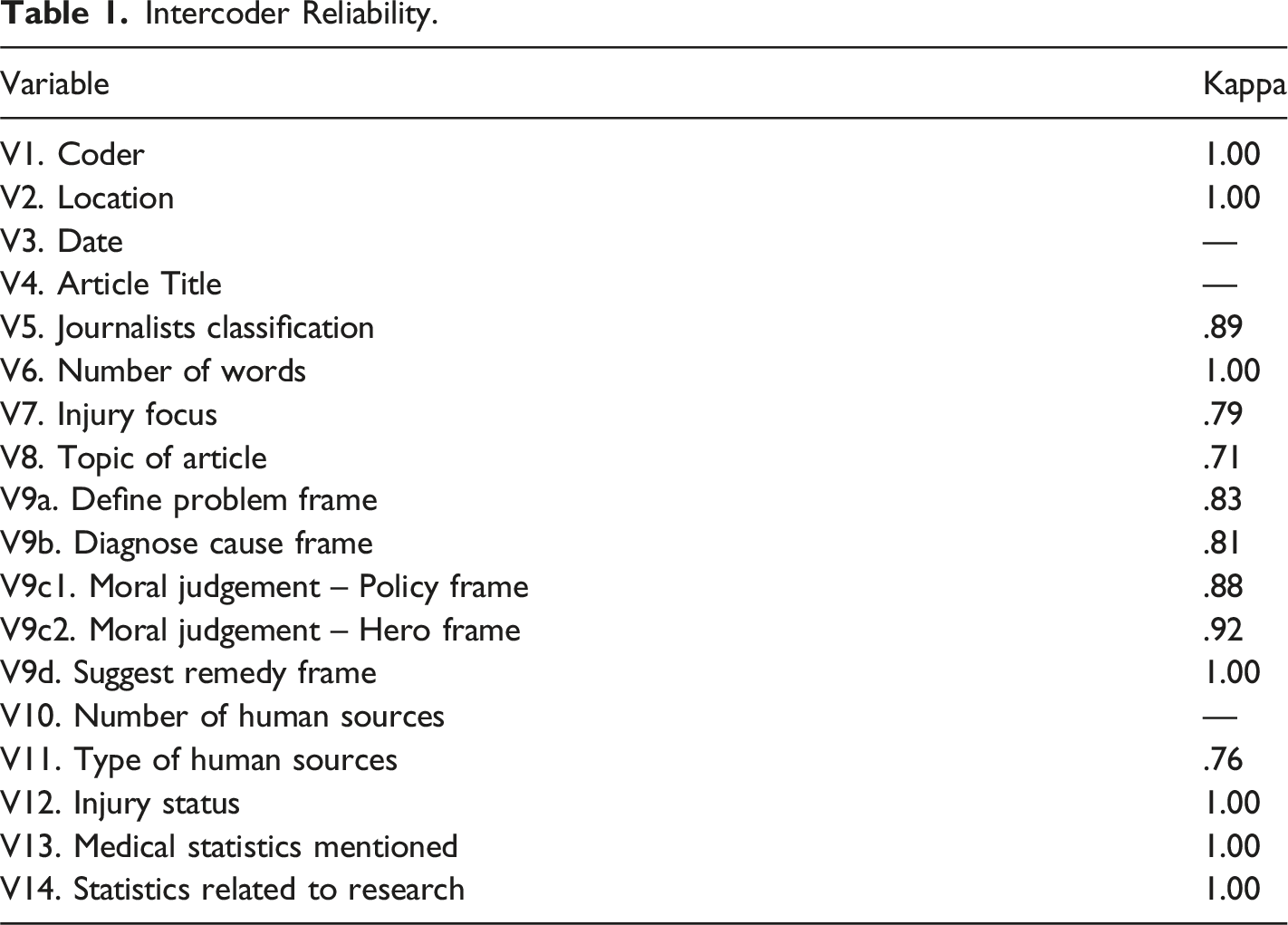
Once coding was complete, equal proportions multinominal tests including chi-square test for goodness of fit, as well as chi-square (x2) test for independence were used to detect any significant associations between categorical variables.
In addition to quantitative content analysis, qualitative thematic analysis is provided to exemplify reporting. Following previous research examining framing, qualitative analysis provides a detailed description of article content to help contextualize quantitative investigation (Burch et al., 2015; Cranmer & Sanderson, 2018; Sanderson et al., 2016; White et al., 2022).
Results
RQ1a: To what extent is Nadal’s injury the focus (i.e., primary or secondary) of Reporting?
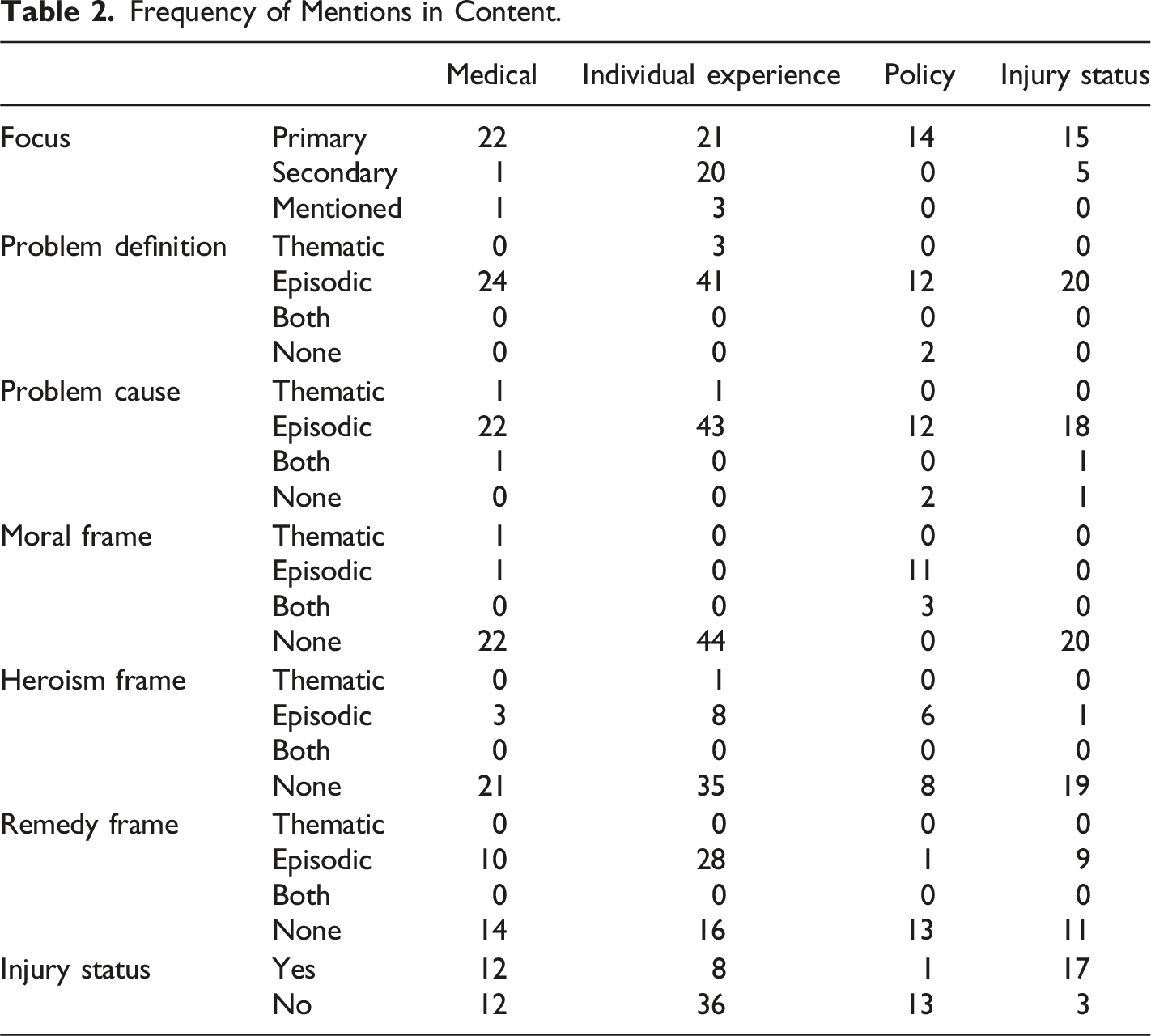
Overall, articles framed Nadal’s injury as the primary focus (71%) or as a point of discussion (i.e., secondary focus; 25%). The skew in frequency distribution was confirmed by a multinominal test (χ2(2) = 70.824, p = <.001). Nearly all articles referenced Nadal’s injury in the article title (82%), and most articles were written by undetermined journalists (60%), with the remainder written by sport journalists. The average article was 557 words long (+/− 260), with a minimum and maximum of 134 and 1766 words.
RQ1b: Does the type of focus (i.e., primary or secondary) in News Content Differ by Article Topic?
Frequency of Mentions in Content.
RQ2a: What Sources are used when Reporting on Nadal’s Behavior?
Articles used one human source on average and in total there were 137 references to a source of which Nadal was most common (54.3%). For example, Nadal’s media comments after the tournament were frequently reported: “The worst moment was after the match with Corentin Moutet, I couldn’t walk. I was able to compete this fortnight because my doctor gave me injections of anesthesia to put my foot to sleep, but it’s a risk”. Other athletes (12.9%), independent medical experts (14.2%) legal experts (8.5%), family members (3.6%), and former athletes (2.1%) were the other sources quoted with the remainder split amongst Nadal’s doctor and representatives.
RQ2b: Is there a Significant Difference in the Type of Source Utilized?
Chi-square tests for goodness of fit confirmed the predominance, and overutilization of Nadal as a source in news reporting with unequal distribution in source type (χ2 (9) = 337.857, p = <.001).
RQ3: What Frames are used when Reporting on Nadal’s Behavior?
Episodic problem definition (95%) and cause framing (93%) were common across articles focusing on the problem of Nadal playing through pain rather than addressing presenteeism as a broader sporting issue. For instance, in the Los Angeles Times, episodic discussion of Nadal’s circumstances focused on his problems: “Rafael Nadal’s painful left foot was numbed by multiple injections to two nerves throughout the French Open, the only way he has found to deal with a chronic condition he acknowledges puts his tennis future in doubt.”
Episodic and thematic policy and heroism frames were uncommon (16% and 18% respectively), indicating an acceptance and lack of critical discussion of Nadal’s behavior. When moral frames were mentioned, these were typically positive sentiments towards his behavior. For instance, a journalist at the Hindustan Times commented: “And this is what makes his 14th French Open title all the more remarkable, and perhaps the most unanticipated of them all. Not only did the 35-turned-36-year-old win it with an ‘asleep’ foot, but also with a sedate build-up. The kind he hadn’t experienced in any of his previous 13 triumphs in Paris.” Solutions to the injury problem were split between episodic framing concerning Nadal’s search for a cure using other painkilling treatments (47.1%) and not being provided (52.9%). Table 2 includes the frequency of frames in content.
RQ4: Does the Episodic or Thematic Coverage of the Frames in news Content Differ by Focus?
To determine whether a significant relationship existed between framing type and focus, a chi-square test of independence was performed. Results indicated focus of the injury in the story was significantly associated with problem definition framing (χ2 (4) = 9.767, p <. 05), with primary focus articles more frequently defining the problem. The four other frames were not significantly associated with article focus.
RQ5: Does the Episodic or Thematic Coverage of the Frames in News Content Differ by Topic?
A chi-square test of independence was also performed to examine the relationship between framing type and topic. Article topic was significantly associated with problem definition framing (χ2 (6) = 16.784, p < .01), moral policy judgment framing (χ2 (9) = 97.751, p < .001), remedy framing (χ2 (4) = 14.121, p < .001), and injury status (χ2 (3) = 33.450, p < .001). Thematic framing was largely absent, and episodic framing that defined the problem was utilized more often in coverage to present the topics addressing Nadal’s medical issue, individual experience, and policy implications. Additionally, episodic framing of the moral judgement-policy frame was employed more often to discuss policy implications, but in some instances this was combined with thematic framing. An interesting example of the combined framing was provided by the WADA Director General, Olivier Niggli: Is it a good medical practice? Is it acceptable for an elite athlete to get injections before a match? It’s a debate between doctors and a debate about medical ethics. Rafael Nadal has won 14 titles at Roland Garros. If he has won thirteen others without injections, it is probably not due to injections that he has won the 14th”
In this statement, Niggli defends Nadal’s use of painkillers, and the general policy, but does allude to broader thematic discussions about medical ethics. Regarding the remedy frame, episodic frames were present in content and described the medical issue and Nadal’s individual experiences. Lastly, injury status, while not a frame, was mentioned significantly less often when discussing Nadal’s individual experience.
RQ6: How are the Topics and Frames Employed in Content?
The four article types and frames are now discussed to contextualize the χ2 results. First, individual experience articles were most common and addressed Nadal’s injury issues in a broader description of his performance and avoided moral judgments of painkiller use to instead episodically cover Nadal’s own interview comments on the injury cause and remedies. A typical example is the quote from Nadal: “…we are now going to go back home and perform an intervention on the two nerves. They are injections with pulsed radiofrequency, which could remove the [negative] sensation in my foot; the idea is to inhibit the nerve, to remove that permanent sensation of pain. Let’s see if we can leave the nerve half asleep and have that other, more permanent sensation; even if it leaves me with little sensitivity, the goal is to leave it with little pain.”
In this example, his radiofrequency treatment was described as a way to extend his career, but never discussed from a health perspective. This relates to Nadal being the overwhelming source used in coverage which was applied in an uncritical manner that normalized his experience without any questioning. The narrative elements of individual experience articles also resulted in heroism framing, albeit less frequently than policy articles. The heroic framing positioned Nadal as a champion, who, throughout his career, fought and beat the challenges of his own body. For example, “But Rafa, the champion who has dared to defy pain itself, will always have the last word to play one more set... just as he has written his legend since he won his first Roland”. In doing so, individual experience articles uncritically presented Nadal’s injections to the public normalizing and valorizing such behavior.
Second, medical articles shared similar frames to individual experience articles and injury status articles, but were characterized by their primary focus on medical descriptions and explanations of Mueller-Weiss Syndrome throughout his career rather than individual matches or tournaments. The informative nature of these articles provided therapeutic information about Nadal’s condition and medication and relied on medical experts as sources. For example: In the most severe cases and in “people who put a lot of pressure on the foot, the bone will disintegrate, flatten, can fragment and become osteoarthritis” Didier Mainard, president of the French association for foot surgery and director of orthopedic surgery at Hospital Nancy, in France, told the AFP agency. In short, the problem wears down the bone and causes intense pain on the back of the foot.
Medical articles were also distinguished by discussion of radiofrequency treatment. For example, Dr Thomas Haag, a pain management specialist was quoted saying, “To my knowledge there is no research which established the efficacy of radiofrequency treatment for this condition”. These articles typically commented on the treatment’s likely success at extending his career rather than long term consequences for his health, or as a thematic issue in sport.
Third, injury status articles provided an update on Nadal’s physical wellbeing approaching Wimbledon alongside episodic injury definition, cause, and remedy frames whilst avoiding moral judgments. For example: Nadal is a doubt for Wimbledon after suggesting that he could skip the tournament to ease the pressure on a long-term foot problem. The 35-year-old has struggled with the issue for most of his career but it has flared up over the last few years. After winning the French Open last month, Nadal said: “Wimbledon is a priority, always has been a priority. If I’m able to play with anti-inflammatories, yes. To play with anaesthetic injections, I do not want to put myself in that position again.
Notably, the excerpt distinguished a comment made by Nadal, that numbing injections were not suitable but other treatments (e.g., NSAIDs) were. Like the two article types beforehand, Nadal’s injection was presented by journalists without question and other strategies to compete through injury were normalized.
Last, policy articles were the least common, defined by a higher proportion of episodic morality and heroism frames, whilst typically not discussing remedies unlike other article types. Criticisms of Nadal’s behavior as akin to doping were cited, such as comments of French professional cyclist Guillaume Martin, “They pass themselves off as heroes because they submit to pain, but in fact they take advantage of substances to overcome pain and, I repeat, for me it is very much on the edge”. Yet, in general, both morality and heroism frames presented Nadal’s behavior in a positive light (e.g., legal and brave). For example, Nadal’s choice was described by his doctor as “… a spectacular thing, it would be a miracle for any normal person, but he is able to do it because he really is a different person”. WADA Director General, Olivier Niggli, defended Nadal’s actions from an anti-doping perspective affirming: The painkiller injections that Nadal took, but it’s not unique to him, are part of the list of allowed. And why are they part of this list? Because with analyses, it was concluded that they do not enhance performance and that they are not harmful to health.
The public intervention from the Niggli is important, as WADA is a point of authority on determining doping in sport. Their support could have signaled to journalists that from a policy perspective, Nadal’s behavior was not controversial despite condemnation from other athletes. Other medical institutions offered commentary, such as The Spanish Society of Sports Medicine, which stated publicly, “an infiltration is not a method of doping unless a prohibited substance is administered in that injection”. The public position and statements of sports governing bodies may therefore influence the framing of health issues in sport. In contrast to the previous three types, rather than implicitly normalizing Nadal’s behavior, policy articles explicitly reinforced competing through injury using injections and other analgesic medication as an acceptable practice and even courageous at a thematic level.
Discussion and Conclusion
This article began from the position that bodily sacrifice to achieve success is normalized in sport, and using analgesic medication to compete through injury is a viable method to achieve success and reinforce hegemonic masculinity despite potential long-term health risks. Equally, evidence supports that health-related behaviors are significantly influenced by media coverage (Guenther et al., 2021), however, media framing of athlete’s competing through injury using analgesic medication has not previously been studied. The aim of this exploratory research was to identify the common frames employed by the media when presenting athletes competing through injury, and the message this signals to readers.
The analysis of frames in the reporting of Nadal’s injections has identified four common article types distinguished by the composition of frames. From these article types, it can be discerned that global news lacks critical coverage of presenteeism, normalizes painkilling treatments under moral frames, and valorizes such behavior as heroic and courageous. The coverage aligns with related studies into media portrayals of athlete behavior, as the neutral coverage of competing through injury reinforces traditional hegemonic masculine expectations and representations of heroism in sport (Cassilo, 2022; Cranmer & Sanderson, 2018; Lavelle, 2021). The lack of debate towards Nadal’s behavior does however contravene trends in the reporting of concussion that indicate emerging competing frames that challenge existing dominant narratives (e.g., White et al., 2022).
From a theoretical perspective, framing was achieved through the selection, emphasis, and exclusion of topics (Entman, 1993) and the selection of source information in news articles. News coverage including the emphasis of medical issues and individual experiences, in which Nadal was overutilized as the primary source. These decisions, by journalists in the frame-building process, placed circumstantial focus on issues surrounding play and excluded larger discussion of policy implications associated with painkilling treatments by individuals who possessed a more medically appropriate and specialized knowledge, such as medical and legal experts, and league officials. The limited discussion on the athlete’s physical status ignored both short-term implications from treatment (i.e., Wimbledon), as well as long term repercussions for future tournaments and retirement.
Furthering the focus on circumstantial coverage of pain management in sport, the selection and emphasis of frames that defined the problem (i.e., injury), and cause (i.e., Muller-Weiss Syndrome) were emphasized, while moral frames related to policy implications or potential remedies were less common. Supporting the normalization of hegemonic masculine expectations in sport, the utilization of the moral judgement frame of heroic performance and battling through the pain was employed, although sparingly. Previous research has examined how sports media represent sporting performances characterized by hardship and overcoming adversity as heroic (Gammon, 2014). In the present analysis, the decision to use painkilling medication was typically framed as a heroic act, however, it is interesting to note that for some the same act was akin to doping, a behavior typically framed as villainous. Given the regular use of medication in sport, future research could explore what determines whether an athlete’s use of medical substances is framed heroically or negatively.
This differentiation in framing supports the importance of source selection in the frame-building process (Baden & Tenenboim-Weinblatt, 2017; Brüggemann, 2014). Sport media can uphold the traditional framing of heroism and facilitate hegemonic masculinity in sport, by continuing to employ limited source selection in the development of news articles. While the athlete remains a logical source for information, incorporating a wider variety of sources from various backgrounds can offer a more balanced view of issues to counter the heroism framing. Heroism, and the hegemonic masculinity surrounding sport remains a powerful storytelling narrative (Bell & Coche, 2020; Gamon, 2004; Gee, 2009; Messner, 1990; Messner et al., 2000), however, recent focus on issues such as mental health (Lavelle, 2021) and concussions (Sanderson et al. 2016, 2017) demonstrate differing, competing narratives can emerge.
Health Framing and Policy Implications
Episodic and thematic framing in public health research has documented how media coverage can influence attribution of responsibility as an individual or social concern (McGinty et al., 2016; Ventresca & King, 2022). Theoretically, as outlined by Iyengar (1994), the episodic framing of Nadal’s medical and individual experiences to defining the problem, cause, and remedy place the issue of the use of painkilling injections firmly as an individual decision. The episodic framing of the policy topic in combination with episodic framing of moral judgements (policy and heroism) resulted in critical, individual attribution of responsibility to Nadal rather than addressing the normalized practices of pain management in sport. This sends clear messaging that painkilling injections and analgesic medication use does not warrant the same standing or consideration as other medical and social issues within sport, such as concussions or mental health, long-term health implications.
The identification of neutral and positive emphasis frames in news reporting of presenteeism to the public is important as framing can significantly shape audience attitudes (Guenther et al., 2021) including other athletes (Bell & Applequist, 2022). Therefore, hypothetically, athletes exposed to repeated favorable media framing may be more inclined to use painkillers to compete through injury. Given the high reported use of analgesic medication to compete through injury in recreational (Seifarth et al., 2019), adolescent (Berrsche & Schmitt, 2022), and professional athletes (Harle et al., 2018), there is significant public utility in messaging to inform sportspersons on potential risks and safer ways to use analgesics that counters news framing. Previous researchers have called to address sporting cultures that trivialize pain (Mayer & Thiel, 2018) and appropriately-designed public health messaging delivered as part of a range of interventions can change individual behavior (Bullock & Shulman, 2021). There is an important caveat that in some instances, using painkillers in professional athletic populations under supervised medical guidance may trade-off physical harm for social harm caused by loss of income or employment (Read et al., 2022). Yet for amateur and junior athletes, medical guidance is typically not available.
Limitations
This research has limitations that should be noted but provide opportunities for future research. First, the single case study methodology typical of sport and health communication means limits generalizability and future research should explore and contrast different portrayals of presenteeism in print and digital news as well as on social media. Second, although supported by previous framing research (Guenther et al., 2021), the connection between positive portrayals of presenteeism in the news and individual attitudes towards presenteeism is speculative. Experimental studies manipulating emphasis or equivalence frames (Druckman, 2001) can test the hypothesized pathway from message to behavior. Third, the data set from LexisNexis provided insight into global reporting, however, it was constricted to English and future research should study cross-cultural attitudes to pain and sport. Last, machine learning methods, such as topic identification, that require larger qualitative data sets might offer new insights into the framing of presenteeism in sport as well as other wellbeing issues such as concussion or mental health.
Conclusion
In conclusion, an athlete’s decision at any competitive level to use painkilling treatments is complex, and the evidence presented suggests that news coverage lacks nuance about the risks and benefits. Although presenteeism cannot be solely linked to news framing, communications providing guidance on safer use and potential risks can contribute to public health initiatives and harm reduction among sportspersons. Like other health issues in sport such as concussion, alcoholism, and mental health, it may take a tragic event before ‘no pain, no gain’ mentalities are interrogated more deeply in the public press.
Footnotes
Declaration of Conflicting Interests
The author(s) declared no potential conflicts of interest with respect to the research, authorship, and/or publication of this article.
Funding
The author(s) received no financial support for the research, authorship, and/or publication of this article.
