




Abstract
Affected by the COVID-19 pandemic, the Tokyo 2020 Olympic and Paralympic Games were postponed for a year. While getting through with the organizing of an Olympic Games amid a global pandemic is seen as a success by many (‘The Good’), it was overshadowed by the relentless virus as the Games closed with a muted spectacle in 2021 (‘The Bad’). Pushing on with the Games after the postponement, at the height of the pandemic, has resulted in strong criticisms and caused damage to the organizers (‘The Ugly’). This study seeks to assess the crisis communication strategies implemented by the organizers as they navigated the capricious condition of trudging on with a pandemic era sport spectacle. Through examining the organizers’ crisis communications to the challenges that emerged and public reactions to the strategies, this study seeks to understand the outcome of the strategies on the organizational image and reputation. It also provides reflections on the management of the Games through the COVID-19 pandemic. In this regard, it is argued that the situational crisis communication theory offers a useful framework that can provide theoretical connections between crisis management in a sports mega-event and organizational response strategies.
Keywords
Introduction
The act of successfully organizing a Summer Olympic Games amid a global pandemic is seen as an achievement by many (International Olympic Committee [IOC], 2022; The Economist, 2021; Wade, 2021a). From a sporting perspective, the Tokyo 2020 Olympic Games (TOG) were a triumph for host nation Japan, finishing third behind the sporting powerhouses of the US and China with a record of 27 gold medals (‘The Good’). However, TOG and its organizers were overshadowed by the COVID-19 pandemic. The pandemic relentlessly dominated the news cycle and drove headlines throughout the Games’ preparation and closing (‘The Bad’).
Referred to as “the recovery games” (Bureau of Olympic and Paralympic Games Tokyo 2020 Preparation, 2015, p. 1), the Tokyo 2020 Olympic Games Bid Committee aimed to reinvoke the spirit of the 1964 TOG, which saw Japan emerge as a global player from the devastation of World War II and highlight its recovery in the wake of the devastating earthquake in 2011. Impacted by the pandemic, TOG were postponed for a year, during which the narrative turned into one of demonstrating how mankind overcame the coronavirus (IOC, 2022). The initial ambitions and aspirations have devolved to the resignation that the Games had to be organized regardless of the reputation, public health and economic costs. Pushing forward with the Games after the postponement, at the height of the pandemic, resulted in strong criticisms and caused political, economic, and social damages to both the organizers and the IOC (‘The Ugly’).
This study examines how this public crisis unfolded from the onset of COVID-19 in the 18 months leading up to the Games. The purpose is to assess the crisis communication strategies implemented by the organizers - Tokyo Olympic Games Organizing Committee (TOGOC) and the IOC as they navigated the capricious conditions of trudging on with a pandemic-era sports spectacle. Although the scope of this examination extends to a certain degree to the Tokyo Paralympic Games, the Olympic Games remain the focus of our study. 1 Through examining the organizers’ crisis communications in response to the myriad of challenges that emerged and public reactions, this study seeks to understand the outcome of the strategies on the organizational image and reflect on the management of the Games through the COVID-19 pandemic. In this regard, it is argued that the situational crisis communication theory (SCCT) offers a useful framework that can provide theoretical connections between crisis management in a sports mega-event and organizational response strategies.
This study aims to address three gaps in the literature. Firstly, while research on crisis communication is prevalent in sport, few have evaluated communication tactics by sports mega-event organizers. Existing crisis communication studies have focused on sports organizations (e.g., Anderson, 2020; Richards Jr. et al., 2017), athletes (e.g., Jackson & Thaker, 2021; Wilson et al., 2008) and fans (e.g., Brown et al., 2015; Harker, 2021). This study contributes to the expansion of the body of knowledge and, more specifically, to improve the selection of crisis communication strategies for sports events. The study provides a better understanding of the use of crisis communication strategies, especially in a crisis involving a multitude of stakeholders, as encountered in a sports mega-event. Secondly, organizing a sports mega-event during a “once-in-a-lifetime pandemic” (UN, 2022, p. 1), in uncharted territory with no blueprint, presents a learning opportunity for crisis managers, regardless of the outcome. Our findings inform crisis communicators about additional strategies to draw upon when managing their crisis communication. Thirdly, studies on the application of SCCT are predominantly Eurocentric or Western focused. Given the geographic concentration of major global sports events in the Far East in recent years (e.g., the 2018 Pyeongchang Winter Olympic Games in South Korea, the 2020 Tokyo Olympics in Japan and the 2008 and 2022 Beijing Olympic Games in China), the period “East Asian Era” (Horne & Whannel, 2020) may have ushered in emerging discourses of crisis communication strategies. Sport organizations, media, and the public during the “East Asian Era” have not yet drawn sufficient academic attention (Kobayashi et al., 2022). There remains an urgent need to identify how the public in Asian countries such as Japan participates in crisis communication.
To do this, we start with a literature review of crisis communication and an overview of SCCT. This is followed by establishing a timeline of events and important decisions that took place from the onset of COVID-19 to the closing of TOG. We then provide an analysis of the influence of crisis type and choice of crisis communication strategies on public perceptions of crisis responsibility and organizational image outcomes. We conclude with the managerial implications and limitations of the study.
Literature Review
The Olympic Crisis and the Olympic Brand
An organizational crisis refers to “a sudden and unexpected event that threatens to disrupt an organization’s operations and poses both a financial and a reputational threat” (Coombs, 2007, p. 164), which can harm stakeholders physically, emotionally, and/or financially. Sports events are associated with and exposed to unforeseen circumstances to a great extent, given the involvement of multiple stakeholders in various stages of preparations, which often span over a medium to a long period. As the world’s biggest sports event, crisis studies on the Olympic Games include human rights issues and democratization (Black & Bezanson, 2004; Koenigstorfer, 2020), violence and political unrest (Falcous & Silk, 2010; Wamsley, 2004), and the rise of doping and drugs (Hoberman, 2005). A sports mega-event such as the Olympic Games is an ideal example of a sport activity where crisis communication management should be considered a necessity. However, studies indicate that administrators and practitioners of sports events communication are largely underprepared (Knight et al., 2020; Stoldt et al., 2012). With the increasing reliance on sponsorship for the financing of major sports mega-events (Morgan et al., 2020), the need for the maintenance of sport entities’ reputation is an inherent issue (Heslop et al., 2013).
Crisis Communication and Situational Crisis Communication Theory
Crisis communication has received considerable attention from scholars since the 1990s, with W. Timothy Coombs’ (1995) SCCT as one of the major paradigms of crisis research (Richards Jr. et al., 2017; Zhao et al., 2020). SCCT suggests how crisis communication can be used to protect reputational assets during a crisis and projects how people will react to the crisis response strategies used in managing the crisis (Coombs & Laufer, 2018). The extant empirical research conducted on SCCT has produced a robust evidence-based theoretical framework for understanding how to maximize the reputational protection afforded by post-crisis communication (Avery & Park, 2016; Richards Jr. et al., 2017). SCCT was thus chosen as the theoretical framework for this study to assess crisis communication strategies before and during the TOG.
SCCT suggests that people search for the causes of events and attribute responsibility accordingly. A person who attributes responsibility for an event will experience an emotional reaction to the event. The attributions of responsibility and emotions potentially serve as motives for actions. When an organization is judged responsible, behavioral responses are likely to be negative and anger is evoked. Behavioral responses are positive when an organization is judged not to be responsible and sympathy is evoked (Weiner, 2008). Stakeholders who are impacted by an organizational crisis will search for someone and/or something to attribute blame, which will inflict reputational damage on the organization through behavioral intentions such as purchase intention and support for an organization (Coombs, 1995; 2007; Coombs & Holladay, 2001). SCCT is an “image-making crisis theory” (Liu & Fraustino, 2014, p. 214) that posits that perceptions can be potentially changed by the words and actions of organizations in any crisis. SCCT stipulates a two-step process to assess the reputational threat and states that organizations must prioritize protecting their stakeholders’ interests by providing sufficient information and guidance for psychological coping. Then the organizations should turn to the repair of their reputation through appropriate crisis response strategies that reflect different levels of accommodation (Coombs, 2012).
Crisis Response and Image Repair Strategies
The key objectives of crisis response strategies are to firstly, shape stakeholders’ attributions of the crisis; secondly, change perceptions of the organization in crisis; and thirdly, lower the negative impact and emotions in response to the crisis (Coombs, 2007). SCCT shares the basis with William Benoit’s Image Restoration Theory (1995) that outlines how communication affects people’s perception of a crisis and/or the organization. In turn, these perceptions influence assessments of the organization’s reputation as well as stakeholders’ emotional responses to and future interactions with the organization (Bundy et al., 2017). Parallel to Benoit’s (1997; 2013) image restoration and repair typology, three primary crisis response strategies are identified by SCCT - deny, diminish, and rebuild (Coombs, 2007). Communications are usually crafted by crisis managers with a matching crisis response strategy in response to the crisis to mitigate the circumstances (Coombs & Holladay, 2002).
Situational Crisis Communication Theory in Sports Research
SCCT is a predominant framework used for analyzing sport-related crises and communication strategies. Anderson (2020) explored people’s perceptions of the National Football League’s (NFL) crisis responsibility in handling the 2016/17 anthem protest which revealed that patriotism mediated the relationship between crisis responsibility and organizational reputation. From the network perspective, Harker’s study (2021) examined fan perceptions regarding four NFL crises and found that the discordant communication exchanged in the rhetorical arena contributed to fans’ negative perceptions of the crises and vice versa.
Additionally, Meadows and Meadows III’s research (2020) analyzed social media sentiment and emotions expressed regarding the Larry Nassar scandal involving Michigan State University and USA Gymnastics. Social media was engulfed with various emotions and opinions surrounding Nassar, the victims, and the courts’ decisions. Their study revealed findings regarding the relationship between the public’s emotions and attribution of responsibilities in a crisis. Brown et al. (2020) experimentally applied SCCT to athlete reputational crises, which examined how people attribute responsibility and the extent to which the use of SCCT suggested response strategies would help repair a team’s image after athlete transgressions. These studies showed that SCCT’s main assumptions around the relationships between perceived crisis responsibility, organizational reputation, and behavioral intentions also apply in the sports setting.
Nevertheless, two research gaps can be identified within the existing literature. Firstly, existing SCCT based studies reveal inconsistent findings in terms of the effectiveness of the match of crisis response strategies with attributed responsibility (Yu et al., 2022), indicating a need for further empirical investigation. Secondly, current studies suggest that sport communication managers and practitioners are not well prepared (Knight et al., 2020; Stoldt et al., 2012), indicating a need for further exploration of how practitioners can be better prepared for any potential crises. Hence, underpinned by SCCT, this study aims to assess the use of crisis response strategies by the organizers – the TOGOC and to a lesser extent, the IOC, through the following questions:
How did the crises unfold?
What crisis response strategies were used by the organizers in response to the various crises encountered during the organizing of TOG in a global pandemic?
How well were the organizers’ crisis response strategies implemented in accordance with SCCT’s recommendations?
Method
To answer the research questions, thematic analysis was conducted on three key sources – firstly, official information on the organizing of TOG in parallel with the development of the COVID-19 pandemic in Japan. Secondly, crisis response messages produced by the organizers of TOG; and thirdly, public reception and discourse on the crisis. Data were collected from policies, press releases, documents, reports and publications of government and official sources. Informational news coverage, statements, opinion pieces, media interviews and interview quotes from both the organizers and the public, were also gathered from English-language national newspapers in Japan with the largest circulations which covered COVID-19 development and the progress of TOG in Japan. These include Asahi Shimbun, Mainichi Shimbun, Nikkei, The Japan Times and Yomiuri, as well as major English-language web-based news in Japan – Japan Today and Kyodo News. These national news outlets provided coverage from the early onset of events to the subsequent crisis. As the crisis made its way to international news platforms, major global news outlets picked up the story. To reflect this, data was collected from Agence France-Presse (AFP), Associated Press (AP), and Reuters, three of the world’s largest news agencies that supply worldwide news for distribution by national agencies along with their domestic news reports. This inclusion ensured international news coverage and public reception of the crisis were captured and included in our analysis. These national and international news outlets were assessed to acquire information about the development, reactions and arguments surrounding the crisis.
Main Source of Data.
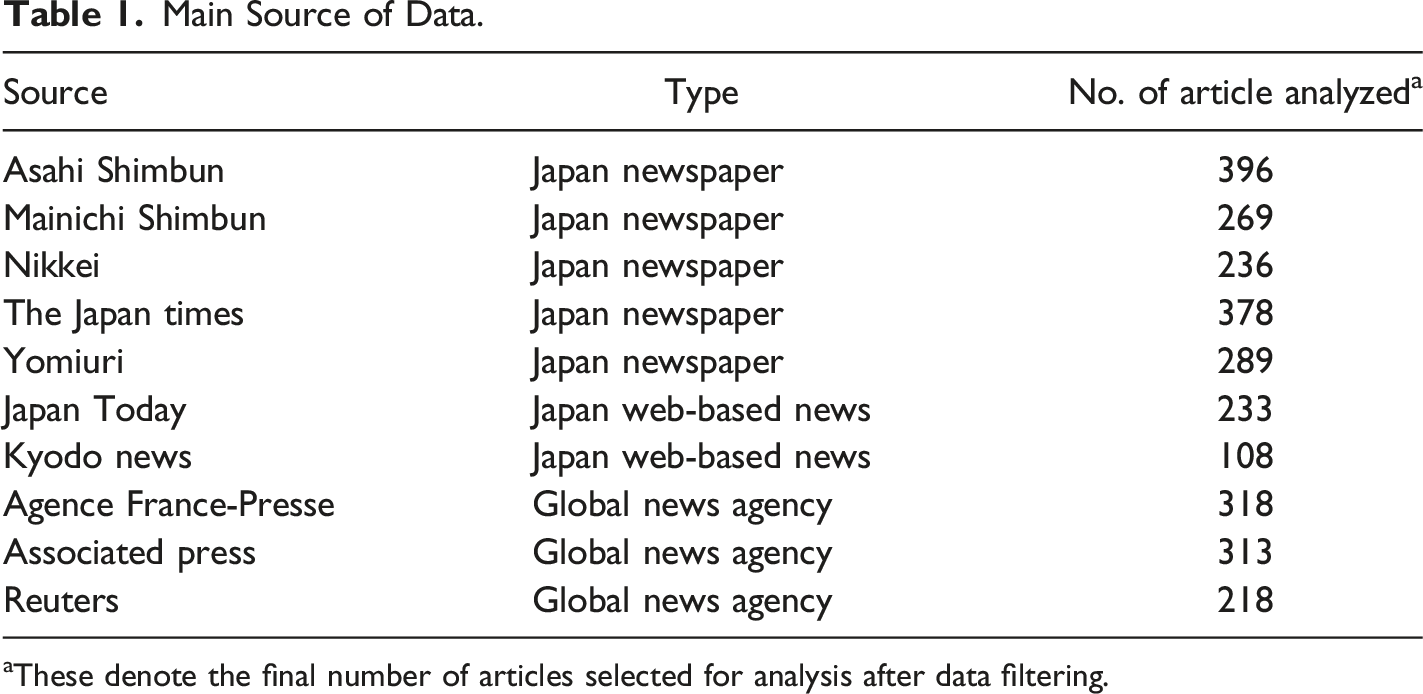
aThese denote the final number of articles selected for analysis after data filtering.
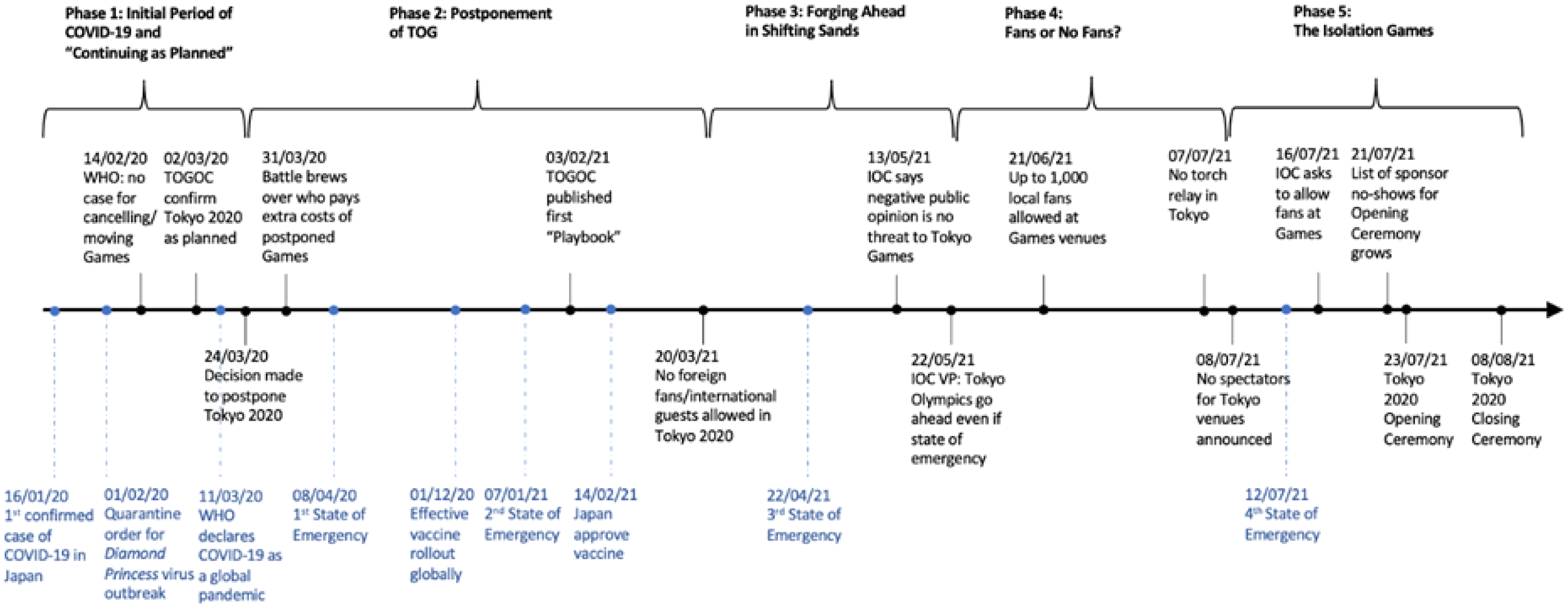
Timeline and key communication of the Tokyo 2020 Olympic Games. Note: The solid time points refer to the TOG related events and the dotted time points refer to the COVID-19 related polices and events.
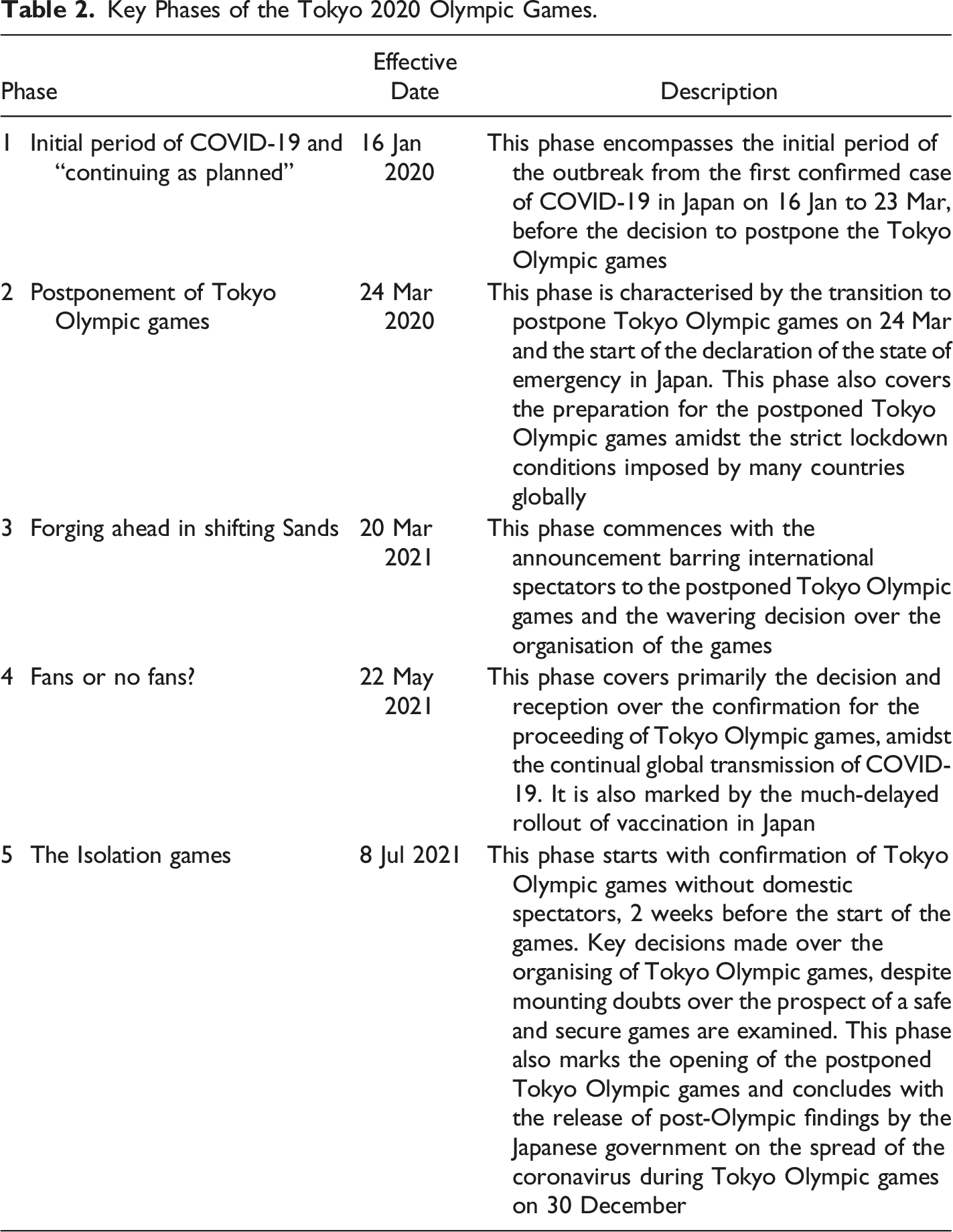
Key Phases of the Tokyo 2020 Olympic Games.
To analyze the stakeholders’ reception, data collated on response and opinion articles was labeled and arranged into subcategories using a thematic approach based on the theoretical framework of SCCT on the stakeholders’ attributions of responsibility, emotions, and behavioral responses. This approach is often used in interpretive studies in accordance with Braun and Clarke’s (2012) work to create meaning. To develop the themes and improve intercoder reliability, the dataset was independently analyzed by two researchers using NVivo. Comparisons were then made where any inconsistencies and/or variances were discussed to resolve the discrepancies. The most pertinent themes were then determined based on the theoretical framework.
The COVID-19 Pandemic Tokyo 2020 Olympic Games - Key Phases
Tokyo 2020 Olympic Games Timeline of Development.

Note. IOC = International Olympic Committee; TOG = Tokyo 2020 Olympic Games; TOGOC = Tokyo 2020 Olympic Games Organising Committee; WHO = World Health Organization.
Phase 1 – Initial Period of COVID-19 and “Continuing as Planned”
Tokyo secured the hosting rights to TOG in 2013, and TOGOC was formally established on 24 January 2014 to oversee the preparations for TOG (IOC, 2014). In 2019, TOGOC staged a lavish ‘1 Year to Go’ ceremony, where the IOC President, Thomas Bach, remarked, “I have never seen an Olympic city as prepared as Tokyo with 1 year to go before the Olympic Games” (Takahashi, 2019, p. 2). The celebratory atmosphere and positive attitude toward Tokyo’s second hosting quickly took a downturn after the outbreak of COVID-19 (Kato, 2021).
Japan confirmed its first COVID-19 case on 16 January 2020. The initial official response was one of confidence that “[t]he chances are slim that the infection will spread” (Kyodo News, 2020a, para. 1). As the spread of the virus picked up pace, then Prime Minister (PM) Abe announced the designation of COVID-19 as a quarantinable infectious disease on 27 January 2020. The heightened state of alert was highlighted by a quarantine order issued on 1 February 2020 for the Diamond Princess cruise ship 2 following the outbreak of the virus onboard. Japan’s handling of the outbreak was critically assessed around the world as “chaotic and ad hoc” (Nakazawa et al., 2020, p. 3). This episode cast doubt on the effectiveness, validity, and preparedness of infectious disease control by the Japanese government, which set the stage for the lead-up to TOG.
Faced with the intensifying outbreak, TOGOC’s initial response was one of “continuing as planned” (Slodkowski, 2020), despite rumors that the Games could be canceled. To prevent further speculation, John Coates, Chair of the Coordination Commission for TOG, adopted a denial strategy by insisting that they “have never discussed canceling the Games” (Slodkowski, 2020, p. 1). In an ensuing press briefing, the IOC remained adamant that the Games would start as scheduled, and athletes were urged to prepare “full steam” (Grohmann, 2020, p. 1). Fears continued to mount over the COVID-19 crisis as countries began lockdown measures and closed their borders. Yet the IOC categorically denied any suggestions of postponement or cancellation, with Bach declaring that “there is no plan B” and that TOG would take place at the time allotted (Grohmann, 2020, p. 6). Despite concerns over possible health risks to athletes and spectators at the Games, the organizers were unwilling to engage in an open discussion about alternative options (Trotter & Winsor, 2020). Faced with the organizers’ hardline stance, opposition to the Games started to build up. To exert pressure for a postponed Games, Canada and Australia withdrew their teams. This was followed by major stakeholders such as U.S. Track and Field and UK Athletics, along with other national Olympic committees (NOCs) (Keating & Kihara, 2020). In response to the rising pressure, the IOC and TOGOC slightly shifted their position by promising a consultation but insisted that calling off the Games was not an option (Takahashi, 2020b).
In evaluating the organizers’ initial response to what is seemingly a victim cluster crisis, i.e., a natural disaster where the organization is also a victim, their crisis response strategy was one of denial, with their repeated assertion that the Games would proceed as planned. The organizers failed to comprehend that stakeholders such as the NOCs, athletes and supporters are unlikely to blame the organizers if they were perceived as victims of the crisis. Any reputational threat to the organizers would remain mild as stakeholders are not likely to attribute crisis responsibility to the organization. As advocated by Coombs (2007), an organization bears an ethical responsibility where the priority in any crisis is to protect stakeholders from harm, instead of reputation. By ignoring the rising threat of COVID-19 and steamrolling ahead with the Games preparation, it elicited emotional reactions from the stakeholders, which served as motivations for action (i.e., threats to withdraw). As a result, behavioral responses became negative when an organization is judged responsible, and anger is evoked (Coombs, 2007; Weiner, 2008), as demonstrated by the NOCs’ withdrawal from the Games.
Phase 2 – Postponement of Tokyo Olympic Games
On 9 March 2020, COVID-19 was declared a “historic emergency” in Japan (Yomiuri News, 2020, p. 1). This was followed by the WHO’s announcement of COVID-19 as a pandemic on 11 March (WHO, 2020). On 24 March, taking a cue from the global development, the IOC and TOGOC conceded with the postponement of the TOG (IOC, 2020b). New dates were set for the postponed event from 23 July to 8 August in 2021. The decision was met with relief from not only major stakeholders, including World Athletics, the International Paralympic Committee (IPC), and NOCs but also residents (Takahashi, 2020a).
This relief was short-lived as the “friendly and constructive” ambiance where the two organizers commended each other on the progress of TOG (IOC, 2020b) quickly descended into disarray. Shortly after the initial display of friendliness, an open dispute broke out over who would cover the massive costs of the unprecedented postponement (Asahi Shimbun, 2020a). The contention was over the IOC’s claim that “Japanese Prime Minister Abe Shinzo agreed that Japan will continue to cover the costs it would have done under the terms of the existing agreement for 2020” 3 (Wade, 2020, p. 6). The costs of rescheduling the Games and the debacle over who would pay came at a particularly delicate time during Japan’s economic downturn brought on by COVID-19 (Mainichi Shimbun, 2020). In a highly unusual move, TOGOC and the Japanese government challenged the IOC and rebuked that no such agreement had been made. In response, the IOC retracted the remark and announced that both sides would “continue to assess and discuss jointly the respective impacts caused by the postponement” (Wade, 2020, p. 11). The fraught negotiations that went on between the organizers were further exacerbated by the persistent speculation that the declaration of a State of Emergency by the Japanese government was imminent, to which PM Abe “flatly denied” (Asahi Shimbun, 2020b, p. 2). Faced with the intensifying outbreak and growing criticism of the government’s slumberous approach to the crisis, PM Abe inevitably declared Japan’s first State of Emergency a week later (Kyodo News, 2020c).
This phase of the crisis is demarcated by the organizers’ indecisive pivot in making the postponement official. A crisis creates a need for information, as the uncertainty of any crisis produces stress for stakeholders (as seen in Phase 1). The SCCT posits that crisis managers must begin their communication efforts by addressing the physical and psychological concerns of the victims. The corrective action to delay the Games, albeit belated, reassured stakeholders that they were safe, thereby reducing their psychological stress. However, the postponement and the burden of the associated costs also sowed the seeds of disarray, which saw the development of a fault line between the IOC and TOGOC. Consistency in the response message is key to effective crisis communication, as stakeholders’ sense of the perceived threat rests largely on the information they have received from crisis managers (Wang et al., 2021). The incongruity and backpedaling in response strategies reflected a lack of crisis control and the breakdown of communications among the organizers. Although the impact on the organizers’ image and reputation remained salient at the early stage of the outbreak, the cumulative effect of negative reputation and crisis history accrued over time as the crisis continued to develop.
Phase 3 – Forging Ahead in Shifting Sands
The organizing of TOG picked up pace in the first quarter of 2021 with the release of Playbooks 4 by the organizers. Although there was a sign of respite for things ‘going back to normal’ with the global vaccine rollout, uncertainty still lingered over whether or how the Games could be organized in a safe manner. A Japanese Government senior member was reported as commenting that the Games would be cancelled owing to the gravity of the pandemic (Parry, 2021). Although TOGOC did not respond immediately to the report, the possibility of cancellation was categorically denied by the organizers (Tarrant & Murakami, 2021). To quell concerns, a decision was eventually made to hold the Games without overseas spectators and volunteers. Hanging to the hope that lost revenue could still be recouped from domestic ticket sales, it was initially decided that local fans would be allowed to attend the events, as holding “[t]he Olympic Games behind closed doors is clearly something we don’t want”, as Bach insisted (Kyodo News, 2020b).
The move, however, was unable to ease public concern about holding the event with Japan’s “poor control” in containing the transmission and “poor performance” in inoculating its citizens (Shimizu et al., 2021, p. 294). This sentiment was reflected in opinion polls conducted by several news agencies (e.g., Asahi Shimbun, 2021c; Mainichi Shimbun, 2021b) where over 80% of voters believed that the Games should be postponed or canceled over fears that the influx of visitors would aggravate the situation (Asahi Shimbun, 2021a). Calls and pleas to postpone and/or cancel the Games from the public, politicians, corporations, right down to the medical experts continued to intensify in the 4 months leading up to July, as Japan grappled with another State of Emergency (Asahi Shimbun, 2021b; Mainichi Shimbun, 2021b, d). Yet the organizers, particularly the IOC downplayed concerns over public dissent and maintained that “negative public opinion is no threat to Tokyo Games” (Dunbar, 2021, p. 1).
Applying the SCCT model to this phase of development, the crisis faced by the organizers falls into the intentional and preventable cluster. Despite overwhelming public objection and resistance against the staging of the Games, the organizers ignored legitimate fears from the community and maintained that the Games would be held even under a State of Emergency (Wade & Kageyama, 2021). The prioritization of the Games over the risk of COVID-19 transmission was a purposive and preventable move. The organizers’ lack of communication exemplifies a denial strategy that sought to remove their connection with the pandemic. The denial strategy was mismatched with what SCCT proposes. The outcome was reflected in the public’s vehement opposition to the Games and the perceived negative image of the organizers for “putting the Olympics first” (Lies & Kihara, 2021, p. 1).
Phase 4 – Fans or No Fans?
Japan came out from its extended third State of Emergency in June, 4 weeks before the Games were to start. The IOC was adamant that a closed-door event with no spectators was not an option as “it would be anathema to the philosophy of a movement that seeks to bring people across the globe together in celebration of sport” (Ingle, 2020, p. 1). A decision was consequently made to allow local spectators to attend the Games at half capacity, against the advice of Japan’s top government health adviser (Gallagher et al., 2021). Shortly after this decision was made, TOGOC was forced to reverse its course due to a resurgence in infections. Inevitably, another State of Emergency was declared on 8 July, just 2 weeks before the Games opened. TOG were to carry on under a State of Emergency without spectators.
Decisions made by organizers were perceived as “impromptu”, and “very last minute” (Yamamitsu & Shiraki, 2021, p. 1), creating consternation for stakeholders such as sponsors, and media partners, particularly after the months-long delay over the decision about spectator attendance. At the end of their tethers, domestic sponsors for TOG resorted to “making decisions on [their] own, without waiting for the organizers’ cue” (Yamamitsu & Shiraki, 2021, p. 7). The frustrated sponsors scaled back, or cancelled Games-related promotional events and booths, with Toyota choosing not to activate its sponsorship in a high-profile move to express their dissatisfaction. In silent protest over the decision to stage a Games during a pandemic, major Japanese corporations (e.g., Ajinomoto and Canon) and sponsors (e.g., P&G and Panasonic) opted not to attend the ceremonies along with Toyota. Corporations were anxious about being associated with an event with weak public backing, which could result in negative publicity for the companies (Yamamitsu & Shiraki, 2021).
This phase of preparation is marked by the continual avoidance of any dialogue or engagement with stakeholders despite the concerns that many harbored. While the public came to terms with reluctant acquiescence over the staging of the Games, it was one of resentment which was reflected in PM Suga’s 5 and his cabinet’s standing in a public opinion poll (Reuters, 2021a). Sponsors were hesitant to embrace the Olympics’ imagery and refrained from association with the Games. This crisis was preventable and incompatible with the denial strategy they adopted as a response. Adding to the reputational threat was the intensifying factor of crisis history. Regrettably, the IOC and the Olympic Games organizing committees have a track record of avoidance or slow response to crises or scandals (e.g., the Salt Lake City bid scandal for the 2002 Winter Olympic Games and the Zika virus at the 2016 Rio Olympic Games). Given these circumstances, according to the SCCT’s response strategy, it should be one of rebuilding the reputation and relationship. Coombs (2007) proposed that rebuilding is appropriate in situations where there is a strong attribution of crisis responsibility (preventable crises). In reality, the organizers’ lack of engagement and failure to communicate progress in the decision-making process left the stakeholders speculating and creating their narratives of the Games – one of “hubris-over-humanity” (Wise, 2021, p. 1).
Phase 5 – The Isolation Games
Delayed a year in the hopes that the pandemic would be under control, TOG opened its curtain on 23 July. While infections were simmering globally, Bach maintained that there was “zero” risk of the athletes infecting Japanese residents (Reuters, 2021b, p. 1). Fears about the viral spread by the participants to a largely unvaccinated population in Japan 6 were stoked as athletes and accompanying officials were exempted from typical quarantine requirements. Media photos and social media posts revealed Games-related foreign personnel breaking rules over mask-wearing, smoking in airports, and drinking in public. Monitoring and security for the ‘Olympic bubble’ 7 were reportedly abysmal (Klug & Yamaguchi, 2021; Mainichi Shimbun, 2021c). Outside the Olympic bubble, COVID-19 cases in Tokyo continued to surge to daily record highs during the Games, which exerted pressure on hospital capacity. The government responded by further extending the State of Emergency till the end of August (Nagata, 2021). In defense of the surging cases, the IOC emphasized that athletes and staff were “living in a different parallel world”, making it unlikely that the Games were a source of infections. This remark drew much criticism from the public for IOC’s insensitivity and being out of touch (Ogawa & Hirayama, 2021, p. 18).
Notwithstanding the intermittent protests outside competition venues, “Japan breathes a sigh of relief as the Olympics end without disaster [and] the Games came to a close on 8 August” (The Economist, 2021, p. 1). According to an official Olympic report, 511 COVID-19 cases were accounted for among the 11,500 athletes in the Olympic Village (IOC, 2021b), which is an unusually low statistic considering the masses who had gathered in confined spaces in 2 weeks. A report released at the end of the 2021 by Japan’s National Institute of Infectious Diseases also confirmed the benefits of the Olympic bubble infection control measures as the positive cases within the Olympic Village were unrelated to the local population (IOC, 2021b).
While the host city had reason to take solace from a “safe and secure” Games (IOC, 2021c, p. 1), resentment lingered throughout the entire period of preparation until the end of the Games. As advocated by SCCT, behavioral responses are negative when a party is deemed responsible for the crisis and anger is evoked (Coombs, 2007). The need to strike a balance between a national imperative to control a virus that thrives when a huge crowd gathers and plowing on with a sports mega-event chipped away at public patience and trust. Studies have demonstrated that the attribution of crisis responsibility by stakeholders results in lower reputational scores perceived by the same stakeholders, which results in reputational threat (Coombs, 1998; Coombs & Holladay, 2002; Jackson & Thacker, 2021). This is exemplified in the perception of the IOC as a dictator for pushing on with the Games regardless of the dire situation, to fulfil its broadcast and sponsorship agreement that was critical to its survival (Mainichi Shimbun, 2021e; Wade, 2021b). Broadcast rights and sponsorship currently account for over three-quarters of the IOC’s revenue in the latest 4-year Olympic cycle (IOC, 2021a). Kaori Yamaguchi, a member of the Japanese Olympic Committee, aptly summed up the general public opinion, “For a long time, we have believed that the Olympics are something special”. Pushing on with the Games at the height of the pandemic, against medical advice and public sentiment, made them realize that the “Olympics are merely entertainment and business events” (Imahashi, 2021, p. 6).
Discussion
Hosting a sports mega-event during a pandemic not only showcases a country’s strategies in containing a virus but also represents a watershed moment in the organizers’ capability for crisis management. RQ 1 and RQ 2 sought to uncover the stages of the crisis, the corresponding crisis response strategies from SCCT used by the organizers, and their reception by the stakeholders. With these questions addressed, we turn to RQ 3 to discuss the rigor-relevance gap of this crisis.
The priority in a crisis is to protect stakeholders from harm through the two base strategies of providing instruction and adjusting information (Coombs, 2007). Instructing information informs stakeholders what happened and how they can protect themselves from physical harm. Adjusting information helps them cope with the crisis and adopt corrective action (Coombs, 2012; Kim & Sung, 2014). After providing the necessary information, crisis managers then choose from four crisis responses – deny, diminish, rebuild, or reinforce. On the first base-level response strategy, the organizers remained reticent over the impact of the initial outbreak of COVID-19 on TOG (see Phase 1). The IOC and TOGOC did not put out much information on the preparations, even after WHO’s declaration about COVID-19 as a global health emergency in the early stages. As the outbreak escalated, the uncertainty produced stress for stakeholders, during which stakeholders might have perceived the silence as a denial tactic by the organizers. It was only a week after WHO declared COVID-19 a pandemic that the IOC eventually released a press statement affirming that TOG were to continue as planned and “there is no need for any drastic decisions” (IOC, 2020a). This crisis communication exposed the organizers’ misjudgment and their naïve response to a virus that was, and in many respects still is, mostly unpredictable. For the weeks that followed, the communication strategies appeared to center around the Games preparation as planned, while disregarding the mounting pandemic crisis. The denial response strategy from the start set the scene, which remained relentlessly consistent throughout the crisis.
The Games were held at a most inappropriate time (i.e., a preventable and intentional cluster), which became a focal point for public criticism of the organizers. Holding an Olympic Games during a pandemic despite overwhelming public opposition also signaled a breach of trust between the people and their government. Given these factors, SCCT suggests the rebuild crisis response strategies should have been employed for “crises with strong attributions of crisis responsibility (preventable crises)” (Coombs, 2007, p. 173). In practice, as we have elucidated, the organizers sought to remove any connection between the organization of the Games and the crisis. The deny strategy was mismatched with what SCCT suggests. The organizers’ lack of consideration and apparent obliviousness to public opinion polls alienated the locals and irritated the sponsors (e.g., Toyota). SCCT emphasized the importance of open and ethical communication by disclosing incriminating information in the first instance rather than trying to deny and/or conceal it (Claeys & Opgenhaffen, 2016; Coombs, 2007). Stakeholders are more likely to have a favorable attitude towards an organization when it directly acknowledges responsibility in an apology (Lee, 2004). Thus, the organization should explicitly declare that it is responsible for the crisis and accept full responsibility for any wrongdoing (Lee & Chung, 2012).
In a rare acknowledgement in an interview given during the Games, PM Suga admitted that “selling the Olympics to the Japanese public in the midst of the Covid pandemic has been a ‘struggle’” (Siemazsko, 2021, p. 1). The public struggled to find a clear purpose for holding the Games during the global pandemic (Imahashi, 2021; Mainichi Shimbun, 2021d). Given these factors, even showing the willingness to pursue the ethical action of canceling the Games would have incurred much less reputational damage than what occurred later. There was also a missed opportunity to implement SCCT’s diminished response option by providing an explanation that limited TOGOC’s crisis responsibility. According to the Host City Contract 2020, a unilateral decision by the Japanese government to cancel the Games would be considered a breach of contract (Tokyo Metropolitan Government, 2015). The host city would be obligated to compensate the IOC for any third-party claims, actions, or judgments in addition to absorbing the costs for any preparations that had already been made (Anderson, 2021). By explaining to the public that any decision to cancel or terminate the Games lies ultimately with the IOC, this would have allowed TOGOC to minimize their crisis responsibility by claiming its inability to control the circumstances that triggered the crisis and clarify the perceived intent to cause harm. These critical facts alone should have been enough for TOGOC to employ the diminish strategy, yet the host said little. Lessening an organization’s connection to the crisis and/or having stakeholders view the crisis less negatively would effectively reduce the reputational damage from the crisis (Coombs, 2007).
Conclusion
This article provides an overview of the unfolding crises which the organizers faced in their preparations for ‘the greatest show on earth’ during the pandemic era (RQ1). We also assessed the organizers’ deployment of crisis management strategies (RQ2); and analyzed how they were matched or mismatched with the perceived level of crisis responsibility as prescribed by SCCT (RQ3). The analysis of the organizers’ crisis communication strategies shows how misjudgment and poor decision-making damaged the reputation and image of the organizers among its key stakeholders (sponsors, lawmakers, and supporters). This is reflected in the course of actions taken by the organizers – one of indecision, incoherence, and policy backtracking. The consequences for both the Japanese government and the IOC may not be long-lasting as both parties have enough reputational and cultural capital to weather it through. However, this did bring the imbalance of power between the host and the IOC in the Olympic Games host city contract sharply into focus. It may have significance for future candidate cities bidding for the Olympic Games.
The study of TOG offered several lessons in crisis response management and an exemplar to review the gap between theory and practice. Extant research on general crisis communication shows a discrepancy between what practitioners actually know and what they do not execute (Claeys & Opgenhaffen, 2016; Kim et al., 2009). This study builds on a contemporary case study to advance the theoretical development of SCCT and provide crisis managers with suggested best practices in handling a sport event crisis. The study is, however, limited in several aspects. Firstly, this study only offered a snapshot of the public response to the crisis, focusing predominantly on the Japanese population, where the event has impacted the most. Secondly, as a unique sports mega-event with remote chances of being repeated at the same venue and/or crisis managers, this is an extreme case study that happened in the context of the COVID-19 pandemic. Findings from this study cannot be replicated but may offer inferences. Thirdly, the study only captured the short-term crisis impacts. Any long-term impacts that might occur remain unaccounted for. Given the Olympic organizers’ reputation for being slow to react to scandals or crises, future studies should examine the cumulative long-term effects of the crisis on organizers when crisis history and/or prior relational reputation reaches a particular threshold.
Footnotes
Declaration of Conflicting Interests
The author(s) declared no potential conflicts of interest with respect to the research, authorship, and/or publication of this article.
Funding
The author(s) received no financial support for the research, authorship, and/or publication of this article.
