




Abstract
The inaugural season of the National Basketball Association–supported Basketball Africa League (BAL) featured 12 teams from the African continent, competing in a Champions League-style competition. This brand-new professional endeavor featured player rosters mandated to feature a certain number of players from each of the countries in which the individual teams were based, with rosters also including a small number of foreign players. Proceeding from a Framing Theory paradigm, two coders examined the broadcasts of the BAL competition, analyzing for descriptors including physicality, intelligence, nationality, and experience. Most descriptors pertained to athlete success or failure, with significant findings for most descriptors between nationalities. Ideas for future research are also discussed.
The U.S.-based National Basketball Association (NBA) and other professional sport organizations including England’s Premier League have long recognized Africa as a place to recruit talent, as well as a market for merchandise sales and an increased television audience (Hrubry & Bright, 2020). However, Africa has comparatively limited sports-related infrastructure and lacks the overall economic means to be a consistent major player within the global sport event industry (Akindes, 2018). Therefore, when the NBA and the International Basketball Federation (FIBA) joined forces in February 2019 to establish a new professional basketball league in Africa called the Basketball Africa League (BAL), it marked a step forward in African professional sports. In addition to providing support for the league, the NBA and FIBA committed funding to support further infrastructure development as well as education and training for players, coaches and referees (Basketball Africa League, 2019; Young, 2021).
The new organization, the first NBA-sponsored league to operate outside of North America (Young, 2021), was designed as an extension of existing programs including Basketball Without Borders and NBA Academy Africa, with the first edition of the league consisting of 12 teams representing 12 different African countries (Basketball Africa League, 2019; Spears, 2021). Teams qualified to play in the league through two paths. The first was qualification by winning the championship in one of six national professional leagues on the continent including Angola, Egypt, Morocco, Nigeria, Senegal, and Tunisia. The second was through the BAL qualifying tournament, which at the time the league was established had most recently been held in the Fall of 2019. Teams from Algeria, Cameroon, Madagascar, Mali, Mozambique, and Rwanda advanced through qualifying rounds to earn entry into the BAL (NBA Communications, 2021; Spears, 2021). Squads consisted of 13 members, with a minimum of nine mandated to be citizens of the teams’ respective countries. However, only two players on each team could be from countries outside the continent of Africa (Basketball Africa League, 2021), making the league a true showcase of African talent.
The BAL, which was delayed a year due to the COVID-19 Pandemic (Tyburski, 2021), finally began play in the Kigali Arena in Rwanda on May 16, 2021, with the championship on May 30, 2021 (Spears, 2021). The BAL games were broadcast through multiple platforms around the world to 215 countries in 15 languages. Audiences in the United States were able to watch English-language broadcasts via the ESPN+ streaming service, while different broadcasters served other nations. In addition, all contests were available via livestream on the BAL website (Dixon, 2021). The English language BAL tournament broadcasts coded in this study featured a team of four analysts, working in pairs for each game. The analysts, who were all in the arena during live broadcasts, included Lance Blacks, an American former NBA player and analyst for ESPN; Usher Komugisha, a Ugandan multimedia sports journalist based in Kampala; Robbie Nock, a British commentator and journalist with Canal+, BBC Sport, and BTSport; and Quintin Denyssen, a South African basketball player and commentator.
Due to the COVID-19 pandemic, few fans would be able to witness the games in person; however, in recent years, television, radio and Internet broadcasts have enabled audiences from around the world to be part of a “live” event without being present in the venue (Rowe & Hutchins, 2014). This reliance on various media to showcase sporting events can present potential challenges relating to the depictions of athletes and biases within broadcast commentary.
Literature Review
While scholars have examined the framing of sporting events by western media predominately from the Global North (Angelini et al., 2017; Liçen & Billings, 2013; Scott et al., 2020), there has been limited research which examines the African perspective from the Global South (Cooky et al., 2013; Nauright & Magdalinski, 2003; Onuwumechili, 2009, 2014; Waliaula, 2012) and no known existing study examining the media framing of an international African professional sports league. Research pertaining to domestic sport leagues with international rosters has covered sports in multiple countries in situations including international competition as well as the effects of roster rules. In the case of international soccer, FIFA regulations allow for a somewhat malleable (to a point) citizenship and eligibility situation (Kelly, 2013). Connell (2018) noted that soft power in the form of sport globalization offers an opportunity for a nation to bolster its image on the international scale. Soccer in China, for instance, gained popularity and government support following the somewhat controversial 2008 Beijing Summer Olympic Games (Connell, 2018).
There have been other studies regarding internationally diverse roster construction in new and growing domestic leagues. Kelly (2013) examined Japan’s increasing embrace of soccer, noting that unlike baseball and sumo, soccer offers an opportunity for a wider international sporting presence (Kelly, 2013), similar to basketball in the current study. Kotrba utilized fantasy league information to determine whether fans in the Czech Republic preferred domestic players over their international counterparts. While the data showed that fans favored players of Czech origin and did not include players from Asian and Eastern European nations to a high level, they also rated South American players highly, indicating that on-field performance affected perceptions as well (Kotrba, 2021). In another look at sport and internationally diverse rosters, Longley (2012) examined NHL players’ participation in the Olympics in terms of the effects it had on their season performance. For players whose national teams went deeper into the tournament and also for players who competed for the host nation, the extra work during the Olympic Break meant more fatigue and an adverse effect on the remainder of the season (Longley, 2012).
As other sports have embraced globalization, the NBA has also long focused on increasing its global footprint (Nathan, 2008), in Africa, Europe, South America, and Asia (Wang, 2004) through the Basketball Without Borders program (Means & Nauright, 2007). The BAL is the NBA’s next step in increasing that global presence, and livestreaming allows the NBA and the BAL to reach new national and regional audiences (Hutchins et al., 2019). With the BAL broadcast around the world, global audiences can hear how commentators discuss African athletes as well as the competing nations.
African Sport and the Media
Coverage of African news by American media is limited. Golan (2008) examined the television coverage of African events by American television over a 2-year period. Even with numerous civil conflicts, famine throughout countries in West Africa, and reports of election fraud in southern Africa during the studied period, African nations received little to no coverage on American-based television news programs. Most of the stories observed about African nations focused on negative issues including conflict or natural disasters (Golan, 2008). Nothias (2018) also examined how western journalists framed Africa. Reporters often, but not systemically, homogenized the continent including instances where one country’s situation was further generalized to the rest of the continent or broad comparisons between countries were used to create a larger framework surrounding a generalized Africa (Nothias, 2018). These findings related to coverage of African news stories are related to the current study because media framing of the continent could influence how sports commentators from the Global North view and subsequently discuss African athletes on air.
While the continent of Africa is vast and consists of 54 countries, which varied languages, cultures, climates, and histories, much like the rest of the world, sport plays a strong role within African society (Saavedra, 2003). Association football is the most popular sport in many countries including Ghana where it has been used to promote national identity and health and well-being (Amenga-Etego, 2017). In South Africa, association football is still popular, but rugby is also a driver of the society and has played a role in perpetuating stereotypical gender roles within Afrikaner society (Allen, 2014). Although basketball is not as popular in many African countries compared other sports, like association football, FIBA Africa Executive Director Alphonse Bilé said that the media presence of the NBA and the men’s and women’s Afrobasket tournaments has helped basketball to grow all over the continent (Rofe & Krasnoff, 2020). Although the media plays a role in African sport, it is only recently that media portrayals of African-based sports leagues are beginning to receive more attention within the literature. However, much of that research has focused on association football (Chuma, 2012; Cleveland et al., 2021; Dubin, 2011).
Recent improvements in technology and the deregulation of media throughout the continent have provided more access to sport programming and while Africa has not yet been able to fully leverage the financial benefits of the sports broadcasting landscape, a shift to satellite and Internet-based broadcasting could improve the industry (Akindes, 2017). Although there has been an increase in the size and scope of the sport television and broadcast audience in Africa, much of the research on media framing of African sport is related to traditional print media.
Scholars have examined the media framing of individual African athletes (Bell & Coche, 2020; Cooky et al., 2013; Nauright & Magdalinski, 2003). Josia Thugwane won the marathon at the 1996 Olympics in Atlanta, Georgia and became the first Black South African to win an Olympic gold medal. Researchers examined newspaper articles about Thugwane from 1996 to 2015 and found that articles directly after his win were focused on his athletic achievement and his heroic status as an athlete that overcame obstacles. The framing of Thugwane’s career then cycled to a disappearance within the media along his decline as a competitive international runner before lastly having him reemerge within the media landscape and situated again as a symbol for South African sports (Bell & Coche, 2020). Eric Moussambani, a swimmer from Equatorial Guinea who competed at the 2000 Summer Olympics, who was framed as an “exotic African” who spent his childhood swimming in “crocodile-infested rivers” (Nauright & Magdalinski, 2003, p. 115). Additional research investigated the difference in media framing surrounding South African track and field athlete Caster Semenya by U.S. and South African–based newspapers. Scholars found that U.S.-based newspapers were more likely to frame discussions regarding gender testing as a way to ensure fair competition, while South African-based newspapers framed the concept as racist and a violation of human rights (Cooky et al., 2013).
Scholars investigated media framing of race in Nigerian football during the colonial period from 1914 to 1950. They found that newspapers primarily framed Nigerian football during the colonial period as a tool for cultural education while also highlighting the racial superiority of European footballers (Onwumechili & Jenkins, 2021). This is important to the current research, as media framing during the BAL may still be affected by colonial legacies. Onwumechili (2014) examined the framing of the 2010 World Cup in South Africa within Nigerian media. In many cases Nigerian-based media reused stories written by international agencies based in Western countries which affected the framing of the World Cup. Pre-World Cup frames in media concentrated on the negative aspects of South Africa citing the country as unsafe and underprepared to host the event, but there was a clear shift in the Nigerian media when the event began, painting South Africa in a more positive light (Onuwumechili, 2014). This research will add to the growing body of literature on nationalized commentary while filling a gap surrounding media commentary of African-based sport.
Nationalized Exposure and Commentary
Previous literature has examined how commentators discuss athletes based on the athletes’ nationalities (e.g., Angelini et al., 2017; Billlings & Eastman, 2003; Nauright & Magdalinski, 2003; Scott et al., 2020; Xu & Billings, 2020), gender (e.g., Billings, 2008; Cooky et al., 2013; Eastman & Billings, 2001; Liçen & Billings, 2013) and race (e.g., Bruce, 2004; Eastman & Billings, 2001; Nauright & Magdalinski, 2003; Rada & Wulfemeyer, 2005; Walton & Butryn, 2006). As the BAL consists of athletes from across the African continent, the United States, Europe, Canada, and Australia, there may potentially be national or regional biases (e.g. African vs. non-African) which are part of the broadcast.
In an analysis of Chinese Central Television’s (CCTV) broadcast of the 2016 Summer Olympics, researchers found that CCTV was more likely to mention non-Chinese athletes compared to Chinese athletes, but the ways in which the broadcasters depicted Chinese athletes and non-Chinese athletes were different. Broadcasters were more likely to credit Chinese athletes’ success to their athletic ability, while non-Chinese athletes’ achievements were attributed to greater amounts of experience (Xu & Billings, 2020). Billlings and Eastman (2003) found that American athletes were more likely to be talked about on-air, and they were also more likely to be positively depicted during the American broadcast of the 2002 Salt Lake City Olympics. Angelini et al. (2017) found that American athletes made up over 40% of mentions on the American broadcast of the 2014 Olympics. Similarly, Canadian athletes represented over 40% of the individual athlete mentions on the Canadian Olympic broadcast (Angelini et al., 2017). This is important to the current study, as the media partner may have an effect on the athletes that are highlighted during the broadcast and because the BAL is broadcast through ESPN that could lead to greater highlighting of American athletes.
Although previous research has not compared American to African athletes, there have been studies on the commentary based on an athlete’s race. In researching intercollegiate basketball, Eastman and Billings (2001) found that Black athletes were characterized as naturally talented, powerful, and physical, while White players were depicted as skilled shooters and hardworking. Rada and Wulfemeyer (2005) found similar results with broadcasters of intercollegiate athletics highlighting racial stereotypes. They found that discussion of African-American athletes was focused on their physical prowess and natural ability, whereas White athletes were more likely to be depicted as hardworking and intelligent (Rada & Wulfemeyer, 2005). Reinforcing stereotypes through broadcast commentary is important to the current study, as BAL commentators may frame athletes differentially based on demographic characteristics.
Theoretical Framework
This research is guided by Goffman’s (1974) framing theory. The theory suggests that social frameworks provide a background for events and help the audience interpret concepts (Goffman, 1974). In addition, the media can select which issues or concepts to focus on which in turn will influence the messages which the audience perceives (Entman, 2007). Scholars have utilized framing theory to understand how the media portrays athletes’ race, nationality, ethnicity, and gender. These elements can introduce bias to their audience based on not just what is shown, but on how media show it (Angelini et al., 2017; Billlings & Eastman, 2003; Li et al., 2016; Scott et al., 2020).
While framing theory will help to explain the production of media messages, the current study will also be guided by postcolonial theory. Postcolonial theory helps scholars to understand how colonialism continues to impact current practices and institutions (Saavedra, 2019). Previous studies on sport in Africa have found that postcolonial influences have shaped sport institutions within African countries, as well as shaped perceptions of African sport from developed nations (Chappell, 2008; Cornelissen, 2004). As the BAL is organized through a partnership between the NBA, an American-operated professional sport organization, and FIBA, which is based in Switzerland, and the games are broadcast with support from US-based ESPN, and Canal+, a French-based media company, there may be a continued Western impact on this African professional sports league. Scholars have previously examined International Federation of Association Football (FIFA) from a postcolonial perspective. They argued that through the Eurocentric foundations of FIFA, the majority of FIFA leaders coming from European countries, and the on-the-field dominance by colonial powers at the World Cup, FIFA reinforces a colonial worldview (Bar-On & Escobedo, 2019). An examination of the previous literature, as well as the established theoretical framework, has guided the development of the following research questions:
Research Questions
Methodology
To facilitate examination of the research questions, a content analysis methodology was employed, as it is a systematic and replicable methodology to derive insights from content (Wimmer & Dominick, 2014), and aligns with previous research of broadcast commentary (e.g., Billings, 2008; Xu & Billings, 2020). For this study, the unit of analysis was the name of an athlete and corresponding descriptor mentioned by an analyst during game commentary, replicating previous work relating to nationalistic broadcast commentary (Angelini et al., 2017).
Sample and Coding
Team Name and African Nation.
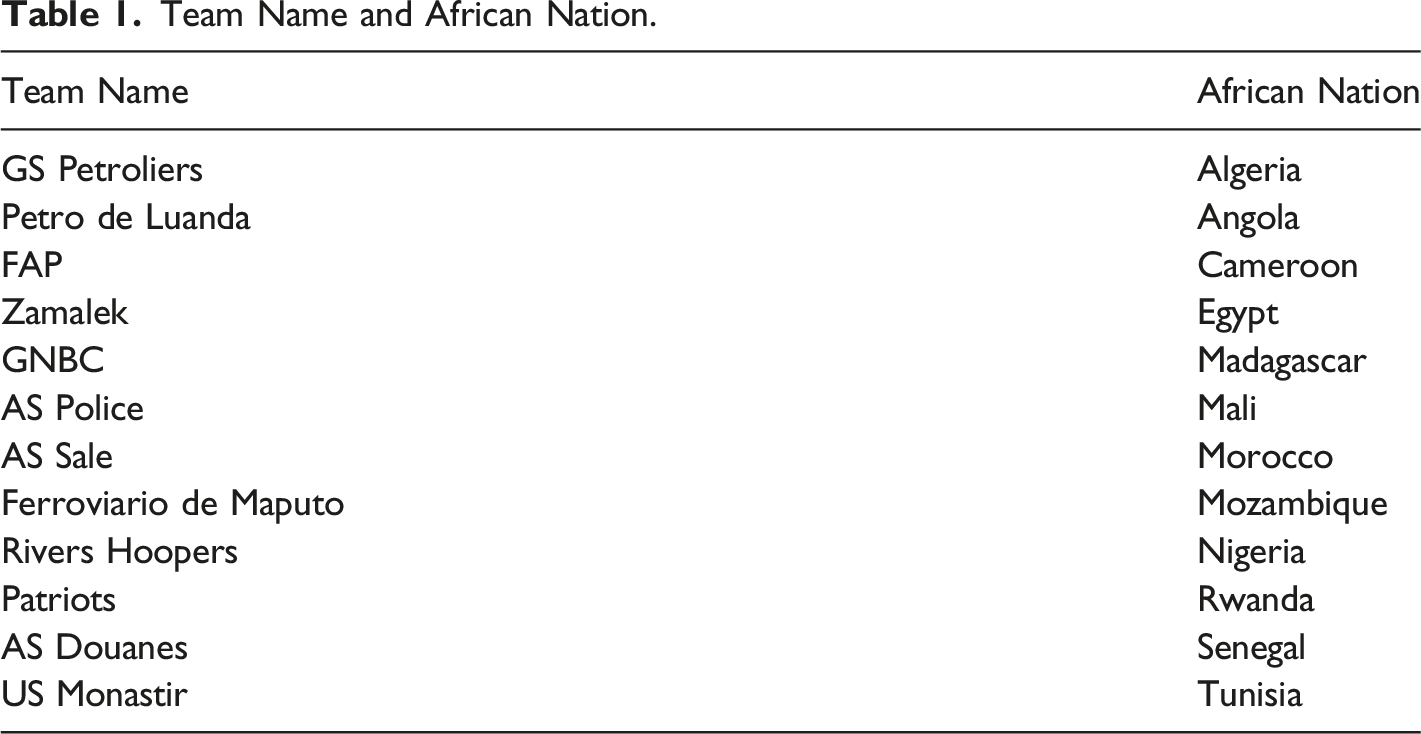
Games not viewed on livestream due to conflicts with time-zone differences were watched via archiving on thebal.com or ESPN+. To the knowledge of the authors, these two feeds represented the only English-language broadcasts available. During the coding process, ESPN+ and thebal.com removed the archived links to games, and therefore, four games from the group stage and two from the knockout stage were not available for coding. This reduced the sample to 20 (N = 20) games (14 group stage, six knockout stage) and 36 hours of game time, representing 69% of total broadcast commentary; however, all teams participating were still represented in analysis.
Coding was divided between two trained coders familiarized with content analysis with each coder viewing 9 games (18 hours of game time). Analysis was guided by the development of a coding protocol and codebook that was modified from previous research (Billlings & Eastman, 2003; Billings et al., 2008). Variables from the codebook included coder ID, game date, game round, team country (based on the official team roster), player name, African country of player, player nationality (based on nationality listed on the roster), descriptor, time stamp for descriptor, sentiment of descriptor (i.e., positive, negative, neutral), and name of analyst for descriptor.
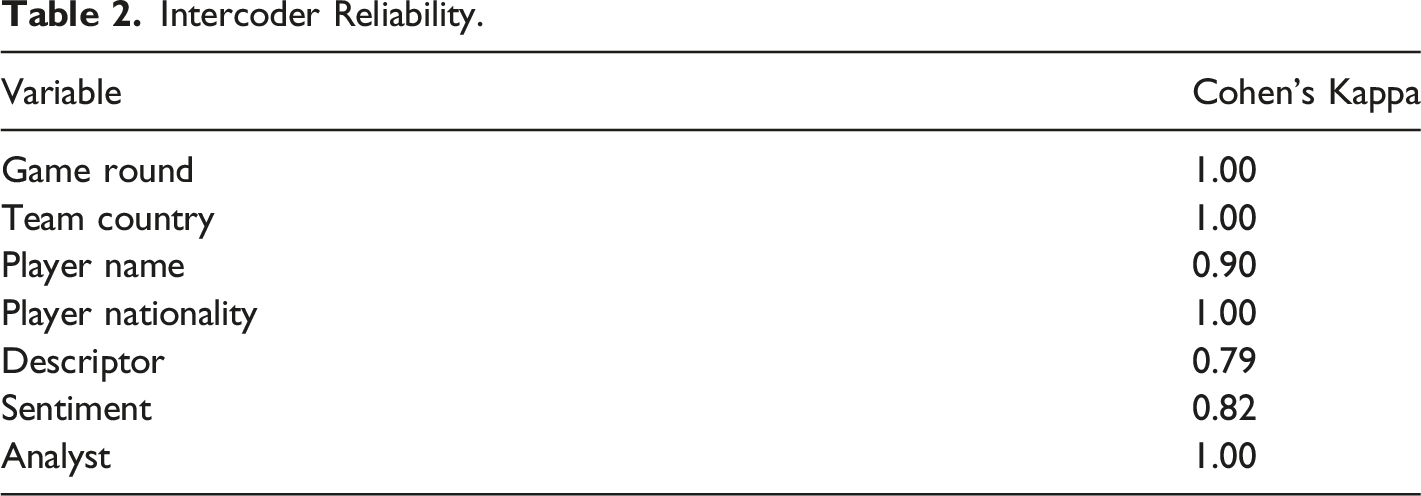
Intercoder Reliability.
Statistical Analysis
Following coding, numeric counts for descriptors were calculated and placed in tables to facilitate analysis of chi-squares, which would determine differences between observed and expected frequencies. To determine differences related to analysts’ background, descriptors for Lance Blanks and Robbie Nock (i.e., USA and UK) were combined to represent the Global North, while descriptors for Usher Komugisha and Quintin Denyssen (i.e., Uganda and South Africa) were combined to represent the Global South. Differences examining players from African and non-African nations were examined by combining the descriptors for athletes from the 20 African nations and comparing to the combined descriptors for players from the 4 non-African nations. The expected frequencies were calculated by taking the row total multiplied by column total, and then dividing by overall table total for each subcategory of attributions of successes and failures (e.g., concentration, strength) or personality and physicality (e.g., outgoing, emotional) aligning with the chi-square test of independence (McHugh, 2013).
Results
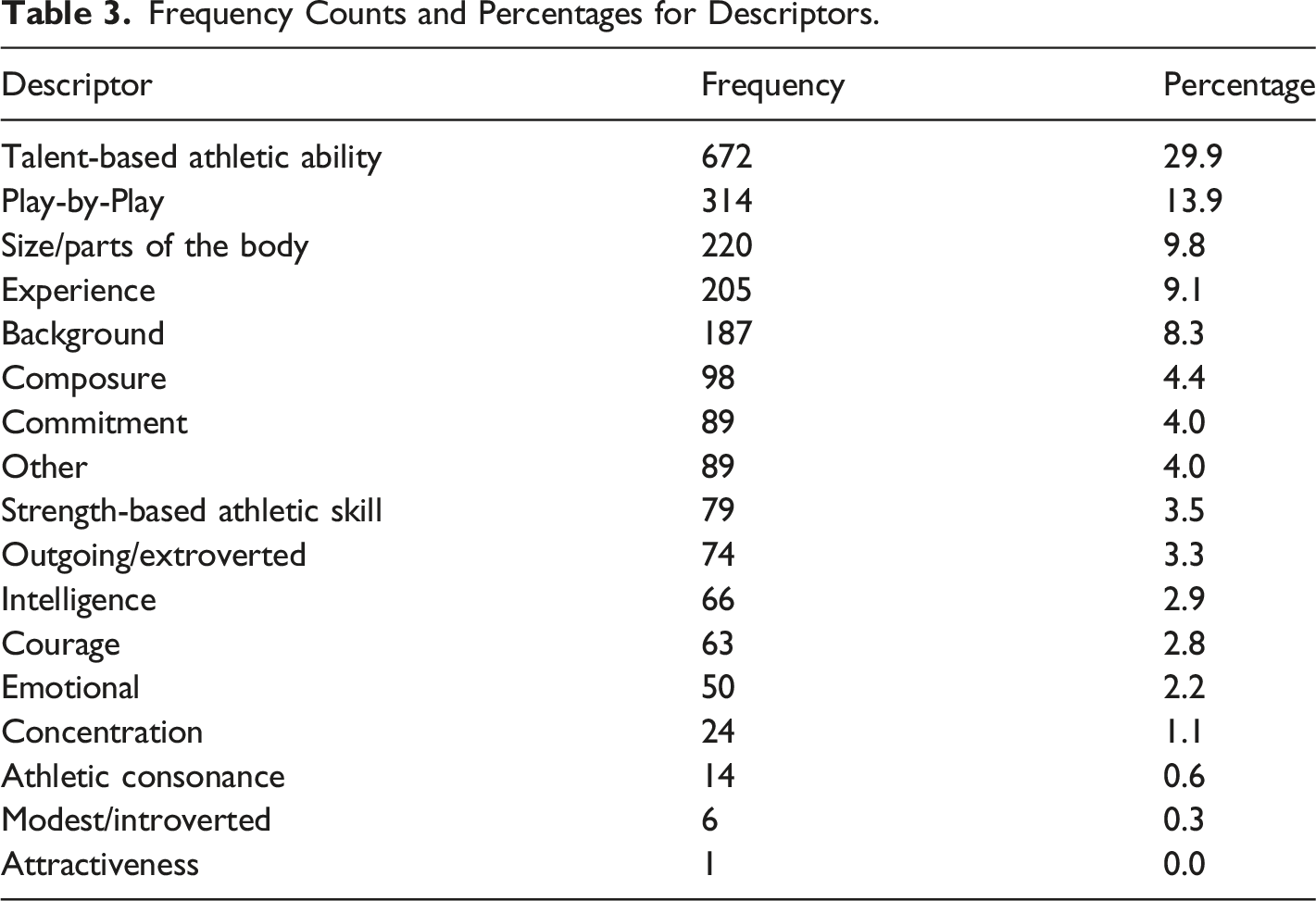
Frequency Counts and Percentages for Descriptors.
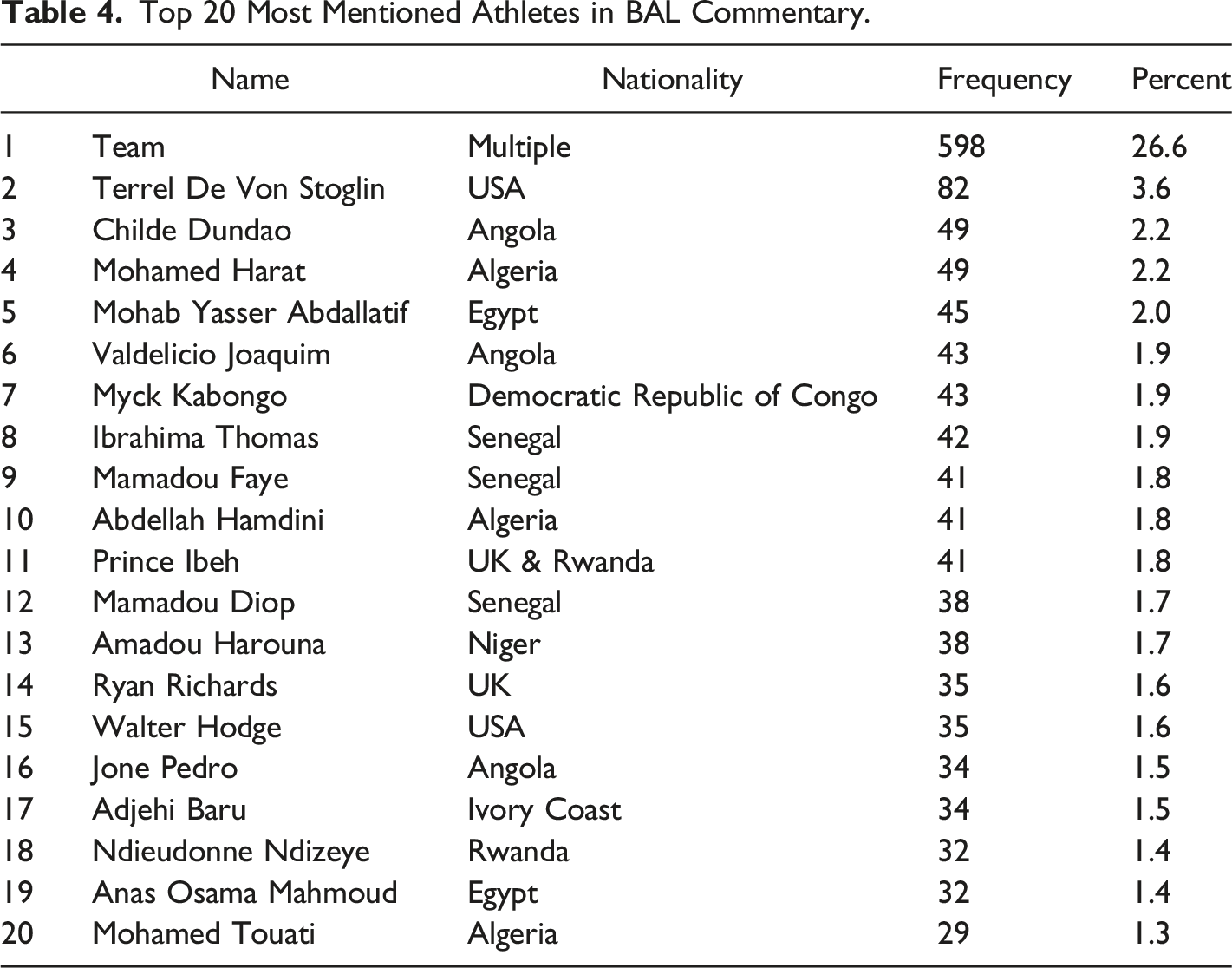
Top 20 Most Mentioned Athletes in BAL Commentary.
Descriptive Analysis of Athlete Performance by Nationality.
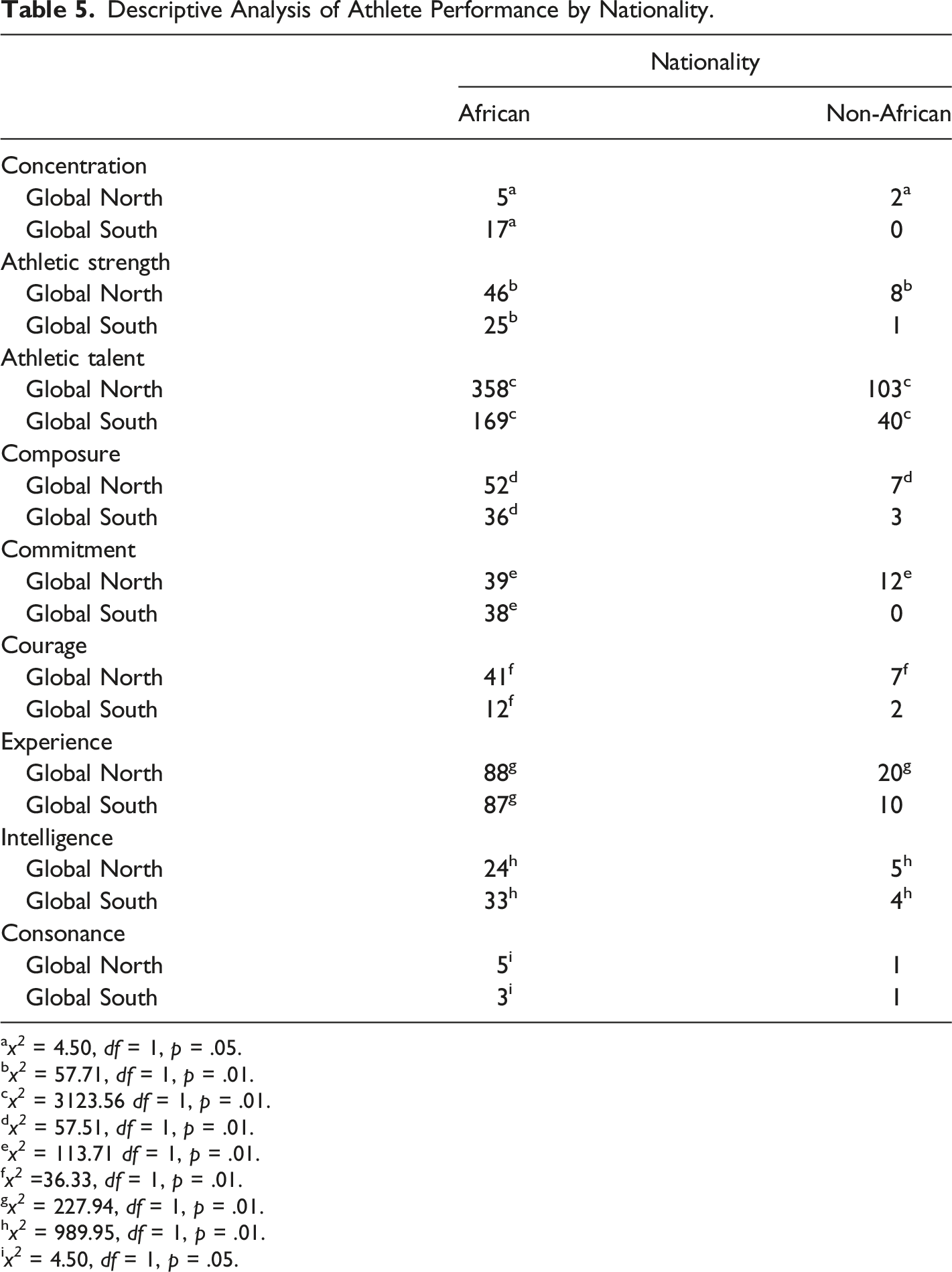
ax 2 = 4.50, df = 1, p = .05.
bx 2 = 57.71, df = 1, p = .01.
cx 2 = 3123.56 df = 1, p = .01.
dx 2 = 57.51, df = 1, p = .01.
ex 2 = 113.71 df = 1, p = .01.
fx 2 =36.33, df = 1, p = .01.
gx 2 = 227.94, df = 1, p = .01.
hx 2 = 989.95, df = 1, p = .01.
ix 2 = 4.50, df = 1, p = .05.
Descriptive Analysis of Personality and Physicality by Nationality.
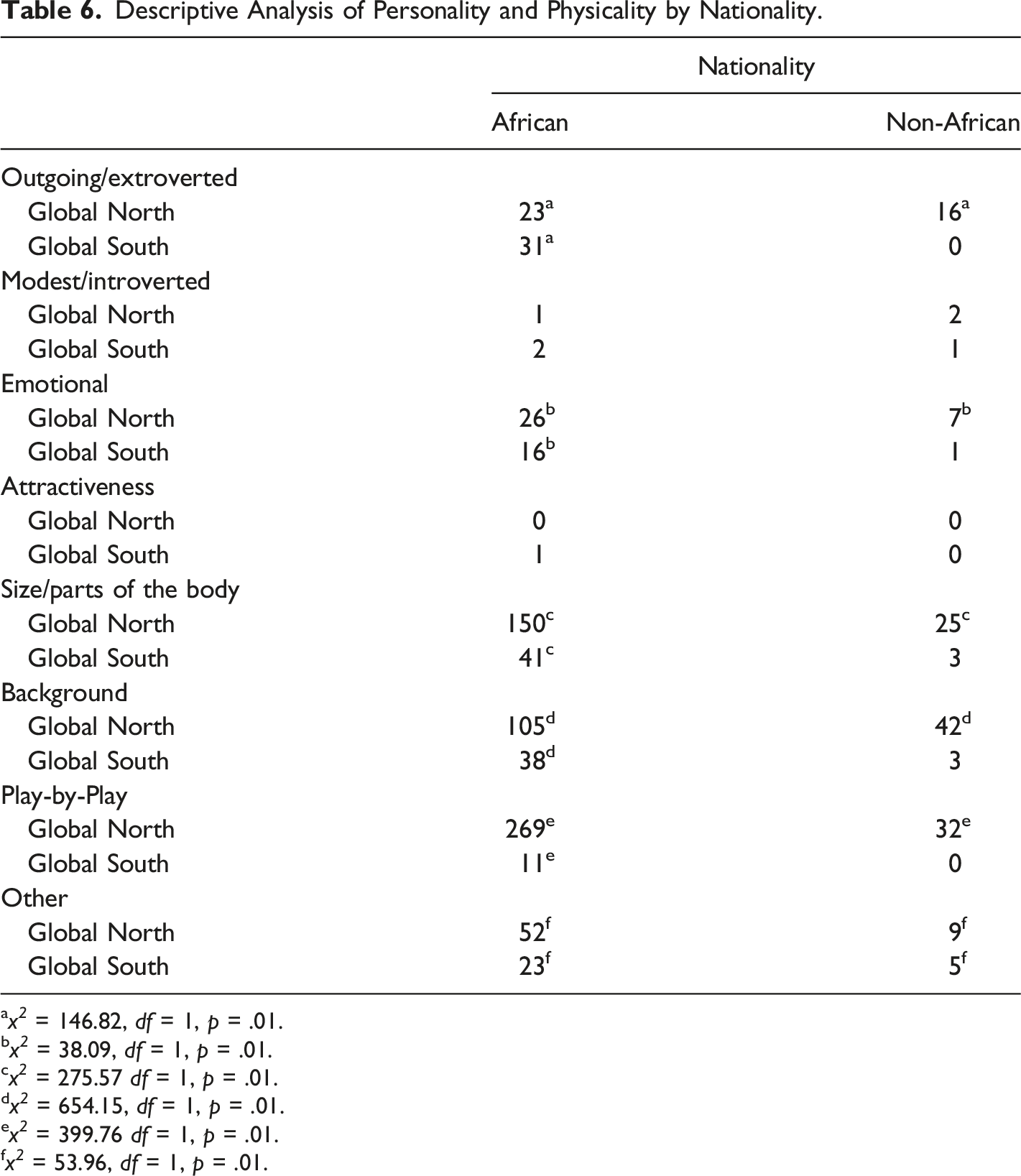
ax 2 = 146.82, df = 1, p = .01.
bx 2 = 38.09, df = 1, p = .01.
cx 2 = 275.57 df = 1, p = .01.
dx 2 = 654.15, df = 1, p = .01.
ex 2 = 399.76 df = 1, p = .01.
fx 2 = 53.96, df = 1, p = .01.
Descriptive Analysis of Athletic Performance by African Country.
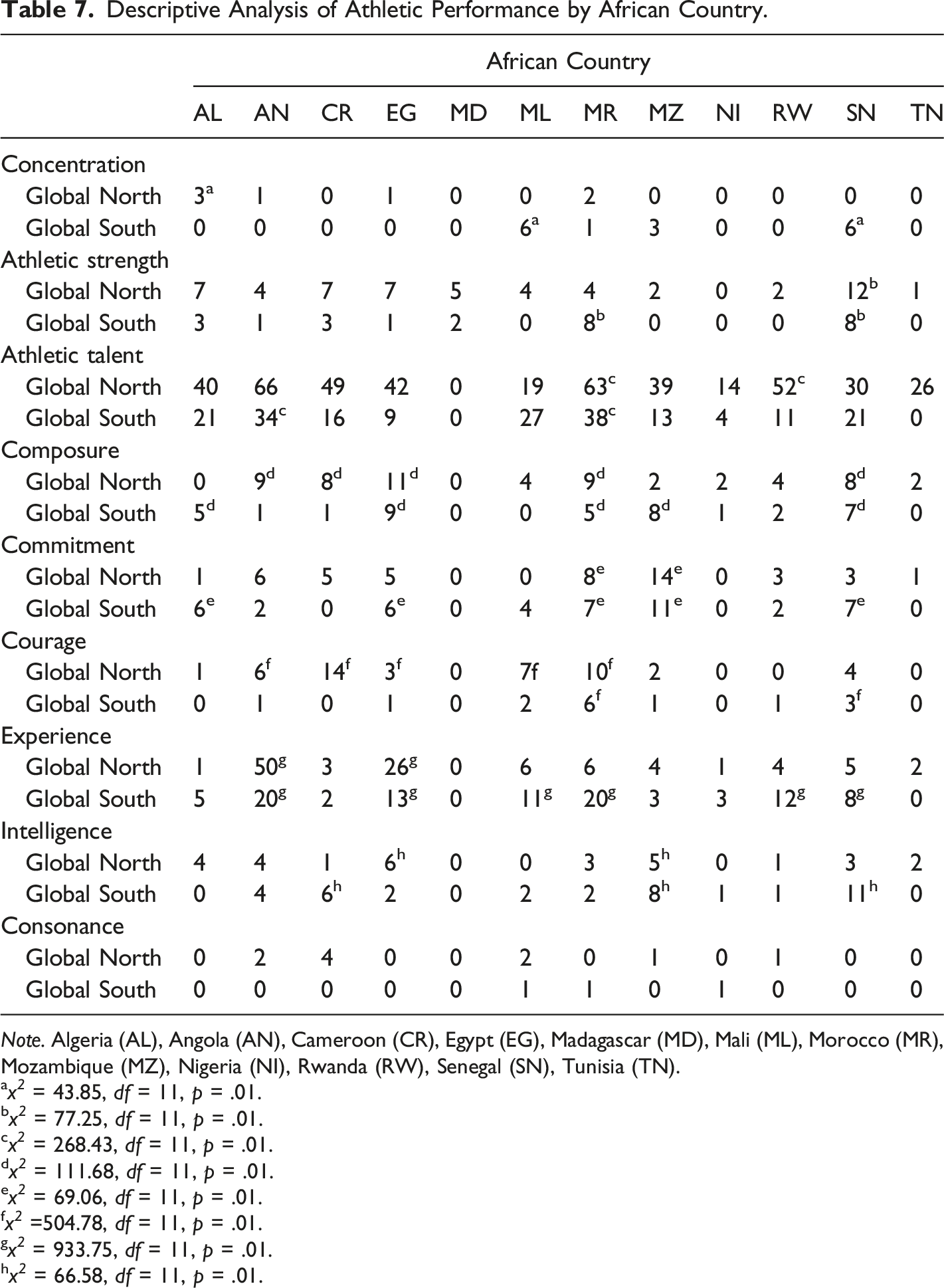
Note. Algeria (AL), Angola (AN), Cameroon (CR), Egypt (EG), Madagascar (MD), Mali (ML), Morocco (MR), Mozambique (MZ), Nigeria (NI), Rwanda (RW), Senegal (SN), Tunisia (TN).
ax 2 = 43.85, df = 11, p = .01.
bx 2 = 77.25, df = 11, p = .01.
cx 2 = 268.43, df = 11, p = .01.
dx 2 = 111.68, df = 11, p = .01.
ex 2 = 69.06, df = 11, p = .01.
fx 2 =504.78, df = 11, p = .01.
gx 2 = 933.75, df = 11, p = .01.
hx 2 = 66.58, df = 11, p = .01.
Descriptive Analysis of Personality and Physicality by African Country.
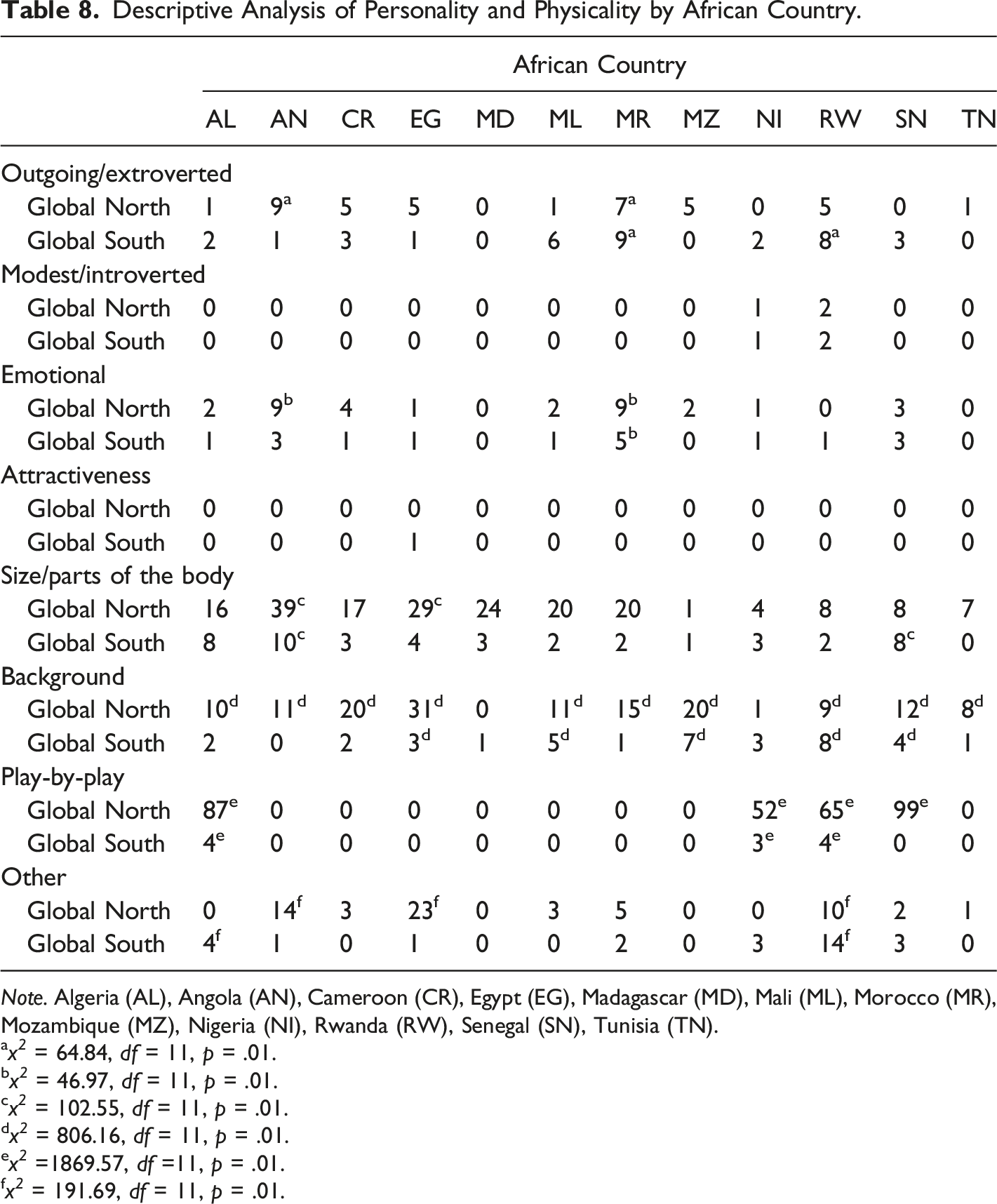
Note. Algeria (AL), Angola (AN), Cameroon (CR), Egypt (EG), Madagascar (MD), Mali (ML), Morocco (MR), Mozambique (MZ), Nigeria (NI), Rwanda (RW), Senegal (SN), Tunisia (TN).
ax 2 = 64.84, df = 11, p = .01.
bx 2 = 46.97, df = 11, p = .01.
cx 2 = 102.55, df = 11, p = .01.
dx 2 = 806.16, df = 11, p = .01.
ex 2 =1869.57, df =11, p = .01.
fx 2 = 191.69, df = 11, p = .01.
Discussion
In its inaugural season, the BAL faced the usual challenges affecting a startup league, in addition to a pandemic-related postponement. With players from multiple nations both within and outside Africa, the BAL presented an opportunity for continued expansion of basketball, an NBA plan for decades. The current examination of the broadcast commentary for the league revealed many factors which can affect viewer perceptions, and also the possibilities for future examination.
Scholars have examined the role of sport on the African continent in terms of nation building (Knott et al., 2013; Steenveld & Strelitz, 1998), displaying positive representations for a country (Dubin, 2011) and developing relationships with the world community (Banjo, 2011). Previous literature pertaining to the 2010 World Cup in South Africa found that Africa the continent was sometimes framed by western media outlets as a singular entity, rather than highlighting the different cultures among its various nations (Berger, 2010; Chuma, 2012; Dubin, 2011; Knott et al., 2013). Previous research has highlighted media biases in coverage of athletes produced by western media sources such as NBC (Angelini et al., 2017; Billings, 2008; Billings et al., 2014). Although the BAL was broadcast by both western (i.e., ESPN+ and Canal+) and eastern media sources (i.e., beIN, Tencent Video), the hiring of broadcast talent was controlled by the NBA and media partner ESPN (The Big Tip Off, 2021). Thus, it is pertinent to examine if known western media biases or postcolonial influences persist in commentary of an event that is designed to highlight diversity and development in sport. The aim of this paper is to investigate the narrative surrounding the BAL through a postcolonial perspective, specifically, how the media frame players from different nationalities as well African countries to determine how media from the Global North talk about athletes from the Global South and if western media biases found in previous research exist in coverage.
Although the BAL is an African league with more than 85% of the players holding citizenship from an African country, the most mentioned athlete within the sample was an American. Considering the fact that only three total players within the top 20 were not citizens of an African nation, this is consistent with the total demographic makeup of the league. Previous research found that sport institutions within African countries and perceptions of African sport have been shaped by colonial powers and developed nations (Chappell, 2008; Cornelissen, 2004). However, there did not appear to be postcolonial, or western influences on the commentary related to descriptions of individual athletes.
Notably in the context of a U.S.-born player leading the league in scoring, research has found that utilizing the limited foreign player roster spots on stars from overseas can bring positive attention even while growing a league and promoting domestic athletes (Parrish, 2013). It is also notable that similarly to rules for newer soccer leagues including the U.S.’ MLS and Australia’s A-League, the BAL had rules in place which ensured roster places for African players. Developing a strong domestic league which by rules provides opportunities for local players has been shown to potentially bolster the international sporting reputation of a country as those players compete for national team places (Rockerbie, 2019). In addition, increased globalization of sport in the form of new domestic leagues and game broadcasts opens new potential markets for fandom and resulting financial gain for sport. Still, care must be taken to ensure that local players—and the backbone of a country’s national team—are not pushed to the margins in favor of overseas players (Connell, 2018).
African athletes from Angola, Algeria, Egypt, and Senegal were mentioned with frequency even though the core broadcasting company in this study was U.S.-based, suggesting commentary was equitable in distribution. This is contrary to previous research, which examined Olympic broadcasts and found that media outlets were more likely to focus on athletes from their specific country (Angelini et al., 2017; Billings et al., 2014; Scott et al., 2019). One possible reason for this is that because the broadcast was livestreamed online, and included both western (i.e., ESPN+, Canal+) and eastern media outlets (i.e., beIN Sports, Tencent Video), it was intended to communicate the league to a more global audience. Notably, Olympic prime-time broadcasts choose which sports and athletes on whom to focus, with these decisions often based on national success and interest (Angelini et al., 2017). This was not the case with BAL games, as all of the games were presented in their entirety. Therefore, it is possible that athlete mentions were driven by other, more sporting-related variables including playing time, points scored, and the number of games played, rather than nationality or predetermined broadcasting decisions based on perceived audience interests (Angelini et al., 2017). American and former University of Maryland star De Von Stoglin was the most mentioned athlete in the dataset, but he also averaged the most points during the BAL tournament with 30.1 per game (RealGM, 2021). Therefore, it is likely that his scoring ability and playing time were factors which caused him to achieve the highest number of mentions, rather than his nationality.
Previous research on athlete-related broadcast commentary found an effect in descriptions between individual athletes from differing backgrounds. For instance, African American athletes were more likely to be characterized as strong and physical compared to White athletes, who were more likely to be described as intelligent and hard-working (Eastman & Billings, 2001; Rada & Wulfemeyer, 2005). While this study did not examine racial distinctions, the authors did investigate the association between nationality and descriptors, and found that athletes of certain nationalities were more likely to be characterized in certain ways. For descriptors related to strength, there were regional trends as two of the three nationalities which were more likely to be characterized as strong or powerful (i.e., Algeria, Egypt) were from the region of North Africa. Related to intelligence, there were not any noticeable regional trends, as the results included a wide geographic distribution of athletes including players from six different nationalities (i.e., Angola, Cameroon, Egypt, Mozambique, Senegal, and United States). Both Egyptian and Senegalese athletes were likely to be characterized as intelligent and strong. Similar to previous research (Eastman & Billings, 2001; Rada & Wulfemeyer, 2005), a link was found between players who were characterized as intelligent, and players who were described as hardworking. Four nationalities (i.e., Egypt, Mozambique, Senegal, and the United States) were significantly more likely to be described as hardworking or committed, and were also characterized as intelligent. Describing American BAL athletes as committed or hard-working fits with previous research on American Olympians, whose success was often attributed to commitment (Billings et al., 2014).
Similar to previous research (Angelini et al., 2012, 2017; Billings et al., 2014; Scott et al., 2019)., the most common descriptor used by the commentators pertained to individuals’ athletic talent. Six nationalities were more likely to be described in this way, including Algeria, Angola, Egypt, Rwanda, Senegal, and the United States. As with the number of mentions, while American athletes were among the most likely to be described as talented, they were joined by African nations from all regions of the continent. This suggests that there is no postcolonial bias related to the perceptions of talent of African athletes. The significant difference discovered related to talent descriptors is more likely to be related to team or individual success in the tournament. Notably, teams from Angola, Egypt and Rwanda finished in the top four in the tournament, as Egypt’s Zamalek won the BAL and Zamalek’s Egyptian center Anas Mahmoud—who played collegiately at Louisville—was named the league’s top defensive player. Players from the United States also achieved individual success, with De Von Stoglin leading the league in scoring and former Florida point guard Walter Hodge named the BAL’s Most Valuable Player (NBA, 2021). While the media commentary did not allude to a postcolonial bias in the presentation of the BAL, the fact that the scoring champion and MVP were both American does point to a possible gap in sport development between African and non-African athletes.
Players from Angola, Egypt, Morocco, Rwanda, Senegal, and the United States were significantly more likely to be described as experienced. The announcers discussed players’ national team involvement, previous play in regional or world championships, and NCAA participation. One reason experience is a common descriptor is that it is easy for a commentator to research, as common and expected aspect of an athlete’s official biography (Billings et al., 2014; Scott et al., 2019). Although many players in the BAL also play for their national teams, three of the nationalities which were more likely to be described as experienced, Angola, Egypt, and Senegal, all have had recent success at Afrobasket tournaments. Senegal earned the bronze medal in 2013 and 2017, Egypt finished second in 2013, and Angola won the tournament in 2007, 2009, and 2013 (FIBA, 2021). American players were not described as experienced due to national team participation, but rather in terms of their NCAA play. This included Hodge who won two NCAA championships at the University of Florida (Goldkamp, 2021).
Significant differences were also found related to personality and physicality. Athlete background, which described where the individual athletes were from, was among the top five descriptors found in the study. Similar to experience, background is an easily researched aspect of a player’s biography (Billings et al., 2014; Scott et al., 2019). Players from Algeria, Nigeria, Rwanda, Senegal, Cotê d’Ivoire, and the United States were significantly more likely to be described related to their respective backgrounds. The significant differences can be attributed to the structure of BAL rosters. Teams consisted of 13 members, with a minimum of nine required to be citizens of the teams’ respective countries, with two of the remaining four from other African countries and the final two could be from outside of Africa (Basketball Africa League, 2021). American and Ivorian players did not have respective teams in the tournament. Therefore, they were often indicated as being unique members of their team. This differed from many of their teammates, who did not need their background identified because they hailed from the same country as their team. While Nigeria and Senegal were represented by teams in the tournament, players of Nigerian and Senegalese nationality were also on other teams. This explains why they were also significantly more likely to have their backgrounds discussed by commentators.
Limitations and Future Directions
As with any study, this research is not without limitations. For instance, the researchers were using the nationalities officially recognized by FIBA and the BAL for the purposes of the tournament, and did not take into account players with dual citizenship. For instance, Ater Majok was born in Sudan, but also holds Australian and Lebanese citizenship.
Also, differences in name pronunciations—and possible mispronunciations—by the broadcasters in the study could affect the dataset. A similar potential for misattribution of data may have occurred when the broadcasters referred to players by their nicknames. In terms of the broadcasts themselves, the online presentation of the games did mean a slightly lesser production value in terms of cameras and replays compared to a traditional television broadcast.
Related to commentary, the authors of this research only examined how the commentators discussed individual athletes and did not examine how the commentary framed the continent of Africa or its diverse populations. Future research should examine the framing of African countries themselves through sports contexts and determine if findings are in line with previous work related to news media (Golan, 2008; Nothias, 2018).
One possible approach for future research would be to discuss the specific impact in the BAL of the rules regarding player origins and roster limits. While the Bosman ruling famously opened European soccer to eliminating international player limits, such restrictions still exist in other soccer leagues, as in the BAL (Duru, 2009). Additional potential future directions for study begin with examining the second season of the BAL. As witnessed in long-established sports leagues’ consistent re-examinations of their own rules, all sports collectives remain a work in progress. Considering how the overall presentation of the BAL in broadcasts and in online presence might have changed, as well as any rules differences, would provide further insights as the young league continues to develop. This includes a future re-examination of the commentary, as broadcasters might be more open to making critical remarks and providing deeper analysis than they would have in the inaugural season of a fledgling league, when promotion is paramount. In addition, comparing the BAL’s online broadcasts directly to basketball leagues in other countries would be instructive in terms of revealing similarities and differences in the various approaches. Finally, applying similar methodology to an examination of broadcast commentary in professional sports leagues with a notable number of international players (e.g., NBA, Premier League, Major League Baseball, La Liga) would display whether the use of descriptors varies, and how much the in-game broadcaster conversation might have changed over the years.
Footnotes
Declaration of Conflicting Interests
The author(s) declared no potential conflicts of interest with respect to the research, authorship, and/or publication of this article.
Funding
The author(s) received no financial support for the research, authorship, and/or publication of this article.
