




Abstract
Transition-age adults with disabilities largely desire the same community employment and community participation outcomes as young adults without disabilities. One common barrier to the manifestation of these desires is the lack of reliable and accessible transportation in their communities. This study used the participatory action research method of photovoice to investigate the experiences of college students with intellectual and developmental disabilities (IDDs) accessing various transportation options within their community. Utilizing a critical constructivist theoretical framework, researchers worked with participants to co-construct situated knowledge. The overall aim of this study was to contribute to the extant literature on transportation barriers and facilitators for this population and to give emerging adults enrolled in an inclusive postsecondary education program an opportunity to share their lived experiences and raise critical consciousness related to their transportation experiences. Limitations and implications for future research, and practice are included.
Keywords
While transition-age youth with disabilities largely desire the same postschool outcomes as their peers without disabilities (e.g., competitive, integrated, and meaningful employment [Migliore et al., 2007; Voermans et al., 2021] and community inclusion and participation [Hall, 2017; Schalock et al., 2005]), historically the barriers to community integration have been substantial. Federal legislation such as the Americans with Disabilities Act of 1990 (ADA), the Supreme Court’s 1999 Olmstead decision, and the Individuals with Disabilities Education Improvement Act (IDEIA, 2004) are intended to ensure that youth and young adults with disabilities have optimal opportunities to achieve improved postschool outcomes, however many challenges remain. One commonly cited barrier to the manifestation of better outcomes for youth with disabilities is the lack of reliable and accessible transportation in their communities (Kessler Foundation, 2015; Lindsay, 2020; Smith et al., 2023). Reliable and accessible transportation is important for nearly all aspects of living independently and successfully engaging within the community. For example, access to healthy food and other goods is dependent on transportation. People also need transportation to access services related to health care and recreation, employment, education as well as opportunities to interact with friends and family.
Furthermore, transportation and opportunities for transport are key determinants of health for people with disabilities (Sitter & Mitchell, 2020; The World Bank, 2023). Involvement in social and civic activities outside of the home contributes to the overall well-being and quality of life for adults with disabilities (Biggs & Carter, 2016). This type of community involvement—activities like athletics, arts-based activities, volunteer experiences, and employment activities—facilitates friendship development and provides a context for social connections with peers, yet barriers to this type of community activity involvement can limit participation. Social exclusion for adults with disabilities can have a detrimental effect on health (Mackett & Thoreau, 2015). Without reliable and accessible transportation options, people with disabilities may lack access to physical and social activities, health care, employment, and education. Increasing transportation access has been identified as a primary way to improve independence and self-determination for adults with disabilities (Bascom & Christensen, 2017; Christensen & Byrne, 2014). In fact, a recent study of transportation-related barriers to health care found that of adults ages 18 to 64 years who did not get needed health care in the past 12 months because of difficulty finding transportation, 17.0% of them had a disability (Smith et al., 2023). This was the largest demographic of participants in the study forgoing medical care due to transportation barriers. In addition, 19.0% of adults who reported skipping or missing a scheduled health care appointment due to lack of transportation had a disability (Smith et al., 2023).
In addition to social and health-related aspects of community involvement, transportation is vital for educational and employment-related participation. In 2019, young adults with disabilities in the United States entered postsecondary education at a rate of 27.3%, whereas young adults without disabilities attended college at a rate of 43.4% (Cheng & Shaewitz, 2022). With the uptick in young adults with disabilities attending inclusive postsecondary education (IPSE) programs across the country in the past decade (Grigal et al., 2021), accessible transportation options are becoming a critical support need. In addition, young adults with disabilities are employed nationally at a rate of 27.1%, significantly less than the 43.1% of peers without disabilities (Cheng & Shaewitz, 2022). According to the Kessler Foundation 2015 National Employment and Disability Survey, 68.4% of Americans with disabilities are striving to work. Twenty-six percent of those report a lack of transportation as a barrier to employment.
Barriers to Reliable, Accessible Transportation
While transportation options vary drastically from city to city and are highly dependent on the region of the country and specific transit systems available, many people with disabilities are reliant on forms of public transportation (bus, train, or paratransit); rideshare options; and/or options like privately owned cars of friends or family. Research consistently shows that attainment of a driver’s license and access to a vehicle enhances employment outcomes and expands access to community opportunities (Randall et al., 2021), but disability, in particular youth with intellectual and developmental disabilities (IDDs), keeps some individualsfrom driving (Chihuri et al., 2016). Learning to drive is often more difficult for individuals with IDDs than peers without disabilities due to challenges such as memory and reading limitations (Brooks et al., 2014).
Other barriers to transportation for people with disabilities include cost of accessing transportation (Wolfe et al., 2020), availability of transportion (Bezyak et al., 2020), psychological barriers, physical barriers, and informational barriers (Mackett & Thoreau, 2015; Tessier et al., 2024). Historically, young adults with disabilities have higher rates of poverty than those without disabilities (Cheng & Shaewitz, 2022), so paying for transportation options can be more burdensome. Barriers to the availability of transportation are often dependent upon the region of the country, with rural areas having less available and accessible transportation options for people with disabilities (Bezyak et al., 2020). Psychological barriers can include fear or stigma around using public transportation (Mackett & Thoreau, 2015; Tessier et al., 2024). Physical barriers to accessing transportation can be dependent on disability type, with the barriers being multiple for people using mobility devices such as wheelchairs or scooters as well as people who are blind. Other physical barriers affecting people with many types of disabilities can include steps, steep slopes, or uneven pavement (Mackett & Thoreau, 2015). In addition, a lack of awareness of how to effectively use a mode of transportation, such as how to purchase a ticket for a paratransit service or how to schedule a ride, is an example of an informational barrier that a person with a disability may encounter. An informational barrier can also be that a user is not aware of the transportation options and resources available to them.
The purpose of this participatory action study is to better understand the lived experiences related to transportation for youth with IDDs enrolled in an IPSE program on a college campus. Inclusive postsecondary education programs were developed as a result of the Higher Education Opportunity Act of 2008 and allow students diagnosed with IDDs who do not meet the requirements to enter college through the general admission process to participate in a collegiate experience. As of 2024, there are more than 320 IPSE programs at a variety of higher education institutions spread across the United States, and this number continues to grow (Think College, 2024). Because of the relatively recent increase in the number of IPSE programs coupled with the fact that little is known about this population’s particular transportation experiences, understanding the experiences of the students enrolled in these programs is crucial to increasing success postgraduation;this includes access to transportation. We aimed to investigate the barriers and opportunities afforded this population related to transportation of all types as they explain them through photos and accompanying narratives. The photovoice method offers a unique first-person insight into the lives of a population and provides opportunity to a group often marginalized by society to become co-researchers and contribute to the knowledge base regarding their experiences (Ciolan & Manasia, 2017; Wang & Burris, 1997). The overall aim of this study was to give these young adults an opportunity to share their lived experiences and raise critical consciousness as well as to contribute to the extant literature related to the experiences of people with IDDs as they navigate transportation. This study was guided by two research questions:
Method
Researcher Positionality
Our research team included two current IPSE employees and one university faculty member. Rebecca and Hannah each had existing relationships with the study participants via their involvement with the IPSE. All three identified as White and nondisabled. Two identified as cisgendered females and one identified as a cisgendered male. We shared history of working with and advocating for youth and young adults with disabilities. In an attempt to uncover the ways in which members of a group that has been historically marginalized understand and experience their reality within a power-laden society, we undertook this study using a lens of critical constructivism (Friere, 1970; Kincheloe, 2005).
With our research team’s inherent identity-based privilege in society, we actively worked to recognize the ways in which we could dismantle the marginalizing structures inherent in traditional ways of doing research and instead deferred to our participants as the experts in their own lives and experiences. Drawing upon Walmsley (2004) to address our roles as nondisabled researchers in inclusive research, we positioned ourselves as simultaneous facilitators and learners and sought to provide our students with opportunities to drive the research process.
Participants and Setting
The participants in this study were students who attended an IPSE program at a large, public research university in the southeastern region of the United States. Prior to engagement in research activities, all participants were read and then signed an informed consent. This IPSE program admits students based on a several factors: diagnosis of an IDD, a completed high school education, independence in basic care tasks such as administration of medications and personal hygiene, and a personal desire to attend college. Students attending the IPSE program have a relatively high level of independence as the program is residential, and students are expected to be able to live safely in a typical college residence hall as well as safely navigate the college campus. The program’s philosophy is founded on inclusion, individualization, and collaboration across university systems, based on each student’s interests and identified support needs. All students have the same opportunities as typical college students, including access to college-level coursework at an audit status, on-campus nonsegregated living within university residence halls, and access to all university-sponsored clubs and organizations. Participants in this study were recruited through their individualized career development activities. Specifically, their IPSE instructor or coach introduced the study in all four employment courses and asked if they would be interested in participating. Based on each participant’s program of study, they had expectations of travel on and off campus for employment, social events, or community engagement/independent living tasks. The program emphasizes learning about and utilizing transportation to get to and from work as part of career development activities. The breakdown of participants by age, level in college, gender, and race can be seen in Table 1.
Demographics of the IPSE Program Student Participants.

The university enrolled more than 25,000 students in 2023 and is embedded in a medium-sized city with a population of around 135,000 people. Given the size of the university and the city, there are transportation options such as a public transit bus, paratransit, and rideshare options. In addition, the university operates a shuttle contracted through the public transit system for students to use in and around campus. All student participants in this study could access these transportation options based on their university program enrollment status.
Photovoice and Study Procedures
We employed photovoice, a participatory action research (PAR) method, to investigate students’ experiences accessing various transportation options within their campus and surrounding urban community. Utilizing a critical constructivist theoretical framework, we worked with participants to co-construct situated knowledge (Haraway, 1988) and provide participants an opportunity to share their experiences and expertise with their community. Photovoice is a process by which participants can identify and enhance their community and personal situation through a specific photography technique. The method entrusts cameras to people to act as recorders and potential catalysts for change in their own lives and communities (Wang & Burris, 1997).
“Photovoice is particularly suited to participants who may have limited formal education, people with cognitive issues or disabilities, or those who might struggle to participate in other types of research reliant on reading or writing” (Milne & Muir, 2020, p. 6). The photovoice method “recognizes that such people [those with socially stigmatized health conditions or those who do not read or write] often have an expertise and insight into their own communities and worlds that professionals and outsiders lack” (Wang & Burris, 1997, p. 370). The method employs tenets of critical and feminist theories and in so doing recognizes participants as “co-researchers” (Macdonald et al., 2023).
Participants in the study were instructed to take a minimum of 15 photos responding to prompts posed related to their experience with transportation. For the purposes of this study, “transportation” could include car, city bus, university shuttle, Uber, Lyft, bicycle, or any other mode used that gets a student from point A to point B. Examples of prompts included the following: Take photos of your experience in using transportation to get to work; Take photos of your experience in using transportation to get to a social event (university event, club event, a party, excursion with friends, etc); and Take photos of your experience in using transportation to get to a grocery store or other stores like Target or Walmart. See Supplemental File 1 for the Transportation Photovoice Participant Prompts.
After participants took their photos, they were instructed to email five photos to the lead researcher (first author). The lead researcher compiled photos into a slideshow presentation and invited participants to a group meeting to discuss the photos. To accommodate all participant schedules, researchers facilitated two separate group photo discussion sessions, each lasting approximately 90 min. During group meetings, each participant was given an opportunity to discuss their photos and answer questions facilitated by the researchers related to their transportation experiences. See Supplemental File 2 for the Group Photo Discussion Protocol. All group discussions were recorded and transcribed using Otter.ai.
Data Analysis
Our research team used the SHOWeD method for group photo discussion and analysis. The SHOWeD method (Milne & Muir, 2020; Payne et al., 2016) includes group analysis using the following questions: “What do you See here? What is really Happening here? How does this relate to Our lives? Why does this situation, concern, or strength exist? What can we Do about it?” Researchers led participants through these questions as they shared their individual photos with the group. In addition to the photographs themselves, data were collected through semi-structured photo discussion groups (akin to focus groups) through which participants were asked to explain their ideas and thoughts about the photos they shared. The focus groups were facilitated by the lead researchers and the data were recorded and transcribed using Otter.ai.
Using reflexive thematic analysis (Braun & Clarke, 2022), the lead researchers subsequently coded the photo discussion transcript data both across and within focus groups. Each researcher individually coded the transcripts first; then, we came together and collaboratively coded the data to enhance understanding and interpretation (Braun & Clarke, 2022). Iterative stages of open coding, axial coding, and then selective coding were employed to develop codes, categories, and ultimately themes (Strauss & Corbin, 1998).
The coding team created a coding framework from the initial codes and then through discussion and comparison, created categories from the individually created raw codes. We did this by physically combining all like codes into categories and talking through collapsing into categories. The nine categories we created from codes included the following: (a) walking; (b) negative emotions/worry/anxiety related to transportation; (c) safety related to transportation; (d) family, friends, and coaches as support; (e) campus shuttle; (f) city bus; (g) environmental/physical accessibility; (h) rideshare options; and (i) scooter inconvenience. In an effort to “give the developing analysis some distance,” as Braun and Clarke (2022, p. 8) suggest as a way to enhance the quality of thematic development, our team took a break from the analysis process after we created categories. A few days later, we reconvened to examine our categories with fresh eyes to develop our overall themes. The four themes are discussed in the next section, and to enhance validity, member checks with all participants were completed via one-on-one discussions to ensure they understood and agreed with the themes.
Findings
Photo analysis using the SHOWeD method with participants and subsequent thematic analysis of the transportation-related photo discussion transcripts among the lead researchers resulted in nine categories that were ultimately collapsed into four major themes related to participant experiences with transportation. Those themes include (a) interdependence, (b) negative emotions related to transportation, (c) accessibility versus inaccessibility, and (d) transportation options.
Interdependence
The most salient theme we uncovered in the participants’ descriptions of their photos was the idea that students often embarked upon transportation, no matter the type, with others. The students described traveling with others for many different reasons, sometimes out of necessity and sometimes due to preference or other reasons. Grace describes a combination of safety and utility when telling why she chooses to travel with others in and around campus: “. . . we hold hands so we don’t end up getting disconnected. And [we] always have charged phones!” She goes on to say “I think I would just prefer to go with someone because I don’t really know, like, how to get to a lot of off-campus places.”
Students described traveling with peers and friends but also utilizing IPSE staff and family for rides or assistance when using public transportation options. Because none of our 10 study participants had their driver’s license, many described riding in others’ personal vehicles. When asked about her preferred mode of transport, Betty stated that someone driving her in a car was most preferred (see Figure 1).
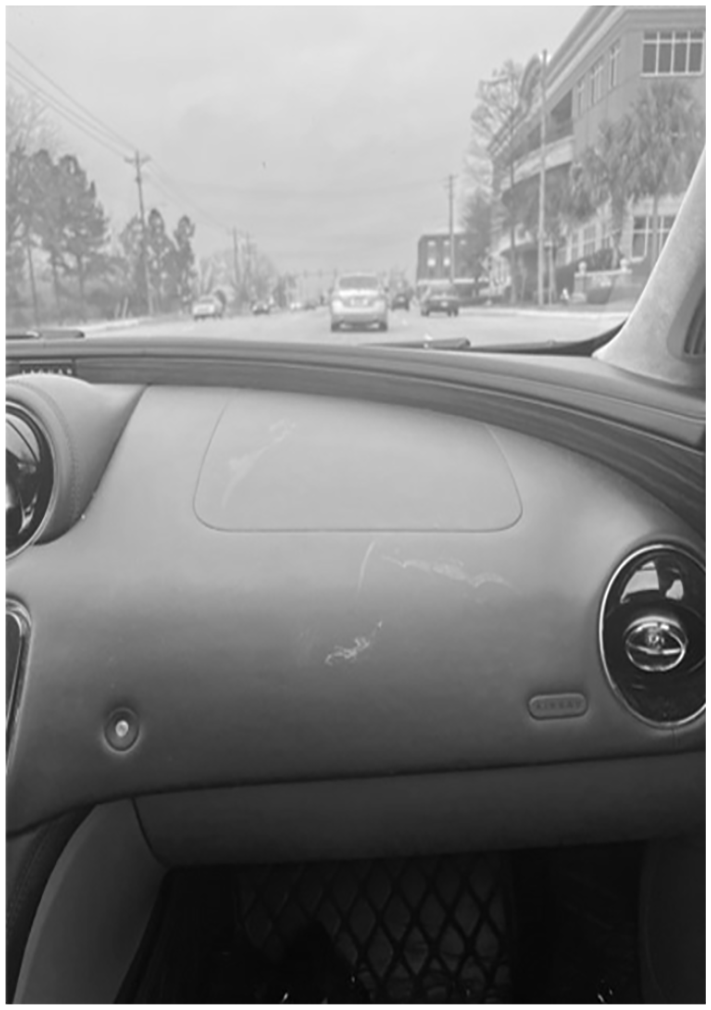
Betty’s View From the Passenger Seat.
A common sentiment among participants was that riding in a friend or family member’s personal vehicle is much preferred to other options, for ease of access to the mode of transportation as well as comfortability. When asked how she preferred to get places off campus, Grace stated, “Well, if I don’t want to take the shuttle, I would ask like, a staff, or small-group leader.”
While interdependence was mostly seen as a positive aspect of accessing transportation options for participants, Alana shared that the fact that she has almost no other option but to depend on others was frustrating. When asked how she feels about having to rely on others to take apart her scooter when riding in a personal vehicle or to help her open a door that may not have a button for automatic opening, Alana said, “That kind of makes me mad, but I’m, like, okay with that.” She talked openly about the myriad of barriers she faces to getting around both on and off campus using a motorized scooter (see Figure 2).
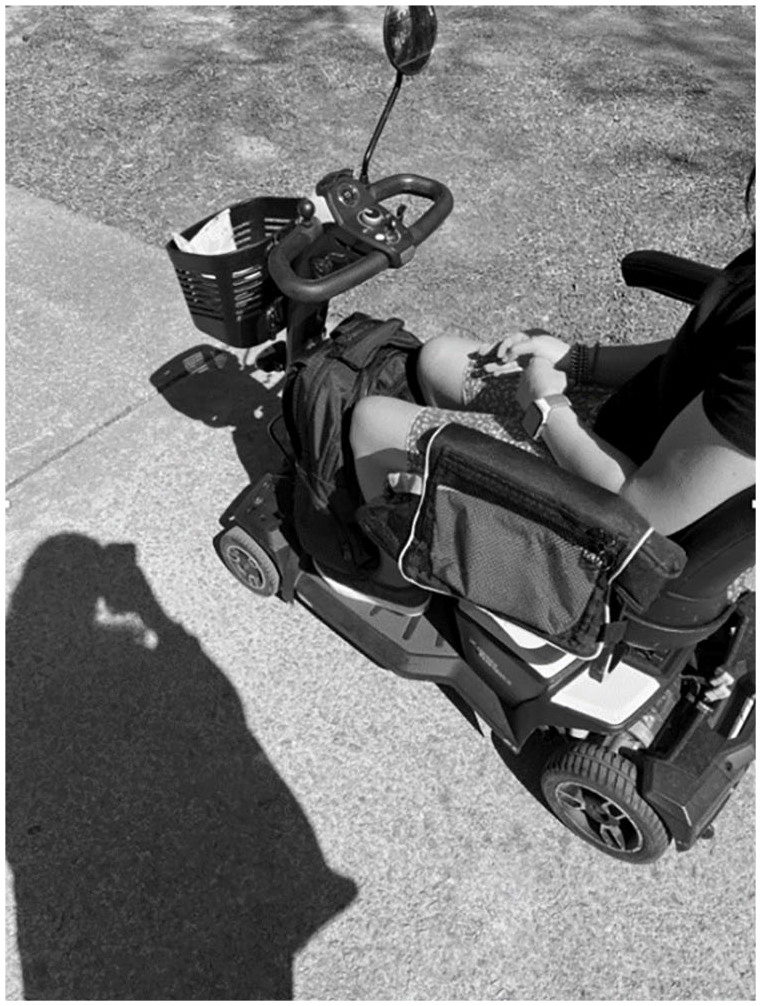
Alana’s Motorized Scooter.
Another participant, Jared, shared that while it was much easier to get a ride with a family member, he often did not prefer it. When asked why he preferred the campus shuttle or walking instead of a car ride with family, he stated, “They always pick me up, but sometimes they would say I had to go home and just spend some time with them, spend a night . . . I always want to go back on campus.” Because Jared’s family lives locally, he expressed frustration that they would pressure him to go home with them instead of back to his dorm after taking him to an event, so valuing his independence, he would opt for the shuttle or walking.
Many students exhibited a form of self-advocacy through their interdependence by utilizing natural supports when they needed help. For example, Betty took a photo of the city bus map located at a bus stop (see Figure 3) but expressed that she was unsure how to read the map. When probed about how she knew which bus to take, she stated, “I ask someone to show me . . . ‘cause I don’t know how to read that. And I asked them how to read them and they helped me read.”
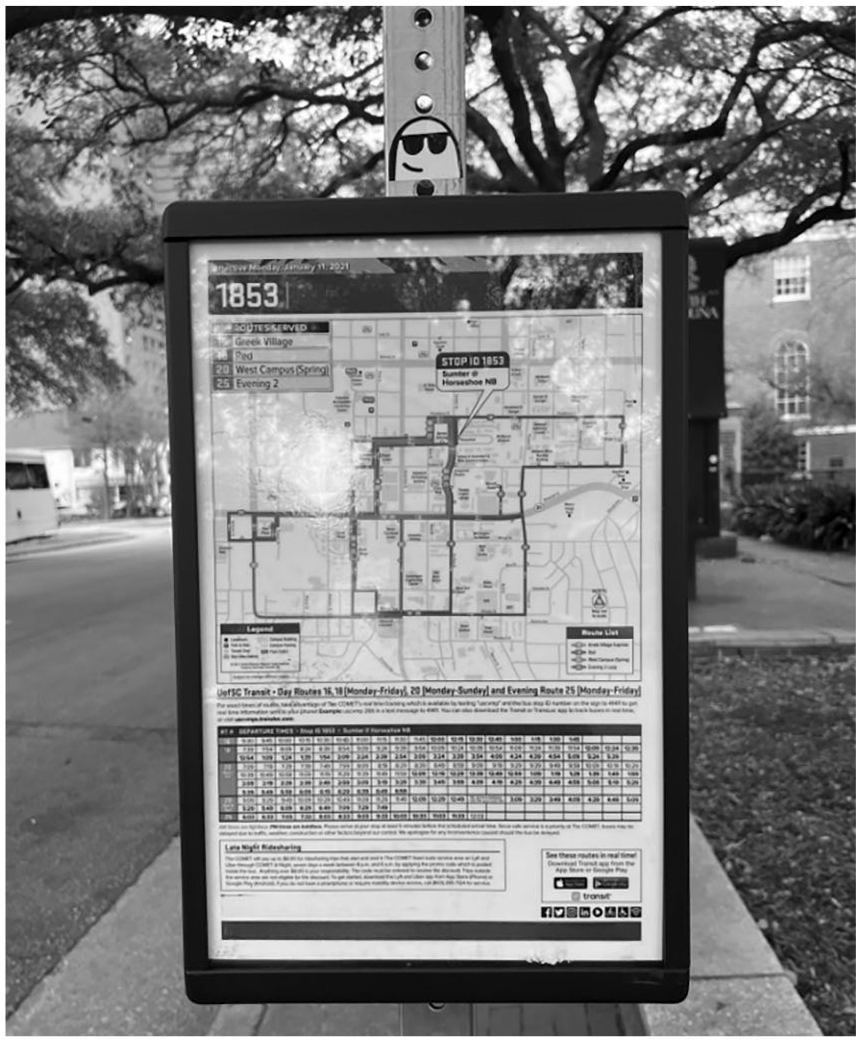
City Bus Map.
Negative Emotions Related to Transportation
The majority of the negative emotions participants expressed relating to accessing or using transportation were anxiety or fear. Fear of the unknown, such as how to access the city bus or how to navigate to a specific place without getting lost, was a common sentiment. Fiona relayed that she had never used the city bus independently “because I feel like I might get lost or might not know where I am going.” Grace agreed that using the city bus could be difficult for her. She shared a photo of the cell phone application used to track and access the city bus, but stated that “the app can be confusing.” Fiona shared a photo of the yellow cord to pull when requesting a stop on the bus and explained that while she does understand its use now, she was at one time intimidated to use the city bus (see Figure 4). “The yellow- I didn’t know you pulled the yellow thing to make it stop . . . They [the bus driver] just asked ‘Where’s your stop at?’ and it stopped for you.”
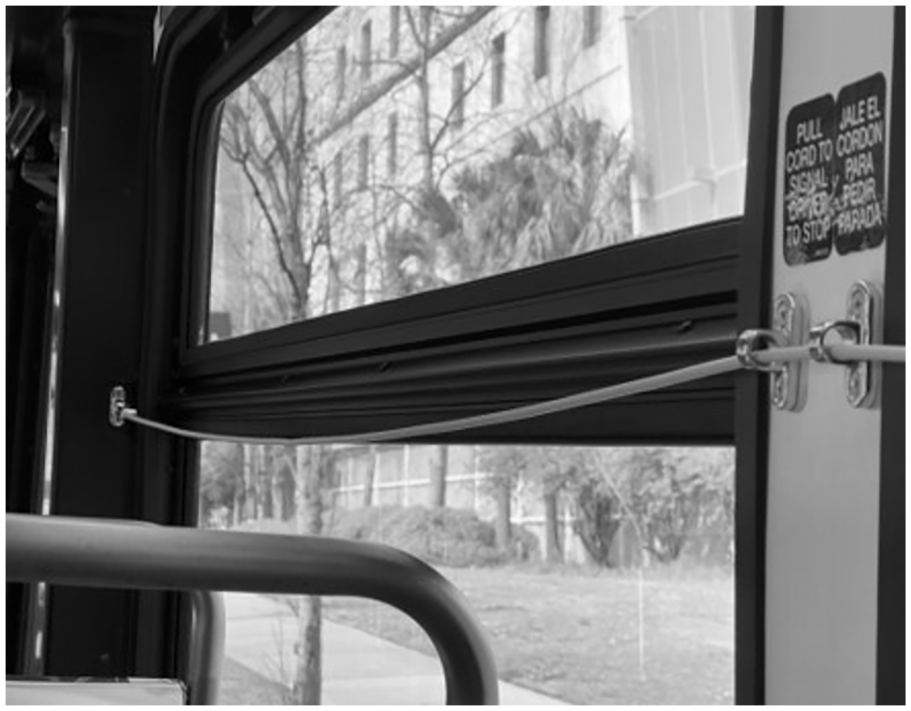
City Bus Stop-Request Cord.
Some participants’ stress related to using the city bus for transport went beyond a lack of understanding of how to access or use it. Harold shared that time management related to using the bus was a source of anxiety for him: “Management time on the bus is like, I want to be early for the bus, but you don’t want to be too early and you do not want to be too late.” He went on to describe his anxiety related to the possibility of missing the bus and the possible ramifications of that. When probed about what he thought may happen if he missed the bus to work, he responded, “You will be, maybe, you’re going to get fired? Or maybe you’re gonna be in trouble.”
Betty describes a time she rode the bus to campus for class and the driver stopped to take a break en route. “We had to wait for like five or ten minutes . . . just sit there, and I guess they take breaks or something like that. And it was so stressful because I’d be like, ‘Let’s go.’” Betty’s stress and frustration was palpable as she described feeling fearful that she would be late to class due to the bus driver’s break. Waiting for a bus to arrive was another cause for a negative emotion for Fiona: “Cause we had to wait outside. So I had to wait for the bus for a long time. I got aggravated.”
Accessibility Versus Inaccessibility
Categories included under this theme were environmental and physical barriers as well as informational barriers. As well, specific aspects of the physical environment that could either aid or deter accessibility were included as a subcategory. These physical features included stairs, ramps, elevators, wheelchair lifts, accessible crosswalk features, and automatic door open buttons. All study participants described at least one aspect of the environment or at least one facet of their transportation experience that was a barrier to their easily getting from point A to point B.
An example of informational inaccessibility came to light when Alana showed a photo of the campus shuttle and expressed that this shuttle was not an option for her to use because of her motorized scooter. Betty interjected to say “The campus shuttle does have a lift.” Alana was under the impression that she could not access the shuttle due to it not having a lift for her scooter, when in fact it does have a lift.
The city bus transit app was mentioned more than once as an inaccessible aspect of bus ridership. Carl, who described his most used mode of transportation as walking, described the transit app: “The lines and they’re color-coded. And when you like, zoom in, there’s like different color routes, and then you try to go to one specific place . . . It’s like a maze.” Carl shared a photo of him walking from the student union, where he eats most of his meals while on campus, back to his dorm (see Figure 5). He indicated that he enjoys “roaming the campus instead of just sittin’ in my room.”
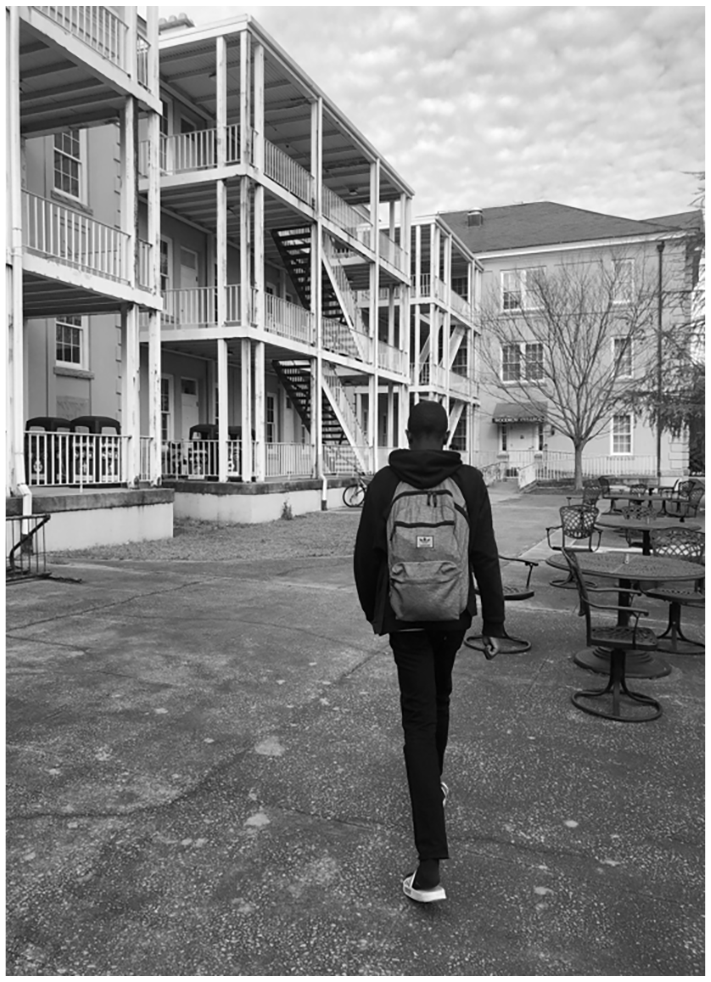
Carl Walking to His Residence Hall.
Several campus features determined accessibility or inaccessibility for Alana, the participant who uses a motorized scooter. She shared photos of stairs and old elevators, as well as door handles that require physical maneuvers inaccessible to her like in Figure 6. Alana described certain elevators on campus that were large and easily accessed, as well as others, “Like the one here in this building. It’s pretty cramped. And it’s pretty old.” In reality, one of the elevators located in the building where we were conducting the group photo discussion was so small that Alana’s scooter could not even fit inside it. “Yeah, and the scooter cannot go up or down the stairs. I have to use the elevator. It makes it difficult because I have to figure that out every day.”
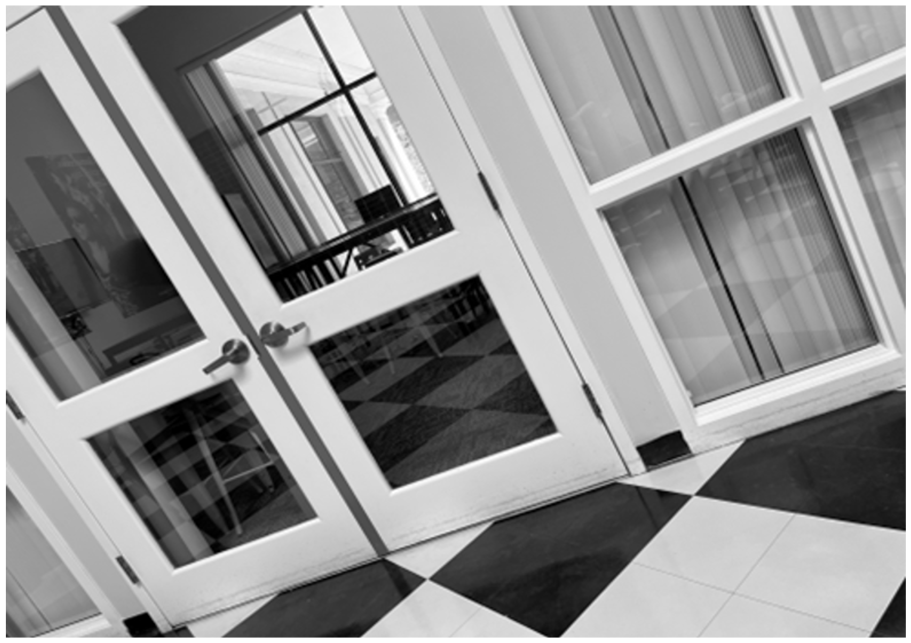
Inaccessible Door Handles.
Alana expressed that she always had to be aware of a building’s accessibility: the type of door handles it has, whether it has steps or ramps at entrance, the presence and size of elevators, and the condition of the sidewalks on her path. Any of these things could be a potential barrier to her getting where she needs to be. When asked if she wished there were easier ways for her to get around, Alana answered “I really do.”
Accessing Varied Transportation Options
The final theme discovered in the data was the idea that participants understood they had multiple options and modes for transportation while on campus. Some modes are more accessible than others, and some were better understood, to be sure, but multiple modes were identified and discussed during the group photo discussion. Eliza and Betty both identified the campus shuttle as a transportation mode that they had used: “It’s a [university name redacted] transit bus that we can use to go to the grocery store, to class every day, or to a sporting event.” Other participants acknowledged the existence of the campus shuttle but admitted they did not understand the routes or how to access this shuttle.
Two participants, Harold and Betty, described utilizing rideshare apps like Uber and Lyft, and Harold relayed the option as easy to use: “I downloaded Uber. It is simple.” See Figure 7 for Betty’s photo of her experience using Lyft to get a ride to campus on a day when she had missed the city bus and was fearful she would be late to class if she waited for another bus.
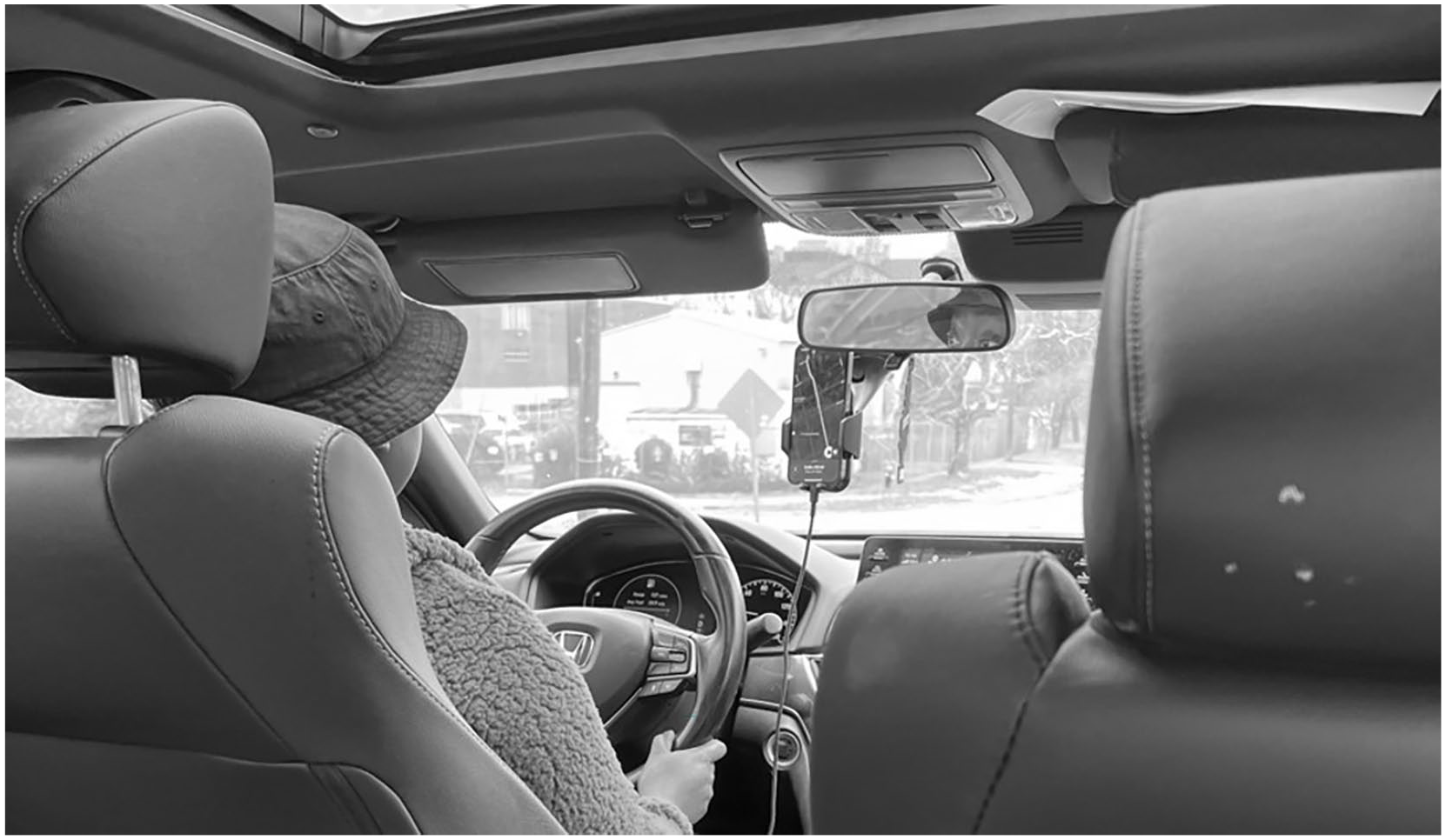
Betty’s Lyft.
Nearly all participants described walking as a primary mode of transportation while on campus, while also acknowledging that there are places that are too far to walk. Jacob shared “The easiest way if, whenever there’s a basketball game, I can still walk to the arena, but sometimes if it’s off-campus, I can still take the shuttle or whatever.” Carl and Diane both described walking as their primary and preferred mode of transportation. Diane shared a photo of herself coming down stairs and gripping a handrail (see Figure 8). She shared that she has “trouble with visual-spatial things,” related to her disability, so a handrail makes stairs easier for her to navigate. Grace, like many participants, shared that while walking is an option, she prefers to ride in a car. “I would choose like, getting into the car instead of walking all over the place.” No participants in the study took photos of or discussed the area paratransit option, although some participants are approved to use this mode of transportation.
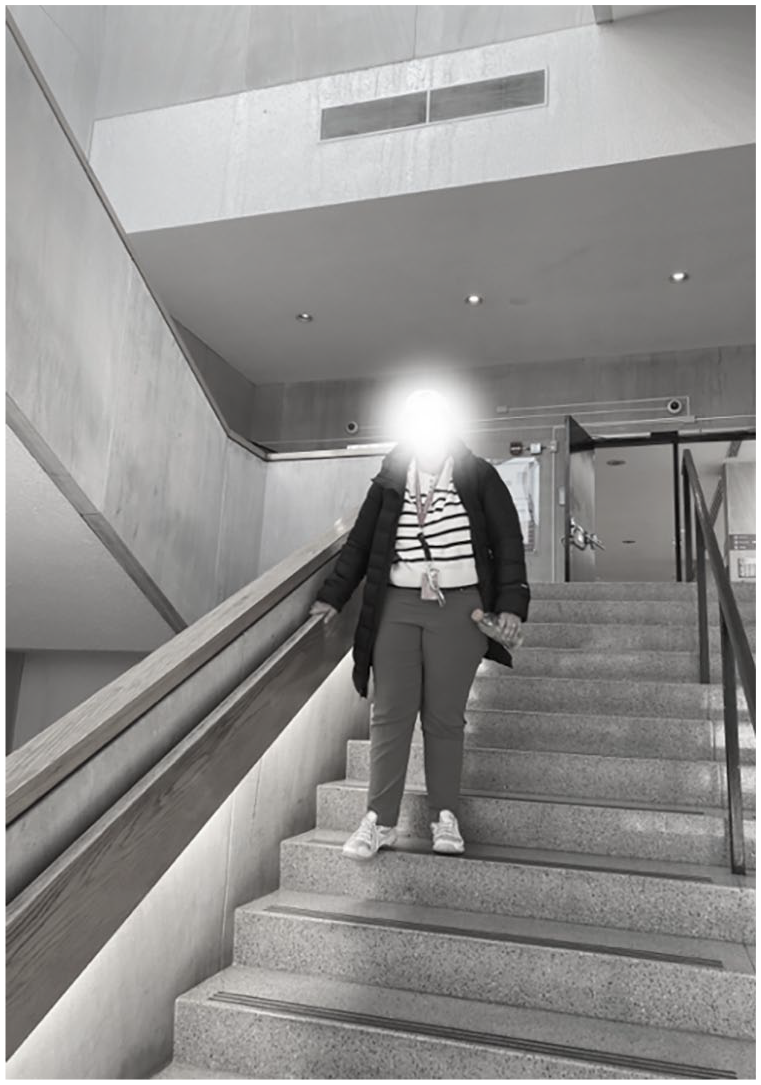
Diane Coming Down Stairs.
Discussion
Many of the photos and associated narratives shared in this study corroborate the transportation experiences of young adults with IDDs in the extant literature. One example of this is the fact that none of our study participants has a valid driver’s license. Because of challenges inherent to the disability, adults with IDDs often obtain driver’s licenses at lower rates than adults without IDDs (Brooks et al., 2014; Randall et al., 2021). Due to this fact, people with IDDs must often rely on other modes of transportation, and often this translates into relying on other people for travel as well. While a ride with a family member or friend was an often discussed option for our participants, reliance on other systems such as a bus or rideshare were integral to their experiences.
While some of our participants described preferring a ride with a friend or family member over any other mode of transportation, aside from comfortability and ease of access, the fact that these modes of transport do not cost money is high on the list of reasons why. The inherent ableism embedded in society and resulting systems that provide transportation for people in our society have made access to reliable, safe, and affordable transportation options for people with disability difficult to attain. Lubitow and colleagues (2017) argue that “transit-dependent-riders efforts to maneuver within the public transit system are circumscribed by an institutional and infrastructural system that is designed for able-bodied and financially stable commuters, rather than for a multiplicity of dependent riders” (Lubitow et al., 2017, p. 925). We found this to be true in our study.
Of the participants who shared photos and described experiences using the bus, all of them shared at least one story of frustration, confusion, or misinformation. Alana was not aware that the campus shuttle bus was accessible for her motorized scooter; (it is). Betty expressed frustration with the long wait times between buses as well as her difficulty in reading the posted bus route maps, and Grace described her inability to effectively utilize the city bus transit smartphone application. While the implications for improvement of the public transit systems are myriad and likely nuanced to each individual system, a main takeaway from our participants’ experiences is that all information and applications should be created with the end-user in mind. The best way to ensure that a vehicle, map, or technological application will be accessible to all users is to involve all types of users in their development. Developers of public transit information and technologies should include people with a variety of disabilities in their development, thereby ensuring accessibility to individuals with disabilities. As well, information regarding public transit options should be shared in ways accessible to all.
This is echoed in Levine and Karner’s (2023) review of the academic literature related to transportation planning and disability through which they found shortcomings in transportation planning that subsequently hinders access for people with disabilities in four major areas: (a) compliance-based agendas, (b) data gaps, (c) access to opportunity analyses, and (d) emphasis on mobility disability. The first three of these areas are all a consequence of planners not seeking out or listening to the voices of disabled people relaying their lived experiences with transportation or considering their experiences when planning. Area number four refers to planners’ tendency to only consider people using wheelchairs or other mobility aids as the disabled folks they should plan for, as opposed to those who may have disabilities that “may affect wayfinding and navigation” (Levine & Karner, 2023, p. 69). This study as well as others using inclusive and participatory research methods would go far in addressing these shortcomings. In addition, a more inclusive view of the types of disabilities included when accessibility is considered is imperative.
Several study participants, regardless of whether they themselves were affected by a physical disability or not, made observations related to the physical inaccessibility of our university’s campus as it relates to transportation and ease of navigation. It is certainly supported in the literature that our nation’s institutes of higher education (IHEs) are largely not accessible to people with disabilities (Dolmage, 2017; Field, 2023). While the ADA was passed just over 30 years ago (1990), the law’s promise of full inclusion and access for people with disabilities in higher education spaces has yet to be fully realized. The physical aspects of this failure have much to do with the fact that the spaces were not initially created with people with disabilities in mind. While the number of students with disabilities on college campuses is on the rise (Snyder et al., 2019), in part due to the increase in IPSE programs nationwide, IHEs must heed the call to make their spaces accessible for all and continue to renovate and reinvent not only physical environments but also the informational environments.
Limitations and Future Direction for Research
While the voices of the young adults with IDDs were centered through our participatory action study and their experiences highlighted, one limitation of our study is that our participants are likely more independent than other transition-age young adults with IDDs who are not enrolled in an IPSE. This fact indicates that the transportation experiences of other emerging adults with IDDs who do not have the privilege of attending an IPSE may very well be more dire and they may have access to many fewer transportation options. As well, young adults attending IPSE likely have access to more resources and education than young adults who do not attend a similar postsecondary education program. Another limitation of our study is related to the current state of the action-oriented aspect of our participatory action research study. A key aspect of participatory action research methods includes informing local stakeholders about participant experiences in an effort to bring about positive change. Our research team plans to broaden the scope of this study to other IPSE programs nationally, as well, we hope to then provide all participants a platform to share their photos to an audience “wider than the academy” (Glesne, 2016, p. 246).
This study took place on a large university campus with ample resources for transit and within a city that offered public transit, paratransit, as well as ridesharing options. Not all universities or all cities or towns in the United States will have the same offerings. The transit offerings will vary in their accessibility across settings as well.
Among the participants in our study, the majority of them are multiply marginalized, with six of them identifying as females and seven of them identifying as people of color (African American or Asian). The compounded inequities at the intersections of disability, gender, and race are well documented (Forber-Pratt et al., 2020; Horner-Johnson, 2021; Parker, 2015). In particular, systemic barriers related to transportation disproportionately affect marginalized communities; for example, on average, 20% of African American households live without a personal vehicle (Faghri et al., 2022). While there were no explicit references to these other identities within our participants’ discussion of their photos, it is highly likely that their experiences were colored by intersectional marginalization.
Researchers interested in understanding the lived experiences and amplifying the voices of marginalized communities such as transition-age adults with IDDs should consider participatory action methods such as photovoice. When the power dynamic is dismantled and research is conducted with as opposed to on participants, we can take the first steps toward acknowledging ableism and addressing the inequities in societal structures such as transportation access. Future research to be conducted in this area includes investigating the transportation experiences of transition-age adults with IDDs attending IPSE in more rural areas as well as those not attending IPSE. Comparisons among transition-age adults living in differently populated regions of the country would provide interesting information related to the transportation experiences and needs of this population in specific settings. Researchers should also investigate the transportation experiences of career-bound and job-seeking or newly employed young adults with IDDs. The perceived barriers and facilitators to specific transit options such as public transit, paratransit, and ridesharing options should also be investigated more in-depth.
Implications for Transition Professionals
To address the findings in our study and engage transition professionals in delivering services and supports to best prepare transition-age youth and young adults to access transportation effectively, we have developed four recommendations. While the roles of transition professionals are myriad, we believe supporting emerging young adults with disabilities in understanding and accessing transportation should not be neglected in their provided planning and skill-building services and supports. The importance of transportation to the lives of independent, thriving young adults cannot be overstated.
Provide Direct and Hands-On Instruction Related to Public Transportation Options
Based on the findings related to the themes Negative Emotions Related to Transportation and Accessing Varied Transportation Options, we recommend students with IDDs be exposed to and educated about varied forms of transportation, not just in a classroom setting, but in the real world. It is recognized in the literature that using public transit may be difficult for individuals with IDDs due to trouble reading maps and understanding schedules or other transit information (Livingstone-Lee et al., 2014; Wasfi et al., 2017). The U.S. Department of Transportation has found that several groups of technologies (i.e., paratransit and ridesharing services) may help people navigate transportation, but people with disabilities use them less than people without disabilities (Brumbaugh, 2018). Half (n = 5) of the participants in our study indicated that they had no prior experience or instruction in using any public transportation options prior to coming to college.
Young adults with disabilities, especially IDDs, should be exposed to and educated about transportation options such as public transit and paratransit options early and often. As well, the accompanying technologies aimed at making public transportation and ridesharing options more accessible and easy to use should be directly taught to this population. A public school setting could be an optimal place for students to receive this education and training. Mazzotti and colleagues (2016) identified travel skills in their 2016 systematic review of the National Longitudinal Transition Study-2 literature related to predictors of postschool success for students with disabilities. The public transit system in the city where this study took place offers a travel training program in conjunction with the local center for independent living (CIL) aimed at educating people with disabilities in accessing and utilizing public transportation options. Travel training could be incorporated into the middle and high school curriculums for students with disabilities so that they are prepared to use these options as young adults. The five students in our study who did not learn to use public transit prior to college all indicated they thought it would be a good idea for students to learn those skills sooner. Parents of students with disabilities in Bross and colleagues’ (2023) study corroborated this desire for travel skills to be more comprehensively addressed during transition planning for young adults.
Include Students’ Families in Education Related to Public Transportation Options
In addition to better education related to public transit use for transition-age students with disabilities, we recommend a holistic family-centered educational approach. Research has shown that in addition to young adults not being fully aware of all transit options, family members may also not be fully aware, and accessibility is as much about access to information as it is physical access (National Aging and Disability Transportation Center, 2018). Education related to rideshare options, public transit options, and paratransit options (or whichever options are available to the particular students) should be shared with students and families during the transition planning process, and as early in a student’s transition planning as possible.
As essential members of a student’s transition team, parents or family members should be well-versed in all transit options as well as their student’s present levels in functionally accessing the options. Transportation-related goals, activities, and related services should be vital components to a comprehensive transition plan for career- or college-bound students. Nearly all aspects of adult life involve reliable and accessible transportation—employment, access to health care and food, and social and community participation—and research reflects that parents desire this for their child with IDDs (Bianco et al., 2009; Blustein et al., 2016).
Familiarize Students Bound for IPSE Programs With Transportation Options on Their Future Campus
While education and real-world practice with transit options such as public transit and rideshare options should be part of a transition plan for all students with disabilities, we recommend that transition professionals expose college-bound (via IPSE or otherwise) students to the transportation options that are unique to their future college campus. If possible, a trip to the campus to use the transit options in person would be ideal! If a field trip is not possible, education and information related to transportation options is recommended. This can include downloading specific public transit applications on smartphones, reading transit maps, learning to use rideshare applications, and more. In the case of the college campus on which the IPSE our students attend is situated, education surrounding the campus shuttle as well as the public transit and paratransit options and their accompanying technological applications would have served our participants well.
Advocate for the Involvement of People With All Types of Disabilities in the Research and Planning of Transportation in Communities
“For transportation planning outcomes to address historical inequities and meet the needs of disadvantaged groups, the communities affected by decisions need to be fully represented and inclusively involved in the relevant processes” (Levine & Karner, 2023). Research conducted using participatory methods such as photovoice and then the findings of that research shared beyond the academy are imperative to changing the historical marginalization and exclusion of people with disabilities from safe, affordable, and accessible transportation options. While practitioners and researchers may not have transportation planning expertise or power within communities, they do have a moral imperative to advocate for the voices of those they serve to be heard.
Conclusion
In an effort to better understand the transportation experiences of transition-age adults with IDDs living on a college campus, the study described here utilized photovoice to provide participants opportunity and platform to share their situated knowledge. The 10 study participants shared photographs and accompanying narratives in a group photo discussion setting and researchers used thematic analysis to uncover four major themes in the data: (a) interdependence, (b) negative emotions related to transportation, (c) accessibility versus inaccessibility, and (d) transportation options. While some participants described satisfaction with transportation options and exhibited self-advocacy and self-determination related to transportation-valued skills for burgeoning adults desiring independence, the barriers to accessible transportation options for the participants in this study remain. Many of the barriers photographed and described by participants are a result of the inherently ableist transportation planning endemic to our society. More research should be conducted with this population, privileging their voices and lived experiences, to better inform transportation options and transit technology to better serve their needs.
Supplemental Material
sj-docx-1-cde-10.1177_21651434241248592 – Supplemental material for Transportation Experiences of College Students With Intellectual and Developmental Disabilities: A Photovoice Study
Supplemental material, sj-docx-1-cde-10.1177_21651434241248592 for Transportation Experiences of College Students With Intellectual and Developmental Disabilities: A Photovoice Study by Rebecca B. Smith Hill, Anthony J. Plotner and Hannah J. Peak in Career Development and Transition for Exceptional Individuals
Supplemental Material
sj-docx-2-cde-10.1177_21651434241248592 – Supplemental material for Transportation Experiences of College Students With Intellectual and Developmental Disabilities: A Photovoice Study
Supplemental material, sj-docx-2-cde-10.1177_21651434241248592 for Transportation Experiences of College Students With Intellectual and Developmental Disabilities: A Photovoice Study by Rebecca B. Smith Hill, Anthony J. Plotner and Hannah J. Peak in Career Development and Transition for Exceptional Individuals
Footnotes
Declaration of Conflicting Interests
The author(s) declared no potential conflicts of interest with respect to the research, authorship, and/or publication of this article.
Funding
The author(s) received no financial support for the research, authorship, and/or publication of this article.

References
Supplementary Material
Please find the following supplemental material available below.
For Open Access articles published under a Creative Commons License, all supplemental material carries the same license as the article it is associated with.
For non-Open Access articles published, all supplemental material carries a non-exclusive license, and permission requests for re-use of supplemental material or any part of supplemental material shall be sent directly to the copyright owner as specified in the copyright notice associated with the article.
