




Abstract
Independent living skills (ILS) are crucial for the post-school success of students with disabilities. In this systematic literature review, we examined ILS interventions for secondary and postsecondary education students with intellectual disability or autism ranging from ages 13–24 years. Forty-two articles met the inclusion criteria and were examined. Findings indicated the most frequent intervention method used was prompting followed by video modeling/prompting. Technology was the most frequent modality used to deliver interventions. The most common types of ILS taught to students were cooking and cleaning. Implications for policy and practice include educators evaluating the range of ILS taught to students. Implications for future research include an emphasis on further developing technological interventions that expand to a wider variety of skills.
Keywords
Independent living skills (ILS) training is a predictor of post school success for students with all disabilities (Mazzotti et al., 2021; Test et al., 2009). ILS are defined as the skills “necessary for management of one’s personal self-care and daily independent living, including the personal management skills needed to interact with others, daily living skills, financial management skills, and the self-management of health care/wellness needs” (Rowe et al., 2015, p. 212). In this study, the phrase “independent living skills” is used to describe this set of skills, which is based on the current terminology endorsed by the Council for Exceptional Children’s Division on Career Development and Transition (CEC-DCDT) and the National Technical Assistance Center on Transition: The Collaborative (NTACT:C), two lead organizations in the field of transition education (Council for Exceptional Children’s Division on Career Development and TransitionPublications Committee, 2013; National Technical Assistance Center on Transition: The Collaborative, n.d.).
Current Rates of Independent Living Skills and Importance
For students with extensive support needs including autism spectrum disorder (ASD) and intellectual disability (ID), stronger ILS are a predictor of positive postschool outcomes of employment (Carter et al., 2012); postsecondary education (PSE; Papay & Bambara, 2014); and employment, PSE, and residential independence (Dell’Armo & Tassé, 2019). However, when examining mastery of specific ILS, the numbers indicate poor levels for students with ID and ASD. It was found that only 5% of youth with ASD and 11% of youth with ID could independently complete all five activities of daily living, which included making their own breakfast, doing laundry, cleaning their room or living area, buying needed items, and getting to places outside of the home (Liu et al., 2018). This set of five items was used to examine ILS in the National Longitudinal Transition Study 2012, a federally funded nationally representative study of transition-age youth with disabilities with data collected between 2011 and 2012. Although these data are older, it is the most recent nationally representative sample available on this topic.
Independent living skills are crucial for students with ID and ASD to learn, as they can support students in a variety of areas after exiting high school including PSE (Papay & Bambara, 2014) and employment (Carter et al., 2012). An example of this overlap is proficiency in navigating the community, an independent living skill that can support an individual in commuting to their workplace or a college classroom; therefore, supporting employment and PSE activities. Additionally, these two populations of students are increasing their PSE opportunities (Barnhill, 2016; Grigal & Papay, 2018), where ILS are needed for success (Griffin & Papay, 2017). Methods to teach ILS are varied including training by caregivers, prompting, and, notably, technology-based interventions, which have gained popularity in recent years (Burns et al., 2019).
Technology and Independent Living Skills
Technology is used to teach a variety of skills to students with disabilities, with the phrase “assistive technology device” specifically mentioned in the Individuals with Disabilities Education Improvement Act (IDEIA; 2004). Assistive technology devices, one example of technology use, are stated by the IDEIA (2004) to be “used to increase, maintain, or improve the functional capabilities of a child with a disability (20 U.S.C. 1401[1]).” The benefits of assistive technology use include decreased stigmatization and increased accessibility (Nepo, 2017). Additionally, a benefit of technology use by individuals with disabilities is to “secure high levels of independent living” (Alnahdi, 2014, p. 22). An example of technology used to support ILS is the use of remote support services by individuals with ID to increase their safety at home (Tassé et al., 2020). Technology-mediated self-prompting has also been found to be an evidence-based practice in teaching ILS to both adolescents and adults with disabilities (Cullen & Alber-Morgan, 2015). Other technological interventions, such as video prompting/modeling (Gardner & Wolfe, 2013; Hong et al., 2016; Wynkoop et al., 2019) and computer-based interventions (Ramdoss et al., 2012), have been found effective in supporting students’ learning of ILS. As such, not only is it important to understand the trends in ILS interventions, but also critical is the role technology has played as a mode of intervention delivery. While technology-based interventions have increased, we know very little about the extent to which more recent independent living interventions have relied on this modality.
Study Rationale and Research Questions
This systematic literature review will contribute to the knowledge base by giving an updated examination of all intervention methods used to teach ILS to two populations of students: those with ID and ASD. Previous literature has examined teaching ILS to only students with ID and no students with ASD (Burns et al., 2019), while other literature looked at teaching ILS using a specific method or intervention such as video modeling/prompting (Gardner & Wolfe, 2013; Hong et al., 2016; Wynkoop et al., 2019) or computer-based interventions (Ramdoss et al., 2012). Using technology to teach ILS more broadly, to all students with disabilities, was also examined by Cullen and Alber-Morgan (2015).
This study addresses critical gaps in the literature by focusing on ILS for students with ASD, ID, or both ASD and ID, two subgroups of youth with disabilities that historically have similar lower levels of ILS as compared with peers having other disabilities (Lipscomb et al., 2017). These subgroups of ID and ASD are of interest together because they have wider opportunities to pursue PSE than ever before, which leads to improved employment outcomes (Grigal & Papay, 2018). Examining both students in high school and PSE will allow for an examination of ILS training prior to students entering the employment field and post school life. As part of this review, we will examine all technology used for these two populations of students, as prior studies only focused on a specific type of technology (e.g., video prompting) or all students with disabilities. Additionally, our study findings provide researchers with an understanding of how and what specific skills are taught.
The research questions addressed in this systematic literature review were:
Method
Selection Processes
We followed the Preferred Reporting Items for Systematic Reviews and Meta- Analyses (PRISMA) guidelines (Moher et al., 2009) to conduct the current study. An electronic database search was conducted from January 1975 to November 2020 to systematically answer our research these these questions. The year 1975 was identified as a start date because that is when P.L. 94-142, or the Education for All Handicapped Children Act, was enacted. This wide range allowed for an examination of how ILS were viewed, the evolution of technology use across time, and the potential effects of the changing laws. The search included only peer-reviewed articles from academic journals. The ERIC and PsycINFO databases were used to conduct the electronic search. The search terms used were broadly constrained by topic, age, disability, and type of study: (a) independent living skills (i.e., ILS, life skills, daily living skills, and functional skills); (b) high school or postsecondary-age students (i.e., high school, secondary, transition, college, universit*, postsecondary education); (c) ID or ASD (i.e., severe disabilit*, intellectual disabilit*, cognitive disabilit*, cognitive impair*, developmental disabilit*, mental retard*, autis*); and (d) intervention. The asterisk in the search strings indicates that search terms with varying endings will be included. For example, the phrase autis* allows for inclusion of “autism” and “autistic.” The initial search yielded 188 results: 53 items from the ERIC database and 135 items from the PsycINFO database. After duplicates and non-English articles were removed, a total of 169 articles continued to title and abstract coding.
Title and Abstract Coding
There were six inclusion criteria that had to be met during the title and abstract coding to move on to full-article coding. All articles had to be peer-reviewed, and citations from an academic journal and non-refereed journals were excluded at this stage of the process. The study had to include an intervention, which was defined as a manipulable treatment for students. As such, literature reviews, meta-analyses, and correlational studies were excluded. The studies had to focus on ILS, which did not include academics, job-related tasks, career or college search, and self-determination skills. These areas were excluded because they each have extensive literature bases and emphasize related but different skills. In an effort to isolate ILS, we followed Rowe et al. (2015) and defined these skills as including but were not limited to cooking, cleaning, transportation, navigation, safety, functional math/financial literacy, health-related tasks (self-care, healthy eating, exercising, and medication management), and governmental services/obligations (accessing social services, paying taxes, and voting). Articles had to focus on students with disabilities of ID or ASD. This was defined as the majority, 75% or more, of participants included in the study had to have either ID or ASD as reported by the article authors. The students needed to be in high school or PSE, which was defined as programs at 2-year colleges, 4-year colleges, or technical schools. Additionally, students had to be the unit of analysis; studies focused on teacher or parent perceptions were excluded.
First, one researcher coded all of the titles and abstracts according to the inclusion criteria. Next, interrater reliability (IRR) was conducted for 30% of the titles and abstracts by an additional author. The IRR agreement was an average of 82.00%, and any disagreements were discussed by the two coders. After coding titles and abstracts based on this inclusion criteria, a total of 34 articles remained for full-article coding, and 135 were excluded. Of the 135 articles excluded, 55 did not include students in high school or PSE, 33 did not include ILS interventions or were not peer-reviewed journal articles, 27 did not focus on specified ILS, 15 did not include students with the disabilities of ID or ASD, and five did not have students as the unit of analysis.
Hand Search
A hand search was conducted to ensure that articles not captured by the database search, but that otherwise met the inclusion criteria, were included in the review. Six journals were targeted with the timeframe of January 1975 to December 2020: Career Development and Transition for Exceptional Individuals, Exceptional Children, Focus on Autism and Other Developmental Disabilities, The Journal of Special Education, Journal of Special Education Technology, and Research and Practice for Persons with Severe Disabilities. These six journals were targeted because of their content; two of the journals focused broadly on special education interventions, two journals focused on the specific disability group of ID and/or ASD, one focused on the identified age of transition and PSE, and one focused on the topic of technology.
Titles and abstracts for all journal articles in the identified time period were scanned using the same criteria as the electronic database search. Twenty-eight additional articles met the title and abstract criteria. Seven articles were identified from Career Development and Transition for Exceptional Children, seven from the Journal of Special Education Technology, six from the Journal of Special Education, five from Research and Practice for Persons with Severe Disabilities, two from Focus on Autism and Other Developmental Disabilities, and one from Exceptional Children. There were a total of 62 articles that moved forward for full abstract coding: 34 from the electronic database search and 28 from the hand search.
Full-Article Coding
Sixty-two articles were fully read and coded for demographics, methodology, intervention specifics, and skills taught in the intervention using a Qualtrics online coding form. Demographic information collected included the study country; region for studies conducted in the United States; number of participants; participants’ gender, age, socioeconomic status; school level of either high school or PSE; grade (9–12; if applicable for studies in high school settings); high school type (public, private, charter); race; disability; severity if participants were identified as having an ID; whether IQ score was reported; and what the IQ score was. With regard to study methodology, we coded for type of methodology (e.g., single-case design, group design), type of single-case design (if applicable and single-case design graph inclusion), whether effect size was reported and, if so, what type of effect size measure was used, and whether reliability data were collected.
We collected the following intervention and skill-related information: the intervention method (e.g., video modeling); location of the intervention (e.g., school, community, and home); who provided the intervention (e.g., teacher, peer, and technology); and if there were demographics reported for the interventionist, and if so, what demographics (race/ethnicity, educational background/licensure, age, etc.). A list of common intervention types were determined through an iterative process of conversations among three of the authors while creating the Qualtrics coding form. This iterative process involved one researcher compiling a list of common interventions, which was shared with another researcher who then agreed or disagreed with interventions on the list and added interventions as needed. The first researcher then reviewed the list again, confirming removals and additions from the second researcher. Finally, a third researcher reviewed and added to the list, which was sent back to the first researcher for confirmation. Interventions included prompting, video-based interventions, visual schedules or supports, and virtual/augmented reality. Prompting included auditory prompts, physical prompts, and gestural prompts but did not include video prompting, which was coded as a separate category. Video-based instruction referred to video prompting, video modeling, and other instructional methods that used video as a teaching tool. During coding, there was also an option to write in the intervention type if it did not fall into one of these categories. An intervention provided by technology was defined as a method where the participant used technology at any time during the intervention, with or without additional support.
The final piece of information included in the full-article coding was determining the specific ILS that were taught in the intervention (e.g., cleaning, cooking). Skills were coded and refined through iterative conversations with three of the authors, as explained earlier for interventions. During coding, there was a list of common ILS taught, based on the Rowe et al. (2015) definition and compiled from the previously mentioned conversations, and an option to write out any skills not already listed. Additionally, articles were coded for the same inclusion criteria as in the abstract coding to ensure inclusion criteria were sufficiently interpreted.
These codes were chosen to evaluate the rigor of the studies based on the quality indicators reported by Cook et al. (2014). The authors coded closely for 25.00% of the indicators specified by Cook et al. (2014). Specifically, the following quality indicators were examined closely in this study: Context and setting-1.1, Participants-2.1, Intervention agent-3.1, Implementation and fidelity-5.1, Outcome measures/dependent variables-7.3, and Data analysis-8.2 and 8.3. An additional 18.00% of the quality indicators were partially coded for including: Participants-2.2, Intervention Agent-3.2, Description of Practice-4.1 and 4.2, and Internal Validity-6.7. Roughly 43.00% of the Cook et al. (2014) indicators were either closely or partially coded for their inclusion in the review. At least one quality indicator was coded closely or partially for each broad quality indicator area determined by Cook et al. (2014; i.e., 1.0 evaluates context and settings, 2.0 evaluates participants, etc.). During the full-article coding, IRR was conducted for 30.00% of the articles by an additional author. The IRR was conducted on two separate occasions because additional information about participant demographics needed to be collected. The IRR agreement for the first round of coding was an average of 89.10% with a range of 63.00% to 100.00%. IRR agreement for the second round of coding was an average of 94.50% with a range of 81.00% to 100.00%. The two coders met to discuss discrepancies in coding for all scores that were below 80.00%, and disagreements were rectified.
Of the 62 articles, 42 were included in the final analysis. Twenty articles were excluded upon further reading. Sixteen articles were excluded for not pertaining to high school or PSE students, with 14 articles focused on elementary and/or middle school students, one article focused on preschool students, and one article focused on adults. Six articles were excluded for topics not about ILS; these included behavior management skills (n = 2), cognitive skills (n = 2), and job-specific skills (n = 2). Two articles were excluded because they were not about students with ID or ASD, and one article was excluded because it was not written in English. These numbers sum to more than 15 because some articles were excluded for multiple reasons. A flow chart detailing the process of inclusion and exclusion can be found in Figure 1.
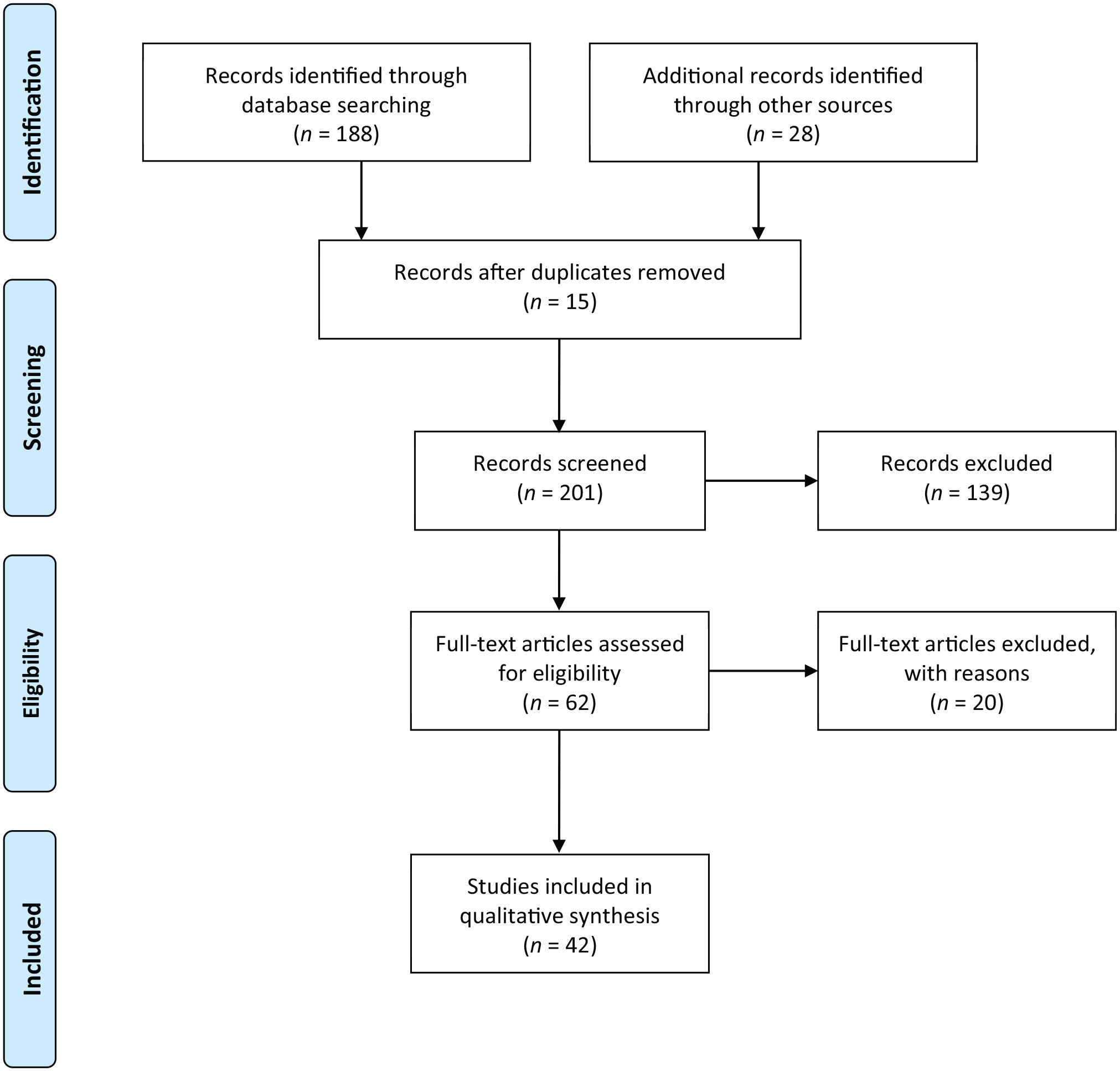
Flow Chart of Literature Review.
Results
Forty-two articles met the inclusion criteria and were fully coded. The 42 articles, in the final analysis, were published between 1979 and 2020. More than half (n = 24, 57.14%) of the articles were published within the last 5 years, and about three-quarters (n = 31, 73.81%) of the articles were published within the last 10 years. The most frequent journals for which articles in this literature review were published included the Journal of Special Education Technology (n = 11), Career Development and Transition for Exceptional Individuals (n = 6), Research and Practice for Persons with Severe Disabilities (n = 5), Education and Training in Autism and Developmental Disabilities (n = 4), and the The Journal of Special Education (n = 4).
Study Demographics
Across all studies, there were a total of 180 participants included. One study had 35 participants, and the remaining 41 studies had seven participants or less, with three being the most frequent number of participants. Across 32 (76.19%) articles, the combined study samples included 138 high school students. Of those studies, the students’ grade was specified in seven, including: five students in ninth grade, four students in 11th grade, seven students in 12th grade, and three students in transition education programs. The grade was not listed for the remaining 120 high school students represented across the study samples. Of the studies conducted with high school students, high school type was reported for 12 studies and not reported for 19 studies. Ten of the high schools were public, one was private, and one was a public charter school. In the remaining 10 (23.80%) studies, 42 students in PSE were the focus. The age of students across all studies ranged from 13 to more than 24 years old with 17 being the most frequent (n = 20) and 13 being the least frequent age of participants (n = 2). There was also a decrease in the number of participants per age group starting at age 21; specifically, 29 total participants were age 21 years or older.
Disability types varied across the studies. Specifically, across 32 studies, there were 139 students with ID, and across 25 studies, there were 57 students with ASD. This number totals more than 180 because some students had multiple disabilities (ID and ASD). Of students with ID, severity was reported for 114 and not reported for the remaining 27 participants. For the 114 participants where ID severity was reported, 18 had mild ID, 40 had moderate ID, 46 had severe ID, two had mild to moderate ID, and eight had moderate to severe ID. Other student disabilities reported included speech and language impairments (n = 18), Down syndrome (n = 11), cerebral palsy (n = 6), and attention-deficit/hyperactivity disorder (n = 5). Nineteen other student disabilities were reported across the studies, but the frequency of participants with each disability was three or fewer. Although these other disabilities were reported, they were in addition to ID and/or ASD as specified in the inclusion criteria. Additionally, IQ score was reported for 119 participants and not reported for 61 participants. Of the participants where IQ score was reported, the average IQ was 56.
Gender was reported in all but three studies (92.86%) with a total of 46 participants missing data on their gender. Eighty-two male participants were included in 37 studies, and 52 female participants were included in 31 studies. Race and ethnicity were reported in 10 studies (23.80%). Across those 10 studies, there were 20 White participants, five Black participants, four Asian participants, and one Hispanic participant. Socioeconomic status was not reported in any of the studies. Most of the study locations were in the United States (n = 41, 97.62%), and one study was conducted in Taiwan (Kang & Chang, 2020). The geographical location for U.S.-based studies was reported for 18 studies (42.86%) and not reported for 23 studies (54.76%). For the studies where the geographical location was reported, seven were located in the southeast, six were located in the midwest, three were located in the west, and two were located in the northeast.
Study Methodology
Ninety-five percent of the studies included in this literature review used a single-case design methodology (n = 40). The two (4.76%) remaining studies used a group design method (Duncan et al., 2018; Heal et al., 1984). Of the single-case design studies, 18 studies used a multiple baseline/probe across participants design (42.86%), nine used an alternating treatment design (21.43%), and seven studies used a multiple baseline/probe across behaviors design (16.67%). Two studies (4.76%) used a multiple baseline across setting design, a withdrawal design, and a reversal design. Of the single-case design studies, all provided graphs with results for each participant or probe. The effect size was reported in less than half of the studies (n = 19, 45.24%). Out of the 19 studies that reported effect size, the percentage of nonoverlapping data (PND), an effect size measure used in single-case design (Scruggs et al., 1987), was most commonly reported (n = 16). Other effect size measures reported included Tau-U (n = 4) and Cohen’s d (n = 1). Interobserver agreement (IOA) was collected in 40 (95.24%) of the studies.
Study Intervention Method
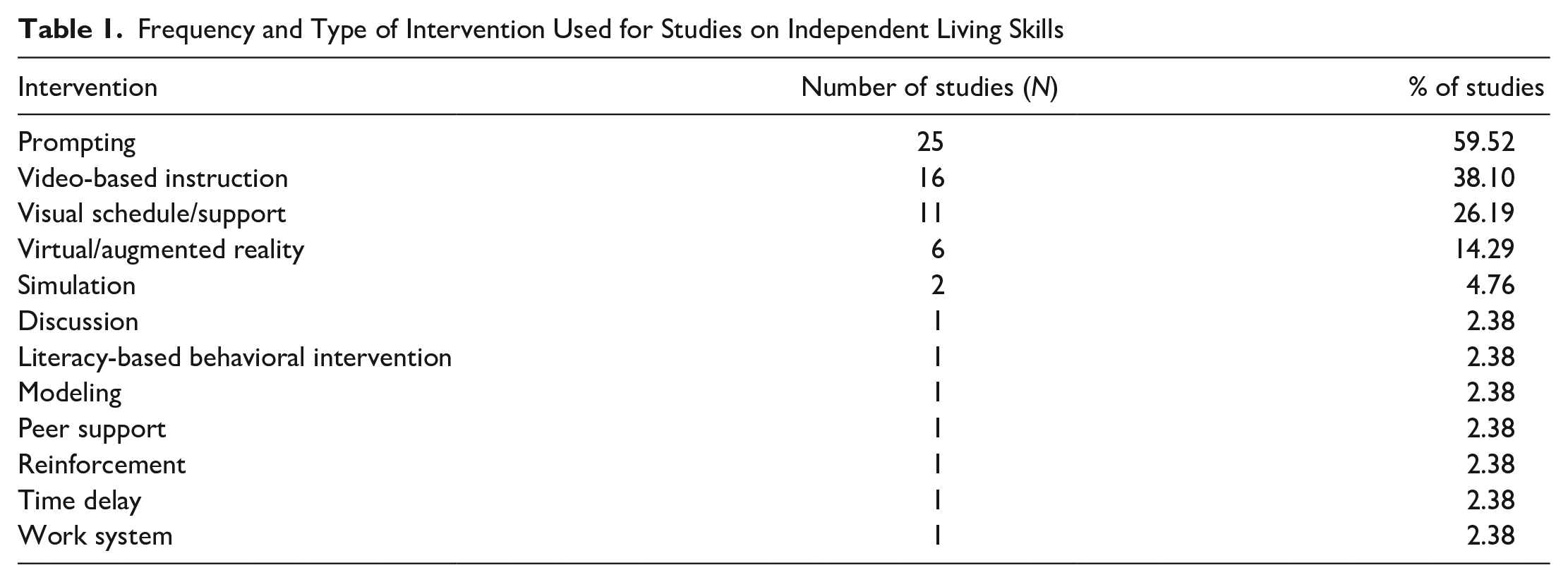
The most frequently used intervention method to teach ILS in studies was prompting (n = 25, 59.52%), which was differentiated from video-based instruction and included auditory, gestural, and hand-over-hand prompts. However, prompting was often combined with another intervention method such as video-based instruction (VBI; n = 5) or visual schedules or supports (n = 4). Six of the studies using prompting occurred in a PSE setting, and 19 occurred in a high school setting. The next most frequently used intervention method was VBI (e.g., video modeling, video prompting; n = 16, 38.10%) followed by visual schedules or supports (n = 11, 26.19%). One study using VBI was in a PSE setting and 15 were in high school settings, while two studies using visual schedules or supports occurred in PSE settings and nine occurred in high school settings. Virtual or augmented reality (n = 6, 14.3%) was another commonly used intervention. Four of the studies using virtual or augmented reality were in PSE settings, and two were in high school settings. Other interventions were used, but less frequently, with four or fewer occurrences across studies. More details on the type of intervention method and intervention frequency can be viewed in Table 1.
Frequency and Type of Intervention Used for Studies on Independent Living Skills
Technology (n = 31, 73.80%) was used most frequently to provide interventions across studies, with iPads being the most frequent (n = 9, 29.03%). Other types of technology used were iPhones (n = 5, 16.13%), iPods (n = 5, 16.13%), smartphones (unspecified; n = 4, 12.90%), computers (n = 3, 9.68%), televisions (n = 3, 9.68%), audio-recording (n = 2, 6.45%), and specialized exercise equipment (n = 1, 3.23%). These results add-up to more than 31 studies because one study utilized both iPads and iPhones (McMahon et al., 2015). Researchers or adults, who did not work in the setting with student participants, provided the intervention in 31 of the identified studies (73.80%). Teachers or paraprofessionals, who typically worked with the student participants, provided the intervention in six studies (14.29%). In two of the studies (4.76%), a peer provided the intervention to the student participants of interest. These numbers total more than 42 because in some studies there were multiple intervention providers. For example, interventions could be provided through technology, but students still required training from a researcher, teacher, or peer on how to use the technology (n = 27, 64.29%). Information about the interventionist (researcher, teacher, and peer) was reported in 13 studies (30.95%) and not reported in the remaining 29 studies (69.05%). For the studies that reported information on the interventionists, 12 studies provided information on education background or licensure, five studies reported information on age, two studies reported race/ethnicity, and one study reported disability and IQ score for a peer interventionist. These numbers sum to more than 13 because some studies reported multiple types of information on interventionists. The location where the intervention took place varied; classroom or school (n = 27, 64.29%) and community (n = 18, 42.86%) were the two most frequent locations. Seven studies (16.67%) occurred in home settings, including postsecondary dorms. One study (2.38%) occurred in a clinical location. Some interventions took place in multiple locations.
Identified Independent Living Skills
Independent living skills taught to students varied, but the majority were related to cleaning and cooking. Thirteen articles (30.95%) taught skills pertaining to cleaning, and seven articles (16.67%) taught laundry-related skills. Laundry was specified as a separate skill from cleaning because of its higher frequency. Cooking skills were taught to students in 12 of the studies (28.57%). Other common skills were functional math/financial literacy (n = 6, 14.29%), grocery shopping and making healthy food choices (n = 6, 14.29%), navigation (n = 4, 9.52%), hygiene (n = 3, 7.14%), and transportation (n = 3, 7.14%). Navigation referred to a student’s ability to get to a certain location. Transportation referred to the act of using public transportation, such as getting a bus ticket. Less frequently taught skills that appeared in two studies (4.76%) were exercising, general safety, and sending mail. Seven other ILS were taught in one study (2.38%). Details on, intervention type, location, provider, and skill(s) taught in each study can be found in Table 2.
Intervention Type, Location, Provider, and Skill(s) Taught.
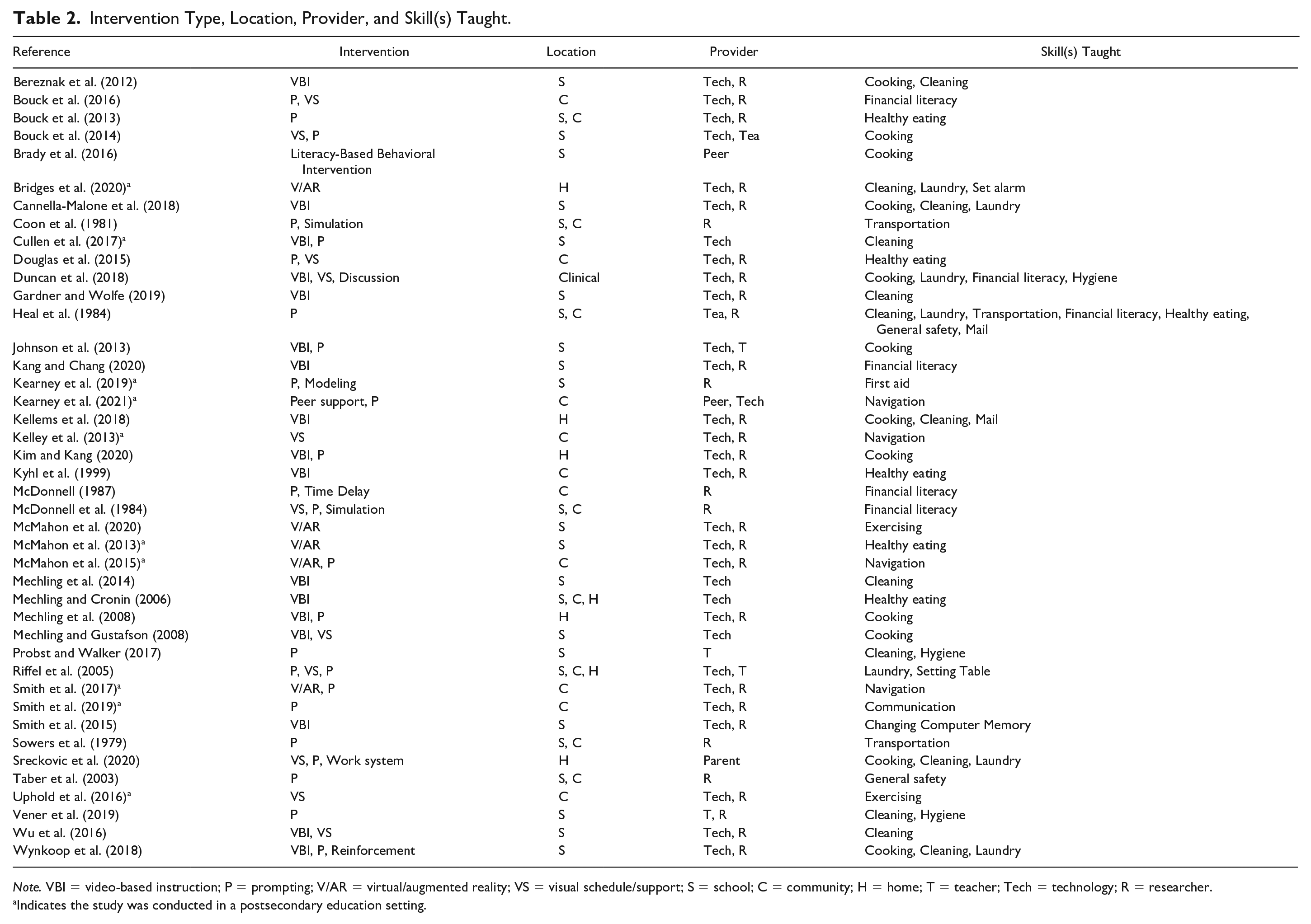
Note. VBI = video-based instruction; P = prompting; V/AR = virtual/augmented reality; VS = visual schedule/support; S = school; C = community; H = home; T = teacher; Tech = technology; R = researcher.
Indicates the study was conducted in a postsecondary education setting.
Discussion
In this, systematic literature review, we examined interventions focused on teaching ILS to secondary and PSE students with ID or ASD ranging from ages 13 to 24 years.Overall, we found interesting patterns with regard to the type of ILS taught and the intervention method. The most frequent skills taught were cooking and cleaning; meanwhile, prompting was the most frequent intervention method, and technology was the most frequent provider of the intervention. Also notable, more studies included participants in high school as compared with PSE, and skills were most often taught in school settings.
Our findings showed notable patterns in the ILS literature. Cooking and cleaning skills were mapped onto current definitions of ILS (Rowe et al., 2015). There were no studies of interventions related to social roles/citizenship, accessing community services, or sexual health care, which are areas listed in the Rowe et al. (2015) definition of ILS. However, articles on these topics may use terms other than ILS to describe the skills, explaining their lack of presence in this review. Setting (i.e., high school or PSE) may impact the skills on which students receive instruction. Four out of the 10 studies for students in postsecondary settings were related to navigation, while there were no studies on teaching navigation skills to students in high school settings. This may be because students in PSE are required to go between multiple classrooms or buildings on the campus to attend classes, while students in high schools have a shorter distance to travel between classes (Griffin & Papay, 2017). Additionally, high school students may have more supervision by school staff, while students in PSE settings may have more independence, and therefore, have a higher need to be taught navigation skills since they cannot rely on professional staff. There do not appear to be differences in skills taught to students with ID compared to students with ASD, although this is difficult to determine because some studies included students who have both ASD and an ID.
Prompting, an evidence-based practice, was the most frequent intervention delivery method and was often combined with another intervention method (Sam & AFIRM Team, 2015). VBI was the second most frequently used method to teach ILS. This result was not surprising, given video modeling is an evidence-based practice (Rowe et al., 2021). At its core, teaching ILS frequently appeared to be prompted in some form, whether it be video, auditory, gestural, hand-over-hand, or least-to-most prompting, as 35 studies utilized that particular delivery method and often in conjunction with another delivery method. Technology was the most utilized provider of interventions, which is to be expected as the second most frequent method of delivery of intervention type of VBI is technologically provided.
Schools were the most frequent location for interventions to occur as opposed to community settings. This finding is worrisome because community experiences are a predictor of positive post school outcomes in the related field of vocational training (Test et al., 2009). The lower number of interventions occurring in home settings may have been due to the sample being largely high school students, whose learning is less likely to occur in residential settings. Alternatively, students in PSE settings may have supervision provided in dorm settings. For example, there are 112 postsecondary programs for students with ID that provide housing where ILS could be taught in home settings (Think College, 2021).
Technology was the most frequent intervention provider and second most frequent type of intervention taught through VBI. The rate of interventions using technology is increasing with 61.30% of the studies from this review using technology as the primary intervention provider published in the last 10 years. It appears the types of technology used may be changing as well. The VBI has been the most frequent technology intervention; however, of the five studies published on the topic in the last 2 years, three of the articles have virtual/augmented reality as the intervention method (Bridges et al., 2020; Kang & Chang, 2020; McMahon et al., 2020), while two used VBI (Gardner & Wolfe, 2019; Kim & Kang, 2020). Additionally, the technology used to provide interventions has shifted away from televisions and computers to smaller, more portable devices such as iPhones and iPads. The field may see an increase in other technology-based interventions used as the technology field continues to advance and become more accessible to researchers. Types of ILS taught using technology did not differ from those taught by all other interventions and providers. The teaching of navigation did occur in a total of four studies, and all of those were interventions provided by technology. Technology is crucial to implement into student interventions; it has a causal relationship with students’ self-determination by allowing students the ability to complete tasks without or with less additional support, although some technological interventions do still require human aid (Wehmeyer et al., 2011).
Limitations
Although this literature review was conducted following the PRISMA guidelines (Moher et al., 2009), there are some limitations that should be considered. A reference librarian was not consulted on this review, although the author had prior experience with systematic literature reviews and using databases. This study was also limited to articles prior to November/December 2020, as that was when the database and hand searches were conducted. Only intervention studies were included in this review. Information from correlational studies, meta-analyses, or extant data were excluded. Only peer-reviewed articles were included; gray literature and dissertations were not examined. Articles that may otherwise have fit the inclusion criteria may not have been identified due to databases and search terms used. For example, databases in other fields such as rehabilitation were not examined in this study and phrases including “social roles/citizenship,” “accessing community services,” or “sexual health care” were not explicitly stated in the search terms. Additional journals could have been hand searched. Forty-six percent of the studies included in full-article coding resulted from the hand search. Although there are no current thresholds indicating a limit to hand search results in systematic literature reviews, this percentage may suggest limitations with the initial search terms, especially given the moderate number of studies included in the overall systematic review (n = 42). Effect sizes were not calculated for articles where it was not already reported. Also, we evaluated the articles using 43.00% of the indicators recommended by Cook et al. (2014). Future systematic reviews should consider these limitations in the design and planning stages.
Implications for Future Research
Findings from this study indicated a large representation of single-case research designs (95.24%) with only two group design studies identified. Considerations with single-case research design included threats to external validity, such as generality across settings and across subjects (Kazdin, 2011). More group design studies should be conducted on this topic to gain information on the generalizability of interventions to a wider population and range of settings. For all studies, effect sizes should be reported to allow for comparisons of effectiveness across studies and to conduct future meta-analyses. Single-case design studies should also report effect sizes as measures other than the percentage of non-overlapping data (PND) to better detect a change in trend or variability (Wolery et al., 2010). Measures of study quality, such as inter-observer agreement, should also be reported. In addition, demographics should be more frequently reported including race, ethnicity, and socioeconomic status as they were sparsely included in studies from this review. Demographics are important to consider in the context of research. For example, data from 2011 to 2012 indicate that students from low-income households and students who are Black or Hispanic have lower parental expectations that they will live independently (Lipscomb et al., 2017). This review included studies that had a majority of participants with ASD and ID; therefore, future studies should examine individual students, specifically in single-case design studies, to ensure all valuable information is being collected.
The interventions identified were mostly conducted at the high school level. More studies should be conducted with students in PSE environments, as the number of programs and opportunities available to these students is increasing with more than 300 programs across the country (Hart et al., 2010; Think College, 2021). Studies should continue to occur in the community and home settings as that may lead to the higher acquisition of skills as they will not need to be generalized to new settings. The area of safety skills (i.e., calling for help when lost, knowing how to respond when approached by a stranger) should be focused on in conversations and research on ILS because these are crucial skills for students to learn (Griffin & Papay, 2017). The importance of other ILS, such as citizenship and accessing community services, are noted in the broader field of college and career readiness (Morningstar et al., 2017). However, in this review, none of the studies identified included training for these skills. Finally, technology was the most frequent intervention provider and is utilized in well-known intervention methods such as VBI and virtual or augmented reality. As such, future research should focus on using technology to teach ILS to students as a way to allow them more autonomy and build on their self-determination skills by lessening the need for a human intervention provider, although some interventions that utilize technology will still require a human provider. Future literature reviews on ILS should also evaluate interventions using the full set of Cook et al. (2014) quality indicators to gain a stronger picture of the research quality.
Implications for Practice and Policy
Results from this study have implications for practitioners who teach ILS to students with ID and ASD. Practitioners should evaluate the types of ILS that they are currently teaching to ensure that a wide range of skills is covered beyond cooking and cleaning skills. While these skills are important, ILS instruction could be more extensive. It was noted that many skills were being taught in classroom settings; therefore, to the greatest extent possible, educators should allow students to practice skills in the environment where they will occur to support the generalization of skills. Educational policies should highlight the importance of, as well as provide funding for, ILS training in natural settings. Technology is an increasing method of intervention and should be considered by practitioners when possible, especially if students already own those technologies (e.g., iPhone or iPad) to allow for increased autonomy. Funding should be provided to transition classrooms to purchase technology that will support teaching ILS in addition to other transition-related and academic skills.
Conclusion
This systematic literature review examined interventions to teach ILS to high school and PSE students with ID and ASD. Results from the 42 included articles indicated that the most frequent ILS taught were cooking and cleaning. The most frequent intervention method was prompting, followed by video modeling/prompting, with technology being the most frequent modality used to deliver interventions. Moving forward, practitioners and researchers should focus on technological interventions to teach ILS to secondary and postsecondary students with ID or ASD. Interventions should be expanded to include teaching a wide variety of skills beyond cooking and cleaning, such as safety skills, citizenship, and accessing community services. It is important to include all aspects of evidence-based ILS (Rowe et al., 2015) in the future design of ILS-based interventions so that youth with ID or ASD will have opportunities for improved adult life outcomes.
Footnotes
Declaration of Conflicting Interests
The author(s) declared no potential conflicts of interest with respect to the research, authorship, and/or publication of this article.
Funding
The author(s) received no financial support for the research, authorship, and/or publication of this article.
