




Abstract
Young women with disabilities tend to experience poorer postschool employment outcomes than young men with disabilities and their peers without disabilities. Paid work experiences while in high school have been identified as significantly increasing the likelihood of later employment, yet few recent studies have examined the early employment experiences of young women with disabilities. This study reports the characteristics of paid employment experiences of 134 young women with disabilities. Findings indicate that fewer young women in our sample had paid work experience than young women nearly 20 years ago, and that early employment patterns are reflective of gendered employment patterns documented in adulthood. Implications for educators and service providers include collaboration across multiple systems and a need for gender-specific interventions.
Beyond having an income, employment is central to individual well-being, providing additional benefits including “social relations, daily structure, and goals all exerting a strong influence on people’s happiness” (De Neve & Ward et al., 2017, p. 145). Young women with disabilities, however, do not have the same access to the monetary and non-monetary benefits associated with work given they are more likely to be unemployed than their peers, a pattern that has persisted for decades (Newman et al., 2009). Identifying and understanding factors contributing to the disparities in employment rates for young women with disabilities is critical to not only addressing disparities in employment and providing access to the benefits of work, but also one key to addressing the high numbers of women living in poverty (Edmonds, 2016).
One malleable factor impacting later employment outcomes is early paid work experience. Students with disabilities who have paid work experiences while they are in high school are more likely to be employed as young adults (Mamun et al., 2018). Given the last detailed portrait of young women’s in-school employment experiences was in 2003 (Newman et al.), this study provides an updated description of employment experiences of young women in a Northwestern sample by investigating three specific research aims. First, this study aims to explore the extent to which young women in our sample participated in paid employment experiences while in high school. The second purpose is to report the characteristics of those employment experiences. The final purpose is to explore the potential impacts of age and geographic locale on those experiences.
From 2000 to 2009, the U.S. Department of Education funded a follow-up to the original National Longitudinal Transition Study (NLTS2) documenting the experiences of a national sample of 12,000 students receiving special education services as they transitioned from high school to adult roles. Findings indicated that up to 4 years after leaving high school, young women with disabilities (ages 17–21 yrs.) were employed less often than young men (Newman et al., 2009). This held true when considering both whether young adults had been employed at any point since high school (75% vs. 65%) or at the time of the interview (62% vs. 46%) for males and females, respectively. Lower employment rates for young women with disabilities in NLTS2 are consistent with other research findings. A systematic review of the role of gender in securing and maintaining employment among young adults with disabilities age 30 and below spanning two decades (1995–2006) reported that young women with disabilities are less likely to be employed than young men with disabilities (L. Lindsay et al., 2018). L. Lindsay et al. (2018) also found that employment rates for males with disabilities ranged from 50% to 76.5%, and only 1% to 27% for females with disabilities. A similar pattern has been reported in the United States where of workers between the ages of 16 and 64, women with disabilities are less likely than men with disabilities to be employed (15.2% vs. 21.0%; Bureau of Labor Statistics, 2020).
In addition to employment rates, other employment-related gender disparities have been identified that contribute to the high rates of women living in poverty (Edmonds, 2016). For example, findings from NLTS2 for youth with disabilities up to 8 years after high school indicate that young women, on average, also worked fewer hours, earned lower wages, and were less likely to be in jobs with benefits (i.e., sick or vacation time, health insurance, and/or retirement benefits) than young men (Newman et al., 2011). These findings are also supported by the systematic review of literature by L. Lindsay et al. (2018), who found that employed young men with disabilities tended to work more hours and earn higher wages than young women with disabilities. Given the inextricable link between wages and occupational category, it is unsurprising that differences in types of employment were also identified, as more young women than young men worked in traditionally female low-wage jobs in sales, office support, and personal care positions. These gendered differences in types of employment for young adults with disabilities are not just found within this population, but are reflective of the occupational segregation in the U.S. labor market, where women are concentrated in personal and health care positions in addition to cleaning, teaching, and service positions, some of the lowest paying jobs in the United States (Zhavoronkova et al., 2022).
Two key pieces of federal legislation, the Individuals with Disabilities Education Act (IDEA, 1990) and the Workforce Innovation and Opportunity Act (WIOA, 2014), are aimed at addressing the disparity in adult employment by providing targeted supports to youth with disabilities before they leave high school and transition into the labor market. Individuals with Disabilities Education Act requires schools to develop a transition plan aimed at facilitating a student’s transition from high school to postsecondary education and employment. Workforce Innovation and Opportunity Act requires states to develop services and programs designed to help youth with barriers to employment. Youth with disabilities are eligible for additional services while in high school, called pre-employment transition services, to help prepare them to attain education or skills training and secure employment with opportunities for advancement. These services are to be provided in collaboration with schools so that services are complementary and not overlapping.
Neither IDEA nor WIOA require schools or Vocational Rehabilitation (VR) agencies to provide paid employment experiences; yet, these experiences allow students to explore and confirm their interests and skills, develop employability skills, and gain experience in preferred jobs (Leucking, 2019). Even more critically, however, Mamun et al. (2018) found that early paid work experience while students are still in high school are causally related to improved postschool employment for youth with disabilities. Examining employment outcomes in the Youth Transition Demonstration project, they found that providing youth with disabilities early paid work experiences increased the likelihood by 17 percentage points that they would later be employed.
Access to paid work experiences is impacted by age, given that child labor laws vary by state. Additional factors impacting the availability of employment experiences include geographic location, whereby transportation in rural areas constitutes a significant barrier to employment (Ipsen, 2012) as well as a lack of opportunities (Bromley et al., 2022). Additionally, lack of willing employers and biases and myths regarding students with disabilities may create barriers (Bromley et al., 2022). Despite these barriers, 54% of participants in the NLTS2 study were employed in paid positions in the past year while in high school (Wagner et al., 2003). Young women, however, were less likely than young men to have had a paid work experience (49.9% vs. 56%). Gender differences in the types of work experiences held by high school youth with disabilities were also identified. For example, young women were more likely to work in personal care positions, including babysitting, and young men were more likely to work in maintenance positions and in formal positions for licensed employers. Even in high school, wage differences were pronounced with young men more likely to earn minimum wage than young women (57% vs. 37%).
Studies over the past two decades have continued to document that young women with disabilities are less likely than young men with disabilities to be employed once they leave high school. When they are employed, they are more likely to be in traditionally female-dominated occupations where they are paid lower wages and are less likely to receive benefits (L. Lindsay et al., 2018; Newman et al., 2009, 2011). In addition, data from the first wave of NLTS2 in 2001 provide a look at the in-school work experiences of youth with disabilities which mirror employment outcomes once youth leave high school (Wagner et al., 2003). Typically, factors highlighted as contributing to the adult gender pay gap include marriage and childcare, but the gendered patterns documented in high school employment experiences point to early factors and barriers contributing to persistent employment discrepancies in adulthood (Besen-Cassino, 2018).
The most recent national data on in-school employment experiences of young women with disabilities come from the NLTS 2012, a study of 15,000 youth ages 13 to 21 years who received secondary special education services under IDEA between 2012 and 2014. Initial reports found that high school age young women with disabilities were less likely than young men with disabilities to have paid work experiences (Lipscomb et al., 2017b), but no additional detailed data were provided regarding these work experiences. Given their importance and association with postschool employment, understanding the current landscape of paid in-school work experiences, including types of employment experiences, and factors, such as student age and geographic locale, could help school staff and vocational service providers better understand how to target their efforts when promoting in-school work experiences for young women with disabilities. Therefore, the purpose of this study was to report the characteristics of paid employment experiences for young women with disabilities in the Northwestern part of the United States. Specific research questions were as follows:
Research Question 1. To what extent are young women with disabilities engaged in paid employment while in high school?
Research Question 2. What are the characteristics of paid work experiences among young women with disabilities while in high school (i.e., occupational category, number of experiences in the last 6 months, hourly pay, job source)?
Research Question 3. Do occupational categories, hourly pay, and referral source differ among young women with disabilities by age and geographic locale?
Method
Procedures
We recruited participants from 26 high schools in the Northwestern part of the United States to participate in an efficacy trial of a career development curriculum for young women with disabilities in high school (Lindstrom et al., 2020). The average size of the high schools included in the study was 1,004 students (range: 84–1,569). On average, 74% of the schools’ student populations identified as White (range: 31%–93%), 16% of the schools’ student populations received special education services (range: 6%–100%), and 45% of the schools’ student populations received free and reduced-price lunch (range: 11%–78%). Schools were in cities (n = 14), towns (n = 6), suburbs (n = 1), and rural areas (n = 5). Research team members asked school staff, including special education teachers and school counselors, to recruit participants based on the following criteria: (a) identified as female, (b) currently enrolled in Grades 9 to 12 at a participating high school, (c) eligible for special education services, and (d) ability to read and comprehend at a fourth-grade level.
Using propensity score matching based on data extracted from the Department of Education (school enrollment, percentage of students receiving special education services, percentage of students identifying as Black, White, or Hispanic, and percentage of students receiving free and reduced-price lunch), we randomly assigned 13 schools to the intervention condition and 13 schools to the control condition. Participants in the intervention condition participated in a gender-specific curriculum intervention, while young women with disabilities in the control condition received “business as usual” career and transition planning services from their schools.
All study participants completed a series of online surveys throughout the study period from 2015 to 2019: (a) pre-intervention (T1), (b) midway through the academic year (for schools implementing a full-year schedule) (T2), (c) post-intervention (T3), and (d) 6-month follow-up (T4). Research team members and teachers were available to answer questions during survey administration. Students took from 15 to 60 minutes to complete each survey. At T1, teachers reported data on each participant, including the IDEA classification under which students were deemed eligible for special education services, and indicated any academic, family, health, work, or other barriers known to influence postschool outcomes. For the present analysis, we examined only data from T1, pre-intervention, for young women in both the intervention and control conditions.
Participants
A total of 366 young women in Grades 9 to 12 (baseline age in years; M = 16.54; SD = 1.12) participated in the study. According to self-report, most young women in the sample (61%) identified as White. In terms of ethnicity, 19% of participants identified as Latina. Teachers reported the majority of students qualified under the classifications of specific learning disability (LD) (55%) or other health impairment (15%), followed by emotional disturbance (6%) and intellectual disability (6%). In regard to the barriers to achieving positive postschool outcomes in five areas (academic, family or living, work, at-risk behaviors, and health challenges), teachers reported 42% of the sample did not experience any barriers while 50% experienced one or more barriers. The most common teacher-reported barriers included: difficult family circumstances (44%), mental health issues (43%), chronic absences (28%), no prior work or volunteer experience (25%), or behind in completing credits toward graduation (16%). Most participants indicated that they had aspirations to attend postsecondary training or college (64%) and reported that they had developed goals and plans for a future career (72%). Approximately half of the students in the sample (52%) reported involvement in one or more school activities (i.e., band, sports, clubs). Table 1 provides additional demographic information regarding the total sample differentiated by work experience status. One participant had missing data on work experience measures as indicated in Table 1.
Demographics for Young Women by Work Experience.
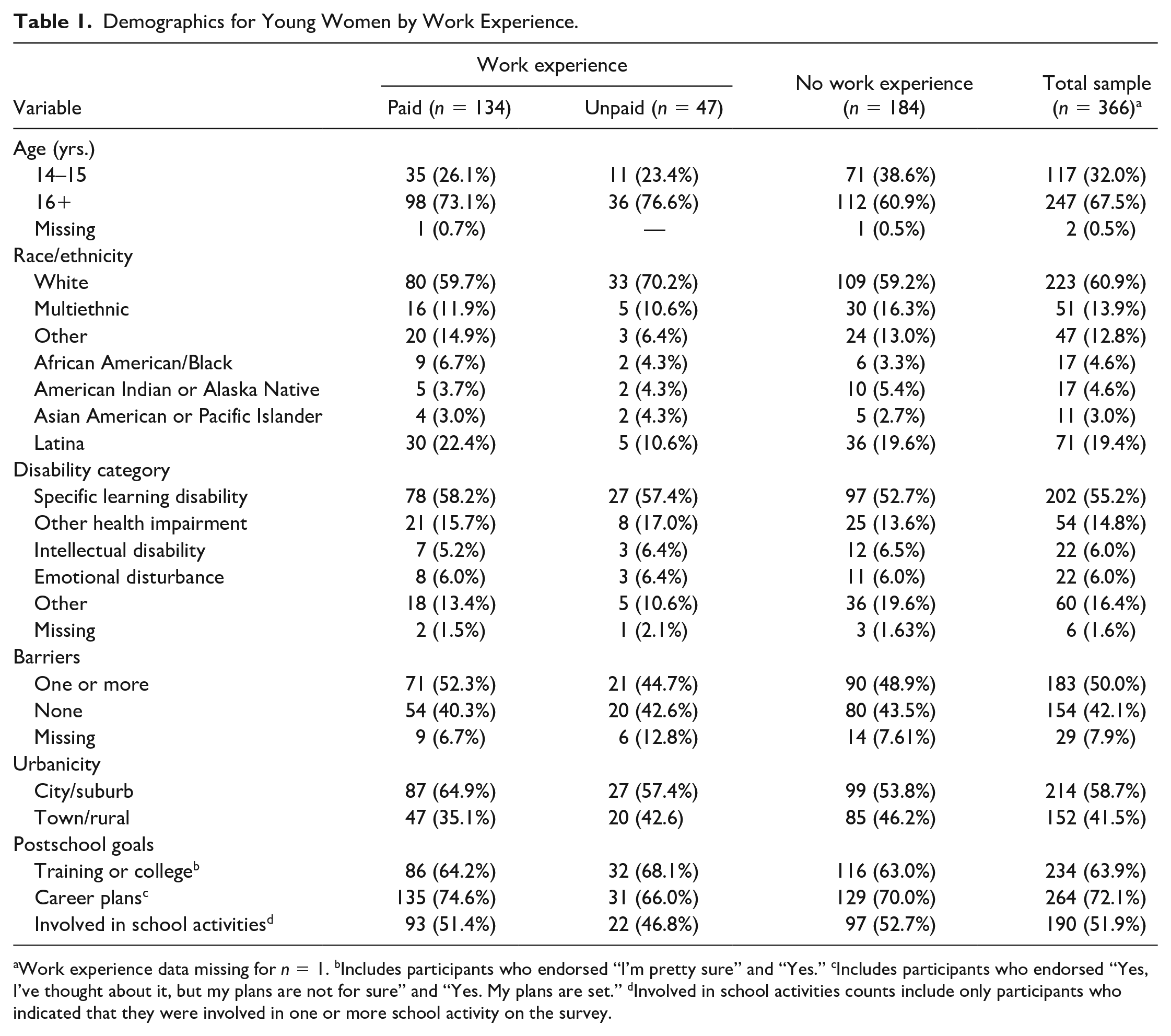
Work experience data missing for n = 1. bIncludes participants who endorsed “I’m pretty sure” and “Yes.” cIncludes participants who endorsed “Yes, I’ve thought about it, but my plans are not for sure” and “Yes. My plans are set.” dInvolved in school activities counts include only participants who indicated that they were involved in one or more school activity on the survey.
Measures
As part of the overall study, we developed an online survey that included demographic questions, validated measures, questions about future goals, career and technical education course enrollment, and work experience. Additional information about the study methods and survey can be found in the work of Lindstrom et al. (2020).
Demographic Information
Participants reported their date of birth, which we used to calculate their age in years at the time of data collection. Participants were grouped into two age groups, 14 to 15 years and 16 years and older, based on state labor laws that provide additional limitations on employment for youth below 16 years. We measured locale using National Center for Education Statistics (NCES) data reported for each participating school’s location. Locale codes were combined to represent urban areas (i.e., city, suburb) and rural areas (i.e., town, rural).
Work Experiences
We measured work experiences and their qualities using eight to 20 questions, depending on responses to questions with branching. First, we asked participants to identify if they had any work experiences in the past 6 months, and for participants who answered yes, we asked how many work experiences they had in the past 6 months. In the study state, a youth must be 14 in order to legally work for a formal licensed employer. Participants could respond they had 1, 2, or 3 or more work experiences, including both formal (i.e., for a licensed employer) and informal work experiences. Participants then answered six questions (i.e., title, responsibilities, source, hours per week, hourly pay, duration) about the one to three work experiences they had in the past 6 months. A participant who had one work experience would answer a total of eight questions regarding work experiences, while a participant with three work experiences would answer a total of 20 questions. We operationalized paid work experience dichotomously, where 1 represents having at least one work experience that was paid (i.e., paid less than minimum wage or more), and 0 represents having no work experiences that were paid.
Hourly Pay
We measured hourly pay using one question (i.e., how much money did you make per hour) for each of the one to three work experiences, participants indicated they had in the past 6 months. For each work experience, participants responded (a) I was not paid for the position, (b) less than US$9.25/h (less than minimum wage), (c) minimum wage US$9.25/h, or (d) more than US$9.25/h (more than minimum wage). We included less than and more than minimum wage as part of the response options to account for the changes in minimum wage that occurred over the study period. Hourly pay is reported as the maximum pay received across all employment experiences.
Occupational Categories
We asked participants to report their job title and responsibilities for each of the work experiences they reported using open-ended questions (i.e., what was your title; what did you do as part of this work experience). The first and second authors coded the work experiences using the responses to these two questions and according to the 23 occupational response categories used in the NLTS2 study (Wagner et al., 2003). We further combined codes to represent broader occupational areas as described in the work of Wagner et al. (2003). Clerical included office work, sorting, folding, and stuffing, as well as stocking. Maintenance included cleaning and grounds-keeping. Trades included auto repair, and apprenticeships at skills trades. Retail included sales and cashiering. We retained additional codes including personal care, food service, and farm labor. All other codes were combined into the Other category (i.e., computer support, delivery, financial services, gas station attendant, sports related, usher).
Referral Source
We measured the referral source of each work experience using one question (i.e., how did you find this work experience?). Participants reported for each work experience if they found the experience through any of the following sources: (a) school (i.e., school-based employment), (b) through a career or transition program at school (i.e., school program), (c) themselves (e.g., looking online, responding to “help wanted” advertisements), and (d) a friend or family member. Participants could report more than one referral source for each work experience.
Data Analysis
We calculated descriptive statistics (i.e., frequencies, means, standard deviations) using R to answer each of the research questions. To answer Research Question 1, we calculated the number of participants in the sample who had any paid work experience in the previous 6 months. To answer Research Question 2, we examined the mean number of paid work experiences, and the frequency of hourly pay levels, occupational categories, and referral sources among participants with at least one paid work experience in the previous 6 months. To answer Research Question 3, we examined the frequency of occupational categories, hourly pay, and referral source across age groups and geographic locales, and used chi-square or Fisher’s exact tests when n < 5 to examine differences in occupational categories, hourly pay, and referral source across groups. We used follow-up post hoc tests, using the Bonferroni correction procedure with the chisq.posthoc.test package (Ebbert, 2019) to examine age and locale subcategory differences when overall chi-square or Fisher’s exact tests were significant.
Results
The majority of young women in our sample (n = 231, 63.1%) did not have a paid work experience in the previous 6 months. Of this group of young women without a paid work experience, a small number (n = 47, 20.3%) participated only in unpaid work experiences. A total of 134 (36.6%) young women had at least one paid work experience in the previous 6 months. Table 1 presents the demographics of young women in the sample with paid, unpaid, and no work experiences.
Table 2 reports the mean number of paid work experiences, and the frequency of characteristics of work experiences by age and by locale. Percentages for occupational categories and referral source do not sum to 100% as participants could report information on more than one work experience and could select one or more job referral source. On average, young women with paid work experiences had 1.4 paid experiences in the previous 6 months. These young women most frequently had work experiences related to personal care (e.g., babysitting, elder care; 48.5%), food service (32.1%), or maintenance work (15.7%). They also less frequently had experiences related to retail (9.7%), farm labor (5.2%), or trades (0.7%) work. The majority of young women with paid work experiences (76.9%) were paid minimum wage or more in at least one employment experience. The most common referral source for work experiences was family or friends (80.6%), followed by the young women themselves (35.8%). Work experiences found through a school program or that were school-based occurred for only 9.7% and 8.2% of young women with paid experiences, respectively.
Descriptive Statistics of Employment Characteristics for Young Women With up to Three Paid Work Experiences by Age and Geographic Locale.
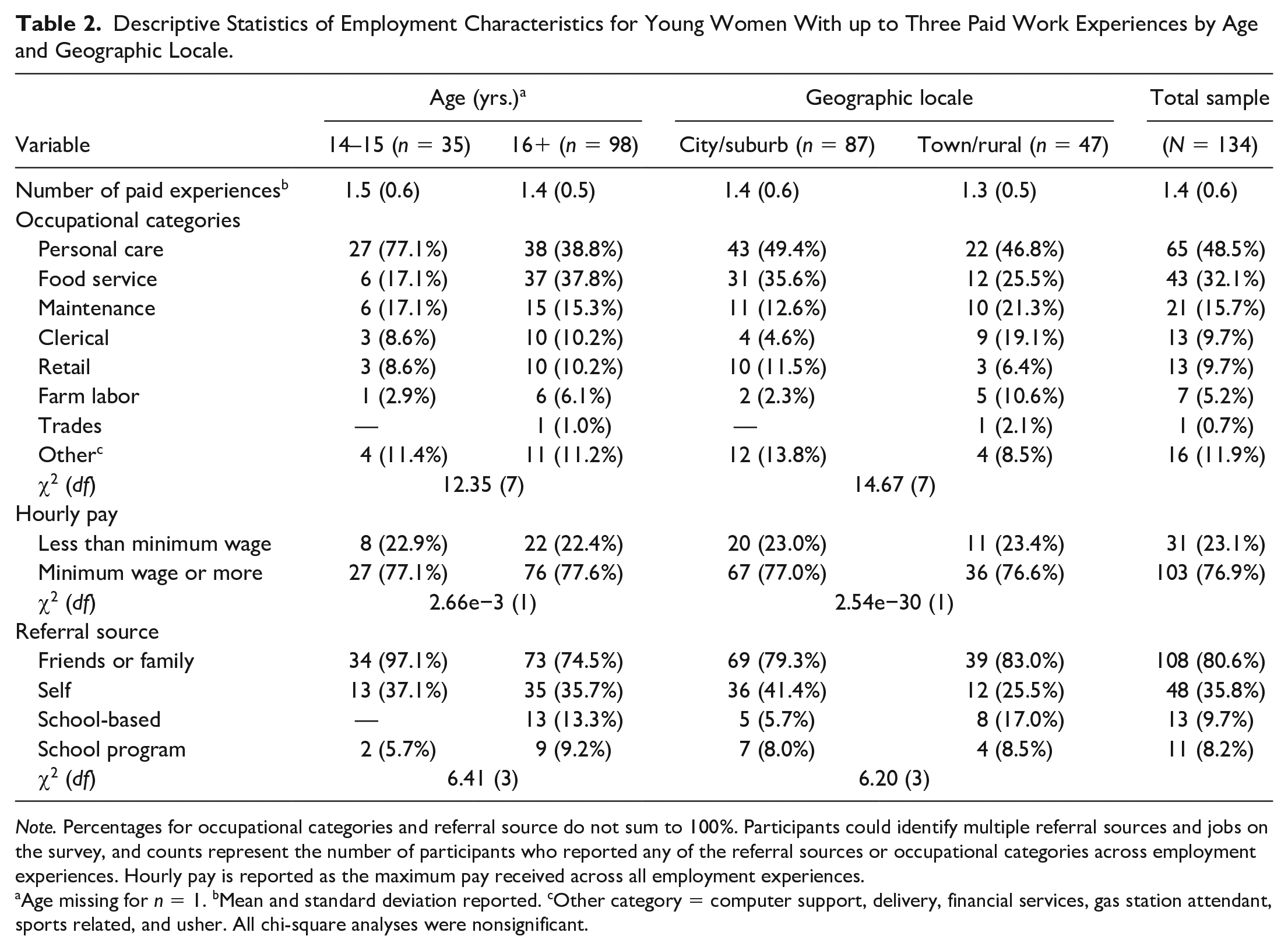
Note. Percentages for occupational categories and referral source do not sum to 100%. Participants could identify multiple referral sources and jobs on the survey, and counts represent the number of participants who reported any of the referral sources or occupational categories across employment experiences. Hourly pay is reported as the maximum pay received across all employment experiences.
Age missing for n = 1. bMean and standard deviation reported. cOther category = computer support, delivery, financial services, gas station attendant, sports related, and usher. All chi-square analyses were nonsignificant.
Table 2 presents the frequency of occupational characteristics across age groups for young women with paid work experiences. Young women ages 14 to 15 years with paid work experience most often engaged in personal care work (77.1%), as did young women ages 16 and older (38.8%). The second most frequent occupational category for young women ages 14 to 15 years was food service and maintenance work (17.1% each). For young women ages 16 and older, the second most frequent occupational category was food service (37.8%) and the third most frequent occupational category was maintenance work (15.3%). All occupational differences, including occupational categories, hourly pay, and referral source across age groups, were nonsignificant.
The frequency of occupational characteristics across geographic locales is presented in Table 2. Young women with paid work experiences in both urban and rural areas were most often engaged in personal care work (49.4%, 46.8%), followed by food service work (35.6%, 25.5%). Other work experiences were the third most frequent category for young women in urban areas (13.8%) and maintenance work experiences were the third most frequent category for young women in rural areas (21.3%). In addition, there was a nearly 15% difference between urban (4.6%) and rural (19.1%) young women’s engagement in clerical work experiences; however, these differences were nonsignificant. All other occupational differences between geographic locale, including hourly pay and referral source, were nonsignificant.
We conducted additional exploratory analyses to better understand the characteristics of work experiences across referral sources for young women with paid work experiences. Table 3 presents the frequency of hourly pay and occupational categories by referral source. Young women who received job referrals from friends or family, themselves, and school programs were most often engaged in personal care work (44.9%, 31.5%, 36.4%), and fewer young women in school-based work experiences (6.3%) engaged in personal care work. Young women who participated in school-based work experience were most often engaged in food service work (50.0%), which were the second most frequent occupational categories for young women who received job referrals from friends or family (17.3%) or themselves (27.8%) but were less frequent for those who received referrals from school programs (9.1%). The differences in the frequency of occupational categories across referral sources were significant (Fisher’s exact test, χ2 = 30.12, df = 21, p < .05). Follow-up post hoc tests did not indicate any statistically significant standardized residuals; however, inspection of the standardized residuals indicated the specific cells that likely contributed to the significant overall omnibus test. Within personal care work, residuals for receiving referrals from friends and family (z = 2.61) and school-based work experiences (z = −2.74) were nonsignificant (p > .05), but indicated a greater number of referrals from friends and family and lower number of referrals for school-based work than expected. Furthermore, within the food service category, the residuals for school-based work experiences (z = 2.78) was nonsignificant (p > .05), but indicated a greater number of referrals for school-based work experiences than expected. Young women with paid work experiences were often paid minimum wage or more regardless of referral source. They were most often paid minimum wage or more if they were referred by themselves (89.6%), and least often paid minimum wage or more if they worked at school (69.2%); however, these differences across referral sources were nonsignificant.
Descriptive Statistics of Employment Characteristics for Young Women With Paid Work Experience by Referral Source.
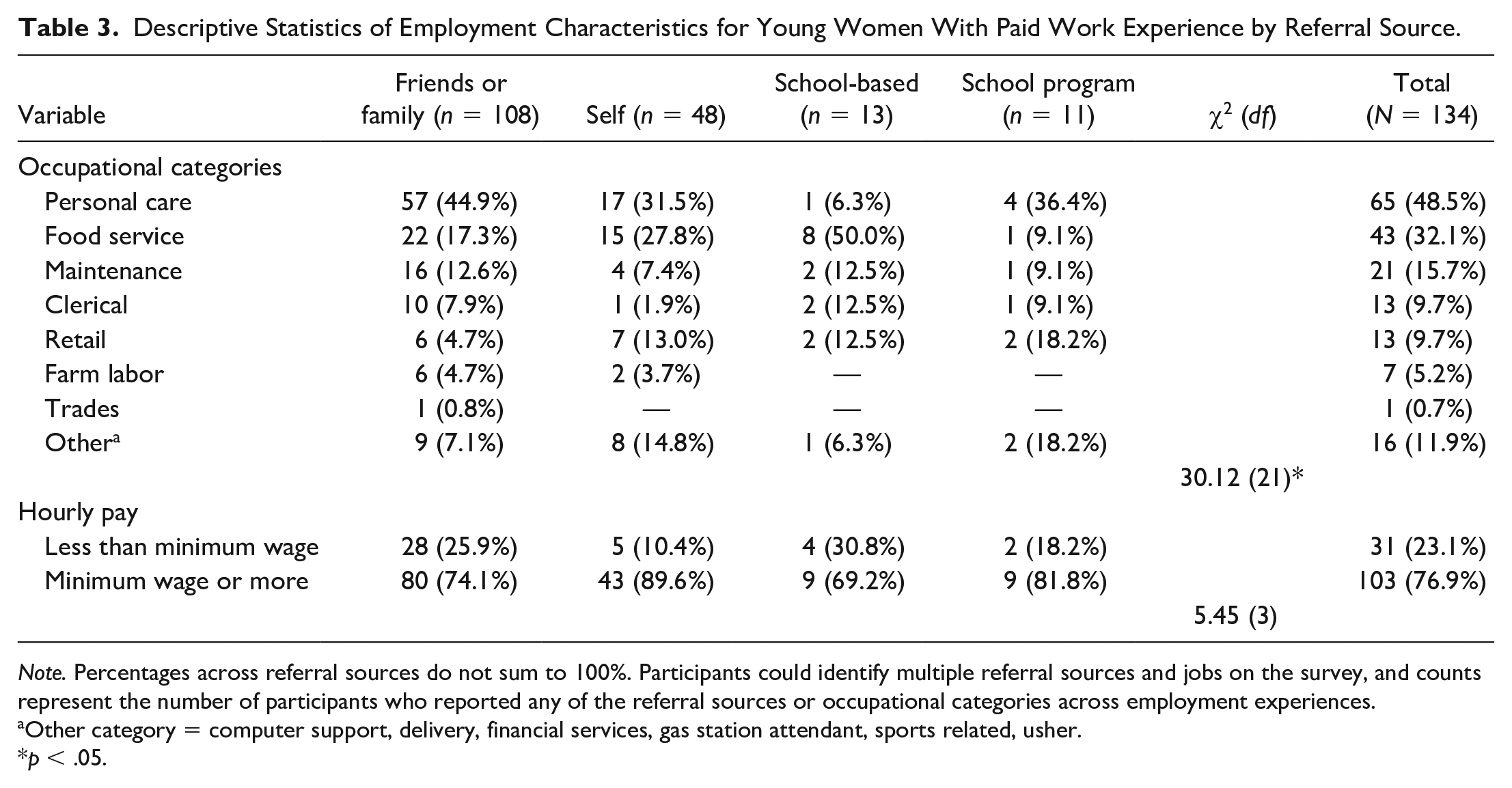
Note. Percentages across referral sources do not sum to 100%. Participants could identify multiple referral sources and jobs on the survey, and counts represent the number of participants who reported any of the referral sources or occupational categories across employment experiences.
Other category = computer support, delivery, financial services, gas station attendant, sports related, usher.
p < .05.
Discussion
Over 25 years ago, researchers began identifying patterns in employment indicating that students with disabilities with paid employment experience during high school were more likely to be employed once they left high school (Test et al., 2009). Research, policies, and practice efforts since that time have continued to focus on helping students with disabilities obtain paid early work experiences in an effort to improve postschool employment outcomes. These early work experiences could be particularly important for young women with disabilities who continue to lag behind their peers in levels of postschool employment and in other employment-related areas, such as wages, hours worked, and benefits. The most recent in-depth national data on the in-school employment experiences of young women with disabilities comes from data collected from 2000 to 2009 in the NLTS2 study. Findings showed that young women with disabilities had lower rates of employment than their male peers. A more recent national survey of in-school work experiences for youth with disabilities echoed this finding, indicating only that fewer young women received in-school work experience without any details about the characteristics of those positions (Lipscomb et al., 2017b). This study extends the literature by providing a more recent and detailed snapshot of the in-school employment experiences of a sample of young women with disabilities in the same state in the Northwestern region of the United States from 2015 to 2019.
In our sample, 36.6% of young women reported having a paid work experience in the last 6 months. This finding is not surprising, as the same percentage of young women in Grades 7 to 12 with an Individualized Education Program (IEP) in the NLTS 2012 study reported having a non-school-based paid work experience in the last year (Lipscomb et al., 2017b), with 37.2% of young women in that study receiving services under the categories of other health impairments and 39.6% under the category of LD reporting a paid work experience in the past year. In comparison, young men receiving services under both of those categories were significantly more likely to have had a paid work experience in the last year (46.1% other health impairments [OHIs], 47.1% LD; Lipscomb et al., 2017b) as were youth without an IEP (50%; Lipscomb et al., 2017a). This finding affirms the influence of both gender and disability on the likelihood of engaging in early paid work experiences and reinforces the need for focused attention and intersectional interventions that consider both gender and disability status (L. Lindsay et al., 2018).
In our sample, more than three quarters of the participants with paid experiences reported that they were paid at least minimum wage. This reflects a shift from the 2003 NLTS2 report for youth with disabilities, which indicated that only 37% of young women with paid work experience in that study were making minimum wage or above (Wagner et al.). The difference in wages reported is difficult to interpret, as we do not have a comparison group in our study; however, this finding could in part be due to our study sample. Most young women in our study were receiving special education services under the categories of LDs or other health impairments, and Wagner et al. (2003) report that 51% of youth with LDs and 56% of youth with OHIs in the NLTS2 study were earning minimum wage or more and students in these disability categories were most likely to be making minimum wage. Age could also impact our findings. Wagner et al. (2003) included 13-year-old students in the NLTS2 study while our sample included only young women ages 14 and older, and the average age of our sample was 16.54. Older students in the Wagner et al. study were more likely to earn minimum wage, with 54.5% of parents of 16-year-olds and 64.8% of parents of 17-year-olds reporting their child earned minimum wage or more. This could also be due in part to differences in reporting. In our study, wages were reported by students, and in the Wagner et al. study, wages were reported by caregivers.
Of note, however, is that some young women (23%) in our study reported working for less than minimum wage. In part, this could be due to the types of employment opportunities in which young women are engaged. Similar to findings by Wagner et al. (2003) in the NLTS2 study, the top two types of employment positions for young women in our study were in personal care positions, including babysitting, and in food service. Consistent with findings from Wagner et al. (2003), the youngest participants in our sample (ages 14–15) were also significantly more engaged in personal care positions than participants 16 and older. This shift from informal work, such as babysitting, to more formal employment may be partly due to minimum age requirements for licensed employers. Although young women ages 16 and older in our sample engaged in many other types of positions in addition to personal care, the category was still either the most or second most common type of position. The persistence of personal care work underscores previous findings that women, including women with disabilities, are disproportionately employed in personal care work (L. Lindsay et al., 2018; Tucker & Vogtman, 2020). These findings are concerning since personal care work is among the lowest paying (Tucker & Vogtman, 2020) and least mobile occupations, resulting in a “sticky floor” where women’s earnings are stagnant due to a lack of advancement opportunities (McHenry, 2013).
In our study, the next most common occupational categories for young women were in maintenance, clerical work, and retail, while in NLTS2 (Wagner et al., 2003) the next most common positions were in retail, maintenance, and clerical. One reason for the difference in the number of young women with disabilities working in retail in our study could be the overall decrease of teens employed in these types of positions. In fact, from 2000 to 2018, the number of teens employed in retail positions fell nearly 41% and in 2018, the accommodations and food services industries became the leading employers of teens in the summer (DeSilver, 2019). Clerical work was less common among our sample; however, young women from rural areas were more likely to be employed in clerical positions than their peers from more urban areas. The difference in clerical employment by geographic locale is difficult to interpret, but it may result from limited access to a variety of employment opportunities, which is a frequently cited barrier to transition in rural communities (Test & Fowler, 2018). Our sample of young women living in rural communities may have had greater access to clerical jobs due to specific local conditions.
Finally, the majority of young women with paid work experience in our study reported they found these positions through their own efforts or through the connections of friends or family members rather than through school programs. This finding is congruent with previous research, which also found that schools play a relatively small role in helping youth find community-based paid work experiences (e.g., Carter et al., 2011b; Lipscomb et al., 2017a). Lipscomb et al. (2017a) found that only 12% of youth with an IEP in the NLTS 2012 study had a school-sponsored work experience in the past year. Examining teen employment, which dramatically increases in the summer months (Bureau of Labor Statistics, 2020), Carter et al. (2011a) found that youth with LDs or emotional and behavioral disturbances reported locating summer employment opportunities not through school staff, but either themselves or through friends and family.
Several factors may impact the low levels of school involvement in youth with disabilities locating paid work. First, secondary special education teachers have reported being overwhelmed with competing transition priorities and confusion regarding their role (Lubbers et al., 2008). In addition to role strain, teachers also report limited time, resources, and training needed to build relationships with employers and develop jobs in the community (Lubbers et al., 2008; Morningstar et al., 2018). Limited time and resources have also been cited as reasons for limited collaboration with agencies such as VR, which are tasked with providing pre-employment transition services that will elevate postschool employment outcomes for youth with disabilities (Carter et al., 2020). Teacher beliefs about employment and their role in facilitating these experiences could also be affecting school involvement in student work experience. For example, in exploring teacher perceptions of summer employment and community activities for youth with disabilities, Trainor et al. (2008) reported that some teachers believe there are limited community-based employment opportunities for youth with disabilities and see their role as limited in facilitating access to summer employment opportunities.
Limitations and Future Research
Our findings should be considered in light of a few key limitations. While women are overrepresented in the lowest paying jobs in the United States, women of color are disproportionately represented (Tucker & Vogtman, 2020). Due to the small number of young women of color in our sample, we were unable to examine differences based on race. Similarly, our sample primarily comprised young women with LD and OHI and included few young women with other types of disabilities. Our sample also came from one region of the country and may not be representative of the employment experiences of young women in other areas. The homogeneity of our sample prevented us from evaluating differences based on race and disability category and limits our ability to generalize our findings to young women with disabilities more broadly. Future research should seek to recruit more diverse participants (e.g., race, socioeconomic status [SES], disability categories) across a range of communities to examine the intersections of race, gender, social class, ability, and local economic contexts that may impact employment early experiences for young women.
Our findings should also be interpreted with caution as we were unable to compare our findings with young women without disabilities or young men with disabilities due to a lack of a comparison sample. To contextualize the experiences of young women with disabilities, future research should include comparison groups of both peers without disabilities and male peers with disabilities.
Implications for Practice
Despite the clearly documented link between early paid work experiences and the likelihood of future employment (e.g., Mamun et al., 2018), federal legislation targeting improved employment outcomes for individuals with disabilities, and evidence- and research-based practices in the field of transition (Mazzotti et al., 2016), the majority of young women with disabilities in high school, both in our study and the NLTS 2012 study, are not participating in early paid work experiences. The intersecting identities of our participants as young women and individuals with disabilities inform the implications for practice that emerge from our findings.
First, our findings suggest that special education staff may need more professional development on collaboration methods for developing employment opportunities for young women. The majority of young women in our study reported they did not have a paid work experience in the past 6 months, and for those who did, the role schools played in connecting them to those positions was almost nonexistent. To develop employment opportunities, school staff will need to collaborate effectively and efficiently with other stakeholders, including VR staff, local communities, and the families and social networks of their students.
One key contributor to improved postschool outcomes for youth with disabilities is collaboration among agencies (Mazzotti et al., 2016). With the Workforce Innovation and Opportunity Act (WIOA) reporting regulations not fully rolling out until 2016, for many, the VR-school partnerships are still not yet fully formed. For example, in one study, secondary special educators described their collaborations with VR as limited and ineffective and reported a desire for more extensive collaborations (Carter et al., 2020). Given that VR aims to provide pre-employment transition services that complement those provided by schools and not duplicate them, strengthening these collaborations will be important in the pursuit of coordinated employment-related transition services, including job development.
Collaborating with communities to develop opportunities is also important, as societal attitudes, misperceptions, and stigma toward young women with disabilities enacted at the local level can be barriers to employment for young women with disabilities (S. Lindsay et al., 2015). Based on the World Café process (Brown & Isaacs, 2005), Trainor et al. (2012) facilitated community conversations which brought together diverse community members to focus on building social capital and localized solutions for increasing employment opportunities for youth with disabilities. Persons responsible for connecting youth with summer employment who attended these events reported first that 36.8% to 45.5% of youth with disabilities in their larger study were connected with summer employment, and that resources from and connections made at the events were helpful in navigating their responsibility to promote employment opportunities (Carter et al., 2009, 2011b). These events are low cost and do not demand a large time commitment from facilitators or community members.
Next, given most young women with paid work experiences reported they found jobs through their family and friends, collaborating with families of students and encouraging them to utilize their social networks is also important. Family involvement in planning and preparing for a young woman’s transition from high school to adult roles and parent expectations for their daughter’s future have been identified as a predictors of improved postschool employment (Mazzotti et al., 2016). Family members influence young women’s career development in numerous ways (Whiston & Keller, 2004), including as demonstrated in our study, access to employment opportunities, indicating that families may serve as facilitators of employment opportunities. As noted in other studies (e.g., Hogansen et al., 2008), they may also act as barriers. Therefore, recognizing the expanded role families can and do play, beyond those sanctioned by existing school and vocational systems (Hirano & Rowe, 2016), could prove to be a critical step in helping connect more young women to paid employment opportunities.
Our findings also highlight the importance of social networks and capital in youth obtaining paid work experience. While researchers have focused on using social networks to help young adults with intellectual and developmental disabilities find employment (Eisenman, 2007; Petner-Array et al., 2016), schools can also tap into all students’ social networks to help find employment. Families can serve as important contacts for developing work opportunities, along with school personnel’s own networks or the networks of their colleagues and local VR providers (Whittenburg et al., 2019).
Our findings also suggest that for young women in this study, work experiences continue to echo gendered employment patterns of decades past, which funnel many young women from high school into low-paying jobs such as customer service in retail, food, and hospitality industries and personal care work. This suggests that stakeholders may need additional training to understand the importance of the types of early paid work experiences in which young women engage. While it may be common for teenagers to be employed in low-wage service sectors (Besen-Cassino, 2018), these experiences can funnel some young women from high school into low-wage work as adults where they experience barriers to advancement (Tucker & Vogtman, 2020). It can be difficult for young women with disabilities to move beyond low-wage work in adulthood because prospects for upward mobility in the labor market are often determined by where workers start (Escobari et al., 2021). In one study of upward occupational mobility, Gabe et al. (2018) found that only 5% of low-wage workers moved up the job ladder in 1 year, with most low-wage workers more likely to be working in jobs of similar quality or to have exited the labor force. Recognizing that some young women are only being prepared for low-wage work from which it will be difficult to advance could help stakeholders more strategically develop work experiences using the collaborations described above.
Training on the development of work experiences for young women with disabilities should also highlight the importance of and strategies for staying informed on the changing landscape of the labor market. Many of the customer service jobs for which young women are being prepared to work as adults are expected to experience dramatic declines by 2030 (Lund et al., 2021). COVID-19 disrupted labor markets beginning in 2020 and will likely have lasting impacts on labor demands (Lund et al., 2021). Understanding the labor market and the training and skills students will need to successfully navigate employment transitions is critical to ensuring that all youth are being prepared for jobs with a future.
Our findings also suggest that stakeholders may need strategies to disrupt gendered employment patterns. Evolving theories of career development can help inform practice. For example, with the changing economy and dramatic shifts in the workplace, career and vocational researchers have urged their fields “to adopt new theoretical foundations emphasizing life designing, career construction, career adaptability, goal-setting, decision making, and self-direction” (Wehmeyer et al., 2019, p. 184). Newer models for career development, such as Life Design, integrate these concepts and shift attention from a sole focus on work to one’s life (e.g., Nota & Rossier, 2015). Life Design also focuses on helping individuals develop career adaptability skills to support transition between employment opportunities, which is useful in the current employment landscape considering young people today are expected to hold 10 or more jobs over their lifetimes (Wehmeyer et al., 2019). In addition to career development theories to guide practice, additional frameworks to guide collaboration and interventions may be useful. One example of such an approach is the FACES (facilitation, awareness, connection, exposure, support) framework, which offers one way to structure interventions for supporting early transition planning for girls with disabilities who are interested in STEM fields (Griffiths et al., 2020). The authors propose interventions at the individual, school, postsecondary, employer, family, and community levels through facilitating collaboration, building awareness across levels of the needs of young women to be included in STEM fields, helping young women build connections between school and future aspirations, and increasing exposure to meaningful opportunities for mentorship and work experiences. Improving the postschool employment outcomes of girls with disabilities will take a coordinated effort across multiple systems.
Conclusion
This study examined the in-school work experiences of young women with disabilities. Despite the progress in employment opportunities for individuals with disabilities the past two decades, young women in this study were less likely than their male peers to participate in in-school work experiences, sustaining a pattern documented two decades earlier (Wagner et al., 2003). Furthermore, those young women reporting work experiences in our study continued to report employment in primarily traditionally female- dominated occupations. Early work experiences are predictive of later employment outcomes for all youth with disabilities (Mamun et al., 2018) and should be a focus of programs and services for young women while in high school. Furthermore, offering opportunities outside of traditional gendered employment patterns along with pathways to postsecondary education and training could be critical for improving adult employment outcomes.
Footnotes
Authors’ Note
The opinions expressed are those of the authors and do not represent views of the Institute of Education Sciences (IES) or the U.S. Department of Education.
Declaration of Conflicting Interests
The author(s) declared no potential conflicts of interest with respect to the research, authorship, and/or publication of this article.
Funding
This study was supported by the Institute of Education Sciences (IES), U.S. Department of Education, through grant R324A170148.
