




Abstract
Research suggests youth with disabilities are less likely to experience positive outcomes compared to peers without disabilities. Identification of in-school predictors of postschool success can provide teachers (e.g., special education, general education, career technical education), administrators, district-level personnel, and vocational rehabilitation counselors with information to design, evaluate, and improve transition programs. The purpose of this systematic literature review was to examine secondary transition correlational literature to identify additional evidence to support existing predictors and identify new predictors of postschool success. Results provided additional evidence for 14 existing predictors and identified three new predictors. Limitations and implications for research, policy, and practice are discussed.
Keywords
From 1987 to present, the U.S. Department of Education funded a series of National Longitudinal Transition Studies (NLTS; i.e., NLTS, NLTS2, NLTS 2012), which followed several cohorts of youth with disabilities during and after high school. Descriptive data collected by these studies provided information to help the field of secondary transition understand how in-school experiences of youth with disabilities impact their in-school and postschool outcomes. Historically, students with disabilities do not experience postschool success at the same rates as their peers without disabilities, with disparities in the areas of employment, postsecondary education, and independent living (Newman et al., 2011; Sanford et al., 2011). These trends continue today. National data show gaps between youth with and without disabilities enrolling in higher education (National Center for Education Statistics, 2019) and attaining a bachelor’s degree (U.S. Census Bureau, 2016). In addition, data from the U.S. Bureau of Labor Statistics (2018) indicated people with disabilities who received a bachelor’s degree were 3 times less likely to be employed, compared to people without disabilities. These outcomes, combined with other influencers (e.g., poverty, culture, marginalization), indicate many youth with disabilities are not accessing the necessary transition-related instruction and supports in school to be successful post school (Trainor et al., 2020).
Multiple researchers have synthesized experimental research (i.e., group, single case) over the years to identify effective practices to teach skills for secondary students with disabilities (e.g., Gilson et al., 2017; Rowe et al., in press; Test, Fowler, et al., 2009). A limitation of this research is many of the experimental studies have not attempted to measure the impact of skill acquisition on postschool outcomes. This limitation ignited the interest in examining the correlational literature to better understand what in-school factors correlate to outcomes after high school (e.g., enrollment in postsecondary education, competitive employment, community access and integration). Correlational research can support the field in understanding factors that influence transition program development, improvement, and evaluation (Rowe et al., 2015).
Research has produced a consistent set of predictors of in-school activities that positively correlate with postschool success in education, employment, and independent living (e.g., career technical education, inclusion in general education, life skills instruction, paid employment/work experience, self-determination skill instruction). First, Test, Mazzotti, et al. (2009) identified 16 predictors of postschool employment, education, and independent living success. The 16 predictors included (a) four predictors positively correlated to all three outcome areas (i.e., inclusion in general education, paid employment/work experience, self-care/independent living skills, student support); (b) seven predictors positively correlated to postschool education and employment (i.e., career awareness, interagency collaboration, occupational courses, self-advocacy/self-determination, social skills, transition program, vocational education); and (c) five predictors positively correlated to postschool employment (i.e., community experiences, exit exam requirements/high-school diploma status, parental involvement, program of study, work study).
Building on this work, Haber et al. (2016) conducted a meta-analysis to assess the strength of the Test, Mazzotti, et al. (2009) predictors updating the search through May 2010. They found statistically significant effects for career technical education, interagency collaboration, inclusion in general education, self-determination, and paid-employment/work experience on both postschool employment and education outcomes. These results are of practical importance because the predictors can provide schools, districts, and state education agencies with information on factors that can guide secondary transition program development (Rowe et al., 2015). More recently, Mazzotti et al. (2016) conducted a systematic review of the literature conducting secondary analyses of the NLTS2 data set to extend predictor findings originally identified by Test, Mazzotti, et al., 2009 and identify new in-school predictors of postschool success for youth with disabilities. Results identified four new predictor categories: goal setting, parent expectations, travel skills, and youth autonomy/decision-making.
Although these three previous reviews identified 20 predictors of postschool outcomes, each noted limitations of their analyses. First, they noted the need to disaggregate results by demographic categories (e.g., disability, race/ethnicity). Second, they noted many correlational studies were exploratory (i.e., hypotheses were not formulated prior to conducting analysis) and did not use rigorous designs (e.g., propensity score analysis [PSA]; Rojewski et al., 2014), limiting the extent to which they could contribute to the evidence base. Finally, they suggested future reviews should include studies that used databases beyond NLTS2. Therefore, the purpose of this systematic literature review was to update the secondary transition correlational literature published since Test, Mazzotti, et al. (2009) to identify (a) additional evidence to support existing predictors of postschool success and (b) new predictors of postschool success for youth with disabilities. Our research questions were as follows: Is there additional evidence to support existing predictors of postschool success? Is there evidence to support new predictors of postschool success? What is the level of evidence for each existing and new predictor of postschool success?
Method
Selection Procedures
We conducted an electronic search using the EBSCO Host search engine to identify all articles published between April 2009 and January 2019 that used correlational research methods to investigate the relationship between secondary transition in-school predictors and postschool outcomes (i.e., postsecondary education, employment, independent living). These dates reflect articles published after the Test, Mazzotti, et al. (2009) review. We searched the following databases: Academic Search Premier, Educational Administration Abstracts, CINAHL with Full Text, Education Research Complete, Educational Resources Information Center (ERIC), MasterFILE Premier, MiddleSearchPlus, PsycARTICLES, PsycINFO, and Vocational and Career Collection. We used full and truncated versions of the following search terms: correlation, correlate, correlational, predictor, relationship, students, youth, adolescents, young adults, disability, middle school, high school, transition, secondary transition, education, special education, outcomes, postschool, postsecondary, postschool outcomes, in-school, postsecondary education, employment, independent living, and quality of life. In addition to the electronic search, we conducted a hand search of the following peer-reviewed journals in special education: Career Development and Transition for Exceptional Individuals, Exceptional Children, Focus on Autism and Other Development Disabilities, Intellectual & Developmental Disabilities, Journal of Rehabilitation, Journal of Vocational Rehabilitation, Rehabilitation Counseling Bulletin, Remedial and Special Education, and The Journal of Special Education.
Inclusion/Exclusion Criteria
We first identified articles by assessing titles and abstracts. Next, we screened each article’s method section to determine whether the article used a methodology that reflected a correlational design. To assess for eligibility, we conducted a full-text review of each correlational article and coded remaining articles for quality (i.e., methodological rigor). Finally, we conducted data analysis coding of final articles to be included in this systematic review.
Identification
To be included in this review, studies had to include (a) in-school, transition-related program(s) or practice(s) as predictor variables and (b) outcome variable(s) related to postschool employment, education, independent living, and/or quality of life. In addition, participants must also have been served under the Individuals with Disabilities Education Improvement Act (IDEIA, 2004). These inclusion criteria were consistent with previous reviews (i.e., Mazzotti et al., 2016; Test, Mazzotti, et al., 2009). The initial search yielded 14,066 articles. After titles and abstracts were scanned, we excluded 13,854 articles because they were (a) expert opinion, (b) literature reviews, (c) program evaluations, or (d) international studies. Figure 1 provides the literature review flowchart.
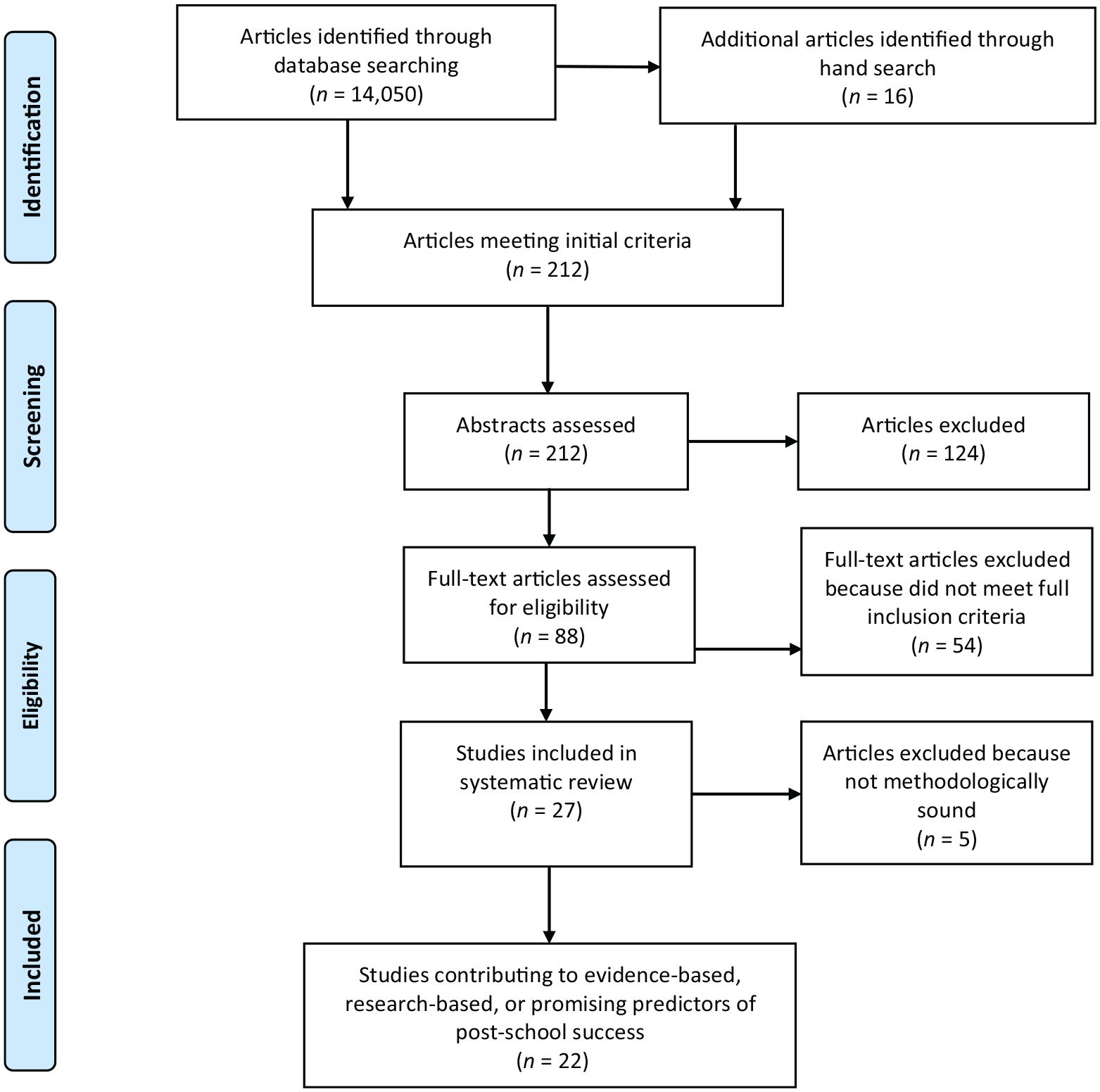
Predictor systematic literature review flowchart adapted from Moher et al. (2009).
Screening
Next, we screened the method sections of the remaining 212 articles to determine type of methodology used. To be included, articles had to use a methodology that reflected a correlational design (e.g., logistic regression; structural equation modeling; hierarchical multiple regression, reflecting correlations of predictors with outcome variables). Two authors were randomly assigned the 212 articles to identify type of methodology. When discrepancies arose between the two authors for a specific study, the first author convened a meeting to come to consensus on whether or not the article used a correlational design and should be included in the review. We excluded 124 articles because the articles did not use correlational designs (i.e., experimental, qualitative, descriptive only). This resulted in 88 articles for full-text coding.
Eligibility
We reviewed the full text of the 88 articles to determine final eligibility for inclusion in this systematic literature review. After full-text review of the 88 studies, we excluded 54 studies because the (a) outcome variables were not postschool (e.g., in-school summer work experiences; n = 14); (b) the predictor variables were only demographic (e.g., gender, race/ethnicity, disability; n = 7); (c) participants were not served under IDEIA (n = 14); (d) the study was descriptive and used univariate methods with no correlational analysis (n = 14); (e) assessment validation was the focus versus postschool outcomes (n = 3); and/or (f) the study included no significant positive or negative findings (n = 2). We calculated interrater reliability for 47 (53%) of the 88 studies by dividing the number of agreements by the total of agreements plus disagreements multiplied by 100. Interrater reliability was 98.7%. We examined the remaining 34 studies for quality (i.e., methodological rigor).
Quality coding
We coded the remaining 34 studies for quality using the National Technical Assistance Center on Transition’s (NTACT, 2017) quality indicator checklist for correlational research (Thompson et al., 2005; see Figure S2 in supplemental materials). One charge of NTACT is to identify evidence-based/research-based predictors of postschool success. NTACT’s processes for identifying predictors align with recommendations from the field (i.e., Gemici et al., 2012; Institute for Education Sciences, What Works Clearinghouse, 2015, 2020; Thompson et al., 2005).
Of the remaining 34 studies, two (i.e., Baer et al., 2011; Flexer et al., 2011) were included in Haber et al. (2016). These two studies were included as part of this review because they had not been reviewed for quality or included as part of the predictor research base identified by Test, Mazzotti, et al. (2009) or Mazzotti et al. (2016). We excluded 10 studies because they were included in the Mazzotti et al. review; therefore, they were not recoded as part of this review as they were already documented as part of the predictor research base. Finally, two studies were excluded because they did not meet quality indicator criteria for correlational research. Interrater reliability for quality coding was conducted on 30% of studies by dividing the number of agreements by the total of agreements plus disagreements multiplied by 100. Interrater reliability for quality was 96.0%. We coded the remaining 22 studies for content to analyze study data.
Data analysis coding
We analyzed the final 22 studies to identify (a) predictors that build on findings from Test, Mazzotti, et al. (2009) and Mazzotti et al. (2016) and (b) new predictors of postschool success. We coded the 22 studies for content, which also included recording effect sizes for each study variable. Finally, we applied NTACT’s levels of evidence criteria for correlational research to each study to identify the level of evidence for each existing or newly identified predictor (i.e., evidence-based, research-based, promising; see Figure S1 in supplemental materials for NTACT’s levels of evidence criteria).
Data analysis
After coding for quality was complete, we coded each correlational study to analyze data. We analyzed each study independently and coded all variables using an NTACT (2015, 2017) researcher-developed coding form to code correlational studies. Three researchers and five doctoral students coded studies, which were randomly assigned. First, we examined and coded the 22 studies for the following: (a) whether predictor variables supported an existing predictor or constituted a new predictor; (b) research setting; (c) participant demographics (i.e., age, disability, race/ethnicity); (d) type of correlational design (i.e., multivariate exploratory, multivariate theoretically driven [a priori], PSA); and (e) type of analysis used (e.g., logistic regression, multiple regression).
Next, we coded predictor and outcomes variables for each study. We coded all statistically significant and non-significant positive and negative findings. This process included coding (a) predictor description (i.e., operationalizing each predictor variable identified in study), (b) predictor variable based on the 20 predictors identified by Test, Mazzotti, et al. (2009) and Mazzotti et al. (2016), (c) outcome variable (i.e., education, employment, independent living), (d) outcome type (e.g., employment status, hours worked, quality of life, college GPA), (e) type of analysis (e.g., logistic regression), (f) degree of relationship (e.g., reported odds ratio, R2), (g) total n reported, (h) standard error, (i) statistical significance (i.e., p value), and (j) effect size (i.e., converted to Pearson’s r). The majority of studies in this review (n = 20) reported logistic regression results. As noted in Mazzotti et al. (2016), “odds ratios are centered on 1 as opposed to 0, meaning that 1 indicates no relationship” (p. 198). To address this, we converted odds ratios to an approximated Pearson’s r (Lipsey & Wilson, 2001, p. 53) using the DeCoster and Iselin (2005) Odds Ratio to r Statistical Calculation Spreadsheet to calculate effect sizes. Pearson’s r allowed for comparisons between current research findings and findings from Test, Mazzotti, et al., 2009 and Mazzotti et al., 2009. Based on recommendations from Lipsey and Wilson (2001), we interpreted the magnitude of effect based on r ≤ .10 (small), r = .25 (medium), and r ≥ .40 (large). Two studies reported standardized regression coefficients (SRC; i.e., betas) for individual predictor variables (Rabren et al., 2014; Shogren et al., 2017). SRCs present an effect size that represents a change in the dependent variable with one standard deviation change for the independent variable (Nieminen et al., 2013). For SRCs, we interpreted the magnitude of effect for semi-partial correlations based on r ≤ .10 (small), r = .25 (medium), and r =≥ .40 (large; Lipsey & Wilson, 2001). We calculated interrater reliability for data analysis coding on 31.8% of articles by dividing the number of agreements by the total of agreements plus disagreements multiplied by 100. Interrater reliability was 97.6%.
Determination for levels of evidence
The last step in the data analysis process was to determine levels of evidence for each predictor. We categorized findings in three ways: (a) evidence-based, (b) research-based, and (c) promising predictors. Evidence-based predictors are supported by a minimum of two methodologically sound a priori (i.e., planned, stated hypothesis) studies using a quasi-experimental correlational design (i.e., PSA) that (a) demonstrated consistent statistically significant positive correlations between predictor and outcome variables, (b) calculated effect size or reported data that allowed for effect size calculation, and (c) included no evidence from a methodologically sound a priori study demonstrating negative correlations between predictor and outcome variables. Research-based predictors are supported by a minimum combination of two methodologically sound a priori studies that (a) demonstrated consistent statistically significant positive correlations between predictor and outcome variables, (b) calculated effect size or reported data that allowed for calculation, and (c) included more methodologically sound a priori studies demonstrating positive correlations than methodologically sound a priori studies demonstrating negative correlations. Promising predictors are supported by one methodologically sound a priori study with consistent statistically significant positive correlations between predictor and outcome variables or a minimum of two methodologically sound exploratory (no planned hypothesis) studies with statistically significant positive correlations between predictor and outcome variables. NTACT’s level of evidence criteria can be found in Figure S1 in supplemental materials.
Results
Twenty in-school predictors of postschool success were identified in prior reviews by Test, Mazzotti, et al. (2009) and Mazzotti et al. (2016). A total of 22 studies met inclusion criteria for this systematic correlational literature review. Of the 22 studies, 11 were exploratory, seven were a priori, and four were a priori with PSA. Of the 22 studies, one examined data from the Educational Longitudinal Study of 2002 (i.e., Rojewski et al., 2014), five studies examined data from state-level databases (i.e., Baer et al., 2011; Daviso et al., 2016; Flexer et al., 2011; Rabren et al., 2014; Simonsen & Neubert, 2013), and 16 studies examined data from the NLTS2 database (e.g., Cmar, 2015; Connors et al., 2014; Petcu et al., 2017; Shogren et al., 2017). The current review included no additional evidence for six predictors (i.e., career awareness, community experiences, interagency collaboration, occupational courses, parent involvement, travel skills) and additional evidence for 14 predictors. In addition, this review identified three new predictors (i.e., psychological empowerment, self-realization, technology skills) of positive postschool outcomes for youth with disabilities. Our results also found that 11 of the 22 studies focused on one specific disability group, including deaf/blindness (Cmar, 2015); (b) deaf/hard of hearing (Newman, Marschark, et al., 2016); (c) visual impairments (Connors et al., 2014; Zhou et al., 2013); (d) intellectual disability (Park & Bouck, 2018; Simonsen & Neubert, 2013); (e) specific learning disabilities (Wagner et al., 2015); and (f) autism spectrum disorder (Shattuck et al., 2012; Wei et al., 2015, 2016, 2017).
Overall Effects
Of the 22 studies, the overall magnitude of effect ranged from r = 0.02 (small) to r = 3.74 (large) with a mean effect size of r = 0.42 (large) and median effect size of r = 0.34. There were 10 (10.3%) small effects, 42 (43.3%) medium effects, and 45 (46.4%) large effects. Effect sizes by variable for each study are provided in Table 1.
Summary of Results for Studies Contributing to the Evidence for Predictors of Postschool Success.
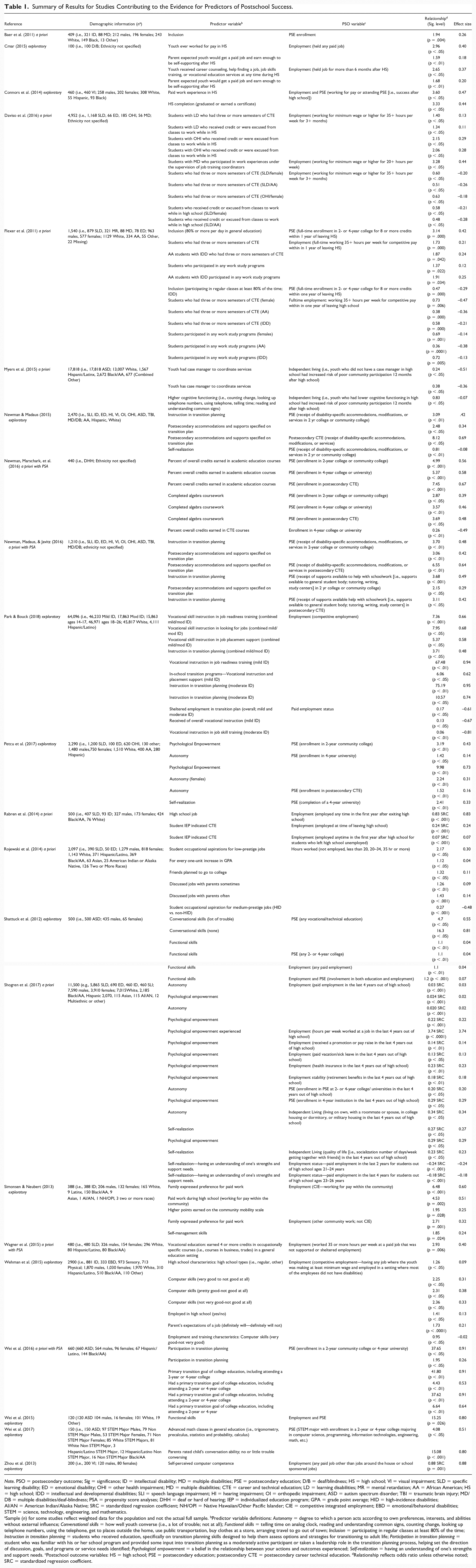
Note. PSO = postsecondary outcome; Sig = significance; ID = intellectual disability; MD = multiple disabilities; PSE = postsecondary education; D/B = deaf/blindness; HS = high school; VI = visual impairment; SLD = specific learning disability; ED = emotional disability; OHI = other health impairment; MD = multiple disabilities; CTE = career and technical education; LD = learning disabilities; MR = mental retardation; AA = African American; HS = high school; IDD = intellectual and developmental disabilities; SLI = speech language impairment; HI = hearing impairment; OI = orthopedic impairment; ASD = autism spectrum disorder; TBI = traumatic brain injury; MD/DB = multiple disabilities/deaf-blindness; PSA = propensity score analyses; DHH = deaf or hard of hearing; IEP = individualized education program; GPA = grade point average; HID = high-incidence disabilities; AI/AN = American Indian/Alaska Native; SRC = standardized regression coefficient; NH/OPI = Native Hawaiian/Other Pacific Islander; CIE = competitive integrated employment; EBD = emotional/behavioral disabilities; STEM = science, technology, engineering, and mathematics.
Sample (n) for some studies reflect weighted data for the population and not the actual full sample. bPredictor variable definitions: Autonomy = degree to which a person acts according to own preferences, interests, and abilities without external influence; Conversational skills = how well youth converse (i.e., a lot of trouble; not at all); Functional skills = telling time on analog clock, reading and understanding common signs, counting change, looking up telephone numbers, using the telephone, get to places outside the home, use public transportation, buy clothes at a store, arranging travel to go out of town; Inclusion = participating in regular classes at least 80% of the time; Instruction in transition planning = students who received education, specifically on transition planning skills designed to help them assess options and strategies for transitioning to adult life; Participation in transition planning = student who was familiar with his or her school program and provided some input into transition planning as a moderately active participant or taken a leadership role in the transition planning process, helping set the direction of discussion, goals, and programs or service needs identified; Psychological empowerment = a belief in the relationship between your actions and outcomes experienced; Self-realization = having an understanding of one’s strengths and support needs. cPostschool outcome variables: HS = high school; PSE = postsecondary education; postsecondary CTE = postsecondary career technical education. dRelationship reflects odds ratio unless otherwise noted; SRC = standardized regression coefficient.
Evidence for Existing Predictors
This review provides additional support for career and technical education (CTE; previously vocational education), exit exam/high-school diploma status, goal-setting, inclusion in general education, paid employment/work experience, parent expectations, program of study, self-care/independent living skills, self-determination/self-advocacy, social skills, student support, transition program, work study, and youth autonomy/decision-making as in-school predictors of postschool success. Based on NTACT’s levels of evidence for correlational research (see Figure S1 in supplemental materials), goal-setting, parent expectations, program of study, student support, and youth autonomy/decision-making moved from a promising predictor to a research-based predictor, and CTE moved from a research-based predictor to an evidence-based predictor. For the remaining six existing predictors (i.e., career awareness, community experiences, interagency collaboration, occupational courses, parent involvement, travel skills), no change in level of evidence was identified. Table 1 details demographics, predictor and outcome variables, and effect sizes for each study. Table 2 summarizes predictors across prior reviews.
Levels of Evidence for Predictors of Postschool Success.
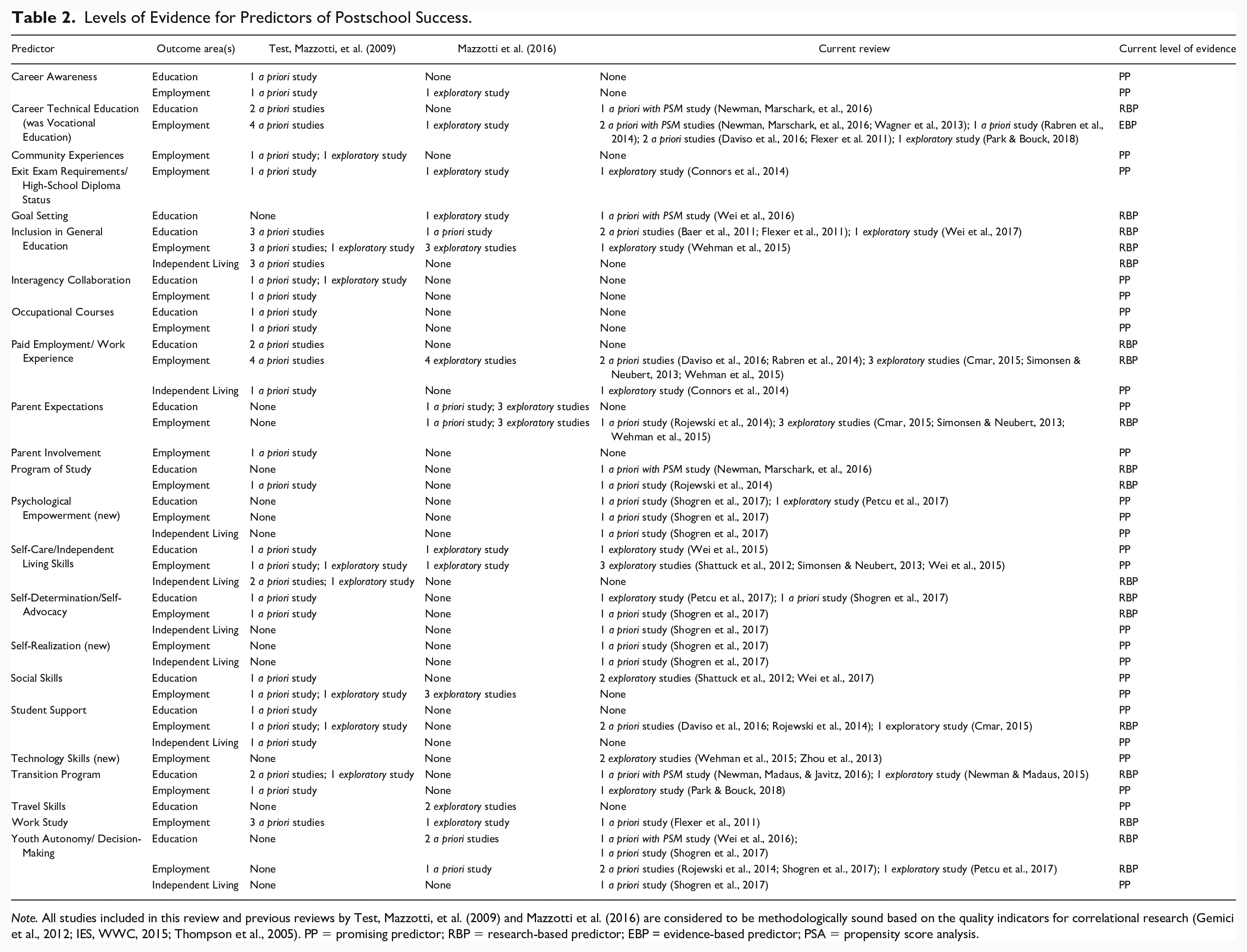
Note. All studies included in this review and previous reviews by Test, Mazzotti, et al. (2009) and Mazzotti et al. (2016) are considered to be methodologically sound based on the quality indicators for correlational research (Gemici et al., 2012; IES, WWC, 2015; Thompson et al., 2005). PP = promising predictor; RBP = research-based predictor; EBP=evidence-based predictor; PSA = propensity score analysis.
CTE
Participation in CTE was identified as an evidence-based predictor of postschool employment and a research-based predictor of postschool education. The addition of one a priori study with PSA (Newman, Marschark, et al., 2016) affected the level of evidence for postschool education. The addition of two a priori studies with PSA (Newman, Marschark, et al., 2016; Wagner et al., 2015), three a priori studies (Daviso et al., 2016; Flexer et al., 2011; Rabren et al., 2014), and one exploratory study (Park & Bouck, 2018) changed the level of evidence for postschool employment. Effect sizes ranged from small to large. Examples of CTE from the contributing studies included providing job readiness training (Flexer et al., 2011) and ensuring students with disabilities are CTE concentrators (Park & Bouck, 2018).
Exit exam/high-school diploma status
Exit exam/high-school diploma status was identified as a promising predictor of postschool employment. There was no change in the level of evidence from previous reviews (i.e., Mazzotti et al., 2016; Test, Mazzotti, et al., 2009). The effect size was large. An example of exit exam/high-school diploma status from the contributing study included having graduated from high school or earning a graduation certificate (Connors et al., 2014).
Goal-setting
Goal-setting was identified as a research-based predictor of postschool education. The addition of one a priori with PSA study (Wei et al., 2016) changed the level of evidence from promising to research-based. The effect size was large. An example of goal-setting from the contributing study included having a primary transition goal of going to college in the transition plan (Wei et al., 2016).
Inclusion in general education
Inclusion in general education was identified as a research-based predictor of postschool education, employment, and independent living. Findings resulted in no change in level of evidence for this predictor. Effect sizes ranged from small to large. Examples of inclusion in general education included participation in regular education classes for at least 80% of the school day (Flexer et al., 2011); enrollment in regular high schools, rather than segregated high schools (Wehman et al., 2015); and participation in advanced math coursework (Wei et al., 2017).
Paid employment/work experience
Paid employment/work experience was identified as a promising predictor of postschool independent living and a research-based predictor of postschool education and employment. Findings resulted in no change in level of evidence. Effect sizes ranged from small to large. Examples of paid employment/work experience from contributing studies included working for pay in the community (Simonsen & Neubert, 2013) and being employed prior to exiting high school (Rabren et al., 2014).
Parent expectations
Parent expectations were identified as a research-based predictor of postschool employment. The addition of one a priori study (Rojewski et al., 2014) and three exploratory studies (Cmar, 2015; Simonsen & Neubert, 2013; Wehman et al., 2015) changed the level of evidence from promising to research-based for postschool employment. Effect sizes ranged from small to large. One example of parent expectations from contributing studies included parents expressing expectations for their child to gain paid work after high school (Cmar, 2015; Simonsen & Neubert, 2013; Wehman et al., 2015).
Program of study
Program of study was identified as a research-based predictor of postschool employment. The addition of one a priori with PSA study (Newman, Marschark, et al., 2016) changed the level of evidence from promising to research-based for postschool employment. Effect sizes ranged from small to large. An example of program of study from the contributing study included completing algebra coursework (Newman, Marschark, et al., 2016).
Self-care/independent living skills
Self-care/independent living skills were identified as a promising predictor of postschool education and employment. Findings resulted in no change in level of evidence. Effect sizes ranged from small to large. Examples of self-care/independent living skills from contributing studies included having strong functional living skills in high school (e.g., telling time, reading and understanding common signs; Shattuck et al., 2012; Wei et al., 2015) and higher points earned on a community mobility scale (Simonsen & Neubert, 2013).
Self-determination/self-advocacy
Self-determination/self-advocacy was identified as a research-based predictor of postschool education and employment and a promising predictor of independent living. The addition of one exploratory study (Petcu et al., 2017) and one a priori study (Shogren et al., 2017) changed the level of evidence from promising to research-based for postschool employment and education. Findings from the current review provided new evidence to support self-determination as a predictor of independent living (Shogren et al., 2017). Effect sizes ranged from small to large. An example of self-determination/self-advocacy from contributing studies included having innate psychological empowerment as a belief in the relationship between your actions and outcomes experienced (Shogren et al., 2017).
Social skills
Social skills were identified as a promising predictor of postschool education and employment. Findings resulted in no change in level of evidence. Effect sizes were large. Examples of social skills from contributing studies included how well youth conversed (Shattuck et al., 2012) and how parents rated their child’s ability to converse (Wei et al., 2017).
Student support
Student support was identified as a research-based predictor of postschool employment. The addition of two a priori studies (Daviso et al., 2016; Rojewski et al., 2014) and one exploratory study (Cmar, 2015) changed the level of evidence from promising to research-based. Effect sizes ranged from small to medium. Examples of student support from contributing studies included students with disabilities (a) receiving career counseling, (b) obtaining help finding a job, (c) training for job skills, or (d) acquiring vocational education services at any time in high school (Cmar, 2015; Daviso et al., 2016; Rojewski et al., 2014).
Transition program
Transition program was identified as a research-based predictor of postschool education and employment. Findings resulted in no change in level of evidence with transition program remaining as a research-based predictor of postschool employment and education. Effect sizes ranged from medium to large. One example of transition program from contributing studies included students developing transition planning skills to help them assess options and strategies for transitioning to adult life (Newman & Madaus, 2015; Newman, Madaus, & Javitz, 2016).
Work study
Work study was identified as a research-based predictor of postschool employment. Findings resulted in no change in level of evidence; therefore, work study remains a research-based predictor of postschool employment. Effect sizes ranged from small to medium. An example of work study from contributing studies included providing students opportunities to participate in work study programs in high school (e.g., work skills instruction/experiences to develop work attitudes and behaviors; Flexer et al., 2011).
Youth autonomy/decision-making
Youth autonomy/decision-making was identified as a promising predictor of postschool independent living and a research-based predictor of postschool education and employment. Results of this review identified no additional evidence for youth autonomy/decision-making as a predictor of postschool education. The addition of two a priori studies (Rojewski et al., 2014; Shogren et al., 2017) and one exploratory study (Petcu et al., 2017) changed the level of evidence from promising to research-based for postschool employment. One a priori study (Shogren et al., 2017) provided evidence that youth autonomy/decision-making is a predictor of postschool independent living. Effects ranged from small to large. Examples of this predictor from contributing studies included the degree to which a person acts according to their own preferences, interests, and abilities (Shogren et al., 2017) and taking a leadership role in the transition planning process (Wei et al., 2016).
Evidence for New Predictors
Three new predictors were identified as promising predictors of postschool success. Psychological empowerment (i.e., belief in the relationship between actions and outcomes), a component of self-determination, was identified as a promising predictor of postschool education, employment, and independent living (Petcu et al., 2017; Shogren et al., 2017). Effect sizes ranged from small to large. In addition, self-realization (i.e., having an understanding of one’s strengths and support needs), another component of self-determination, was a promising predictor of postschool employment and independent living (Shogren et al., 2017). Effect sizes were medium. Finally, technology skills (i.e., computer competence, computer skills) were identified as a promising predictor of postschool employment. Effect sizes ranged from medium to large.
Statistically Significant Negative Correlational Findings
This systematic review also examined significant negative relationships that may indicate contradictory or potentially confirming evidence for predictor categories. Of the 22 studies, seven studies (i.e., Daviso et al., 2016; Flexer et al., 2011; Myers et al., 2015; Newman, Marschark, et al., 2016; Park & Bouck, 2018; Shogren et al., 2017; Wehman et al., 2015) reported significant negative relationships between in-school predictors and one or more postschool outcome areas. Table 1 includes results of significant negative correlational findings. Related to CTE and work study, Newman, Marschark, et al. (2016) reported one significant negative correlation, which indicated neither completing a greater number of CTE courses nor being a CTE concentrator predicted positive postsecondary education enrollment in a 4-year college or university for youth who were deaf or hard of hearing. Daviso et al. (2016) found significant negative correlations related to CTE and work study and found females with specific learning disabilities and other health impairments were less likely than males with disabilities to gain competitive integrated employment after high school. In addition, Black youth with specific learning disabilities were less likely than other youth with disabilities to gain competitive integrated employment after high school. Similar to Daviso et al. (2016), Flexer et al. (2011) reported significant negative correlations related to CTE and work study and found females with specific learning disabilities, youth with intellectual and developmental disabilities, and Black youth with disabilities were less likely to gain competitive integrated employment.
Related to inclusion in general education and paid employment/work experience, Flexer et al. (2011) investigated inclusion in general education as a predictor of postschool education and found one significant negative correlation suggesting youth with intellectual and developmental disabilities were less likely than other youth to enroll full time in 2-year and 4-year colleges. Furthermore, Park and Bouck (2018) found three significant negative correlations related to sheltered employment and vocational instruction and found youth with mild/moderate intellectual disability who had sheltered employment as part of their transition plan were less likely to experience paid employment postschool.
Other negative findings were related to the interagency collaboration, self-determination/self-advocacy, and technology skills predictors. Myers et al. (2015) reported significant negative correlations related to high-school variables that increased risk for community and social participation of adults with autism. Youth with autism who did not have case managers in high school were at increased risk of poor community participation and increased risk of no social participation. Shogren et al. (2017) found two significant negative correlations that indicated youth with disabilities who had self-realization skills in high school were less likely to experience positive postschool employment outcomes. Wehman et al. (2015) found one significant negative correlation that indicated students who had poor computer skills were less likely to gain competitive integrated employment post-school.
Discussion
The purpose of this systematic literature review was to (a) examine the secondary transition correlational literature published since Test, Mazzotti, et al. (2009), (b) identify additional evidence to support existing predictors of postschool success, and (c) identify new predictors of postschool success for youth with disabilities. We identified additional evidence to support 14 existing predictors identified by Test, Mazzotti, et al., 2009 and Mazzotti et al. (2016). In addition, we identified three new predictors of postschool success, bringing the total number of in-school predictors to 23.
Limitations
Several limitations should be considered. First, we conducted this review using pre-defined methodological standards developed by the NTACT (NTACT, 2015, 2017; Test, Mazzotti, et al., 2009) based on Thompson et al. (2005), Gemici et al. (2012), and IES, WWC (2015) suggestions. These standards may not be as rigorous as those used in other fields (e.g., health care; Melnyk et al., 2017).
Second, correlational research does not provide causal evidence that the identified predictors will lead to positive postschool outcomes for youth with disabilities. However, under the Every Student Succeeds Act (2015), high-quality correlational research falls at the Tier 3 level for promising evidence. Caution should be used when considering the predictors as interventions that promote positive postschool outcomes for youth with disabilities, as the IES’ WWC does not consider Tier 3 as meeting evidence of effectiveness (IES, WWC, 2020).
Third, it should be noted that only significant positive findings from studies contributed to the levels of evidence for the predictors in this review. Significant negative findings from this review did not add to the evidence for promising, research-based, or evidence-based predictors. In addition, this review only included peer-reviewed, methodologically sound correlational studies that met the quality indicators for correlational research (Thompson et al., 2005).
Implications for Future Research
Future research should consider using more rigorous research designs when conducting correlational research (e.g., PSA). Half of the studies identified in this review were exploratory, with no planned hypothesis before analysis. The other half of the studies were a priori with only four of those studies using more advanced analytical procedures (i.e., PSA; Newman, Madaus, & Javitz, 2016; Newman, Marschark, et al., 2016; Wagner et al., 2015; Wei et al., 2016) to examine predictors of postschool outcomes for youth with disabilities. Quasi-experimental correlational studies using methods such as PSA have shown positive impacts on employment and education for youth with disabilities after high school. PSA is considered a quasi-experimental design, and the propensity score “is the probability that an observation would appear in the intervention group given a set of measured characteristics” (WWC, 2020, p. 30). Using rigorous methods for correlational research with planned hypotheses that follow the quality indicators will likely increase the levels of evidence for the existing predictors and potentially identify new evidence-based predictors of postschool success.
To increase generalizability among specific disability groups, future correlational research should include large sample sizes and focus on subpopulations of youth with disabilities to validate and extend current findings. Prior reviews suggested that future research disaggregate results by disability. Our findings indicated that 11 of the 22 studies focused on one specific disability group. This may indicate that researchers are responding to this advice. It is important to caution that we cannot suggest that specific predictors enhance postschool outcomes for specific disability groups due to the number of participants included within each study, variability in the individual characteristics of participants within each disability category (e.g., autism spectrum disorder, intellectual disability), and variables examined at different points in time. Consideration should be given to conducting meta-analyses, similar to Haber et al. (2016), which may provide evidence of the in-school experiences that indicate the strongest relationships to postschool outcomes for youth and can reflect “variability in these relationships by outcome, research design, and population” (Haber et al., 2016, p. 3).
Future research should consider disaggregating data beyond disability to other demographic characteristics (e.g., race/ethnicity, gender, socioeconomic status) to ensure researchers and educators understand what works for whom. Results of this review suggested specific predictors may be impacted, based on gender, disability, and race/ethnicity. For example, Daviso et al. (2016) found significant negative correlations between participation in CTE and decreased postschool employment outcomes for females with specific learning disabilities and other health impairments and Black youth with specific learning disabilities. Similarly, Flexer et al. (2011) found statistically significant negative correlations between participation in CTE and postschool employment for youth with intellectual and developmental disabilities and Black youth. If the field really wants to understand factors that influence transition program development, improvement, and evaluation, and as Haber et al. (2016) put it, learn “what works, when, for whom, and with whom?” (p.1.), future research will need to begin asking those critical questions and ensure plans for analysis of data are designed to answer those specific questions.
Future research should focus on further application of the 23 predictors. In 2015, Rowe et al. operationalized the original 16 predictors from Test, Mazzotti, et al. (2009) through a Delphi procedure, which resulted in the Predictor Implementation School and District Self-Assessment and two evolutions of this resource (NTACT, 2019). It is incumbent upon researchers to assist the field in understanding precisely what is reflected in the predictor categories identified since the Test, Mazzotti, et al. study to extend the research findings for practice (i.e., goal-setting, parent expectations, psychological empowerment, self-realization, technology skills, travel skills, youth autonomy/decision-making). It will also be necessary for researchers to assist the field in the application of these 23 predictors to support transition program improvement.
Implications for Practice
The predictors can guide program creation, improvement, and evaluation (Rowe et al., 2015; Test, Mazzotti, et al., 2009). Many state and local education agencies examine data (e.g., postschool outcomes data, graduation data) for program improvement as part of their continuous improvement systems. As Rowe et al. (2015) emphasized, understanding predictors of postschool success can assist schools and districts in identifying whether or not they are implementing empirically supported practices to influence change in needed areas. In this review, parent expectations for paid work in the community were a predictor of postschool success. Knowledge of this predictor may provide school and community programs an opportunity to deeply examine what strategies and factors are implemented to develop and encourage high expectations by families.
By utilizing the predictors of postschool success, practitioners have guidance to implement instruction and support factors in their classrooms and the community to improve postschool outcomes for youth with disabilities. Using the predictors will allow schools to be strategic and ensure a good return on their investments (e.g., time, effort, financial resources), providing transition services to youth that have the best chance of improving students’ postschool outcomes. It is also important that educators and policy makers take into account the contextual factors that influence outcomes for youth, families, and communities related to poverty and culture (Trainor et al., 2020). While there is little evidence in the correlational literature that provides guidance on transition programming for these diverse groups, it is imperative that factors such as poverty and culture are taken into consideration related to both policy and practice.
Policies should be directed at linking students and their families with services and supports (e.g., predictors) in school that foster student success post school. The predictors can guide administrators or governing bodies at both the state and local levels to implement procedures and policies that are based in research and are more likely to lead to positive postschool success. Policymakers must keep in mind the intended goal of IDEIA, which is to prepare students for “further education, employment, and independent living” (IDEIA, 2004). State and local education agencies can empower schools by providing clear/consistent definitions, regulations, guidance, and communication regarding the provision of services and supports (e.g., predictors).
It will be critical to help practitioners operationalize the connection between the predictors of postschool success and evidence-based interventions to foster evidence-based practice in secondary special education. To better prepare those working with transition-age youth in schools, faculty and those responsible for pre-service and in-service personnel development should ensure the predictors of postschool success are a focus of knowledge development (Simonsen et al., 2018). The focus should be on what the predictors are and how to implement them in authentic contexts. Consideration of contexts must include the relevance and application of predictors in different communities, school environments, and with different populations of students with regard to such variables as disability, race/ethnicity, and gender. In the current review, the level of evidence for self-determination and goal-setting as predictors increased, and we identified new evidence for psychological empowerment and self-realization. These findings provide faculty and professional development providers support for their students and personnel to understand this family of predictors of postschool success as correlates of improved education, employment, and independent living outcomes.
Conclusion
The transition to adulthood is a lifelong journey that requires educators, adult service providers, and policy makers to continue to work together to ensure a smooth transition for all youth. Likewise, the field of secondary special education and transition continues to mature by pinpointing and promoting research-validated practices and predictors to prepare students with disabilities for adult life. The results of this systematic literature review contribute to the growth of the field by identifying additional evidence for existing predictors (n = 14) and identifying new (n = 3) predictors of postschool success correlated with improved outcomes for secondary students with disabilities. Researchers and practitioners may consider the findings of this review and recommendations for research and practice as we move forward as a field.
Supplemental Material
Figure_S1_LOE_Criteria_for_CDTEI_2020_NTACT_FINAL – Supplemental material for Secondary Transition Predictors of Postschool Success: An Update to the Research Base
Supplemental material, Figure_S1_LOE_Criteria_for_CDTEI_2020_NTACT_FINAL for Secondary Transition Predictors of Postschool Success: An Update to the Research Base by Valerie L. Mazzotti, Dawn A. Rowe, Stephen Kwiatek, Ashley Voggt, Wen-Hsuan Chang, Catherine H. Fowler, Marcus Poppen, James Sinclair and David W. Test in Career Development and Transition for Exceptional Individuals
Supplemental Material
Figure_S2_Quality_Indicator_Checklist_Correlational_Research_FINAL – Supplemental material for Secondary Transition Predictors of Postschool Success: An Update to the Research Base
Supplemental material, Figure_S2_Quality_Indicator_Checklist_Correlational_Research_FINAL for Secondary Transition Predictors of Postschool Success: An Update to the Research Base by Valerie L. Mazzotti, Dawn A. Rowe, Stephen Kwiatek, Ashley Voggt, Wen-Hsuan Chang, Catherine H. Fowler, Marcus Poppen, James Sinclair and David W. Test in Career Development and Transition for Exceptional Individuals
Footnotes
Declaration of Conflicting Interests
The author(s) declared no potential conflicts of interest with respect to the research, authorship, and/or publication of this article.
Funding
The author(s) disclosed receipt of the following financial support for the research, authorship, and/or publication of this article: This document was developed by The National Technical Assistance Center on Transition (NTACT), Charlotte, NC, funded by Cooperative Agreement Number H326E140004 with the U.S. Department of Education, Office of Special Education Programs and the Rehabilitation Services Administration. Opinions expressed herein do not necessarily reflect the position or policy of the U.S. Department of Education nor does mention of trade names, commercial products, or organizations imply endorsement by the U.S. Department of Education.

References
Supplementary Material
Please find the following supplemental material available below.
For Open Access articles published under a Creative Commons License, all supplemental material carries the same license as the article it is associated with.
For non-Open Access articles published, all supplemental material carries a non-exclusive license, and permission requests for re-use of supplemental material or any part of supplemental material shall be sent directly to the copyright owner as specified in the copyright notice associated with the article.
