




Abstract
Background:
Evidence-based interventions for the prevention of safety incidents at work are most effective when they include a focus on the hierarchy of controls. However, prior studies addressing the effects of safety leadership and safety climate are limited. The determination and adoption of evidence-based interventions specifically in the U.S. Agricultural, Forestry, and Fishing (AgFF) sector can be a challenge, and prior studies have shown a paucity of evidence-based occupational safety and health practices in the AgFF sector.
Methods:
We enrolled 73 dairy farm supervisors from 27 U.S. farms to participate in a 12-module dairy leadership training program. We employed the Kirkpatrick Model (KM) to evaluate different levels of training effectiveness.
Findings:
Participant reactions to the program were positive (KM level 1), and evaluation of knowledge gained among participants revealed 90% had learned new safety leadership information (KM level 2) that could be applied in their role as a dairy farm supervisor (KM level 3). Nearly 88% reported favorable experiences during their training participation. Post-training group interviews with supervisors (n = 21) provided information regarding training experiences and constructive feedback regarding opportunities for training improvement. Behavior change evaluation revealed nearly 50% of observed safety hazards on farms were related to livestock handling (21.6%), trips/falls (17.1%), and moving machinery (10.4%). The largest percentage of observed workplace conflicts were verbal (27.8%).
Conclusions/Application to Practice:
The application of the Kirkpatrick Model of training evaluation suggests participating dairy farm supervisors had positive experiences with the training program, and acquired safety hazard and workplace conflict identification skills.
Background
The determination and adoption of evidence-based interventions in occupational safety and health (OSH) can be a challenge across all industrial sectors (Guerin et al., 2022). This is partially the result of historical OSH research which has focused on the etiological aspects of workplace injuries and illnesses, as opposed to the adoption of OSH practices or their impact determination (Cunningham et al., 2020). Researchers have drawn attention to the need for improved research that evaluates the effectiveness and impact of safety practices which can facilitate the ultimate adoption of evidence-based OSH interventions and practices (Cunningham et al., 2020; Dugan & Punnett, 2017; Guerin et al., 2019; Lucas et al., 2014; Tinc et al., 2018).
The U.S. Agricultural, Forestry, and Fishing (AgFF) industrial sector continues to have among the highest rates of workplace fatalities, injuries, and musculoskeletal disorders. This sector has inherent challenges when attempting to conduct OSH translational research, often involving accessing remote worksites that employ a predominantly immigrant workforce (Driscoll et al., 2022; Panikkar & Barrett, 2021). Conducting translational research among non-English speaking immigrant workers has cultural, linguistic, and literacy challenges when adapting and adopting evidence-based safety practices (Rodriguez et al., 2018, 2025). The increasing emphasis on translation research for OSH is much needed, and is already leading to meaningful impacts in the AgFF sector (Lucas et al., 2014; Sorensen et al., 2017). However, OSH translational research remains limited in AgFF, which propagates the need for continued development of evidenced-based OSH interventions and practices.
A recent systematic review showed that evidence-based interventions for the prevention of safety incidents at work are most effective when they include a multi-faceted approach, with a focus on the upper levels of the hierarchy of controls (i.e., elimination, substitution, technical solutions, organizational initiatives, personal protective equipment; Dyreborg et al., 2022). However, the review also found that rigorous studies dealing with the “softer side” of safety promotion are still in their infancy (e.g., safety culture, safety [Rodriguez et al., 2025] leadership and management of workers, coaching, and feedback). Some studies have shown that leadership practices of front-line supervisors influence the safety-related behaviors of employees (Hofmann et al., 2003; Komaki et al., 1982; Zohar, 2002, 2004), and that leader-based interventions have a much stronger influence on worker safety behavior and workplace safety climate than singular worker-based interventions (Zohar & Luria, 2003). However, translational research addressing safety leadership and climate in the AgFF sector is extremely limited.
Few resources are currently available that provide effective evidence-based safety leadership or management skill development for front-line supervisors on dairy farms (Barkema et al., 2015). Nor have studies investigated safety leadership practices on U.S. dairy farms. This reality is of concern due to the ongoing transformation of the U.S. dairy industry characterized by large farming operations with larger herd sizes and foreign-born workforces (Hanson, 2022; IBISWorld, 2022; USDA-NASS, 2022). Dairy farms are also recognized as having elevated risks for work-related injuries and illness (Driscoll et al., 2022; Panikkar & Barrett, 2021).
In this current study, we developed, delivered, and evaluated a dairy farm safety leadership e-learning training program that integrates some of the evidence of what is effective in preventing safety incidents at work (Dyreborg et al., 2022). This is the third manuscript of a three-part series that collectively presents the findings of the training effectiveness evaluation. The first manuscript presents findings regarding the processes and effects of the training program on supervisor safety leadership behavior (Douphrate et al., 2025b), while the second manuscript presents the training effects on safety climate among supervisors and their workers (Douphrate et al., 2025a). This third manuscript aims to further the discussion of OSH translational research in the U.S. dairy industry by: (a) presenting a summary of training development and key events; (b) reporting additional data regarding supervisor-identified and reported safety hazards and workplace conflicts; (c) discussing the training development and delivery implications, as well as unique challenges of implementing safety leadership training programs among dairy farm supervisors; and (d) proposing next steps for the OSH research community and AgFF industry related to safety leadership training development and delivery.
Methods
Training Development
Two North American based research approaches provide guidelines for tackling the challenges associated with OSH translational research in AgFF which include the principles of research to practice (r2p) in agriculture (Wickman, 2021), as well as integrated knowledge transfer and exchange (KTE; Eerd & Saunders, 2017; Van Eerd, 2019). The National Institute for Occupational Safety and Health (NIOSH) defines r2p as “an approach to collaborations with partners and stakeholders on the use, adoption, and adaptation of NIOSH knowledge, interventions, and technologies” (NIOSH, 2022). Building on this is the Canadian-based KTE approach involving “a process of exchange between researchers and target audiences designed to make relevant research information available and accessible to stakeholders for use in practice, planning, and policy-making” (Van Eerd, 2019, p. 55). A more specific “integrated” KTE approach involves “knowledge users as equal partners alongside researchers which will lead to research that is more relevant to, and more likely to be useful to, the knowledge users” (Eerd & Saunders, 2017, p. 2). Key to this latter approach in OSH is involving stakeholders as active co-creators and collaborators in research projects. Research to practice is a two-way exchange of information with stakeholder engagement, and in particular, workplace parties, at multiple stages in the research process, from research development to dissemination and implementation of results. In both the r2p and KTE approaches there is a strong emphasis on evidence-based research in OSH.
The r2p and KTE principles were adopted in this project and applied by conducting a training needs assessment. We, the research team, partnered with state dairy extension personnel to identify dairy farms and their ownership and management. We then met with dairy farm owners, managers, and workers in Texas, Kansas, New Mexico, and Colorado. Using a structured interview format, these key informants provided information and insight, which helped guide the development of training content, delivery, and evaluation methods. Using this information, we developed the training content and delivery methodology. After development, we presented the training materials to dairy owners and supervisors for their review and endorsement.
Training Content
Training content was presented over 13 modules—12 unique training modules and one cumulative review module, with each module taking between 20 and 30 min to complete. Training modules, which were made available in both English and Spanish, covered the following topics: supervisory and worker roles in farm safety, causes of injuries and fatalities on a dairy farm, safety hazards, recognition and prevention of safety hazards, modeling safety to workers, effective safety communication (delivered over two modules), worker safety discipline, safety meetings, workplace conflicts, safety culture, and a final cumulative summary (Douphrate et al., 2025b).
Mechanism of Training
Training content was delivered in an asynchronous format on mobile devices using mobile-learning (i.e., m-learning) principles. This m-learning approach enabled an efficient and effective delivery of training content to dairy farm supervisors on remote dairy farms, where computing resources and internet capacity are limited, unreliable, or nonexistent. The utilization of an asynchronous training approach enabled supervisors to receive training content on their own schedule, both during and outside of work, and at convenient locations on the farm or at home using a personal mobile device.
Training Delivery
Safety leadership training was delivered to participating dairy farm supervisors over a 16 to 35 week period. Before and after viewing each module, supervisors were instructed to complete an examination comprised of 15 questions on a QualtricsXM online platform. After viewing each module, supervisors were given specific weekly assignments for them to practice and reinforce newly learned safety leadership behaviors.
Data Collection
Modules 4 and 5 of the training program included content related to dairy farm safety hazard recognition and prevention. As part of the safety leadership behavior reporting assignment, supervisors were asked to report on a mobile app if they performed a safety hazard assessment on the day of reporting. If a supervisor reported that a hazard assessment was performed, they were also asked to report the type of safety hazard identified, and if they had eliminated or mitigated the hazard. Module 11 of the training program included content related to identifying workplace conflict among employees. Supervisors were also asked to report if workplace conflicts were observed. If conflicts were observed, supervisors were asked to report the type of conflict. Refer to Douphrate et al. (2025b) for a detailed presentation of supervisor leadership behavior reporting.
Participant training evaluations were completed after each module, as well as after completion of the entire training program. Each participant was asked five questions with literacy-appropriate options to assess satisfaction with the training content: “Yes” represented by a green happy face, “Maybe” with a yellow-orange face, and “No” with a red frowning face. Additionally, structured feedback group sessions were conducted with many of the supervisors who had completed the training (n = 21). These feedback sessions had the active participation of all supervisors, which provided great insight into their experience of participating in the training program. Supervisors provided constructive feedback concerning the training, including training attributes and opportunities for improvement.
Training Intervention and Evaluation Process
Participant flow information is depicted in Figure 1. Using data from the Progressive Dairy 2023 U.S. Dairy Trade and Processing Report, there is an estimated 94,000 dairy workers and supervisors in the U.S., with an estimated 54,440 workers and supervisors in the Western U.S. states (Progressive Dairy, 2024). An estimated 13,830 dairy supervisors and workers are employed in the research training region comprised of Texas, New Mexico, Colorado, Kansas, Oklahoma, and Nebraska. We enrolled 103 dairy supervisors from the training region who completed both the sociodemographic intake survey and the baseline safety climate survey. In addition, 373 workers under the supervision of the enrolled supervisors also completed a baseline safety climate survey assessing their supervisor and co-workers. A total of 73 participating supervisors reported their baseline safety leadership behaviors for 2 weeks prior to completing the 12 training modules. However, only 65 supervisors and 278 of their workers completed the exit safety climate survey. A total of 73 supervisors completed training reaction ratings, and 21 supervisors provided training experiences and feedback in group sessions upon completion of the training intervention.
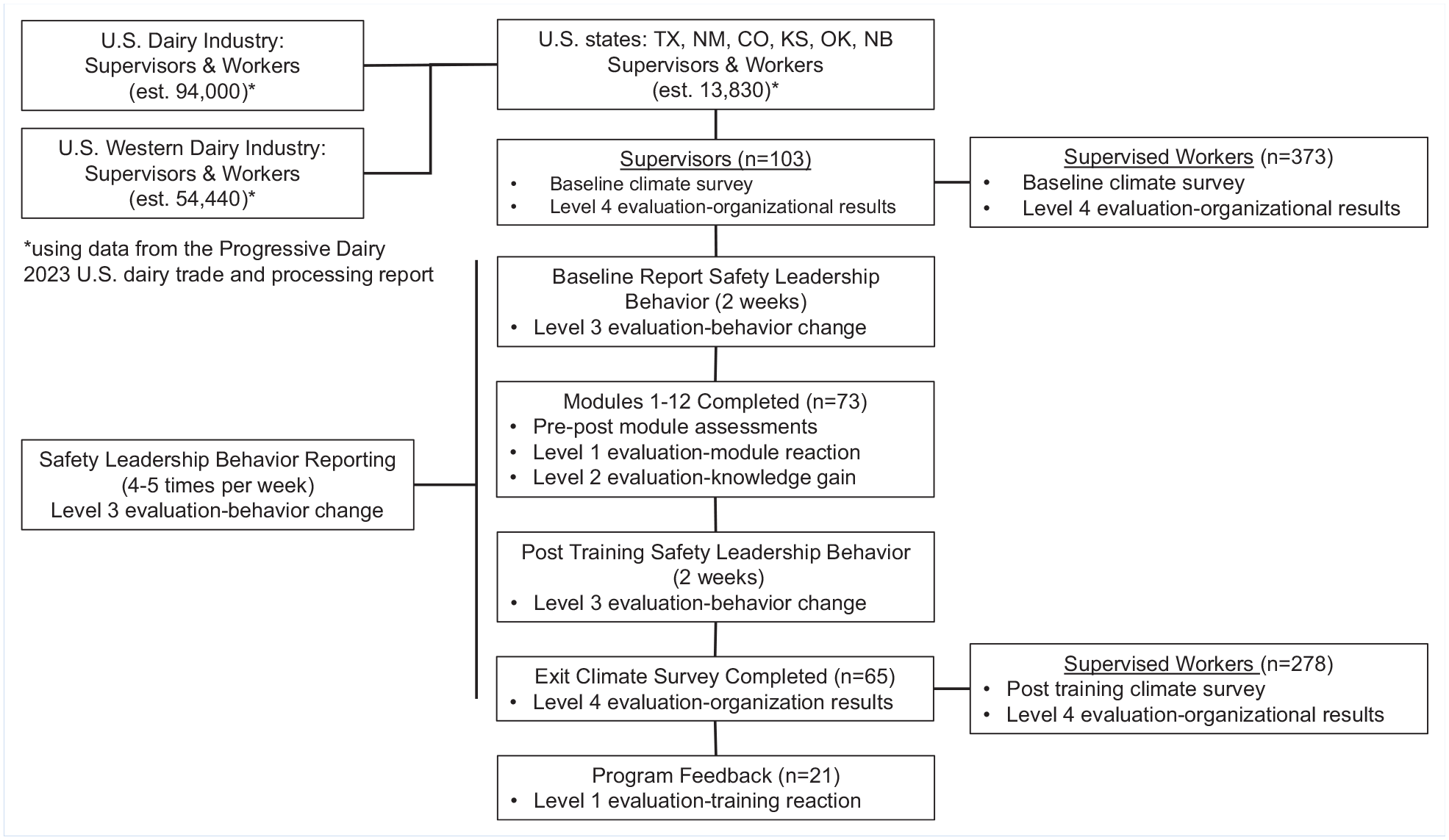
Participant enrollment and training evaluation flow diagram using Kirkpatrick’s four levels of training evaluation (Douphrate et al., 2025b)
Data Analysis
Survival analysis was used to identify optimum training duration based on dropout time from the training program. The status of each participant (dropped or completed) was used as the event variable, and the duration in the program (in days) was used as the time variable. Survival analysis was conducted using the Kaplan-Meier estimator and the Cox proportional hazards model. The Kaplan-Meier estimator is used to estimate survival probability over time, considering the censoring of data points. The Cox proportional hazards model, on the other hand, is a regression model that evaluates the effect of several variables on the hazard or risk of an event occurring. Survival analysis is the most appropriate approach, as it specifically handles time-to-event data where participant exits (dropouts) occur at varying times, while properly accounting for those who complete the program. The combination of Kaplan-Meier estimation and Cox proportional hazards modeling allows us to both visualize dropout patterns over time and quantify the impact of multiple variables on retention, providing richer insights than simpler statistical approaches that only examine final outcomes.
Training evaluation included four levels of training effectiveness evaluation according to the Kirkpatrick Model of training evaluation (Kirkpatrick & Kirkpatrick, 2016). Level 1 of the Kirkpatrick Model is designed to measure participants’ reactions to the learning product, and may include reactions to its relevance, training methods, trainers, qualifications, and assessment methods. Level 2 involves an examination of what trainees learned as a result of participation in a training program. Level 3 measures trainee job performance or behavior change by determining the extent to which trainees apply their newly acquired knowledge and skills on the job. Level 4 involves the evaluation of the impact on organizational results, for example, safety climate. In this training intervention project, we employed all four levels of training effectiveness evaluation. Level 1, and elements of Levels 2 and 3 evaluations are presented in this manuscript. Level 4 evaluations, and the majority of Levels 2 and 3 evaluations are presented in prior manuscripts (Douphrate et al., 2025a, 2025b).
Results
Supervisor Reported Identified Safety Issues
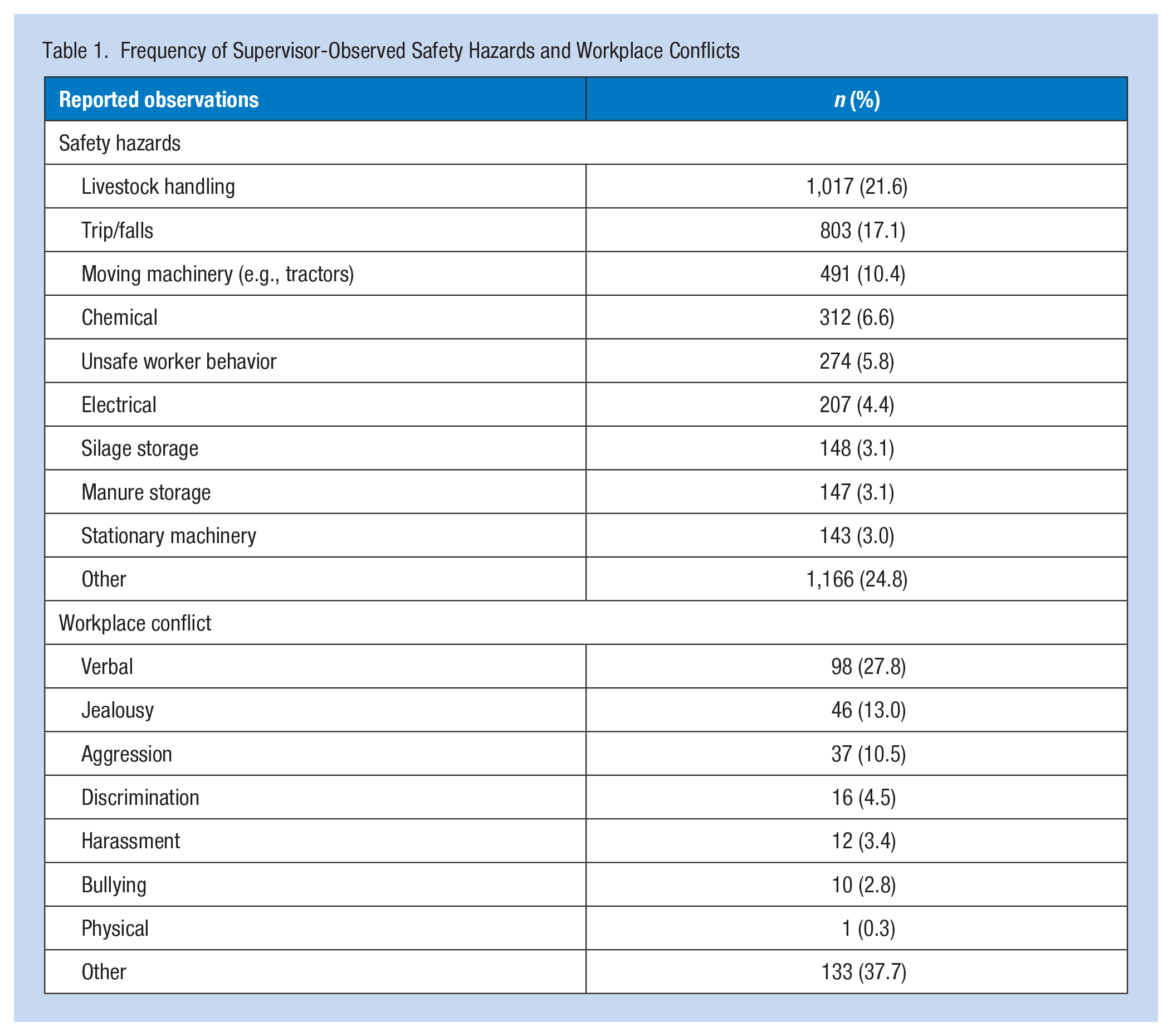
Table 1 presents reported observations of safety hazards identified by participants. Nine dairy farm safety hazards were observed and reported by supervisors, among other (24.8%) miscellaneous safety hazards. Almost 50% of the total observed safety hazards were related to three dairy farm hazards: livestock handling (21.6%), trips/falls (17.1%), and moving machinery (10.4%). A total of seven types of workplace conflict were observed and reported by supervisors. The largest percentage of observed workplace conflicts were verbal (27.8%), or dealt with jealousy (13.0%) and aggression (10.5%).
Frequency of Supervisor-Observed Safety Hazards and Workplace Conflicts
Training Duration
Survival analysis revealed a significant number of participants dropped out before completion of the program. While training content was designed to be presented over 13 modules (12 training modules and a final summary module) with one module completed per week (totaling 13 weeks), participants progressed through the training at their own pace, often taking more than 13 weeks to complete the training.
Level 1 Training Effectiveness Evaluation
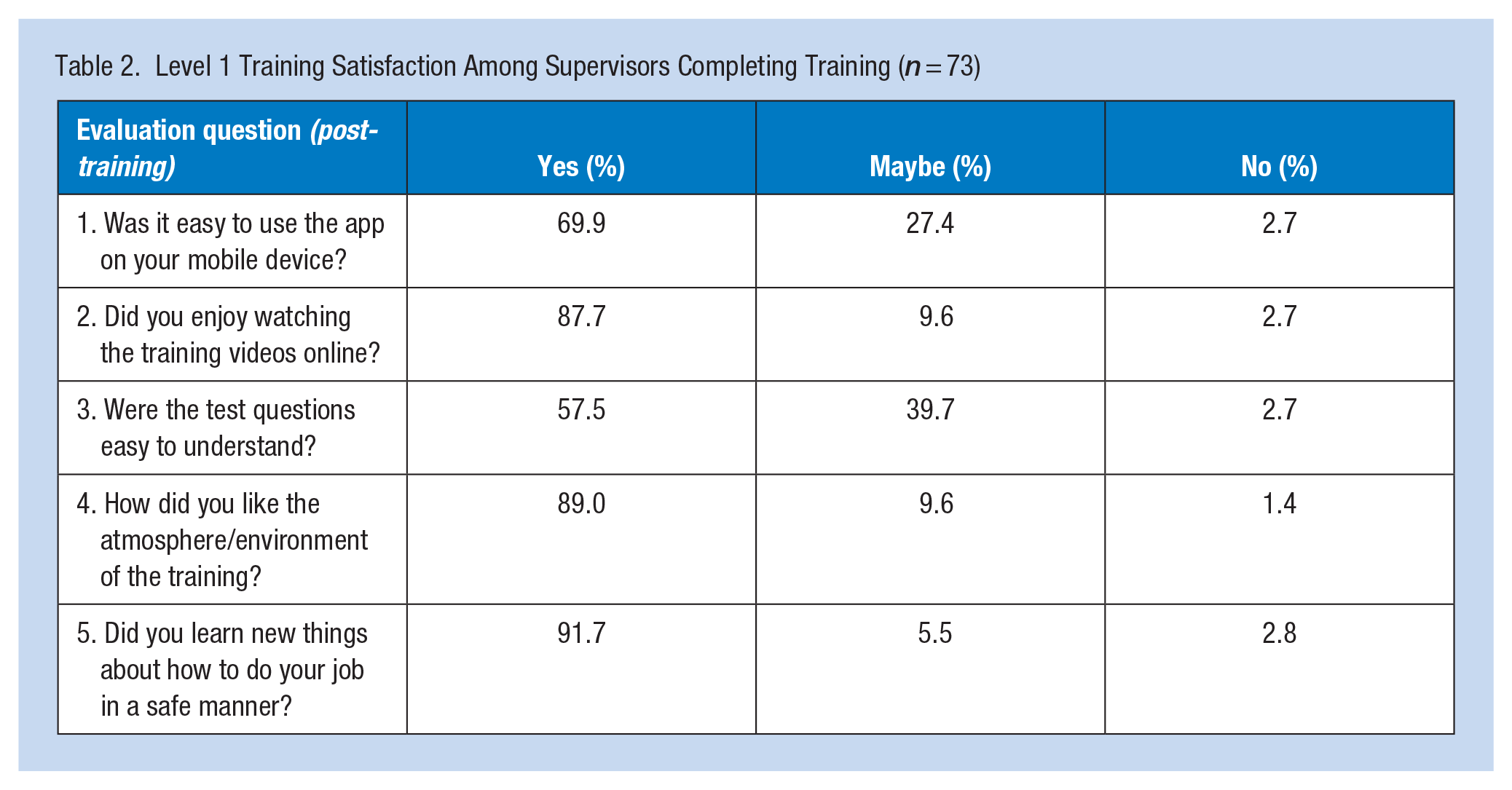
Table 2 presents training satisfaction levels among participating supervisors who completed the training (Kirkpatrick level 1—training effectiveness evaluation). Over 90% of participants reported having learned new safety leadership information that can be applied in their role as a dairy farm supervisor. Nearly 70% of participants reported ease of using their mobile device in the training program to receive training content, as well as in reporting safety leadership behavior. Nearly 88% of participants reported favorable experiences of receiving training content via online e-learning mechanisms. Only 57% of participants reported test questions as being easy to understand, which suggests future training programs should emphasize ease of understanding of examination test questions. Nearly 90% of participants reported that they liked the e-learning training environment and self-pace of the program.
Level 1 Training Satisfaction Among Supervisors Completing Training (n = 73)
Post-training group interviews with participating supervisors provided invaluable information regarding supervisors’ experiences during the training intervention. Supervisors’ experiences provide qualitative evidence which supports training effectiveness and satisfaction. Many participating supervisors expressed enhanced skills related to the recognition and prevention of safety hazards on the farm (Modules 4 and 5). For example, one participant stated “I realized there are a lot of things I had not noticed in the past. These hazards are on the farm every day, and now I have noticed them because of this training.” Participants also expressed their new recognition of their role in modeling safety behavior to farm workers (Module 6). One participant stated “I learned how to set safety examples first with my team. Like for instance, I wasn’t consistent with my safety vest, so my team wasn’t consistent either and didn’t like wearing the vest. Now, I wear my safety vest all the time, to set an example for my workers.” Through their participation in the training, supervisors learned skills to effectively communicate with workers about safety issues (Modules 7 and 8) as evidenced by one supervisor stating “I also have learned how to talk to my workers more often and ask them if they need anything. This training has made me a more confident and approachable supervisor.” Another participant also stated, “I now ask them to speak up more and identify safety hazards and bring them to my attention.”
Supervisors expressed evidence of safety discipline (Module 9), as stated by one participant “I now pay attention to details, and I enforce safety vests on everyone.” Participating supervisors expressed conducting safety meetings more often while using new methods to present safety content to workers (Module 10). One participant stated “I have safety meetings more often. I host one meeting per week.” Another participant stated, “We use real stories and accidents that have happened.” Supervisors also expressed the importance of a positive safety culture (Module 12). One participant expressed “All of us are in it together to improve production and be united on one idea—one positive safety culture. This makes the workers feel worthy, and that we are listening to them.” Lastly, participants provided evidence of the value of reporting safety behaviors using a mobile device. One participant reported, “I think I’ll also continue to report my activity on my phone app. It helps to remind me of things I need to keep up with, like a checklist. I like it.”
Training Intervention Feedback
In addition, participating supervisors provided vital constructive feedback focused on module construct and delivery, mobile app daily questions, and training content to include in future interventions. Participants expressed keeping modules the same length of time, keeping training videos short and no more than 15 min, adjusting pre- and post-tests to administer 10 to 15 questions at a maximum, as well as clarifying questions or using less complex wording. This feedback was obtained from unstructured exit calls and field anecdotal observations. For daily behavior and observation reporting on LifeData, participants expressed wanting questions to change every day instead of the same questions being administered daily. Participants also expressed interest in adding training on proper lockout/tagout practices and procedures, as well as training on all heavy farm machinery and equipment.
Discussion
This study provides important points for practical safety leadership training for the U.S. agricultural industry, which is characterized by higher injury and illness rates (compared to other industries), and employs a vulnerable non-English speaking population. Our findings show that leadership training can facilitate positive safety leadership behavior change, and can have an influence on safety climate among workers under the leadership of supervisors who received our training intervention. Most importantly, the training program was based on the application of learned leadership behaviors in real-world settings, as well as supervisor self-reporting of leadership behavior, which suggests that they are important components of an effective training program.
Implications for Safety Leadership Training Development in the AgFF Sector
Many stakeholders work on farming operations including owners, supervisors, workers, and external contractors. These stakeholders face a number of environmental and OSH risks, yet they are rarely given the opportunity to choose the focus of research and interventions that address worker OSH issues on the farm or in their communities (Crowe et al., 2008). Our training development process relied on collaborative partnerships with dairy farm owners and supervisors in multiple U.S. states. We relied on feedback from the owners and supervisors to gain insight into training content needs, as well as efficient mechanisms of training delivery. After development, we presented the training materials to dairy farm owners and supervisors for their review and endorsement. This process represents a true participatory approach to training development, where industry stakeholders played an active role in the development and delivery of the OSH training program.
Implications for Safety Leadership Training Content and Implementation
In times of continuous change in the dairy industry, and AgFF sector more broadly, front-line supervisors need skills to maintain a productive and motivating work environment for workers. These skills are not and cannot be restricted to theoretical knowledge about leadership. Leadership is a “performance sport” that requires both thinking and actions, while meeting the expectations of organizational decision-makers (Doh, 2003). As a result, effective leadership teaching and training programs need to integrate both cognitive and behavioral elements (Argyris, 1976). Leadership training needs to integrate application opportunities for the supervisor to practice leadership behaviors in real-world settings. Kolb’s (2014) experiential learning cycle, one of the most widely influential and cited models of experiential learning theory, suggests that learning must include active experimentation, where the learner can practice and apply new ideas in real-world settings with real-world consequences. In the current training project, the research team and training developers relied on feedback from dairy farm owners and supervisors to develop leadership application opportunities in each supervisor’s working environment, and a behavior reporting mechanism that would be accepted by participating supervisors, while not impeding their daily job responsibilities.
Supervisor Reported Safety Hazards and Workplace Conflicts
The training program developed in the current project incorporated a novel mechanism using a mobile app on a personal device for workers to report their daily safety leadership behaviors throughout a proposed minimum 13-week (actual range 16–35 weeks) training program. In addition to recording leadership behaviors, supervisors also reported observed safety hazards on the farm and workplace conflicts among workers. The most frequently observed safety hazards were related to livestock handling, trips and falls, and moving machinery such as tractors. These findings have been reported in prior research (Boyle et al., 1997; Brison & Pickett, 1992; Douphrate et al., 2013, 2014), and reinforce the continued need for leadership skill development training addressing the identification and mitigation of hazards that are unique to dairy farm operations. Additionally, the most frequently observed workplace conflicts involved verbal altercations, jealousy, and manifested aggression. Dairy farms in the U.S. employ workers who originate from different countries, regions, and cultures. As a result, workplace conflict and conflict resolution among workers can be an ongoing challenge for supervisors. Prior research has highlighted the importance of a supervisor’s ability to reduce workplace conflict, as conflicts can have a detrimental effect on the working climate, and may lead to adverse OSH outcomes (Doucet et al., 2009). Future leadership training should emphasize culturally appropriate conflict resolution, team building, and a proactive safety culture to facilitate teamwork, efficiency, and productivity on the farm.
Multi-Level Training Evaluation
The Kirkpatrick Model of training evaluation (Kirkpatrick & Kirkpatrick, 2016) provided a simple framework to evaluate different levels of training effectiveness. Our Level 1 evaluation which involved both satisfaction surveys and structured group feedback sessions with participating supervisors, provided valuable information and identified opportunities for improvement of the training program. Level 2 evaluation revealed significant differences between pre- and post-test scores with medium to very large learning effect sizes across all training modules. These findings demonstrate that participating supervisors gained safety leadership knowledge via an asynchronous, electronic training platform (Douphrate et al., 2025b). Level 3 training effectiveness evaluation revealed safety leadership behavior change throughout the observation period, as well as after completion of training delivery (Douphrate et al., 2025b). Level 4 evaluation revealed improvements in all safety climate measures among both supervisors and workers, including prioritizing safety, worker safety empowerment, and the reporting of incidents (Douphrate et al., 2025a). Our multi-level training evaluation suggests that a safety leadership training program can have positive effects on reported supervisor safety leadership behaviors among dairy farm supervisors as well as the safety climate among the supervisors’ workers.
Importance of Academic-Industry Partnerships
Effective translational science depends on researchers to continue to build and maintain relationships with potential users and stakeholders—both inside and outside research projects (Eerd & Saunders, 2017; Van Eerd, 2019). Actively engaging with industry stakeholders in research can include: identifying emerging issues (i.e., needs assessment), developing research projects, seeking funding, fine-tuning research, interpreting outcomes, framing messages, writing reports, etc. Relationship building can be through interpersonal relationships and networks, such as in this current study, where there was a long-standing active collaboration with industry stakeholders including dairy farm owners, managers, workers, associations, processors, dairy product retailers, and dairy extension specialists. The development, delivery, and evaluation of the training program involved multi-partnerships between the dairy industry, academia, and extension personnel that were cultivated over many years, which proved to be invaluable for the successful execution of this translational project. We expect to rely on industry stakeholder partnerships to effectively disseminate our findings, as well as further refine and improve the training program.
Training Limitations and Future Research
There are training limitations to address, primarily related to constructive feedback provided by participating supervisors related to training format, duration, and content. Participants expressed keeping both training videos and pre- and post-evaluations (Level 2) short, with no more than 15 min for videos, and between 10 and 15 questions for evaluations. Results from the survival analysis indicated that a significant proportion of participants dropped out before completion of the program. We collected information about the reasons for the termination of participation among a subset of participants. Cessation of participation was due to competing organizational priorities at the time of the study, employment turnover, farms closing, career changes, migration, workplace conflicts, medical procedures, and sickness absence (e.g., due to the COVID-19 pandemic). The demographics of those who completed all modules and those who ceased participating were quite similar, with no statistically significant differences in sociodemographic or occupational characteristics. Despite no direct or qualitative information about the overall length of the program, future studies among AgFF supervisors or workers should focus on shorter training sessions, including 10 to 15-min video trainings and 10 questions in the evaluations. Training program durations should be shorter in duraton than our training program (13 weeks), while accounting for days or weeks of setbacks due to workplace or personal matters. Participants also recommended that daily behavior questions should change daily, instead of the same questions being administered.
Study limitations also include recall bias of information and respondent bias of self-reported safety leadership behavior changes. For example, participants could have underestimated or overestimated having performed a hazard assessment or modeling safety during the days reported. Respondent bias could have been influenced by personal willingness to report, and/or the number of responsibilities or workers supervised on the farm, as well as personal matters, and subsequent time to access the mobile app to report safety leadership behaviors after work.
Conclusions
At a time of continued transformation of the U.S. dairy farm industry, characterized by increasing herd sizes, larger multinational workforces, and a multitude of safety hazards on the farm, there is a need for effective safety leadership and management resources. Dairy farm operations often do not have the resources needed to provide leadership or management skill development for front-line supervisors. To respond to this need, a safety leadership e-learning training program for dairy farm supervisors, comprised of 12 training modules, was developed, delivered, and evaluated. A multi-level evaluation suggests that the program can have positive effects on supervisor safety leadership behaviors as well as the safety climate among the supervisors’ workers. Most participants reported satisfaction with the training content and mechanism of delivery. Future training enhancements should provide enhanced training on reinforcement and discipline of safety behavior among workers, as well as the provision of on-farm leadership mentorship for supervisors. Modern mobile technologies are viable mechanisms to deliver safety training content as well as collect data, such as observed safety hazards or leadership behavior among supervisors.
Implications for Occupational Health Practice
The AgFF industrial sector continues to rank among the highest rates of workplace fatalities and injuries. OSH practitioners in this sector are in continuous need of effective interventions to reduce adverse OSH effects among AgFF workers. We developed, delivered, and evaluated a safety leadership training program tailored for front-line dairy farm supervisors, and hypothesized that such a program would have a positive effect on safety leadership behavior among supervisors who completed the program, as well as a positive effect on safety climate among the supervisors and their workers. Using Levels 1 through 4 of the Kirkpatrick training evaluation model, our findings suggest that effective safety leadership training can be delivered to front-line supervisors in challenging and remote work environments such as in the U.S. AgFF sector, resulting in positive safety leadership behavior among supervisors, as well as positive safety climate change among the supervisors and their workers. Occupational practitioners and researchers in the agriculture sector can benefit from the methods and findings presented in this paper by gaining an understanding of methods used in this project to develop, deliver, and evaluate a safety leadership (e-learning) training curriculum. We believe the observed positive effects of our safety leadership training program were highly dependent on engagement with industry and collaborating with business owners (i.e., dairy farm owners), to develop training content and a training mechanism that reflects the needs of the industry as a whole. This community-based participatory approach between the workplace and academia can serve as a framework for future OSH translational research in agriculture.
Applying Research to Occupational Health Practice
This study provides a framework to develop and deliver safety leadership training content using e-learning technologies, as well as the utilization of mobile devices to capture self-reported behaviors or observations from training participants. A training effectiveness evaluation framework such as the Kirkpatrick model should be employed to evaluate and demonstrate different aspects of safety training effectiveness. The methods used in this study can be applied in other high-injury risk industries such as forestry, construction, healthcare, or manufacturing.
Footnotes
Acknowledgements
We would like to express our appreciation to Dr. Noa Roman-Muniz and Dr. Luís G. D. Mendonça for their contributions to training development and dairy farm recruitment. Thank you to all the dairy farm owners, supervisors and workers who took part in the study, and kept feeding the world throughout the COVID-19 pandemic. Additionally, the primary author would like to express his appreciation to the late Dr. Stephen J. Reynolds, former HICAHS Director, for his mentorship, friendship, and dedication to the betterment of agricultural worker health and safety.
Author Contributions
Conceptualization, methodology, validation, investigation, formal analysis, writing original draft preparation, review, and editing, D.D., A.R., P.K., A.H., L.P., and R.H.; data curation, D.D. and A.R.; funding acquisition, resources, and project administration, D.D. All authors have read and agreed to the published version of the manuscript.
Conflict of Interest
The author(s) declared no potential conflicts of interest with respect to the research, authorship, and/or publication of this article.
Funding
The author(s) disclosed receipt of the following financial support for the research, authorship, and/or publication of this article: The research was funded by the Centers for Disease Control and Prevention (CDC)/National Institute for Occupational Safety and Health (NIOSH) through the High Plains and Intermountain Center for Agricultural Health and Safety (HICAHS), grant number U54OH008085. The contents of this manuscript are solely the responsibility of the authors and do not necessarily represent the official views of the CDC/NIOSH.
Institutional Review Board Statement
Approval for the study (HSC-SPH-16-0559) was obtained on July 31, 2018 from the Committee for the Protection of Human Subjects, which is the Institutional Review Board for the University of Texas Health Science Center at Houston.
