



Abstract
Background
Prior research suggests leader-based interventions are considered to have a much stronger influence on worker safety behavior and climate than worker-based interventions. However, no prior research has evaluated training effectiveness of safety-specific leadership skill development for front-line supervisors on dairy farms. A tailored safety leadership training program targeting dairy farm supervisors was developed, delivered, and evaluated for its training effect on the supervisor’s safety leadership behavior.
Methods
A 12-module safety leadership training program was developed and delivered in an asynchronous format using e-learning methods to 73 dairy farm supervisors, representing 30 farms across five western U.S. states. We employed the Kirkpatrick Model to evaluate different levels of training effectiveness.
Findings
Evaluation of knowledge gained among participants revealed significant differences between pre- and post-test scores with medium to very large learning effect sizes across all training modules, particularly with training modules addressing safety culture, workplace conflict, and safety meetings. Safety leadership behavior change evaluation revealed significant pre-post training effects across most training modules, particularly regarding safety dialogue, hazard assessment, safety modeling, and conducting safety meetings.
Conclusions
Our findings suggest that safety leadership training can result in essential leadership behavior change among front-line dairy farm supervisors.
Application to Practice
This study provides many insights into the successful implementation of a safety leadership training program in a challenging industrial sector (rural/remote workplaces, immigrant workforce), as well as training effectiveness evaluation using novel data collection methodology. Additional research is needed on the effectiveness and sustainability of safety leadership training in high-risk industrial sectors such as agriculture.
Background
The United States (U.S.) dairy industry continues to shift to a large-herd dairy farm milk production model due to economies of scale (MacDonald, 2020). As seen in dairy producing countries around the world, smaller farms in the U.S. are being integrated into larger farms and depend heavily on immigrant workers. This shift to a larger-herd production model introduces different production practices which can lead to worker health and safety management challenges such as task specialization, increased work demands, and new safety hazards (Hayden et al., 2022). Dairy owners are increasingly dependent on front-line supervisors to effectively manage a larger workforce comprised primarily of young, Hispanic male immigrant workers with low levels of English-proficiency and literacy, as well as minimal working experience on livestock farms. Dairy farm owners are increasingly seeking supervisors who demonstrate effective management and leadership skills, especially in relation to worker occupational safety, health, and well-being (OSH; Hagevoort, personal communication, May 2, 2020). Workers are often promoted into leadership positions due to demonstrated task performance mastery, not demonstrated leadership ability. This practice is sometimes referred to as the “Peter Principle” (Peter & Hull, 1969) where workers are promoted into leadership roles where they ultimately fail because they have not acquired the skills necessary to be an effective leader. Organizations often prioritize current job performance in promotion decisions at the expense of other observable characteristics that better predict managerial performance (Benson et al., 2019). Many dairy farm operations primarily focus their resources on milk production and animal health and welfare (Medeiros et al., 2022), and unfortunately do not have the resources needed to provide necessary leadership or management development, or OSH management structure to increase the likelihood of leadership success of a recently promoted supervisor.
Much research effort has been put into developing OSH management systems for large enterprises (Hale et al., 2010; Podgórski, 2015; Robson et al., 2007); however, there is a lack of development, implementation, and evaluation of OSH management systems for small enterprises (Champoux & Brun, 2003; Hasle & Limborg, 2006) or the agriculture, forestry, and fishing sector (Tucu et al., 2021). Despite increasing herd sizes with increasing numbers of hired workers, over 95% of dairy farms in the U.S. remain private, family-owned operations (US Department of Agriculture, 2019) with limited resources or trained personnel to specifically address OSH.
Prior studies indicate leadership practices of front-line supervisors can influence safety-related behaviors of employees (Hofmann & Morgeson, 1999; Hofmann et al., 2003; Komaki et al., 1982; Zohar, 2002, 2004). In particular, leader-based interventions are considered to have a much stronger influence on worker safety behavior and safety climate than worker-based interventions. (Zohar & Luria, 2003). To our knowledge, no resource is currently available which provides effective safety-specific leadership or management skill development for front-line supervisors on U.S. dairy farms. Additionally, no prior study has assessed safety leadership on U.S. dairy farms. In this project, we developed, delivered, and evaluated a safety leadership training e-learning program tailored for front-line dairy supervisors. This project responded to needs expressed by dairy farm owners for effective interventions to mitigate risks and promote health and safety among dairy farm workers. Dairy farm workers remain a vastly understudied and at-risk working population, with limited translational research leading to the reduction of injuries, illnesses, and fatalities. The training program developed and evaluated in this project contributes to the body of knowledge of critically evaluated safety leadership training resources that can be made available to dairy farm operations.
This is the first manuscript of a three-part series that presents findings of the development and effectiveness evaluation of a safety leadership training program for front-line supervisors on U.S. large-herd dairy farms. This series makes important contributions to our knowledge about the causal effects of safety leadership and training on leadership behavior and organizational safety climate. This first manuscript reports on the effects of the training intervention on front-line supervisor safety leadership behavior. The second manuscript presents the effects of the training program on leadership and group safety climate, as appraised by both the supervisors and workers. The third manuscript presents research-to-practice implications for academia, public health, and the U.S. dairy farm industry.
Methods
Training Development
Principles of research-to-practice (Wickman, 2021) and integrated knowledge transfer and exchange were followed in both the conception and development phases of the intervention (Van Eerd, 2019). A training needs assessment was conducted among dairy farm owners and supervisors in five western U.S. states who provided guidance, direction, and oversight in the development of the safety leadership training intervention. In a key informant, structured interview format, owners and supervisors helped guide the development of the intervention and data collection logistics to minimize disruption of dairy farm operations and supervisor activities. Feedback was solicited from farm owners and supervisors on training intervention format, duration, content, and dairy farm relevance. We used this information to develop the safety leadership training modules. After development of the training, we presented the training curriculum and content, as well as data collection instrumentation to dairy farm owners and supervisors for their final feedback and endorsement. This research-to-practice occupational health model reflects multiple principles of translational science including training needs assessment, evidence-based practice, stakeholder engagement, academic-industry collaboration, tailoring interventions to specific work environments (i.e., dairy farms), and the evaluation of training effectiveness (Rantanen, 2011; Tamers et al., 2018).
Training Content
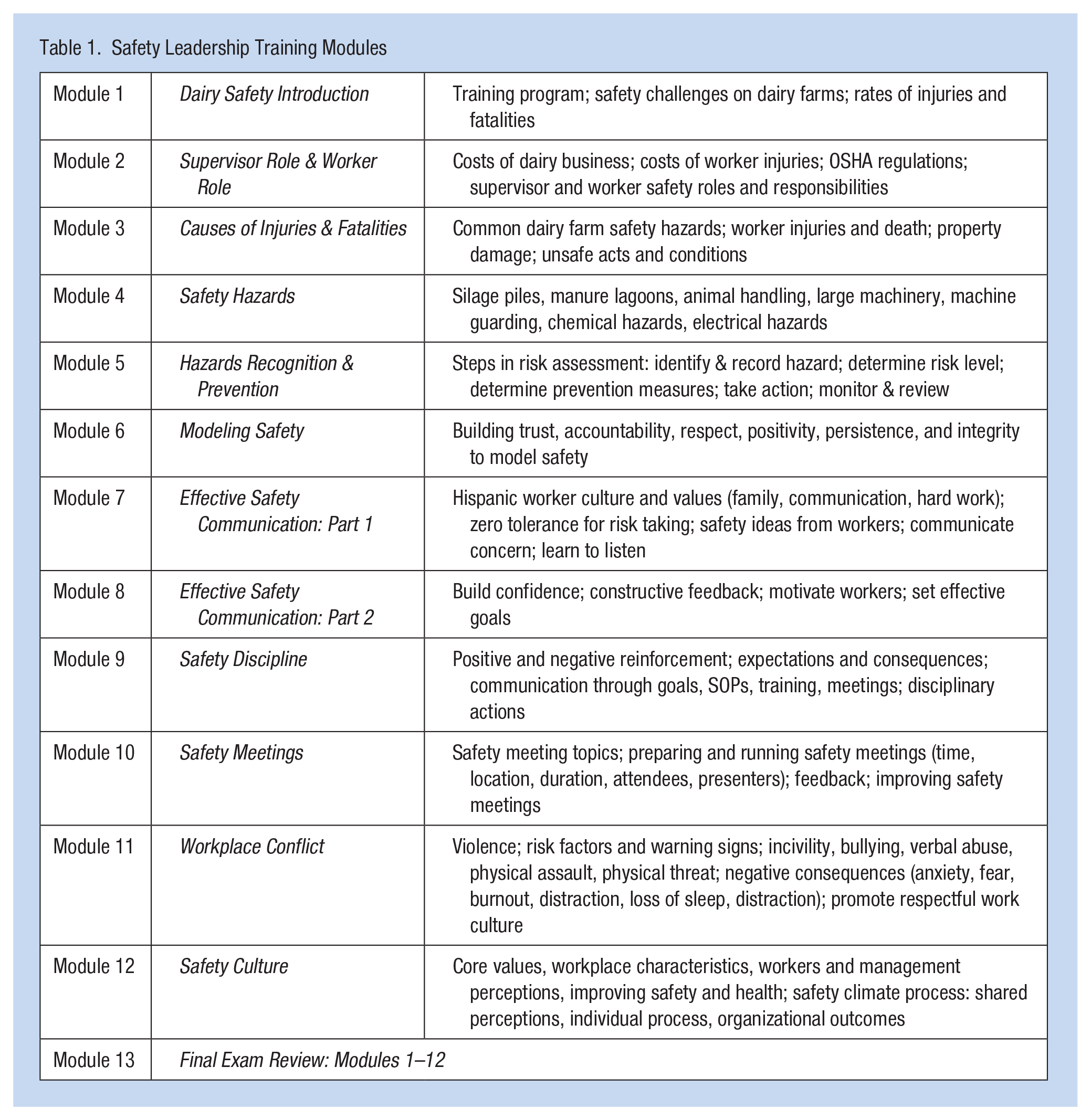
Supervisor leadership training was designed to build supervisory skills to ultimately improve safety performance among workers (Petersen, 2001). Supervisor training was designed to reflect the relationships-oriented culture that characterizes Hispanic working populations (Conejo, 2001). Guided by dairy farm owner and supervisor input and a safety risk prevention approach to worker safety, supervisor training focused on leading indicator activities (e.g., hazard recognition, safety behavior reinforcement, and effective communication) and supervisor behavior associated with effective organizational safety performance (Zwetsloot et al., 2020). Training content included transactional and transformational leadership skill development, employee engagement and effective communication, safety roles and behavior, causes of injuries and fatalities on dairy farms, hazard identification and prevention, conflict resolution, conducting safety meetings, and positive safety culture facilitation. Training content was presented over 13 modules—12 unique training modules and one cumulative review module, with each module taking between 20 and 30 min to complete. The training content was made available in English and Spanish. Training vignettes covered the following topics: supervisory and worker roles in safety, common causes of injuries and fatalities, safety hazards, hazard recognition and prevention, modeling safety, effective safety communication (delivered over two modules), safety discipline, safety meetings, workplace conflicts, safety culture, and a final cumulative summary (Table 1). Multiple choice and True/False questions were asked before and after each training module to measure training effectiveness.
Safety Leadership Training Modules
Mechanism of Training
Training delivery used mechanisms, tools, and observations made possible through previously developed training projects (Rodriguez et al., 2018). Safety leadership training modules included interactive opportunities that were developed using Articulate® Storyline 2 training software and delivered to supervisors on their on-line or off-line mobile devices (smartphones or tablets). This mobile-learning (m-learning) strategy enabled more efficient and effective training delivery to dairy farm supervisors on remote dairy farms, where computing resources and internet capacity are limited, unreliable, or nonexistent. The utilization of an asynchronous training approach enabled supervisors to receive training content on their own schedule, and at convenient locations on the farm or at home using a personal mobile device. Asynchronous training utilizing electronic-learning (e-learning) or m-learning devices has been shown to be positively associated with the learning effectiveness of safety education training (Ho & Dzeng, 2010).
Training Delivery
Safety leadership training was delivered to participating dairy farm supervisors over a 16 to 35 week period. If a supervisor chose to access training content on a computer, they were able to access content on a project website where training content was housed. Supervisors were instructed and encouraged by research personnel to access and complete one new training module per week. If supervisors indicated not being able to complete a new module weekly, they were encouraged to complete the module at their earliest convenience. Before and after viewing each module, supervisors were instructed to complete an examination comprised of 15-questions on a QualtricsXM online platform. After viewing each module, supervisors were given specific weekly assignments for them to practice and reinforce newly learned safety leadership behaviors.
Study Design
A pre-post intervention longitudinal study design was utilized to evaluate the effects of the training intervention on supervisor safety leadership self-reported behavior as well as worker safety climate and behavior. The results in this paper will only report on the effects of the training intervention on front-line supervisor safety leadership behavior. Effects of training on worker safety climate are presented in a separate manuscript (Douphrate, Rodriguez, Kines, & Javid, 2024).
Participant Recruitment
We partnered with dairy extension specialists to make initial contact and solicit participation of dairy farm owners. We intended to recruit 120 supervisors between 2017 and 2022, but this was impeded by restrictions due to continuous outbreaks of COVID-19 between 2020 and 2022. Employing the help of dairy extension and previously established producer relationships, large-herd dairy farm owners of 35 farms across Texas, New Mexico, Colorado, Oklahoma, Nebraska, and Kansas were personally called, visited, and invited to participate. Recruitment ceased after a convenience sample of 103 supervisors were enrolled due to increasing challenges associated with the COVID-19 pandemic, institutional travel restrictions, and protection of participants and research personnel.
Study objectives were explained to dairy farm owners. In consultation with and written consent from the owners, all dairy personnel in supervisory positions meeting eligibility criteria were identified for possible inclusion in the training intervention study. Supervisor inclusion criteria included: (1) holding a supervisory position, (2) for a minimum of 6 months duration, (3) with supervisory responsibility of at least five workers. Upon identification of eligible supervisors, we explained to each supervisor the study objectives, methods, timeline, and responsibilities and written informed consent was obtained. The University of Texas Health Science Center at Houston Committee for the Protection of Human Subjects (HSC-SPH-16-0559) approved all study procedures.
Prior to training initiation, bilingual research team members met individually with each enrolled supervisor to: (1) gain supervisor trust and commitment, (2) instruct supervisors on daily leadership practice reporting using their personal or work-assigned mobile devices, and (3) answer any questions or concerns about the program. Participating supervisors were incentivized with a department store gift cards totaling 250 USD upon completion of the training program.
Data Collection
We employed innovative intensive longitudinal data collection and analysis methodology to record self-reported leadership behaviors among large-herd dairy supervisors. Intensive longitudinal methods involve sequences of repeated measurements sufficiently frequent to allow researchers to characterize a change process for each subject or group. Experience sampling, daily diaries, ecological momentary assessment (EMA) and intervention (EMI), ambulatory assessment, and real-time data capture are all terms that have been used to describe intensive longitudinal data collection methodologies (Bolger & Laurenceau, 2013; Heron & Smyth, 2010). One of the fundamental benefits of intensive longitudinal methods is that they can be used to examine behaviors in their natural, spontaneous contexts. The data that result can show the unfolding of a temporal process, both descriptively and in terms of causal analysis. Thus, for example, it is possible to examine how an outcome changes over time, and how the change is contingent on changes in a causal variable (Bolger & Laurenceau, 2013). Intensive longitudinal methods have sufficient repeated measurements to permit researchers to characterize a within-subject process such as behavior change (Bolger & Laurenceau, 2013).
Supervisors reported their daily safety leadership behaviors using their personal mobile devices with the free RealLife™ Exp Mobile application (app). This app delivers questions, prompts, reminders, and images in everyday moments of work-life. Internet connection was not necessary, as data were recorded on the mobile device and uploaded when an internet connection or cellular service was established.
At the end of each workday, each supervisor was prompted to complete and submit on their mobile device their daily safety leadership observations and practices. Completion of the log at the end of the day was less burdensome for each supervisor, compared to continuously entering data throughout the day (Mehl & Conner, 2012). The app was programmed to give an electronic reminder near the end of each workday, reminding participants to complete their logs. The log was designed to be completed by supervisors in under 5 min. Questions were crafted using elements of the Empowering Leadership Questionnaire (ELQ; Arnold et al., 2000) adapted for safety-specific leadership practices on large-herd dairy farms. The ELQ is a validated tool to measure effective leadership behavior across five constructs: coaching, informing, leading by example, showing concern/interacting with workers, and participative decision making. Questions were crafted in easy to read and understand format using guidance from dairy farm owners and supervisors.
Using supervisor reported behavioral data, the research team was able to monitor and measure, over time, supervisor safety leadership behavior as well as intervention effectiveness. The team was able to access and analyze individual and group logged data as it was automatically uploaded by each personal mobile device. This real-time monitoring provided data that were utilized for supervisor feedback and continued participation reminders.
Data Analysis
Statistical analyses included descriptive statistics (mean, standard deviation, range) of subject sociodemographic and occupational characteristics, as well as training module test score results and training effectiveness (supervisor leadership behavior) evaluations. Analysis of variance (ANOVA) and paired t-tests were used to assess knowledge improvement from pre- to post-training. Hedges’ g estimate was used to compute effect size based on a comparison of pre- and post-test mean scores relative to pooled variances (Sawilowsky, 2009). We conducted bivariate analyses to examine differences between variables using both the chi-square test and the nonparametric Kruskal-Wallis test. This study employed a combination of logistic regression and mixed-effects modeling to investigate factors associated with program dropout, and to analyze changes in participant scores over time within an intervention program. The dropout analysis included demographic variables such as age, gender, race, socioeconomic factors such as education level and country of origin, and work-related variables like dairy farm experience, supervisor experience, and number of workers supervised. Variables were categorized into binary formats where appropriate, and logistic regression was used to predict dropout. We analyzed longitudinal data using mixed-effects models to evaluate the effect of the training intervention over time, accounting for inter-individual variability through random effects at the participant level. Baseline scores were calculated prior to Module 1, with subsequent changes assessed at each module interval. This analysis utilized the lme4 package in R to fit generalized linear mixed models (GLMMs) with a binary logistic regression framework, incorporating fixed effects for the modules and random effects for individual subjects. This allowed for an assessment of odds ratios for achieving targeted outcomes, with confidence intervals providing accuracy measures. The integration of these methodologies provided a holistic view of the program’s dynamics, linking dropout factors with temporal changes in participant outcomes. The use of logistic regression elucidated key factors influencing dropout, while mixed-effects models offered insights into how these factors and the intervention itself influenced outcomes over time. The combination of these statistical approaches not only highlighted critical intervention points and participant variability, but also adjusted for potential confounders inherent in the longitudinal data. All statistical procedures were executed using the latest version of R, ensuring the reproducibility and reliability of the findings.
Results
Participants
Table 2 presents demographic characteristics for the total sample, as well as those who completed the training. Of the 103 supervisors who were enrolled in the training program, 73 completed (30 dropped) all 13 modules, pre- and post-test included. We collected information about the reason for termination of participation among a subset of participants. Cessation of participation was due to competing organizational priorities at the time of the study, employment turnover, farms closing, career changes, migration, workplace conflicts, medical procedures, and sickness absence (e.g., due to the COVID-19 pandemic). The demographics of those who completed all modules and those who ceased participating were quite similar, with no statistically significant differences in sociodemographic or occupational characteristics. The 73 supervisors represented 30 farms across five western U.S. states (Texas n=30, New Mexico n=4, Colorado n=17, Kansas n=19, and Oklahoma n=3) with the number of participating supervisors from each farm ranging from one to six.
Demographic Characteristics of Dairy Farm Supervisors Enrolled in Training (n = 103)
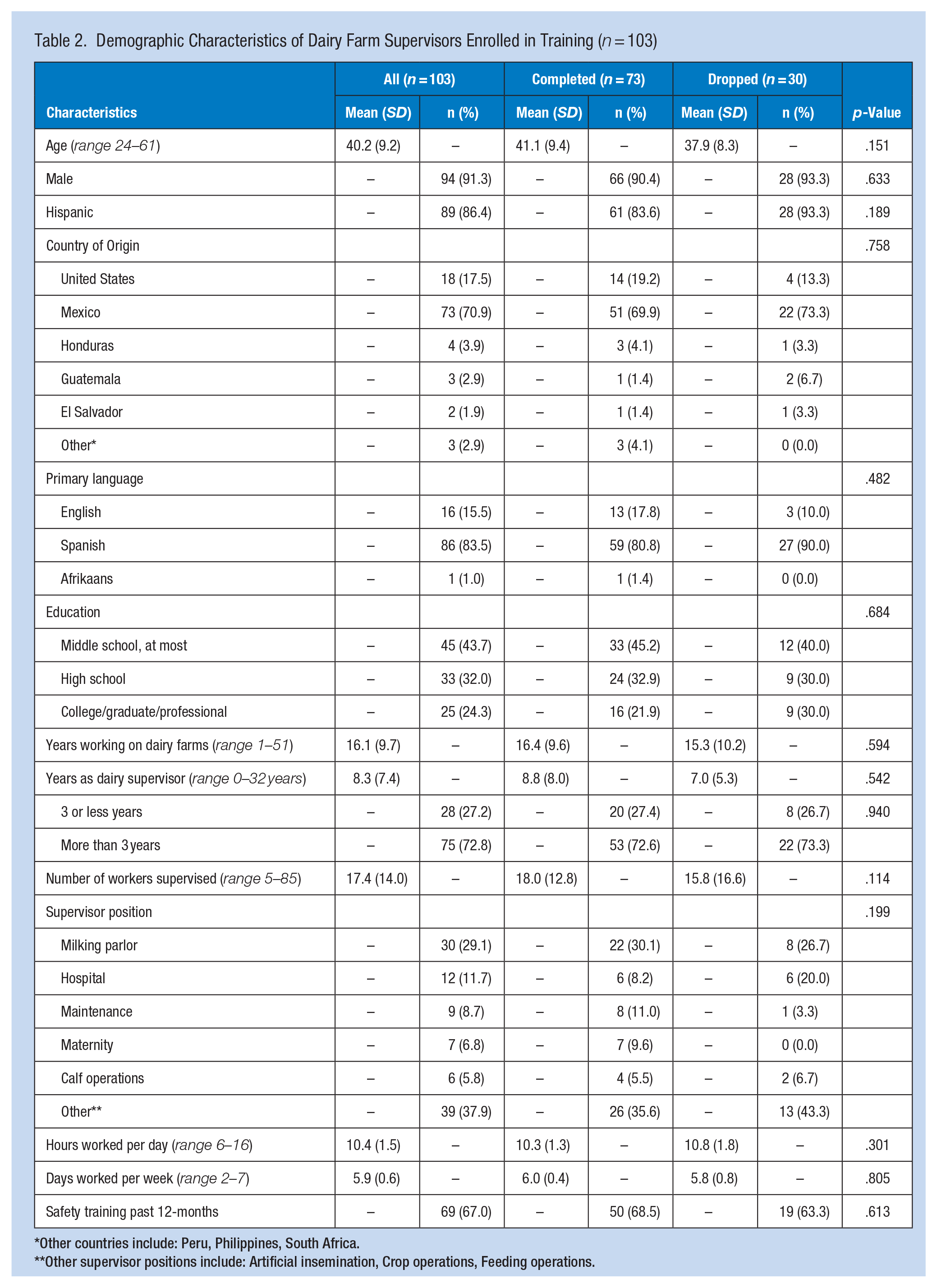
Other countries include: Peru, Philippines, South Africa.
Other supervisor positions include: Artificial insemination, Crop operations, Feeding operations.
Knowledge Gain From Training
Table 3 provides information on knowledge gained among participants who completed each training module. Statistically significant (p < .05) differences between and within pre and post-test scores (paired t-tests) across all modules were observed, with the largest increases for modules 10, 1, and 12, respectively. We observed differences between mean pre- and post-test scores relative to pooled standard deviations, resulting in effect size Cohen’s d estimates ranging from 0.60 (Module 7) to 2.1 (Module 10) indicative of medium to very large learning effects across all training modules (Sawilowsky, 2009).
Level 2 Training Effectiveness Evaluations Among Dairy Farm Supervisors
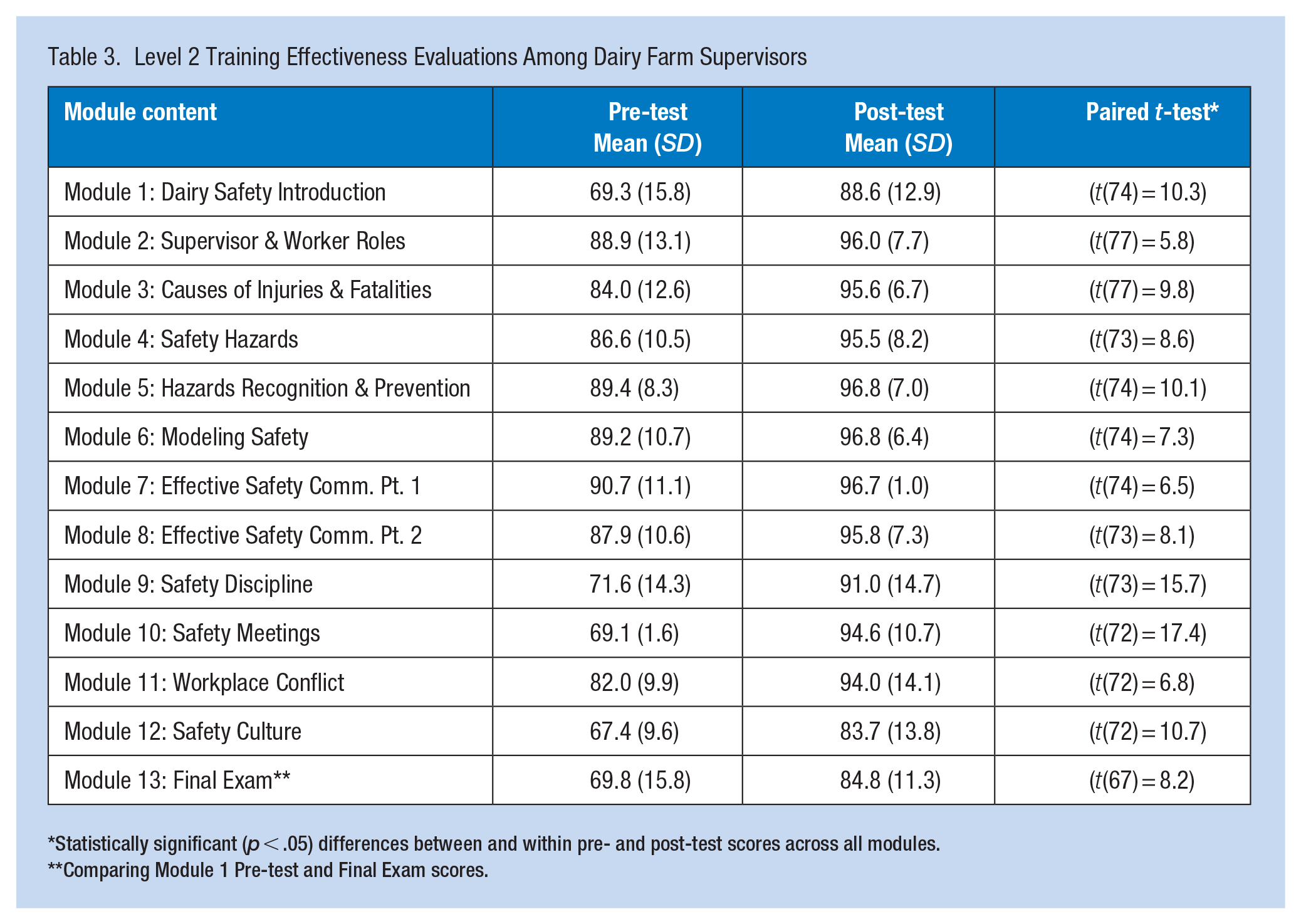
Statistically significant (p < .05) differences between and within pre- and post-test scores across all modules.
Comparing Module 1 Pre-test and Final Exam scores.
Training Effect on Leadership Behavior
Table 4 presents observations of training effect on self-reported safety leadership behaviors among supervisors. An odds ratio less than 1.0 would suggest a lower likelihood of reported safety leadership behavior (compared to baseline) after completing a specific training module. For example, Module 3, which addressed cases of worker injuries and fatalities on dairy farms, had a significant odds ratio of 0.5 (95% CI [0.2, 0.9]) for reported behavior of conflict resolution, which we would interpret to mean that the likelihood of resolving an identified worker conflict was significantly lower (compared to baseline) after completing training Module 3. Conversely, an odds ratio greater than 1.0 would suggest a higher likelihood of reported safety behavior (compared to baseline) after completing a training module. For example, Module 3 had a statistically significant odds ratio of 1.8 (95% CI [1.2, 2.7]) for reported behavior of performing a hazard assessment, which we would interpret to mean that the likelihood of performing a safety hazards assessment was significantly higher (compared to baseline) after completing Module 3.
Odds Ratios of Training Effect on Self-Reported Daily Safety Leadership Behaviors Among Dairy Supervisors (n = 73) Compared to Pre-Training Baseline. Presented Chronologically Across Training Observation Period According to Module (M) Delivery
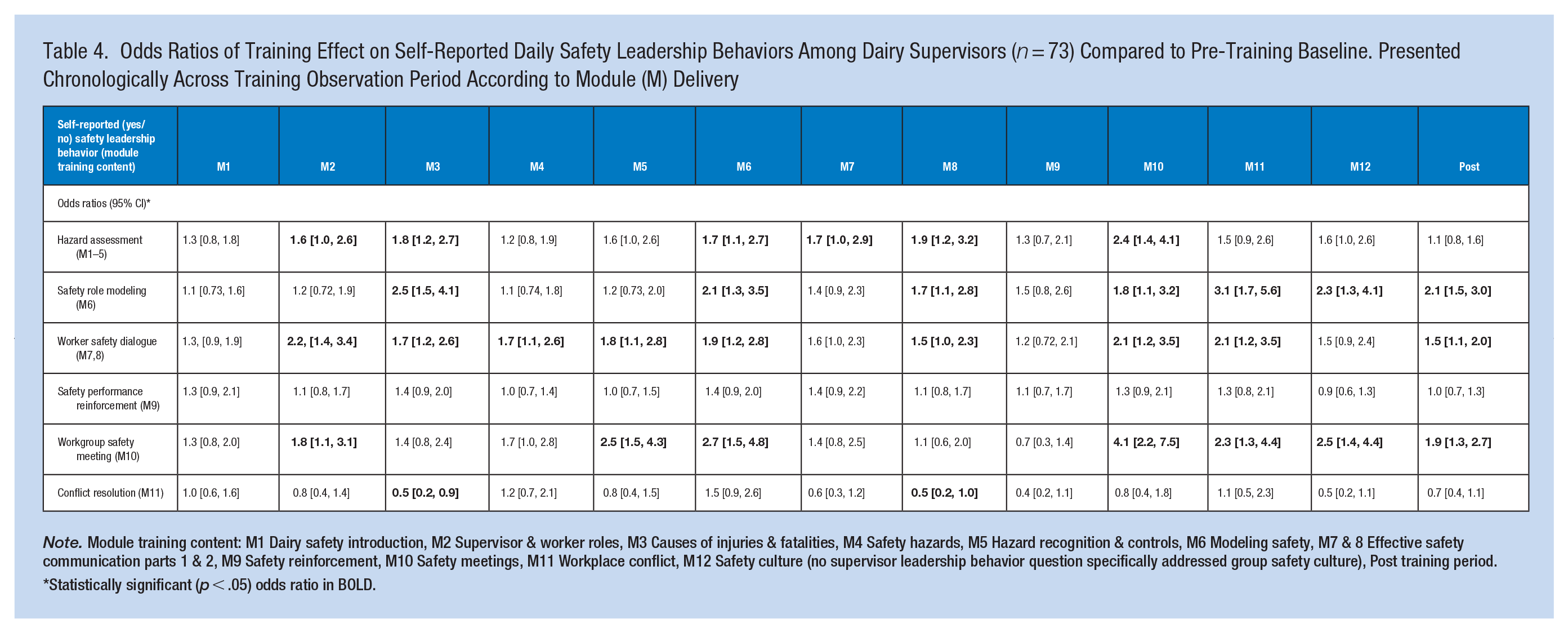
Note. Module training content: M1 Dairy safety introduction, M2 Supervisor & worker roles, M3 Causes of injuries & fatalities, M4 Safety hazards, M5 Hazard recognition & controls, M6 Modeling safety, M7 & 8 Effective safety communication parts 1 & 2, M9 Safety reinforcement, M10 Safety meetings, M11 Workplace conflict, M12 Safety culture (no supervisor leadership behavior question specifically addressed group safety culture), Post training period.
Statistically significant (p < .05) odds ratio in BOLD.
We observed significant training effects on reported safety leadership behaviors across most training modules compared to baseline reports. Eight of twelve training modules resulted in significantly higher odds of engaging in a safety dialogue with workers. Six of twelve training modules resulted in higher odds of performing a hazard assessment and modeling safety. Interestingly, training Module 10 (addressing safety meetings), had the highest training effect (OR 4.1, 95% CI [2.2, 7.5]) on reported safety meetings conducted, which was sustained until the completion of the reporting period. Of note, we observed no significant increases in reported safety performance reinforcement or conflict resolution across all training modules, including those training modules specifically addressing these leadership behaviors (Modules 9 and 11).
Discussion
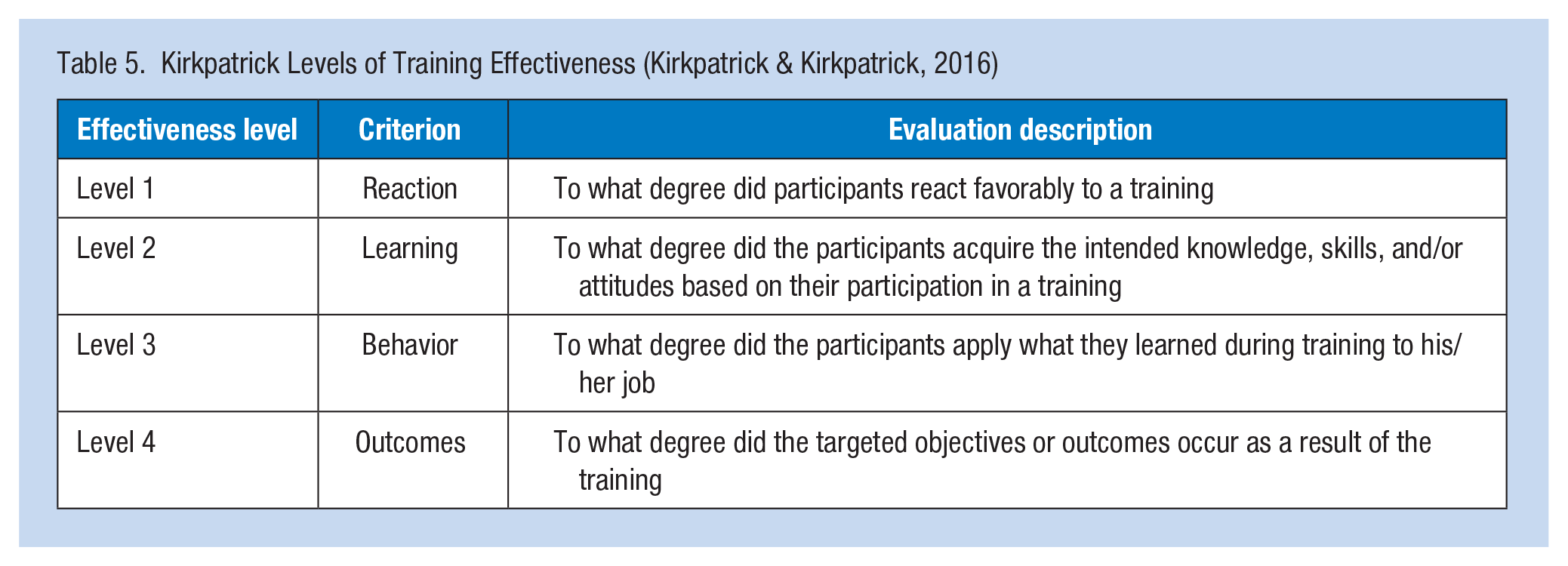
To our knowledge, this study represents the first evaluation of safety leadership training effectiveness among supervisors in the dairy farm industry, and more broadly the agricultural sector in Western U.S. This evaluation included four levels of training effectiveness evaluation according to the Kirkpatrick Model of Training Effectiveness (Table 5). Level 1 focuses on the trainee’s reactions to the training program. Level 2 involves an examination of what trainees learned as a result of participation in a training program. Level 3 measures trainee job performance or behavior change by determining the extent to which trainees apply their newly acquired knowledge and skills on the job. Level 4 involves the evaluation of impact on organizational results (Kirkpatrick & Kirkpatrick, 2016). Historically, due to misunderstandings of time constraints, personnel, lack of prioritization of the evaluation process, or inherent complexities of higher levels of training evaluation, most training effectiveness evaluations fail to reach Levels 3 or 4 (Reio et al., 2017). However, Level 4 is the most insightful in terms of impact, but also the most challenging level to assess (Kirkpatrick & Kirkpatrick, 2016; Phillips, 1996; Werner, 2014). In this training intervention project, we employed four levels of training effectiveness evaluation. Level 2 and 3 evaluations are presented in this manuscript, and Level 4 evaluation is included in a separate manuscript (Douphrate, Rodriguez, Kines, & Javid, 2024). Levels 1 evaluation is presented in a third manuscript (Douphrate, Rodriguez, Kines, Javid, et al., 2024). A participant flow diagram of all training effectiveness evaluations is provided in Figure 1.
Kirkpatrick Levels of Training Effectiveness (Kirkpatrick & Kirkpatrick, 2016)
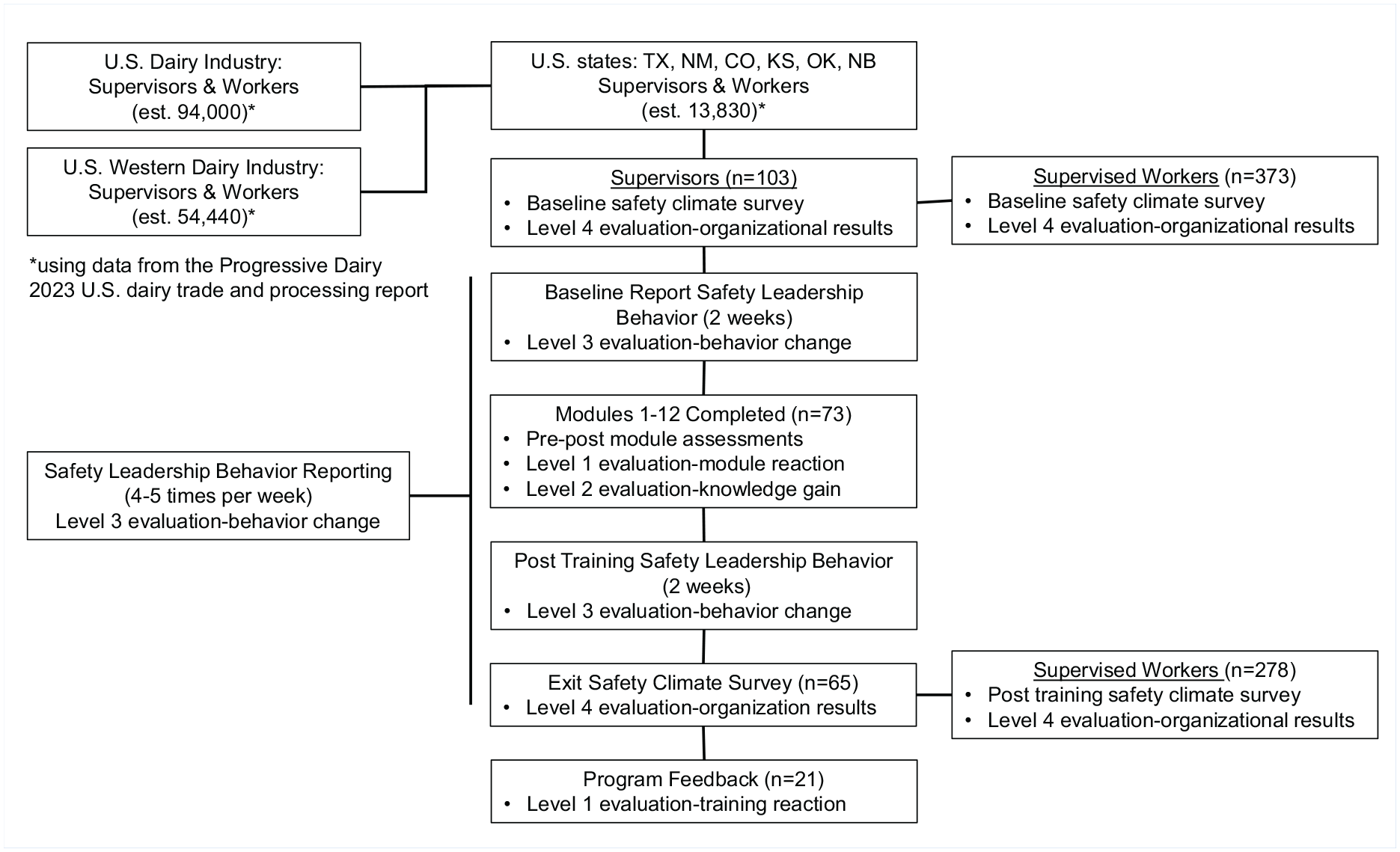
Participant enrollment and training evaluation diagram
Level 2 evaluation revealed significant differences between pre- and post-test scores, with medium to very large learning effect sizes across all training modules. These findings demonstrate that participating supervisors gained safety leadership knowledge via an asynchronous, electronic training platform. This format proved to be an effective training mechanism to deliver effective leadership training in challenging conditions (rural/remote location, multinational workforce) such as U.S. dairy farms.
Level 3 training effectiveness evaluation revealed safety leadership behavior change throughout the observation period, as well as after completion of training delivery. We observed significant behavior change (compared to pre-training baseline) early in the training program, often before introduction of training module content that addressed specific safety leadership behaviors. This observation supports the possibility that overall participation in the leadership training program resulted in cumulative safety leadership behavior change, and not based on any one specific training module. However, we did observe much higher odds of reporting safety leadership behavior at the time of corresponding training content delivery, such as conducting a safety meeting and hazard assessment. Additionally, evidence of continued safety leadership behavior was observed throughout the observation period for several behaviors including hazards assessments, role modeling, safety dialogue, and safety meetings. This possibly reflects that the training modules built upon each other, and reinforced key concepts presented in the prior safety leadership modules.
Our findings suggest participating supervisors did not report significant increases in safety performance reinforcement or conflict resolution behaviors throughout the observational period. Safety reinforcement involves providing positive reinforcement when workers display safe behaviors on the job, as well as negative reinforcement via disciplinary actions when workers display unsafe behaviors (Shi et al., 2019). Conflict resolution involves both identifying and swiftly resolving conflicts among workers (Lewin et al., 2016). Both worker safety performance reinforcement and conflict resolution require the supervisor to engage and communicate with workers in a manner that leads them toward desired safe behaviors and conflict resolution. Supervisors need to demonstrate effective communication skills in this process. One mechanism for leadership development, including effective communication, can include role modeling and mentorship (Larsman et al., 2024). Our training program did not integrate on-farm mentorship or role modeling coaching for enrolled supervisors. However, research has shown that mentoring programs are promising arenas for developing leadership capabilities for developing leaders (Grocutt et al., 2022) which can include effective communication skills.
Our findings revealed 71% of participating supervisors reported a country of origin outside of the U.S. This finding is supported by other research (Rodriguez et al., 2021, 2023) of dairy farm workers which suggests that the industry relies on an immigrant workforce. Our project did not collect immigration status or age at time of migration to the U.S. among the participating supervisors. However, immigrant dairy workers often leave home countries with economic dysfunction seeking higher-paying employment. Workers often leave their families during their teenage or young adult formative years, for years at a time to financially support their multi-generational families back in their home countries. As a result, immigrant dairy farm workers may not have had the opportunity to experience or receive leadership role-modeling within their own family structure, during formal education, or in new work environments in a foreign country (with low English-proficiency; Martinez-Sotelo, 2016; Taylor & Behnke, 2005). Our study did not assess pre-training leadership training or mentorship, and dairy farm supervisors may not have had leadership role-models or mentors in their lifetimes.
Research has shown that leadership behaviors are more commonly learned by observing and listening to others (Avolio et al., 2009). Researchers assert that individuals develop as leaders when they are in empowering environments, where experienced leaders can guide young adults to mature and practice new leadership skills (Komives et al., 2007), including effective communication skills with co-workers. Teens and young adults aspiring for leadership roles in an organization are often the target population for leadership training programs, as they are provided at pivotal points in the lives of the participants for establishing their own community engagement and occupational trajectories (Bowers et al., 2015). Effective communication is key to a successful leader (Chatman et al., 2020), particularly when disciplining workers for unsafe behavior or resolving conflicts among workers. Future safety leadership training can benefit from an integration of on-farm role-modeling or mentorship to further develop communication skills that may involve both difficult disciplinary interactions and positive reinforcement with workers.
Limitations
Vast agricultural regions in the U.S. remain internet and cellular service deserts with limited internet connectivity (Vogels, 2021) which often affects the agriculture and forestry sectors. There is a long overdue need for offline capable software tailored for these agricultural industries, with features that enable trainee interactions and feedback, Kirkpatrick Level 1 to 4 training evaluations with voice-over in different languages (including Mayan and Aztec indigenous languages for the U.S.), video functionality, and data access and management for employer training records. A limitation in this project was offline software capability. Similar to a 2015 safety training program among dairy farm workers, QualtricsXM survey software was used to host Level 1 to 3 evaluations, and Articulate Storyline was used to develop and administer training vignettes (Rodriguez et al., 2018). While both programs could be used independently to deliver offline OSH training, they could not be integrated and used together on the same platform offline. This meant that regardless of whether participating supervisors completed their modules on their mobile devices, work, or personal computers, they had to be online to push their Level 2 pre- and post-tests results to our research team. Additionally, our research team did not have test monitoring controls for pre- and post-evaluations. Despite advising participants to complete all modules on their own, our team did not have control over, or knowledge of, any potential assistance extended to participants by the dairy farm owners, co-workers, friends, or family members. In addition, recall bias of information and respondent bias of self-reported safety leadership behavior changes are study limitations to address. For example, participants could have underestimated or overestimated having performed a hazard assessment or modeling safety during the days reported. Respondent bias could have been influenced by personal willingness to report and/or the number of responsibilities or workers supervising on the farm, personal matters, and subsequent time to access the LifeData app to report safety leadership behaviors after work.
Conclusions
To our knowledge, this study represents the first evaluation of safety leadership training effectiveness specifically among supervisors on U.S. dairy farms. Our 12-module asynchronous safety leadership e-learning training program demonstrated significant differences between pre- and post-test scores among participating supervisors with medium to very large learning effect sizes across all 12 training modules. Additionally, training effectiveness evaluation revealed significant self-reported safety leadership behavior change throughout the observation period, as well as after completion of the training program. Our findings suggest that a culturally-, linguistically-, and literacy-appropriate asynchronous training program, with integrated safety leadership behavior reporting using mobile technologies, has the potential to improve safety leadership effectiveness among front-line dairy farm supervisors. Future training programs should integrate mechanisms for leadership role-modeling and mentorship to further enhance leadership training effectiveness.
Implications for Occupational Health Practice
Prior research has demonstrated that leader-based interventions can have a stronger influence on worker safety behavior and safety climate than worker-based interventions. However, research is limited which demonstrates safety leadership training effectiveness, particularly in challenging work environments (immigrant workforce, rural/remote locations). Our findings suggest that effective safety leadership training can be delivered to front-line dairy farm supervisors. Mobile technologies such as smart phones should be considered as mechanisms to not only deliver training content, but also to capture self-reported safety behavior including leadership performance. The Kirkpatrick model of training effectiveness evaluation is a simple and effective framework to evaluate different aspects of OSH training programs. Industry occupational health practitioners should consider novel mechanisms using smartphones to deliver training content as well as collecting data to enable training effectiveness evaluation in real-world work settings. Mobile applications can be further developed which offer training content delivery and effectiveness evaluation which includes daily safety behaviors. Safety leadership training programs should include onsite leadership mentorship or coaching from those with safety leadership experience.
Applying Research to Occupational Health Practice
This community-based participatory research partnership between the workplace and academia is a unique approach to develop, implement, and evaluate a novel safety leadership training program in a high-risk rural industrial sector (i.e., agriculture) with a predominant immigrant workforce. This study provides a framework to develop and deliver relevant safety leadership training content using e-learning technologies, as well as the utilization of mobile devices to capture self-reported behaviors or observations from training participants. A training effectiveness evaluation framework such as the Kirkpatrick model should be employed to evaluate and demonstrate different aspects of OSH training effectiveness. The training methods used in this study can be applied and validated in other high-injury risk industries such as forestry, construction, healthcare, or manufacturing.
Footnotes
Acknowledgements
We would like to thank Dr. Lisa Pompeii for her assistance with study design and training program development, Dr. Robert Hagevoort for his training program development, and Dr. David Gimeno for his assistance with proposal development and training development. Additionally, we acknowledge and appreciate the dairy owner commitment to worker health and safety and their willingness to participate in the study, as well as supervisors for their training program commitment and willingness to learn. The authors would like to express their appreciation to the dairy owners and workers who were willing to participate in this study. Additionally, the primary author would like to express his appreciation to the late Dr. Stephen J. Reynolds, former HICAHS Director, for his mentorship, friendship, and dedication to the betterment of agricultural worker health and safety.
Author Contributions
Conceptualization, methodology, validation, investigation, formal analysis, writing original draft preparation, review, and editing, D.D., A.R, P.K., and A.J.; data curation, D.D. and A.R.; funding acquisition, resources, and project administration, D.D. All authors have read and agreed to the published version of the manuscript.
Conflict of Interest
The author(s) declared no potential conflicts of interest with respect to the research, authorship, and/or publication of this article.
Funding
The author(s) disclosed receipt of the following financial support for the research, authorship, and/or publication of this article: The research was supported by the High Plains and Intermountain Center for Agricultural Health and Safety (HICAHS), CDC/NIOSH grant number U54OH008085. The contents of this manuscript are solely the responsibility of the authors and do not necessarily represent the official views of the Center for Disease Control and Prevention or the National Institute for Occupational Safety and Health. The funders had no role in the design of the study; in the collection, analyses, or interpretation of data; in the writing of the manuscript; or in the decision to publish the results.
Ethical Approval
Approval for the study (HSC-SPH-16-0559) was obtained on July 31, 2018 from the Committee for the Protection of Human Subjects, which is the Institutional Review Board for the University of Texas Health Science Center at Houston.
