




Abstract
Background:
The American Association of Occupational Health Nurses (AAOHN) prioritizes research and professional development in occupational and environmental health nursing (OEHN) as part of its mission to promote workplace and community health and safety. The AAOHN Foundation plays a critical role in advancing this mission by administering grants and scholarships that empower occupational health nurses (OHNs) to pursue education, research, leadership roles, and professional development within the specialty. These opportunities help keep nurses in the workforce by offering a flexible career path through OEHN. This supports long-term careers and work-life balance, contributing to the stability and growth of the profession. Many resources and financial opportunities remain underutilized due to common barriers, such as lack of awareness about available grants, endowments and scholarships, uncertainty about the application process, and lack of confidence in navigating the process.
Methods:
This article addresses these challenges by providing OHNs with practical tools and best practices, including updates on available funding opportunities, grant-writing tips, approaches to build self-assurance, and strategies to navigate applications successfully.
Conclusions/Application to Practice:
By fostering awareness of these resources and utilization of the AAOHN Foundation funding opportunities, OHNs can enhance workplace safety, promote public health, and drive innovation and growth within OEHN. Strengthening individual professional development as OHNs and healthcare providers, researchers, and leaders ultimately amplifies the collective impact of the OEHN community, ensuring its continuing evolution and meaningful contributions to the field.
Keywords
Background
The ongoing nursing shortage is expected to worsen as many nurses leave the profession due to stressful and unsafe work environments, rising violence against healthcare workers, burnout, and retirement (American Association of Colleges of Nursing, 2024; Morris, 2023). As experts in worker and workplace health and safety, occupational health nurses (OHNs) collaborate with management and workers to design and implement comprehensive programs aimed at identifying, mitigating, and eliminating hazardous working conditions. These programs address workplace challenges such as burnout, while enhancing work environments to meet the diverse needs of all workers. By promoting workplace safety and well-being, OHNs not only improve employee health outcomes but also contribute to nursing retention and the overall advancement of occupational and environmental health nursing.
Nurses new to occupational and environmental health nursing (OEHN) often look to professional organizations to pursue advanced specialty education, training, and professional development opportunities. The American Association of Occupational Health Nurses (AAOHN) serves as the professional association of licensed nurses specializing in OEHN. As the authority for practice in this specialty, AAOHN provides educational training, resources, and opportunities to advance worker and workplace health and safety (AAOHN, 2024). Central to this mission, the AAOHN prioritizes research and professional development (AAOHN, 2019). The AAOHN Foundation plays a critical role in advancing this mission by administering grants and scholarships that empower OHNs to pursue education, research, leadership roles, and professional development within the specialty.
Strengthening individual development as OHNs and healthcare professionals, researchers, and leaders ultimately amplifies the collective impact of the OEHN community, ensuring its continuing evolution and meaningful contributions to the field. It is essential for OHNs to understand the resources and funding opportunities available to them to achieve this collective mission, support successful career transitions, and equip nurses with skills and knowledge necessary to advance the profession and promote worker health and safety. Unfortunately, many resources and funding opportunities remain underutilized due to common barriers, such as lack of awareness about available funding, uncertainty about the application process, and lack of confidence in navigating the process (Brooks, 2023; Perna, 2021).
To support the OHN and ensure funding opportunities are fully utilized, it is critical to equip OHNs with practical tools to refine their grant-writing skills, understand application processes, and navigate applications successfully. Building confidence and applying for funding opportunities allows OHNs to pursue specialty training, education, and research, while enhancing workplace health and safety, promoting public health, and driving innovation and growth within OEHN.
What Is Your “Why”?
Opportunities for scholarship and grant applications are often pursued out of a desire to improve the quality of care while protecting the health and safety of workers and work communities, for career and academic advancement, to stay relevant and competitive in the field, and to drive innovation. For OHNs, this “why” is deeply rooted in the responsibility to advance the profession through research and scientific inquiry—critical components of OEHN practice.
Much of the research in this field is supported by organizations such as the National Institute for Occupational Safety and Health (NIOSH), including the Office for Total Worker Health®, and guided by the AAOHN research priorities (AAOHN, 2019). These priorities help establish a consensus and can provide direction for narrowing the focus of research when planning a project. If you have considered applying for a scholarship or grant opportunity but have not yet taken the next step, take some time to self-reflect and determine which barriers may be holding you back. With so many resources available to support your education, research, and professional development, there is no better time to explore these opportunities and contribute to the advancement of OEHN.
Identify Your Supporting Partners
Quality research depends on adequate funding, which not only supports the work itself but also enhances its overall credibility and impact. Securing financial support for a project is a testament to the strength of the written proposal, soundness of the research approach, the significance of the study, the caliber of the research team, and the potential impact of the work on advancing the science and practice. There are numerous sources of funding available for both research grants and scholarships (Figure 1). We encourage you to cast a wide net when seeking financial support, and exploring opportunities offered by professional organizations, academic affiliations, and other funding entities (Get Scholarship Help with These Basics and Tips – Federal Student Aid, 2023). By thoroughly researching and utilizing these resources, you can secure the necessary funding to elevate the quality of your research and contribute meaningfully to the advancement of OEHN.
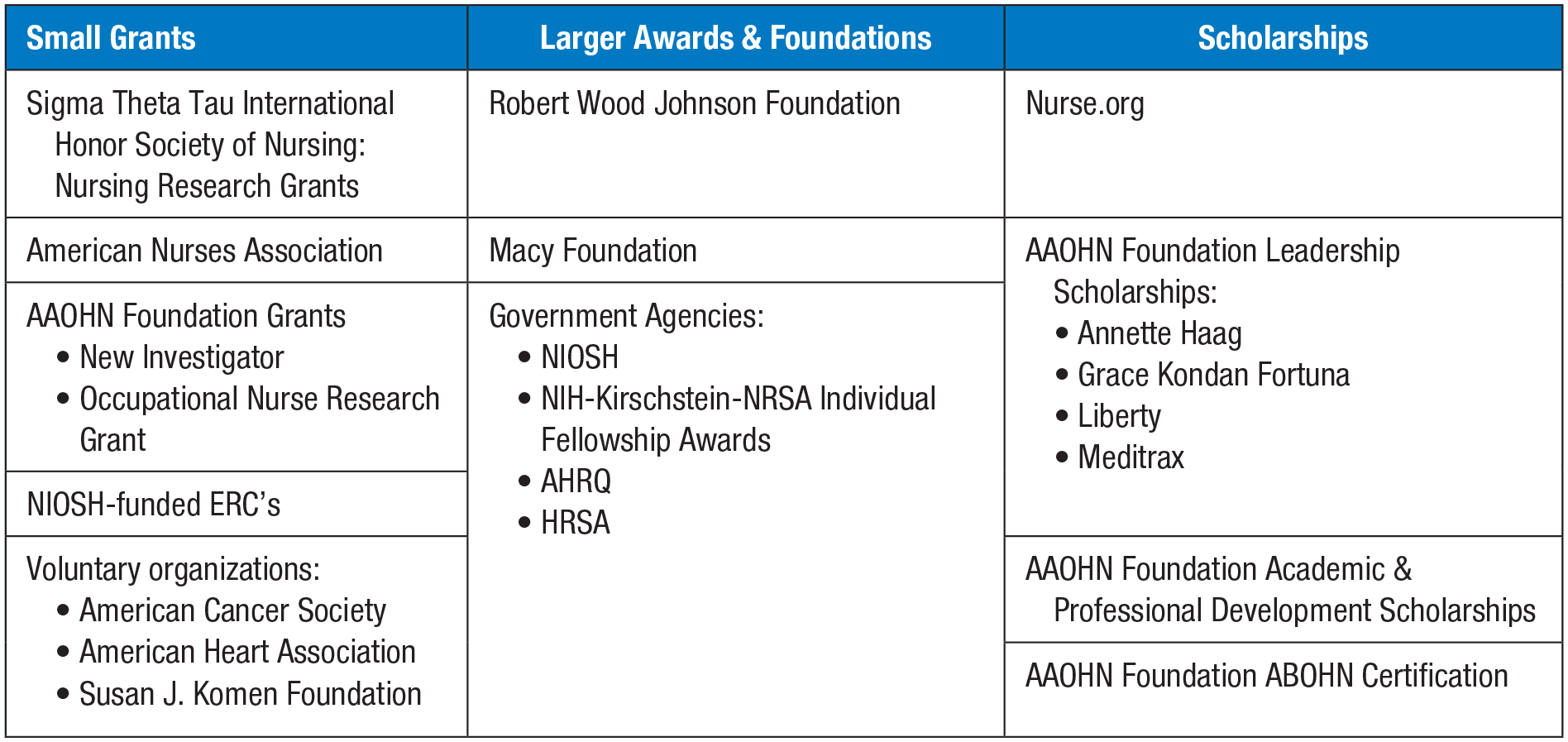
Examples of potential grants and scholarship sources
What You Should Know About Grants and Scholarships
The Four “F’s” to Successful Grants
Grant-writing is a fundamental aspect of academic training, yet many OHNs encounter it for the first time only when pursuing an advanced degree. This lack of familiarity can make the process seem overwhelming, but these strategies will support your success and lend strength to your project.
A grant is a critical resource for conducting research, as it provides funding to cover costs such as purchasing equipment, software, consumables (e.g., medicines), personnel and personnel training, statistical analysis, travel, and publication expenses (Neema & Chandrashekar, 2021). To support success and secure funding, be sure to take advantage of online resources (Figure 2). The grant application process is often competitive, can be intimidating and time-consuming, and requires thorough preparation. All applications are not the same, so it is essential to address the grant proposal and processes specific to the organization’s application. Figure 3 shows grant content areas that are generally covered and key steps and tips for grant writing are shown below:
1. Define the Purpose and Objectives
• Clearly define the purpose of your project and develop specific, measurable objectives. • Ensure your project aligns with the priorities and mission of the grantor or funding institution. • Carefully review the Request for Proposal (RFP) to understand submission requirements, deadlines, formatting, process steps, and evaluation criteria.
2. Prepare a Strong Application
• Meet eligibility requirements, such as membership or educational qualifications, and state this clearly in your application. • Consider collaboration with individuals or interdisciplinary teams to strengthen your application by bringing diverse perspectives and expertise. • Use clear, concise, writing to describe the project’s purpose, objectives, methodology, novelty, and expected impact.
3. Provide Detailed Financial Justifications
• Include a rationalized budget detailing financial needs and allocations within the limit of funding availability. • Highlight standout elements of your background, such as what inspired your research and your long-term commitment to the field or research topic.
4. Maintain Communication and Flexibility
• Establish and maintain communication with the funding organization throughout the process; and while submission deadlines are strict, be sure to communicate any challenges, changes, or delays which may arise, including an explanation. • Be open to feedback, incorporate outside perspectives, and communicate these promptly, providing explanations in progress reports.
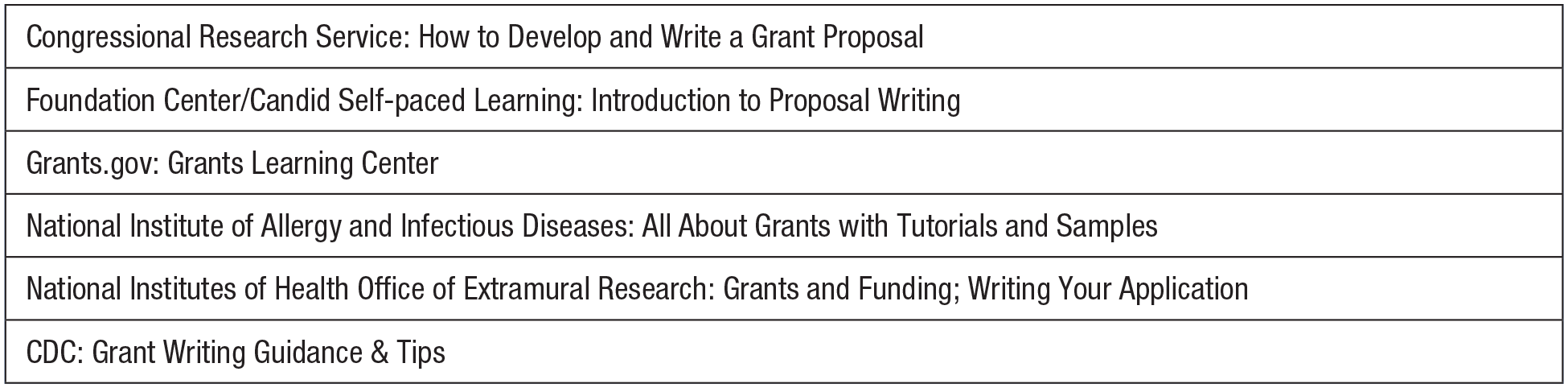
Examples of online resources for grant writing and funding
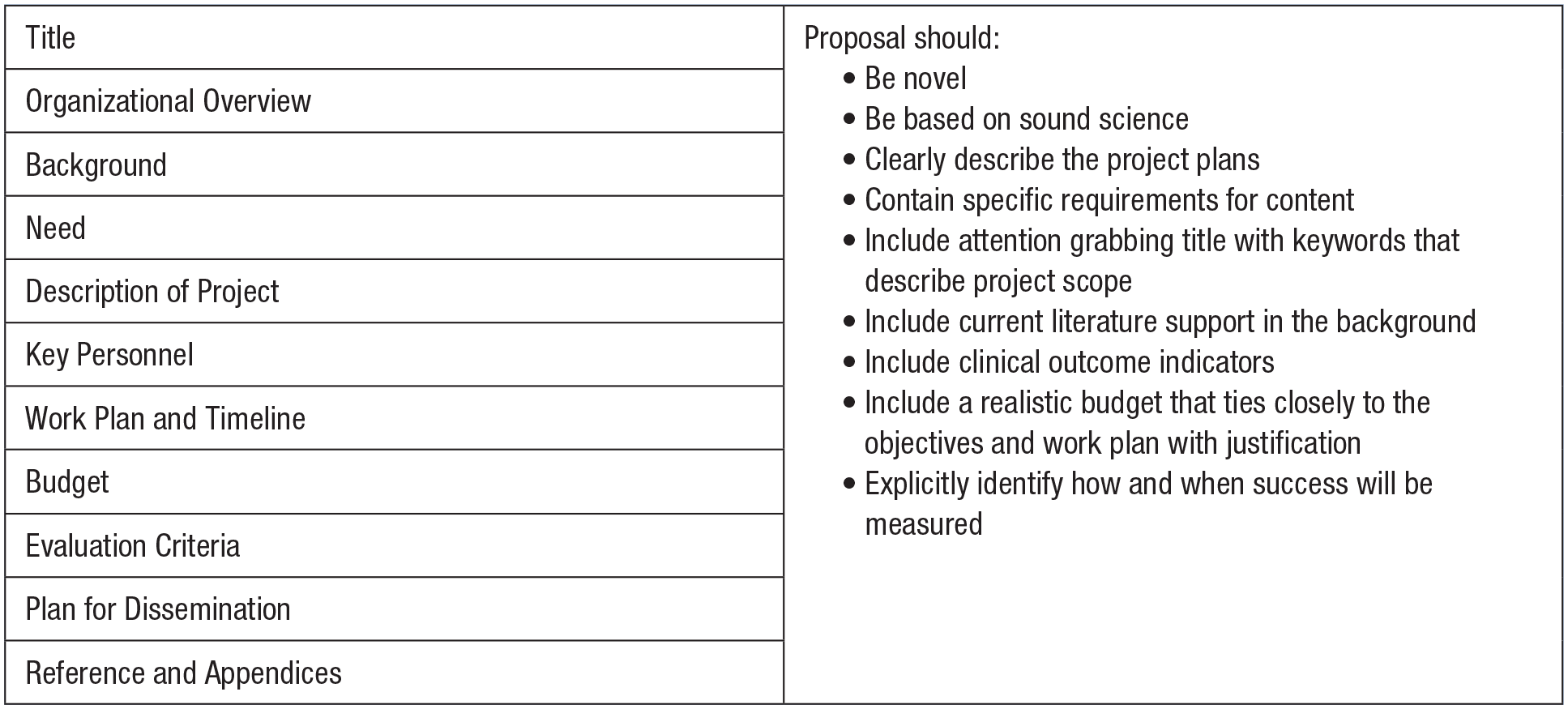
Grant proposal content
The Four “F’s” to Success
Grant reviewers look for applications that demonstrate the following elements for success (Figure 4):
• Fit: Does the proposal align with the funding organization’s mission?
• Fabulous Narrative: Does the narrative reflect varied skills and perspectives, while remaining clear, specific, and feasible with realistic objectives and timelines?
• Follow-through: Maintaining communication with program directors and funding agencies can be helpful to align goals and provide opportunities for feedback. Did you proofread, align with requirements, and adhere to deadlines?
• Finish-line Details: Is the budget detailed, transparent, and justified? Persistence and patience is required to implement the grant as designed, adhere to the timeline and project plan, and stay on track (Clark & Carter, 2019). Be open to feedback and if you face a negative outcome, determine whether resubmission is an option. Success requires overcoming challenges, implementing changes, and willingness to negotiate with grant contacts, particularly when facing unexpected outcomes or delays. Detail the challenges and provide explanations, while emphasizing objective-focused achievements in the reports.
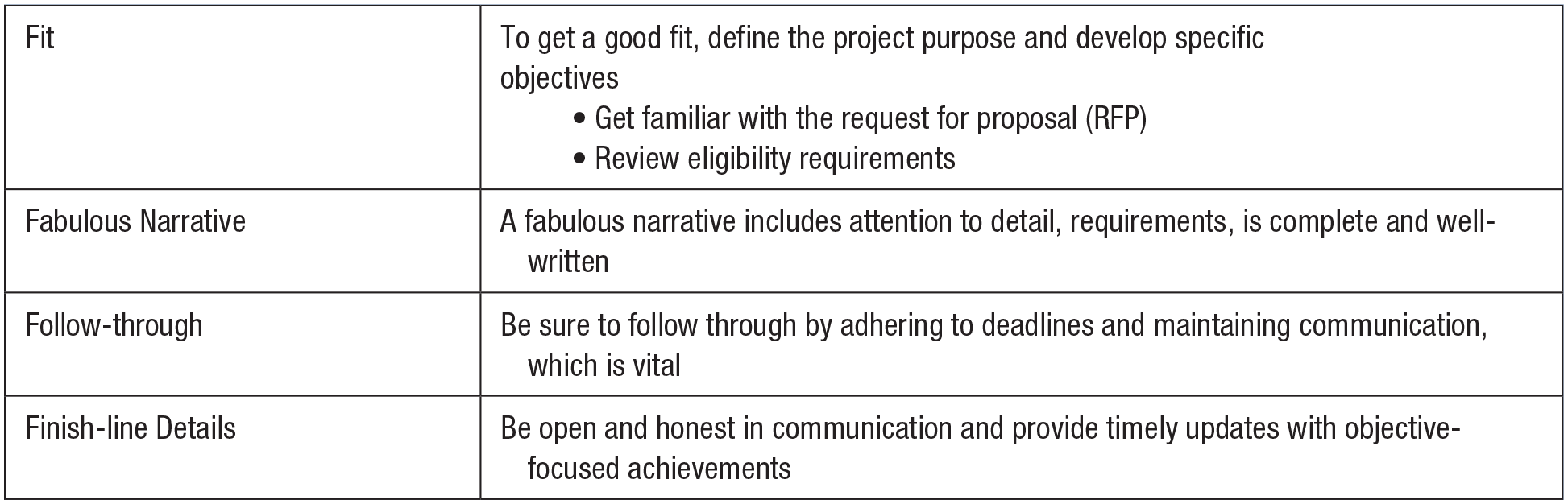
The four “F’s” for a successful grant application
Resources and Support
Take advantage of online resources, grant writing workshops, and mentorship opportunities to refine your application (Gemayel & Martin, 2017). Review panels prioritize clear communication, alignment with the funding body’s goals, and evidence of potential impact, so be meticulous in addressing these areas (Kamerlin, 2022). By following these guidelines, you can craft a strong grant application that effectively conveys your project’s value and secures the funding needed to advance your research and professional goals.
Scholarships: How to Land One
Scholarships play a crucial role in supporting the advancement of education, training, professional development, leadership growth, and career progression. They also facilitate the advancement of research in the field of OEHN. The AAOHN Foundation allocates funds to administer scholarships designed to support OHNs in attending AAOHN programs (e.g., National Conference, Conference of Leaders) and obtaining certifications such as Certified Occupational Health Nurse (COHN), Occupational Health Nurse Specialist (COHN-S), or Certified Case Manager (CCM) through the American Board for Occupational Health Nurses, Inc. (ABOHN). These certifications are important markers of distinction that elevate career prospects, enhance earning potential, and provide a level of excellence and proficiency within the field (ABOHN, 2021). They also lend credibility to the profession, strengthening trust and professionalism in OHN practice overall (Moore & Moore, 2014).
Scholarship Review Process
Scholarship committees typically assess applications based on the following:
• Eligibility Requirements: Be sure to meet all criteria outlined by the funding body.
• Completeness of Application: Submit all required documents, including application forms, letters of recommendation, and a narrative addressing the selection criteria (be sure to adhere to document naming conventions, if applicable).
• Demonstration of Need or Merit: Clearly explain why you deserve the scholarship, your financial need (if applicable), and how you meet or exceed the merit standards.
Practical Tips for a Strong Application
• Share Your Achievements: Highlight your professional accomplishments, educational background, and leadership experiences.
• State Your Goals: Explain what you hope to achieve with the scholarship and how it will contribute to your career development.
• Pay It Forward: Demonstrate how you plan to give back to the field, your community, or future generations of OHNs, either through mentorship, research, or community involvement (consider applying to be an AAOHN Fellow or serve as an AAOHN Fellow Sponsor).
Following these tips (Figure 5) and carefully addressing the selection criteria can increase your chances of securing a scholarship. Remember, a strong application reflects your passion, commitment, and potential to make a meaningful impact in OEHN.
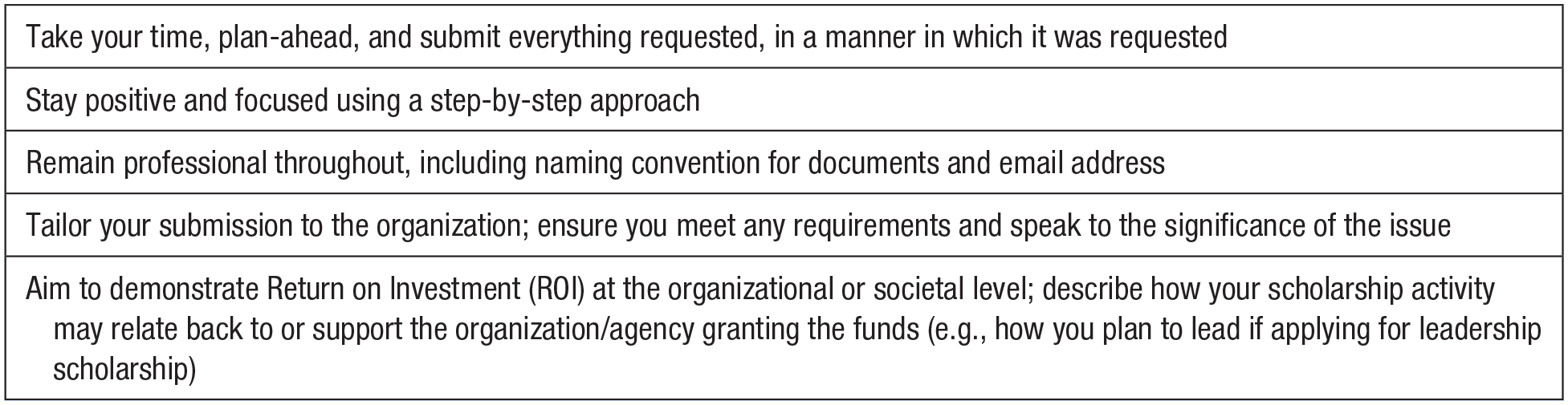
Practical tips for a successful scholarship application
Confidence is Key!
Self-esteem and self-confidence are crucial when applying for grants and scholarships. A strong sense of confidence not only supports your mental well-being but also empowers you to get started, navigate the application process with ease, and craft a compelling narrative that reflects your work, values, and personal convictions. A positive mindset can be the difference between feeling hesitant and taking decisive steps toward securing funding for your career development.
Building Confidence and Achieving Success
By fostering a positive mindset focused on growth, opportunity, and belief in your own potential, you will increase your chances of success while expanding your professional world and opportunities. Confidence is truly the key!
Here are some additional steps to build self-esteem while going through the scholarship or grant application process:
1. Visualize Success: Picture yourself completing the application and being awarded the grant or scholarship. Positive visualization helps build confidence and can make the process feel more achievable.
2. Set Small, Achievable Goals: Break down the application process into smaller tasks (e.g., gathering documents, drafting your proposal) to avoid feeling overwhelmed. Celebrate each milestone.
3. Focus on Your Strengths: Reflect on your accomplishments, expertise, and the impact you’ve made in your field. Knowing your worth will strengthen your application and overall confidence.
4. Seek Feedback and Mentorship: Ask for advice from colleagues or mentors you trust. This can provide diverse perspectives, reinforce your abilities, and help refine your application.
5. Practice Self-Affirmation: Remind yourself daily of your skills, values, and the positive change you are working toward. Reaffirming your strength and avoiding negative self-talk builds resilience and motivation.
6. Prepare for Rejection and Learn from It: Understand that rejection may be part of the process. Use it as a learning opportunity to improve and refine future applications.
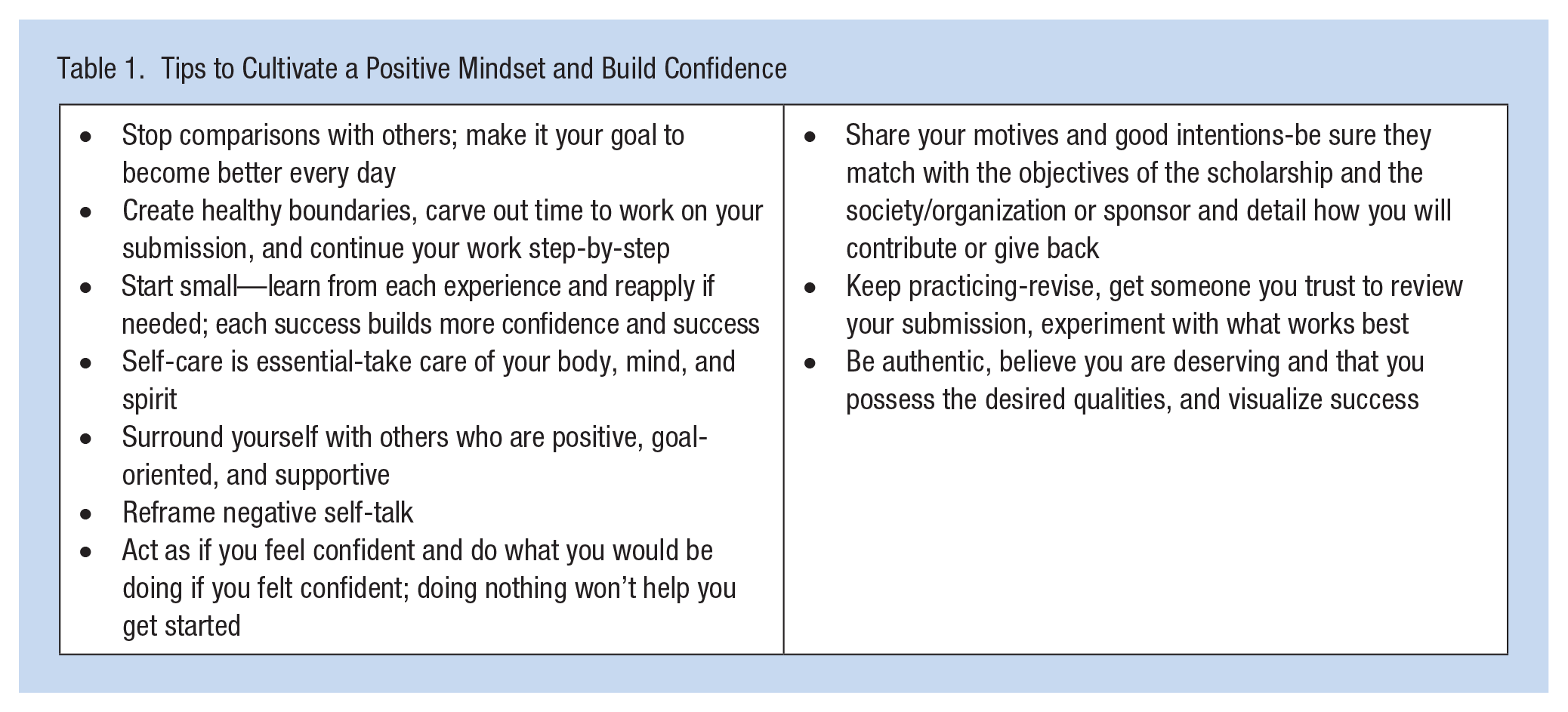
Table 1 includes tips for fostering a positive mindset and building confidence. As you build confidence, you will achieve success. Look at each opportunity as a learning experience, an opportunity to network with more successful people, to make new connections, or to expand your professional world and opportunities. You will feel more confident if you receive a scholarship. This may lead to opportunities to present what you have learned, or educate others. Perhaps you will have the opportunity to disseminate your findings or share a best practice through publication. Each success leads to more confidence and more success, supporting self-esteem.
Tips to Cultivate a Positive Mindset and Build Confidence
Congratulations! Now What?
Once your application has been completed and submitted according to the required guidelines, the next steps are important to ensure everything is in order and to stay on top of the process.
1. Confirm Receipt of Your Application:
a. Pay attention to the notification method. Typically, you can expect an email response. b. Ensure that your application has been successfully received by checking for a confirmation email or by contacting the funding source using the provided phone number or email address. If possible, request a delivery receipt or read receipt when submitting your application materials.
2. Stay in Communication:
a. Occasionally, unforeseen circumstances may impact deadlines or project timelines. In such cases, it is important to communicate proactively with the funding source. Inform them promptly if you anticipate that you will be unable to meet a deadline, provide a valid explanation, and ask if a revised timeline for completing any outstanding tasks can be given. Keep in mind that deadline exceptions are rare and usually limited to catastrophic events (e.g., weather, pandemic). b. Be sure to stay on task and complete any requested action items promptly. This demonstrates professionalism and accountability.
3. Follow Through on Post-Application Requests:
a. After receiving the funding, review any additional requirements or next steps. This might include submitting tax forms (e.g., W9), providing a photo or statement narrative, or planning how you will disseminate your findings (e.g., at a conference, through a poster presentation, or a journal submission). b. Always be proactive in providing updates on your work and accomplishments. Ensure that you clearly identify the sponsors or funding organizations that supported your project.
4. Share Your Knowledge and Experiences:
a. Whether your project involved attending educational programs, completing training, or conducting research, it’s crucial to share the knowledge and insights gained. Publishing research findings will be important for practice improvement and increasing knowledge. Consider writing about unexpected findings or interesting revelations and share these insights with your professional community. b. A personal thank-you note to the funding agency or organization goes a long way in showing appreciation for their support.
5. Give Back:
a. Once you have achieved your goals and progressed in your career, consider giving back by mentoring others, sharing your learning, serving on a board or committee for a professional organization (AAOHN or The Foundation), or nominating someone for future scholarships. b. As you progress in your career, consider contributing to the development of future generations of OHNs. You can make a meaningful impact by donating to scholarship funds, making a legacy gift, or establishing a fund in honor of yourself, a family member, or a mentor who has influenced your career.
By following through on all these steps, you not only honor the funding and opportunities you have received but also help sustain the growth and success of the science and practice field while fostering a cycle of support and mentorship for others.
Application to Professional Practice
Supporting worker and workplace health and safety by fostering research and professional development in OEHN is a key priority for the AAOHN. The AAOHN Foundation plays a critical role in advancing this mission by administering grants and scholarships that empower OHNs to advance the specialty field. To contribute effectively, it is essential for OHNs to understand the scholarship and grant application processes and refine their grant-writing skills. Building confidence and applying for funding opportunities allows OHNs to pursue specialty training, education, and research. However, despite the availability of numerous resources and funding opportunities to support professional growth, these opportunities are often underutilized due to common barriers, such as: lack of awareness about available funding, uncertainty about the application process, and lack of confidence in navigating the process. By providing OHNs with practical tools such as practice updates to keep them informed of new opportunities, tips for successfully navigating application processes and refining grant-writing skills, and strategies to build self-assurance, we can help them overcome these challenges. Empowered with these resources, OHNs can strengthen their roles as healthcare professionals while contributing to workplace safety and public health.
Through the Foundation’s funding opportunities, OHNs are empowered to drive innovation and research, elevate their expertise, take on leadership roles, and advance their careers. This commitment to growth not only enriches individual careers but also amplifies the collective strength of the OEHN community, fostering impactful contributions to the specialty field. By tapping into scholarships and grants, OHNs can accelerate progress in workplace safety, public health, and the ongoing evolution of OEHN. Together, they are shaping the future of the profession, one groundbreaking achievement at a time.
Applications to Professional Practice
Facilitating research, professional growth, and leadership development in occupational and environmental health nursing (OEHN) is a priority for the AAOHN and the AAOHN Foundation. Collectively, their mission focuses on fostering healthy and safe work environments while advancing the profession. The AAOHN Foundation, a not-for-profit organization, ensures funding opportunities are available to support this mission through grants and scholarships. Unfortunately, many funding opportunities remain underutilized due to common barriers, such as a lack of applicants, incomplete or low-quality applications, and apprehension about the process. This practice update offers insights, opportunities, and actionable tips to empower occupational health nurses (OHNs) to confidently apply for these resources. By improving grant-writing skills and understanding the scholarship application process, nurses can better navigate these opportunities to support personal and professional growth, specialty training, and education. Enhancing these skills also strengthens the role of OHNs as professionals, enabling them to contribute more effectively to the advancement of OEHN as a specialty field
Footnotes
Acknowledgements
We would like to thank the AAOHN Foundation Board of Trustees and the AAOHN Board of Directors for their invaluable support of this manuscript. We are particularly grateful to Dr. Kathleen Golden for her technical editing and review.
Conflict of Interest
The author(s) declared no potential conflicts of interest with respect to the research, authorship, and/or publication of this article.
Funding
The author(s) received no financial support for the research, authorship, and/or publication of this article.
