



Abstract
Background:
This multilevel meta-analytic review is designed to analyze and quantify the effect size of the association between technostress and work-life fit among employees.
Method:
By adhering to the PRISMA 2020 Statement, seven databases (i.e., PubMed, PsycARTICLES, PsycINFO, the Psychology and Behavioral Sciences Collection, MEDLINE, Wiley Online Library, and Web of Science) were searched for studies reporting the association between technostress and work–life fit.
Results:
Out of the 476 articles that were screened, 7 met the established criteria and were subsequently included in this multilevel meta-analytic review. A majority of these studies highlighted the existence and intensity of the association between technostress and work-life fit, as evidenced by multiple Pearson’s r. Our findings supported a medium association (Cohen’s d = −0.41). Noteworthy differences were found when considering the interdependence of effect sizes within and between studies.
Conclusion:
The results of this multilevel meta-analytic review underscore the significance of understanding this association to inform optimal choices in terms of welfare policies and organizational decisions that promote employee well-being. This knowledge may serve as a scientific foundation for viewing new technologies not merely as hurdles but also as potential resources.
Background
In recent years, Information and Communication Technologies (ICT) have significantly transformed work habits. ICT has evolved from a mere resource to a new working actor (Ahmed et al., 2021), with emails, smartphones, video calls, and other technologies becoming indispensable for most job practices (Deng et al., 2023). This radical change resulted in new daily tasks as well as a new normality. However, Salazar-Concha et al. (2021) highlighted that at the organizational level, the use of ICT necessitates a continuous upgrade of employees’ digital skills. This often leads to an increase in work pace and volume, frequently extending beyond official working hours. Consequently, employees have been found to experience stress associated with ICT usage (Gualano et al., 2023), a phenomenon termed technostress (Truța et al., 2023). Brod (1984) characterizes technostress as a modern disease that impacts individuals’ ability to handle ICTs in a healthy way. Specifically, in the work environment, technostress manifests as stress experienced by users due to multitasking with applications, continuous connectivity, information overload, frequent system upgrades and the associated uncertainties, ongoing relearning leading to job-related insecurities, and technical issues related to ICT use in organizations. The theoretical definition of technostress is grounded in the evidence provided by Tarafdar et al. (2013) regarding technostress creators, which are events, circumstances, and elements that induce technological stress. These creators represent slight variations on the same concept: (a) techno-overload: the sensation of needing to work longer and faster or continuously adapt one’s actions; (b) techno-invasion: describes how ICTs can encroach on users’ personal lives, blurring the boundaries between their work and home lives; (c) techno-complexity: refers to situations where users perceive their skills as inadequate due to the features and complexity of ICTs; (d) techno-insecurity: discusses circumstances where users feel their abilities are inadequate due to the characteristics and complexities of ICTs; and (e) techno-uncertainty: pertains to the continuous updates and modifications of ICTs, which frustrate users and compel them to continuously acquire new skills. Accordingly, some research has focused on technostress consequences (Khedhaouria et al., 2024) as well as core symptoms of burnout (Kaltenegger et al., 2023). In fact, Pocinho and Garcia (2008) suggested that spending more than 75% of their working time using ICT is a risk factor for technostress. A systematic review (La Torre et al., 2019) summarized its negative impact on both professional and private life.
Recently, Nisafani et al. (2020) proposed a conceptual model to depict the causal interaction between stressors, strains, inhibitors, and the impacts of technostress. This model offers a comprehensive perspective based on previous research. For the purposes of the present work, we focused only on the work-home conflict, identified as a techno-stressor. Broadly, this conflict has been conceptualized as work–life balance, referring to the degree to which an individual is equally involved in and satisfied with their roles as family members and employees (Greenhaus et al., 2003). However, recent research advocates for a substantial terminological modification: the term “work-life balance” has been replaced with “work-life fit” (WLF) for more precise articulation. This change underscores that an employee’s time is not evenly split between family and work (i.e., unbalance), but rather, each individual can find the best fit according to their unique circumstances (Phillips, 2020; Sellmaier, 2018). This shift further emphasizes the individual differences in managing one’s own time and life goals. Moreover, “fit” is characterized as a unique quality that occurs when individuals possess the necessary resources to meet obligations in a manner that fosters effective role performance in both work and non-work-related domains (Turner & Lingard, 2016). In light of these recent developments, we have adopted the WLF terminology in the present article.
Over the past few decades, there has been a marked increase in interest in this subject due to shifts in family norms (e.g., increased participation of women in the workforce and a consequent sense of shared responsibility among couples) and the blurring boundaries between non-work and work-life (Gardner et al., 2021; Ugwu et al., 2023). Moreover, the implications of the Covid-19 pandemic have rekindled interest in the long-standing concept of work-from-home, which originated in 1973 (Messenger & Gschwind, 2016). Furthermore, the accessibility of modern digital devices, such as the smartphone’s portability, enables contact with any worker anywhere and anytime (Nisafani et al., 2020). This enhanced connectivity has dissolved the boundaries between professional and private demands, thereby complicating the work-life fit. In fact, this phenomenon has recently been termed work–home conflict (Ayyagari et al., 2011). In some respects, it overlaps with techno-invasion, which is considered the second dimension of technostress (Tarafdar et al., 2010). However, both terms indicated that leisure time is encroached upon by work pressures. Moreover, historical research (Kupersmith, 1992) has highlighted that individuals who work 8 hours in an office also spend an additional 7 hours per week working from home, especially women who are more involved in home and child care and older employees (Oakman et al., 2023).
As a result, several studies seem to support an association between technostress and WLF. According to previous research (Brough et al., 2020; Ma et al., 2021), the outcomes of dissatisfaction with one’s own WLF involve both work (e.g., turnover and work engagement) and family contexts (e.g., family satisfaction and family functioning). Therefore, when employees perceive a satisfactory balance between work and personal life demands, they can use family and work resources to achieve superior outcomes. However, to our knowledge, there is no quantitative review (i.e., meta-analysis of effect estimates) that has examined this topic. Thus, given its growing relevance in recent years, the present study offers a deeper insight into the extent to which technostress is related to WLF. In detail, our initial hypothesis posits that high levels of technostress should be associated with low levels of WLF. Indeed, this could provide valuable scientific knowledge to inform organizational policies and welfare choices for the well-being of employees across their multiple social roles (Brough & O’Driscoll, 2010).
Methods
According to the purpose of the present study, we conducted a multilevel meta-analysis considering the presence of different effect sizes within the included studies. In line with our inclusion criteria, we included all papers written before April 2023. The present meta-analysis was conducted in strict adherence to PRISMA guidelines (Page et al., 2021) for systematic review and meta-analysis, and it followed the three steps: identification, screening, and coding (outlined subsequently).
Identification
A comprehensive search was conducted across several databases, including PubMed, PsycARTICLES, PsycINFO, Psychology and Behavioral Sciences Collection, MEDLINE, Wiley Online Library, and Web of Science. This search was supplemented with manually researched studies (e.g., using Google Scholar). The search was carried out in April 2023. To identify the articles, two groups of keywords were used in the titles and abstracts: (a) technostress OR technology overload OR technology-related pressure, (b) work-life balance OR work-life interface OR work-life fit OR work-family conflict.
Screening
The selected articles were screened based on the following eligibility criteria: (a) quantitative studies written in English and published in peer-reviewed journals, (b) studies that included technostress as a variable, (c) studies that included WLF as a variable, (d) studies that analyzed the pure association (i.e., without the influence of other variables) between these variables (i.e., technostress and WLF), (e) studies in which the participants were older than 18 years of age, and (f) research where all WLF and technostress psychometric tools were applied, regardless of their theoretical background, to prevent distortions caused by the application of a single theoretical model.
The exclusion criteria were as follows: (a) studies dealing with participants aged younger than 18, (b) qualitative results (because they could not provide a quantitative effect size), (c) previous literature reviews, books, and abstracts, and (d) studies that take into account the Covid experiences to avoid incomparability of living conditions (Sharpe, 1997). Specifically, during the Covid pandemic, technology became the primary means of interaction with the outside world, leading to psychological distress irrespective of the extensive use of technologies (Faraci et al., 2022; Tuan, 2022; Vargo et al., 2021; Wells et al., 2023). Therefore, although the pandemic experience could be viewed as a natural experiment, we have chosen not to include these studies in the meta-analysis. The reason for this exclusion is that the conditions related to the pandemic are unique and non-reproducible in terms of WLF and technostress. Specifically, most individuals were unprepared for remote work or had rarely engaged in it before the pandemic. The sudden shift to virtual and remote work had a profound impact on people in various ways. Thus, including these studies would have led to a comparison of results that do not overlap, as the circumstances during the pandemic were exceptional and distinct from regular conditions. Therefore, to maintain the integrity and relevance of our meta-analysis, we have decided to focus on studies conducted under more typical conditions. This approach ensures that the findings may be applicable and beneficial to understanding the relationship between technostress and WLF in a broader context.
One author first screened the titles and abstracts of articles for potential inclusion using the inclusion and exclusion criteria. Then, the reference list of the included articles was screened to find additional qualified studies. An independent author reviewed the originally selected articles. No disparities between the authors were found in the inclusion or exclusion judgments.
Coding
The included studies were coded for study identification code, sample size, age of participants, and the association between technostress and WLF using Pearson’s r coefficients as measures of effect size. They were coded in the same direction to facilitate comparison of these correlations (e.g., work–life balance and work–life conflict). A negative correlation indicated that the results were in line with our initial hypothesis (i.e., high levels of technostress were associated with low levels of WLF). Indeed, the inclusion of all subscales from the adopted psychometric tools is crucial to prevent a significant loss of information. Some studies may not provide a global score of technostress or WLF but only scores emerging from the subscales. Therefore, each of these correlations has been incorporated into this multilevel meta-analysis. The goal of this approach was to ensure a comprehensive analysis and interpretation of the data, providing a more accurate and nuanced understanding of the relationship between technostress and WLF. This approach allowed for a more detailed examination of the specific aspects of technostress and WLF that are most strongly correlated. This could potentially reveal important insights for future research and interventions in this area.
A quality appraisal of the seven included studies was assessed by the Cochrane criteria (Higgins et al., 2023). It was plotted by the Risk of Bias VISualization (robvis; McGuinness & Higgins, 2021) tool for a generic study (Figure 1).
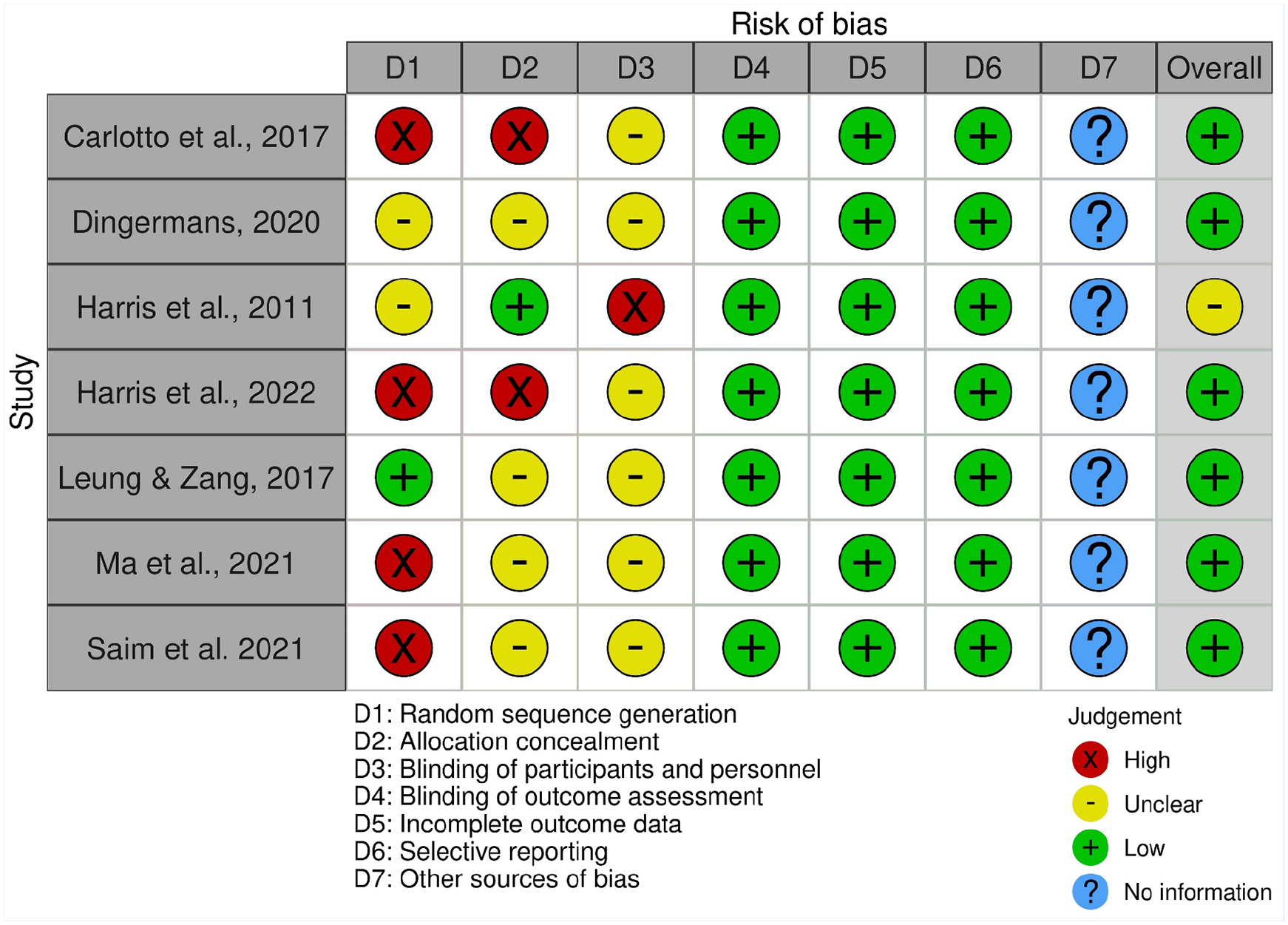
Risk of Bias Assessment
Data Analysis
In the majority of the included studies, multiple effect sizes were coded due to the adoption of various subscale instruments. Cross-sectional results were meta-analyzed, while the outcome from the longitudinal study was narratively presented. In line with Assink and Wibbelink’s (2016) indications, the structuring of the coded results suggested the implementation of a multilevel meta-analysis (Pastor & Lazowski, 2018). This analysis included three levels: Level 1 (participants), Level 2 (within studies), and Level 3 (between clusters). Notably, Levels 2 and 3 accounted for sampling covariation, as suggested by the step-by-step tutorial for fitting a three-level meta-analytic model (Assink & Wibbelink, 2016). The clusters’ effect sizes were derived by aggregating various effect sizes from a single study. This approach was deemed more suitable for our analysis as it circumvented the violation of the assumption of independent effect sizes (Van Den Noortgate & Onghena, 2003). Thus, the multilevel approach accounted for the hierarchical structure of the data by considering the effect sizes nested within the studies (e.g., Lionetti et al., 2019). Specifically, we considered the Pearson’s r correlation coefficient between technostress and WLF as reported in the included papers, as well as the effect size. This coefficient was then transformed into a Fisher-z score (Lipsey & Wilson, 2001). According to Cohen’s (1988) formulated criteria, effect sizes around r = .10 were considered as small, around r = .30 as medium, and around r = .50 as large. Given that only one longitudinal study was coded, it was not included in the calculation of the overall effect size. Instead, the overall effect size was narratively compared with the longitudinal result. Finally, the data analysis was performed using the R software and programming language (R Core Team, 2021), using the metafor package (Viechtbauer, 2010) for a multilevel random effects model (Assink & Wibbelink, 2016). Thus, the rma.mv function was employed for fitting linear (mixed-effects) models to meta-analytic multivariate/multilevel fixed- and random/mixed-effects models, with or without moderators.
Results
Description of Included Studies
The initial search results comprised a pool of 476 studies. After eliminating seven duplicates, we screened 469 articles, and seven were selected based on the established eligibility criteria. The study selection procedure, guided by the PRISMA Statement (Page et al., 2021), is shown in Figure 2.
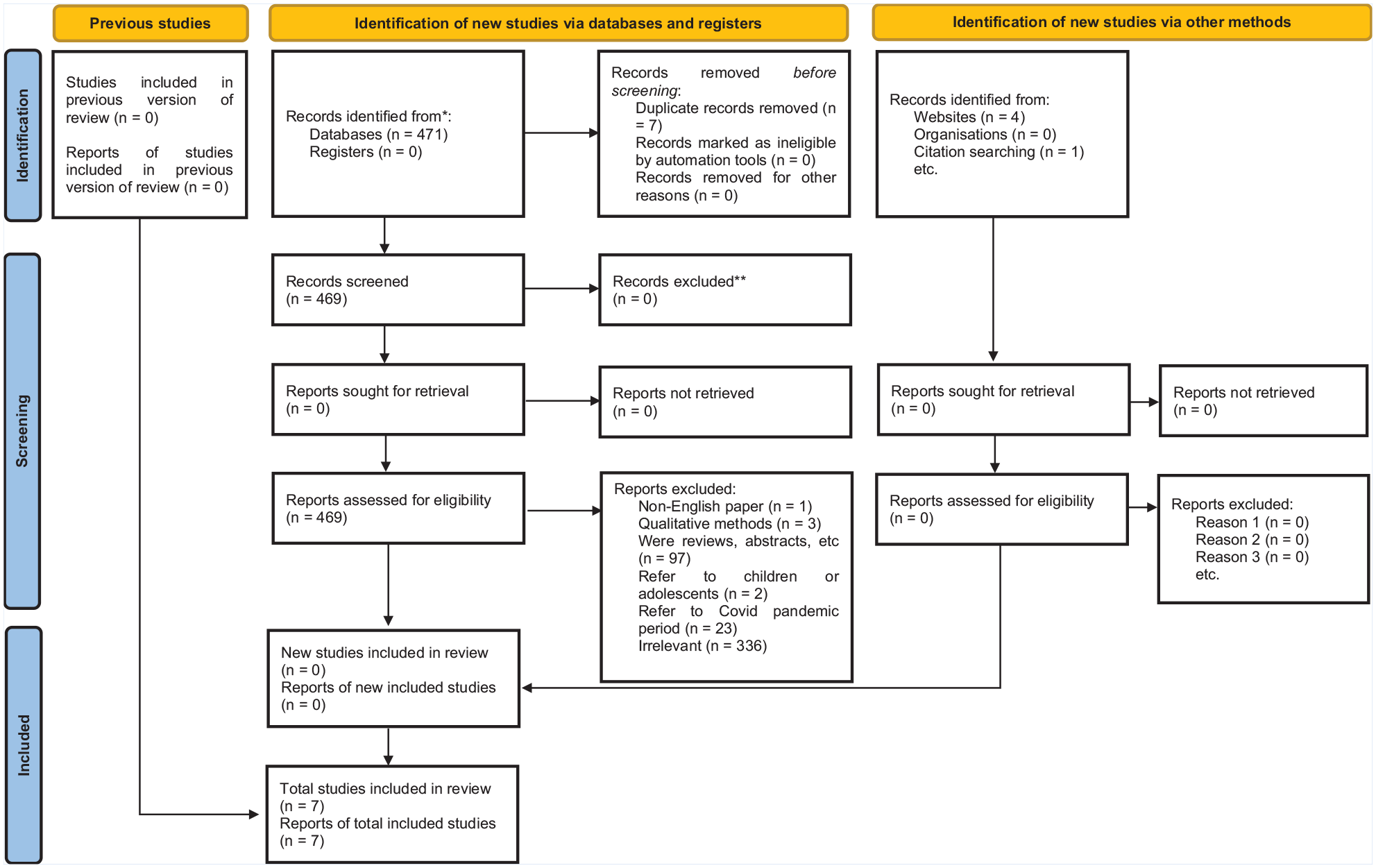
PRISMA 2020 Flow Diagram for Updated Systematic Reviews Which Included Searches of Databases, Registers and Other Sources
The studies were predominantly conducted in China and the United States (n = 2, each), (for more details, see Table 1). The findings were gathered from 1,923 participants, with an independent sample size ranging from 153 to 509 and a mean age of 34.73 years (SD = 9.75). The majority of the studies (n = 6) employed a cross-sectional design, while one utilized a longitudinal design. All of the studies were published in academic journals, with the exception of one dissertation thesis (Dingemans, 2020). Technostress and WLF were primarily assessed using ad hoc items such as ‘‘I have to change my work habits to adapt to new technologies” or items selected from existing instruments (e.g., Ragu-Nathan et al., 2008; Valcour, 2007). In detail, the selected studies administered the following instruments for the assessment of technostress: (a) Scale of Technostress (Salanova et al., 2004), which includes four dimensions (i.e., disbelief, fatigue, anxiety, and ineffectiveness) of technostress; (b) selected items from Ragu-Nathan et al. (2008), which proposed a two-second order instrument for the assessment of technostress creators and inhibitors; and (c) or from (Tarafdar et al., 2007). On the other hand, the included studies administered the following tools for the assessment of the WLF: the Work–Family Interaction Scale (WFIS; Paschoal et al., 2005), which assess the impact of family on labor and the impact of work on the family; the Multidimensional Measure of Work–Family conflict (Carlson et al., 2000) that evaluate time, strain, and behavior on work interference with family and family interference with work or its short form (Matthews et al., 2010); finally prior research selected items from other instruments (e.g., Brough et al., 2014). In total, 16 effect sizes were identified (Pearson’s r M = −0.39, SD = 0.17). They accounted for correlations between WLF and technostress measurement without the influence of other variables (e.g., moderators or mediators). None of the studies reported statistically non-significant results.
Studies Characteristics (N = 7)
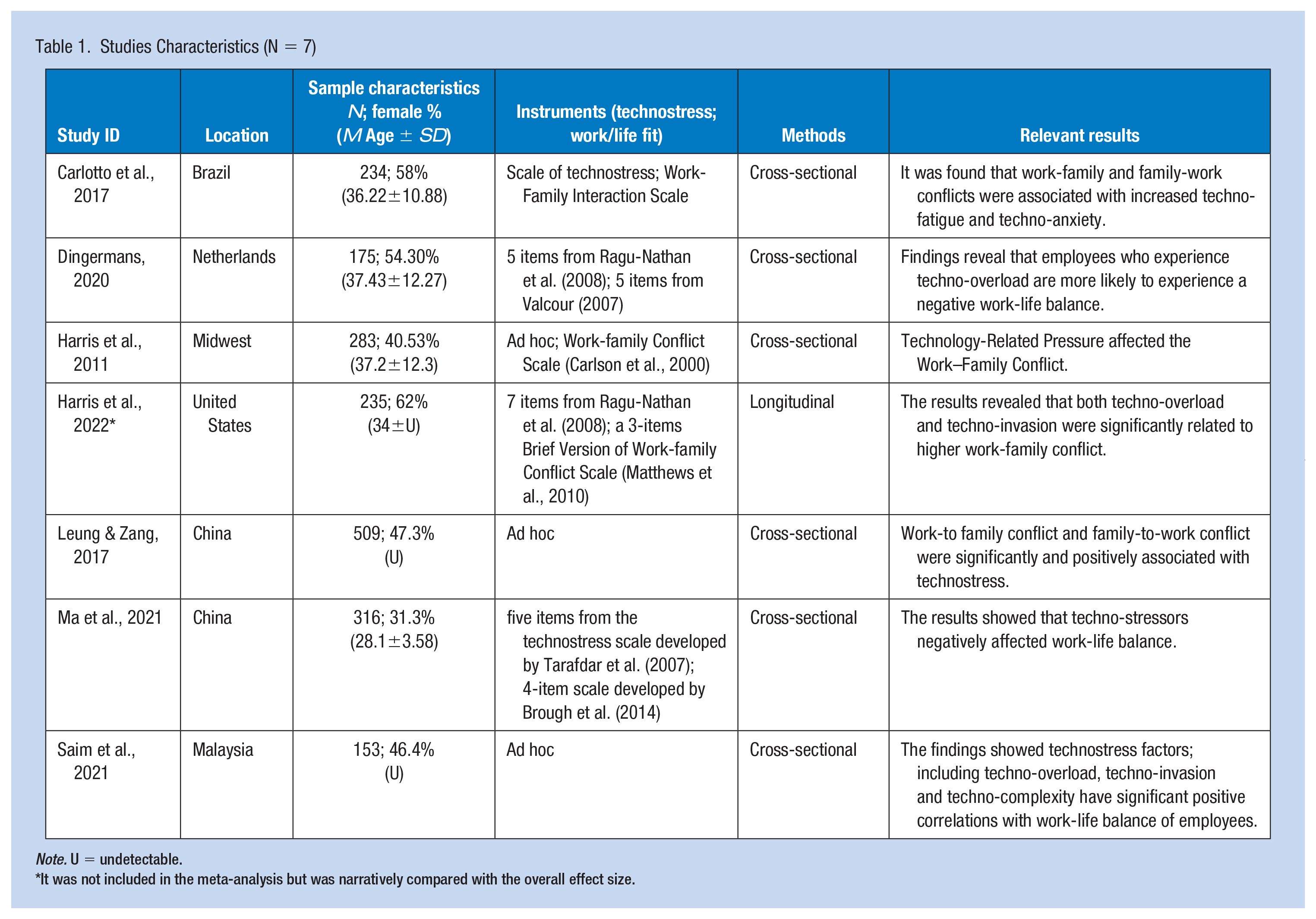
Note. U = undetectable.
It was not included in the meta-analysis but was narratively compared with the overall effect size.
Overall Relationship Between Technostress and Work-Life Fit
Overall, the full model highlighted a significant moderate relationship between technostress and WLF in adult employees. Our findings displayed a medium effect size (Cohen’s d = -0.41, Pearson’s r = 0.20, SE = 0.09). This overall effect is statistically significant (p < .001, 95% confidence interval [CI] [−0.625, −0.197]) for cross-sectional studies. The σ2 level 2 = 0.028 as well as σ2 level 3 = 0.028. This result (i.e., overall effect size; Figures 3 and 4) showed that high levels of technostress were associated with low levels of WLF.
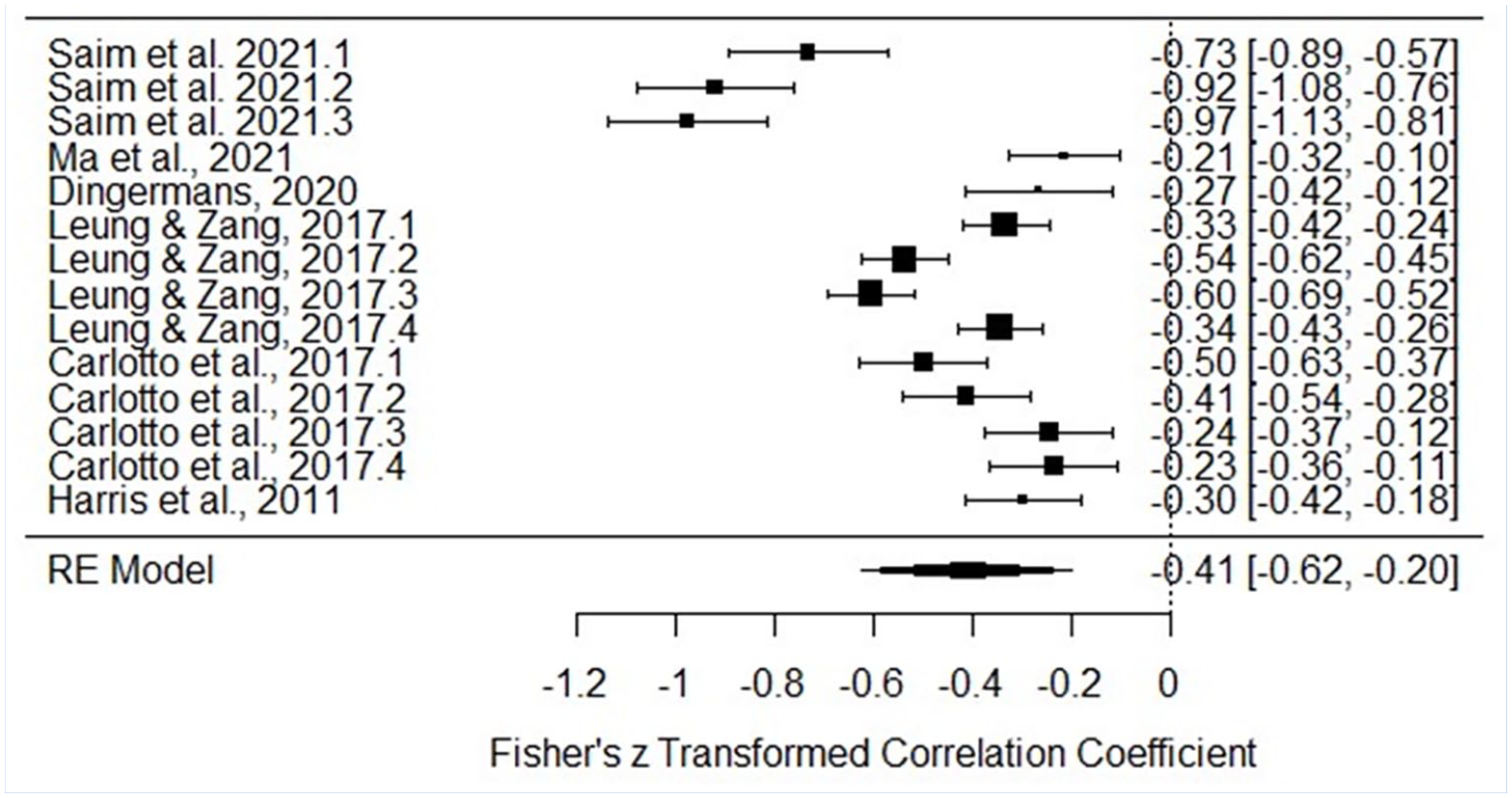
Forest Plot for All Effect Sizes (Level 2)
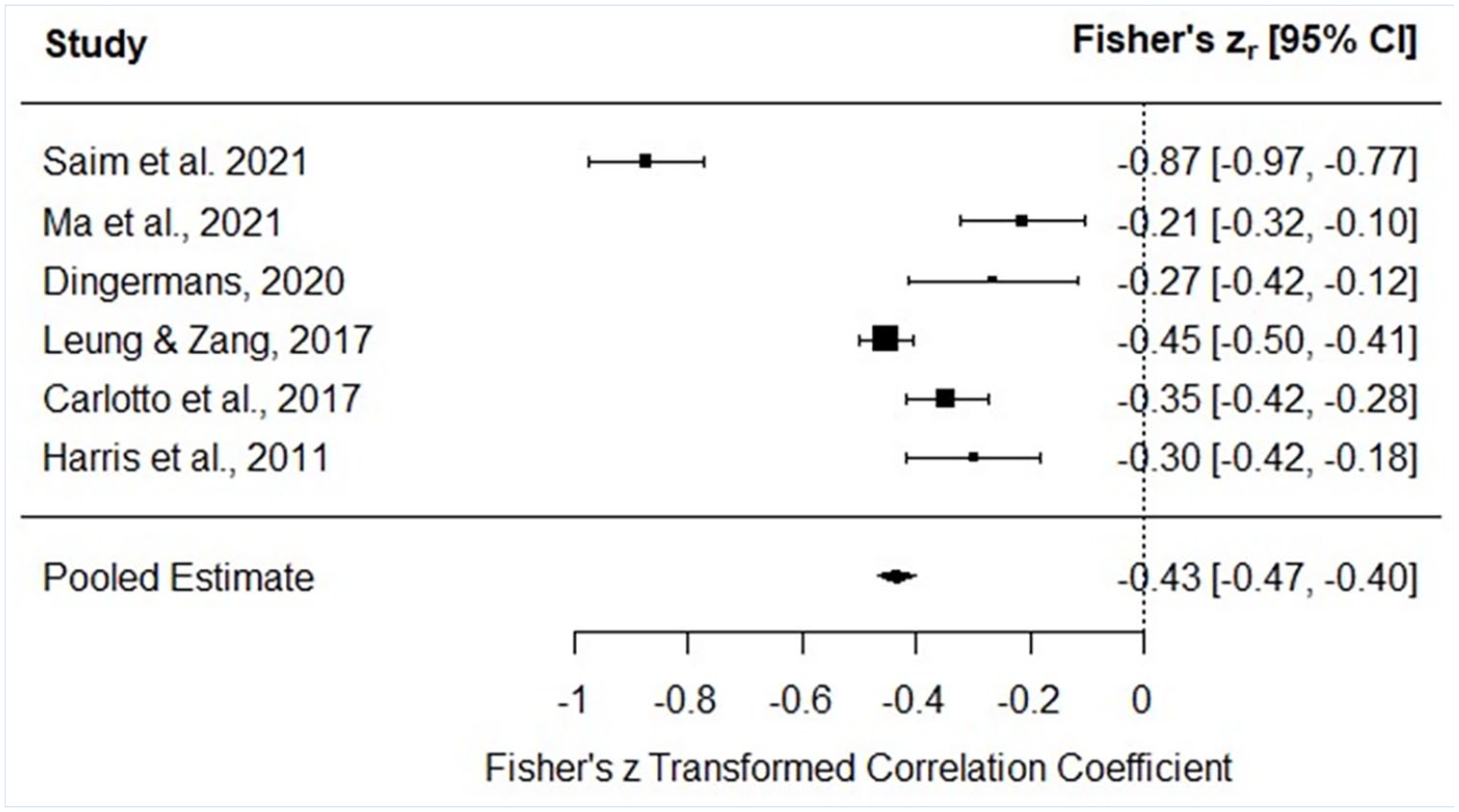
Forest Plot for Overall Effect Sizes (Level 3)
To determine whether the within-study variance (Level 2) and between-study variance (Level 3) are significant, two log-likelihood ratio tests comparing models with and without between-study variance are alternatively fixed to zero. In the first test, Level 2 was fixed to zero, and Level 3 was freely estimated. Our results concluded that the within-study variance was not significant as the fit of the reduced model was significantly superior to the fit of the full model (p > .05). Briefly, our findings did not show any significant variability between effect sizes within studies. Furthermore, we performed a second log-likelihood ratio test to determine the significance of the between-study variance. Here, the fit of the full model was compared with the fit of a model in which the Level 2 variance was freely estimated and the Level 3 variance was manually fixed to zero. Again, our results showed that the between-study variance was not significant as the fit of the full model was inferior to the fit of the reduced model (p > .05). Globally, this implied that there was not more variability in effect sizes (within and between studies) than may be expected based on sampling variance alone. However, in line with a statistical power problem that may arise when the data set is comprised of a relatively small number of primary studies (Assink & Wibbelink, 2016), our findings underlined that the total effect size variance was distributed as follows: 5.75% at level 1 (sampling variance), 47.12% at level 2 (within studies), and 47.12% at level 3 (between studies; clusters). Due to this issue, we concluded that there was substantial variation between effect sizes within or between studies (amount variance level 1< 75% at level 1; Hunter & Schmidt, 1990). Finally, the longitudinal study (Harris et al., 2022) highlights two effect sizes higher than our calculated overall effect size (i.e., r = −0.29 and −0.35).
Publication Bias
We also tested the publication year, number of participants, the measures of the two variables, and the country as potential moderators (p > .05). Nevertheless, they were not statistically significant moderators (p> .05). At a graphical level, we printed a funnel plot (Figure 5) to estimate the publication bias due to homogeneous data. The graph shows no symmetry, and many results deviate significantly from the average effect size. This highlights the possibility of a marked publication bias.
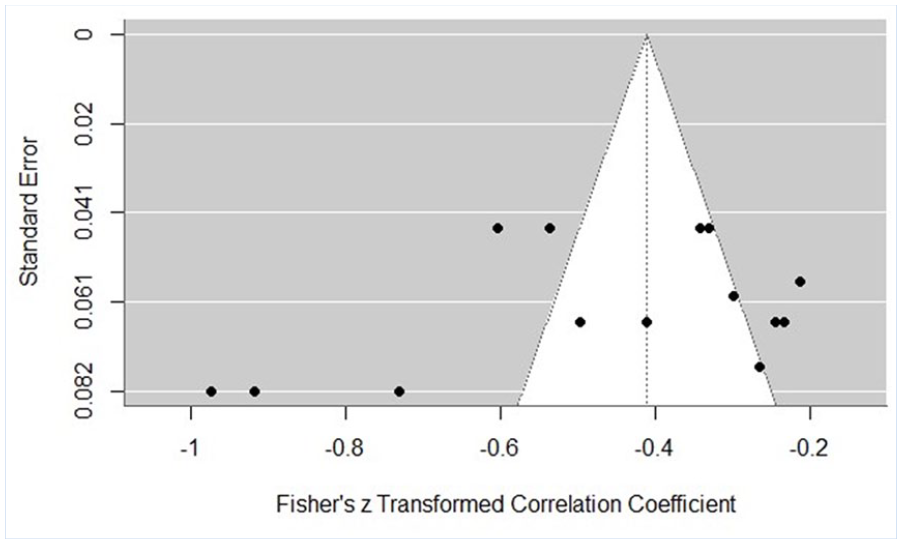
Funnel Plot for Overall Effect Sizes (Level 3)
Discussion
The current multilevel meta-analysis aimed to test the association between technostress and WLF in adult employees. The analysis employed a multilevel approach that accounted for the interdependence of effect sizes within the cross-sectional studies included. Indeed, some of the Person’s r coefficients were derived from the same study. Overall, consistent with our initial hypothesis, we found a significant moderate correlation between variables (Cohen’s d = −0.41), indicating that high levels of technostress were associated with low levels of WLF. This result aligns with Nisafani et al.’s (2020) conceptual model, which identified WLF as a risk factor for technostress. The effect size was larger than those reported in the longitudinal study (Harris et al., 2022). As a viable explanation, the portability of digital devices may blur the boundaries between private and work life. However, this may not always be problematic, as the use of new technologies could facilitate a better fit between family demands and career needs. For instance, according to previous research (Kinnunen et al., 2014; Kupersmith, 1992; Ugwu et al., 2023), work from home can enhance productivity and WLF, especially for women (Angelici & Profeta, 2020). Based on this attainable explanation, these individual differences may have contributed to the moderate level of the association observed. The differences between cross-sectional and longitudinal studies supported these findings, regardless of the method used. However, this comparison is reductive, as it was carried out with a single longitudinal study.
Furthermore, our findings suggested that nearly the entirety of the variance was equally explained by Levels 2 and 3. As a practical implication, we performed a series of moderation analyses, but no variable displayed statistically significant results. Further research should consider and compare various groups of employees (e.g., young and old, men and women) to highlight the impact of ICT on different age and gender groups of employees. Indeed, the push toward digitalization due to the COVID-19 pandemic may have flattened these differences (Ugwu et al., 2023). Finally, the funnel plot showed a consistent publication bias. As a practical explanation, the small number of studies that met our eligibility criteria, combined with the recent interest in this topic, highlights a field of investigation that needs further evidence.
Despite the significant impact of technologies on WLF, the number of studies currently available in the literature is limited. This has resulted in low statistical power for our findings, indicating a need for further research to bridge this knowledge gap. Moreover, this limitation has precluded us from performing additional analyses, including the unadjusted relationship between technostress and WLF, since it was untimely given the level of the art; subsequent research should also consider indirect relationships between these variables. Further, our analysis revealed a concrete risk of publication bias, which could lead to an overestimation of the effect size. The risk is further accentuated by the absence of non-significant results. The databases selected for our study could have contributed to this bias, as we did not screen articles from business-specific databases (e.g., CINAHL database). However, this bias could potentially be mitigated by manual research on Google Scholar. In addition, while we tested for an association between technostress and WLF in predominantly cross-sectional studies, this does not necessarily imply causality. More longitudinal studies are necessary to deepen our understanding of this relationship, as only one paper that adopted this method was found. Moreover, subsequent research should compare pre- and post-pandemic fundings to highlight any differences caused by this natural experiment. Finally, although our results did not allow for moderation analysis, we encourage further research to explore cultural and gender differences. This will provide a more comprehensive understanding of the impact of technostress on WLF across different demographic groups.
Conclusion
In this article, we conducted a comprehensive review of the existing literature on the relationship between technostress and WLF. We also provided a quantitative synthesis (i.e., Pearson’s r effect size) of this association based on a meta-analytic multilevel approach, which resulted in a moderately negative effect. We can support that the association between technologies and WLF is not entirely negative. The mutual influence of these factors can serve as both a resource and a challenge for employees. A potential benefit for both organizations and individuals could be the ability to preserve the boundaries between work and private life, leveraging the use of ICT without becoming overwhelmed by them. Finally, our results provide an empirical basis for discussions about policy decisions that impact employee well-being. These findings could inform strategies to manage technostress and promote a healthy work-life fit in the digital age.
Applying Research to Occupational Health Nursing Practice
The findings of the present meta-analytic review underscore a moderate negative association between ICT’s use and employee well-being. Current understanding suggests that while technologies have blurred the lines between professional and personal life, they should not be entirely vilified. Our findings may support the American Association of Occupational Health Nurses (AAOHN) in its major roles and responsibilities of developing standards of professional conduct for occupational and environmental nurses and promoting the health and safety of work and workplace communities. Indeed, the modest size of the observed effect size underlines that balance is key: while technologies have facilitated agile work and streamlined numerous procedures, their overuse can lead to a work environment devoid of spatial and temporal boundaries. Therefore, it’s crucial to find a middle ground in the use of technology to ensure it benefits rather than hinders work-life fit.
