



Abstract
Background:
Although studies suggest that cancer survivors face workplace obstacles, to date there has been little empirical research regarding the personal and environmental factors that can help cancer survivors adjust to work. The purpose of this study was to examine how working survivors’ resilience and job meaningfulness were related to their well-being outcomes, including lower cancer-related intrusive thoughts, fatigue, and presenteeism.
Methods:
We recruited 200 full-time employed cancer survivors from online participant panels using Qualtrics. Participants responded to an online survey that measured their resilience, job meaningfulness, job-related psychological distress, and well-being outcomes. We conducted descriptive statistical analysis, confirmatory factor analysis, and moderated mediated analysis to examine the psychological process in which resilience and job meaning are associated with cancer survivors’ mental health and work outcomes. Findings: The relationship between cancer survivors’ resilience and their well-being outcomes depended on job meaningfulness. For survivors whose jobs were not highly meaningful, their resilience was related to reduced job-related psychological distress, which, in turn, was related to lower intrusive thoughts, fatigue, and presenteeism. For survivors with highly meaningful jobs, they did not need to rely on resilience to protect them from workplace psychological distress and other negative outcomes. Conclusion/Application to Practice: It is important for working cancer survivors to develop resilience, especially when they do not perceive their work as highly meaningful. Successful resilience-building interventions can buffer the negative impact of low job meaningfulness and help working survivors achieve better outcomes. In addition, organizations can actively help enrich survivors’ jobs to increase perceived meaningfulness.
Background
The National Cancer Institute (2020) reported that, in 2020, there were roughly 18.1 million cancer survivors in the United States. In 2019, it was estimated that about 49% of cancer survivors were of working age (20–69 years; Miller et al., 2019). A study including 1,558 long-term cancer survivors in Germany found that 70% of working-age cancer survivors returned to the workforce within 8.3 years since cancer diagnosis (Arndt et al., 2019). Although returning to work provides necessary financial resources and indicates the start of a new normal for cancer survivors, they still face a variety of challenges adjusting to their work roles. For example, recent studies have reported that survivors’ ability to work is disrupted by hindrances such as cognitive limitations, coping issues, frequent fatigue, depression, and anxiety (e.g., Duijts et al., 2014; Ehrenstein et al., 2020). In another study, researchers observed that frequent job stress put female employed breast cancer survivors, but not female employees without a history of cancer, at a higher risk of experiencing a cluster of negative symptoms such as fatigue, anxiety, and depression (Moskowitz et al., 2013). With higher cancer survival rates, it will be more common for cancer survivors to return to the workplace (Arndt et al., 2019). However, there is a major knowledge gap regarding how to improve employment outcomes and support return to work for cancer survivors (de Moor et al., 2018; Sun et al., 2017).
Fatigue is one of the most widespread side effects of cancer treatment (Berger et al., 2015). For working survivors, fatigue can be a major factor impeding progress at work as they experience significantly higher levels of fatigue than employees who have never been diagnosed with cancer (Cheng et al., 2018). Compared with those without a cancer history, working cancer survivors have reported poorer physical health (Tan et al., 2019; Weaver et al., 2012). Thus, presenteeism, referring to attending work while feeling ill, may be particularly salient for survivors because general ill health is a prominent correlate of presenteeism (Miraglia & Johns, 2016). Intrusive thoughts, which are unwanted and recurrent thoughts about cancer, have also been studied as a common mental health outcome for cancer survivors (e.g., Dupont et al., 2014; Lu et al., 2012). Cancer-related intrusive thoughts are related to adverse outcomes such as lower quality of life, depressive symptoms, negative affect, and sleep disturbances (Dupont et al., 2014; Thorsteinsdottir et al., 2017).
A recent call for research suggested that adult oncology nursing science and practice could benefit from more empirical investigations on resilience (Eicher et al., 2015), defined as an individual’s capacity to bounce back from adversity (Lazarus, 1993). Resilient individuals have been shown to be resistant toward intrusive thoughts generated by a variety of traumatic experiences because they use coping strategies that mitigate cognitive perseveration (McBride & Ireland, 2016). Resilience has been shown to reduce avoidance coping strategies among cancer survivors, which in turn led to less posttraumatic symptoms (Gori et al., 2021). These same coping strategies should also attenuate the fatigue experienced by survivors when they return to work (cf. Sim et al., 2019). Survivors high in resilience have been characterized by their problem-based coping strategies (McBride & Ireland, 2016) and may therefore be likely to view presenteeism as ultimately detrimental.
Conservation of resources theory (COR; Hobfoll, 1989) sheds light on why working cancer survivors’ psychological resilience is important for survivors’ mental health in the workplace. The theory states that people desire to protect things they value—their resources. Circumstances at work that threaten or deplete resources (e.g., high job demands, lack of control) increase job strain. To offset resource loss, individuals may employ other resources, including their conditions (e.g., tenure), personal characteristics (e.g., resilience), and energies (e.g., time). Previous research supports the benefits of psychological resilience in attenuating negative psychological and physical outcomes at work (e.g., Guo et al., 2017; Shoss et al., 2018). Thus, resilience should have protective effects for working cancer survivors and help them reduce work-related psychological distress.
Job-related psychological distress among cancer survivors can be detrimental to their health. Many cancer survivors were found to attribute their illness to psychological distress (Dumalaon-Canaria et al., 2014). Therefore, cancer survivors who experience high job-related psychological distress may worry more about cancer recurrence, resulting in intrusive thoughts. Moreover, high-perceived stress among cancer survivors has been associated with fatigue (Mazor et al., 2019). When cancer survivors perceive high levels of psychological distress at work, their fatigue may increase. Finally, experience of high stress at work, according to meta-analytical evidence, related to more frequent presenteeism (Miraglia & Johns, 2016). Therefore, we expected that reduced job-related psychological distress, as a result of survivors’ resilience, would lower intrusive thoughts, fatigue, and presenteeism.
Besides personal resources, such as resilience, job resources can also affect cancer survivors’ employment experience. Cancer survivors may involuntarily change careers due to cancer diagnosis and settle for jobs that are not personally meaningful. Based on COR theory, job meaningfulness, which enables employees to self-actualize through work and to justify the worth of their work (Lepisto & Pratt, 2017), can work as a job resource to mitigate the negative influences of job stressors, especially in the absence of personal resources such as resilience. Cancer survivors who find their jobs nonmeaningful may rely on other personal resources, such as resilience, to maintain their job-related well-being. By contrast, survivors with meaningful jobs may rely less on resilience when coping with job demands. Therefore, we hypothesize that job meaningfulness may moderate the relationship between resilience and job-related psychological distress, such that high resilience is more strongly related to lowered workplace psychological distress among cancer survivors with nonmeaningful jobs.
The purpose of this study was to investigate resilience and job meaningfulness as antecedents of cancer survivors’ mental health and work outcomes (Figure 1). We hypothesized that high psychological resilience is related to reduced intrusive thoughts, fatigue, and presenteeism. We also sought to examine lowered job-related psychological distress as the mediator between resilience and these three outcomes. Finally, we hypothesized that the extent to which resilience can protect cancer survivors from psychological distress at work and, in turn, the three outcomes, is dependent on survivors’ job meaningfulness. Specifically, resilience has stronger protective effect for cancer survivors with less meaningful jobs.
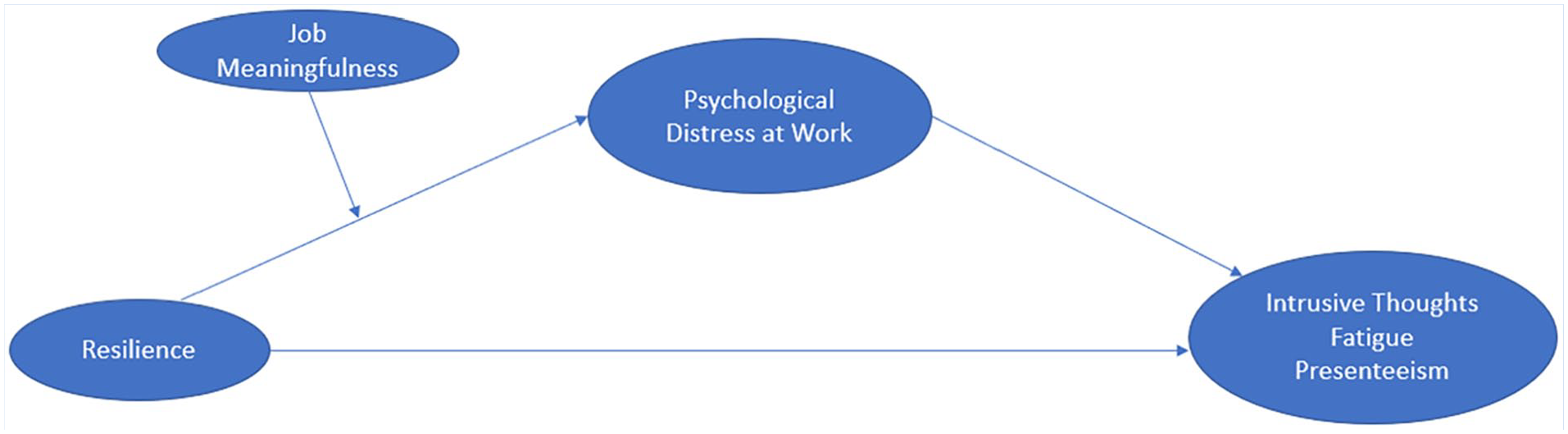
Conceptual model of the relationships between resilience, job meaningfulness, job-related psychological distress, and survivor outcomes.
Methods
Cancer survivors who were members of existing online research panels sourced from a variety of methods, such as newspaper and TV ads, social networks, and mail-based recruitment campaigns, were recruited by Qualtrics, a commercial sampling and surveying company. Panel members received an email invitation to participate in an anonymous online survey. The first screening question asked them to indicate any listed major life events that had happened to them, such as bankruptcy, losing a close family member, and being diagnosed with cancer. The second question asked them about their current employment status. Participants who indicated that they had been diagnosed with cancer and were employed full-time were included in this study. After providing informed consent, eligible participants responded to study instruments designed to measure relevant demographic information and the variables described in the conceptual model.
To ensure data quality, Qualtrics utilized several quality control measures, such as checking IP address, using attention check questions in the survey, and excluding participants who completed the survey at an unrealistically fast rate. Respondents were compensated with different forms of incentives that they had agreed upon when joining the online panels, such as gift cards or credits toward retail or airline services. The research team paid Qualtrics to recruit and distribute the survey, and Qualtrics rewarded participants with the compensation it had promised participants. Ethical approval was granted by the institutional review board of the University of Alabama in Huntsville.
Study Measures
Resilience was measured using the 10-item brief form of the Connor–Davidson Resilience Scale (CD-RISC-10; Campbell-Sills & Stein, 2007). This 10-item instrument assesses resilience facets, including adaptability, coping practices, perseverance, determination, and hardiness, on a 7-point scale, ranging from 1 (strongly disagree) to 7 (strongly agree). A sample item is “I tend to bounce back after illness or hardship.” A composite resilience score was calculated by averaging responses to all scale items, with a possible range of 1 to 7, with higher scores indicating higher resilience. Cronbach’s alpha was observed to be .90 in this study.
Job meaningfulness was measured with a three-item subscale from Spreitzer’s (1995) empowerment scale on a 7-point Likert-type scale, ranging from 1 (strongly disagree) to 7 (strongly agree). A sample item is “My job activities are personally meaningful to me.” A composite score was calculated by averaging responses to all scale items, with a possible range of 1 to 7, with higher scores indicating higher experienced job meaningfulness. Cronbach’s alpha was .94 in this study.
Job-related psychological distress was measured with the eight-item Job-related Affective Well-Being Scale (Van Katwyk et al., 2000). This scale measures how often participants experienced each of eight negative emotions at work in the past 30 days (e.g., “At work, I felt annoyed”) on a 5-point Likert-type scale, ranging from 1 (never) to 5 (always). A composite psychological distress score was calculated by averaging responses to all scale items, with a possible range of 1 to 5, with higher scores indicating more frequent distress. Cronbach’s alpha was .94 in this study.
Intrusive thoughts were measured with four items from the intrusion subscale (e.g., “Other things keep making me think about cancer”) of the Impact of Events Scale (Horowitz et al., 1979) on a 5-point Likert-type scale, ranging from 1 (never) to 5 (always). We used the four items from the original seven-item scale with the highest percentages of endorsement. We were concerned that some items from the original scale may demonstrate little variance (e.g., “I had dreams about [cancer]”) and therefore did not include those items in our survey. A composite intrusive thoughts score was calculated by averaging responses to all scale items. The range of possible composite scores was 1 to 5, with higher scores indicating more frequently experienced intrusive thoughts. Cronbach’s alpha was .94 in this study.
Fatigue was measured with the Functional Assessment of Chronic Illness Therapy-Fatigue scale (Version 4; Webster et al., 2003). Survivors reported the extent to which they experienced fatigue during the past 30 days on a 5-point Likert-type scale, ranging from 1 (not at all) to 5 (always). Two of the items (“I feel fatigued” and “I feel weak all over”) were from the original scale. The third item (“I have trouble working because I am tired”) was adapted from two other items on the same scale (“I have trouble starting things because I am tired” and “I have trouble finishing things because I am tired”). A composite fatigue score was calculated by averaging responses to all scale items. The range of possible composite scores was 1 to 5, with higher scores indicating more frequently experienced fatigue. Cronbach’s alpha was .89 in this study.
Presenteeism was self-reported through survivor responses to two items from Johns (2011). Presenteeism (e.g., “I come to work when it might have been better to stay home”) within the past 3 months was reported on a 5-point Likert-type scale, ranging from 1 (never) to 5 (most of the time). A composite presenteeism score was calculated by averaging responses to all scale items, with a possible range of 1 to 5, with higher scores indicating higher presenteeism. Cronbach’s alpha was .91 in this study.
Covariates included age (exact age in years), gender (1 = male, 2 = female), organizational tenure (less than 1 year, 1 year, 2 years, 3 years, 4 years, 5 years, 5–10 years, 10–20 years, 20–30 years, and more than 30 years), and time since original cancer diagnosis (less than 1 year, 1–2 years, 2–3 years, 3–4 years, 4–5 years, 5–10 years, 10–20 years, and more than 20 years).
Data Analysis
Analyses were conducted in IBM SPSS statistical software. Descriptive analyses were conducted for all demographic and health characteristics. We then conducted discriminant validity tests for our study constructs, using confirmatory factor analysis (Arbuckle, 2017) to determine whether they were distinguishable from one another (Messick, 1995), which was a concern for this study because variables (e.g., distress and fatigue) that are conceptually related might not be empirically distinguishable. As is illustrated in our conceptual model, our hypotheses imply that resilience, job meaningfulness, psychological distress, intrusive thoughts, fatigue, and presenteeism are six separate constructs. Thus, in the six-factor model, these six variables were defined to be distinct latent factors. Next, we computed a five-factor model in which psychological distress and fatigue items were loaded onto the same latent factor. This was the best competing model because strain and fatigue were the two constructs with the greatest potential for theoretical overlap (cf. Anderson & Gerbing, 1988). Then, we computed a four-factor model by loading resilience and job meaningfulness items onto the same factor. Finally, we computed a final model in which all items were loaded onto a single factor.
Our moderated mediation analysis involved four steps. First, resilience and meaningfulness were mean-centered to follow best practices in tests for moderation (Aguinis et al., 2017). Second, three simple mediation models were computed to test the indirect effects of resilience on the three well-being outcomes (intrusive thoughts, fatigue, and presenteeism) through job-related psychological distress. Intrusive thoughts was the criterion in the first model, and fatigue and presenteeism were, respectively, the criterion in the second and third models. Third, these three models were recomputed with the addition of job meaningfulness as a moderator of the relationship between resilience and psychological distress. In addition to multiple regression coefficients, estimates were produced for the conditional indirect effects of resilience on the outcomes (intrusive thoughts, fatigue, and presenteeism) through psychological distress at three different levels of meaningfulness (i.e., 1 SD below the mean, the mean, and 1 SD above the mean). Finally, we performed simple slopes analysis (Aiken & West, 1991) that regresses psychological distress on resilience at differing levels of job meaningfulness.
Results
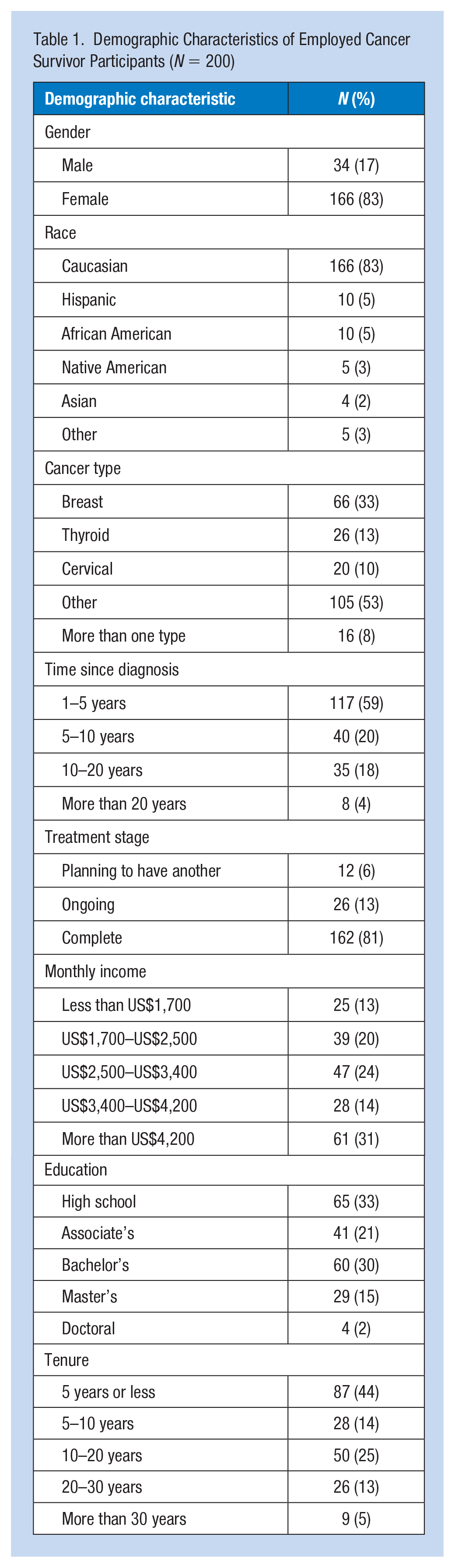
The final sample included 200 respondents who were mostly female (83%) and Caucasian (83%; Table 1). Out of all cancer types, the most highly represented in this sample was breast cancer (33%). Most (59%) participants had been diagnosed within the past 5 years and had completed cancer treatment prior to study participation (81%).
Demographic Characteristics of Employed Cancer Survivor Participants (N = 200)
Confirmatory factor analyses supported the discriminant validity of the hypothesized six-factor model, wherein resilience, job meaningfulness, psychological distress, intrusive thoughts, fatigue, and presenteeism were all defined to be separate latent constructs. The six-factor model demonstrated a significantly better fit than the five-factor model, wherein psychological distress and fatigue were constrained to be equal (p < .01), suggesting that psychological distress and fatigue are not the same construct. Similarly, the five-factor model demonstrated a significantly better fit than the four-factor model, wherein resilience and job meaningfulness were constrained to be equal (p < .01). This result supports the claim that resilience and job meaningfulness are distinct constructs. Finally, the four-factor model demonstrated a significantly better fit than the single factor model, where all items were loaded onto a single latent factor (p < .01). In other words, results support the claim that our instruments were not all measuring the same construct. The six-factor model demonstrated the greatest fit, supporting the discriminant validity of variables measured in this study.
Results from the moderated mediation analyses using the PROCESS macro in SPSS (Hayes, 2012) suggest that resilience was negatively related to job-related lower psychological distress (p < .01; Table 2). Results indicate that the indirect effects of resilience on intrusive thoughts (p = .02), fatigue (p < .01), and presenteeism (p < .01) through psychological distress were all significant. These statistically significant indirect effects imply that high resilience reduced intrusive thoughts, fatigue, and presenteeism because it reduced job-related psychological distress.
Regression Analysis on the Effects of Resilience on Intrusive Thoughts, Fatigue and Presenteeism Mediated by Psychological Distress Among Employed Cancer Survivors (N = 200)
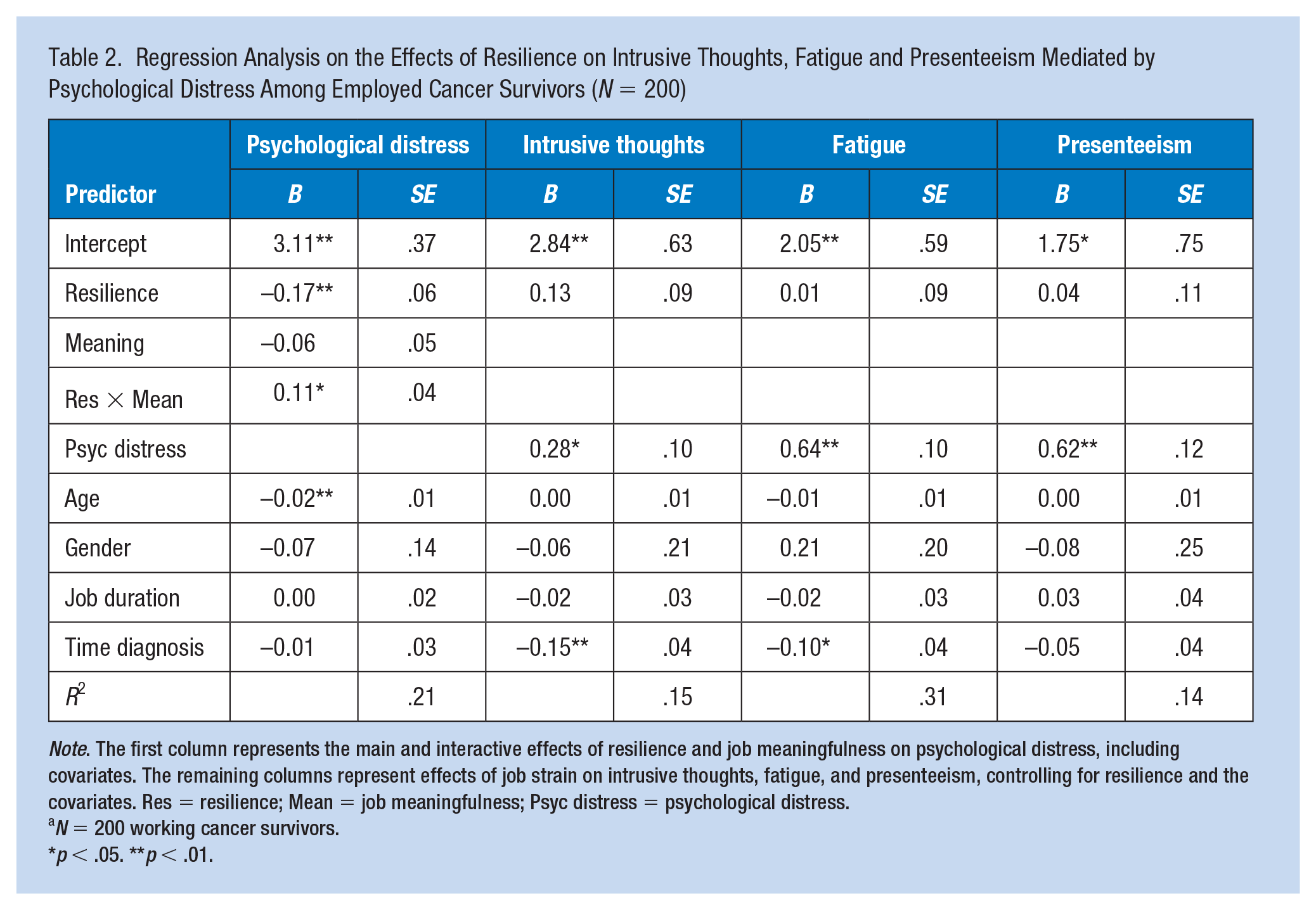
Note. The first column represents the main and interactive effects of resilience and job meaningfulness on psychological distress, including covariates. The remaining columns represent effects of job strain on intrusive thoughts, fatigue, and presenteeism, controlling for resilience and the covariates. Res = resilience; Mean = job meaningfulness; Psyc distress = psychological distress.
N = 200 working cancer survivors.
p < .05. **p < .01.
Furthermore, there was a significant interaction between resilience and job meaningfulness on psychological distress (p = .01). We plotted the interaction pattern in Figure 2. Simple slopes analysis suggests that the relationship between resilience and psychological distress was negative when job meaningfulness was low (p < .01), but was not significant when job meaningfulness was high (p = .54). In addition, after controlling for resilience, low psychological distress was related to less intrusive thoughts (p = .01), fatigue (p < .01), and presenteeism (p < .01).
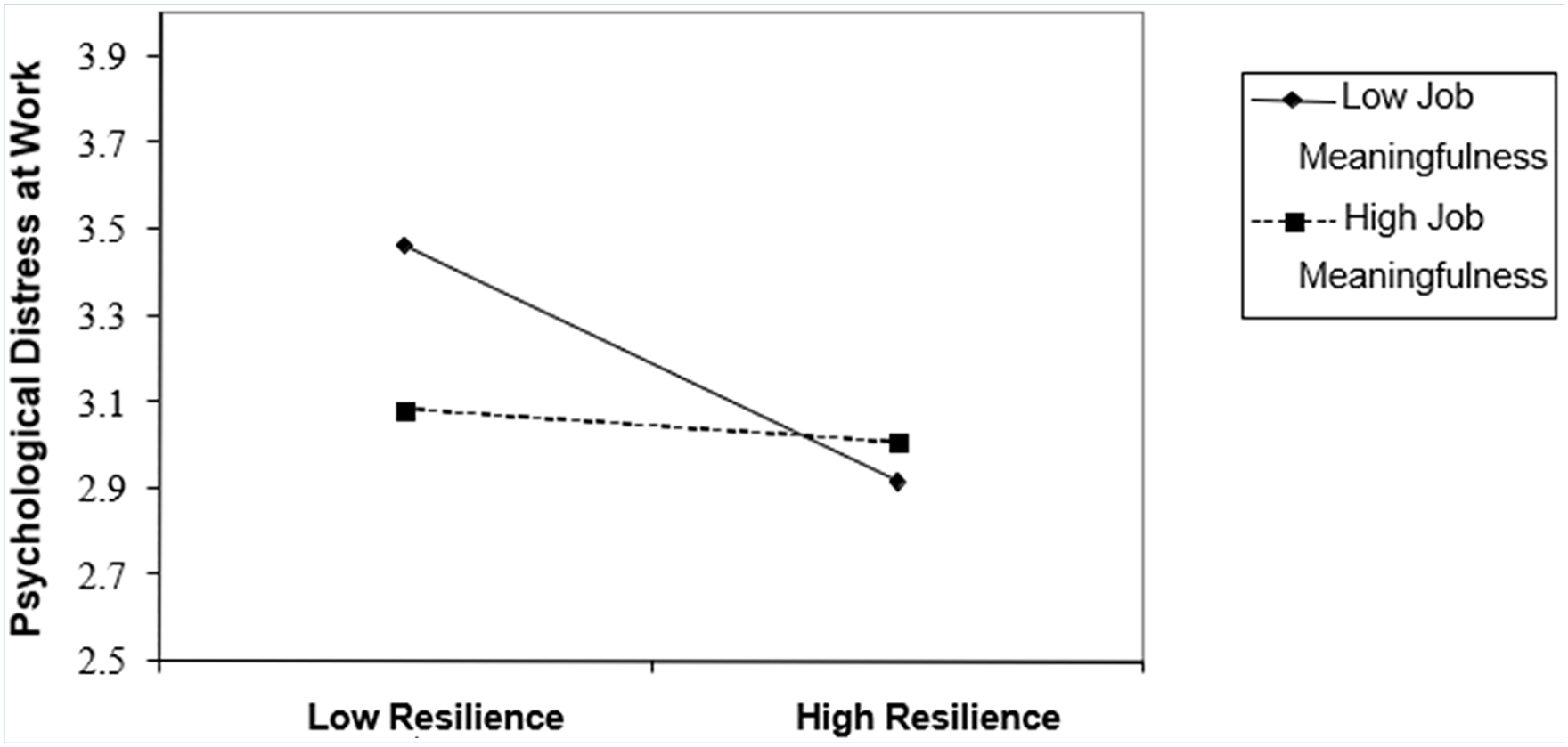
Interaction between resilience and job meaningfulness among employed cancer survivors.
As shown in Table 3, the indirect effect of resilience on intrusive thoughts through psychological distress was significant when job meaningfulness was low (p = .02) or average (p = .05), but not significant when job meaningfulness was high (p = .71). The index of moderated mediation (p = .05) further supports this conditional indirect effect. These findings were consistent when fatigue and presenteeism were entered as the dependent variables. The indices of moderated mediation were significant for both models, with fatigue (p = .01) and presenteeism (p = .02) as the dependent variables. The hypothesized moderating effect of job meaningfulness was, thus, supported for all criteria.
Conditional Indirect Effects of Resilience on Criteria Mediated by Psychological Distress
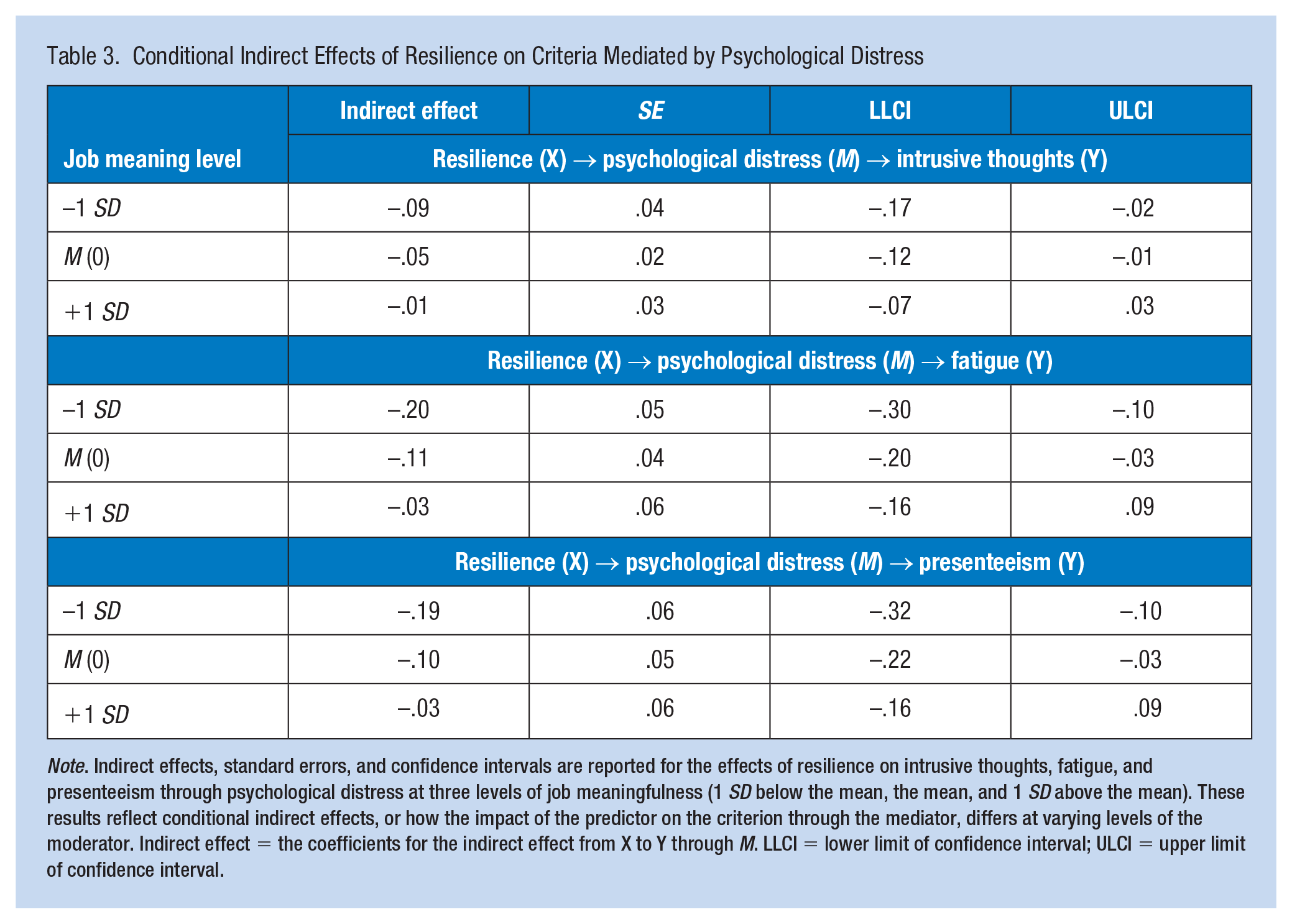
Note. Indirect effects, standard errors, and confidence intervals are reported for the effects of resilience on intrusive thoughts, fatigue, and presenteeism through psychological distress at three levels of job meaningfulness (1 SD below the mean, the mean, and 1 SD above the mean). These results reflect conditional indirect effects, or how the impact of the predictor on the criterion through the mediator, differs at varying levels of the moderator. Indirect effect = the coefficients for the indirect effect from X to Y through M. LLCI = lower limit of confidence interval; ULCI = upper limit of confidence interval.
Discussion
We examined the contribution of psychological resilience and job meaningfulness in affecting working cancer survivors’ cancer-related intrusive thoughts, fatigue, and presenteeism. We believe our findings have provided both theoretical and practical implications that help understand cancer survivorship and therefore build a more inclusive workplace. We consider both personal and job-related resources that survivors can use to protect themselves from the deleterious effects of job-related psychological distress (Hobfoll, 1989). Results suggest that psychologically resilient survivors experience lower levels of intrusive thoughts, fatigue, and presenteeism because their resilience attenuates experienced job-related psychological distress. Thus, resilience can serve as a personal resource buffering against undesirable effects of job-related psychological distress on survivors’ mental health and work outcomes. Furthermore, for survivors who are not so resilient, job meaningfulness can serve as a job resource providing similar protection: Survivors who are not resilient can find meaning in their jobs to guard against psychological distress and its potential to augment intrusive thoughts, fatigue, and presenteeism.
Our research adds to a small body of literature focused on cancer survivors’ working experiences. Organizations have made great efforts to increase equality and inclusiveness, but less research and discussion exist about employees who can potentially be stigmatized due to their health conditions (Martinez et al., 2015). Previous studies demonstrated that the “Big C” stigma associated with cancer survivors could threaten various aspects of their jobs, including hiring discrimination, stigmatizing perceptions about their work abilities, and advancement opportunities (Martinez et al., 2015). This study does not address stigmatization faced by working cancer survivors, but it is intended to provide insight to future research directly considering that issue. Employees who possess stigmatized identities could experience impaired psychological well-being as a result (Follmer et al., 2020). This study suggests that working cancer survivors, especially those low in resilience, can use job meaningfulness to protect themselves from the undesirable effects of job distress on specific well-being outcomes (i.e., intrusive thoughts, fatigue, and presenteeism). Given that meaningful work also tends to be more difficult and respected (Oldham & Fried, 2016), future research is encouraged to consider whether job meaningfulness can function not just as a protective mechanism but also as a vehicle for overcoming stigma.
We found that job-related psychological distress experienced by cancer survivors was detrimental to their physical and mental health. Working cancer survivors, who may face more mental and physical functional limitations, can demonstrate vulnerabilities to the harmful impact of psychological distress at work. We found a positive relationship between workplace psychological distress and cancer-related intrusive thoughts, which indicates the possibility that negative psychological states at work may extend to cancer survivors’ nonwork domain and influence their adjustment. Negative emotions from work may serve as reminders to cancer survivors about their medical history and the associated stigma, resulting in more unwanted thoughts about cancer. We also found that job-related psychological distress was related to increased fatigue and presenteeism, which could further undermine survivors’ health (Kluthcovsky et al., 2012; Skagen & Collins, 2016).
In the context of the COR theory, we examined two types of resources that cancer survivors can utilize to reduce psychological distress. Our hypothesis that high resilience was indirectly related to reduced intrusive thoughts, fatigue, and presenteeism through reduced job-related psychological distress was supported. Resilience serves as the capability that enables cancer survivors to bounce back from adversities (Lazarus, 1993), which past researchers found beneficial for survivors’ post-cancer adjustment (Harms et al., 2019). Consistent with previous research that demonstrated the positive effect of resilience on psychological well-being at work among the general population (e.g., Guo et al., 2017; Shoss et al., 2018), our results indicated that resilience acts as a useful personal resource to help cancer survivors to tackle not only threatening life events but also job stressors. We believe that resilience may be an especially relevant personal resource for workers who have been exposed to traumatic events (e.g., cancer, combat; Schaubroeck et al., 2011).
Furthermore, we found that job meaningfulness moderated the relationship between resilience and psychological distress. When cancer survivors did not perceive their jobs to be meaningful, their resilience decreased psychological distress. By contrast, when cancer survivors perceived their jobs to be meaningful, their resilience had no effect on psychological distress. As moderation is symmetrical, corollary claims are equally supported by these results: Job meaningfulness reduced psychological distress for cancer survivors who were not resilient, but did not impact psychological distress for cancer survivors with high resilience. The implication is that resilience and job meaningfulness can both decrease psychological distress at work, but that each is most important when the other is low. Our tests of the conditional indirect effects further revealed that psychological distress explained the linkages between resilience and well-being outcomes only for cancer survivors who had jobs that were not highly meaningful to them. These findings highlighted the complexity with which different resources work together to affect well-being. We found that psychological resilience was an effective compensatory resource that cancer survivors could utilize when they experienced the loss of job-related resources (i.e., job meaning). Although the COR theory identified different types of resources (Hobfoll, 1989), little research has examined the interaction between these resources. We expand upon COR theory by demonstrating that individuals may take advantage of personal resources to counteract undesirable effects generated by the depletion of job-related resources.
Implications for Occupational Health Practice
The study revealed that psychological resilience could be an important individual difference related to cancer survivors’ psychological distress at work, which, in turn, was related to different aspects of their overall well-being. This finding highlights the necessity for occupational health nurses and human resources professionals to provide resilience-building interventions for cancer survivors. Meta-analytic findings suggest that programs based in cognitive behavioral therapy and mindfulness are notably effective and can increase both employee health and performance (Joyce et al., 2018; Vanhove et al., 2016). Both of these intervention types aim to increase resilience by coaching individuals to consciously change how they think about themselves and interpret stimuli, thereby helping employees develop protective factors such as self-efficacy and optimism. Resilience-building training can also be offered as a part of cancer survivor care initiated by hospitals and support groups.
Our finding regarding the moderating effect of job meaningfulness is also of practical importance. The implication is that, for survivors who are not resilient, enhancing job meaningfulness is an additional route that can be taken to protect these workers from the undesirable effects of job-related psychological distress. We suggest two solutions that are not mutually exclusive. First, job meaningfulness can be a subjective perception. Organizations should take initiatives to enhance perceived job meaningfulness by informing cancer survivors about the significance of their jobs in training interventions such as those just described (Joyce et al., 2018; Vanhove et al., 2016). Second, organizations can work with teams comprising occupational health nurses and industrial organizational psychologists to consider how job crafting can be implemented to enhance the experiences of working survivors (Tims et al., 2016). For example, jobs that are meaningful are high in skill variety, task identity, and task significance (Oldham & Fried, 2016). In other words, jobs can be meaningful either because they require many abilities, require one to provide an identifiable contribution (e.g., being involved with a project from start to finish), or require one to perform functions that have a demonstratable organizational or societal impact. These interdisciplinary teams can be hired to craft jobs that demonstrate these characteristics and do not conflict with known functional limitations faced by cancer survivors (Duijts et al., 2014).
Our research has some limitations that could be addressed in subsequent studies. First, the generalizability of results is limited by both the size and source of the sample. Our sample included only 200 participants and it was recruited from an online convenience panel. Both of these factors could limit the extent to which our sample is representative of the population of working cancer survivors. Second, all variables were measured using a self-reported survey, which could result in common method bias (Podsakoff et al., 2003). For example, it is possible that effect sizes observed were augmented by the fact that all data were collected from self-report instruments. However, the focus of this study was to examine survivors’ perceptions and attitudes, and these factors are generally best captured by self-report measures rather than observer ratings (e.g., Bledow et al., 2011). Furthermore, although the sample is limited in its generalizability, research suggests that data collected from online panels are valid in cancer research and are similar in psychometric properties to data collected using traditional methods (Miller et al., 2020; Walter et al., 2019). Future researchers could replicate and extend these findings using objective ratings or multiple raters on, for instance, presenteeism. In addition, our sample is limited in that it comprises a biased gender ratio. Future research would benefit from replicating this study with a gender-balanced sample.
Although, from a theoretical standpoint, lacking resilience is a possible cause of strain and the subsequent outcomes, the cross-sectional design does not allow for inferring causality. Longitudinal designs are better positioned to examine causal influences proposed in our theoretical model. Third, we tested only one job-related resource (i.e., job meaningfulness) without considering other important job resources such as supervisory or coworker support. Future research should set out to discover more factors that can help cancer survivors improve their work life.
An additional limitation is that we did not include behavioral outcomes that could be important to cancer survivors in addition to presenteeism, such as objective performance output and subjective performance appraisals (Follmer et al., 2020; Martinez et al., 2015; Youssef & Luthans, 2007). For example, given research elucidating the “Big C” stigma faced by working cancer survivors, it is arguable that these dimensions of performance may be incongruent. To the extent that survivors are stigmatized, their objective performance, as measured by any output (e.g., number of errors made, number of products made), could be high but supervisory performance evaluations could be low if supervisor perceptions are biased by the stigma. Overall, the investigation of cancer survivors’ work experiences has just started. Future researchers should consider studying cancer survivors, and other worker groups with certain medical histories, to create a more inclusive organizational environment.
Applying Research to Occupational Health Practice
This study focused on occupationally active cancer survivors as a unique group of individuals that has been understudied by previous research. We tested a conceptual model in which working cancer survivors’ resilience and job meaningfulness are linked to better well-being outcomes through reduced job strain. Our findings support a psychological process through which cancer survivors’ psychological resilience was associated with reduced job strain, which, in turn, was associated with reduced intrusive thoughts, fatigue, and presenteeism. In addition, we found that resilience was particularly important when cancer survivors held jobs they perceived as not highly meaningful. This finding indicates that it is critical for occupational health nurses and Human Resources professionals to provide resilience-building interventions to cancer survivors. In addition, organizations should enrich employees’ jobs by instilling job meaningfulness and task significance. Results suggest that both personal resilience and job meaningfulness can reduce working cancer survivors’ intrusive thoughts, fatigue, and presenteeism because they reduce job strain, but that each is most important when the other is low. Interventions designed to increase job meaningfulness should be most effective if targeted toward cancer survivors who are low in resilience. Similarly, interventions designed to increase resilience should be most effective if targeted toward cancer survivors who may not experience meaningfulness in their jobs.
Footnotes
Conflict of Interest
The author(s) declared no potential conflicts of interest with respect to the research, authorship, and/or publication of this article.
Funding
The author(s) disclosed receipt of the following financial support for the research, authorship, and/or publication of this article: This study was funded by the Cross-College Faculty Research Program sponsored by the University of Alabama in Huntsville. The funding was used to recruit and pay research participants through Qualtrics online research panel.
Human Subject Review Details
The application, ID: RE20166, was approved by the University of Alabama in Huntsville Institutional Review Board on June 21, 2018.

Author Biographies
Dianhan Zheng, PhD, is an assistant professor in the Department of Psychological Science at Kennesaw State University.
Alexander R. Marbut, MA, is a management major PhD student at the University of Alabama.
Jing Zhang, PhD, is an associate professor in the management department at California State University, San Bernardino.
Louise C. O’Keefe, PhD, CRNP, CNE, FAANP, is an associate professor in the College of Nursing and the director of the Faculty and Staff Clinic at the University of Alabama in Huntsville.