




Abstract
Background:
Occupational health nurses in workplaces aim to offer evidence-based interventions to increase physical activity among employees to promote health. Mobile health (m-health) interventions have demonstrated effectiveness in increasing physical activity, and the application of m-health solutions in workplaces warrants investigation. We examined the effectiveness of a cell phone/smart device and web-based (m-health) intervention in motivating the employees at financial enterprise firms to increase physical activity.
Methods:
This study included employees from 16 banks (n = 194) who were randomly assigned to either (a) an experimental group (6 banks, n = 89), which received an intervention that integrated the Theory of Planned Behavior (TPB)-based tailored Short Message Service (SMS) with web-based knowledge or (b) a comparison group (10 banks, n = 105), which received web-based messages alone. Outcomes included psychosocial variables (attitude toward physical activity, normative beliefs, and control beliefs) and the level of physical activity. Data were collected at baseline, immediately after the intervention, and 3 months after the intervention.
Findings:
The level of physical activity significantly increased in the experimental group (p < .05). TPB variables such as perceived social norms (p < .01) and behavioral control (p < .05) also significantly improved in the experimental group. However, all the effects had a small size (=.05) and diminished in 12 weeks.
Conclusions:
In addition to internet-based information, the use of mobile phones/smart devices to encourage employees to exercise for 8 weeks effectively increased employees’ physical activity level. More research, specifically addressing workplace culture, is warranted to establish methods for sustaining healthy behaviors to increase physical activity.
Background
Regular moderate-to-vigorous physical activity reduces the risk of many adverse health outcomes such as coronary heart disease, stroke, cancer at multiple sites, type 2 diabetes, obesity, hypertension, and osteoporosis (U.S. Department of Health and Human Services [USDHHS], 2018). To obtain substantial health benefits, adults should perform moderate-intensity physical activity for at least 150 to 300 minutes per week (Taiwan Administration of Health Promotion, 2018; USDHHS, 2018; World Health Organization, 2010). The World Health Organization recommends 150 minutes of moderate-intensity physical activity (PA) or 75 minutes of vigorous PA per week for adults (Mendis et al., 2015), but an estimated 28% of adults worldwide do not meet these guidelines (Guthold et al., 2018). However, in Taiwan, only one-third of the general population and one-fourth of working adults fulfill the criteria for being physically active according to the Administration of Health Promotion Guideline (Taiwan Administration of Health Promotion, 2020; Taiwan Institute of Occupational Safety and Health, 2014). To improve the overall health of the population, motivating a large proportion of them to increase physical activity is critical. The workplace is an ideal setting to promote physical activity because individuals can be targeted directly (Arrogi et al., 2017; Malik et al., 2014); however, organizational culture plays a critical role in the success of workplace interventions (Taylor et al., 2018). Employed adults spend at least one-third of their day at work; thus, the work environment can be shaped to promote healthier behavior among employees and to improve their lifestyles (Kent et al., 2016). A previous Asian study (Huang & Hung, 2016) demonstrated the workplace to be an ideal avenue for delivering initiatives to promote physical activity. For example, establishing fitness centers not only encouraged the participation of employees not previously involved in physical activity but also effectively strengthened the motivation of those already participating in physical activities.
Mobile Health (m-health) refers to the use of mobile phones and smart devices to transmit health information (U.S. Centers for Disease Control and Prevention, 2020). Cell phones are smart devices that can not only detect and trace the geographic location and movement of users but also provide participants with instant information that may help modify their behavior. Cell phone usage statistics in 2018 revealed that Taiwan has an average of 1.23 mobile subscriptions per person (Taiwan National Development Council, 2018) and that the mobile internet access rate was 84.4% in 2019 (Taiwan National Development Council, 2021). Therefore, cell phones could be an effective channel for delivering health information and promoting behavior change in Taiwan.
Studies have identified the mobile platform as an effective means for promoting physical activity behavior (Huang & Hung, 2016; Rayward et al., 2018). Short Message Service (SMS, that is, texting), as an intervention tool, presents the advantages of low cost, no spatial or temporal limitations, and a high subscription rate, and it has been demonstrated to be effective in increasing physical activity in school children (Lau et al., 2015) and postnatal women (Fjeldsoe et al., 2010). However, this approach is still in its infancy and requires the incorporation of more components. In a review and meta-analysis of the use of the internet to promote health behavior change, scholars from the United Kingdom (Webb et al., 2010) have reported the effectiveness of using additional methods of communicating with participants, in particular, SMS; however, they suggested that the effectiveness of internet-based interventions was associated with a more extensive application of theories such as the Theory of Planned Behavior (TPB).
TPB, which has been widely used in recent health interventions and typically accounts for 41% to 46% of the variance of the intention and behavior of physical activity (Hunt & Gross, 2009; McEachan et al., 2011), was adopted as the theoretical framework in the current study. TPB is a model generated from the Theory of Reasoned Action and assumes that specific behavior is determined by the intention to perform it. Direct determinants of individuals’ behavioral intentions are their attitudes toward performing the behavior, subjective norms associated with the behavior, and perceived control. Attitude is determined by individuals’ beliefs about outcomes or attributes of exhibiting a specific behavior such as exercise (behavioral beliefs) and is weighted by evaluations of those outcomes or attributes. Similarly, an individual’s subjective norm is determined by their normative beliefs, that is, whether important referent individuals approve or disapprove of exercise, and this is weighted by the individual’s motivation to comply with these referents. Perceived control is determined by control beliefs concerning the presence or absence of facilitators and barriers to exercise and is weighted by their perceived power (impact of each control factor on the outcome).
The Taiwan Institute of Occupational Safety and Health (2014) interviewed 28,677 employees to assess workplace health and safety, and the results revealed that employees of financial and insurance companies believed that they had the highest pressure at work. Financial enterprises play a crucial role in the national economy. A stable financial system facilitates the growth and development of a country, and systemic failure in one country can lead to international financial crises. Thus, due to the importance of this industry, employees in financial enterprises may experience considerable stress. The study also found that 66.1% of the respondents, including both managers and staff, did not exercise regularly. A physically inactive lifestyle paired with a sedentary work pattern in finance firms might cause obesity among its employees, ultimately hampering their overall health.
This study investigated the effectiveness of tailored SMS messages for improving employees’ physical activity levels based on TPB in comparison with conventional, atheoretical employee health improvement programs.
Methods
Setting and Participants
This study was conducted in 16 participating banks in northern Taiwan. A convenience sample of bank employees (n = 223) was recruited at the beginning of the study. The inclusion criteria for participants were as follows: (a) being a bank employee; (b) having internet access and a personal e-mail account as well as work email account and possessing a personal cell phone; and (c) the ability to communicate and fill out the questionnaire written in the Chinese language.
Invitation letters, mainly targeting financial and bank institutions, were posted on the monthly bulletin of the Taiwan Federation of Financial Unions to recruit participants. The research team then visited the interested banks for a briefing. Once the bank agreed to participate, the responsible mangers were provided with written information or were mailed a flyer. A notice was issued through the interior internet platform of the bank to invite employees for voluntary participation in this study. In addition, managers verbally informed the participants about the study. This study was approved by the Committee of Ethics Issues of National Taiwan Normal University. All enrollees volunteered to participate and provided informed consent.
Study Protocol
The employees of the participating banks (n = 16) were randomly assigned to two groups: an experimental group, which received motivational messages through SMS (i.e., texting) integrated with a web service, and a comparison group, which received motivational messages through the web alone. The experimental group received a set of tailored TPB-based short messages on their cell phones once per week and were allowed to access the website to obtain information regarding physical activity; this information also served as encouragement for physical activity. The content of the message on the website was changed every 2 weeks and included information about exercise over 2 months. The participants in the comparison group could access the same message on the website. Reminders were sent to the participants of both the experimental and the comparison groups to log into the study website once a week in the first month. A flowchart of participant selection is presented in Figure 1.
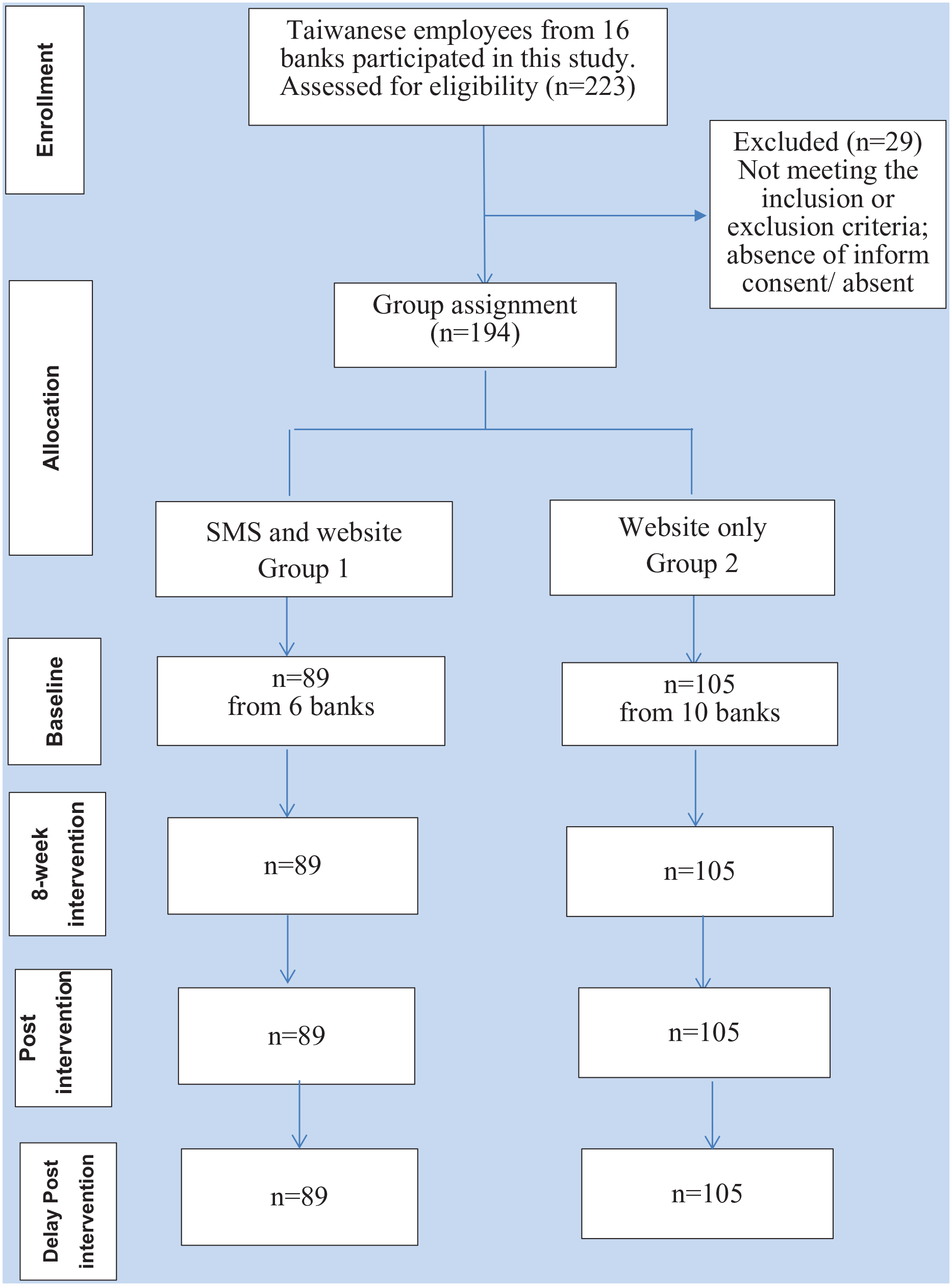
Flowchart of participant enrollment.
Intervention Components
Sixteen SMS information items based on TPB were designed and sent to the cell phones of the participants of the experimental group for 8 weeks. The items described the expected outcomes of exercise (facilitating attitudes) and encouraged the participants to exercise together with friends and families (facilitating social norms). For each item, 24 categories of tailored short text messages were designed based on the characteristics of the participants, such as gender (i.e., male or female), regular physical activity (i.e., yes or no), body mass index (BMI; that is, normal, <18, or >24), and marital status (i.e., married or unmarried). Three information messages were sent out each week. This frequency was selected in this study because it was adequate to engage the participants without being too frequent to cause irritation among the participants.
Exercise Health Garden (Supplemental Figure 1), an interactive website through which participants can obtain information on exercise by logging in, was used in this study. The website comprised three modules: (a) A web page for the participants to record their personal information, including weight, height, and BMI; (b) a web page featuring exercise information and information such as calorie consumption according to various types of physical activity. The structure of this page mimicked the layout of the International Flora Expo that was held in Taipei at the time of the intervention; for example, weight control success stories of celebrities and athletes obtained from focus group interviews were shared in the Hall of Fame, and information on exercise and physical fitness was displayed in the True Story House; and (c) an interactive portal. This portal allowed the participants to communicate with each other and the research team by sending pictures of daily physical activity, sharing information, and posting comments. The participants could also grade the design of the website. The website content was written based on physical activity health education booklets published by the Administration of Health Promotion (Taiwan Administration of Health Promotion, 2010). In addition, five focus group interviews were conducted to generate relevant psychosocial factors based on TPB and to identify the appropriate spokespersons for the website.
Intervention Process and Data Collection
Five scholars from the field of social psychology, physical education, and exercise physiology were invited to perform a formative evaluation of the website through grading of the correctness and appropriateness. Furthermore, bank employees who did not participate in the study were invited to evaluate the preliminary website through surfing, and they filled out an evaluation questionnaire. The results from these preliminary procedures were used to make productive adjustments (e.g., enlarging the font size and rephrasing technical jargon). The website contents were changed every 2 weeks for 2 months. The sample SMSs sent to the participants are listed in the appendix. A weekly reminder message was sent through email to the participants to remind them to log in to the website and read the new information.
Measures
Structured questionnaires that use the Likert-type scale for measurement were used in this study. The variables of TPB included attitude toward physical activity, normative beliefs, and control belief measures. Participants’ attitudes toward physical activity were measured using two items that assessed whether regular physical activity was necessary or helpful. Normative beliefs were measured using two items that assessed whether others considered their engagement in regular physical activity as important was necessary and whether they supported them to do so. Control beliefs were measured using items that assessed the intentions of employees to engage in regular physical activity in the next month. All items were (re)coded into the same direction to ensure that the highest scores were the most positive answers on each item. Cronbach’s α for internal consistency for attitude toward physical activity, normative beliefs, and control beliefs was calculated prior to computing the related items into one scale as .90, .85, and .87, respectively (see Supplemental Table 1 for the actual questions and response options).
The level of physical activity was measured using metabolic equivalents (METs). The participants were asked to identify the types of exercise they had engaged in from a list of 17 activities including walking, swimming, golfing, basketball, and bicycling in the past week, and the exercise duration (in minutes) and frequency (bout per week) were recorded. The test–retest reliability of frequency was 0.58 to 0.80. The respondents reported the perceived degree of exertion when they engaged in each type of exercise, for example, made them feel “out of breath” (for vigorous exercise), “pant” (for moderate exercise), or “breathe slightly faster” or “normal” (for light exercise; see Supplemental Table 2 for the actual questions and response options).
The level of physical activity performed was quantified based on the energy consumed and was calculated using the following formula: energy consumption (MET∙min peer week) = MET × duration (minutes per bout) × frequency (bouts per week). The MET was referenced from data reported by Sallis et al. (1985) for 1,120 women and 1,006 men (age, 20–74 years) in the Five-City project baseline survey. We selected METs of 6.0, 4.0, and 1.5 corresponding to vigorous, moderate, and light activity levels in our study, respectively. The total energy consumption was the sum of energy consumed during light, moderate, and vigorous activities.
Statistical Analysis
Descriptive statistics were used to describe demographic characteristics and the level of physical activity. A multilevel data analysis was then conducted using hierarchical linear regression to detect possible clustering of the bank employees to avoid underestimation of standard errors. A chi-square analysis and F test were used to identify baseline differences between the experimental and comparison groups. To identify the differences in physical activity levels and psychological determinants between baseline and immediate as well as delayed posttests, analysis of covariance (ANCOVA) and repeated-measures analysis of variance were used, respectively. SPSS 23 was used for statistical analysis, and the significance level was set at α = .05 and .01.
Results
In total, the data of 194 employees (89 in the experimental group and 105 in the comparison group) were analyzed. No significant difference was observed between the groups in terms of demographic characteristics such as gender; marital status; type of work; BMI; the TPB psychosocial variables of attitude toward physical activity, social norms, and behavioral control; and the level of physical activity. However, a significant difference was observed in terms of age (p < .01; Table 1). The multilevel data analysis revealed no difference in the level of physical activity among the employees of different banks (intraclass correlation = .03. p > .05). We then employed ANCOVA to explore the posttest intervention effect on different groups, with participant age as the covariate. Significant differences were found in social norms, F(1, 193) = 8.48, p < .01, behavioral control, F(1, 193) = 5.96, p < .05, and level of physical activity, F(1, 193) = 5.09, p < .05 (see Table 2). All the observed effect sizes were small to medium (=.05) according to the criteria of Cohen (1988). The participants in the experimental group perceived higher social norms favoring more physical activity, felt higher behavioral control, and actually engaged in more physical activity than did the participants in the comparison group. With respect to delayed effects over 2 months, after adjustment for age, no difference was found between the two groups.
Distribution of Sociodemographic Variables Among Study Groups (n=Total Sample Size)
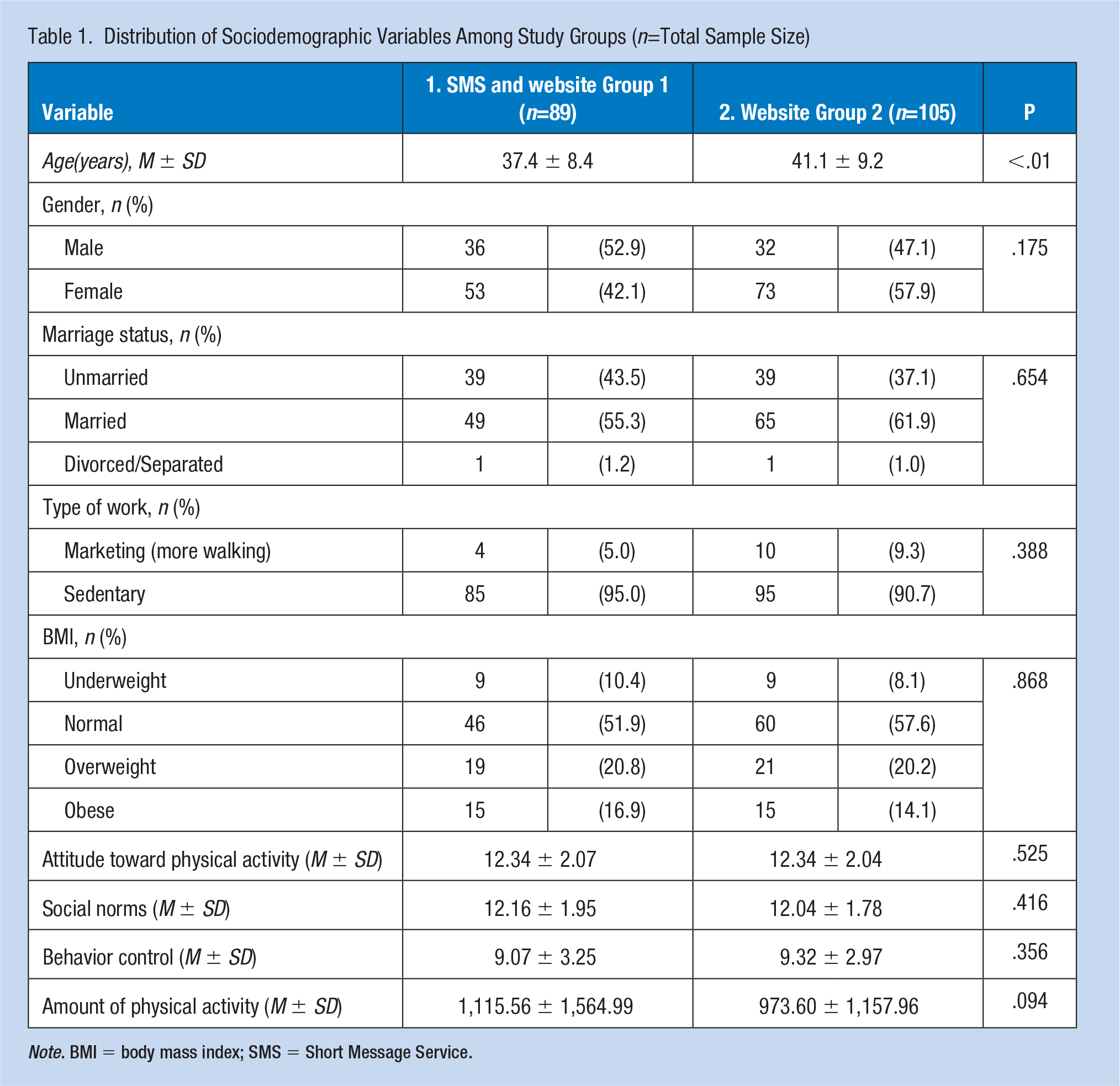
Note. BMI = body mass index; SMS = Short Message Service.
Measurement of Variables of Theory of Planned Behavior and Physical Activity in the Intervention Group
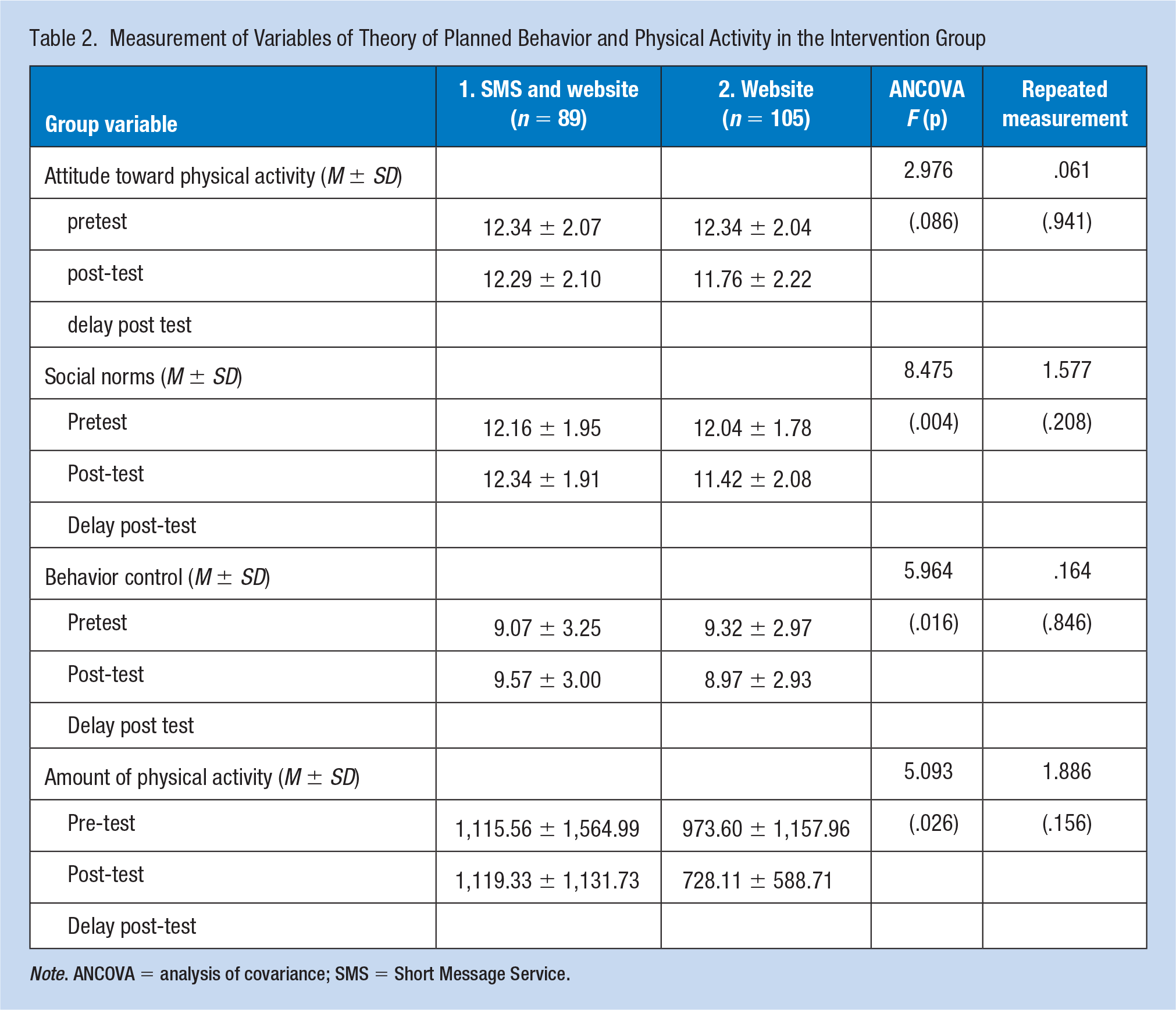
Note. ANCOVA = analysis of covariance; SMS = Short Message Service.
A process evaluation was also conducted. In the experimental group, 81.7% of the participants reported that they received the SMS 1 to 3 times per week; 54.3% kept the important messages and 40.7% deleted them, indicating that the majority of the messages were read. Generally, 48.9% of the participants were satisfied with the SMS content. Furthermore, 50% and 60% of participants in the experimental and comparison groups, respectively, stated that they did not log into the website.
Discussion
Our study revealed that the level of physical activity of the participants who received the integrated SMS and web group intervention was significantly increased compared with their counterparts in the web-only group. Moreover, psychosocial variables of TPB such as perceived social norms and behavioral control were significantly more improved in the experimental group than in the web-only group. However, all the effects had a small size and diminished in 12 weeks. The parallel diminished effects might have resulted from an intermediate attribute of TPB variables between personal knowledge and long-term behavior change, which may also explain the poor long-term adherence to change. Three possible reasons explain the small effect size. The first potential cause relates to the characteristics of mobile phones. In our study, participants who used m-health tools perceived higher social norms and behavioral control to be physically active. Although this could be a true effect, it also might be attributable to the Hawthorne effect of participants’ collective involvement in a new technology learning experience. Heisler et al. (2014) indicated that web-delivered tools were effective in arousing the affect response. Further research with more participants in various settings is warranted to verify this effect. Second, the small effect size may be attributed to organizational culture. In-depth interviews with human resource personnel were conducted after the intervention, which revealed that some of the bank employees were unable to log into the website because of their hectic schedules at work. Furthermore, the electronic antivirus protection firewall occasionally rendered the website inaccessible. The third potential reason for the small effect size pertains to the characteristics of the employees. Our research revealed that fewer participants than expected utilized the web materials, indicating that the employees in our study might not have been actively viewing the website. In particular, women employees found it difficult to access the website often because of their housework and other responsibilities apart from work.
Limitations
This study has several limitations. First, participants self-reported the exercise frequency and time spent exercising in the previous 2 weeks, which may have caused memory bias and social desirability bias. Second, the subjects were randomized based on the unit they worked in instead of randomization at the individual level. This quasi-experimental design may have caused inherent group differences. Although we examined the baseline data and applied statistical adjustments, the intervention and comparison groups may have differed in unknown ways. Finally, because of the small localized sample of employed adults in this study, the results may not be generalizable to other populations.
Implications for Occupational Health Practice
This quasi-experimental study revealed that the intervention method involving the integration of SMS and web tools was effective in increasing perceived social norms and behavioral control related to engaging in physical activity and actual behavior. Although further research is necessary, the results present some implications for occupational health practice. First, future studies should apply intervention methods involving new technology to targeted groups in more diverse populations to determine the best practices and their long-term effects. Second, future health promotion programs should expand the intervention profile to address workplace culture and encourage management support for behavioral adjustments within the organization.
Application in Professional Practice
This 8-week quasi-experimental study demonstrates that an intervention method involving the use of integrated SMS messages and web tools is effective for increasing perceived social norms and behaviors related to engaging in physical activity. Although further research is necessary, implications for occupational health practice are provided. First, future studies should apply intervention methods involving new technology for targeted groups in more diverse populations to determine the best practices and their long-term effects. Second, future health promotion programs should expand the intervention profile to address workplace culture and encourage management support for behavioral adjustments within the organization.
Supplemental Material
sj-docx-1-whs-10.1177_21650799221082304 – Supplemental material for Field Test of an m-Health Worksite Health Promotion Program to Increase Physical Activity in Taiwanese Employees: A Cluster-Randomized Controlled Trial
Supplemental material, sj-docx-1-whs-10.1177_21650799221082304 for Field Test of an m-Health Worksite Health Promotion Program to Increase Physical Activity in Taiwanese Employees: A Cluster-Randomized Controlled Trial by Sheu-jen Huang, Wen-chi Hung, Meei-Ling Shyu, Tzren-ru Chou, Kuo-chen Chang and Jackson P. Wai in Workplace Health & Safety
Supplemental Material
sj-pdf-2-whs-10.1177_21650799221082304 – Supplemental material for Field Test of an m-Health Worksite Health Promotion Program to Increase Physical Activity in Taiwanese Employees: A Cluster-Randomized Controlled Trial
Supplemental material, sj-pdf-2-whs-10.1177_21650799221082304 for Field Test of an m-Health Worksite Health Promotion Program to Increase Physical Activity in Taiwanese Employees: A Cluster-Randomized Controlled Trial by Sheu-jen Huang, Wen-chi Hung, Meei-Ling Shyu, Tzren-ru Chou, Kuo-chen Chang and Jackson P. Wai in Workplace Health & Safety
Footnotes
Declaration of Conflicting Interests
The author(s) declared no potential conflicts of interest with respect to the research, authorship, and/or publication of this article.
Funding
The author(s) disclosed receipt of the following financial support for the research, authorship, and/or publication of this article: This study was supported by a grant from the National Science Council (grant number: NSC99-2410-H003-136-MY2).

Supplemental Material
Supplemental material for this article is available online.
Author Biographies
Sheu-jen Huang is adjunct professor at the Department of Health Promotion and Health Education, National Taiwan Normal University, Taiwan. Her research expertise includes the use of new media for Health communication, physical activity promotion for children and women, body image, social network and health behaviors.
Wen-chi Hung is an assistant professor at the Department of Oral Hygiene and Healthcare, Cardinal Tien Junior College of Healthcare and Management, Taiwan. Her research interest includes community health promotion, health education for the older adult and health behaviors.
Meei-Ling Shyu is an assistant professor at the School of Nursing, Taipei Medical University, Taiwan. Her academic expertise includes pediatric nursing and children’s health behavior promotion.
Tzren-ru Chou is is an associate professor at the National Taiwan Normal University, Department of Graphic Arts and Communication in Taiwan. His research expertise includes color engineering, color image processing, video processing, multi-media system design.
Kuo-chen Chang is a professor at the Department of Geography, National Taiwan Normal University in Taiwan. He is an expert in geographic information systems, with research expertise in telemetry and satellite image processing, spatial information integration, machine learning and artificial intelligence.
Jackson P. Wai is a retired professor at the Graduate Institute of Sports Science, National Sport University in Taiwan. His research expertise includes exercise physiology, as well as physical activity and public health.
References
Supplementary Material
Please find the following supplemental material available below.
For Open Access articles published under a Creative Commons License, all supplemental material carries the same license as the article it is associated with.
For non-Open Access articles published, all supplemental material carries a non-exclusive license, and permission requests for re-use of supplemental material or any part of supplemental material shall be sent directly to the copyright owner as specified in the copyright notice associated with the article.
