




Abstract
Background:
Leading Change is one of five Executive Core Qualifications (ECQs) used in developing leaders in the federal government. Leadership development programs that incorporate multirater feedback and executive coaching are valuable in developing competencies to lead change.
Methods:
We examined the extent by which coaching influenced Leading Change competencies and identified effective tools and resources used to enhance the leadership capacity of first- and midlevel leaders at Centers for Disease Control and Prevention’s National Center for HIV/AIDS, Viral Hepatitis, Sexually Transmitted Diseases, and Tuberculosis Prevention. Data included qualitative data collected via semi-structured interviews that focused on leadership changes made by leaders in the Coaching and Leadership Initiative (CaLI), a leadership development program for Team Leads and Branch Chiefs.
Findings:
Ninety-six participants completed leadership coaching; 94 (98%) of whom completed one or more interviews. Of those 94 respondents, 74 (79%) reported improvements in their ability to lead change in 3 of 4 leading change competencies: creativity and innovation, flexibility, and resilience. All respondents indicated tools and resources that were effective in leading change: 49 (52%) participated in instructor-led activities during their CaLI experience; 33 (35%) experiential activities; 94 (100%) developmental relationships, assessment, and feedback; and 25 (27%) self-development.
Conclusions/Application to Practice:
First- and midlevel leaders in a public health agency benefitted from using leadership coaching in developing competencies to lead organizational change. Leadership development programs might benefit from examining Leading Change competencies and including instructor-led and experiential activities as an additional component of a comprehensive leadership development program.
Background
Leadership development programs that incorporate multirater feedback and executive coaching are valuable in developing competencies to lead change in organizations (Deaton et al., 2013). The term Leading Change refers to change management or transformational leadership and has been defined as “the process of continually renewing an organization’s direction, structure, and capabilities to serve the ever-changing needs of external and internal customers” (Moran & Brightman, 2001, p. 66). The ability of public health leaders to lead organizational change is crucial for organizational success and sustainability. Today’s leaders are faced with executing priorities and keeping employees engaged and productive in an ever-evolving work environment; leaders also should be innovative, creative, flexible, and resilient (Deaton et al., 2013).
Leading Change is one of five Executive Core Qualifications (ECQs) used in developing leaders in the federal government. Each ECQ, as defined in Table 1, has associated competencies that focus on organizational outcomes and results, coalition and team building, and customer service. Leading Change competencies seek to prepare leaders for effectively influencing strategic change to meet organizational goals and establish organizational vision, and to do so in a continuously changing environment (US Office of Personnel Management [OPM], 2020b).
Executive Core Qualifications of the United States Office of Personnel Management
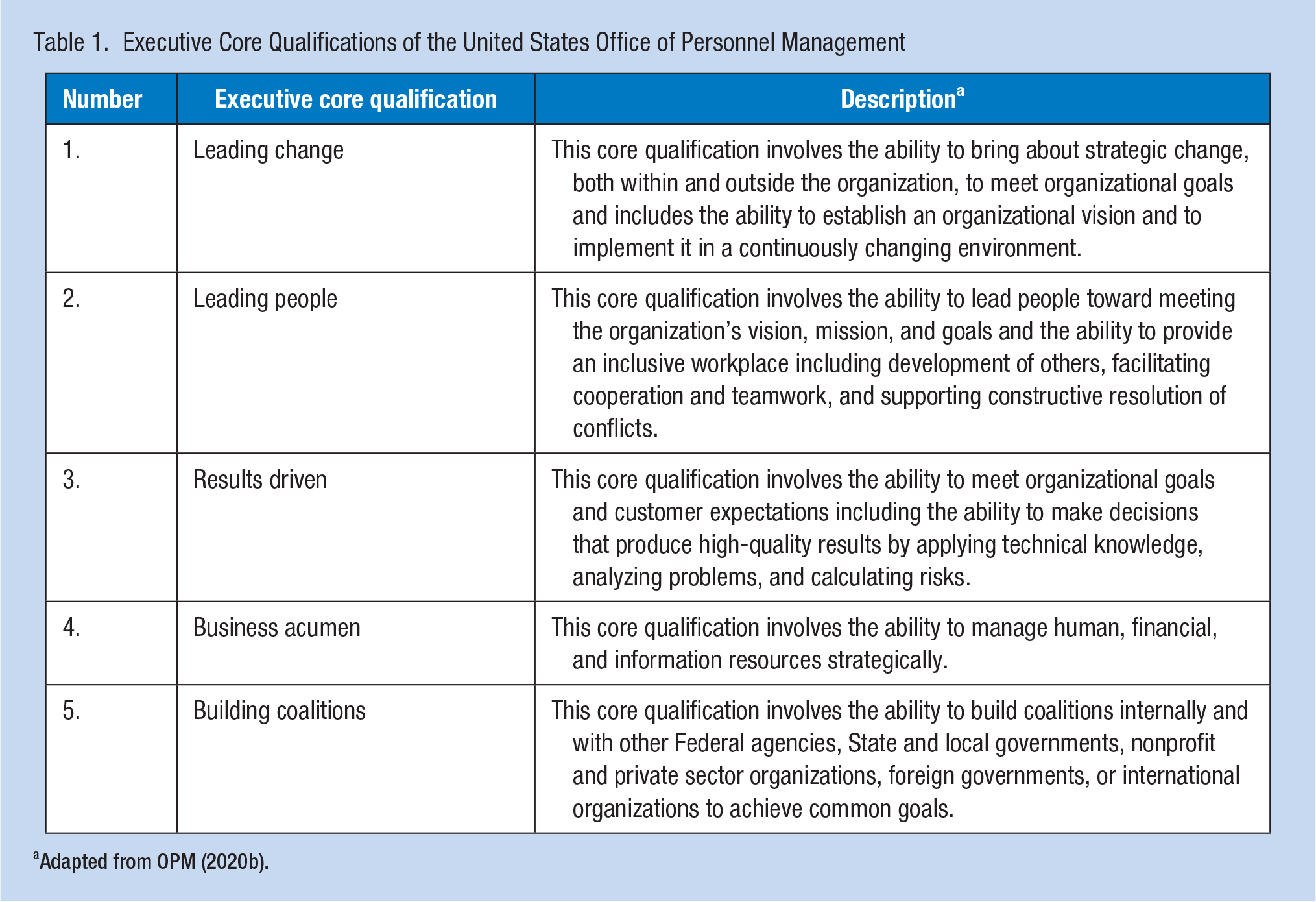
Adapted from OPM (2020b).
Multirater feedback is a management tool used to evaluate, recognize, and strengthen leadership skills and competencies (Kochanowski et al., 2009) by obtaining feedback from a supervisor, employees who report directly to that leader, and peer colleagues. Executive coaching is a targeted approach for building and maintaining positive change among leaders (Athanasopoulou & Dopson, 2018; Kochanowski et al., 2009). Leadership development programs that incorporate executive coaching are valuable in leading an organization’s change (Deaton et al., 2013). Leadership coaching involves a one-on-one “relationship between the client and a coach that facilitates the client becoming a more effective leader” (Ely et al., 2010, p. 585). The coach incorporates supplemental developmental tools and trainings throughout the coaching process to assist the leader in achieving the specified coaching goal, ultimately leading to long-term behavioral change (Joo, 2005; Wasylyshyn, 2003). Managers and supervisors who have received multirater feedback and participated in coaching as an approach to leadership development have reported enhanced leadership skills, increased self-confidence in leading others, more creativity and innovation, increased self-awareness, and more meaningful interactions with direct reports (Dean et al., 2021; Sheridan & Howard, 2009).
The extent to which public-sector leadership development programs examine Leading Change competencies, tools, and trainings used in the coaching process have not been documented. In this analysis, we examined data from the Centers for Disease Control and Prevention (CDC), National Center for HIV/AIDS, Viral Hepatitis, Sexually Transmitted Diseases and Tuberculosis Prevention’s (NCHHSTP) Coaching and Leadership Initiative (CaLI) to (a) explore the extent by which a coaching intervention influenced participants’ leadership behaviors in relation to the Leading Change ECQ and (b) summarize tools, resources, and activities that participants used during the coaching process that were effective in building leadership skills in leading change.
Methods
CaLI Program
CaLI is a leadership development program for NCHHSTP’s team leaders and branch chiefs and comprises six components: two OPM 360-degree multirater leadership assessments administrated both before and after the coaching intervention; six leadership coaching sessions; a leadership coach survey; two post-coaching program evaluations, one 3 to 6 months after leadership coaching (Phase 1), and another ≥18 months after the Phase 1 evaluation (Phase 2). Detailed methods regarding the CaLI program and all six components are summarized in Table 2 and described elsewhere (Dean et al., 2021). The CaLI program is guided by the CaLI framework logic model (Table 3). The logic model includes the resources needed, activities associated with those resources, direct products of activities, and the impacts that occur because of the activities. The logic model also describes the data needed for the CaLI evaluation, including the types of data related to the changes in the leaders’ behaviors that improve their leadership competencies as described in the OPM’s Leading Change ECQ.
Centers for Disease Control and Prevention, National Center for HIV/AIDS, Viral Hepatitis, and STD Prevention’s Coaching and Leadership Initiative (CaLI) Program Components
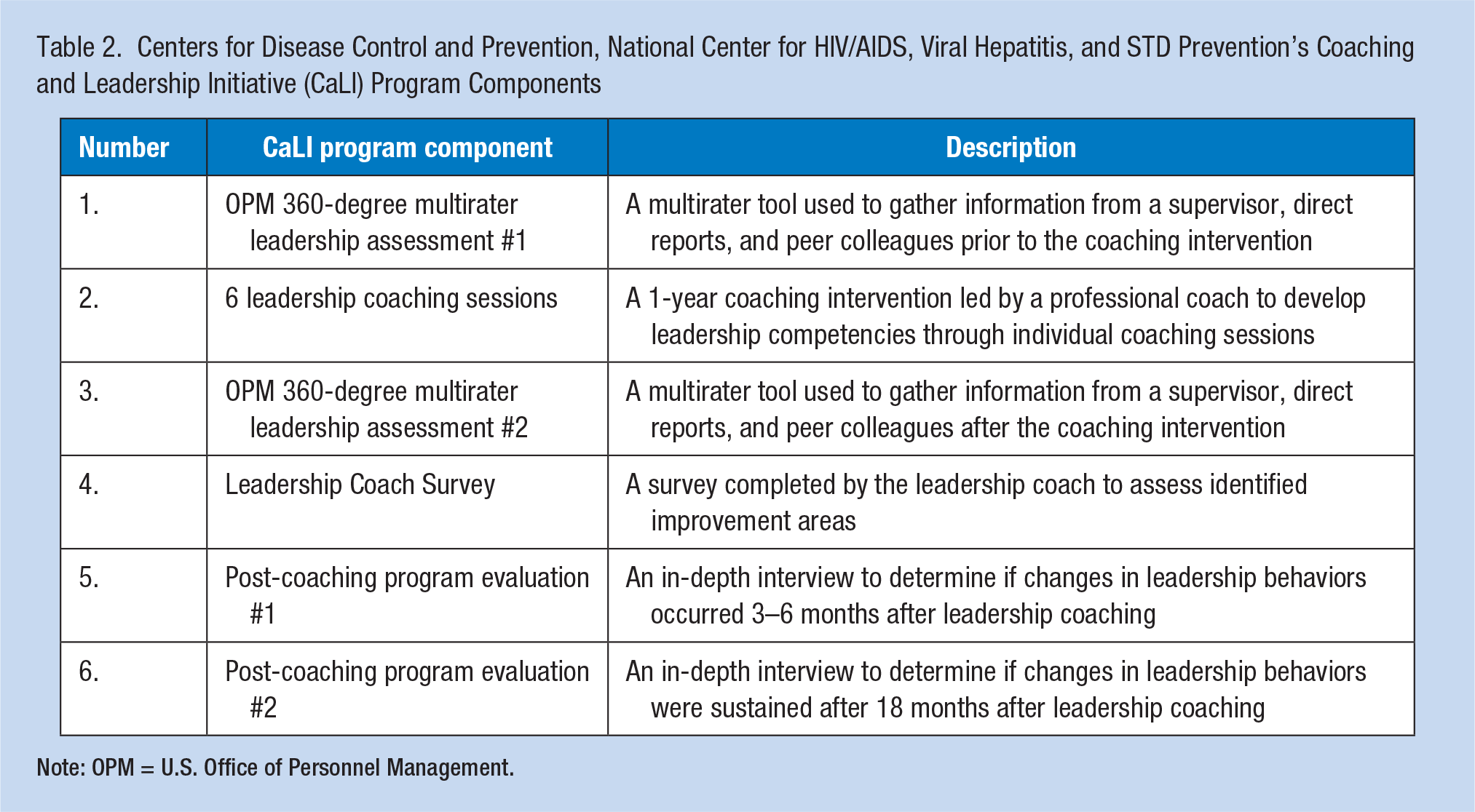
Note: OPM = U.S. Office of Personnel Management.
Logic Model for Leading Change Through the Coaching and Leadership Initiative (CaLI) Program
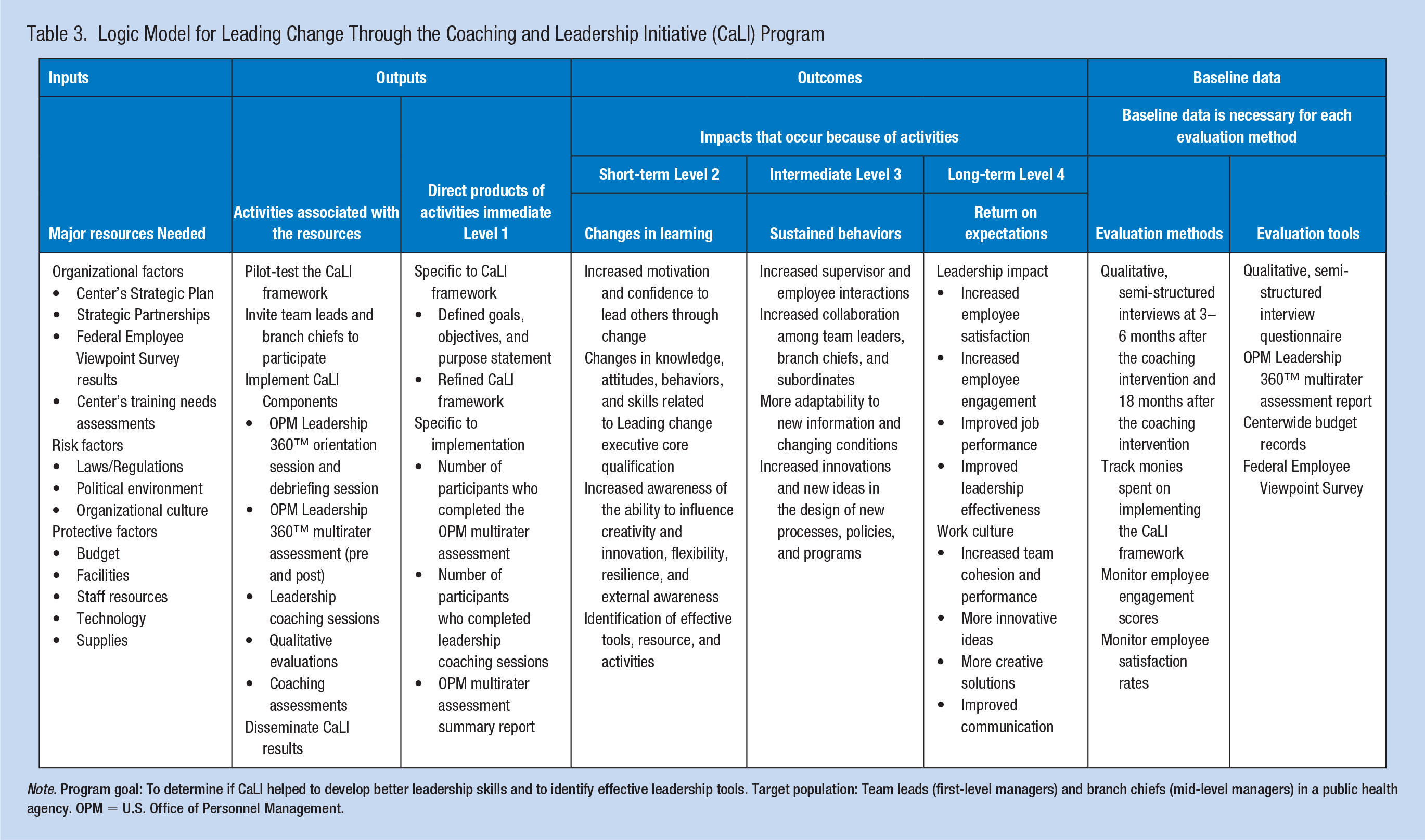
Note. Program goal: To determine if CaLI helped to develop better leadership skills and to identify effective leadership tools. Target population: Team leads (first-level managers) and branch chiefs (mid-level managers) in a public health agency. OPM = U.S. Office of Personnel Management.
Leading Change ECQ
The Leading Change ECQ comprises six competencies—creativity and innovation, external awareness, flexibility, resilience, strategic thinking, and vision (OPM, 2020b). The creativity and innovation competency is focused on questioning conventional approaches and designing new cutting-edge programs; external awareness focuses on understanding how local, national, and international policies affect an organization; flexibility focuses on being open to change and new information; resilience focuses on effectively dealing with pressure situations and staying optimistic and persistent; strategic thinking focuses on implementing plans that are consistent with long-term organizational goals; and vision focuses on serving as a catalyst for organizational change. Our study focused specifically on four of the six leading change competencies: creativity and innovation, external awareness, flexibility, and resilience.
Participant Selection
Study participants were first- and mid-level leaders employed in NCHHSTP who completed the CaLI program. First-level leaders were team leads who managed assignments of a team while performing the same type of work as their team. Mid-level leaders were branch chiefs who managed first-level team leads (Dean et al., 2021). Participants were identified through referrals by supervisors or through administrative records in CDC’s Human Resources system. Once identified, participants received an email inviting them to participate in the program. Participation was strongly encouraged by NCHHSTP senior leadership but was not required. Study participants completed Phases 1 and 2 of the CaLI Program.
Data Collection
We conducted in-person and telephone interviews among first- and mid-level leaders who completed the CaLI program. A semi-structured interview guide was used to elicit participants’ demographic information, including length of time in leadership position, number of staff managed, and notable organizational changes (e.g., reorganization, new supervisor, or reduction or increase in staff) that occurred during the period after their CaLI participation.
Participants were asked about their experience in CaLI regarding the Leading Change ECQ competencies. Participants were given the definitions of Leading Change and associated competencies as described by OPM before and during the interviews (OPM, 2020a). Participants shared opinions of the overall program, described tools, resources, and activities used during the coaching intervention, and identified components to make the CaLI experience more beneficial for future participants.
Participants consented to the interview verbally before starting the interview. This project was reviewed by the CDC ethics officials not involved in the work, was determined to be public health practice, and did not require approval by CDC’s Institutional Review Board.
Data Analysis
Tools, resources, and activities were mapped to OPM’s 5 Classes of Leadership Development Interventions and Learning Model (OPM, 2015). This included instructor-led activities, experiential activities, developmental relationships, assessment, and feedback. A description of the 5 Classes of Leadership Interventions and Learning Model program components is provided in Table 5. Audio recordings of interviews were transcribed verbatim and imported into QSR NVivo 11® (QSR International Pty. Ltd., Doncaster, Victoria, Australia); a thematic analysis was then applied to the data. A codebook was developed that used explicit themes developed from structural coding of general categories included in the interview; inductive codes were later added to capture emergent themes. Study team members read each transcript, assigned codes from the codebook, and developed new codes as needed. Transcripts were coded separately by each team member for the first five interviews and then discussed until consensus was reached regarding coding discrepancies to ensure understanding of codebook definitions and to improve intercoder reliability. The remaining interviews were coded by one team member (Dean et al., 2021). Team members in Phase 1 were R.M. and C.S.-J. and in Phase 2, C.S.-J., T.P., S.P., and M.I.-K.
Results
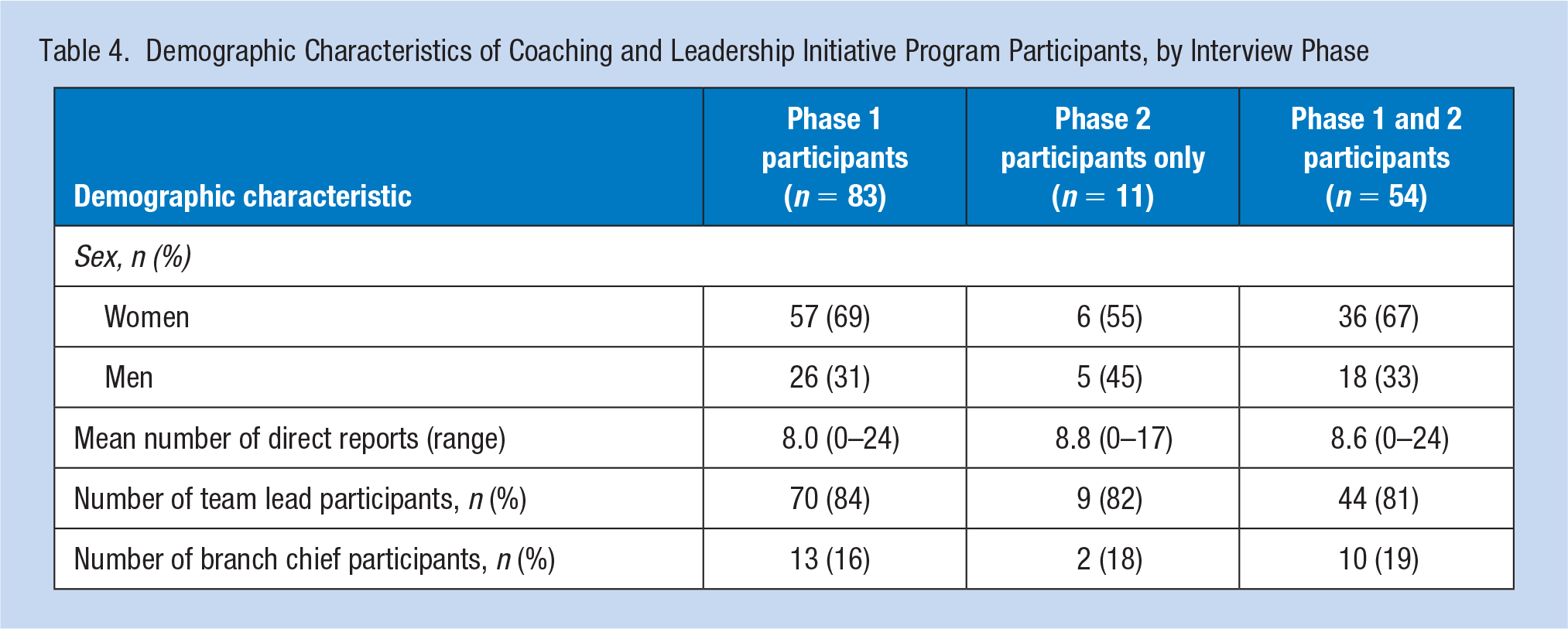
A total of 96 team leads and branch chiefs from NCHHSTP completed the leadership coaching component of the CaLI program. Among those 96 participants, 94 (98%) participants completed ≥1 interview. Demographic characteristics are described in Table 4. Eighty-three (88%) completed the Phase 1 interview, and 54 (65%) completed both Phase 1 and 2 interviews. Of the 83 who completed the Phase 1 interview, 56 (67%) were women and 27 (33%) were men; 70 (84%) were team leads, and 13 (16%) were branch chiefs. The mean number of direct reports was 8.0 (range: 0–24).
Demographic Characteristics of Coaching and Leadership Initiative Program Participants, by Interview Phase
Changes in Leadership Behaviors
Participants noted specific changes in their leadership behaviors during participation in CaLI. Of the 94 respondents, 74 (79%) reported improvements in their ability to lead change in three of the four Leading Change competencies: creativity and innovation, flexibility, and resilience. Sixty-five (69%) noted that the external awareness competency was already a part of their job responsibility and something they were doing before participating in CaLI.
Creativity and Innovation
Of the 94 respondents, 87 (93%) provided examples of how they demonstrated creativity and innovation by designing or implementing a new process or program component because of skills or lessons learned during the CaLI program. Two team lead participants reported the following: I worked with my branch chief to develop the Building Leadership Capacity (BLC) initiative where we offered branch staff the opportunity to participate. BCL provided monthly leadership development sessions where we talked about things such as leading people, leading change, supervising people, resolving conflicts. We conducted a series of strategic direction meetings where we actually held management conversations with the staff in the branch and gave them an opportunity to engage in dialogue with senior management regarding various issues and concerns that they had within the branch. I also, as a part of the CaLI project, conducted 2 surveys to get feedback from project officers as well as team leaders on the professional development needs of the branch.
Flexibility
Seventy-nine of the 94 (84%) respondents described how CaLI helped them adapt to new information or changing situations or unexpected obstacles. A branch chief and a team lead provided the following comments: “Well, I adapted my approach and I adapted the process to which I react. I tried to be less reactive. I changed my strategy and my approach to some of my interactions.”
I had to adapt to a new day to day routine to successfully accomplish priorities in a shorter time frame. I had to learn to become more flexible and spread out the work, giving myself more time to achieve the same results.
Resilience
Seventy of the 94 (74%) elaborated on how CaLI influenced their ability to be more resilient in dealing with high-pressure situations and remain optimistic under adversity. Two team leads shared the following statements: “Coaching helped me figure out where I belong in the new organization structure and how to manage up through guiding top-level decision making. Without CaLI, I would not have considered managing up.”
My CaLI coach and I focused on one of the things that I am not great on—pushing change—we did talk a lot about dealing with my organizational unit, the people in it, their personalities and how I could do better with them. She helped me to be more resilient and stronger in dealing with a lot of strong personalities in my group.
External Awareness
Many evaluation participants indicated that external awareness was a job-related task that was not influenced by CaLI participation. Twenty-six (28%) of the 94 respondents described experiences in which they stayed up to date on policies. Two team leads provided the following examples: We opened up more discussion in our team meetings to discuss how we work with others and how other agencies impact the work that we do. It’s been a learning opportunity. Having better knowledge about what the partners do we are better able to streamline communication efforts. I know better who to contact as a result. I do feel like it has helped with our team meetings. We had new anti-lobbying guidance that [included] some restrictions around what partners of federal agencies could and could not do. We conducted two webinars with our partners to help us specifically address what the policy meant in layman’s terms. It was incumbent on me and everyone else in [the division] to understand that so we could share it with our partners. That was probably the biggest policy piece at the national level and was a requirement of all federal agencies to adhere to that federal guidance.
Tools Used Based on OPM’s 5 Classes of Leadership Development Interventions and Learning
Respondents discussed tools, resources, and activities provided during their CaLI experience that were helpful in implementing leading change strategies (Table 5). Many of the tools, resources, and activities aligned with OPM’s 5 Classes of Leadership Development Interventions and Learning Model (OPM, 2015). This Model comprised a range of leadership development activities for competencies within the OPM ECQs. The five classes of leader and leadership development interventions included instructor-led (e.g., degree programs, courses, seminars, workshops, case presentations and discussions, distance learning, passive computer-based instruction); experiential activities (e.g., on-the-job training, action learning, service learning, team projects, simulations and games, scenario planning); developmental relationships (e.g., coaching, mentoring, networking, supervisor support, peer-to-peer learning partners, shadowing); assessments and feedback (e.g., self-assessments, assessment tools, developmental assessment centers; multisource and 360-degree feedback); and self-development (e.g., individual development plans, self-guided learning activities).
Tools Used by Coaching and Leadership Initiative Participants by the U.S. Office of Personnel Management 5 Classes of Leadership Development Interventions and Learning Activities (N = 94)
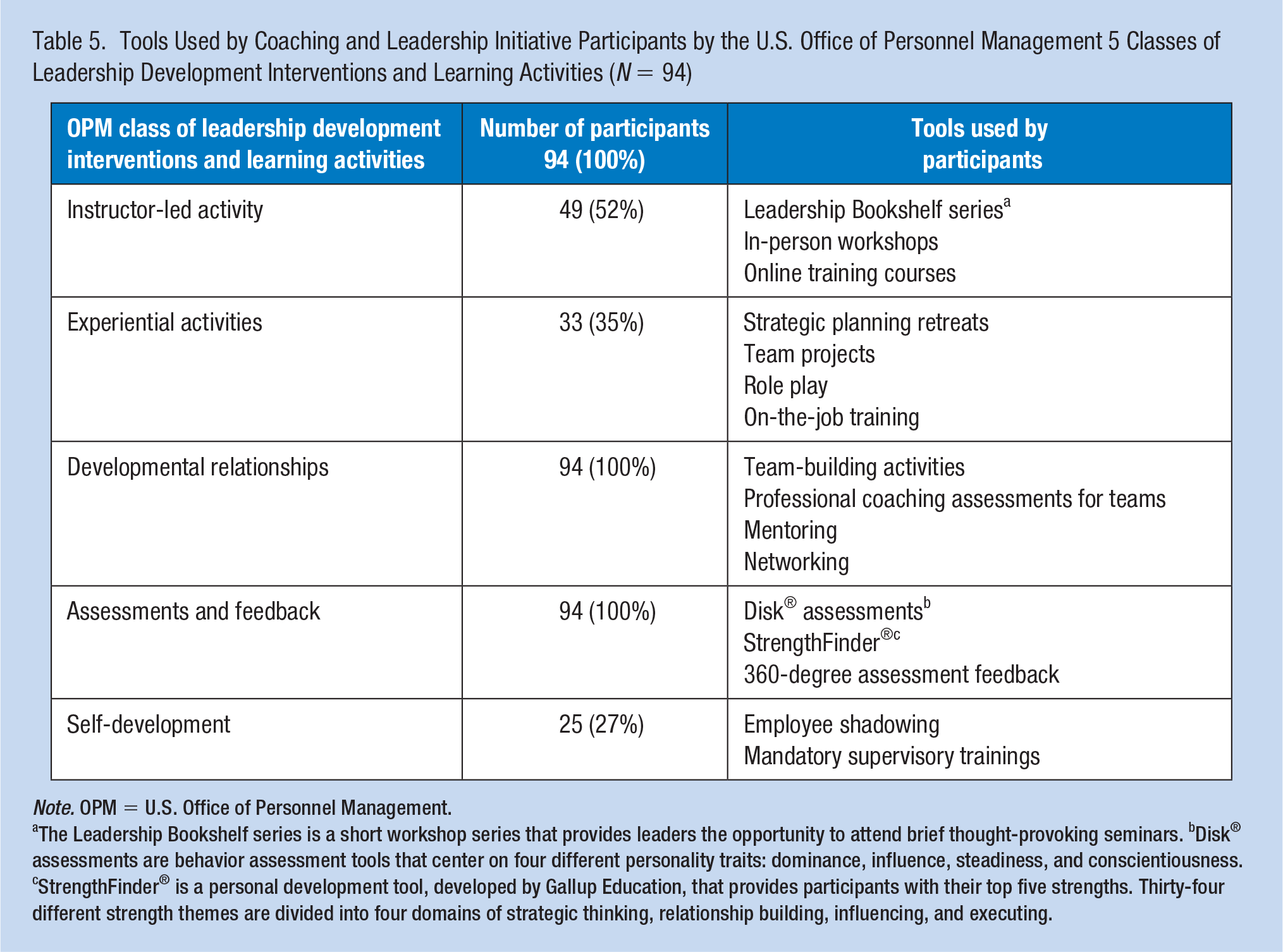
Note. OPM = U.S. Office of Personnel Management.
The Leadership Bookshelf series is a short workshop series that provides leaders the opportunity to attend brief thought-provoking seminars. bDisk® assessments are behavior assessment tools that center on four different personality traits: dominance, influence, steadiness, and conscientiousness. cStrengthFinder® is a personal development tool, developed by Gallup Education, that provides participants with their top five strengths. Thirty-four different strength themes are divided into four domains of strategic thinking, relationship building, influencing, and executing.
Instructor-Led Activities
Of the 94 respondents, 49 (52%) indicated that they participated in instructor-led activities during the CaLI experience. Examples of instructor-led activities reported by study participants included degree programs, courses, seminars, computer-based instruction, and workshops. One Team Lead shared the following comment, There is this really cool workshop series called the Bookshelf Leaders. I’ve participated in several of these workshops and they are truly amazing. Turn Your Ship Around was about how you empower your people to really build loyalty; people want to be empowered to make decisions and build strong, healthy teams.
Experiential Activities
Thirty-three (35%) respondents indicated that they had experienced experiential activities during the CaLI experience. Examples of experiential activities described by study participants included on-the-job training through detail assignments and team projects. A Team Lead shared the following comment, I had two [staff] that I looked at bringing them up in levels—even though one of them was reluctant; not trusting himself and not wanting to engage and had great expertise . . . My goal was to enable them to eventually lead large field staff meetings on their own. I modelled the behavior for them and taught them to look for synergy [within] the team. My coach worked with me on engagement models for these two staff. The reluctant one still stresses, but independently works with two health districts in conflict resolution and action plan development . . . [and is] also leading a state-wide workforce development session next month.
Developmental Relationships
All respondents (100%) indicated that they participated in developmental relationships, assessment, and feedback activities during the CaLI experience. Examples of developmental relationships reported by study participants include coaching, mentoring, shadowing, and networking. A Branch Chief and a Team Lead shared the following comment, One of the things my coach helped me think about is how I can best build meaningful connections with other people or professionals . . . so networking basically. He helped me think about the types of opportunities I should look for to build connections with people outside my typical workday environment. I have incorporated that into a lot of work. For example, getting engaged in workgroups where I could do actual projects with people, as opposed to just information sharing. I found that to be a useful way for me to build my relationships. The coach helped me to use the strength-based assessment to align staff with jobs [in] which they would perform better. Job descriptions were more centered on the individual’s strengths; work plans were created based on strengths and staff excelled in that environment.
Assessment and Feedback Activities
All respondents (100%) indicated that they participated in assessment and feedback activities during the CaLI experience. Examples of assessment and feedback activities reported by study participants include use of assessment tools and 360-degree feedback. A Team Lead shared the following comment, The 360 Assessment was great. Despite me coming in at a disadvantage, it was really good having the anonymous feedback to hear what people think about your work. I think every supervisor should do the 360 and every direct report should be able to evaluate their supervisors. It is not a retaliation thing, it a nice way to tell your supervisor how they are doing. Many people don’t feel comfortable, and the 360 was great for that reason.
Self-Development Activities
Twenty-five (27%) respondents indicated that they had participated in self-development activities. Examples of self-development activities reported by study participants included individual development plans, individual learning accounts, and promotion to higher leadership positions. A Branch Chief shared the following comment, I do think that the ongoing training for leaders including mandatory supervisory trainings, was really helpful. It was good to be able to discuss with other people who are going through very similar experiences. Those have been opportunities to reflect on my leadership style.
Discussion
Our study examined the extent to which coaching influenced the OPM Leading Change competencies among first- and mid-level leaders in a public health agency. Participants reported improvements in three of four OPM Leading Change competencies—creativity and innovation, flexibility, and resilience. Team leads and branch chiefs reported enhanced leadership skills, increased self-confidence in leading others, leading with more creativity and innovation, demonstrating more flexibility and resilience in leading direct reports, and increased self-awareness regarding leading change in challenging environments. These findings were consistent with other studies regarding the value of leadership coaching and how it influenced the ability of mangers to lead change and gain an increased ability to influence creativity, innovation, flexibility, and resilience (Grover & Furnham, 2016; Hodges, 2017; Kombarakaran et al., 2008; Matthew, 2009; Thach, 2002).
The majority of CaLI participants reported that they were already trained in demonstrating external awareness. OPM defines external awareness as staying “up-to-date on local, national, and international policies and trends that affect the organization and shape stakeholders’ views” (OPM, 2020b, p. 1). This finding was expected because of CDC’s focus on “ensuring its science and research activities, as well as employees, comply with various federal laws, regulations, and policies in order to exercise the highest level of scientific integrity” (CDC, 2019). External awareness was vital for achieving CDC’s mission of saving lives and protecting against public health threats (CDC, 2019). NCHHSTP has eight core values that included accountability, respect, integrity, excellence, diversity, transparency, equity, and innovation (NCHHSTP, 2015). Transparency, by which staff were encouraged to “keep the public, partners, and staff informed about our programs, policy, and science,” aligned with OPM’s definition of external awareness (CDC, 2019).
The results of this study indicated multiple benefits can result from coaching and facilitating effective leadership behaviors among leaders in a public health agency. Throughout the interview, participants often described a renewed self-confidence for leading change among their team members and, where possible, throughout the larger organization. Changes in increased motivation, self-awareness, and self-efficacy were also reported by CaLI participants. These results aligned with previous studies that indicated that coaching can contribute to an increase in the effectiveness of self-awareness, self-efficacy, resilience, hope, and goal attainment among leaders (Grover & Furnham, 2016; Kombarakaran et al., 2008). Increased self-efficacy aligned with existing research, which indicated that leaders who were more self-confident might be more likely to adopt leading change competencies early and apply those competencies to their jobs. High self-efficacy might also serve as an indicator as to how well applied skills will be maintained to influence change over time (Leedham, 2005).
Participants described a diverse list of tools, resources, and activities provided by the leadership coach that were helpful to learning to lead change in the organization, including instructor-led, self-development, and experiential activities; developmental relationships; and assessments. Research demonstrated tools and activities provided by a professional coach (e.g., coaching sessions, developmental relationships, 360-degree feedback assessments, book and journal article readings, and role playing) can assist with the early adoption of leading change competencies (Wasylyshyn, 2003). Challenging work experiences paired with feedback assessments and stretch assignments can prove more effective for some leaders who want to build leadership competencies, whereas action learning paired with an executive or leadership coach can prove more beneficial for others (Grover & Furnham, 2016). The ability of leaders to participate in a combination of these activities can best facilitate behavior improvement (OPM, 2015).
A strength of this study is that it added to existing research literature regarding leader and leadership development. It provided information about how coaching support enhanced and increased a leader’s capability in leading change among his or her staff and building leadership capacity in a public health agency. Another strength is that the focus of this study was on first- and mid-level leaders rather than senior executives, with a purpose of providing resources for expanding leadership skills earlier in participants’ career. Although leadership coaches were external to the public health agency, they were familiar with internal organizational operations and were effective in providing beneficial resources and problem-solving activities. This was regarded as a strength and a preference among CaLI participants.
Our study included several limitations. One limitation was the amount of time that transpired between the coaching sessions and the second in-depth interviews. A few participants indicated that they could not remember information provided during the first in-depth interview related to the Leading Change competencies and experiences that occurred while participating in CaLI. Also, some respondents participated in other leadership programs and had difficulty distinguishing if certain outcomes were a result of CaLI or other leadership programs that they participated in after completing the coaching sessions. Another limitation was that participants self-reported changes in their leadership behaviors and self-reported that their CaLI experience helped them implement more effective Leading Change competencies. Self-reported information can be subject to bias (e.g., social desirability) and result in measurement error. Respondents viewed CaLI as a leadership development program designed for first- and mid-level leaders within a federal agency, and consequently, some might have reported positive outcomes more than challenges or negative outcomes experienced.
Conclusion
The findings contribute to the growing literature on the use of coaching and leadership development programs for first- and mid-level leaders in public organizations. Leadership development programs might benefit from the inclusion of instructor-led and experiential activities as an additional component of a comprehensive leadership development program.
Application to Professional Practice
In today’s challenging work environment, leaders are expected to establish and implement the mission, vision, and goals of their organizations. They do so by encouraging new ideas, adapting rapidly to new information, and remaining optimistically persistent during challenging times. Leadership development interventions, such as coaching and multirater assessments, are essential skill-building tools that can be used to equip first- and mid-level leaders to successfully achieve any organizational mission and strategic goals. These interventions are effective in producing well-developed leaders who are more prepared to lead organizational change with creativity, innovation, flexibility, and resilience.
Future studies that examine leading change might be beneficial for organizations when creating leadership development programs that promote organizational success and sustainability. Organizations with an interest in developing first- and mid-level leaders might consider implementing the CaLI framework to expand leadership capacity and to better prepare leaders for leading organizational change effectively.
Footnotes
Authors’ Note
The findings and conclusions in this report are those of the authors and do not necessarily represent the official position of the Centers for Disease Control and Prevention.
Declaration of Conflicting Interests
The author(s) declared no potential conflicts of interest with respect to the research, authorship, and/or publication of this article.
Funding
The author(s) received no financial support for the research, authorship, and/or publication of this article.

Author Biographies
Crystal Spears-Jones, MPA, at the time of this study, managed Workforce Development and Capacity Building initiatives at the Centers for Disease Control and Prevention’s National Center for HIV/AIDS, Viral Hepatitis, STD, and TB Prevention and led the Coaching and Leadership Initiative (CaLI). She is currently a Management Analyst at the National Center for Environmental Health/Agency for Toxic Substances and Disease Registry.
Ranell Myles, PhD, at the time of this study, worked on Workforce Development and Capacity Building initiatives at the Centers for Disease Control and Prevention’s National Center for HIV/AIDS, Viral Hepatitis, STD, and TB Prevention and assisted in evaluation efforts for the Coaching and Leadership Initiative (CaLI). She is currently an Epidemiologist in the Office of Health Equity at the National Center for HIV/AIDS, Viral Hepatitis, STD, and TB Prevention.
Tichelle Porch, MPH, when the study was ongoing, was an ORISE Fellow that worked on Workforce Development and Capacity Building initiatives at the Centers for Disease Control and Prevention’s National Center for HIV/AIDS, Viral Hepatitis, STD, and TB Prevention and assisted in evaluation efforts for the Coaching and Leadership Initiative (CaLI). She is currently a medical student at Duke University School of Medicine.
Stephanie Parris, at the time of this study, worked as a ORISE fellow that worked on Workforce Development and Capacity Building initiatives at the Centers for Disease Control and Prevention’s National Center for HIV/AIDS, Viral Hepatitis, STD, and TB Prevention and assisted in the evaluation efforts for the Coaching and Leadership Initiative (CaLI). She is currently a medical student at Medical College of Georgia.
Michelle Ivy-Knudsen, MPH, at the time of the study, was an ORISE fellow for the Workforce Development and Capacity Building initiatives at the Centers for Disease Control and Prevention’s National Center for HIV/AIDS, Viral Hepatitis, STD, and TB Prevention. She is currently a contractor at the Center for Preparedness and Response where she coordinates operations for the COVID-19 Responder Training Team.
Hazel D. Dean, ScD, MPH, when the study was ongoing, was deputy director of CDC’s National Center for HIV/AIDS, Viral Hepatitis, STD, and TB Prevention. She has authored >150 scientific journal articles, policy reports, and other publications on topics about infectious and chronic diseases, public health surveillance, applied epidemiologic methods, social and structural determinants of health, and public health workforce development.