




Abstract
Background: Workplace Bullying (WPB) can have a tremendous, negative impact on the victims and the organization as a whole. The purpose of this study was to examine individual and organizational impact associated with exposure to bullying in a large U.S. unionized public sector workforce. Methods: A cross-sectional Web-based survey was conducted among 16,492 U.S. state government workers. Survey domains included demographics, negative acts (NAs) and bullying, supportiveness of the organizational climate, and individual and organizational impacts of bullying. Multinomial logistic regression was used to assess the impact among respondents who reported exposure to bullying. Findings: A total of 72% participants responded to the survey (n = 11,874), with 43.7% (n = 5,181) reporting exposure to NAs and bullying. A total of 40% (n = 4,711) participants who experienced WPB reported individual impact(s) while 42% (n = 4,969) reported organization impact(s). Regular NA was associated with high individual impact (negatively impacted them personally; odds ratio [OR] = 5.03) when controlling for other covariates including: female gender (OR =1.89) and job tenure of 6 to 10 years (OR = 1.95); working in a supportive organizational climate and membership in a supportive bargaining unit were protective of high impact (OR = 0.04 and OR = 0.59, respectively). High organizational impact (transferring to another position) was associated with regular NA and bullying (OR = 16.26), female gender (OR = 1.55), providing health care and field service (OR = 1.68), and protective effect of organizational climate (OR = 0.39). We found a dose-response relationship between bullying and both individual and organizational-level impact. Conclusion/Application to Practice: Understanding the impacts of WPB should serve to motivate more workplaces and unions to implement effective interventions to ameliorate the problem by enhancing the organizational climate, as well as management and employee training on the nature of WPB and guidance on reporting.
Background
Workplace bullying (WPB) is a growing problem worldwide with negative impacts and consequences on both the individual and organization (Hoel, 2012; Hogh, Mikkelsen, & Hansen, 2011). The prevalence of WPB globally has been estimated to be between 5% and 31% with variations across sectors and countries depending on the conceptualization and the measurement of WPB (Ariza-Montes, Arjona-Fuentes, Law, & Han, 2017; León-Pérez, Escartín, & Giorgi, 2019; Ritzman, 2016).
Evidence suggests that the interaction of individual, organizational, and situational factors contribute to WPB (Pheko, Monteiro, & Segopolo, 2017; Samnani, 2013; Samnani & Singh, 2016). Such factors include autocratic leadership, weak management style, poor organizational climate characterized by a lack of support and participation in decision making, low staff empowerment, poor conflict resolution practices, and a lack of institutional policies within the work environment (Francis, 2014; Giorgi, Ando, Arenas, Shoss, & León-Pérez, 2013; Lutgen-Sandvik, Hood, & Jacobson, 2016).
In the European public sector, a higher prevalence of WPB has been noted in certain agencies and settings, such as public administration, health services, education, prison service, and social services compared to those in the private sector (El Ghaziri, London, & Lipscomb, 2019; Lewis & Gunn, 2007; Zapf, Escartín, Einarsen, Hoel, & Vartia, 2011).
Several factors may increase public sector workers’ risk of WPB (Bradbury & Hutchinson, 2015; Crimp, 2017; James, 2015; Sorozan, 2018). The bureaucratic and hierarchical structures of the public sector, along with a system governed by rigid policies and procedures allows for power differential and imbalances through autocratic leadership as well as weak management styles (Ariza-Montes, Leal-Rodriguez, & Leal-Millan, 2015; Sorozan, 2018; Wang & Hsieh, 2016). Additional elements that make the public sector workplace potentially more vulnerable to WPB are poor organizational climate characterized by the lack of flexibility in work structures, lack of support and participation in decision making along with role conflict, low staff empowerment and job motivation, poor conflict resolution practices, and a lack of institutional policies within the work environment for reporting and addressing WPB (Ariza-Montes et al., 2015; Einarsen, Hoel, Zapf, & Cooper, 2011; Francis, 2014; Wang & Hsieh, 2016).
Many public sector employees are characterized by intrinsic motivation and commitment to the sector’s mission to provide service to the stakeholders which involves extreme emotional labor, thus holding the sector employees to a higher level when it comes to controlling, overregulating, and, in some instances, suppressing their emotions during their interactions at the workplace, and consequently contributing to an increased risk of WPB (Alicia, 2000; Ariza-Montes et al., 2015).
Despite the intrinsic stringency of the public sector, at least in democratic societies, the sector regularly faces changes in leadership and government that change the sectors’ mission, operations, and the workplace culture and climate (Sorozan, 2018). Other factors that potentially increase the risk of bullying within this sector include: budget constraints, media inquiry, and political intrusion that affects certain public sector employees (Crimp, 2017; El Ghaziri, London, & Lipscomb, 2019; Sorozan, 2018).
In the United States, the public sector administrative structure is provided by a mix of politically appointed and civil service employees (Sorozan, 2018). Many who choose public sector employment are drawn to it by the high job security and quality of life associated with job stability and retirement benefits (Ariza-Montes et al., 2015). The positive aspects of job stability and security within the sector, sometimes viewed as excessive when compared to the private sector, can act as a barrier to terminating employees (Lewis & Gunn, 2007). These differences make public sector workplaces different than their private sector counterparts.
An additional difference between U.S. public and private sector workers is that public sector workers are five times more likely to be represented by collective bargaining agreements than the private sector workers, 34.4% versus 6.5% (Bureau of Labor Statistics, 2018). Unionization has numerous impacts on workers and their working conditions. Unions play a major role in bringing attention to worker complaints of exposure to workplace hazards, including bullying and as such may be able to negotiate changes in practice to address bullying or, at a minimum, provide workers with some redress when it occurs. In some work sites, such protections have become part of a collective bargaining contract, providing workers, and the unions more power to address such hazards (Sorozan, 2018).
Although unionization may serve as a facilitator for reporting of WPB, there is strong evidence that it is severely underreported across all workplaces (Hutchinson, 2012). This reluctance by workers to report incidents of bullying has been attributed to fears of reprisals and victimization; a lack of confidence in the organization to take appropriate action to resolve the conflict; as well as a lack of clarity about the reporting process (Blackwood, Bentley, & Catley, 2018; Hutchinson, 2012).
Bullying has tremendous psychological and physiological impact on the victims, their families, coworkers, and the organization as a whole (Nielsen & Einarsen, 2012). Evidence from cross-sectional studies, including a meta-analysis by Nielsen and Einarsen (2012) found that bullying was associated with posttraumatic stress disorder (PTSD), stress, burnout, intention to leave the job, and decreased job satisfaction and organizational commitment. Findings from cross-sectional and longitudinal studies also present evidence of a range of mental health impacts of bullying including psychological well-being, physical health, and self-esteem (Bernstein & Trimm, 2016; Einarsen & Nielsen, 2015; Nielsen, Einarsen, Notelaers, & Nielsen, 2016). In addition, it elicits concerns about the organization’s commitment to worker’s safety (Kemp, 2014; León-Pérez, Medina, Arenas, & Munduate, 2015; Nielsen & Einarsen, 2012).
Organizational impact associated with bullying include increased health care expenditures, absenteeism, turnover, decreased productivity, job satisfaction and creativity, impaired performance, low employee morale, and an increase in intent to leave the job (Glambek, Matthiesen, Hetland, & Einarsen, 2014; Nielsen & Einarsen, 2012). The economic burden of bullying can cost billions of dollars in lost wages, staff time, compensation, medical costs, support costs, lawsuits, and more (Fattori et al., 2015; Hoel, Sheehan, Hoel, & Einarsen, 2011).
A recently published study analyzed data from a sample of U.S. employees working in four diverse state government agencies (n = 11,874), where 10% reported being bullied at work during the prior 6 months (Lipscomb et al., 2015). The purpose of this analysis was to examine factors associated with negative impacts at the individual and organizational levels. We hypothesized that individual and organizational impact would increase as the exposure to bullying increased and public sector employees who reported being subjected to bullying would report a less-supportive organizational climate.
Methods and Measures
Study Design and Participants
Employees of a large northeast state government workforce were recruited to complete a survey assessing bullying. The study adopted a participatory action research (PAR) (Israel et al., 2010) framework in design and implementation (Lipscomb et al., 2015). A Project Advisory Group (PAG) that included state government managers and union representatives assisted in identifying agencies that were willing to participate and would represent a cross-section of governmental functions. The PAG helped in refining the survey instruments, ensuring that the survey would be understood and well received by potential respondents, would protect respondents’ confidentiality, and achieve a high survey response rate. Surveys were primarily completed electronically during work hours. This study was approved by the University of Maryland, Baltimore Institutional Review Board.
Employees were solicited from four state agencies representing the major functions performed by state governments with 942 to 4,592 participants per agency, for a total of 16,492 eligible participants. Agency 1 (Department of Tax and Finance) and Agency 2 (Department of Labor) are two agencies with primarily administrative and regulatory functions, while Agency 3 (Department of Transportation) is divided between administrative and field activities, and Agency 4 encompasses mental health centers providing residential care to persons with chronic mental illnesses.
Initially, participants received a joint introductory email from the research team, management, and union leaders, followed by an email from the principal investigator which provided details about the project and a hyperlink to the survey. The survey email was followed by two reminder emails sent at 1-week intervals.
Measures
The survey included 81 questions and required 15 to 20 minutes to complete. A paper version was available for participants (<5%) who requested it because they did not have access to email. Survey domains included demographics, negative acts (NAs) and bullying, supportiveness of the organizational climate, perpetrator of NAs, and individual and organizational impacts of bullying.
Study Outcomes
Individual impact
Three questions measured the individual impact of NAs and bullying using 5-point Likert-type Scale: 0 = not at all; 1 = not much; 2 = somewhat; 3 = a lot; and 4 = very much. Participants expressed how the experience of NAs and bullying during the last 6 months with regard to how it: (a) negatively affected their work, (b) negatively affected them personally, and/or (c) affected their intention to remain in their current job. These individual impact items were analyzed separately and then combined into an index to render more parsimonious multinomial regression models. A total index score was derived by summing the responses to the three questions (Cronbach’s alpha of 0.90). The index score was categorized into three levels of impact: no impact (scored 0), moderate impact (scores 1-6), and high impact (scores 7-12).
Organizational impact
The organizational impact was measured by 11 questions that assessed the actions taken by participants who experienced or were exposed to bullying. These actions included (a) reported to supervisor; (b) charged leave credit (e.g., take a day off work as sick time, vacation, or personal time); (c) reported to union; (d) sought counseling; (e) transferred to another position, worksite, or shift; (f) sought help from employee assistance program (EAP); (g) filed an incident or accident report; (h) pursued prosecution; (i) reported to their affirmative action office; (j) filed a worker’s compensation claim; and/or (k) reported to police outside of work. The categorization of these action items as organizational impacts was guided by the fact that reporting, grievance, compensation, and litigation affect the organization. The response to each of these 11 questions was dichotomous (yes/no). The organization impact questions were analyzed individually and then combined into an index (Cronbach’s alpha of 0.65) for subsequent analysis to render a more parsimonious regression model. The organizational impact score was categorized into three levels of action, as no action (took no action = 0); one action (took one action = 1); and two or more actions (took two or more actions = 2).
Demographics and work-related factors
Participants were asked to provide basic demographic data including gender, age, race, years of employment, type of bargaining unit (professional, support service, or management), and agency (administrative, regulatory, field, or mental health).
Workplace Bullying and Organizational Climate
Negative Acts
A battery of 6 items, from among the 22 items of the Negative Act Questionnaire—Revised (NAQ-R) (Einarsen & Raknes, 1997) were selected for inclusion in the survey instrument by the PAG and psychometrically tested by the research team (El Ghaziri, Storr, et al., 2019). The six items are paraphrased as follows: (a) been humiliated or ridiculed; (b) had insulting or offensive remarks made about you; (c) been intimidated with threatening behavior; (d) been ignored or shunned; (e) been subjected to excessive teasing and sarcasm; and (f) been shouted at or targeted with spontaneous anger or rage. The response choices were as follows: daily or almost daily; more than once a week; more than once a month; at least once during the past 6 months; and not in the past 6 months or never. The 6-item NAQ demonstrated good internal reliability, with Cronbach’s alpha = 0.90 for the overall sample (El Ghaziri, Storr, et al., 2019).
Bullying
After responding to the 6-item NAQ-R, a definition of bullying was given, and participants subjectively indicated whether or not they consider themselves as bullied. The definition included: “as having taken place when abusive behavior is repeated over a period of time and when the victim experiences difficulties in defending him or herself in this situation. It is not bullying if the incident does not occur repeatedly.” The participants were then asked to quantify how often they had experienced WPB in the previous 6 months. Response options for these questions were as for the six NAQs as follows: daily or almost daily, more than once a week, more than once a month, at least once during the past 6 months, and not in the past 6 months or never. The bullying data were collapsed into three categories: (a) no bullying, (b) occasional bullying (reported being bullied less than once per week); and (c) regular bullying (reported being bullied at least once per week).
Negative Acts and Bullying Combined
As guided by Hoel, Cooper, and Faragher (2001), five mutually exclusive categories of the six NAQ items and the one subjective bullying item were created to represent a gradient of exposure: (a) no NAs and no subjective reporting of bullying; (b) occasional NAs with no subjective reporting of bullying; (c) experienced regular NAs with no subjective reporting of bullying; (d) occasional bullying; and (e) regular bullying.
Perpetrator
Participants were then asked to identify the position of the person(s) responsible for the NAs and bullying acts as a subordinate, coworker, supervisor, or a person in top management.
Supportiveness of the Organizational Climate
We measured overall organizational climate by a battery of eight questions with true/false response options. The questions included if the respondents were: (a) treated with respect and fairness by supervisors; (b) treated with respect and fairness by each other; (c) listened to by the supervisor; (d) believed that the organization values and cares about them; (e) treated aggressively by other employees; (f) knowledgeable of grievance process if they felt they have been treated unfairly; (g) required to put up with a lot of tough treatment from those in authority; and (h) likely to speak up if they thought there has been a problem. The 8-item index demonstrated acceptable internal consistency with Cronbach’s alpha = 0.74. A total index score was derived by summing up the number of responses, after reverse coding of the negatively phrased items, in which a higher score represents a better overall work atmosphere. Scores ranged between 0 and 8 with a mean of 5.10 ± 2.19. The index for supportive organizational climate was analyzed with cutpoints and descriptions as: low (scores = 0-5), moderate (scores = 6-7), and high (score of 8).
Data Analysis
Exploratory and descriptive analyses, including missing value analysis, were performed to describe the outcome variables for both individual and organizational impact, and the predictors (bullying, perpetrator, supportiveness of the organizational climate, demographic, and work-related variables). Bivariate analyses, including chi-square tests, were performed to assess the relationship between outcome and independent variables. Separate multinomial logistic regression models were used to determine the association between various types and frequency of NAs and bullying and individual and organizational impact (used as categorical variables for both impacts). Likelihood ratio tests were used for the overall significance of the independent variables prior to describing the specific adjusted odds ratios (ORs) with 95% confidence intervals (CIs). The models for both impacts included relevant explanatory variables (gender, age, race, tenure, agency, bargaining unit, and supportiveness of the organizational climate).
The perpetrator could not be included in either model due to sample size limitations per cell. Multicollinearity of the variables was checked using variance inflation factor (VIF) and tolerance. The tolerance values of all the variables were greater than 0.1 and the VIF values were less than 10, reflecting the model meets the assumption of multicollinearity (Pallant, 2013); in other words, the predictor variables are not strongly related to each other. All analyses were performed using SPSS 19.0 (Version 19, IBM SPSS, 2010).
Results
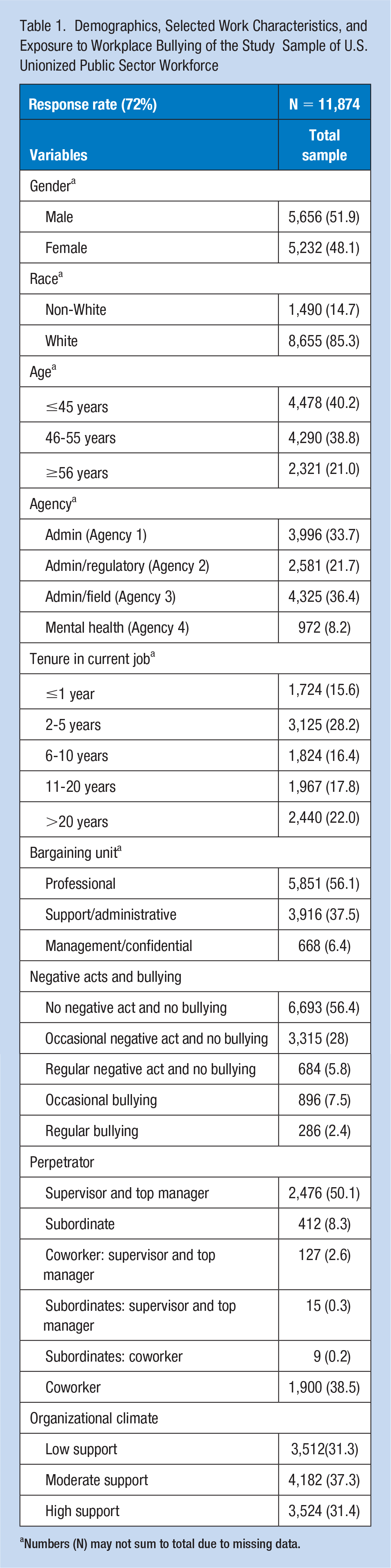
Overall, 72% of the employees from the four agencies participated (n = 11,874; Table 1). The overall sample was 52% male, 80% under the age of 56, mostly White (86%), with 22% having job tenure of more than 20 years. Most of the participants were from administrative/field agency (37%), and more than half of the participants belonged to the professional bargaining unit.
Demographics, Selected Work Characteristics, and Exposure to Workplace Bullying of the Study Sample of U.S. Unionized Public Sector Workforce
Numbers (N) may not sum to total due to missing data.
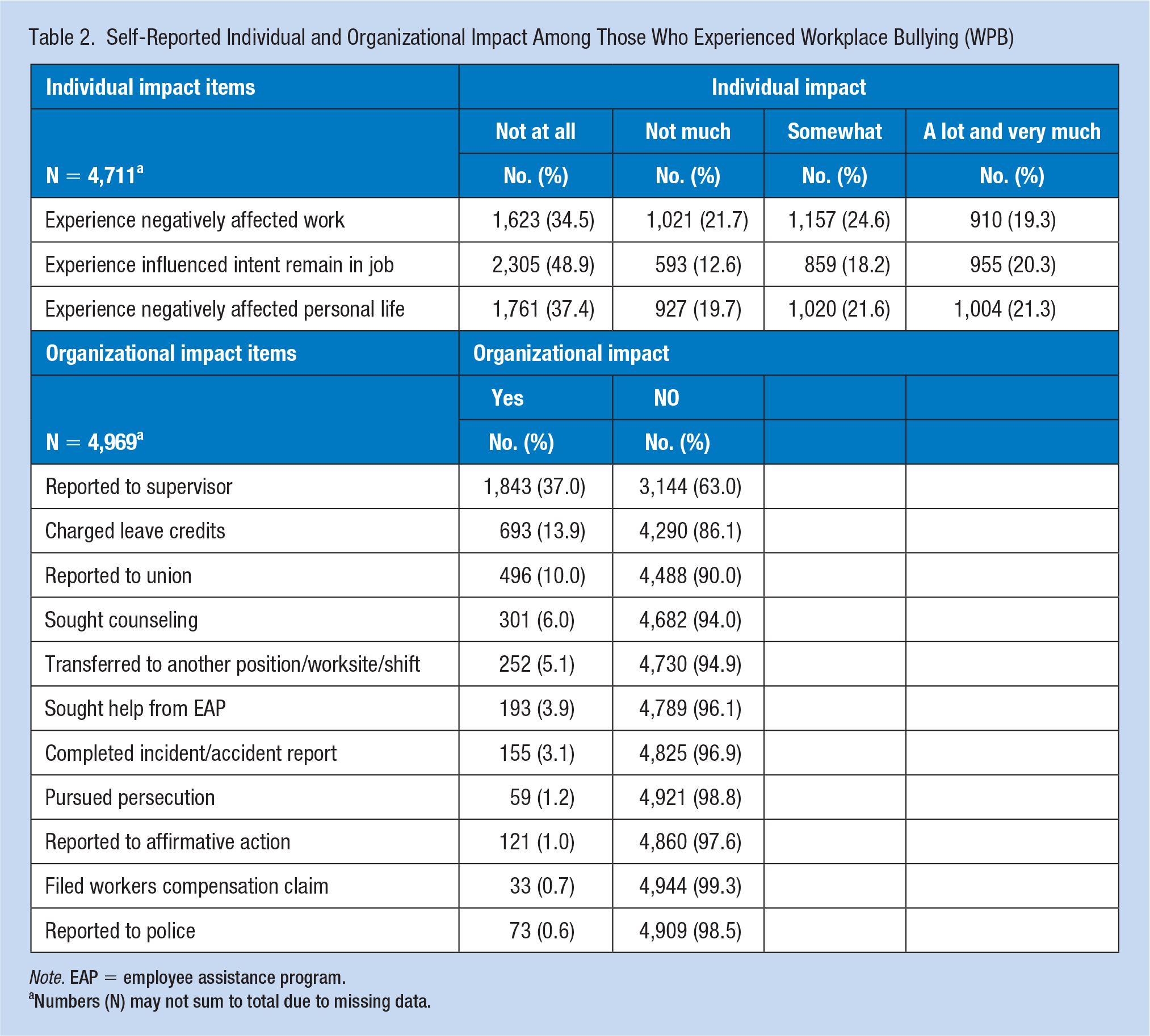
Overall, 43% (n = 5,181) participants reported exposure to any occurrence of NAs and/or bullying; among those, 34% experienced at least one NA (occasionally defined as less than once per week). Ten percent responded affirmatively to the subjective statement describing bullying (at least occasionally). More than half of the participants (56.4%) reported experiencing neither NAs or bullying. Among total respondents and who reported experienced NAs and/or bullying, 40% (n = 4,711) reported individual and 42% (n = 4,969) reported organization impact (Table 2). A supervisor or top manager was identified as the perpetrator by 50% of respondents reporting WPB.
Self-Reported Individual and Organizational Impact Among Those Who Experienced Workplace Bullying (WPB)
Note. EAP = employee assistance program.
Numbers (N) may not sum to total due to missing data.
Nearly two thirds (65.5%) of the respondents reported that bullying negatively affected their work; 51.1% reported that it influenced their intent to remain in their job; and 62.6% said that it had negatively affected their personal life. Among the 11 organizational impact items, the most common actions taken by the targets of bullying and NAs were “told my supervisor” (37.0%), followed by “charged leave credits” (13.9 %), “reported to union” (10.0%), “sought counseling” (6.0%), “transferred job” (5.1%).
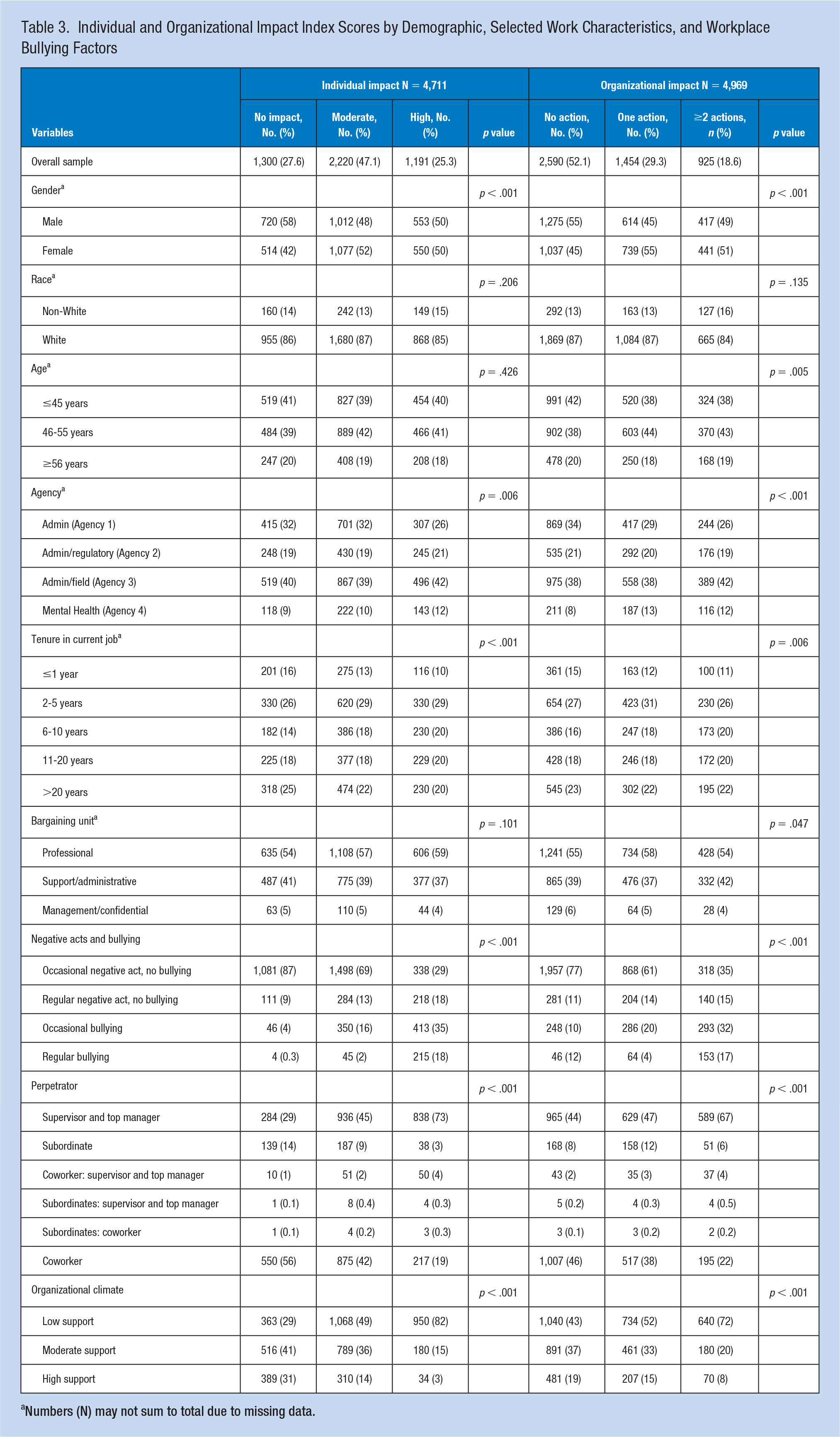
When the three individual impact items were analyzed as an index (n = 4,711), among those who reported NAs and bullying, 27.6% reported no individual impact, 47.1% reported moderate impact, and 25.3% reported high impact (Table 3). By contrast, 52% of the respondents reported not taking any action in response to the behavior (among the 8 organizational impact items as an index), 29% reported taking only one action, and 18% took more than one action.
Individual and Organizational Impact Index Scores by Demographic, Selected Work Characteristics, and Workplace Bullying Factors
Numbers (N) may not sum to total due to missing data.
The bivariate associations showed differences in the individual impact index score for working in a low support organizational climate, being female, working in health care, having tenure between 2 to 20 years, experiencing bullying and regular NAs, and manager as perpetrator (p <.05; Table 3). These same variables, as well as age between 46 and 55 years were found to be statistically different across the organizational impact index score (p <.05).
Multinomial logistic regression was conducted to determine the association between bullying and the levels of individual impact (n = 4,711) while controlling for covariates (Table 4). Exposure to bullying was associated with both moderate and high individual impact with the odds of the impact increasing for an increase in severity (NAQ to bullying) along with the frequency in a dose-response pattern. The odds of reporting moderate (vs. no) individual impact among those participants who experienced regular NAQ and occasional and regular bullying was 1.51, 5.93, and 18.32, respectively, and 5.03, 27.57, and 346.16 among those reporting high individual impact.
Multinomial Logistic Regression of Individual Impact by Demographic, Work Characteristics, and Workplace Bullying
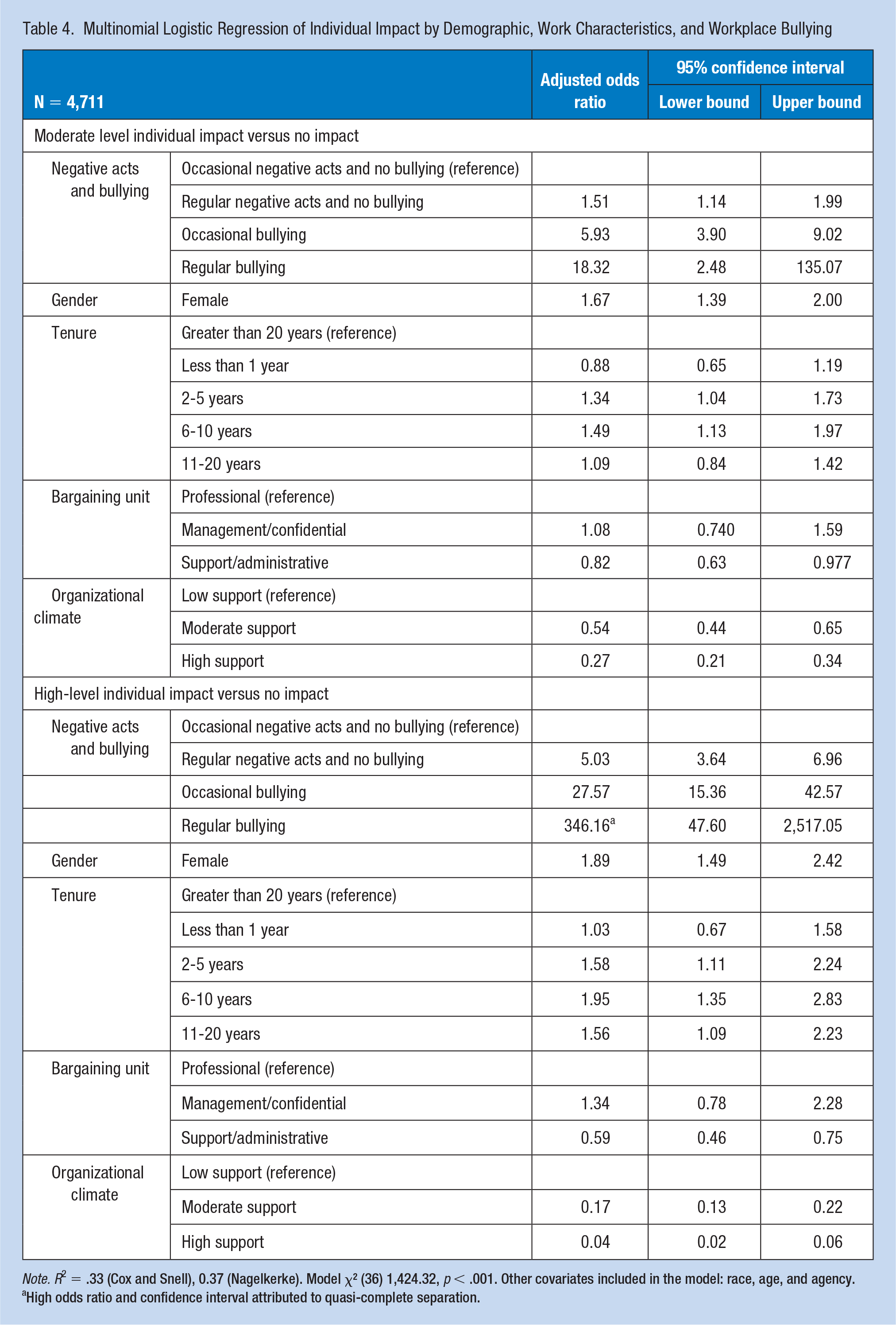
Note. R2 = .33 (Cox and Snell), 0.37 (Nagelkerke). Model χ² (36) 1,424.32, p < .001. Other covariates included in the model: race, age, and agency.
High odds ratio and confidence interval attributed to quasi-complete separation.
Other variables found to be associated with moderate and high individual impact were being female (OR =1.67, 1.89), having 2 to 10 years tenure showed increased odds for high individual impact. Moreover, being a member of supportive/administrative bargaining unit (OR = 0.82, 0.59) and in a moderately (OR = 0.54, 0.17) and highly supportive organizational climate (OR = 0.27, 0.04) was inversely associated with individual impact, with the higher the supportiveness of the organization climate, the less individual impact noted, demonstrating a protective effect. The pseudo R2 of Cox and Snell’s measure and Nagelkerke were 0.33 and 0.37, respectively, representing an acceptable effect.
Multinomial logistic regression was also conducted to determine the association between bullying and the levels of organizational impact (n = 4,969) (Table 5). The ORs sharply increased for organizational impact when bullying was experienced and as the occurrence of bullying became regular. Exposure to NAQ and bullying was associated with both one action and two or more actions for organizational impact with the odds of the impact increasing for an increase in severity (NAQ to bullying) along with the frequency. The odds of reporting one action (vs. none) organizational impact among those participants who experienced regular NAQ and occasional and regular bullying was 1.63, 2.40, and 3.13, respectively, and 2.66, 5.99, and 16.26 among those reporting two or more actions impact.
Multinomial Logistic Regression of Organizational Impact by Demographic, Work Characteristics, and Workplace Bullying
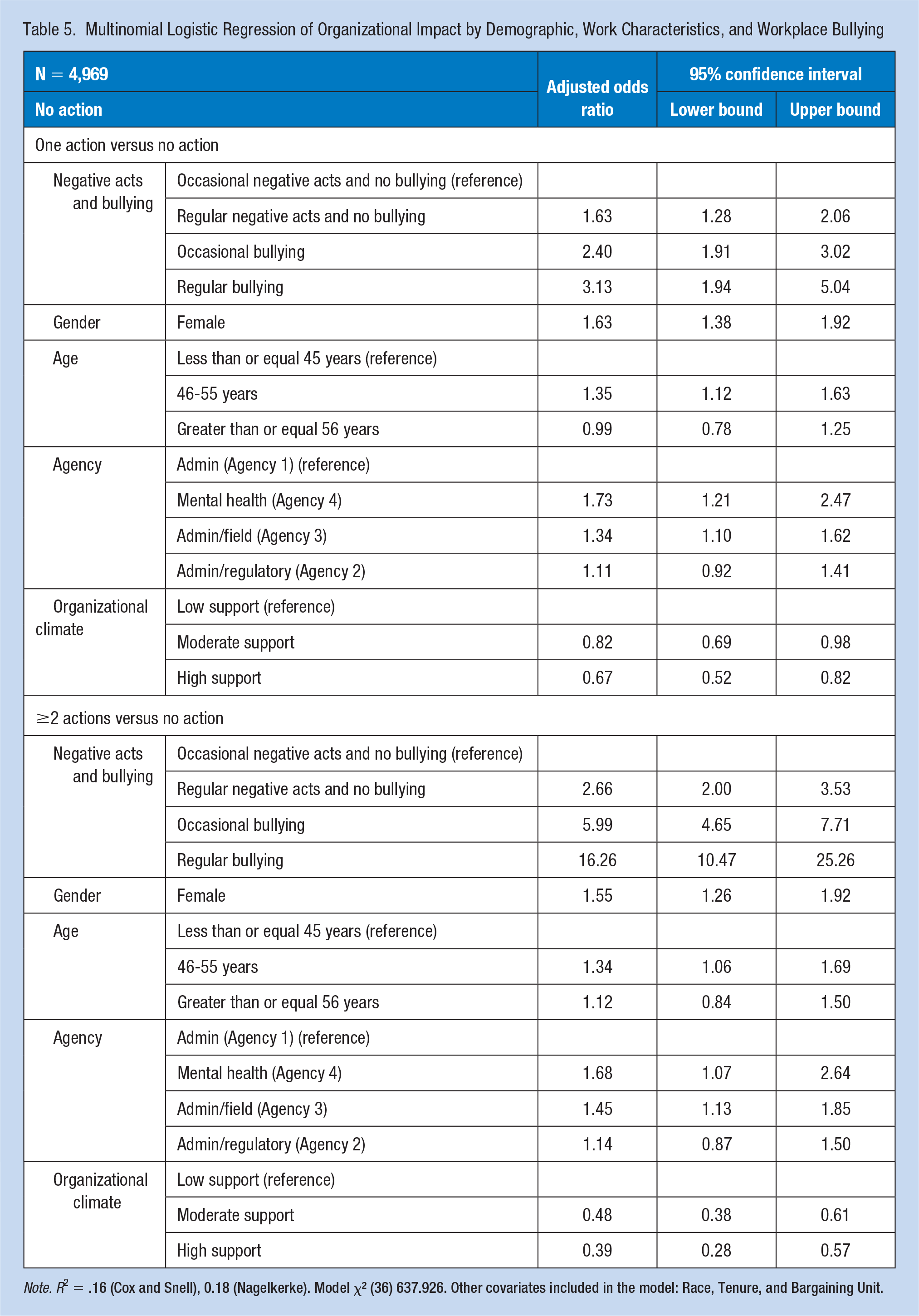
Note. R2 = .16 (Cox and Snell), 0.18 (Nagelkerke). Model χ² (36) 637.926. Other covariates included in the model: Race, Tenure, and Bargaining Unit.
Other variables found to be associated with organizational impact (one action and ≥2 action) included being female (OR = 1.63, 1.55), being between 46 to 55 years showed potential for one action (OR = 1.35) and working at a mental health agency or administrative/field agency (OR = 1.73, 1.68, and OR = 1.34, 1.45). Similar to individual impact, being in a moderately (OR = 0.82, 0.48) or highly supportive (OR = 0.67, 0.39) organizational climate was inversely associated with organizational impact, demonstrating a protective effect, where the higher the supportiveness of the organization climate showed lower levels of organizational impact. The pseudo R2 of Cox and Snell’s measure and Nagelkerke were 0.16 and 0.18, respectively, representing relatively decent-sized effects. The explained variance for individual impact was 37%, while the multinomial model for organizational impact only explained 18%.
Discussion
This is the first study conducted with a large U.S. unionized public sector workers focusing on WPB exposure and its impact using a PAR methodology. This method ensured a high level of commitment from the stakeholders in the design and the implementation of the study, which subsequently yielded a larger sample size, and high response rate. The most significant finding in this study is the dose-response nature of bullying and impact. As bullying increased in reported severity (frequency), so did the ORs for impact. We found a strong association between bullying and both individual and organizational impact, even when the supportiveness of the organizational climate was taken into account. The association was stronger as bullying increased in severity (i.e., subjective reporting of bullying versus only NAs) and frequency of negative behaviors.
We found that participants in moderately or highly supportive organizational climates, where workers perceive fair interactional and procedural justice, were less likely to experience both individual and organizational negative impact. Others have reported that working in a low supportive organizational climate where workers are not listened to, not treated with respect and fairness, and not valued, is associated with bullying (Agervold, 2009; Agervold & Mikkelsen, 2004; Bowling & Beehr, 2006; Einarsen, Raknes, & Matthiesen, 1994; Francis, 2014; Hoel & Cooper, 2000), and consequently associated with both individual and organizational impact. Hence, the supportiveness of the organizational climate when employees are treated with respect and fairness by their supervisors and colleagues, and when the organization empowers, values, and cares for them tends to be associated with lower odds for negative impact and exposure to coworker conflict.
Members of bargaining unit representing support/administrative employees reported less individual impact compared to members of the professional bargaining unit. This may be due to differences in the bargaining units’ attention to this issue or to their advocacy for their members, to the nature of work (e.g., blue-collar jobs) (Notelaers, Vermunt, Baillien, Einarsen, & De Witte, 2011) or a lack of infrastructure and training on the prevention and management of WPB for bargaining units’ leadership. Alternatively, this may represent a higher threshold for conflict at work that may be associated with the work in support (blue-collar) positions.
Age was associated with organizational impact; middle-aged employees (45-55 years) showed an increased likelihood to take action compared to those of a younger age. This might be attributed as well to the fact that they may be more knowledgeable about their rights. Younger employees may still be novices in the process of establishing themselves at the job; they may be worried about the consequences of reporting and seeking help, especially during their probationary period on the job. Senior employees are getting closer to retirement and have already adapted to the work environment and the dynamics of the informal power structure compared to younger employees (Notelaers et al., 2011; Van den Broeck, Notelaers, & De Witte, 2007).
We found that age was associated with organizational impact, and tenure was associated with high and moderate individual impact. Participants with tenure between 6 and 10 years were more vulnerable to work stressor. For these workers, exposure to NAs and bullying increased the risk of their intent to leave the job, and negatively affected their work and life. Similar to younger participants, those with less tenure may have higher thresholds to stress, be concerned about job security, be more involved with mastering the skill and the competencies of the new job and less affected by the organizational climate and their associated exposure to NAs and bullying (Notelaers et al., 2011).
Despite the fact that race has been associated with bullying and its impact in several studies, our findings did not support these results. Fox and Stallworth (2005) found a significant association between racial/ethnic bullying and impact at both the individual and organizational levels in action response, emotional strain, and counterproductive work behaviors. Alternatively, the role of race may be less a factor in a public sector, civil service system, and perhaps in a unionized workforce.
Employees of the mental health and field service–based agencies showed higher risk for organizational impact, which is consistent with findings from others that some occupations carry greater risks, including health care, education, and other service-related professions (Mikkelsen & Einarsen, 2001; Niedl, 1995; Varita, 1993; Zapf, 1999). Lipscomb, El Ghaziri, McPhaul, and London (2012) and Lipscomb et al. (2015) hypothesized that such occupations have a higher risk for violence due to the nature of work, where the perpetrator is a client or customer. Employees experience higher rates of bullying due, at least in part, to the stress associated with providing services to a potentially violent individual. This subset of employees is also noted to be associated with high levels of organizational impact such as reporting WPB and seeking assistance.
It is worth noting the explained variance for individual impact was 37%, while the multinomial model for organizational impact only explained 18%. The difference in the explained variance may be attributed to the fact that the individual impact of bullying is greater with self-report, and therefore contributes more weight within the model compared to the organizational impact model.
The strengths of the study include a large sample size; the high response rate; the paucity of other studies assessing the impact of bullying in the U.S. public sector; and the PAR approach to the design and implementation of the study. Limitations include the cross-sectional nature of the design, thus limiting inference to associations and the inability to measure with confidence the role of the perpetrator as a factor in examining impact. Given the participatory nature of the study design and the involvement of the stakeholder in refining the survey instruments, ensuring that the survey was responsive to the workforce needs, the organizational impact items might be argued to include items that are considered proactive, positive actions that use organizational resources that are in place to aid and support employees; however, these items were viewed by PAG as actions requiring efforts and resources from the agency, hence the organization impact component. Information bias is also a limitation as data are self-reported; lack of comparison data on nonresponders, and finally, convenience sample along with the differences in the functions across the state agencies within same state limits the generalizability of the results.
Conclusion
This large study of U.S. unionized public sector workers documented the impact of bullying in one large northeast state and examined the factors associated with such exposure on both the individual and organizational levels. These findings support those conducted in Europe and Scandinavia, and our hypothesis that individual and organizational impact increases as exposure to bullying increases in a dose-response relationship. The impact appears to increase as the frequency and severity of the behaviors increase in a dose-response relationship, indicating the importance of early intervention to prevent incidents from increasing in frequency and severity. Moreover, a supportive organizational climate was noted to be protective, with less individual and organizational impact, supporting our hypothesis that public sector employees who reported being subjected to bullying would report a less-supportive organizational climate. Hence, guided interventions should address all levels of exposure to bullying and include elements to enhancing the organizational climate, while focusing on certain work population in terms of age and tenure for certain impacts. Future study should also focus on subpopulations defined by age and work tenure and the differential impact of WPB. Finally, a participatory approach is critically needed to include frontline workers’ experience with the problem and possible interventions to curb WPB.
Implications for Occupational Health Practice
Workplace bullying is evident across multiple sectors in the workforce. The organizational climate within the workplace should instill and inculcate the values of respect and fairness and hold personnel accountable for negative behavior.
Organizations need to provide training to employees (at all levels) on the nature of WPB as well as the resources, policies, and processes available to prevent those behaviors. Guidance on how victims of bullying should report negative behavior is essential. Management training that will foster a work environment that empowers supervisors and colleagues to treat others with fairness and respect must be provided. Unions and collective bargaining entities have an important role in the prevention and management of WPB (Crimp, 2017; Sorozan, 2018). For these values to be realized, they must be incorporated into contractual agreements within unionized workforce (Sorozan, 2018). Furthermore, unions can be actively involved in evaluating the enactment and enforcement of such policies by monitoring agencies’ antibullying policies and procedures via regular audits (Giga, Hoel, & Lewis, 2008).
Applying Research to Practice
Workplace bullying is evident across multiple sectors in the workforce. This study provides novel findings about the individual and organizational impact of bullying exposure in a large U.S. unionized public sector workforce. The most significant finding in this study is the dose-response nature of bullying and its impact. As bullying increased in reported severity (frequency), so did the impact. It also demonstrated the protective effect of the organizational climate and bargaining unit membership. The results from this study suggest that, in addition to the employee and supervisor training on the prevention and management of WPB including the reporting process, labor-management efforts should focus on enhancing the supportiveness of the organizational climate by living the organizational values and holding the employees accountable for the negative behavior in the workplace. Unions can play an instrumental role in preventing WPB along with its individual and organizational impact by including such elements in the collective bargaining agreements.
Footnotes
Acknowledgements
The authors thank the agencies and unions that were valuable partners in all aspects of this work. They would also like to express gratitude to the dedicated workers who agreed to participate in this project and who are determined to improve the work environment for all.
Declaration of Conflicting Interests
The author(s) declared no potential conflicts of interest with respect to the research, authorship, and/or publication of this article.
Funding
The author(s) disclosed receipt of the following financial support for the research, authorship, and/or publication of this article: This paper was supported by the National Institute for Occupational Safety and Health (NIOSH; grant no. 5R01OH009072). Its contents are solely the responsibility of the authors and do not necessarily represent the official views of NIOSH.

Author Biographies
Mazen El Ghaziri, PhD, MPH, RN, is a nurse researcher with expertise in occupational health and safety research in various sectors with a focus on workplace violence and Total Worker Health approaches. He is an assistant professor at the Solomont School of Nursing, University of Massachusetts Lowell, and an investigator in the Center of Promotion of Health in New England Workplace.
Shellie Simons, PhD, RN, is a medical-surgical nurse with expertise in workplace bullying, particularly among nurses. She is an associate professor at the University of Massachusetts Lowell.
Jane Lipscomb, PhD, RN, is retired as professor, University of Maryland Baltimore Schools of Nursing and Medicine in 2017. She currently provides expertise in workplace violence prevention to the federal government and professional health care associations.
Carla L. Storr, ScD, MPH, research interests include exploring workplace factors that influence mental health and substance use. She is a professor at the University of Maryland School of Nursing and the Director for the Center for Health Outcomes Research. She teaches graduate-level courses in methodology and measurement.
Kathleen McPhaul, PhD, MPH, RN, COHN-S, is currently the Manager of Occupational Health Services at the Smithsonian Institution and was a faculty at the University of Maryland School of Nursing at the time of the research. She is the former Chief Consultant for Occupational Health Services at the Veterans Health Administration and has over 30 years experience in occupational health practice, policy, research, and education.
Matthew London, MS, has conducted research, training, and technical assistance for more than twenty years on a range of workplace violence topics, including workplace bullying. He is currently the Director of the NorthEast New York Coalition for Occupational Safety and Health (NENYCOSH).
Alison M. Trinkoff, ScD, MPH, BSN, RN, FAAN, is a professor in the Department of Family and Community Health, at the University of Maryland School of Nursing. She has conducted research on nurses health and well-being and has taught research methods and design for over 30 years.
Jeffrey V. Johnson, PhD, is a public health sociologist and Professor Emeritus at the University of Maryland School of Nursing. His research has focused on the impact of the psychosocial work environment on physical and mental health, and he is one of the co-authors of the Demand-Control-Support Model of occupational stress. His current work examines the influence of climate change on social justice and the social determinants of health.