




Abstract
Increasing rates for chlamydia and other sexually transmitted infections pose a global public health issue. Untreated chlamydia infections create an economic burden on the health care system, employers, and society. Occupational and environmental health nurses can help promote health awareness about chlamydia, teach prevention strategies, and encourage routine screening to slow its spread.
Keywords
Chlamydia infects about 131 million people worldwide each year and is the second leading cause of more than 1 million new sexually transmitted infections (STIs) that occur daily; globally, around 357 million new STIs are reported each year (World Health Organization [WHO], 2019). In the United States (U.S.), the Centers for Disease Control and Prevention (CDC) estimate 20 million new STIs occur annually, which cause nearly US$16 billion in direct medical costs alone (Centers for Disease Control and Prevention [CDC], 2018). In 2017, chlamydia infection was the most common notifiable condition in the U.S. with almost 2 million cases. Although rates increased the most among men, the trend of increasing chlamydia rates among both genders, in all racial and Hispanic ethnicity groups, and all U.S. regions continued. Almost two thirds of reported cases were among adolescents and young adults aged 15 to 24 (CDC, 2018). In the U.S. chlamydia infections disproportionally affect Native American Indians (NI), Native Alaskans (NA), Blacks, Hispanics, and Native Hawaiians or other Pacific Islanders (NHOPI) (CDC, 2018). Figure 1 shows rates of STIs by race, Hispanic ethnicity, and gender (CDC, 2017, 2018).
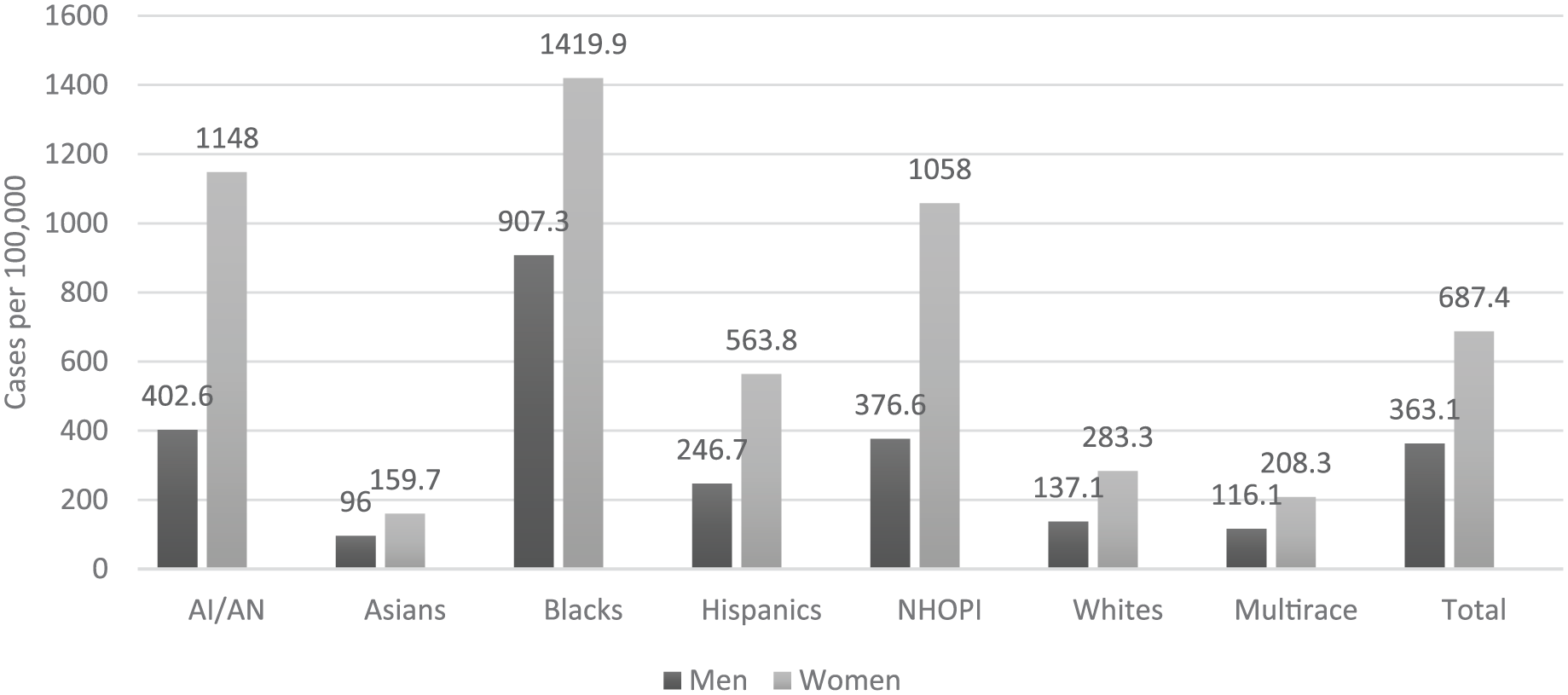
Chlamydia rates by race, Hispanic ethnicity, and gender in the United States, 2017.
Chlamydia, caused by Chlamydia trachomatis bacteria, is spread predominantly through vaginal, anal, and oral sex and may cause male urethritis and epididymitis (CDC, 2018). Women are often asymptomatic; without treatment, chlamydia causes cervicitis and acute salpingitis and is the major cause of pelvic inflammatory disease and infertility (CDC, 2018; WHO, 2019). Perinatal infections cause premature rupture of the membranes and early delivery, low birth weight, and stillbirth, or conjunctivitis and pneumonia in newborns (CDC, 2018). Rates are higher in females because one male may infect multiple women; highest rates were among women in the South and Alaska (CDC, 2018). Untreated chlamydia may cause trachoma, a leading cause of blindness (CDC, 2016), and after anal sex, lymphogranuloma venereum may occur, which causes chronic proctitis, rectal stenosis, and genital lymphedema in men and women (Ceovic & Gulin, 2015).
Educating workers about STIs is consistent with Total Worker Health concepts and is important because access to prevention strategies and treatment is key to reducing STI disparities. Distrust in the health care system, language barriers, and long-held societal and cultural barriers to STI diagnoses, treatment, and preventive services often foil or delay STI treatment (CDC, 2018). Workers need to know how to protect themselves from STIs and where to obtain screening and treatment. Sexually active women aged 25 years and younger, or older women at increased risk for infection, need annual screening for this asymptomatic infection to prevent chlamydia complications (CDC, 2017). Clinical occupational and environmental health nurses can assess patients’ risks for STIs, inform them about screening, and talk about their responsibility for prevention, which includes always using condoms correctly and openly discussing with their partners and providers ways to protect their health (CDC, 2018).
Education programs in the workplace may also empower parents and grandparents to talk frankly with family members about sexual health and responsible sexual behavior. These conversations are important especially with men who have sex with men, females who have multiple partners, and family members who abuse drugs or alcohol. Many local or state health departments offer prevention materials and treatment options, free or at reduced cost. Resources for social media campaigns, local and state data, and information about specific populations are available from the CDC (2017, 2018). Talking about STIs is never easy, but open communication is important to promote early detection and slow the spread of this preventable and easily treatable infection that is threatening the health of millions.
