




Abstract
Vaccines are an important disease prevention strategy among individuals of all age groups. Despite the success of vaccinations in preventing communicable diseases, adults, in particular, often have sub-optimal vaccination rates. Consequently, some vaccine-preventable diseases, such as pertussis, are still on the rise in the United States despite the availability of the Tdap vaccine. As most adults can be found in the workplace, occupational and environmental health nurses are in a unique position to encourage employers to promote adequate Tdap vaccination among their employees. As specific resources regarding Tdap vaccination are lacking, the Pertussis Prevention Toolkit was developed to help occupational health nurses promote Tdap vaccination in the workplace.
Pertussis is a highly contagious upper respiratory illness caused by the bacterium Bordetella pertussis, a pathogen that can have serious, life-threatening consequences, especially for children (Centers for Disease Control and Prevention [CDC], 2013a; Mooi, Van Der Maas, & De Melker, 2014). The bacteria are transmitted when an infected individual coughs or sneezes, thus easily spreading the bacteria to others through respiratory droplets (U.S. National Library of Medicine [USNLM], 2015). Symptoms of pertussis infection are similar to symptoms associated with the common cold, including rhinitis, fever, and diarrhea (USNLM, 2015). However, the most common symptom of pertussis is a distinctive cough, which can last approximately 3 months. Pertussis is, in fact, often referred to as the 100-day cough (National Foundation for Infectious Diseases, 2012). The cough is more severe in young children and infants and is often accompanied by a “whoop” sound as the child or infant attempts to take a breath following a violent coughing spell (USNLM, 2015). Although treatments for pertussis infection are available, the CDC (2013e) highly recommends the tetanus, diphtheria, and pertussis (Tdap) vaccination for adults and the diphtheria, tetanus, and pertussis (DPT) vaccination for infants and children as the single most effective preventive measure.
Vaccination rates are commonly promoted and tracked in children and, as a result, vaccination uptake among the pediatric population is at an all-time high in the United States (Children’s Hospital of Philadelphia [CHOP], 2013a). Such success is partly attributed to childhood vaccination mandates in all 50 states, which must be met prior to school enrollment (American Academy of Pediatrics, 2013). In contrast, very few adults are subject to vaccination mandates with the exception of a limited number of employees working with children or in health care environments (Immunization Action Coalition, 2014). Nevertheless, vaccines are a primary disease prevention strategy in children and adults alike. The CDC (2014d) recommends all adults be vaccinated against influenza annually and vaccinated against pertussis if they did not receive booster vaccination as adolescents (CDC, 2014d). Furthermore, the Advisory Committee on Immunization Practices now recommends routine pertussis vaccination for women during the third trimester of pregnancy (Sawyer, Liang, Messonnier, & Clark, 2013). Additional adult vaccines may be needed, depending on age, lifestyle, co-morbidities, employment, and international travel (CDC, 2014b).
More than 48,000 confirmed cases of pertussis were reported in the United States during 2012, the highest incidence since 1955 (CDC, 2013b). Pertussis, however, is not a disease limited to childhood. Individuals are believed to become susceptible to pertussis approximately 6 years to 10 years after childhood vaccination (Sharland, 2011). Although a classic “whooping” sound often accompanies the cough in infants and children, in adults and adolescents the disease is often unrecognized, undiagnosed, and underreported (Guiso, Liese, & Plotkin, 2011). As a result, an estimated 600,000 to 900,000 unreported pertussis cases occur among adults and adolescents each year in the United States (CHOP, 2013b). Despite the availability of a pertussis booster vaccine, pertussis vaccination rates among adults remain sub-optimal at 14.2% (Williams et al., 2014) and, as a result, contribute to the high incidence of pertussis in the United States (Olyarchuk, Willoughby, Davis, & Newsom, 2012). Not surprisingly, hospitalizations and deaths due to pertussis have also increased in the United States (Jakinovich & Sood, 2014).
The economic consequences of pertussis are notable, costing on average more than US$13,000 per hospitalization for adults and children (Clark, 2013). These estimated costs, however, do not account for additional and indirect costs associated with the disease, including time spent away from work or school, costs for additional provider appointments, recovering at home, or prescriptions for medications continued once discharged from the hospital. Employees infected with pertussis miss, on average, 6 days of work, although some may miss up to 77 days (G. M. Lee et al., 2004). In the workplace, the spread of pertussis is especially problematic as symptoms may develop anywhere from 5 days to 3 weeks after exposure (CDC, 2013a). Unfortunately, during that time frame, one undiagnosed individual with pertussis, unaware of the infection, can infect up to 15 other individuals (CDC, 2013c).
Occupational health nurses are recognized as the “authority on health, safety, [and] productivity . . . for worker populations” at their workplaces (American Association of Occupational Health Nurses [AAOHN], n.d.-a, para. 3). This role places occupational health nurses in an ideal position to educate workers on the importance of Tdap vaccination. Although current vaccination status is a primary disease prevention strategy, few resources are available to promote vaccination of adults against pertussis. Therefore, the purposes of this article are to review a Utah program developed to promote pertussis vaccinations among adult employees and share toolkit resources with occupational health nurses as they improve the pertussis vaccination rate among adult employees.
Evolution of Program and Development of the Pertussis Prevention Toolkit
In 2012, the pertussis incidence rate in Utah was more than three times higher than the national incidence rate (CDC, 2013b). During 2013, 1,033 pertussis cases were reported in Utah and, of those diagnosed, 43% of the cases were more than the age of 15 years (Utah Department of Health, 2013). Although health care providers are generally successful in assessing pertussis vaccination status of children and ensuring currency, pertussis vaccination is not always as closely monitored in the adult population. In fact, health care providers often miss opportunities to vaccinate adults against pertussis because they do not routinely assess the vaccination status of adult patients (CDC, 2014c). Because outbreaks of pertussis often stem from adults, it is imperative to identify alternate locations wherein adult Tdap vaccination status can be assessed and appropriate vaccinations, such as Tdap, provided beyond outpatient clinics (CDC, 2015). In Utah, 78% of adults work full-time (J. Lee, 2013), which is slightly higher than the national employment average of 65.8% (Ryan & Newport, 2014). Therefore, workplace is where more than half of all Utah adults, as well as U.S. adults, can be reached with health-related messages including vaccination information.
Knowing the majority of adults are found in workplaces provides an opportunity to develop work-specific resources to promote Tdap vaccination. The Pertussis Prevention Toolkit was originally designed to provide education and resources to employers and their employees regarding the importance of Tdap vaccination for adults. The initial toolkit materials were created by representatives from a local Utah health department, university, pediatric and family practice offices, and several pharmaceutical manufacturers. The need for varying types of educational materials for employers and employees was recognized, so a variety of approaches were used. Materials were initially piloted among the 30 largest employers in Utah County, the second largest county in Utah. After adaptation of the materials to meet the unique education needs and requests from both employees and employers, the project was expanded. A more inclusive directory of all licensed businesses in Utah County and the ability to sort these businesses by name, city, and employee population were provided by the Utah County Department of Workforce Services. During the second phase, the adult Tdap vaccination program accessed the 100 largest businesses (i.e., based on number of employees) in Utah County.
Employers were contacted via phone with a brief description of the project; some requested additional information prior to scheduling meetings with a human resource or health/wellness representative. An information packet with a one-page flyer providing facts about pertussis in Utah and the importance of vaccination, along with a frequently asked questions handout, was presented to each business representative. These printed materials included information on pertussis transmission rates, the pertussis vaccine, potential costs associated with pertussis outbreaks in the workplace, and available resources to assist the employer in administering pertussis vaccine to employees.
After meeting with the business representative, mobile vaccination clinics were scheduled in collaboration with the Utah County Health Department (UCHD) Immunization Clinic and the Utah County Immunization Coalition. To make the vaccination process convenient, the UCHD Immunization Clinic agreed to provide mobile vaccination clinics at no additional cost to the employer. For employees with health insurance, the UCHD Immunization Clinic directly billed the insurance company for the cost of the vaccine. In addition, the UCHD Immunization Clinic offered pertussis vaccines at a discounted rate for uninsured employees.
Some business representatives also requested development of a short presentation for employee staff meetings prior to the mobile vaccination clinic date. Hence, presentation materials were created with a focus on the importance of Tdap vaccination and a general overview of other adult vaccines available at the mobile vaccination clinic. The presentation included education on the incidence, symptoms, and treatment options for pertussis, as well as graphs representing recent pertussis outbreaks in the local community. General information regarding vaccine safety, potential contraindications, and common side effects of Tdap was also included, as well as the importance of timely vaccination and documents to bring to the mobile vaccination clinic. After the presentation, a registered nurse from the health department was available to answer additional questions or concerns.
Program Participation
Many businesses in Utah County participated in the program; each business scheduled the mobile vaccination clinic and promoted Tdap and other adult vaccines to their employees. Of the 100 Utah County businesses contacted, 64 scheduled a day for the mobile vaccination clinic during which a total of 4,080 vaccinations were administered between February 2013 and September 2014.
Although a significant decrease in pertussis cases in Utah County has not been achieved at this time, controlling the spread of pertussis in communities is a complex process confounded by multiple factors such as achieving adequate vaccine immunogenicity, promoting regular booster uptake in the population, and reaching pertussis vaccination rates of at least 92% to 94% to maintain healthy herd immunity (Guiso, 2013a; Plotkin, Orenstein, & Offit, 2013). Nevertheless, the most cost-effective intervention at this time is to improve herd immunity by vaccinating adolescents and adults (Guiso, 2013a, 2013b).
Toolkit for Occupational and Environmental Health Nurses
Poor employee health outcomes have the potential to cost U.S. businesses about US$1 trillion every year; occupational health nurses are often charged with the task of maximizing employee productivity and decreasing absenteeism (AAOHN, 2012). Promoting adult vaccinations is an effective disease prevention strategy in employee populations (AAOHN, 2012). Various vaccination toolkits exist, some of which are specific to businesses, although most toolkits specifically address only influenza vaccination.
Calculating a return on investment (ROI) and including such information in a vaccination toolkit is an effective strategy for demonstrating the economic benefit of employee vaccinations (Singh, 2014). A quick Internet search of ROI calculators for influenza vaccination is plentiful. Although the ROI for influenza vaccination is dependent on various business characteristics such as number of employees and average employee income, generally speaking the ROI is 1:4, meaning for every dollar spent on influenza vaccination, the employer can expect a US$4 ROI (Partnership for Prevention, 2012). In addition, the annual ROI of vaccinations in general has been calculated to be between 12% and 18% worldwide (Andre et al., 2008). Unfortunately, however, only one study thus far has attempted to calculate the ROI of Tdap in pertussis prevention programs, a study that was conducted with health care employees of the Academic Medical Center in Amsterdam (Tariq, Mangen, Hovels, Frijstein, & de Boer, 2015). Nevertheless, similar to influenza vaccination, the researchers reported an ROI of 1:4 when health care workers were vaccinated against pertussis, meaning that 4 Euros were saved for every 1 Euro spent on pertussis vaccination programs (Tariq et al., 2015).
Information for the Employer
As on-site vaccination champions, occupational health nurses can suggest to organizational leadership that employees be offered vaccine, highlighting the benefits of promoting Tdap vaccination including the economic risk and potential impact of an unvaccinated workforce. Generally speaking, primary barriers to implementing a workplace vaccination program include concerns regarding cost. However, vaccinating employees against pertussis has a positive cost benefit when considering both potential direct employer costs of an unvaccinated workforce (e.g., the average number of lost workdays for illness and lost productivity if working while ill) as well as indirect costs (e.g., health care provider visits and antibiotic treatments; Coudeville et al., 2009). Other costs of pertussis include the average number of missed workdays for parents of children who contract the illness (Joint Commission on Accreditation of Healthcare Organizations, 2011).
Offering on-site vaccination clinics also has economic benefits for employees who are traditionally vaccinated off-site, decreasing lost work time to travel to and from a traditional clinic setting to be vaccinated (Mattke, Schnyer, & Van Busum, 2012). Currently, all health insurance marketplace plans and most private health insurance plans cover the cost of Tdap (CDC, 2014e), thus removing any associated employer or employee out-of-pocket expense. Even uninsured employees may be eligible for low cost Tdap vaccines through a federally funded health center (e.g., local or state health department; CDC, 2014e).
Occupational health nurses may use these specific discussion points when suggesting on-site vaccination clinics to employers. Adaptable templates to create employer-specific handouts or pamphlets are available at www.utahcountyimmunizationcoalition.org/toolkit (Figures 1 to 4).
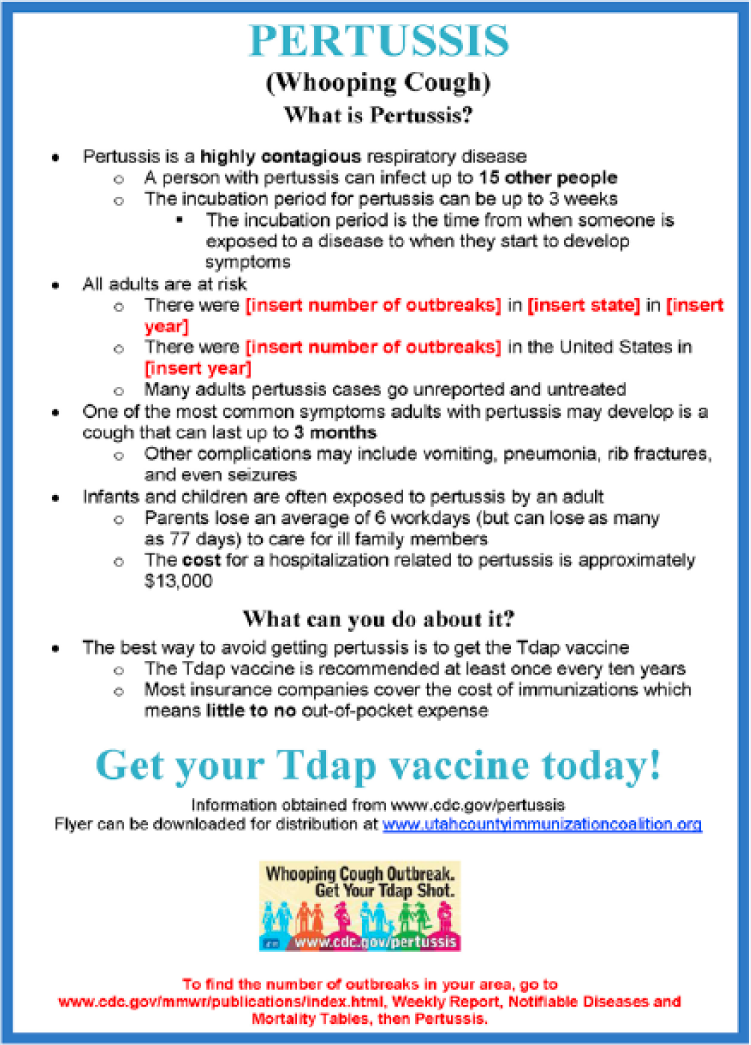
Employer handout “what is pertussis?”
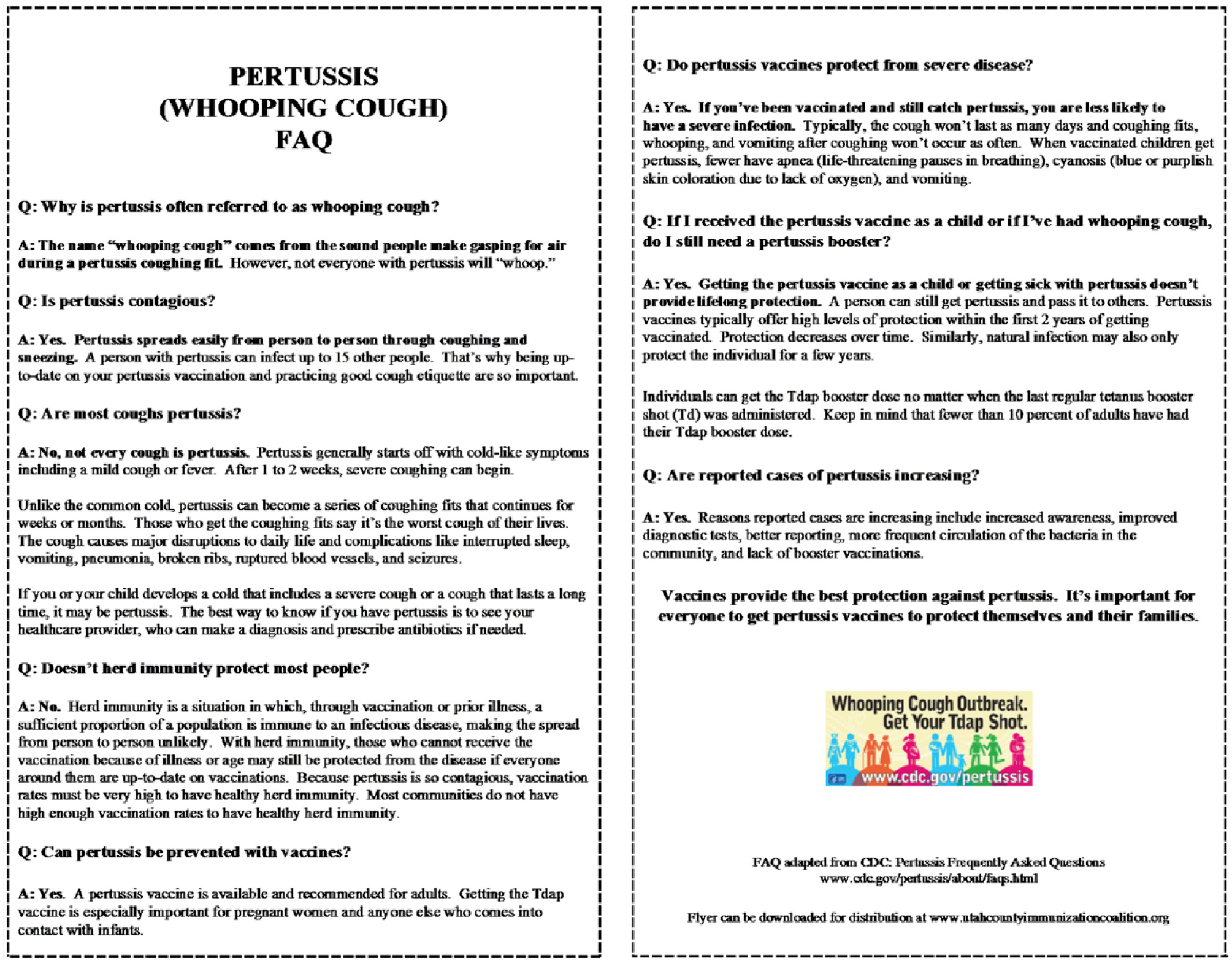
Employer handout FAQ.
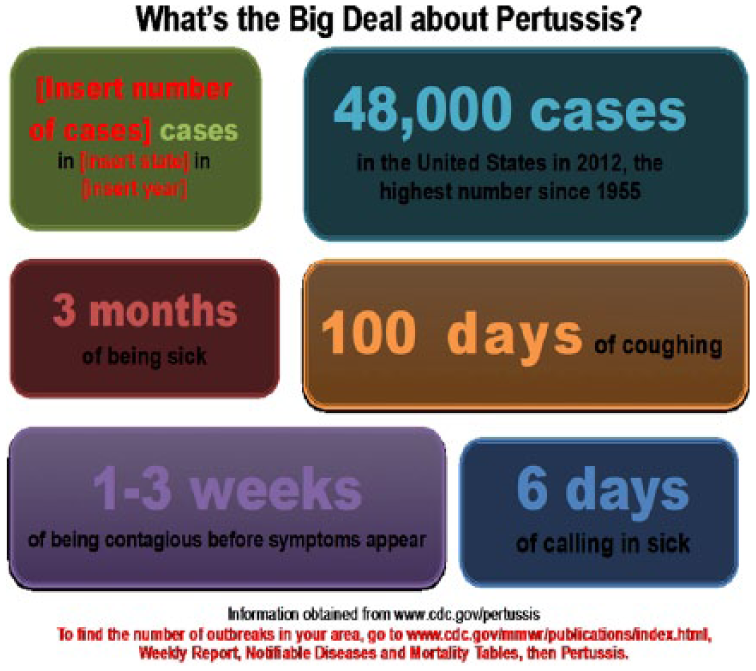
Employer and employee handout “what’s the big deal about pertussis?”
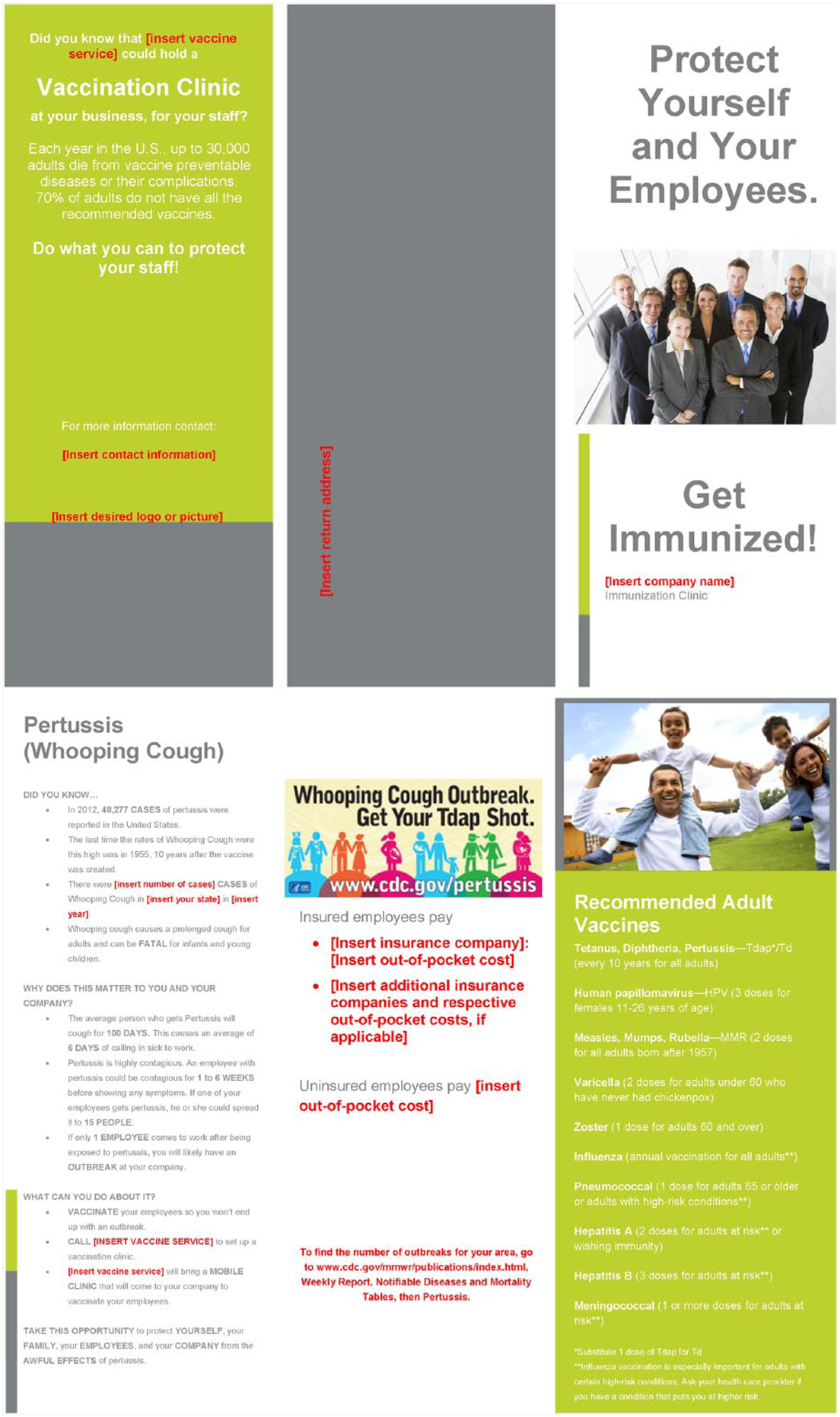
Employer pamphlet “protect yourself and your employees.”
Information for Employees
After securing employer approval for an on-site vaccination clinic, employees must be educated regarding the importance of the Tdap vaccine professionally and personally. Although employers’ chief vaccination concern may be cost, employees may have other concerns or educational deficits. Most commonly, adults are inadequately vaccinated because they simply do not realize they need additional vaccines during adulthood (CDC, 2014a). Occupational health nurses must explain the need for adults to be vaccinated against pertussis. For instance, adult employees should understand that childhood pertussis vaccine effectiveness wanes over time, requiring vaccine boosters. Appropriate Tdap vaccination prevents absenteeism and decreases health care costs associated with medications, provider visits, and, in some cases, hospitalizations.
Employee education should include basic information about pertussis infection, including local pertussis statistics, how long employees can expect to be ill, symptoms of pertussis, disease incubation period, number of workdays the employee should expect to miss as well as vaccine side effects (Figure 3). The occupational health nurse may want to consider using an educational PowerPoint presentation when discussing these points, an example of which can be downloaded and easily adapted at www.utahcountyimmunizationcoalition.org/toolkit. Furthermore, occupational health nurses may also want to highlight the importance of Tdap vaccination, not only for the benefit of the employees’ health, but also to protect the health of their families and friends, including vulnerable individuals such as older adults, infants, and children (CDC, 2013e).
When promoting Tdap vaccination among employees, occupational health nurses may also include information on various documents and payments employees should bring to the mobile vaccination clinic (i.e., health insurance card, photo identification, list of allergies, personal vaccination record, and acceptable forms of payment to cover immunization fee, copay, or other costs). If the mobile vaccination clinic also vaccinates dependents, similar documents and payments should be presented for each dependent.
Suggestions for Occupational and Environmental Health Nurses
Mobile vaccination clinics can be scheduled after identifying vaccine and administration sources. Occupational health nurses may consider collaborating with local health departments to provide a mobile vaccination clinic. If mobile vaccination clinics are not offered through the local or state health department, consider contracting with a mobile vaccination nursing service, local health care provider, or local hospital. The insurance company primarily responsible for providing health care benefits to employees may also identify a local nursing service that offers mobile vaccination clinics to businesses. If, after exhausting the aforementioned options, scheduling an on-site vaccination clinic is not possible, consider distributing vouchers to employees that can be exchanged for vaccinations at local health care facilities.
As the date for the mobile vaccination clinic approaches, the clinic should be promoted within the workplace. To boost attendance, occupational health nurses may consider sending reminder emails 5 to 7 days prior to the clinic and/or posting information with the date and time of the clinic in high traffic areas, such as breakrooms or near a time clock. A sample vaccination clinic poster is available, at no cost, for download to promote the vaccination clinic at http://www.utahcountyimmunizationcoalition.org/Figure%205%20Immunization%20Clinic.pdf (Figure 5).
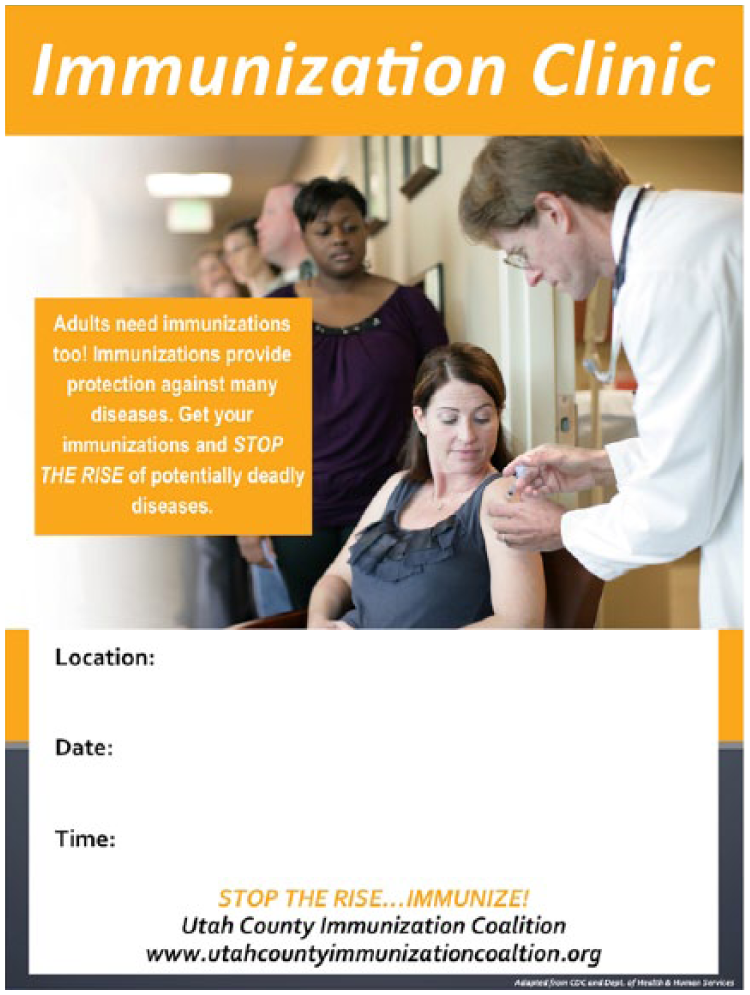
Promotional vaccination clinic poster.
Although the Tdap vaccine is not seasonal and may be administered at any time of the year, occupational health nurses may want to consider simultaneously promoting Tdap with seasonal influenza vaccine. If annual influenza vaccination clinics are already a routine event at the workplace, consider querying the mobile vaccination service about offering Tdap vaccine in addition to influenza vaccine. Tdap and influenza vaccinations may be administered concurrently (Immunization Action Coalition, 2011).
Although pertussis outbreaks are common in the United States, occupational health nurses may highlight local pertussis-related statistics in addition to national data as statistics vary from state to state. Familiarity with the number of pertussis cases per state or county may emphasize employees’ risk for contracting the illness. The number of pertussis cases per state is available and updated each week by the CDC, and can be accessed at http://www.cdc.gov/mmwr/preview/mmwrhtml/mm6252md.htm?s_cid=mm6252md_w. In addition, state health departments routinely report the number of pertussis cases by county on individual state websites.
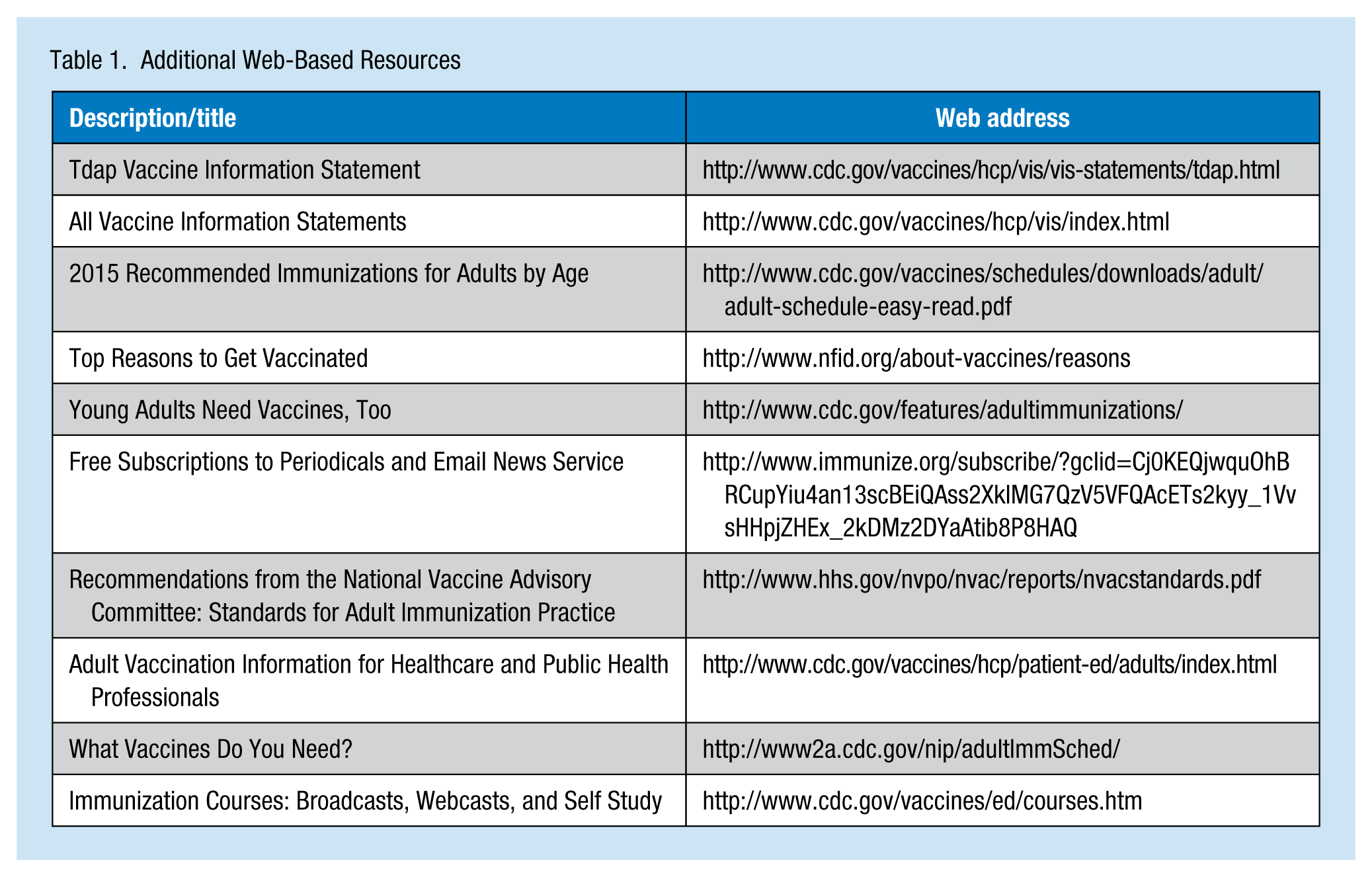
Supplementary web-based resources are also available to occupational health nurses who wish to promote vaccinations among workers. Such resources, found at www.utahcountyimmunizationcoalition.org/toolkit, can be used to augment the Pertussis Prevention Toolkit. For example, a Tdap Vaccine Information Statement (VIS) can be downloaded from the CDC website: http://www.cdc.gov/vaccines/hcp/vis/vis-statements/tdap.html. These supplementary resources are listed in Table 1.
Additional Web-Based Resources
Implications for Occupational and Environmental Health Nurses
Offering adult vaccinations to employees in the workplace is an effective strategy for increasing adult vaccination rates and lowering employees’ risk of developing a vaccine-preventable disease. Two strong determinants of adult vaccination include (a) if the vaccination is offered in the workplace and (b) if the vaccinations are free to employees (Ofstead et al., 2013). Indeed, adults without high-risk health conditions are more likely to be adequately vaccinated when vaccinations are offered in non-traditional, non-health care settings (Lu et al., 2014), such as workplaces. Thus, although traditional clinic providers often administer adult vaccines, the workplace is a suitable and effective non-health care site for adult vaccination (Lu et al., 2014).
Because occupational health nurses are tasked with promoting health and controlling communicable disease risk among employees, these nurses can positively influence Tdap vaccination rates. When promoted by occupational health nurses, a workplace-based vaccination program is an effective strategy to reduce vaccine-preventable diseases in the workplace, and is an integral part of worker health promotion and productivity programs (AAOHN, n.d.-b).
Conclusion
Appropriate vaccination of all age groups and populations is an essential strategy to reduce the spread of vaccine-preventable communicable diseases. Despite availability of a pertussis vaccine, the Tdap adult vaccination rate remains sub-optimal. As a result, the incidence of pertussis in the United States is unacceptably high. Adequate vaccination for highly virulent and contagious diseases, such as pertussis, provides economic benefits. Although several toolkits are available to promote influenza vaccination among adults, such resources specifically addressing pertussis vaccination are lacking in the literature. The purposes of this article were to review a Utah program developed to promote pertussis vaccinations among adult employees as well as to share pertussis-specific toolkit resources with occupational health nurses. All health care providers share the responsibility of ensuring adequate vaccination of adults. However, because more than half of U.S. adults are employed, occupational health nurses are in a unique, influential position to promote adult vaccination in the workplace. The Pertussis Prevention Toolkit is a valuable resource now available to occupational health nurses as they develop, promote, and implement successful adult immunization programs.
In Summary
Pertussis is a highly contagious upper respiratory illness.
School vaccination mandates are in place for children, but few adults have vaccination requirements.
Pertussis can be deadly, especially for infants who are too young to be vaccinated with DTaP.
Infants and children often contract pertussis from an adult family member.
In Utah, 78% of adults work full-time, so the workplace is an ideal environment to promote adult pertussis vaccinations.
The Pertussis Prevention Toolkit was created to provide education and resources to employers and their employees regarding the importance of Tdap vaccination.
Authors collaborated with the Utah County Health Department Immunization Clinic to schedule dates for mobile vaccination clinics.
During the program, 64 businesses scheduled mobile vaccination clinics.
The program resulted in administration of 4,080 adult vaccinations.
The Pertussis Prevention Toolkit materials are shared and the program is outlined.
Occupational and environmental health nurses may want to use the Pertussis Prevention Toolkit to promote adult vaccinations in their workplaces.
Footnotes
Conflict of Interest
The author(s) declared no potential conflicts of interest with respect to the research, authorship, and/or publication of this article.
Funding
The author(s) disclosed receipt of the following financial support for the research, authorship, and/or publication of this article: Funding was received from the Brigham Young University Office of Research and Creative Activities. The funding was used to purchase materials and pay the marketing design person.
Author Biographies
Karlen E Luthy is an Associate Professor, Brigham Young University College of Nursing. Dr. Luthy is a nurse practitioner specializing in family practice. She also serves on the Advisory Commission on Childhood Vaccines and has published many articles on vaccination compliance.
Jennifer L. Bainum is a family nurse practitioner working in a family practice clinic in Arizona. She is a graduate of the Brigham Young University Family Nurse Practitioner Program. Before graduating as a family nurse practitioner, she was a registered nurse specializing in pediatrics.
Renea L. Beckstrand is a Professor, Brigham Young University College of Nursing. Dr. Beckstrand is a registered nurse who specializes in critical care nursing and has published many vaccination-related articles.
Janelle L. B. Macintosh is an Assistant Professor, Brigham Young University College of Nursing. Dr. Macintosh is a registered nurse specializing in neonatal and pediatric care. She serves as an immunization expert for the American Nurses Association.
Lacey M. Eden is an Assistant Teaching Professor, Brigham Young University College of Nursing. She is a family nurse practitioner specializing in pediatrics. She is currently the Chair of the Utah County Immunization Coalition.
Brooke Saunders is a registered nurse who graduated from the Brigham Young University nursing program. She is an immunization enthusiast and served in the Utah County Immunization Coalition as an immunization liaison between local businesses and the Utah County Health Department Immunization Clinic.