




Abstract
The quality of workers’ dietary intake could be influenced by their working conditions. This review aimed to summarize the published literature examining the association between work-related factors, such as work hours, shift work, physical strain, mental strain, job strain, support, and diet quality. The literature search, conducted in PubMed, was limited to articles published from 2000 to 2017, written in English, available online, and among workers employed in high-income countries. The search resulted in 16 articles that met the criteria. Although there was some evidence of unhealthy diet among shift workers, data on the diet quality in association with other work-related factors, such as number of hours worked, physical, mental, and job strain, and worksite support were scarce. Further studies are need for purposes better defining the association between work-related factors and quality of workers’ diet.
Introduction
Health promotion for workers is of growing interest, and a healthy diet is one of the most important factors associated with this discussion in the workplace. Many health problems associated with diet quality have been documented (Aune et al., 2016; Du et al., 2016; Estruch et al., 2013; He, Nowson, & MacGregor, 2006; King, Mainous, & Geesey, 2008; Kuriyama et al., 2006; Kwok et al., 2015; Wang et al., 2014). The workplace can be a suitable place to promote healthy diet, because workers spend long periods at work and eat one or two meals per day in the workplace. However, workplace characteristics could influence workers’ daily dietary behaviors such as work hours, shift work, physical strain, mental strain, job strain, and support. It is essential to understand differences in workers’ dietary habits by these work-related factors to determine effective means of improving overall health. However, the examination of these types of associations has not been covered in recent literature reviews and much remains unclear. The aim of this study was to review and summarize the literature pertaining to these relationships in high-income countries.
Materials and Methods
In July 2018, we used the PubMed database to search for literature examining associations between work-related factors and diet, published between 2000 and 2017, written in English, and available online. The search terms were as follows: (“Diet, Food, and Nutrition” [Mesh]) AND (“Work Schedule Tolerance” [Mesh] OR “work hours” OR “work time” OR “manual work” OR “physical work” OR “physical strain” OR “mental work” OR “mental strain” OR “job strain” OR “working conditions” OR “work-related factors”). Filters were activated as follows: Text availability: Abstract and Full text; Publication dates: from January 1, 2000 to December 31, 2017; Species: Humans; Languages: English; Ages: Adult: 19 years of age and older.
The title and abstract of selected articles were screened using the following eligibility criteria: (a) participants were working, (b) the study was without an intervention, (c) work-related factors were considered in the analysis, and (d) and the study outcome was dietary characteristics based on questionnaires regarding food intake, except dietary beliefs and dietary behavior. The articles that met these criteria were then assessed for eligibility based on the content of the full text. Studies in low-middle income countries, grouped by WHO region and income per capita, 2004 (World Health Organization, n.d. ), were excluded from the review. The present study focused on commonly used work-related factors that were examined as being associated with diet such as work hours, shift work, physical strain, mental strain, job strain (demand and/or control), and support. Work-related factors were categorized into three types: time factors (i.e., work hours and shift work), physical factors (physical strain), and psychosocial factors (i.e., mental and job strain and support).
Results
The electronic database search identified 190 articles (Figure 1). Following the title and abstract review according to the eligibility criteria, 28 articles remained. An additional 12 articles were further excluded because they focused on dietary behaviors, such as varied eating behaviors (n = 3), eating fast food (n = 1), varied food-choice coping strategies (n = 1), and the use of staff canteen or packed meals (n = 1) and they were from low to middle income countries (n = 6). Ultimately, 16 articles were selected according to the assessment of the content of the full text. In total, work hours (n = 4), shift work (n = 12), physical strain (n = 3), mental strain (n = 1), job strain (n = 5), and support (n = 4) were examined in the 16 studies.
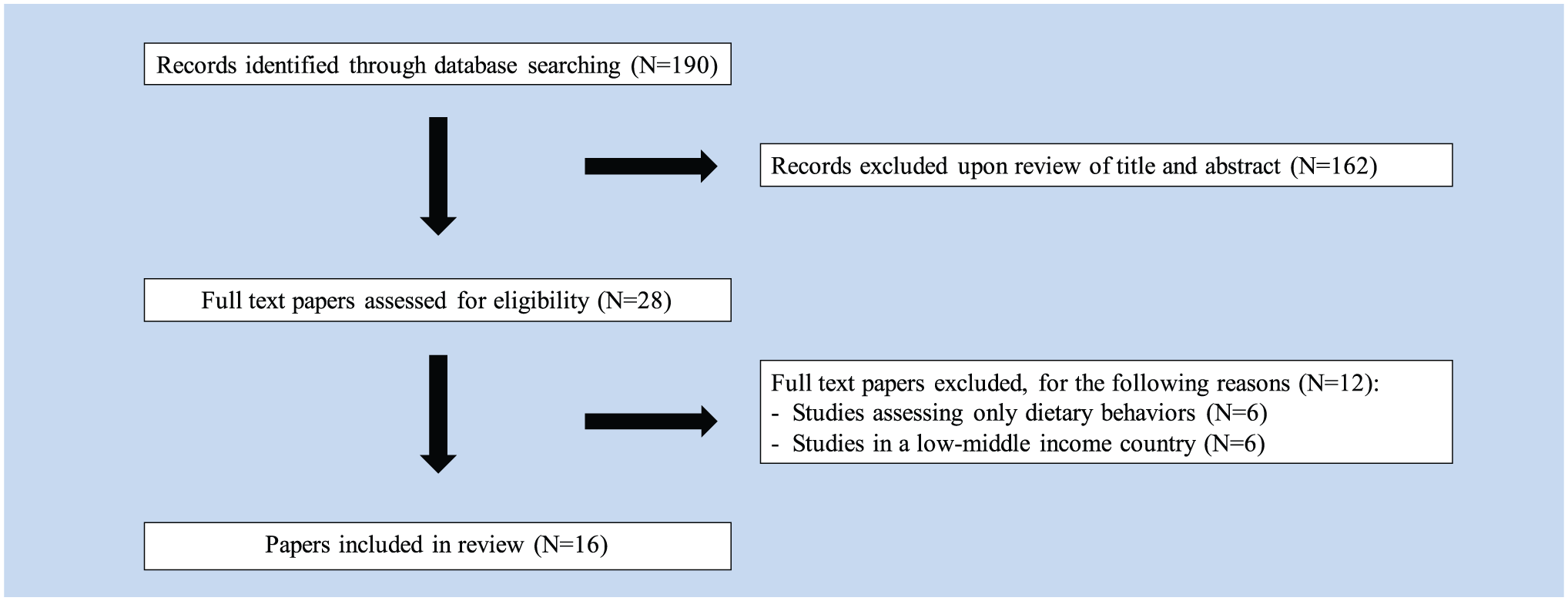
Study flow diagram.
Time Factors
Of four studies examining the association between work hours and diet quality, and three showed no significant association (Buxton et al., 2009; Lallukka et al., 2004; Ward, Berry, Power, & Hypponen, 2011) (Tables 1 and 2). One study showed that longer work hours were associated with a healthy diet in univariate analyses, which was nonsignificant in the final multivariate model (Strickland, Pizzorno, Kinghorn, & Evanoff, 2015).
Summary of Nonintervention Studies Examining the Relationship Between Workplace Factors and Dietary Outcomes: 2000-2017 (N = 16 Studies)
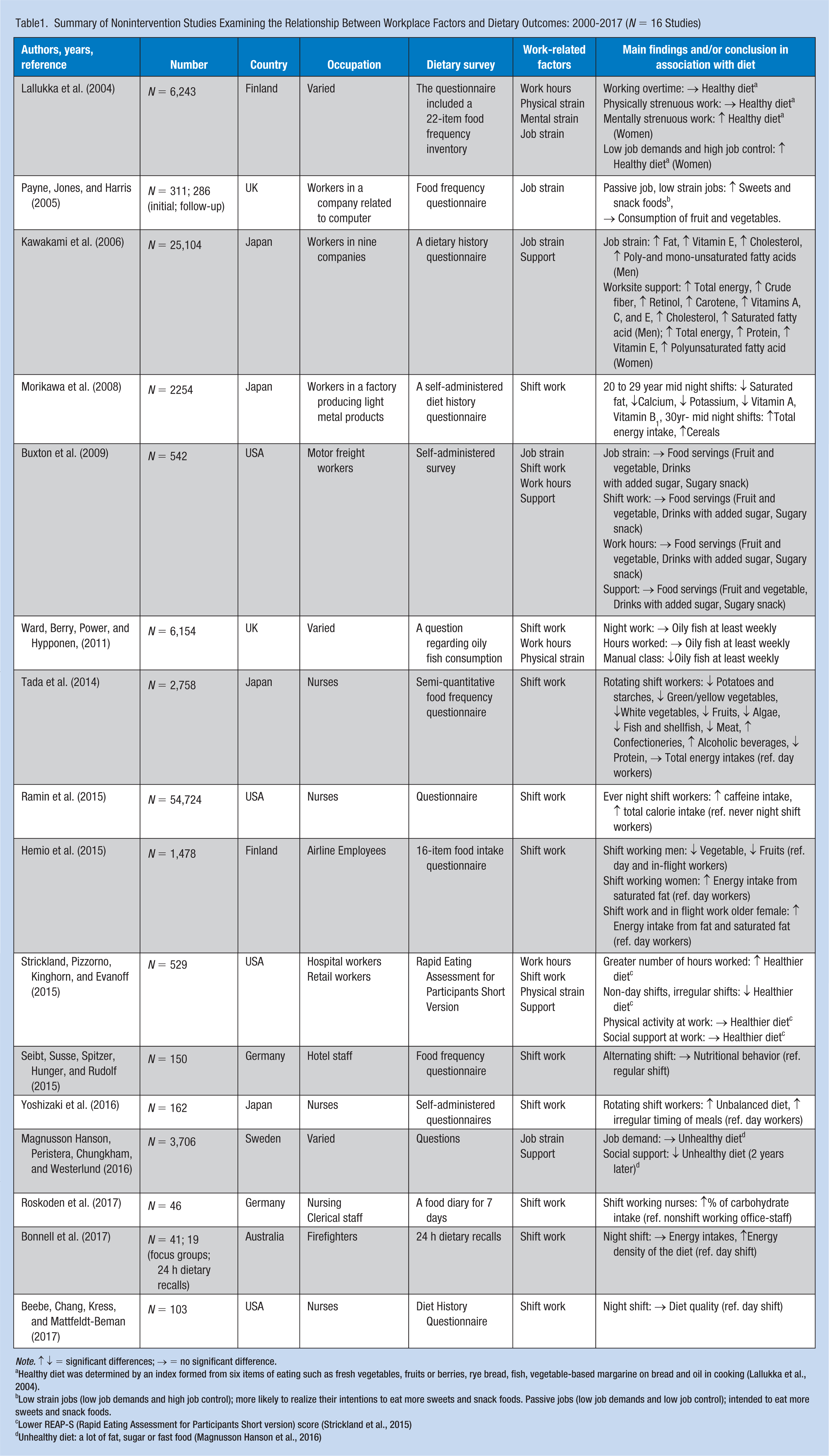
Note. ↑ ↓ = significant differences; → = no significant difference.
Healthy diet was determined by an index formed from six items of eating such as fresh vegetables, fruits or berries, rye bread, fish, vegetable-based margarine on bread and oil in cooking (Lallukka et al., 2004).
Low strain jobs (low job demands and high job control); more likely to realize their intentions to eat more sweets and snack foods. Passive jobs (low job demands and low job control); intended to eat more sweets and snack foods.
Lower REAP-S (Rapid Eating Assessment for Participants Short version) score (Strickland et al., 2015)
Unhealthy diet: a lot of fat, sugar or fast food (Magnusson Hanson et al., 2016)
Summary of Study Findings Examining Associations Between Work-Related Factors and Diet (N = 16)
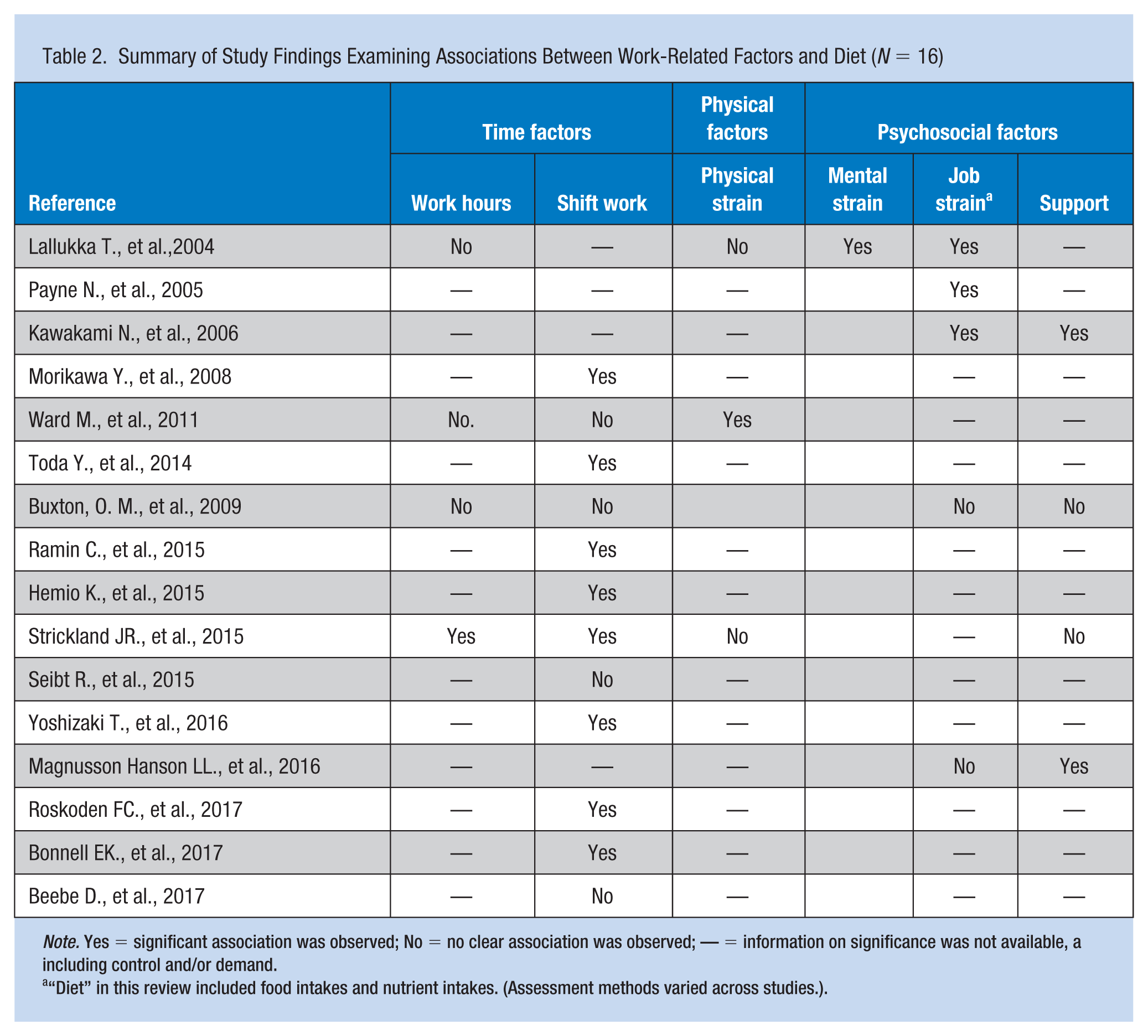
Note. Yes = significant association was observed; No = no clear association was observed; — = information on significance was not available, a including control and/or demand.
“Diet” in this review included food intakes and nutrient intakes. (Assessment methods varied across studies.).
Twelve studies documented shift workers’ dietary quality, such as food and nutrient intake. Several studies focused on specific occupations such as factory (Morikawa et al., 2008), motor freight (Buxton et al., 2009), airline (Hemio et al., 2015), hotel (Seibt, Susse, Spitzer, Hunger, & Rudolf, 2015), and firefighters (Bonnell et al., 2017). In addition, five studies examined the quality of nurses’ diet associated with shift work (Beebe, Chang, Kress, & Mattfeldt-Beman, 2017; Ramin et al., 2015; Roskoden et al., 2017; Tada et al., 2014; Yoshizaki et al., 2016). Approximately two thirds of the studies examining the association between shift work and diet quality, including poor diet quality, while four did not (Beebe et al., 2017; Buxton et al., 2009; Seibt et al., 2015; Ward et al., 2011). In addition, two studies showed that shift workers were less likely, relative to other workers, to consume fruits and vegetables (Hemio et al., 2015; Tada et al., 2014). Regarding saturated fatty acid intake, the study findings were inconsistent; one study involving women showed high energy intake from saturated fatty acid among those that worked shift work (Hemio et al., 2015), while another involving men showed a lower percent of energy consumption from saturated fatty acids among those working the midnight shift (Morikawa et al., 2008). Findings regarding total energy intake also differed between studies; two studies showed higher total energy intake in shift workers (Morikawa et al., 2008) (Ramin et al., 2015), probably suggesting an unhealthy diet related to weight gain, while two studies showed no significant association between energy intake and shift work (Bonnell et al., 2017; Tada et al., 2014). Overall, the findings consistently indicated that shift workers seemed to consume an unhealthy diet (Strickland et al., 2015; Yoshizaki et al., 2016).
Physical Factors
Regarding physical strain, one study reported that manual laborers were more likely to consume oily fish less frequently than those who did nonmanual labor (Ward et al., 2011) (Tables 1 and 2). However, two additional studies showed no significant association in this regard (Lallukka et al., 2004; Strickland et al., 2015).
Psychological Factors
With regard to psychological factors, one study reported that mentally strenuous work and low job demand and high job control on the job was positively associated with a healthy diet in women (Lallukka et al., 2004) (Tables 1 and 2). Regarding job strain, three studies showed a significant association with dietary quality, including low job demand and high job control in women as mentioned above (Lallukka et al., 2004). One study showed workers with low-strain jobs were more likely to realize their intention to eat more sweets and snack food (Payne, Jones, & Harris, 2005). Regarding nutrient intake and job strain, one study showed only weak and inconsistent associations (Kawakami et al., 2006). However, consumption of adequate fruit and vegetables was not associated with job strain (Buxton et al., 2009; Payne et al., 2005). Furthermore, a longitudinal study showed no clear relationship between job strain and diet quality (Magnusson Hanson, Peristera, Chungkham, & Westerlund, 2016).
An association between worksite support and diet was observed in four studies; two of these studies reported an association between support and diet quality (Kawakami et al., 2006; Magnusson Hanson et al., 2016), while two reported no association between support and diet (Buxton et al., 2009; Strickland et al., 2015). Longitudinal study reported that social support in the workplace was associated with a lower likelihood of an unhealthy diet 2 years later (Magnusson Hanson et al., 2016). Another study reported the association between workplace support and nutrient intake (Kawakami et al., 2006). In contrast, two studies suggested that social support was not significantly associated with diet quality among workers (Buxton et al., 2009; Strickland et al., 2015).
Discussion
This review aimed to evaluate published articles examining the relationship between diet quality and work-related factors and obtain an overview of the various factors contributing to diet, to consider appropriate means of improving workers’ diets.
Numerous studies focused on time pressure, particularly in shift workers. According to some studies, shift workers were less likely, relative to other workers, to follow a healthy diet, which could be explained by lower availability and accessibility to healthy foods, including less frequent cafeteria access and/or use (Raulio, Roos, Mukala, & Prattala, 2008). One previous review (Lowden, Moreno, Holmback, Lennernas, & Tucker, 2010) showed that total energy intake tended to be relatively similar between shift and other workers, which was consistent with the findings of some studies in our review. Although shift workers tended to eat at irregular times (Yoshizaki et al., 2016), their diets were previously shown to exhibit greater energy density (Bonnell et al., 2017).
Shift workers’ diet quality could differ between occupations. Although many studies examined nurses’ diet in relation to shift work, few described diet quality in other occupations involving shift work. Detailed research according to occupation, such as medicine, food and drink preparation, and driving, is required to develop dietary intervention programs to improve shift workers’ health and diet.
Work hours were less likely to be examined relative to shift work, but could also affect dietary behavior. Previous studies showed an association between work hours and dietary behavior including fast food consumption (Fan et al., 2015) and skipping meals (Escoto & French, 2012). These types of dietary behaviors could be associated with an unhealthier diet. Although some studies in this review did not show a significant association between work hours and diet, the real effects of work hours on dietary quality remain conflicted. Future research is needed to further explore the possible risks for workers employed with these types of schedules.
Regarding physical work, few studies reported associations with dietary intake. Previous studies reported unhealthy dietary characteristics in manual workers, with many comparing them to professional workers (Fukuda, Nakamura, & Takano, 2005; Galobardes, Morabia, & Bernstein, 2001). Assuming that manual work corresponds to physically strenuous work, and professional work corresponds to mentally strenuous work, these two work-related factors could be associated with socioeconomic status. They could also pose negative effects for different reasons. Therefore, evaluation of the results of these studies requires consideration of the influence of socioeconomic status including education, income, and occupation.
Job strain, including job control and/or job demand, could also affect workers’ dietary habits. Similarly, workplace support could be an important factor contributing to workers’ diets. Furthermore, these two factors have both been evaluated in some studies. These factors could reflect human relationships including those with superiors, subordinates, and colleagues. Although some studies suggested an association between job strain or support and dietary quality, others showed no significant association between these factors, resulting in a lack of clarity.
Limitations
This study had several limitations. The definition of each work-related factor in the workplace and the content of dietary surveys differed between studies; therefore, we worked to include articles that used similar definitions as much as possible. In addition, confounding factors and statistical analyses differed between studies. Although many studies considered gender, age, and socioeconomic status, as well as analyses that employed multivariate methods, they were not uniform. These issues should be considered when interpreting the findings. Moreover, surveys were conducted within each country, and food-related culture differs between countries and regions. In addition, traditional, cultural, and religious differences in dietary characteristics between countries should be considered when evaluating these results. Furthermore, the review focused only on high-income countries. Low-middle-income countries could involve different types of problems regarding diet quality and working conditions. Future research should examine this issue to improve dietary quality in workers in every situation.
Conclusions
Several work-related factors contribute to diet to various extents. Although there is some evidence that shift workers maintain less healthy diets than do other workers, not enough information is available to establish strong evidence for the association of diet quality and work-related factors, particularly with respect to work hours, physical and mental strain, job strain, and support. Additional research conducted in the workplace to examine work-related characteristics and consider various background factors would be beneficial.
Footnotes
Acknowledgements

Authors’ Contributions
R.T., M.T., and T.K. contributed to the study conception and design. R.T., M.T., T.T., and T.K. critically reviewed the manuscript and supervised the study process. All authors read and approved the final manuscript.
Declaration of Conflicting Interests
The author(s) declared no potential conflicts of interest with respect to the research, authorship, and/or publication of this article.
Funding
The author(s) received no financial support for the research, authorship, and/or publication of this article.
Author Biographies
Rie Tanaka is a graduate student in the Department of Environmental Health, School of Medicine, University of Occupational and Environmental Health.
Mayumi Tsuji is an associate professor in the Department of Environmental Health, School of Medicine, University of Occupational and Environmental Health.
Takuto Tsuchiya is an assistant professor in the Department of Environmental Health, School of Medicine, University of Occupational and Environmental Health.
Toshihiro Kawamoto is a professor in the Department of Environmental Health, School of Medicine, University of Occupational and Environmental Health.