




Abstract
Despite the large body of research and literature on the health and mental health of farmers, we should not assume that research findings necessarily apply to the organic farmer. The limited literature on the mental health of the organic farmer points to potential differences. Research has found that workers on organic farms may be happier than their counterparts; others have identified added sources of stress related to the perceived need of organic farmers to embrace concepts linked to the organic movement. However, further research is needed to identify both risk and protective factors for mental health among organic farmers. The purpose of this qualitative descriptive study was to explore the psychosocial and contextual factors that may relate to the mental health of the organic farmer. Key informant interviews were conducted with 10 farm producers and 20 farm workers. The findings indicated that respondents recognized mental health as influential in the workplace and the future of organic practices (e.g., the mental, financial, physical stress). Some of the risk factors mentioned by participants reflected those experienced by conventional, nonorganic farmers. Participants also reported contentment with farming as an occupation, the benefits of being connected to the land, feelings of social and environmental responsibility, and engagement in social activities that may promote human and social capital. These feelings and activities ultimately benefit the farmer, contribute to social cohesion, and may have positive implications for mental health. Results suggest that there may be protective mental health factors unique to the organic farmer.
Introduction
Although working has been shown to be good for physical and mental health as well as overall well-being (European Agency for Safety and Health at Work, 2016; Waddell & Burton, 2006), there are many intrapersonal and external factors that may contribute to job-related injury and illness, including psychological disorders. Failure to address occupational risks can be costly for employers, workers, and societies in general (F. Bond, Flaxman, & Loivette, 2006; Cooper, Cartwright, Liukkonen, & European Foundation for the Improvement of Living and Working Conditions, 1996; de Greef & van den Broek, 2004). The work environment can affect performance and generate both physical and mental stressors that may lead to occupational injury and illness (M. Bond et al., 2007; Holmberg, Thelin, Stiernström, & Svärdsudd, 2004; Rosário, Fonseca, Nienhaus, & da Costa, 2016). In Europe, for example, 50% to 60% of all lost working days are attributed to work-related stress (International Labour Organization, 2014). Farmers in particular confront a variety of psychosocial and contextual issues that may affect their mental health and compromise their safety.
Occupational psychosocial factors have traditionally referred to the organization of work process including schedule arrangements, workload, job control (decision latitude), intrinsic and extrinsic rewards, and the mental and social demands that workers face (Eurofound and EU-OSHA, 2014; Lunner Kolstrup et al., 2013; Siegrist, 1996). Social cohesion, trust, and public participation have also shown to be relevant determinants of health (Berkman, Kawachi, & Glymour, 2014; Hawe & Shiell, 2000), and these should also be considered when assessing the social life of farmers (Lunner Kolstrup et al., 2013; Thurston & Blundell-Gosselin, 2005). Similarly, contextual factors that affect work organization and climate (workplace environment as experienced by employees) include local demographics; physical environment (e.g., quality of water, air and soil, housing) and place-based infrastructure (e.g., availability of training opportunities and technical assistance); social relations and social structures; job insecurity, harassment, abuse, and discrimination (M. Bond et al., 2007; Eurofound and EU-OSHA, 2014; Krieger, 2003; Landsbergis, Grzywacz, & LaMontagne, 2014; National Institute for Occupational Safety and Health [NIOSH], 2002; Thurston & Blundell-Gosselin, 2005); as well as social and environmental responsibility (Lunner Kolstrup et al., 2013). Some factors overlap in terms of their nature and level of influence. For instance, socially constructed gender roles have shown to affect the mental health of the farmer (Roy, Tremblay, Oliffe, Jbilou, & Robertson, 2013), probably through a multilevel mechanism that results in a psychological impact, influences behaviors, and determines social norms.
Mental Health of Farmers
Agricultural work is characterized by manual labor, long hours, uncertainty, and high stress (Glasscock, Rasmussen, Carstensen, & Hansen, 2006). Recognized as one of the most dangerous occupations, considerable research has focused on the physical health and safety of farmers. However, it is also recognized that the characteristics of farming may create environments where the risk of poor mental health outcomes is greater than that of many other occupations (Ellis & Albrecht, 2017; Fraser et al., 2005; Gregoire, 2002; Hounsome, Edwards, Hounsome, & Edwards-Jones, 2012; Morgan, Hine, Bhullar, Dunstan, & Bartik, 2016). A recent occupational mortality study by the Centers for Disease Control and Prevention (CDC) found that workers in farming and related industries have the highest rate of suicide at 84.5 per 100,000 (McIntosh, 2016). In addition, a meta-analysis found that agriculture workers are at elevated risk of suicide when compared with the general employed population (Milner, Spittal, Pirkis, & LaMontagne, 2013). The stress related to farming stems from a multitude of factors (Hounsome et al., 2012) and is common to farmers across the globe. Some stressors include work–life imbalance, isolation, socioeconomic inequities, and lack of access to health services—particularly in countries without universal health care like the United States (Fraser et al., 2005; Gregoire, 2002; Logstein, 2016a; McIntosh, 2016; Sanne, Mykletun, Moen, Dahl, & Tell, 2004; Torske, Hilt, Glasscock, Lundqvist, & Krokstad, 2016). If developed into high levels of stress, this can lead to a significant risk of psychological disorders such as depression, anxiety, suicidal ideation, and suicide (Booth, Briscoe, & Powell, 2000; Booth & Lloyd, 2000; Gregoire, 2002; Morgan et al., 2016).
Within the social context, both social and geographic isolation are influential risk factors for poor mental health among farmers (Raine, 1999), which may be intensified by the nature of farm work and the rural locations of farms (Carruth & Logan, 2002). In addition, according to the U.S. Department of Agriculture (USDA), the vast majority of farms in the United States are small, family owned where farming is tied to family life (USDA, 2015a). Important is to notice that the USDA’s definition of small family farm is based on income and was updated in 2013 to increase the cutoff from US$250,000 to US$350,000 to reflect increases in commodity prices and change the measure of farm size from gross farm sales to gross cash farm income. A family farm is any farm where the majority of the business is owned by the operator and individuals related to the operator, including relatives who do not live in the same household as the operator (USDA, 2015b).
Interpersonal relationships may be strained within the family farming dynamic (Carruth & Logan, 2002). Farmers who operate smaller farms may also have more difficulties recruiting qualified employees and experience the additional administrative burden of operating a farm (McGregor, Willock, & Deary, 1995). Other risk factors linked to adverse psychological outcomes among farmers include heavy workload and lack of clear job descriptions (Carruth & Logan, 2002); low levels of job control, which when coupled with increased demands is associated with reduced quality of life and mental health status (Grzywacz et al., 2014); and unpredictability of weather patterns, economic conditions, and government regulations (Fraser et al., 2005; Torske, Bjørngaard, Hilt, Glasscock, & Krokstad, 2016).
Agricultural policies, rules, and regulations that give preferential bias toward large-scale operations may also be a driver of stress as they have an influence on market prices and economic benefits (Dongre & Deshmukh, 2012). In any case, what must be kept in mind is that farms are usually embedded into larger social, economic, and political contexts. Interest in understanding and integrating the multilevel factors that may affect the health of farmers is growing. For example, the International Labor Organization and the World Health Organization (WHO) defined psychosocial hazards as the interactions between and among work environment, job content, organizational conditions, and workers’ capacities, needs, culture, and other personal factors that may influence health (Joint ILO/WHO Committee on Occupational Health, 1986). Similarly, the European Union has taken a holistic approach to occupational safety and health, including work–life balance, training and lifelong learning, career development, motivation, and leadership (European Agency for Safety and Health at Work, 2016). In the United States, the Total Worker Health, a program sponsored and promoted by NIOSH, builds on the recognition that work is a social determinant of health and that job-related factors such as wages, interactions with coworkers, access to work leave, and healthful workplaces all can have an important impact on the well-being of workers, their families, and their communities (NIOSH, 2015).
Despite the large body of research and literature on the health and mental health of farmers, we should not assume that research findings necessarily apply to the occupational health and safety of the organic farmer, particularly related to mental health. A United Kingdom study that compared conventional and organic horticulture workers found that while there was no difference in self-reported overall health, workers on organic farms were happier than their counterparts (Cross, Edwards, Hounsome, & Edwards-Jones, 2008). Other research has examined added sources of stress related to the perceived need of organic farmers to embrace concepts linked to the organic movement. Two examples include the concept of civic agriculture and subscription to networks that support alternatives to industrialized agriculture such as community-supported agriculture (CSA; Durrenberger, 2002; Furman, Roncoli, Nelson, & Hoogenboom, 2014; Janssen, 2010; Lyson, 2004). Embracing these concepts may require a commitment to actively contribute to the community’s social and economic development, which perhaps constitute an additional source of stress unique to the organic farmer.
Given the growth of, and public interest in, organic products, more research and efforts should be dedicated to identify the factors that may contribute to the mental health of the organic farmer in the United States. National and international agencies and organizations have adopted a common, general definition of organic production. For instance, the U.S. Electronic Code of Federal Regulations (https://www.ecfr.gov) defines organic agriculture as a production system that is responsive to specific conditions of the place and integrates cultural, biological, and mechanical practices that foster conservation, ecology, and biodiversity. The Food and Agriculture Organization of the United Nations (FAO) provides a holistic definition of organic production that includes the promotion and enhancement of “agro-ecosystem health,” which includes biodiversity, biological cycles, and soil biological activity (http://www.fao.org/organicag/oa-faq/oa-faq1/en/). Similarly, the International Federation of Organic Agriculture Movements (IFOAM) refers to organic agriculture as a production system that “sustains the health of soils, ecosystems and people”; adding that organic agriculture “combines tradition, innovation and science to benefit the shared environment and promote fair relationships and a good quality of life for all involved.” (https://www.ifoam.bio/en/organic-landmarks/definition-organic-agriculture).
Certified organic operations have increased nearly 300% since 2002 (Greene, Ferreira, Carlson, Cooke, & Hitaj, 2017) (Figure 1), and organic products are now available in nearly three of four conventional grocery stores (USDA, 2016a). Despite this growth, traditional surveillance systems have only recently started to collect data on organic operations (Soto Mas, Handal, Rohrer, & Tomalá Viteri, 2018). Although these new efforts constitute a step forward in acknowledging the relevance of organic farming, they do not address most of the individual and contextual factors that may determine the health and well-being of the organic farmer. The purpose of this qualitative study was to explore the psychosocial and contextual factors that may relate to the mental health of the organic farmer. This work stems from the Central New Mexico Organic Farming Study, funded by the Southwest Center for Agricultural Health, Injury Prevention, and Education/NIOSH Feasibility Study Program, which focuses on health and safety (Soto Mas et al., 2018).
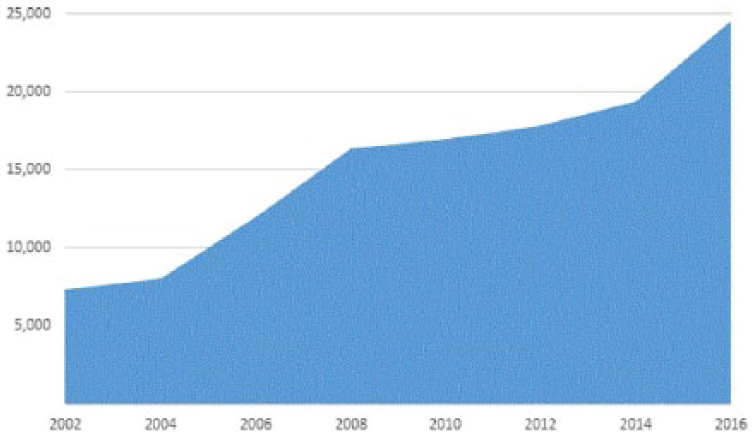
USDA-certified organic operations in the United States: 2002-2016.
Study Site
New Mexico (NM) is a geographically large state with just over two million people. More than 48% of the population is Hispanic, compared with 18% nationally (U.S. Census Bureau, 2016). Organic farming has significantly increased in NM over the past 10 years, becoming the fastest growing segment of agriculture. Current data indicate that there are 68 certified organic crop producers (USDA, 2017); almost 70% of them generate less than US$50,000 in sales (USDA, 2016b).
The study area included Bernalillo County (with Albuquerque, the largest city), Santa Fe County (with the state’s capital), and Socorro County (a 2,000 square mile rural area near Albuquerque), all located in the central region of the state. Other counties were not included due to budgetary limitations (e.g., travel expenses).
Method
This was a qualitative descriptive study. Data were collected through semistructured, in-person interviews. Consistent with the qualitative paradigm used by the study, the design and methods of the study were intentionally flexible to facilitate the identification of potential new constructs (ideas) and explanations (theories), leaving the research process open for new issues to evolve from the data. Additional details on the methodology and approach have been previously published (Soto Mas et al., 2018). The study was approved by the University of New Mexico Health Sciences Center Institutional Review Board.
Participants and Recruitment
Participants included (a) small farm producers, defined for the purpose of this study as owner and/or principal operator who were USDA-certified with less than five acres in operation, with fewer than 11 employees, and less than US$200,000 in organic sales annually; and (b) individuals 18 years of age or older, currently working or volunteering on an organic farm, with a minimum of 150 hours of experience in organic field work.
Potential key informants were identified through individual farmers, and through agencies and organizations involving organic farmers (e.g., a program that certifies most of the organic farmers in the state; a co-op of small farmers). They were approached by members of the research team who described the study and requested their participation. Additional participants were selected following a snowball sampling technique (Singleton & Straits, 2010), a purposive sampling method that facilitates the inclusion of informed and interested participants. Refusal was minimal, and more than 95% of the people who were contacted agreed to participate. All participants were presented with and signed an approved informed consent.
Data Collection Procedures
Interviews took place from January to August. All participants completed a brief questionnaire with basic demographic items. Prior to data collection, the research team developed bilingual (English/Spanish) semistructured interview guides reflecting categories and constructs from prior literature. Interviews were conducted at convenient locations that met the requirements for privacy and confidentiality; they lasted from 30 to 90 minutes. A minimum of two investigators were involved in each interview, an interviewer and a note taker. A Spanish-speaking researcher was available as needed.
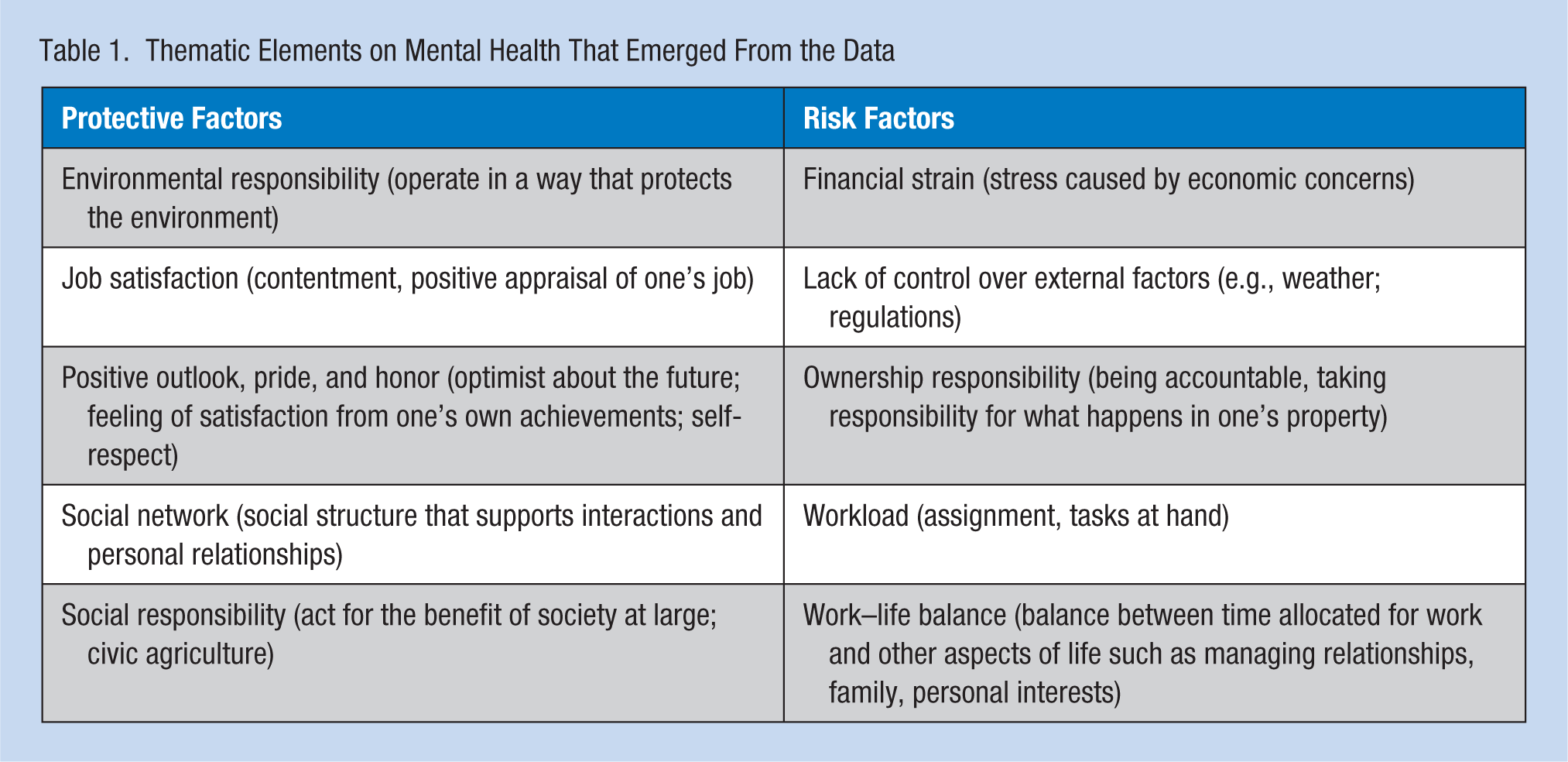
While the original study explored overarching health and safety categories that emerged from the literature such as awareness, knowledge, attitudes, perception of risk, and behaviors (Soto Mas et al., 2018), the analysis presented in this article focuses on other thematic elements that emerged from the data, specifically those related to psychosocial and contextual factors that may affect the mental health of the organic farmer either positively or negatively (see Table 1).
Thematic Elements on Mental Health That Emerged From the Data
Data Management and Analysis
Interviews were digitally recorded and manually annotated. Taped interviews were transcribed verbatim in their original language (English or Spanish) and uploaded to NVivo (QSR International), a qualitative data analysis software. Data were examined for predetermined, emerging, and deviant categories and themes.
Different approaches were implemented to provide a multidimensional perspective of the issue and enhance the trustworthiness and rigor of the data. These included developing interview scripts and training investigators to ensure that the data were collected consistently and systematically; the combination of two or more data sources (e.g., producers and workers); and the involvement of multiple investigators (a minimum of two). To enhance data quality, coding was conducted independently by two investigators. Thematic elements that emerged from the data were discussed and either discarded or considered for analysis depending on their relevance to the study. Disagreements in both coding and relevant themes were discussed and revisited by the research team until consensus was reached.
Results
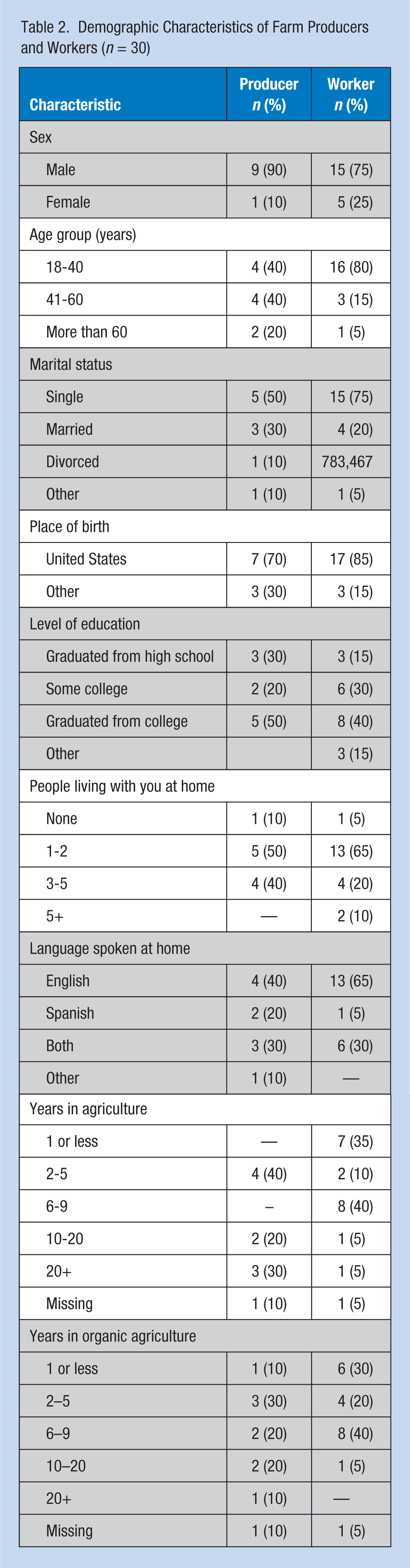
Ten producers and 20 workers participated in the study. Demographics are included in Table 2. Ninety percent of workers were younger than 50 years of age, and only three participants (10%) were older than 60 years. The majority were single (62.5%), although only one lived alone, and born in the United States (77.5%). More than half of all participants (53%) had a college or another advanced degree, and many (43%) had been in organic agriculture for 5 years or less.
Demographic Characteristics of Farm Producers and Workers (n = 30)
Psychological-Intrapersonal Factors
Participants commented on the intrapersonal factors that may contribute to stress, anxiety, or depression, but also offered suggestions on possible protective factors. The positive attitudes associated with organic farming spoke to the connections that are reinforced both through intrapersonal and interpersonal factors. Risk and protective factors are used by public health practitioners to conceptualize a health problem and to understand cultural norms that are important for intervention or for educational purposes.
Some of the risk factors mentioned by participants reflected those experienced by conventional, nonorganic farmers, including workload, work–life balance, and isolation: “Extra-long days of hard work begins to affect my ability to maintain a good balance in my life. So it’s more an emotional thing than physical” (P9). Beliefs about the effect farming has on personal relationships was noted: “. . . to bring a couple there [to a farm], that would destroy their relationship. It’s just too hard and too isolated. It puts a lot of strain on them” (P4).
Respondents recognized mental health as influential in the workplace and the future of organic practices:
The mental element is really critical because we need more farmers. The stress is too much, it’s not an attraction [. . .]. [Farming] is the toughest thing I’ve ever done, and the stress, both mental, financial, physical are pretty intense [. . .]. (P4).
The data suggested that some stressors were more specific to producers, as opposed to workers: “The work is endless, and so it’s pretty much you go until you can’t anymore [. . .]. It’s a fairly typical thing for farm owners to do that you drive yourself beyond what is probably healthy” (P9). Another producer spoke to the psychological effect of having the dual role of owner and worker: “Because I am the producer and proprietor of the business it’s also very mentally stressful, because I have to do sales and bookkeeping and the rest that it takes” (P1). Conversely, farm workers stated less anxiety: “I’m not in charge of anything. So my position is basically stress-free” (W4);
. . . it’s an extremely low-stress environment, any stress that exists is . . . something that I’m bringing myself or an interpersonal thing with one of the other staff members but that’s like outside of the realm of our job duties usually. (W8)
Regardless of consistent comments on stressors, participants also spoke about the contentment with farming as an occupation: “I think people do it because it’s their passion, so they get a lot of joy from it” (P8). For some, the occupation of farming was viewed as one part of a whole, rather than isolated as an occupation: “You see [organic farming] as a way of life if you really connect to it and have it be your philosophy in your life” (W5). Other comments reflected a generalized sentiment of personal satisfaction and pride in their type of work: “I take pride that we supply the south valley, and [local] schools with fresh produce” (P6); “Working with plants, I feel like it, itself is just very therapeutic” (W11); “Preparar las semillas una por una es como que preparar tú mismo [. . .]. Entonces te traes tu tecito, pones tu música [. . .] es como una terapia muy agradable”; [Getting the seeds ready, one by one, is like getting yourself ready [. . .]. Then you bring some tea, turn on the music [. . .] it is a very nice therapy] (P2).
Personal attributes that may be beneficial to managing stress in farm work were mentioned. One participant referred to a positive outlook:
There’s so many things that could go wrong and do go wrong, so to having a “can-do” kind of attitude is super-important. If you are too detail-oriented, you just get caught up in the details and you probably have a nervous breakdown. (P8)
Another farmer spoke about stress from crop loss: “. . . you always have losses, always. A successful farmer in my opinion just knows how to manage their losses, it’s part of my personal mental sanctity” (W6) and finally, on having pride and honor: “It’s long, hard work, but I guess you could say it’s honorable. And at the end of the day, I feel like [. . .] I still value that higher than maybe making more money” (P8).
Social Factors
The strength of the social networks among participants represents a unique finding of this analysis. Many of the psychosocial factors identified by participants related to interpersonal relationships and extended community networks. Participants, both producers and workers, framed the idea of interconnectedness between people:
You can’t have a healthy farm if you don’t have a healthy family or a healthy community. They just say, let’s just study the farmer. No, you can’t do that you have to study the community also. It’s just the way you have to study all of it because everything impacts everything else. You have a healthy farm and the farmer, his wife and kids are healthy, they impact the neighbors, and the neighbors get healthier, and . . . it’s just a multiplier. (P5)
“I like harvesting the food for the markets and then being at the markets with the people and just being able to, you know, socialize” (W10).
Farmers noted the benefits of working together on the farm as well as within their communities: “. . . we notice that when we weed we sort of like our fam, our family starts to talk more as we’re weeding and we’re bonding more” (W11). The relevance of knowledge sharing and the belief that they are part of something bigger was also noted”: that’s what you would find different at [other farms], a lot of people hoard their knowledge, as a type of power structure. [Farmers] share their knowledge, their giving spirit, their generosity with volunteers, others, [. . .] at the same time we’re not just sharing knowledge, we’re gaining knowledge, from everybody.” (P6) “[having a community garden space] speaks to our sense of community, and what it means to build community, so we really took the idea that, the, the garden space itself was a community building tool” (W15);
We learn so much other things from just growing food, nurturing, and that’s something our communities need to be, that’s another reason why we do it because our communities need to nurture each other, and you know, and, you know we just think it’s healthy and healing for us. (W3)
These comments reflect positive attitudes toward working and interacting with others, which may contribute to the development of a strong social network that ultimately benefits the farmer, contributes to social cohesion, and have positive implications for mental health.
Contextual Factors
Contextual factors help to explain essential differences between similar populations. They help to form an identity and define cultural norms, which is important to make appropriate recommendations to improve health outcomes. The underlying themes found through this research indicate the relevance of the contextual environment. Results also suggest that social justice and responsibility may be protective factors unique to the organic movement.
Reinforcing current literature, participants commented about the lack of control over weather conditions: “Real difficulty [. . .] is having to work in the greenhouse in hot weather, because temperatures can go up to 120 degrees” (P1); “There’s a lot of angst in farming, like right now it’s snowing [. . .], anything [below] 32 degrees just kills them [crops]. So the physical thing is one, but the other stresses are really tense” (P4). Producers, particularly, mentioned the burden of regulations: “I’ve been an employer previously in another state, which was very strict rules around labor, I had to be sort of cognizant of all the regulations pertaining to health and employer-or employee/worker safety” (P8). Both producers and workers also referred to financial and economic strain: “. . . it’s extraordinary in that it’s a low-paying profession, so you become stressful when one takes it to the level of making a living or having it as an occupation” (P9);
“It could be very stressful [. . .] because this thing [plant] didn’t make it. It was looking so beautiful yesterday and now, today it is dead [. . .], it costed you money [. . .] you are losing money, and that could be very stressful. (W5).
Producers and workers discussed contextual motivating factors that not only relate to culture and history but also to the principles of the organic movement such as sense of community and social and environmental responsibility: “The owners and program directors [of local organic farming initiatives] they’ve been in the environmental justice movement for over 50 years” (P6); “The sense of history with those two [elders] is just unbelievable. . . . they share the knowledge, their giving spirit, their generosity, attracts like type people” (P5); “Another reason why we do it [organic farming] because our communities need to nurture each other [. . .], it’s a form of healing that we use of this historical trauma that our communities have gone through” (W3); “You know and that’s really where we’re at, training the next generation of farmers, getting young people excited about it, changing the way that people think, and the way that people consume their food” (W15); “. . . you have to be kind of conscientious to be an organic farmer anyway [. . .], that’s why we’re growing organic produce, to take care of our bodies and other people’s bodies” (W17).
Discussion
Demographic data indicate a young sample, which is encouraging information. The agricultural sector faces a demographic crisis that creates a huge demand for younger farmers. According to the Census of Agriculture, farmer’s average age continues to increase while the number of farms declined to just over 2 million in 2012 (USDA, 2014). The overall average age of this study’s sample was 35.8 and that of the workers was 31.7 years. These means are both lower than the 38 years average age in the 2013-2014 National Agricultural Workers Survey (NAWS), which is an employment-based, random-sample survey of U.S. crop workers (U.S. Department of Labor, 2016). Similarly, only 10% of producers were older than 65 years and average age for this group was 44 years. In the 2012 Census of Agriculture, the average age of principal farm operators was 58.3 years and 33% were 65 years and older (USDA, 2014). Regarding experience, 90% of workers had been in agriculture for 10 years or less and only 55% of producers for more than 10 years. These results indicate a less experienced sample compared with national agricultural data. In the 2013-2014 NAWS, only 40% of farmworkers had 10 years or less of work experience (U.S. Department of Labor, 2016). Similarly, in the 2012 Census of Agriculture more than 74% of principal operators had been operating a farm for 10 years or more (USDA, 2014). It would be important to determine whether the findings of this small study in terms of age and experience apply nationally and whether organic agriculture constitute a potential resource to ensure future sufficient agricultural production. Perhaps the social interest and demand for organic products is already encouraging a new generation of beginning farmers.
While biological factors such as sex and age must be considered when exploring farmers’ health as they relate to behavior and play a role in many health conditions, experts agree that it is the greater context of a person’s environment that better predicts and justifies health-related outcomes. Some social determinants such as higher education and income levels are positively associated with better health outcomes, in part because of the psychological and social benefits of economic security and wealth (Goldman & Smith, 2011; Zimmerman & Woolf, 2014). However, national data indicate that only 11% of farmworkers have completed some education beyond high school, and nearly 50% earn less than US$20,000/year (U.S. Department of Labor, 2016). More than 50% of all farms had less than US$10,000 in sales in 2016 (USDA, 2017). While income was not recorded in this study, participants had higher education levels compared with conventional farmers. Whether organic farmers with higher educational attainment perceive to have better economic security and social benefits than other farmers and whether these constitute protective factor against poor health outcomes, including mental health, is an issue in need of further research.
Regarding other relevant psychosocial and contextual factors identified by this study, many were consistent with those discussed by previous literature among small farmers. These include changing weather patterns, social isolation, and economic insecurity, and the fact that farming is an inherently stressful occupation. All these have been linked to farmers’ psychological distress (Carruth & Logan, 2002; Fraser et al., 2005; Glasscock et al., 2006; Gregoire, 2002; Hounsome et al., 2012; Kawachi & Berkman, 2001; Raine, 1999; Sartore, Hoolahan, Tonna, Kelly, & Stain, 2005).
Major findings from this study include the identification of potentially protective mental health factors that may be unique to the organic farmer. These relate to the psychological, social, and environmental contexts. Results indicate a high degree of community participation through gardens, farmers markets, educational workshops, and business partnerships where participants saw themselves as “community builders.” These activities may contribute to the build of social and human capital by creating spaces for community interaction that enhance trust and participation and by promoting employment opportunities and economic security. Some studies have looked at the influence of organic farming in local development and change, including enhancing cohesion and mobilizing social resources (Śpiewak, 2016). Both human and social capital have been linked to individual and collective health and well-being (Kawachi & Berkman, 2001; Scheffler & Brown, 2008). While social and geographic isolation is one of the most influential risk factors for poor mental health outcomes for farmers (Raine, 1999), it has been established that social support is a determining factor in the development and maintenance of psychological well-being (Logstein, 2016b; Sartore et al., 2005), that community support is a protective factor against psychological distress (Stain et al., 2008), and that large network of social support increases the chances of access to different forms of support which protect against isolation and distress (Levula, Wilson, & Harré, 2016; Roy et al., 2013). Bonding with coworkers, knowledge sharing, and participation in farming-related community events are all examples of what participants in this study reported as positive activities that may contribute to their well-being. However, other studies have identified similar factors to constitute added sources of stress among organic farmers (Furman et al., 2014; Janssen, 2010). Further research should look at whether organic farmers’ interest in building supportive networks and community assets has a protective mental health effect.
Many participants in this study referred to the interconnection between soil, plants, and humans as well as the relationship between the individual, community, and food. There were specific statements suggesting that “health” is multidimensional and includes physical, mental, and social well-being. Results also indicate that most participants shared a particular life view that drove them to this occupation and that might differ from those of conventional farmers (e.g., feeling of responsibility and community). Literature supports the notion that organic farmers psychologically approach farming in a holistic manner, incorporating ideals of living in harmony with nature (Sullivan, Mccann, Young, & Erickson, 1996). This more holistic integration of people in place speaks to the concept of “civic agriculture,” which refers to the contribution of agriculture to sense of citizenship and belonging to a place and has been connected to the organic movement (DeLind, 2002; Furman et al., 2014). Though stress is inevitable in agriculture, perhaps this particular philosophy makes a positive difference on how farmers interact with the land and how they conceptualize agriculture. The guiding values and philosophical factors behind organic farming and its practices have been cited as primary reasons for choosing to farm organically as opposed to conventionally (Wilier & Gillmor, 1992) and is further supported in the literature whereby organic farmers perceive organic farming as a personally satisfying alternative to conventional farming (Fisher, 1989). Furthermore, IFOAM identified four ethical principles to philosophically distinguish conventional and organic farmers, which are reflected on IFOAM’s definition of organic agriculture. These principles include health, ecology, fairness, and care (Luttikholt, 2007).
The greater holistic mind-set of organic farmers and their interest in promoting civic agriculture and ecosystems were well represented in this study. Whether these principles drive contentment and psychological well-being is certainly an issue in need of research, and this study provides a starting point for further investigation.
Limitations
This study has several important limitations. Most noticeable, the study was not designed to specifically explore mental health issues. Thus, the results presented here derived from indirect inquiry. However, the identification and conceptualization of constructs and theories that emerge from the data is an integral principle of exploratory qualitative inquiry. In addition, the sample size was small and represents only a small geographic area. Participants mostly consisted of farms and farmers in or close to urban areas and who may have access to social support networks or other protective social factors not available to their rural counterparts. As such, the results of this research may not apply to farmers that are more geographically isolated. Finally, given the sociocultural characteristics of the study area, participants might not be representative of the general organic farmer across other locations and environments.
Conclusion
There is very scarce literature on the mental health of the organic farmer. This study provides a foundation for future research in this topic. Results indicate that some of the risk factors that affect the mental health of the organic farmer do not differ from those of the conventional farmer. However, the data also indicate that certain protective psychosocial factors may be unique to the organic farmer. Further research is needed to explore whether the results of this study apply to the organic farmer across differing demographics and geography (males vs. females, rural vs. urban) and how the organic farmer compares to the conventional agricultural worker. This may be accomplished by incorporating a new classification for “organic” into existing agricultural and occupational health surveillance systems such as the Organic Survey and the National Farmworkers Health Survey.
Implications for Practice
Participants in this study frequently reported the benefits of being connected to the land, feelings of social and environmental responsibility, and engagement in social activities. These are actually put into practice through the development of strong social networks, participation in farmers markets, educational outreach, and contributions to community systems. These various activities have shown to positively relate to the promotion of human and social capital, and individual and collective health outcomes. Organic farmers who subscribe to the principle of the organic movement are not only protecting the environment and producing cleaner food, they may be making a significant contribution to the health and economic well-being of their communities. More resources should be allocated to support research that identifies the factors that contribute to the mental health of the organic farmer, and promote policy that protects sustainable agriculture.
Applying Research to Practice
The results of this study may assist future researchers and public health professionals in the development of new studies and interventions that may lead to the reduction of stress, depression, suicide, and other mental health problems in the agricultural field. Occupational health and safety interventions for organic farmers may take a holistic approach that goes beyond just protecting the worker from job-related injury and illness to include a socioecological perspective to health promotion. This perspective is consistent with NIOSH’s Total Worker Health model and that of international occupational health and safety agencies. It seems that organic farmers would be more receptive to initiatives that reflect their holistic view of health and life. Finally, interventions to protect the mental health of organic farmers may capitalize on their extended networks. Because geographic and social isolation are recognized risk factors for mental health among farmers, programs that integrate social and professional networks (either as intervention approach or dissemination tool) may be more successful. Social media may also constitute a valuable resource for mental health programs in this population as most organic farmers seem to use the Internet for social and professional networking.
Footnotes
Acknowledgements
The authors thank Cornelio Candelaria Organics, AgriCultura Network/La Cosecha CSA, Farm to Table, NMDA/NM State University Organic Program, and all farmers who participated and supported the study.
Declaration of Conflicting Interests
The author(s) declared no potential conflicts of interest with respect to the research, authorship, and/or publication of this article.
Funding
The author(s) disclosed receipt of the following financial support for the research, authorship, and/or publication of this article: This project was supported by Cooperative Agreement No. U54-OH7541. CFDA # 93.262, Centers for Disease Control and Prevention, National Institute for Occupational Safety and Health (CDC-NIOSH), Southwest Center for Agricultural Health, Injury Prevention and Education (SW Ag Center) 2013-2014 Feasibility Study Program. Its contents are solely the responsibility of the authors and do not necessarily represent the official views of NIOSH.
Author Biographies
Christina Brigance is a recent graduate of the University of New Mexico and currently works as an Epidemiologist in the New Mexico Department of Health. Her research interests include mental illness across the life course and social and health issues among Spanish-speaking populations in New Mexico.
Francisco Soto Mas is an associate professor of public health and one of his areas of research is sustainable agriculture.
Victoria Sanchez is an associate professor in the College of Population Health. She has a long-standing interest in understanding health behaviors within the broader contexts of family, cultural, community, and societal norms.
Alexis J. Handal is an associate professor in the College of Population Health. She teaches epidemiological methods and social epidemiology. Her expertise includes examining stress, toxic exposures, and social environments related to occupational health.