




Abstract
Work environments are continuously changing with the introduction of new technologies, substances and work processes, changes in the structure of the workforce and labor market, and new forms of employment and work organization. New work situations bring both risks and challenges for workers and employers, which, in turn, may require political, administrative, technical, and regulatory approaches to ensure worker safety and health. This article is based on a European Agency for Safety and Health at Work (EU-OSHA) report, Green Jobs and Occupational Safety and Health, that detailed new and emerging risks to occupational safety and health associated with new technologies in green jobs. Highlights from this report include key technologies in the bioindustry and new emerging risks associated with green jobs.
The bioeconomy encompasses the production of renewable biological resources and their conversion to food, fodder, bio-based products, and bioenergy via innovative and efficient technologies from technology providers, research institutes, and raw material suppliers. Bioeconomy refers to the sustainable use of biological resources such as plants, animals, and microorganisms in industries such as agriculture and forestry, horticulture, fishery and aquacultures, plant breeding, food and drink, wood, paper, leather, textiles, chemicals, pharmaceuticals, and even power. Bio-based innovations stimulate growth in other traditional sectors, such as commodities and food trade, information technology, automotive industries, and environmental technology. The bioeconomy creates new green workplaces using new technologies which can affect workers’ health and safety.
The Future of Alliances and Partnerships in Industrial Biotechnology to 2023 is a new report that maps the competitive landscape for industrial biotechnology, identifies key alliances shaping the industry, and forecasts developments to the year 2023. The report analyzes how chemical and raw material businesses are linked to particular technology providers and research/technical institutes. Biotechnology and green chemistry are the drivers of this process.
According to National Research Strategy BioEconomy 2030, countries should adopt a vision of a sustainable bio-based economy by the year 2030 (i.e., production of a sufficient amount of healthy food to feed the world and supply of quality products made from renewable resources). This vision could already be reality because it offers solutions to a growing number of major social, environmental, and economic challenges, including climate change, energy and food security, and resource efficiency. The aim of the bioeconomy is to develop competitive, innovative technologies by supporting sustainable growth and protecting environmental resources.
The second community strategy (Commission of the European Communities, 2007) identified a series of problems, which can arise from current changes in society and workplace; in particular, “the nature of occupational hazards is changing in tandem with the acceleration of innovation” (p. 5). The risks associated with new biotechnologies should be anticipated and prevented. The bioeconomy and biotechnology have created one of the fastest growing markets and provide the means to reduce pressure on the environment, improve energy and resource efficiency, strengthen competitiveness, and support job creation. Green jobs were therefore selected as a priority area for a scenario development project because of their importance for Europe 2020, a strategy for smart, sustainable, and inclusive growth (European Commission, 2010).
Indeed, meeting the EU’s objective of a 20% increase in renewable energy alone has the potential to create more than 600,000 jobs in the EU. Adding the 20% target on power efficiency, over 1 million new jobs are at stake. However, these green jobs must not adversely affect the health and safety of workers. The pursuit of a “green” economy, associated with a strong emphasis on innovation, provides an opportunity to anticipate new potential risks embedded in green jobs and ensure that job design takes into account workers’ safety and health.
This article discusses a report, Green Jobs and Occupational Safety and Health: Foresight of New and Emerging Risks to Occupational Safety and Health Associated With New Technologies in Green Jobs by 2020 (European Agency for Safety and Health at Work, EU-OSHA).
New and Emerging Risks
The European Agency for Safety and Health at Work (2010) defines an “emerging risk” as any occupational risk that is both “new” and “increasing.” According to the definitions presented in the report, “new” means (a) the risk did not previously exist and is caused by new processes, new technologies, new types of workplaces, or social or organizational change; (b) a long-standing issue is considered a new risk due to a change in social or public perceptions; or (c) new scientific knowledge allows a long-standing issue to be identified as risk. However, the risk is “increasing” if the following criteria are met: (a) a number of hazards leading to risk is growing; (b) the likelihood of exposure to the hazard leading to risk is increasing (the level of exposure is rising and/or the number of workers exposed is increasing); or (c) the effect of the hazard on workers’ health is deteriorating (e.g., health effects are becoming more serious and/or the number of individuals affected is increasing).
Green Jobs
Green jobs were at one time considered to be those jobs that protected biodiversity and the natural environment and were connected with green industries (i.e., bioeconomy and bioindustries). Green jobs now include low-carbon jobs, power efficiency, and carbon finance as well as “direct” green employment in the supply chain, even though these companies may not supply green industries. The United States Blue Green Alliance describes a green job as “a blue-collar job with a green purpose” (Pollin, Garrett-Peltier, Heintz, & Scharber, 2008, p. 8). Pollin et al. (2008) divided green jobs into three categories: (1) direct jobs: first job changes resulting from new outputs in target industries; (2) indirect jobs: subsequent job changes resulting from new inputs required to accommodate new outputs; and (3) income-induced jobs: additional jobs created by changes in household income and expenditures resulting from 1 and 2. The list of typical jobs associated with various green activities is presented in Table 1.
Examples of Green Jobs Associated With Green Activity Areas
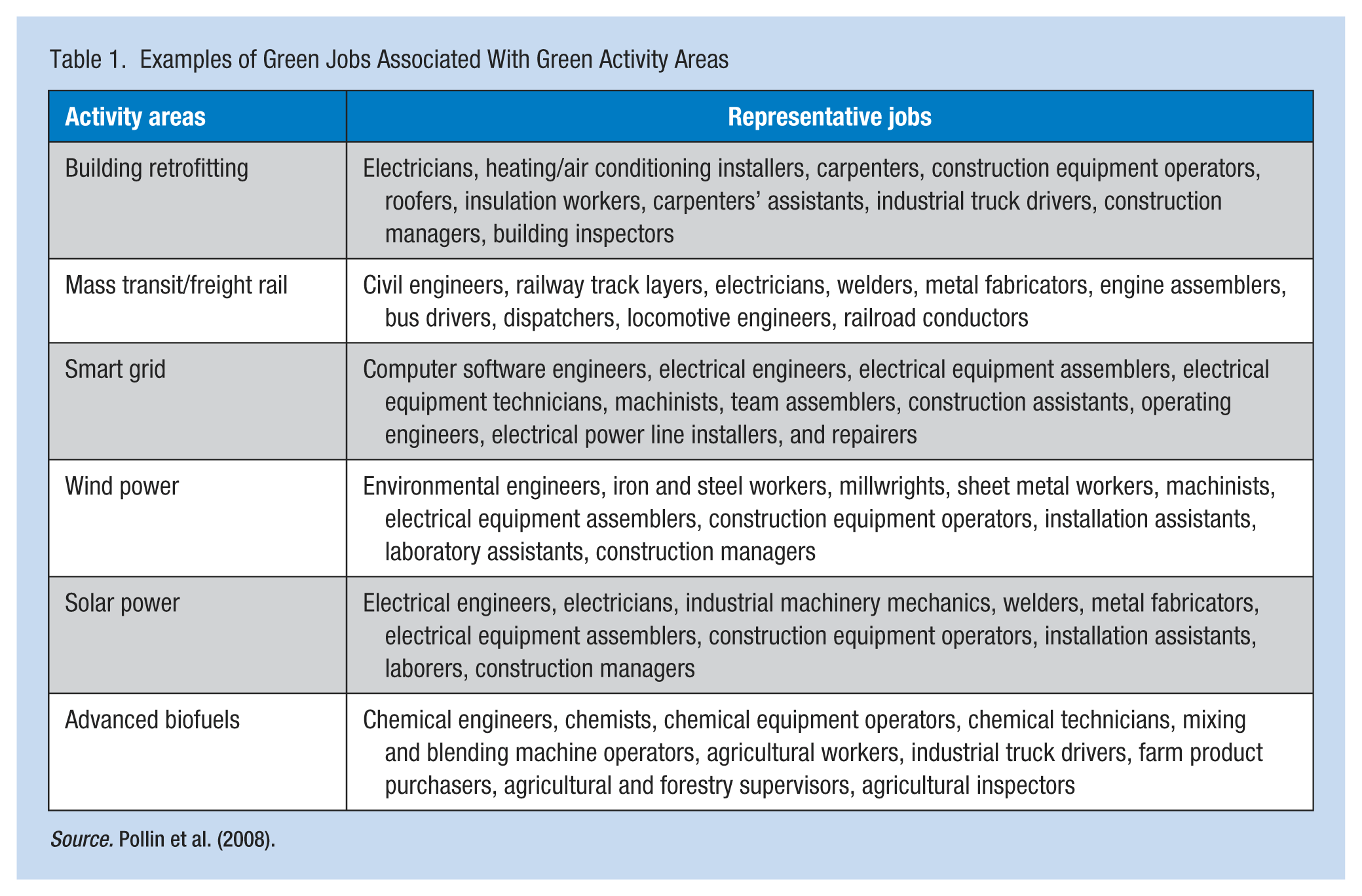
Source. Pollin et al. (2008).
The European Commission (2012) defined “green jobs” as work that depends on the environment or are created, substituted, or redefined (in terms of skill sets, work methods, or profiles of green jobs) in the transition to a bioeconomy. According to the Environmental Goods and Services Sector (EGSS; Eurostat, 2009), green jobs consist of a “heterogeneous set of producers of technologies, goods and services” (p. 6) that do the following: (a) measure, control, restore, prevent, treat, minimize, research, and sensitize environmental damage to air, water, and soil as well as problems related to waste, noise, biodiversity, and landscape: this includes “clean” technologies, goods and services that prevent or minimize pollution; and (b) measure, control, restore, prevent, minimize, research, and sensitize resource depletion: this includes resource-efficient technologies, goods and services that minimize the use of natural resources. Eurostat also postulates that these technologies and products (i.e., goods and services) must satisfy the end-purpose criterion, an environmental protection or resource management purpose, as their prime objective.
Green jobs are a generic term for a broad range of jobs in several sectors of the bioeconomy with various working conditions and processes, involving a diverse workforce.
Key Drivers
Sixteen key drivers of change were identified in the aforementioned report as having the greatest impact on the creation of a green economy in Europe by 2020 (EU-OSHA, 2011a):
Environment: carbon emissions, effects of climate change (i.e., temperature rise, natural disasters), shortage of natural resources (e.g., fossil fuels and water);
Government incentives: policies, grants, loans, and subsidies for green activities;
Government controls: taxes, carbon pricing, duties, and legislation;
Public opinion: the public’s views on climate change and its causes;
Public behavior: demand for green products, support for recycling;
Economic growth: the state of European economies and availability of resources to tackle environmental issues;
International issues: effect of globalization on the EU and other economies, and its effect on competition for rare natural resources, driving the need for green activities;
Energy security issues: need for energy security, desire to reduce dependency on imported power;
Renewable energy technologies: progress in their development and availability;
Fossil fuel technologies: development of technologies such as carbon capture and storage and clean coal technologies;
Nuclear energy: the extent of its use, and whether it is regarded as “green”;
Electricity distribution, storage, and use: development of technology to increase decentralized renewable electricity generation;
Energy efficiency improvements: new energy-efficient buildings, retrofitting old buildings, promoting energy-efficient public transport, and less energy-demanding manufacturing;
Growth in waste and recycling driven by resource shortage, public opinion, and legislation;
Other technologies: availability of non-energy technologies such as nanotechnologies and biotechnologies;
Demographics and workforce: a growing, aging population and changing lifestyles may drive increased energy demand and/or increased energy efficiency; the aging workforce may result in skill loss for EU-OSHA.
European Agency for Safety and Health at Work benefits from the aging workforce as well as the impact of climate change which may result in more migrant workers. In Figure 1, the predicted scheme of key technologies development by 2020 is presented.
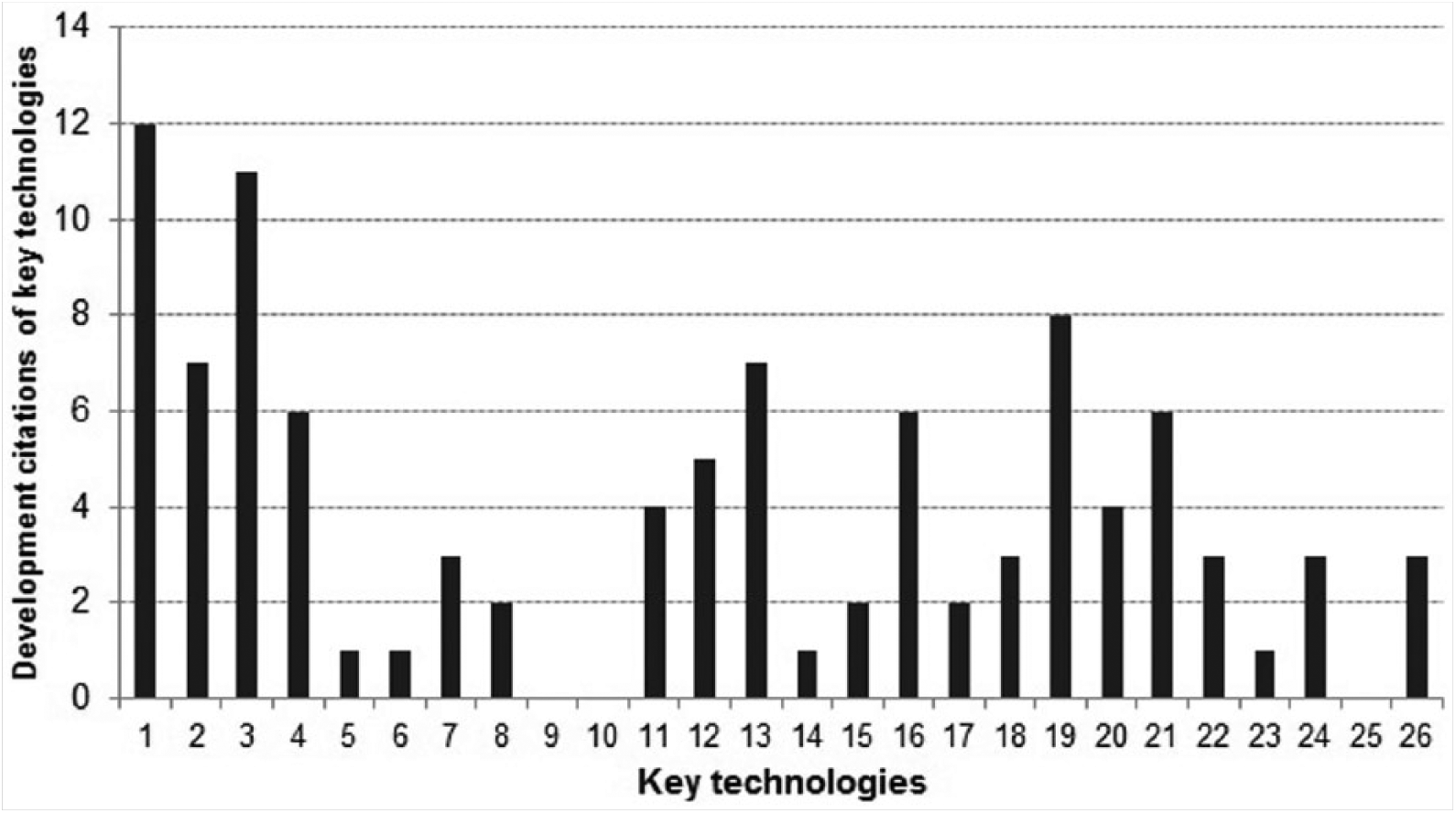
Predicted development of key technologies by 2020.
Key Technologies in the Bioeconomy
In the report, new key technologies for green jobs included technologies initially identified for specific industries (e.g., carbon capture and storage), cross-cutting technologies that affect more than one sector, and other technologies (e.g., nanotechnologies, robotics, automation, and artificial intelligence; EU-OSHA, 2011b). Key technologies are listed in Table 2.
Key Technology Innovations
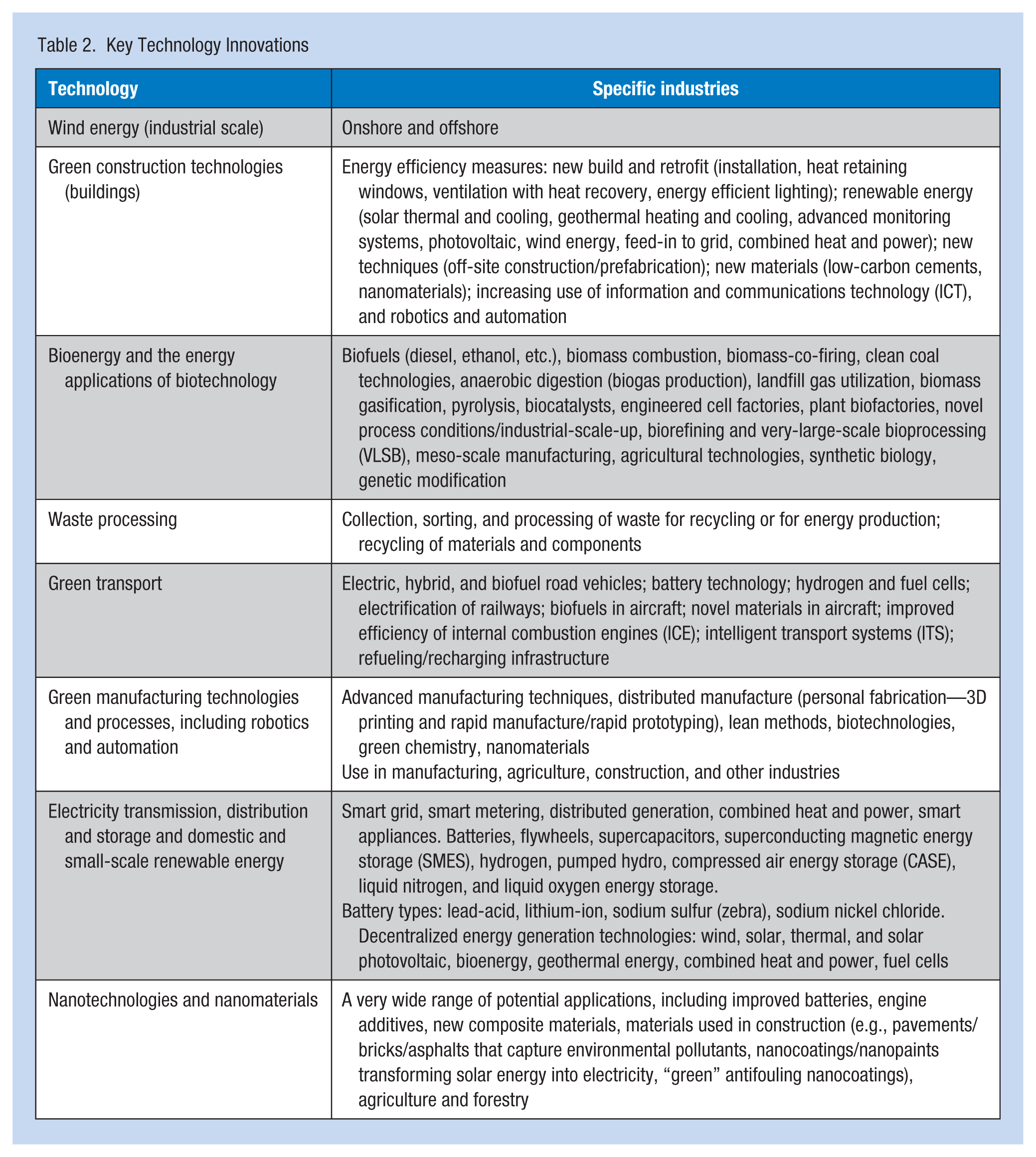
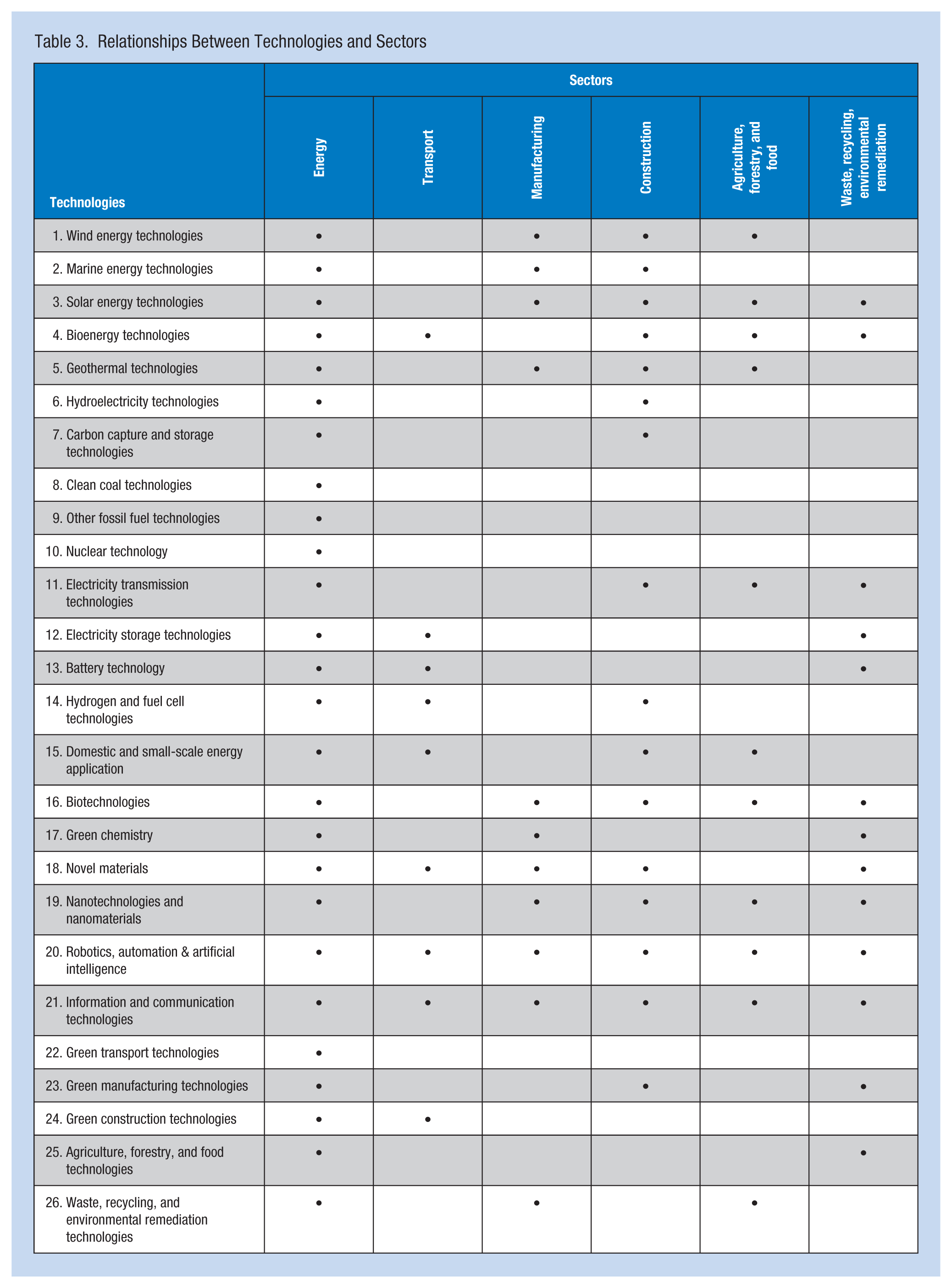
Table 3 provides a list of the 26 technology areas and sectors identified and the links between them. The following sectors were selected: energy, transportation, manufacturing, construction, agriculture, forestry, food, waste, recycling, environmental remediation, and health care.
Relationships Between Technologies and Sectors
Forty new and emerging risks have been associated with new technologies. These risks are listed in Table 4. The predicted impact on occupational safety and health of these key technologies is presented in Figure 2. Besides risks to workers, risk transfer between jobs is also of concern. Another important issue is the release of potentially hazardous materials throughout the life cycle of green technologies and products and during end-of-life processing. New materials such as nanomaterials and biomaterials have potentially unknown health and safety risks. Innovation and automation can improve occupational safety and health, but human-machine interface and over-reliance on technology (e.g., driverless vehicles) can put workers at risk (European Commission, 2010).
New and Emerging Risks Connected With New Technologies
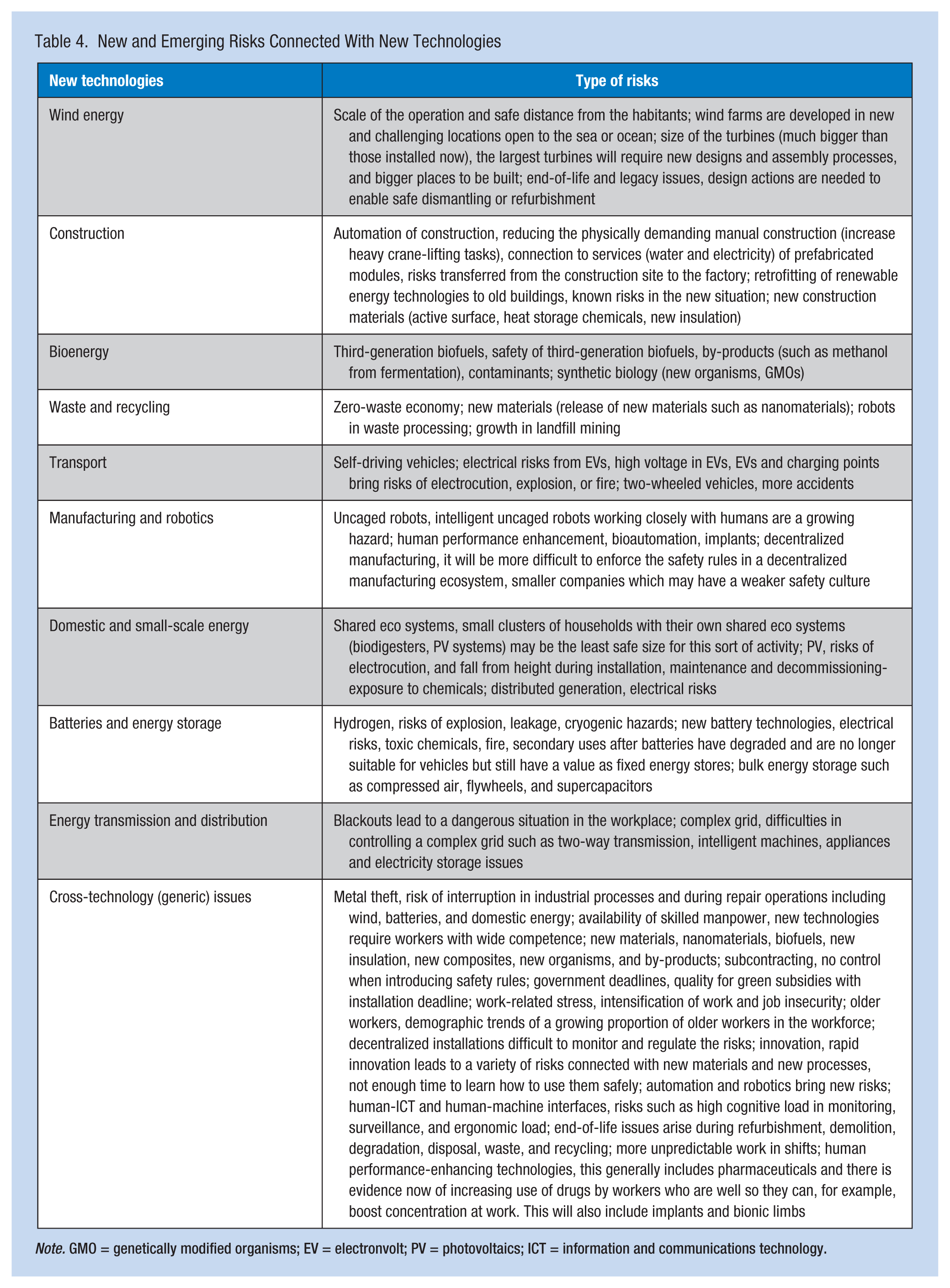
Note. GMO = genetically modified organisms; EV = electronvolt; PV = photovoltaics; ICT = information and communications technology.
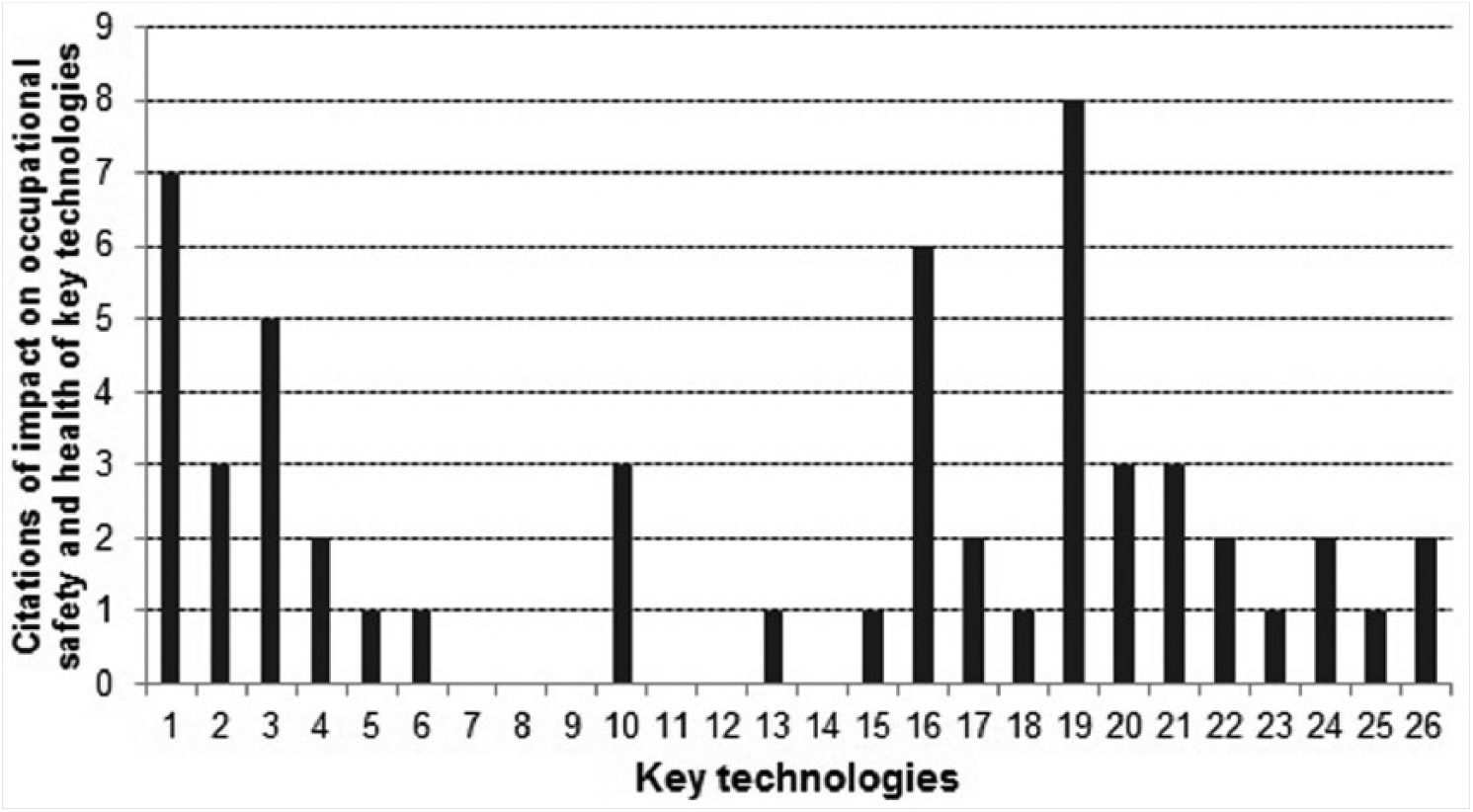
Predicted impact on occupational safety and health of key technologies by 2020.
Conclusion
Green jobs are found in a variety of sectors with a broad range of workplaces, working conditions, working processes, and worker characteristics. The EU-OSHA report demonstrated that the impact of socio-economic context as well as technological strategies and policies, and working conditions can result in a variety of occupational safety and health issues. Therefore, when devising prevention strategies for green jobs, the specifics of green jobs and the diversity of the workforce must be taken into account. According to the report, diverse green jobs may result in a number of occupational safety and health challenges:
Decentralized work processes: as workplaces are more dispersed and difficult to reach, monitor, and enforce occupational safety and health practices, the health and safety of workers may be more challenging to guarantee;
Increasing subcontracted work, self-employment, and micro and small enterprises may have less awareness of occupational safety and health, a less-developed culture of safety and health, fewer safety and health resources, and less access to occupational safety and health services;
New green technologies and working processes require worker training but specific knowledge and skills may not be fully developed; known occupational hazards may now be found in new situations requiring new skills; job opportunities in green jobs may attract new workers without necessary skills or knowledge of new challenges; workforce shortages may result in low-skilled workers accepting unsafe working conditions and challenging jobs;
Increased automation, which may improve occupational safety and health can result in human-machine interface risks and over-reliance on technology;
Conflicts between green objectives and occupational safety and health, with occupational safety and health being overlooked; and
Novel, difficult to characterize and potentially hazardous materials that should be closely monitored over their entire life cycle for potential (unknown, long-latency) health hazards. This challenge is of particular significance now that workers rarely remain in the same job for life, making it difficult to link health effects to occupational exposure.
With regard to workplace injury and illness prevention, risk assessment is the key to devising adequate prevention measures that take into account the specificity of green jobs and the workers involved. At the development stage of any new technology, product, or process, upstream of its introduction to workplaces, a systematic, prior assessment of occupational safety and health over the entire life cycle is needed. Thus, integrating prevention into technology, product, or process design is more efficient than retrofitting to hazards identified later. This process requires policy-makers, research and development scientists, workplace management, and occupational health, safety and environmental professionals to work together during job creation. Technology developers, designers, and architects should also be included in the process. Green jobs that support worker health and safety require the smart, sustainable, and inclusive growth of the green economy in compliance with the EU 2020 strategy.
Footnotes
Declaration of Conflicting Interests
The author(s) declared no potential conflicts of interest with respect to the research, authorship, and/or publication of this article.
Funding
The author(s) received no financial support for the research, authorship, and/or publication of this article.
Author Biographies
Dorota Elżbieta Wandzich is a PhD student, Institute for Engineering Production, Organization and Management Department, Silesian Technical University, Poland. Her research focuses on risk assessment and protection and safety at work.
Grażyna Anna Płaza is an environmental microbiologist and Professor, Institute for Engineering Production,Organization and Management Department, Silesian Technical University, Poland. She is involved in evaluation of the risks and environmental hazards associated with production and safe workplaces, especially in the bioindustry.