




Abstract
Because of their social isolation, irregular and unpredictable schedules, limited access to health care, and long periods of travel, long-haul truckers may benefit from the use of mobile health applications on Internet-capable devices. The purpose of this study was to determine Internet access and usage among a sample of long-haul truck drivers. In this cross-sectional study, truck drivers completed a pencil and paper survey with questions on demographics, work and health histories, and Internet access and usage for both personal and job reasons. A total of 106 truck drivers were recruited from trucking industry trade shows, by word of mouth, and directly from trucking companies. Overall, the truck drivers’ use of the Internet was limited. Their usage for personal and job-related reasons differed. Social connectivity and access to health and wellness information were important during personal usage time. Job-related Internet use was highly practical, and applied to seeking information for directions and maps, fuel stops and pricing, and communicating with employers or transmitting documents. Age and experience were associated with Internet use. Younger, less-experienced drivers used the Internet more than older, experienced drivers. Targeted mobile health messaging may be a useful tool to inform truck drivers of health conditions and plans, and may provide links to primary care providers needing to monitor or notify drivers of diagnostic results or treatment plans.
Although they must be deemed “fit for duty” to drive, it is not accurate to say that long-haul truck drivers are healthy workers (Apostolopoulos, Sonmez, Shattell, Gonzales, & Fehrenbacher, 2013). The list of health conditions or risk factors associated with this group of workers includes, but is not limited to, cardiovascular disease (Hart, Garshick, Smith, Davis, & Laden, 2013; Sangaleti et al., 2014; Tuchsen, Hannerz, Roepstorff, & Krause, 2006), diabetes (Puhkala et al., 2015), smoking (Birdsey et al., 2015), obesity (Sieber et al., 2014; Thiese et al., 2015), substance use (Girotto, Mesas, de Andrade, & Birolim, 2014; Thiese et al., 2015), musculoskeletal disorders (Smith & Williams, 2014), sleep restriction (Hege et al., 2015; Lemke & Apostolopoulos, 2015) and obstructive sleep apnea (Sharwood et al., 2012; Xie, Chakrabarty, Levine, Johnson, & Talmage, 2011), sexually transmitted infections (Apostolopoulos et al., 2012; Apostolopoulos, Sonmez, & Massengale, 2013), and depression (Shattell, Apostolopoulos, Collins, Sonmez, & Fehrenbacher, 2012). The nature of truck drivers’ work and work environments contribute to poor health.
Long haul truckers drive freight across multiple states and often work erratic and unpredictable schedules. Drivers work for up to 11 hours at a stretch, and are generally paid “piece work”; that is, they are paid a set number of cents per mile driven or they are paid a percentage of the overall delivery cost of the freight. In either circumstance, the incentive is to drive as many miles or deliver as many loads as possible. This practice results in limited break time, irregular sleep patterns, and excessive night time driving. They also have limited food choices. Most often, long-haul truck drivers eat at a truck stop where they can refuel, use the restroom, park the truck easily, and feel secure until they resume driving. Truck stop food selections are often limited to fast food restaurants. This limited selection, combined with the sedentary nature of the job, is a significant factor in the prevalence of obesity and associated comorbidities in this group of workers (Sieber et al., 2014).
Most long-haul truck drivers drive alone, although some drive with a partner (team drivers). They are often gone from home for weeks at a time. Therefore, social isolation, loneliness, and depression have been cited as common mental health issues among this group of workers (Shattell et al., 2012). Given their time constraints, irregular schedules, lack of portable health insurance, and the difficulty of maneuvering large vehicles such as commercial trucks into areas housing health care providers, access to health care while truck drivers are “on the road” is difficult (Apostolopoulos, Sonmez, Shattell, et al., 2013). For those who do have health insurance and primary care providers, predicting when they might be home for a scheduled appointment is challenging (Hege et al., 2015).
Delivery of health information and coaching and providing communication for this highly remote and mobile group may involve the use of telehealth technologies. Although telehealth has a variety of definitions, this approach involves technological applications to deliver long-distance health care and health information (Public Health Institute, 2016). Modalities typically used in telehealth include synchronous and asynchronous video, remote patient monitoring, and mobile health supported by devices such as smart phones, tablets, and laptop computers.
The application of mobile health modalities has been investigated extensively across a broad range of patient age groups and health conditions. Although a paucity of studies have used mobile health applications among truck drivers, Olson et al. (2016) successfully used laptop computer-delivered information for a weight loss program, along with motivational interviewing. Because of the burgeoning availability of SMART telephone technology and wireless Internet access available to truck drivers (Jaillet, 2013), telehealth modalities may provide access to health promotion programs and primary care among this vulnerable worker population. To this end, the purpose of this study was to determine Internet access and usage among a sample of long-haul truck drivers.
Method
Data collected for this study were a subset of baseline data originally collected for a repeated measures design study. The methods and discussion included herein only refer to the analysis of the data subset, which used a cross-sectional design. After approval from the University of Alabama at Birmingham Institutional Review Board for Human Use, participants were recruited at trucking industry trade shows through trucking companies and via word-of-mouth (snowball sampling). Informed consent was required, and participants completed a paper and pencil baseline survey including questions on work, health, Internet/computer use, and demographics. Data from the paper and pencil survey instrument were entered into Excel for cleaning. Frequencies and descriptive statistics were used to characterize the sample, health and work histories, and Internet usage. For comparison of respondent demographic, work, and health characteristics by personal and job-related Internet usage, chi-square and analysis of variance were used for categorical and continuous variables, respectively. SAS Version 9.4 was used for all analyses.
Results
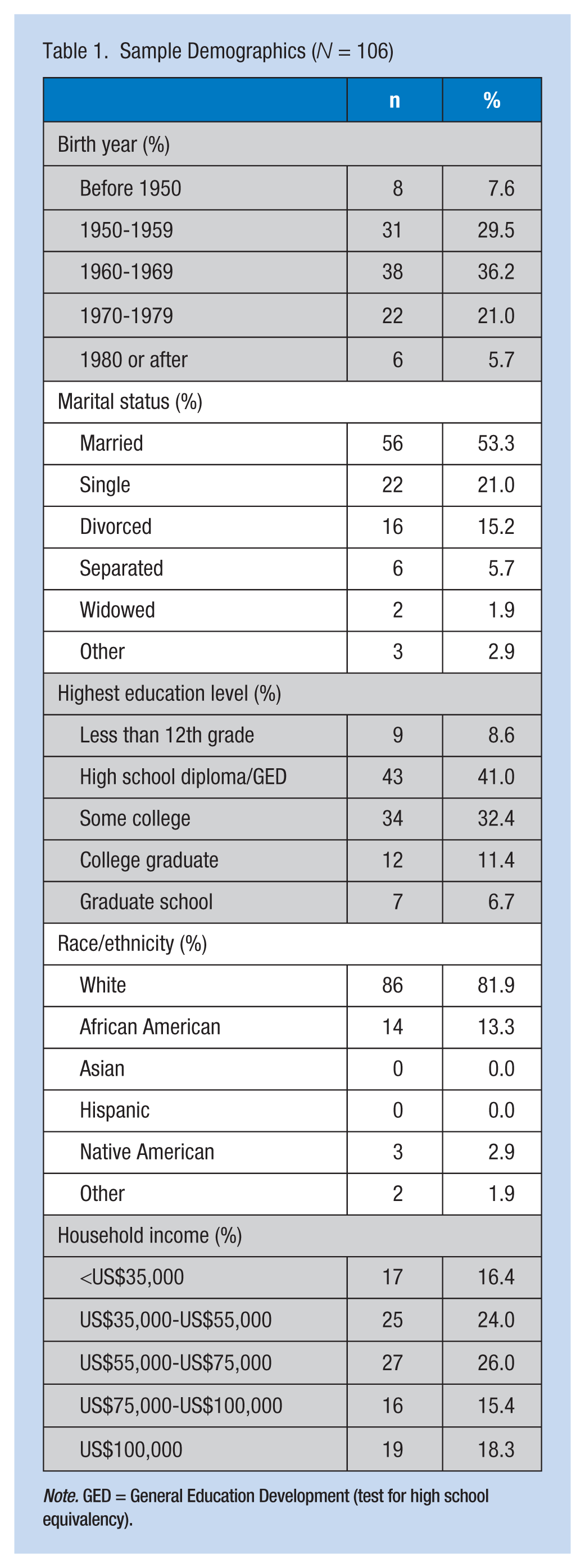
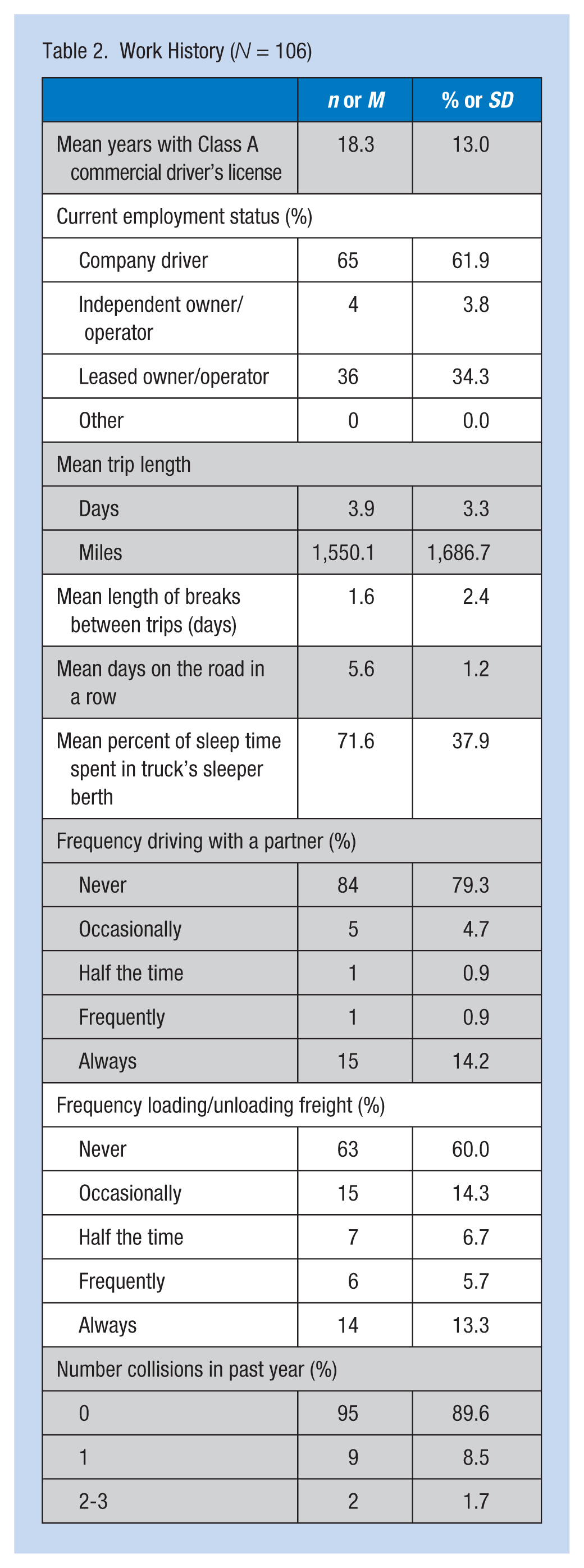
Participants (N = 106) were mostly White married males. Half had at least some college education, and earned at least US$55,000 in the year prior to data collection. Interestingly, just more than 18% of participants reported incomes greater than US$100,000 for the same time frame (Table 1). This sample represented an experienced group of commercial drivers; they reported the mean number of years as a commercial drivers’ license holder at just more than 18 years. Most of the participants were trucking company employees, although just more than one third of them were owner-operators who leased their trucks and services to a trucking company. The mean length of trips driven by these participants was 1,550 miles and involved 3.9 days “on the road.” These truck drivers reported that they spent just below 6 days in a row on the road and took breaks that lasted 1.6 days. Just more than 20% of participants drove at least occasionally with a driving partner. The majority of the sample consisted of “solo” truck drivers, those who do not drive with a partner (n = 84; 79.3%; Table 2).
Sample Demographics (N = 106)
Note. GED = General Education Development (test for high school equivalency).
Work History (N = 106)
Health History
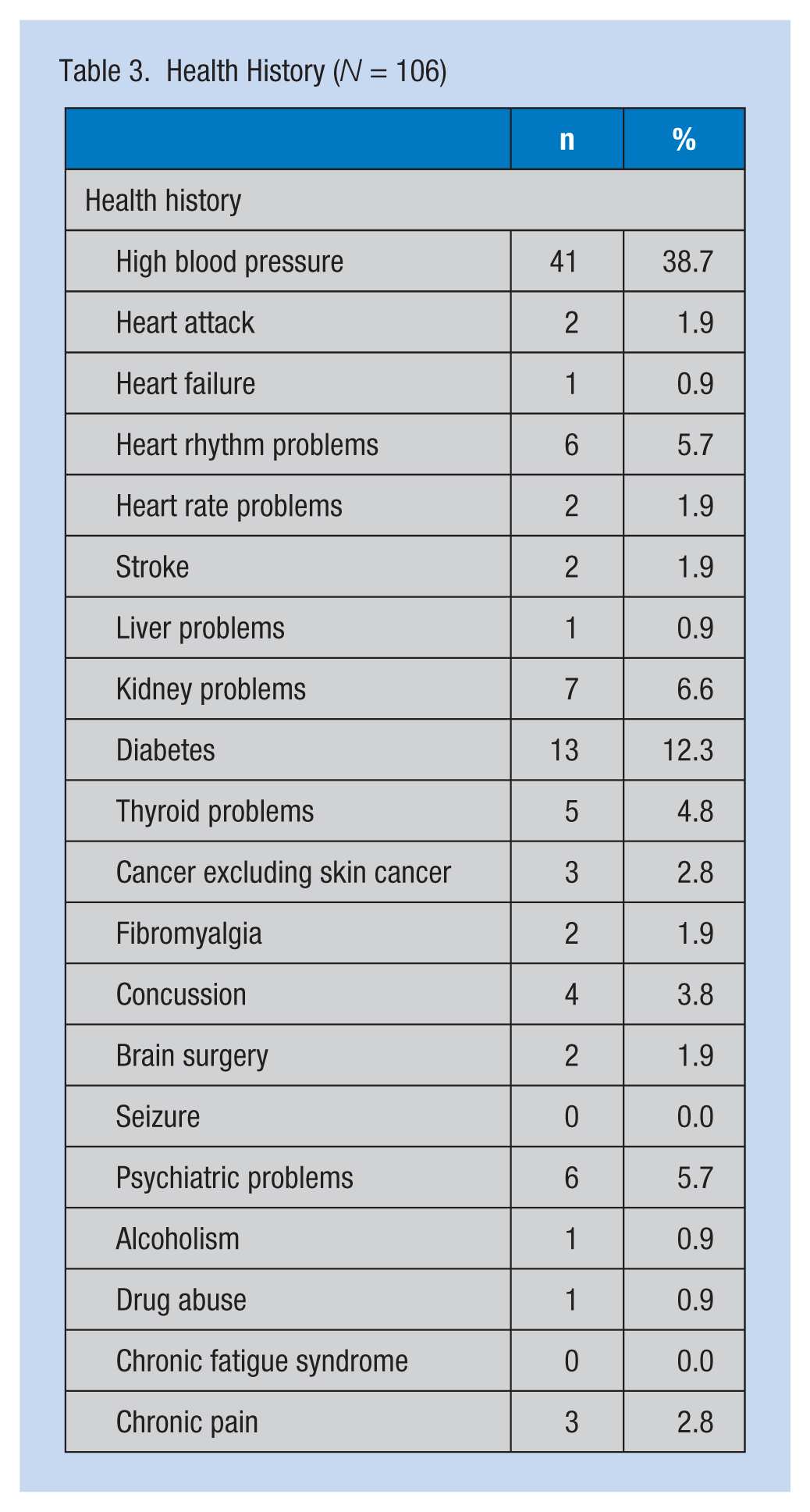
When asked about medical diagnoses, more than half of the participants reported a cardiovascular problem, most commonly hypertension. Among the remainder of the most commonly reported health conditions were diabetes (12.3%), liver problems (6.6%), and psychiatric problems (5.7%). The remainder of health conditions reported by participants are listed in Table 3.
Health History (N = 106)
Internet Connectivity and Use
Truck drivers participating in this study used more than one type of Internet-capable device. Just more than 70% of participants used both laptop computers and smart phones. Only 17% of the sample used tablets to access the Internet (Table 4).
Internet Usage Characteristics (N = 106)
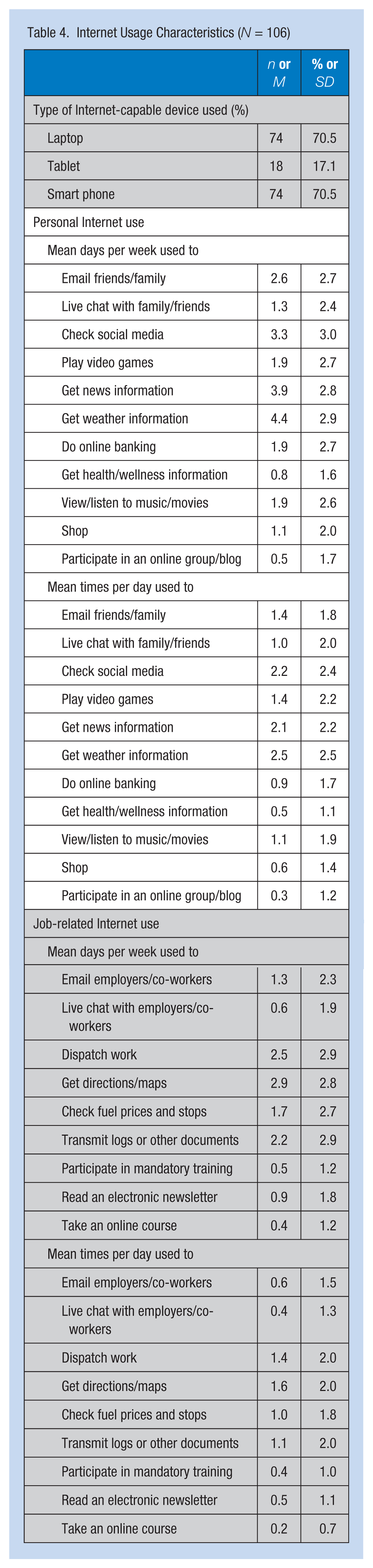
In the survey, the researchers asked drivers to indicate mean days per week and times per day that the Internet was used for various personal and occupational purposes. The most frequent reasons for personal Internet use were weather and news information, checking social media, and emailing friends and family. Regarding health and wellness information, drivers used the Internet, on the average, just under 2 days per week and 1 time per day for accessing health and wellness information. For job-related Internet use, participants accessed the Internet more often for directions or maps, dispatch work, and transmitting logs or other documents compared with other job-related information access. During the day, job-related Internet access was primarily used to access directions or maps, dispatch work, transmit logs or other documents, or check fuel prices and stops. It is worth noting that although some of these activities occurred more frequently than others as far as days per week and times per day, overall frequency of Internet usage was fairly limited (Table 4).
Age, education, and number of years as a commercial driver’s license holder were significantly associated with Internet usage. Those participants who used the Internet for personal reasons 2 or more days per week were more likely to be younger (p = .01). Participants who used the Internet for personal reasons at least 3 days per week were more likely to be college graduates (p < .01) and have held a commercial drivers’ license for fewer years (p < .01) compared with participants who used the Internet for personal reasons less than 3 days per week (Table 5). Regarding job-related Internet use, a marginally significant association was observed between birth year and amount of job-related Internet use. That is, participants who used the Internet for job-related purposes were more likely to be younger (p = .0575). Also, those participants who did not use the Internet during the week for job-related reasons had held commercial drivers’ licenses longer than those who used the Internet for personal reasons 2 or more days per week (p = .0280; Table 6).
Comparison of Demographic, Work, and Health Characteristics by Amount of Personal Internet Use Per Week (N = 106)
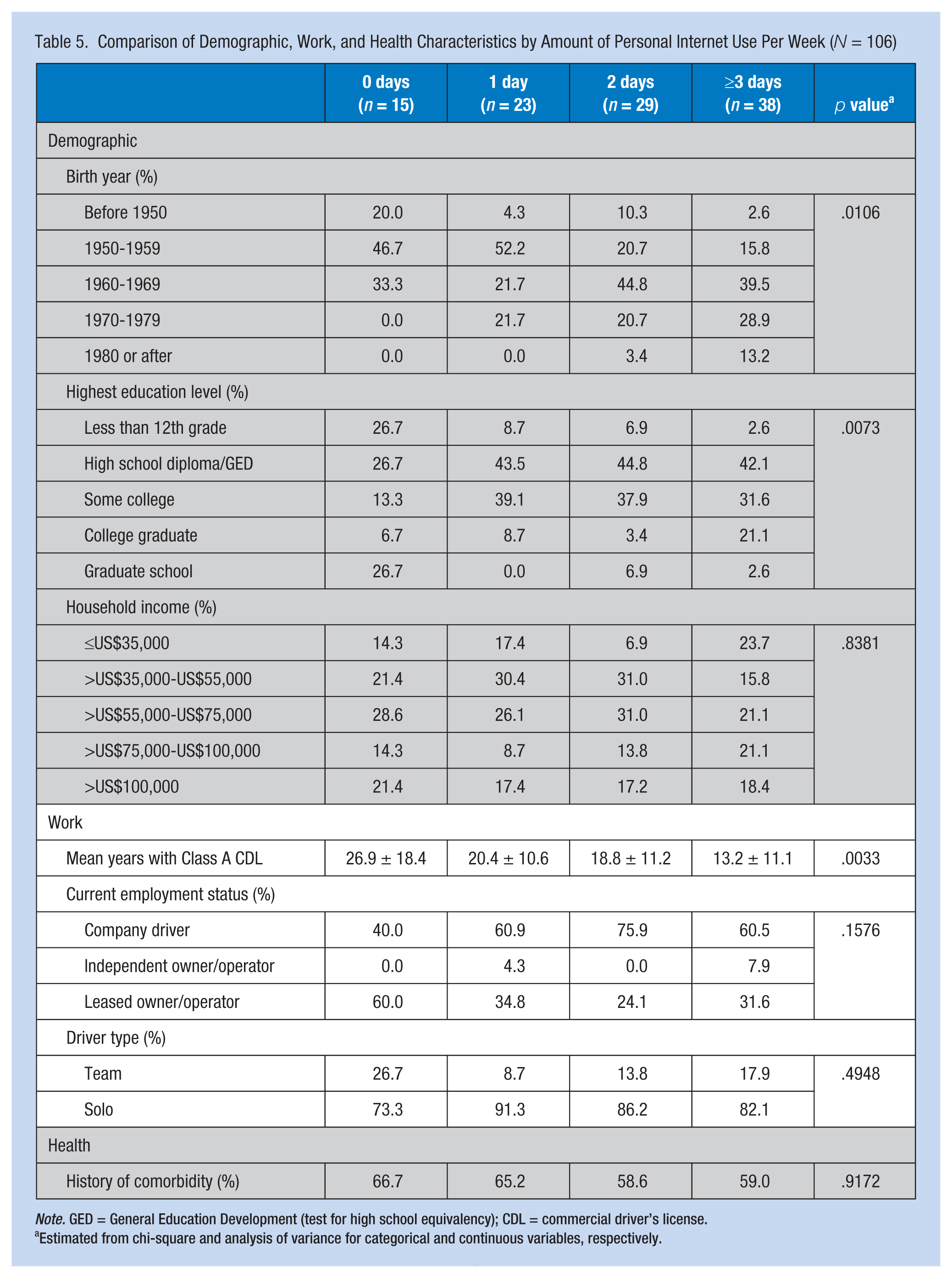
Note. GED = General Education Development (test for high school equivalency); CDL = commercial driver’s license.
Estimated from chi-square and analysis of variance for categorical and continuous variables, respectively.
Comparison of Demographics, Work, and Health Characteristics by Amount of Job-Related Internet Use Per Week (N = 106)
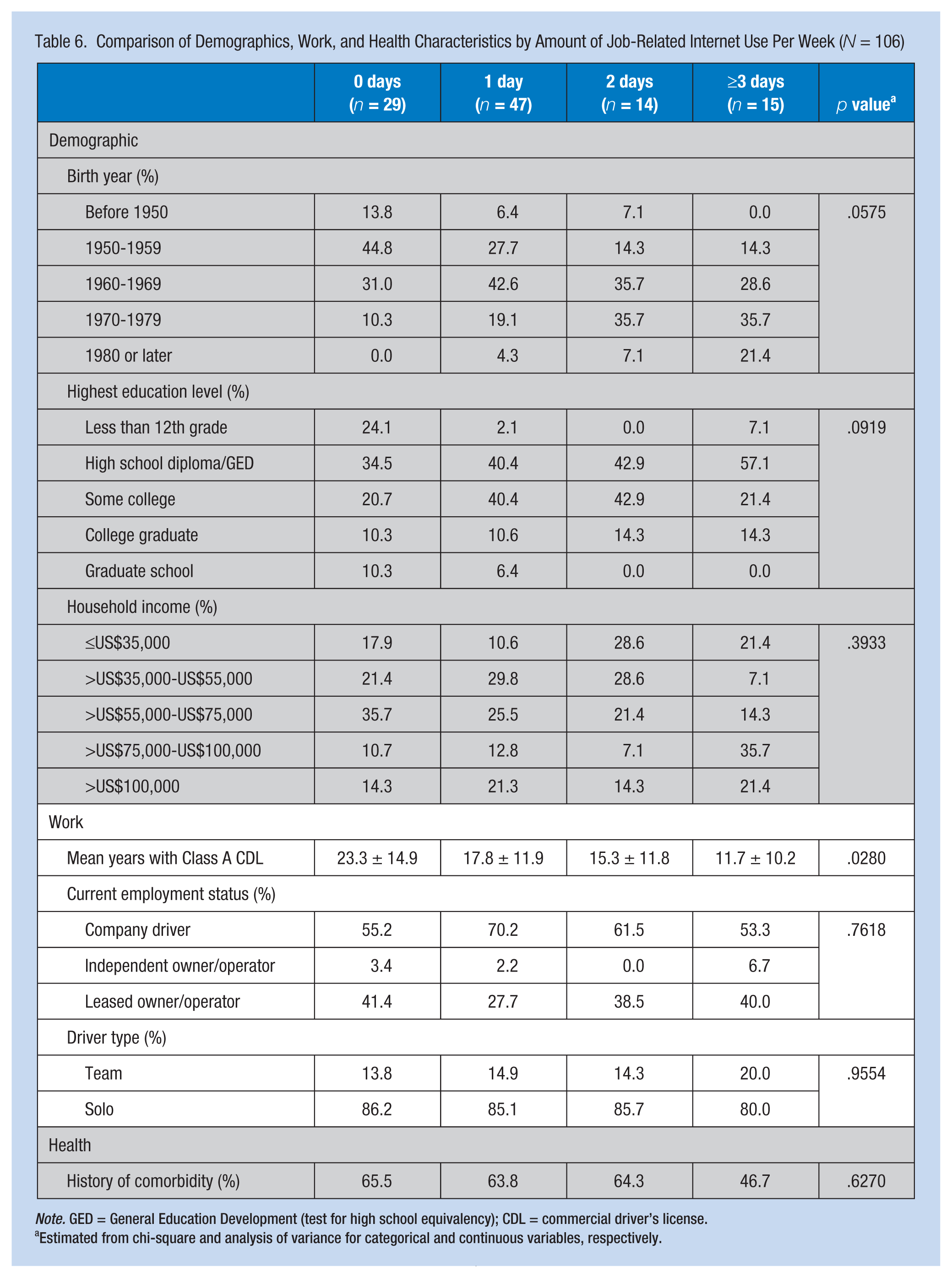
Note. GED = General Education Development (test for high school equivalency); CDL = commercial driver’s license.
Estimated from chi-square and analysis of variance for categorical and continuous variables, respectively.
Discussion
Although the number of truck drivers with Internet-capable devices is evident, particularly in transportation trade publications, their reasons for using the Internet have not been described. To the best of the authors’ knowledge, this is the first publication that details the types of information accessed by truck drivers on the Internet. Findings from this study show that truck drivers use the Internet for practical job-related reasons (e.g., communication with employers, directions and maps, and locating and pricing fuel. Interestingly, although these are highly valid reasons for using the Internet, participants in this study used the Internet for these reasons less than 3 days per week on average. This finding may merely reflect the reported average trip length of 3.9 days. It seems reasonable that the most days per week and times per day of personal Internet use were devoted to checking weather and news, emailing family and friends, and social media. Given the amount of time that truck drivers spend on the road separated from family and friends, it is possible that Internet connectivity to family, friends, and social networks supports truck drivers during the social isolation they may experience. It was surprising that these truck drivers used the Internet so few times per day and days per week. However, given that they are driving up to 11 hours per day when they are on duty, little time is available for other activities, aside from non-driving work (e.g., vehicle inspections, paperwork, and refueling) and self-care activities (e.g., eating, personal hygiene, and sleeping).
More than half of the participants reported at least one chronic health condition. Therefore, it is noteworthy that they used the Internet at least once a day, just under 2 days per week, to access health and wellness information. The use of m-health applications with this population may be an appropriate way to communicate targeted health and wellness information and provide access to primary care and other providers.
Although this study contributes to understanding how truck drivers use the Internet, it is not without limitations. The cross-sectional nature of the study merely provides a snapshot of self-reported behaviors at a given time. Participant recall bias may have influenced study results. Future studies of truck driver Internet use should actually measure use over a period of time via a combination of diary and electronic data capture from Internet service providers. Also, it is not known if the segment of the sample who attended trucking industry trade shows is representative of the population of long-haul truck drivers. The sample was not large enough to compare Internet usage by recruitment method groups, but future studies should include a sample size sufficient to balance the numbers of trade show attendees with other participants to explore potential differences in behaviors and characteristics. In spite of these limitations, the authors believe that this study does suggest implications for future occupational health research, education, and practice. As mentioned, future studies should engage larger samples so that more comparisons could be made between various groups within the samples. Also, adding some type of objective measure of Internet use to a subjective instrument would mitigate recall bias among the participants. At least among this sample, the truck drivers did access the Internet for health and wellness information. They should be educated as to reputable Internet resources and links that might answer their questions while they are on the road. From a practice standpoint, primary care and other providers working with truck drivers should routinely ask whether they use Internet-capable, “smart” devices that could link them to the provider so the provider could answer questions, explain laboratory and diagnostic results, and schedule additional appointments. These strategies could improve access to care for and inform this vulnerable, highly mobile, and remote group of workers.
Applying Research to Practice
The use of SMART phone and other Internet accessible devices is burgeoning among long-haul truck drivers, who are socially isolated, have difficulty accessing healthcare, and experience unpredictable work schedules—making it difficult for them to interact with health care systems. Findings from this study indicated that, especially among younger and less experienced truck drivers, Internet use was evident and was done for very practical reasons related to their jobs, such as accessing maps and directions, locating fuel stops, and communicating with employers. Personal Internet use was targeted toward social connectivity and access to health and wellness information. Targeted mobile health messaging via Internet accessible devices may be a useful tool for occupational health nurses to inform these remote and vulnerable workers of health conditions and plans, and may provide links to primary care and occupational health care providers needing to monitor or notify drivers of diagnostic results or treatment plans and modifications.
Footnotes
Conflict of Interest
The author(s) declared no potential conflicts of interest with respect to the research, authorship, and/or publication of this article.
Funding
The author(s) disclosed receipt of the following financial support for the research, authorship, and/or publication of this article: Support for this research was provided by National Institute for Occupational Health and Safety (Heaton), R21OH009965.
Author Biographies
Karen Heaton is associate professor and coordinator of the PhD Program at the University of Alabama at Birmingham School of Nursing. She also serves as the occupational health nursing director of the NIOSH Deep South Center for Occupational Health and Safety.
Bryan Combs is an instructor and PhD student at the University of Alabama at Birmingham School of Nursing.
Russell Griffin is an assistant professor in the Epidemiology Department at the University of Alabama at Birmingham.