




Abstract
According to the National Institute for Occupational Safety and Health (NIOSH), a teen is injured every 9 minutes at work. Workplace supervision may affect whether teens are injured on the job. Because research on workplace supervision among teens is limited, the objectives of this study were to characterize the perceptions of supervision among injured and non-injured teen workers and assess the characteristics and perceptions of supervisors that may be associated with work-related injuries. In 2011, a cross-sectional survey was conducted among high school students. Teens who worked in retail or service industries (n = 270) were included in the sample. Non-injured teens were more likely to have reported that their supervisors cared about their safety, were helpful, listened well, and ensured that teen workers understood workplace safety. Most teens (70%) did not feel comfortable talking about safety issues with their supervisors. The importance of supervision and how supervisors are perceived in the workplace may be significant in creating a safety culture that leaves a lasting impression.
Keywords
Work has become an integral part of teens’ lives. In the United States, as many as 80% of teens work before graduating from high school (U.S. Department of Health and Human Services, Centers for Disease Control and Prevention, National Institute for Occupational Safety and Health [NIOSH], 2013). Most teens work in restaurants or retail for work hours equivalent to a part-time job (U.S. Department of Health and Human Services, Centers for Disease Control and Prevention, NIOSH, 2013). Working teens are a population disproportionately at risk for work-related injuries. According to NIOSH, a working teen is injured every 9 minutes (U.S. Department of Health and Human Services, Centers for Disease Control and Prevention, NIOSH, 2012). Prevalence of injury ranges from 11% to more than 41% depending on the population studied, research methods used, and work done by the teens (Banco, Lapidus, & Braddock, 1992; Breslin, Day, et al., 2007; Cooper & Rothstein, 1995; Delp, Runyan, Brown, Bowling, & Jahan, 2002; Miller & Kaufman, 1998; Rauscher & Myers, 2008; Zierold & Anderson, 2006; Zierold, Appana, & Anderson, 2011). Studies evaluating work-related injuries among teens have reported that teens are approximately twice as likely as adults to suffer occupational injuries resulting in emergency department visits and workers’ compensation claims (Delp et al., 2002; Layne, Castillo, Stout, & Cutlip, 1994; Linker, Miller, Freeman, & Burbacher, 2005; Miller & Kaufman, 1998; Schober, Handke, Halperin, Moll, & Thun, 1988).
Preventing injuries among working teens is a multi-faceted task. Factors such as type of job, characteristics of work, use of personal protective equipment, safety training, and supervision play a role in the occurrence and outcomes of work-related injuries among teens. However, the extent to which these characteristics are associated with work-related injuries has not been well studied. Most research has focused on types of jobs and characteristics of work (Banco et al., 1992; Breslin, Day, et al., 2007; Brooks & Davis, 1996; Cooper & Rothstein, 1995; Delp et al., 2002; Miller & Kaufman, 1998; Rauscher & Myers, 2008; Schober et al., 1988; Zierold & Anderson, 2006; Zierold et al., 2011) with fewer studies evaluating safety training (Delp et al., 2002; Rauscher, Schulman, & Runyan, 2010; Runyan, Schulman, Dal Santo, Bowling, & Agans, 2009; Zierold & Anderson, 2006), personal protective equipment (Rubenstein, Shendell, Eggert, & Marcella, 2014; Shendell et al., 2010), and supervision (Lewko, Runyan, Tremblay, Staley, & Volpe, 2010; Rauscher, Wegman, Wooding, Davis, & Junkin, 2013; Runyan et al., 2007).
Workplace Supervision
Limited research about the supervision of teen workers has been conducted; however, studies of adult workers have reported that supervision affects workplace safety climate (Dingsdag, Biggs, & Sheahan, 2008; Dunbar, 1975; Hofmann & Morgeson, 1999; Michael, Guo, Wiedenbeck, & Ray, 2006; Mosher, Keren, Freeman, & Hurburgh, 2013; Smith & DeJoy, 2012; Souza et al., 2014; Zohar & Luria, 2003). Smith and DeJoy (2012) found that supervisor support, including the perception that supervisors care about the well-being of workers, was correlated with safety climate, a significant protective factor against workplace injuries (Smith & DeJoy, 2012). Michael et al. (2006) reported that workers who had strong relationships with their supervisors were less likely to be injured or have a near miss incident. Hofmann and Morgeson (1999) found that workers who had higher quality relationships with their supervisors were more likely to feel comfortable voicing safety concerns (Hofmann & Morgeson, 1999).
To date, only one study of teens’ perceptions of their supervisors has been conducted (Rauscher et al., 2013) and two studies have evaluated the supervision given to teens (Lewko et al., 2010; Runyan et al., 2007). Rauscher et al. (2013) surveyed 242 teens and found that 77% felt that their “supervisor is concerned about the welfare of those under him/her” (p. 569). Approximately 80% of teens stated that their supervisors paid attention to what teens were saying and that their supervisor was helpful (Rauscher et al., 2013). In general, researchers have found that many teens work without consistent supervision (Lewko et al., 2010; Runyan et al., 2007).
Study Objectives
Supervisors are responsible in part for ensuring the safety of young workers. The mere presence of supervisors in workplaces alone may not protect teens from experiencing injuries at work. Rather, the effectiveness of supervision might rely more heavily on the presence of interactive supervision and teens’ perceptions of their supervisors. No studies assessing the role of supervision in injury prevention among working teens were found. Therefore, the objectives of this study were to (a) characterize the perceptions of supervision among injured and non-injured teen workers and (b) assess the characteristics and perceptions of supervisors associated with work-related injuries.
Method
A cross-sectional survey was administered in two large public high schools in Jefferson County, Kentucky. All study procedures were approved by the Institutional Review Board (IRB) of the University of Louisville, the Data Management, Planning, and Program Evaluation Department of Jefferson County Public Schools, and the principals of the participating high schools.
Description of High Schools
Teenagers were recruited from two public high school magnet career academies that provided a traditional high school curriculum as well as a number of specialized courses in varied careers. In addition to in-class learning, most magnet programs offered real-world opportunities for students, such as managing a pizza cart in the marketing and entrepreneurship magnet program or caring for animals in the pre-veterinary science magnet program. Many of the magnet programs offer teens work opportunities during high school and prepare teens for entering the job market upon graduation. The local community, businesses, and universities work with the high schools to provide career development and training opportunities.
The first school was an inner city high school with 983 students, predominately African American (82%), and 77% of the students were eligible for free or reduced lunch. This school provides nine magnet programs including nursing, business, and law. The second school was a working-class suburban high school, with 1,936 students predominately White (72%), and 43% of students were eligible for free or reduced lunch. This school offers three magnet programs in communication and the arts.
Questionnaire and Survey of Teens
Focus groups and interviews with 42 teenagers, aged 15 to 20 years old, were conducted to determine themes used to create the questionnaire. The resulting questionnaire included 47 demographic, job, and work characteristics; safety training; supervision; occupational injury; parent relations; and school performance questions. Prior to administration, the questionnaire was pre-tested and discussed with students to ensure participants could understand the questions. Based on the pre-test, some of the questions were altered to improve clarity. Teens who worked during the school year answered the entire questionnaire, whereas non-working teens answered only nine questions. Working teens required 15 to 20 minutes to complete the questionnaire; non-working teens took less than10 minutes to respond.
Because this study posed only minimal risk and met the requirements for “waiver of consent” as specified in 45 CFR 46.116(d), “passive consent” methods were approved by the IRB of the University of Louisville, the Data Management, Planning, and Program Evaluation Department of Jefferson County Public Schools, and the principals of the participating high schools.
Recruiting strategies differed slightly between the two schools. At the first school, the questionnaire was distributed to students by the magnet teachers during class. No overlap of participants was possible because teens were enrolled in only one magnet program and focused on that area throughout high school. Prior to administration of the questionnaire, teens were given a consent form for their parents. If parents did not want their teens to participate in the study, they were instructed to call the principal investigator. No parents called. Teens assented by reading the cover page and choosing to respond to the questionnaire. If teens did not want to participate, they returned blank questionnaires to their teachers.
At the second school, administration decided that the researchers could not administer the questionnaires during class. Therefore, a different recruitment strategy was developed. At the second school, researchers recruited teens during lunch, class breaks, and afterschool. The research team spent three consecutive days at the school. Teens were given a consent form for their parents and assented by reading the cover page and answering the questionnaire. After the teens returned the questionnaire, the principal investigator scanned it for completeness.
Variables for Analysis
The variables in this study were categorized into five groups: population of working teens, demographics, work characteristics, supervision, and injuries. Work status was determined by asking “During this school year, did you work? (Y/N).” To determine the main job that teens worked during the school year, the researchers asked, “What was the main job you worked this year?” Nineteen options were available, including an “Other’ category for teens to complete if necessary. For this study, teens who were employed in the retail or service industry, specifically restaurants, fast food establishments, grocery stores, department stores, or general merchandise stores (e.g., Walmart, Target), retail stores (e.g., sporting goods store, shoe store, clothing store), and entertainment (e.g., bowling, skating rinks, movie theater) were included. Studies have confirmed that most teens work in service and retail jobs (Dal Santo & Bowling, 2009; Runyan et al., 2009).
Demographics included gender, race (White, African American, Other), and current age. Work characteristics that were assessed in this study included hours worked during the week and on the weekend, times stopped working during the week and on the weekend, and whether safety training was provided.
To characterize supervision, several questions were included: “How frequently do you talk to your supervisor at work? (Every day, several times a week, once or twice a week, never),” “Does your supervisor make sure you understand workplace safety? (Yes, No, I don’t know),” “Select all answers that describe your supervisor (Cares about my safety, helpful, listens well, approachable, establishes weekly goals for me to achieve, I feel comfortable talking about safety issues with my supervisor, more concerned about getting work done than safety),” and “Did you tell your supervisor you got injured? (Yes, No, I did not get injured).” In addition, teens were asked “If you report safety violations or unsafe conditions at work, can your supervisor fire you?” (Yes, No, I don’t know).
To evaluate injury, the participants were asked, “Did you get any of these injuries at work? (cut, scrape, burn, bruise, sprain/pulled muscle, broken bone, infection or rash, head injury, dislocated joint, other, I did not get injured).” Teens who reported an injury were considered “injured” and teens who selected “I did not get injured” were considered non-injured.
Statistical Analyses
Data from the questionnaires were analyzed using SAS 9.3 (Cary, North Carolina). Comparisons between injured and non-injured teens were calculated using chi-square analysis. Fisher’s Exact Test was used to compare injured and non-injured teens for small sample sizes. To compare the number of positive traits of supervisors between injured and non-injured teens, “scores” were calculated. The positive trait score was calculated by summing the following number of positive attributes associated with supervision: Supervisor makes sure teen understands workplace safety, teen gets enough supervision at work, supervisor cares about safety, supervisor is helpful, supervisor listens well, supervisor is approachable, and teen feels comfortable talking to supervisor about safety concerns. Because seven positive traits were included, the score could range from 0 to 7. Positive trait scores were calculated for all teens and analyzed by gender, age, and race. The scores are presented as medians with corresponding interquartile ranges (IQR). To compare the scores between injured and non-injured teens, the Wilcoxon Rank-Sum Test with normal approximation was used.
To examine the individual effects of demographic variables, work characteristics, and supervision characteristics on injury status, simple logistic regression of each independent variable on injury status was used to calculate crude prevalence odds ratios (ORs) and 95% confidence intervals (CIs). To evaluate the effect of several predictor variables on injury status, multivariate logistic regression was used to calculate adjusted odds ratios (AOR) and CIs. The variables that were statistically significant in the crude analysis were used in the multivariate logistic regression to determine the strongest predictors of injury controlling for other independent variables.
Results
Overall, 930 teens responded to the questionnaire. All questionnaires were reviewed by the research team and 46 were removed from the sample (5%) for inappropriate or incomplete answers. The final sample included 884 teens. Among the 884 teens, 395 (45%) reported working during the school year. Of the 395 working teens, 270 (68%) worked in retail or service industries.
Injuries Among Teen Workers
Among the 270 teen participants, 43% reported they had been injured (n = 115) during the year. Table 1 reports the demographic and work characteristics of teens by injury status. No differences in injury status by gender, race, or age were found; no differences in injury based on job category, number of hours worked during the week or weekend, or time when teens stopped working during the week and on the weekend were found. However, a significant difference in injury by whether teens received safety training was found. Non-injured teens were more likely to receive safety training than injured teens (89% vs. 77%, p = .01).
Characteristics of Injured and Non-Injured Working Teens (N = 253) a
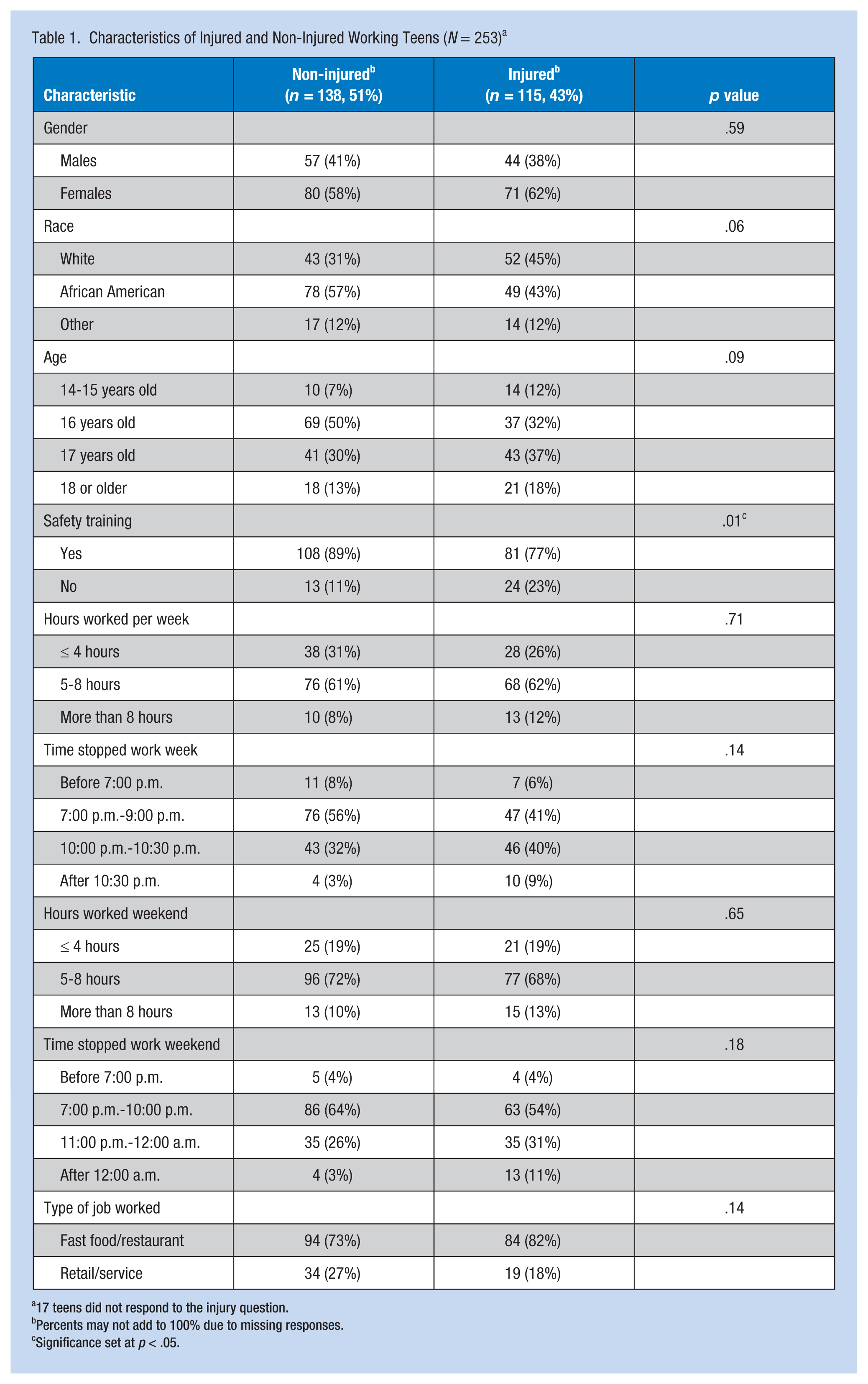
17 teens did not respond to the injury question.
Percents may not add to 100% due to missing responses.
Significance set at p < .05.
Of those injured, 69% reported their injuries to their supervisors. Types of injuries reported included cuts, burns, bruises, and scrapes. Of those injured, 66% felt the injury was their fault, 17% felt it was their employers’ fault, and 14% believed that both the worker and employer were at fault.
Characteristics and Perceptions of Supervisors
Table 2 reports the supervisor characteristics by injury status. No significant difference in frequency of talking with supervisors was found between non-injured and injured teens. Seventy-seven percent reported that their supervisors ensured they understood workplace safety and 87% felt they received sufficient supervision at work. Seventy percent felt their supervisors cared about their safety and 66% felt their supervisors were helpful. However, only 30% of teens reported feeling comfortable talking about safety issues with their supervisors. Teens who were injured at work reported that their bosses were less likely to ensure they understood workplace safety, they did not feel their supervisors cared about their safety, they believed their supervisors were not helpful, and they felt their supervisors did not listen well. Most teens (72%) knew that their supervisors could not fire them for reporting safety violations or unsafe working conditions regardless of injury status.
Supervision Characteristics and Perceptions of Injured and Non-Injured Teens (N = 253) a
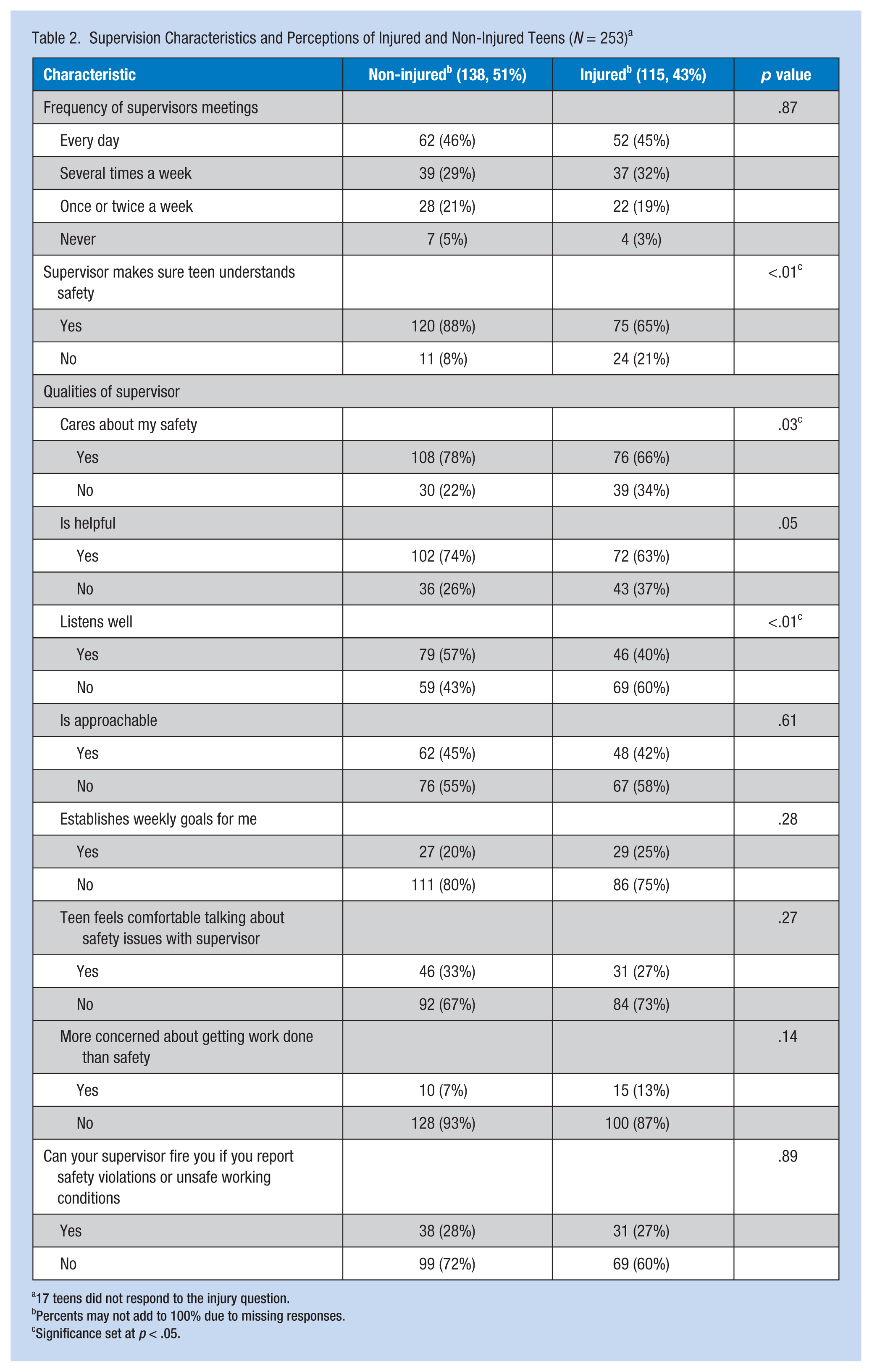
17 teens did not respond to the injury question.
Percents may not add to 100% due to missing responses.
Significance set at p < .05.
Table 3 displays positive trait scores. A significant difference (p = .002) was found between injured and non-injured teens. The number of positive traits that injured teens reported about their supervisors was four (IQR = 6-2) compared with non-injured teens who reported five positive traits about their supervisors (IQR = 6-3). Significant differences were also found in supervisor traits between injured and non-injured teens for female (p ≤ .001), 16-year-old (p = .02), and African American teens (p = .001).
Number of Positive Traits of Supervisors Reported By Working Teens
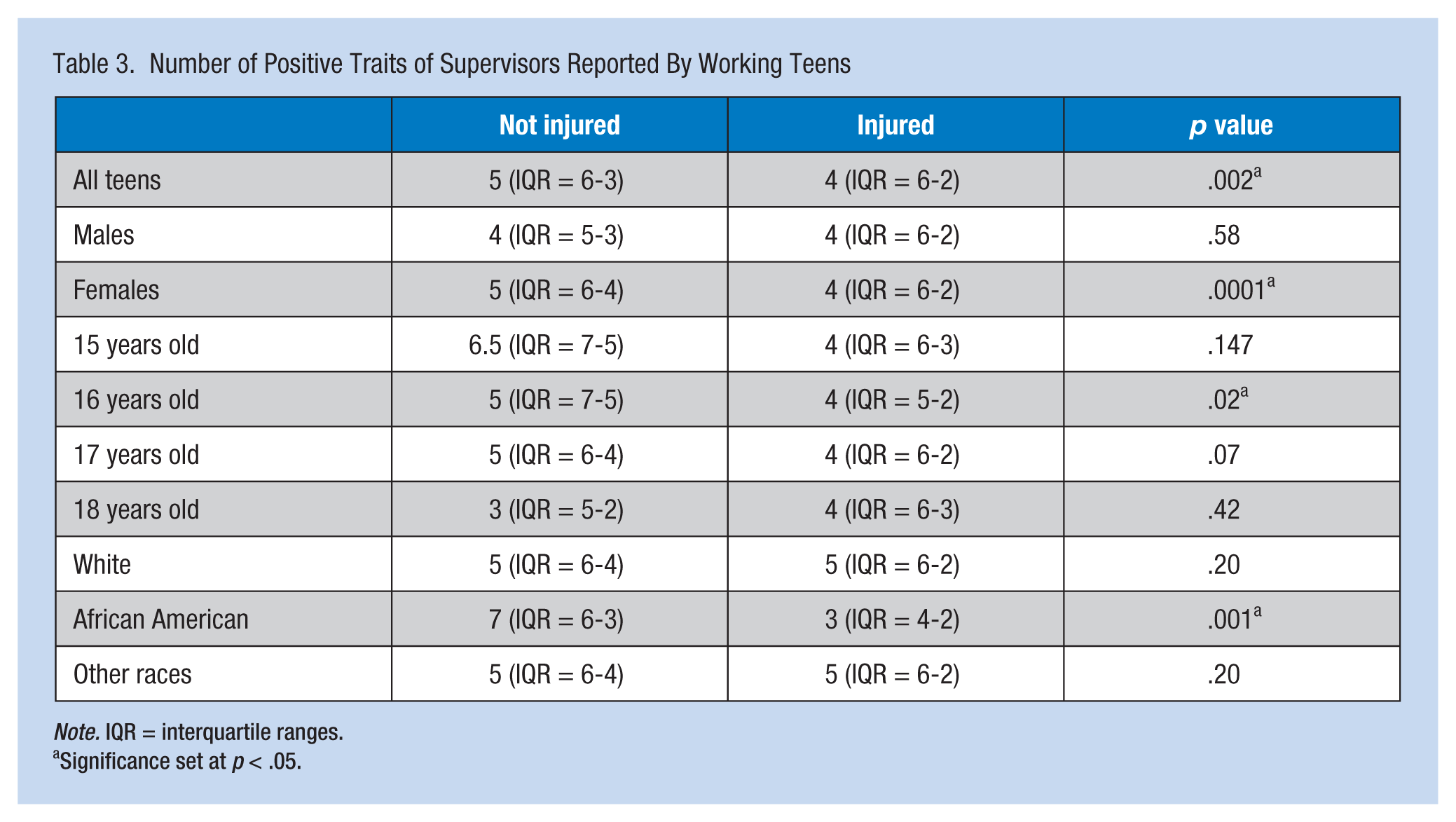
Note. IQR = interquartile ranges.
Significance set at p < .05.
Characteristics and Perceptions Associated With Injury
Table 4 shows the results of the logistic regression assessing factors associated with injury. None of the demographic variables or work characteristics were associated with injury. In the crude models, not feeling that their supervisor cared about their safety, not feeling that their supervisor listened well, and the supervisor not ensuring that the teen understood safety were associated with injury. Having safety training was protective against injury. When the model was adjusted for the significant findings from the crude relationships, the supervision variables associated with teen injury included not feeling that supervisors listened well (AOR = 1.80, 95% CI = [1.02, 3.19]) and supervisors not ensuring that teens understood workplace safety (AOR = 2.59, 95% CI = [1.22, 5.48]).
Supervision Characteristics Associated With Injury in Working Teens
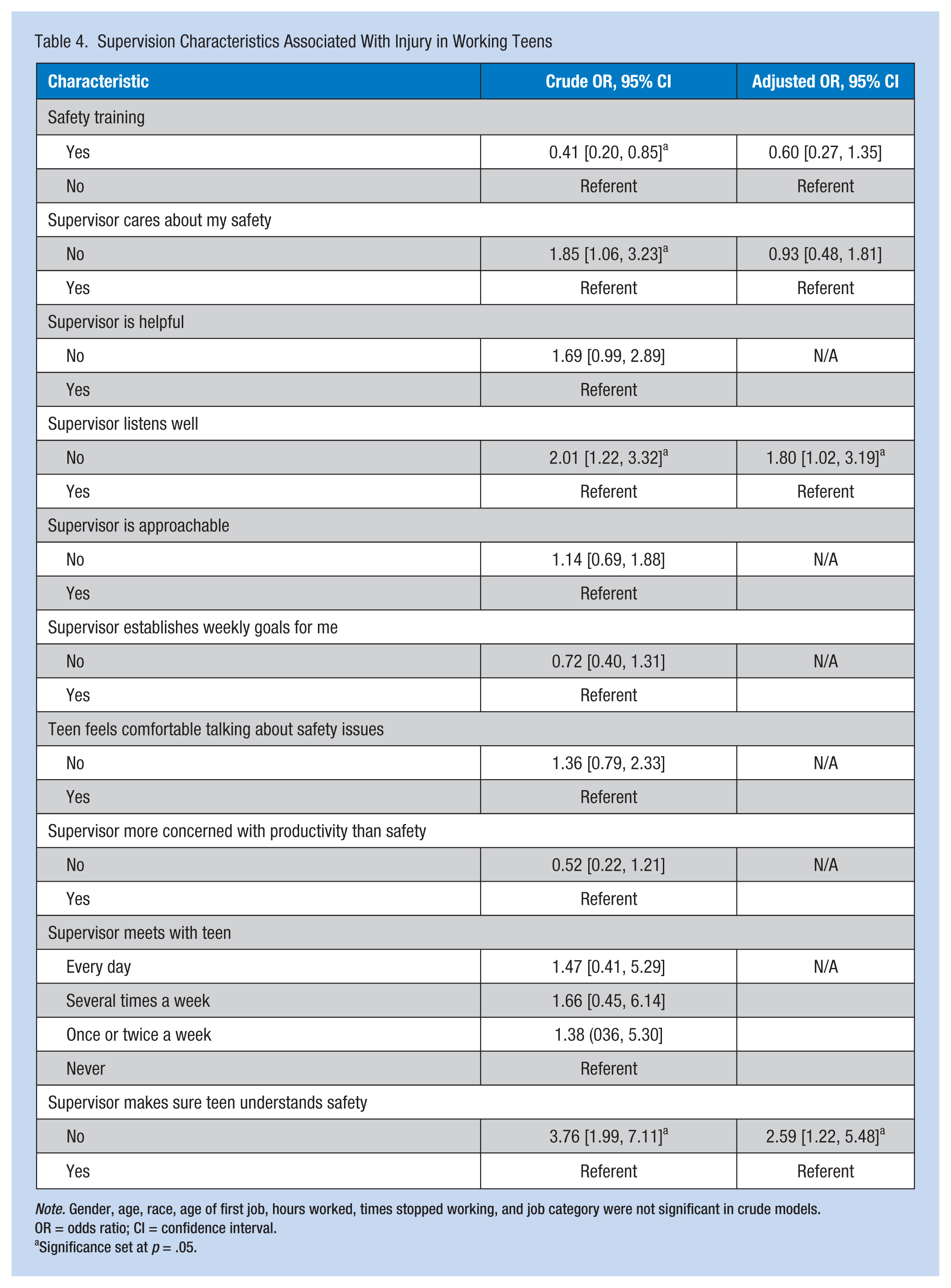
Note. Gender, age, race, age of first job, hours worked, times stopped working, and job category were not significant in crude models. OR = odds ratio; CI = confidence interval.
Significance set at p = .05.
Discussion
Preventing injuries among working teens is a multi-faceted task involving safety training, hazard identification and removal, proper use of personal protective equipment, and supervision. Based on this study, several characteristics of supervisors may reduce workplace injuries among teens. In this study, when controlling for work characteristics, the two supervision variables that remained significantly associated with injuries were supervisors who did not listen well and did not ensure that teens understood workplace safety. Both of these characteristics and a positive perception of their supervisors may be significant in preventing teen’s occupational injuries. In this study, non-injured teens reported more positive supervisor attributes compared with injured teens, which mirrors research about adult workers: Supervisors have a positive influence on workplace safety, which can result in injury reduction. Furthermore, positive relationships between employees and supervisors can lead to better communication about safety concerns (Dingsdag et al., 2008; Dunbar, 1975; Hofmann & Morgeson, 1999; Michael et al., 2006; Mosher et al., 2013; Smith & DeJoy, 2012; Souza et al., 2014; Zohar & Luria, 2003).
Overall, most teen participants perceived their supervisors in a positive light. These findings are similar to Rauscher et al. (2013) who found that 77% of teens agreed or strongly agreed that their supervisors cared about their welfare and 80% of teens agreed or strongly agreed that their supervisors were helpful (Rauscher et al., 2013). Although most teens perceived their supervisors positively, only 41% felt that their supervisors were approachable and only 30% of teens reported feeling comfortable talking about safety issues with their supervisors. Power dynamics, ineffective safety training, and the culture of the workplace may be partially responsible for teens not approaching their supervisors with questions. Many teens ask other teens or coworkers questions instead of asking their supervisors, who they may perceive as being bothered by teens’ questions. Considering the majority of teens would not approach their supervisors with concerns about safety, supervisors should actively promote safety and discussion of safety concerns with their employees. Zierold, Welsh, and McGeeney (2012) reported that teens wanted repeated safety trainings. Even without repetition of formal training, by initiating discussions about safety and safe work practices on a regular basis, supervisors can reinforce safety lessons previous learned.
Because teens do not feel their supervisors are approachable, on-the-job mentoring of safe work practices might be useful for teen workers. Mentors could be other employees who the teen turns to for advice. Research in other areas, including dating violence and safe driving programs, have demonstrated that mentors have a strong influence on youth safety (Ball, Kerig, & Rosenbluth, 2009; McGehee, Raby, Carney, Lee, & Reyes, 2007; Simons-Morton & Ouimet, 2006). Qualities such as respect, empathy, being non-judgmental, effective listening, and appropriate teaching were identified by teens as important to their mentoring relationships (Ball et al., 2009). Supervisors or other coworkers, acting in a mentoring role in the workplace and who initiate discussion about safety issues, could improve communication for teens regarding workplace safety and health.
In this population of teens, 43% reported being injured at work, but only 69% reported their injuries to their supervisors. This very high prevalence of injury is comparable with other survey-based studies that have assessed injuries suffered by teens (Dunn, Runyan, Cohen, & Schulman, 1998; Zierold et al., 2011). This prevalence could reflect reality or it could reflect sample bias, indicating that injured teens were more likely to respond to the survey. However, in this study, sample bias may have been minimized because the survey was not introduced as a survey about workplace injuries, but rather as a survey about work, safety training, and supervision. It is possible that the way the injury question was worded, “Did you get any of these injuries at work?(cut, scrape, burn, bruise, sprained/pulled muscle, broken bone, infection or rash, head injury, dislocated joint, other, I did not get injured),” clarified that teens were considered injured when they suffered a cut, burn, or bruise. Research has shown that many teens minimize injuries they sustain at work and some do not even recognize that they have been injured. It is not uncommon for teens to consider injuries “part of their job” (Breslin, Polzer, MacEachen, Morrongiello, & Shannon, 2007; Zierold et al., 2012). The fact that only 69% of injured teens reported their injuries to their supervisors may highlight the minimization of injuries or the perception of supervisors being unapproachable as determined in this study.
Two-thirds of teens blamed themselves for their injuries. Because self-blame is common among teen workers, it is also important that supervisors emphasize that workplace injury is not something to be ashamed of or embarrassed by, or viewed as an individual worker’s fault. Discussion about the circumstances that led to the injury could reinforce safe work practices; however, supervisors should lead this discussion without implying fault or potential retribution.
Strengths and Limitations
A few strengths and limitations of the study require comment. Among the strengths is the racially diverse population of teens from which the study sample was taken. Most studies of teen workers have predominately been conducted among white populations (Rauscher & Myers, 2008; Runyan et al., 2009; Zierold & Anderson, 2006). Although race was not significant in the logistic regression, a difference was found among injured teens regarding their perceptions of supervisors. Injured African American teens reported fewer positive supervisor attributes than White or other race teens. In addition, a significant difference was found in the number of positive supervisor traits that injured African American teens reported compared with non-injured African American teens. This difference was not found in the data from White or other race teens. An additional strength of this study was that researchers evaluated work characteristics and perceptions of supervision in relationship to injury, which had not been done with teen workers previously. Supervision characteristics included behaviors of supervisors (e.g., frequency of meetings, makes sure understands workplace safety) and teens’ perceptions of supervisors (e.g., caring about safety, listens well, approachable).
In addition to the strengths of this study, these limitations must be mentioned. Recall bias could be a limitation because the data were self-reported by the teen participants. To minimize this bias, the questionnaire only collected information from teens who had been working during the current school year. This was a cross-sectional study and therefore causality cannot be inferred. The questionnaire did not collect data about the number of supervisors the teens reported to at work, and thus, teens may have chosen to report about the supervisor they disliked or liked the best to answer the questions. The final limitation was that this questionnaire did not collect the age of the supervisors. In some cases, supervisors may be employees who are not much older than the teens but have been on the job longer.
Implications for Nursing Practice
Young workers represent a vulnerable population that is more likely to be injured compared with adult workers. Because the majority of teen workers reported that they would not ask their supervisors about workplace safety, occupational health nurses must engage teens and adults in discussions about child labor laws and workplace health and safety. Nurses treating teens have the opportunity to educate them about child labor laws and safe work practices. Inquiring about their jobs and encouraging teens to discuss safety and health with their supervisors could promote health and safety for teen workers. In addition, nurses can strengthen discussions with teens by talking with family members about child labor laws and workplace safety and health. Brochures highlighting child labor laws should be available in the office and given to working teens.
When occupational health nurses treat adult workers, they can use the opportunity to encourage them to discuss workplace safety with teen workers. If adult workers hire teens, they can be directed to training programs like
Conclusion
This is the first study to assess characteristics and perceptions of supervision among a diverse population of injured and non-injured teen workers. More research is needed to understand the role of supervision and the supervisor–teen worker relationship in injury prevention. Studies assessing both the teens’ and supervisors’ understanding of hazards, safety, and the role of supervision should be undertaken. Further research into how safety training is affected by supervision may be valuable. Finally, studies need to be conducted that assess whether training teens with communication techniques will empower them to approach their supervisors with safety concerns. Because teens are still developing, switch jobs frequently, and are influenced by power dynamics, the importance of supervision in the workplace is significant in creating a safety culture that makes a lasting impression.
Compliance With Ethical Standards
Ethical Approval
All procedures performed in studies involving human participants were in accordance with the ethical standards of the institutional and/or national research committee and with the 1964 Helsinki declaration and its later amendments or comparable ethical standards.
Research Involving Human Subjects
Because this study was no more than minimal risk and met the requirements for “waiver of consent” as specified in 45 CFR 46.116(d), “passive consent” methods were used, as approved by the Institutional Review Board of the University of Louisville, the Data Management, Planning, and Program Evaluation Department of Jefferson County Public Schools, and the principals of the participating high schools. All teens assented to participate.
Applying Research to Practice
Compared with adult workers, teens are disproportionately at risk for occupational injury. Supervision is one component of ensuring workplace safety. Injured teens were more likely to have a negative perception of their supervisors and report that their supervisors do not ensure that teen workers understand workplace safety. Most teens reported that they would not talk to their supervisors about safety and health concerns. Occupational health nurses and other nurses who work with teens can educate them about and reinforce their knowledge of workplace safety and child labor laws. In addition, nurses can empower teens to talk about safety and health concerns with their supervisors.
Footnotes
Acknowledgements
The author thanks Teresa McGeeney, Erin Welsh, and the teachers and students of Central High School and Pleasure Ridge Park High School.
Conflict of Interest
The author declared no potential conflicts of interest with respect to the research, authorship, and/or publication of this article.
Funding
The author disclosed receipt of the following financial support for the research, authorship, and/or publication of this article: This research was supported by the Centers for Disease Control and Prevention, National Institute for Occupational Safety and Health, grant R21 OH008934 - “Evaluation of safety training, supervision, and injury among working teenagers.”
Author Biography
Dr. Zierold is an Associate Professor in the Department of Epidemiology and Population Health at the University of Louisville. She is an environmental and occupational epidemiologist who focuses much of her research on children’s health.