




Abstract
Over 73% of hi-tech industry employees in Taiwan lack regular exercise. They are exposed to a highly variable and stressful work environment for extended periods of time, and may subsequently experience depression, detrimental to workers’ physiological and mental health. In this cross-sectional survey, the authors explored the effect of an 8-week brisk walking program on the fatigue of employees in the hi-tech industry. The participants, from a hi-tech company in northern Taiwan, were randomly assigned to an experimental group (EG; 41 subjects, Mage = 33.34 ± 6.40) or control group (CG; 45 subjects, Mage = 29.40 ± 3.60). Following the 8-week brisk walking program, the EG showed significantly lower scores for subjective fatigue, working motivation, attention, and overall fatigue. The authors confirmed that the 8-week outdoor brisk walking program significantly improved the level of fatigue among employees of the hi-tech industry. The finding serves as an important reference for health authorities in Taiwan and provides awareness of workplace health promotion in the hi-tech industry.
The disadvantages of working in the high technology (hi-tech) industry include long work hours, high work stress, and overtime (C. Y. Chen, Wu, & Hsu, 2010). Employees in the hi-tech industry, exposed to a highly variable and stressful work environment, are prone to develop anxiety due to job performance expectations and fatigue. Anxiety and fatigue may subsequently cause depression and become detrimental to workers’ physiological and mental health (C. Y. Chen et al., 2010). Fatigue has been defined as a subjective feeling related to cognition, mood, and behavior (Williamson et al., 2011). Prolonged fatigue may affect workers’ cognitive function, physiological health, and psychological health, subsequently diminishing job performance and, in severe cases, causing physiological illnesses and injuries (Ericson-Lidman, Norberg, & Strandberg, 2007; Olson, 2007). Shephard (2005) indicated that regular exercise or physical activity can reduce the negative effects (e.g., anxiety) of a sedentary lifestyle, decreasing fatigue and preventing depression. However, an investigation conducted by the Taiwan Ministry of Health and Welfare (2014) with 6,000 full-time workers in the hi-tech industry found that 73.4% did not engage in regular exercise. Hence, hi-tech workers need exercise opportunities that are simple, requiring no complicated skills and performed anywhere at any time.
Brisk walking originated in the United States and has gained popularity in Germany, England, and Japan. This rhythmic, dynamic, aerobic activity is simple, requires no complicated skills or expensive equipment, and can be performed anywhere at any time (Morris & Hardman, 1997). In recent years, brisk walking has become a fitness trend in Taiwan (Taiwan Health and Exercise Association [THEA], 2008). Studies have shown that a daily 30-minute brisk walk improves body composition, blood lipids, and psychological health. J. L. Lin, Chang, Huang, and Lee (2009) found that a 30-minute brisk exercise intervention can decrease fatigue among sedentary female workers in a hospital. Puetz, Flowers, and O’Connor (2008) examined the effect of a brisk exercise intervention on 36 sedentary healthy adults reporting chronic or persistent feelings of fatigue. The results showed that brisk walking reduced feelings of fatigue by 65%.
Currently, a majority of studies on brisk walking conducted in Taiwan or other countries examined its physiological implications (e.g., body composition, blood lipids, and cardiovascular disease; Kim &Yang, 2005; Tully, Cupples, Chan, McGlade, & Young, 2005), and its effect on chronic disease and in the elderly population (Lin, Yen, et al., 2009; F. T. Lin, Chang, Lee, & Yang, 2011).
Among these studies, randomized control trials are absent, and no study has investigated the health benefits of brisk walking among workers. As mentioned earlier, workers in the hi-tech industry are more susceptible to physiological and psychological disorders and experience more fatigue than those in other occupations. Therefore, exploring the effect of brisk walking on worker fatigue may be beneficial for organizations as well as workers. The hypothesis of this study was that an 8-week outdoor brisk walking program would significantly improve fatigue among workers in the hi-tech industry. Health authorities in Taiwan and international health care providers may use these findings to improve the health status of hi-tech workers in other countries.
Method
A randomized control trial was used in this cross-sectional survey. Convenience sampling was used to select participants from a hi-tech company in northern Taiwan. Participants were asked to sign a consent form and requested not to change their exercise habits or activities of daily living during the research process. The experimental group (EG) received a brisk walking intervention (i.e., 45-60 minutes per session, twice a week for 8 consecutive weeks), and the control group (CG) received no exercise intervention.
The inclusion criteria for this study included the following: no regular exercise within 3 months of study initiation (i.e., less than two exercise sessions per week, less than 30 minutes per session, and heart rate during physical activity less than [220 − age] × 60%), no physical disability, no severe heart disease or hypertension, no severe knee or lower back pain. One hundred four voluntary participants met the criteria and attended the initial meeting. The participants were randomly assigned to the EG and the CG. Each group was comprised of 52 workers; if workers participated in less than 80% of the activities, they were removed from the study. Thus, a total of 41 workers in the EG completed the brisk walking program and evaluations; a total of 45 workers in the CG completed the evaluations.
Instruments
Instruments for this study included structured questionnaires and Checklist Individual Strength (CIS) questionnaires.
The structured questionnaire included demographic information: age, gender, marital status, education, occupation, years of work experience, average work hours, health history, smoking status, exercise habits, club participation, exercise partner, self-reported health condition, self-reported happiness, height, weight, body mass index (BMI), body fat percentage, and waist circumference.
The CIS questionnaire, Chinese version CIS adapted by Wang, Huang, Young, and Chuang (2000), was used in this study. The CIS questionnaire measures four dimensions, including subjective fatigue (eight items), reduction in motivation (four items), reduction in activity (three items), and reduction in concentration (five items). The workers indicated on a 7-point Likert-type scale to what extent the particular statement applies to them. The CIS included 11 positively phrased items and 9 negatively phrased items. The workers responded according to how they had felt during the preceding 2 weeks. Scores were calculated by adding the scores, ranging from 20 to 140, from the four dimensions. Higher scores indicated a higher level of subjective fatigue experience. Cronbach’s alpha for the CIS Chinese version was .88.
An independent samples t test indicated that the scores for the group who reported fatigue were significantly different (p < .0001) from those who did not report fatigue. The Chinese CIS questionnaire has demonstrated satisfactory reliability and validity and significantly differentiates fatigued individuals from non-fatigued individuals (Wang et al., 2000).
Brisk Walking Program
The brisk walking program was designed and implemented by professional trainers. The basic movement for brisk walking was adapted from the guidelines provided by the THEA (2008): When walking at a quick pace, workers should take slow, long deep breaths; level the head with a slightly lifted chest and keep the lower abdomen tucked in; bend arms 90° at the elbow, close the hands in relaxed fists, and place them near the waist; when swinging the arms forward, workers should keep the hands level at lower than the chest; the knees should not be locked but remain relaxed.
The workers who participated in brisk walking were instructed to imagine that they were walking as if they were in a hurry to catch a bus. This instruction was used successfully in other studies (Taylor, Katomeri, & Ussher, 2005; Taylor & Oliver, 2009) to be sure participants walked with moderate intensity.
Interventions
Before the intervention, the researchers designed a standard operating procedure (SOP) to confirm that all workers in the EG could measure their pulses properly. They were asked to attend a one-on-one meeting, with qualified occupational health nurses and exercise specialists, to help them learn to properly measure the pulse.
The SOP to measure the pulse included the following:
Measure resting heart rate: Find the radial pulse, the pulse on the inside of the wrist. Use the pads of the index (first) and middle fingers, not your thumb. To measure the pulse, use a watch or a clock with a second hand. The resting heart rate is calculated by measuring the number of beats in 15 seconds multiplied by 4.
Confirm all workers can measure radial pulses successfully each time: Workers must measure and record pulses with supervision from qualified occupational health nurses and exercise specialists. If anyone has difficulty measuring the pulse, nurses and specialists will guide them individually to confirm that all participants can measure pulses correctly.
During the intervention: After covering half the walking distance, staff shout out when to begin to measure pulses for 15 seconds. All workers stop walking and measure their pulses in pairs for 15 seconds. Occupational health nurses and exercise specialists supervised and recorded the heart rate of each worker, multiplying the rate by 4 to calculate their heart rate per minute.
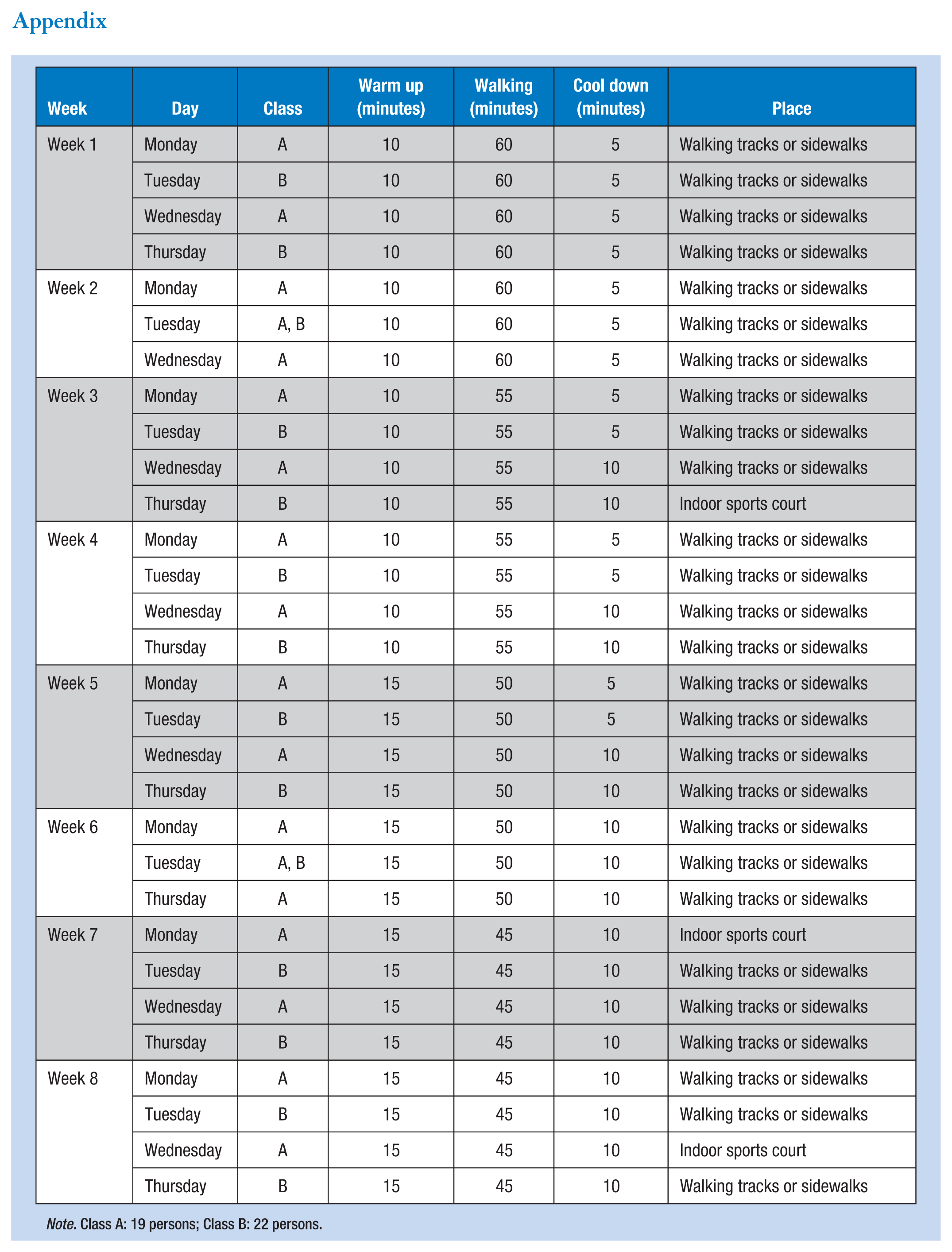
To maintain the quality of the intervention, the number of participants was limited to 22 per class, so the 41 workers in the EG were divided into Class A (19 persons) and Class B (22 persons). Participants in each class walked briskly on 2 separate days per week, Class A was scheduled for Mondays and Wednesday, Class B was scheduled for Tuesdays and Thursday (see the appendix).
A professional trainer managed the exercise program according to participants’ heart rates to maintain heart rates between 60% and 90% of HRmax. Each brisk walking session covered the same distance with duration between 45 minutes and 60 minutes. The warm-up and cool-down sessions lasted 10 to 20 minutes. The program continued for 8 weeks. The venues for the brisk walking program were scheduled during the hour after work, and mainly outdoor walking tracks or sidewalks were used. When raining, brisk walking took place at the indoor sports court in the office building. The participants in the CG performed regular daily activity without any aerobic exercise or continued exercising at less than two sessions per week.
During each session, after covering half the distance, the workers were grouped in pairs to measure one another’s pulse rate supervised by occupational health nurses. The pulse rate was multiplied by 4 to calculate their heart rates per minute. The HRmax was then calculated with a formula and recorded after each measurement. Pulse rate was measured at the halfway point of the session to ensure that workers’ heart rate was between 60% and 90% of HRmax. The brisk walking card was stamped each time to record the number of sessions and the heart rate of workers.
Data Analysis
Descriptive statistical analyses were used to describe the participants’ variable distributions using means, standard deviations, frequencies, and percentages; independent samples t test and chi-square test were used to examine the differences between the EG (Classes A and B) and CG pretest scores. The paired t test was used to assess differences between the fatigue pretest and posttest for both the EG (Classes A and B) and CG. For effectiveness, ANCOVA was used (i.e., the pretest was used as a covariate), and the adjusted means at posttest were the focus. The significance level for all statistics was set at p < .05.
Ethical Considerations
This study was reviewed and approved by the Taipei City Hospital Institutional Review Board (Case TCHIRB-1020210-E). All participants were informed about the purpose, process, benefits, and risks of this intervention before their applications were accepted, and participants could freely decide if they wanted to participate or withdraw their applications. Those who wished to participate were required to complete two copies of the Consent to Participate in Research form.
Results
Eighty-six workers participated in the study; 41 participants were in the EG, and 45 participants were in the CG. The independent samples t test and Pearson’s chi-square test demonstrated no significant differences between the EG and CG with respect to gender, marital status, education level, occupation, years of work experience, average working hours, health history, smoking status, exercise habits, club participation, exercise partner, self-reported health conditions, self-reported happiness, height, weight, BMI, body fat percentage, and waist circumference. Only average age was significantly different (p = .01; Tables 1 and 2).
Chi-Square Test of Demographic Characteristics
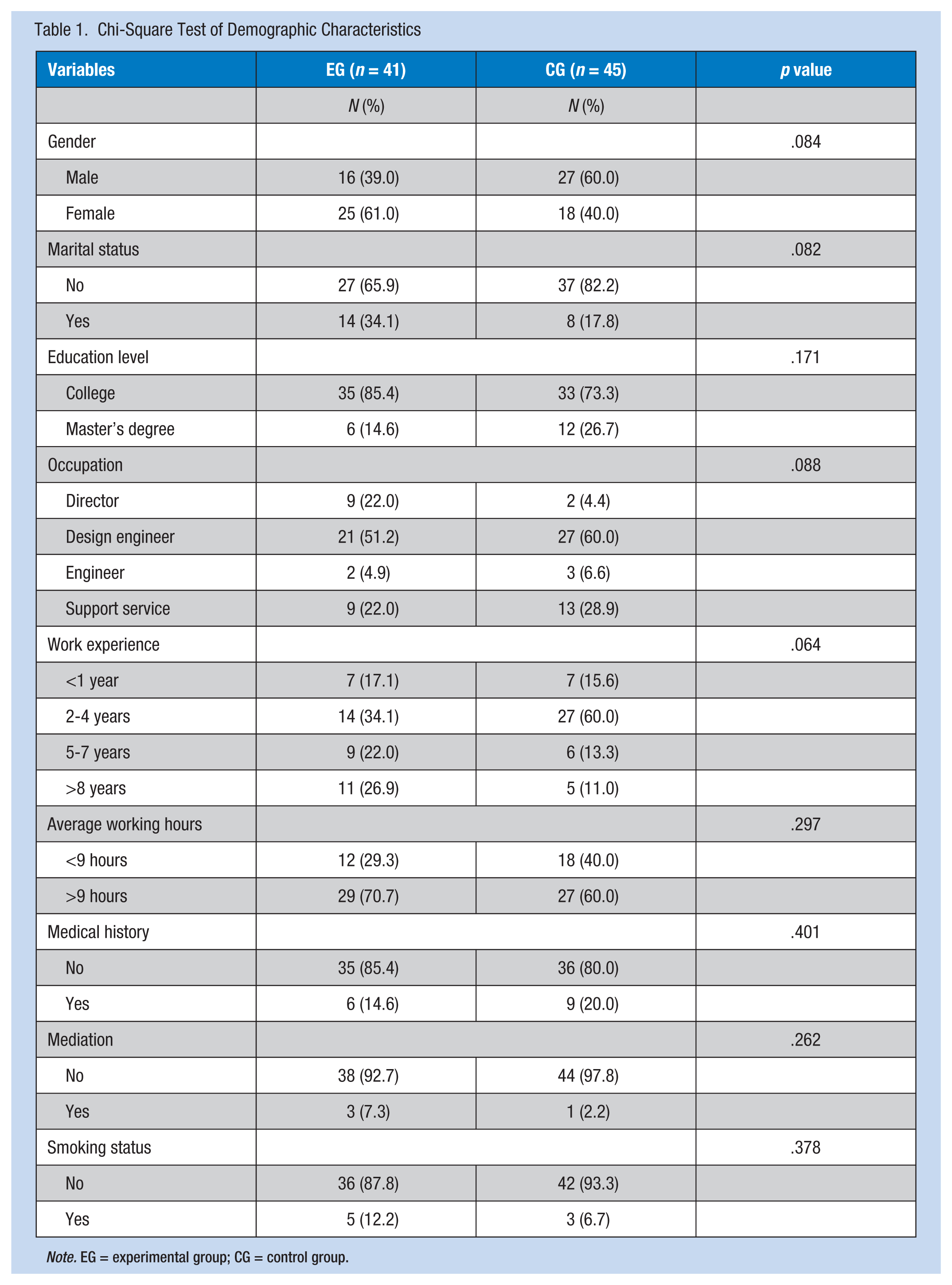
Note. EG = experimental group; CG = control group.
Homogeneity Test of Pretest in Healthy Status Between Both Groups
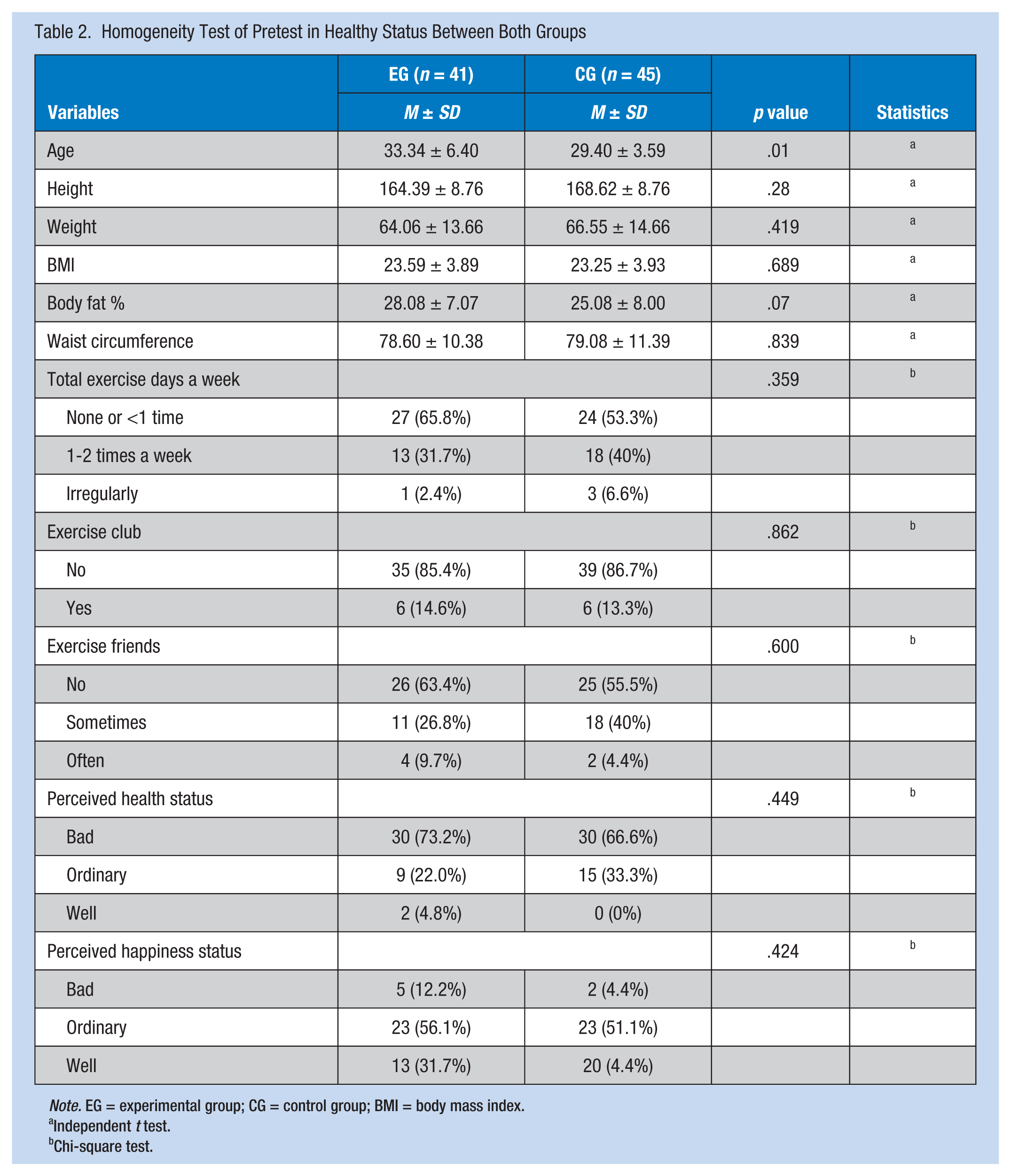
Note. EG = experimental group; CG = control group; BMI = body mass index.
Independent t test.
Chi-square test.
Difference in Fatigue Status Between Pretest and Posttest
The Chinese version of the CIS questionnaire measured four dimensions: subjective fatigue, motivation, activity, and concentration. The levels of fatigue at pretest between the two groups were not significantly different (Table 3). The results following the brisk walking intervention were as follows:
Comparison of Pretest Results Between Both Groups
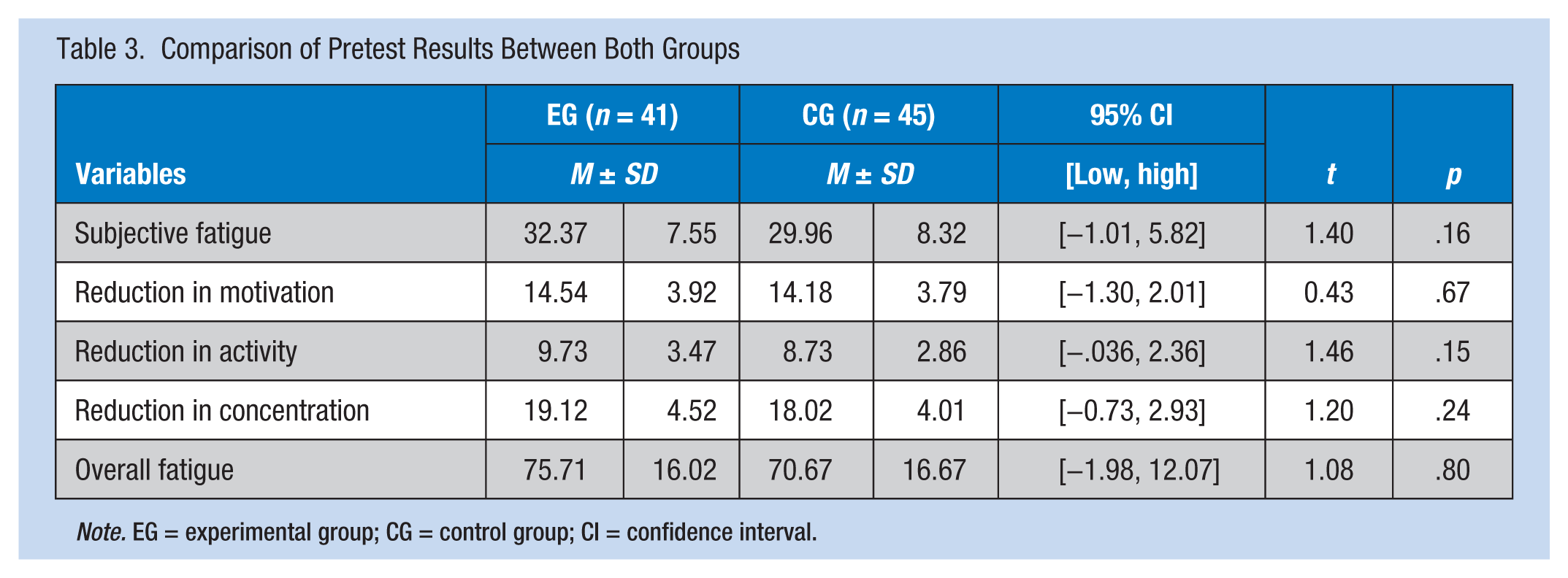
Note. EG = experimental group; CG = control group; CI = confidence interval.
Subjective fatigue
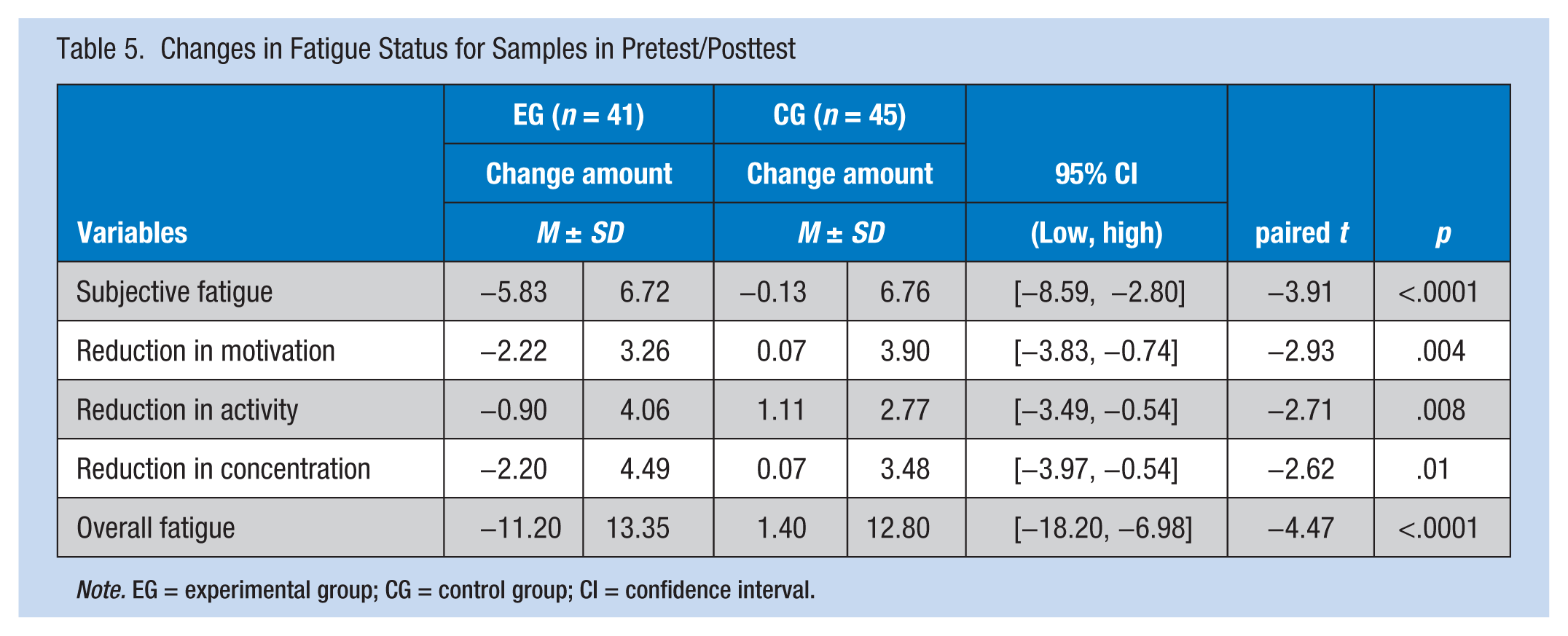
After the 8-week brisk walking intervention, the posttest subjective fatigue score between the EG and CG did not differ significantly (p > .05). However, the pretest/posttest changes in subjective fatigue in the EG and CG did vary significantly (p < .0001; Tables 4 and 5).
Comparison of Posttest Results Between Both Groups
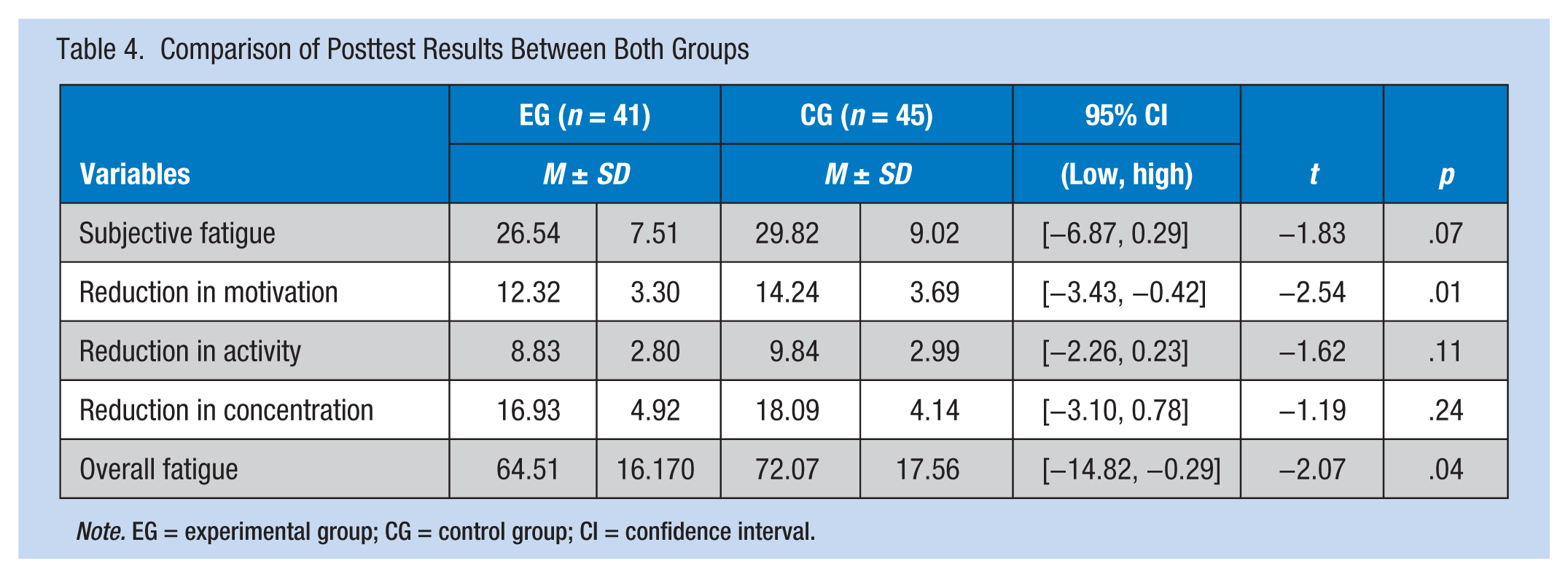
Note. EG = experimental group; CG = control group; CI = confidence interval.
Changes in Fatigue Status for Samples in Pretest/Posttest
Note. EG = experimental group; CG = control group; CI = confidence interval.
Reduction in motivation
After the 8-week brisk walking intervention, the posttest reduction in motivation between the EG and CG showed a statistical difference (p < .01). The pretest/posttest changes between the EG and CG also varied significantly (p < .01; Tables 4 and 5).
Reduction in activity
After the 8-week brisk walking intervention, the posttest reduction in activity between the EG and CG did not differ significantly (p > .05). However, the pretest/posttest changes between the EG and CG varied significantly (p < .01; Tables 4 and 5).
Reduction in concentration
After the 8-week brisk walking intervention, the posttest reduction in concentration between the EG and CG was not significantly different (p > .05). However, the pretest/posttest changes between the EG and CG demonstrated a statistical difference (p < .01; Tables 4 and 5).
Overall fatigue
After the 8-week brisk walking intervention, the posttest overall fatigue between the EG and CG showed a significant difference (p < .05). The pretest/posttest changes between the EG and CG also demonstrated a statistical difference (p < .001; Tables 4 and 5).
Effects of Brisk Walking Exercise on Fatigue Status
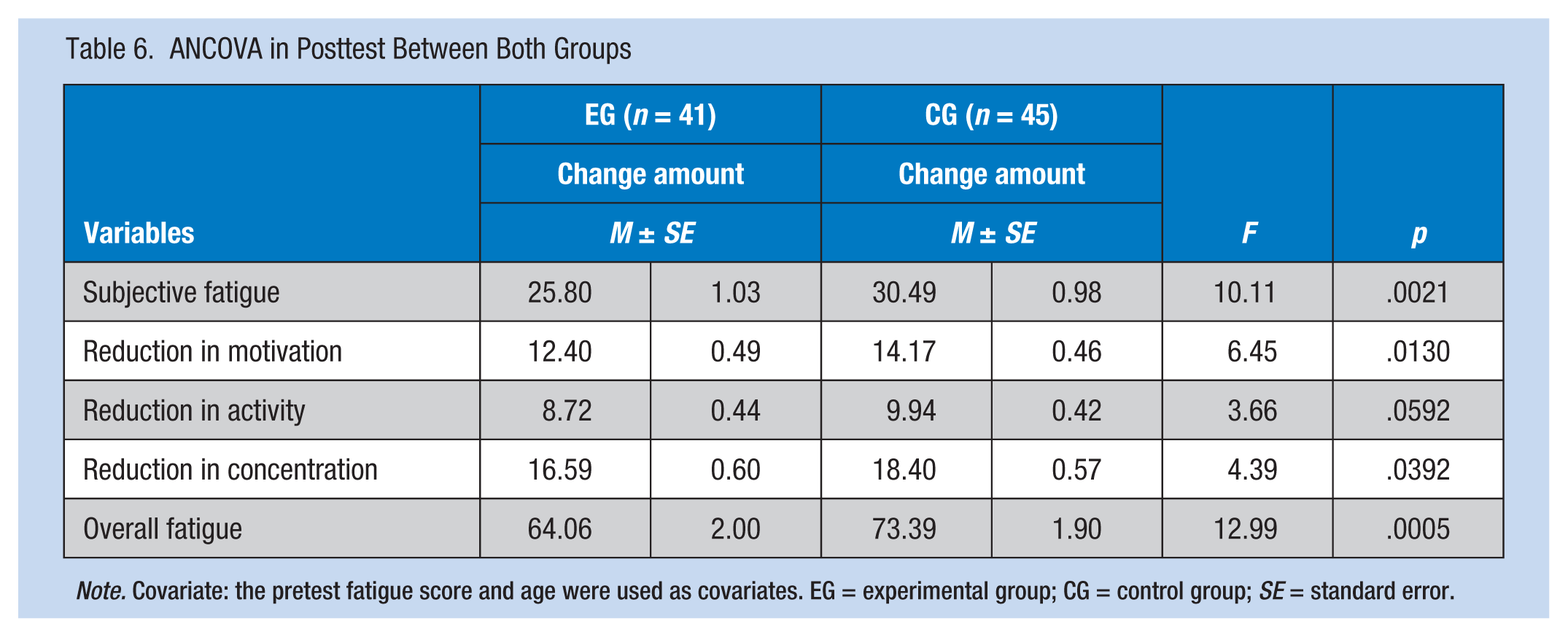
Statistical process control was used to compare the 8-week brisk walking intervention effects to eliminate any predominant differences between the groups before the intervention. Therefore, pretest results for both groups were used as the covariate for ANCOVA when comparing the groups on the effects of the exercise intervention. Before ANCOVA, the homogeneity of the within-class regression coefficient was calculated to determine if the slope of each group was the same, a fitness determinant of the homogeneity hypothesis. At pretest, the mean age of the EG was significantly higher than that of the CG. No significant between-group difference was identified for the other demographic variables. The pretest fatigue score and age were used as covariates to eliminate their effects (Table 6).
ANCOVA in Posttest Between Both Groups
Note. Covariate: the pretest fatigue score and age were used as covariates. EG = experimental group; CG = control group; SE = standard error.
Subjective fatigue
After eliminating the effects of pretest scores and age, the posttest subjective fatigue scores for the EG and CG varied significantly (F = 10.11, p < .01). The adjusted score for the EG was 25.80, which was significantly lower than that of the CG (30.49). This finding indicated that the 8-week outdoor brisk walking intervention improved subjective fatigue for the EG.
Reduction in motivation
After removing the effects of pretest scores and age, the posttest motivation scores for the EG and CG varied significantly (F = 6.45, p < .05). The adjusted score for the EG was 12.40, which was significantly lower than that of the CG (14.17). This finding indicated that the 8-week outdoor brisk walking intervention had a positive effect on motivation for the EG.
Reduction in activity
After eliminating the effects of pretest scores and age, posttest activity scores for the EG and CG did not vary significantly (F = 3.66, p > .05). The adjusted score for the EG was 8.72 and 9.94 for the CG. This finding showed that the 8-week outdoor brisk walking intervention did not affect the activity for the EG and CG.
Reduction in concentration
After eliminating the effects of pretest scores and age, the posttest concentration scores for the EG and CG varied significantly (F = 4.39, p < .05). The adjusted score for the EG was 16.59, which was significantly lower than that of the CG (18.4). This finding indicated that the 8-week outdoor brisk walking intervention improved concentration for the EG.
Overall fatigue
After eliminating the effects of pretest scores and age, the posttest overall fatigue scores for the EG and CG varied significantly (F = 12.99, p < .001). The adjusted score for the EG was 64.06, which was significantly lower than that of the CG (73.39). This finding indicated that the 8-week outdoor brisk walking intervention improved the degree of overall fatigue of workers in the Taiwanese hi-tech industry.
Discussion
The hypothesis of this study was that the 8-week outdoor brisk walking program would significantly improve the level of fatigue of workers in the hi-tech industry; study findings answered the hypothesis and demonstrated intervention benefits.
Lee (2006) examined the effect of brisk walking on middle-aged women. The women were assigned either moderate intensity, brisk walking, or CG with no exercise; they engaged in brisk walking three times per week. Puetz et al. (2008) examined the effect of exercise on sedentary healthy adults with chronic or persistent fatigue. The healthy adults were assigned to moderate intensity exercise, low intensity exercise, or no exercise groups. Twenty-minute brisk walking occurred three times per week. The groups that received the brisk walking intervention showed less fatigue; the CG without the brisk walking intervention did not demonstrate less fatigue. These findings are consistent with the results of this study.
Workers in the hi-tech industry are exposed to a highly variable and stressful work environment for extended periods of time, and thus are prone to fatigue due to overwork. Several studies have proposed that exercise can lessen fatigue. Exercise intensity does not have to be high or strong to alleviate fatigue; less frequency and time can prevent muscle ache or discomfort (H. L. Chen, Fang, Chuang, & Chu, 2013; Wu & Ko, 2012). Wu and Ko (2012) also suggested that a rest day after exercise is optimal because rest promotes recovery following a workout and therefore prevents discomfort. This study further demonstrated that a moderate intensity brisk walking program at a frequency of twice each week for more than 45 minutes per session at 60% to 90% of the HRmax reduces fatigue for workers in the hi-tech industry.
In previous studies, CIS was primarily used to distinguish fatigued patients from healthy patients. CIS has also been used to measure fatigue, making it a useful instrument in assessing population groups experiencing fatigue (Vercoulen, Alberts, & Bleijenberg, 1999; Vercoulen et al., 1994). H. L. Chen et al. (2013) used CIS and an exercise behavior questionnaire to examine the association between exercise behavior and level of fatigue among elementary school teachers. The results showed a negative correlation between fatigue and exercise behavior, indicating that elementary school teachers who performed regular exercise were less likely to be fatigued, which is consistent with the findings of this study. The results confirmed the notion that exercise improves fatigue.
A literature review showed that CIS has been used primarily to categorize fatigue and evaluate its prevalence rate (Bültmann, Kant, Beurskens, & van den Brandt, 2002) or to identify the level of fatigue among different occupational groups (Aratake et al., 2007). Few studies have used CIS to determine the effect of exercise intervention on fatigue (H. L. Chen et al., 2013). CIS is comprised of physiological, psychological, working motivations, and productivity evaluation dimensions; however, limited studies have examined the influence of exercise on these dimensions. It has been proposed that severe fatigue in workers can lead to muscle ache, weakness, decreased memory and concentration, impaired judgment, poor reaction time and movement, and impaired work performance (Ericson-Lidman et al., 2007; Olson, 2007). This study used CIS to measure the effect of an outdoor brisk walking intervention on the four dimensions (i.e., subjective fatigue, reduction in motivation, reduction in activity, and reduction in concentration) of fatigue and found noticeable improvement in EG.
Limitations of This Study
Potential limitations of this study included the following:
Budget constraints and workforce limitations that resulted in the posttest being completed immediately after the 8 weeks of brisk walking intervention; the participants were not monitored later. As a result, it is not known whether the improvement in fatigue status from this period of training continued after the study was terminated.
Because of budget constraints, the researchers did not use pulse monitor equipment to detect pulse changes. Although the researchers confirmed that all participants assessed their pulses accurately by individual oversight, some objective personal errors may have occurred.
The researchers adopted a randomized controlled trial design; however, it was only conducted in Taipei City, and the size of the valid sample was only 86. Thus, the findings cannot be extended to the rest of the population in Taiwan.
Conclusion
Brisk walking is an acceptable form of exercise for a large portion of the population. It does not require formal training or special equipment, and individuals can walk in their own locality and time.
Studies typically recommend regular exercise of three 30-minute sessions weekly. This study has shown that a twice weekly 60-minute session is also beneficial. Specifically, workers can exercise in the natural environment near the office with coworkers, facilitating bonding between workers and development of a regular exercise routine. Brisk walking is suitable for hi-tech workers who sit for long periods of time, minimally exercise, and perform stressful work, as walking promotes healthy lifestyles over time. The researchers confirmed that the 8-week outdoor brisk walking program can significantly reduce fatigue among hi-tech employees. These findings serve as a reference for health authorities in Taiwan and provide awareness about workplace health promotion in the hi-tech industry.
Applying Research to Practice
In a time of economic recession, the design of a cost-effective program to promote the health of employees has become a workplace challenge. To prevent occupational health hazards and improve working conditions, employers must offer occupational health care services for employees using experienced occupational health care professionals and consultants. This study provides an example of a brisk walking intervention for employee health promotion; the implications of this research are significant.
Footnotes
Appendix
| Week | Day | Class | Warm up (minutes) | Walking (minutes) | Cool down (minutes) | Place |
|---|---|---|---|---|---|---|
| Week 1 | Monday | A | 10 | 60 | 5 | Walking tracks or sidewalks |
| Tuesday | B | 10 | 60 | 5 | Walking tracks or sidewalks | |
| Wednesday | A | 10 | 60 | 5 | Walking tracks or sidewalks | |
| Thursday | B | 10 | 60 | 5 | Walking tracks or sidewalks | |
| Week 2 | Monday | A | 10 | 60 | 5 | Walking tracks or sidewalks |
| Tuesday | A, B | 10 | 60 | 5 | Walking tracks or sidewalks | |
| Wednesday | A | 10 | 60 | 5 | Walking tracks or sidewalks | |
| Week 3 | Monday | A | 10 | 55 | 5 | Walking tracks or sidewalks |
| Tuesday | B | 10 | 55 | 5 | Walking tracks or sidewalks | |
| Wednesday | A | 10 | 55 | 10 | Walking tracks or sidewalks | |
| Thursday | B | 10 | 55 | 10 | Indoor sports court | |
| Week 4 | Monday | A | 10 | 55 | 5 | Walking tracks or sidewalks |
| Tuesday | B | 10 | 55 | 5 | Walking tracks or sidewalks | |
| Wednesday | A | 10 | 55 | 10 | Walking tracks or sidewalks | |
| Thursday | B | 10 | 55 | 10 | Walking tracks or sidewalks | |
| Week 5 | Monday | A | 15 | 50 | 5 | Walking tracks or sidewalks |
| Tuesday | B | 15 | 50 | 5 | Walking tracks or sidewalks | |
| Wednesday | A | 15 | 50 | 10 | Walking tracks or sidewalks | |
| Thursday | B | 15 | 50 | 10 | Walking tracks or sidewalks | |
| Week 6 | Monday | A | 15 | 50 | 10 | Walking tracks or sidewalks |
| Tuesday | A, B | 15 | 50 | 10 | Walking tracks or sidewalks | |
| Thursday | A | 15 | 50 | 10 | Walking tracks or sidewalks | |
| Week 7 | Monday | A | 15 | 45 | 10 | Indoor sports court |
| Tuesday | B | 15 | 45 | 10 | Walking tracks or sidewalks | |
| Wednesday | A | 15 | 45 | 10 | Walking tracks or sidewalks | |
| Thursday | B | 15 | 45 | 10 | Walking tracks or sidewalks | |
| Week 8 | Monday | A | 15 | 45 | 10 | Walking tracks or sidewalks |
| Tuesday | B | 15 | 45 | 10 | Walking tracks or sidewalks | |
| Wednesday | A | 15 | 45 | 10 | Indoor sports court | |
| Thursday | B | 15 | 45 | 10 | Walking tracks or sidewalks |
Note. Class A: 19 persons; Class B: 22 persons.
Conflict of Interest
The author(s) declared no potential conflicts of interest with respect to the research, authorship, and/or publication of this article.
Funding
The author(s) received no financial support for the research, authorship, and/or publication of this article.
Author Biographies
Li-Ling Wu is an occupational health nurse for a hi-tech industry.
Kuo-Ming Wang is an assistant professor in the Department of Exercise and Health Sciences, National Taipei University of Nursing and Health Sciences.
Po-I Liao is a physician in the Taiwan Adventist Hospital.
Yu-Hsiu Kao is an associate professor in the Graduate Institute of Health Allied Education, National Taipei University of Nursing and Health Sciences.
Yi-Ching Huang is a professor in the Department of Exercise and Health Sciences, National Taipei University of Nursing and Health Sciences.