




Abstract
Background
Periodic wellness assessments can provide an estimate of a person’s relative risks for major diseases, but wellness visits are underused. Our suggestion is to use a comprehensive device during a single visit.
Objective
The goal of this pilot study was to evaluate the feasibility of a novel one-stop wellness device (Preventiometer; iPEx5 GmbH, Greifswald, Germany) for performing multiple tests and providing a comprehensive wellness assessment in a short period.
Methods
A Preventiometer was used to provide wellness assessments for 10 healthy volunteers who then answered a 25-question survey to rate their satisfaction with the testing and their overall impression.
Results
All volunteers agreed or strongly agreed with the following: The assessment reports were easy to understand, the Preventiometer met their satisfaction, the participants were comfortable during the assessment, and all measurements and testing were well coordinated. Participants liked the instant test result feature. Most (90%) agreed that the machine was useful for a quick health assessment for busy people, and 70% felt that it was time efficient.
Conclusion
In this feasibility pilot study, the Preventiometer performed multiple tasks and provided a comprehensive wellness assessment in a short period. Participants reported remarkably high satisfaction with the tests. A larger study is needed to prove that this is a pragmatic approach to help individuals improve their health.
Keywords
Introduction
According to the National Wellness Institute, “Wellness is an active process through which people become aware of, and make choices toward, a more successful existence.” 1 Wellness implies living a healthy lifestyle with a conscious, positive, and self-directed attitude to achieve full potential. To a large degree, the 10 most common causes of death in the United States are related to lifestyle. 2 Most of these diseases take years or even decades to develop, and by the time a physician makes a diagnosis, the disease has already been established. However, periodic wellness assessments can provide an estimate of a person’s relative risks for major diseases and disorders, and recommendations may be provided to prevent these conditions. This information may help people enjoy longer, healthier, and more productive lives with reduced medical cost. 2 The value of wellness promotion is demonstrated by the fact that in 2011 Medicare started covering annual wellness visits, which include a health risk assessment and a customized wellness or personal prevention plan. 3
Disease prevention and health promotion are of particular interest in the workplace. In 2009, the Centers for Disease Control and Prevention developed the Healthy Workforce Initiative with a website for workplace health promotion program planners.4,5 Since then, the prevalence of workplace wellness programs has increased. About four-fifths of all U.S. employers with more than 1,000 employees are estimated to offer such programs. 6 For those larger employers, program offerings cover a range of screening activities, interventions to encourage healthy lifestyles, and support for employees with manifest chronic conditions. 6 However, these wellness programs have a low participation rate among the general population. 6 A survey (Medicare Current Beneficiary Survey) conducted by the Centers for Medicare and Medicaid Services indicated that less than 10% of Medicare patients had received an annual wellness visit. 7 Clearly, wellness visits or programs are underused in the United States.
The reasons for this underuse may include the following: (1) More than ever, physicians are pressed for time during patient appointments. Physicians must often address multiple issues in 1 visit, leaving little time for prevention and wellness discussions. (2) Awareness of wellness resources may be lacking among patients and healthy populations. 7 (3) Patients may not have access to a comprehensive, one-stop appointment session for a wellness assessment, and they may not be able to leave work for multiple appointments. (4) Patients may have a fear of receiving bad results. Many patients believe that the purpose of screenings is to identify abnormalities; consequently, their fear increases. (5) Patients may be unsure of their insurance coverage for wellness assessments.
Although several incentivized health management strategies have existed (eg, self-monitored apps and workplace wellness programs), they have not been sufficient to improve the participation rate.8,9 Coping with the problems listed above requires a better device with integrated technologic tools 10 for self-monitoring and a stronger emphasis on wellness and a healthy lifestyle. 11 With the cost of health care increasing, the prevention of diseases and disorders should help to limit those expenses for patients. 12
A visionary approach may be a comprehensive integrated device that provides an efficient, affordable health and risk assessment in a one-stop visit with unique data generation and analysis capabilities to allow for continuous and effective follow-up support. To address the existing gap, we evaluated a novel device, the Preventiometer (iPEx5 GmbH, Greifswald, Germany), for its capacity to produce a comprehensive health and wellness assessment and generate data. The goal of this pilot study was to evaluate the feasibility of the Preventiometer assessment with healthy volunteers and to gather information from the participants on the value of the overall wellness assessment. A successful pilot study would lead to future studies to investigate the device’s utility in promoting health- and wellness-focused lifestyle changes and discussions and coaching and in providing access to comparison data after lifestyle changes are implemented.
Methods
Study Design and Participants
This pilot study was reviewed and approved by the Mayo Clinic Institutional Review Board (IRB) as a minimal-risk study with the study device Preventiometer (U.S. Food and Drug Administration [FDA] status: 510[k] exempt, device class 1, regulation 880.6310). The pilot study design was chosen to measure the outcomes and to assist the research team in determining the feasibility of a larger study. An IRB-approved study flyer was used to recruit 10 healthy volunteers to participate in the study.
Description of Preventiometer
A Preventiometer was provided to Mayo Clinic by the manufacturer for this study (Figure 1). The device has been developed and used in Germany and is the subject of several ongoing clinical trials (eg, at the University of Greifswald).

A, State-of-the-Art Preventiometer. B, Mobile Preventiometer. (From Ipexhealth. Available from: https://www.ipexhealth.com/en/; used with permission.)
The Preventiometer is a unique integrated suite of individually FDA-approved devices that offer many wellness assessments. For this pilot study, we used the following:
Lung function tests; Electrocardiography and heart rate variability; Vital signs and measurements (including blood pressure; weight; waist, height, and hip measurements; body mass index; waist to height ratio; and waist to hip ratio); Oxygen level; Body temperature; Body muscle and fat analysis; Hearing test; Vision test (visual acuity and color blindness assessment); Ultrasonography of the carotid arteries; Lower extremity vein assessment; Bone mineral density test; Body posture; Spine analysis.
We did not use the following assessments, which were available but not performing properly.
Ultrasonography of the thyroid; Basic blood tests (eg, complete blood cell count and total cholesterol); Prospective Cardiovascular Münster study (PROCAM) risk score;
Individual functions can be included or excluded for different populations and desired outcomes. The processes for each assessment are automated, and the participant is guided by a virtual person and technician on the large parabolic screen at the front of the device. A technician is present throughout the examination to answer questions and to assist with certain examinations (eg, ultrasonography and lower extremity vein assessment).
Survey Instruments
A 25-question survey was designed to capture participants’ perceptions about the Preventiometer wellness assessment. The survey addressed 4 areas:
Satisfaction with various tests performed during the Preventiometer screening (6 questions). Overall wellness assessment with the Preventiometer screening (6 questions). Perception of outcomes (7 questions). Utility of the Preventiometer (6 questions).
Scoring for satisfaction with various tests was based on a numeric rating scale (NRS) from 0 (not satisfied at all) to 10 (best possible satisfaction). The other 3 areas (overall wellness assessment, perception of outcomes, and utility of the Preventiometer) were scored on a Likert scale from 1 (strongly disagree) to 5 (strongly agree).
Study participants were also requested to provide feedback or comments about the entire Preventiometer wellness assessment process, and they were asked whether they would be willing to pay a fee for the assessment and if so, how much. Participants’ demographic information was also collected.
Process and Flow of Preventiometer Assessment
We hypothesized that a comprehensive assessment would take approximately 50 to 70 minutes from the start of the test to completion of the last component. We used a standard clock and recorded the start and end times of the Preventiometer assessment for each participant to determine the duration.
Data Collection and Analysis
Study data were collected on paper survey forms and entered electronically into the secure, password-protected, web-based Research Electronic Data Capture (REDCap) program hosted by Mayo Clinic. Descriptive analyses were performed with Microsoft Excel (Microsoft Corp, Redmond, Washington) and SAS 9.4 with JMP 10 software (SAS Institute Inc, Cary, North Carolina).
Results
Preventiometer Assessment Details
Data from the machine-conducted checkups are summarized in Table 1 for each of the 10 study participants in various areas.
Preventiometer Assessments of Study Participants.

Abbreviations: ARI, autonomic regulation index; BMI, body mass index; ECG, electrocardiogram; F, female; HRV, heart rate variability; IMT, intima-media thickness; M, male; PROCAM, Prospective Cardiovascular Münster study; SRI, sinus rhythm indeterminate; WtHR, waist to hip ratio; … (ellipsis), could not be measured because of mechanical issue.
Process and Flow Using the Preventiometer
Table 2 depicts the assessment time for each study participant. Each participant’s wellness assessment was completed within a range of 50 to 70 minutes (mean [SD], 59.4 [4.7] min; 95% CI, 56.0–62.8 min).
Duration of Preventiometer Assessment.

aMean (SD), 59.4 (4.7) minutes; 95% CI, 56.0
bThe duration met our hypothesized time range of 50 to 70 minutes. The study was feasible because all the enrolled participants completed the assessment within the hypothesized time range.
Rating Satisfaction With Various Tests
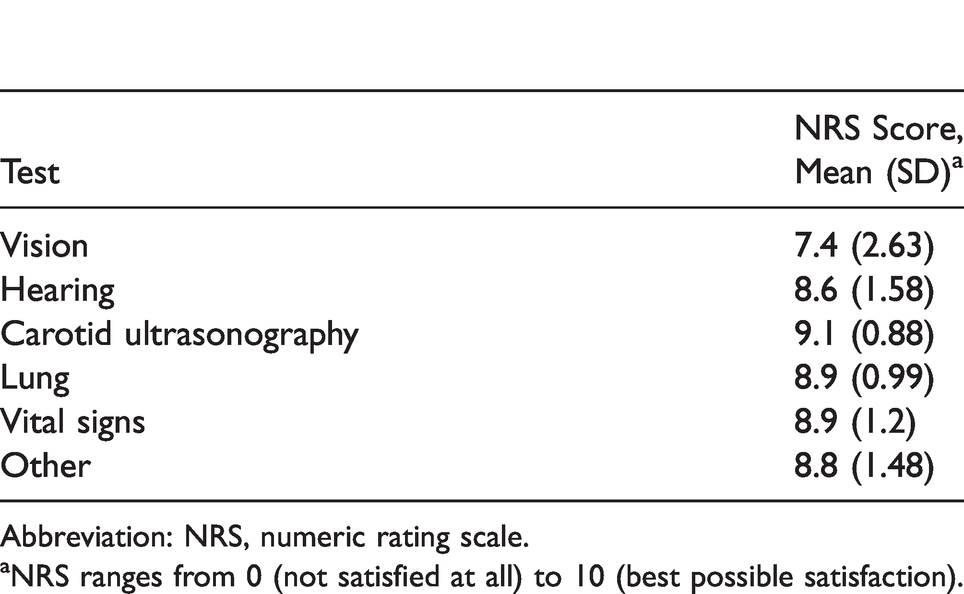
Table 3 summarizes participants’ satisfaction with various tests conducted with the Preventiometer. The mean NRS scores for all the tests were greater than 7 (ie, a high level of satisfaction).
Mean NRS Scores for Satisfaction With Preventiometer Tests.
Abbreviation: NRS, numeric rating scale.
aNRS ranges from 0 (not satisfied at all) to 10 (best possible satisfaction).
Overall Preventiometer Assessment
All 10 participants (100%) agreed or strongly agreed that the Preventiometer wellness assessment met their satisfaction. Similarly, all (100%) agreed or strongly agreed that they were comfortable during the assessment, that all measurements and testing were well coordinated, and that they were engaged during the entire assessment. When asked whether the duration of the entire wellness assessment was reasonable, 9 (90%) answered positively (agreed or strongly agreed), and 70% agreed that the Preventiometer is a time-efficient device for wellness assessment (Table 4).
Participants’ Ratings, Perceptions, and Agreement on Utility of Preventiometer.

aParticipants’ responses were based on a 5-point Likert scale from 1 (strongly disagree) to 5 (strongly agree).
Perception of Outcomes
All 10 participants (100%) agreed or strongly agreed that the assessment report was easy to understand, that they were satisfied with the report and its readability, and that they would recommend the Preventiometer wellness assessment. When asked about comprehending their health status from this assessment and use of the Preventiometer as a part of personal wellness, 8 participants (80%) reported positively (agreed or strongly agreed). Seven participants (70%) responded that the report was very informative for them (Table 4).
Utility of Preventiometer
All 10 participants (100%) responded that they liked the instant test result feature and agreed that the Preventiometer is a novel and engaging device for general awareness of wellness. Nine participants (90%) either agreed or strongly agreed that it is a useful machine with a quick health assessment for busy people and that a healthy population would benefit from it. Seven (70%) agreed or strongly agreed that the device would save time for wellness checkups (Table 4).
Additional Feedback
We also collected additional comments from the study participants about the Preventiometer assessment, such as the following:
“I like that you were able to see the results as you went.” “Quick analysis, easy tests, instant results, one location.” “I like the broad range of tests that were run.” “Quick, instant results, simple testing, and smooth flow for moving from test to test.” “All results in one session.” In contrast, participants also reported, “Some features did not work.”
Discussion
In this feasibility pilot study, we evaluated a novel wellness assessment device, the Preventiometer, for its ability to perform multiple tests and to provide a comprehensive wellness assessment in a short period. The device was developed in Germany, with the goal of promoting wellness for employees of large companies by generating and receiving information about patients’ health risks and targeting it to empower patients to take charge of their health. This pilot study showed that this device is feasible to use for baseline assessment and screening with various tests relatively quickly (50–70 min). All 10 participants completed the wellness assessment within a single session.
For new medical devices, the perceptions of patients and their overall acceptance are important.13–17 This has been shown in several previous studies with innovative medical devices and medical technologies.14,15,18–30 Participants’ preferences and ratings are also crucial for further development of the new devices, which includes additional innovation, documentation of adverse events, adherence to regulatory requirements, and risk assessment.13,31 Our survey captured participants’ assessments in 4 main domains: overall assessment, perception of outcomes, utility of the Preventiometer, and ratings of all tests individually. Our results indicated remarkably high satisfaction with all the tests conducted by the device. All the participants agreed or strongly agreed that the test results were easily understood, that they were satisfied with the report and its readability, and that they would recommend the wellness assessment to others. Study participants also reported favorably about the one-stop assessment and the visual and instant result features of the Preventiometer. We received further positive feedback about the entire assessment process from the participants in our qualitative survey. Participants were interested in blood test results with the Preventiometer, and we plan to add those in our next study.
Wellness assessment is important, but people who feel that they are healthy confront many barriers for undergoing reliable baseline screening evaluations. Studies have shown that patients underuse and avoid medical care32–34 for various reasons even with Medicare’s annual wellness visit benefit.35,36 However, according to the American Board of Internal Medicine Foundation and the Society of General Internal Medicine, routine health checks and periodic health examinations for asymptomatic patients impose high costs on the health-care system.37,38 A novel approach like the Preventiometer offers a low-cost, single 60-minute visit that does not require the presence of a physician and could be easily offered to employees of large companies. In Germany, a mobile device (Figure 1(B)) has been used in an articulated bus to help reach people living in remote areas or to offer quick screenings to employees of small companies.
In summary, our pilot study was successful with the number of tests performed. Our findings suggest that the Preventiometer wellness assessment is feasible, and it is appreciated by healthy volunteers and asymptomatic patients. It provides information in a time-efficient manner and engages the participants throughout the session. According to the manufacturer, the cost of an entire wellness assessment would be far less than the cost of a conventional checkup. In Germany, the estimated cost for a complete Preventiometer checkup is around $100 (U.S. dollars), while obtaining the same amount of data in the traditional way (ie, in different physicians’ offices), would cost about 8 to 10 times more. In the United States, those costs would be more variable and even higher. Thus, the Preventiometer appears to be an innovative way of addressing general physical assessment of healthy individuals. In addition to the lower costs (compared with conventional checkups), the device also saves a substantial amount of time for both the client and the physician.
Our study had several limitations: First, it was a pilot study with only 10 participants. The sample number was small, and a future study with a large sample number is warranted. Second, some of the tests, such as laboratory tests and PROCAM scores could not be conducted because of mechanical issues or machine errors. Third, some of the results were not provided in the English language and needed to be translated. Another limitation of this study is that it was carried out at a single academic medical center in the Midwestern United States. Thus, the results may not be applicable to participants in other medical settings or regions of the country.
Our future plan is to address the limitations of this pilot study. Plans are underway to proceed with a larger study with more participants. The Mayo Clinic IRB has already approved the study. We are working with the manufacturer to fix some of the tests and mechanical issues, such as laboratory tests, PROCAM scores, visualization of results on the large computer screen, and English translations of the assessment results. The subsequent study, which will begin after these issues have been addressed, will reexamine the feasibility of the device and focus on discussing the assessment results with the goal of motivating changes in behavior.
Footnotes
Author Note
Mayo Clinic does not endorse specific products or services included in this article.
Acknowledgments
The authors express their sincerest gratitude to all the healthy volunteers who participated in the pilot study for their time, engagement in wellness assessment, and willingness to complete all the survey questions.
Declaration of Conflicting Interests
The author(s) declared no potential conflicts of interest with respect to the research, authorship, and/or publication of this article.
Funding
The author(s) disclosed receipt of the following financial support for the research, authorship, and/or publication of this article: An anonymous benefactor provided funding for this study.