




Abstract
Drawing on data from Rounds 7–10 of the Afrobarometer survey (n = 4,800), this study examines the relationship between lived poverty and Moroccans’ willingness to have immigrants and foreign workers as neighbours. Regression analyses reveal that higher levels of poverty are associated with greater reluctance to have members of these groups as neighbours. This suggests that economic vulnerability may heighten perceived intergroup competition, which, in turn, can foster anti-immigrant sentiment. Disaggregating the data reveals clear patterns. The main relationship holds among men but not among women, and among residents of urban centres but not among those in rural areas. Poor men may exhibit greater hostility towards immigrants than poor women due to men’s higher levels of labour market participation, which place them in more direct competition with immigrants for low-skilled jobs such as in agriculture, trade and construction. Similarly, poor Moroccans in urban centres may be more hostile towards immigrants than their rural counterparts because they are more likely to encounter wealthy native elites and foreigners, which makes their relatively disadvantaged position more salient. This may be compounded by labour market competition, as immigrants are often willing to accept lower wages and poorer working conditions. By focusing on Morocco—a key node in North–South migration flows—this study contributes to broader debates on how structural inequality shapes public opinion towards immigrants in the Global South.
Introduction
Morocco plays a critical role as a transit country for Sub-Saharan African (SSA) migrants seeking to reach Europe, largely due to its strategic geographic position. Bordered by the Mediterranean Sea and sharing land frontiers with the Spanish enclaves of Ceuta and Melilla, Morocco is the only African country with direct land borders to a European Union member state. These unique geopolitical conditions make it a key waypoint for migrants hoping to access European territory. Although these borders are heavily fortified with high fences topped by barbed wire and strictly monitored, many migrants continue to attempt the dangerous crossing—either by scaling these barriers or by swimming along the coast. A particularly tragic example occurred in June 2022, when more than 2,000 migrants attempted to breach the fence into Melilla. The violent clash with Moroccan border guards resulted in the deaths of at least 23 migrants, with many more injured (Hedgecoe, 2022; Human Rights Watch, 2022). This incident highlights the growing risks and human costs associated with migration along the Morocco–EU frontier.
Yet Morocco’s migration story is not only about those passing through. Many Moroccans—particularly youth and the unemployed—also undertake the perilous journey described in search of better opportunities (BBC, 2021; Dombey & Saleh, 2021; Parra & Elshamy, 2021). Data from Round 10 of the Afrobarometer survey (2024) highlight how widespread these aspirations are: half of Moroccan adults report having considered emigrating to another country. 1 Among those who express such a desire, Europe and North America (specifically the United States and Canada) emerge as the top destinations, being attractive to 60% and 26% of said prospective migrants, respectively. The primary driver here was cited as the search for employment or improved job prospects. 2
This dual reality—Moroccans seeking opportunities abroad while others migrating into and through their native country—reflects its intermediate position in global development hierarchies. Despite its challenges, Morocco’s socio-economic conditions remain significantly better than those in many SSA countries. In 2023, Morocco recorded a Human Development Index score of 0.71, notably higher than both the SSA regional average of 0.568 and the individual scores of most of the latter’s constituent countries (United Nations Development Programme, 2025). While Morocco is often characterised as a transit country for SSA migrants en route to Europe, its comparatively high level of development has increasingly positioned it as a destination in its own right (Berriane, 2015; Berriane et al., 2013; Buehler et al., 2023; El Ghazouani, 2019; Simoncelli et al., 2023). This shift underscores the complex and evolving nature of migration dynamics in North Africa, where economic disparities between regions shape patterns of movement and settlement due to perceptions of opportunity.
With Morocco’s growing role as a destination country, the presence of migrants has provoked social tensions. Although immigrants in Morocco come from diverse regions—including conflict-affected Arab countries such as Syria and Iraq—the majority originate from SSA. Some estimates place the number of migrants hailing from the latter at around 700,000, representing approximately 2% of Morocco’s total population (Berengaut, 2021; El Ghazouani, 2019). Notably, public opposition to migrants is particularly pronounced against those of SSA origin (Buehler et al., 2020; Buehler & Han, 2021), reflecting both racial and social hierarchies (Gazzotti, 2021; King, 2019).
To better understand the roots of this animosity, this study draws on data from Rounds 7 through 10 of the Afrobarometer survey (n = 4,800) conducted in Morocco between 2018 and 2024. Specifically, it examines the relationship between lived poverty and hostility towards immigrants and foreign workers. It is important to distinguish this study from previous research exploring similar questions in Morocco (e.g., Buehler et al., 2020, 2023; Buehler & Han, 2021). First, this study adopts a more nuanced and multidimensional measure of poverty—the Afrobarometer Lived Poverty Index—which captures individual deprivation across five basic dimensions: access to food, water, cooking fuel, medical care and cash income. This approach contrasts with previous studies that rely mainly on monetary indicators such as income. Second, this study gives closer attention to the moderating effects of gender (men vs. women) and region of residence (urban vs. rural) on the relationship between lived poverty and hostility towards immigrants and foreign workers, thereby providing a deeper and more contextually grounded understanding of this nexus. Finally, it disaggregates the Lived Poverty Index to examine how each of its components relates to hostility, allowing for an assessment of whether certain dimensions of deprivation exert stronger influences than others.
The remainder of this study is structured as follows: First, I discuss the relevant theoretical framework and present the hypotheses. Next, I introduce the data, describe the key variables used in the regression analysis and explain the analytical strategy adopted. The regression results are then presented and discussed. Finally, the conclusion summarises the findings and discusses policy implications.
Theoretical Considerations
The intergroup threat theory (ITT) (Stephan et al., 2015; Stephan & Renfro, 2016; Stephan & Stephan, 1985, 1996) offers an important framework for understanding how and why individuals perceive outgroups as a source of danger, leading to prejudice, discrimination and intergroup conflict. The theory posits that negative attitudes arise from perceived threats that outgroups posed to the in-groups—whether or not these threats are objectively real. Defensive responses are triggered in consequence, including increased in-group solidarity, heightened hostility towards outgroups and support for exclusionary or aggressive policies. ITT distinguishes between two primary types of threats: realistic and symbolic. Realistic threats involve tangible concerns, such as competition over jobs, housing or other economic resources, as well as threats to physical safety, national security or public order. In contrast, symbolic threats relate to perceived challenges to the in-group’s values, beliefs, norms or cultural identity. These include anxieties about moral or cultural incompatibility; perceived threats to religion, language, or national identity; and fears that an outgroup undermines traditional social norms.
While ITT highlights how perceptions of danger fuel intergroup hostility, the scapegoating theory offers a complementary psychological perspective. It emphasises how frustration and aggression—often stemming from deprivation—are turned towards less powerful groups who may have little or no responsibility for the underlying problems at hand. In his classic work ABC’s of Scapegoating, Allport defines ‘a phenomenon wherein some of the aggressive energies of a person or group are focused upon another individual, group, or object; the amount of aggression and blame being either partly or wholly warranted’ (1943, p. 11). He identifies poverty and a desire for self-enhancement as key drivers of such behaviour. During times of war or crisis, when deprivation and frustration are widespread, people often become aggressive. Yet such sentiment is not always directed at the actual sources of hardship; instead, it may be projected towards another group or individual who is only partially responsible, if at all, for the situation in question. As Allport notes, ‘the scapegoat is made to pay not only for immediate and recent deprivations, in which he may have played some minor part, but also for frustrations of long standing, most of which have little to do with the current situation’ (1943, p. 15).
Empirical research lends support for the validity of both ITT and the scapegoating theory while also underscoring the crucial role lived poverty plays in shaping hostile attitudes towards outgroup members. In a cross-national study covering Britain, France, Germany, Spain and the United States, Ciftci (2012) found that both perceived realistic and symbolic threats played a significant role in shaping anti-Muslim attitudes. Using representative survey data, Buehler et al. (2023) identify poor and less-educated Moroccans as more likely to perceive immigrants from SSA as a labour market threat. Similarly, research in South Africa has shown how xenophobic attacks against African migrants—particularly those from Zimbabwe, Mozambique, Nigeria and Somalia—are driven by widespread poverty; high unemployment; and perceived competition with locals for jobs, housing and public services. As a result, migrants are often scapegoated as the source of ongoing socio-economic hardship (Choane et al., 2011; Everatt, 2011; Gordon, 2015; Hlatshwayo, 2023; Tarisayi & Manik, 2020).
Returning to the Moroccan case, I anticipate that lived poverty will increase the likelihood that Moroccans express unwillingness to have immigrants and foreign workers as neighbours. This expectation stems from the idea that economically disadvantaged individuals may perceive immigrants as direct competitors for scarce resources, such as jobs, housing and state-provided social services. The discussion so far leads to the following hypothesis:
H1: Among the population in Morocco, poverty positively correlates with hostility towards immigrants and foreign workers.
The relationship between poverty and hostility towards immigrants and foreign workers may vary by gender. Data from Wave 7 of the World Values Survey (Haerpfer et al., 2022), conducted in Morocco in 2021, show that 70% of the adult population believe that when a mother works for pay, her children suffer. 3 Disaggregating the data by gender reveals that 74% of men hold this view, compared to 67% of women. The same survey indicates that 62% of Moroccans agree that being a housewife is just as fulfilling as working for pay, with 69% of men and 54% of women sharing this belief. Although men are more likely than women to hold such views, the estimates among women are also notably high, suggesting that many women have internalised gender norms that may constrain their labour market participation.
These patterns likely reflect broader societal gender norms that assign domestic and caregiving roles to women while designating men as primary providers (Pels, 2000; Prettitore, 2015; Williams 2025). Such norms may be even more entrenched among poorer segments of society, who are often less educated and more traditional in outlook. Against this backdrop, it is plausible that gender norms—rather than direct labour market competition—constitute the main barrier to poor Moroccan women’s employment. Before these women can even enter the labour market and compete with immigrants for jobs, they must first overcome powerful social expectations that confine them to domestic roles, which poses a significant challenge.
Consequently, poor Moroccan women may be less likely to perceive immigrants as competitors for employment than their poor male counterparts. Poor men, in contrast, may experience greater pressure to secure low-skilled jobs in order to fulfil their breadwinner role, thereby heightening their sense of competition with immigrant workers. This dynamic could translate into poorer Moroccan men exhibiting more hostile attitudes towards immigrants and foreign workers than poor women.
The discussion so far leads to the second hypothesis:
H2: The positive correlation between poverty and hostility towards immigrants and foreign workers is stronger among men than women.
People’s region of residence may also moderate the relationship between poverty and hostility towards immigrants and foreign workers. Research has shown that individuals living in rural areas often exhibit more hostile attitudes towards immigrants than their urban counterparts (Bunn et al., 2008; Chakraborti & Garland, 2004). 4 Possible explanations include the tendency for rural areas to have more homogeneous populations (resulting in less contact with immigrants), the stronger attachment to cultural norms that may be perceived as ‘threatened’ by cultural diversity and the generally lower levels of education among rural populations (Abdesslam, 2012; Ibourk & Raoui, 2025; Zhang, 2006).
However, the rural poor might display less hostility towards immigrants and foreign workers than the urban poor. This expectation is rooted in relative deprivation theory, which posits that feelings of deprivation are not necessarily driven by absolute poverty, but rather by people’s assessment of their socio-economic position relative to others (Runciman, 1966; Smith et al., 2012; Walker & Pettigrew, 1984). Given that rural areas are generally poorer than urban centres (Bernard, 2019; Cordeiro et al., 2021; Yaya et al., 2019), poor Moroccans living in rural areas may be less likely to encounter wealthy native elites or affluent immigrants. In contrast, poor Moroccans in urban areas are more likely to interact with wealthy elites and foreigners, which may heighten their awareness of relative disadvantage. In other words, the reference group against which the urban poor compare themselves tends to be more affluent than that of the rural poor, leading to stronger perceptions of inequality.
Moreover, urban centres often attract immigrants seeking employment opportunities, particularly in low-skilled sectors such as trading, agriculture and construction (McCormack et al., 2025; Medland, 2021). Immigrants may also be more willing than poor natives to accept lower wages and harsher working conditions, making them more ‘attractive’ to profit-driven employers who prioritise cost reduction over employee welfare (Rahmouni, 2023; Raynal, 2020; Williams & Swanepoel, 2019). Consequently, poor urban Moroccans may perceive greater competition from immigrants for low-skilled jobs than their rural counterparts, potentially leading to higher levels of hostility towards immigrants and foreign workers.
This reasoning leads to the third and final hypothesis:
H3: The positive correlation between poverty and hostility towards immigrants and foreign workers is stronger among urban residents than rural residents.
Data and Methodology
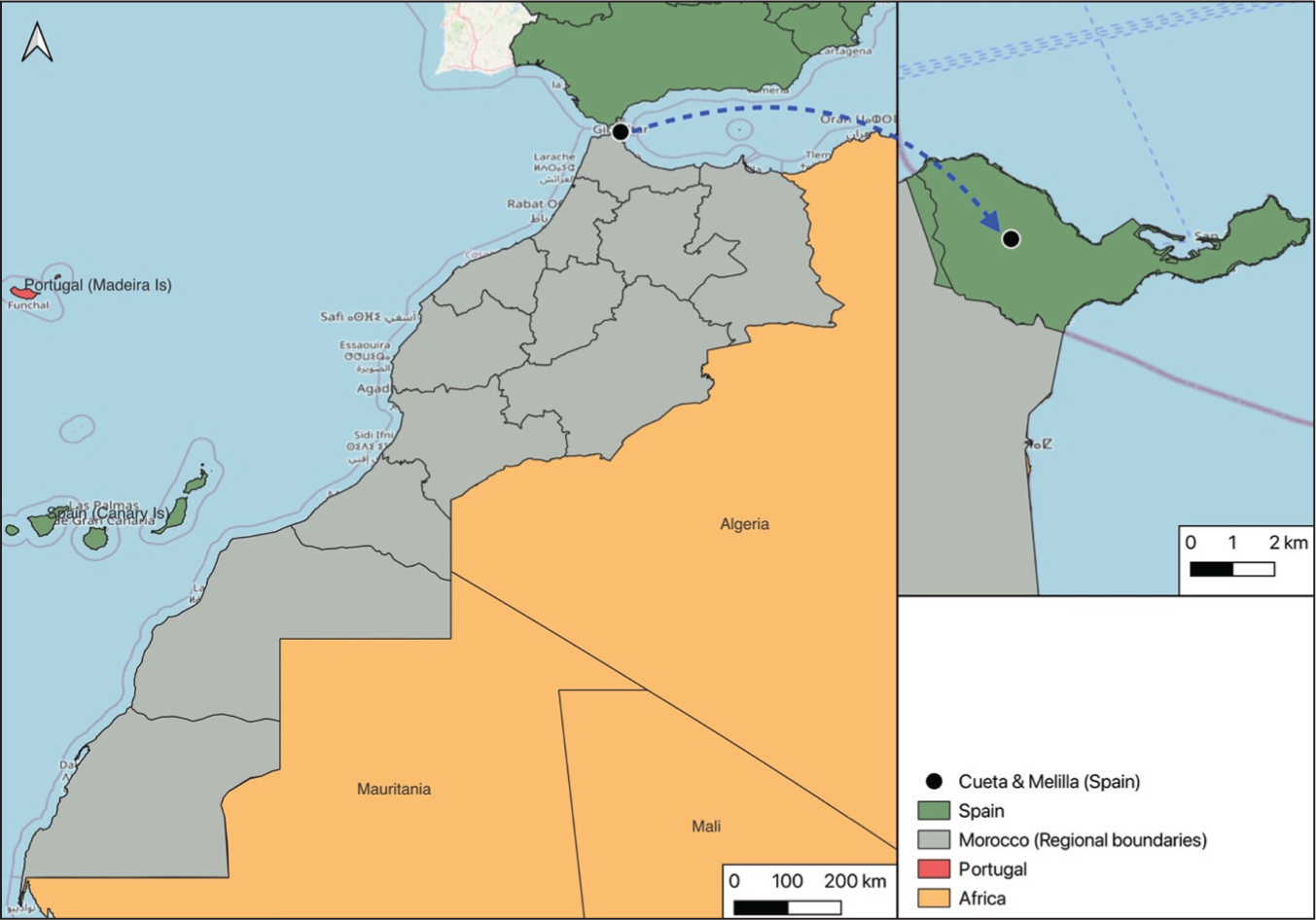
This study uses, as noted, data from Rounds 7–10 of the Afrobarometer survey. Each round includes 1,200 responses, resulting in a total sample size of 4,800 observations. Respondents were all at least 18 years old, with men and women evenly represented in a 50:50 ratio. Data were collected from all 12 of Morocco’s administrative regions (see Figure 1). Because Afrobarometer employs probabilistic sampling methods, the data are nationally representative of the Moroccan population. The following section describes the variables used to estimate the regression models. 5 All variables are derived from Afrobarometer.
Operationalisation of the Variables
Dependent Variable
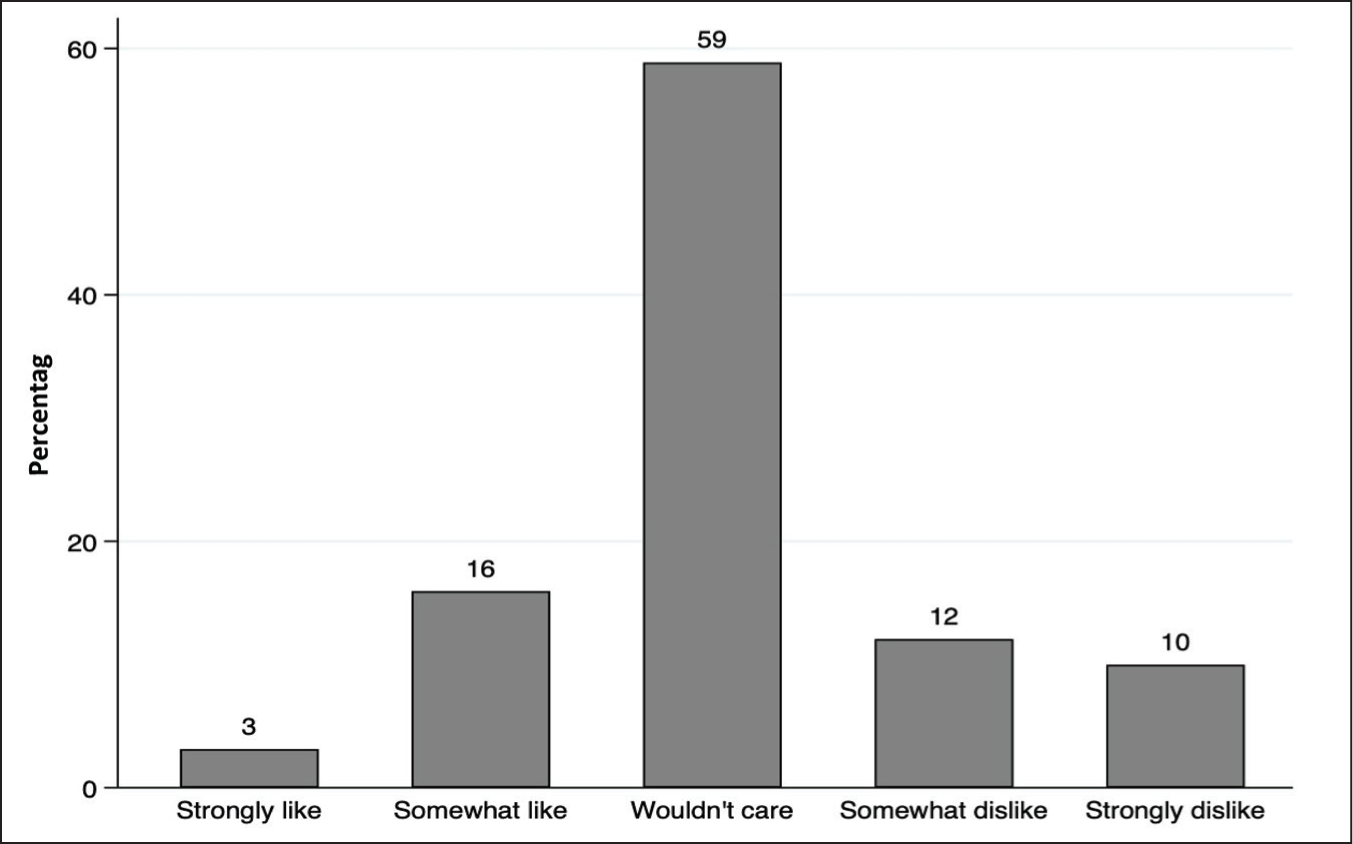
The dependent variable—Hostility—was derived from the question: ‘For each of the following types of people, please tell me whether you would like having people from this group as neighbours, dislike it or not care: Immigrants or foreign workers?’ The responses were measured on a scale with five ordinal categories, ranging from ‘1 = Strongly like’ to ‘5 = Strongly dislike’ Although the survey question mentions neither SSA migrants nor refugees from war-torn Middle Eastern countries explicitly, it is possible that respondents interpreted the terms ‘immigrants’ and ‘foreign workers’ as referring primarily to individuals forming part of these demographics. This is because those from more affluent Western countries are rarely labelled ‘immigrants’ and are instead often described using more prestigious terms such as ‘expatriates,’ ‘experts’ or ‘tourists’ (see, e.g., Cranston 2017; Kunz 2016).
Figure 2 presents a simple bar chart depicting the distribution of the dependent variable. As depicted, a majority of Moroccans express indifference towards having immigrants as neighbours (59%). In contrast, 19% indicate seeing such an eventuality favourably, saying they would either ‘strongly like’ or ‘somewhat like’ having immigrants and foreign workers as neighbours. Meanwhile, 22% oppose the view, stating they would either ‘somewhat dislike’ or ‘strongly dislike’ such neighbours.
For robustness checks, I created a binary version of the dependent variable in which ‘strongly dislike’ and ‘somewhat dislike’ were coded as 1 and the remaining three categories were coded as 0. The rationale for doing so is that only those responses coded as 1 explicitly convey unfavourable attitudes towards immigrants, whereas the others reflect either neutral or positive views hereon.
Explanatory Variable
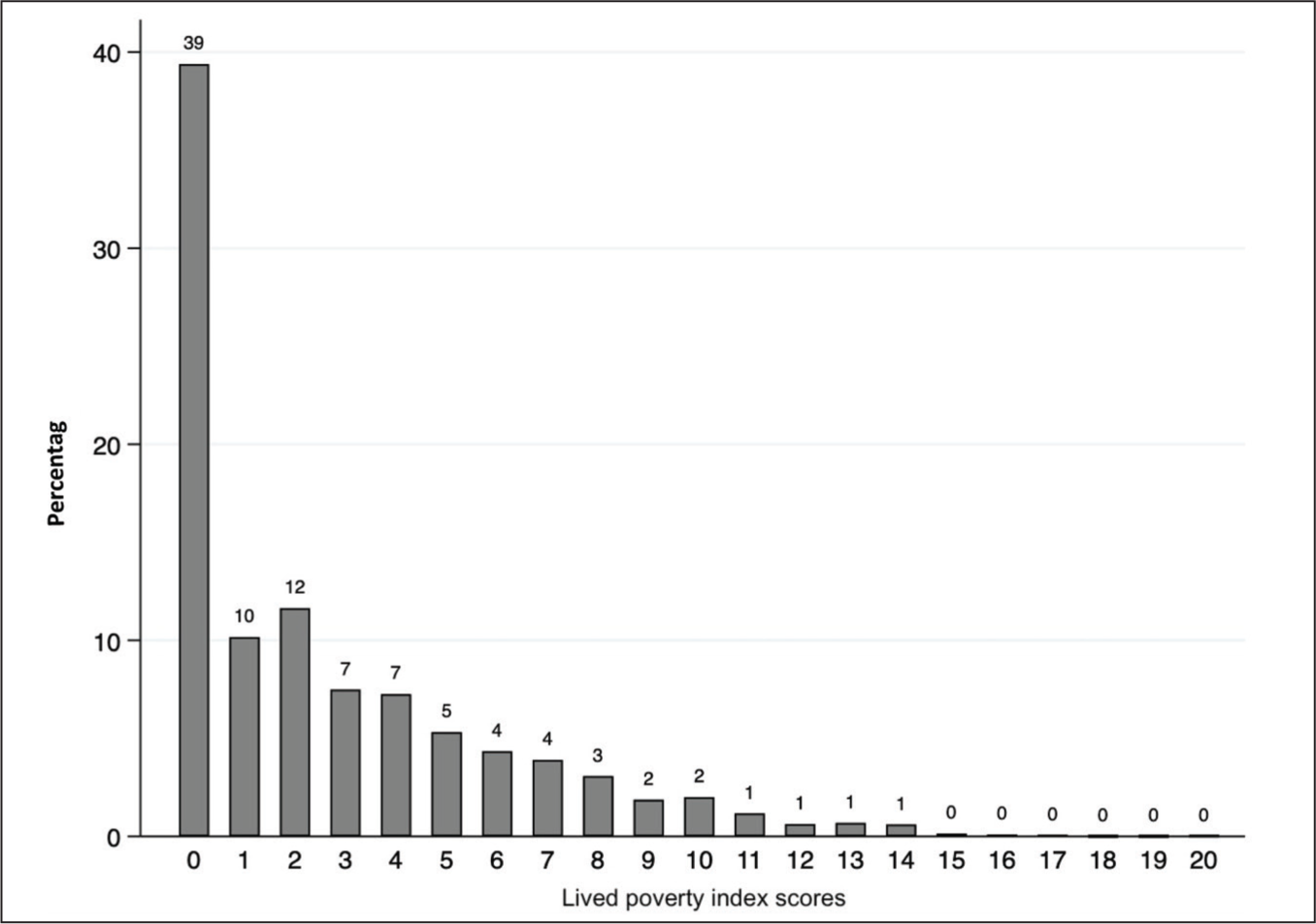
Following Mattes et al. (2002), the Lived Poverty Index variable measures the frequency with which respondents and members of their households have lacked the following five basic necessities over the past year: (a) food, (b) clean water for home use, (c) medical care, (d) cooking fuel and (e) cash income. Each item was measured on a 5-point ordinal scale ranging from ‘0 = Never’ to ‘4 = Always’. I constructed the index by totalling up the ordinal values assigned to the responses received as they related to all five items, resulting in a scale ranging from 0 to 20—where higher scores indicate greater levels of deprivation. The index revealed strong internal consistency with a Cronbach’s alpha of 0.80.
Figure 3 presents the distribution of the Lived Poverty Index using a simple bar chart. A glance at the figure reveals a roughly negative slope, with the number of respondents declining as the Poverty Index increases. Most Moroccans do not fall within the most extreme ranges of poverty, as indicated by the near absence of individuals with scores between 15 and 20. Although 19 respondents fall within this range, their number is too small to be visually represented by the bars. The figure further shows that the largest share of respondents (39%) did not lack any of the five basic necessities during the previous year.
A key strength of the Lived Poverty Index is its multidimensional nature and its ability to capture individuals’ material conditions rather than focusing narrowly on income. To ensure the robustness of the results, I also include a series of potential confounding variables in the regression models, such as macroeconomic performance, educational attainment and employment status.
Control Variables
Economy good measures respondents’ assessment of the current state of the Moroccan economy on a scale with five ordinal categories ranging from ‘1 = Very bad’ to ‘5 = Very good’. Research has shown that during periods of economic boom, there is less-perceived competition between migrants and host populations, which can ease social tensions (Olier & Spadavecchia, 2024).
Unemployed is coded as 1 if the respondent is unemployed (regardless of whether they are actively seeking work) and 0 if they are employed (whether full-time or part-time). Unemployed individuals may be hostile here because they are of the belief that migrants are direct competitors for limited job opportunities. This resentment can be further fuelled by the view that migrants are willing to accept lower wages, which drives down overall pay and worsens labour market conditions for native individuals (Harris et al., 2018; Hlatshwayo, 2023; Lee, 2024).
Education level is measured on an ordinal scale ranging from ‘0 = No formal schooling’ to ‘9 = Postgraduate’. Education can reduce said hostility by exposing individuals to diverse perspectives and accurate information about the phenomenon of migration, thereby challenging misconceptions and stereotypes. Additionally, it fosters critical thinking skills that enable people to question simplistic narratives or raw prejudice. Relatedly, research has found a negative association between education and anti-immigrant hostility (De Coninck et al., 2021; Kim & Kim, 2021).
Age is measured in years. Older individuals may be more hostile towards immigrants because they are more resistant to the social and cultural changes accompanying increased migration flows, such as shifts in language, customs or demographic composition (De Coninck, 2021; Strabac et al., 2013; Strabac & Listhaug, 2008; Wilkes et al., 2008).
Gender is coded as 1 for males and 0 for females. Prior research has found that men tend to hold stronger anti-immigrant attitudes than women (Hoevermann & Messner, 2019).
News Index assesses how frequently respondents consume news across different media platforms: (a) radio; (b) television; (c) print newspapers; (d) the Internet; and (e) social media such as Facebook, Twitter or WhatsApp. Each item was measured on a 5-point ordinal scale ranging from ‘0 = Never’ to ‘4 = Every day’. I constructed the index by totalling up the ordinal values assigned to the responses as they relate to all five items, resulting in a scale ranging from 0 to 20—where higher scores indicate greater news consumption. The index yielded a Cronbach’s aplha of 0.54, suggesting moderate internal reliability. Regardless of the framing or ownership of the media outlets, individuals who consume news more frequently—particularly across multiple platforms—are likely to be exposed to a wider range of issues and perspectives. Such exposure may enhance cognitive sophistication, reduce susceptibility to misinformation and stereotypes, and ultimately foster more tolerant attitudes towards others.
Urban is coded as 1 if a respondent resides in an urban centre and 0 if they live in a rural area. Research has found that rural residents exhibit greater prejudice than their urban counterparts (Bunn et al., 2008; Chakraborti & Garland, 2004).
Unsafe is coded as 1 if the respondent has felt unsafe while walking in their neighbourhood at least once or twice in the past year and 0 otherwise. A sense of insecurity can heighten caution and suspicion, making individuals more receptive to narratives portraying migrants as criminals or a source of violence (Eberl et al., 2018; Esses et al., 2013; Hellwig & Sinno, 2016; Tarisayi & Manik 2020).
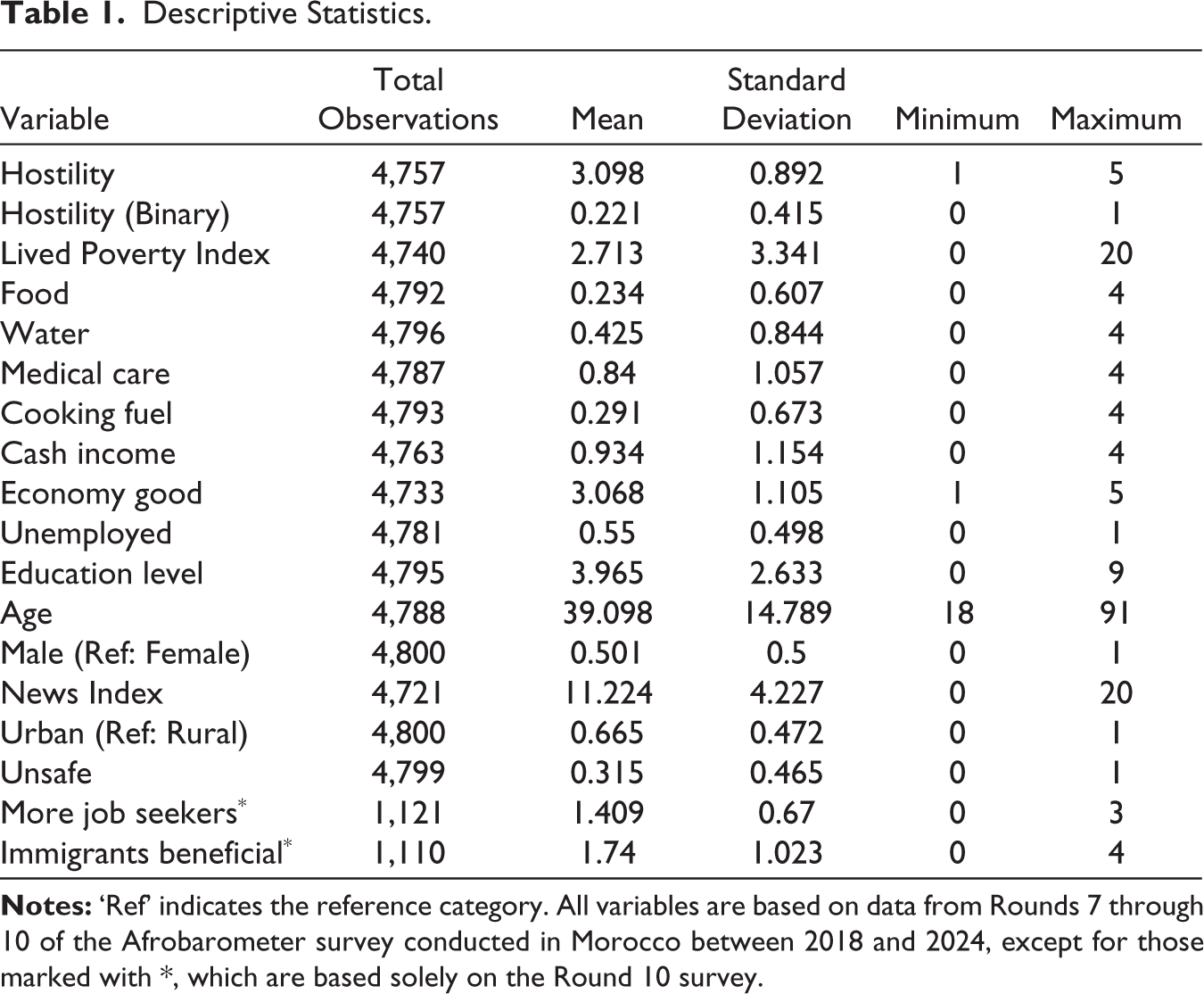
Table 1 presents the summary statistics of the variables used to estimate the regression model.
Descriptive Statistics.
Analytical Technique
To determine the relationship between lived poverty and hostility towards immigrants, I consider a model of the following general form:

In Equation (1), γijt is the dependent variable, which measures the willingness of Respondent i who lives in Region j in Year t to have immigrants and foreign workers as neighbours. φ’ is a vector of control variables; α0 is the intercept; α1 and α2 denote the coefficients of the explanatory and control variables, respectively; Πj denotes fixed effects for respondents’ region of residence, capturing time-invariant characteristics that may influence attitudes towards immigrants. These regional factors include physical geography, distance from the capital and proximity to the Mediterranean Sea. τt denotes year fixed effects, which capture time-specific shocks that affect all observations (e.g., changes in government migration policy) but vary across years. μi denotes the error term.
Because the dependent variable is measured on an ordinal scale with few categories, I estimated the model using an ordered logit regression. An advantage of this approach is that it allows me to determine the association between the explanatory variable and each category of the dependent variable. To assess the robustness of the findings, I conducted additional analyses using a binary version of the dependent variable to re-estimate the regression with a linear probability model (LPM).
Results and Discussion
Analysis Based on Full Sample
Table 2 presents the results from ordered logit regression models examining the relationship between lived poverty and hostility towards immigrants. I begin with a baseline model that includes only the Lived Poverty Index. The coefficient for this variable is positive and statistically significant at the 1% level. This finding, which supports H1, indicates that poorer Moroccans are more likely to oppose having immigrants and foreign workers as neighbours. In Model 2, the inclusion of control variables does not alter the main results. Among the controls, only education, macroeconomic performance and news consumption are statistically significant.
Ordered Logit Models Regressing Hostility Towards Immigrants and Foreign Workers on Lived Poverty in Morocco.
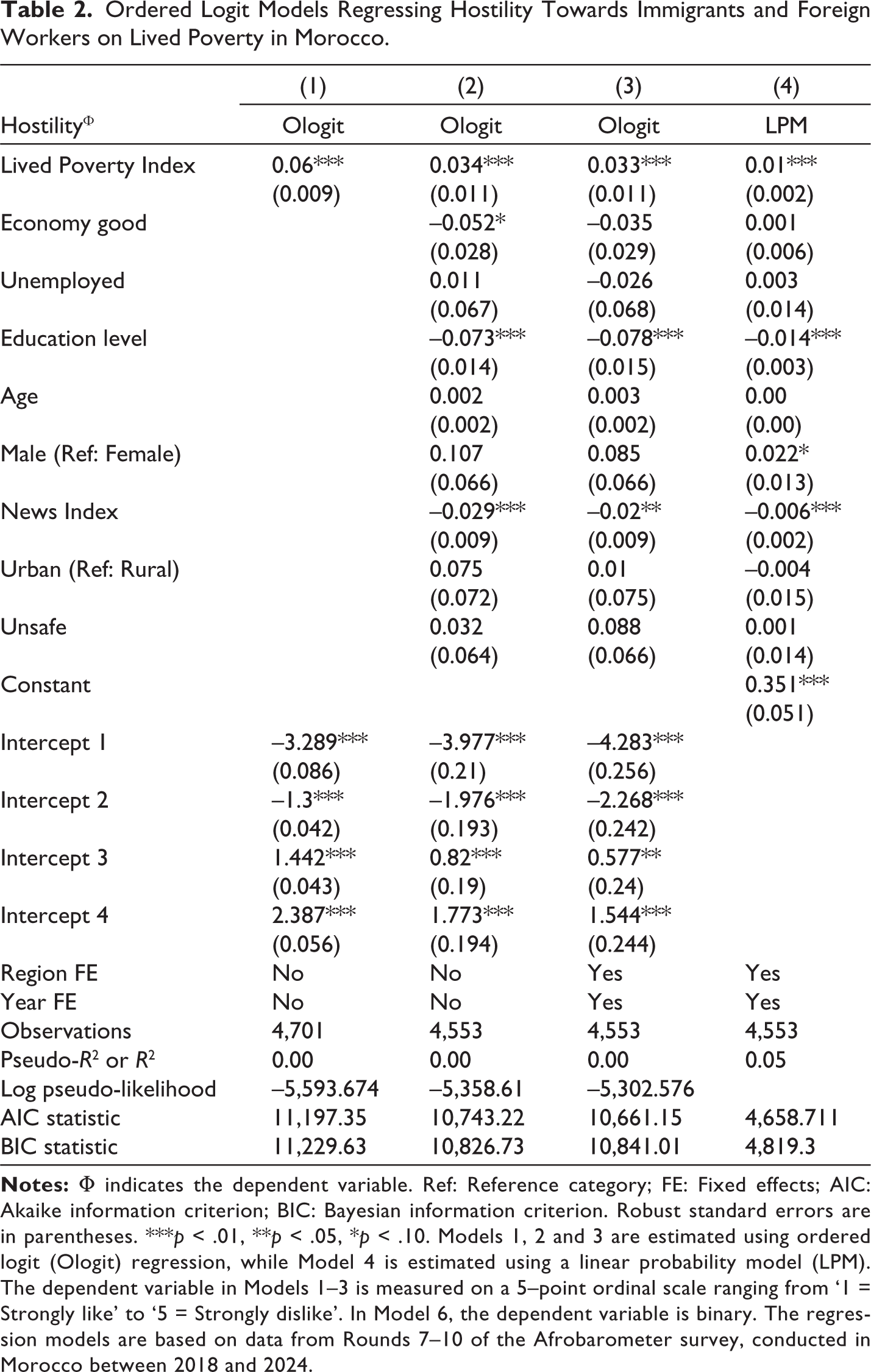
In Model 3, which incorporates fixed effects for survey year and region of residence, the Akaike Information Criterion (AIC) drops to 10,661. This statistic, which is lower than in the preceding models, indicates that Model 3 provides the best fit. Except for the measure of macroeconomic performance, which loses its statistical significance, the main results remain largely intact. The negative coefficient for education suggests that higher levels thereof are associated with reduced hostility towards immigrants. Likewise, the negative coefficient associated with the News Index indicates that the more Moroccans consume related media, the less hostile they are towards immigrants and foreign workers.
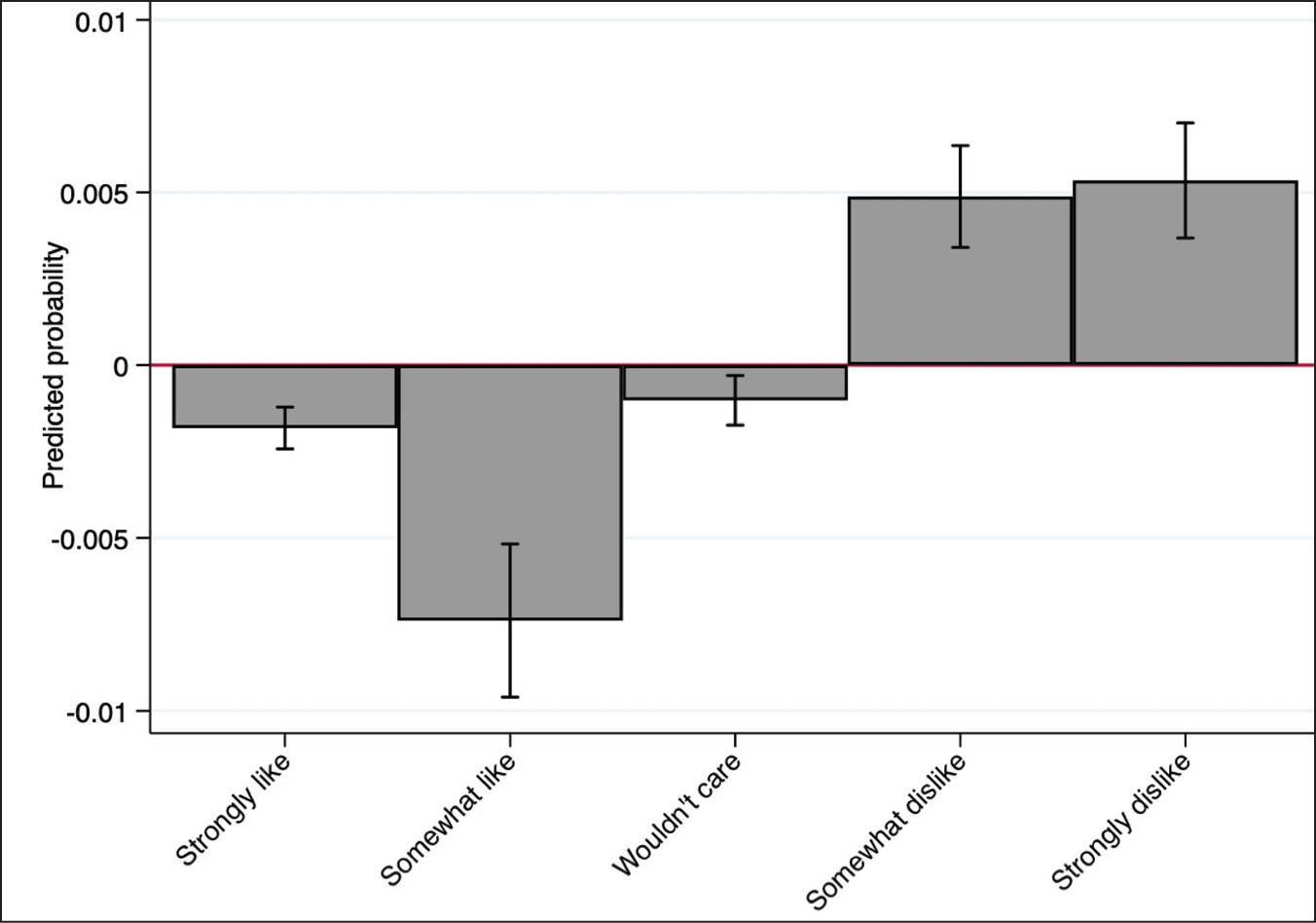
To aid in the interpretation of the ordered logit regression results reported in Table 2, I plot the predicted probabilities from the baseline model (Model 1) in Figure 4. The association depicted therein between lived poverty and hostility towards immigrants is statistically significant in all categories of the dependent variable. Moreover, the association is positive in the hostile responses (i.e., ‘somewhat dislike’ and ‘strongly dislike’). Specifically, a 1-unit increase in the Lived Poverty Index increases the probability of an individual choosing the ‘strongly dislike’ response by 0.53 percentage points and increases the probability of choosing the ‘somewhat dislike’ response by 0.49 percentage points. In contrast, the association is negative with regard to the warm responses (i.e., ‘strongly like’ and ‘somewhat like’). Specifically, a 1-unit increase in the Lived Poverty Index reduces the probability of an individual choosing the ‘strongly like’ response by 0.18 percentage points and reduces the probability of choosing the ‘somewhat like’ response by 0.74 percentage points. These patterns reinforce support for H1’s validity.
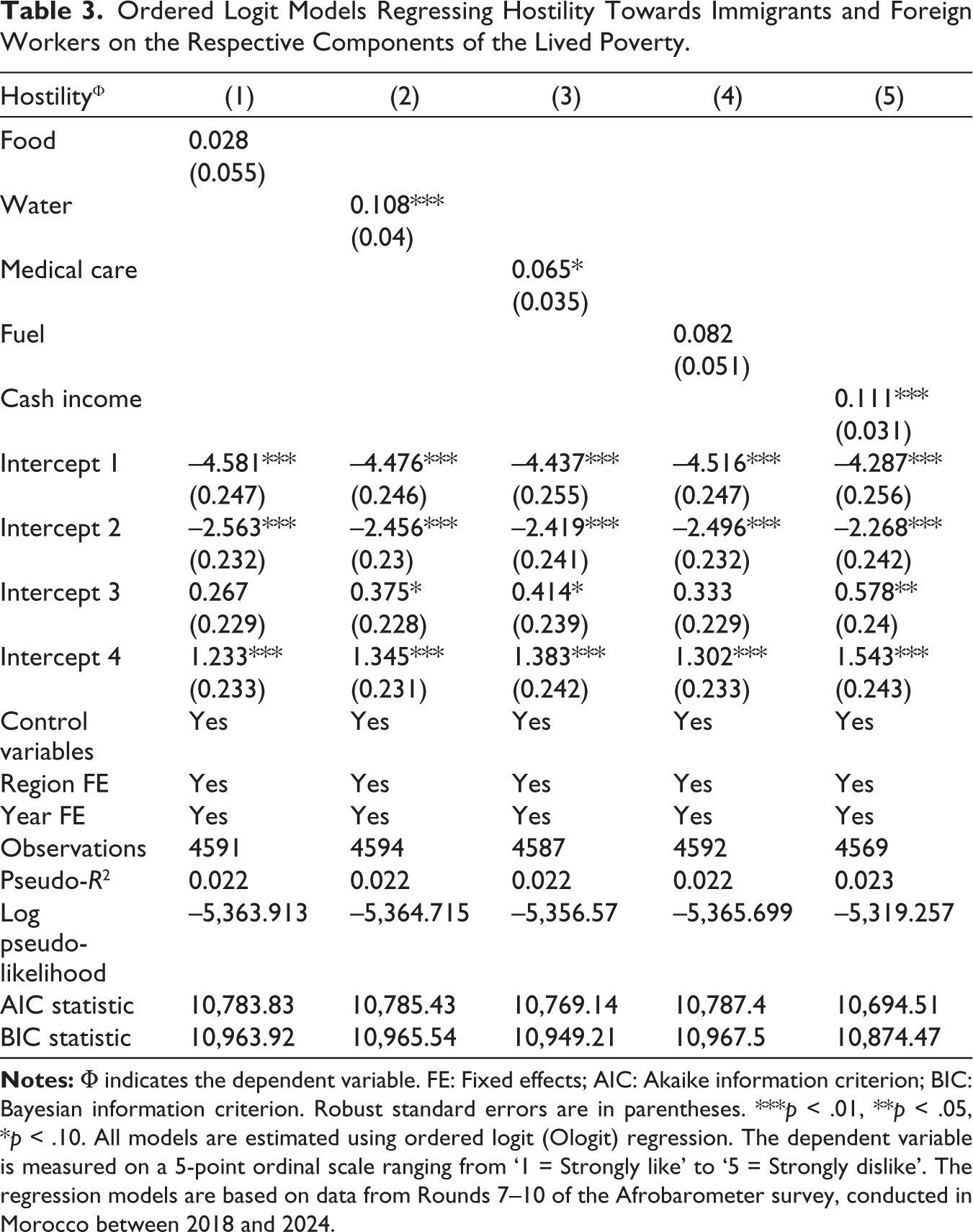
To determine whether certain dimensions of lived poverty are more strongly associated with hostility towards immigrants and foreign workers than others, I conduct a robustness check in which I disaggregate the index and estimate models using its respective components. Table 3 reports the results. The findings indicate that lacking food and cooking fuel are statistically insignificant, whereas lacking water, medical care and income all increase the likelihood of hostility. Among these, the effect is the largest for income and smallest for medical care.
Ordered Logit Models Regressing Hostility Towards Immigrants and Foreign Workers on the Respective Components of the Lived Poverty.
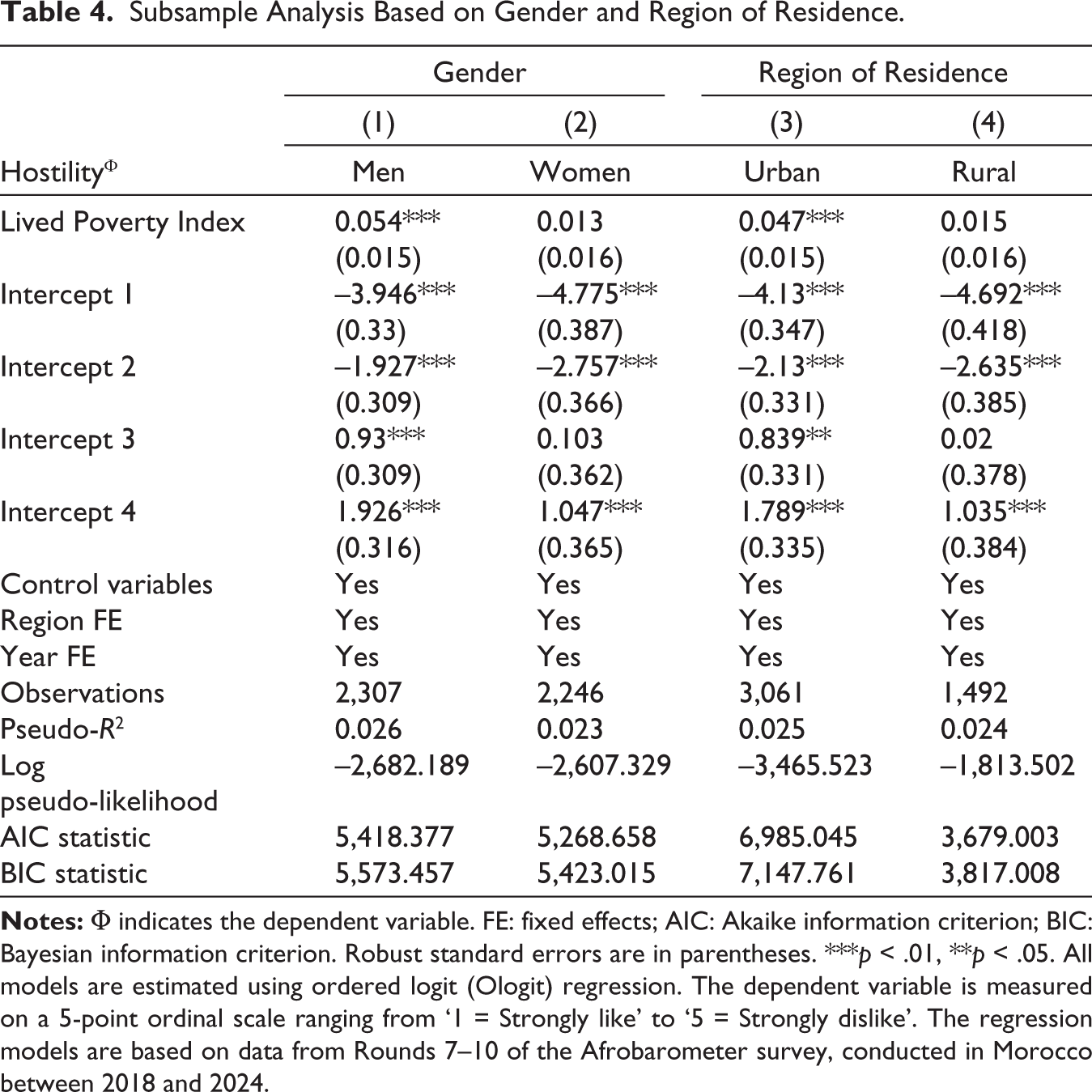
Furthermore, to assess whether the association between lived poverty and hostility towards immigrants and foreign workers varies by respondents’ gender (men vs. women) and region of residence (urban vs. rural), I disaggregate the data accordingly and estimate separate models for each subsample. Table 4 presents the results. Models 1 and 2, which display the results for the gender subsamples, indicate that the positive association between lived poverty and hostility is significant for men but not for women. This finding is consistent with H2, which posits that the positive correlation between poverty and hostility is stronger among men than among women. Models 3 and 4, which show the results for urban and rural residents, indicate that the same positive association is present among urban residents but not among those living in rural areas. This result provides support for H3, which posits that hostility towards immigrants and foreign workers is stronger among poor urban Moroccans than among their poor counterparts in rural areas.
Subsample Analysis Based on Gender and Region of Residence.
Potential Mechanisms
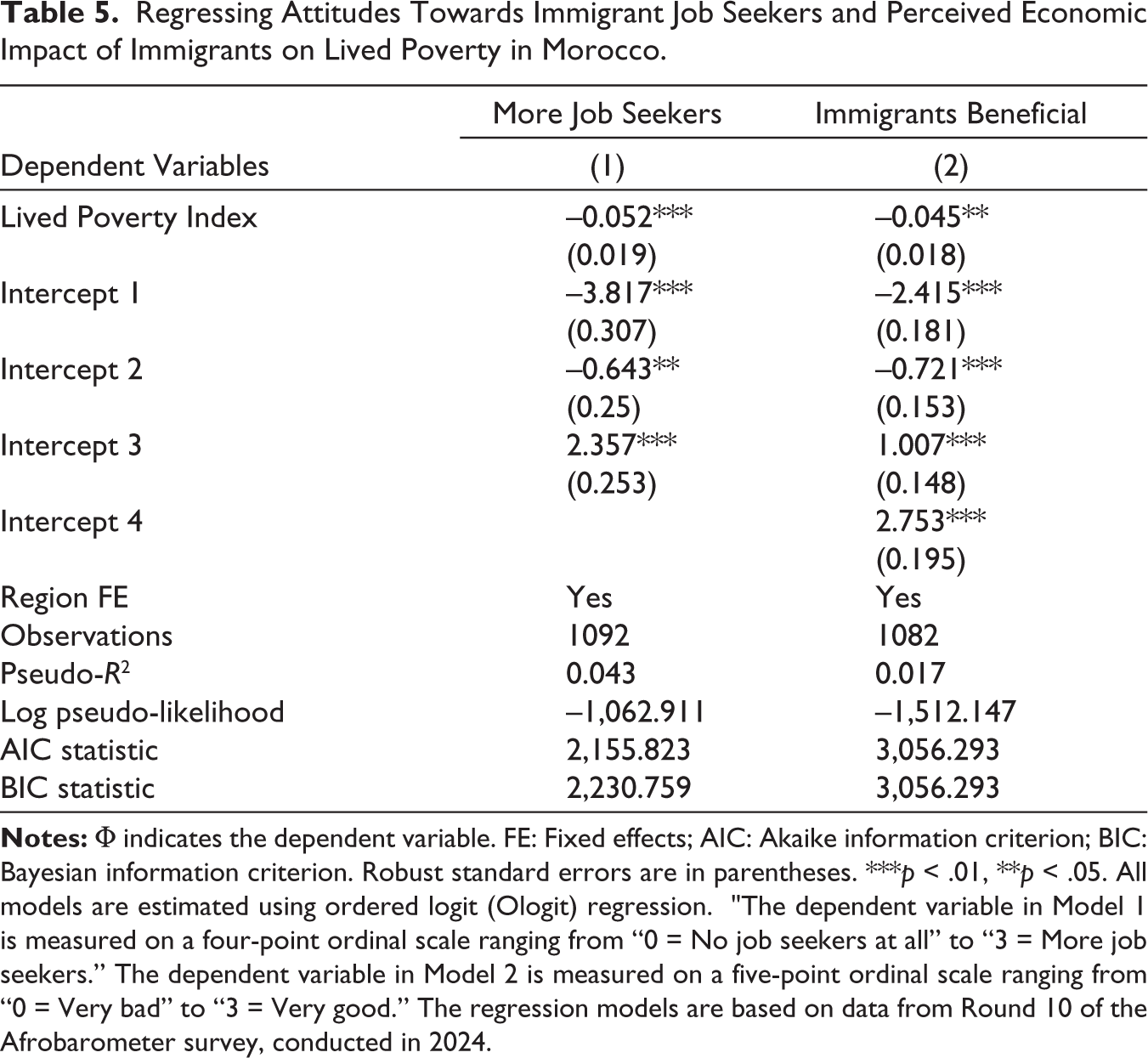
To identify specific areas in which poor Moroccans perceive threats from immigrants and foreign workers, I draw on two additional items from Round 10 of the Afrobarometer survey. I use data only from this round because the relevant questions were not included in earlier ones. The first item—More job seekers—is derived from a question asking respondents whether the government should allow more or fewer job seekers into the country. Responses are measured on a 4-point Likert scale ranging from ‘0 = No job seekers at all’ to ‘3 = More job seekers’. The second item—Immigrants beneficial—is derived from a question asking respondents to assess whether the impact of foreign migrants on the economy is positive or negative. Responses are measured on a 5-point scale ranging from ‘0 = Very bad’ to ‘4 = Very good’.
Next, I estimate two bivariate models in which each dependent variable is regressed on the Lived Poverty Index (see Table 5). As shown in Models 1 and 2, the Lived Poverty Index is statistically significant in both models and carries a negative coefficient. This suggests that higher levels of lived poverty reduce the likelihood that Moroccans agree more foreign job seekers should be allowed into the country. It also lowers the likelihood that they evaluate the economic contribution of migrants favourably.
Regressing Attitudes Towards Immigrant Job Seekers and Perceived Economic Impact of Immigrants on Lived Poverty in Morocco.
To illustrate the magnitude of the associations reported in Table 5, I plot the predicted probabilities from the two models in Figure 5. A glance at Panels A and B reveals that the association between lived poverty and the two outcomes is positive for hostile responses, but negative for both neutral and warm responses. Specifically, Panel A shows that a 1-unit increase in the Lived Poverty Index increases the probability of selecting the ‘No job seekers at all’ response by 0.3 percentage points and the ‘Fewer job seekers’ response by 0.9 percentage points when respondents are asked whether more immigrant job seekers should be allowed into the country. In contrast, it reduces the likelihood of choosing ‘About the same’ and ‘More job seekers’ by 1 and 0.2 percentage points, respectively.
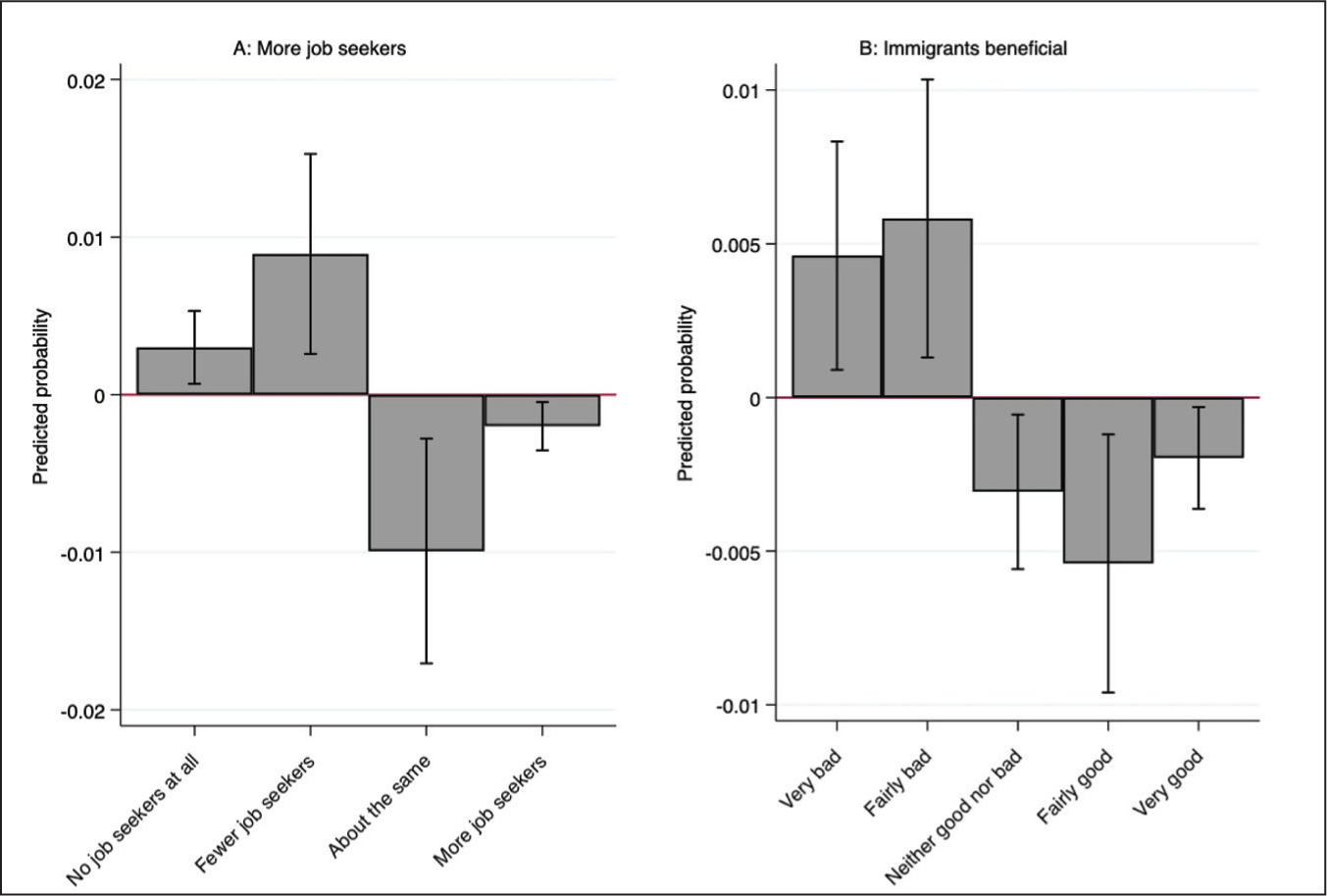
Likewise, Panel B shows that a 1-unit increase in the Lived Poverty Index increases the probability of choosing ‘Very bad’ and ‘Fairly bad’ responses by 0.46 and 0.58 percentage points, respectively, when respondents are asked about the economic impact of immigrants in the country. In contrast, it reduces the probability of selecting ‘Fairly good’ and ‘Very good’ responses by 0.54 and 0.2 percentage points, respectively.
Discussion
The positive correlation between lived poverty and hostility towards immigrants and foreign workers aligns with previous research (e.g., Buehler et al., 2023; Buehler & Han, 2021; De Coninck et al., 2021). Such hostility arises because socio-economically disadvantaged individuals may view immigrants as competitors for limited resources such as employment, housing and public services (see the ‘Potential Mechanisms’ section). Even when such competition is minimal or overstated, a perceived threat regardless can drive negative attitudes. Moreover, those experiencing material hardship may turn their frustrations towards vulnerable outgroups such as immigrants rather than towards political or economic elites, particularly in environments where political discourse scapegoats minorities. The results in the ‘Potential Mechanisms’ section supports this mechanism.
However, not all dimensions of lived poverty are correlated with hostility. For instance, while lacking food and cooking fuel is statistically insignificant, the other three dimensions—water, medical care and cash income—all increase the likelihood of hostility. A closer examination of the data reveals that respondents reported lacking the first two dimensions less frequently than the latter three. About 16% of Moroccans lacked food at least once during the past year, and 19% lacked cooking fuel. In contrast, larger shares lacked water (25%), 6 medical care (47%) and cash income (48%) at least once during the same period. This pattern suggests that the overall association between lived poverty and hostility is primarily driven by those dimensions in which Moroccans experience the highest levels of deprivation.
Gender also emerges as a key moderator in the relationship between lived poverty and hostility, with the positive correlation observed among men but not among women. This gendered pattern may reflect the organisation of Moroccan society, particularly norms that assign men the role of providers while confining women to domestic responsibilities. The Round 10 Afrobarometer survey conducted in 2024 shows that 52% of Moroccans agree that men should be given hiring preference when jobs are scarce. Although men are more likely to hold this belief (61%) than women (43%), the percentage of women endorsing it remains notably high, suggesting an internalisation of these gender norms. Within this context, poverty may threaten men’s social status within the household, making it more difficult for them to fulfil their breadwinning roles and, in turn, heightening their perception of immigrants as economic competitors. Furthermore, poor men are more likely to work in low-skilled, labour-intensive sectors—such as in construction, factories and trading—where they frequently encounter immigrants, reinforcing the sense of competition.
In contrast, poverty may not increase hostility among women because their socio-economic status is less directly tied to employment. Their participation in the labour market is often shaped more by cultural norms and family expectations than by individual economic opportunity, which reduces the likelihood of direct competition with immigrants for wages. This interpretation aligns with the 2024 Afrobarometer survey finding that nearly one third of Moroccans (30%) believe women are often or always prevented by their families from taking paid employment. When asked about the main barriers to women’s employment, respondents most frequently identified the social unacceptability of women working outside the home (23%). Other barriers cited include the lack of childcare (13%), absence of remote or flexible work arrangements (13%), lack of education and relevant skills (9%), and employers’ preference for hiring men (5%).
Urban–rural differences further moderate the relationship between lived poverty and hostility. Urban settings offer more diverse job opportunities, attracting both Moroccans and immigrants seeking low-skilled work in sectors such as domestic labour, street vending and construction. Poor Moroccans competing for these same opportunities are thus more likely to view immigrants as rivals in the labour market. Relative deprivation may also help explain this pattern: poor urban residents are more likely to encounter wealthy elites and foreigners, intensifying feelings of deprivation when comparing themselves to these affluent groups. Although poverty rates are generally higher in rural areas, rural populations tend to be more socially homogeneous and evaluate themselves relative to peers with similar living conditions. This more localised frame of reference may mitigate the sense of deprivation and, in turn, reduce hostility towards immigrants.
Education and media exposure appear to buffer against such hostility. The negative association between education and hostility is consistent with the well-documented liberalising effect of education, which fosters tolerance by exposing individuals to diverse perspectives, cultures and social groups (e.g., Hoevermann & Messner, 2019; Kim & Kim, 2021; Rustenbach, 2010). Likewise, greater news consumption is linked to lower hostility, suggesting that individuals who follow the news more frequently may be more likely to encounter factual, nuanced and humanising content—such as statistics, policy analyses and personal stories—that challenge prevailing stereotypes and misconceptions. However, the News Index is limited in that it measures only the amount of news consumed, not the nature or framing of the content. For example, the current measure cannot distinguish whether news from government sources shapes attitudes differently than news from private outlets. This represents a promising avenue for future research.
Conclusion
Using Afrobarometer data, this study examined how lived poverty relates to Moroccans’ willingness to have immigrants and foreign workers as neighbours. Descriptive results reveal that Moroccans (78%) are either indifferent to or express a willingness to entertain this possibility, while approximately one-in-five Moroccans (22%) saw living near such individuals as undesirable. Regression results indicate that higher levels of poverty are associated with a greater likelihood of hostility towards immigrants, because economically disadvantaged individuals view the latter as competitors for limited resources such as employment, housing and social services.
The analysis also reveals important heterogeneous patterns. While higher levels of lived poverty are associated with increased hostility among men, this relationship is not observed among women. This pattern likely reflects entrenched gender norms that assign caregiving roles to women and breadwinning responsibilities to men. As a result, men are more actively engaged in the labour market, and poor men are therefore more likely to compete with immigrants for low-skilled jobs in sectors such as agriculture and construction—heightening perceptions of economic competition.
Similarly, the positive correlation between lived poverty and hostility is evident among residents of urban centres but not among their rural counterparts. This pattern can be explained through the lens of relative deprivation. The poor in urban areas are more likely to compare themselves with affluent natives and foreign residents, which may intensify their sense of inequality and resentment. In contrast, poor Moroccans in rural areas may experience lower perceived inequality given the generally higher and more uniform levels of deprivation in those settings.
Overall, these findings suggest that reducing economic vulnerability is not merely an important goal in its own right, but also a crucial strategy for mitigating prejudice and fostering social cohesion. Governments should therefore prioritise addressing citizens’ economic insecurities through social-protection measures, employment programmes and housing support. Such interventions can help reduce anti-immigrant sentiment by reducing zero-sum perceptions of competition over scarce resources. When individuals feel more economically secure, they are less likely to view migrants as threats, paving the way for greater social inclusion and coexistence.
Footnotes
Acknowledgements
I thank the editor, Professor Irudaya Rajan; two anonymous reviewers; Christiane Fröhlich; and James Powell for helpful comments.
Data Availability
The data and do-files underlying the regression results are available in the Harvard Dataverse:
Declaration of Conflicting Interests
The author declared no potential conflicts of interest with respect to the research, authorship and/or publication of this article.
Funding
The author received no financial support for the research, authorship and/or publication of this article.