




Abstract
This study aims to examine how crime films released and distributed in mainland China reflect the country’s social context of crime and to further explore the cultural symbols embedded in their social representations. In this research, “new typical crime films” refers to Chinese crime cinema that, within the local sociocultural framework, centers on criminal events and attributes the causes of crime to deeper structural issues within society. The study draws upon A. J. Greimas’s narrative semiotics theory to analyze class consciousness within the specific social environments depicted in Chinese crime films, with Wrath of Silence (2018) as the primary case. As a new subgenre within contemporary Chinese crime cinema, this film stands out as distinctive among films released in the Chinese market for its depiction of social stratification. Through both surface and deep narrative analysis, the findings indicate that economic disparity and social imbalance between classes constitute the fundamental causes of violence among characters. The director seeks to expose how China’s upper class, in pursuit of exclusive control over power and interests, engages in primitive criminal acts and exercises hegemonic violence, thereby provoking retaliatory resistance.
Plain Language Summary
This study looks at how contemporary Chinese crime films, specifically Wrath of Silence (2018), reflect social problems and power dynamics in modern China. By using a semiotic approach to narrative analysis, the research shows how the film links acts of violence to deep social classes. The film highlights the stark differences between the wealthy and the poor, portraying silence as a response to injustice. For the oppressed, silence represents their inability to speak out, while for the powerful, it is a tool to hide corruption. Violence in the film is not just a personal act but a reflection of a broken social system. The study argues that Wrath of Silence uses violence as a lens to examine issues of class division, moral decay, and systemic injustice in China’s rapidly changing society.
Introduction
Criminal films first emerged in the 1930s as a distinct genre in Hollywood. In Chinese academia, crime films are defined as “films that center on the beginning and end of a crime, primarily portraying the criminal process and the pursuit of justice, while reflecting and examining social phenomena through cinematic storytelling” (N. Xu et al., 2005). Within the Chinese sociocultural context, crime cinema has evolved by integrating local ethnic characteristics and merging with other genres such as action and suspense. As a result, the concept of crime films in China has become more flexible than that of traditional genre-based crime films.
Traditional Chinese crime films often focus on solving cases and punishing evil, emphasizing the restoration of social order and the realization of moral justice. In contrast, “new typical” crime films emerged in the post-socialist context, with their narrative focus shifting from the simple process of crime to revealing structural social issues. These films pay attention to class differences, systemic injustice, and humanity dilemmas, reflecting a transition from a case-solving narrative to a social reflection narrative.
With the commercial development of the global film industry, the public has gradually become passive recipients in entertainment consumption. While films satisfy entertainment needs, they often lack social reflection and cultural critique. As Y. Zhang (2004) points out that in Chinese National Cinema, Chinese cinema has long been in the tension between state ideology and market forces since the socialist period. Berry (2004) further emphasizes that post-reform Chinese cinema, by reflecting on social issues and ideology, has formed a unique post-socialist cultural expression.
In recent years, realist crime films have become a mainstream genre in China’s film market (China News Service, 2025). For instance, Murder in Silence (2024) and Article 20 (2024) achieved remarkable box office success through their strong genre elements and resonance with reality, demonstrating the audience’s strong interest in narratives addressing social issues. Meanwhile, A Touch of Sin (2015) and Dying to Survive (2018) exposed institutional contradictions and human conflicts during the social transition period. These films serve the functions of both social reflection and warning.
From a global perspective, the crime genre generally faces a critical edge in its standardized production. In contrast, China’s new typical crime films hold greater realistic significance in representing social class issues. Particularly in the depiction of violence and class conflict, the traditional binary opposition of crime and punishment has evolved into a direct juxtaposition between social strata, highlighting structural violence and ethical collapse within society.
This study aims to investigate the narrative structure of violence and class consciousness in contemporary Chinese crime films, revealing the underlying socio-cultural context and humanistic issues. The specific research questions include: (a) How does the film Wrath of Silence construct violence and silence as socially semiotic themes? (b) How can the Greimasian semiotic model explain the action logic of different characters in the film? (c) What social cognition does the director intend to convey to the audience through violent narrative?
Theoretically, this research draws on Lam’s (2013) typology of violence, which categorizes it into direct, structural, and cultural forms. Direct violence refers to visible harm inflicted upon an individual’s body or psyche; structural violence originates from inequalities within political, economic, and social systems; and cultural violence legitimizes such inequalities through educational and media discourses. This study focuses on the manifestations of direct and structural violence among social classes in Wrath of Silence.
Methodologically, this paper employs Greimasian narrative semiotics as its analytical framework, interpreting the film’s violence narrative across three dimensions: the external structure, the surface structure, and the deep structure. Through the application of the “actantial model” and the “semiotic square,” it demonstrates the semiotic logic of class antagonism, silence, and resistance within the film. Wrath of Silence was selected as the case study primarily because it combines socio-realist critique with semiotically rich narrative features, enabling it to represent the core style of the new typical of Chinese crime cinema. Its thematic engagement with systemic injustice, silence as resistance, and marginalization, as well as its distinctive visual aesthetics and narrative structure, position it as a representative and particularly rich case for analysis.
Although this study focuses on a single text, this in-depth case analysis facilitates a more nuanced revelation of the complex cultural significations within the individual case, thereby preventing the theoretical focus from becoming diluted across multiple samples.
Previous Research and Theoretical Framework
Thematic Evolution of Chinese Crime Films
Since the release of Murder in 405 in 1979, the development of Chinese crime films has been closely intertwined with shifts in social values, legal consciousness, and cultural aesthetics. This evolution not only chronicles changes in cinematic form but also mirrors structural contradictions and ideological transformations in Chinese society.
At the level of social values, the thematic core of Chinese crime films has undergone a transformation from friend-foe contradiction to realist concerns, and further to social class consciousness. Early counter-spy films such as Murder in 405 (1979) reinforced collectivist values through politicized narratives. After the reform and opening up, films like The R4 Mystery (1982) and Juvenile Delinquents (1985) began to focus on disadvantaged groups and marginalized ones, reflecting the emergence of humanistic concerns. Entering the 21st century, Better Days (2019) and Back to the Wharf (2020) concentrated on individual destinies and social pressures, while A Touch of Sin (2015) and Wrath of Silence (2017) exposed class stratification and social injustice. This shift from collective morality to individual struggle marks the crime genre as a vital lens for understanding China’s ongoing social transformation.
At the level of legal consciousness, the narrative focus of crime films has undergone a shift from law as a tool of governance to law as a guarantee of rights (Zhang, 2024). In early films, law served as a sign of class struggle. The film The Strange Case of Meishan (1985) began to depict law’s function in maintaining social order. Twelve Citizens (2015) demonstrated the dissemination of the concept of procedural justice, while Article 20 (2024) highlight procedural justice and public debate on justifiable defense, reflecting both the progress of China’s legal modernization and the public’s awakening legal consciousness (Procuratorial Daily, 2024, February). Article 20 brings justifiable defense into public debate. https://www.jcrb.com/. These shifts demonstrate the dynamic interplay between media representation and judicial discourse.
At the level of cultural aesthetics, the narrative and visual style of Chinese crime films has undergone a transformation from propaganda and education to artistic expression. Early works like The Invisible Front (1949) employed straightforward narratives and stereotypical characters, emphasizing political education. In contrast, films such as Wrath of Silence (2017), The Shadow Play (2018), and Dwelling by the West Lake (2023) have constructed auteur aesthetics through semiotic imagery, spatial composition, and narrative ellipsis. The Wild Goose Lake (2019) further enhanced the artistry of crime narratives through visual spectacle. Simultaneously, the Sheep Without a Shepherd series (2019–2024) and No More Bets (2023) integrate suspense, ethics, and social reality, combining societal critique with genre entertainment, thereby demonstrating the balance Chinese crime films strike between artistic merit and market appeal.
Overall, the thematic evolution of Chinese crime cinema demonstrates a value shift from collective authority to individual care, a legal evolution from institutional instrumentality to rights-based rationality, and an aesthetic transition from propaganda to artistry. Through crime and punishment, these films continue to diagnose social contradictions and human dilemmas within contemporary China.
Violent Imagery and Violent Symbols in Chinese Crime Films
Violent imagery has developed in tandem with the history of world cinema. Since the 1903 American film The Great Train Robbery, which first presented scenes of chase and gunfights, violent imagery has continuously evolved, influencing genre films in regions such as South Korea, Japan, and Hong Kong. According to X. P. Wang (2008) divides global violent cinema can generally be divided into four stages: the embryonic period (1930–1966), the flourishing period (1967–1979), the mature period (1980–1990), and the fusion period (1990s to present). From gangster hero films created by directors such as Arthur Penn, Sam Peckinpah, and Martin Scorsese, to contemporary works by Oliver Stone, John Woo, Takeshi Kitano, and Quentin Tarantino, violence has evolved into a crucial narrative and aesthetic device in commercial cinema.
In theoretical terms, Western scholars such as Steven Bruce and David Thomas mainly study American violent films from historical, aesthetic, and social influence perspectives (X. P. Wang, 2008). In contrast, Chinese scholars emphasize the cultural and symbolic meanings of violence. X. P. Wang (2008) points out that violence is the “cultural original sin” of cinema, driving narrative development and revealing the creator’s ideological stance. Jia (2014) focuses on the narrative function of violence in martial arts films, while Hao Jian introduces the concept of “violence aesthetics,” noting that an excessive emphasis on formal beauty may obscure its social and ethical implications (Y. B. Wang, 2013). However, domestic scholarship remains largely descriptive, lacking systematic semiotic analyses of violence’s social and cultural dimensions.
In Chinese crime films, violent imagery operates as a symbolic mechanism to expose class contradictions and ideological structures. Its manifestation extends beyond physical violence to convey social ideology through multiple layers, including visual symbols (characters, space, lighting), narrative structures, and linguistic symbols (Martinez et al., 2019). For instance, The Shadow Play (2018) constructs metaphors of inequality through urban spatial divisions, while Wolf Warrior 2 (2017) reinforces a nationalist narrative by employing a binary structure of good/evil and order/chaos (Guan & Hu, 2021).
The emotive-semiotic function of violent imagery constitutes a significant dimension of Chinese crime films analysis. Violent acts inflict severe emotional harm and psychological trauma on victims (H. Xu, 2022). In cinema, this emotional damage is conveyed through specific visual symbols, performance techniques, and narrative pacing, thereby evoking empathetic resonance in the audience. Films such as Black Coal, Thin Ice (2014) and Ash Is Purest White (2018) utilize these emotive symbols to explore the impact of violence on individual destinies and love-hate relationship of socially marginalized groups, thereby transcending simple sensory stimulation to reach a deeper level of social reflection and cultural psychology.
From a linguistic perspective, violent imagery in Chinese crime films also exhibits specific linguistic markers and discourse features. Linguistic research on discourse markers indicates that the selection and combination of linguistic symbols can construct a specific social reality (Dong, 2019). In crime films, linguistic elements such as dialogue, narration, and subtitles reinforce the meaning-making of violent scenes through specific semiotic choices, guiding the audience’s interpretation and evaluation of violent acts. The film Death Wind (2022) employs Eastern narrative ellipsis and a black humor to deconstruct violence. By replacing direct depictions of violence with a satirical monologue on the radio, the technique of “the absence of violence is itself present” intensifies the psychological oppression and sublimates violence into a stylized aesthetic and a generational allegory (Zhou, 2025). Murder in Silence (2024) utilizes stark contrasts between characters’ identities and their dialogues. The mother’s conversations across different scenarios portray a complex, multifaceted dystopian individual, thereby revealing the power structures underlying domestic and school violence through language (Chen & Luo, 2025).
Metaphorically, violent imagery conveys socio-cultural meaning through recurring symbols. The Sheep Without a Shepherd film series constructs a dystopian narrative through key dialogues. The transformation of the father’s language from affectionate to ruthless, combined with metaphorical dialogues about sheep, intricately connects violence with themes of family protection and social injustice, guiding the audience to contemplate the structural oppression underlying violence (Chen & Luo, 2025). The Wild Goose Lake (2019) builds atmosphere through minimal dialogue and abundant environmental soundscapes. With sparse character conversations, the film relies on semiotic sounds such as the noises of urban villages and folk performance songs to create a perilous spectacular world, where violence is filled with uncertainty and metaphorical connotations (The Beijing News, 2019).
In summary, violent imagery in Chinese crime films has formed a complex system of symbols, presenting social structural conflicts and cultural anxieties through multiple expressions on visual, linguistic, and metaphoric levels. Analyzing violent imagery from a semiotic perspective not only helps us in understanding its artistic aesthetics but also reveals its ideological and cultural functions within the socio-cultural context of contemporary China.
Violence Narratives and Greimasian Semiotic Theory
The convergence of narrative theory and semiotics provides the theoretical foundation for this study. Semiotics, established by Saussure and Peirce, offered early models of signification, while film narratology emerging in the 1920s, extended these ideas to moving images. By the mid-twentieth century, narratology and semiotics merged to explore how storytelling functions as a symbolic system that generates meaning.
Roland Barthes, in S/Z (1970), analyzed Balzac’s Sarrasine using five narrative codes—actional, semantic, semiotic, cultural, and sequential—to expose the semiotic structures underpinning narrative organization. Barthes emphasized the openness and multiplicity of textual meaning, positioning the reader as an active participant (Barthes, 1970). This work marked a theoretical shift from structuralist narratology toward post-structuralist semiotics.
Umberto Eco’s A Theory of Semiotics (1976) further established a comprehensive model of signification, proposing that symbols serve as products of cultural negotiation within social contexts. Meaning, for Eco, is generated through an “encoding-decoding” process that involves both sender and receiver (Eco, 1976). Later, in The Limits of Interpretation (1990), he demonstrates the boundaries of interpretive freedom, arguing that although readers contribute to meaning-making, interpretation must remain constrained by the semantic potential and internal logic of the text (Eco, 1990). In general, Eco’s works provide a crucial semiotic foundation for the study of narrative.
Seymour Chatman’s Story and Discourse (1978) introduced a dual-layer model that distinguishes between “story” (events and existents) and “discourse” (expression and organization). His communicative model emphasized the mediating function of narrative as a channel of information transfer (Chatman, 1978). Building on this, Mieke Bal’s Narratology (1985) extended narratological analysis beyond formal structures, integrating perspectives from cultural and gender studies to reveal narrative as a mechanism of social and ideological reproduction (Bal, 1985).
David Bordwell, in Narration in the Fiction Film (1985), introduced a cognitive narratology, aruguing that narrative comprehension arises from viewers’ inferential reasoning rather than solely from textual codes (Bordwell, 1985). This narratology reframed meaning as an active process of mental construction, thereby expanding the semiotic model to perception and cognition. Finally, Marie-Laure Ryan’s Narrative across Media (2004) conceptualized “transmedial narrativity,” exploring how narrative forms migrate across media such as literature, film, and digital games. Ryan highlighted the dynamic and multimodal nature of narrative as a semiotic practice in the contemporary media ecology (Ryan, 2004).
Collectively, these scholars underscore that narrative is both a structural and cultural system of meaning-making, a view central to Greimas’s semiotic approach.
In addition to Saussure and Hjelmslev, several other thinkers have significantly influenced Greimas’s semiotic framework. Claude Lévi-Strauss, a French structuralist scholar and anthropologist, provided theoretical support for Greimas’s deep structure (i.e., the semiotic square) through his method of binary oppositions (Becker & Wheater, 2017). Russian formalist narratologist Vladimir Propp’s morphological analysis of folktales, especially his functions of dramatis personae (Propp, 2010), inspired Greimas to develop the actantial model comprising six elements in the surface narrative structure. Additionally, French structuralist literary critic and writer Roland Barthes contributed through his theory of symbols. Thus, from the perspective of narrative text analysis, Greimas’s semiotic theory can be regarded as one of the most effective narrative theories.
According to Greimas, the semiotic method holds genuine significance because it enables the articulation of ideas and inquiries previously neither pursued nor considered. This capacity can also be regarded as a method for understanding the function of symbols (Henault, 1997). This study discusses various binary oppositional narrative relationships in crime films characterized by violence. By applying Greimas’s narratological semiotic methodology, the research provides a more systematic analysis of the narrative representations of emotional and violent crimes within such films. Through the examination of binary oppositions and narrative elements, the study explores cultural connotations via semiotic interpretation, aiming to grasp the external structure, surface structure, deep structure, and their corresponding narrative significance within the text (see Table 1).
Narrative Analytical Elements of Chinese Crime Films Based on Greimasian Semiotics.

External Structure in Surface Narrative
According to Greimas’s narratological approach, surface narrative, understood as the expressive form of the sign, refers to a mode of narration that organizes content structurally on the plane of expression. At the theoretical level, the external structure denotes the medium through which meaning is conveyed and can employ any linguistic system for transmission. It is composed primarily of discourse forms, characters, animal imagery, story, background, and setting. These dimensions, concretely presented as the external structure of narrative, can also be regarded as the layer of external symbols in a narrative work (Greimas, 2005). The symbols transmits meaning in a manner that allows signification to expand indefinitely.
In Greimas’s narrative structural model, narrative functions as an analytical tool that unveils underlying social structures and mechanisms of violence. Through the analysis of the actantial model, one can reveal the functional distinctions among different characters within social class relations. The Chinese crime films examined in this study contain symbolic images with metaphorical significance, embodying profound layers of meaning. Within this framework, violent acts in cinema are no longer merely devices for narrative progression; rather, they reflect the social structures of class oppression and power inequality through the relational dynamics of desire–obstacle–action among characters. For instance, upper-class figures employ violence to sustain existing power hierarchies, while lower-class characters move between suppression and resistance. The Greimasian model structurally articulates these dynamic relations of class-based violence, thereby exposing the latent tensions within the social system.
By incorporating animal imagery into the overall film narrative and linking it to the broader storyline, the relationship of meaning between human characteristics and social phenomena can be reconstructed. These semiotic animal figures, together with the actantial relations among the characters, form a narrative chain of violence–oppression–resistance, further deepening the theme of class conflict. In terms of spatial configuration, directors employ visual composition to represent concealed spaces, rendering violence and class contradiction tangible within the image. This approach reveals the hierarchical and oppressive nature of social space, demonstrating the analytical insight of Greimas’s narrative model in examining issues of violence and class.
Surface Structure Within Surface Narrative
Based on Vladimir Propp’s Morphology of the Folktale, Greimas categorized actantial roles according to binary oppositions and character functions, dividing them into six fundamental actantial categories: Subject–Object, Sender–Receiver, and Helper–Opponent. This model represents what is referred to as the surface structure of the narrative. Through this surface narrative structure, the surface-level meaning of a text can be deduced. The concept of the actant in cultural semiotics has replaced the traditional notion of character. More specifically, it has effectively supplanted Propp’s concept of the dramatis persona. The advantage of the actant concept lies in its ability to encompass not only humans but also animals, objects, and even abstract concepts (Kim, 2002). Greimas borrowed this concept from Lucien Tenier, defining it as follows: “An actant is any being or thing that participates in a process in the most passive way; regardless of its qualifications or the manner, it is associated with a simple figure—that is, a type of syntactic unit with strictly formal characteristics prior to any semantic-ideological investment” (Kim, 2002). Greimas introduced the concept of the actant, which performs the function of narrative expression (Greimas & Courtes, 2011). The actantial subject is defined as the bearer of desire, whose purpose in surface narrative is to achieve a specific goal. In texts such as films or novels, actants generate narrative progression by forming oppositional relationships. As illustrated in Figure 1, the actantial model consists of the following relational structures:The Subject–Object axis represents the ultimate value being pursued. The Helper–Opponent axis illustrates the challenges and resolutions that occur during the pursuit of that value. The Sender–Receiver axis expresses the motivation behind the narrative quest or conveys the attitude toward the values being sought (Y. D. Zhang, 1989).

Actantial model of surface narrative structure in Greimasian theory.
If the relationships between Subject and Object, as well as Helper and Opponent, constitute the syntactic meaning of the narrative, then the axis of Sender and Receiver can be understood as articulating the communicative framework of the narrative, including the value judgment and directional orientation it conveys (Kim, 2002). In the surface narrative of crime films, the characters drive the story forward. Analyzing the relationships between these characters helps to extract analytical elements of the deep narrative structure and facilitates a deeper understanding of the narrative themes within the text. The semiotic meanings of the three actantial pairs are as follows:
Deep Structures Beneath Deep Narrative
From a semiotic perspective, deep narrative represents a form of deep structure—a latent framework that organizes and shapes the inner form of narrative prior to its concrete expression. As illustrated in Figure 2, actants are positioned on various vertices of the semiotic square, and the relational structures among these actants are systematized. Through this configuration, a more profound layer of narrative structure can be apprehended. The semiotic square reflects Greimas’s fundamental epistemological assumptions, which are constructed by borrowing essential elements from logic in order to study rational inference. This narrative model includes both the opposition on the plane of expression (the opposition of lack) and the opposition on the plane of content (the qualitative opposition; Kim, 2002). Specifically, S1 and S2 present the opposition on the content plane, while S1 and –S1, as well as S2 and –S2, present the opposition on the expression plane. The semiotic square belongs to the epistemological level of semiotics, that is, the metalanguage.

Greimas’s semiotic square model.
Greimas’s semiotic theory applies not only to symbols but also to the signification of all languages across the world (Jiang, 2011). He argues that the true object of narrative research lies in the story structure on the semiotic level, where the deep structure should be defined as the existential essence of both individuals and society. The deep structure proposed by Greimas refers to the cultural values and rules from which the meaning of all texts is generated. It serves as the foundation of the surface structure. From the perspective of the composition of fundamental actantial elements, the problem of deep meaning can be viewed as a matter of basic structural organization. The meaning in language arises from binary semantic oppositions, which refer to the actantial structures composed of two opposing pairs. Such structures include three types of semantic relations: contrary, contradictory, and implicative (Y. D. Zhang, 1989).
Narrative Analysis of the Chinese Crime Film Wrath of Silence
The Opposition of Discourse Power Between the Lower and Upper Classes
In Wrath of Silence, symbols such as the pyramid, mine, sheep, and bow and arrow emerge as key binary signifiers representing China’s social class structure. These recurring motifs establish a semiotic framework of hierarchy, power, and moral conflict. From a sociological perspective, the pyramid symbolizes long-standing class stratification rooted in agrarian civilization (Wu, 2003).
Centered on the three main characters Zhang Baomin, Chang Wannian, and Xu Wenjie, the film constructs a triadic representation of lower, upper, and middle classes. Zhang Baomin represents the working class, Chang Wannian the capitalist elite, and Xu Wenjie the morally conflicted middle class. Through this intersectionality, the film portrays not static class types but socially fluid identities shaped by power, morality, and circumstance.
The pyramid is presented both through the physical structure built by Zhang Lei and through the pyramid ornament displayed in Chang Wannian’s office. These symbols function not merely as visual metaphors but as reflections of the intricate power relations and moral conflicts among different social strata. As a sign of social hierarchy, the pyramid may at first appear to be a straightforward representation of social stratification, yet it also embodies the dynamics of power, control, and the decisive influence exerted over individual destiny.
In real-world social structures, those at the top—such as Chang Wannian—typically represent a small elite minority who reside at the apex of the pyramid. A metal pyramid ornament is visibly placed in Chang Wannian’s office, symbolizing this elite status. Chang uses the symbols of the pyramid to suppress Zhang Baomin and his subordinate Da Jin, implying that individuals from the upper class hold the power to determine the fate of those below them. Middle-tier figures like Xu Wenjie, a lawyer, are symbolically likened to the stones in the middle of the pyramid—unable to secure a stable footing and constantly under pressure from above. However, the structure of the pyramid not only reflects the oppression of power but also implies the unbridgeable fissures between social classes and the precarious existence of the middle class caught in between. Protagonists like Zhang Baomin, who come from the lowest strata of society and lack discourse power, consciously relinquish speech as a means of communication with the outside world. Their right to voice and express themselves is deprived by external forces like Chang Wannian, reflecting a defining characteristic of this marginalized class: the absence of discourse rights.
The mine serves as a central narrative and spatial symbol. From the perspectives of both perpetrators (Chang Wannian and Xu Wenjie) and victims (Zhang Baomin and Zhang Lei), the mine embodies a covert criminal space. Zhang Lei is killed by a shot fired from the mine while playing nearby. The truth about his death is silently buried within the mine, mirroring how elites like Chang Wannian, representing the upper class, enforce hegemonic control, illegally occupy other people’s property, and behave with impunity in a lawless society. For characters like Zhang Baomin and Zhang Lei, the mine is both a habitat for daily survival and a natural grazing ground. The director presents the mine as a space where previously unconnected individuals from opposing classes—upper and lower—come into direct contact, and where violent crimes unfold. The film’s recurring imagery of dim mine tunnels, layered echoing sound effects, and long takes of Zhang Baomin gazing alone into the mine symbolize the character’s suppressed anger and fear. Consequently, the mine functions not only as a sign of social oppression but also as a site where visual and auditory language externalize the characters’ inner emotions and psychological conflicts.
The sheep plays a significant role within the temporal structure of the film. As a cultural symbol, it runs throughout the first half of the narrative and functions as a visible marker of class distinction. The sheep first appears in a striking scene where the mine owner consumes raw lamb meat, and it reappears more than ten times throughout the film. The repeated appearance of the sheep is closely tied to themes of violence and plunder. The sheep symbolize innocence, purity, and the lower class’s passive acceptance of fate. Their recurring presence illustrates the exploitation and opposition between the upper and lower classes, while simultaneously representing the glimmer of hope for survival and the compromises made in the face of oppression. In addition, the bow and arrow forms a narrative opposition to the sheep. During hunting scenes, Chang Wannian actively uses the bow and arrow to assert dominance, symbolizing the active role of the hunter. This act of aggression reflects the film’s portrayal of upper-class capitalists as exploiters. In contrast, the sheep, a docile, herbivorous, and easily slaughtered animal, symbolizes the oppressed lower class, specifically Zhang Baomin, a mine worker. The bow and arrow represent more than mere instruments of violence; they reflect how those who control resources exercise power through acts of hunting and domination. As a sign of the hunted, the sheep embody both the sorrow of the weak and the tragedy in the struggle for survival. Thus, the relationship between the bow and arrow and the sheep embodies the hunter versus hunted dynamic, metaphorically expressing the exploitative conflict between Chang Wannian and Zhang Baomin. The two characters drive the film’s narrative through different forms of violence (S. Xu & Yuan, 2018).
These binary visual symbols—the bow and arrow, and the sheep—are extended through recurring imagery such as food, luggage, and escape, which visually amplify the violence embedded in the protagonists’ behavior. Through powerful visual metaphors, the film interprets the inner psychological violence and social conflict experienced by its characters.
Furthermore, silence reflects the sense of powerlessness experienced by lower-class individuals when confronted with upper-class oppression, while also embodying a form of voiceless resistance within the social structure. For Zhang Baomin, silence serves both as a survival strategy amid a violent environment and as his sole means of expression after losing access to social discourse. Silence thus symbolizes the characters’ cognitive dilemma in confronting social reality and their inability to achieve genuine self-expression within the system. The multidimensional interpretation of these symbols deepens the film’s social and philosophical significance, extending beyond the surface representation of class oppression to reveal the deeper social structures and psychological conflicts that underlie individual existence.
The Perspective of Violence and the Subject’s Resistance
The film Wrath of Silence revolves around the disappearance of a child. On the surface level of the narrative, the protagonist, the miner Zhang Baomin, is driven by the goal of finding his son Zhang Lei. Along the way, he confronts a series of antagonists, including Chang Wannian, the chairman of the Hongchang Group, his subordinate Da Jin, lawyer Xu Wenjie, and village chief Liu Fucheng. By contrast, characters such as Zhang Baomin’s wife Cuixia, the lamb restaurant owner Ding Hai, and Ding’s son Ding Hansheng act as helpers. The film’s director, Xin Yukun, evokes a strong emotional resonance among a global audience as receivers of the work. As a result, the six actantial roles that structure the narrative of the film can be modeled as shown in Figure 3.
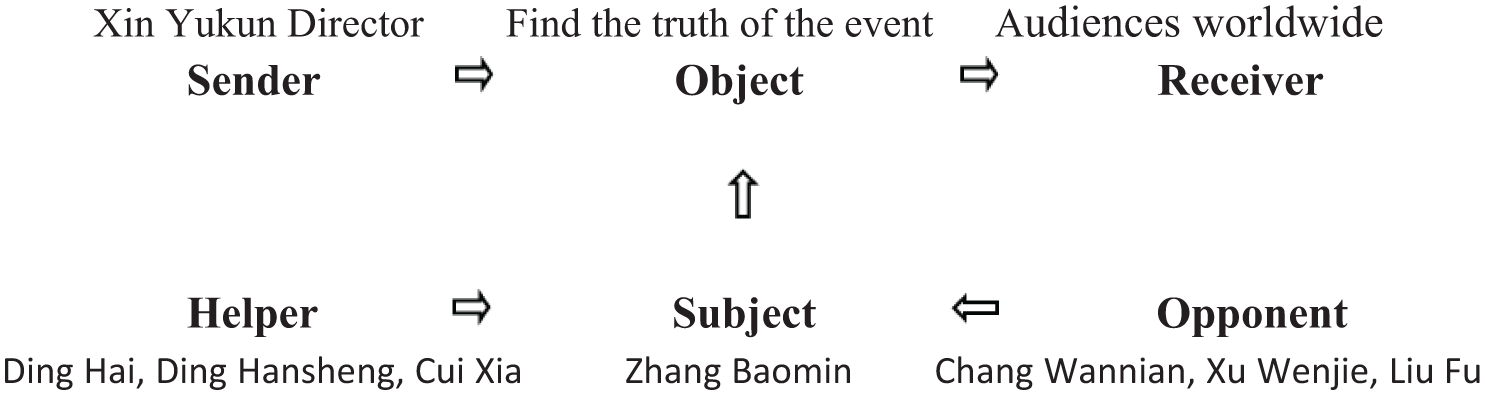
Application of the surface narrative model of Wrath of Silence.
The Desire to Find One’s Son
Marxist theorists argue that the family is the foundation of society, and that familial structures and relationships serve as prototypes for broader social patterns and relations. These models unconsciously exert a profound influence on people’s ways of thinking and mental frameworks throughout society (Li, 2022). After the disappearance of his child, Zhang Baomin takes matters into his own hands and initiates direct contact with others, thereby revealing the search process. Positioned at the bottom of the social hierarchy, Zhang is impoverished both materially and spiritually. In his youth, he injured his tongue in a fight, which left him with a speech impairment and led to his marginalization in society, depriving him of the ability to express his voice.
The subject’s desire drives the narrative forward. Determined to rely solely on his fists, Zhang forcefully enters Chang Wannian’s corporate office in search of the truth behind his son’s disappearance. This action illustrates the subject’s yearning for the truth. In the film, the father’s desire to find his son becomes the catalytic motive that triggers all subsequent events.
From the surface-level narrative, Zhang Baomin, who has long been at the bottom of society, has never been able to express his own voice. In the film, the villagers and mining bosses threaten and coerce illegal mining, and the local residents collectively lose their opportunity to speak out. Although Zhang Baomin, who is under threat, receives compensation, the amount is only 200 yuan RMB. This kind of extremely unfair transaction seems to have become the norm. In this context, Zhang Baomin’s tightly clenched fist symbolically demonstrates his anger at the state of being deprived of the right to speak. Therefore, Zhang Baomin’s act of fighting back with his fist gives the impression that it is the only way to approach the truth of the incident. In the film, due to the absence of law enforcement power to maintain social order, Zhang Baomin instead realizes that only by having the power and opportunity to speak can he get closer to the truth behind his son’s disappearance. Ultimately, what the protagonist pursues is the life of his child and the truth of the incident, which represent the right to speak for people at the bottom of society.
Lives Trampled in the Pursuit of Interests
According to Greimasian actantial analysis, the opponent is constructed as an entity or force opposing the subject, functioning as a challenge or obstacle that hinders the subject’s quest for the object. I.-S. Wang and Choi (2021) argue that the opponent’s obstruction and the helper’s support for the subject constitute key dynamics in narrative progression (I.-S. Wang & Choi, 2021). In the film, the person who ultimately helps Zhang Baomin find his child is not a blood relative, but Ding Hai—a fellow villager who had previously assisted Zhang Baomin in escaping from Dajin, the thug hired by Chang Wannian. Ding Hai represents the passive collective of lower-class helpers who have lost their power of voice by tacitly accepting illegal mining. During a confrontation with Zhang Baomin in the lamb restaurant, Ding Hai’s left eye is injured, and the subject infiltrates Ding Hai’s home while pursuing the object of his quest—his missing child. Yet, at the narrative juncture of pursuit, the helper Ding Hai exercises his modal competence by decisively aiding the subject’s escape and ultimately provides the decisive token: the key evidence, a drawing by Ding Hai’s son, Ding Hansheng, which depicts the victim’s murder scene. This constitutes a silent act of supportive voice by subaltern helpers, demonstrating how the weak, deprived of direct speech, can only assist in uncovering the event’s truth and striving to re-enter the discourse space in this indirect way.
In the actantial model, the second character occupying the role of helper is Ding Hansheng, who was Zhang Lei’s childhood playmate. During the subject Zhang Baomin’s quest to uncover the object of value—the truth of the incident—Ding Hansheng provides essential clues that enable the subject’s progression along the narrative trajectory. First, Ding Hansheng wears an Ultraman mask; Ultraman, as a Hollywood hero who defeats monsters, symbolizes justice. By wearing the Ultraman mask, Ding Hansheng positions himself in a state of waiting for justice to arrive, embodying the modal value of hope for rectification. The Ultraman mask serves as a key narrative token that catalyzes a shift in the narrative’s actantial relations: during the subject’s search for clues, Ding Hansheng gives the Ultraman mask to Zhang Baomin. Upon seeing Ultraman patterns on his son’s backpack and school supplies, the subject realizes that the Ultraman mask worn by Ding Hansheng was previously worn by Zhang Lei. Thus, the helper Ding Hansheng indirectly conveys to the subject the grim reality that Zhang Lei has been murdered.
Second, the film introduces the character of lawyer Xu Wenjie, who holds decisive evidence of Chang Wannian’s murders and illegal mining activities. As a result, the opponent Chang Wannian kidnaps Xu Wenjie’s daughter, creating a new obstacle in the subject’s pursuit of the object. During Xu Wenjie’s search for his daughter, the helper Ding Hansheng uses an archery gesture as a non-verbal act of discourse to warn him, thereby revealing the truth of Zhang Lei’s murder. Due to language and communication barriers—preventing him from entering the discourse space through speech—Ding Hansheng ultimately resorts to the narrative strategy of iconic discourse: he paints the entire sequence of the murder on the wall, visually narrating the reality of Zhang Lei’s death and fully actualizing his helper role within the actantial schema.
The final character occupying the role of helper in the actantial model is Zhang Baomin’s wife, Cui Xia. Although Cui Xia is positioned as a helper, her frail health and illness render her unable to perform any substantial supportive actions in the subject Zhang Baomin’s quest for the object—the truth about their missing son. Her sickness exacerbates the family’s economic burden, transforming her from a potential active helper into a passive figure. Cui Xia is poisoned by consuming contaminated water, trapped in the repetitive daily necessity of drinking polluted water, and can only delay the progression of her illness through medication. In the act of voicing out, Cui Xia’s voice is effectively silenced in reality; she becomes an actant without modal competence for speech, only able to emit anguished screams within the space of dreams—a metaphorical dicourse space detached from social reality. Taken together, the helpers Ding Hai, Ding Hansheng, and Cui Xia exemplify actants belonging to the lower social strata, marginalized in both socio-economic terms and in their lack of access to the discourse space.
In the narrative actantial structure of the film, the opponent—positioned in direct opposition to the subject Zhang Baomin—obstructs the subject’s quest for the object of value: his missing child and the truth behind the incident. Apart from those who form a survival-driven community with the subject, all other characters can be regarded as the opponent role within the actantial schema.
Foremost among these opponents is Chang Wannian, a member of the upper class who functions as the absolute antagonist to the subject. Through illegal mining and violent means, Chang Wannian situates himself at the top of the social and economic food chain. He possesses the capital to exercise control over every aspect of local life, driven by both a greed for money and an insatiable desire for power. Chang Wannian uses violence to coerce the company’s chairman into signing an unjust contract to transfer ownership of the firm; subsequently, he spends 500,000 RMB to bribe a lawyer to commit perjury. By employing such illegal strategies, he attempts to maintain a false sense of social order and equilibrium through the combined use of capital and legal manipulation—turning both into extensions of his power. Indifferent to environmental protection, Chang Wannian conducts illegal mining operations that result in severe water pollution, thereby harming the local community’s health and survival. Furthermore, during an illegal hunting excursion, he accidentally kills the subject’s son, Zhang Lei, and disposes of the body without regret. Through these actions, he epitomizes the ruthless, morally bankrupt opponent whose modus operandi is to resolve all conflicts with money. Chang Wannian’s control extends beyond economic exploitation; he effectively monopolizes the lives and even the fundamental right to life of the lower-class actants.
The second character occupying the opponent role in the actantial model is lawyer Xu Wenjie. Although he initially symbolizes the authority of law and the actantial function of justice, he succumbs to the temptation of money and provides false testimony to support Chang Wannian’s illegal mining activities, choosing silence in the face of Zhang Lei’s disappearance. Xu Wenjie’s actions reveal the moral collapse of the middle class when confronted with the temptations of power and wealth. He abandons the principles of law and justice that his profession represents, choosing instead to comply with the demands of authority, thus becoming a morally ambiguous figure. Xu not only gives up his professional responsibilities as a lawyer but also personally yeilds to the greed for money, creating a deep contradiction that stands in stark contrast to his social identity. Driven by his desire for wealth and power, he becomes parasitic upon Chang Wannian. When his daughter is kidnapped—although Zhang Baomin ultimately rescues her—Xu chooses to remain silent during police questioning about Zhang Lei’s disappearance.
Xu Wenjie’s silence exposes not only his evasion of social responsibility but also deepens his moral dilemma as a neutral character, rendering him an example of the compromising middle class. Through Xu Wenjie, the film boldly depicts the tragedy, moral deficiency, and ethical compromise of the middle class driven by greed for material gain. His character challenges the oppositional binary of actants within the Greimasian model; his dual identity causes him to oscillate between the roles of helper and opponent. This creates the notion of an ambiguous actant, transcending traditional binary oppositions and revealing the profound contradictions embedded within complex human relationships.
The final character occupying the opponent position is the village chief from Zhang Baomin’s hometown. Although the village chief should, by virtue of his actantial role, protect the villagers’ legal rights, he engages in transactional exchanges of power and money, aligning himself with the primary opponent. Enticed by financial benefits, he collaborates with Chang Wannian, proposing unjustly low compensation amounts that exacerbate the villagers’ economic hardship. His indifference to the subject Zhang Baomin’s search for his missing child—and his active obstruction of the investigation alongside Chang Wannian’s henchmen—further consolidates his position as an opponent in the narrative’s actantial schema.
The Current Reality of the Law of the Jungle
In the film, the subject’s primary quest is to uncover the truth behind the disappearance and to secure equitable discourse rights for both the lower and upper social groups. Through the process of pursuing the truth, the director constructs a narrative composed of three distinct actantial identities. Upon discovering that the child Zhang Baomin is searching for is the one he killed, the opponent Chang Wannian kidnaps lawyer Xu Wenjie’s daughter to coerce him into silence. In this way, Chang Wannian, an entrepreneur who achieves social success through the combined use of wealth, illegal means, and threats, monopolizes the power to control the discourse rights of the lower-class actants (Lu, 2022). By occupying the highest position in the social and economic food chain, Chang Wannian embodies the absolute antagonist within the actantial schema; he exploits and plunders for his own survival, resorting to brutal methods to harm competitors and even seizing the lives of the lower-class population.
The surface-level narrative of the film faithfully portrays how individuals from various social strata—whether upper, lower, or middle class—are governed by a survival of the fittest logic in the harsh realities of society. However, this existential predicament is not merely a consequence of individual moral decay, but is rooted in political structures such as local power collusion with capital, resource monopolies, and judicial failure. Within the framework of national discourse, the film does not overtly engage in political criticism, but rather uses subtle symbols and implications to expose how corruption and violence persist in the systemic indifference of local government-business relations and mining area violence. Through the depiction of the relationship between Chang Wannian and local officials and businessmen, as well as the violence in the mining areas, the director presents the profound control that political and economic structures have over individual destinies. In Chinese film discourse, such films often reflect social phenomena in an implicit manner, avoiding direct conflict with the state’s political discourse system. However, through the critique of corruption and violence, they reveal the systemic roots of ordinary people’s struggles.
The Conflict Between Modern and Traditional Values
In the film Wrath of Silence, Zhang Baomin harbors anger and resists the behavior of the upper class during the unfair communication process between social classes. The desire to transcend class is expressed through the imbalance of social capital and human resource structure, as well as the intensification of social contradictions. All behaviors and mentalities in this film revolve around the narrative of class opposition. The binary opposition between the evil deeds of the upper class and the pursuit of justice by the lower class to fight against evil can be said to be a common patterned phenomenon in the reproduction of communication between classes.
Especially from the perspective of Das Kapital, there exists a causal structure: the upper class owning property becomes the exploiter and the perpetrator, while the lower class who owns nothing becomes the object of exploitation and the victim. As a result, the lower people stand on the side of justice, and the upper class is closer to the side of evil. This point of opposition constitutes the deep narrative of the film. The film conveys its meaning through this deep narrative structure.
Based on the above perspective, this study proceeds as follows (see Figure 4). First, within the semiotic square, the oppositional relationship between S1 and S2 is defined as “the justice of the lower class” and “the evil deeds of the upper class.” On this basis, the contradictory relationships formed by S1 and –S1, as well as S2 and –S2, are expressed as contradictions between “the justice of the lower class” and “non-lower class,” and between “the evil deeds of the upper class” and “non-upper class.” Here, the non-lower class and non-upper class, although belonging to the upper class, still lack discourse power and are influenced by others. They can be regarded as the middle class. The relationship between the subject and the other is one in which the subject suffers from the aggressiveness of the other, and the subject denies the existence of the other through violent means. As a result of this, endless violence occurs.
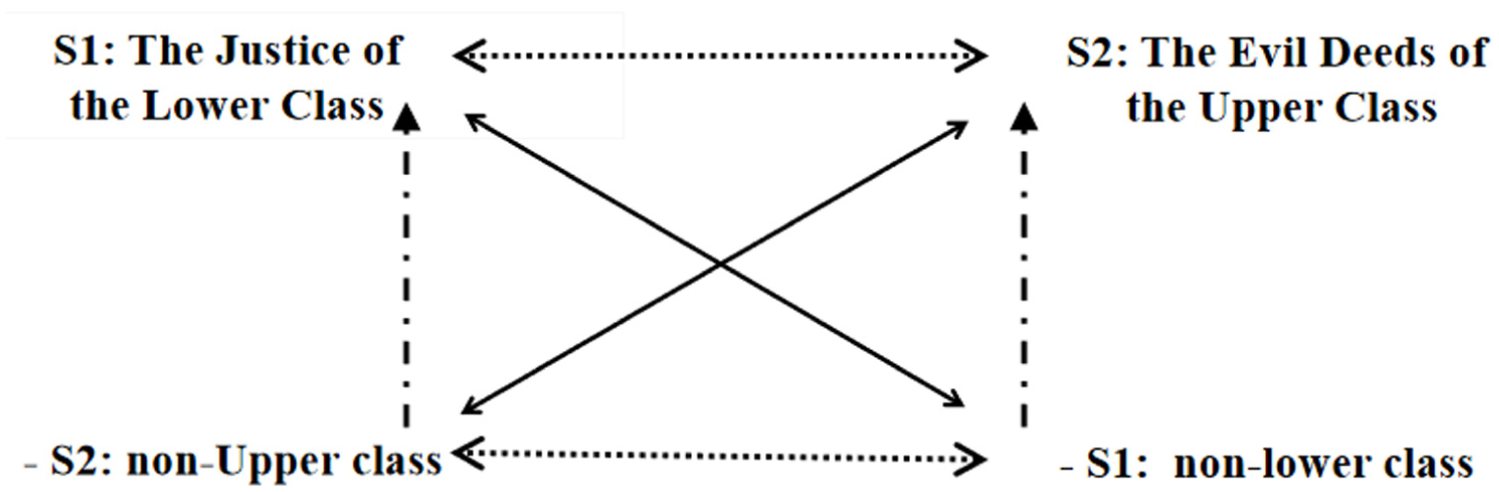
Application of the deep narrative model of Wrath of Silence.
The Justice of the Lower Class and the Evil Deeds of the Upper Class
The opposition between the lower and upper classes symbolically presents the conflict between justice and evil. Such class relations, like traditional interpersonal relationships and symbiotic human relations, are also closely related to changes at the social and cultural levels. In the film, the recurring image of the sheep serves as a sign of both the upper and lower classes and plays an indirect role in the narrative of class opposition. As a sign of goodness, the sheep represents kindness, obedience, and non-competitiveness in both Western and Chinese cultures. Positioned at the bottom of the food chain, sheep are raised by lower-class groups like the subject Zhang Baomin, while upper-class figures like Chang Wannian consume them. Chang Wannian is at the top of the food chain and belongs to the upper class; Zhang Baomin is at the bottom of the food chain and belongs to the lower class.
In addition, in the Bible, God tests Abraham by asking him to sacrifice his only son. When Abraham is about to kill Isaac, God stops him and lets him offer a sheep as a substitute. The term scapegoat originates from this story (Yang, 2018). Xu Wenjie’s daughter can be seen as the next chosen scapegoat after Zhang Lei was murdered. Chang Wannian used Xu Wenjie’s daughter as a hostage in exchange for the evidence of his crime. Zhang Lei was killed by Chang Wannian while protecting the sheep, thus making the sheep the only witness to their crime. Although the sheep became the witness, it is ironically implied that the truth of the event will eventually surface. As the weak, sheep must rely on the strength of the group to survive and change the situation within the flock. The director uses the sheep as an important sign in the film, endowing it with multiple symbolic meanings and functions.
During the process of searching for his son, Zhang Baomin went through various hardships. Even so, he desperately rescued Xu Wenjie’s daughter and then placed the unconscious girl in the cave where Zhang Lei’s body was hidden. He did not care at all about what was hidden in the cave, nor did he care about the meaning of that hidden thing—he only pursued justice. Zhang Baomin’s wife said, “When Zhang Baomin was a child, he got into a fight and his tongue was seriously injured. Since then, he has been unwilling to speak to others.” This shows that Zhang Baomin is not completely incapable of speaking, but rather feels that even if he speaks, he cannot obtain justice, so he chooses silence. For Zhang Baomin, who has an irritable temperament, violence is his only option. It is also his way of pursuing justice from beginning to end and resisting evil forces alone in the face of a great crisis that threatens the lives of his family.
The character who stands in sharp opposition to Zhang Baomin is Chang Wannian. Chang Wannian represents a repugnant symbolic system within this society. In the public sphere, he possesses power and discourse authority, disguising himself as someone who maintains public order in the name of justice. From beginning to end, he aims solely at his own interests, engaging in monetary transactions to cover up illegal mining and corrupt practices, developing his career behind a hypocritical facade. He hunts illegally and murders children, even deciding how to dispose of the corpses at will, thereby forming an antagonistic relationship with Zhang Baomin.
As an opponent, Xu Wenjie wavers between good and evil. He takes on the social role of a law enforcer but ultimately moves entirely toward evil. He was supposed to speak justly on social and legal matters, punish crime, and protect victims and vulnerable groups in society. However, tempted by the 500,000 yuan compensation, he refused to speak out for justice and fairness, lost his conscience and moral bottom line, and became a hypocrite falling into the abyss of crime.
In the film, the symbolic representation of living spaces reflects the social classes to which each character belongs. In Zhang Baomin’s living environment, there are tree leaves as food for sheep and dead birds along the polluted riverside. Meanwhile, Chang Wannian and the mine owners engage in illegal mining and violent acts at will, destroying the environment and the ecological balance. The people living there have long lost a healthy and safe home. Zhang Baomin and his family live in a rural tile-roofed house, with household items that appear very old and worn. In contrast, Chang Wannian’s office is magnificently decorated, even including an archery training area inside. In order to cover up his murder, Chang Wannian donates money to a school, revealing his hypocritical nature. He unhesitatingly performs double acts: he conducts coercive business transactions that cause great financial harm to others, while simultaneously carrying out charitable activities. This is an attempt to conceal his violence and homicide through charity. The film draws attention to the fact that the opposition between the lower and upper classes is not merely a class issue—it also leads to economic, legal, and social conflicts. The deep structure of the narrative indicates that class relations in Chinese society have departed from the meaning of a formerly relatively stable class structure.
The Conflict Between Justice and Evil
The contradictory relationships between S1 and –S1, as well as S2 and –S2, are manifested as the conflicts between the lower class and the non-lower class, and between the upper class and the non-upper class. This gives rise to inherent and fundamental contradictions within the social structure and ethical consciousness. From the perspective of class attributes, Chang Wannian’s subordinates belong to the lowest stratum of the lower class, surviving by attaching themselves to upper-class groups like Chang Wannian. Their lives are controlled by Chang Wannian, who possesses absolute authority. This is evident from the cruel violence inflicted on his subordinate Dajin after the latter lost the kidnapped child. Xu Wenjie, the lawyer who chooses silence in the face of violence, symbolizes the middle class. He can be regarded as an egoist who uses his legal knowledge solely to protect himself or his family, thereby losing the most basic sense of professional integrity, moral conscience, and ultimately, justice. He infiltrates the lower-class society in a way that brings suffering to others, becoming a violent perpetrator armed with selfishness and indifference (Lu, 2022). Xu Wenjie’s despicable act of compromise allows Chang Wannian’s desires to continue expanding. It can be inferred that even after Chang Wannian is released from prison, he may still become a violent perpetrator who commits crimes and murders at any time.
Money and power are the standards for class differentiation. The absence of money and power means the loss of survival—that is, the basic rights necessary to stay alive. From the standpoint of the lower class without money, they have no choice but to drink water polluted by illegal mining. During the process of unfair compensation agreements, they do not even have the right to speak. From the standpoint of the economically unstable middle class, in order to secure their own survival, they are forced to give false testimony. Their dilemma lies in the fact that, to protect what they possess, they engage in unwilling struggles beyond the scope of law or institutional influence. This also serves as a warning that they can easily become perpetrators of violent crimes at any time and in any place. The rich choose hypocrisy and evil, while the poor choose kindness and justice. Based on the above analysis, it can be seen that even in a socialist society, the most basic aspects of personal and spiritual character cannot escape the logic of capital.
The violent events that occur from the very beginning indicate that lower-class individuals are in a state of unrelieved tension within society, which sometimes leads them to lose rational balance. The situation of using fists instead of words reveals how a latent impulsive personality transforms into extreme violence. When Zhang Baomin seeks help from the police, he is instead suspected by them: “Did you do something wrong to the other party, which caused this?” The police appear to give up on searching for the missing child, and it also seems unlikely to find someone in a complex urban area. Zhang Baomin repeatedly fails in his attempts to find his child through legal means and thus abandons the hope of relying on the police. In order to search for his child, he climbs over mountains and expands the scope of his search. During the process, he becomes entangled in disputes related to the mining area and gradually approaches the truth behind the disappearance through his involvement with figures like mine owner Chang Wannian and lawyer Xu Wenjie.
Conventional non-violent methods are of no help in finding his son, but through physical violence, he is able to get closer, step by step, to the truth of the child’s disappearance. This suggests that lower-class individuals, who lack the right to speak, must struggle desperately in order to survive. Facing the urgent need to find his missing son, Zhang Baomin can only reclaim his dignity through physical violence accompanied by blood and injury. Although he is able to defeat the violent gangs committing evil, he cannot change the situation by relying on his own strength alone. He can only vent his anger through fighting and continue his desperate search for his son in helplessness.
The Disappearance of the Individual
In the analysis of Wrath of Silence, the implicational relationships between S1 and –S1, and between S2 and –S2, clearly reveal the pyramid structure of class reproduced in the film. After accumulating enormous wealth through illegal mining, Chang Wannian transforms into a hypocritical private entrepreneur and rises to the top of the pyramid. After accumulating capital, he begins living an upper-class lifestyle, opens a mining company, and upholds the ideology of primitive plunder. In a luxurious European-style restaurant, he installs a meat-cutting machine that is completely out of place in the setting and orders his subordinates to threaten competitors. In a modern office, he sets up a virtual hunting ground to satisfy his primitive desire to hunt. He buys off witnesses with money to escape legal punishment, uses violence to threaten others, and seizes resources. During a fight with Xu Wenjie, Chang Wannian says, “You don’t even dare hurt that man?”—a line that reveals his own crime of killing a child. Additionally, after seeing Xu Wenjie’s daughter released, he slyly says, “You’d better take good care of your daughter,” shaking the heart of the selfish Xu Wenjie. In the end, after a brief weighing of the situation, Xu Wenjie chooses self-protection.
At the end of the film, when the police ask Xu Wenjie if there is anything else he wants to confess, Xu Wenjie—representing the middle class—abandons morality and conscience and answers, “No.” The audience, waiting for justice, is met with the bleak reality of shattered hope. Standing from judgment of evil, Chang Wannian coldly watches those who do not belong to the upper class. He can be seen as an invisible surrogate who, in the name of law, exercises a function beyond the self and coldly observes society.
Zhang Baomin, who belongs to the lower class, harbors deep hostility toward upper-class figures like Chang Wannian from beginning to end. When he first meets Chang Wannian in the office, he is already filled with strong suspicion. When Chang Wannian’s subordinates lie to him, claiming that they have taken his son, Zhang Baomin believes that his son is trapped somewhere unknown. Anxious to find his son, Zhang Baomin uses violence to confront them, but ultimately achieves nothing. Due to social injustice, Zhang Baomin’s inner self gradually becomes marginalized and fails to gain recognition within the order of public social power. This indicates that individuals or even groups living at the bottom of society cannot find their position. As a form of retaliation, Chang Wannian—who belongs to the upper class—responds with violence. The lower-class group also resorts to violence, even shedding blood, in order to resist the criminal gang.
The analysis of the implicit relationship between classes reveals the nature of the relationship between the upper and lower classes under socialism. There is a gap between social classes, which shows that there is a risk of mutual destruction between individuals and even between groups. The deep narrative of the film Wrath of Silence indicates that as members of society, individuals—regardless of their class, emotional, or ethical status—face difficulties that threaten the stability of the class to which they belong. These difficulties exist across all classes and are not exclusive to the upper or lower class. The severity of the problem lies in the fact that when there is unequal distribution of resources among social classes, or when illegal infringement arises from the upper class, the lower-class people have almost no solution other than resorting to violence. If new violence emerges in response to existing violence, it will create a vicious cycle that only harms both the upper and lower classes. In a society where right and wrong are determined by the logic of power, the unfair competition for capital will inevitably become widespread and disastrous.
Conclusion
The film Wrath of Silence vividly portrays the oppression of the lower class by the upper class and the disintegration of traditional emotional and moral values. It focuses on visualizing crimes that use violence for violence, while directly exposing structural problems in contemporary Chinese society—namely, excessive mutual aggression and the pursuit of desire leading to the loss of humanity. On the surface level, the narrative follows a subject’s desire to uncover the truth and reclaim basic discourse power. On the deep level, the audience can glimpse the criminal collective of multiple social classes in modern Chinese society.
Greimas’s semiotic square model helps to outline the core issue of class conflict. In this model, The lower class (justice) and the upper class (violence, evil), respectively, with an irreconcilable value conflict between the two. Meanwhile, Injustice and non-violence are represented by marginalized characters (such as the silently compromising lawyer Xu Wenjie) and the possible space of non-upper-class violent authority. Through the tension between these four conceptual points, the class opposition, moral compromise, and mechanisms of resistance in the film are structurally presented. This analytical framework not only reveals the narrative logic of the film but also illustrates how the film expresses the power imbalance within the social hierarchy through character relationships and semiotic arrangements.
The film ends in silent despair, illustrating that even in a society where the legal system exists, the interpretation and exercise of the law remain in the hands of the power elite. Marginalized individuals like Zhang Baomin can only make their voices heard through violence within this pyramid-like structure. This also reflects Greimas’s emphasis on the contrariety of modalities: the actions of the weak do not stem from the hope of victory, but rather from a desire to retain a trace of existence within structural silence.
In a broader context, the themes of violence and class conflict in Wrath of Silence resonate with and contrast against several other Chinese and international crime films. For instance, the Chinese film The Dead End (2015) similarly explores the narrative logic of violence and redemption to reveal the struggles of individuals at the societal margins, facing institutional constraints. The characters’ silence and guilt in this film mirror the resistance of Zhang Baomin in Wrath of Silence. Bong Joon-ho’s Parasite (2019) uses vertical metaphors of class space to expose structural violence, which, when compared to the symbolic silence in Wrath of Silence, reflects a shared cultural motif. Additionally, Todd Phillips’ Joker (2019) also employs a violent narrative to reflect social inequality and psychological repression. The protagonist’s marginalization and rebellion in Joker align with the psychological dynamics of resistance found in Wrath of Silence. Through comparisons with these films, it becomes clear that Wrath of Silence not only presents a unique narrative on class discourse within the context of Chinese society but also engages in a global dialogue on the themes of violence, desire, and class imbalance.
The findings of this study have certain implications for social and policy makings. The film reveals issues of class imbalance and structural violence, reflecting the unequal distribution of social resources, unjust law enforcement, and the lack of representation of marginalized groups. This highlights the need for institutional equality and justice in social governance. The government and media, in cultural dissemination and public opinion guidance, should encourage more film creations that portray the true situations of marginalized groups, using cultural narratives to promote social empathy and class dialogue.
It should be noted that while this study effectively reveals the class conflict and logic of violence in Wrath of Silence through Greimas’s narrative semiotics model, particularly the oppositional relationships of justice versus evil and discourse versus silence in the semiotic square, the model lacks sufficient explanatory power when dealing with complex character roles, such as Xu Wenjie’s ethical wavering. Furthermore, the theme of silence in the film not only reflects the voicelessness of the lower class but also represents multiple cultural mechanisms such as the evasion of the middle class, the concealment of power, and emotional repression, which are not fully captured within the semiotic framework.
From a methodological perspective, this study primarily relies on qualitative semiotic analysis, lacking a clear explanation of the analysis steps, scene selection criteria, and the application of semiotic categories. Due to the absence of systematic coding standards and selection methods, the analysis may contain a degree of subjectivity. Future research could introduce empirical methods such as surveys and interviews, collecting feedback from viewers and expert opinions to further validate the generalizability and effectiveness of the analysis conclusions. Moreover, to enhance the scientific rigor of the analysis, future studies should clarify the application of semiotic categories and combine quantitative data for empirical validation of narrative oppositions, thereby improving the reliability and replicability of the research.
In conclusion, although this study focuses on a single text narrative, its key contribution lies in the in-depth application of Greimas’s semiotic model, attempting to uncover the social structural logic and class discourse mechanisms behind the violence narrative. It provides a possible analytical path for understanding the complex relationship between violence—class—ethics in contemporary Chinese cinema. This not only offers a theoretical practice for semiotic narrative research but also opens up a practical perspective for the visual representation of real-world social issues.
Footnotes
Author Note
Renshun Wang: Main research areas: digital media, image animation, Chinese and Korean art and culture.

Ethical Considerations
This research did not involve human participants or animal experiments, and therefore no ethical approval was required. The study was conducted in compliance with relevant academic guidelines.
Consent to Participate
This study did not involve human participants, personal data, or identifiable information. Research that does not involve real person interviews/personal materials, such as interviews with directors, actors, screenwriters, etc., analyzing unpublished manuscripts. Therefore, informed consent were not required for this study.
Author Contributions
This manuscript was carefully and independently completed by me.
Funding
The author received no financial support for the research, authorship, and/or publication of this article.
Declaration of Conflicting Interests
The author declared no potential conflicts of interest with respect to the research, authorship, and/or publication of this article.
Data Availability Statement
Data sharing not applicable to this article as no datasets were generated or analyzed during the current study.