



Abstract
This study explores the transformative power of e-learning environments in fostering primary stage pupils’ creative thinking, as perceived by 48 teachers awarded for outstanding instructional performance and creativity in e-learning in Saudi Arabia, the United Arab Emirates, and Jordan. This research follows a qualitative research approach to explore how e-learning environments potentially affect the development of creative thinking skills among primary school pupils. Data were collected using semi-structured interviews and analyzed using grounded theory. The results showed that e-learning significantly improves pupils’ creative thinking, as the dynamicity and interactivity of the platforms facilitated inquiry, collaboration, creative and critical thinking, and self-directed learning. The participants reported that the provision of emotional support, through positive feedback and communication, is a requisite for effectively creating an innovative learning environment. The findings also revealed that well-incorporated formative assessment in e-learning platforms potentially enhances critical and creative thinking through the provision of continuous problem-solving-oriented feedback. The findings also emphasize the need for proper teacher professional development to learn how to better develop collaborative, learner-centered environments conducive for fostering creativity and innovation. The findings uncover a need for designing strategies for regulating learning, learner emotions, active learning, and formative assessment in online platforms to enhance creativity and critical thinking. Future research using larger samples and mixed-method designs is recommended.
Plain Language Summary
This study explores how teachers in Jordan, Saudi Arabia, and the UAE use e-learning tools to help young learners think more creatively. The teachers reported that technology helps students ask questions, work in groups, manage their own learning, and solve problems. They also reported that e-learning helps learners feel more confident and supported. The study highlights six ways that digital learning boosts creativity and suggests ideas for schools to support these efforts. A new model was developed to show how creativity grows in digital classrooms.
Keywords
Introduction
Educational environments are key in developing learners’ creative abilities, especially within primary education. Unlike traditional classrooms where the focus is often on rote learning and passive reception of knowledge, electronic (or e-learning) environments have emerged as dynamic platforms for active learning (Bani-Irshid et al., 2023; Kettler et al., 2018) where learners think, generate ideas, and interactively explore concepts (Al-Hassan et al., 2024).
The literature (e.g., Al-Hassan et al., 2024; Khasawneh et al., 2023; López et al., 2024) suggests that educational ecosystems are shaped by material, social, and psychological factors that affect both teaching and learning. As schools cope with current challenges, such as access and equity (e.g., Malik, 2021; Wanti et al., 2022), mental health and wellbeing (e.g., Díaz, 2020; Frazier & Doyle Fosco, 2024), curriculum relevance to current demands (e.g., Mahardhani et al., 2023; Taatila, 2017), and teacher shortage and burnout (e.g., Călin et al., 2022; Riggs, 2023), e-learning technologies have become pivotal in fostering learner engagement, collaboration, and creativity (Kettler et al., 2018; Khasawneh et al., 2023). Interactive tools like multimedia presentations, virtual simulations, and discussion boards expose learners to diverse instructional practices, foster multi-modal learning (Al-Barakat et al., 2023), promote emotional support and social interaction, nurture motivation, self-expression (Nguyen & Nguyen, 2022), and vital role exploration and experimentation with ideas within structured, safe settings (Mayer, 2017; Millican, 2022; Moosavi & Bush, 2021).
In the context of this research, creative thinking refers to the learner’s ability to generate novel and valuable ideas; active learning involves learner engagement through participation, discussion, experimentation, and inquiry; and self-directed learning refers to pupils’ active goal setting, strategy selection, monitoring, and brief reflective check-ins within teacher-scaffolded activities. Because most participating teachers serve Grades 3 to 6 (ages 9–12), creative thinking is interpreted in developmentally plausible ways for the primary years (e.g., playful ideation, flexible representations, and concrete problem-solving). Critical thinking, active learning, and self-directed learning are closely intertwined in digital learning environments, where interactive tools and learner-centered strategies create opportunities for learners to explore, take intellectual risks, and develop original solutions to complex problems. Additionally, teachers’ professional development refers to ongoing, job-embedded learning that extends beyond workshops to include coached lesson design, peer feedback, and iterative refinement.
Electronic learning has made possible the use of several digital tools reported to promote creativity, active participation, and creative thinking. Interactive tools, such as virtual games and digital storytelling, encourage critical thinking by requiring students to come up with multiple solutions to a problem (Al-Barakat et al., 2023). Virtual classrooms and discussion boards promote peer interaction and teamwork, which are key to developing problem-solving and creativity skills (Cheng, 2019). Gamification and problem-solving tasks have been found to encourage risk-free exploration, creative problem-solving, and decision-making (Ginaya et al., 2018; Hosseini et al., 2020). The provision of both immediate and delayed formative feedback through assessments or immediate responses potentially catalyzes emotional support to not only facilitate learner creative performance but also promote understanding and motivation for learning (AlAli & Al-Barakat, 2024; Bani-Irshid et al., 2023; Kettler et al., 2018; Khasawneh et al., 2022; 2023).
Theories of creativity, such as Torrance’s model, emphasize higher-order thinking and systematic idea development. Guilford’s theory highlights flexibility, originality, and critical evaluation as factors potentially cultivated in e-learning platforms to generate and develop ideas, organize thought, and relate old and new knowledge and experiences (Alshammari & Thomran, 2023; Nguyen & Nguyen, 2022) to promote creativity.
When properly integrated into the primary classroom, multimedia elements, such as visuals, video clips, and interactive simulations, create an emotionally engaging environment that simplifies complex concepts, enhances focus, and supports cognitive development (Chen et al., 2022). The cultivation of critical and creative thinking is closely tied to collaborative learning activities, especially small-group work and peer discussion. Learners who work together on real-world problems or navigate simulated life situations encounter multiple perspectives while developing their ideas through processes which are unavailable to solitary learners (Al-Samarraie et al., 2020; Alshammari & Thomran, 2023; Arriba & Vidagañ, 2020; Brem & Puente-Díaz, 2020).
Today’s primary classroom depends increasingly on digital learning spaces to both distribute content and support young learners’ creative development. These environments, when meticulously designed, not only provide access to information but also create opportunities for learners to explore, question, and generate ideas, all key to better imagination and engagement. To truly promote creativity, educational systems need to move past mere technology integration to creating flexible platforms that support innovative experimentation, dialogue, and sustained inquiry. Young learners who have access to creative thinking tools within digital resources are more likely to develop the confidence and curiosity needed to thrive in an increasingly complex world (Al-Barakat & AlAli, 2024; Fan & Cai, 2022).
Problem and Rationale
Advances in technology have transformed education on an unprecedented scale, enabling educators to adopt learner-centered pedagogies to cater to diverse learning styles and proficiency levels. However, many schools across the Arab region struggle to adopt modern technology in ways that foster creativity and innovation among learners. Evidence suggests that current curricula remain overly traditional and didactic (e.g., Al Musawi, 2011; Al-Senaidi et al., 2009; Al-Zaidiyeen et al., 2010; Bataineh & Alqatanani, 2019; Bataineh & Mayyas, 2017), failing to support creative thinking. Despite successive reforms, which prioritize technology integration, the need to cultivate new forms of thinking in students has not been adequately met nor aligned with available technology.
The study addresses the divide between the opportunities offered by available technology and the instructional practices needed to promote learners’ creativity in Arab schools. While many schools now have innovative technology, its use is generally erratic, unstructured, and hardly integrated within a strategy for developing creative and critical thinking (e.g., Al Musawi, 2011; Al-Qahtani & Higgins, 2013; Al-Senaidi et al., 2009; Bataineh et al., 2020). This research seeks to explore how electronic learning environments can be improved to nurture creative thinking skills in primary school-aged children.
Teachers must strive to encourage learners to explore new ideas and solutions in conducive e-learning environments that promote creativity and creative thinking. The study aims to explore how local and international teachers perceive using electronic learning tools and their potential to foster learner creativity. It also examines how these digital tools can be transformed into practical tools for innovation.
The overreaching purpose of the research is to provide actionable recommendations for integrating digital tools into classroom instruction to promote creative thinking in different subject areas. These recommendations aim to reduce the disparity between available tools and current instructional practices, helping learners develop the critical and creative thinking skills essential for survival in present-day society. The primary objective of this study is to explore the perceptions of award-winning primary school teachers about how e-learning environments potentially affect the development of their pupils’ creative thinking skill. Specifically, it investigates how digital tools and pedagogical strategies shape creative engagement through six key dimensions. This objective is rooted in the need to bridge the persistent gap between the availability of educational technology and its pedagogical application to foster creativity in primary classrooms across the Arab region. More specifically, the study is guided by the following research question: How do award-winning primary school teachers in Saudi Arabia, the United Arab Emirates, and Jordan perceive the transformative role of e-learning environments in fostering learners’ creative thinking?
Design
This research follows a qualitative approach to explore how e-learning environments potentially affect the development of creative thinking skills among primary school pupils. The qualitative approach was chosen to gain in-depth insights from participants into the relationship between e-learning environments and creativity, an issue that is not easily quantifiable. Semi-structured interviews were used in data collection, offering open-ended questions to elicit detailed perceptions from teachers about the relationship between e-learning and creativity.
Learners were not direct participants, as only teachers participated in the study. Learner descriptions serve to contextualize teachers’ accounts rather than to collect data from children. However, to situate those accounts, the typical pupil cohort taught by participating teachers comprised Grades 3 to 6 (approximately ages 9–13), which informed both the examples provided and the developmental framing of creative tasks.
Sample
The participants were a purposefully selected sample of 48 award-winning teachers formally recognized for their excellence and creativity in teaching across the Saudi Arabian, Emirati, and Jordanian educational contexts. Even though sex, country of origin, and discipline do not factor in the analysis, it is worth noting that the sample included 13 (27.08%) teachers from Saudi Arabia, 14 (29.16%) from the UAE, and 21 (43.75%) from Jordan. There were 29 female teachers (60.42%) and 19 male teachers (39.58%). In terms of discipline, 17 (35.42%) were teachers of science and mathematics, 8 (16.66%) of English, 5 (10.41%) of social studies, and 18 (37.50%) of early childhood education. Diversity in the cohort allowed for the provision of insights into the utility of e-learning in enhancing creative thinking across country, gender, and discipline.
Participating teachers primarily taught Grades 3 to 6 (ages 9–13). Accordingly, references to pupils reflect developmental stages from late-early to early-middle primary years. In broad terms, Grades 3 to 4 (≈9–10) emphasize concrete representations and guided ideation whereas Grades 5 to 6 (≈11–13) show expanding metacognitive awareness and flexibility in combining representations. These differences shape feasible e-learning tasks and the forms of creativity observed.
Instrument
Semi-structured interviews were conducted to capture participants’ perceptions about and experiences with e-learning tools and their potential effect on creative thinking. The interview schedule, developed based on existing related literature, was validated by a jury of 11 specialists in e-learning, instructional technology, and linguistics. Following modification per the jury’s feedback, one question was discarded, two retained as is, and one modified. The final version of the schedule consisted of the following questions:
How do you use e-learning environments to promote creative thinking in your classroom?
What teaching strategies do you implement to foster your students’ creative thinking in e-learning settings?
How has transitioning from traditional classrooms to e-learning affected your approach to fostering creativity in lesson planning, execution, and evaluation?
To ensure the reliability of the interview schedule, pilot interviews were conducted with seven teachers, later excluded from the main sample, and reconducted 2 weeks later. Responses were analyzed using Cohen’s Kappa, yielding a reliability score of 0.97, which was deemed appropriate for the purpose of the current research.
Data Collection
The data collection process included the following steps:
Participant Selection. Forty-eight prize-winning teachers with experience in e-learning environments were purposefully selected. They were assured of their anonymity and the confidentiality of the data they provided.
Consent: All teacher participants provided written informed consent for participation and audio recording. These consent forms are stored securely and are not part of the anonymized dataset.
Scheduling: Interviews, lasting up to 55 min each, were conducted at participants’ workplaces or other convenient locations.
Building Rapport: An environment of respect and cordiality was established, recording the interviews to ensure accuracy and verifiability and assigning participants numbers to ensure anonymity.
Encouraging Detailed Responses: Open-ended questions were used to elicit detailed responses. When needed, questions were either adjusted or followed up to clarify participants’ input.
Transcription: Audio recordings were transcribed verbatim immediately after each interview to ensure accuracy and allow for detailed analysis of participant responses.
Verification: Transcripts were returned to participants a week later for confirmation, ensuring both the accuracy and verifiability of the data.
Data Analysis
Data were analyzed thematically using grounded theory-informed coding procedures to generate inductively derived categories, as described in the following steps:
Pre-reading: Transcripts of participants’ responses were thoroughly reviewed to identify key themes.
Inductive Analysis: Themes were gleaned directly from the data without using any predefined theoretical framework.
Coding: Data was broken into smaller segments (viz., words, phrases, sentences) and assigned codes to represent their meaning.
Developing Themes: Coded segments were grouped into major categories that captured the following key themes: Creating active e-learning environments: These include using interactive devices, such as multimedia, games, and simulations, to promote learners’ engagement and creativity. Enhancing learner emotional wellbeing: E-learning environments, through features such as automated personalized feedback, reduce anxiety and promote self-reliance and, hence, creative thinking. Enriching collaborative learning: Tools, such as discussion groups and virtual projects, promote learner autonomy, interaction, and imagination. Encouraging self-motivated learning: E-learning platforms, compared to traditional classrooms, better promote autonomy and self-directed learning, enabling students to set goals, seek knowledge, and reflect on learning. Assessment for creativity: Formative assessment, such as e-learning quizzes with immediate feedback, allows learners to revise their strategies, which potentially promotes their creative thinking. Improving the learning environment: Incorporating inquiry-based tools, such as interactive simulations and research projects, potentially fosters curiosity and creative thinking.
Descriptive Summary Construction: To fully understand these findings, a detailed analysis was conducted to understand how e-learning environments affect the development of creative thinking skills, gleaning invaluable implications for promoting creativity in primary education.
Ethical Considerations
This study was reviewed and approved in accordance with the ethical standards of the Ethics Committee of King Faisal University and Law and the 1964 Helsinki Declaration and its later amendments. The research protocol was reviewed and approved by the aforementioned board (Approval was granted on 9 March 2023, under protocol code KFU-REC-2023March-EA00457).
Consent to Participate
All respondents voluntarily participated in this research after providing written informed consent. Each respondent in this research was informed about the aims of the research, his/her right to withdraw at any time, and the confidentiality of their responses. There is no identifying information was gathered. The potential risks were minimal and did not exceed those encountered in daily life.
Findings
The objective of this research is to gauge teachers’ perceptions of the effectiveness of electronic learning environments in promoting primary school pupils’ creative thinking skills. The data, collected through semi-structured interviews, were qualitatively analyzed to glean patterns of perceived ways in which e-learning environments foster creativity among these pupils.
Six core themes were identified, and e-learning was found to promote active learning environments, the emotional aspect of learning, collaborative learning, self-regulated learning, assessment as learning, and inquiry-based learning. The findings, detailed below, underscore the power of e-learning environments in nurturing young learners’ creative thinking skills and in providing a forum for active, collaborative, self-directed, and inquiry-based learning.
Given that most reported classrooms serve Grades 3 to 6 (ages 9–13), creative thinking is reflected through developmentally concrete tasks (e.g., designing artifacts, recombining representations, and explaining everyday problems) which shape the examples summarized under each theme.
First Theme: Promoting Active E-Learning Environments
Electronic learning environments involve interactivity-intensive tools and resources, such as gamification, simulations, and multimedia content, which reportedly capture learners’ attention and promote their engagement with and interest in learning. The learners’ increased participation as they seek to generate ideas and find solutions potentially fosters their creative thinking.
The Analysis revealed that out of the 48 participants, 44 (91.7%) stressed that active learning environments are key in the development of young learners’ creative thinking skills. As technology has transformed learning environments into more dynamic, interactive, and engaging environments through using digital tools such as simulations, gamification, and multimedia, learners’ creative skills are more readily cultivated. Unlike traditional instruction, where the teacher is the sole figure of authority, electronic learning environments shift the focus onto the learners by promoting engagement, critical thinking, and autonomy.
The literature provides evidence that traditional classroom environments undermine learners’ ability to think independently and translate knowledge into practical skills (e.g., Freire, 1970; Hattie & Yates, 2014; Robinson & Aronica, 2015). Participants reflected on the long-term effects of higher-order learning, as illustrated in the interview excerpts below:
Learners start becoming critical thinkers when these electronic environments are infused within pedagogical settings. For instance, my students have recently designed storyboard posters on particular scientific principles, which illustrated their creativity during problem-solving situations. With the use of interactive simulations, I began to see a change in my students’ level of interest. They are no longer passive consumers of knowledge but innovators who look for solutions to problems and build upon existing concepts. Online platforms, through which my students attempted to design their model sustainable city, transformed the task into one where learners used their imagination, reasoning and previously acquired knowledge to each create their model city. This example, like many others, proves how active learning pedagogies enable learners to bring their ideas to life. During a group project on how to conserve water, I observed my students design really exceptional solutions with the help of an interactive discussion board. Independent exploration has proven beneficial for many of my students, several of whom designed and simulated ecosystems with varying parameters using an app. The insights they gained were exceptional. One of my students recorded a video that creatively simplified complicated mathematics theories.
These excerpts illustrate how independent learner engagement in electronic learning environments encourages learners to think creatively to do tasks which require addressing challenges or finding solutions, and potentially fosters creativity, critical thinking, and problem-solving skills. These environments not only make learning more enjoyable but also help keep learners on task as they explore topics, express ideas, and develop crucial competencies for today’s interconnected world. Thus, e-learning environments support both academic success and the confidence and adaptability required to navigate an increasingly interconnected future.
Second Theme: Nurturing the Emotional Aspect of Learning
As e-learning environments are potentially supportive learning environments, they increase the likelihood of risk taking and reduce anxiety and fear of making mistakes. Emotionally supportive environments potentially foster learners’ creative skills, as they engage in uninhibited problem-solving and self-expression.
About 94% of the participants emphasized the need for emotionally supporting learners, as emotionally supportive e-learning environments potentially boost learners’ confidence, reduce anxiety and fear of failing, and promote willingness to creatively engage in problem-solving and self-expression, as illustrated in the excerpts below:
By providing emotional support, students are aided to a level of safety and confidence to express their ideas without fear of failure or criticism. When students receive emotional and psychological support, they become more engaged and more willing to provide innovative solutions simply because their ideas are respected and cherished. Students require an atmosphere in which they are assured that their ideas will be given their due importance. This type of support offers a safe environment for instilling and boosting creative thinking skills. Emotionally supported students are prepared to take risks. They can provide new ideas that improve how people think about issues in different ways. Shared participation and free expression between teachers and students build an environment of positive communication and enduring relationships which most likely encourages creative thinking.
The dynamics between teachers and learners are fundamental for fostering collaboration and innovation, yet the emotional climate of the classroom plays an equally pivotal role. Learners are more likely to engage actively when they perceive respect from both their teachers and peers, as such an environment offers the emotional foundation necessary for students to build the confidence to take intellectual risks, think creatively, and share their ideas without the fear of rejection or misinterpretation.
Safe learning environments not only help students develop a sense of self-worth but also empower them to freely express their thoughts, knowing that they will not be ridiculed or criticized. This sense of psychological security fosters the courage to challenge conventional thought patterns and take creative risks. It also strengthens their self-esteem and self-efficacy, which in turn enhances essential aspects of creative expression, including engagement, motivation, and active problem-solving.
Infusing emotional support into daily teaching practices is crucial for nurturing students’ creative thinking and problem-solving abilities, as well as ensuring sustained academic involvement. Learners are more inclined to take intellectual risks and offer original ideas when they feel emotionally safe, understanding that their contributions are valued. This psychological safety serves as a catalyst for creative momentum and deepened learning engagement.
Given that teacher-student relationships are seen as central to promoting teamwork and progressive learning environments, educators must focus not only on content delivery but also on creating emotionally supportive classroom spaces. Such environments act as catalysts for risk-taking and independent thinking, promoting deeper learning, innovative problem-solving, and the self-assurance needed to explore unconventional ideas.
Third Theme: Promoting Collaborative Learning
Peer collaboration in e-learning environments, through features such as discussion forums and group projects, emerged as a key driver of creative thinking. As they generate, exchange, work on, and modify ideas with the help of other learners, group discussions and collaborative work on assignments, learners potentially improve their analytical and creative abilities.
The analysis indicated that about 96% of the participants signaled out collaborative learning as a catalyst for developing creative thinking skills in electronic learning environments. The perceived relative superiority of these environments is supported by features, such as teamwork tools, discussion forums, and projects, which potentially catalyze collaboration. For example, as learners interact and exchange ideas in group discussions on various collaborative e-learning platforms, their expression and creative thinking skills potentially improve, as shown in the following excerpts:
Through collaborative learning students gain access to both peer interaction and personal thought development which results in multiple creative ideas for solving problems. New technological developments support this educational process while promoting creativity through enhanced student involvement in the classroom. The implementation of electronic learning methods in teaching practices leads to significant improvements in student creativity. The process of collaborative work enables students to absorb peer-generated ideas which helps them enhance their thoughts and explore multiple solutions while developing problem-solving abilities that traditional teaching methods cannot match. Through collaborative e-learning students gain unrestricted freedom to express their ideas both critically and creatively. Students who collaborate in digital learning spaces develop their creative problem-solving abilities through exposure to multiple viewpoints about the material at hand. The availability of online learning tools enables students to collaborate effectively since they can exchange materials and ideas at any time. The students develop creativity through continuous interaction because they encounter multiple methods which enable them to create new concepts. E-learning allows students to work together as groups to resolve problems by sharing their viewpoints while mutually supporting each other’s development. Through this constructive practice students develop their essential critical and creative thinking abilities which lead to better academic performance and personal development.
The analysis revealed that collaboration in e-learning environments was perceived to encourage learners to take control of, responsibility for, and ownership of their learning, which fosters creativity, communication, and teamwork. By collaborating on projects and assignments, learners are better able to refine their ideas, explore solutions, and enhance critical and creative thinking skills, all essential for academic and personal growth.
Integrating collaborative learning into electronic platforms was perceived to develop both academic and social performance. Learners engagement in discussions, group work, and role-taking was reported to develop creativity and innovation. In addition, as they exchange ideas, learners were perceived to develop broader perspectives, challenge their thinking, and appreciate diverse viewpoints.
Despite their benefits, e-learning environments can sometimes lack the supportive atmosphere needed to eliminate psychological fear and doubt. However, by fostering their interaction with peers and teachers, learners can improve basic social skills, such as listening, feedback, and communication. These competencies are believed to not only improve collaboration but also prepare learners for real-world challenges.
Fourth Theme: Promotion of Self-Directed Learning
Learners were perceived to take charge of their learning in e-learning environments by engaging in self-directed activity. Here, self-directed learning refers to classroom-embedded cycles of setting proximal goals, selecting strategies (often from a teacher-curated menu), checking progress against task criteria, and briefly reflecting to adjust approach. These cycles promoted analytical and problem-solving skills and, in turn, supported creative performance.
The analysis showed that 43 teachers, almost 90% of the participants, acknowledged the role of e-learning environments in nurturing young learners’ self-directed learning. These environments allow learners to engage in self-directed activities, such as independent inquiry, goal setting, and reflection, which promote ownership of their own learning. Participants pointed out how e-learning allows learners control over the content and the timing and rate at which it is presented, promoting both independence and learner-centeredness.
E-learning is reported to promote not only independence but also active involvement in the learning process instead of passive dependence on the teacher. It reportedly allows learners to work on their projects and do independent research, as they explore topics on their own. In addition, e-learning environments enable learners to schedule when to study, attend lessons, and do assignments, which also helps them develop independence and organizational skills, as shown in the following excerpts from the interview transcripts.
In e-learning environments, self-directed learners tend to perform better with the flexibility to study at their own pace and convenience, promoting autonomy in both knowledge acquisition and skill development. In addition, the flexibility offered by e-learning environments improves students’ willingness to participate in learning activities and out-of-school experiences that intersect with in-class experiences. These environments enable self-directed learners to plan their own learning activities, develop the ability to teach themselves, and set aside time for studying, attending lessons, and completing assignments, which also fosters their independence and time management skills.
Fifth Theme: Assessment as Learning
Feedback-intensive formative assessment within e-learning environments is reported to promote learners’ analytical skills, strategic learning, and self-driven creativity. The analysis has shown that the participants unanimously expressed the need for constructing e-learning environments where assessment is a tool for learning rather than the evaluation of performance. Assessment as learning involves using formative assessment in e-learning environments to promote critical thinking, adaptability, and creative problem-solving. Participants’ perceptions of assessment as learning in digital environments gave rise to three sub-themes: Assessment as an ongoing process, assessment as a tool for creative thinking, and adopting innovative assessments, as outlined below:
About 92% of the participants reported that assessment must be part of the learning cycle as an indicator of learners’ skill development, whereas just over 81% reported viewing assessment as a significant component of learners’ creative problem-solving practices, for it enables them to come up with unconventional solutions to everyday problems. Similarly, about 98% of the participants attested that creative thinking cannot be achieved without innovative assessment tools, which potentially encourage interaction with content, looking for alternatives, and ultimately creative thinking skills. Participants emphasized the need for incorporating assessment in e-learning environments through challenging tasks and group projects rather than individual take-home assignments to promote sharing, interaction, and creative output, as illustrated in the excerpts below.
There are students who I regularly supervise through short period learning tasks and creative assignments, so I am able to observe their skill development and their needs professionally and, in some cases, even geographically. For example, in class, I do provide e-learning environments through platforms like Google Classroom where I engage students with activities that challenge their creativity through problem-solving, like coming up with projects that use new approaches to tackle environmental issues. I think assessments do not have to only demonstrate how much information one can memorize but rather help in developing ways in which students can approach problems and voice their opinions. For example, I enjoy giving problem situations to students and asking them to come up with solutions, including the production of environmentally safe goods or the creation of technologies to solve social issues. Teachers are generally keen on using teaching technologies like Kahoot and Quizizz to engage students in activities where they have to use higher order thinking skills to solve various problems. I value giving group projects where students integrate and resolve real-world issues, which fosters collaborative and creative thinking. For example, we had group projects where students were tasked to come up with ways to improve the school or serve the community. By assigning students work that involves problem-solving, such as managing resources or designing environmental projects, their abilities to think critically and creatively improve immensely.
The participants reported that when assessment is approached as another opportunity for learning, learners are no longer passive recipients of teacher-delivered knowledge but rather active participants in their own learning. Unconventional assessment tools offer non-threatening opportunities that potentially boost confidence and self-esteem and encourage learners to think outside the box through independent or collaborative activities in which they brainstorm ideas to better understand and apply concepts. By designing active learning environments, rich in innovative instructional and assessment tools, teachers can support learners to develop the thinking skills needed in their study and careers beyond.
Sixth Theme: Fostering Inquiry-Based E-Learning
Engaging in exploratory problem-solving and working through poorly defined problems within the e-learning environment potentially develops learners’ thinking abilities and, in turn, creativity which is needed in all thinking processes. The analysis revealed an overwhelming 98% of the participants attested to the contribution of e-learning to the promotion of inquiry-based learning, as it enables learners to ask probing questions, engage in exploratory activities, and generate ideas for solving problems which, in turn, fosters interest, imagination, and innovation, all essential components of creativity.
These findings highlight the need for fostering open-ended inquiry which has been shown to build curiosity and ensure deeper engagement with academic content, as shown in the excerpts below:
Availing students of opportunities to engage in electronic inquiry-based learning will really help in boosting their creativity because it gives them freedom to explore ideas and put them into practice. Students in inquiry-based environments are able to delve deeper into concepts and use their critical thinking skills to evaluate problems and come up with viable solutions. There is a need to incorporate technology in teaching and learning through inquiry-based environments to improve students’ ability to innovate.
These participants’ testimonials point out the need for electronic inquiry-based environments to encourage learners to pose questions, explore new ideas in an immense pool of information, and propose solutions to problems, which prepares them for future academic and professional life. The excerpts above signal a shift toward technology-based learning as inquiry in e-learning environments which not only sparks learners’ interest but also ensures their participation and engagement in learning.
The six themes explored above (viz., active learning, emotional support, collaboration, self-regulation, assessment as learning, and inquiry-based learning) form a cohesive framework that explains how e-learning environments can nurture creativity among young learners. These themes are synthesized in the conceptual model depicted in Figure 1 .
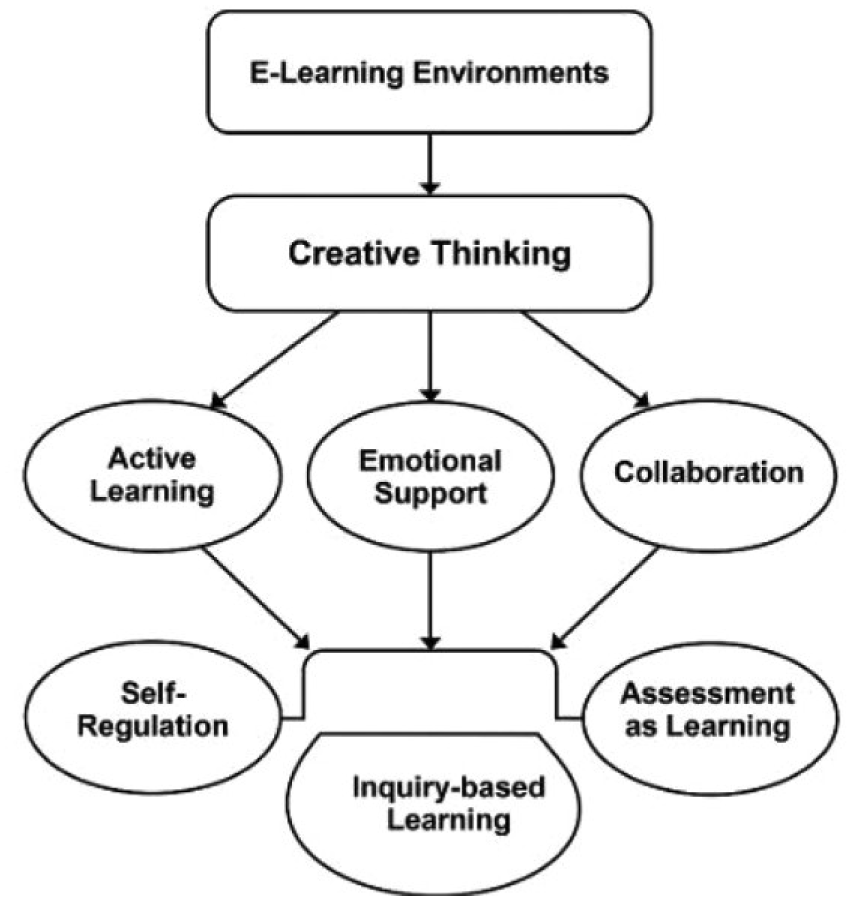
Pathways to creativity in e-learning environments.
As illustrated in the model, the six themes function not in isolation but as mutually reinforcing mechanisms that catalyze creativity in digital learning contexts. The model visualizes how interactive technologies, learner autonomy, emotional support, collaborative structures, formative assessment, and inquiry-driven tasks converge to support creative engagement in the primary classroom. By capturing the systemic interplay among these dimensions, the model offers a conceptual foundation for understanding how e-learning environments can enable the emergence of creative thinking in young learners.
Discussion
The findings underscore the perceived transformative potential of e-learning environments in fostering creativity. Not only are e-learning environments perceived as effective conduits for presenting knowledge but also for active interaction with content, further exploration, experimentation, and ultimately creative thinking skill development. Six major themes are gleaned from the analysis, active e-learning environments, the emotional aspect of learning, collaborative learning, self-regulated learning, assessment as learning, and inquiry-based learning, which are discussed below.
Active E-Learning Environments
This theme underscores the value of dynamic, interactive platforms in fostering independent and creative thinking through, for example, participation in simulations or forums. Learners are no longer passive recipients of information but rather active participants who form and test hypotheses and conduct virtual experiments to acquire knowledge and skills.
Consistent with those of Al-Barakat et al. (2023), the current findings suggest that interactive digital tools, such as gamified simulations and multimedia content, significantly enhance learner engagement and motivation to study. E-learning environments are perceived to move away from teacher-led instruction to focus on student-led learning, which promotes self-directed learning, critical thinking, and knowledge acquisition. The participants reported substantial growth in creativity and problem-solving skills following activities, such as storyboard creation, ecosystem simulation, and developing new solutions for real-world challenges. This emphasis on learner-centered experimentation and knowledge construction aligns with constructivist learning theory, which posits that learners develop understanding through active engagement, reflection, and interaction with meaningful tasks (Mayer, 2017; Vygotsky, 1978).
The Emotional Aspect of Learning
Potentially minimizing anxiety and fear of failure, e-learning environments create safe spaces for learners to engage in risk-taking and free self-expression, as emotional support constitutes a critical factor for both learners’ creativity and well-being. The participants described how emotional security creates positive outcomes, as it builds confidence, encourages risk-taking behavior, and catalyzes engagement with instructional content. These findings are consistent with those of previous studies (e.g., Gabriel et al., 2022; Gallegos-Rejas et al., 2023; Graciano et al., 2023; Grimus, 2020; Han et al., 2018). These findings single out relaxation and safety as fundamental elements for creativity development, as learners become more willing to take risks and transcend traditional classroom spatial and temporal limitations. The current finding also resonate with previous reports that affective factors develop creative self-efficacy (e.g., AlAli & Al-Barakat, 2022; Al-Samarraie et al., 2020). The participants’ perceptions are also consistent with self-determination theory (Ryan & Deci, 2000), which highlights the importance of psychological safety, autonomy, and relatedness in fostering intrinsic motivation and creativity.
Collaborative Learning
Collaborative tools, such as discussion forums and group projects, were reported to significantly enhance creativity, as technology potentially facilitates collaboration to complete assignments, such as group projects, peer communication, and exchange of ideas with peers irrespective of time and place. Through working in groups, learners demonstrate improved problem-solving skills, as they refine their ideas through feedback and diverse perspectives, which, in turn, fosters higher-order cognitive skills and prepares learners for real-world challenges that require cooperation and collective problem-solving (e.g., Gabriel et al., 2022; Grimus, 2020). This theme reflects principles of social constructivism, which emphasize that learning is inherently social and that dialogue, negotiation, and shared meaning-making enhance both understanding and creative thinking (Al-Samarraie et al., 2020; Vygotsky, 1978).
Self-Regulated Learning
E-learning environments empower learners as they take ownership of their learning through self-directed activities, goal setting, and reflection. E-learning platforms were perceived to enable learners to work independently while developing the time management skills needed for creative thinking, not to mention providing equitable educational opportunities to learners from diverse backgrounds. The current participants’ insights support previous findings (e.g., Burns, 2024; Calavia et al., 2021; Chan, 2023; Eden et al., 2024; Fan & Cai, 2022; Fava, 2017; Fraihat et al., 2022; Gabriel et al., 2022; Gallegos-Rejas et al., 2023; Graciano et al., 2023) that e-learning systems enable learners to autonomously manage their time and pick the content they want to learn. Autonomous learners typically take charge of their own education and, in turn, are more likely to boost their interest in learning and problem-solving abilities, as active engagement with instructional content reportedly a key contributor to creative thinking (Alshammari & Thomran, 2023). These insights also resonate with Zimmerman’s model of self-regulated learning (2002), which identifies goal setting, strategic action, and self-reflection as core processes that empower learners and enable creative autonomy.
Assessment as Learning
Formative assessment emerged as a pivotal component in cultivating creativity within e-learning contexts. Rather than serving merely as a metric of achievement, such assessment was perceived by participants as a dynamic, feedback-oriented process that actively supports learner development. Frequent and constructive feedback appeared to deepen learners’ engagement, prompting them to refine their strategies, evaluate their understanding, and approach tasks with greater creativity. Participants particularly emphasized that when students are made aware of how formative assessments, especially those embedded in digital platforms, reveal conceptual gaps and offer scaffolding, they are more inclined to self-monitor and take ownership of their learning trajectory. There was also broad consensus on the importance of diversifying assessment practices. Interactive quizzes, collaborative group tasks, and other non-traditional assessment formats were viewed as effective in nurturing critical and creative thinking. These insights reinforce the notion that assessment, when conceived as an ongoing pedagogical dialogue rather than a summative judgment, can serve as a powerful mediational tool. Such findings are in line with prior studies (Al-Barakat et al., 2023; Hagos & Andargie, 2022) underscoring the affordances of educational technologies in enhancing student engagement, fostering metacognition, and deepening conceptual understanding. They also echo the principles of assessment for learning (Black & Wiliam, 1998; Hagos & Andargie, 2022), which advocate for formative feedback as a catalyst for reflection, self-regulation, and intellectual growth.
Inquiry-Based Learning
Participants described inquiry-based learning in digital contexts as especially valuable for fostering learner engagement and curiosity. Several noted that such environments encouraged students to ask their own questions and explore a range of possible solutions, activities that often led to deeper interest and more thoughtful interaction with the material. Rather than simply receiving information, learners were seen actively constructing understanding, particularly when tasks were open-ended and allowed space for interpretation. This kind of learning, according to one participant, made students “feel like they were doing real thinking, not just memorizing.” Such remarks align with the broader tenets of constructivist learning, where students are viewed as active agents in meaning-making. The observations also support previous findings (e.g., AlAli & Al-Barakat, 2024), which suggest that inquiry-based platforms can help develop both flexibility in thought and creative responses. Torrance’s (1974) emphasis on originality and fluency is useful here, as the students appeared more willing to experiment when they weren’t restricted by narrow tasks. Overall, the emphasis was less on delivering correct answers and more on exploring possibilities, which seemed to create a more dynamic and participatory learning experience.
Across the collaborative, assessment-as-learning, and inquiry-based themes, effective use of e-learning hinged on deliberate task design, explicit feedback routines, and skilled orchestration of classroom activity. Accordingly, professional development is best framed as sustained, job-embedded design capacity building rather than tool-specific training, emphasizing iterative lesson planning, peer observation with targeted feedback, and coached enactment. Such preparation develops the pedagogical judgment required to align digital affordances with age-appropriate objectives, ensure equitable participation, and stabilize classroom routines that support creative thinking. While the findings emphasize the enabling role of e-learning in fostering creativity, the literature also cautions that these benefits are not always guaranteed. Challenges, such as digital access inequities, inconsistent infrastructure, and limited digital literacy among both teachers and learners, can hinder the effective implementation of creative e-learning practices (Gallegos-Rejas et al., 2023; Grimus, 2020). Moreover, when poorly designed, e-learning environments may inadvertently reduce opportunities for authentic collaboration, isolate learners, or overemphasize content delivery at the expense of inquiry and creativity (e.g., Alsayer, 2023; Donelan & Kear, 2024). These limitations highlight the need for the deliberate design of platforms that prioritize interactivity, emotional engagement, and learner autonomy. These limitations also underscore the need for targeted professional development that equips teachers not only with technical competencies but also with the pedagogical know-how of promoting creativity in digital spaces. Without thoughtful instructional design and adequate teacher support, the transformative potential of e-learning for cultivating creative thinking may remain underutilized, particularly in under-resourced or rigidly standardized educational contexts.
The current findings support constructivist views that learners generate knowledge through interaction, exploration, and collaborative meaning-making, particularly when e-learning environments are deliberately designed to promote inquiry, autonomy, and emotional safety. Such environments not only enable learners to take ownership of their learning but also promote deeper cognitive engagement, allowing them to apply knowledge in meaningful, context-rich situations that nurture both critical and creative thinking.
Conclusions, Implications, Limitations, and Recommendations for Future Research
This research adds to the growing evidence for the merits of technology integration in education, providing practical teacher insights for promoting young learners’ creative and critical thinking. The findings underscore the need to integrate these elements into both e-learning platforms and pedagogical practices to create engaging transformative learning experiences that promote creative thinking. They suggest that e-learning environments, when designed to prioritize interactivity, emotional support, collaboration, self-regulation, formative assessment, and inquiry-based learning, catalyze young learners’ creative thinking skills. Not only do these environments improve academic performance, but they also provide learners with the skills needed to navigate an increasingly complex and interconnected world. The proposed conceptual model may serve as a guiding framework for teachers, curriculum designers, and policymakers seeking to harness the creative potential of e-learning environments in primary education.
As electronic learning environments allow students to learn at their own pace and time, ultimately managing their own learning, encouraging learner autonomy, self-efficacy, responsibility, and ownership must be prioritized, for when learners are free to manage their learning, they tend to be more willing to explore and take risks. Collaboration has also emerged as instrumental for boosting creative skills in online activities. As learners explore concepts, generate new ideas, and help one another construct and expand mental representations, not only is their creativity promoted, but also their communication, collaboration, and academic and social performance.
The findings also reveal the significance of online formative assessment, as teachers design tasks to assess learner knowledge and skill acquisition before, during, and after the lesson, allowing for constructive feedback to drive progress. Coupled with formative assessment, constructive feedback potentially facilitates higher-order thinking, creative problem solving, and innovation.
To better achieve learning outcomes, teachers should strive to create emotionally supportive, interactive online learning environments to keep their students engaged, motivated, and creative. By encouraging inquiry-based learning, teamwork, and self-regulation, learners are allowed opportunities to acquire vital skills for learning and life in the 21st century. To make this possible, the teacher should act more as a guide on the side than a sage on the stage to support learner exploration, creativity, and self-regulated learning. Online learning also promotes the inclusivity of and access to education, but schools should update their curricula to include creative, hands-on projects early to maximize learners’ chances at future academic and professional success.
The current research, albeit sound in method and procedure, is rather limited in sample and scope. The homogeneity of the participant pool, limited to highly recognized award-winning teachers, may limit the generalizability of the findings. Even though generalization of the current findings is not sought, it can be enhanced with a larger sample and a mix of quantitative and qualitative research instruments (e.g., student and teacher surveys, document analysis, focus groups). Broadening the scope of the research to involve incorporating the potential contribution of emotional support in developing learner critical and creative thinking may enrich the current discourse on learning effectiveness and efficiency in both schools and institutions of higher learning.
Future research should directly sample pupils and examine age-differentiated effects across the primary grades to test whether teacher-reported pathways (e.g., feedback-rich assessment, structured inquiry) operate similarly for younger (Grades 3–4) versus older (Grades 5–6) learners. Designs that stratify samples by grade band and employ developmentally calibrated measures of creative thinking—alongside process data such as task traces, rubric-scored products, and brief think-alouds—would permit stronger inferences about mechanism. Analyses should probe moderators likely to vary by age, including reading load, sustained attention, prior digital experience, and language demands, as well as classroom factors such as task complexity and group composition. Ethical procedures need to include parental consent, child assent, and appropriate safeguards for digital data. Evidence from such designs would indicate whether the same orchestration of collaboration, feedback, and inquiry yields comparable creative gains across grades or whether task design requires age-specific adjustments. Additionally, longitudinal studies of creative outcomes and focused investigations of emotional-support mechanisms in virtual contexts are warranted.
This may require looking into measures to incorporate these issues in both teacher professional development and student learning to cultivate competencies and equip them with rudimentary skills for coping with the current dynamic educational landscape. To maximize the effectiveness of electronic learning, teachers need to be trained on how to engage learners in ways that readily promote active learning, interaction with content, collaboration, critical thinking, and engagement to catalyze both creative thinking and academic performance.
Footnotes
Acknowledgements
The author from Princess Nourah bint Abdulrahman University expresses her gratitude to the Princess Nourah bint Abdulrahman University Researchers Supporting Project (PNURSP2025R583), Princess Nourah bint Abdulrahman University, Riyadh, Saudi Arabia. Additionally, the authors at the King Faisal University thank the Deanship of Scientific Research at King Faisal University for providing financial support under project number (KFU252854). All authors also extend their sincere appreciation to the participants of this study and the reviewers of the manuscript for their time and valuable contributions.

Ethical Considerations
This study was reviewed and approved in accordance with the ethical standards of the Ethics Committee of King Faisal University and Law and the 1964 Helsinki Declaration and its later amendments. The research protocol was reviewed and approved by the aforementioned board (Approval was granted on 9 March 2023, under protocol code KFU-REC-2023March-EA00457).
Consent to Participate
All respondents voluntarily participated in this research after providing written informed consent. Each respondent in this research was informed about the aims of the research, his/her right to withdraw at any time, and the confidentiality of their responses. There is no identifying information was gathered. The potential risks were minimal and did not exceed those encountered in daily life.
Author Contributions
Ruba Batainh, Rula Bataineh, Sarah Alotaibi, Rommel AlAli, and Ali Al-Barakat conceptualized the study, designed the instrument, proposed the aims, and prepared the draft manuscript. Ruba Batainh, Rula Bataineh, Rommel AlAli, Ali Al-Barakat, Sarah Alotaibi, and Khaled Al-Saud also collected, analyzed, and interpreted the data. Ruba Batainh, Rula Bataineh, Ali Al-Barakat were major contributors to writing the manuscript. All authors read and approved the final version of the manuscript.
Funding
The authors disclosed receipt of the following financial support for the research, authorship, and/or publication of this article: The author from Princess Nourah bint Abdulrahman University and King Faisal University disclosed receipt of the following financial support for the research, authorship, and/or publication of this article: This work is supported by the Princess Nourah bint Abdulrahman University Researchers Supporting Project (PNURSP2025R583), and this work was supported by the Deanship of Scientific Research, Vice Presidency for Graduate Studies and Scientific Research, King Faisal University, Saudi Arabia [Grant No. KFU252854].
Declaration of Conflicting Interests
The authors declared no potential conflicts of interest with respect to the research, authorship, and/or publication of this article.
Data Availability Statement
The data that support the findings of this study are available from the corresponding author upon request.