



Abstract
This study used the Psychology of Working Theory (PWT) as a social justice lens to examine how the contextual factor of patriarchal marginalization influences career adaptability, work volition, access to decent work, and the mediating role of career adaptability in the influence patriarchal marginalization has on access to decent work among Nigerian women. The study also assessed how career adaptability and work volition predict access to decent work among Nigerian career women in line with PWT. The quantitative data were collected from 488 Nigerian career women using a structured questionnaire. The study relied on an exclusively Nigerian sample, self-reported data, and a cross-sectional design; the resultant limitations are acknowledged. The profile of the respondents was analyzed with descriptive analysis, while the hypotheses were tested using partial least squares structural equation modeling. The findings revealed a mixed alignment with the PWT model. Consistent with the PWT, patriarchal marginalization negatively predicted work volition and access to decent work, while career adaptability positively predicted access to decent work. However, contrary to the model’s expectations, patriarchal marginalization did not negatively predict career adaptability, work volition did not positively predict access to decent work, and the mediating role of career adaptability between patriarchal marginalization and access to decent work was not supported. While testing the PWT model among the underexplored female population in the African work context significantly adds to the literature, the findings challenge some of the PWT propositions in the non-Western context, and this opens up new vistas for future research.
Plain Language Summary
This study used the Psychology of Working Theory (PWT) as a social justice lens to examine how the contextual factor of patriarchal marginalization influences career adaptability, work volition, access to decent work, and the mediating role of career adaptability in the influence patriarchal marginalization has on access to decent work among Nigerian women. The study also assessed how career adaptability and work volition predict access to decent work among Nigerian career women in line with PWT. The quantitative data were collected from 488 Nigerian career women using a structured questionnaire. The profile of the respondents was analyzed with descriptive analysis, while the hypotheses were tested using partial least squares structural equation modeling. Contrary to expectations, the outcomes indicated that patriarchal marginalization did not negatively predict career adaptability in the African context. Further analysis, however, suggested that patriarchal marginalization negatively predicted work volition and access to decent work among African career women. Similarly, career adaptability was found to positively predict access to decent work. Conversely, work volition failed to positively predict access to decent work. The mediating role of career adaptability in the association between patriarchal marginalization and access to decent work was not supported, contrary to the PWT model. The findings have important practical implications for African governments, organizations and practitioners, as well as theoretical value for research.
Keywords
Introduction
The neglect of employment experiences of vulnerable workers in management research is well documented in the literature (Restubog et al., 2023). The vulnerable worker is regarded as an individual who is susceptible to abuse, exploitation or at risk of being wounded either socially, psychologically, physically, or a combination of these in the workplace (Restubog et al., 2021). On the other hand, the psychology of working theory (PWT), developed by Duffy et al. (2016), describes decent work as work that entails sufficient compensation, accessible healthcare, sufficient rest, leisure time, psychological and physical safety, and workplace values that are congruent with social values. In Nigerian society, women are considered vulnerable workers as they are fundamentally regarded as second-class citizens who should not be involved in paid career jobs and instead should be confined to family work roles (Imhanrenialena et al., 2025). This vulnerability explains why Nigerian women contend with marginalization in the workplace (Akanji et al., 2024; Ukachukwu & Rahimi, 2024).
It is suggested that patriarchal-induced gendered work practices strongly restrict African women’s career choices (Imhanrenialena et al., 2025) and representation in leadership positions (Kyambade et al., 2024a; Kyambade, Tushabe, Namatovu, & Oyella, 2024; Tushabe et al., 2025). This career restriction is premised on the faulty patriarchal assumption that career women are weak and incapable of functioning in important career paths (Ukachukwu & Rahimi, 2024). Based on the foregoing, the current study argues that the career choice restrictions imposed on African career women by patriarchy will negatively impact career adaptability among them, as the ability of career women to adapt their careers to new work roles in times of innovation and secure decent work may be hampered. Career adaptability represents individuals’ capability to adapt to current and anticipated future changes in their careers (Kundi et al., 2022). In the same vein, individuals who are marginalized tend to have lower work volition (Duffy et al., 2018). Work volition is defined in PWT as individuals’ perceived capacity to make career decisions in the face of marginalization (Duffy et al., 2016).
Although research on the PWT has increased in recent years, such studies were conducted in Western contexts (Choi et al., 2022; H. J. Kim et al., 2020; Williams et al., 2023), while research that explored the PWT’s applicability in the patriarchal African context is lacking. For instance, England et al. (2020) noted that, to date, no research has specifically explored the applicability of the PWT model among women, a historically under-represented and underexplored group whose distinct experiences of marginalization are likely to influence vocational outcomes. Also highlighting persistent gaps in the PWT literature, Choi et al. (2022), in their investigation of employed Asian American women, emphasized the need for additional research within the PWT framework to better understand the role of marginalization in achieving decent work across specific cultural groups. Little is known about how patriarchal structures influence access to decent work in Africa, where systemic gender inequities and cultural expectations shape career experiences in ways that differ markedly from Western settings (Akanji et al., 2024; Imhanrenialena et al., 2025).
To fill these gaps and advance previous qualitative studies, the current study deploys PWT to understand how patriarchal marginalization influences career adaptability, work volition, access to decent work, and the possible mediating role of career adaptability in the influence patriarchal marginalization has on access to decent work among Nigerian career women. The study also assessed how career adaptability and work volition predict access to decent work among Nigerian career women in line with PWT. The central aim of PWT is to understand work experiences among individuals, particularly people who contend with marginalization in accessing decent work, and its assumption is that access to decent work is influenced by a number of factors such as contextual marginalization, work volition, and career adaptability (Duffy et al., 2016). The outcomes of this study will provoke the Nigerian government to enact and strictly enforce equal opportunities for all policies as well as motivate human resource practitioners to design training classes for career women that can equip them to confront and defeat patriarchal marginalization. Bridging this research gap also matters theoretically, as it will provide insights into the universality or boundary conditions of PTW applicability.
Theory and Hypotheses
Patriarchal Practices in Nigeria
Patriarchal marginalization is conceptualized as a social structural phenomenon that entails the domination and marginalization of women by men (Imhanrenialena et al., 2022). Gender discrimination is so prevalent in Nigerian organizations that men exercise absolute supremacy over women in the workplace, and this practice puts women in a disadvantageous position in career development (Imhanrenialena et al., 2021; Ukachukwu & Rahimi, 2024). For example, it is documented that “Nigeria epitomizes a typical patriarchal African society in which a system of social stratification and gender differentiation enables men to dominate women in all spheres of life” (Adisa, Abdulraheem, & Isiaka, 2019, p. 19). Research suggests that patriarchal marginalization is a barrier to women’s careers, as succinctly put by this scholar: “Patriarchy imposes structures that categorize some types of work as “men’s work” and others as “women’s work” (Adisa, Cooke, & Iwowo, 2019, p. 149). In a more extreme view of Nigerian society about women, Makama (2013) argued that women are fundamentally regarded as second-class citizens who should not be involved in career jobs and instead should be confined to the kitchen.
Although there are policies for equal opportunities formulated to promote employment and career development among Nigerian women, the reality is otherwise. Evidence shows that Nigerian women grapple with poor compensation (Orji & Nwosu, 2024; Van Den Broeck et al., 2023), an important dimension in decent work (Wan et al., 2024; Williams et al., 2023). The workforce statistical report indicates that Nigerian labor force participation in 2023 was 52.2% for females (International Labor Organization, 2023). The National Bureau of Statistics (2023) reported that Nigerian women account for 96.2% of workers in informal employment. Similarly, Van Den Broeck et al.’s (2023) study on the gender pay gap revealed that Nigerian women earn 40% less than men in urban areas. Apart from the patriarchal marginalization Nigerian women contend with in terms of lower labor force participation and poor remuneration, it is documented that Nigerian women are basically given the peripheral work roles if they are eventually employed based on the faulty patriarchal beliefs that women are incapable of functioning in strategic positions as men (Imhanrenialena et al., 2022; Obi-Anike et al., 2024).
Theoretical Framework
Psychology of Working Theory (PWT) is a relatively new vocational theory (Wan et al., 2024). PWT is basically framed to understand the career experience of marginalized individuals in accessing decent work (England et al., 2020). The PWT specifically proposes that contextual factors of marginalization, such as gender discrimination, directly and negatively predict career adaptability, work volition, and access to decent work. The theory also argues that career adaptability and work volition positively predict access to decent work. Further, the theory proposes that career adaptability mediates the negative link between marginalization and access to decent work (Duffy et al., 2016).
Previous studies have used social dominance theory to prove that African women contend with patriarchal marginalization in work environments (Adisa, Abdulraheem, & Isiaka, 2019; Adisa, Cooke, & Iwowo, 2019; Ukachukwu & Rahimi, 2024). Building on such past studies to advance our understanding of how patriarchal marginalization impacts African women’s access to decent work, this study deploys the PWT as the theoretical lens. Given that patriarchal marginalization is a unique form of marginalization, applying the PWT to provide insights into how African women secure decent work amid patriarchal marginalization in the workplace is a great addition to the literature. For example, Duffy et al. (2018) pointed out that marginalization takes different forms, such as ethnic discrimination, microaggression, racial discrimination, etc., and that these dimensions of marginalization impact the victims uniquely in different contexts. This explains why the outcomes from the testing of the PWT model in Western culture cannot be generalized to the unique patriarchal African society. It is documented that “to date, no studies have examined the theory’s utility specifically with a population of women, a traditionally underrepresented population whose unique experiences of economic constraints and marginalization likely affect vocational outcomes” (England et al., 2020, p. 251). Also, utilizing PWT to understand the role of work volition in accessing decent work in a patriarchal African work context answers the call in the literature based on Choi et al.’s (2022, p. 1078) work that pointed out that “further investigation is needed to fully understand the role of work volition related to decent work in a specific cultural group” in their study that examined PWT among employed Asian American women.
Patriarchal Marginalization and Career Adaptability
Patriarchal marginalization subjects African women to discrimination during hiring, performance evaluations, and promotion based on patriarchal perceptions that perceive women to be incapable of being competent managers apart from family responsibilities (Imhanrenialena et al., 2022; Ukachukwu & Rahimi, 2024). Career adaptability is defined in career literature as a psychological construct that signals one’s preparedness and resources to smoothly adapt to present and anticipated changes in one’s career (Savickas, 2013). Career literature has shown that employees with higher career adaptability resources smoothly adapt to innovative tasks by modifying their career paths to align with the new job demands, and this adaptive ability staves off the negative consequences of turnover for organizations and employees (Kundi et al., 2022).
Social interactions among individuals in the workplace play important roles in determining how individuals are able to adapt to work-related traumas, technology-induced career disruptions, and occupational transitions (J. Kim, 2021). England et al. (2020) suggested that social marginalization experiences decrease career adaptability. Examining classism with a sample of 403 workers in the United States, T. Kim and Allan (2021) found that classism predicts poor career adaptability. Exploring the predictors of access to decent work among Korean workers, M. Kim and Kim (2022) reported that social marginalization has a negative relationship with career adaptability. It is documented that patriarchy institutes a work culture that designates some types of jobs as “men’s jobs” and others as “women’s jobs” (Ukachukwu & Rahimi, 2024). This suggests that African women’s adaptability resources are restricted in the sense that women will not be able to reconstruct their careers to align with innovations in their career paths and secure decent work, particularly in the ever-presence of technology-induced career disruptions. It is therefore hypothesized that:
Patriarchal Marginalization and Work Volition
Work volition is defined in PWT as one’s perceived ability to make career decisions despite facing contextual constraints such as marginalization (Duffy et al., 2016). It is documented that marginalization negatively predicts work volition among the United States’ employees of diverse races and/or ethnicities (Duffy et al., 2018). Similarly, England et al. (2020) argued that marginalization contexts are negatively correlated with work volition among female employees. Williams et al. (2023) found in their study that discrimination negatively predicts work volition. Although previous PWT research in the developed world’s contexts confirms a strong link between marginalization and access to decent work, this relationship remains untested in patriarchal work environments, where patriarchal dominance may influence access to decent work. The patriarchal perception of women as incapable of functioning in important work roles apart from family responsibilities in Nigeria is capable of hampering viable career decisions among women (Imhanrenialena et al., 2025; Nwagbara, 2020). Flowing from the foregoing discussion, the current study argues patriarchal marginalization will hamper work volition among Nigerian career women. To test this assumption, the following hypothesis is proposed:
Patriarchal Marginalization and Access to Decent Work
Decent work is defined in PWT as work that entails sufficient compensation, accessible healthcare, sufficient rest, leisure time, psychological and physical safety, and workplace values that are congruent with social values (Duffy et al., 2016). It is argued that social class-induced barriers to securing decent employment are exacerbated when social class is stratified along gender lines (Adisa, Cooke, & Iwowo, 2019). Deploying social dominance theory as a theoretical lens to understand how female managers and professionals handle career stereotypes in male-dominated occupations in a qualitative study, Akanji et al. (2024) found that Nigerian career women experience emotional dissonance contending with occupational discrimination. Ukachukwu and Rahimi (2024) reported in a qualitative study involving 38 participants that Nigerian women contend with patriarchal discriminations in the workplace. The current study suspects that patriarchal marginalization may account for Nigerian women’s dominance in informal employment, as they are unable to secure decent work. For example, the National Bureau of Statistics (2023) reported that Nigerian women account for 96.2% of workers in informal employment. PWT proposes that contextual marginalization critically hinders access to decent work (Duffy et al., 2016). While previous PWT research in the developed world’s contexts confirms a strong link between marginalization and access to decent work, this relationship remains untested in patriarchal work environments where patriarchal dominance may influence access to decent work. To test this theory in the Nigerian context, we argue that patriarchal marginalization will limit women’s access to decent work.
Career Adaptability and Access to Decent Work
Career development studies suggest that career adaptability relates to higher career maturity levels and greater confidence in making career decisions among college students (Douglass & Duffy, 2015). Based on the foregoing discussion, Duffy et al. (2016) specifically posited in PWT that individuals who possess higher career adaptability levels are more likely to secure decent work. M. Kim and Kim (2022) found among Korean workers that career adaptability positively relates to decent work. Williams et al. (2023) reported that career adaptability positively predicts decent work. Duffy et al. (2018) found that career adaptability has a significant positive association with decent work. Although previous studies have deployed PWT to provide insights into the link between career adaptability and access to decent work outside Africa, such research is scarce in the African context with its unique form of marginalization against women, which is capable of uniquely influencing the impacts of career adaptability on access to decent work. To fill this gap, the current study assumes that African career women who possess adaptability resources will be able to reconstruct their careers in times of innovation and secure decent work.
Work Volition and Access to Decent Work
It is suggested that work volition enhances university students’ career decision-making self-efficacy (Jadidian & Duffy, 2012). Research has shown that employees who possess high work volition are more likely to secure decent work (Autin et al., 2017). M. Kim and Kim (2022) found among Korean workers that work volition positively relates to access to decent work. Williams et al. (2023) reported that work volition positively predicts decent work among marginalized Black US workers. Notwithstanding that prior studies have applied the PWT to examine the relationship between career adaptability and access to decent work in non-African contexts, there remains a scarcity of such research in Africa, where distinctive forms of gender-based marginalization may uniquely shape how work volition impacts access to decent work. We therefore hypothesized that:
The Mediating Role of Career Adaptability
It is documented that individuals from backgrounds that depict higher social class possess adaptive career dispositions because they experience limited marginalization (Duffy et al., 2016). It is reported that patriarchal practices in Nigerian organizations sustain career marginalization against career women by basically considering them for peripheral work roles based on the faulty patriarchal notion that females are a weaker gender compared to males (Makama, 2013; Nwagbara, 2020). This patriarchal practice of career restriction against women is suggested to negatively affect women’s ability to develop career adaptability needed to secure decent jobs, particularly in the ever-changing world of work (Imhanrenialena et al., 2025). This suggests that the negative influence of patriarchal marginalization on access to decent work is mediated by career adaptability in the sense that patriarchal marginalization negatively impacts career adaptability, which in turn impacts access to decent work among career women.
This suggestion is in line with PWT which proposes that the negative relationship between marginalization experiences and access to decent work is mediated by career adaptability in the sense that marginalization experiences reduce the ability of individuals to adopt innovations in their careers, and the lack of adaptive ability hinders the individuals’ ability to secure decent work (Duffy et al., 2016). Based on this proposition, we argue that the patriarchal marginalization that confines women to peripheral job functions (Adisa, Cooke, & Iwowo, 2019; Makama, 2013) will hinder women’s ability to reconstruct their careers to suit the ever-evolving nature of work and secure decent work. Although previous studies have examined the mediating role of career adaptability in the relationship between patriarchal marginalization and access to decent work within the PWT model in contexts outside Africa, testing this relationship among patriarchally marginalized African women is novel. To achieve this, we hypothesized that:
Methodology
Participants
The focus of this study is Nigerian women’s access to decent work amid patriarchal marginalization. Therefore, only women who work in Nigerian organizations reputed for offering decent work to workers (National Bureau of Statistics, 2023) who have progressed to at least a supervisor’s cadre formed the population of the study. This category of career women represents a source of rich data on how patriarchal marginalization relates to access to decent work based on their experiences either during the school-to-work transition stage or at the work re-entry stage due to career disruptions or both (Imhanrenialena et al., 2023). Also, this same class of workers has personal experience of how patriarchal marginalization influences their ability to adapt in times of innovations or changes in their work roles in the workplace due to the ever-changing world of work (Imhanrenialena et al., 2025). Women working in foreign multinational corporations’ subsidiaries in Nigeria were excluded from the study, as the egalitarian and gender-equality cultures of the parent companies abroad prevent patriarchal marginalization in those organizations in Nigeria (Obi-Anike et al., 2024).
Prior to data collection, each prospective respondent received an introductory letter and an informed consent form. The introductory letter explained the objectives of the study, assured participants of the confidentiality and anonymity of their responses, and highlighted their right to withdraw from participation at any stage at will. The informed consent form provided detailed information regarding the questionnaire procedure and formally sought the prospective participants’ voluntary consent to partake in the study. Only respondents who provided informed consent were included in the final sample. A structured questionnaire was sent to the career women through their official emails, accompanying their names in the staff profile. To eliminate the incidence of missing data, the participants were informed that their completed questionnaire could only be accepted if they answered all the items. Out of the 501 copies of the questionnaire sent out, 495 were returned. But 7 copies were removed from the returned copies due to contradictions in the answers supplied. In all, the study processed responses from 488 respondents. The data collection exercise was conducted between April 23 and May 29, 2025, following two separate reminder messages. No incentives were offered to induce participation in the study. The data collection procedure posed no risk of harm to participants, as it solely entailed completing a structured questionnaire administered electronically via email.
The 488 respondents cut across 8 firms in the oil and gas sector (107 or 21.9%), 4 local airlines from the aviation sector (48 or 9.8%), all 21 registered commercial banks from the banking industry (116 or 23.8%), 2 firms from the telecommunications sector (44 or 9.0%), and 25 hotels in the hospitality industry (173 or 35.5%). Eighteen percentage, or 88, of the respondents were aged 30 years and below, 191, or 39.1%, were between ages 31 and 40; 41 to 50 were 183 (37.5%), while 26 (5.3%) were 51 years of age and above. The majority of the respondents were married (360, or 73.8%), while 78 (16%) have never been married. Those who were either divorced or separated were 35 (7.2%). The widows among the respondents were 15 (3.1%). The career women were well educated, as 295 (60.5%) possessed either a first degree or a higher national diploma. One hundred and twenty-one, or 24.8%, of the career women had either a national diploma or a national certificate in education. 32, or 6.6%, had an O’level certificate, while only 40, or 8.2%, had postgraduate and professional qualifications. The participants possessed high work experiences, as 190 (38.9%) of them had work experiences ranging between 11 and 20 years. Those who have worked between 21 and 30 years were 182 (37.3%). The respondents who had work experience spanning 10 years and below were 116, or 23.8% (see Table 1).
Demographic Profiles.

Instruments
Preliminary Results
Harman’s one-factor test was performed to test for common method bias (CMB; see Table 2). To confirm the presence of CMB, a single factor needs to explain at least 50% of the variance. The first component in this dataset had an eigenvalue of 6.228, explaining 15.969% of the total variance, a relatively low percentage suggesting a single factor did not dominate the dataset’s variance.
Harman’s Single Factor Test.
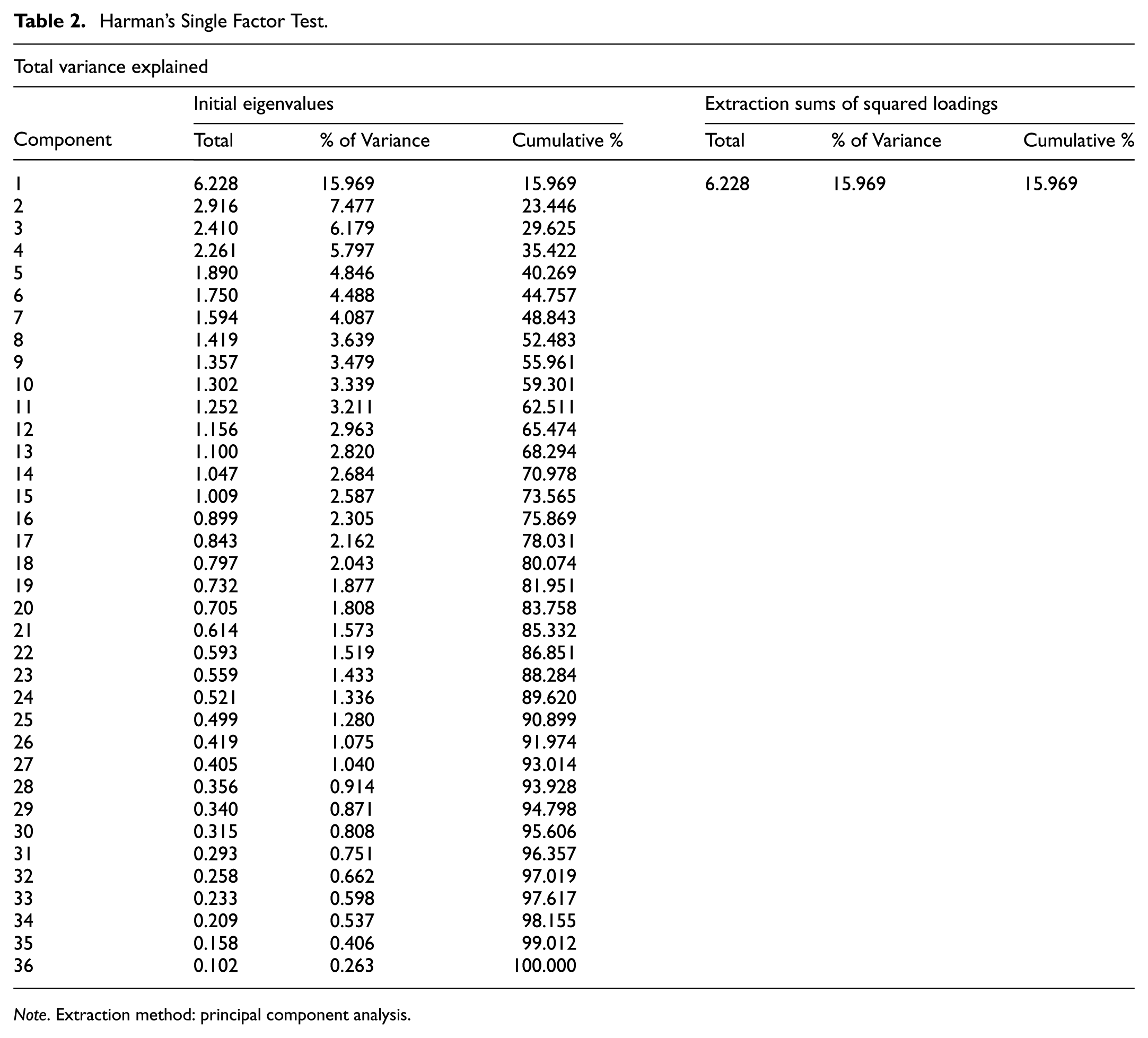
Note. Extraction method: principal component analysis.
Measurement Models
Since the study’s structural model comprises both formative and reflective variables, the assessments of the measurement model were conducted separately in compliance with the distinct nature of the processes and criteria for evaluating formative variables and reflective variables (Hair et al., 2019). Patriarchal marginalization (PM) and work volition (WV) which are reflective constructs, were assessed by evaluating the reliability, internal consistency, and convergent validity of their measures.
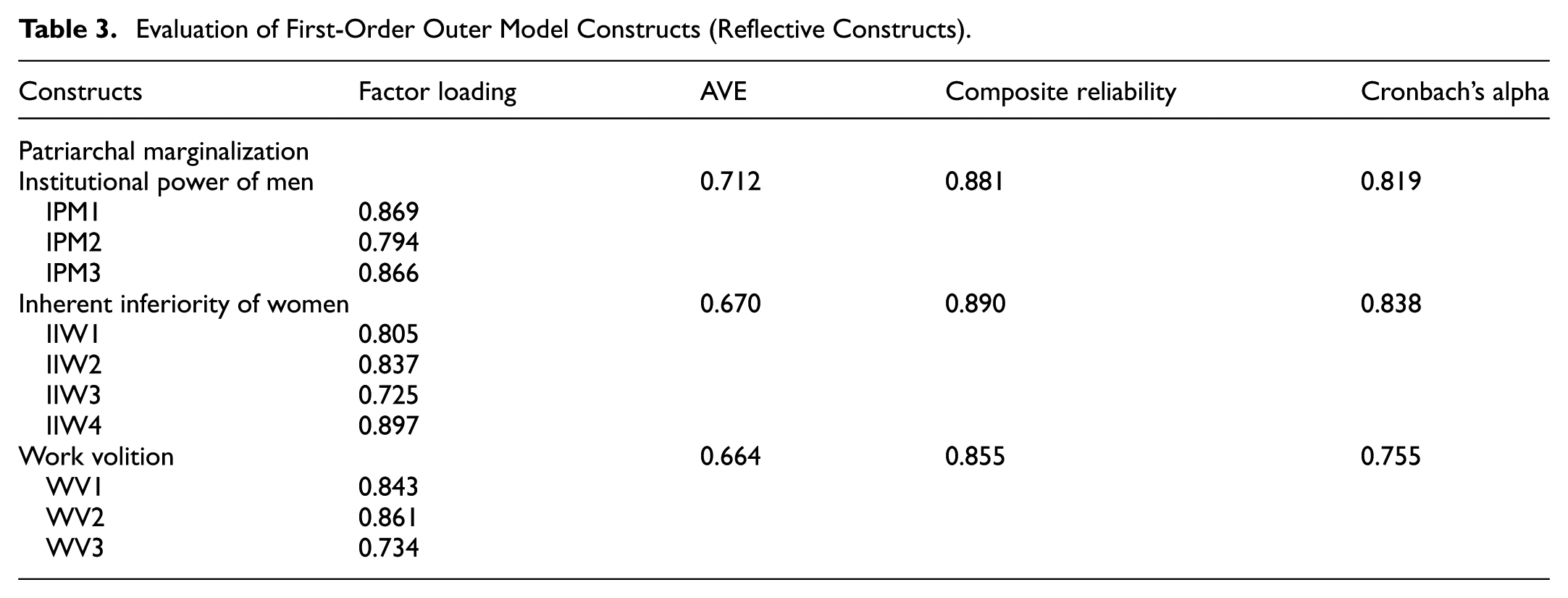
The reflective constructs’ reliability was determined using both Cronbach’s alpha and composite reliability techniques. The analysis resulted in Cronbach’s alpha coefficients of .819 and .838 for each dimension of PM and .755 for WV. Similarly, composite reliability values of .881, .890, and .855 were obtained for the two dimensions of PM and WV, respectively. These results are an indication that the instrument is reliable, as all the values are greater than 0.70 (Henseler et al., 2012). The factor loading and the average variance extracted estimate (AVE) analyses helped to test for the convergent validity of the measures. With the obtained factor loading results, the measures are certified reliable, as all the values are greater than the recommended benchmark of 0.70 (Hair et al., 2009). In the same vein, the least AVE value of 0.664 obtained in the analysis exceeded 0.5, and this demonstrates a strong convergent validity of the instrument (Hair et al., 2016; see Table 3). The reflective constructs’ discriminant validity was evaluated using the heterotrait-monotrait (HTMT) ratio of correlations technique, as shown in Table 4. The results indicated that all the obtained values for PM and WV constructs are less than the 0.85 threshold (Henseler et al., 2015).
Evaluation of First-Order Outer Model Constructs (Reflective Constructs).
HTMT Discriminant Validity.

The formative constructs were first assessed through the evaluation of outer weights and outer loadings based on Hair et al.’s (2014) guidelines. The guidelines say if the outer weight is not statistically significant but the outer loading is equal to 0.5 or greater (≥0.5), the indicator should be retained, adding that the indicators should generally be removed from the model if the outer weight is not significant and the outer loading is less than 0.5. All the formative constructs were retained in the current study, as all the outer loadings are well above 0.5 (see Table 5). In the next step, the variance inflation factor (VIF) was used to check the level of collinearity for each of the formative items. The outcomes showed that all VIF values are lower than the critical value of 5.0 (Kock, 2015), and this demonstrated that no multicollinearity exists among the measurement items. The reliability and convergent validity for the second-order reflective constructs were assessed with composite reliability, factor loading, and AVE values. The composite reliability values of 0.939, 0.939, 0.831, and 0.879 were obtained for the four dimensions of CA, respectively. The analysis of DW yielded composite reliability values of 0.860, 0.889, 0.911, 0.944, and 0.915 for the five dimensions, respectively. These results are an indication that the instrument is reliable, as all the values are greater than 0.70 (Henseler et al., 2012). The factor loading and the average variance extracted estimate (AVE) analyses were used to examine the convergent validity of the formative constructs. With the obtained values from factor loading analysis, the measures are certified reliable, as all the values are above the threshold of 0.70 (Hair et al., 2009). The AVE values, which range between 0.622 and 0.849, are greater than 0.5, and this indicates a strong convergent validity of the instrument (Hair et al., 2016; see Table 5).
Evaluation of Second-Order Outer Model Constructs (Formative Constructs).

Structural Model
We used the Q2 values to determine if the PLS-SEM path model has predictive relevance for the constructs. The obtained Q2 values of 0.255, 0.472, 0.396, 0.557, and 0.178 are all greater than zero (Kline, 2005), and this showed that the model predicts the endogenous constructs well. We used F2 to assess the effect size in the model, and the analysis yielded F2 values of 0.217, 0.322, 0.300, 0.407, and 0.201, respectively, for the constructs. The outcomes indicated that there is no small effect size in the model. For example, while four of the F2 values fall within the medium effect size range, one of the F2 values falls within the large effect size range (Kline, 2005). This suggested that the model has an appropriate effect size (see Table 6).
Path Co-efficient of Variables.

Note. PM = patriarchal marginalization; CA = career adaptability; WV = work volition; DW = decent work.
Results from Hypotheses’ Assessment
The proposed direct and indirect hypotheses were tested in the structural model using structural equation modeling (Smart PLS 3.0; Ringle et al., 2015). In line with Hair et al.’s (2016) recommended guidelines, a non-parametric bootstrapping approach with 5,000 resamples was used to calculate the level of significance of the regression coefficients. The study adopted PLS-SEM due to the ordinal nature of the measurement indicators, and PLS-SEM does not require strict assumptions about data normality. Furthermore, PLS-SEM is well suited for prediction-oriented research objectives (Dash & Paul, 2021), aligning with the study’s focus on explaining relationships within the PWT framework. Contrary to hypothesis one, patriarchal marginalization did not negatively predict career adaptability (β = .040, F2 = 0.217, T-value = 1.791 > 1.645, p-value = .211 > .05). The F2 = 0.217 suggested that patriarchal marginalization moderately affected career adaptability. Conversely,

The research model.
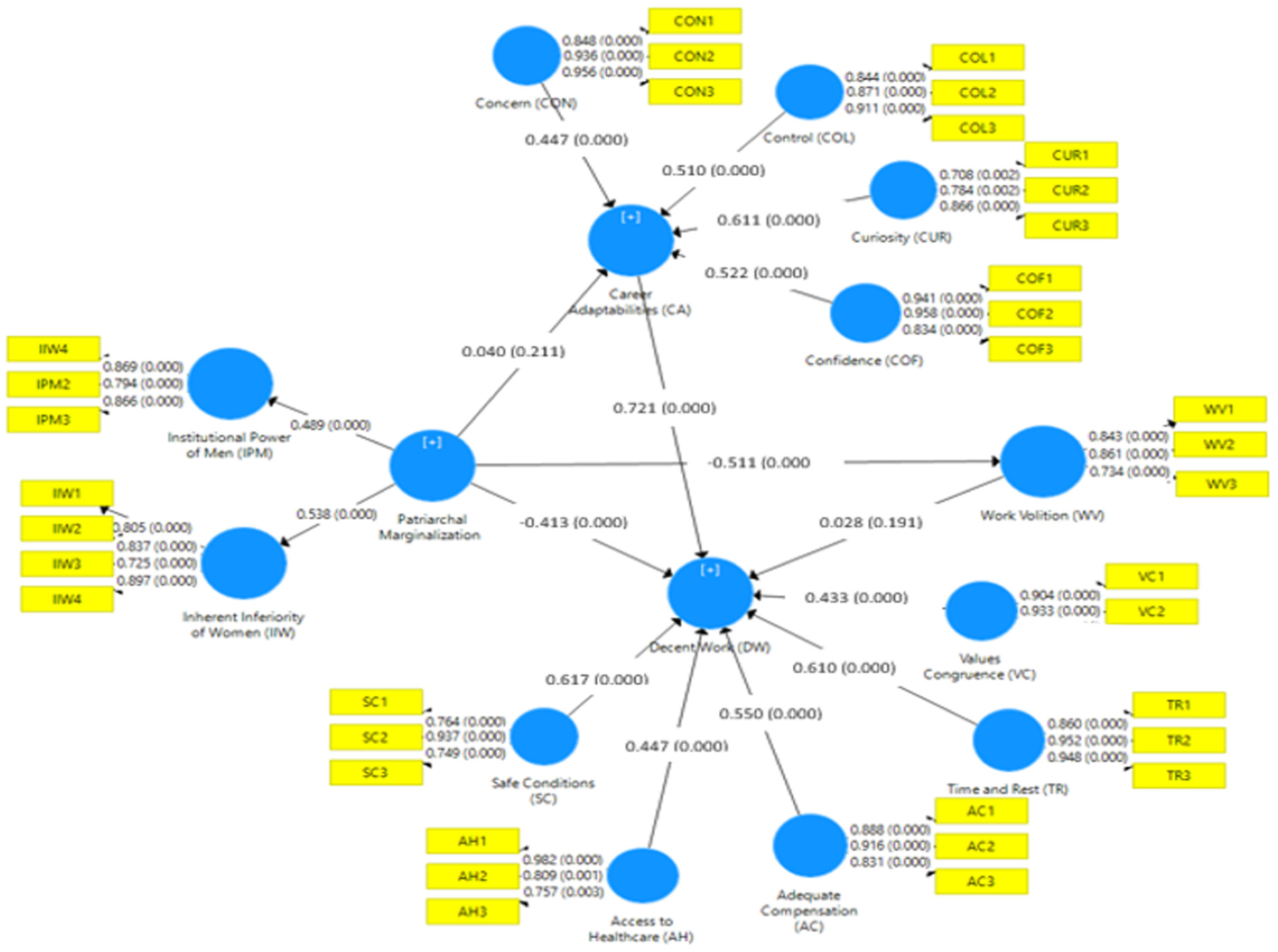
PLS bootstrapping model with β and P values model.
Discussion
This study contributes to the debate on the relevance of the PWT model in understanding how marginalization experiences predict access to decent work by adding patriarchal African context in deviation from the growing PWT literature from the global north. Specific interpretations of the analyses reveal that the study’s
The outcomes from
Similarly, the proposed mediating role of career adaptability in the relationship between patriarchal marginalization and access to decent work, as captured in
Theoretical Implications
Theoretically, the study extends the Psychology of Working Theory (PWT) by integrating structural patriarchy as a socio-cultural factor influencing career outcomes in patriarchal African contexts. The results show that structural patriarchy negatively predicts work volition and access to decent work, while career adaptability positively predicts access to decent work. Conversely, the study challenges certain PWT propositions by revealing that patriarchal marginalization does not negatively predict career adaptability, work volition does not positively predict access to decent work, and the mediating role of career adaptability between patriarchal marginalization and access to decent work does not hold in the African context. These contradictions highlight the need for further theoretical refinement and contextual adaptation of the PWT to enhance its applicability and explanatory power within non-Western, patriarchal societies such as Africa.
Contextually, the study advances knowledge by applying the PWT to an underexplored group—African women—whose experiences of systemic gender inequities differ from those in Western contexts (Choi et al., 2022; England et al., 2020). It addresses calls for research that illuminates how structural barriers affect marginalized workers’ access to decent work (Restubog et al., 2023). Also, the findings confirm that patriarchal dominance constrains women’s career opportunities, thereby contextualizing and reinforcing the PWT framework in African settings.
Practical Implications
The findings of this study entail many practical implications for organizations, practitioners, and Nigerian governments. First, the insignificant effects of patriarchal marginalization on career adaptability among Nigerian career women found in
Second, the negative influence of patriarchal marginalization on Nigerian women’s work volition and access to decent work found in
Fourth, the current study demonstrated with
Fifth, the non-statistically significant link between work volition and Nigerian career women’s access to decent work found in the study has important implications for the Nigerian government and human resource practitioners. The Nigerian Federal Ministry of Women Affairs and Social Development and Women’s Civil Society Organizations must vigorously raise women’s work volition level to a level that is high enough to access decent work. This could be achieved through seminars, workshops, and public enlightenment campaigns. Also, human resource managers may consider increasing women’s work volition for access to decent work in Nigerian organizations by providing an atmosphere that will enable Nigerian women to share their experiences of patriarchal marginalization in the workplace, as it does not only impede Nigerian women’s work volition and access to securing decent work but also negatively impacts their mental or physical health, which may further exacerbate their ability to secure decent work (McCord et al., 2018). In this regard, psychologists and career counselors must make frantic efforts aimed at promoting healing from patriarchal marginalization among Nigerian career women.
Results from
Limitations and Future Directions
Although the current study makes unique theoretical and practical contributions to knowledge, it is important to point out its limitations and make suggestions for future research. First, the study only investigated employed Nigerian women using the PWT model, and this may limit the generalizability of this study’s outcomes to other African work environments. It is important for future research to provide insights into how patriarchal marginalization affects securing good jobs in other African countries within the PWT. Second, the study is forced to rely on a non-probability sampling technique to select a sample for the study due to the non-availability of finite authoritative data on Nigerian women in paid employment, and this makes the generalizability of the outcomes to all employed women unclear. As a result, future research is advised to replicate this study in countries in Africa where finite data on the total number of employed women is available for better generalizability.
Third, the study’s findings are constrained by its use of self-reported, cross-sectional data, which may restrict causal inferences. Future research could adopt longitudinal or qualitative approaches to offer richer insights into how adaptability and volition develop and interact over time across different socio-cultural contexts.
Conclusion
The current study examined how patriarchal marginalization impacts access to decent work in the Nigerian work context within the PWT model as a response to calls for such studies. Although the findings support the PWT propositions, areas of contradiction were found, and this opens up new vistas for future research. Regarding the congruence of the findings with the PWT propositions, patriarchal marginalization was found to negatively predict work volition and access to decent work among Nigerian career women. Also, career adaptability positively predicts access to decent work. Contrary to the PWT propositions, patriarchal marginalization failed to negatively predict career adaptability in the Nigerian context. Also, work volition did not predict access to decent work. Similarly, the proposed mediating role of career adaptability in the association between patriarchal marginalization and access to decent work was not confirmed, contrary to the PWT model. While organizations and relevant government agencies are advised to ensure equal opportunities in the job market, practitioners and counselors must provide training classes for women that will equip them to defeat patriarchal marginalization as well as counseling programs aimed at promoting healing from patriarchal marginalization trauma.
Footnotes
ORCID iDs

Ethical Considerations
The study was conducted in accordance with the Helsinki declaration guidelines and was also approved by the Ethics Committee of the Department of Management, University of Nigeria, Enugu Campus (protocol code: DM-2025-017; date of approval: 12 February 2025).
Consent to Participate
Informed consent was obtained from all participants involved in this study.
Consent for Publication
All authors agreed to the publication of this paper.
Author Contributions
All the authors contributed to this research equally.
Funding
The authors received no financial support for the research, authorship, and/or publication of this article.
Declaration of Conflicting Interests
The authors declared no potential conflicts of interest with respect to the research, authorship, and/or publication of this article.
Data Availability Statement
The datasets analyzed in the current study are not publicly available because of the ongoing research and analysis but are, however, available from the corresponding author on reasonable request.