



Abstract
Research increasingly demonstrates that animated e-extension videos can enhance smallholder farmers’ knowledge and practices, but little is understood about their effects when such videos are mass-scaled across diverse populations. Building on a prior randomized controlled trial (RCT) that showed a post-harvest loss prevention animation improved learning and adoption regardless of age, gender, or education, this study investigates whether scaling introduces demographic biases in self-reported comprehension. To explore this, an already validated animation was translated into 73 local languages and distributed through multiple media channels in Ghana, Kenya, and Nigeria. After deployment, data were collected from 5,977 randomly sampled households across the three countries. Analyses assessed associations between respondents’ education, age, and gender, and their reported understanding of the video. Findings reveal that education significantly influenced comprehension, with higher educational attainment linked to greater self-reported understanding. Age produced mixed effects: farmers aged 49+ were most likely to report comprehension, followed by those aged 18 to 29, while the 30 to 39 group reported the lowest. Gender, however, showed no significant effect. These results both align with and depart from earlier research on smaller-scale e-extension, suggesting that dissemination pathways and reach may shape differential impacts across demographic groups. Collectively, the study highlights the promise and complexity of mass-scaled e-extension. Future research should further examine the mechanisms influencing reach, engagement, and adoption of highly cost-effective and scalable digital extension tools, which can serve as critical complements to traditional extension services in resource-constrained farming systems.
Introduction
New Media for e-Extension
Traditionally, government-funded extension services have often been the primary local or national mechanism for transferring, disseminating, and implementing agricultural innovation knowledge in contemporary agrarian economies (Barau & Afrad, 2017; Bello-Bravo et al., 2015). Accordingly, many governments have explored outsourcing activities to providers in the private sector to improve delivery and access to extension services (Ahmad et al., 2003). Such providers include nongovernmental organizations (NGOs), community-based organizations (CBOs), and commercialized extension services in which farmers pay for support (Ahmad et al., 2003; Nambiro et al., 2006). Unfortunately, these efforts often have poor targeting, limited reach, and high administrative costs associated with information delivery (Mittal, 2012) or place prohibitive cost constraints on farmers when services are privatized (Raghuwanshi et al., 2022).
Originally, the media used to deliver extension information on farmer techniques, markets, and inputs consisted of in-person presentations, print forms, including newspapers, magazines, and pamphlets, and information and communication technologies (ICTs), including radio and television (Mittal & Mehar, 2012, 2013). With the global advent of digital media and the internet (Bello-Bravo et al., 2021), new media like smart phone applications (Apps) and social media platforms can be used to develop communities of practice (e.g., WhatsApp), push content to user groups in targeted ways (Reeves et al., 2024), and generally empower users or deployers of knowledge share and make accessible their knowledge and experiences in real-time (Lutomia et al., 2024). The novel configurations of old and new media represent an expansion of strategies by which people can be reached when deploying life-improving knowledge (Bello-Bravo, Medendorp, et al., 2022), especially in the Global South, where there is an acute need for knowledge transfer on life-improving agricultural and food practices across thousands of languages and widely varying levels of print literacy (Olson & Robertson, 2012).
A unique opportunity thus now exists for addressing the challenges of effective knowledge transfer and solution adaptation by agricultural communities through the increased proliferation of digital ICTs, especially mobile phones and the Internet, and the capacity to in-principle transmit information instantly around the world in local languages to video-capable devices (Bello-Bravo & Baoua, 2012; FAO, 2017; Mittal & Mehar, 2014; Thomas et al., 2018). This can draw on the fact that practically all aspects of rural life in Africa have seen increased ICT usage in recent years despite ongoing issues with access, connectivity, literacy, content, and pricing (Bansal et al., 2019).
Mass-Scalable Digital Media
Educational animated videos number among the new digital media available for supporting knowledge dissemination for agricultural development (Bello-Bravo & Pittendrigh, 2018). One such project focused on animated e-extension is Scientific Animations Without Borders (SAWBO), a university-based program that transforms empirically based research for development (R4D) innovations into animated e-extension videos on potentially any subject, but typically topics related to 16 of the 17 sustainable development goals (SDGs; Rodríguez-Domenech et al., 2019). As multimedia (audiovisual) videos capable of translation into any local language or dialect, print literacy is not necessary to understand them.
After initial animation creation, and in collaboration with global and local R4D content experts, the animations are then voice-overlaid into various local languages. Animations are then made freely available to anyone to use, share, and scale/copy for educational purposes. SAWBO animations are created to make knowledge more accessible for educators working with low-literate farmers worldwide. The animations are not intended to be persuasive; they are instructional videos to introduce users to scientifically grounded ideas and examples of actions that can be followed to address a particular challenge or achieve a particular outcome (Bello-Bravo, Tamò, et al., 2018; Maredia et al., 2018).
The videos are commissioned through collaborations with networks of experts (locally, globally, or both, often virtually), thus minimizing the need for logistical expenses such as travel (Bello-Bravo et al., 2011; Maredia et al., 2018); usually volunteer language experts help to translate and create language variants of the videos. Creating these relevant educational animations with input from local and global experts in local languages offers the possibility of improving the livelihoods of people living in rural areas by providing them with greater access to ideas and innovations that they can incorporate into their lives (Bello-Bravo, Dannon, et al., 2013).
One of the best studied SAWBO e-extension animations videos in terms of its development, initial measured learning gains, and subsequent knowledge retention and solution adaptation at a 2-year follow-up (Bello-Bravo, Abbott, Mocumbe, Mazur, et al., 2020; Bello-Bravo, Abbott, Mocumbe, & Pittendrigh, 2020; Mocumbe, 2016) depicts a method for reducing smallholders’ postharvest losses using hermetically sealed jerrycans. Multi-year RCT experiments with this jerrycan video have demonstrated greater learning gains using the video compared to traditional extension teaching only (Mocumbe, 2016), as well as a 93% knowledge retention and 89% solution adoption rate measured at a 2-year follow-up (Bello-Bravo, Abbott, Mocumbe, Mazur, et al., 2020). More significantly, at least one in three of the farmers at follow up had adapted (modified) the jerrycan technique while reporting no failures of the method (Bello-Bravo, Abbott, Mocumbe, & Pittendrigh, 2020). Such adaptation of a technique, not simply its adoption, represents a significant level of learning in Bloom’s Taxonomy (Adhikari, 2024; Bloom, 1956).
However, these aforementioned studies were performed utilizing a face-to-face, localized intervention across a series of villages in Mozambique that share a common language. While the format of the jerrycan video’s digital media built on previous research that demonstrated its effectiveness regardless of education, age, gender, and other demographic variables (summarized in the following “Literature Review”), a next logical step in the research sequence was to ask whether (1) animated videos of this type could achieve similar knowledge transfer and solution adaptation or adoption when mass-scaled (i.e., not face-to-face) through multiple media pathways and across multiple languages in multiple countries at once and (2) what demographic differences resulted, if any, from that mass-scaling.
The Present Study
During the COVID-19 pandemic, SAWBO secured a grant to collaborate on mass-scaling and translating the jerrycan video into 73 languages across 3 countries in Africa (with 16 language variants in Ghana, 35 in Kenya, and 22 in Nigeria). Multiple media pathways were identified and utilized to optimize the reach of the video’s mass-distribution, including TV stations, YouTube and Google Ad pushes, and other digital (Internet) pathways accessible to smartphones, tablets, desktop computers, and the like. Post-dissemination, random sampling methods were used to identify people who had seen the video; such individuals were then administered face-to-face questionnaires collecting demographic data and answers to the questions: whether they understood the video’s contents, could teach or share the contents with others, and had used the jerrycan technique depicted in the video. This paper specifically examines the effect of demographic variables such as education, age, and gender on the answers to those questions.
Literature Review
Problems, Applications, and the Importance of ICT for Agricultural Development in Contemporary Agrarian Societies
Any nation’s wellbeing depends on its capacity to maintain secure food supply chains. In the Global South, particularly in sub-Saharan Africa, small-scale agriculture is a vital source of that food security, along with major percentages of employment and income (Chiaka et al., 2022). From simple tools to contemporary uses of digital platforms, technologies have always influenced the various stages of the food value chain (Fernando et al., 2024). Currently, digital information and communication technologies (ICTs) have shown considerable potential for enhancing the delivery of agricultural knowledge and services to smallholder farmers (Mapiye et al., 2023). ICT tools—including radio, television, smartphones and apps, video websites (e.g., YouTube, Vimeo), radio call-in shows, call centers for farmers, video conferences, offline multimedia CDs, and open-distance learning (Davis et al., 2019)—are helping to close agricultural information gaps (Dlamini & Worth, 2019; Mapiye et al., 2023; Waruru, 2011), leading to improved productivity and food security (Jere, 2021), especially those in more rural, remote, inaccessible, overlooked, or historically disadvantaged areas (Bello-Bravo, Dannon, et al., 2013; Dlamini & Worth, 2019; Langa, 2022).
However, for the three countries in this study, despite national efforts to implement e-extension services (Al-Hassan et al., 2013; Ezeh, 2013; Government of Ghana, 2003; Government of Kenya, 2019; Government of Nigeria, 2012; Nyarko & Kozári, 2021), problems with extension delivery persist, including shortages of extension agents and funding, unstable or nonexistent electric and telecommunications infrastructures, Internet access costs, issues with print and technological literacy and content, and demographic access gaps especially around education and gender (Adejo et al., 2013; Choruma et al., 2024; Fawole & Olajide, 2012; Huyer, 2016; Kudama et al., 2021; Mapiye et al., 2023; Marwa et al., 2020; Nwokoye et al., 2019; Okello et al., 2014; Sampong et al., 2008). Extension agents are field-based intermediaries (typically employed by public institutions, NGOs, or private firms) who bridge agricultural research and on-farm application. Their primary role involves transferring scientific innovations (e.g., seed varieties, pest management) to farmers through demonstrations, trainings, and advisories (Davis et al., 2019). These structural barriers have consistently slowed ICT adoption and hindered its effectiveness as a tool for agricultural development and are magnified in areas of high poverty (Mnukwa et al., 2025). In this sense, the policy recommendation by Folitse et al. (2019), that improved women’s access to e-agriculture in Ghana requires education and training, could serve as a general policy in all three countries.
Additionally, like any technology, digital ICTs can introduce new problems even as they address old ones. Although they have emerged as one of the primary driving tools used by some farmers to manage the essential factors of their production and recognize and address a variety of issues facing the sector, including those involving land, labor, capital, and soil (Daum, 2018; Nguyen et al., 2019), other farmers experience reduced or no access to digital tools (Mapiye et al., 2023) due to high costs, limited technical familiarity, and low digital literacy that widen existing digital divides (Joel et al., 2025; Peláez-Sánchez & Glasserman-Morales, 2023); these are exacerbated by decreased access and specific social risks of use faced predominantly or exclusive by women (like digital stalking; Gumucio et al., 2019; Huyer et al., 2005; Medendorp et al., 2022; Qushua et al., 2023).
Moreover, the linguistic and cultural diversity across the African continent—home to over 2,000 languages—and regional/historical aftereffects of prior colonization further multiply the challenges of disseminating agricultural knowledge to all people and thus the numbers of strategies needed to overcome them (Asongu & Le Roux, 2017; Gumucio et al., 2019; Langa, 2022; Salam et al., 2018; Watermeyer & Goggin, 2019). Audiovisual e-extension tools—especially those designed for translation into local languages without requiring print literacy in its users—have been shown to be both theoretically and practically useful in pilot studies in Niger, Nigeria, and Benin for overcoming these barriers (Bello-Bravo & Baoua, 2012; Bello-Bravo, Dannon, et al., 2013; Bello-Bravo, Nwakwasi, et al., 2013; Bello-Bravo, Tamò, et al., 2018; Medhi et al., 2007, 2012).
Translation is, in fact, central (Bello-Bravo et al., 2023b). For example, one recent study demonstrated that multilingual, audiovisual training videos mass-disseminated via YouTube significantly expanded the reach of agricultural information across Ghana, Kenya, and Nigeria—not only cost-effectively overcoming literacy and language barriers but also disclosing notable viewer engagement in local (not national or official) language variants (Reeves et al., 2024). These findings suggest that the use of mass-dissemination of videos, like their face-to-face use, can serve as effective tools for imparting agricultural and other knowledge and practices in regions with diverse literacy levels and limited infrastructure.
Despite these challenges, the trend of increasing digital ICT use globally (Bello-Bravo et al., 2021) ensures that efforts to increase access to ICTs technologically (e.g., mobile phones, laptops, tablets) and via e-agriculture programs will continue (Abubakar, 2017; Al-Hassan et al., 2013; Annor-Frempong et al., 2006; Boadi et al., 2007; Chikaire et al., 2017; Issahaku et al., 2018; Kirui & Njiraini, 2013; Krell et al., 2021; Tata & McNamara, 2018). Doing so cost-effectively and at mass-scale is necessary (Bello-Bravo, Medendorp, et al., 2022).
Education, Age, and Gender for Technology Innovation in the Agricultural Sector
Diffusion, adoption, and use of new R4D innovations do not necessarily reach or empower all population members equally (Chien, 2022; Rogers, 2003), in part due to socio-demographic factors including education, age, and gender. The influences of these variables on self-reported adoption of an innovation for reduced postharvest losses of stored beans are the central focus of this study.
Education
Of these three factors, education is the most difficult to operationalize. First, because educational systems vary in structure and quality both within countries and between countries, comparisons between even ordinal rankings like no education, a primary (K–12) education, and post-primary (college or post-baccalaureate) education may become potentially inexact. Second, the well-documented disparities of access to variably high- or low-quality education—for example, above all, for women, but also marginalized and historically minoritized groups within a society, especially where the afterlife of colonialism persists (Langa, 2022)—further complicate comparison and effectively make “education” function as a proxy for socioeconomic status (SES); indeed, model constructs for SES will sometimes include “education” as an element of it (Broer et al., 2019; Jeynes, 2002; Langa & Bhatta, 2020), even as some educational research finds an only modest association between education and SES (Harwell et al., 2017).
Also, the historical tension between traditional rural life ways, subsistence practices, local knowledge systems and the mandates for formal education as a prerequisite for participation within industrialized, usually urban-centered economies complicates the interpretation of educational attainment in agrarian contexts—never merely as a neutral indicator of knowledge or intellectual capacity but as a site of ongoing structural dislocation and cultural displacement (Heydorn, 2024; Williams, 1973). This is especially important in contemporary agrarian societies undergoing variable degrees of industrialization because formal education is typically positioned as the gateway to economic mobility and national development—even as its structure, content, and delivery can frequently misalign with rural realities and contribute to the reproduction of rural/urban gaps (Corntassel, 2008; Kiramba, 2017, 2018). In these contexts, education systems have tended to privilege urban-industrial values and literacies, while marginalizing agrarian knowledge and subsistence-oriented ways of life (Bello-Bravo, 2025; Hensley & Steer, 2019).
While studies regularly cite education as a factor in technological adoption across numerous contexts (Egge et al., 2012; Ha & Park, 2020; Heinz, 2013; Ullah et al., 2018), several pre-/post-test studies using animated e-extension videos found no statistical differences for education in terms of increased knowledge gains, knowledge retention, or solution uptake (Bello-Bravo, Abbott, Mocumbe, Mazur, et al., 2020; Bello-Bravo, Abbott, Mocumbe, & Pittendrigh, 2020; Bello-Bravo et al., 2017; Bello-Bravo, Tamò, et al., 2018; Maredia et al., 2018; Mocumbe, 2016); moreover, facilitated discussions post-viewing further increased these learning gains (Bello-Bravo, Zakari, et al., 2018). This likely reflects the deliberate accessibility of the e-extension video media’s design, i.e., short-duration, empirically topic-focused content presented in generically appealing animated imagery (Bello-Bravo & Baoua, 2012; Bello-Bravo et al., 2023a), translated into languages that recipients comfortably speak (Bello-Bravo et al., 2023b), and with user-controlled speed of the information’s presentation on convenient viewing devices, often cellphones (Bello-Bravo et al., 2019; Medendorp et al., 2023).
Age
If the diffuse effects of education can be difficult to operationalize in social science research (Broer et al., 2019; Harwell et al., 2017; Jeynes, 2002), this is less the case with age. Studies show that age can have a statistically significant association with willingness to access technology, digital literacy, training, education, attitudes, and perceptions (Munthali et al., 2018; Tata & McNamara, 2018). While older farmers may face adoption barriers such as risk aversion or limited exposure, younger farmers—often more educated and digitally literate—tend to adopt more readily due to greater familiarity with technology (Ayalew & Girma, 2025; Larue et al., 2014; Olum et al., 2020); Kenyan youth, for example, are well-known for their enthusiastic adoption of new technologies (Arnon, 1981; Farmer et al., 2016; Lowe, 1986). On the other hand, the costs of new technologies may be outside the reach of younger, less well-established farmers, thereby increasing the likelihood of adoption by older, typically more experienced, farmers (Awojide & Akintelu, 2018; Keba, 2019; Melesse, 2018). In general, the review by Dissanayake et al. (2022) found the evidence for the negative or positive impact of age on technology to be mixed. However, as in the case of education above, the cited studies using animated e-extension videos found no statistically significant differences by age.
Gender
Lastly, the variable of gender also permits a straightforward operationalization, even as its effects may be more diffuse than education. In general, the most significant impact from gender involves intersectional barriers to access, especially to education and the higher-income careers that it opens doors to, hence also the greater personal or familial wealth that might otherwise afford more access to more expensive technologies (Choruma et al., 2024; Langa, 2023); gendered aspects of land tenure, division of labor, and childcare exacerbate women’s access barriers as well (Grigsby, 1996; McLain, 1990). These access barriers not only reduce women’s ability to use digital tools effectively but also limit their participation in higher-return agricultural practices (Hailemariam et al., 2024). While research indicates that women are more likely to adopt low-risk, low-return farming techniques, in contrast to men who have access to advanced technologies and information (Aduwo et al., 2019), Melesse (2018) highlights the need to understand these inequalities as rooted in deeper socio-structural norms that restrict women’s mobility, control over assets, and voices in decision-making about technology use.
While Dissanayake et al. (2022) notes a predominance of studies where gender tends to have a negative association with technological adoption (Mignouna et al., 2011; Omonona et al., 2006), one study in Ghana by Doss and Morris (2000) on the adoption of a new strain of maize found no significant association by gender, while Obisesan (2014), studying cassava adoption in Nigeria, found a positive association for adoption by women. For the studies using e-extension videos, no statistical differences were noted by gender with two exceptions.
First, demographic data recorded from 1,070 “pop-up” agricultural e-extension training events to 131,073 farmers in four administrative divisions in Bangladesh disclosed issues around gendered access to those pop-up presentations (depending on the time of day and venue of the presentation) (Medendorp et al., 2022); subsequent research offered model simulations that would increase the odds of women’s accessibility to e-extension information by 82% without lowering the overall numbers of attendees (Reeves et al., 2023).
Second, in Mocumbe (2016), e-extension videos were tested against traditional extension in four conditions: (1) e-extension videos alone, (2) traditional extension teaching alone, (3) traditional extension teaching followed by viewing the e-extension video, and (4) first watching the e-extension video followed by traditional extension teaching. All of the approaches except traditional extension teaching showed statistically significant learning gains on post-tested increases of knowledge, and of those, no statistical differences by gender were found (including on pre-test scores) except in treatment 4, where men showed statistically greater learning gains. While the mechanism at work here requires replication and further research to clarify, it may be rooted in social norms that discourage women’s participation and speaking up, asking questions, or challenging errors in public, male-led, or male-dominated educational settings (Mbo’o-Tchouawou & Colverson, 2014; Mtshali, 2000; Sadaf et al., 2005; Tiwari, 2018; Umeta et al., 2011). Supporting this interpretation, women in the study in Bangladesh expressed a preferences for women-led e-extension presentations (Medendorp et al., 2022).
Objective of the Study
This study aims to assess how age, gender, and educational attainment influence smallholder farmers’ comprehension of an animated video on hermetic jerrycan storage techniques in Ghana, Kenya, and Nigeria, to inform the design of effective agricultural extension interventions.
Research Questions:
How is the comprehension of the animated video content distributed across different age groups, gender, and educational levels among smallholder farmers in Ghana, Kenya, and Nigeria?
To what extent do age, gender, and educational attainment affect the likelihood of understanding the animated video content among smallholder farmers in Ghana, Kenya, and Nigeria?
Material and Methods
While animated e-extension videos have been shown to produce statistically significant comprehension gains in face-to-face randomized controlled trials—regardless of education, age, or gender—this study investigates whether similar comprehension occurs when an e-extension video is mass-disseminated through impersonal media channels and across multiple languages without facilitation. Using a quasi-experimental, cross-sectional observational design, the study applies multivariable regression (linear probability and logistic models) to examine how self-reported comprehension among exposed individuals varies by key demographic variables (education, age, gender).
Population Sample and Data Collection
Participants were identified using randomized multi-stage sampling across states/districts and cities/villages where the SAWBO RAPID jerrycan video had been disseminated. People who confirmed prior viewing of the video and agreed to participate were administered informed consent in local languages, followed by a demographic questionnaire and three questions: whether they understood the video’s contents, could teach it to others, and had adopted the jerrycan technique. This study focuses only on whether respondents self-reported understanding the content. No incentives were provided for participation.
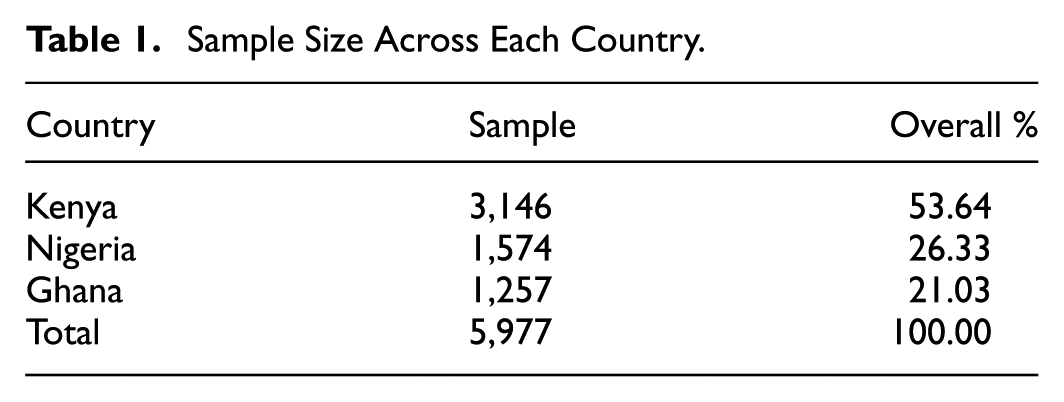
Although individual-level exposure was not randomized, the animation was mass-disseminated through a variety of untargeted media channels (television, internet, and mobile platforms) producing a natural variation in exposure across the target population. However, because only those who reported having seen the animation were administered the comprehension questionnaire, estimates of the relationship between exposure and comprehension are conditional on self-reported exposure. To improve internal validity and reduce confounding, we include in our regression models a broad set of control variables, including education, age, gender, household size, marital status, geographic setting, and access to communication technologies. While not a randomized controlled trial, this design supports credible inference about comprehension patterns among the exposed population, with implications for the reach and accessibility of mass media knowledge transfer at scale (Table 1).
In all, data from 5,797 households were collected as follows:
Sample Size Across Each Country.
Data Analysis
The binary dependent variable “understood the video” was recorded as yes or no according to respondents’ answer to the question, “Did you understand the video when you watched it?”
Independent variables included education level, age, and gender. Education level was treated as a categorical variable, with levels including no formal education, primary, high school, and university/college, based on the highest level of education reported by each participant. Age was also treated as a categorical variable, with respondents selecting from predefined ranges: [18–29], [30–39], [40–49], and [>49]. Gender was recorded dichotomously, based on respondents’ self-identification as male or female.
Many confounding variables are included in the study, selected based on previous works related to this study. Table 2 provides the list of the variables and their operationalization. Data were collected on these confounding variables and used in the model to improve the accuracy of the relationship between the dependent and independent variables.
Confounding Variables Included in the Study and Their Description.

Identification Strategy of This Study
An ideal method to identify the effects of age, gender, and education on the self-reported comprehension of the animated video’s content would be a randomized control trial (RCT) design where a randomly chosen group based on gender, education level, and age category of households would be assigned the animated videos. RCTs are considered the “gold standard” of impact evaluation in many research areas because of several critical characteristics that enhance their reliability and validity (Moher et al., 2009; Schulz & Grimes, 2002). Under normal circumstances, RCTs allow us to obtain an average treatment effect (ATE) of age, gender, and education (Duflo et al., 2007). This type of design compares the impact of the treatment group with a group of households designed as a control group.
While it would have been ideal to use an RCT framework to evaluate the effect of age, gender, and education in our context, given that appropriate measures were not taken to measure the program impact in an experimental framework, RCT was impossible. To evaluate the impact of age, gender, and education on the self-reported comprehension of the animated video’s content, this study uses a dataset and a well-specified linear regression model. This approach helps to reduce endogeneity concerns often associated with non-experimental methods (Wooldridge, 2010).
Although a randomized controlled trial (RCT) was not feasible in this context, we acknowledge that our causal-comparative design inherently cannot eliminate all risks of selection bias or unmeasured confounding. To mitigate potential biases in this non-experimental design, we applied statistical controls by including an extensive set of confounding variables as covariates (e.g., geographic setting, household size, marital status, and access to communication devices) in the regression models, which adjust for differences between respondent groups. Additionally, the sampling frame was validated to ensure that all major community types (rural, peri-urban, and urban) within the study areas are represented. This representation minimizes coverage bias in the selection process. Finally, data collection was conducted through face-to-face interviews by trained enumerators in local languages. Trained enumerators in local languages intend to improve response accuracy and participant comprehension (given generally low literacy levels) and therefore reduce the risk of miscommunication and non-response biases. One study challenge is that households may be heterogeneous with respect to the average comprehension of an animated video’s contents. While the videos were translated into various local languages, the linguistic diversity in Africa (even in the three Anglophone nations in this study) precluded translation into all currently living languages in those places. To deal with potential uneven access to the language used in the video by households in the study, we included variables for household use of various communication devices, including radio, TV, smartphones, etc., in the empirical models.
Modeling Drivers of Video Comprehension
To analyze the probability that a respondent understood the video, we estimated two types of models: a linear probability model (LPM) and a logistic regression model. In both cases, the dependent variable (“understood the video’s contents”) was coded as binary: yes (1) or no (0).
The LPM assumes a linear relationship between explanatory variables and the probability of the outcome. While it facilitates direct interpretation of marginal effects, the model is susceptible to heteroskedasticity and may yield predicted probabilities outside the [0,1] interval. The logistic model, by contrast, transforms the probability function to constrain predicted values within this interval and allows for nonlinear marginal effects.
To evaluate how age, gender, and education influenced self-reported comprehension, we estimated the following linear model:

where Ui denotes whether respondent i reported understanding the video. Agei, Genderi, and Educationi are the key explanatory variables. The vector Ci represents additional covariates—such as household size, marital status, and geographical setting—not central to the primary hypotheses but included to improve model fit. The coefficients β1 through β3 test whether each key variable is associated with greater reported understanding. The underlying assumption is that comprehension should not be constrained by demographic characteristics.
To account for potential nonlinearity in these relationships, let

The logistic model estimates the change in the log-odds of understanding the video for a one-unit change in each predictor, holding others constant. The transformation ensures predicted probabilities fall within the unit interval.
Both models were estimated in two forms. First, a parsimonious specification included only the key explanatory variables (age, gender, and education). Second, a full model added the vector of control variables. The parsimonious model identifies associations in an idealized setting, while the full model allows assessment of the robustness of these relationships after adjusting for additional household and contextual factors.
Results
Descriptive Statistics
Regarding education, 34.51% of participants had completed upper secondary (high school) and 33.30% had completed post-secondary (college/university) education. These figures are lower and higher, respectively, compared to 2022 World Bank estimates, where upper secondary and post-secondary completion rates were 42.10% and 18.60% across all three countries, with national breakdowns of 22.90% and 10.07% in Ghana, 65.70% and 39.2% in Nigeria, and 37.60% and 6.70% in Kenya (World Bank, 2025). For age, most respondents were in the 30 to 39 and 40 to 49 ranges, comprising 31.44% and 31.44% of the sample, respectively (Table 3). Despite the median age in all three countries being under 25 (World Economics, 2025), the majority of participants in the 30 to 49 age range suggests a sample that skews older than the general population. For gender, 51.65% were female, which generally reflects the parity of gender in all three countries.
Descriptive Statistics.
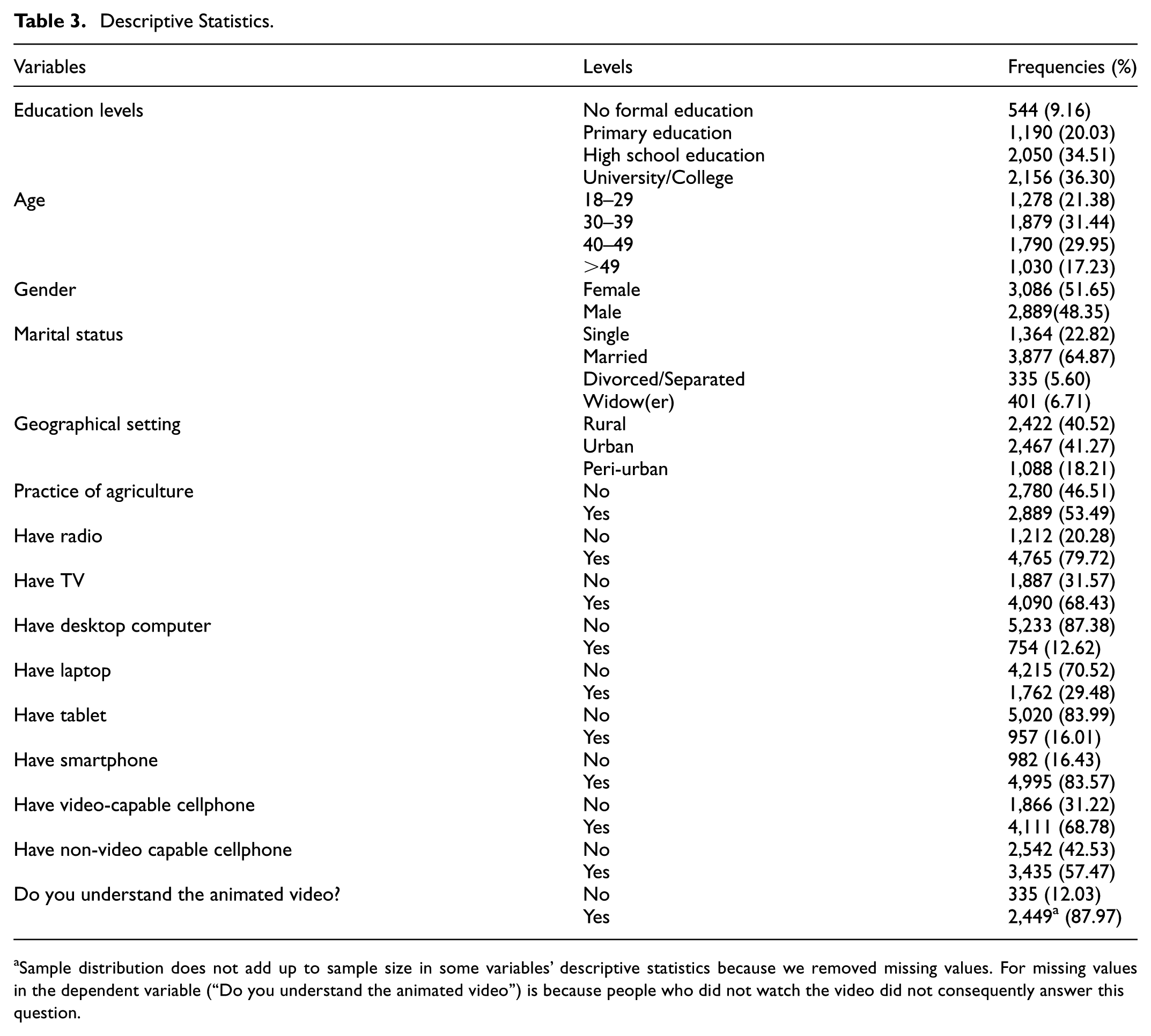
Sample distribution does not add up to sample size in some variables’ descriptive statistics because we removed missing values. For missing values in the dependent variable (“Do you understand the animated video”) is because people who did not watch the video did not consequently answer this question.
Other demographic data revealed that most respondents in the study were married (64.87%), predominantly engaged in agricultural activities (53.49%), and showed parity between urban (41.27%) and rural (40.52%) residences. For communication devices, the data indicate that radios remain a widely used medium for accessing information, with 80% of respondents reporting its use. Smartphones are even more common, owned by 83.57% of the sample. While cell phones with video capability (68.78%) and those without (57.47%) also play a role in communication, their usage is somewhat lower compared to radios and smartphones.
Using bivariate analysis, we tested for associations between self-reported comprehension of the animated videos and the demographic variables of education, age, and gender among smallholder farmers in Ghana, Kenya, and Nigeria. The analysis of the dependent variable—whether participants understood the video content—revealed statistically significant relationships with each independent variable, though at different levels of significance.
Education
Table 4 summarizes a strong association between education and the dependent variable (
Association Between Understanding the Video and Education.

Note. χ2 = 51.72, degrees of freedom = 3, p = 0.00. Numbers in parentheses are column percentages.
Age
Age was marginally associated with video comprehension (χ1 = 7.66, degrees of freedom = 3, p = .05), reaching significance at the 10% level. Across all age groups, participants were at least four times more likely to report understanding the video than not (see Table 5).
Association Between Understanding the Video and Age.

Note. χ2 = 7.66, degrees of freedom = 3, p = .05. Numbers in parentheses are column percentages.
Gender
The association between gender and comprehension was also marginally significant at the 10% level (χ1 = 3.37, degrees of freedom = 1, p = 0.07). The results indicate that both male and female participants were substantially more likely to report understanding the video than not (see Table 6).
Association Between Understanding the Video and Gender.

Note. χ2 = 3.37, degrees of freedom = 1, p = 0.07. Numbers in parentheses are column percentages.
Using multivariable logistic regression, we tested the role of demographic variables on the likelihood of understanding the animated video content among smallholder farmers in Ghana, Kenya, and Nigeria in both a parsimonious model (education, age, and gender alone) and a fuller model (that included additional demographic variables; see Table 7).
Factors Affecting Whether or Not the Household Head Understood the Video’s Contents.

Note. Standard errors are in parentheses.
p < 0.1. **p < 0.05. ***p < 0.01.
Education
Across all models (columns 1–4, Table 7), education consistently shows a positive association with the outcome. In the logistic parsimonious model (column 3), the odds ratios are 1.63 (p < 0.05) for primary education, 3.21 (p < 0.01) for secondary education, and 2.60 (p < 0.01) for university/college education. These results mean that respondents with primary, secondary, and university education are, respectively, 63.00%, 221%, and 160.00% more likely to understand the video compared to those with no formal education. In the full logistic model (column 4), the odds ratio for primary education is 1.45, but this effect is not statistically significant (p > 0.1), indicating no reliable difference in odds compared to respondents with no education. The effects for secondary and university education remain significant, with odds ratios of 2.45 (p < 0.05) and 1.83 (p < 0.01), respectively.
Age
The effect of age on video comprehension varies across models. In the parsimonious models, individuals aged 30 to 39 show a statistically significant negative association with comprehension, both in the linear model (−0.03, p < 0.05) and the logit model (OR = 0.70, p < 0.05), indicating a lower likelihood relative to the reference group [18–29]. However, in the full models, this effect diminishes and becomes statistically insignificant (linear: −0.02; logit: OR = 0.88). For respondents aged over 49, the direction of the association reverses. In the full linear model, the coefficient is positive and marginally significant (0.05, p < 0.1), and in the full logit model, the odds ratio is 1.66 (p < 0.1), suggesting that older individuals are more likely to understand the video than younger respondents. The [40–49] group shows no statistically significant effects in any model. Since the parsimonious specifications omit key covariates, the full models provide a more reliable basis for inference. The improved comprehension observed among the oldest participants may reflect their greater agricultural experience, which likely aligns with the content presented in the animated video.
Gender
Across all models (columns 1–4), gender was not significantly associated with understanding the video (p > 0.1). In the logistic models, the odds ratios for males were 1.18 in the parsimonious model and 1.14 in the full model, indicating a slightly higher likelihood of comprehension compared to females. However, neither estimate is statistically significant, and thus no reliable difference in self-reported understanding can be attributed to gender.
Other Covariates
Some covariates significantly affect the likelihood of understanding the video content. In the full logistic model, widowed respondents are significantly less likely than single respondents to report comprehension (odds ratio = 0.48, p < 0.05), indicating a 52% lower likelihood. This may relate to educational level, as widowed respondents appear less likely to have higher levels of education. However, caution is warranted: socioeconomic status may confound this relationship, as widowhood is often accompanied by stressors—including reduced income—that could independently influence self-reported comprehension.
Geographical setting also matters. Urban residents are significantly less likely than rural residents to understand the video (odds ratio = 0.61, p < 0.01), a 39% reduction in odds. This may be due to the greater relevance of the jerrycan technique in rural agricultural settings. Household size also has a negative effect: each additional household member is associated with a 10% reduction in the likelihood of self-reported comprehension (odds ratio = 0.90, p < 0.01).
Finally, ownership of ICT devices can significantly increase self-reported comprehension. Ownership of a radio (odds ratio = 2.00, p < 0.01) or a desktop computer (odds ratio = 2.72, p < 0.01) more than doubles the odds of understanding, while smartphone ownership (odds ratio = 1.45, p < 0.1) has a smaller but still significant positive effect. In contrast, owning a non-video-capable cellphone significantly reduces self-reported comprehension (odds ratio = 0.59, p < 0.01).
Discussion
In this study, we examined how education, age, and gender influence the comprehension of a mass-disseminated e-extension video among respondents in Ghana, Kenya, and Nigeria.
The main findings show that higher levels of education increase the odds of understanding the video compared to having no education, while gender shows no statistically significant effect on the odds of comprehension. Similarly, for age, the statistically higher odds of comprehension for those over 49 are only significant at the p < 0.10 level, while the decreased odds of comprehension for those aged 30–39 in the parsimonious model disappear and are not statistically significant in the full model; in consequence then, like gender, age is not a statistically significant factor at p <0.05 when mass-disseminating an e-extension video. On the other hand, urban residency, being widowed, larger household sizes, and ownership of a non-video-enabled mobile phone decreased the odds of comprehension (all p < 0.01), while radio and desktop PC ownership were the third- and first-strongest influence on increased odds of comprehension (OR = 2.00, p < 0.05, and OR = 2.72, p < 0.01, respectively).
These findings are particularly striking given that only gender parity generally matched the three-country averages for Ghana, Nigeria, and Kenya. For education and age, the study’s sample demographics under-represent secondary educated respondents (34.51% vs. 42.1% across the three-country average), and over-represents both post-secondary-educated respondents (33.6% vs. 18.60%) and older respondents (78.60% compared to national averages all under age 25). In particular, the emergence of secondary education as the second-strongest predictor of comprehension (after ownership of a desktop PC), and the lack of a statistically significant disadvantage among older participants challenge trends observed in other e-extension research.
Education
Education showed the most meaningful divergence between mass-disseminated e-extension video comprehension and face-to-face or on-the-ground delivery. Consistent with other research, a majority of respondents (more than 75%) across all education levels reported understanding the video. However, those with at least some formal education were significantly more likely to report comprehension compared to those with no formal education, across both the parsimonious and full models. In contrast to on-the-ground RCTs that found no statistically significant differences by education, this study observed clear disparities, suggesting that education becomes a more influential factor under conditions of mass dissemination.
Notably, in the transition between the parsimonious and full models, the effect of education decreases across all levels—primary, secondary, and university. This attenuation suggests that part of what education captures in the parsimonious model may be accounted for by other variables in the full model. Nevertheless, in both the parsimonious and full models, completed secondary education (high school) shows the strongest positive association with comprehension (OR = 3.21, p < 0.01 and OR = 2.45, p < 0.05, respectively), outperforming university-level education (OR = 2.60, p < 0.01 and OR = 1.83, p < 0.01). It is also the second most influential predictor in the full model, exceeded only by desktop PC ownership (OR = 2.72, p < 0.01).
This influence may reflect that, in rural areas, completing secondary school can mark the highest level of formal education accessible or necessary for understanding the video, particularly for those who remain in agricultural livelihoods. These individuals may have the functional literacy, visual literacy, and domain familiarity needed to better understand the video, while also being directly engaged in farming practices. By contrast, urban residents—especially those with university educations—may be less likely to be engaged in smallholder agriculture and to have pursued training in sectors related to food security. This accords with the observation of significantly reduced odds of self-reported comprehension among urban residents (OR = 0.61, p < 0.01). The strong effect of education on the comprehension of animated educational content in this study aligns with global trends, where education level significantly enhances the processing and utilization of agricultural information (Akintelu et al., 2021). Evidence from education technology initiatives suggests that well-designed, visually rich, and contextually tailored digital content can effectively bridge educational gaps and engage less educated audiences, supporting comprehension even among those with lower formal schooling levels (Muralidharan et al., 2019). For example, randomized control trials employing quantitative pre-post-intervention designs (including studies using the e-extension video in this study) have measured statistically significant comprehension gains across participants regardless of education level when delivered directly to target audiences (Bello-Bravo, Abbott, Mocumbe, Mazur, et al., 2020; Bello-Bravo et al., 2015; Bello-Bravo, Tamò, et al., 2018; Maredia et al., 2018).
The present study suggests that these on-the-ground or face-to-face comprehension gains persist under mass dissemination, but with statistically significant variation by education level—indicating that impersonal or mass-scale delivery may introduce disparities from education not observed in more controlled or targeted interventions. This difference likely also reflects the fact that the increased odds of comprehension become uniformly lower when considering the full model, rather than the parsimonious one.
While mass-dissemination guarantees an e-extension video’s broad reach, whether viewers of that video engage with and have an opportunity to understand it involves many more factors besides simply encountering it, including the time, place, and venue, device pathway, and language used for that encounter (Bello-Bravo et al., 2019; Bello-Bravo et al., 2023b; Esposito, 2001; Larkin et al., 2007; Medendorp et al., 2022). Besides being available, an e-extension video must also be usable and convenient for end-users (Bello-Bravo, Muyodi, et al., 2022; Ribot & Peluso, 2003). Overcoming gaps around technological literacy is crucial for successfully transferring video-mediated knowledge not only generally but also across different devices (Ilboudo & del Castello, 2003), so that knowledge and technological skills can support adopting innovations, especially in rural agricultural settings (Chen & Wellman, 2005; Gupta & Kiran, 2023; Peláez-Sánchez & Glasserman-Morales, 2023). For example, Zickafoose et al. (2024) emphasized that educational interventions must be designed to address users’ technological capabilities and recommended training sessions to bridge skill gaps and improve engagement with digital tools. Gendered differences in technology use can further complicate access and effective utilization of educational materials, with women often facing greater barriers due to limited digital training and resource access (Aduwo et al., 2019; Tata & McNamara, 2018). Although presenting video content in local dialects is crucial, enhancing the effectiveness of agricultural extension services requires holistic strategies that combine content dissemination with hands-on training in technology use, thereby supporting ongoing learning and capacity building in rural areas.
Face-to-face e-extension engagement can benefit from numerous affordances that blunt or mitigate the above issues. Facilitators can adjust or individualize the pacing of content delivery in real time, clarify unfamiliar terms, ensure that participants are following along on appropriate devices, and adapt language to local dialects and expressions. Such settings also allow for immediate feedback, questions, and the correction of misunderstandings by presenters or peers (Bello-Bravo, Zakari, et al., 2018)—opportunities that are generally absent in mass-scale encounters. Moreover, facilitators can provide basic digital training where needed to access devices (Tata & McNamara, 2016), ensuring that participants not only view but also meaningfully interact with the material. In contrast to impersonal exposure, face-to-face engagement can afford a structured, generally supportive context that overcomes real-time barriers that arise for would-be recipients (Bello-Bravo & Pittendrigh, 2018). However, it is also critical to recall the circumstance noted from Mocumbe (2016) above, where women’s comprehension scores were statistically lower than men’s when solo e-extension viewing was followed by a group (mixed gender) presentation of the content.
Age
In the parsimonious model, all age groups showed reduced odds of self-reported comprehension, but this was statistically significant (p < 0.05) only for the 30 to 39 group. In the full model, odds increased across all groups, though none reached significance at the p < 0.05 level. That is, while the 30 to 39 group still showed decreased odds of self-reported comprehension (0.88, p > 0.1), farmers aged 40 to 49 and over 49 had increased odds of 1.26 (p > 0.1) and 1.65 (p < 0.1), respectively. Taken together, these results align with findings from face-to-face RCT studies using SAWBO e-extension videos, which found age does not have a statistically significant effect (p < 0.05) on comprehension.
While this stands in contrast to previous findings that report persistent age-related gaps in ICT adoption for agricultural e-learning (Ayalew & Girma, 2025; Dissanayake et al., 2022; Granić, 2022; Krell et al., 2021), the absence of a statistically significant age effect in this study and previous SAWBO e-extension studies may indicate that SAWBO media and mass-dissemination devices engage locus-of-control mechanisms that facilitate e-learning (Lien & Tra, 2021) or incorporate content adaptation, user-controlled pacing, and enhanced visual cues known to support learning among older audiences (Xie et al., 2021).
However, the finding that older farmers can comprehend e-extension video content no less readily than younger farmers may simply reflect their greater accumulated farming experience (Keba, 2019; Melesse, 2018). On this view, older farmers’ reluctance to adopt technologies may stem not from a lack of understanding, but from a more seasoned assessment of the practical value such innovations hold for farming (Finizola e Silva et al., 2024; Kule et al., 2025; Tabe-Ojong et al., 2024; Vecchio et al., 2022).
Gender
Consistent with previous face-to-face RCT e-extension research by SAWBO, this study found no statistically significant association by gender on video comprehension. This agrees with Theophilou et al. (2024), who found no significant gender differences in skills development within an educational social media platform, indicating that digital environments can reduce gender gaps. It also aligns with the research by Qazi et al. (2022), who noted that technological interventions could level educational playing fields between genders.
Because other research has documented gender disparities around agricultural ICT knowledge, adoption, and utilization (Boudalia et al., 2024; Owusu et al., 2018; Qazi et al., 2022; Quisumbing et al., 2014), this suggests, as in the case of older farmers above, that decisions not to adopt may be motivated by factors other than comprehension or level of education (Radel & Coppock, 2013). Moreover, while women who accessed the mass-disseminated video generally understood it, issues around equitable digital access remain (Fertő & Bojnec, 2024; Medendorp et al., 2022; Qazi et al., 2022). Technology platforms can reflect structural inequities through gender-skewed data training sets (Qazi et al., 2022) or the dates, time, place and venues where ICT scaling occurs (Medendorp et al., 2022; Reeves et al., 2023).
Conclusion
This study examined the associations between education, age, and gender and self-reported comprehension of a mass-disseminated e-extension animated video among smallholder farmers from Ghana, Kenya, and Nigeria. The results found no statistically significant relation between gender and age (other than a marginal one for farmers aged >49 at p < 0.10), affirming the efficacy of knowledge transfer observed in other face-to-face RCT research with e-extension videos (Bello-Bravo, Abbott, Mocumbe, Mazur, et al., 2020; Bello-Bravo, Abbott, Mocumbe, & Pittendrigh, 2020; Bello-Bravo, Tamò, et al., 2018; Mocumbe, 2016). This also suggests that observed findings about the non-adoption of technologies by older farmers and women may be motivated by other factors than education or comprehension.
On the other hand, statistically significant differences were found for education, both when taking education in isolation and in combination with other demographic factors. Importantly, while the majority (75%) of respondents reported understanding the video, the odds of self-reported video comprehension decreased in a full model compared to taking education in isolation. This likely more faithfully reflects the diffuse effects of education on comprehension (i.e., potentially more wealth for adopting new technologies, higher-education pursuits that do not focus on and have less familiarity with agricultural issues, generically greater access to digital technologies in higher education); for example, with respect to technology, desktop PC ownership (OR = 2.72) and ownership of a non-video-enabled mobile phone (OR = 0.59) showed the most positive and negative odds-changing associations on self-reported comprehension, respectively. Moreover, while there was no statistically significant association by age with respondents who had a primary education, respondents who completed secondary education (high school) had higher odds of reporting they understood the video (OR = 2.45, p < 0.05) than those with post-secondary (college/university) educations (OR = 1.83, p < 0.01).
In contrast, face-to-face RCT research on e-extension videos (including the one cited in this study) found no statistically significant effects for education. Assuming this difference can be replicated and is not an artifact of this dataset, future research could more exactly characterize the roles of other demographics in these odd-changes. These are likely not simply pathway effects, but interactions of pathway access devices and time and place of viewing. That desktop PC ownership had the highest positive odds influence suggests home viewing of the animation, in contrast to viewing on video-enabled mobile phones in busy public places like markets (Bello-Bravo et al., 2019). Conversely, that being widowed had the strongest odds-decrease association on video comprehension should receive closer attention.
Given the persistent shortages of extension personnel and resources, it is essential to augment existing approaches with cost-effective, scalable solutions that can meet or surpass the effectiveness of traditional extension services for delivering critical information to smallholder farmers. To integrate digital solutions into existing agricultural frameworks, we recommend embedding locally translated animated videos as core supplements in national extension programs to overcome infrastructure and access gaps while leveraging farmer-to-farmer diffusion networks for scalable outreach. Moreover, while the use of AI for content creation or translation as discussed by Ravšelj et al. (2025) is not yet reliable enough for producing the types of e-extension videos used in this research, machine learning techniques can be used to help drive down the costs of social media engagements, by helping to identify profiles of people more likely use the educational content or platforms containing such content (Bello-Bravo et al., in press; Bello-Bravo et al., 2025). More research is needed to refine this approach further.
Limitations and Implications of This Study
This study has used a rigorous methodology and a large sample size to establish how age, gender and education can impact the ability to comprehend the content of an animated video. However, it is subject to some limitations that require consideration. First, the reliance on self-reported comprehension introduces potential biases. Self-report instruments, though widely used in educational and agricultural research, are susceptible to social desirability bias, recall inaccuracies, and response style effects, which may distort the validity of the findings (Fryer & Dinsmore, 2020; Tempelaar et al., 2020). These biases are particularly pronounced in low-literacy populations and can vary by demographic factors such as age, education, and nationality (Dinerstein, 2019). Second, although the animation was translated into 73 local languages, linguistic diversity within countries (especially in multilingual households) may have limited accessibility. The study did not assess whether the language variant matched the respondent’s primary spoken language, nor did it evaluate the cultural appropriateness of translations. This gap may have introduced unobserved heterogeneity in comprehension outcomes, a challenge reported in multilingual agricultural extension contexts (Xu et al., 2023).
Third, the non-randomized exposure design limits causal inference. Multivariable regression models with extensive covariate controls were employed to mitigate confounding, however, the absence of random assignment means that selection bias cannot be fully ruled out. Individuals who encountered the video may differ systematically from those who did not, in ways not captured by the control variables (Spielman et al., 2021).
Fourth, the study’s cross-sectional nature prevents assessment of long-term learning retention or behavioral adoption. Although comprehension is a necessary precursor to adoption, it does not guarantee it. Longitudinal studies are needed to evaluate whether self-reported understanding translates into sustained use of the jerrycan technique or other agricultural innovations (Mulungua et al., 2025). Moreover, the device pathway through which the video was accessed was not systematically recorded. While ownership of devices such as radios, smartphones, and desktop computers were included as covariates, the actual device used to view the animation and the context of viewing (e.g., alone, in a group, in a noisy environment) was not captured. These factors may influence comprehension, especially in mass dissemination contexts (Arangurí et al., 2025). Finally, the study’s geographic scope may limit external validity. Ghana, Kenya, and Nigeria share certain infrastructural and linguistic characteristics, but findings may not generalize to non-Anglophone African nations or regions with different agricultural practices, media ecosystems, or sociocultural norms. Replication in diverse contexts is necessary to validate the observed demographic patterns and refine strategies for inclusive digital extension (Byamukama et al., 2025).
With regard to the implications of this study, the absence of statistically significant effects for gender and age (except marginally for older respondents) reinforces the role of animated videos to bridge traditional access gaps. This aligns with research showing that digital tools can reduce gender disparities in agricultural learning when designed inclusively (Ayalew & Girma, 2025; Zougmoré & Partey, 2022).
Moreover, the results emphasize the importance of combining mass media dissemination with complementary capacity-building strategies. Agricultural institutions and extension organizations should initiate short, locally facilitated discussion sessions following mass video screenings (either in person or through virtual platforms) to reduce comprehension gaps linked to education. Recognizing that ownership of radios and desktop computers significantly enhanced comprehension, extension programs should diversify dissemination pathways beyond smartphones and social media to include hybrid media strategies that combine traditional and digital channels. It is important to mention that the role of education in this study has implications for content design: animations should be tailored to the practical realities of smallholder farmers, using familiar images, language, and examples that resonate with their lived experiences. Additionally, facilitated discussions or community-based screenings may help mitigate comprehension gaps by providing opportunities for clarification and peer learning (Singh et al., 2023). Finally, the study shows the need for policy integration of digital tools into national extension frameworks. Given the scalability and cost-effectiveness of animated videos, governments and NGOs should consider embedding such tools into existing agricultural programs, ensuring local language translation, device accessibility, and training support. Moreover, machine learning algorithms could be employed to optimize dissemination by identifying user profiles most likely to benefit from specific content, thereby enhancing targeting efficiency (Alizada et al., 2024).
Footnotes
Acknowledgements
We want to thank our research collaborators in Ghana, Nigeria, and Kenya, the SAWBO team, and the enumerators for their contributions at different levels in this research program.

Author Contributions
All the authors contributed equally to the development of this article.
Funding
The authors disclosed receipt of the following financial support for the research, authorship, and/or publication of this article: This work was made possible by the generous support of the American people through the former United States Agency for International Development (USAID), under the terms of Contract No. 7200AA20LA00002 (Awardee: Purdue University; PIs: BRP, JM, and JBB). The contents are the responsibility of the authors and do not necessarily reflect the views of the former USAID or the United States Government. The funders had no role in study design, data collection and analysis, decision to publish, or preparation of the manuscript. This work was also funded by Purdue University (JBB and BRP).
Declaration of Conflicting Interests
The authors declared no potential conflicts of interest with respect to the research, authorship, and/or publication of this article.
Data Availability Statement
The data supporting this study’s findings are available on request from the corresponding author. However, the data are not publicly available because they contain information that could compromise the privacy of research participants.